For both rivets and screws, the strength of the connection is determined by the fastener material, diameter, design, installation quality, sheet metal thickness, and the type of load the joint is subjected to.
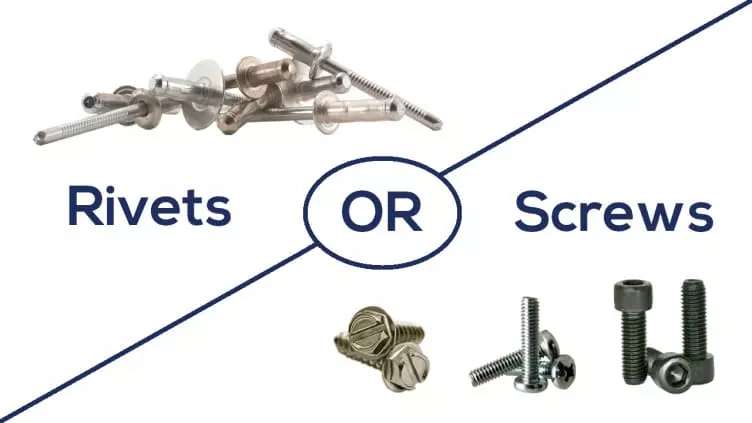
Under identical size and material conditions, screws provide higher axial clamping force and facilitate disassembly and maintenance. However, the threads reduce the effective cross-sectional area to some extent. Under continuous vibration, impact, or cyclic loads, screws may also loosen. In contrast, rivets form a permanent mechanical connection once installed. Therefore, they are generally more stable in thin-sheet connections, vibrating environments, and high-volume assembly applications.
What Determines the Strength of a Fastener?
1. Fastener Material
The material of the fastener is the fundamental factor affecting its strength. Aluminum is lightweight and prone to deformation, and its load-bearing capacity is typically lower than that of steel or stainless steel rivets. Therefore, different materials have varying tensile strengths, shear strengths, hardness, and corrosion resistance.
2. Fastener Diameter
The diameter of a fastener directly affects its load-bearing capacity. Generally, the larger the diameter, the larger the cross-sectional area available to bear the load. Consequently, fasteners with larger diameters can typically withstand higher shear and tensile forces. However, any increase in diameter must comply with the requirements for sheet width, edge clearance, and installation space; otherwise, it may result in reduced joint strength.
3. Fastener Structure
The structural design of a fastener also affects joint strength. Standard open-end pop rivets are suitable for general thin-sheet connections. Structural pop rivets feature a reliable mandrel locking mechanism and are suitable for connections subjected to long-term vibration and high loads. Therefore, the load-bearing capacities of the two cannot be directly compared.
4. Joint Design
The joint design of the fastener also affects the final connection strength. You must consider the thickness of the connected sheets, hole diameter, and load distribution when selecting a joint design. An inappropriate joint design can lead to sheet metal tearing, hole deformation, rivet head pull-out, or stripped threads.
5. Installation Quality
Proper installation is essential for achieving the designed strength. If the rivet gun nozzle is too large or the pulling force is excessive, a complete closed head may not form at the blind end. If the installation torque for a screw is too low, it may result in insufficient clamping force. Conversely, excessive installation torque may cause thread damage, screw elongation, or panel deformation. Even high-strength fasteners cannot ensure a reliable joint if installed incorrectly.
6. Connected Materials
The materials being joined also affect joint strength. Fastener materials must be compatible with the joined materials. Direct contact between dissimilar metals in humid or salt spray environments may cause galvanic corrosion, thereby reducing long-term joint strength.
7. Operating Environment
The long-term performance of fasteners can be affected by temperature, moisture, salt fog, chemical agents, and outdoor exposure, all of which can reduce joint strength.
Corrosion caused by various factors can reduce the effective cross-sectional area of the fastener, leading to damage to the threads, the rivet body, or the sheet metal surrounding the fastener hole.
How Is Rivet Strength Compared with Screw Strength?
When comparing the strength of rivets and screws, it is not sufficient to simply compare the diameter and material strength of the fasteners. The correct approach is to subject them to the same or similar connection conditions and compare their shear strength, tensile strength, clamping force, and long-term stability separately.
| Comparison Item | Rivet | Screw |
|---|---|---|
| Shear Load Capacity | Mainly carried by the rivet body and the retained mandrel | Mainly carried by the screw shank or threaded cross-section |
| Axial Tensile Capacity | Depends on the rivet body, mandrel locking system, formed blind head, and sheet support | Depends on the screw material, thread engagement length, and connected material |
| Clamping Force | Creates a fixed and permanent clamping condition | Can generate a relatively high preload through installation torque |
| Vibration Resistance | Does not rely on threads to maintain the joint after installation | Standard screws may loosen under vibration |
| Removability | Usually must be removed by drilling | Can be removed and reinstalled |
| Suitability for Thin Sheets | Highly suitable for thin sheets and single-sided installation | Requires a threaded hole, nut, or sufficient material thickness for thread engagement |
Rivets vs Screws: Key Differences at a Glance

1. Rivets Are Usually Permanent
Once installed, rivets form a mechanical lock through deformation of the rivet body, resulting in irreversible permanent deformation. Rivets cannot be unscrewed directly like screws.
2. Screws Are Easier to Remove
Screws rely on threads to create a connection when turned. They can be removed by turning them in the opposite direction. This makes them particularly suitable for equipment that requires inspection, part replacement, or repeated maintenance.
3. Rivets Are Better for One-Sided Installation
The advantage of blind rivets is that they can be installed from only one side of the workpiece. They are particularly suitable for riveting on the back side of pipes or enclosed structures. Standard bolts require a nut to be installed on the back side. Mechanical screws require pre-drilled threaded holes or threaded connectors.
4. Screws Usually Provide Higher Clamping Force
When tightening a screw, the installation torque causes axial tension in the screw, compressing the connected parts. While the preload of standard blind rivets is typically limited, screws can generally generate higher and more controllable clamping forces.
5. Rivets Do Not Loosen Due to Rotation
Standard screws rely on threads and preload to maintain the connection. When subjected to vibration or temperature fluctuations, the preload may decrease, leading to loosening. Once installed, rivets do not suffer from rotational loosening due to their lack of threads, and the connection is generally more stable.
6. Strength Depends on the Specific Fastener
Standard aluminum open-end pop rivets have a lower load-bearing capacity than high-strength steel structural screws. Conversely, high-strength structural pop rivets offer higher shear resistance and more stable vibration resistance than self-tapping screws for thin sheets.
7. Choose According to the Application
Rivets are suitable for applications requiring quick installation, single-sided operation, good vibration resistance, and permanent connections. Screws are suitable for applications requiring higher clamping force, frequent disassembly, part replacement, or subsequent maintenance. Rivets and screws are not simply interchangeable. The correct choice depends on the connection structure, the type of force applied, and the operating environment.
Are Rivets Stronger Than Screws in Shear Load?
In typical sheet metal connections, single-sided installations, and vibrating environments, structural rivets provide more stable shear resistance than ordinary screws. However, high-strength structural screws or high-strength bolts have a higher shear load-bearing capacity. Therefore, when evaluating the shear load capacity of rivets and screws, it is important to compare the specific product data from multiple perspectives.
Factors Affecting Shear Load:
- Fastener material
- Diameter
- Structural type
- Location of the shear plane
- Sheet thickness
- Installation quality
What Is Shear Load?
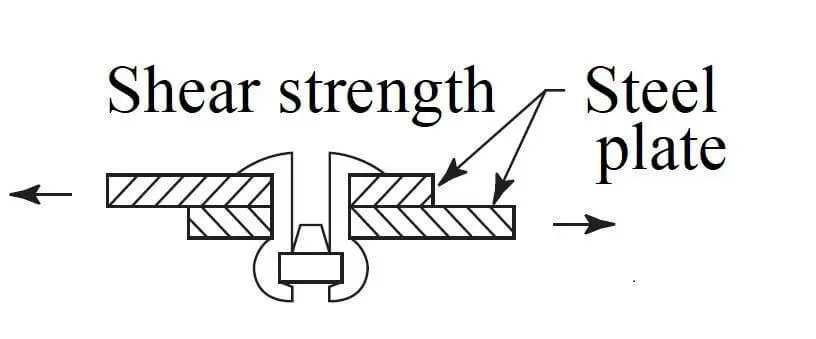
Shear load refers to the force that causes two or more connected plates to slide in opposite directions.
Are Screws Stronger Than Rivets in Tensile Load?
Under axial tensile loads, selecting the appropriate high-strength screws generally offers more advantages than using ordinary pop rivets. This is because screws generate higher axial clamping forces through thread torque. Using high-strength screws can provide higher tensile strength for the material.
However, in thin-sheet connections, screws may experience thread stripping or pull-out before they fail due to tightening. Structural pop rivets form a closed-head clamp between the rivet head and the blind side of the sheet, creating a more robust axial connection than standard self-tapping screws. Therefore, you need to compare the actual pull-out load of the entire joint, the risk of sheet deformation, and long-term service conditions.
What Is Tensile Load?
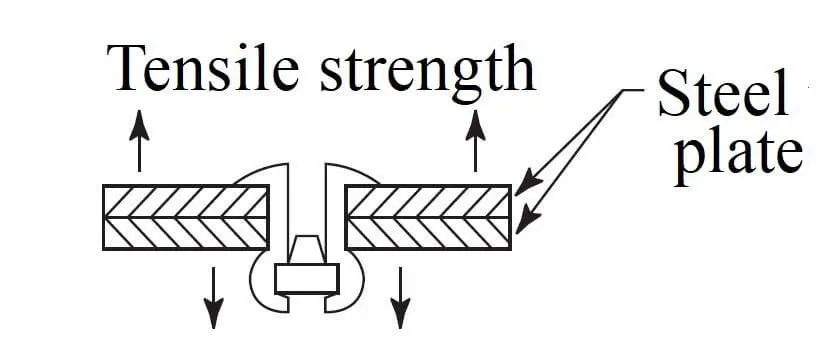
Tensile load is the force that pulls two connected parts in opposite directions along the axis of the fastener.
Rivets vs Screws Under Vibration and Dynamic Loads
Under continuous vibration, shock, and cyclic loading, rivets generally are less prone to rotational loosening than ordinary screws. This is because the riveting process creates a permanent deformation to secure the joint, rather than relying on threads to maintain the connection.
However, high-strength screws or bolts that are properly preloaded and feature anti-loosening designs can also withstand significant vibration and cyclic loads.
| Comparison Item | Screws | Rivets |
|---|---|---|
| Primary Load-Bearing Method | The screw shank and engaged threads jointly carry the axial load | The rivet head, rivet body, and formed blind head jointly carry the load |
| Clamping Capability | Usually capable of generating relatively high preload | Creates a fixed clamping condition through plastic deformation |
| Axial Strength | High-strength screws usually offer greater potential load-bearing capacity | Depends on the rivet type and the structure of the formed blind head |
| Thin-Sheet Connection | May be limited by the available thread engagement length | Generally well suited for clamping thin sheets |
| Common Failure Modes | Screw fracture, thread stripping, pull-out, or head pull-through | Rivet body fracture, blind-head deformation, or head pull-through |
| Removability | Usually removable | Usually requires drilling for removal |
| Always Stronger? | No | No |
Rivets vs Screws for Thin Sheet Metal
For thin-plate connections that will need to be frequently disassembled later on, rivets are more reliable than standard screws that are directly screwed into the thin plates. If the connection needs to be disassembled, or if the thin plates already have rivet nuts, welded nuts, or other threaded components installed, screws are more suitable.
Ultimately, you should choose between rivets and screws based on the thickness of the panels being joined, the direction of the load, vibration conditions, disassembly requirements, hole diameter, and the results of actual joint testing.
| Comparison Item | Rivets | Screws |
|---|---|---|
| Joining Principle | The rivet body deforms and forms a mechanical clamp on both sides of the thin sheets | Relies on thread engagement with the thin sheet, a nut, or a threaded hole |
| Dependence on Sheet Thickness | Does not require the thin sheet to provide a complete internal thread | When driven directly into a thin sheet, joint strength depends heavily on the sheet thickness |
| Single-Sided Installation | Blind rivets can be installed entirely from one side | Self-tapping screws can be installed from one side, while standard bolts usually require rear-side access |
| Pull-Out Resistance | Determined by the rivet head, formed blind head, and the bearing area of the sheet material | Limited thread engagement in thin sheets may result in thread stripping or fastener pull-out |
| Shear Performance | Suitable for thin-sheet lap joints; structural rivets can provide higher shear resistance | Depends on the screw material, diameter, and whether the shear plane passes through the threaded section |
| Vibration Stability | Does not have the thread-rotation loosening risk associated with threaded fasteners | May loosen when the clamping preload decreases under vibration |
| Risk of Sheet Deformation | Incorrect selection or installation may stretch, compress, or dent the thin sheet | Excessive installation torque may strip the threads, crush the sheet, or cause distortion |
| Disassembly and Repair | Usually requires drilling for removal | Can usually be unscrewed and reinstalled |
| Installation Speed | Fast installation process and well suited for high-volume assembly | Influenced by thread length, torque control, and hole-preparation requirements |
| Typical Applications | Permanent thin-sheet joints, enclosed structures, equipment enclosures, and vehicle body panels | Access panels, removable components, and structures requiring adjustment or maintenance |
When Are Rivets Stronger Than Screws?
1. When joining thin metal sheets
When the thickness of a thin sheet is limited and cannot accommodate multiple layers of internal threads, and when the joint must withstand axial tensile forces, vibration, or repeated disassembly and reassembly, the threads in the thin sheet may deform or strip. Therefore, in thin-sheet connections that do not require disassembly, rivets may offer more stable pull-out performance than standard self-tapping screws that must be screwed into the sheet metal.
2. When the joint is primarily subjected to shear loads
Rivets clamp multiple layers of sheet metal through deformation, providing a relatively continuous load-bearing cross-section. However, if the shear plane of a screw passes directly through the threaded region, the actual load-bearing location is at the root of the thread, where the diameter is smaller. In such cases, a rivet of the same nominal diameter may offer a more favorable effective load-bearing cross-section.
3. When the joint is subjected to long-term vibration
When a screw joint is subjected to long-term vibration, slippage may occur at the mating surfaces. This leads to a gradual decrease in preload and rotational loosening. In contrast, rivets form a permanent connection through plastic deformation after installation. Since they lack threads, they do not experience the rotational loosening typical of standard screws.
4. When reliable threads cannot be formed in thin sheets
High-strength screws may be very robust, but when screwed into thin aluminum sheets, the internal threads in the sheet may strip before the screw breaks. In such cases, blind rivets are more suitable. Rivets clamp the joint through their heads and closed-end design.
5. When installation is possible from only one side
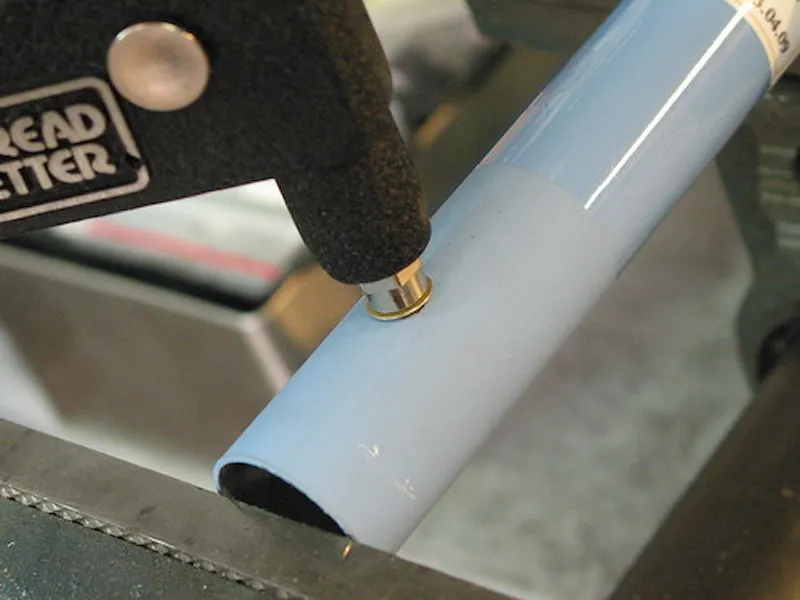
Conventional bolts typically require a nut to be installed on the back side. Self-tapping screws can be installed from one side, but the connection strength is limited by the sheet thickness and the quality of the thread formation. However, blind rivets form a more complete and stable connection by being riveted from one side.
Do Rivet and Screw Materials Affect Joint Strength?
The material of rivets and screws affects the strength of the joint. Different materials affect the fastener’s shear strength, tensile strength, hardness, ductility, corrosion resistance, and fatigue life.
Therefore, when selecting a high-strength joint, you should not simply choose the material with the highest strength. You must also consider the fastener material, the sheet material, the installation method, and the operating environment.
What properties are affected by the material?
| Influencing Factor | Effect on Joint Strength |
|---|---|
| Material Tensile Strength | Determines the fastener’s ability to resist axial tensile fracture |
| Material Shear Strength | Affects the fastener’s ability to resist transverse shear fracture |
| Hardness | Affects the wear resistance of threads, rivet bodies, and hole walls |
| Ductility and Elongation | Affects whether the rivet can deform correctly and form a complete blind-side head |
| Corrosion Resistance | Affects the fastener’s remaining strength after long-term service |
| Fatigue Performance | Affects the fastener’s service life under vibration and cyclic loading |
| Thermal Expansion | Differences in material expansion may alter the clamping condition of the joint |
| Material Compatibility | Improper combinations of dissimilar metals may cause galvanic corrosion |
How to Choose Between Rivets and Screws for Your Application
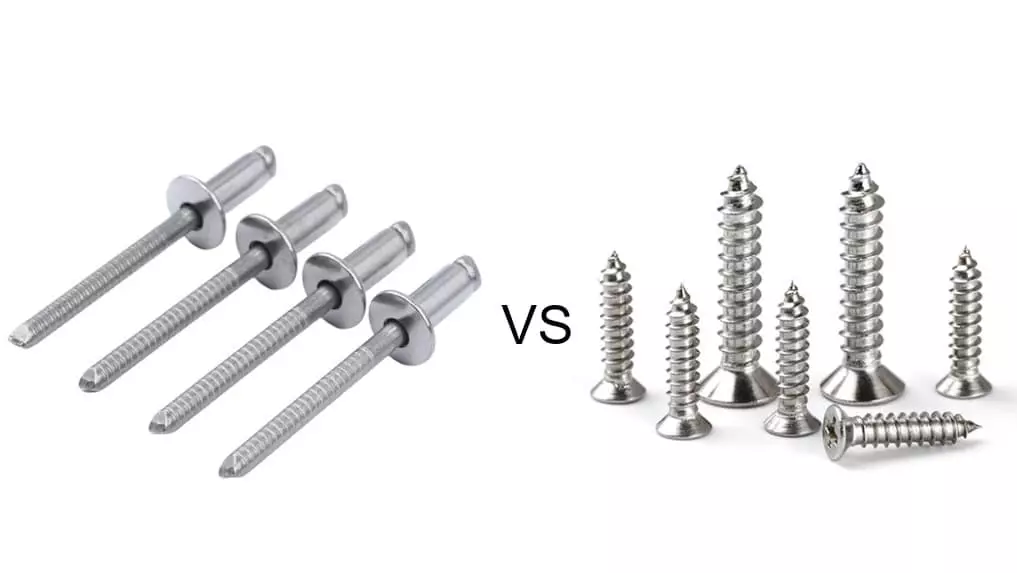
A. Determine whether the connection will need to be disassembled later
- For connections that do not need to be disassembled, give priority to rivets. Rivets undergo plastic deformation upon installation and typically form permanent connections.
- For connections that need to be disassembled, give priority to screws. Screws can be removed by unscrewing them and reinstalled. They are suitable for structures requiring maintenance or repeated assembly.
B. Determine whether the back side of the workpiece is accessible
- If the back side is enclosed and inaccessible, use pop rivets, which can be installed from just one side of the workpiece.
- If the back side is accessible, screws or other fasteners may be used.
C.Check the Sheet Thickness
- For permanent connections in thin sheets, rivets are recommended. After installation, the rivet head and the closed head on the blind side will clamp the sheet from both sides.
- For removable connections in thin sheets, use a rivet nut in combination with a screw. First, install the rivet nut into the sheet, then use a mechanical screw. This allows for single-sided installation and ensures the connection is removable.
- For thick plates or plates with reliable threaded holes, screws may be selected. The plates are thick enough to form reliable internal threads.
D. Determine the Loads the Joint Will Bear
- If the joint primarily bears shear forces, structural pop rivets offer good shear resistance. High-strength bolts may also provide higher load-bearing capacity.
- Primarily subjected to axial tensile forces. Screws provide high axial clamping force through preload and thread engagement.Blind rivets, supported by heads on both sides, may offer more stable pull-out resistance.
When making a selection, you need to evaluate the overall performance of the entire joint and conduct actual assembly tests.
D. Determine the Loads the Joint Will Bear
- If the joint primarily bears shear forces, structural pop rivets offer good shear resistance. High-strength bolts may also provide higher load-bearing capacity.
- Primarily subjected to axial tensile forces. Screws provide high axial clamping force through preload and thread engagement.Blind rivets, supported by heads on both sides, may offer more stable pull-out resistance.
- When making a selection, you need to evaluate the overall performance of the entire joint and conduct actual assembly tests.
E. Determine Whether Continuous Vibration Is Present
- After the preload of a standard screw decreases, rotational loosening may occur. However, since rivets do not have threads that can rotate out after installation, they do not experience the same type of loosening.
F. Determine Whether a Higher Preload Is Required
- Preload is the clamping force generated after a screw is tightened.
Rivets can also clamp sheet metal, but their clamping force cannot be adjusted via torque.
How to Improve the Strength of a Riveted Joint
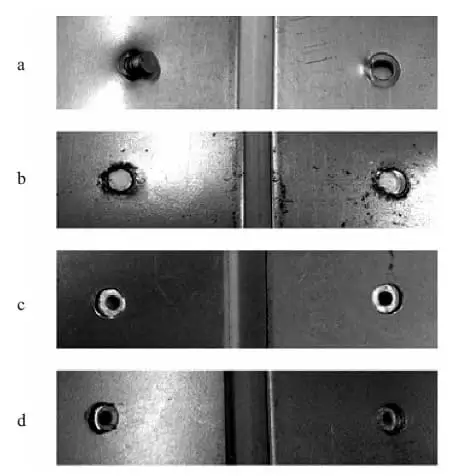
- Select the Appropriate Rivet Type
Different types of pop rivets have varying load-bearing capacities. Select the appropriate rivet type based on the actual application conditions.These include Monobolt Rivets, Tri-Fold Rivets, Bulb-Tite Rivets, Interlock Blind Rivets, and Hemlock Rivets, among others.
- Select the Appropriate Rivet Diameter
Selecting the largest diameter permitted by the joint structure can improve shear and tensile load-bearing capacities.
- Match the Rivet to the Sheet Metal Material
When selecting materials, consider a balance between strength, deformation capacity, and corrosion resistance.
- Correctly Match the Rivet Gripping Range
First measure the actual total clamping thickness, then select the fastener based on the specified gripping range to ensure reliable clamping.
- Control the Size of the Installation Hole
Hole size is a key factor affecting riveting strength; strictly control the drilling parameters.
- Consider the load-bearing area of the head and the blind side
When applying rivets to thin sheets, plastics, or soft materials, consider the impact of the head type. It is recommended to use a large-flange head to reduce concentrated stress.
- Ensure adequate edge clearance and rivet spacing
Adequate clearance must be maintained between the center of the rivet hole and the edge of the sheet. If the clearance is too small, the hole may tear through the sheet.
- Ensure an appropriate overlap length
The two sheets must have sufficient overlap to provide adequate space for rivet placement, thereby improving pressure distribution.
- Select the correct installation tool
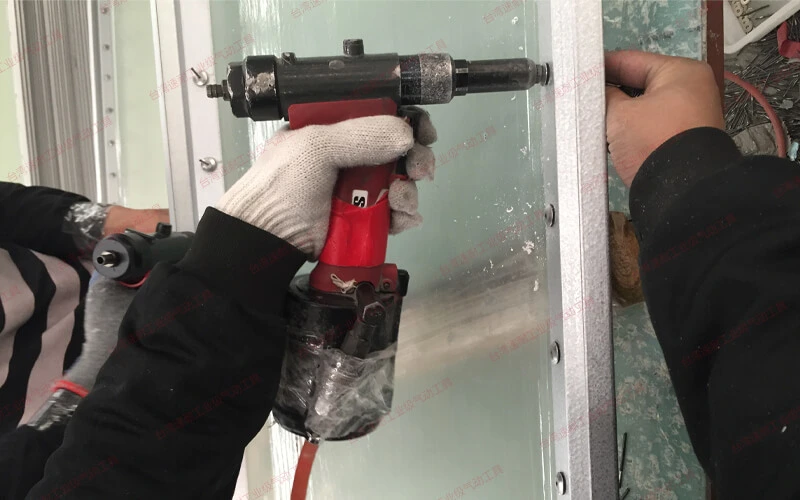
Match the rivet gun’s nozzle diameter and pulling force to the size of the rivet.
Common Mistakes When Replacing Screws with Rivets
Mistake 1. Assuming that the same diameter means the same strength
Differences in the materials, effective load-bearing cross-sections, and connection methods of rivets and screws can also affect their strength.
Mistake 2. Failure to confirm whether disassembly is required
Rivets are designed for permanent connections. Screws, on the other hand, can be removed by applying torque.
Mistake 3. Using standard blind rivets as a substitute for high-strength screws
Standard open-end pop rivets are suitable for general-purpose thin-sheet connections. They cannot replace structural screws, high-strength bolts, or other heavy-duty fasteners.
Mistake 4. Ignoring the preload provided by screws
When tightened, screws can generate high preload, which continuously compresses the connected parts. However, the clamping state of a rivet differs from the preload provided by torque-controlled screws.
Mistake 5. Reusing Existing Screw Holes
Screw holes of the same diameter that have already been drilled may not be suitable for installing rivets. Before replacement, measure the actual hole diameter and compare it with the recommended hole diameter provided by the rivet manufacturer.
Mistake 6. Selecting the Wrong Clamping Range
The clamping range measures the total thickness range of materials that a rivet can reliably clamp—not the thickness of a single sheet of material.
When selecting a rivet, first measure the actual total clamping thickness, then determine the rivet specification based on the product parameters.
Mistake 7. Ignoring Rivet Heads and Blind-Side Closure Heads
Screw heads and rivet heads differ in size and load-bearing mechanisms. When selecting a rivet, consider the pressure on the head to choose the appropriate head type.
Mistake 8. Failing to Consider Edge Clearance and Rivet Spacing
If replacing a screw with a thicker rivet, consider the distance of the hole from the edge of the sheet metal. Insufficient edge clearance may cause the sheet metal to tear away from the hole edge when the joint is under load. Additionally, excessive rivet spacing weakens the material between holes.
Mistake 9. Focusing Only on Rivet Strength While Ignoring Sheet Metal Strength
Just because the rivet itself does not fracture does not mean the joint will not fail. High-strength rivets cannot be installed in thin aluminum sheets. The thin aluminum sheet will be pulled through, causing the riveted joint to fail. Before increasing the strength of the fasteners, verify that the sheet metal can withstand the corresponding loads.
Mistake 10. Ignoring Material Compatibility and Corrosion
When the materials being joined and the fasteners are made of different metals, direct contact—especially in the presence of moisture or salt—can lead to galvanic corrosion.
Mistake 11. Assuming Rivets Will Not Fail Under Vibration
Compared to screws, rivets lack threads, so it is assumed they will not rotate and back out like ordinary screws. However, this does not mean rivets will never loosen under vibration.
Mistake12. Using Inappropriate Installation Tools
Rivets require a riveting tool that matches their size and design. Blind rivets vary in strength, and the required pulling force differs accordingly.
Are Rivets Stronger Than Screws? Final Recommendation
| Application Condition | Recommended Choice | Main Reason |
|---|---|---|
| Permanent Thin-Sheet Connection | Blind Rivet | Does not require the thin sheet to provide an internal thread |
| Installation Is Possible from Only One Side | Blind Rivet | No access to the rear side of the workpiece is required |
| Joint Is Subjected to Long-Term Vibration | Structural Blind Rivet or Reliable Locking Screw | Rivets are not subject to rotational thread loosening |
| Joint Mainly Carries Shear Loads | Structural Rivet or High-Strength Bolt | The specified shear load ratings of the actual products should be compared |
| Frequent Disassembly and Maintenance Are Required | Screw | Can be unscrewed and reinstalled |
| High and Controllable Clamping Force Is Required | Screw or Bolt | Preload can be established through controlled torque or tension |
| A Removable Connection Is Required in Thin Sheet | Rivet Nut with Screw | Creates a reliable reusable internal thread in thin sheet material |
| High-Load Mechanical Structure | High-Strength Bolt or Validated Structural Rivet | Selection must be based on the actual load and joint design |
| Fast High-Volume Assembly | Blind Rivet | Fast installation and consistent repetitive assembly |
| A Sealing Gasket Must Be Compressed | Screw or Bolt | Provides better control of the clamping force required for sealing |
Frequently Asked Questions About Rivets vs Screws
What types of screws are recommended for woodworking compared to rivets?
In woodworking projects, it is recommended to use wood screws rather than rivets. This is because the coarse threads of wood screws can grip the wood fibers, providing better pull-out resistance. In contrast, rivets are more suitable for thin metal sheets, plastic sheets, and composite panels, and are not suitable for joining ordinary solid wood.
Which fastener solutions are preferred by automotive manufacturers: rivets or screws?
Rivets should be used primarily for thin-gauge sheet metal, dissimilar materials, permanent joints, and installations accessible only from one side. Screws or bolts are recommended for applications requiring disassembly, maintenance, or precise control of clamping force.
Which fastener is better for metal-to-metal connections: rivets or screws?
For thin-gauge metal joints, permanent connections, single-sided installation, and applications subject to long-term vibration. Particularly suitable for equipment enclosures, automotive panels, ventilation ducts, metal chassis, and other thin-sheet lap joints. Rivets are recommended.
For structures that require future disassembly or maintenance, or for connections requiring high preload or heavy loads, screws or bolts should be used as a priority. They are widely used for access panels, replaceable parts, mechanical equipment, and other structures that need to be disassembled.
How do you remove rivets compared to unscrewing fasteners?
Screws can normally be removed directly by turning them in the opposite direction. However, rivets usually need to be cut or drilled out before they can be removed. Once removed, rivets cannot be reused or reinstalled.
What are the long-term maintenance requirements for structures joined with rivets versus screws?
Unlike screws, riveted joints do not require retightening. Rivets should be inspected for loosening, hole wear, cracks in the sheet metal, and corrosion.
Screw connections are installed with torque and are easy to disassemble and replace. If subjected to prolonged vibration, temperature fluctuations, or sustained loads, the preload and tightness should be checked.
Work with a IATF 16949 Certified Blind Rivet Manufacturer
Get High Quality Rivets Instead of Huck and Avdel Rivets

Rivmate Rivet
Rivmate is one of China’s top three manufacturers of pop rivets. The company is IATF 16949 certified and offers high-strength structural pop rivets that serve as alternatives to Huck and Avdel products.
Explore Rivmate Cases

Rivmate Rivet
Rivmate is one of China’s top three manufacturers of pop rivets. The company is IATF 16949 certified and offers high-strength structural pop rivets that serve as alternatives to Huck and Avdel products.