
Interlock Blind Rivets Manufacturer
Interlock Rivets feature a connection structure with a mechanical locking core. When standard open-end blind rivets fail to meet requirements for core retention, vibration resistance, hole filling, or structural strength, Interlock Rivets offer a more suitable structural fastening solution. They are suitable for applications in trucks, trailers, HVAC, solar, automotive, and various other metal assembly applications.
- Mechanical locking core structure
- Stable hole filling
- Seismic-resistant connection
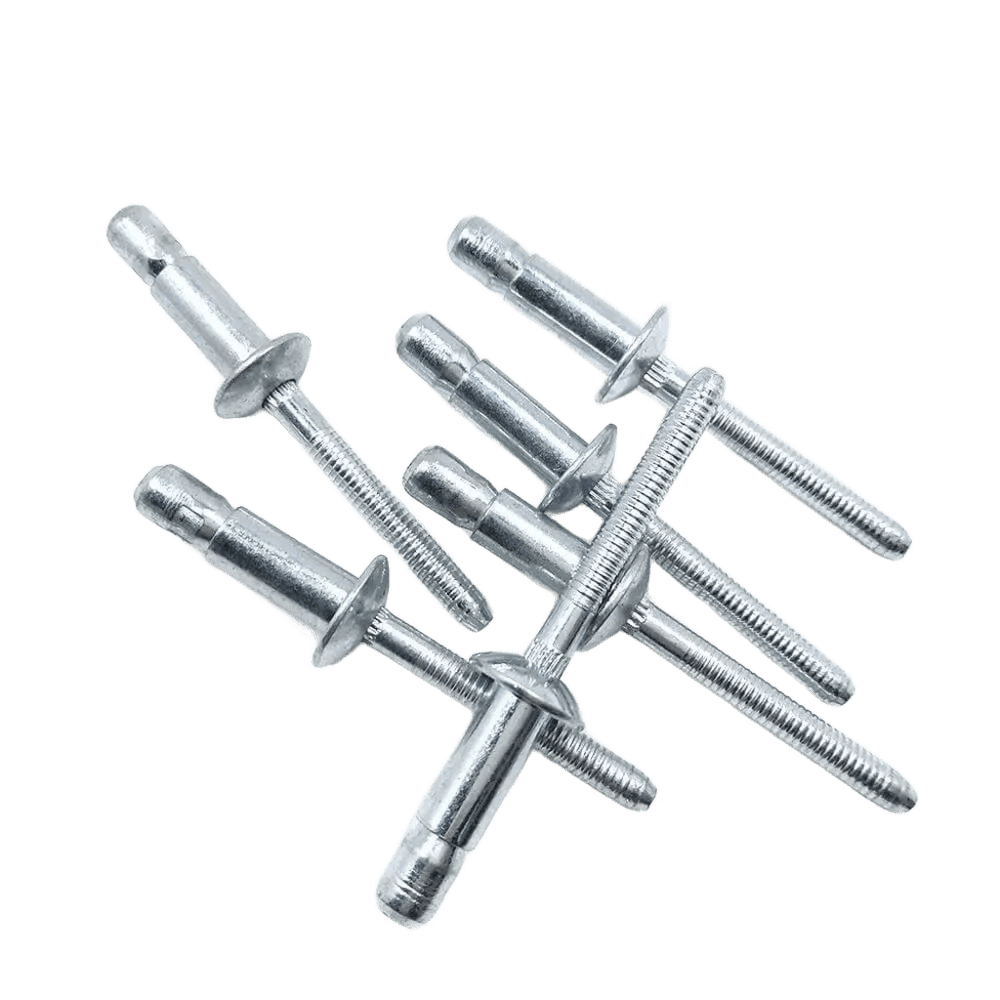
Why Choose Our Interlock Blind Rivets
- Excellent hole filling property and vibration resistant effect are realized by rapidly expanded rivet body, which can provide supplementary riveting for the irregular and over tolerance holes, oval or malposition holes.
- Good large-gap closing ability and strong clamp force of sheets.
- Mechanical mandrel locking mechanism which avoids damage, electric leakage or marowak sound caused by the loosening of mandrel.
- Large riveting grip range.
- High shear and tensile strength.
Rivmate —— Your Professional Customized Interlock Blind Rivets Manufacturer
Rivmate is a blind rivet manufacturer based in China. We provide customized Interlock Blind Rivets for B2B buyers, distributors, OEM projects, and industrial assembly customers. Interlock Blind Rivets feature an internal locking design, which helps achieve superior shear resistance and higher tensile strength, resulting in more stable riveting performance.
In terms of quality, we conduct production and inspection in accordance with IATF 16949 and ISO 9001 management requirements. Our products undergo dimensional inspection, tensile testing, shear testing, installation testing, and surface treatment inspection. Every batch of Interlock Blind Rivets meets consistent assembly requirements.
Interlock Blind Rivet By Material
Interlock blind rivets made from different materials vary in terms of strength, weight, corrosion resistance, cost, and installation performance. RIVMATE can help you quickly determine which material best meets your product’s requirements for strength, corrosion resistance, weight, cost, and workpiece material. This reduces the risk of loosening, corrosion, installation mismatches, and wasted costs down the line.
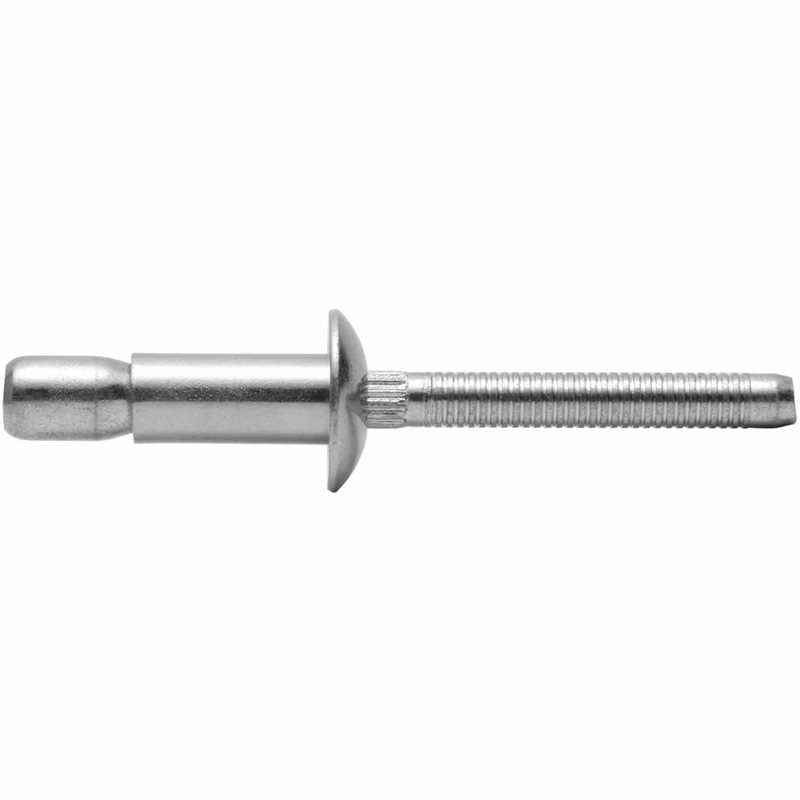
Steel Interlock Blind Rivets
Carbon steel offers higher load-bearing capacity at a relatively controlled cost. Steel Interlock Blind Rivets are suitable for applications requiring high connection strength, cost control, and primarily involving metal structure assembly.
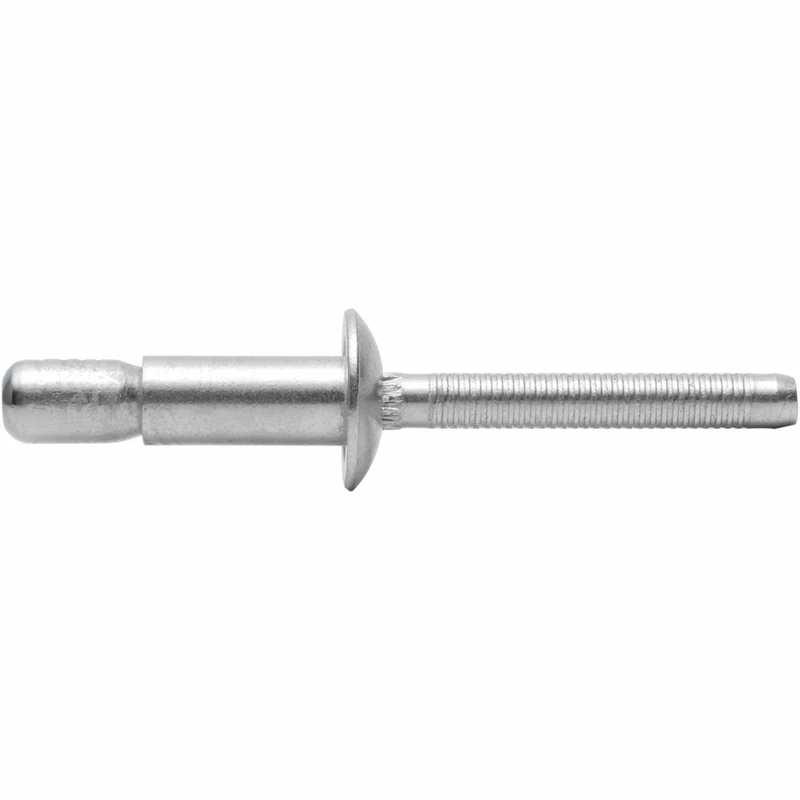
Aluminum Interlock Blind Rivets
Aluminum is lightweight but has lower strength than steel. Interlock Blind Rivets are commonly used in lightweight applications, aluminum sheet connections, or scenarios where material compatibility risks need to be minimized.

Stainless Steel Interlock Blind Rivets
Stainless steel offers higher strength and corrosion resistance but comes at a relatively higher cost. They are used for connections in outdoor, humid, or corrosive environments, or for joining stainless steel components.
Interlock Blind Rivet By size
Interlock Blind Rivet of different sizes are suitable for varying riveting thicknesses, hole sizes, installation tools, and connection strength requirements. Select the appropriate size based on the specific requirements of your product.
4.8mm Interlock Blind Rivets
4.8mm Interlock Blind Rivets are a common size for small to medium applications, with a riveting range of 1.6–16.9 mm. Interlock Blind Rivets are suitable for joining metal sheets where moderate strength is required.
6.4mm Interlock Blind Rivets
6.4mm Interlock Blind Rivets are commonly used for high-strength connections, with a riveting range of 2.0–19 mm. They are suitable for structural metal connections requiring higher strength, core retention, and seismic stability.
9.8mm Interlock Blind Rivets
These are larger-diameter structural rivets with a riveting range of 3–19 mm. Interlock Blind Rivets are suitable for engineering applications, vehicle structures, heavy equipment, or specialized metal assembly projects.
Interlock Blind Rivet by head shape
Differences in head shapes are not merely aesthetic; they also affect the contact area after riveting, surface flatness, load-bearing capacity, hole preparation methods, and the types of workpieces they are suitable for. Please provide specific requirements so that RIVMATE can assist you in making the right Interlock Blind Rivet.
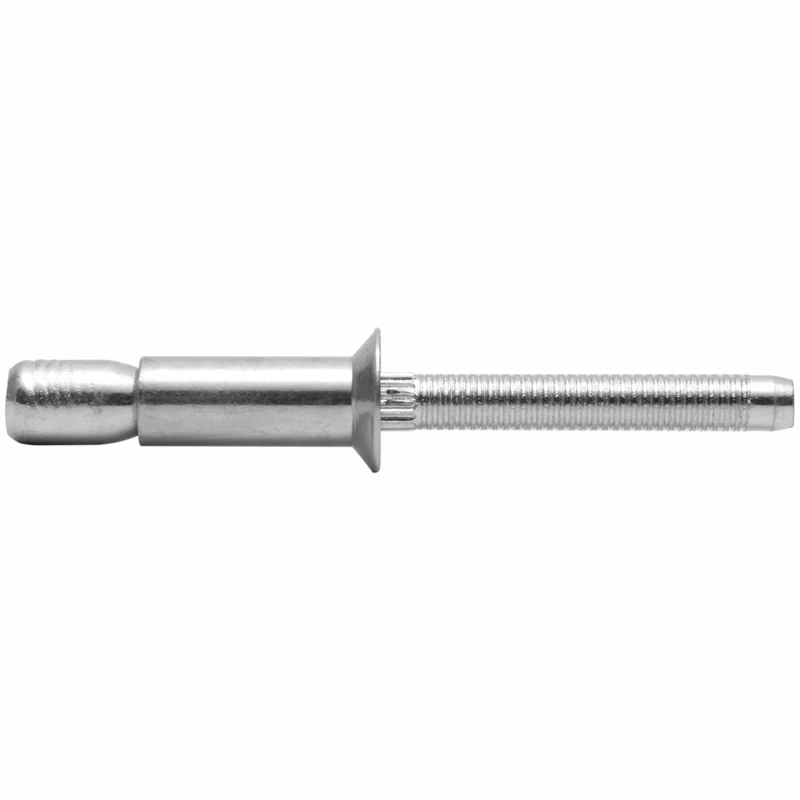
Countersunk Head Interlock Blind Rivets
Countersunk rivets have a conical head, which requires you to pre-drill a countersunk hole in the workpiece. After installation, the contact surface of the rivet head is flatter than that of a round-head rivet, resulting in a lower profile.
Round Head Interlock Blind Rivets
Round-head rivets require the rivet head to protrude from the surface of the workpiece. Unlike countersunk rivets, no additional countersunk hole is needed. Simply drill a standard mounting hole as required, making installation simpler and more versatile.
| Product Type | Head Type | Body Material | Mandrel Material | Surface Treatment | Rivet Size | Rivet Diameter d | Hole Dia | Grip Range | Head Dia dk | Head Height k | Mandrel Dia dm | Mandrel Reveal P | Tensile Strength | Shear Strength | Breaking Load | Retention Load |
|---|---|---|---|---|---|---|---|---|---|---|---|---|---|---|---|---|
| Carbon Steel Interlock Blind Rivets | Dome Head | Carbon Steel 10B21 | Carbon Steel SWCH45K | Zinc Plated | 4.8 mm | 4.70-4.88 mm | 4.9-5.1 mm | 1.6-16.9 mm | 10.2 mm | 2.5 mm | 3.1 mm | 27.0 mm | 4440 N | 5780 N | 8500 N | 1000 N |
| Carbon Steel Interlock Blind Rivets | Dome Head | Carbon Steel 10B21 | Carbon Steel SWCH45K | Zinc Plated | 6.4 mm | 6.40-6.58 mm | 6.7-6.9 mm | 2.1-15.8 mm | 13.5 mm | 3.1 mm | 4.1 mm | 27.0 mm | 8220 N | 11120 N | 15000 N | 1800 N |
| Carbon Steel Interlock Blind Rivets | Dome Head | Carbon Steel 10B21 | Carbon Steel SWCH45K | Zinc Plated | 9.8 mm | 9.70-9.88 mm | 10.0-10.4 mm | 3.1-15.5 mm | 20.5 mm | 4.5 mm | 6.2 mm | 35.0 mm | 17700 N | 26600 N | 32000 N | 2500 N |
| Carbon Steel Interlock Blind Rivets | Countersunk Head | Carbon Steel 10B21 | Carbon Steel SWCH45K | Zinc Plated | 4.8 mm | 4.70-4.88 mm | 4.9-5.1 mm | 3.2-12.7 mm | 9.2 mm | 2.1 mm | 3.1 mm | 27.0 mm | 4440 N | 5780 N | 8500 N | 1000 N |
| Carbon Steel Interlock Blind Rivets | Countersunk Head | Carbon Steel 10B21 | Carbon Steel SWCH45K | Zinc Plated | 6.4 mm | 6.40-6.58 mm | 6.7-6.9 mm | 4.3-17.5 mm | 11.4 mm | 2.3 mm | 4.1 mm | 27.0 mm | 8220 N | 11120 N | 15000 N | 1800 N |
| Carbon Steel Interlock Blind Rivets | Countersunk Head | Carbon Steel 10B21 | Carbon Steel SWCH45K | Zinc Plated | 9.8 mm | 9.70-9.88 mm | 10.0-10.4 mm | 6.1-19.0 mm | 16.5 mm | 3.7 mm | 6.2 mm | 35.0 mm | 15500 N | 25000 N | 32000 N | 2500 N |
| Stainless Steel Interlock Blind Rivets | Dome Head | 304 Stainless Steel | 304 Stainless Steel | Natural Polish | 4.8 mm | 4.70-4.88 mm | 4.9-5.1 mm | 1.6-16.9 mm | 10.2 mm | 2.5 mm | 3.1 mm | 27.0 mm | 4440 N | 5800 N | 6500 N | 445 N |
| Stainless Steel Interlock Blind Rivets | Dome Head | 304 Stainless Steel | 304 Stainless Steel | Natural Polish | 6.4 mm | 6.40-6.58 mm | 6.7-6.9 mm | 2.0-15.9 mm | 13.5 mm | 3.1 mm | 4.1 mm | 27.0 mm | 8010 N | 10500 N | 12000 N | 890 N |
| Stainless Steel Interlock Blind Rivets | Dome Head | 304 Stainless Steel | 304 Stainless Steel | Natural Polish | 9.8 mm | 9.70-9.88 mm | 10.0-10.4 mm | 3.0-15.9 mm | 19.5 mm | 4.5 mm | 6.2 mm | 35.0 mm | 19400 N | 26080 N | / | / |
| Stainless Steel Interlock Blind Rivets | Countersunk Head | 304 Stainless Steel | 304 Stainless Steel | Natural Polish | 4.8 mm | 4.70-4.88 mm | 4.9-5.1 mm | 3.2-12.7 mm | 9.2 mm | 2.2 mm | 3.1 mm | 27.0 mm | 4440 N | 5800 N | 6500 N | 445 N |
| Stainless Steel Interlock Blind Rivets | Countersunk Head | 304 Stainless Steel | 304 Stainless Steel | Natural Polish | 6.4 mm | 6.40-6.58 mm | 6.7-6.9 mm | 4.3-17.5 mm | 11.4 mm | 2.4 mm | 4.1 mm | 27.0 mm | 8010 N | 10500 N | 12000 N | 890 N |
| Aluminum Interlock Blind Rivets | Dome Head | Aluminum | Aluminum | Natural Polish | 4.8 mm | 4.70-4.88 mm | 4.9-5.1 mm | 1.6-11.0 mm | 10.2 mm | 2.5 mm | 3.1 mm | 27.0 mm | 2000-2225 N | 2660-2700 N | 4200 N | 350 N |
| Aluminum Interlock Blind Rivets | Dome Head | Aluminum | Aluminum | Natural Polish | 6.4 mm | 6.40-6.58 mm | 6.7-6.9 mm | 2.1-15.8 mm | 13.5 mm | 3.1 mm | 4.1 mm | 27.0 mm | 3960 N | 5785 N | 7000 N | 450 N |
| Aluminum Interlock Blind Rivets | Dome Head | Aluminum | Aluminum | Natural Polish | 9.8 mm | 9.70-9.88 mm | 10.0-10.4 mm | 3.1-15.5 mm | 20.5 mm | 4.5 mm | 6.2 mm | 35.0 mm | 8100 N | 13300 N | 14000 N | 1200 N |
| Aluminum Interlock Blind Rivets | Countersunk Head | Aluminum | Aluminum | Natural Polish | 4.8 mm | 4.70-4.88 mm | 4.9-5.1 mm | 3.2-12.7 mm | 9.2 mm | 2.2 mm | 3.1 mm | 27.0 mm | 2225 N | 2700 N | 4200 N | 350 N |
| Aluminum Interlock Blind Rivets | Countersunk Head | Aluminum | Aluminum | Natural Polish | 6.4 mm | 6.40-6.58 mm | 6.7-6.9 mm | 4.3-18.4 mm | 11.4 mm | 2.4 mm | 4.1 mm | 27.0 mm | 3960 N | 5785 N | 7000 N | 450 N |
Steps of Interlock Blind Rivet Installation
- Insert the rivet into the pre-drilled hole, ensuring that the rivet head sits flush against the workpiece.
- Place the rivet gun’s nozzle over the rivet mandrel and hold the tool vertically.
- Activate the rivet gun and pull the rivet mandrel to expand the rivet body and secure the workpiece.
- Once the rivet mandrel breaks off, the riveting is complete. Check that the rivet is secure and flush.
Interlock Blind Rivet Manufacturing You Can Trust
RIVMATE operates its own factory for the independent production of Interlock Blind Rivets, ensuring greater control over product quality. More importantly, the company maintains its own in-house mechanical testing laboratory. Every batch of Interlock Blind Rivets undergoes shear strength, tensile strength, gap-filling capability, and vibration fatigue testing. The company can issue PPAP Level 3 test reports.
- Mechanical Testing Laboratory
- PPAP Level 3 Report Support
- Batch-by-Batch Quality Inspection
- Full Traceability System
We have established a comprehensive batch traceability system covering the entire production process, from raw material intake to finished product shipment. Each box of products is printed with a unique batch code. In the event of any issues, the entire production history can be traced with a single click. Certified under the ISO 9001 quality management system, our products are suitable for procurement in industries with high safety requirements, such as rail transit and electrical control cabinets.
Pop Rivet Cold Heading Machines
Rivet Assembly machines
Our Rivet Warehouse
Stable Bulk Supply for Interlock Blind Rivet
With RIVMATE, you can quickly restock the Interlock Blind Rivets you need. We support mixed orders of common specifications, bulk orders, sample testing, and custom-branded packaging. This helps overseas distributors more easily serve OEM factories, repair shops, and industrial assembly customers.
- Wide range of specifications
- Private Label Packaging
- Sample Support Before Bulk Orders
- Upgraded multi-station cold heading machine
- Fast Stock Replenishment
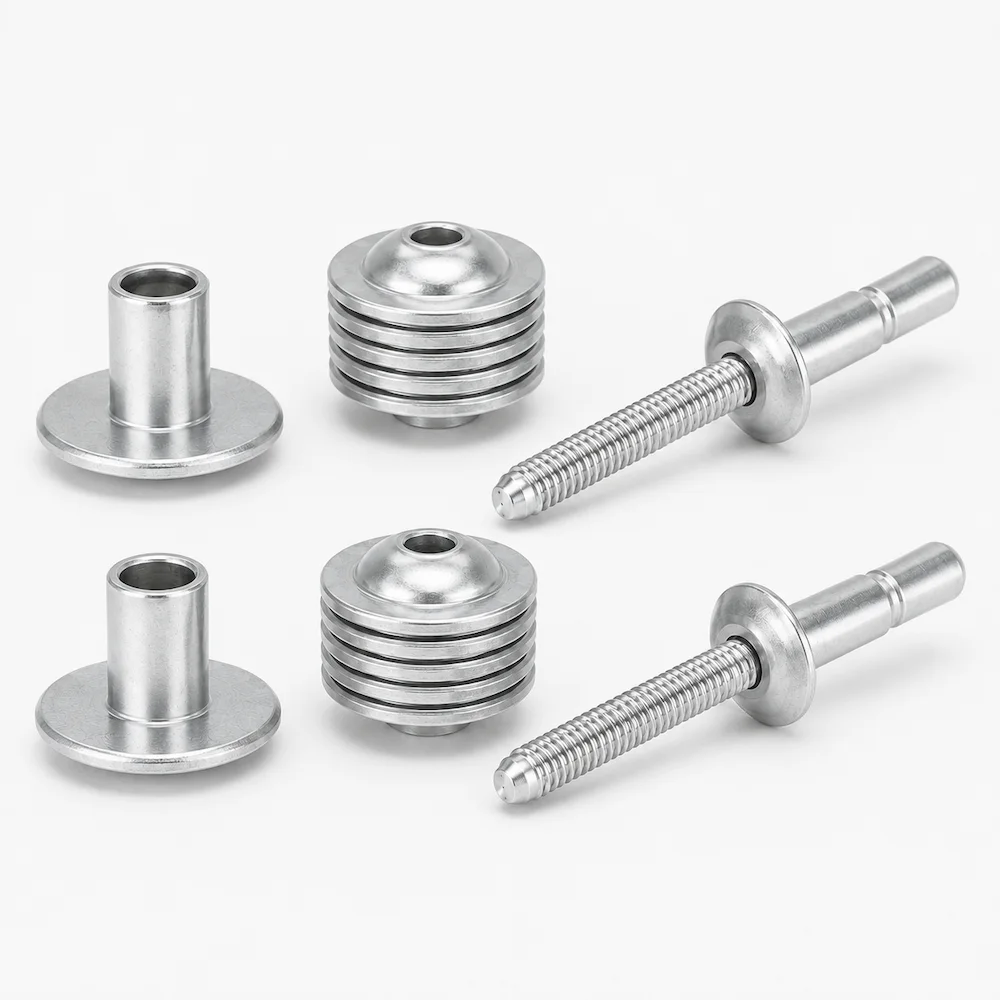
Our Interlock Blind Rivet production line features a multi-station cold heading unit developed and upgraded in-house. It is specifically designed to forge the locking core structure of Interlock rivets in a single operation. Designed for stronger structural connections, high-vibration assemblies, and long-term industrial applications, RIVMATE provides reliable quality control support to distributors and importers.
Applications of Interlock Blind Rivets
When standard blind rivets are not strong enough for your assembly, Interlock Blind Rivets help you create stronger, more stable, and more vibration-resistant structural joints.
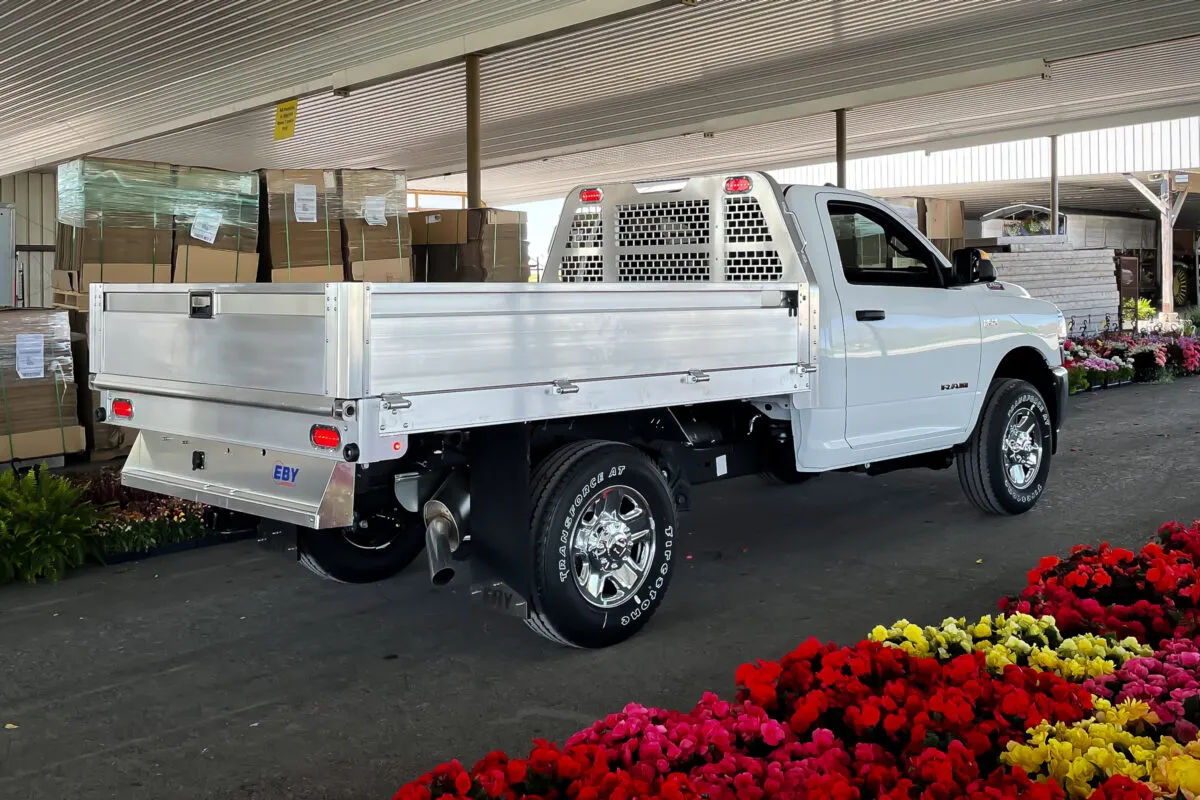
Truck Body & Trailer Assembly
Effectively improves rivet mandrel retention and joint stability. Interlock Blind Rivets are used for connections in truck bodies, side panels, brackets, and reinforcements, making them ideal for environments subject to long-term vibration.
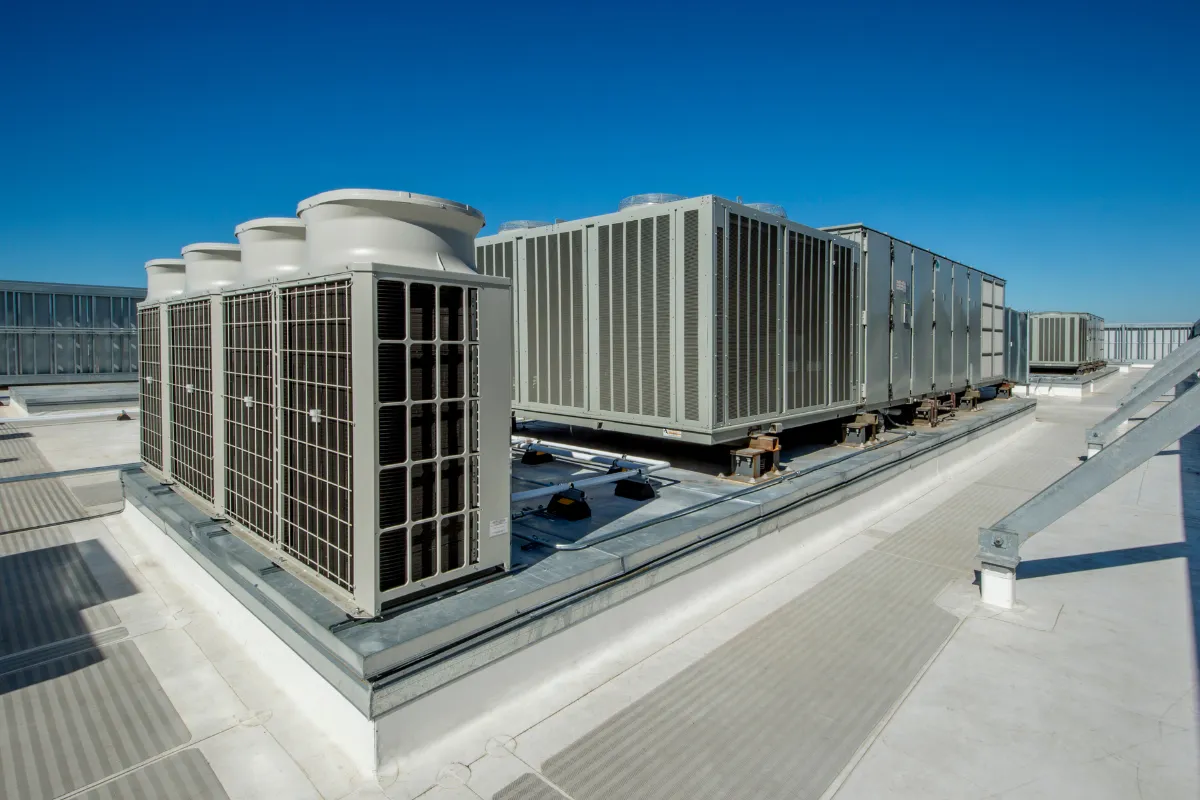
HVAC Equipment & Sheet Metal Housing
Reduce the risk of fan vibration or abnormal noise in your enclosures. Interlock Blind Rivets are used in the assembly of fan housings, control cabinets, metal enclosures, and equipment panels.
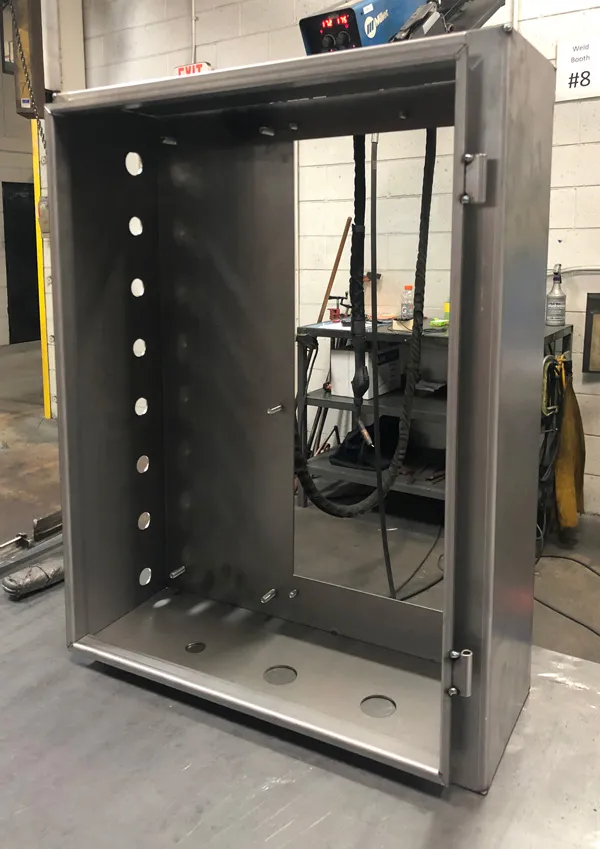
Metal Cabinets & Electrical Enclosures
Interlock Blind Rivets help maintain aesthetic appeal and structural integrity. They are used to connect sheet metal enclosures, metal frames, stamped parts, and bent parts, enhancing assembly strength.

Solar Mounting & Outdoor Metal Structures
Reduce the impact of wind vibration, rain, temperature fluctuations, and long-term loads on outdoor structures. Interlock Blind Rivets are used for outdoor metal brackets, mounting structures, and vibration-resistant connections.

Industrial Equipment & Machinery Covers
Improve the stability of frame structures and assembly consistency. Interlock Blind Rivets are used to connect equipment housings, protective covers, internal brackets, and structural components, thereby reducing the risk of loosening.

Railway and Vehicle Components
Enhance the overall reliability of riveted joints. Interlock Blind Rivets are used for vehicle structural components, panel fastening, support members, and high-strength connection points.
Get An Instant Quote Now
1.How to identify high-quality interlock rivets for structural projects
To determine whether interlock rivets are high-quality, you need to evaluate their structure, material, dimensions, locking performance, installation performance, and test data.
High-quality interlock rivets must feature a stable mandrel locking mechanism, which is the core feature of interlock rivets. Additionally, they should not loosen easily after installation. High-quality interlock rivets should also have excellent hole-filling capabilities, allowing them to accommodate irregular, out-of-tolerance, or slightly misaligned holes. If you are using them for structural projects, you will need accurate data to make a professional assessment. You should also request that the supplier provide tensile test results, shear test results, material certificates, and installation test data.
2.How do interlock rivets perform in high-vibration environments?
Interlock Rivets generally perform more reliably in high-vibration environments.
The core advantage of Interlock Rivets lies in their internal locking mechanism. Once installed, the mandrel is securely locked within the rivet body, minimizing the risk of loosening, detachment, or abnormal noise.
In equipment designed for long-term operation, connection points are frequently subjected to continuous vibration and impact. Interlock Blind Rivets utilize a mechanical locking mechanism to ensure superior stability at the connection point. During installation, the rivet body rapidly expands, providing excellent hole-filling capability. This enhances clamping force, hole-filling capacity, shear resistance, and long-term connection stability.
3.How to become a reseller of interlock rivets
If you are interested in becoming an Interlock Rivets reseller, first identify your target market, customer base, and common specification requirements. Interlock Blind Rivets are suitable for customers in the automotive, truck, equipment manufacturing, metal fabrication, enclosures, rail transportation, and industrial assembly sectors.
You can also contact us at RIVMATE to provide details about your market, target customers, estimated purchase volume, and commonly used sizes. Based on your sales objectives, we will help you identify the most suitable Interlock Rivets product portfolio for distribution. Once you become a new distributor, we recommend starting with sample testing. You can test Interlock Rivets in various materials, head types, and sizes. Through installation, verify the installation results, core stability, tensile strength, shear strength, and surface finish quality. After confirming the samples, place a small trial order first, then scale up based on the results.
Rivmate supports long-term partnerships with distributors, offering services such as standard specification supply, bulk orders, OEM packaging, custom labeling, neutral packaging, test reports, material certificates, and batch traceability. We can help you establish a more comprehensive Interlock Blind Rivets product line.
4.How do interlock rivets provide secure fastening?
Interlock Rivets achieve secure fastening through a combination of body expansion and internal mandrel locking.
In addition to body expansion, Interlock Rivets incorporate a mandrel locking mechanism. This enhances the stability of the joint. This design reduces the risk of mandrel loosening, rattling, and joint failure.
During actual assembly, if your holes have slight misalignment, Interlock Rivets offer superior hole-filling capabilities. They effectively fill irregular, out-of-tolerance, elliptical, or slightly misaligned holes, thereby reducing gaps and fretting wear. At the same time, they provide greater clamping force.
For structural projects requiring higher reliability, Interlock Blind Rivets are generally more stable than standard blind rivets.
5.How to get quotes from interlock rivet manufacturers for large-scale orders
If you wish to obtain an accurate quote from Interlock Rivet manufacturers, you must first prepare a complete set of procurement details. The more detailed the information, the more accurate the quote you will receive. This is because the price of Interlock Rivets is influenced by factors such as material, dimensions, length, surface treatment, order quantity, packaging method, and inspection requirements.
Most importantly, you should also inquire whether the manufacturer offers sample testing, OEM packaging, inspection reports, material certificates, and long-term, stable supply. For large-volume orders, it is not advisable to select a supplier based solely on the lowest price. You should also compare production capacity, quality consistency, test data, delivery times, and after-sales support.
Professional Inspection Video for Interlock Blind Rivets
The following videos, which document and compare test results, provide a clear overview of Rivmate’s quality verification process for Interlock Blind Rivets.
Rivmate carbon steel NOW-LOCK rivets VS. the original Huck Interlock
Mandrel Breaking Force Test for Interlock Blind Rivets
Professional manual dimensional inspection of Interlock Blind Rivets
Resource Center
Access helpful materials to support your project planning and product selection. Download documents for reference and on-site use.
Rivet Catalog
Browse our full blind rivet catalog including product types, specifications, and application examples.I am Trailer Box Description Text. You can change me anytime from settings.
Interlock Blind Rivet Drawing
Download the technical drawings for the rivets, which include dimensions, internal structure, and basic product information
What Are Interlock Blind Rivets?
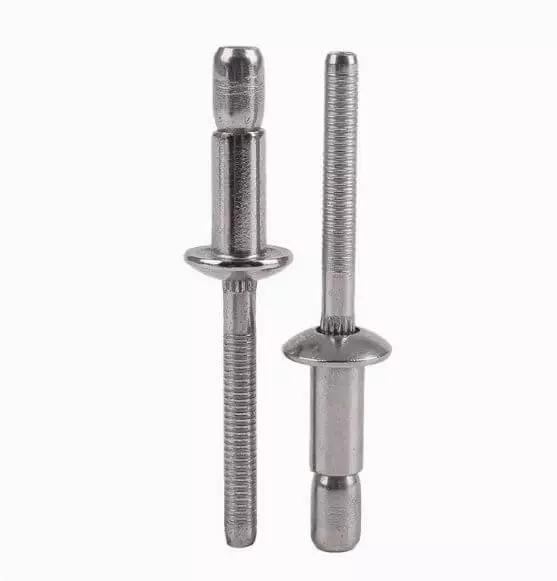
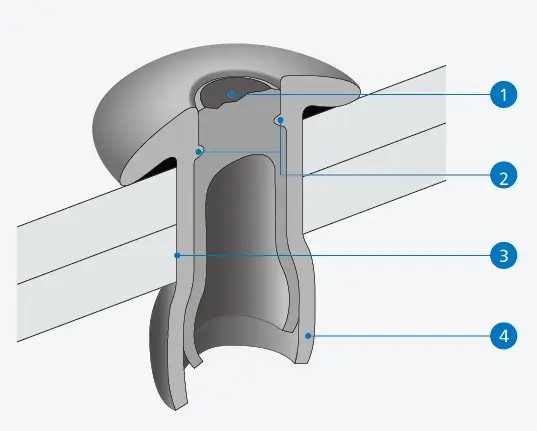
Interlock Blind Rivets are high-strength structural blind rivets, also known as Now-lock Interlock Blind Rivets. They are not ordinary open-end blind rivets. Installation is completed from a single side. The key feature of Interlock Blind Rivets is that the mandrel is mechanically locked inside the rivet body after installation. It does not rely solely on fracture or friction to maintain its hold. This internal locking mechanism provides a more stable connection, making it suitable for applications involving high vibration, high tensile forces, and high shear forces.
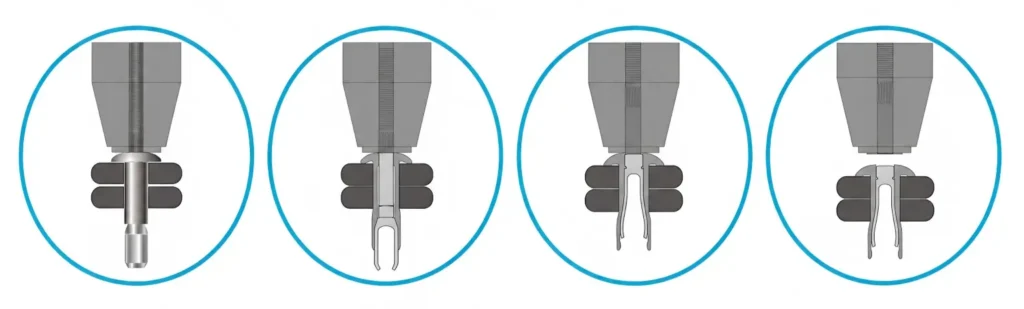
How Interlock Blind Rivets Work
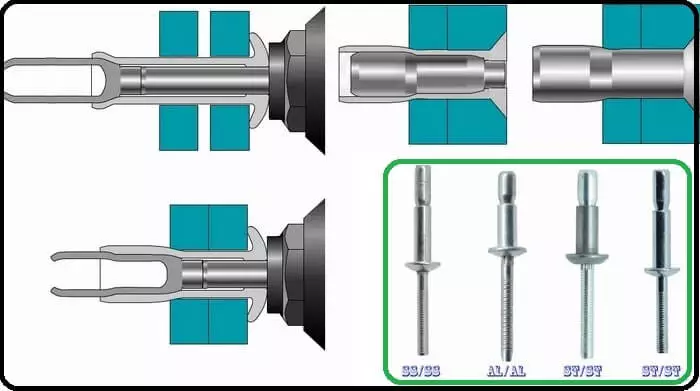
Step 1: Insert the Rivet
First, drill a hole in the workpiece surface. Then insert the rivet into the hole from one side. The rivet head should be flush with the workpiece surface.
The diameter of the hole should be determined based on specific requirements, as it directly affects the riveting result.
Step 2: Pulling the Mandrel with a Tool
First, use a specialized riveting tool to pull the mandrel. The mandrel then drives the rivet body to deform. The rivet body begins to expand on the back side, gradually clamping the workpiece.
Step 3: Forming a Mechanical Connection
The rivet body expands within the hole. It fills the hole and compresses the multiple layers of material beneath it. This process creates a stable mechanical connection.
Step 4: Internal Locking of the Mandrel
Once the riveting is complete, the mandrel is locked inside the rivet body. The mandrel will not loosen easily. The riveted joint will be more stable. This is the core advantage of the internal locking structure.
Advantages of using interlock rivets in manufacturing
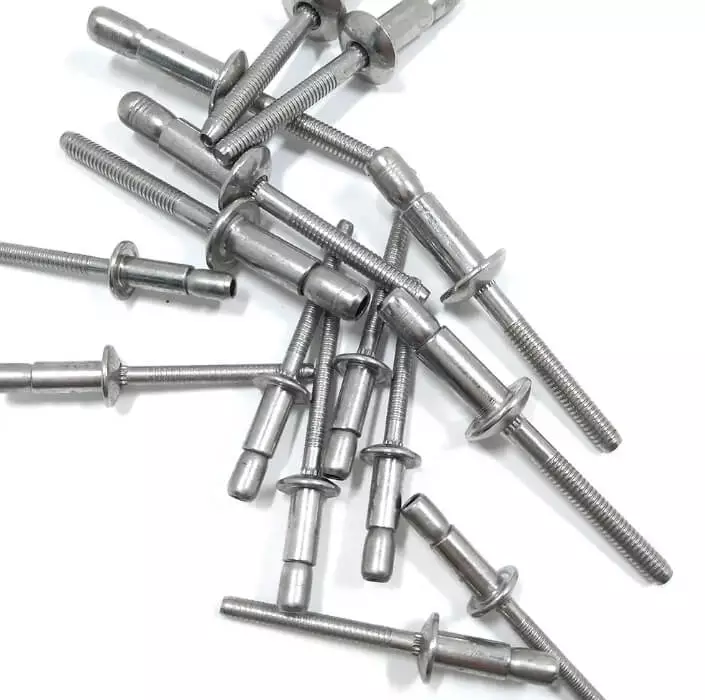
- More Secure Shank Locking
Compared to standard rivets, the residual stability of the shank is relatively weak. After prolonged vibration, the joint may become loose.
However, Interlock Blind Rivets can mitigate this risk. Their key advantage is that once the shank is mechanically locked in place, the overall strength of the joint is significantly improved. This is particularly important for vehicle bodies, equipment, and machine housings.
- Higher Shear Strength
Interlock Blind Rivets are suitable for applications requiring higher load-bearing capacity. As a structural fastener,
they are better suited for heavy-duty connections than standard open-end rivets.
- Superior Pull-Out Resistance
If your connection points are subject to outward pulling forces, this performance characteristic is critical. The internal locking mechanism of Interlock Blind Rivets creates a more stable, integrated unit between the mandrel and the rivet body.
This effectively enhances the reliability of the connection against pull-out forces.
- Suitable for High-Vibration Environments
If your product is subject to prolonged vibration, standard rivets may not provide sufficient stability. Operation subjects connection points to continuous shock and vibration. Interlock Blind Rivets are better suited for such environments. Since the mandrel is locked in place, the riveted joint is less prone to loosening.
- Better Hole-Filling Effect
After installation, the rivet body expands within the hole, providing better hole-filling. The better the hole-filling effect, the tighter the connection.
- Easier Single-Side Installation
You only need to install from one side—this is the advantage of blind rivets. Even if the back of the workpiece is inaccessible, you can still complete the connection. This improves assembly efficiency.
- Reduced Space Requirements for Assembly
Bolts and nuts typically require clearance on both sides. Welding also requires sufficient working space. The self-locking blind rivet only requires access from one side. Therefore, it is suitable for locations with limited space.
Comparing interlock rivets to standard blind rivets
| Comparison Item | Interlock Blind Rivets | Standard Blind Rivets |
|---|---|---|
| Product Positioning | Structural fastening | General fastening |
| Mandrel Status | Internally locked mandrel | Weaker mandrel retention stability |
| Shear Performance | Higher | Lower |
| Tensile Performance | Stronger | General |
| Vibration Resistance | More suitable for high-vibration environments | More suitable for light-duty environments |
| Hole Filling Ability | Better | General |
| Application Scenarios | Vehicle bodies, equipment, and metal structures | General thin sheets and light-duty assembly |
| Cost | Higher unit cost | Lower unit cost |
| Application Value | Improves fastening reliability | Meets general fastening requirements |
How to Select Interlock Blind Rivets Correctly?
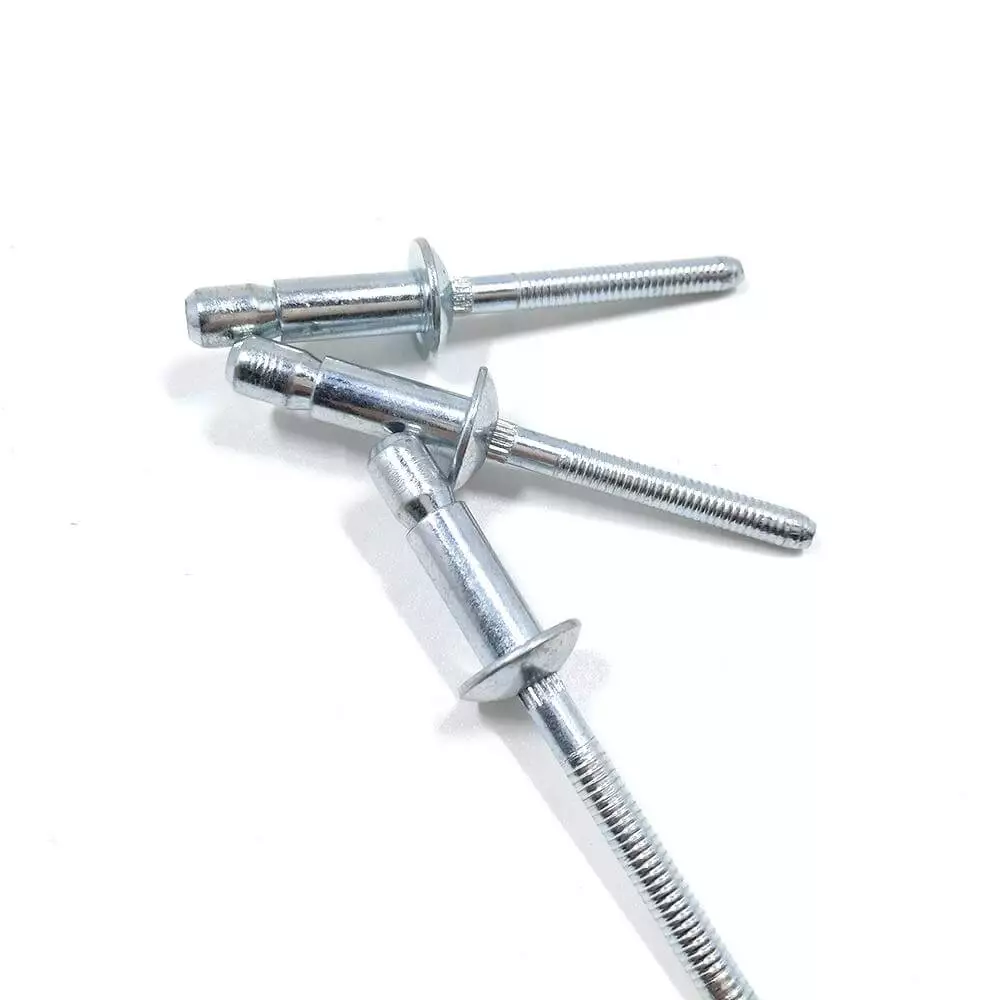
1. Determine the Total Material Thickness
First, measure the total thickness of all materials. Then, match it to the appropriate grip range.
2. Determine Load Requirements
Second, determine the load requirements. If lateral forces are high, check the shear strength. If tensile forces are high, check the tensile strength. If the application involves prolonged vibration, evaluate the mandrel locking and hole-filling performance.
3. Determine the Application Environment
Third, determine the environment in which the Interlock Blind Rivets will be used. For indoor environments, standard steel may be considered. For outdoor environments, consider corrosion-resistant treatment. For humid and corrosive environments, stainless steel is recommended. For lightweight structures, aluminum may be considered.
4. Determine the Head Type
Fourth, select the head type based on the required surface finish. Choose a round head for general structural connections. Choose a countersunk head for a smooth surface finish. A countersunk head requires a countersunk hole to be machined.
5. Confirm the Tool
Fifth,you need to confirm the tool’s pulling force. You should also verify the nozzle specifications and installation stroke.
If the tool is not compatible, it will affect the riveting results.
6. Test Samples First
Sixth,you can purchase samples for testing. Test the installation results and strength, as well as stability after vibration, to determine if they meet your product’s requirements. Proceed with bulk purchasing only after confirmation.