
Rivet Heat Treatment Controlled by Standardized Process Audits
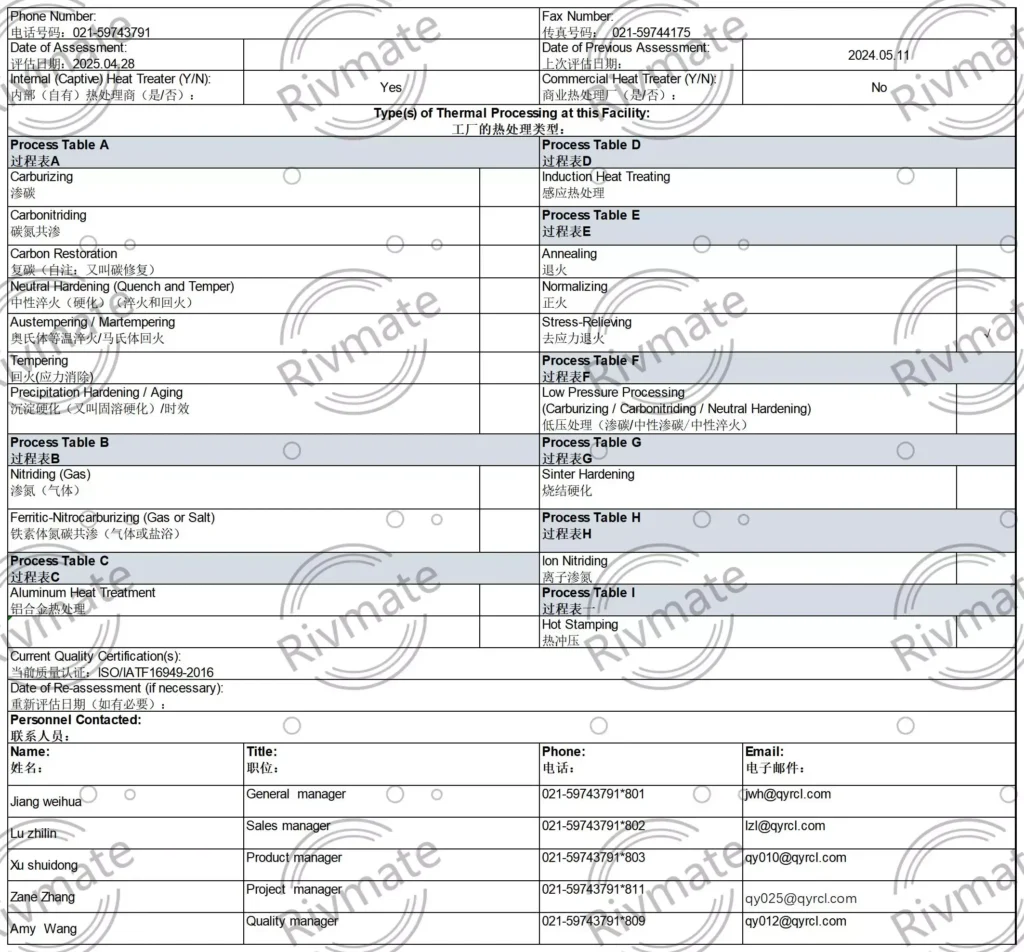
At Rivmate, heat treatment is not only a production step. It is a controlled process supported by documented procedures, process parameters, equipment calibration, inspection records, and corrective action management.
Why Heat Treatment Matters for High-Strength Rivets?
For structural rivets, lockbolt rivets, interlock blind rivets, monobolt rivets, and steel blind rivets, heat treatment directly affects hardness, tensile strength, shear strength, toughness, and long-term fastening stability.
Without stable heat treatment control, rivets may face problems such as:
- unstable hardness
- abnormal mandrel breakage
- deformation
- brittle fracture
- inconsistent performance between batches
Heat Treatment Managed Under CQI-9 Style Process Assessment
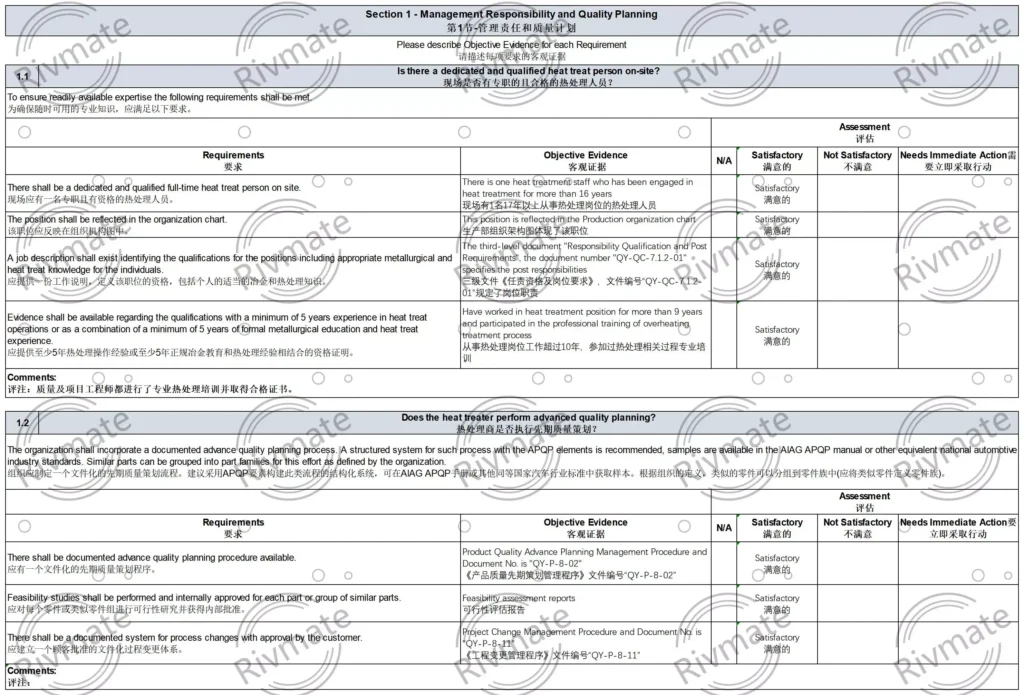
Rivmate follows a structured heat treatment control mindset based on CQI-9 heat treatment system assessment principles. The process focuses on management responsibility, quality planning, process control, equipment calibration, job audit, product testing, and corrective action tracking.
| Heat Treatment Control Area | What This Means for Our Customers |
|---|---|
| Management Responsibility | Heat treatment is managed as a controlled manufacturing process, with trained personnel, clear responsibilities, and documented operating requirements. |
| Quality Planning | Before production, heat treatment requirements are reviewed through quality planning, control plans, process documents, and inspection standards. |
| Process Control | Key process parameters such as temperature, heating time, loading method, furnace atmosphere, and cooling conditions are monitored to improve batch consistency. |
| Job Audit | Each production batch can be checked against process cards, work instructions, inspection records, and production requirements. |
| Process Inspection | Critical heat treatment items are inspected at defined frequencies to verify hardness, appearance, dimensional stability, and product performance. |
| Corrective Action | When an abnormal issue is found, root cause analysis, corrective actions, responsible persons, and follow-up verification are managed in a closed-loop process. |
Dedicated Heat Treatment Responsibility and Trained Personnel
A stable heat treatment process requires qualified personnel, clear responsibilities, documented job descriptions, and continuous training. Our heat treatment control system is managed by trained personnel who understand
- process parameters
- equipment operation
- inspection requirements
- abnormal handling procedures.
Quality Planning Before Rivet Heat Treatment
Before heat treatment production, Rivmate reviews product requirements, material type, hardness requirements, strength targets, customer drawings, process specifications, and inspection methods. For similar rivet families, process control plans can be established to ensure stable production from sample validation to bulk orders.
- Customer Requirement Review
- Material and Rivet Type Confirmation
- Heat Treatment Process Planning
- Control Plan and Inspection Standard
- Sample Validation Before Mass Production
Why Customers Trust Rivmate Heat-Treated Rivets
The heat treatment process is documented, standardized, and recorded
Manage processes in accordance with the automotive industry’s heat treatment audit protocols
Regular calibration and maintenance of critical equipment
Hardness and performance verification following heat treatment
Traceability for every batch of products
Closed-loop corrective action and verification upon identification of issues