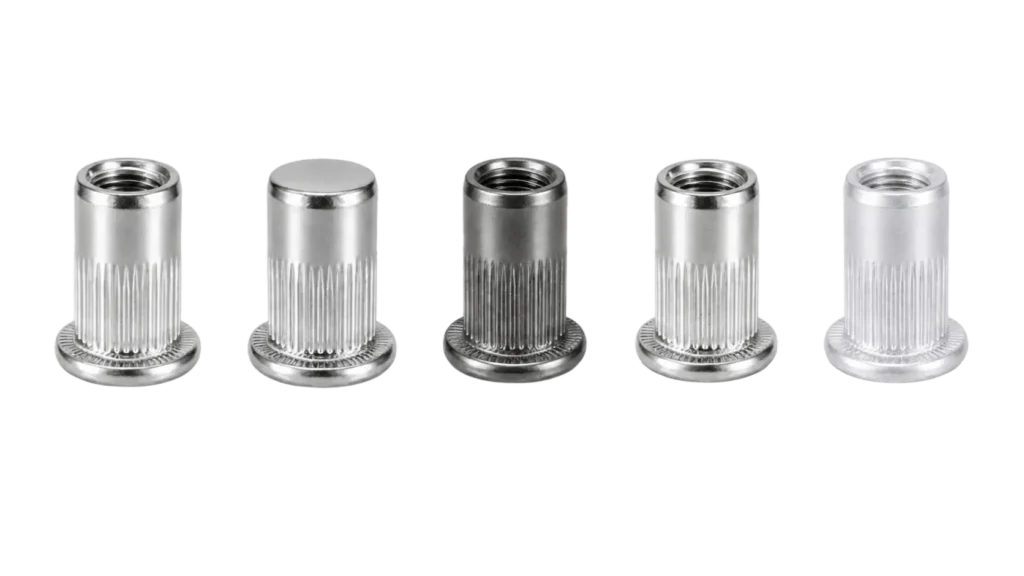
knurled rivet nuts
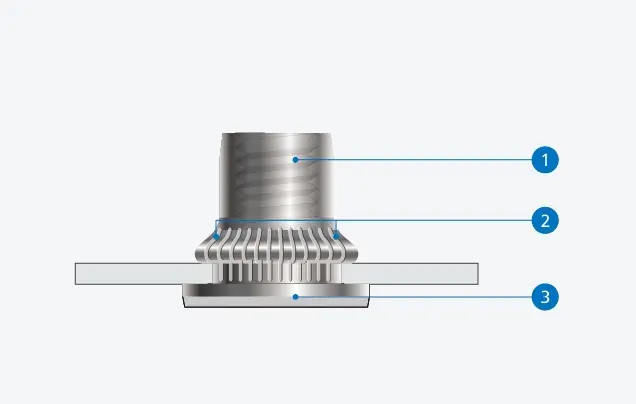
Rivmate offers both standard and custom knurled rivet nuts. The knurled surface of the rivet nut enhances the grip between the nut and the wall of the mounting hole, reducing the risk of rotation. They are suitable for applications such as thin sheets, sheet metal parts, aluminum sheets, and enclosures.
- Improves resistance to twisting
- Reduces problems with post-welding deformation and subsequent repairs
- Suitable for internal threaded connections in thin plates


Why Choose Our knurled rivet nuts
- Knurled design enhances grip on the hole walls
- Suitable for installation in standard round holes
- Creates a stable internal thread in thin plates
- Reduces the risk of the bolt rotating along with the fastener during tightening
Rivmate —— Your Professional Customized knurled rivet nuts Manufacturer
As a knurled rivet nuts professional manufacturer and supplier, Rivmate not only offers standard knurled rivet nuts but also provides customization services. We can tailor the material, dimensions, head type, surface treatment, and packaging to your specific needs.
If you haven’t yet determined the custom specifications for your knurled rivet nuts, please let us know your application environment and sheet thickness. Our team of professional engineers will analyze your requirements and recommend a suitable riveting solution.
Classified by Material
Rivmate offers knurled rivet nuts made of carbon steel, stainless steel, and aluminum. Different materials are suited for different environmental requirements. Their strength, corrosion resistance, and cost vary accordingly.

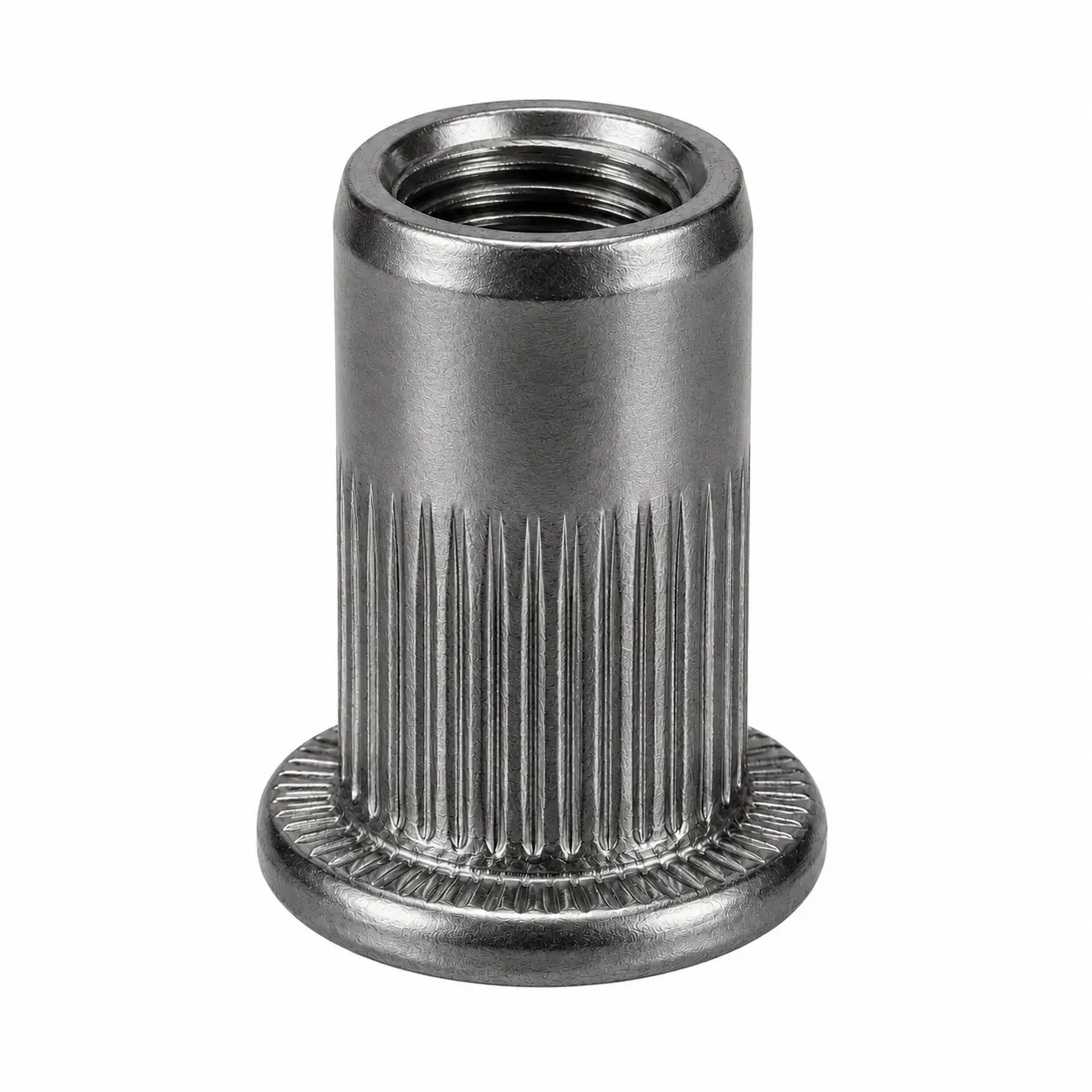
Carbon Steel Knurled Rivet Nuts
It is suitable for applications requiring mechanical strength, cost-effective bulk purchasing, and reliable industrial assembly. Carbon steel is the more cost-effective option.
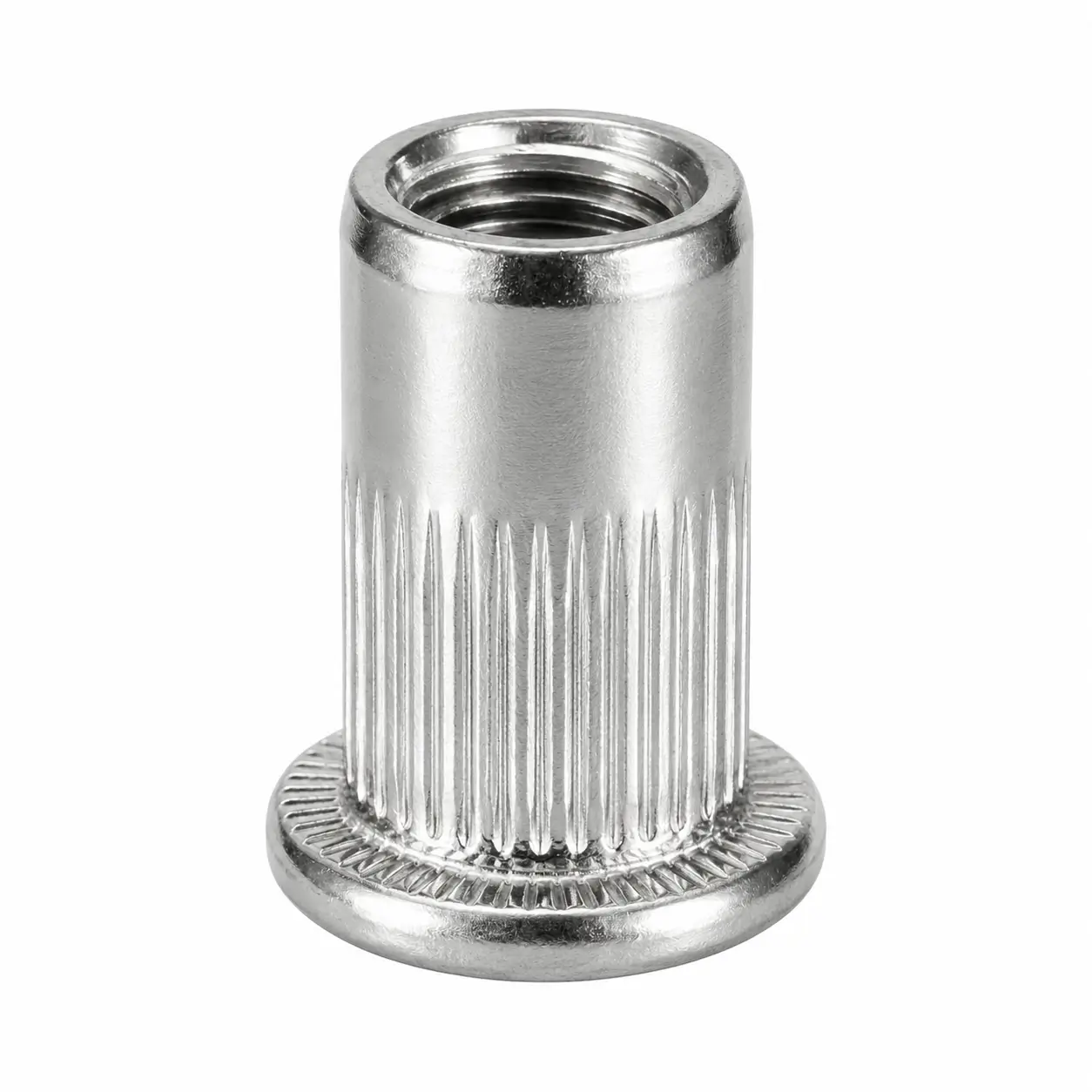
Stainless Steel Knurled Rivet Nuts
It is suitable for projects with high requirements for corrosion resistance, service life, and outdoor environments. They are widely used in industrial assembly applications where rust prevention is critical.
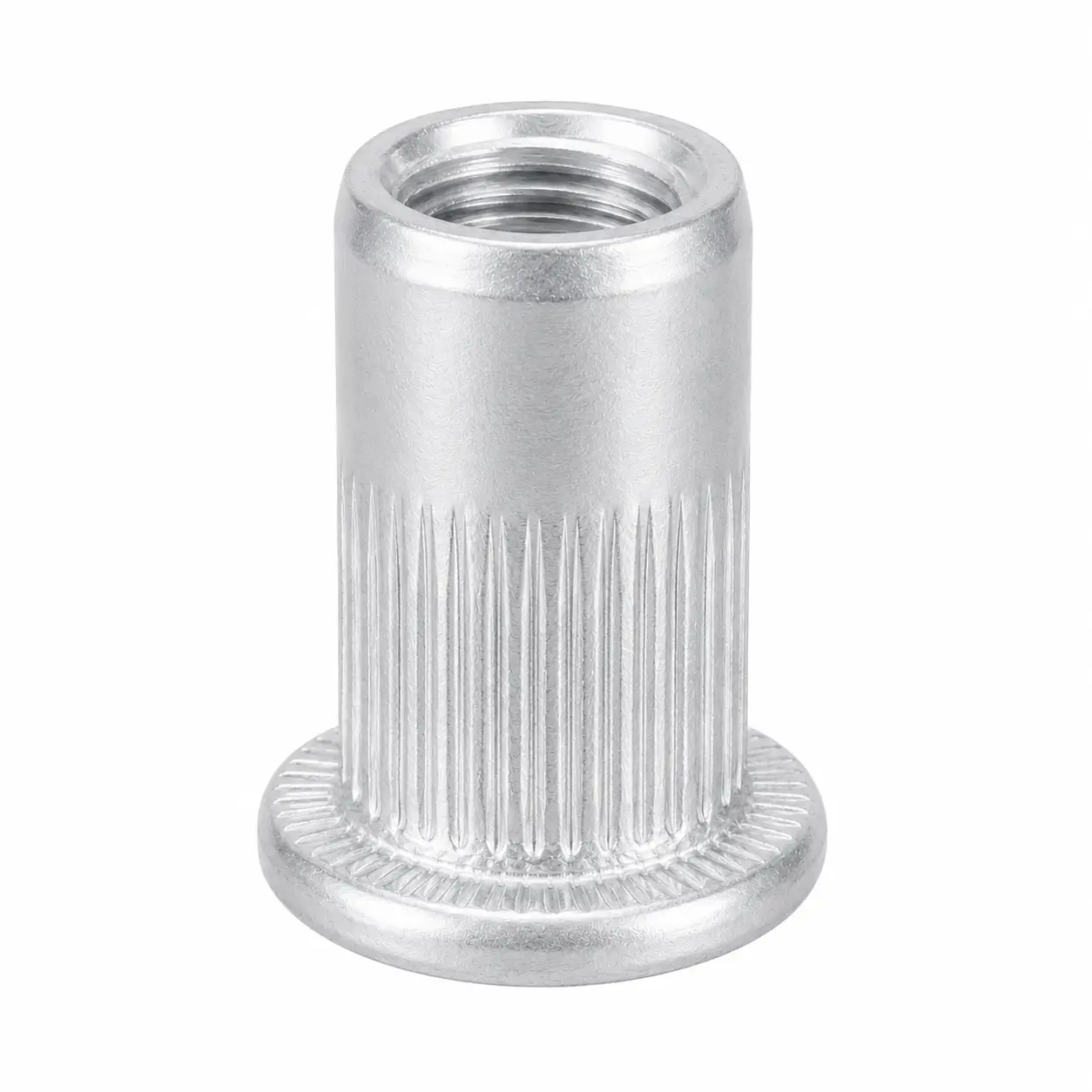
Aluminum Knurled Rivet Nuts
It is lightweight and easy to install. It is particularly suitable for lightweight assemblies and aluminum sheet connections. It is commonly used for aluminum alloy panels and lightweight equipment housings.
Classified by size
Rivmate offers knurled rivet nuts in a variety of sizes, including M3, M4, M5, M6, M8, M10, and M12. Different sizes are suitable for different sheet metal thicknesses and application environments.

M3 Knurled Rivet Nuts
The grip range for this size is 0.5–3.0 mm. It is suitable for precision assembly applications with limited space, small connection points, and low load requirements.

M8 Knurled Rivet Nuts
The grip range for this size is 1–5.5 mm. It is suitable for industrial applications such as equipment housings and structural support components that require higher load-bearing capacity and higher torque.

M4 Knurled Rivet Nuts
The grip range for this size is 0.5–4.0mm. It is suitable for lightweight connections and provides a stable internal thread while maintaining a low-profile appearance.

M10 Knurled Rivet Nuts
The grip range for this size is 1–6 mm. It is suitable for large-scale equipment, heavy-duty sheet metal structures, and other applications requiring larger bolt connections and higher-strength assemblies.

M5 Knurled Rivet Nuts
The grip range for this size is 0.5–5.0 mm. It has a wide range of applications and is suitable for most medium-strength industrial sheet metal assembly needs.

M12 Knurled Rivet Nuts
The grip range for this size is 2.0–8.0mm. It is suitable for high-strength fastening applications; the appropriate model should be selected based on the actual board thickness, hole diameter, and installation conditions.

M6 Knurled Rivet Nuts
The grip range for this size is 0.5–5.5 mm. It provides stronger threaded connections and is suitable for applications requiring higher assembly strength.
Classified by head shape
Knurled rivet nuts can be categorized based on head style into flat head, reduced head, and countersunk head types. Different head types affect the contact area, surface height, and appearance after installation.

Flat Head Knurled Rivet Nuts
Once installed, it provides a stable support surface that helps distribute the clamping force across the panel surface. It is suitable for industrial assembly applications such as electrical cabinets and mechanical enclosures.
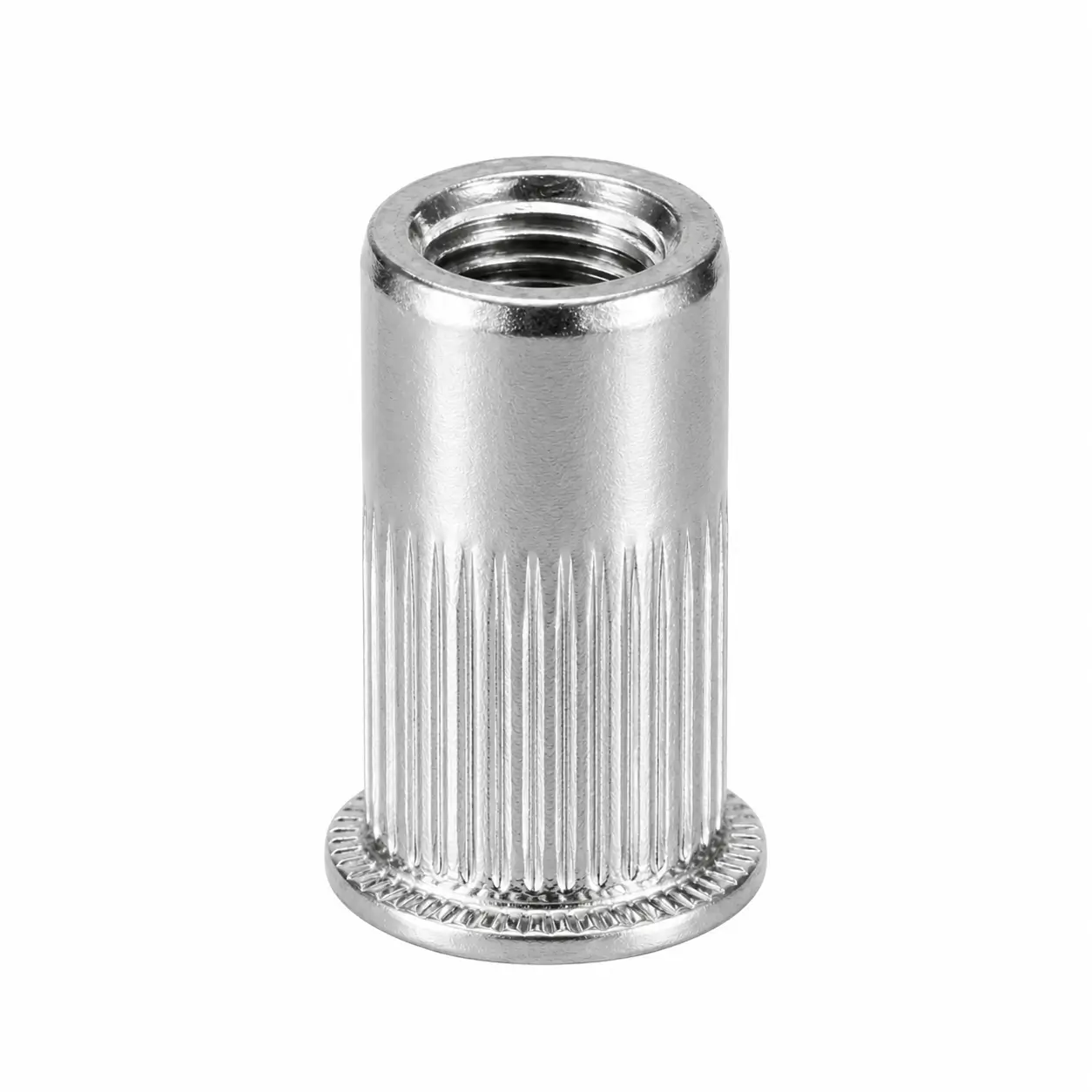
Reduced Head Knurled Rivet Nuts
Its head diameter is smaller than that of a standard flat-head design, reducing the exposed head area. It is suitable for applications where installation space is limited or where aesthetically pleasing appearance is required.
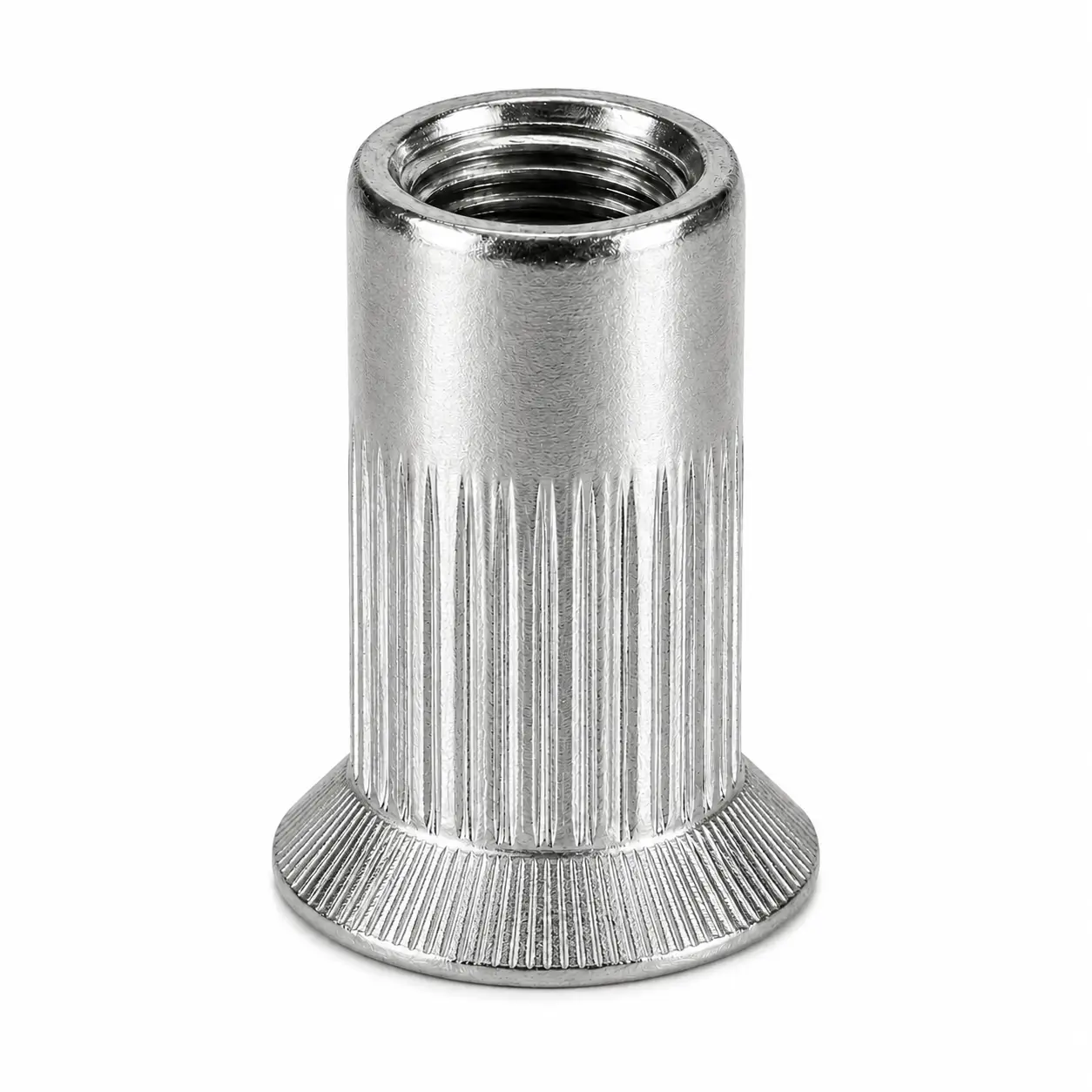
Countersunk Head Knurled Rivet Nuts
It features a countersunk design suitable for assembly locations requiring a flat or nearly flush surface after installation. During installation, holes in the workpiece are countersunk the rivet nut head can be recessed into surface.
Classified by Bottom Structure
Knurled rivet nuts can be classified as open-bottom or closed-bottom based on their bottom design. Different bottom designs affect the space available for screwing in the bolt and the sealing performance.

Open End Knurled Rivet Nuts
It features a through-hole threaded design. Once installed, the bolt passes through the rivet nut, making it suitable for most standard sheet metal fastening applications.
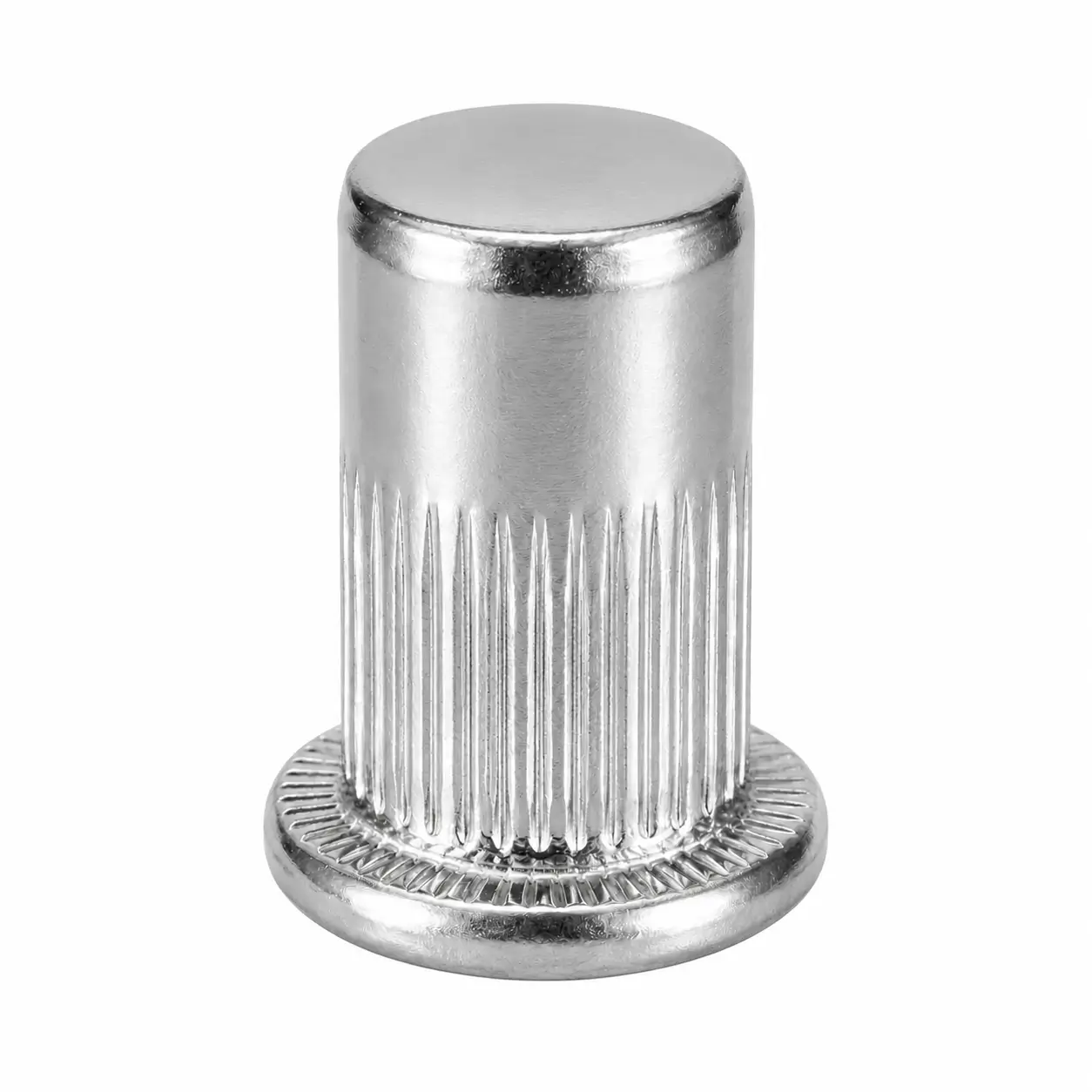
Closed End Knurled Rivet Nuts
It features a bottom-sealed design. After installation, the bottom of the rivet nut is sealed, helping to prevent dust, moisture, liquids, or from entering the interior through the threaded hole.
| Series / Type | Material | Head Type | End Type | Thread Range | Grip Range | Hole Size | Body Dia. D | Head Dia. DK | Head Thickness K | Length L |
|---|---|---|---|---|---|---|---|---|---|---|
| Standard Type | Carbon Steel | Flat Head | Open End | M3–M12 | 0.50–6.50 mm | 5.00–16.00 mm | 4.90–15.90 mm | 8.00–22.00 mm | 0.80–2.00 mm | 10.00–28.00 mm |
| Standard Type | Carbon Steel | Flat Head | Closed End | M4–M12 | 0.50–6.00 mm | 6.00–16.00 mm | 5.90–15.90 mm | 9.00–22.00 mm | 0.80–2.00 mm | 16.00–33.00 mm |
| Standard Type | Carbon Steel | Reduced Head | Open End | M3–M12 | 0.50–6.50 mm | 5.00–16.00 mm | 4.90–15.90 mm | 6.00–17.60 mm | 0.50–0.80 mm | 9.00–27.50 mm |
| Standard Type | Carbon Steel | Reduced Head | Closed End | M3–M12 | 0.50–6.00 mm | 5.00–16.00 mm | 4.90–15.90 mm | 6.00–17.60 mm | 0.50–0.80 mm | 12.50–32.00 mm |
| Standard Type | Carbon Steel | Countersunk Head | Open End | M3–M12 | 1.00–7.50 mm | 5.00–16.00 mm | 4.90–15.90 mm | 7.50–19.00 mm | 1.50–1.90 mm | 9.50–27.50 mm |
| Standard Type | Carbon Steel | Countersunk Head | Closed End | M3–M12 | 1.50–7.00 mm | 5.00–16.00 mm | 4.90–15.90 mm | 7.50–19.00 mm | 1.50 mm | 15.50–35.00 mm |
| Standard Type | Stainless Steel | Flat Head | Open End | M3–M12 | 0.50–6.00 mm | 5.00–16.00 mm | 4.90–15.90 mm | 7.00–23.00 mm | 0.80–2.00 mm | 9.00–28.00 mm |
| Standard Type | Stainless Steel | Flat Head | Closed End | M3–M12 | 0.50–6.00 mm | 5.00–16.00 mm | 4.90–15.90 mm | 7.00–23.00 mm | 0.80–2.00 mm | 13.00–33.00 mm |
| Standard Type | Stainless Steel | Reduced Head | Open End | M3–M12 | 0.50–6.50 mm | 5.00–16.00 mm | 4.90–15.90 mm | 6.00–17.60 mm | 0.50–0.80 mm | 9.00–27.00 mm |
| Standard Type | Stainless Steel | Reduced Head | Closed End | M3–M12 | 0.50–5.50 mm | 5.00–16.00 mm | 4.90–15.90 mm | 6.00–17.60 mm | 0.50–1.00 mm | 13.00–31.50 mm |
| Standard Type | Stainless Steel | Countersunk Head | Open End | M3–M12 | 1.50–6.50 mm | 5.00–16.00 mm | 4.90–15.90 mm | 7.50–18.00 mm | 1.50–1.70 mm | 8.50–24.00 mm |
| Standard Type | Stainless Steel | Countersunk Head | Closed End | M4–M12 | 1.50–5.50 mm | 6.00–16.00 mm | 5.90–15.90 mm | 9.00–19.00 mm | 1.50 mm | 17.50–33.00 mm |
| Standard Type | Aluminum | Flat Head | Open End | M4–M10 | 0.50–4.00 mm | 6.00–13.00 mm | 5.90–12.90 mm | 8.80–16.30 mm | 0.80–1.60 mm | 10.50–19.00 mm |
| Standard Type | Aluminum | Reduced Head | Open End | M4–M10 | 0.50–3.00 mm | 6.00–13.00 mm | 5.90–12.90 mm | 7.00–14.10 mm | 0.50–0.70 mm | 10.50–17.70 mm |
| US Type | Carbon Steel / Stainless Steel | Flat Head | Open End | M4–M12 / 6-32UNC–1/2-13UNC | 0.50–8.90 mm / .020–.350 in | 6.75–17.45 mm / .2656–.6875 in | 6.73–17.40 mm / .265–.685 in | 9.91–21.97 mm / .390–.865 in | — | 10.67–33.02 mm / .420–1.300 in |
| US Type | Carbon Steel / Stainless Steel | Reduced Head | Open End | M4–M10 / 6-32UNC–3/8-16UNC | 0.50–7.90 mm / .020–.312 in | 6.75–13.50 mm / .2656–.5312 in | 6.73–13.46 mm / .265–.530 in | 7.87–15.11 mm / .310–.595 in | — | 10.67–21.00 mm / .420–.805 in |
| UK Type | Carbon Steel | Reduced Head | Open End | M3–M10 | 0.50–4.00 mm | 4.80–12.80 mm | 4.65–12.65 mm | 5.40–13.80 mm | — | 9.00–20.00 mm |
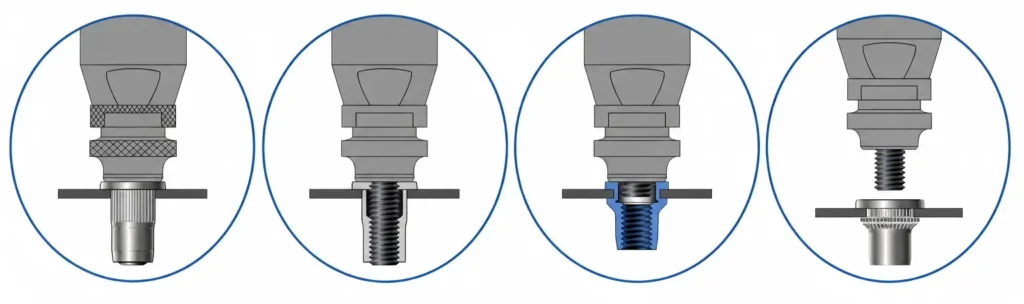
Steps of Rivet Nut Installation
- Insert the rivet nut into the pre-drilled hole, ensuring that the head of the rivet nut is flush with the surface of the workpiece.
- Screw the pull rod of the rivet nut gun into the internal threads of the rivet nut, and hold the tool vertically.
- Activate the rivet nut gun and pull the rod to expand and deform the tail end of the rivet nut, clamping it securely to the workpiece.
- Once riveting is complete, retract the rod in the opposite direction. Check that the rivet nut is secure and confirm that the head is flush with the surface.

knurled rivet nuts Manufacturing You Can Trust
Rivmate operates a production facility of approximately 40,000 square meters, with the capacity for the mass production, inspection, packaging, and export of knurled rivet nuts. We maintain a specialized laboratory capable of conducting various tests according to customer project requirements. This ensures consistent batch quality for our knurled rivet nuts and a more reliable supply chain.
- Raw Material Selection and Batch Management
- Comprehensive System Certification
- Extensive Experience in Export Supply
Rivmate operates under a systematic management framework that includes ISO 9001, IATF 16949, ISO 14001, and ISO 45001 certifications. We demonstrate consistent execution capabilities in production processes, quality control, batch management, and continuous improvement.
Pop Rivet Cold Heading Machines
Rivet Assembly machines
Our Rivet Warehouse

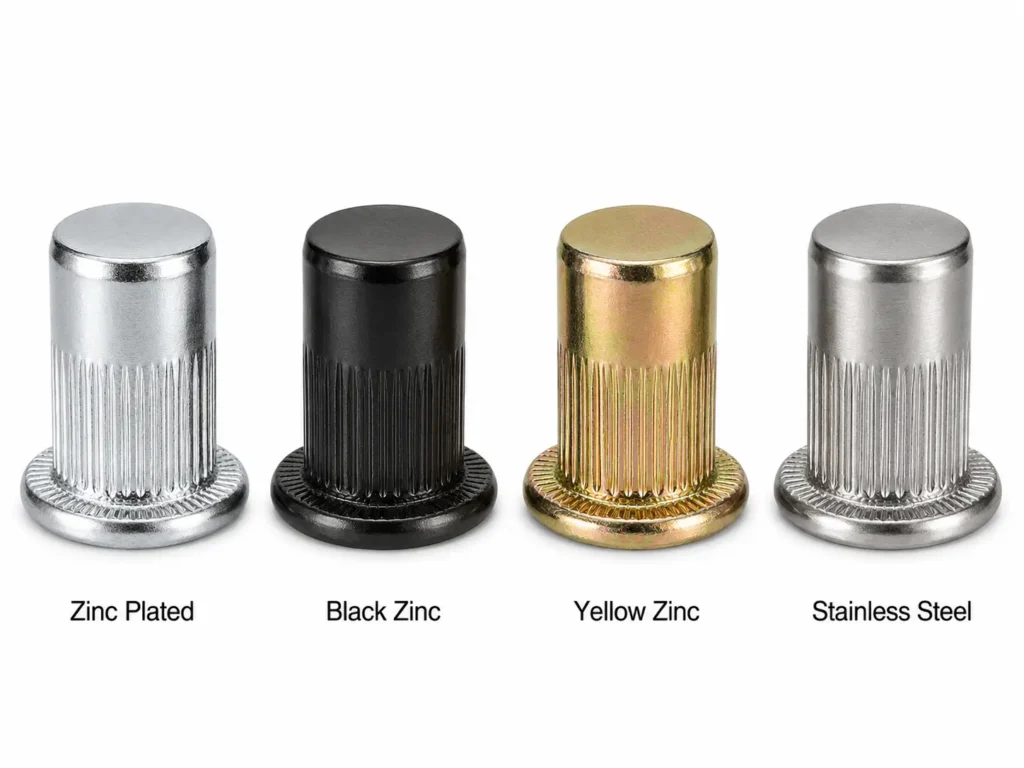
Knurled Rivet Nuts Surface Finish Options
Surface treatment of knurled rivet nuts can enhance their appearance and corrosion resistance. Rivmate offers a variety of surface treatment options, including zinc-plated, yellow zinc-plated, black finish, passivated, plain aluminum, and anodized. Custom surface treatments must be determined based on the material, dimensions, operating environment, and subsequent assembly requirements of the knurled rivet nuts.
- Improve product appearance and corrosion resistance
- Multiple options available
- Enhance assembly compatibility and long-term operational stability
If you are unsure which surface treatment is most suitable. Please provide Rivmate with details regarding the material, operating environment, salt spray requirements, desired color, purchase quantity, and application scenario. We can help you recommend the appropriate surface finish solution for your knurled rivet nuts.
Applications of knurled rivet nuts
The knurled body of knurled rivet nuts enhances the grip on the hole walls, helping to reduce slippage when tightening bolts. They are suitable for industrial assembly, equipment manufacturing, electrical enclosures, automotive components, and lightweight structural connections.

Electrical Cabinets
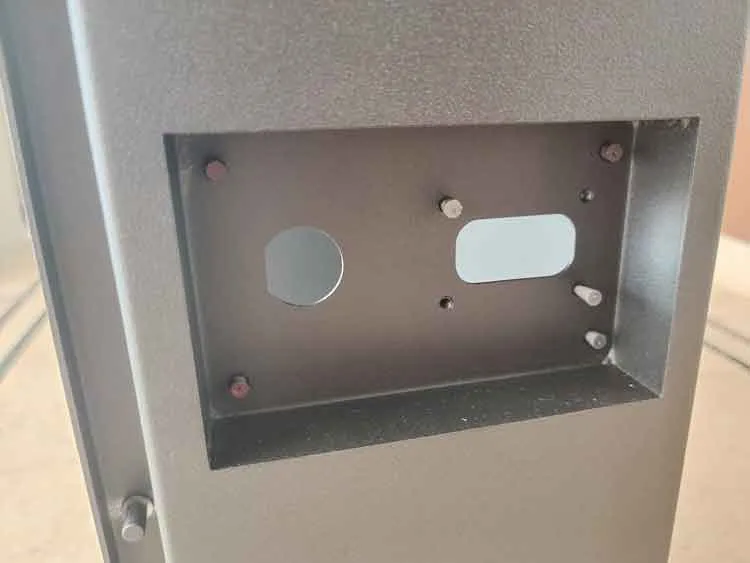
Electrical and control cabinets use rails, brackets, mounting plates, and cover plates, which are usually bolted in place, but cabinet panels are thin. Knurled rivet nuts create stable threaded points in thin panels, making installation and maintenance easier.

Aluminum Panels
Aluminum is relatively soft, and repeated assembly and disassembly over time can lead to thread wear and a decrease in connection strength. Knurled rivet nuts feature a knurled surface that grips the walls of the holes in aluminum plates firmly, creating a more stable internal threaded connection.

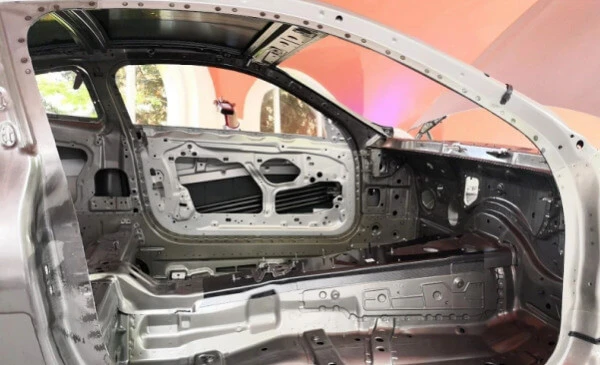
In automotive brackets, interior trim components, and lightweight structural parts, issues such as inaccessibility from the back, thin sheet metal, and limited space around holes often arise. Knurled rivet nuts can be installed from one side, providing a stable bolted connection point for brackets and components.

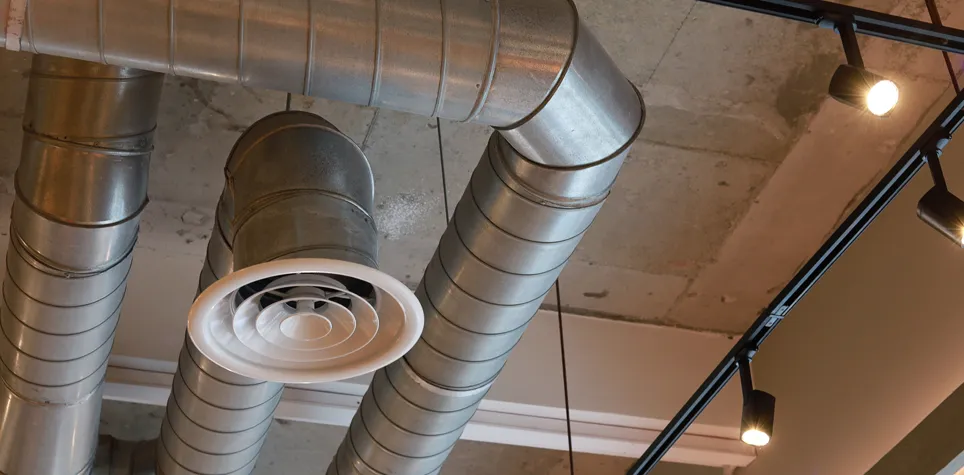
HVAC equipment enclosures, fan housings, control panels, and other components require reliable and maintenance-friendly threaded connections; however, thin-plate structures make it difficult to tap threads or install nuts from the back. Knurled rivet nuts can create internal threads in thin plates, allowing for the secure fastening of components such as covers, brackets, and sensors, thereby improving the efficiency of assembly, disassembly, and maintenance.
Get An Instant Quote Now
Are knurled rivet nuts designed to be removable?
The body of knurled rivet nuts cannot be removed for reuse.
The bolts inserted into the rivet nuts can be repeatedly removed and reinserted.
Can you recommend durable knurled rivet nuts for automotive applications?
Yes, we can categorize automotive applications into different areas to provide recommendations for you.
For standard automotive brackets, steel panels, or mass-production assembly locations, we recommend using carbon steel knurled rivet nuts with an appropriate surface treatment.
For lightweight aluminum panels, interior components, or low- to medium-load applications in automotive applications, we recommend considering aluminum knurled rivet nuts.
Which companies offer custom services for knurled rivet nuts with non-standard thread sizes?
You should look for manufacturers and suppliers with large-scale production capabilities.
You need to determine whether they hold the relevant certification. You should also find out if they offer a selection of materials and sizes, and if they accept custom orders based on drawings or samples.
In what applications are knurled rivet nuts used?
Knurled rivet nuts are commonly used in sheet metal enclosures, electrical cabinets, aluminum panels, and automotive brackets,
They are also suitable for applications such as equipment housings and HVAC equipment. They can create a secure internal threaded connection on thin sheets or enclosed structures, allowing the bolts to be repeatedly installed and removed.
What surface finishes for knurled rivet nuts are offered by suppliers?
Manufacturers of knurled rivet nuts offer finishes such as zinc-plated, yellow zinc, black oxide, passivated stainless steel, natural aluminum, and anodized aluminum.
Specific customization services require consideration of factors such as product material, operating environment, corrosion resistance requirements, and appearance requirements.
Resource Center
Access helpful materials to support your project planning and product selection. Download documents for reference and on-site use.
Rivet nut Catalog
Browse our full blind rivet catalog including product types, specifications, and application examples.I am Trailer Box Description Text. You can change me anytime from settings.
Knurled Rivet Nuts Drawing
Download the technical drawings for the rivets, which include dimensions, internal structure, and basic product information
What are knurled rivet nuts
Knurled rivet nuts are rivet nuts with a knurled pattern on their outer surface. They feature internal threads and can be installed using a single-sided riveting process, thereby creating a stable, reusable internal threaded connection.
They differ from standard smooth, round rivet nuts in their knurled outer surface design. After installation, this design increases the friction and grip between the rivet nut and the wall of the mounting hole, helping to prevent the rivet nut from rotating within the hole when the bolt is tightened.
What are the differences in performance between knurled rivet nuts and round rivet nuts?
1. Differences in resistance to rotation
The knurled outer surface of knurled rivet nuts increases the frictional contact and mechanical interlock between the rivet nut and the hole wall. They offer better resistance to rotation.
Round rivet nuts have a smoother outer surface and rely primarily on the clamping force generated by riveting deformation to secure them to the sheet metal, making them more prone to rotating along with the sheet.
2.Differences in Engagement with the Hole Wall
The knurled body of knurled rivet nuts provides a stronger engagement with the hole wall after installation.
Round rivet nuts do not have knurled patterns, so their ability to engage with the hole wall is relatively weaker.
3.Differences in Installation Stability
Once installed, knurled rivet nuts are more effective at reducing issues such as loosening and rotation.
Round rivet nuts are suitable for general industrial assembly where stability is not a major concern.
A Comparison of Steel and Aluminum Knurled Rivet Nuts.
| Comparison Item | Steel Knurled Rivet Nuts | Aluminum Knurled Rivet Nuts |
|---|---|---|
| Material Characteristics | Higher strength with stable structure | Lightweight and suitable for lightweight assembly |
| Connection Strength | Usually higher than aluminum | Suitable for low to medium loads |
| Deformation Resistance | Better for higher-stress fastening points | Relatively softer, so installation force should be controlled |
| Weight | Heavier | Lighter |
| Suitable Materials | Steel plates, galvanized sheets, and general sheet metal parts | Aluminum sheets, aluminum profiles, and lightweight panels |
| Corrosion Resistance | Depends on surface finish, such as zinc plating or black finish | Aluminum has certain corrosion resistance, and anodizing is available |
| Cost Performance | Suitable for high-volume industrial purchasing | Lower unit weight, but not always suitable for high-strength requirements |
| Typical Applications | Equipment housings, electrical cabinets, machinery panels, and automotive brackets | Aluminum alloy panels, display racks, lightweight equipment, and vehicle interior parts |
| Recommended Use Scenarios | When strength, stability, and bulk assembly reliability are required | When weight reduction, material matching, and light-duty fastening are required |
How can I get a quote for bulk purchases of knurled rivet nuts?
1. Submit a Purchase Request
You will need to provide detailed information such as product dimensions, materials, quantity, application scenarios, drawings, or samples.
2. Specification Confirmation
The knurled rivet nut manufacturer will determine whether standard knurled rivet nuts can meet your project requirements or if custom specifications are needed.
3. Confirm Surface Treatment
Determine the appropriate surface treatment based on your operating environment.
4. Discuss Packaging and Delivery Methods
Specific packaging requirements—such as bulk cartons, small boxes, plastic bags, or OEM labels—can be confirmed based on the customer’s procurement needs.
5. Quotation and Sample Support
Once all specifications are confirmed, the manufacturer will provide a clear quotation. They will also arrange for sample approval based on the specifications prior to mass production.