Riveted Connections in Steel Structures - How to Choose Pop Rivets for Steel Structures?
Table of Contents
In modern engineering, riveted connections in steel structures continue to play an irreplaceable role. Compared to welding and bolted connections, riveting provides stable and reliable structural joints under conditions of no heat-affected zones, single-sided installation, and thin steel plates. Consequently, riveted connections are widely adopted in steel roof structures, cabinet systems, and light steel framing. Understanding the application principles and selection logic of riveting in steel structures is crucial for ensuring structural safety, construction efficiency, and long-term durability.
What Are Riveted Connections in Steel Structures?
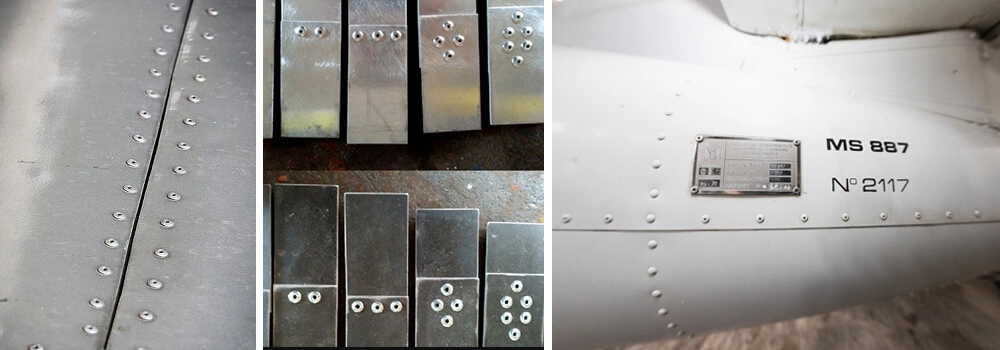
In steel structure engineering, riveted connections represent a permanent mechanical joining method achieved through plastic deformation induced by rivets. During installation, rivets are stretched or pressed to form a stable locking structure on the reverse side of steel plates, thereby securely joining two or more layers of steel components. This connection method does not rely on threads nor require high-temperature operations, ensuring structural stability and reliable load-bearing capacity.
Historically, traditional steel structures predominantly used solid rivets, which required dual-side operation and heavy equipment, resulting in lower construction efficiency. As engineering demands evolved, modern steel structures increasingly adopted blind rivets, particularly in scenarios where access to the component’s reverse side is impossible. Blind rivets achieve connections through single-side installation, significantly boosting construction efficiency.
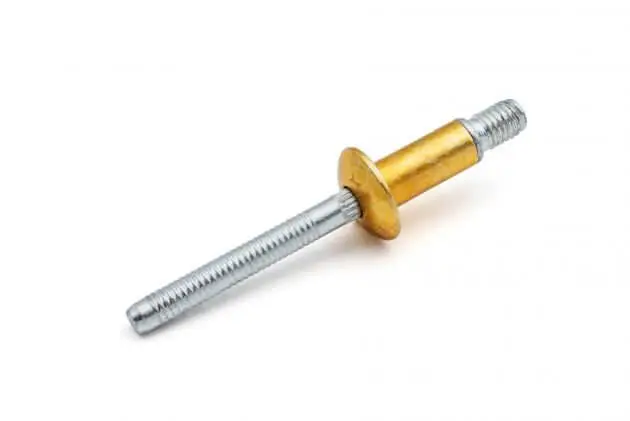
For steel structures with higher load-bearing requirements, structural blind rivets (such as Monobolt) are employed. Featuring a mechanical interlocking mechanism, these rivets offer substantially higher tensile and shear resistance than standard blind rivets. They can partially replace bolts or spot welding in applications like brackets, frames, and lightweight load-bearing components.
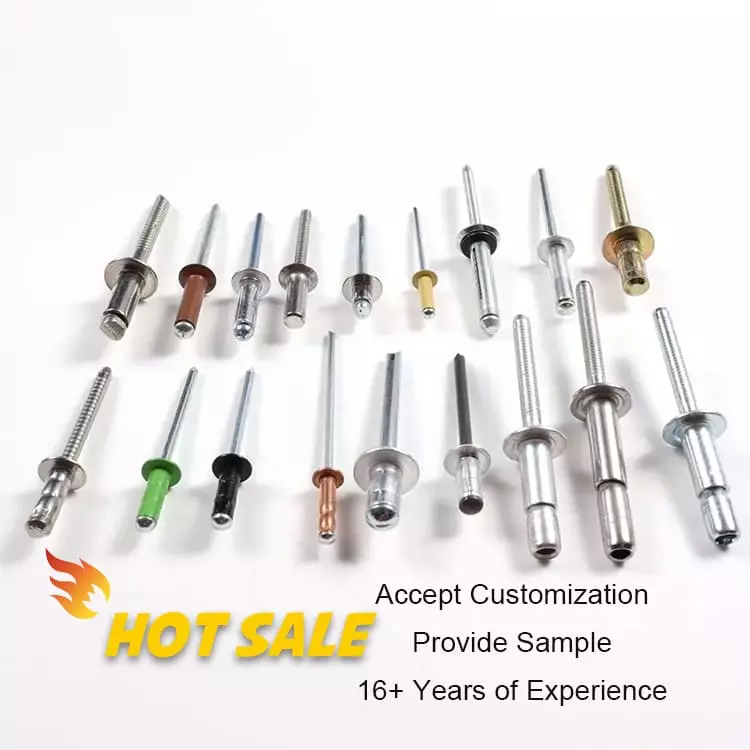
Types of Blind Rivet in Steel Structure


Standard Blind Rivet
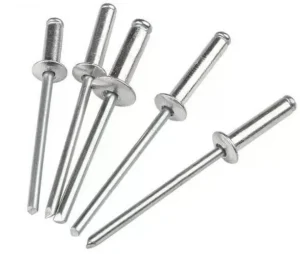

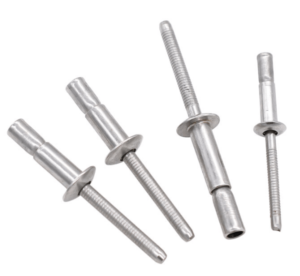
Standard blind rivets are the most commonly used type of blind rivets. It has the most traditional blind rivet design and is suitable for joining steel structures of average strength. For example, frames, braces and general structural component connections.
For some non-load-bearing steel connections, standard blind rivets are the most suitable choice because they are cheap and affordable!
Closed End Blind Rivets
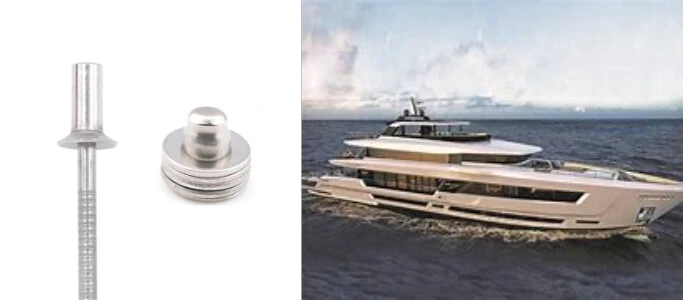
Sealed Blind Rivets have a design that is different from other blind rivets. It has a closed rivet body that prevents liquids and gases from entering through the joint. Sealed Blind Rivets are ideally suited for applications that require sealing, such as piping, and structural steel connections in marine environments.
Multi Grip Blind Rivet
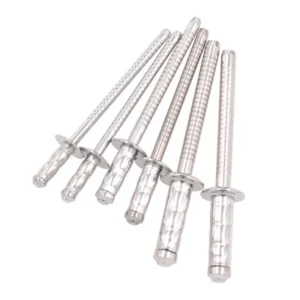
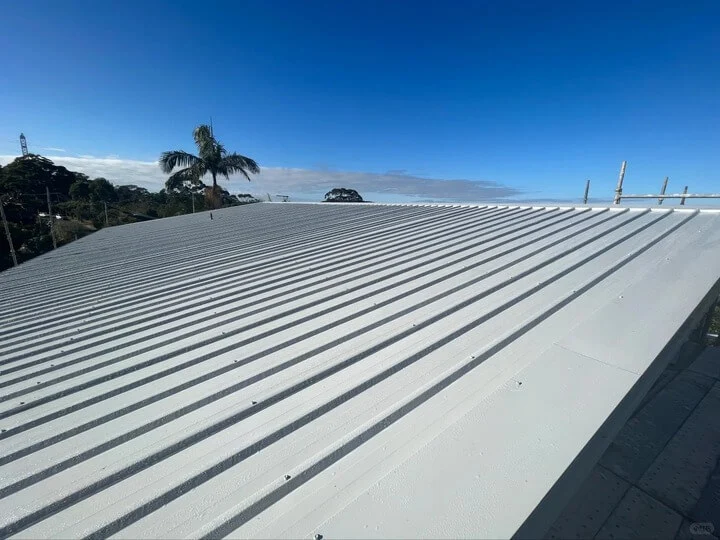
Multi grip blind rivet can accommodate many different material thicknesses. It provides sufficient strength while reducing stress on stock.Multi grip blind rivet is often used to fix metal roof panels, wall metal panel installation, such as the fixing of structural steel plant and equipment brackets, which need to be done with it.
High Strength Structural Rivets
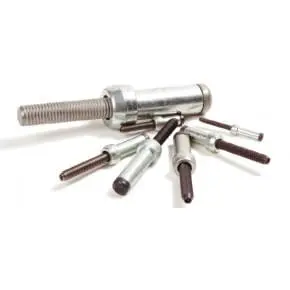
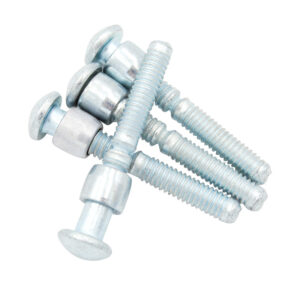
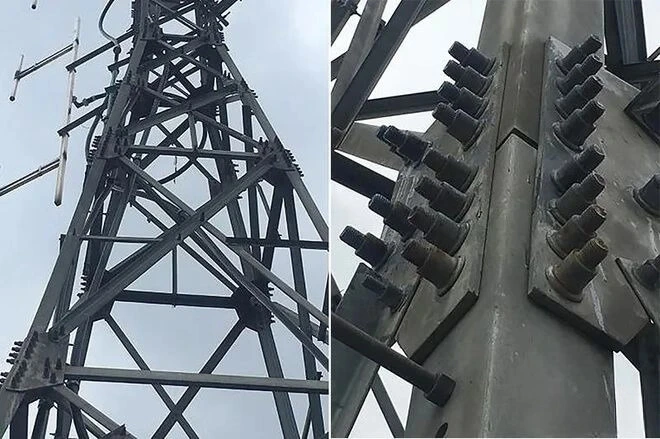
There are several types of high strength structural blind rivets such as bom rivet and lockbolt. high strength structural rivets are very widely used in steel construction. They can withstand very strong connection strength. That is why high strength structural rivets are used in applications that require high strength. For example, steel connections in high-rise buildings, truss and suspension structures in bridges, and rail connections in rail transportation. High-strength structural rivets can provide these applications with extremely high strength, durability and vibration resistance to ensure the reliability of the connection in a variety of complex environments.
Why Are Pop Rivets Used in Steel Structures?
The selection of Pop Rivets in steel structures is not driven by “convenience,” but rather by clear engineering logic. The following reasons explain why riveting is often more suitable than welding or bolting in many scenarios.
No Heat-Affected Zone (HAZ)
Pop Rivets utilize a cold joining process. No high temperatures are generated during installation. The mechanical properties of the steel remain unchanged. Common welding issues like annealing, embrittlement, or strength reduction do not occur. This is particularly crucial for thin steel plates and high-strength steel.
No Introduction of Welding Residual Stresses
Welding creates residual tensile stresses in the joint area, a major contributor to fatigue cracking. Riveting is a mechanically formed connection with more uniform stress distribution. It remains more stable under long-term vibration or alternating loads.
Viable Solution for Inaccessible Backsides
Box girders, enclosed sections, and thin-walled components often have inaccessible backsides. Bolts and solid rivets cannot be installed. Pop Rivets support single-side installation (Blind Installation). They are nearly the only reliable option for such structures.
Safer for Thin Steel Plates (0.8–4.0 mm)
Welding thin steel plates risks burn-through or deformation. Bolts may strip. Pop Rivets create clamping force through expansion without damaging the base material. They offer higher structural stability within the 0.8–4.0 mm steel plate range.
Stable Performance Under Vibration
Vibration is common in transportation equipment, machine frames, and industrial supports. Welds are prone to fatigue cracking. Bolts may loosen. Pop Rivets—especially structural blind rivets—maintain long-term clamping force through mechanical locking, offering more reliable vibration resistance.
Riveted Connections vs Welded vs Bolted
| Comparison Dimension | Riveted (incl. Structural Blind Rivets) | Welded | Bolted |
|---|---|---|---|
| Shear / Tensile Strength | Medium–High; structural blind rivets can approach bolts in light-to-medium load connections | High; can achieve fully fused, monolithic strength | High; adjustable via bolt grade and preload |
| Fatigue Performance | Excellent; no HAZ, stress distribution is more controllable | Medium–Low; weld toes are prone to stress concentration and fatigue crack initiation | Medium; depends on preload and anti-loosening design—loosening accelerates fatigue |
| Vibration Performance | Excellent; mechanical locking provides stable long-term clamping force | Medium; welds may develop fatigue cracks under vibration | Medium–Good; requires anti-loosening measures (lock washers, threadlocker, double nuts) |
| Installation Requirements | Low; only drilling and riveting tools needed, ideal for site work | High; requires power supply, certified welders, fire protection, and post-weld inspection | Medium; needs rear access or embedded hardware; tooling is relatively simple |
| Maintenance & Repair | Medium; typically drilled out and reinstalled—suited for module replacement | Low; repairs are costly and involve cutting, re-welding, and re-inspection | High; removable and easy to maintain or replace |
| Total Lifecycle Cost | Low–Medium; fast installation, low rework, controllable overall cost | High; higher labor, process, inspection, and repair costs | Medium; hardware cost is controllable, but maintenance and anti-loosening add cost |
Riveting isn’t “weaker,” it’s “more controllable.”
It introduces no heat-affected zone and relies not on thread engagement. More suitable for thin steel plates and enclosed structures. Results are easier to standardize.
Welding offers the highest strength ceiling but also the highest risk.
Welding achieves full fusion strength. The trade-off involves thermal distortion, residual stresses, and weld quality variability. Demands high on-site conditions.
Bolts suit structures requiring disassembly for maintenance, but “loosening” must be addressed.
Inadequate preload or lack of anti-loosening design leads to rapid degradation under vibration. Back-side accessibility often becomes a limiting factor.
How to Select the Right Rivet?
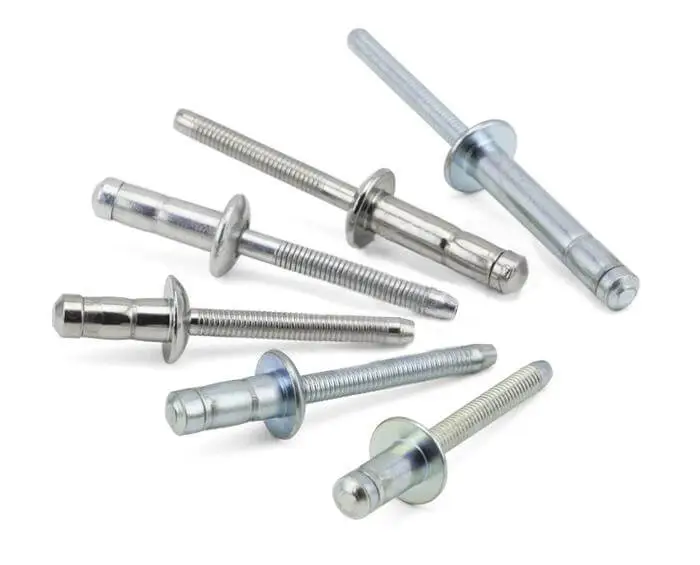
①. Total Thickness of Steel Plates
Total thickness refers to the actual stacked thickness of the steel plates being joined. It must be measured precisely beforehand. In steel structures, the common range is 0.8–4.0 mm. Incorrect thickness assessment will directly result in inadequate clamping or failure to form.
②. Engineering Significance of Grip Range
The Grip Range determines whether the rivet can achieve proper expansion on the back side of the steel plate. The total thickness should fall within the middle range of the Grip Range, not at its upper or lower limits. An excessively large Grip Range leads to insufficient clamping. An excessively small Grip Range prevents the rivet from breaking or causes structural failure.
③. Rivet Diameter vs. Shear Strength
In steel structures, diameter directly determines shear resistance. Larger diameters yield higher shear strength but impose stricter requirements on hole size and installation. Common selection logic:
- 3.2 mm: Light-gauge steel, non-load-bearing applications
- 4.0–4.8 mm: Standard range for structural steel
- ≥6.4 mm: High-load or structural blind rivets
④. Rivet Length Calculation Logic
Length isn’t arbitrary. Basic principle: Rivet length ≈ Total plate thickness + 1.5 × Diameter
Insufficient length prevents full expansion. Excessive length compromises forming stability and actually reduces strength.
⑤. Material Combinations (Steel–Steel / Steel–Aluminum)
For steel-to-steel connections, prioritize carbon steel or stainless steel rivets. For steel-to-aluminum connections, galvanic corrosion must be carefully considered. A common engineering solution is: aluminum cap + stainless steel mandrel, balancing strength and corrosion resistance.
⑥. Corrosion Protection Requirements (Galvanized / Stainless Steel / Sealed Type)
Steel structures are often used in outdoor or semi-outdoor environments. The corrosion protection grade directly determines service life.
- Indoor steel structures: Galvanized steel rivets are sufficient
- Outdoor steel structures: Stainless steel or high-grade galvanization
- Roofing / Exterior walls / Humid environments: Closed-head or sealed Pop Rivets
Are Pop Rivets Strong Enough for Steel Structures?
When properly selected, Pop Rivets offer a connection method that is “sufficiently strong and more controllable” in numerous steel structure applications.
Strength Range of Typical Structural Rivets
Standard pop rivets primarily connect thin steel sheets, targeting strength for non-load-bearing structures. In contrast, structural blind rivets (Structural Rivets / Monobolt) are specifically engineered for steel construction. Within the 4.8–6.4 mm range, their shear and tensile capacities significantly exceed typical sheet metal requirements.
Engineering Comparison Range with M6 / M8 Bolts
In thin steel plates (0.8–4.0 mm), bolts often fail to achieve their theoretical strength because the plate deforms first. Structural rivets distribute loads across the steel plate through extensive back expansion. In practical applications, their effective shear resistance can approach or even cover the working range of M6 bolts, offering greater stability under vibrational conditions.
When Must You Upgrade to Structural Rivets?
Standard pop rivets should not be used when:
- The connection experiences continuous vibration or alternating loads
- The connection is safety-critical or part of a secondary load-bearing structure
- Plate thickness approaches upper limits, causing insufficient expansion of standard rivets
- Project requirements mandate welding alternatives or reduced on-site construction risks
In these cases, structural blind rivets are a mandatory requirement, not merely an upgrade option.
Corrosion Resistance & Durability Design for Rivets in Steel Structures
In steel structures, corrosion resistance and durability often outweigh initial strength. Once corrosion occurs in a joint, strength rapidly deteriorates and maintenance costs significantly increase.
Suitable Environments for Galvanized Steel Rivets
Galvanized steel rivets represent the most common and cost-effective option. Their zinc coating protects the steel substrate through a sacrificial anode mechanism, making them suitable for indoor, dry environments, and general industrial settings. They can also be used in mild outdoor conditions provided the coating thickness meets standards and prolonged water accumulation is avoided.
Analysis of Stainless Steel Rivets' Advantages and Disadvantages
Stainless steel rivets (e.g., A2/A4) inherently possess exceptional corrosion resistance. They perform reliably in coastal, high-humidity, and highly polluted environments with minimal maintenance. However, their cost is significantly higher than galvanized steel rivets, and their greater hardness demands more sophisticated riveting equipment.
Risk of Galvanic Corrosion (Steel + Aluminum)
When aluminum rivets are used in steel structures, special attention must be paid to galvanic corrosion. In humid conditions, aluminum acts as an anode and corrodes preferentially, significantly shortening the connection’s lifespan. For steel structures, it is recommended to prioritize the use of steel or stainless steel rivets.
Advantages of Closed-End Rivets in Steel Structures
Closed-end rivets completely seal the point where the mandrel breaks off. This effectively prevents moisture, salt spray, and corrosive agents from entering the rivet interior. In steel roof structures, exterior walls, and outdoor equipment, Closed-End Rivets demonstrate significantly superior durability compared to open-end rivets.
Engineering Reference for Salt Spray Test Hours
Salt spray testing is a common standard for evaluating corrosion resistance:
- 72 h: Standard galvanized coating, suitable for indoor or low-corrosion environments
- 240 h: Heavy-duty galvanized or basic corrosion protection, suitable for general outdoor use
- 1000 h and above: Stainless steel or high-grade corrosion protection systems, suitable for coastal and high-corrosion environments
In steel structure projects, salt spray ratings should be directly matched to the design service life, rather than solely pursuing low cost.
FAQ – Riveted Connections in Steel Structures
Q1: Are riveted connections strong enough for steel structures?
Yes, in light to medium-duty steel structures, the shear and tensile strength of structural blind rivets can meet design requirements. The key lies in proper selection and matching the clamping range.
Q2: Can pop rivets replace welding in steel?
Pop rivets can substitute welding in thin steel plates, field construction, inaccessible backsides, or where heat-affected zones must be avoided. However, they are unsuitable for heavy-duty primary load-bearing members.
Q3: What rivets are best for steel structures?
Structural rivets (Monobolt) are generally preferred for steel structures. Stainless steel or closed-end rivets are recommended for outdoor or corrosive environments.
Q4: Are structural rivets better than bolts?
Structural rivets outperform bolts in single-side installation, vibration resistance, and assembly consistency. Bolts remain more suitable for applications requiring disassembly or ultra-high load capacities.
Q5: Do rivets loosen in steel structures?
Properly installed rivets do not loosen due to vibration like bolts do. This is especially true for structural rivets, whose mechanical locking mechanism maintains clamping force over the long term.
Get the Right Riveted Connection for Your Steel Structure
In steel structure applications, choosing the right connection method matters more than “going cheap.” Rivmate doesn’t just supply rivets—we help you get your structure right the first time.
You can receive a free steel structure connection solution assessment to confirm rivet type, diameter, and clamping range compatibility; request free samples for on-site verification; and have engineers assist with strength and quantity calculations to avoid over- or under-design.
We also provide ISO and engineering-grade test data as design references, backed by one-on-one support from Rivmate engineers to ensure your steel connections are safe, stable, and reproducible.
📧 Product Inquiry: manufacture@world-rivet.com
🌐 Official Website: https://worldrivet.com/
Reference

How to Rivet Metal to Wood?
How to Rivet Metal to Woo

What Is Riveting in Metal Work?
What Is Riveting in Metal
What Metal Are Rivets Made Of
What Metal Are Rivets Mad
How to Rivet Metal to Metal
How to Rivet Metal to Met