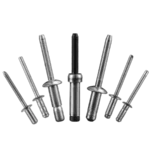
Rivets for Solar Panel Frames
Accelerate solar panel frame installation with high-strength blind rivets that deliver fast assembly, secure structural fastening, and long-term reliability in demanding outdoor environments.
Riveting Advantages
3–5× Faster Solar Frame Installation with RIVMATE Rivets
When installing solar panel brackets and frame structures, you need a fastening solution that ensures structural reliability while significantly boosting construction efficiency. Rivmate recommends prioritizing Multi-Grip Blind Rivets, Hem-Firm Blind Rivets, and Mono-Lock Structural Rivets as core connectors for solar panel frames. These three rivet types cover different panel thickness ranges and provide stable structural locking force. Unlike bolt connections requiring dual-side operations, installation is completed with single-side access. Insert the rivet and sever the mandrel using a rivet gun to secure the joint—each connection point takes just 2–5 seconds, boosting installation efficiency by 3–5 times. The overall project construction cycle can be shortened by approximately 25%–50%. Choose Rivmate blind rivet solutions now to achieve shorter construction cycles, lower labor costs, and more stable structural connections for your photovoltaic projects.
- 5,000 connection points ≈ 14 hours saved
- 10,000 connection points ≈ 28 hours saved
- 20,000 connection points ≈ 55 hours saved
Solar Fastening Challenges
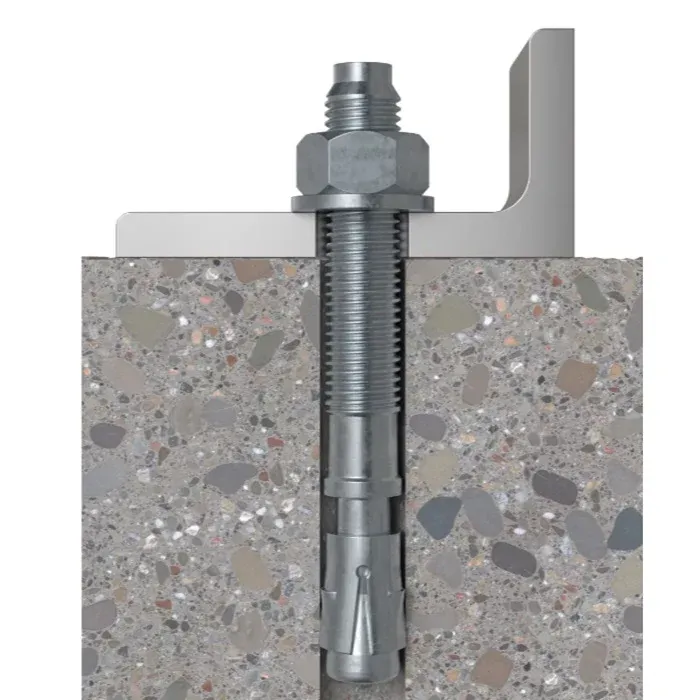
Slow Installation with Bolt Fasteners
Bolted connections require inserting bolts, installing nuts, and torque-tightening. This significantly slows overall installation progress in PV projects with numerous connection points.
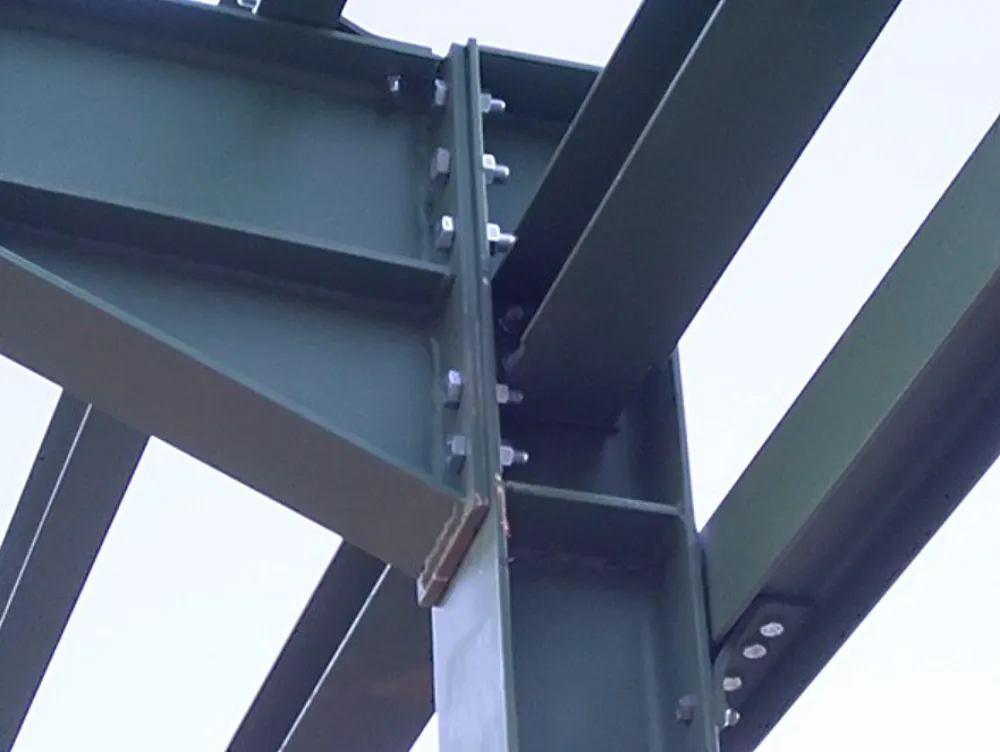
Two-Side Access Required
Traditional bolted connections necessitate access from both sides. This poses installation challenges in confined spaces like solar racks or rooftop structures.

Risk of Loosening Under Vibration
Photovoltaic structures endure long-term wind loads and structural vibrations. Conventional fasteners face a risk of loosening during extended service.

Corrosion from Outdoor Exposure
Solar systems endure prolonged exposure to rain, humidity, and temperature fluctuations. Conventional fasteners may corrode or degrade in performance over time.
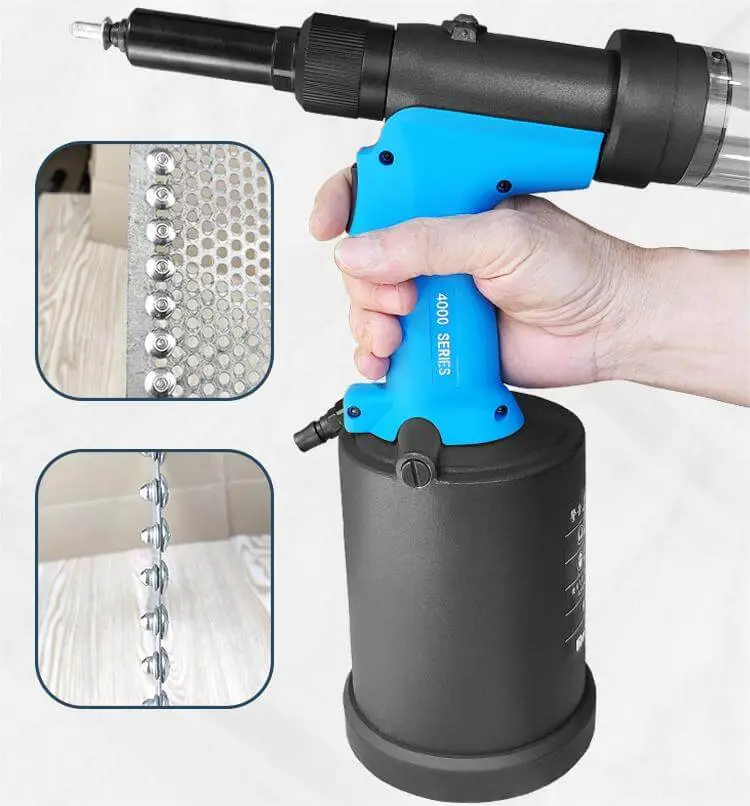
Fast Installation with Blind Rivets
Blind rivets require only insertion into the hole and a single pull of the rivet gun to sever the mandrel, completing the connection in seconds per joint.

One-Side Installation Access
Blind rivets can be installed from a single side without accessing the structure’s reverse side, offering exceptional convenience in confined spaces.
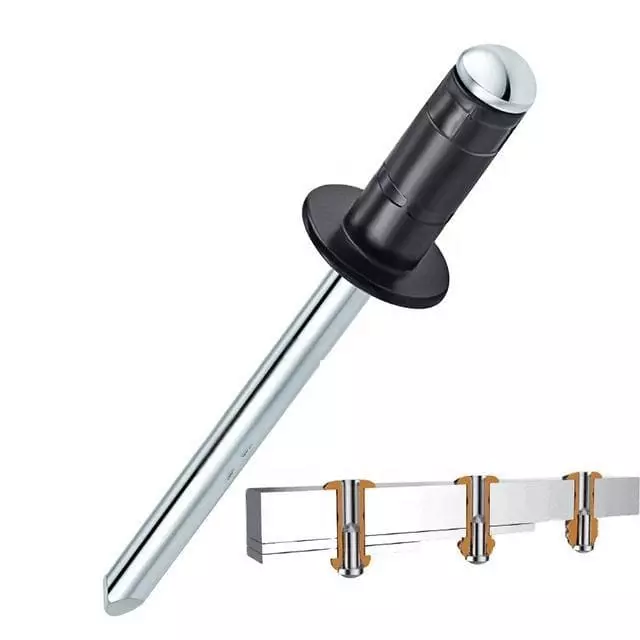
Stable Locking Under Vibration
Pop rivets form a stable locking structure after breaking the mandrel, effectively resisting loosening risks caused by wind loads and long-term vibration.
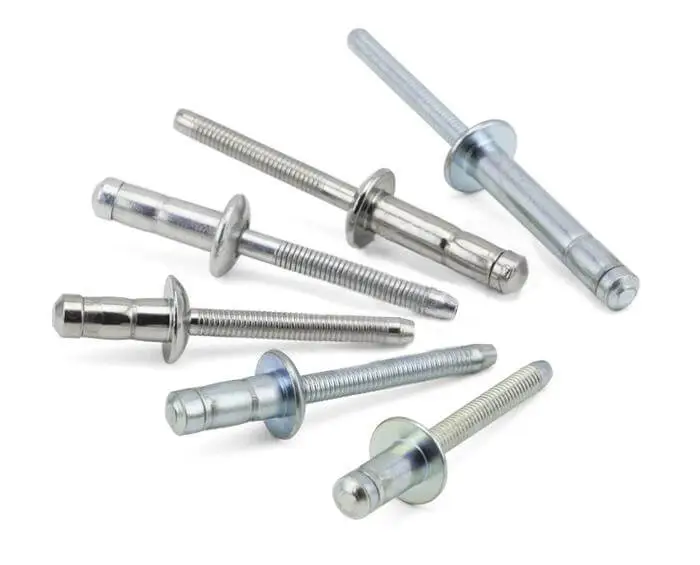
Reliable Corrosion Resistance
Rivets made from aluminum, steel, or stainless steel offer excellent corrosion resistance, meeting the demands of long-term outdoor use in solar systems.
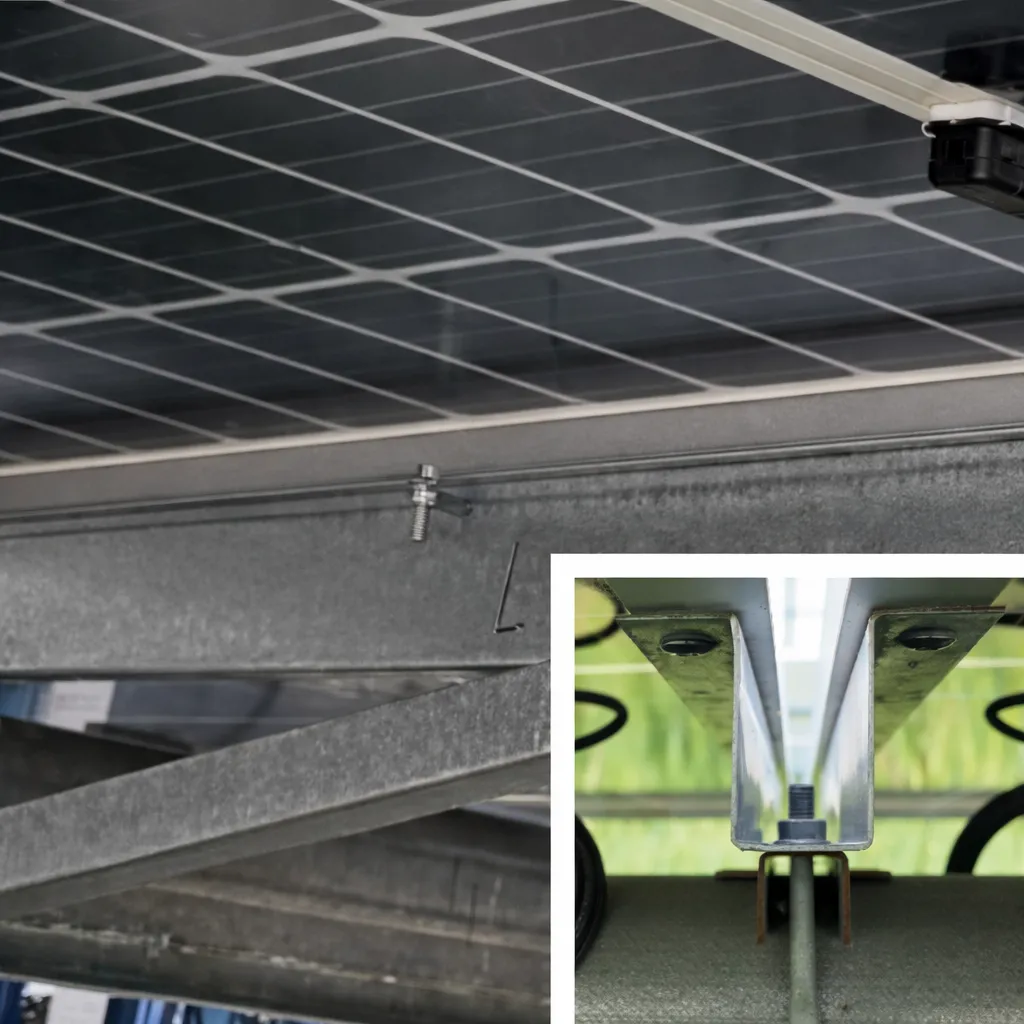
Reliable Panel-to-Purlin Fastening Solutions
In solar mounting systems, the panel-to-purlin connection refers to the attachment of photovoltaic module brackets or rails to structural steel purlins. This constitutes one of the most critical fixing points in photovoltaic structures, directly impacting the system’s structural stability and long-term safety.
Purlins are typically C-shaped steel or Z-shaped steel, designed to bear both the roof structure load and the photovoltaic system load. Photovoltaic modules are mounted using aluminum alloy rails (solar mounting rails), which are then secured to the purlins. This creates a complete structural load-transfer path.
Given that photovoltaic systems are designed for a service life exceeding 25 years, the panel-to-purlin connection must deliver reliable structural performance.

Need a Reliable Solar Rivet Solution for Your PV Structures?
RIVMATE provides high-strength blind rivets engineered for solar mounting systems.Our structural riveting solutions deliver up to 15.5 kN shear strength, vibration resistance, and fast single-side installation — helping installers improve efficiency and long-term reliability.
Recommended Rivets
RIVMATE Riveting Solutions for Solar Panel Frames
For connecting solar panel frames in photovoltaic systems, RIVMATE offers two proven riveting solutions: Hem-Firm Blind Rivets and Multi-Grip Blind Rivets. These two product lines cover the most common connection requirements in photovoltaic systems.
Solution 1 — Hem-Firm Blind Rivet
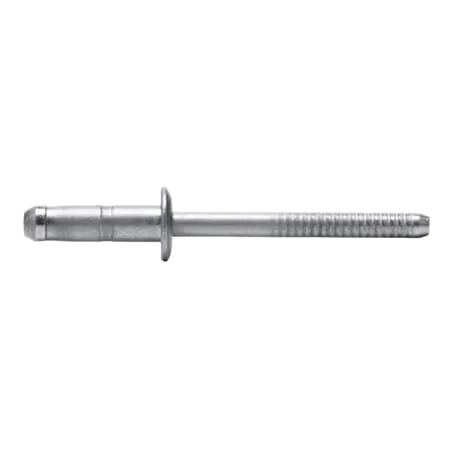
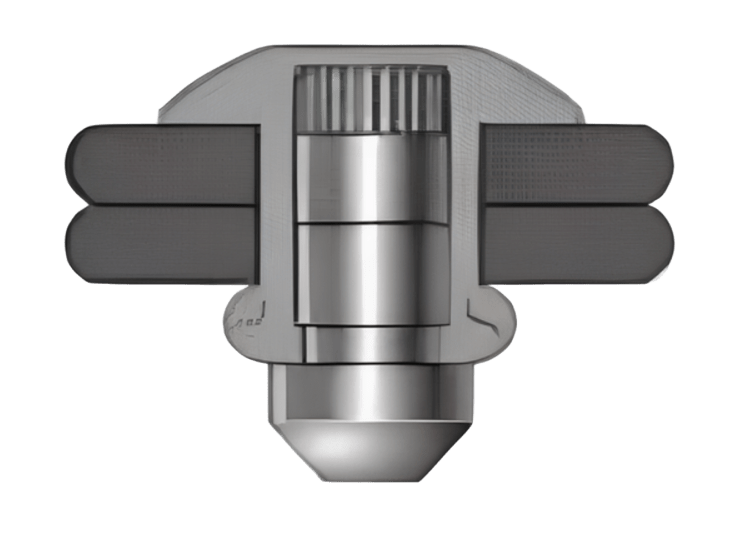
Hem-Firm Blind Rivet is primarily used for structural connection points in photovoltaic systems. Its locking core structure forms a stable mechanical lock after riveting, enhancing overall connection strength and vibration resistance.
- Tensile strength up to 11.5 kN
- Shear strength up to 15.5 kN
- Large bearing surface design effectively reduces connection slippage
- IPX7 waterproof sealing performance
Solution 2 — Multi-Grip Blind Rivet
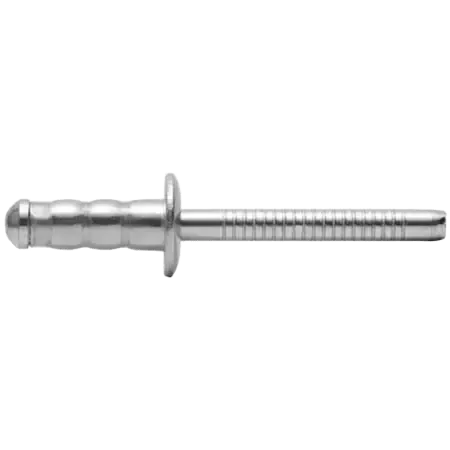
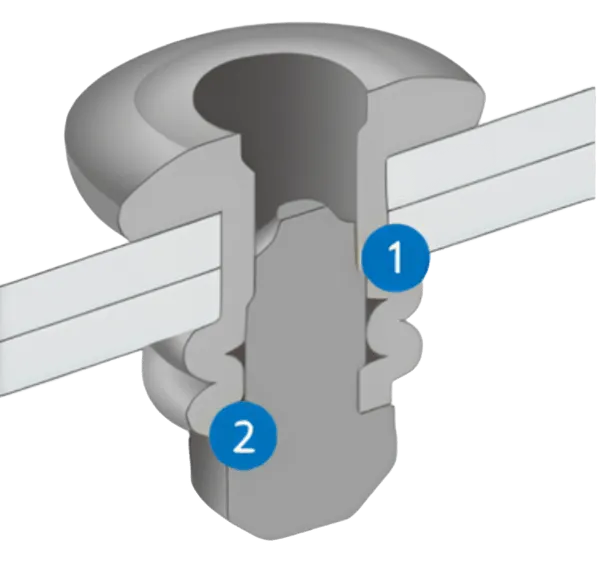
Multi-Grip Blind Rivet is primarily used for solar panel frame assembly and lightweight structural connections. The core feature of this rivet is its wide grip range, enabling adaptation to materials with varying thickness combinations.
- 4.0 – 6.0 mm grip range
- Tensile strength: 4.2 kN
- Shear strength: 6.0 kN
Applications
Solar Panel Frame Applications
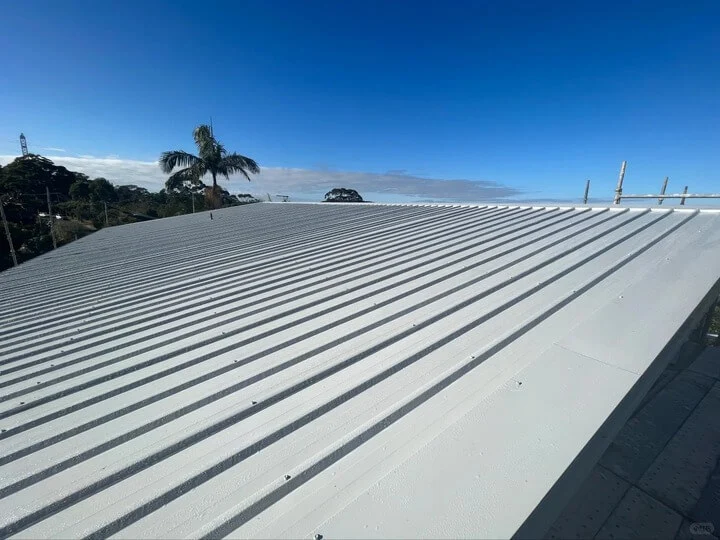
Solar Panel Frames are a critical structural component of photovoltaic modules, serving to secure the modules and connect them to the mounting structure. Their applications are primarily concentrated in the following types of photovoltaic scenarios.
Utility-Scale Solar Power Plants
Industrial Rooftop Solar
Residential Rooftop Solar Systems
Solar Carports and Parking Structures
OEM
Custom Rivet Solutions
Custom
Flange Diameter
You can request a larger or special flange size to better distribute load on composite panels.
02
Special
Surface Coatings
You can choose coatings for corrosion resistance, durability, or specific environmental conditions.
03
OEM &
Private Label Packaging
You can customize packaging with your brand, labels, and carton specifications for your market.
Need Help With Your Solar Project?
Solar Rivet Technical FAQ for Solar Panel Frames
Q1. What rivets are used for solar panel frames?
In solar panel frame and photovoltaic structure installations, common solutions involve using Hem-Firm Blind Rivets and Multi-Grip Blind Rivets.
Hem-Firm blind rivets are structural blind rivets offering high tensile and shear strength. They are suitable for connections requiring high structural stability, such as securing photovoltaic mounts to structural components. Multi-Grip blind rivets feature a wide clamping range, accommodating various material thickness combinations. They are frequently used in solar panel frame assembly and lightweight structural connections. Selecting the appropriate rivet type for different applications ensures structural reliability while enhancing installation efficiency.
Q2. Are rivets better than bolts for solar structures?
In many photovoltaic structural applications, rivets offer distinct advantages over bolts. Rivet installation requires only single-side operation without needing rear access space, making them more suitable for rooftop and mounting structure installations. Additionally, the riveting process is faster, significantly improving installation efficiency in large-scale PV projects.
Q3. What material rivets are best for solar installations?
Photovoltaic systems endure prolonged outdoor exposure, making rivets typically crafted from aluminum alloy, stainless steel, or coated carbon steel. Aluminum/stainless steel composite rivets offer excellent corrosion resistance, while high-strength carbon steel structural rivets suit applications requiring greater structural integrity.
Q4. How to choose rivet size for solar mounting systems?
When selecting rivet sizes for solar mounting systems, you must comprehensively consider the total material thickness, hole diameter, structural load, and application location. Only when these factors align can the rivet form a stable and reliable structural connection.
Confirming Total Material Thickness (Grip Range)
First, calculate the total thickness of the materials to be joined. This thickness determines the grip range the rivet must cover. If the rivet’s grip range is smaller than the material thickness, it cannot achieve proper locking. Conversely, an excessively large grip range may result in an insufficiently tight connection. Therefore, ensure the total material thickness falls within the rivet’s specified grip range.
Matching the Correct Hole Diameter and Rivet Diameter
Second, you must ensure the rivet diameter matches the hole size. Common rivet diameters in photovoltaic structures include 4.8 mm and 6.4 mm. The hole diameter should typically be slightly larger than the rivet diameter to ensure smooth installation. However, an excessively large hole reduces connection stability, so drilling should follow standard recommended dimensions.
Selecting Size Based on Application Location
Different application locations demand varying rivet sizes. For solar frame assembly, medium-diameter rivets usually meet strength requirements. However, for structural connections like panel-to-purlin, larger diameter or structural rivets are typically needed to withstand wind loads and long-term vibration.
Consider Material Type and Long-Term Loads
You must also account for the materials being joined. For example, when connecting aluminum alloy module frames, avoid oversized rivets to prevent material deformation. Conversely, when joining steel purlins or high-strength structural components, select rivets with higher strength ratings.
Q5. Do solar structures require structural rivets?
For load-bearing structural connections, structural blind rivets are generally recommended. Featuring a locking core design, these rivets deliver superior tensile and shear strength while offering enhanced vibration resistance, making them ideal for long-term photovoltaic systems.
Q6. What grip range is suitable for solar panel frame assembly?
When selecting rivets for solar panel frame assembly, you must first determine the total material thickness of the components being joined—that is, the range of material thicknesses the rivet must grip. This parameter is commonly referred to as the grip range. Only when the total material thickness falls within the rivet’s grip range can it form a stable and reliable connection.
In most photovoltaic module structures, you will commonly encounter material thickness combinations around 3–6 mm. For example, when an aluminum alloy module frame (approximately 1.5–2 mm) is stacked with a bracket or connector, the total thickness typically falls within this range. Therefore, selecting a Multi-Grip Blind Rivet is often more suitable, as this rivet type offers a wider clamping range to accommodate varying thickness combinations.
Using multi-grip rivets provides two distinct advantages. First, it reduces the number of rivet specifications required for a project, simplifying inventory management. Second, during on-site installation, the rivet maintains a stable clamping structure even with material thickness variations, boosting installation efficiency and reducing assembly errors.
In real-world engineering, a large-scale photovoltaic project may involve tens of thousands or even hundreds of thousands of connection points. Selecting rivets with an appropriate grip range not only ensures structural reliability at each connection point but also significantly enhances overall installation efficiency.
Q7. Why is vibration resistance important in solar fastening?
Photovoltaic systems experience wind loads and temperature fluctuations during long-term operation, generating micro-vibrations. Insufficient vibration resistance in fasteners may lead to connection loosening. Structural rivets with a locking core provide more stable mechanical locking, enhancing connection reliability.
Q8. Can blind rivets improve solar installation efficiency?
Yes. Large-scale PV projects may involve tens of thousands to hundreds of thousands of connection points. Blind rivets enable rapid single-side installation, significantly reducing installation time and labor costs compared to traditional bolts. Consequently, they are widely adopted in modern PV structural installations.