Rivets for Solar Rails
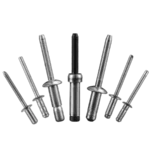
High-strength blind rivets designed for secure solar rail fastening.
RIVMATE rivets enable fast installation, stable structural locking, and reliable performance in outdoor solar mounting systems.
Riveting Advantages
Faster Installation with Structural Rivets for Solar Rails
Riveting is simply a faster, more convenient installation method. A blind rivet can be installed in just 2–5 seconds, whereas traditional bolts require multiple steps like drilling holes, fitting nuts, and tightening. Rivets can be installed from a single side, making them especially easy to use in tight spaces like rail-to-purlin or rail-to-bracket applications. More importantly, structural rivets create a permanent mechanical lock upon installation. They fill connection holes more tightly, offering significantly better vibration resistance and resist loosening under wind loads and temperature fluctuations. Choosing rivets means faster installation, more secure connections, and less hassle for future maintenance.
- 5,000 connection points ≈ 14 hours saved
- 10,000 connection points ≈ 28 hours saved
- 20,000 connection points ≈ 55 hours saved
Solar Fastening Challenges
Slow Installation with Bolt Fasteners
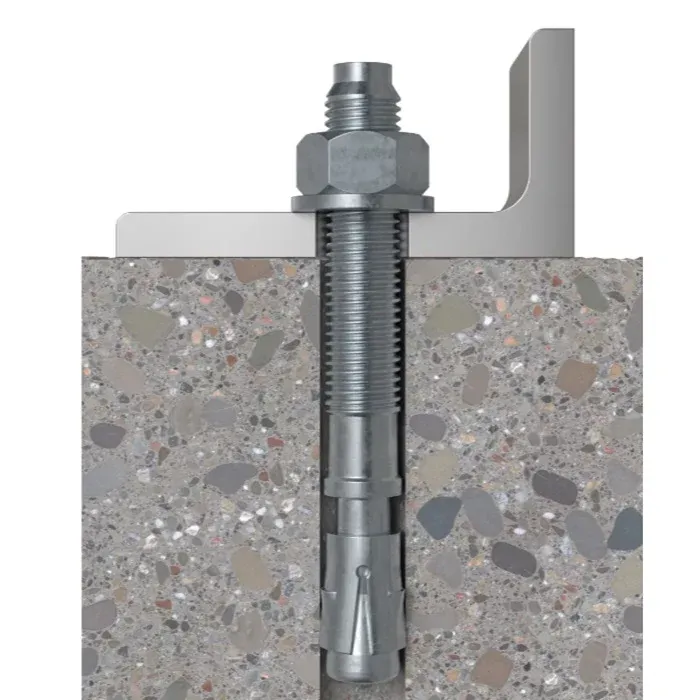
Bolted connections require inserting bolts, installing nuts, and torque-tightening. This significantly slows overall installation progress in PV projects with numerous connection points.
Two-Side Access Required
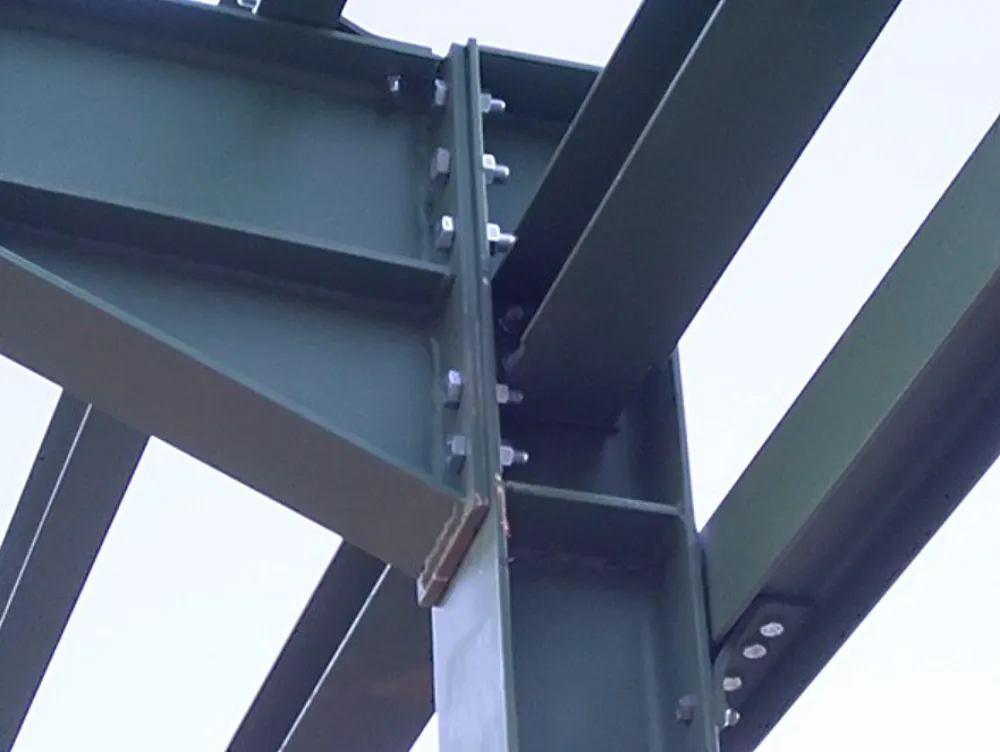
Traditional bolted connections necessitate access from both sides. This poses installation challenges in confined spaces like solar racks or rooftop structures.
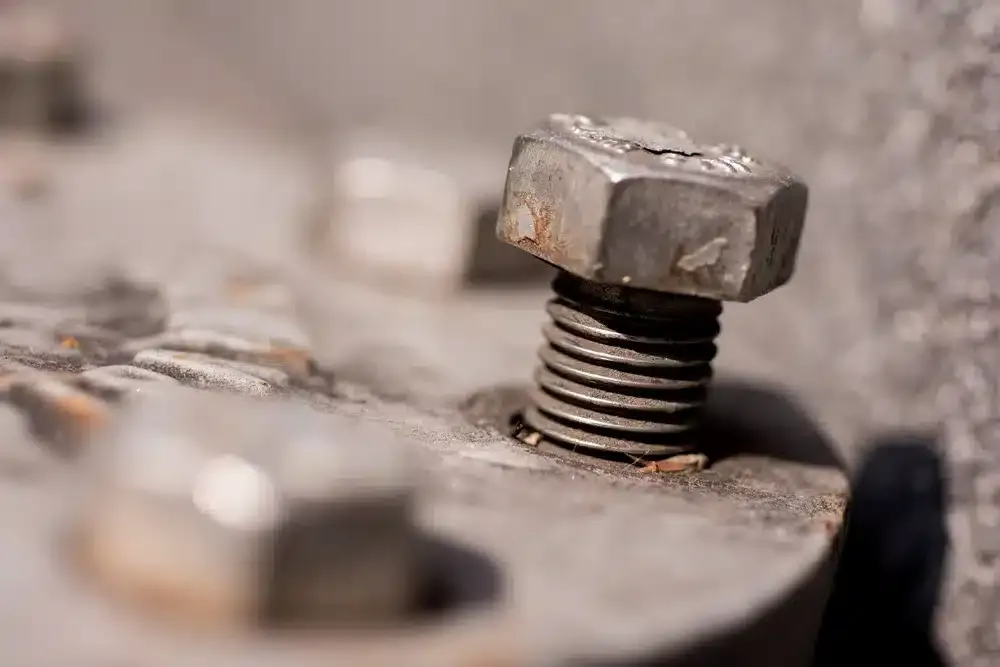
Risk of Loosening Under Vibration
Photovoltaic structures endure long-term wind loads and structural vibrations. Conventional fasteners face a risk of loosening during extended service.
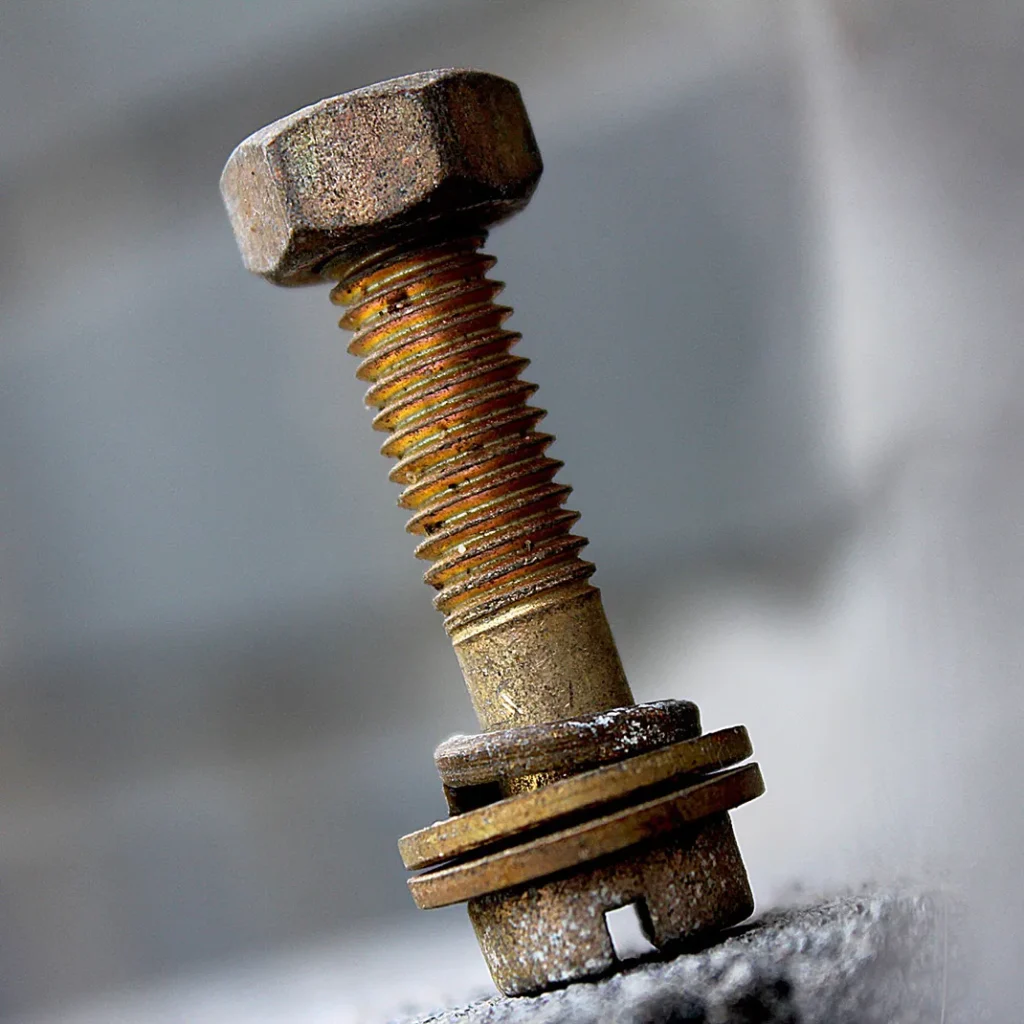
Corrosion from Outdoor Exposure
Solar systems endure prolonged exposure to rain, humidity, and temperature fluctuations. Conventional fasteners may corrode or degrade in performance over time.
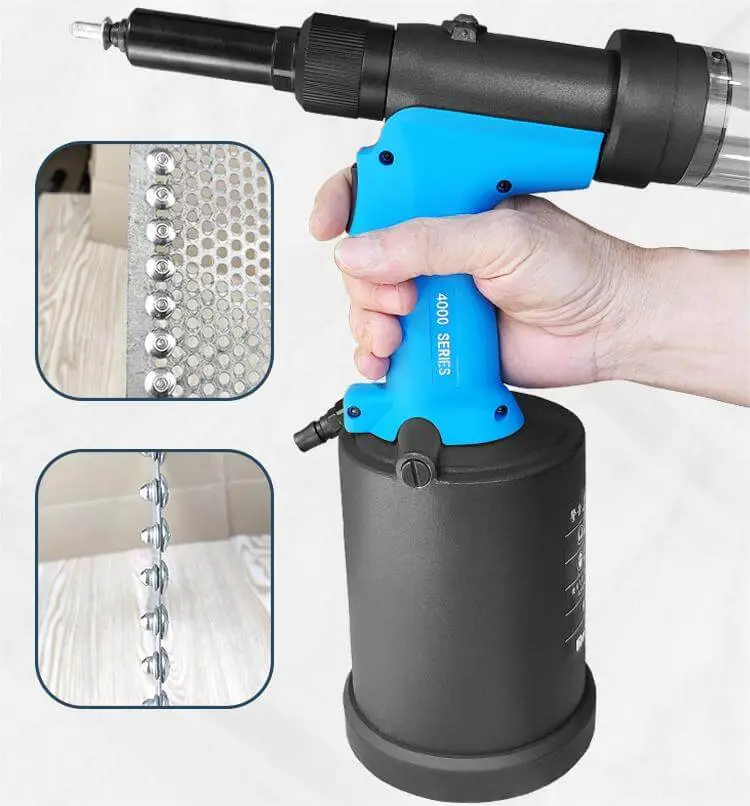
Fast Installation with Blind Rivets
Blind rivets require only insertion into the hole and a single pull of the rivet gun to sever the mandrel, completing the connection in seconds per joint.

One-Side Installation Access
Blind rivets can be installed from a single side without accessing the structure’s reverse side, offering exceptional convenience in confined spaces.
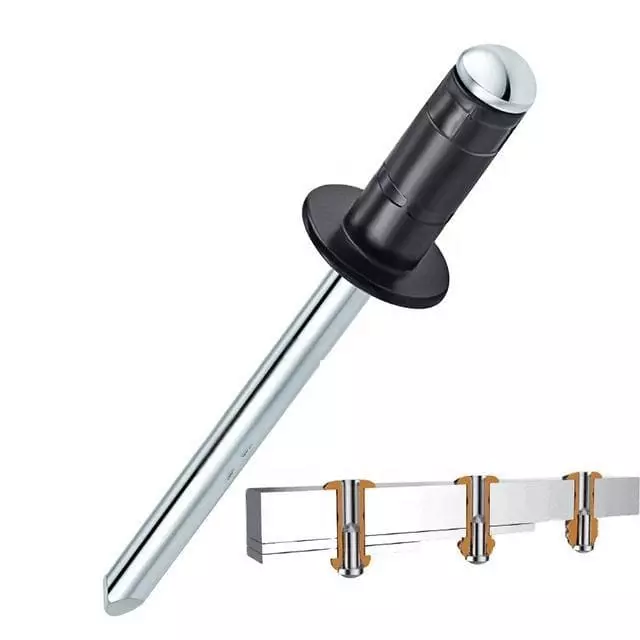
Stable Locking Under Vibration
Pop rivets form a stable locking structure after breaking the mandrel, effectively resisting loosening risks caused by wind loads and long-term vibration.
Reliable Corrosion Resistance
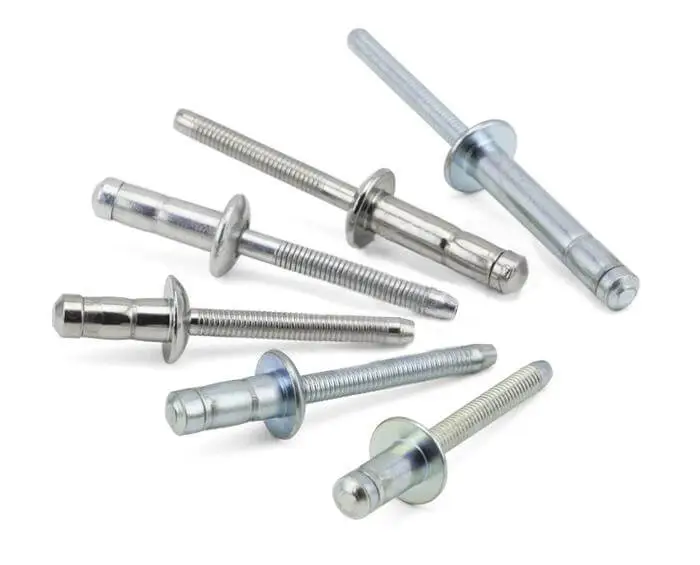
Rivets made from aluminum, steel, or stainless steel offer excellent corrosion resistance, meeting the demands of long-term outdoor use in solar systems.
Applications
Solar Rail Connection Applications
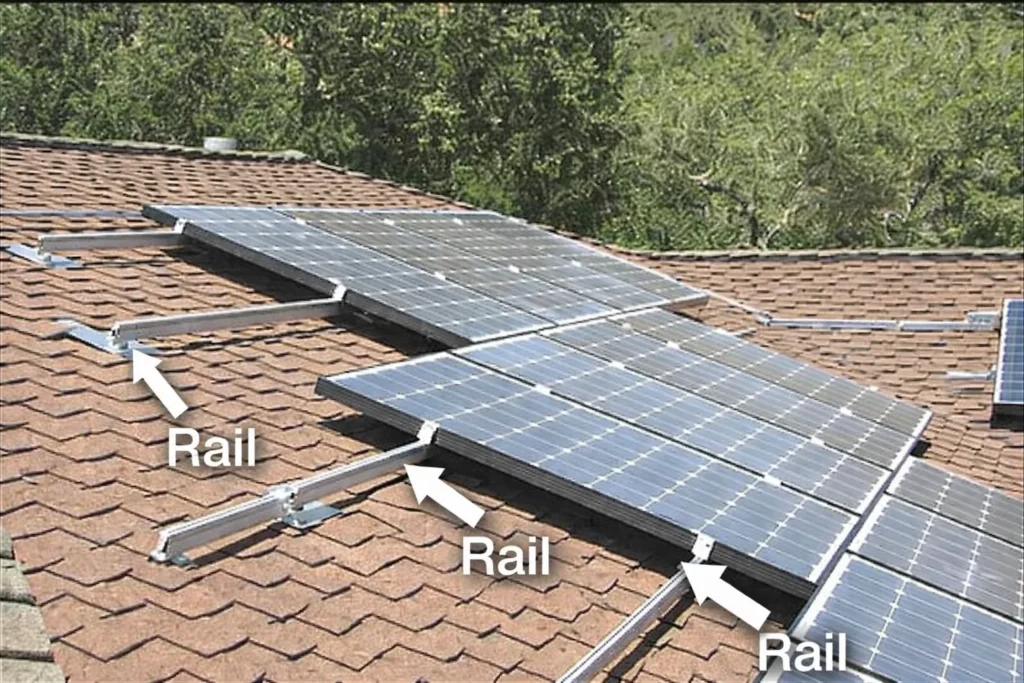
In rooftop photovoltaic systems, Solar Rails require stable connections to the roof structure and mounting accessories. Compared to traditional bolts, using Solar Rail Fastening Rivets as the fastening solution enables rapid single-side installation. This approach delivers higher installation efficiency and consistent connections during the mounting process.
Rail to Roof Structure Connection
In rooftop photovoltaic systems, solar rails must be secured to the roof structure or mounting brackets (such as L-foot brackets, roof bases, or structural steel purlins). This connection bears the weight of the modules and transfers loads to the building structure.
Using Solar rail fastening rivets or Blind rivets for solar mounting rails at this location enables rapid fastening of connection components while creating a stable clamping force. Rivets can be installed from a single side, making them ideal for space-constrained structural nodes like roofs.
Rail to Bracket Connection
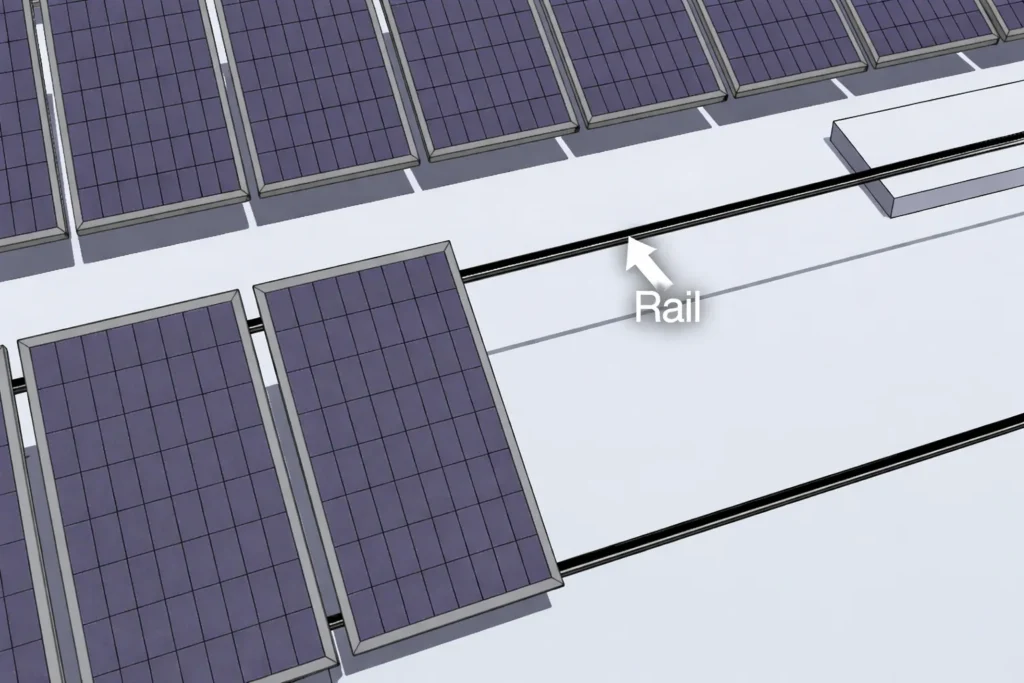
Solar rails are typically secured to mounting brackets via connection plates or bracket assemblies. This location features numerous connections and limited installation space. Using Structural rivets for solar rails enables rapid installation while maintaining a stable, locked structure. During installation, the rivets fill connection gaps and form a reliable lock, ensuring a stable connection between the rail and bracket. This also reduces installation steps, improving construction efficiency.
Rivets vs bolt
Rivets vs bolt fastening in solar rail systems
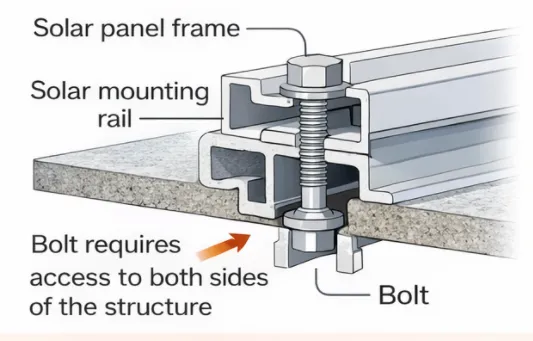
Bolt & Nut Installation
✖ Two-side access required
✖ Slower installation
✖ Requires nut tightening
✖ Higher maintenance risk
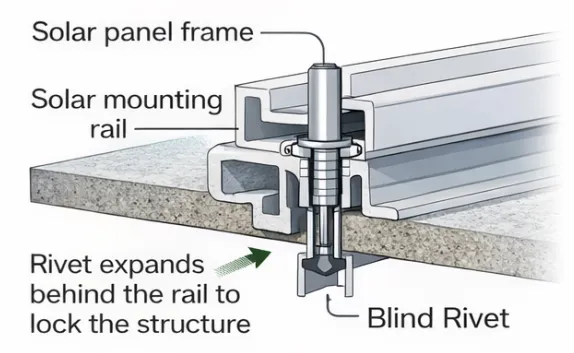
Blind Rivet Installation
✔ One-side installation
✔ 2–5s installation time
✔ Strong vibration resistance
✔ No nut required
Need a Reliable Solar Rivet Solution for Your Project?
RIVMATE provides high-strength Blind Rivets for Solar Rails.Our structural riveting solutions deliver up to 15.5 kN shear strength, vibration resistance, and fast single-side installation — helping installers improve efficiency and long-term reliability.
Recommended Rivets
RIVMATE Rivets for Solar Rails
RIVMATE offers a range of Rivets for Solar Rails that provide stable and reliable structural locking in critical connection scenarios such as solar rail assemblies, rail-to-purlin connections, and high-load structural joints.
Hem-Firm Blind Rivet
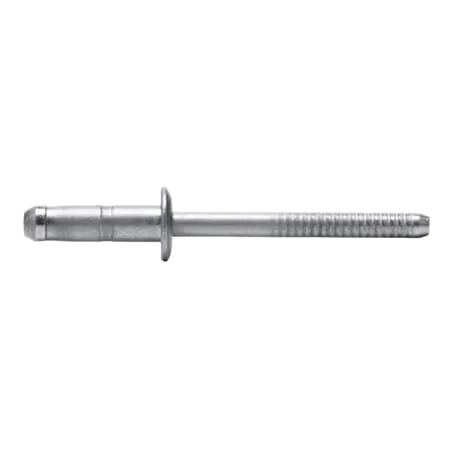
Hem-Firm Blind Rivet is primarily used for structural connection points in photovoltaic systems. Its locking core structure forms a stable mechanical lock after riveting, enhancing overall connection strength and vibration resistance.
- Tensile strength up to 11.5 kN
- Shear strength up to 15.5 kN
- Large bearing surface design
- IPX7 waterproof sealing performance
Multi-Grip Blind Rivet
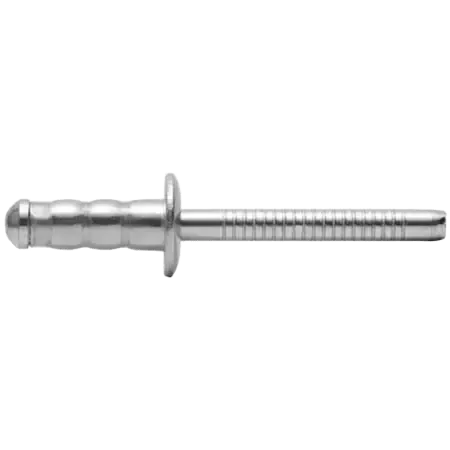
Solar rail systems exhibit significant variations in material thickness across different projects. The Multi-Grip Blind Rivet accommodates diverse material thickness combinations. This reduces the number of required rivet models in solar rail assemblies.
- 4.0 – 6.0 mm grip range
- Tensile strength: 4.2 kN
- Shear strength: 6.0 kN
Mono-Lock Blind Rivet
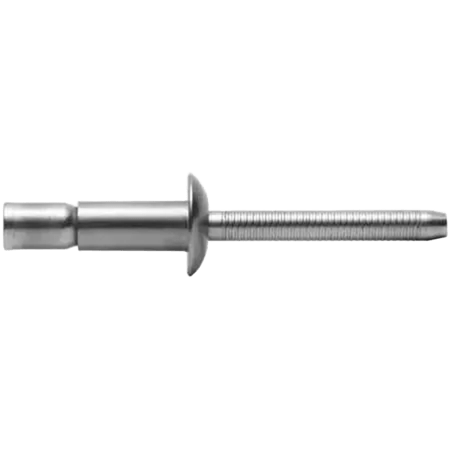
In industrial rooftop projects, certain rail connection points must withstand higher structural loads.Mono-Lock Blind Rivet features a structural locking design, delivering enhanced shear strength and tensile strength for high-load solar rail connections.
- Tensile Strength Up to approximately 8.3 kN
- Shear Strength Up to approximately 11.1 kN
- Retention Load Up to approximately 1.8 kN
Applications
Solar Rail Systems for Rooftop Installations
In industrial rooftop solar systems, solar rails are typically installed on steel structures, color-coated steel roofs, or purlin structures to support entire rows of solar panels. Industrial projects are often large-scale, with a single roof potentially accommodating hundreds to thousands of photovoltaic modules. The rail system must maintain stable connections under long-term wind loads, temperature fluctuations, and vibrational environments.
In this application, the numerous connection points between solar rails and purlins or brackets directly impact installation efficiency and project timelines. Utilizing structural blind rivets enables rapid single-side installation, significantly boosting efficiency. The structural lock core design provides stable shear and tensile resistance, ensuring the rail system maintains reliable structural integrity over extended operation.
Industrial Rooftop Solar
Residential Rooftop Solar Systems
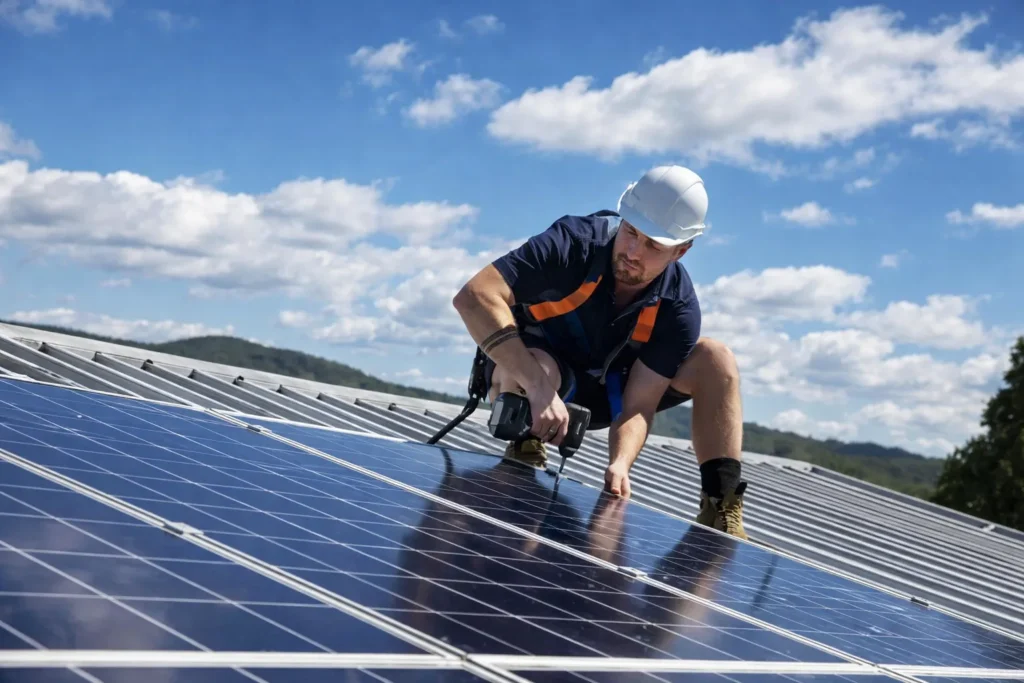
In residential rooftop PV systems, solar rails are typically mounted on roof brackets, roof beams, or roof mounts to secure solar panels and form stable array configurations. Compared to industrial projects, residential rooftops offer limited space and diverse structural types, such as asphalt shingle roofs, metal roofs, or pitched roof structures.
Due to limited construction space, installers often operate solely on the roof surface, necessitating simple and efficient connection methods. Blind rivets eliminate the need for nuts on the opposite side of the structure or complex tooling, significantly enhancing worker efficiency and safety. Additionally, riveted connections offer excellent vibration resistance and remain secure under long-term wind loads and temperature fluctuations, making them ideal for residential PV systems requiring sustained, stable operation.
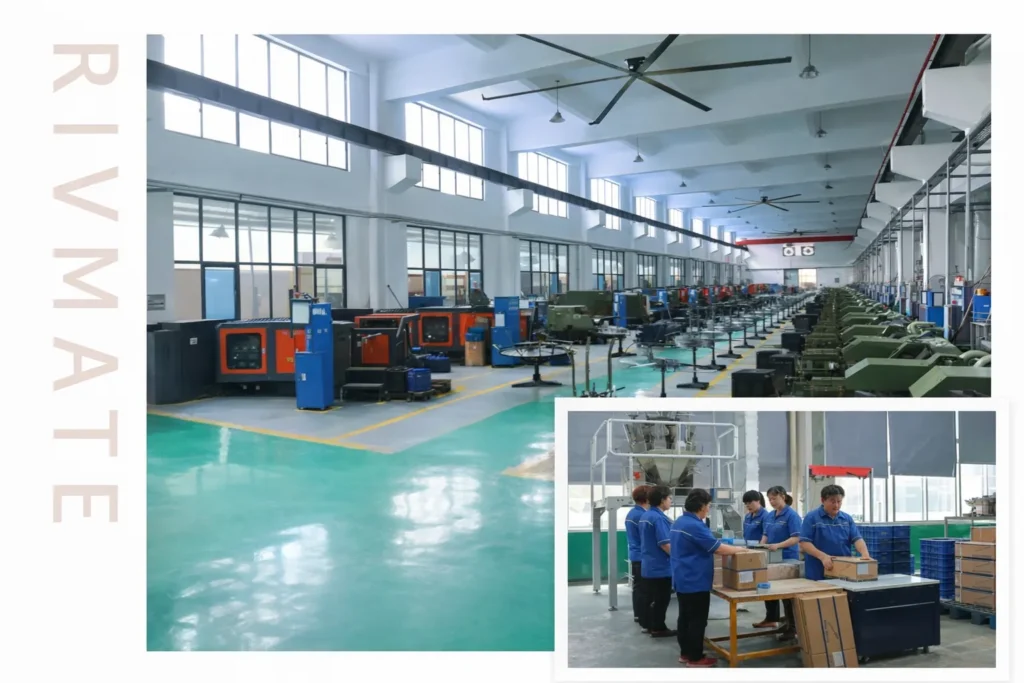
GET TO KNOW US
Rivmate: Manufacturing Capability
IATF 16949 Quality Management System: Automotive-grade quality control · Process traceability · Standardized production
Precision Cold Heading Technology: High-accuracy forming · Stable rivet geometry · Consistent mechanical properties
Comprehensive Rivet Testing: Shear strength test · Tensile test · Mandrel break load verification
Industrial Supply Stability: Reliable raw materials · Stable lead times · Consistent batch quality

Have any questions? Feel Free to Give Us A Call!
+86 189 6230 4392
Need Help With Your Solar Project?
Solar Rivet Technical FAQ for Solar Panel Frames
Q1. Why are rivets widely used in solar mounting rail systems?
In large-scale photovoltaic projects, rivets for solar mounting rails are widely adopted because riveted connections enable single-side installation, rapid construction, and stable structural locking. Compared to traditional bolts, rivets eliminate the need for nuts in solar rail assemblies and require no access from the opposite side of the structure, making them particularly suitable for rooftop PV installations.
Q2. What type of rivets are suitable for solar rail connection?
When selecting rivets for solar rail connections, structural blind rivets are typically preferred. Featuring a locking core design, these rivets deliver superior shear and tensile strength, making them suitable for rivets in solar racking systems and various solar rail fastening solutions.
Q3. Can blind rivets be used for solar panel rail fastening?
Yes. Blind rivets for solar structures are commonly used in solar rail systems. Their single-side installation capability makes them highly suitable for solar panel rail fastening and rooftop PV structural connections, especially in scenarios with limited construction space.
Q4. Where are rivets typically used in solar rail systems?
In photovoltaic structures, rivets are primarily used at the following connection points:
- rivets for solar rail to purlin connection
- solar panel rail assembly rivets
- rivets for solar rail brackets
These locations all require stable and efficient solar mounting rail fasteners.
Q5. Are structural rivets strong enough for solar mounting structures?
Yes. Structural rivets for solar mounting possess high shear and tensile strength, making them fully capable of handling critical connection tasks in photovoltaic structures. When the correct model is selected, riveted connections not only offer reliable strength but also resist loosening under long-term wind loads and vibration, making them highly suitable for use as solar mounting rail fasteners.
In actual engineering projects, different structural rivet types are typically selected for various connection points, such as:
Suitable for high-load solar rail connections. Featuring a structural lock core design, this rivet locks the core within the body upon breakage, delivering superior shear and tensile strength. It excels as a high strength rivet for solar rails.
Suitable for solar rail to purlin connections. This rivet creates a stable expansion structure on the material’s reverse side, forming a robust bond between the rail and purlin. It is a common solution for rivets for solar mounting rails.
Suitable for solar panel rail assembly. Characterized by a wide clamping range, it accommodates material combinations of varying thicknesses. This reduces the number of fastener types required in solar rail assembly, enhancing installation efficiency.
Q6. Why are rivets preferred over bolts in solar rail installation?
When selecting solar rail installation fasteners, many installation teams prefer rivets because:
- Faster installation
- No nuts required
- Less prone to loosening due to vibration
- Better suited for rooftop construction environments
Consequently, riveted connections are increasingly common in rivets for photovoltaic mounting rails and large-scale PV projects.
Q7. What materials are commonly used for solar rail rivets?
Common materials for rivets in solar installation systems include:
- Aluminum body + steel mandrel
- All-steel structural rivets
- Stainless steel rivets
Q8. How to choose the right rivet size for solar rail systems?
When selecting rivets for solar mounting rails, consider the following factors:
- Rail material thickness
- Purlin or bracket thickness
- Structural load requirements
- Mounting hole diameter
Selecting an appropriate solar rail fastening solution based on these parameters ensures stable connections and efficient installation.