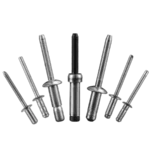
Rivets for Solar Inverter Cabinets
High-strength blind rivets designed for sheet metal inverter cabinet assembly, enabling fast installation and stable structural connections.
Riveting Advantages
3–5× Faster Inverter Cabinet Assembly with RIVMATE Rivets
When assembling inverter cabinets, you need more than just connections—you need faster cycle times and more stable structures. RIVMATE recommends Open-End Blind Rivets, Sealed Blind Rivets, and Structural Blind Rivets as core fastening solutions to accommodate various sheet metal thicknesses and application requirements. Blind rivets eliminate the need for double-sided operation; simply insert the rivet and snap off the mandrel to complete the fastening. Each connection takes only 1–2 seconds. In mass production environments, this can boost assembly efficiency by approximately 30%–50%. More importantly, the riveted joints form a permanently locked structure that remains secure even under equipment vibration and thermal cycling conditions. By choosing RIVMATE, you can achieve faster assembly cycles, lower labor costs, and more reliable cabinet structural connections.
- 5,000 connection points ≈ 14 hours saved
- 10,000 connection points ≈ 28 hours saved
- 20,000 connection points ≈ 55 hours saved
Rivet Application Points
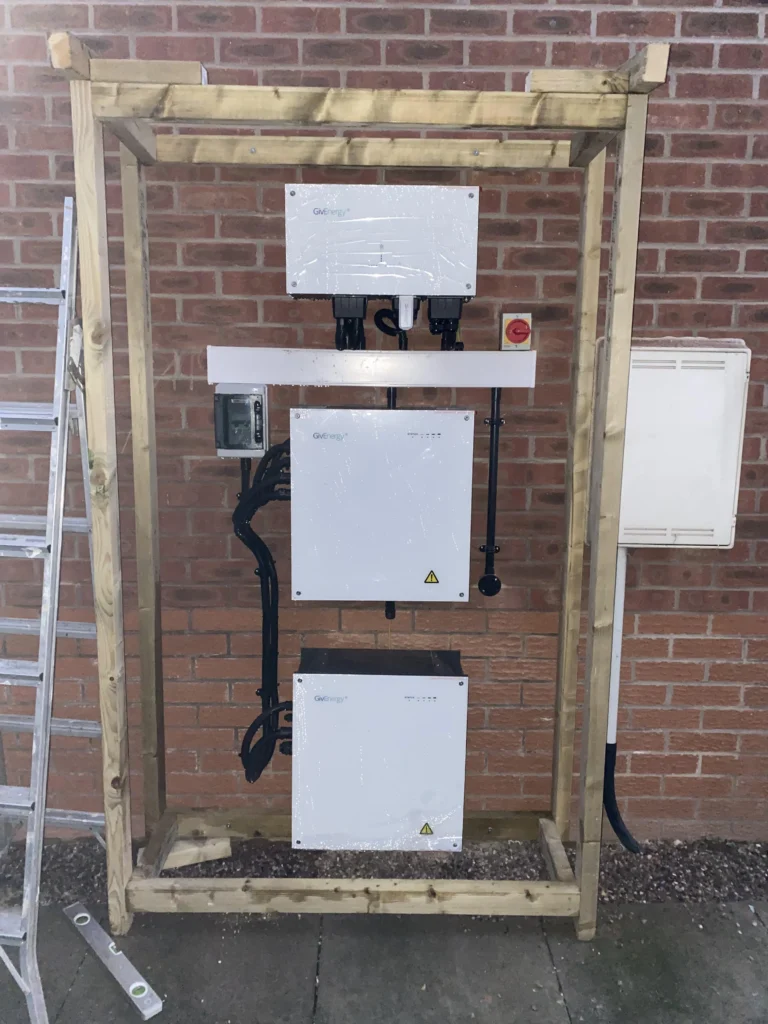
Cabinet Frame
The cabinet frame is the core load-bearing structure of an inverter cabinet. It supports the entire cabinet and secures the internal electrical equipment, so every connection point must provide reliable shear and vibration resistance.
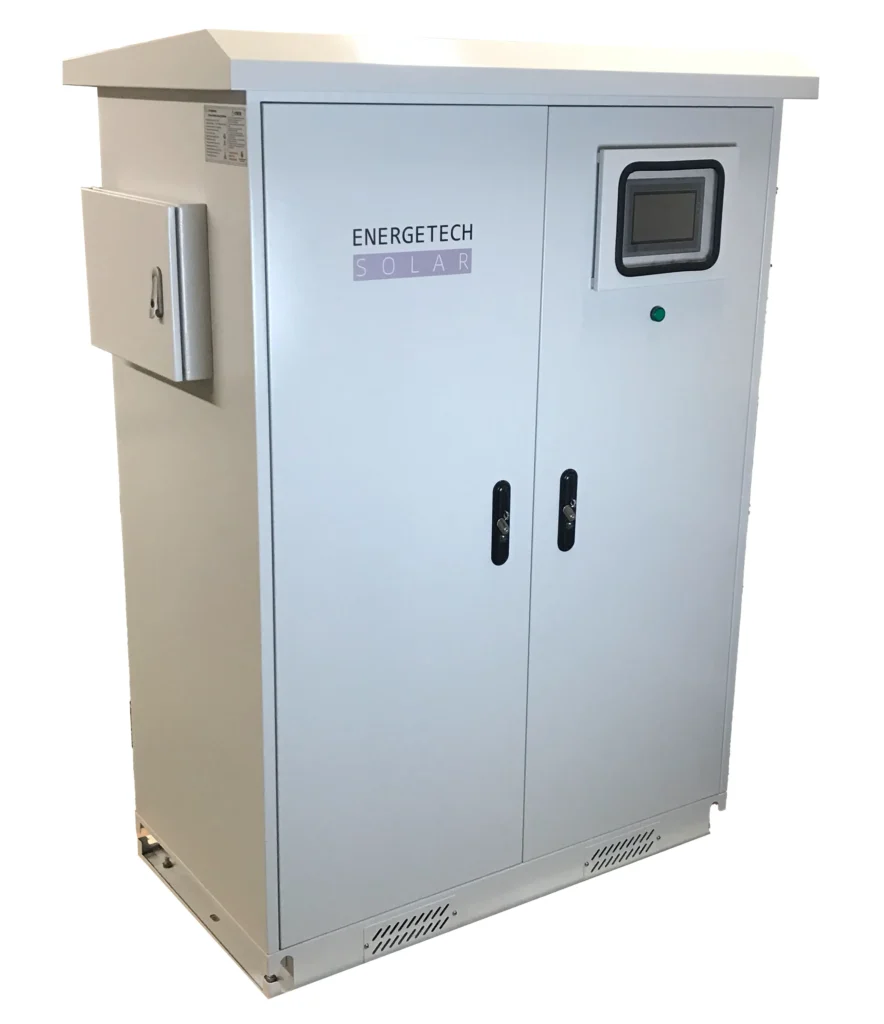
Sheet Metal Panels
Inverter cabinet enclosures are constructed from thin-gauge steel or aluminum sheets. These panels must be securely fastened to the cabinet frame while maintaining excellent structural stability. Sheet metal structures are not well-suited for complex double-sided bolting.
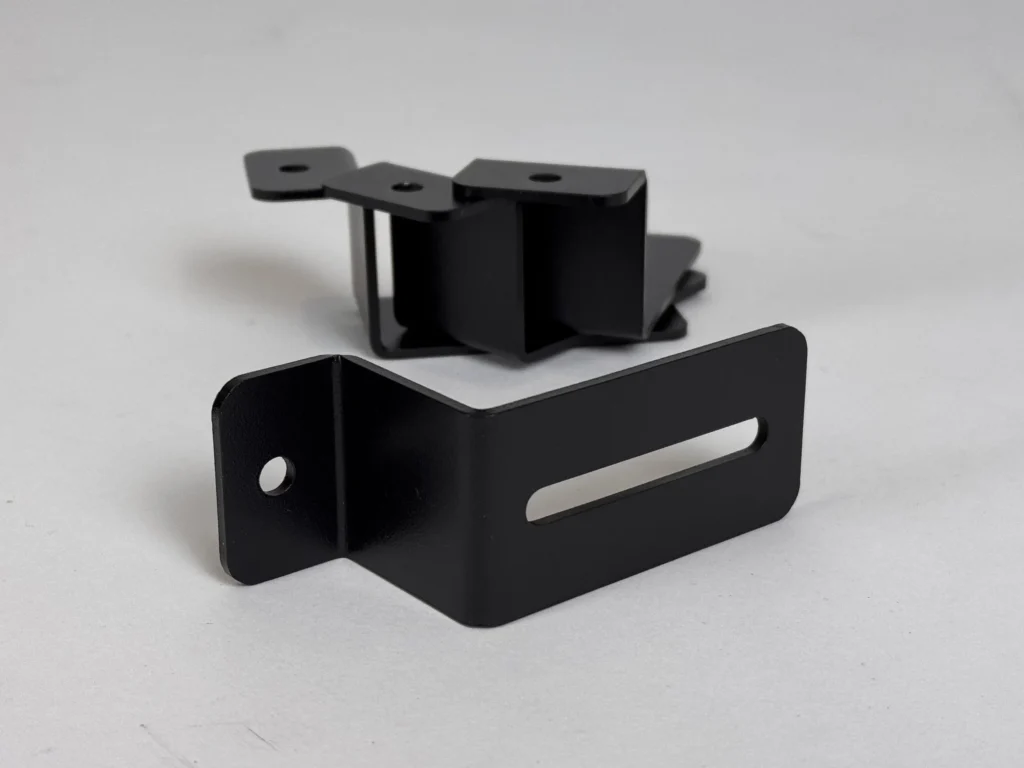
Cooling Brackets
Inverters generate continuous heat during operation, so cooling fans, heat sinks, and ventilation components must be installed inside the cabinet. These cooling structures must be securely fastened; otherwise, vibration can pose potential risks.
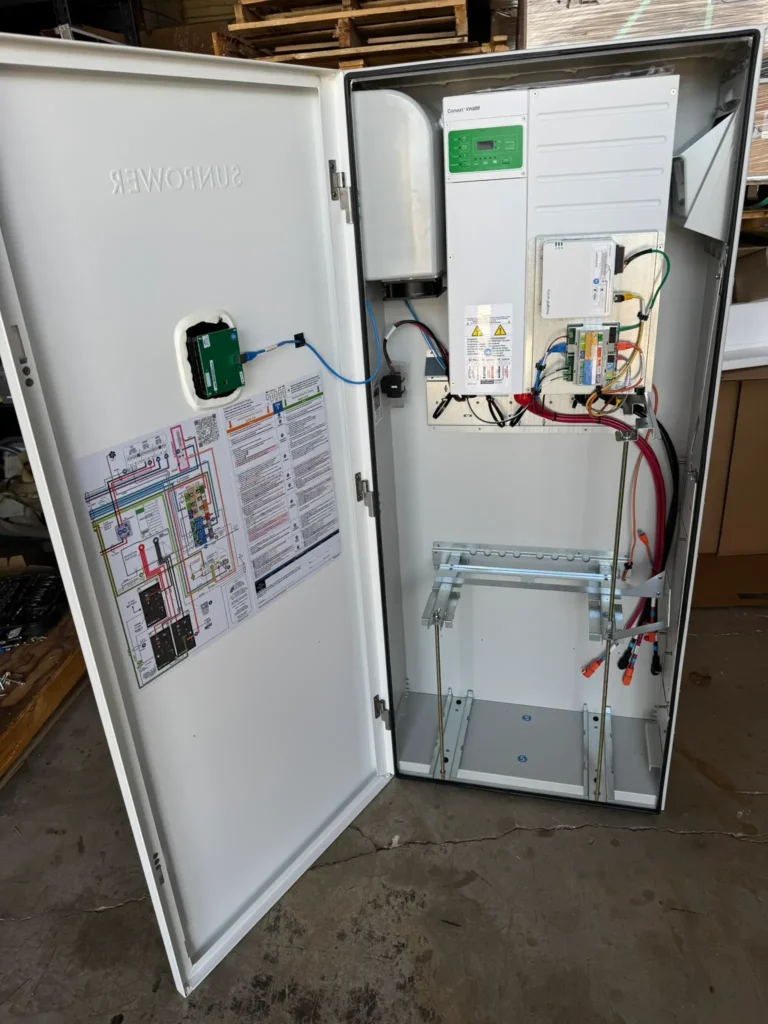
Component Mounts
Inverter cabinets require the installation of numerous electrical components, such as inverter modules, control units, and wiring assemblies. Installation space is limited, and traditional fastening methods are cumbersome.
Applications
Solar Inverter Cabinets Applications
Solar inverter cabinets are widely used in various photovoltaic power systems. They serve as the core enclosure to protect and support inverter components while ensuring stable operation.
Utility-Scale Solar Power Plants
Used in large-scale ground-mounted power plants, where inverters are installed centrally; cabinets must feature a high-strength structure and excellent heat dissipation performance.
Commercial & Industrial Solar Systems
Used in commercial and industrial rooftop projects; cabinets require a compact design while ensuring long-term operational stability.
Residential Solar Systems
Used in small-scale distributed solar systems, where cabinets feature a lighter-weight structure but still require reliable fastening methods to ensure safe operation.
Energy Storage Systems (ESS)
Used for power control equipment in energy storage systems, where the internal cabinet structure is complex and demands higher stability and durability from fasteners.
Rivets vs Screws
Rivets vs Screws for Sheet Metal Cabinets
In the assembly of solar inverter cabinets, fastening methods directly impact production efficiency and structural reliability. For sheet metal structures, rivets are not merely an alternative but a more efficient and stable choice.
| Feature | Rivets | Screws |
|---|---|---|
| Installation | Single-sided installation; no back-side access required | Requires installation from both sides |
| Installation speed | Approx. 1–2 seconds per point | Multi-step process, significantly slower |
| Vibration resistance | Forms a permanent locking structure, resistant to loosening | Relies on thread friction, prone to loosening |
| Maintenance | No maintenance required | Requires periodic inspection and tightening |
| Assembly consistency | High consistency at each connection point | Highly susceptible to manual operation |
| Automation compatibility | Highly suitable for automated production lines | More difficult to automate |
In summary, in the mass production of inverter cabinets, blind rivets can improve overall assembly efficiency by approximately 30%–50%. This boosts efficiency and reduces labor costs.
Need a Reliable Rivet Solution for Inverter Cabinets?
Upgrade your cabinet assembly with high-strength blind rivets designed for sheet metal structures, fast installation, and long-term reliability in demanding operating conditions.
High-Efficiency Assembly with Blind Rivets
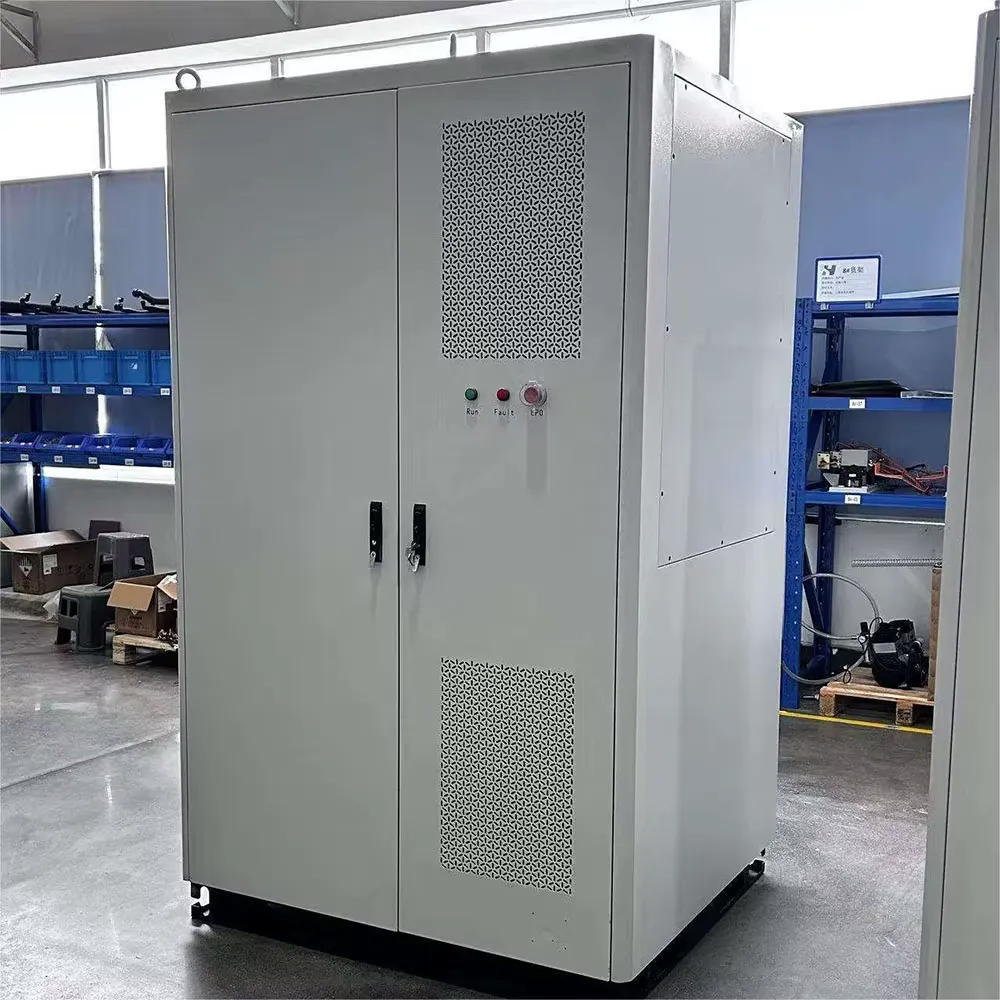
In the mass production of inverter cabinets, efficiency depends on the reliability of the joining method and the consistency of the production cycle. The use of blind rivets standardizes each joining operation, reducing errors caused by human intervention and making the assembly process more controllable. Compared to screw connections that rely on torque control, riveted structures are more stable and result in lower rework rates. On automated or semi-automated production lines, riveting cycles are more consistent, allowing thousands of joints to be completed in a single shift, significantly boosting line output and reducing overall manufacturing costs.

Recommended Rivets
RIVMATE Rivet Solutions for Solar Inverter Cabinets
For the assembly of sheet metal structures in solar inverter cabinets, RIVMATE offers a variety of blind rivet solutions to meet diverse application needs, ranging from thin-sheet connections to high-strength structural joints. Each rivet is optimized for specific operating conditions, helping you improve assembly efficiency while ensuring structural reliability.
Open End Blind Rivets

Applications
Used for connecting cabinet sheet metal enclosures, panels, and lightweight structures.
Advantages
- Fast installation; takes only 1–2 seconds per point
- Cost-effective; ideal for high-volume production
- Suitable for thin sheet materials; provides a stable connection
Sealed Blind Rivets
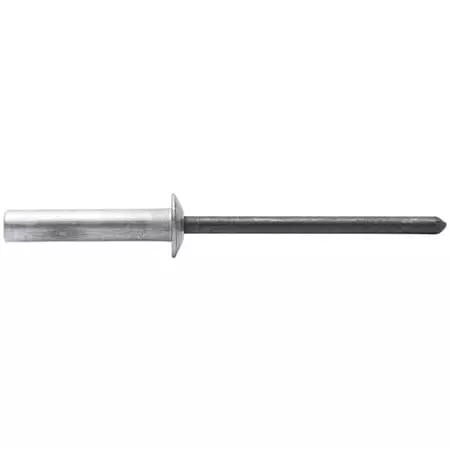
Applications
Used for structural connections in outdoor inverter cabinets where high levels of water resistance or dust resistance are required.
Advantages
- Sealed design effectively prevents moisture ingress
- Enhances the overall sealing performance of the cabinet
- Suitable for harsh outdoor environments
Structural Blind Rivets
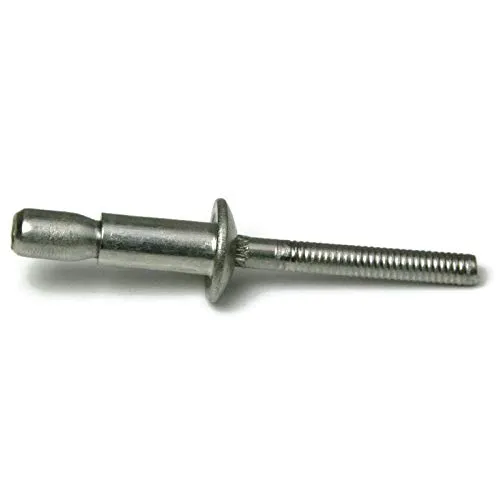
Applications
Used for connecting cabinet frames, load-bearing structural joints, and high-strength connection points.
Advantages
- Provides high shear and tensile strength
- Forms a stable mechanical locking structure after installation
- Excellent vibration resistance, suitable for equipment in long-term operation
GET TO KNOW US
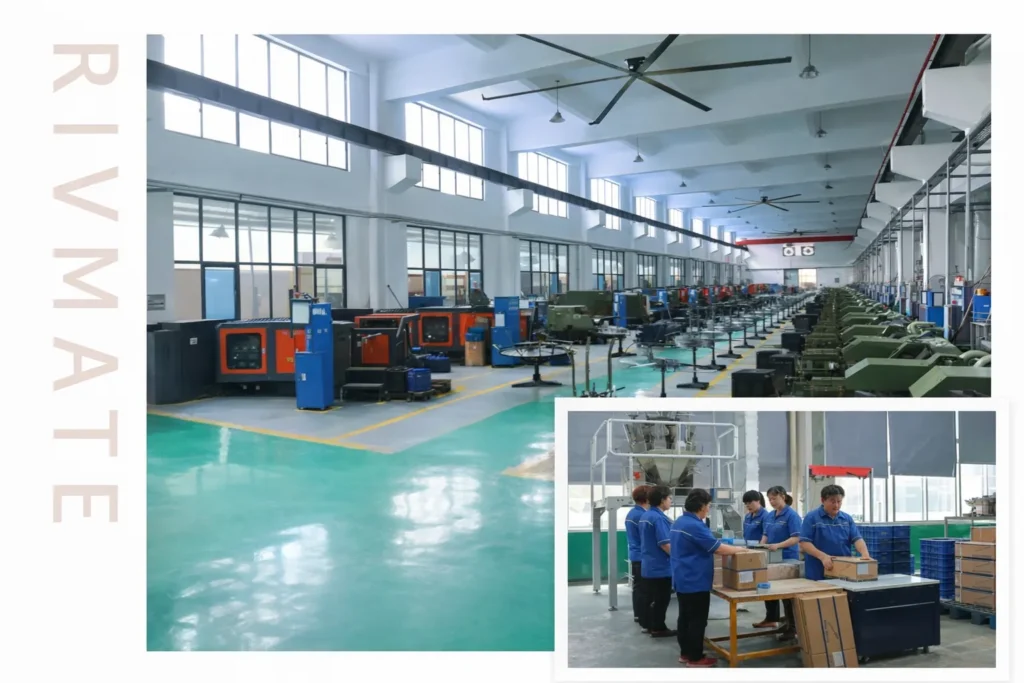
Reliable Rivet Manufacturing with Automated Production
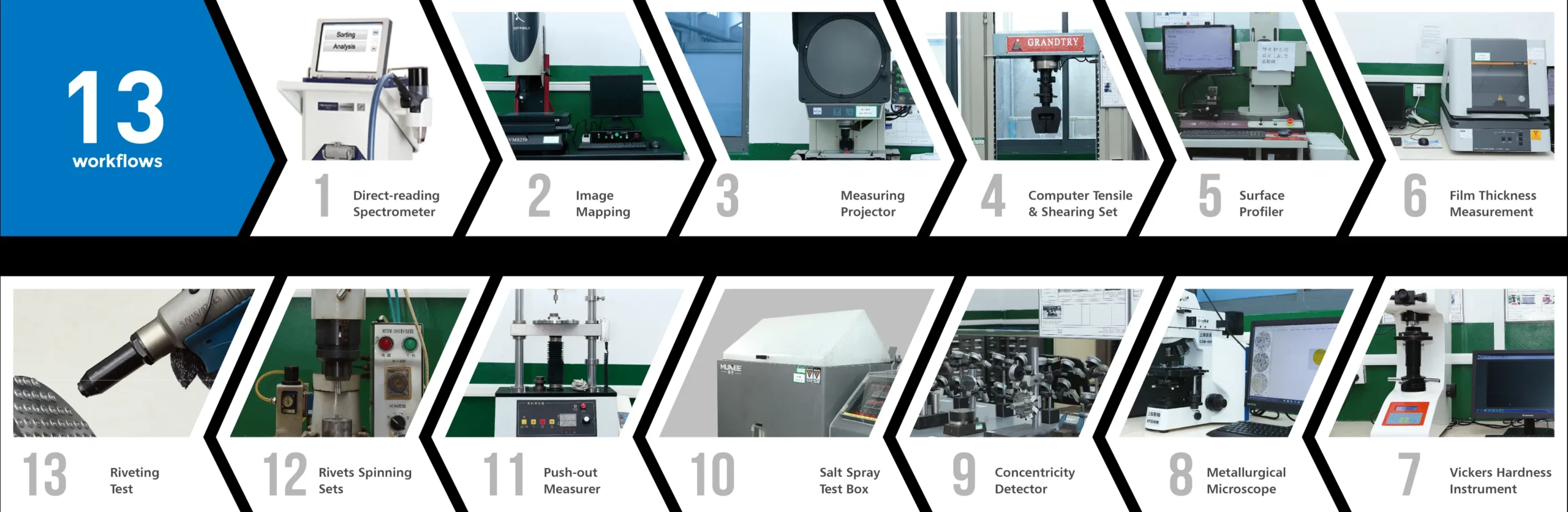
Through standardized production and strict quality control, RIVMATE ensures that every rivet delivers consistent performance and reliability. The factory employs automated production lines, enabling end-to-end process control from wire drawing and cold heading to surface treatment, thereby guaranteeing dimensional accuracy and stable mechanical properties.
Our production complies with the IATF 16949 standard and is supported by a comprehensive inspection process. Every batch of products undergoes rigorous inspection to ensure compliance with industrial application requirements. For long-term equipment such as inverter cabinets, this translates to more stable connection performance and lower quality risks.
OEM
Custom Rivet Solutions
Custom
Flange Diameter
You can request a larger or special flange size to better distribute load on composite panels.
02
Special
Surface Coatings
You can choose coatings for corrosion resistance, durability, or specific environmental conditions.
03
OEM &
Private Label Packaging
You can customize packaging with your brand, labels, and carton specifications for your market.
Need Help With Your Solar Project?
Technical FAQ: Rivets for Solar Inverter Cabinets
Q1. What types of rivets are used for inverter cabinets?
In inverter cabinets, the primary types of rivets used are open-end blind rivets, sealed blind rivets, and structural blind rivets. Open-end rivets are typically used for joining thin sheets, sealed blind rivets are used for waterproof structures, and structural blind rivets are recommended for cabinet frames or load-bearing areas to achieve higher connection strength and stability.
Q2. Are rivets better than screws for sheet metal cabinets?
Yes, in sheet metal cabinets, rivets offer advantages in terms of efficiency and stability. Riveting creates a mechanical locking structure that does not rely on thread friction, making it less prone to loosening in vibrating environments. Additionally, the assembly process is simpler, making it suitable for mass production.
Q3. What material rivets are best for inverter cabinets?
Material selection depends on the operating environment and structural requirements. Common choices include aluminum, carbon steel, and stainless steel. Aluminum rivets are suitable for lightweight sheet metal connections, stainless steel rivets are suitable for outdoor or highly corrosive environments, while steel rivets are suitable for structural components requiring higher strength.
Q4. How to choose rivet size for cabinet assembly?
When selecting a rivet size, there are three key factors to consider: total material thickness, grip range, and required joint strength.
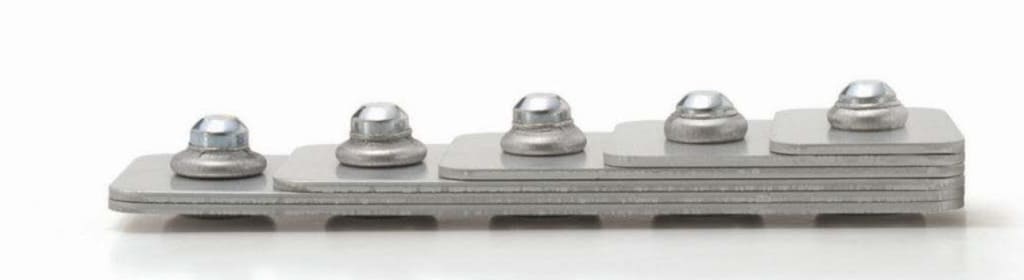
First, calculate the total thickness of all materials to be joined, then match it to the rivet’s grip range. It must fully cover the thickness; otherwise, the rivet will either fail to secure the joint or result in an unstable connection.
Second, select the diameter based on the connection location. For thin sheet metal panels, 3.2 mm or 4.0 mm is sufficient; for load-bearing locations such as frames or brackets, choose 4.8 mm or larger for more reliable strength.
Step 3: Verify hole diameter compatibility. If the hole is too large, the connection will be loose; if it’s too small, installation will be difficult. You must drill holes according to the standard rivet diameter specifications.
Q5. Do inverter cabinets require sealed rivets?
If the cabinet requires waterproof or dustproof performance, sealed rivets are the better choice. They prevent moisture or dust from entering the cabinet through the rivet holes, making them particularly suitable for outdoor photovoltaic systems.
Q6. What grip range is suitable for sheet metal cabinets?
To select the appropriate grip range, you must first measure the total thickness of all materials to be joined, then choose a rivet with a grip range that covers that thickness. This ensures a tight and stable connection during installation.
In sheet metal enclosures, the total thickness typically ranges from 1 mm to 4 mm. You should prioritize rivet specifications that cover this range to ensure the materials are fully compressed after riveting and a reliable clamping force is achieved. If the thickness of your structure varies significantly, using multi-grip rivets is more efficient. A single specification can cover multiple thickness ranges, reducing selection complexity while improving assembly efficiency.