


Best Rivets for Sheet Metal : 7 Types Rivets for Sheet Metal
Table of Contents
During industrial production, engineers in various industries use a number of unique fasteners to connect multiple sheet metals and components. What are the best rivets for sheet metal? Do you know the types of rivets used for sheet metal?
Different types of rivets usually have different designs, materials and properties. This article is a comprehensive guide to sheet metal rivets. By reading this article, you will learn about the seven most common types of rivets used for sheet metal assembly, as well as the best rivets for sheet metal.
What Are Sheet Metal Rivets?
In thin plate structures, choosing the right fasteners is of utmost importance. Especially within the range of 0.3–3.0 mm for the plates, screws often cannot provide a stable and reliable connection.
Why are thin plates not suitable for screws?
The thin plate itself has a small amount of material and low stiffness, so it will encounter various problems in environments subjected to force or vibration:
- Easy to come loose: The thickness of the thin plate is insufficient, and the depth of the thread engagement is not adequate, resulting in a decrease in locking force.
- Significant plate deformation: When tightening the screws, they are prone to being pressed in or deformed, affecting the appearance and structure.
- Insufficient thread strength to provide adequate support: Only shallow threads can be formed on the thin plate, resulting in limited load-bearing capacity.
- Prone to loosening: In vibration conditions (HVAC, mechanical equipment, vehicles), the probability of screws loosening is higher.
These issues indicate that: Screws are not the ideal fastening method for thin plates, unless additional processes such as rivets are employed.
Why is Rivets the Best Choice for Sheet Metal?

The structural characteristics of rivets are naturally well-suited for thin plate applications, especially blind rivets.
- Blind Installation No contact with the back side is required. It is highly suitable for closed structures such as boxes, shells, and pipes.
- Provide stable and persistent clamping force The riveting process creates a constant pressure through mechanical deformation, which is more reliable than threaded locking.
- No Thread Engagement Required No need for threaded engagement, so the material thickness is no longer a limitation.
- Applicable to various material combinations (Metal + Plastic / Metal + Composite) The rivets can be used to connect steel, aluminum, stainless steel, plastic and even composite materials, and have a wide range of applications.
Key technical requirements for sheet metal connections
When selecting the appropriate rivets for sheet metal, relying solely on material names or hole diameter dimensions is insufficient. To ensure stable connection quality and long-term operational reliability, it is essential to comprehensively consider technical factors such as structural strength, material compatibility, process adaptability, and environmental resistance. The following are the four most critical technical considerations in thin-sheet metal riveting:
① Material thickness and deformation limits: Thin sheet metal connections are susceptible to issues such as insufficient sheet thickness and improper clamping. Therefore, it is necessary to select rivet types with matching clamping ranges and controllable deformation.
② Stress distribution and load transfer: Thin-sheet connections primarily experience shear loads, so stress distribution must be reasonable to prevent localized fatigue failure.
③Surface treatment and corrosion protection: Different metal combinations can cause electrochemical corrosion, so rivet materials must be compatible with the sheets and have corrosion-resistant treatment.
④ Process adaptability: Rivet types must match specific assembly methods, with corresponding technical standards for manual to fully automated production lines.
7 Types Rivets for Sheet Metal
1.Solid Rivets

A solid rivet is a mechanical fastener that joins two or more materials. They consist of a cylindrical shaft with a head and a tail at the other end. Solid rivets are usually made of metals such as steel, aluminium or copper.
Solid rivets have the advantage of high strength and resistance to heat and corrosion. However, they are complicated to install and are not removable, which can create new challenges in routine maintenance.
The application scenarios of solid rivets are very wide. These include aerospace, automotive, construction, shipbuilding, electrical and electronic equipment.
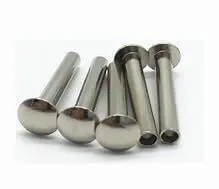
2.Tubular Rivets
Tubular Rivets are made up of a hollow cylindrical rivet and a rivet cap. It works by expanding the rivet cap on the other side by hammering or mechanical pressure to form a tight connection.
Tubular Rivets are very simple and economical, making them suitable for high volume production and projects with limited financial budgets.
Tubular Rivets have a low strength, so will be more suitable for leather goods, textiles and other applications that require very little strength.
3.Blind Rivets
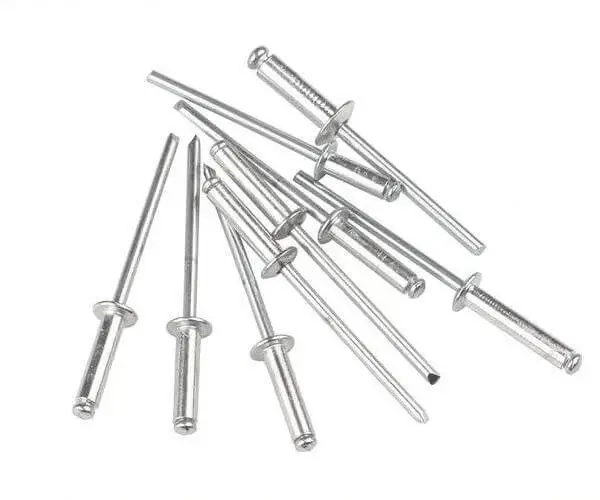
Blind rivet, also known as pop rivet, pull rivet. is a fastener that enables quick material connections. Its most important feature is that it can be installed on one side, making it ideal for use in limited spaces where access to the back of the material is not possible.
If you have a specialised rivet tool, you can appreciate how quickly a blind rivet can be installed. Using a blind rivet saves man hours and labour costs and is ideal for mass production and quick installations. But blind rivet is not perfect, it has its drawbacks. The strength of a standard blind rivet may not be up to the task for a high strength application, and this is when you want to opt for a structural blind rivet for the project.
Blind rivet has a very wide range of applications in automotive manufacturing, aerospace, furniture manufacturing, and metalwork. These include, but are not limited to, the joining of body structures, the joining of furniture components, and the assembly and fabrication of metal products.
4.Self Piercing Rivets (SPR Rivet)
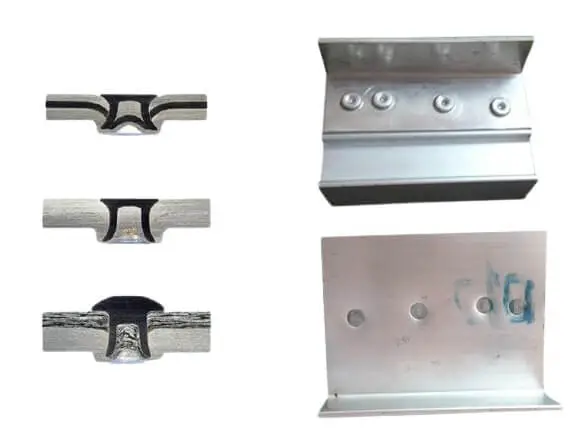
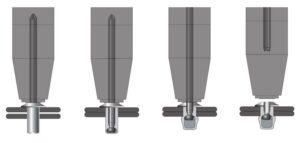
Self piercing rivet (SPR Rviet) is a type of rivet that does not require pre-drilling and is particularly suitable for non-penetrating materials.SPR Rivet consists of two parts: the rivet and the rivet sleeve. During installation, the rivet passes through the upper layer of the material and then the rivet sleeve is formed to achieve a stable connection.
The SPR Rivet is a type of rivet, but it does not require pre-drilling. Aluminium alloys, high-strength steels and composite materials are ideal for use with SPR Rivets. SPR Rivet does not require melting or heating and has a very low thermal impact on the material, preserving the properties and structural integrity of the material.

However, SPR Rivet requires specialised equipment and tools for its installation.
SPR Rivet is used extensively in the joining of metal components, including car doors, bonnets and chassis, as well as in the assembly of mobile phone and computer housings.
5.High Strength Structural Rivets
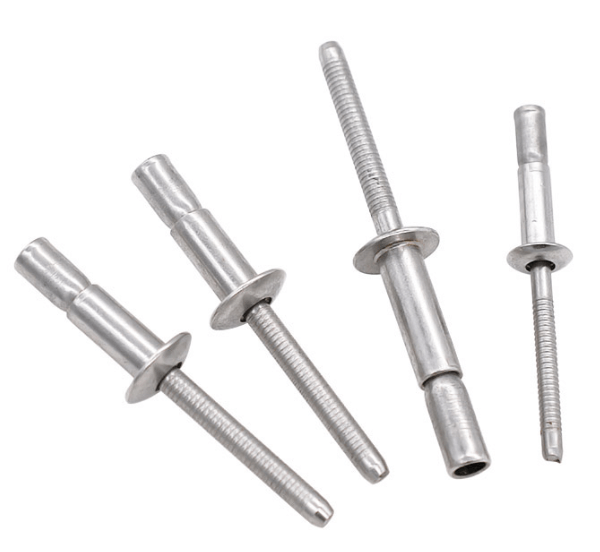
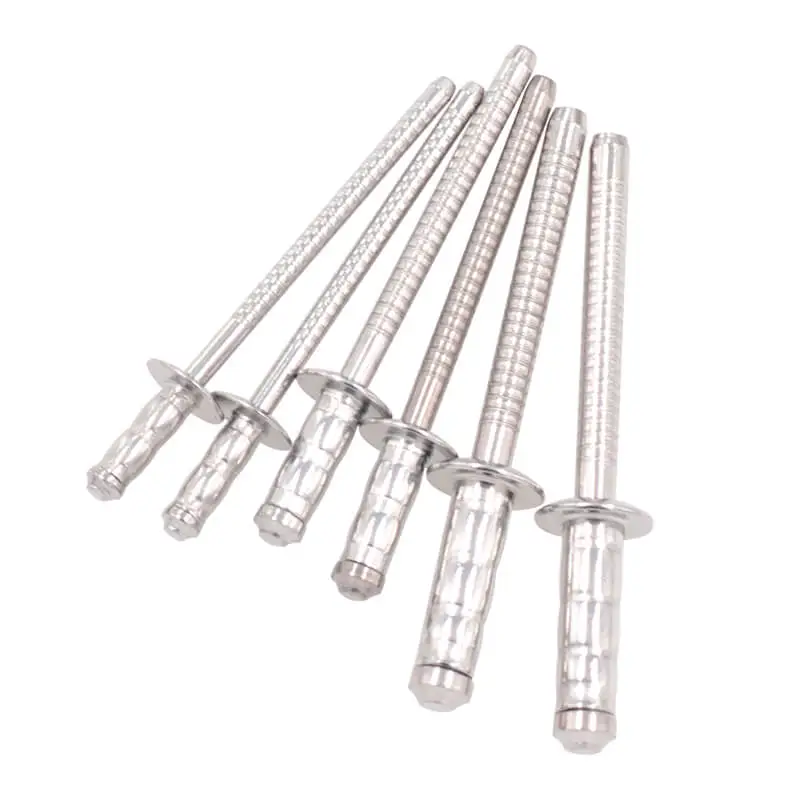
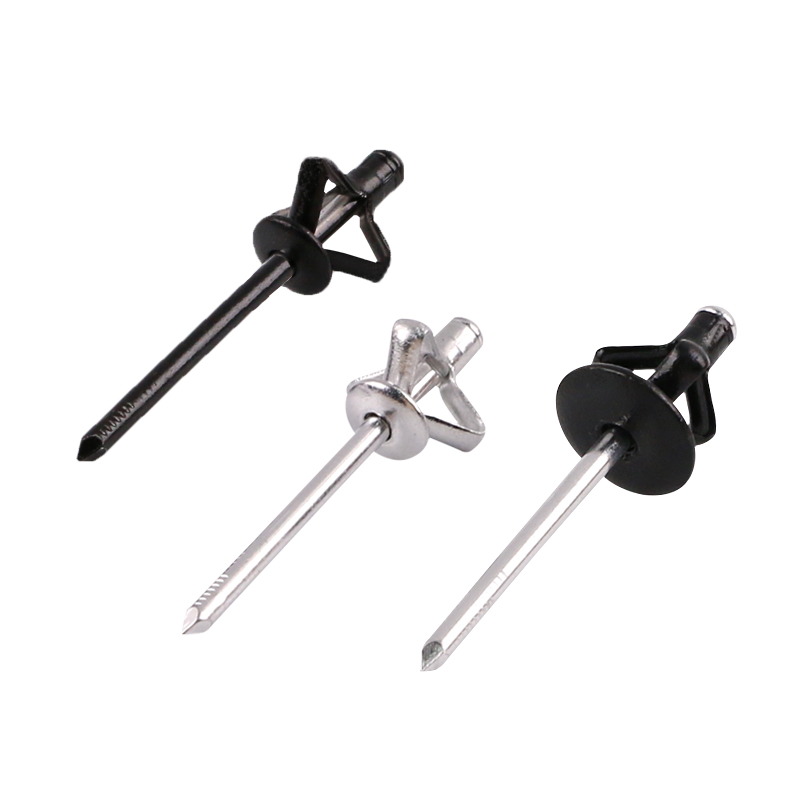

High strength rivets is a category in blind rivet. The traditional Blind rivet has no way to withstand ultra-high strength applications, so structural rivets were invented. A high strength structural rivet is a rivet specifically designed to withstand high strength loads and provide a reliable connection. It generally has special construction and materials to meet the requirements for strength, durability and fatigue resistance.
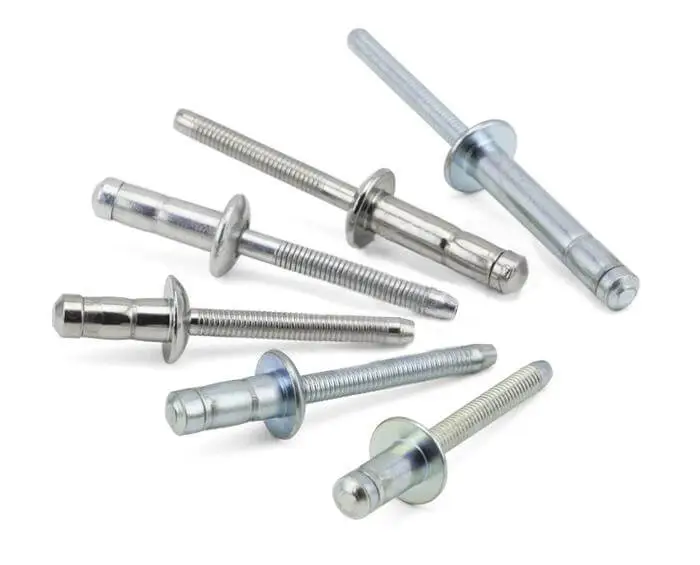


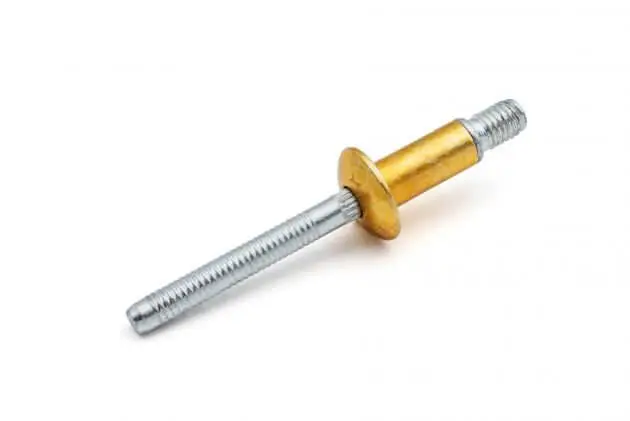
High strength structural rivets have good fatigue resistance in addition to providing a high strength connection. Compared to traditional bolting and welding, structural rivets allow for a lighter weight design, reducing overall weight without reducing the strength of the connection.
However, structural rivets must be installed using specialised equipment, although they are still very quick to install. Certain non-metallic materials cannot be used with structural rivets.
Structural rivets are often found in industrial applications where strength is required. These include automotive manufacturing, railway and transport engineering, solar energy projects, and more.
6.Lockbolt Rivets

The lockbolt rivet consists of a rivet and a collar. During installation, the rivet needs to pass through the material and then the collar locks the rivet to form a stable connection.
The lockbolt rivet provides an ultra-high strength joint that can withstand extremely high shear and tensile forces. lockbolt rivet has excellent resistance to vibration and loosening, making it ideal for joining in vibrating environments, which is why railways use a lot of lockbolt rivets for their connections. it can also be used to join a wide range of materials, including metals, plastics, and composites, etc.
7.Speed Rivets
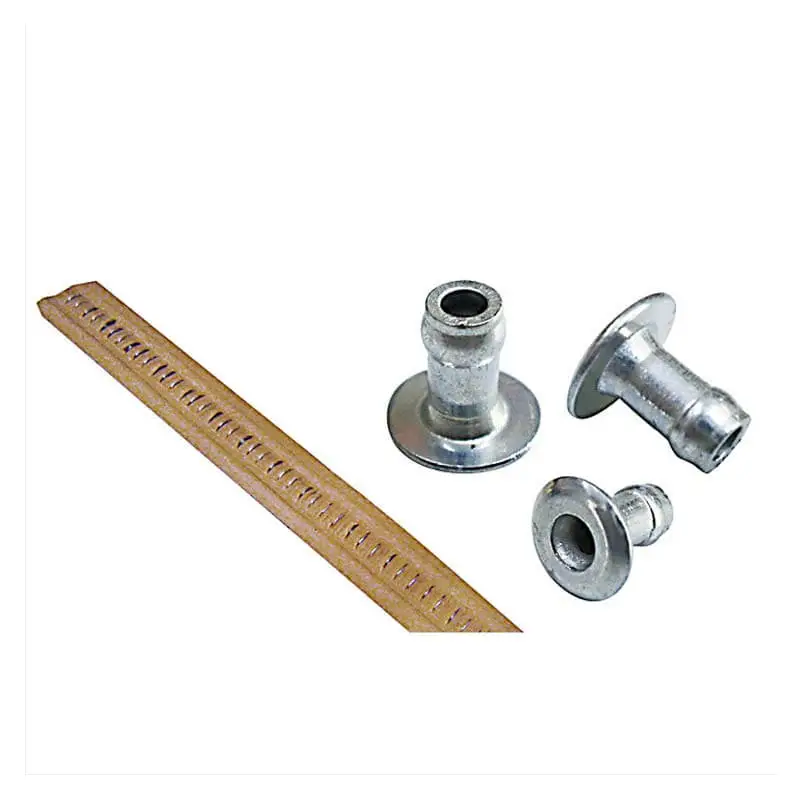
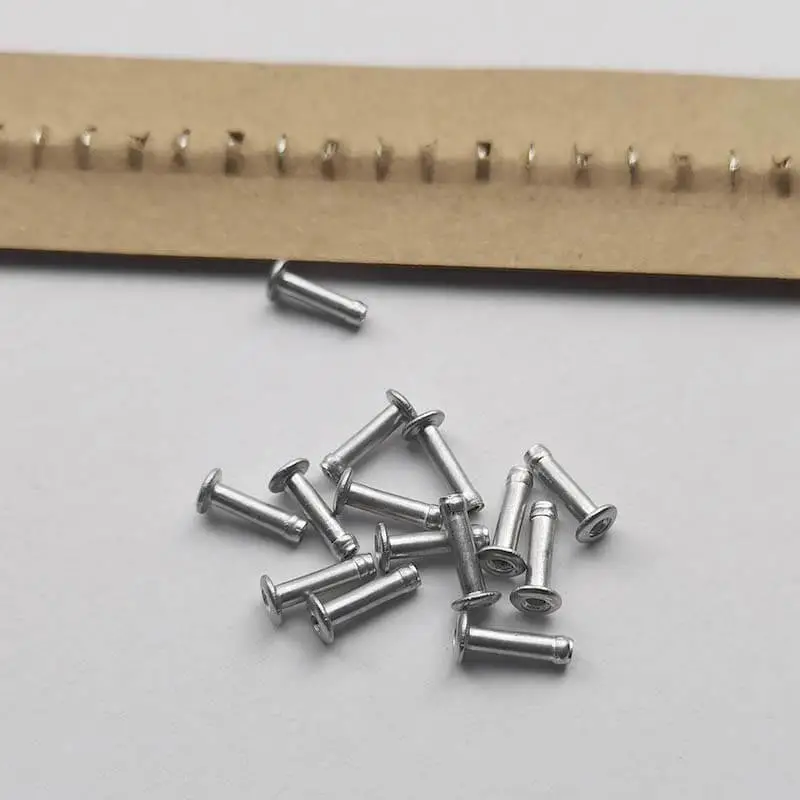
Speed rivet is a rivet that can be fully mechanically and automatically installed. It is a non-structural fastener that often joins sheet metal materials.
Speed rivets are often made from lightweight materials such as aluminium alloys to reduce overall weight. And it’s low cost makes it ideal for high volume use.
However, Speed rivet is not as strong and is suitable for applications where strength is not required. It is also not removable. If the connection needs to be addressed. Then the rivet itself usually needs to be destroyed.
Rivet material matching strategy for sheet metal
In thin sheet metal riveting, the choice of rivet materials not only affects structural strength, but also directly affects corrosion performance, electrochemical reaction risk, and long-term stability of the connection. When the sheet metal and rivets belong to different metal systems, such as aluminum + stainless steel or carbon steel + copper, scientific matching is required. Otherwise, electrochemical corrosion, weakening of the connection point, or even material spalling may occur.
1. What type of rivets are recommended for aluminum sheets metal?

Aluminum sheets are lightweight and flexible, but their surface oxide film is sensitive. If the wrong type of rivet is selected, corrosion spread or localized damage may easily occur. The following rivet combinations are recommended:
- Aluminum rivets: lightweight and compatible, with similar potential, they can prevent electrochemical corrosion and are the standard first choice.
- Stainless steel rivets (especially 304/316): These can enhance connection strength but have a slight potential difference. They are recommended for aluminum sheets that have undergone anodizing or in neutral environments.
- Galvanized steel rivets: Not recommended, as long-term use can accelerate corrosion of the aluminum sheet unless a sealed coating protection treatment is applied.
If aluminum sheets are exposed to outdoor or humid environments, prioritize the use of aluminum alloy rivets (6061-T6) or stainless steel pop rivets with anodized treatment.
2. Recommendations for Preventing Electrochemical Corrosion
When the sheet metal and rivets belong to different metallic systems, if their electrochemical potential difference is too large, microcells will form under the influence of an electrolyte medium (such as water vapor or salt fog), accelerating localized corrosion. Effective preventive strategies include:
- Material compatibility matching: Prioritize the use of rivet materials with potential values similar to those of the sheet metal (refer to the Galvanic Series table).
- Insulation and isolation measures: Use plastic washers, sealant, or corrosion-resistant coatings in the riveting area to prevent direct metal contact.
- Surface protection treatment: Apply anodizing, Dacromet, electrophoresis, or nickel plating to both the rivets and the sheet metal to inhibit current pathways.
- Structural design optimization: Avoid water accumulation and proximity of electrical connection points to control corrosion conditions at the source.
3. Considerations for Riveting Stainless Steel Sheets and Carbon Steel Sheets
When the riveting material is stainless steel or carbon steel sheet metal, both connection strength and corrosion risk must be considered.
- Stainless steel sheet: It is recommended to use 304 or 316 stainless steel rivets to ensure compatibility and corrosion resistance. If carbon steel rivets are used, they must be galvanized or coated for protection and should not be used outdoors.
- Carbon steel sheet metal: Galvanized steel rivets or carbon steel rivets can be used, but the integrity of the surface coating must be ensured. For higher strength connections, structural pop rivets can be selected.
- Mixed material connections (e.g., stainless steel sheet metal + carbon steel rivets): This is a high-risk combination prone to localized corrosion pitting and is not recommended for use in high-humidity or highly corrosive environments.
How Long Should a Rivet Be for Sheet Metal?
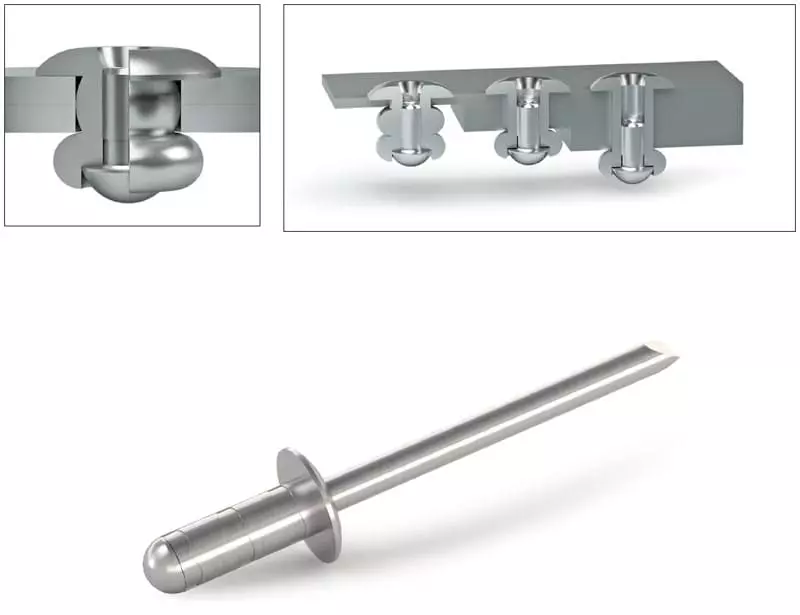
Selecting the length of the rivet (Rivet Length) is one of the most crucial steps in thin plate assembly. If the rivet is too short, it cannot generate sufficient clamping force; if it is too long, it cannot be properly formed, resulting in loose connections or bent rivets.
1. Standard Rule of Thumb
The sheet assembly industry adopts a globally applicable formula:
Rivet Length = Total Material Thickness + 1.5 × Rivet Diameter
The total thickness of the thin plate + 1.5 times the diameter of the rivet = recommended rivet length
This formula ensures that the tail of the rivet will form a complete “rolled edge / mushroom head” during the riveting process, guaranteeing the clamping force and structural strength.
2. Why multiply by 1.5 × diameter?
Because the rivets require sufficient material to expand outward during the forming process, the volume of the expansion zone (bulb) is approximately 1.3–1.7 times the diameter (varying slightly depending on the material). If this is insufficient, the following issues will occur:
- The tail end of the rivet is not fully formed.
- The mushroom head on the back is too small.
- The rivet is loose and the fatigue life has decreased.
3. Example: Length of Rivets Corresponding to Different Plate Thicknesses
| Total Material Thickness | Rivet Diameter (D) | Calculated Length (Formula) | Recommended Rivet Length (Industry Standard) |
|---|---|---|---|
| 1.0 mm | 3.2 mm | 1 + 4.8 = 5.8 mm | 6 mm |
| 1.5 mm | 3.2 mm | 1.5 + 4.8 = 6.3 mm | 6–7 mm |
| 2.0 mm | 4.0 mm | 2 + 6 = 8 mm | 8–9 mm |
| 3.0 mm | 4.8 mm | 3 + 7.2 = 10.2 mm | 10–11 mm |
Best Rivets for Sheet Metal by Application
Aviation, Rail Transit, High Fatigue Structures
Recommendation: Solid Rivets
- The strongest shear and tensile strength
- The highest fatigue life in the industry
- Suitable for skins, fuselages and structural components
Household Appliances, Light Sheet Metal, Consumer Electronics
Recommendation: Tubular Rivets
- Low forming force, does not damage thin plates
- Low cost, suitable for mass production
- Used for chassis, interior components, and bracket fixation
Sheet metal chassis, metal cabinets, HVAC, thin plate assembly
Recommendation: Blind Rivets
- Single-sided installation, suitable for thin plates that cannot be accessed on the backside
- Stable clamping force, suitable for steel plates, aluminum plates, and stainless steel thin plates
- Open type has waterproof performance
Automobile body, aluminum plate structure, combination of different materials
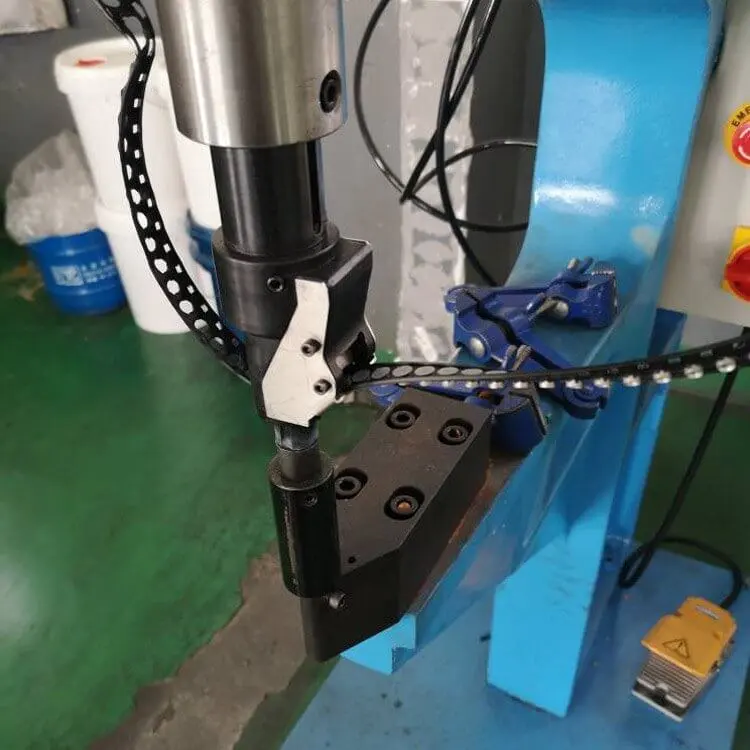
Recommendation: SPR – Self-Piercing Rivets
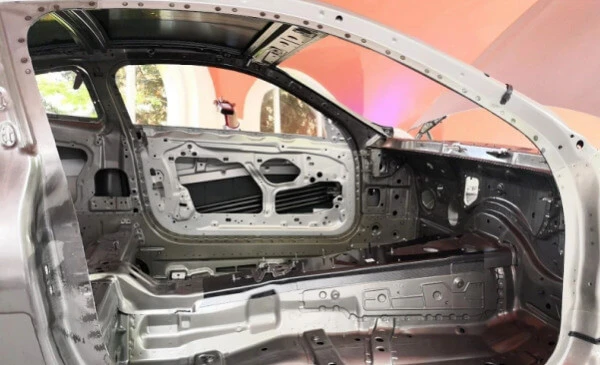
- No need for pre-drilling, it can directly penetrate the upper thin plate.
- Aluminum + steel, and aluminum + aluminum can be firmly bonded.
- Applied to vehicle manufacturing and lightweight structures.
High-Vibration, High-Load Mechanical Equipment
Recommendation: High Strength Structural Rivets
- Internal lock core design, with strong vibration resistance
- Stronger in tensile and shear strength, can replace welding/screws
- Used in industrial machinery, rail transportation, pressure enclosures
Heavy machinery, truck chassis, steel structures

Recommendation: Lockbolt Rivets
- Bolt-level strength, never loosens
- Better vibration resistance than bolt connections
- Suitable for thin plate + profile structures with extremely high loads
Mass Production Line, Takt Assembly Workshop
Recommendation: Speed Rivets
- Installation speed is increased by 3 to 5 times
- Suitable for batch assembly of metal casings, hardware components, and cabinets
- Applicable to factory production lines with high efficiency requirements
Get Expert Support for Your Sheet Metal Riveting Needs

Choosing the appropriate rivets for thin plates is not complicated, but to truly achieve reliable strength, reasonable cost, and stable lifespan, professional engineering assessment is still necessary. Different plate thicknesses, material combinations, and load conditions all affect the final performance of the rivets.
Rivmate engineering team can offer you:
- Plate Thickness / Material Matching Recommendations (Prevent Slippage, Cracking, Insufficient Clamping)
- Load and vibration environment assessment (to ensure long-term stability)
- Specific application scenario selection plan (thin plates, enclosures, cabinets, automobiles, household appliances, etc.)
- Free sample delivery (blind rivets, structural rivets, lock caps, lock rivets, etc.)
If you are looking to select the right sheet metal rivets for your project, please feel free to contact us at any time. Rivmate will provide you with the safest and most efficient fastening solution for your assembly structure.
📧 Product Inquiry: manufacture@world-rivet.com
🌐 Official Website: https://worldrivet.com/
Reference

How to Rivet Metal to Wood?
How to Rivet Metal to Woo
What Is Riveting in Metal Work?
What Is Riveting in Metal
What Metal Are Rivets Made Of
What Metal Are Rivets Mad
How to Rivet Metal to Metal
How to Rivet Metal to Met