Rivets for Solar Tracker Systems
High-strength structural rivets engineered for solar tracker connections, delivering faster installation, stable locking, and long-term reliability in dynamic load conditions.
Why Use Rivets
Use Blind Rivets for Faster Installation & Lower Cost
Faced with continuous vibration, wind loads, and thermal cycling, the connection method must remain stable over the long term. At the same time, it must support efficient installation. The following outlines the key challenges in selecting fastening methods for solar tracking mount systems and their corresponding solutions.
Pain Point 1:
Structural Failure Caused by Bolt Loosening
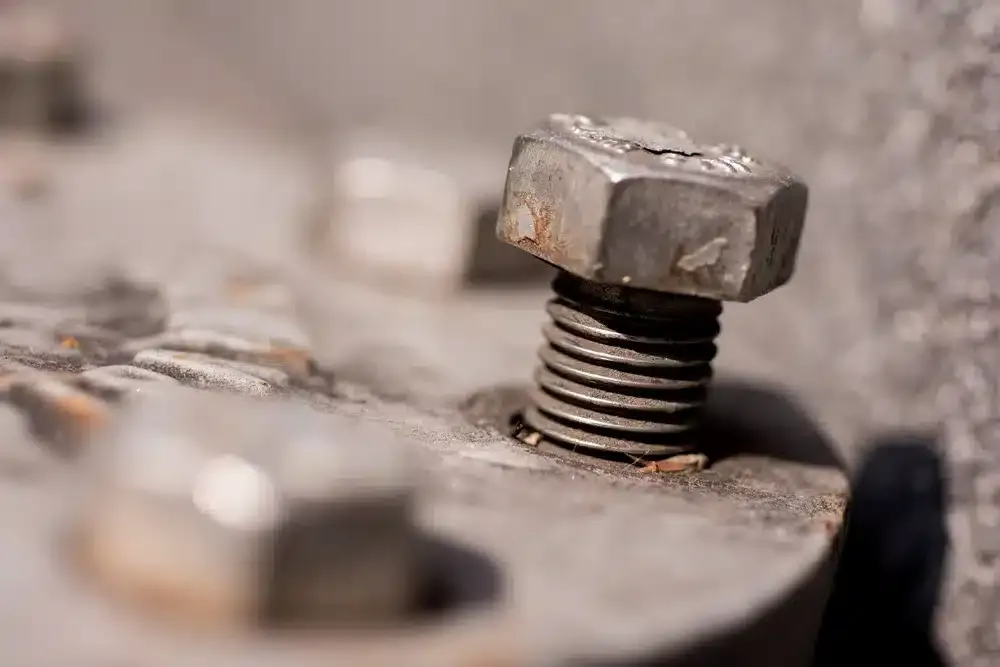
Bolts rely on preload. Vibration and thermal cycling continuously weaken the preload, leading to loosening of the connection, increased clearance, and ultimately fatigue failure.
Solution
Blind rivets form a permanent mechanical interlock through plastic deformation; they do not rely on preload and have no path for loosening. In dynamic load environments, connection stability is significantly higher than that of bolts. You achieve a long-term, stable connection without the need for retightening or maintenance.
Pain Point 2:
Low Installation Efficiency Slows Down Project Timelines
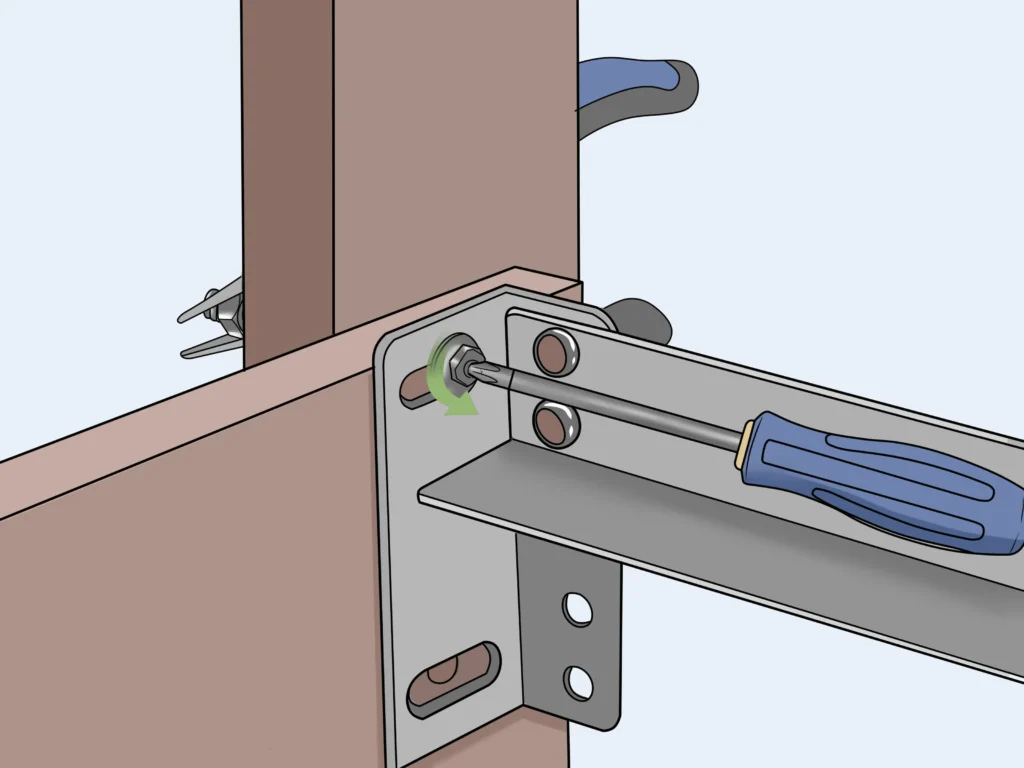
Bolts require two-sided operation, involving complex steps such as alignment, nut placement, and tightening. In large-scale projects, this directly extends the construction timeline.
Solution
Blind rivets support single-sided installation and require no back-side clearance. Installation steps are reduced by more than half, with installation time per point taking just 1 to 2 seconds. In contrast, bolt installation takes approximately 6 to 10 seconds per point. In large-scale solar projects, you can save hundreds of man-hours and accelerate the delivery schedule.
Pain Point 3:
High Total Cost Eroding Profits

The cost of bolts encompasses not only the purchase price but also labor costs, the risk of rework, and future maintenance expenses.
Solution
Blind rivets improve installation efficiency, reducing labor input by 30% to 60%. The connections are stable, eliminating the need for re-inspection and maintenance, thereby lowering the total cost of ownership. This helps you transition from a model with low material costs but high hidden costs to a structure with controllable total costs, ultimately increasing your overall profit margin.
- 5,000 connection points ≈ 14 hours saved
- 10,000 connection points ≈ 28 hours saved
- 20,000 connection points ≈ 55 hours saved
Rivet Applications
Torque Tube Connection
The torque tube transmits torque within the tracking system and serves as the core load-bearing component of the entire system. This component is subjected to continuous torsional loads and cyclic stresses, as well as wind-induced impacts.
Using structural hollow-core rivets enables high shear and tensile strength connections, ensuring stable torque transmission. The mechanical locking structure formed by the rivets will not loosen due to vibration, preventing an increase in transmission clearance that could lead to reduced tracking accuracy. Using high-strength rivet grades at critical connection points allows the system to withstand continuous dynamic loads. This ensures a stable torque transmission path, enhancing system operational accuracy and service life.
The beam-to-purlin connection supports photovoltaic modules and serves as one of the primary structural load-bearing paths. This location is subjected to static loads, wind loads, and assembly stresses during installation.
Using multi-grip-range rivets accommodates various material thickness combinations, simplifying selection. The single-sided installation structure significantly improves construction efficiency, making it suitable for large-scale array installations. In large-scale projects, rivet installation efficiency exceeds that of bolts by over 50%, directly reducing labor costs. You can significantly shorten the installation cycle while ensuring structural strength.
Beam / Purlin Connection
Column Connection
Column connections are critical junctions between the support system and the foundation structure, directly affecting overall stability. This location bears vertical loads and lateral wind loads.
Using high-strength structural rivets at this location ensures reliable structural fixation while preventing connection loosening caused by vibration. Rivets do not require torque control, reducing human installation errors and improving consistency. You can achieve a stable structural support system, thereby reducing future maintenance needs and safety risks.
Blind Rivets vs. Bolts in Solar Tracker Systems
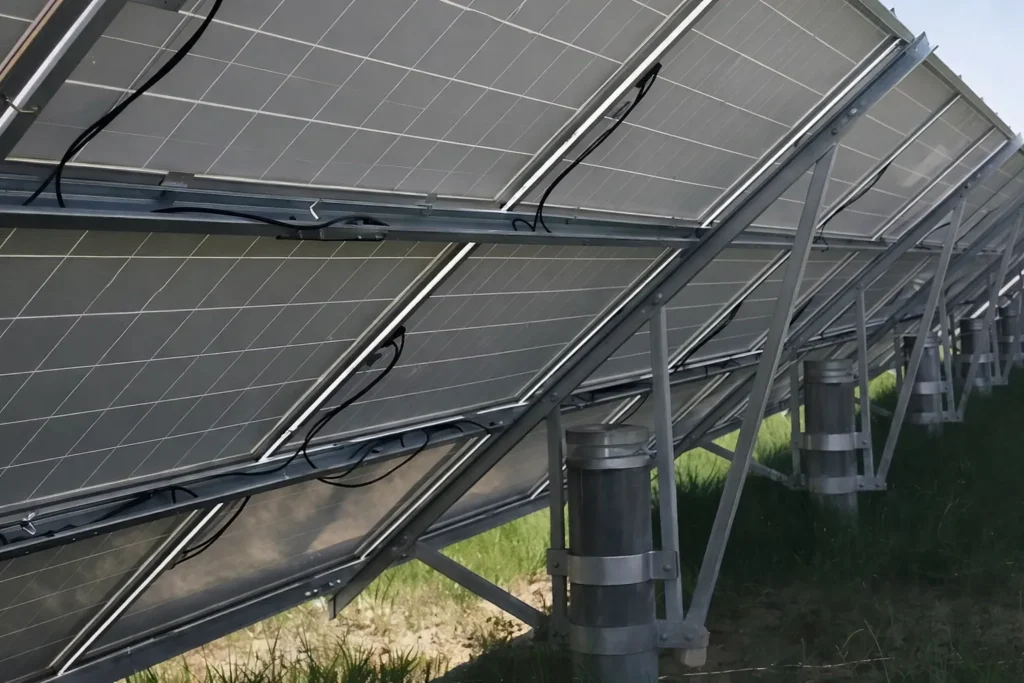
Blind rivets can directly address these three challenges in solar projects:
- Does installation speed slow down overall project delivery?
- Will the connection remain stable over a 20-year lifespan?
- Are maintenance costs manageable?
They reduce reliance on manual labor, eliminate the risk of vibration-induced loosening, and minimize maintenance costs. This represents a superior connection strategy for large-scale solar projects, rather than a mere alternative.
| Comparison Criteria | Blind Rivets | Bolts |
|---|---|---|
| Installation Method | Single-sided installation, no backside space required | Double-sided operation, requires alignment + nuts |
| Installation Speed | 1–2 seconds/point, up to 60 points/minute | 6–10 seconds/point, multiple steps |
| Vibration Resistance | Will not loosen due to vibration; mechanically locked structure | Preload decreases in vibrating environments; risk of loosening exists |
| Maintenance Requirements | Permanent connection, no retightening required | Requires periodic inspection and retightening |
- Pop rivets enable high-speed automated installation, with a single-point installation time of approximately 1–2 seconds, significantly improving assembly efficiency
- Riveted structures will not rotate or loosen in vibrating environments, whereas bolts have potential paths for loosening under vibration
- Rivets are suitable for single-side operation scenarios, addressing installation challenges in confined spaces
- In manufacturing, rivet installation efficiency is generally higher than that of bolted connections, making them suitable for high-cycle production

Need a Structural Rivet Solution for Your Solar Project?
Get engineering-grade fastening support tailored to your application. Improve installation efficiency, reduce failure risk, and optimize total project cost.
Recommended Rivets
RIVMATE Rivet Solutions for Solar Tracker Systems
In solar tracking mount systems, you should directly select these four types of structural blind rivets—Mono-Lock, Boom-Lock, Now-Lock, and Poptail—to cover all core connection scenarios.
Solution 1 — Mono-Lock Blind Rivet
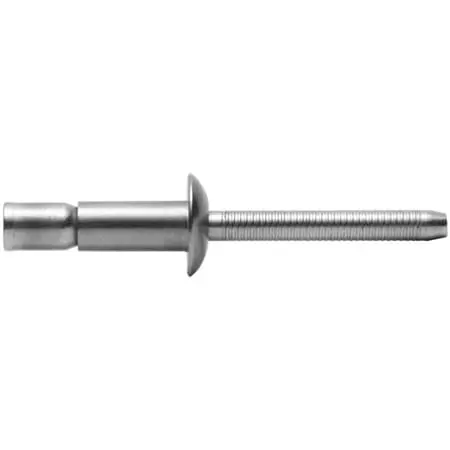
Applications: Torque tube connections, critical structural joints
Strength: High shear strength and high tensile strength; classified as a structural blind rivet
Advantages: Stable locking core structure eliminates the risk of loosening. Suitable for environments with continuous vibration and dynamic loads, ensuring stable torque transmission.
Solution 2 — Boom-Lock Blind Rivet
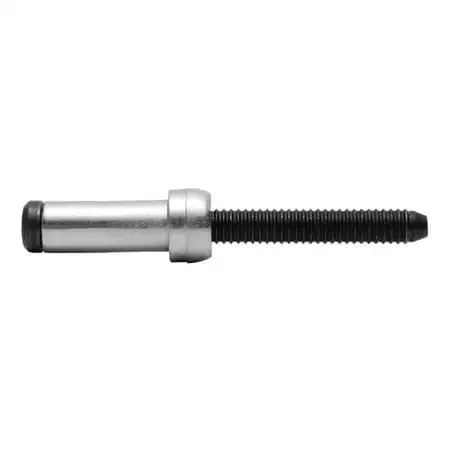
Applications: Connections between torque tubes and drive systems
Strength: Ultra-high tensile and shear strength, suitable for high-load locations
Advantages: Multi-point expansion structure provides a larger clamping area. It enables high-strength connections in thin sheets or composite materials, preventing pull-out and deformation.
Solution 3 — Now-Lock Blind Rivet
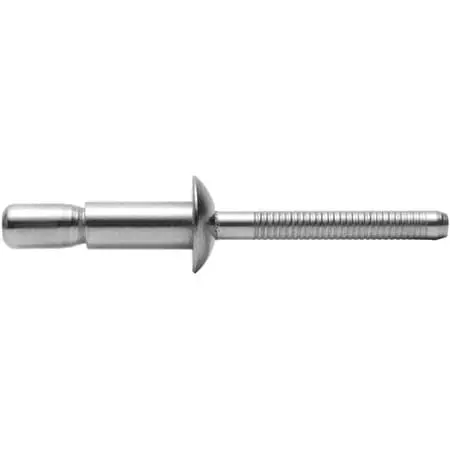
Application: Purlin connections, primary structural joints
Strength: High strength, stable lock core structure
Advantages: The lock core is fully engaged, preventing failure caused by vibration. It provides long-term stability in critical structural connections while reducing maintenance requirements.
Solution 4 — Poptail Structural Rivet
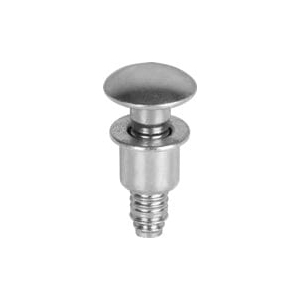
Applications: Column connections, heavy-duty structural connections
Strength: Extremely high shear strength, suitable for load-bearing structures
Advantages: The high clamping force design enhances overall structural rigidity. You can achieve higher safety margins at load-bearing joints, reducing the risk of structural failure.
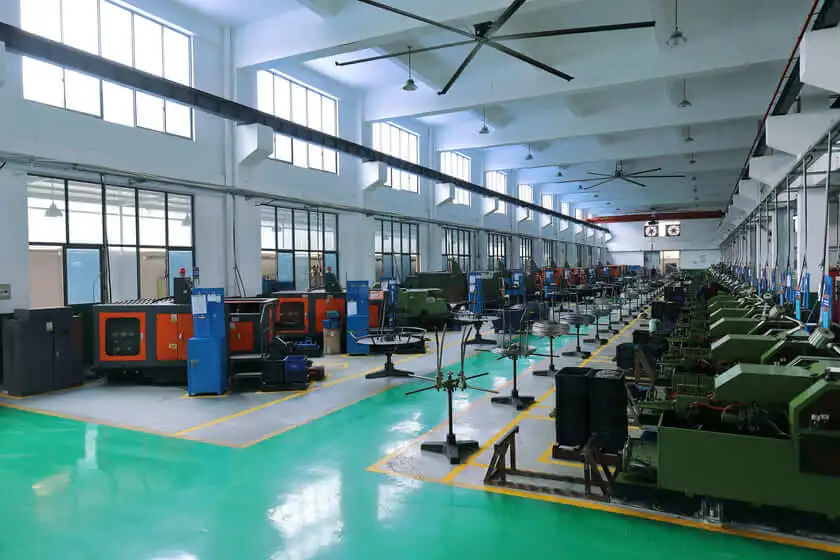
GET TO KNOW US
Reliable Rivet Manufacturing with Automated Production
By choosing Rivmate as your supplier of structural pop rivets, you gain reliable and predictable delivery capabilities rather than uncertainty: our production relies on automated cold heading and assembly equipment, ensuring consistent dimensions and stable performance for every batch. All key products undergo testing for tensile strength, shear strength, and salt spray resistance, with traceable data that directly supports your engineering selection process.
Additionally, our factory operates under the IATF 16949 quality management system, implementing end-to-end defect control from raw materials to finished products to ensure reliability in bulk projects. This allows you to mitigate risks and increase project success rates in demanding applications such as solar tracking mounts.
OEM
Custom Rivet Solutions
Custom
Flange Diameter
You can request a larger or special flange size to better distribute load on composite panels.
02
Special
Surface Coatings
You can choose coatings for corrosion resistance, durability, or specific environmental conditions.
03
OEM &
Private Label Packaging
You can customize packaging with your brand, labels, and carton specifications for your market.
Need Help With Your Solar Project?
Solar Rivet Technical FAQ for Solar Tracker Systems

Q1. What type of rivet is best for solar tracker systems?
You should opt for structural blind rivets, such as Mono-Lock, Boom-Lock, or core-locking rivets, as they offer vibration resistance and high strength, and are specifically designed for dynamic loads. These rivets feature a mechanical locking mechanism that prevents loosening under wind loads and during tracking movements, making them the right choice for photovoltaic tracking systems
Q2. Are blind rivets strong enough for solar structures?
Yes, structural blind rivets offer high shear and tensile strength, capable of withstanding the dynamic loads of solar mounting systems. Rivets outperform bolts in shear resistance, making them suitable for photovoltaic structures subjected to lateral forces. The reason rivets outperform bolts in shear performance lies in their fundamentally different structures and load-bearing mechanisms.
First, the load-bearing paths differ
Rivets carry shear forces across their entire shank diameter; the shear force acts directly on the full metal cross-section without being weakened by threads. In practical applications, the shear force on bolts often falls within the threaded region, reducing the effective cross-sectional area and diminishing strength.
Second, the stress distribution differs
After installation, a rivet forms a tight fit through plastic deformation, leaving virtually no gap between the hole wall and the rivet, resulting in uniform stress distribution. Bolts, however, have assembly clearance, causing shear forces to concentrate at local contact points, which can easily lead to stress concentration and fretting wear.
Third, different connection rigidity
Rivets form an interference fit combined with mechanical locking, resulting in high connection rigidity and preventing relative slippage. Bolt connections rely on preload; once the preload decreases, slippage occurs, and shear performance rapidly deteriorates.
Fourth, different performance under dynamic conditions
Under vibration or alternating loads, rivets do not loosen, and the shear path remains stable. Bolts, however, experience a decay in preload due to vibration, leading to the formation of gaps. As a result, shear loads transform into impact loads, reducing load-bearing capacity.
Q3. Why are rivets better than bolts in solar tracker systems?
Because rivets do not loosen, whereas bolts inevitably lose their preload in vibrating environments. Rivets form permanent connections and offer vibration resistance, whereas bolts have a path for loosening, which is a source of structural risk.
Q4. Can rivets be replaced after installation?
They can be replaced, but this requires drilling out the original rivets, making them unsuitable for structures that require frequent disassembly. Rivets are permanent fasteners; the very reason you choose them is that no post-installation adjustments are required, which is precisely why they are so reliable.
Q5. How do you choose the right rivet size for solar mounting?
You must select rivets based on the clamping range and material thickness; otherwise, the connection will fail. Rivets with a wide clamping range can accommodate variations in thickness, preventing weak connections caused by hole diameter or material deviations.
Q6. Are rivets suitable for high vibration solar environments?
Absolutely. Structural rivets are specifically designed for vibrating environments. Their locking core structure and interference fit eliminate the risk of loosening, which is a core requirement for photovoltaic tracking systems.
Structural rivets refer to pop-core rivets that feature a locking core structure, provide high shear and tensile strength, and will not loosen in vibrating environments. For solar tracking systems, you can directly select from the following types: Mono-Lock, Boom-Lock, Now-Lock, and structural Poptail.
Mono-Lock is suitable for critical load-bearing locations such as Torque Tubes, providing stable mechanical locking and vibration resistance; Boom-Lock is suitable for thin-plate or composite material connections, preventing pull-out through a multi-point expansion structure; Now-Lock is suitable for main structural connections such as Purlins, ensuring long-term stable load-bearing; Poptail is used for high-load nodes such as columns, providing higher clamping force and shear strength. These types cover all critical connection scenarios in photovoltaic systems and are the right choice for withstanding continuous vibration and dynamic loads.
Q7. Do rivets reduce installation time in solar projects?
They can significantly reduce installation time and lower labor costs. Rivets are installed from a single side and do not require torque control, making the installation speed notably faster than bolted solutions.
Q8. What materials are best for solar rivets?
You should choose aluminum, stainless steel, or galvanized steel to meet corrosion resistance and strength requirements. The photovoltaic environment demands corrosion resistance and long-term stability, and the choice of material directly determines the service life.