


Home » 归档于 28 4 月 2026
Are Blind Rivets Waterproof? A Complete Guide for Sealing Applications
Are Rivets Waterproof? Although rivets are renowned for their high strength and stability, in practical applications, long-term erosion by moisture, dampness or salt spray often leads to structural loosening or corrosion leakage. Especially in scenarios such as ships, car chassis, and photovoltaic brackets that are exposed outdoors for a long time, waterproof performance becomes the decisive factor for the reliability of the fastening system.
This article will analyze for you: Which rivets have a waterproof structure? Why do ordinary rivets leak water? And how to choose the true Waterproof Rivet .
Are Blind Rivets Waterproof?
Blind rivets are not inherently waterproof. However, they can provide water resistance and leak prevention, and in some cases, even achieve airtight or liquid-tight seals (nearly airtight or liquid-tight).
Of course, achieving this requires selecting the right type of blind rivet, installing it correctly, and combining it with other structural components.
Why Standard Blind Rivets Are Not Waterproof?
There are three main reasons:
1️⃣ A “through hole” (mandrel hole) in the center
When a standard open-end blind rivet breaks, it leaves a through hole or a partially open hole in the center, which serves as the primary pathway for water to enter.
2️⃣ A micro-gap between the rivet and the hole wall
Installing mandrel-type rivets requires pre-drilling, which cannot be 100% tolerance-free. Although riveting causes plastic deformation, a micro-gap remains, allowing water, air, and dust to pass through.
3️⃣ The joints between the panels are not sealed
Even if the rivets are tight, water can still seep in through the seams if there is no sealing material at the panel contact surfaces.
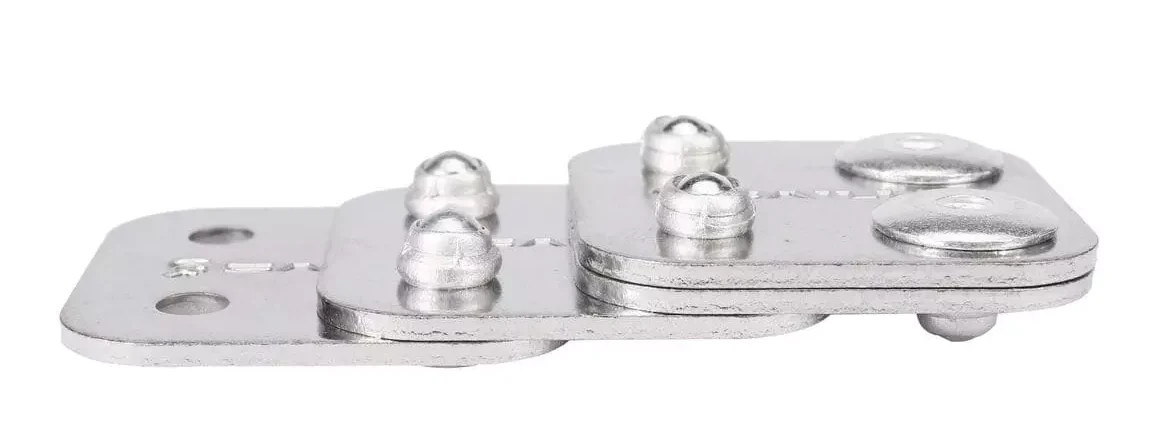
Under what conditions can blind rivets be considered “waterproof”?
To achieve a waterproof seal with hollow rivets, the following four methods can be used.
- Method 1: Use sealed blind rivets
- Method 2: Rivets + sealant (commonly used in engineering)
- Method 3: Use structural rivets (high clamping force)
- Method 4: Proper installation procedures (often overlooked)
| Level | Waterproof Performance | Condition |
|---|---|---|
| ❌ Standard Open-End Blind Rivet | Not waterproof | Through-hole + gaps |
| ⚠️ Structural Blind Rivet | Partially waterproof | High clamping force |
| ✅ Sealed Blind Rivet | Waterproof | Closed-end design |
| ✅ Rivet + Sealant | Fully waterproof | Industrial sealing solution |
“Standard blind rivets are not waterproof, but by using sealed rivets or adding sealant, a fully watertight joint can be achieved.”
What Makes a Blind Rivet Waterproof?
Whether a blind rivet is waterproof depends on whether the pathways for water penetration have been eliminated.
For water to enter a structure, there must be a pathway:
- Through-holes (direct pathways)
- Gaps (micro-penetration pathways)
- Joints (interface pathways)
As long as any of these pathways exist, there is always a risk of water leakage.

Therefore, to achieve waterproofing with blind rivets, you must eliminate any pathways for water penetration. You can approach the design from the following four angles.
- Eliminate “through holes” (most critical): This is the first prerequisite for achieving waterproofing. Use closed-end blind rivets to lock the mandrel inside or seal the tail end; without a through hole, water cannot enter.
- Increase clamping force (reduce micro-gaps): High-strength structural rivets (such as Monobolt, Interlock, or Hem-Lock) provide greater clamping force. This ensures tighter panel contact, reduces gaps, and lengthens or even eliminates water penetration paths.
- Fill all gaps (sealing materials): Use silicone, PU adhesive, or rubber washers to fill the gaps. This is the most reliable waterproofing solution in industrial applications.
- Control tolerances and installation quality (often overlooked): The hole diameter must match the rivet diameter.
| Dimension | Key Question | Impact on Waterproofing |
|---|---|---|
| Through-hole | Is there a direct penetration path? | 🔴 Critical |
| Gap | Are there clearance gaps between rivet and hole? | 🟠 High impact |
| Joint interface | Are the sheets/interfaces properly sealed? | 🟠 High impact |
| Material | Is any sealing material used? | 🟢 Enhancement |
| Installation | Is the installation performed correctly? | 🟢 Determines final performance |
Types of Waterproof Blind Rivets
Sealed Blind Rivet (Closed End Blind Rivet)

The Sealed Blind Rivet is the only type of rivet that “structurally resolves water leakage issues.”
Its tail end is closed (Closed-End), and the rivet mandrel does not penetrate through, creating a sealed cavity inside. As a result, the Sealed Blind Rivet provides both waterproof and airtight performance.
In practical applications, you will find sealed blind rivets used in automotive bodies, HVAC ductwork, outdoor equipment, and electrical enclosures.
Structural Blind Rivet

Monobolt , Interlock and Hem-Lock are all representative examples of structural rivets.
These rivets are characterized by high strength and high clamping force, with some models featuring a sealing structure.
Their water resistance is significantly superior to that of standard rivets, approaching a seal (though not as stable as a fully sealed rivet). They are ideal for applications requiring both strength and a certain level of water resistance.
Waterproof Bulb Tite Blind Rivet + Sealing Washer
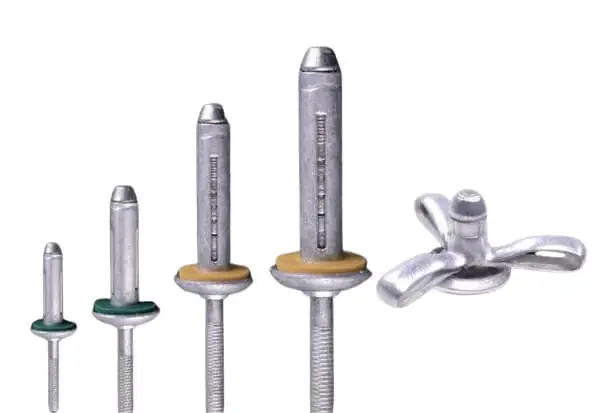
The head of the Bulb Tite blind rivet is fitted with a rubber/EPDM washer.
Once the rivet is set, the washer compresses to fill surface gaps, effectively preventing water from entering from the outside. As a result, the Bulb Tite blind rivet provides highly effective surface waterproofing. It is commonly used in applications such as roofing, exterior walls, and metal panel connections.
How to Ensure a Watertight Rivet Installation
这是示例文本,单击 “编辑” 按钮更改此文本。
这是示例文本,单击 “编辑” 按钮更改此文本。
Best Materials for Waterproof Riveting
If you’re looking to select materials for your project that can achieve excellent “waterproof riveting,” you can’t just consider the rivet material alone. Instead, you need to consider the combination of:
Rivet material + base materials + sealing material + surface treatment
If you choose the right rivet material but overlook these other factors, you’ll still end up with leaks or corrosion-related failures.
I. Rivet Body Material (Core Foundation)
- Stainless Steel: The most versatile and durable option. It is the material of choice for waterproof riveting.
- Aluminum: Lightweight and corrosion-resistant. Ideal for applications requiring both waterproofing and lightweight construction.
- Coated Steel: A cost-effective solution. Suitable for cost-sensitive projects that still require a certain level of waterproofing.
II. Sealing Materials (Determines Whether It Is “Truly Waterproof”)
- Silicone: The most commonly used option. It is the standard solution for HVAC and outdoor applications.
- PU Sealant (Polyurethane): Offers superior adhesion and vibration resistance. Suitable for automotive and mechanical structural applications.
- EPDM / Rubber Washer: Very easy to install. Suitable for securing roofing and exterior panels.
III. Material Compatibility (90% of buyers overlook this)
Many waterproofing failures are not caused by the rivets themselves, but rather by “conflicting” materials.
A typical problem caused by incompatible materials is galvanic corrosion. For example, when stainless steel rivets and aluminum panels are used together over a long period, the materials corrode, creating gaps that eventually lead to leaks.
| Material Combination | Recommendation |
|---|---|
| Stainless Steel + Stainless Steel | ✅ Best |
| Aluminum + Aluminum | ✅ Best |
| Dissimilar Metals | ⚠️ Requires isolation (coating / washer) |
In practical engineering applications, our clients typically use 316 stainless steel closed-end blind rivets in conjunction with silicone sealant for long-term waterproofing applications to achieve a stable, weather-resistant seal. For roof and building panel connections, aluminum blind rivets combined with EPDM rubber gaskets are commonly used to achieve a quick surface seal.
Common Applications That Require Waterproof Rivets
Applications that meet any of the following criteria typically require waterproof rivets:
- Long-term exposure to rain or moisture
- Requirements for air or liquid sealing (leak prevention)
- Requirements for protecting internal components (corrosion protection / short-circuit prevention)
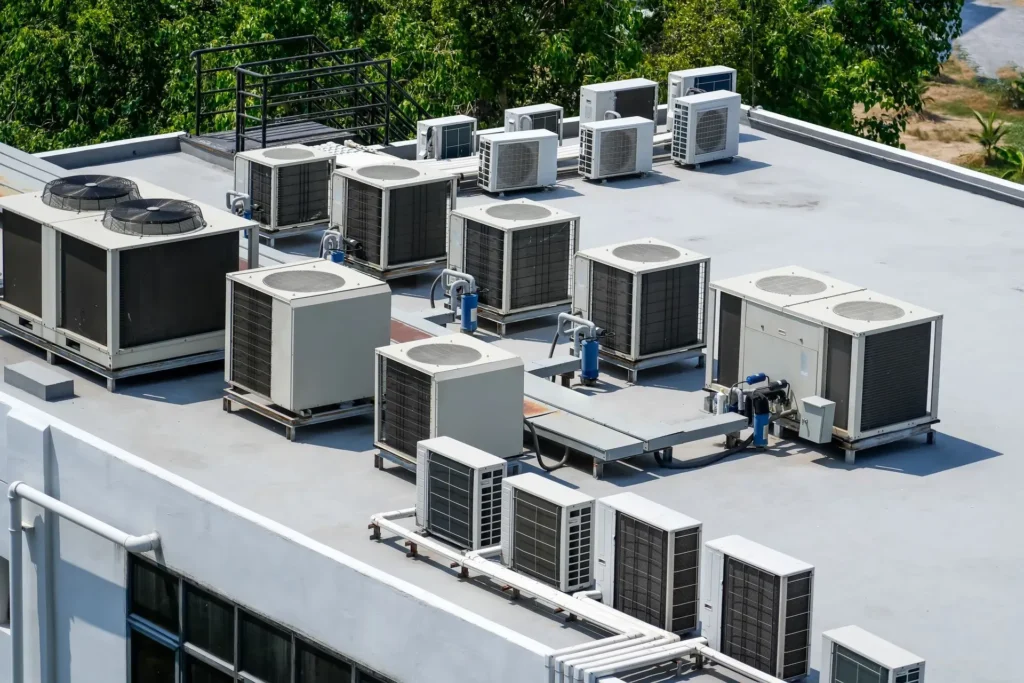
Typical Applications:
- HVAC Systems (Ductwork / Air Conditioning Systems)
- Automotive and Trucks (Body / Cabin)
- Photovoltaic Systems (Solar Mounting / Frames)
- Building Exterior Walls / Roofing Systems
- Electrical Equipment Enclosures (Enclosures / Cabinets)
- Marine / Offshore Equipment
What are the common causes of blind rivet waterproof failure?
If there are any holes, gaps, cracks, or corrosion, there is definitely a risk of water leakage.
The 6 most common causes of failure:
- Use of the wrong type of rivet (most common): Using standard rivets for waterproof structures.
- Hole diameter too large or poor fit: This is a very common issue during on-site installation.
- Failure to use sealing material (design flaw): No filler material between panels.
- Improper installation (workmanship issues): Rivets are crooked, not fully tightened, or the panels are not pressed tightly together.
- Material corrosion (long-term failure): This is the typical cause of leaks that “start after some time has passed.”
- Seal failure due to thermal expansion and contraction / vibration: The most easily overlooked issue in dynamic environments.
How to Choose the Right Supplier for Sealed Blind Rivets
When selecting a supplier of sealed blind rivets, you should focus on whether the rivets feature a true closed-end design, whether the mandrel is securely locked in place, and whether there is actual airtight or watertight test data to support their performance. Additionally, the supplier must possess stable manufacturing capabilities and a robust quality control system, including automated production, batch consistency control, and the ability to conduct tensile, sealing, and corrosion resistance tests.
Furthermore, an excellent supplier not only provides products but also possesses practical industry experience and technical support capabilities, enabling them to offer targeted product selection recommendations and sealing solutions tailored to specific applications (such as HVAC, solar, automotive, or electrical equipment). Overall, selecting a supplier essentially means choosing a “reliable waterproofing solution.”
| Evaluation Dimension | Key Question | Importance |
|---|---|---|
| Product Structure | Is it a true sealed (closed-end) design? | 🔴 Critical |
| Manufacturing Capability | Is the production process consistent and stable? | 🔴 Critical |
| Quality System | Are there testing and quality control systems in place? | 🔴 Critical |
| Material Capability | Are the materials corrosion-resistant and suitable for the application? | 🟠 High |
| Industry Experience | Does the supplier understand real application requirements? | 🟠 High |
| Service Capability | Can the supplier provide fast response and technical support? | 🟢 Supportive |
FAQs
Are aluminum blind rivets waterproof for outdoor use?
A: Aluminum blind rivets are not inherently waterproof, but if the right type is selected and paired with the correct sealing solution, they can provide effective waterproofing in outdoor applications. Standard open-end aluminum blind rivets still allow water to penetrate due to the presence of a mandrel hole and assembly gaps, so they cannot be used alone in scenarios requiring strict waterproofing. However, sealed (closed-end) aluminum blind rivets structurally block through-holes, and when combined with sealing materials such as silicone or rubber gaskets, they can achieve reliable waterproofing or even near-sealed performance.
Are stainless steel blind rivets waterproof in marine environments?
A: Not exactly. Standard stainless steel blind rivets (open-ended type) can still leak water due to holes and gaps, but if you use sealed stainless steel rivets in combination with sealant, you can achieve reliable waterproofing.
In marine environments, we recommend using 316 stainless steel sealed rivets with sealant, as this provides both corrosion resistance and long-term waterproofing.
Are blind rivets waterproof without any sealant or washer?
A: Generally speaking, they are not completely waterproof. Standard open-end blind rivets leave a mandrel hole after being pulled out, and there are tiny gaps between the rivet, the hole walls, and the sheet metal, all of which can create pathways for water to penetrate.
If sealed blind rivets are used, a certain degree of water resistance can be achieved without sealant or gaskets; however, there is still a risk of water ingress in long-term outdoor or high-humidity environments. Therefore, in actual engineering applications, it is generally recommended to use sealant or gaskets in conjunction with the rivets to ensure stable and reliable waterproofing performance.
Are there blind rivets that are 100% waterproof under water?
A: Strictly speaking, no single blind rivet can guarantee “100% absolute waterproofing” in an underwater environment. This is because waterproofing performance depends not only on the rivet itself, but also on factors such as porosity, fit gaps, material deformation, and long-term environmental conditions (pressure, corrosion, temperature fluctuations, etc.).
In practical engineering applications, a near-perfect seal can be achieved by using sealed blind rivets combined with sealant (such as silicone or PU) and proper installation techniques, which can meet the requirements for most underwater or high-humidity environments.
Are waterproof blind rivets better than self‑tapping screws for preventing leaks?
A: When it comes to preventing leaks, waterproof blind rivets are generally more stable and reliable than self-tapping screws, especially in environments subject to vibration or long-term outdoor exposure. Blind rivets form a permanent connection through plastic deformation, making them resistant to loosening and preventing the gradual formation of gaps caused by vibration or thermal expansion and contraction, unlike screws. Self-tapping screws, on the other hand, rely on thread engagement and are more prone to loosening over time, which can create pathways for water ingress.
Are blind rivets waterproof enough for roofing applications?
A: Yes, but you must choose the right type and use appropriate sealing measures. Standard open-end blind rivets are not waterproof and are not suitable for roof applications. For roof use, sealed blind rivets are typically required, along with EPDM rubber gaskets or sealant, to ensure reliable waterproofing.
Can blind rivets be used as waterproof fasteners on metal roofs?
A: Yes, but you cannot rely solely on the rivet itself to provide waterproofing. In metal roofing applications, a sealed blind rivet, used in conjunction with an EPDM rubber gasket or sealant, is required to serve as a reliable waterproof fastening solution.
Are blind rivets waterproof for outdoor signage and facades?
A: It can be made waterproof, but this depends on the type of rivet and the sealing design. For outdoor signage or curtain walls, we recommend using sealed blind rivets to minimize potential pathways for water ingress.
Are blind rivets suitable as waterproof fasteners in automotive body panels?
A: Yes, but you must use the appropriate type and sealing solution. Sealed blind rivets, combined with sealant or a structural sealing design, can provide reliable waterproofing.
Are blind rivets waterproof enough for HVAC ducting and ventilation systems?
A: Yes, but sealing measures must be taken. In HVAC duct systems, you need to use sealed blind rivets to minimize potential leakage paths.
More importantly, HVAC systems require not only water resistance but also airtightness. Therefore, in practical applications, they are used in conjunction with sealants (such as silicone) or sealing tape to fill joints and gaps.
Work with a IATF 16949 Certified Blind Rivet Manufacturer
Get High Quality Rivets Instead of Huck and Avdel Rivets
Rivmate Rivet
Rivmate is one of China’s top three manufacturers of pop rivets. The company is IATF 16949 certified and offers high-strength structural pop rivets that serve as alternatives to Huck and Avdel products.