
Rivets vs Bolts:The Final Comparison Guide
Table of Contents
Rivets vs Bolts, which connection method is the safest, most efficient and most cost-effective choice? This guide will focus on engineering decisions and conduct a detailed comparison between Rivets and Bolts. Avoid common misunderstandings and ensure that the final selection can meet all the requirements of structural safety, durability and mass production processes.
What Are Rivets and Bolts?
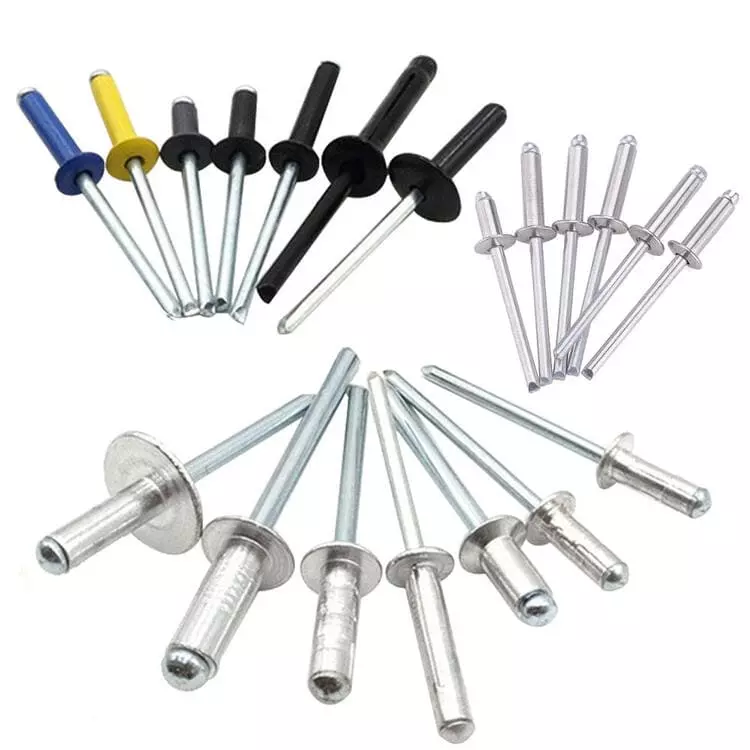
1. Structural Composition
A rivet is usually composed of two parts: the shank and the head. The structure before installation is simple, but the material requires high plasticity. Common materials include aluminum, steel, stainless steel and copper, and the choice of material depends on the application’s strength and corrosion resistance requirements.
2. Installation principle: Plastic deformation creates permanent connection
The core working principle of the rivet is plastic deformation. During the riveting process, the tool will stretch the rivet rod or compress the rivet tail, causing the tail end to undergo irreversible deformation. The deformed tail expands and compresses the material surface, and forms a second “riveted joint”.
This process creates a stable mechanical interlock between the material and the rivet. It does not rely on threads or friction, but on the geometric locking achieved through deformation. Therefore, it has extremely reliable shear resistance performance.
3. Why it is applicable to thin plates, soft materials, and multi-layer materials
The reason is very clear:
- The rivets do not rely on the material’s inherent thread strength.
- The distribution of riveting pressure is more uniform, reducing local stress concentration in thin plates.
- They have high compatibility with aluminum plates, stainless steel plates, composite materials, and multi-layer laminates.
- They perform particularly stably on plates ranging from 0.5 to 3 mm, making them the preferred connection method for automotive outer panels and aircraft skins.
For instance, the fuselage of an aircraft uses over 3 million rivets. The reason is that rivets perform extremely reliably under both shear loads and vibration conditions.
4. Once fixed, it cannot be disassembled and has excellent vibration resistance
After the rivet connection is formed, it becomes a permanent connection. It will not fail due to loosening of the threads, nor will it experience “micro-slip” under long-term vibration. This makes it a key fastening method for high-vibration conditions such as in aviation, railways, truck bodies, ship hulls, and bridges.
What are Bolts?
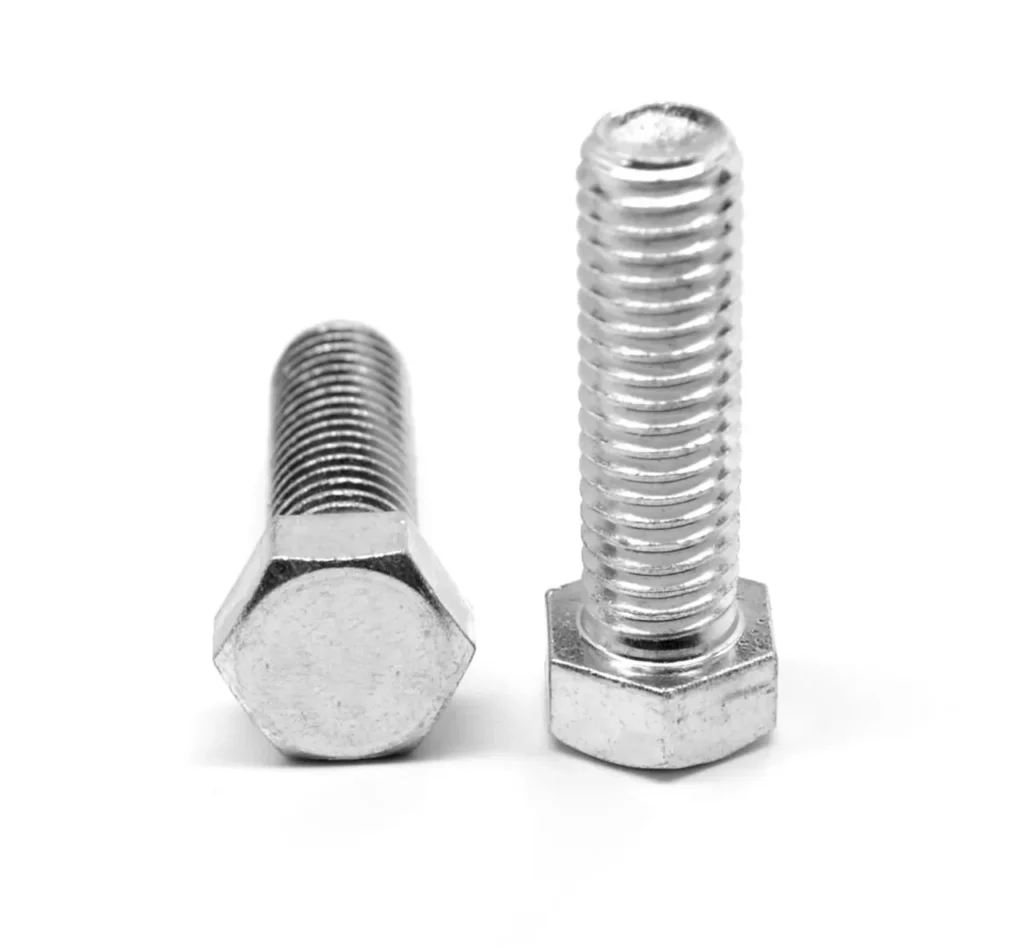
1. Composition of Structure
A bolt is usually composed of the following parts:
- Bolt Shank
- Threaded Part
- Nut
- Washer (used to distribute pressure and prevent surface damage)
The bolt system operates based on “controllable preload”, making the structure more complex but also more maintainable.
2. Working Principles of Frictional Connections vs. Pressure-Resisting Connections
The core of the bolt is preload. When tightening the nut, the bolt will be stretched and the material will be compressed. There are two types of connections:
- Frictional (friction joint): Transmits load through friction. For example, high-strength bolts in steel structures.
- Bearing (bearing joint): The bolts directly bear the load and transfer it through the hole wall. Most mechanical structures fall into this category.
The threads bear the tensile load, while the holes bear the shear load. Therefore, they can withstand complex working conditions.
3. Advantages of the Detachable Structure
The greatest advantage of bolts is “removability”. This makes them suitable for structures that require maintenance, inspection, replacement or periodic upkeep. For example, mechanical equipment, tooling fixtures, thick steel frame structures. For structures with high lifecycle costs, removability is of great importance.
4. How to Generate Clamping Force
The bolt exerts torque, causing the screw to undergo axial stretching, thereby generating a clamping force. This clamping force presses the materials together and bears the load through friction or compression. The performance of the bolt is highly dependent on:
- Torque control
- Thread quality
- Lubrication conditions
- Gasket material
- Correct operation by installation personnel
Research shows that only approximately 10–15% of the actual torque is converted into preload force, with the rest being consumed in friction. This is one of the reasons why bolt connections are more prone to loosening in vibrating environments.
Rivets vs Bolts: Performance Comparison

| Performance Metric | Rivets | Bolts |
|---|---|---|
| Tensile Strength | Moderate; limited by material strength | High; capable of carrying large tensile loads |
| Shear Strength | Strong; widely used in aviation and sheet metal | Moderate; depends on preload and friction |
| Vibration Resistance | Excellent; no thread-loosening mechanism | Requires anti-loosening methods |
| Material Compatibility | Ideal for thin sheets, soft materials, and composites | Best for thick sections and steel structures |
| Load Direction | Superior in shear loads | Superior in tensile loads |
| Removability | Permanent; cannot be removed without damage | Removable and maintainable |
① Comparison of Tensile Strength
The bolts are usually stronger when used on thick materials. The reason is quite simple. Bolts rely on threads to withstand tension. The larger the diameter of the bolt shaft, the higher the tensile load it can bear. For example, the tensile strength of a common 8.8 grade carbon steel bolt can reach around 800 MPa.
In contrast, the tensile strength of common rivets (such as aluminum rivets) is usually within the range of 150–300 MPa. Stainless steel rivets can be increased to approximately 450–600 MPa, but this is still lower than that of high-strength bolts.
In thin plate structures, rivets are more stable. This is an engineering fact that is often overlooked:
- The bolts need to create a stable clamping force within the material.
- Thin plates are prone to being deformed by compression.
- The threads may “pull through” or “slip” in the thin plates.
The rivets disperse the stress through the deformed “riveting head”. Therefore, on thin plates with a thickness of 0.5–3 mm, the structural stability of the rivets is significantly better than that of the bolts.
Thicker material, higher tensile load → The bolt becomes stronger
Thin materials, soft materials, composite materials → Bolts are more reliable
② Comparison of Shear Strength
The rivets exhibit greater strength under shear loads. This has been proven by a large amount of data in aerospace engineering. Over 70% of the stress points in aircraft structures are subjected to shear loads. Rivets bear the shear force through “geometric locking” rather than relying on friction. Typical aerospace rivets (such as A286 or Monel materials) have higher stability and lower risk of loosening in shear environments. Limitations of bolts in shear environments:
- Ordinary bolts mainly bear shear force through friction.
- If the preload is insufficient, the friction effect will weaken.
- Vibration can cause loosening, reducing the bearing capacity.
- When the friction force disappears, the direct pressure on the bolt and the hole wall will cause the hole to deform.
Therefore, in areas such as vehicle outer panels, aircraft skins, and bridge riveting, rivets are the preferred choice.
③ Vibration Resistance
The anti-vibration ability of the rivets is naturally stronger. The reasons are as follows:
- The rivets have a non-threaded structure and there is no torque attenuation.
- The deformed riveted joint forms a permanent clamping with the material.
- It will not loosen in a long-term vibrating environment.
Therefore, the truck bodies, aircraft skins, and ship hull structures all extensively employ the riveting method.
The bolts require additional anti-loosening methods, such as spring washers, nylon locking nuts, double nuts, thread sealant (Loctite), and anti-loosening washers. In practical engineering, if the anti-loosening method is improperly selected, the bolts are highly likely to loosen due to vibration.
④ Material Compatibility
Rivets are suitable for:
- Thin plate structure (0.5 – 3 mm)
- Soft materials (aluminum, plastic)
- Composite materials (CFRP, fiberglass)
- Multi-layer material laminated structure
The rivets achieve mechanical locking through deformation, without relying on the thickness of the material or the strength of the threads. This makes it widely applicable in automotive outer panels, aircraft skins, and electrical enclosures.

Bolts are suitable for:
- Heavy structure (steel beams, mechanical framework)
- High tensile load conditions (pressure vessels, frames)
- Parts that need to be disassembled
The force exerted on the bolt depends on the thread, so higher requirements are imposed on the material thickness and hardness. In pressure-bearing components, bolts are far superior to rivets.
⑤ Load Direction

Rivets → More suitable for shear loads
- The rivets bear the shear force through their “cross-sectional area”.
- The heads form a clamping effect on both sides.
- They are mostly used in structures subjected to lateral forces.
Bolts → More suitable for tensile loads
- The screw system is designed for stretching.
- The greater the pulling force, the higher the clamping force.
- It is suitable for large machinery and steel structure connections.
Lateral loads are secured with rivets; axial tension is held by bolts.
6. Permanent Connection vs Removable Connection
This is the crucial difference that users must clearly understand:
Rivet: Permanent Connection
- Once installed, it cannot be disassembled (unless the rivet body is damaged)
- Low maintenance cost
- High stability
- Suitable for long-term fixation of structures
Screw: Removable Connection
- Easy to maintain and replace
- Suitable for equipment, machinery, and adjustable structures
- However, periodic checks for loosening are required
Application Comparison Across Industries
1) Aerospace Applications
In aircraft structures, more than 90% of the skin connections are made using rivets. This is because the materials used in aircraft are mostly aluminum alloy sheets or multi-layer composite plates, and such structures have extremely high requirements for shear strength and vibration resistance.
The rivets will undergo plastic deformation during installation, forming a tight mechanical lock. This structure will not loosen under long-term vibration and will not experience thread slippage or pre-tightening force attenuation like bolts.
Furthermore, the aircraft skin is usually made of multiple layers that are stacked together and have uneven thickness. Rivets can easily penetrate and fix multiple layers of materials, while bolts require precise holes and threaded structures, which are more costly to manufacture and prone to stress concentration. This is the fundamental reason why riveting has long dominated the aviation industry.
2) Automotive Engineering
The use of rivets or screws in car construction is very clear and logical:
The outer panels and thin structural components are fastened with rivets; while the chassis, engine and safety-critical parts are secured with bolts.
The body panels are mostly made of thin steel plates or aluminum plates. In these cases, rivets offer a more stable shear-bearing capacity, preventing loosening caused by frequent vibrations without damaging the material structure. In the chassis, suspension, and power system, the loads mainly exist in the form of tension or combined loads. In such cases, engineers choose bolts to provide strong preload and maintainability.
3) Construction & Structural Engineering
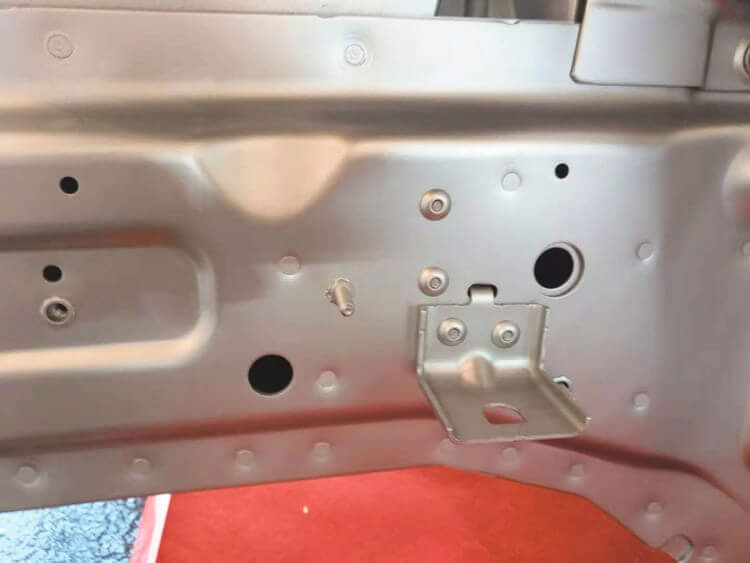
In construction and heavy steel structures, bolts are the absolute stars. This is because these structures require extremely high tensile strength and maintainability. Bolts achieve frictional connections through pre-tightening force and can withstand the high tensile and torque loads in large beam-column joints.
Steel structures typically use high-strength bolts (such as 8.8 and 10.9 grades) and require strict torque control to ensure the stability of the clamping force between the friction surfaces. Although rivets have stable performance, they are difficult to provide sufficient connection strength in thick structures and cannot meet the requirements for later maintenance or disassembly. Therefore, the construction industry almost uniformly adopts bolts as the main connection method.
4) Furniture, Electronics & Appliances
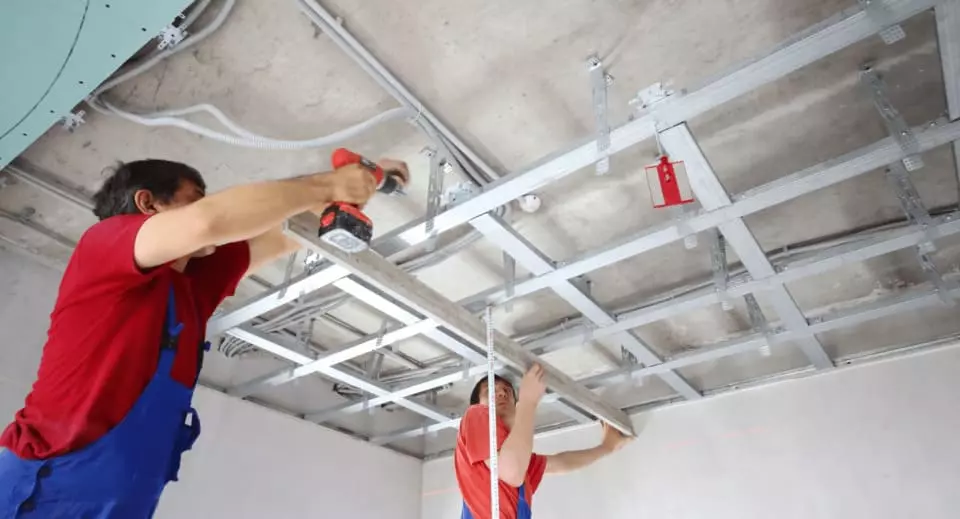
In the lightweight manufacturing scenario, the materials are mostly thin sheet metals, plastics or composite shells. These materials have poor compatibility with the thread engagement of bolts, so engineers tend to use rivets for stable and long-term fixation. For example:
- Household appliance casing
- Electronic device stand
- Thin sheet metal frame
The rivets in these structures can offer better vibration resistance and easier assembly. On the contrary, in furniture, the supporting components, load-bearing structures or positions that need to be disassembled multiple times, are usually secured with bolts, as bolts are maintainable, reusable and can provide reliable clamping force.
5) Outdoor Structures and Corrosive Environments
In outdoor or high-humidity environments, engineers usually need to consider the corrosion resistance of the materials.
- Stainless steel rivets have excellent corrosion resistance and are the preferred choice for outdoor sheet metal, railings, solar brackets and other scenarios.
- Galvanized bolts are commonly used in outdoor structures, but the coating will gradually deteriorate over time, especially in coastal and high-salt areas.
- If the structure requires frequent maintenance, bolts are still more suitable, but they must be of higher-grade anti-corrosion grades (such as hot-dip galvanizing or stainless steel).
- If the structure has higher requirements for vibration and permanent fixation (such as traffic signs, outdoor enclosures), rivets can provide better safety.
In an environment of corrosion, the selection of materials and the choice of connection methods are particularly crucial. This is why engineers often choose rivets as a reliable long-term outdoor connection solution.
How to Choose Rivets or Bolts?
In actual engineering, choosing between Rivets and Bolts is not merely a matter of material preference; it is a comprehensive judgment process involving “structure, load, maintainability, cost, and production method”. Here is a clear decision-making logic that helps users determine the appropriate connection method within just a few seconds.
Key Judgment Point 1: Material Thickness

The thickness of the material is the most crucial engineering parameter.
Thin plates (≤ 3 mm) → Preferably use Rivets
The thin plate has insufficient thread engagement capability. The bolts may cause deformation. The rivets can provide a more stable clamping effect.
Medium-thick plates (3–10 mm) → Either option is acceptable, but it depends on the direction of the load
If the main method is cutting, Rivets is recommended.
If the main force is in the direction of stretching, Bolts are recommended.
Heavy plates (≥ 10 mm) → Preferably Bolts
The thick structure requires high preload force and greater tensile load-bearing capacity, and bolts have obvious advantages in this regard.
Key Judgment Point 2: Removability
- Maintenance required/Disassembly required → Bolts The bolts are inherently reusable and can be used for maintenance, replacement or structural adjustments.
- One-time permanent fixation → Rivets The rivets are suitable for structures that do not need to be loosened for a long time. There is no need to worry about thread wear or torque attenuation.
Key Judgment Point 3: Load Direction
The direction of the load determines the structural reliability of the connection method.
- When the shear load is dominant → The rivets are more stable The head of the rivet provides a large area for bearing and is closely fitted to the surface of the plate.
- The main load is tensile → The bolts are stronger The bolts can achieve a higher tensile load-bearing capacity through the application of preload.
(Engineering Case: Main shear of aircraft skin → Rivets; Main tensile force of steel beams → Bolts)
Key Judgment Point 4: Vibration Conditions
High-vibration environment → Rivets take priority: The rivets have a non-threaded loosening mechanism, ensuring long-term stability.
The bolts are available but anti-loosening measures must be used: If the user does not have sufficient maintenance conditions, it is recommended to directly choose Rivets.
Key Judgment Point 5: Material Type
- Soft materials (aluminum, plastic, composite materials) → Rivets
The soft material cannot provide the strength of a screw thread. Instead, the rivet can provide a more stable fixation. - Hard materials (steel, stainless steel) → Bolts
More suitable for withstanding high preload force.
Key Judgment Point 6: Manufacturing Mode
Mass production, automation → Rivets
The riveting process is more efficient, highly repeatable, and suitable for assembly lines.
Small batch, requiring debugging or highly maintainable → Bolts
The adjustment is flexible and detachable.
Key Judgment Point 7: Corrosion Environment
Outdoor / Salt Spray Environment → Stainless Steel Rivets Have Clear Advantages (such as at the seaside, in transportation facilities, and in outdoor enclosures).
High-strength + Corrosion-resistant → Stainless steel or hot-dip galvanized Bolts (More suitable for long-term outdoor structures that can withstand large tensile forces)
Decision Summary
The following is the most intuitive decision logic. After reading it, users can make a judgment within 5 seconds.
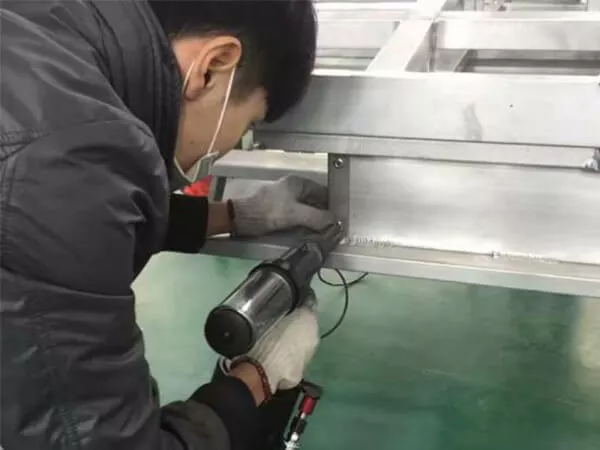
If your structure meets the following conditions:
- Thin plate
- Predominantly subjected to shear load
- Soft material or composite material
- With vibration
- No need for disassembly or assembly
- Mass production
- Outdoor corrosive environment (Stainless steel rivets are more stable)
Choose Rivets

If your structure meets the following conditions:
- Thick plate
- Mainly subjected to tensile load
- Requires long-term maintenance
- Needs disassembly or replacement
- Heavy-load structure
- Steel structure frame
- Installation torque must be controlled
Choose Bolts
FAQs
Q1. Are rivets stronger than bolts?
It does not solely depend on the “strength” itself, but rather on the direction of the load.
In the case of shear load, the rivets are usually stronger because the riveted structure is evenly distributed and can resist vibrations.
In the stretching load, the bolt is stronger because it can provide a greater preload. Common industrial conclusions:
- Shearing → The rivets are more stable.
- Stretching → The bolts are stronger.
Q2. When should I use rivets instead of bolts?
When your structure meets the following conditions, you should prefer to use rivets:
- The material is thin plate (≤ 3 mm)
- There is intense vibration
- The load is mainly in shear form
- Use soft materials or composite materials
- The structure does not require disassembly
- Requires large-scale automated production
- Requires higher corrosion resistance (such as stainless steel rivets)
It can be disassembled, but cannot be reused. Usually, a drill bit or a removal tool for rivets is used to drill off the rivet head, and the remaining part will automatically come loose. The rivet is permanently connected, and disassembly means it is scrapped. Therefore, if maintenance and repeated assembly are needed, bolts should be chosen.
Q4. Can rivets hold heavy weight?
Sure, but it depends on the type of load. The rivets can withstand very high weights in the shear direction, so they are widely used in aircraft skins, vehicle exteriors, and bridge structures.
However, in terms of the stretching direction, bolts can usually bear greater loads. If the load is heavy and maintenance is required, it is recommended to use high-strength bolts.
Q5. Are bolts better for structural steel?
Almost exactly. Steel structures require high preload, maintainability and detectability, all of which are advantages of bolts. High-strength bolts (8.8, 10.9) are the industry standard for connecting steel beams and columns. Rivets are rarely used in modern large-scale steel structures.
Choose the Right Fastener With Confidence
If your structure is thin plate, soft material, multi-layered composite, subject to strong vibration, or does not require maintenance, then rivets are a more reliable, cost-effective and safer solution.
If your structure needs to bear heavy loads, be primarily subjected to tension, must be detachable, requires maintenance, or is a steel structure framework, then bolts offer greater preload force and higher controllability.
Contact us for more engineering guidance on fastener selection.
📧 Product Inquiry: manufacture@world-rivet.com
🌐 Official Website: https://worldrivet.com/
Reference
How do Rivet Nuts Work?
How do Rivet Nuts Work A
What is a Rivet Nut?
What is A Rivet Nut? A ri
Rivet Nut Advantages: Benefits, Limitations, and Best Uses
Rivet Nut Advantages: Ben
What is Blind Rivet Shear Strength
Blind Rivet Shear Strengt