When purchasing blind rivets—especially if your product is subject to tensile, separation, or lifting loads—tensile strength is the parameter you need to focus on.
This article will help you understand what blind rivet tensile strength is, as well as strength testing, influencing factors, and comparative analysis. It will help you avoid selecting the wrong rivets.
Table of Contents
What Is Blind Rivet Tensile Strength?
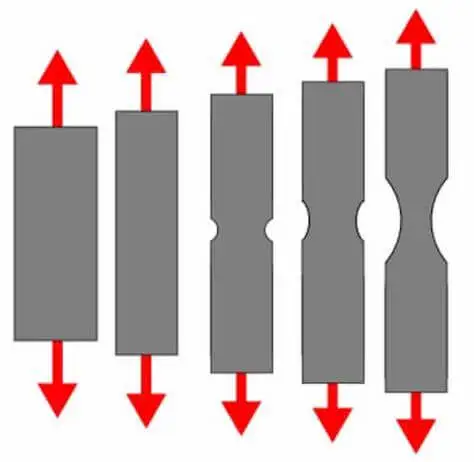
Blind rivet tensile strength refers to the ability of a blind rivet, after riveting is complete, to resist pulling the two connected parts apart along the rivet’s axial direction. Tensile strength specifications are primarily used for connections subject to pull-out, separation, or lifting loads.
When selecting blind rivets, you should not simply compare the tensile strength values listed in product catalogs. You must also consider factors such as excessively thin sheet metal, oversized holes, mismatched clamping ranges, or incomplete rivet formation. If any of these issues are present, the joint may still fail prematurely.
Based on my past testing experience, a higher tensile strength does not necessarily mean that a rivet will perform better in all applications. This is because, during assembly, actual joint performance is also influenced by the rivet diameter, the materials of the rivet body and mandrel, the joint type, the clamping range, and the strength of the joined sheets.
How Tensile Loads Act on a Riveted Joint
Tensile load can be simply understood as follows: when two plates are pulled apart in opposite directions, the rivet must prevent the joint from being “pulled apart.”
In actual structural joints, tensile loads include direct tensile forces, as well as prying forces caused by plate warping, vibration, or eccentric loading. These loads must be transmitted collectively through the rivet head, the rivet body, and the tail formed after riveting. If the applied load exceeds the rivet joint’s capacity, failure modes such as rivet fracture or the rivet head or tail being pulled through the sheet metal may occur.
Why Tensile Strength Matters in Blind Rivet Selection
Tensile strength determines the maximum axial pull load that a blind rivet can withstand after riveting is complete. If the joints in your product are subject to tensile forces caused by pulling, panel separation, warping, or vibration, this parameter is a key factor in selecting the appropriate rivet. If the tensile strength of the rivet you choose is insufficient, it may result in rivet breakage, the tail being pulled through the hole, or deformation around the hole in the panel.
Blind Rivet Tensile Strength Vs Shear Strength
Tensile strength and shear strength refer to a blind rivet’s ability to resist two different types of forces. Tensile strength primarily resists the force that pulls two plates apart along the rivet’s axis. Shear strength primarily resists the force that causes the two plates to shift laterally relative to each other along the joint surface. When selecting a rivet, you should pay close attention to these two values in the product catalog.
| Comparison Item | Tensile Strength | Shear Strength |
|---|---|---|
| Main Load Direction | Along the rivet axis | Perpendicular to the rivet axis |
| Main Applications | Pulling, separation, and lifting loads | Side loads and sliding loads |
| Typical Failure | The rivet breaks, or the rivet head or blind-side head pulls through the sheet | The rivet body is sheared, or the hole and surrounding sheet material are damaged |
| When to Focus on It | When the load tries to pull the joined parts apart | When the load tries to make the joined parts slide sideways |
| Main Influencing Factors | Rivet diameter, material, rivet design, sheet thickness, hole size, and grip range | Rivet diameter, material, rivet design, sheet strength, hole size, and joint design |
| Selection Focus | Confirm the rivet can resist the required tensile load and check that the sheet will not pull through first | Confirm the rivet can resist the required shear load and check that the hole or sheet will not fail first |
| How to Judge | If the main load acts along the rivet axis, focus more on tensile strength | If the main load acts sideways across the rivet, focus more on shear strength |
Tensile Strength Vs Pull-Out Strength Vs Pull-Through Strength
Tensile strength, pull-out strength, and pull-through strength are all related to tensile force, but they focus on different failure locations. Tensile strength assesses whether the rivet will fail under tensile stress. Pull-out strength determines whether the rivet will be pulled out entirely. Pull-through strength determines whether the rivet will pull through the sheet metal.
| Comparison Item | Tensile Strength | Pull-Out Strength | Pull-Through Strength |
|---|---|---|---|
| Simple Meaning | How well the rivet resists being pulled apart under an axial load | How well the joint resists the rivet being pulled out of the joined material | How well the joint resists the rivet head or formed blind-side head being pulled through the sheet |
| Main Focus | The mechanical strength of the rivet under axial loading | The connection between the rivet and the joined material | The bearing area between the rivet head or blind-side formation and the sheet |
| Typical Failure | The rivet fails under tensile loading | The rivet loses its hold and is pulled out of the material | The material around the hole deforms or tears, allowing the rivet to pull through |
| Main Influencing Factors | Rivet diameter, material, and rivet design | Rivet design, blind-side formation, hole size, sheet thickness, and material strength | Head size, blind-side formation size, sheet thickness, material strength, and hole size |
| When to Focus on It | When the joint is exposed to significant axial separation loads | When there is a risk of the rivet being pulled out of thin or relatively soft material | When joining thin sheet, plastic, composite materials, or materials that are more likely to deform around the hole |
| Selection Focus | Check the tensile strength of the specific rivet size and design | Pay attention to the actual joint design, sheet properties, hole size, and installation quality | Consider rivet designs that create a larger load-bearing area on the sheet |
How Is Blind Rivet Tensile Strength Tested?
Rivmate’s blind rivets are tested for tensile strength in accordance with international standards such as ASTM F606/F606M and ISO 14589. These two standards are internationally recognized standards for rivet testing.
The following are the steps for testing the tensile strength of blind rivets:
- Install the blind rivet in the test fixture for testing.
- Start the tensile testing machine and apply tensile force slowly and uniformly. The rate at which the tensile force is applied must comply with the relevant standards.
- The tensile testing machine will record the maximum tensile force at the point of rivet failure, which is the tensile strength. Record the relevant data.
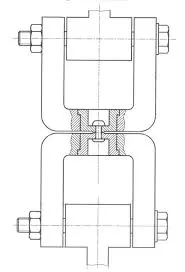
The maximum load recorded during the test is a key piece of data for evaluating the rivet’s tensile performance. Of course, we at Rivmate have also established a laboratory that complies with international standards. Below is a video of our technical staff conducting a tensile test on the Hem-Firm Blind Rivet.
Blind Rivet Tensile Strength Chart
| Blind Rivet Type | Body / Mandrel Material | Catalog Tensile Field | 3.2 mm | 4.0 mm | 4.8 mm | 5.2 mm | 6.4 mm | 7.5 mm | 9.8 mm |
|---|---|---|---|---|---|---|---|---|---|
| Open Type Blind Rivet | Aluminum / Carbon Steel | Typical Ultimate Strength | 500 N | 1,000 N | 1,500 N | — | 3,000 N | — | — |
| Open Type Blind Rivet | Aluminum / Aluminum | Typical Ultimate Strength | 400 N | 900 N | 1,300 N | — | 2,200 N | — | — |
| Peel Type Blind Rivet | Aluminum / Carbon Steel | Typical Ultimate Strength | 700 N | 1,000 N | 1,700 N | — | 3,400 N | — | — |
| Sealed Type Blind Rivet | Aluminum / Carbon Steel | Typical Ultimate Strength | 1,350 N | 2,200 N | 3,100 N | — | 4,900 N | — | — |
| Sealed Type Blind Rivet | Aluminum / Aluminum | Typical Ultimate Strength | 540 N | 760 N | 1,400 N | — | 2,200 N | — | — |
| Multi-Grip Blind Rivet | Aluminum / Carbon Steel | Typical Ultimate Strength | 850 N | 1,500 N | 2,000 N | — | 4,000 N | — | — |
| Q-Lock Blind Rivet | Aluminum / Aluminum | Typical Ultimate Strength | 1,100 N | 1,450 N | 2,000 N | — | 3,340 N | — | — |
| All Aluminum Trifirm Rivet | Aluminum | Tensile ref. | — | 750 N | 950 N | — | — | — | — |
| Bulbtight Trifirm Rivet | Aluminum | Tensile ref. | — | — | — | 1,800 N | 2,500 N | 4,400 N | — |
| Now-Lock Blind Rivet | Carbon Steel | Tensile ref. | — | — | 4,440 N | — | 8,220 N | — | 17,700 N* |
| Now-Lock Blind Rivet | Stainless Steel | Tensile ref. | — | — | 4,440 N | — | 8,010 N | — | 19,400 N |
| Now-Lock Blind Rivet | Aluminum | Tensile ref. | — | — | 2,225 N | — | 3,960 N | — | 8,100 N |
| Mono-Lock Blind Rivet | Carbon Steel | Tensile ref. | — | — | 5,110 N | — | 10,450 N | — | 14,850 N |
| Mono-Lock Blind Rivet | Stainless Steel | Tensile ref. | — | — | 5,100 N | — | 9,000 N | — | 19,400 N |
| Mono-Lock Blind Rivet | Aluminum | Tensile ref. | — | — | 2,220 N | — | 4,220 N | — | 8,500 N |
* 17,700 N applies to the 9.8 mm carbon steel Now-Lock dome-head version.
How to Calculate Blind Rivet Tensile Load Capacity
Step 1: Determine the tensile strength value of the rivet
Refer to the technical specifications provided by the supplier.
Step 2: Calculate the load each rivet must bear at the joint
If the product’s joint structure requires multiple rivets, you must calculate the tensile force each rivet must bear. Then ensure that the rivet’s tensile capacity exceeds the load each individual rivet must bear.
Basic formula: Load borne by a single rivet = Total tensile load ÷ Number of rivets
Step 3: Be sure to account for a safety margin
In actual applications, the design working load should be lower than the rivet’s actual load-bearing capacity.
Step 4: Check whether the sheet metal can withstand the tensile force
Since rivets have very high tensile strength, the sheet metal will fail first. You need to test and evaluate this in advance.
Step 5: Select the correct diameter, hole diameter, and grip range
What Determines Blind Rivet Tensile Strength?
The tensile strength of a blind rivet depends not only on the material of the rivet itself, but also on its diameter, structural design, and the role the mandrel plays after riveting.
1.The rivet diameter is a key factor
For products in the same series with identical materials and structural conditions, increasing the diameter also increases the axial tensile force the rivet can withstand. However, it cannot be directly assumed that “a larger diameter is always stronger than any smaller diameter configuration,” as the internal structures of different types of blind rivets vary significantly.
2.the materials of the rivet body and mandrel significantly affect tensile performance.
For example, aluminum, carbon steel, and stainless steel have different mechanical properties. Consequently, even for rivets of the same diameter, the tensile strength can vary greatly depending on the material combination.
3.the structural design of the rivet is also a key influencing factor.
For example, standard open-type, sealed, multi-grip, and structural blind rivets differ in their forming methods, mandrel locking mechanisms, and load-bearing structures. In certain types of structural blind rivets, the mandrel remains in place after installation and contributes to load-bearing, resulting in higher tensile strength than that of standard blind rivets.
3manufacturing quality and the actual material properties also affect tensile strength
Depending on manufacturing standards and materials, there can be variations in the dimensional consistency of the rivet body, material condition, mandrel strength, and forming quality.
How Rivet Diameter Affects Tensile Strength
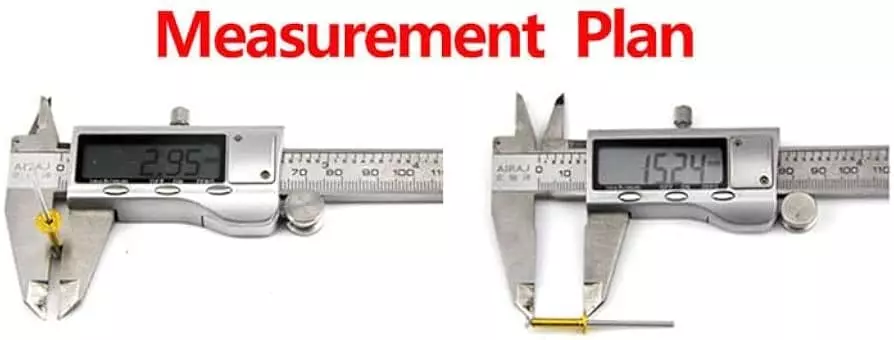
When comparing the load-bearing capacities of rivets with different diameters, the comparison must be made within the same product series, using the same material combination, and with the same head type. Increasing the diameter helps expand the cross-sectional area of the rivet body that contributes to load-bearing. Consequently, the axial tensile force that a blind rivet can withstand also increases.
It is important to note that increasing the diameter does not increase the material’s inherent tensile strength. For example, the tensile strength of a given type of steel will not change simply because the rivet diameter increases from 4.0 mm to 4.8 mm. What actually increases is the rivet’s tensile load capacity as a fastener, due to changes in the rivet’s load-bearing cross-section and the overall riveted structure.
Blind Rivet Tensile Strength by Material
The tensile strength of a blind rivet is influenced by the material. You cannot determine its strength based solely on the material name. You need to consider the material of the rivet body, the material of the mandrel, the diameter, and the rivet structure. This is because the entire riveted structure—not just a single material—bears the axial tensile force.
| Material Combination | General Tensile Strength Trend | Best Suited For | Selection Notes |
|---|---|---|---|
| Aluminum / Aluminum | Relatively lower | Lightweight applications and joints with lower tensile loads | Do not select it for high tensile loads simply because of its low weight |
| Aluminum / Steel | Usually higher than all-aluminum rivets | Applications that need a lighter rivet body with higher mechanical performance | Also consider material compatibility and the service environment |
| Steel / Steel | Usually high | Industrial joints requiring higher mechanical load capacity | Actual performance still depends on the steel grade and rivet design |
| Stainless Steel / Stainless Steel | Usually high | Applications requiring both mechanical strength and corrosion resistance | Do not assume every stainless steel rivet is stronger than every carbon steel rivet |
| Copper-Based Rivet Body | Cannot be judged by material name alone | Electrical, conductive, or other specialized fastening applications | Check the tensile data for the exact rivet model and material combination |
Does the Mandrel Increase Blind Rivet Tensile Strength?
In rivet structures explicitly designed so that the remaining mandrel shares in the final load-bearing capacity, the mandrel can improve the tensile performance of the blind rivet. However, for standard blind rivets—such as open-end blind rivets—the mandrel breaks at a predetermined point, leaving a portion of it inside the rivet body. This does not indicate that the mandrel is designed to be the primary load-bearing component.
How Grip Range Affects Blind Rivet Tensile Strength
The grip range specifies the total sheet thickness range within which a blind rivet can be properly riveted. It does not directly affect the blind rivet’s tensile strength. However, the grip range determines whether the rivet can form the correct blind-side structure. Therefore, it can affect whether you ultimately achieve the tensile strength expected for that model.
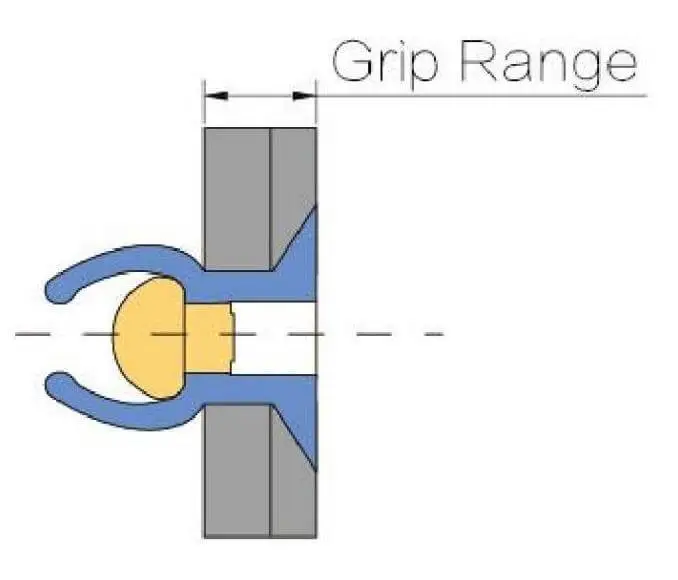
If your total sheet thickness is less than the minimum grip requirement, the rivet is relatively too long. This results in an excessive amount of rivet body on the blind side that needs to be deformed. Depending on the rivet’s design, this may lead to suboptimal forming positions, insufficient clamping, or the rivet body failing to make stable contact with the sheet metal. Consequently, the mandrel may break before a proper joint is formed, preventing the rivet from achieving the tensile strength specified in the catalog.
If the total sheet thickness exceeds the maximum grip, the effective length of the rivet will be insufficient. There will not be enough rivet body on the blind side to complete adequate deformation. This can result in a blind-side head that is too small, insufficient clamping, or incomplete forming. Consequently, the actual tensile load capacity may fall short of expectations.
How Hole Diameter Affects Blind Rivet Tensile Strength
The size of the hole diameter affects whether the rivet can form properly in the actual joint and how much tensile load the entire joint can ultimately withstand.
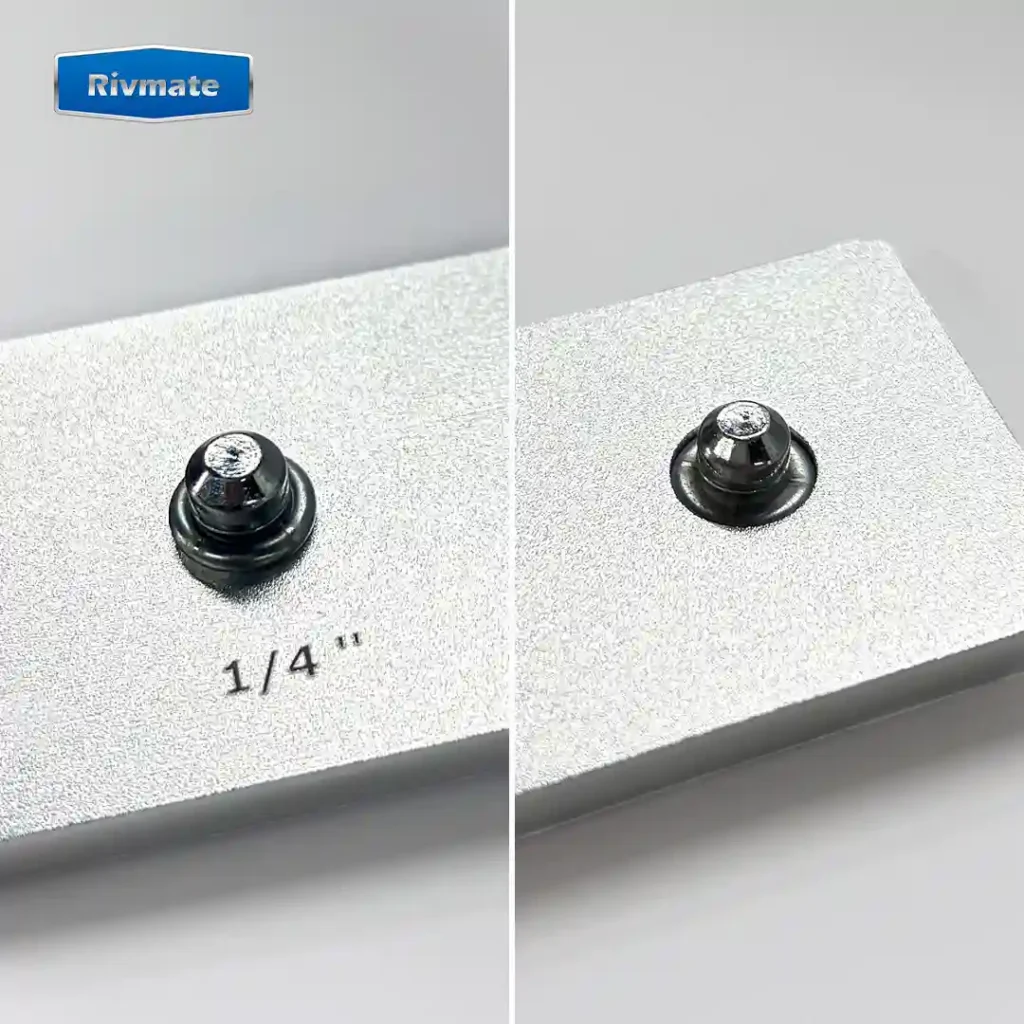
If the hole diameter is too large, there will be a significant gap between the rivet body and the hole wall. During installation, this prevents the rivet from receiving sufficiently stable support, and the formation on the blind side may also be suboptimal. When subjected to axial tensile force, the hole in the sheet metal is prone to deformation and tearing through. Therefore, an excessively large, mismatched hole will reduce the tensile load-bearing capacity of the actual joint, especially in cases involving thin sheets, soft materials, or when the head’s bearing area is small.
If the hole diameter is too small, the rivet will be difficult to insert properly. Forcible insertion may scratch the surface of the rivet body. Excessive resistance during installation can affect the rivet’s position within the hole and its forming condition.
How Rivet Head Style Affects Tensile Strength
The head shape of a blind rivet affects the tensile performance of the joint after installation, but does not directly determine the tensile strength of the rivet body itself. Due to differences in head design, the contact area between the rivet head and the sheet metal varies in size.
A larger head helps distribute the tensile force over a larger area of the sheet metal. A smaller head results in a flatter surface after installation. While this offers better aesthetics, the sheet metal may be subjected to higher localized stress.
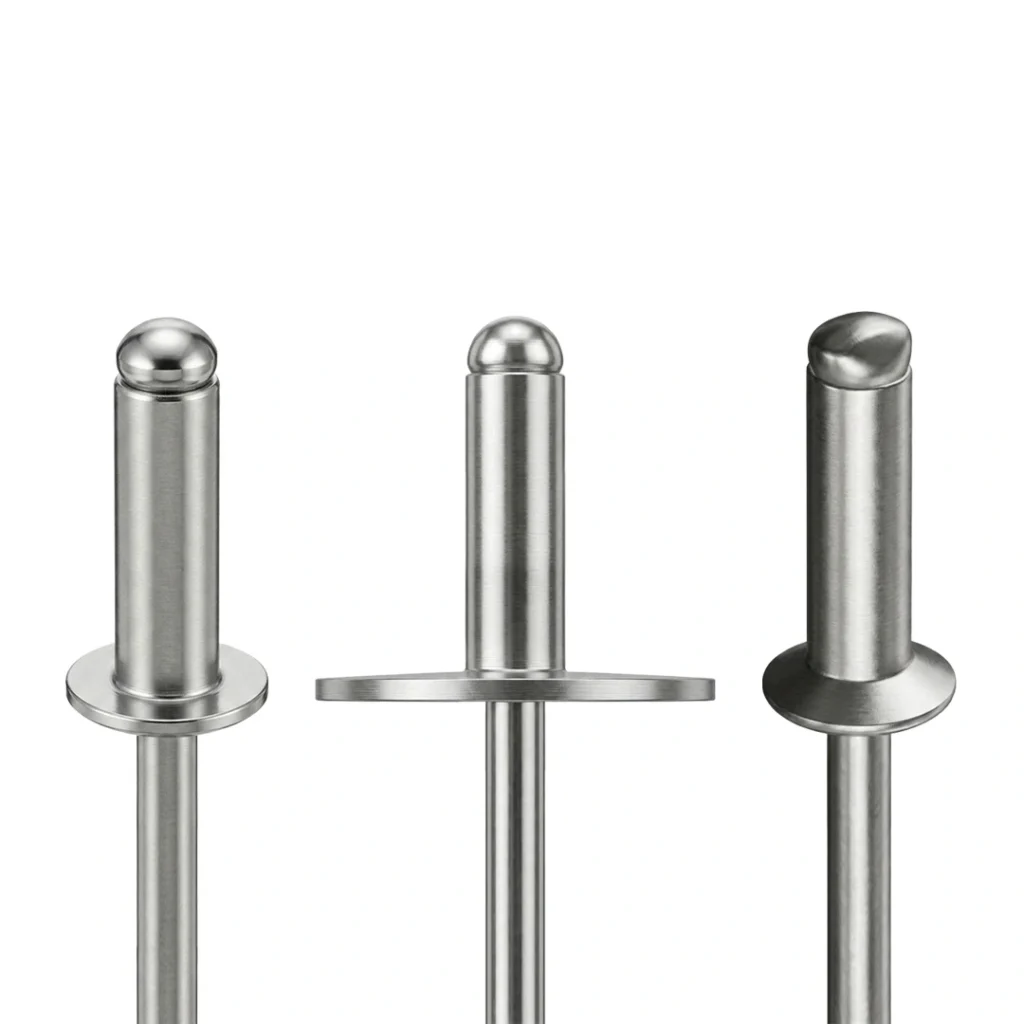
| Head Style | Effect on Tensile Performance | Suitable Applications |
|---|---|---|
| Dome Head | Provides balanced support and general load distribution. Suitable for standard tensile applications where the sheet material has sufficient strength. | General sheet metal assembly, industrial applications. |
| Large Flange Head | Increases the bearing area between the rivet head and sheet material, helping reduce pull-through risk and distribute tensile load over a larger area. | Thin sheets, soft materials, plastics, and composites. |
| Countersunk Head | Provides a flush surface but may reduce contact area. Requires careful consideration of sheet thickness and material strength. | Panels, covers, and appearance-sensitive applications. |
Blind Rivet Failure Modes Under Tensile Load
| Failure Mode | Where It Occurs | What You May See | Common Causes | What to Check |
|---|---|---|---|---|
| Rivet Body Tensile Fracture | Rivet body | The rivet body fractures under axial tensile load | Insufficient rivet tensile capacity or excessive tensile load | Check the tensile load rating, rivet diameter, material, and rivet design |
| Manufactured Head Pull-Through | Manufactured head and surrounding sheet | The rivet head pulls through the sheet and the material around the hole deforms | Thin or soft sheet, oversized hole, or insufficient head bearing area | Check sheet thickness, hole diameter, material strength, and head style |
| Blind-Side Head Pull-Through | Blind-side formed head | The formed blind-side head pulls through the sheet | Thin or soft material, small blind-side bearing area, or poor rivet formation | Check blind-side formation, sheet strength, grip range, and rivet design |
| Sheet Deformation or Tearing | Material around the rivet hole | The hole enlarges, or the sheet deforms or tears locally | Low sheet strength, insufficient edge distance, oversized hole, or eccentric loading | If the rivet remains intact but the sheet fails first, the joint is limited by the sheet material |
| Mandrel-Related Failure | Mandrel or mandrel-locking area | The retained mandrel loosens, unlocks, or no longer supports the load as intended | Failure of the retained mandrel or locking mechanism in structural blind rivets | Check whether the rivet uses a locked mandrel design and whether the mandrel is correctly retained |
| Improper Setting Failure | Entire riveted joint | The rivet is loose, tilted, or poorly formed on the blind side | Incorrect grip range, wrong hole size, incomplete setting, or poor installation alignment | Check grip range, hole size, rivet seating, tool setup, and blind-side formation |
How Temperature and Corrosion Affect Tensile Strength
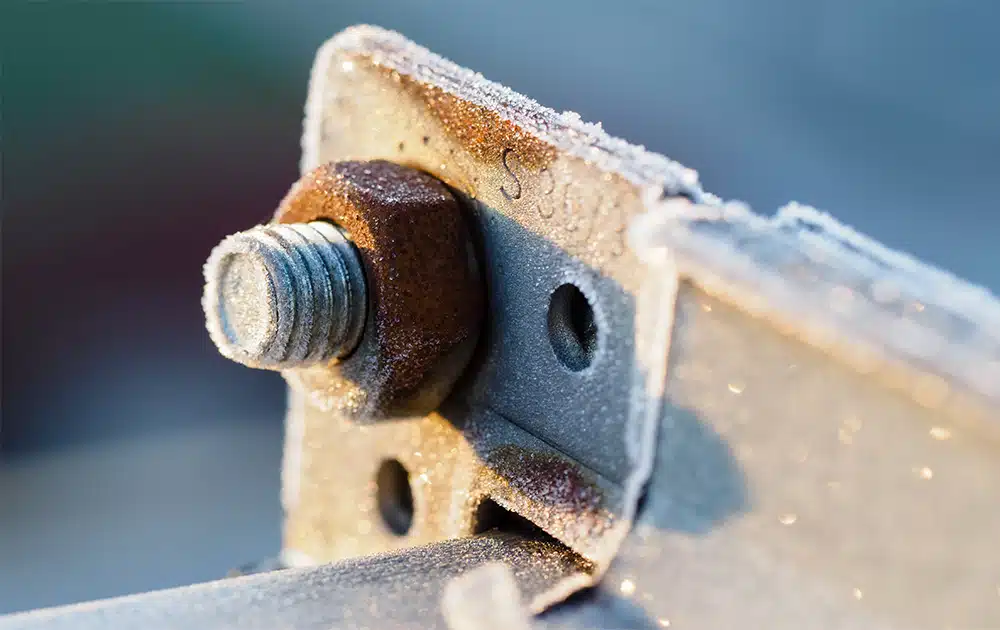
Both temperature and corrosion can reduce the actual tensile strength of blind rivets. The difference lies in how they affect the rivet. Temperature primarily alters the material’s mechanical properties and induces thermal stress within the joint. Corrosion, on the other hand, gradually weakens the rivet body, mandrel, or sheet metal, reducing the effective load-bearing cross-section.
Temperature
When temperatures are too high, the strength of some metals decreases. Therefore, in high-temperature environments, rivets cannot maintain the tensile strength they have at room temperature. When temperatures are too low, some materials become more brittle at low temperatures. They are more prone to failure when subjected to impact or repeated loading.
Corrosion
When rivets are exposed to humid, coastal, salt spray, or chemical environments, corrosion can cause the rivets or sheet metal to gradually thin. The effective cross-sectional area under tension also decreases, which may reduce long-term tensile strength. If the rivets and sheet metal are made of different metals, exposure to moisture may also lead to galvanic corrosio
Blind Rivet Tensile Strength Selection Example
You need to join two layers of metal plates and have decided to use 4.8 mm blind rivets. All rivets feature an aluminum body and a carbon steel mandrel. It has been determined that the joint will primarily be subjected to axial tensile loads. Based on engineering calculations and safety factor considerations by the technical team, each rivet must meet a minimum design tensile strength requirement of 1,800 N.
| 4.8 mm Blind Rivet Type | Material Combination | Catalog Tensile Value |
|---|---|---|
| Open Type | Aluminum / Carbon Steel | 1,500 N |
| Multi-Grip | Aluminum / Carbon Steel | 2,000 N |
| Sealed Type | Aluminum / Carbon Steel | 3,100 N |
The technical specification table from the Rivmate sample catalog is provided above for reference. First, the Open Type’s 1,500 N falls short of the required 1,800 N, so it should be ruled out immediately. Both the Multi-Grip and Sealed Types meet the 1,800 N requirement and are viable options.
Next, select the structural design that best suits your product’s connection requirements. If you need a more enclosed structure or better sealing properties, consider the Sealed Type. If your plate thickness varies significantly and you require a wider grip range, the Multi-Grip is better suited to your practical needs.
How to Inspect Blind Rivet Tensile Performance
- Step 1: Confirm the rivet model and test conditions: Determine the rivet type, diameter, rivet body material, mandrel material, head type, and grip range. Select sheet metal with the correct thickness and hole diameter for testing.
- Step 2: Inspect the formed condition after installation: Check whether the installed rivet appears normal.
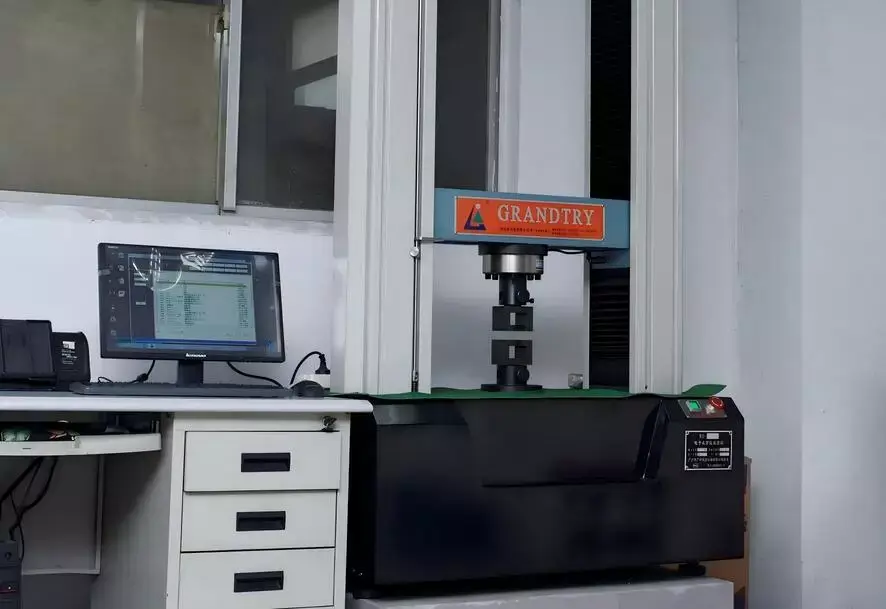
- Step 3: Test the actual tensile strength using a tensile test: Place the installed blind rivet joint in a tensile testing machine and gradually increase the load along the rivet’s axial direction. Record the maximum load.
- Step 4: Examine the failure mode: Observe where the joint fails.
Common Mistakes When Selecting Blind Rivets for Tensile Loads
| Common Mistake | Why It Is a Problem | What You Should Do |
|---|---|---|
| Only Looking at Tensile Strength | The rivet may be strong enough, but the sheet can still pull through, deform, or tear first. | Check rivet strength together with sheet thickness, material strength, hole size, and head style. |
| Confusing Tensile Strength with Shear Strength | Tensile load pulls the joint apart along the rivet axis, while shear load tries to slide the joined parts sideways. | Identify the main load direction first, then check the corresponding strength value. |
| Assuming a Larger Rivet Diameter Is Always Better | A larger rivet requires a larger hole, which may weaken thin sheet or reduce edge distance. | Choose a diameter that meets the load requirement without unnecessarily weakening the joint material. |
| Ignoring Grip Range | If the total joint thickness falls outside the specified grip range, the rivet may not form correctly. | Measure the total material thickness and choose a rivet whose grip range covers it. |
| Using an Oversized Hole | Too much clearance can increase hole deformation and pull-through risk under tensile loading. | Use the recommended hole diameter for the exact blind rivet model. |
| Selecting by Material Name Alone | Aluminum, steel, and stainless steel do not automatically indicate the final strength of a blind rivet. | Compare the exact rivet body and mandrel material combination together with the product tensile data. |
| Ignoring Rivet Head Style | Head style affects the bearing area on the sheet and can change the risk of pull-through. | Select dome, countersunk, or large flange heads according to sheet thickness, material, and surface requirements. |
| Treating Catalog Tensile Value as Working Load | Catalog tensile values are product performance data and are not automatically the allowable design load. | Apply the required design factor or safety factor according to the project or engineering requirements. |
| Ignoring Sheet Strength | The sheet may pull through or tear before the rivet reaches its own tensile limit. | Check sheet thickness, material strength, and the load-bearing area around the hole. |
| Ignoring Installation Quality | A tilted rivet, poor seating, or incomplete blind-side formation can reduce actual joint performance. | Check head seating, blind-side formation, hole quality, and installation tool condition. |
How to Increase Blind Rivet Joint Tensile Strength
- Selecting Rivets with Higher Tensile Strength: The most direct approach is to improve the rivet’s performance. Provided the load requirements are met, the axial tensile strength can be increased by increasing the rivet’s diameter.
- Select appropriate materials for the rivet body and mandrel: The combination of materials used for the rivet body and mandrel affects tensile strength. For example, carbon steel and stainless steel offer higher tensile strength than aluminum.
- Ensure the correct clamping range: Select a rivet model capable of properly clamping all materials in the joint.
- Increase the contact area between the rivet head and the sheet metal: The larger head of a large-flanged rivet helps distribute localized concentrated stress, reducing the risk of localized deformation and tear-through of the sheet metal.
- Control hole diameter and quality: Ensure that the machined hole diameter falls within the range specified by the manufacturer so that the rivet can be inserted and deformed properly.
- Ensure proper installation: Use the correct installation tools and follow the proper installation procedures.
How to Choose a Blind Rivet Manufacturer for High-Tensile Applications
If your product applications have high tensile strength requirements, you shouldn’t base your choice of a blind rivet manufacturer solely on the tensile strength values listed in the product catalog. What you really need is a manufacturer that can provide clear data, consistent batch quality, reliable testing, and proper technical support. You can quickly filter for reliable blind rivet manufacturers using the criteria in the table below.
| Evaluation Item | What You Should Check |
|---|---|
| Tensile Data | Check whether the manufacturer provides tensile data for the exact rivet type, diameter, and material combination. |
| Data Type | Confirm whether the published value is a minimum guaranteed value or a typical reference value. |
| Testing Capability | Check whether the manufacturer can test the installed blind rivet rather than only the raw material or mandrel. |
| Rivet Design | Confirm whether the manufacturer offers structural blind rivets or other designs suitable for higher tensile loads. |
| Batch Consistency | Check whether batch inspection records and quality control data are available for production consistency. |
| Material Traceability | Confirm whether rivet body and mandrel materials can be traced to their production or material batches. |
| Dimensional Control | Check whether key dimensions, mandrel break points, and forming-related dimensions are consistently controlled. |
| Technical Support | See whether the supplier can recommend a rivet based on tensile load, sheet material, joint thickness, and grip range. |
| Sample Validation | Confirm whether samples can be tested under conditions close to your actual joint before mass production. |
| Quality Documents | Check whether the manufacturer can provide test reports, inspection records, or other documents required by your project. |
Information Required for a Blind Rivet Tensile Strength Recommendation
If the information you provide is insufficient, the manufacturer will be unable to provide a Tensile Strength Recommendation suitable for your product. A truly accurate recommendation requires detailed knowledge of the loads on the connection, the sheet material, the thickness, the hole diameter, the installation method, and the operating environment.
| Information Required | What You Should Provide | Why It Matters |
|---|---|---|
| Tensile Load Requirement | Provide the tensile load that one rivet or the complete joint must carry, together with the unit. | This determines the minimum tensile capacity the blind rivet needs to meet. |
| Load Direction | State whether the joint is mainly under tensile load, shear load, or a combination of both. | Different load directions require different strength checks. |
| Sheet Material | Specify whether the joined material is aluminum, carbon steel, stainless steel, plastic, fiberglass, or another composite. | Material strength affects pull-through risk, hole deformation, and overall joint capacity. |
| Total Joint Thickness | Provide the combined thickness of all materials being joined. | This is required to select the correct grip range and ensure proper rivet formation. |
| Hole Diameter | Provide the actual hole diameter or the hole size specified on the drawing. | An oversized or undersized hole can affect rivet formation and joint tensile performance. |
| Rivet Diameter Limit | State whether the design limits the rivet to a specific diameter, such as 4.8 mm or 6.4 mm. | Rivet diameter affects tensile capacity and the required installation hole size. |
| Head Style Requirement | Specify whether you need a dome head, countersunk head, large flange head, or a flush surface. | Head style affects the bearing area on the sheet and the risk of pull-through. |
| Vibration or Impact | State whether the joint will be exposed to continuous vibration, impact, or repeated cyclic loading. | Dynamic loading cannot be evaluated using static tensile data alone. |
| Service Environment | Describe whether the joint will be used indoors, outdoors, in humid conditions, coastal environments, corrosive areas, or extreme temperatures. | This helps determine the appropriate rivet material and surface treatment. |
| Sealing Requirement | State whether the joint needs water resistance, dust resistance, or reduced fluid entry through the rivet hole. | This helps determine whether a sealed blind rivet is more suitable than an open-end design. |
Rivmate High-Tensile Blind Rivet Solutions
Rivmate is not only a reliable manufacturer of blind rivets but also a professional provider of customized rivet solutions. Its production system covers the entire manufacturing process, from raw material inspection, cold forming, heat treatment, sorting, and assembly to packaging and finished product management. This process includes 13 key quality control procedures to ensure consistent performance of High-Tensile Blind Rivets.
To meet different load-bearing requirements, Rivmate’s product line includes standard blind rivets as well as a variety of structural blind rivets. These include Q-Lock, Now-Lock, Mono-Lock, Boom-Lock, and Hemlock rivets, among others. We help customers select the most suitable high-tensile blind rivets.
If you have any technical questions or ordering concerns regarding blind rivets, Rivmate can help you resolve them. If you need to place a bulk order for high-quality High-Tensile Blind Rivets, click here to get a quote now.
Frequently Asked Questions About Blind Rivet Tensile Strength
Does a Larger Rivet Diameter Increase Tensile Strength?
Under normal circumstances, yes. For the same rivet series, the same material combination, and the same structural conditions, a larger rivet diameter results in a larger load-bearing cross-section. Therefore, the axial tensile load that a blind rivet can withstand is typically higher.
Does Rivet Head Size Affect Pull-Through Resistance?
The size of the rivet head affects its resistance to pull-through. A larger head increases the surface area under compression, which helps distribute localized concentrated pressure and reduces the risk of the rivet head being pulled through the sheet metal.
Can Blind Rivets Handle Dynamic or Vibration Loads?
Blind rivets can withstand dynamic and vibration loads. In applications with higher vibration levels and greater cycle counts, special attention must be paid to the rivet structure, the locking mechanism, installation quality, and specific dynamic performance verification.
Can Blind Rivets Replace Bolts in Tensile Applications?
In some cases, bolts can be replaced with blind rivets. A suitable blind rivet can only be selected after verifying the actual load, sheet metal, joint configuration, and maintenance requirements.
Should I Use Minimum or Typical Tensile Strength Data?
You should prioritize the minimum tensile strength. Since it represents the minimum performance that the product must guarantee, it is more suitable for making safety assessments. Typical data is primarily used for comparison and cannot serve as a safety guarantee.
Conclusion: How to Select the Correct Blind Rivet Tensile Strength
Selecting the Correct Blind Rivet Tensile Strength. First, you need to consider the requirements of your product’s joint. Determine the actual tensile load it will need to withstand. Second, select the appropriate rivet based on the connection requirements. The head type, material, diameter, and clamping range must all be correctly matched. Finally, refer to the supplier’s specifications to make your decision.
With this guide, I believe you now have a basic understanding of the tensile strength of blind rivets. Before purchasing blind rivets for your project, be sure to carefully evaluate their tensile strength. If you need assistance, please contact our engineers.
Work with a IATF 16949 Certified Blind Rivet Manufacturer
Get High Quality Rivets Instead of Huck and Avdel Rivets

Rivmate Rivet
Rivmate is blind rivets manufacturers in china. The company is IATF 16949 certified and offers high-strength structural blind rivets that serve as alternatives to Huck and Avdel products.
Explore Rivmate Cases
Rivmate Rivet
Rivmate is blind rivets manufacturers in china. The company is IATF 16949 certified and offers high-strength structural blind rivets that serve as alternatives to Huck and Avdel products.

Hey There, I'm Allen!
I am the boss of Rivmate. For over two decades, we have specialized in the manufacture of blind rivets, providing our customers with reliable riveting solutions. Need riveting services? Feel free to contact us.