
Case Study: Grooved Blind Rivets for Conductive Connections in Thin Metal Sheets for Electronic Devices
In this case study, the customer’s product consists of metal sheet assemblies for electronic components. Both the top and bottom layers of the workpieces are coated with an insulating layer. The customer needed to mechanically fasten the metal sheets together while also establishing an effective electrical connection between the top and bottom layers.
However, after using standard open-groove rivets for the connection, the customer found that the expansion of these rivets was still insufficient. The riveting process failed to adequately break through the insulating coating on the workpiece surfaces, resulting in unstable electrical conductivity.
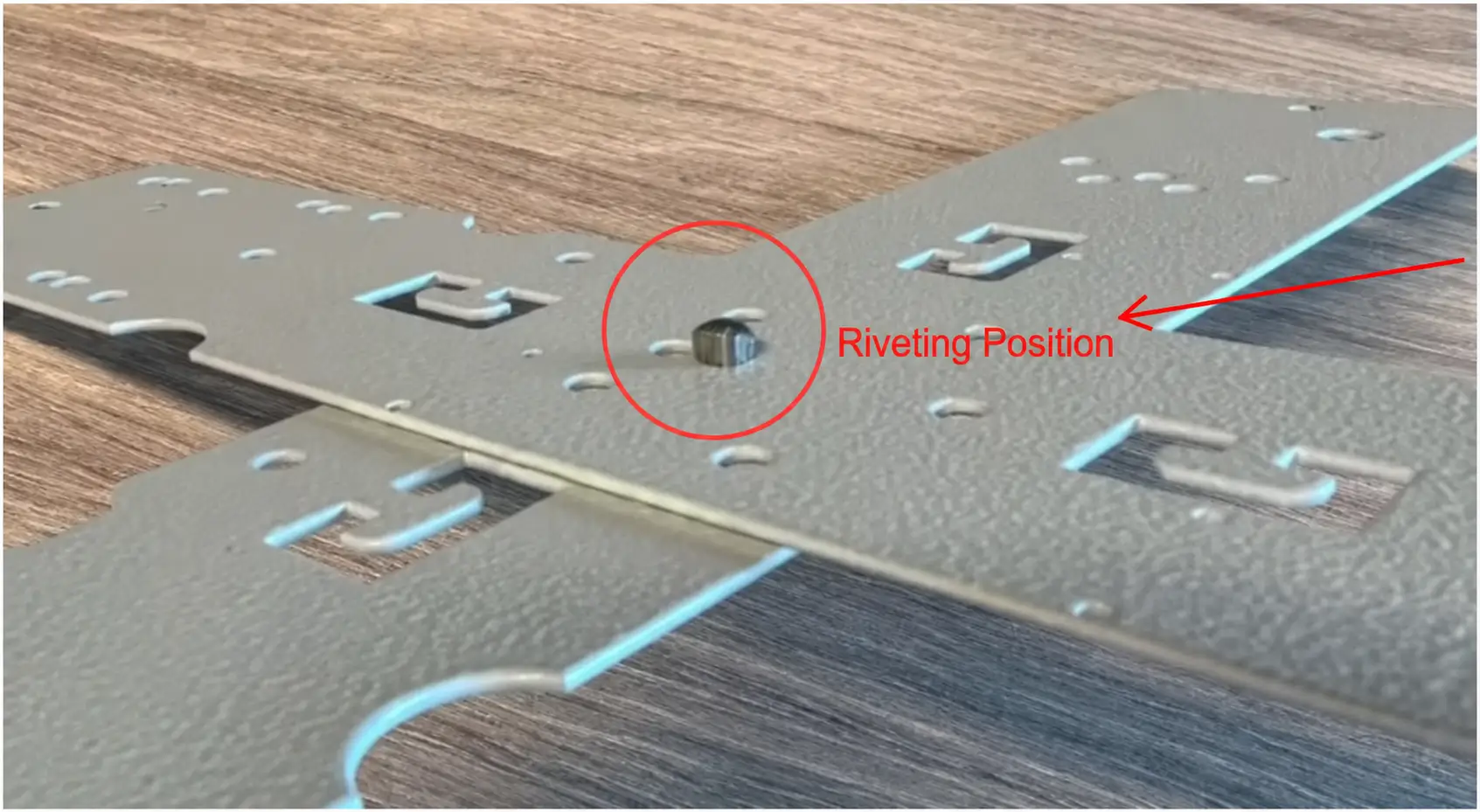
Customer Requirements and Project Expectations
The customer wants the rivets to not only provide a secure mechanical fastening between thin metal sheets but also to create a stronger squeezing and scraping effect around the hole walls, thereby establishing an effective electrical connection between the upper and lower workpieces.
Client Detail Requirements
The client’s key requirements include:
- The insulating coating around the hole walls of the upper workpiece must be pierced.
The customer requires that the expansion area of the rivet body exert sufficient compressive force on the wall of the hole in the upper workpiece to create a piercing effect.
- The insulating coating on the surface of the lower workpiece must be pierced.
The back of the rivet head features a toothed, serrated, or similar indented structure. This allows the coating on the surface of the underlying workpiece to be effectively pierced;
- Maintain a Consistent Riveting Clamping Force
Increase the rivet clamping force to prevent false rivets or poor contact
- Batch Assembly of Thin Metal Sheets for Electronic Components
The solution must be suitable for stable production and facilitate subsequent repeat purchases and bulk supply.
Customer Pain Points
1. Surface Insulation Coatings Affect Electrical Connections
Both the upper and lower workpieces provided by the customer have insulation coatings on their surfaces, which may prevent the formation of a stable electrical path between the two metal sheets.
2. Insufficient expansion of conventional grooved rivets
The head of a standard open-end rivet is long and oval-shaped. The rivet body does not expand sufficiently, resulting in inadequate compression force and an inability to truly penetrate the top coat.
3. The serrated structure on the back of the cap is insufficient in size
The serrated design on the back of the original rivet cap makes it difficult to penetrate the coating on the underlying workpiece. The dimensions and clamping force are not optimal.
4. A balance must be struck between electrical conductivity and riveting stability
While ensuring electrical conductivity, it is also necessary to guarantee the stability of electronic component connections. This helps prevent issues such as false rivets, loosening, or poor contact in the future.
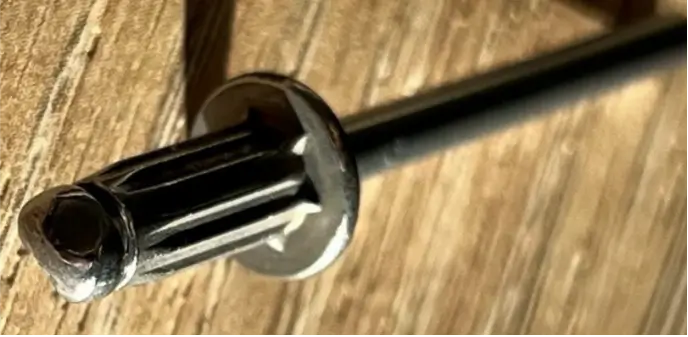
Rivmate Riveting Solutinos
In response to a series of issues related to customer projects, Rivmate recommends using Locking open-end grooved blind rivets as the core solution.
Compared to standard open-groove rivets, the lock-core open-groove design increases the degree of rivet body expansion. This generates greater compressive force, effectively piercing the upper insulation coating. At the same time, Rivmate has optimized the serrated structure on the back of the rivet head. The enlarged serrations can pierce the surface coating of the underlying workpiece during the riveting compression process.
| Project | Recommended Solution |
|---|---|
| Rivet Type | Locking open-end grooved blind rivets |
| Application Position | Conductive fastening structure for electronic metal sheets |
| Rivet Body Structure | Grooved rivet body designed to create stronger pressure against the upper sheet hole wall during expansion, helping break the insulation coating around the hole. |
| Flange Structure | Slightly enlarged serrations on the underside of the rivet flange to improve coating penetration on the lower sheet surface during riveting. |
| Main Purpose | To increase rivet body expansion, improve hole-wall pressure, break the insulation coating on both upper and lower metal sheets, and enhance conductive contact stability at the fastening point. |
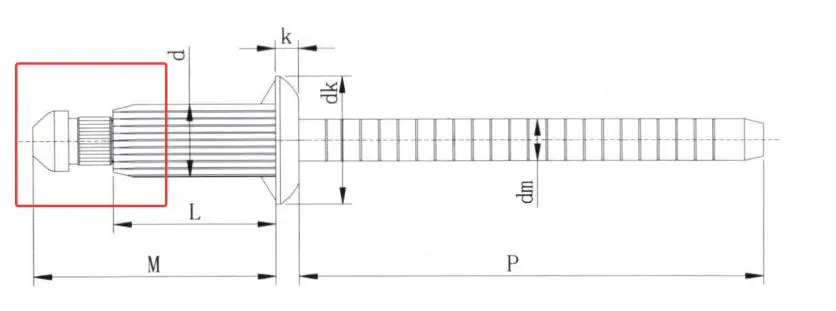
Why LockingOpen-end Grooved Blind Rivets Are Recommended
- More Complete Expansion of the Rivet Body
The mandrel provides stronger support and expansion within the rivet body, promoting more complete expansion of the rivet body.
- Grooved Structure Enhances Grip on Hole Walls
The grooved surface of the rivet body provides a stronger grip. This results in better resistance to loosening and a more stable connection.
- Suitable for Single-Side Installation
Installation can be completed by operating from just one side, improving installation efficiency.
- Improved Consistency of Rivet Joints
Locking open-end grooved blind rivets improve the consistency of rivet joints through groove interlocking and a locking core structure. This ensures stability in mass production assembly.
Customization Capabilities of Rivmate Riveting Solutions
Rivmate not only offers standard locking open-end grooved blind rivets, but can also customize rivet specifications based on the actual assembly dimensions you provide.
Our customization options include:
- Body diameter
- Body length
- Flange dimensions
- Mandrel specifications
- Rivetable thickness range
- Surface treatment
- Recommended installation hole diameter
Please provide the following information, and Rivmate will help you select the appropriate rivet fasteners:
- Sheet metal thickness
- Material type
- Installation location
- Load requirements
- Packaging method
If you are unsure which rivets to use for your assembly, please provide us with the assembly details. Our team of professional engineers will help you design a customized riveting solution.