When sourcing blind rivets, shear strength is a critical parameter that many procurement professionals and engineers prioritize.
This article provides an in-depth look at blind rivet shear strength, covering aspects such as its definition, strength calculations, testing methods, and comparative analysis, to help you avoid errors during the rivet selection process.State that final selection must use product-specific minimum test data.
Table of Contents
What Is Blind Rivet Shear Strength?
For blind-rivet selection, distinguish material shear strength from product shear load capacity. Material shear strength is a stress expressed in MPa. The shear rating of a complete installed blind rivet is normally reported as force in N or kN under a defined test method and fixture.
Because the rivet body may be hollow and the mandrel condition varies by design, use the manufacturer’s product-specific minimum tested shear load for final selection.For example, the 3.2X10-TX26042017 rivet, which we at Rivmate recently inspected in May 2026, shows the reference minimum value.
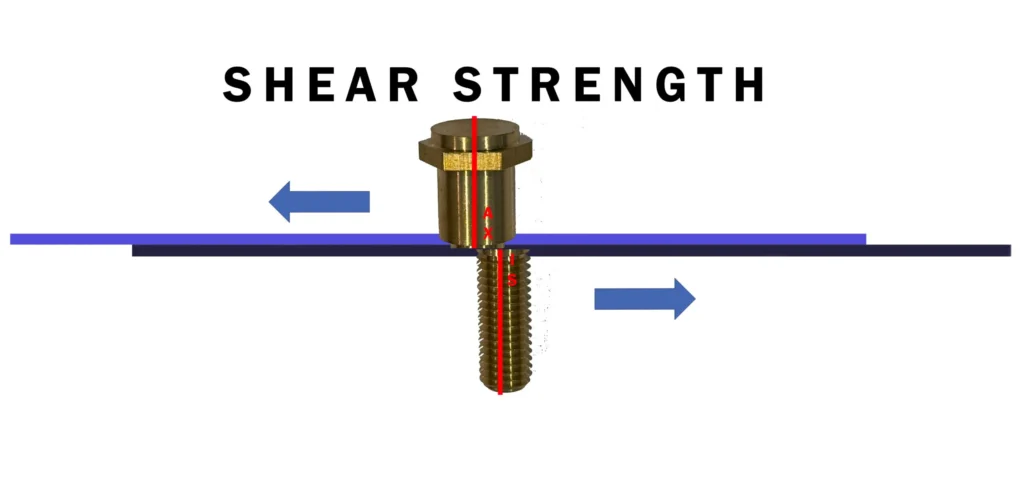
How Shear Loads Act on a Riveted Joint
A shear load is a force that causes two connected parts to slip past each other in parallel directions.
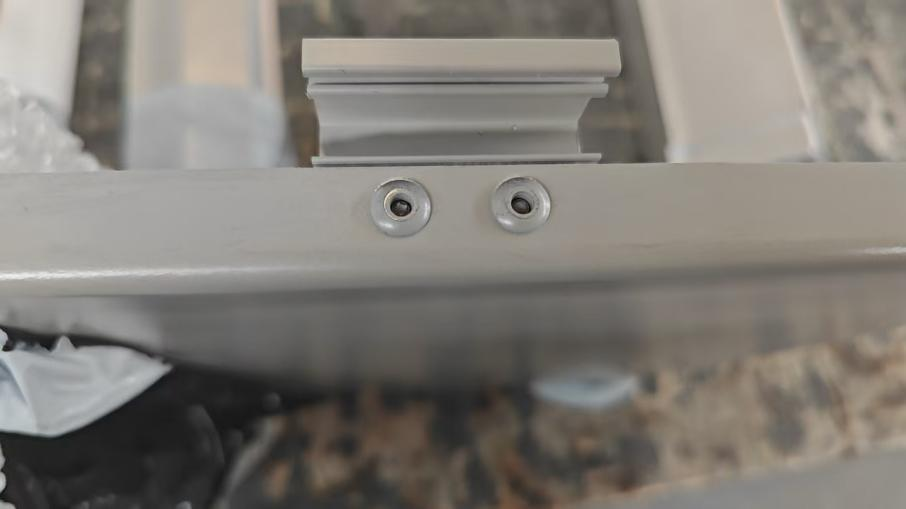
What types of failure can occur in pop rivets under shear loads?
- Shear failure of the rivet shank:If the shear force exceeds the rivet material’s yield strength, the rivet shank undergoes plastic deformation. Eventually, it fractures along the shear plane.
- Deformation of the hole in the sheet metal due to compression:When a rivet in an aluminum sheet is subjected to shear force, the rivet pushes against the hole walls. The pressure on the hole edges forces the aluminum sheet to gradually become elliptical, leading to joint failure.
- A Gap Forms Between the Rivet and the Hole:If the hole diameter, rivet size, or installation method is incorrect, a gap will exist between the sheet metal and the rivet at the beginning of the connection. Include eccentricity, joint slip and unequal load sharing among multiple rivets.When subjected to shear force, the rivet will first experience impact, causing the hole walls to endure greater localized pressure. This reduces the stability of the connection.
Shear Strength Vs Shear Stress
- Shear Strength: Indicates the maximum shear force this hollow-core rivet can withstand. It represents the rivet’s “maximum capacity.”
- Shear Stress: Indicates the actual shear force currently acting on this hollow-core rivet. It represents the “actual stress” the rivet is subjected to during operation.
Blind Rivet Shear Strength Vs Tensile Strength
When selecting a blind rivet, the technical specifications provided by the manufacturer will include shear strength and tensile strength. Both of these mechanical property parameters are used to determine the maximum load a rivet can withstand. The difference lies in the direction of the applied load.
In previous product shipments, tensile and shear properties have also been a major concern for customers. Rivmate conducts internal mechanical property testing on select rivet products and for specific applications. One such test report, numbered YS23090901A, verified the tensile and shear properties of a specified hollow-core rivet using a TE001 tensile testing machine. This not only provides a traceable record of the product’s performance but also facilitates customers’ long-term repeat purchases of this rivet model.
| Comparison Item | Shear Strength | Tensile Strength |
|---|---|---|
| Definition | The maximum shear load a blind rivet can withstand before failure. | The maximum tensile load a blind rivet can withstand along its axis before failure. |
| Load Direction | Load mainly acts perpendicular to the rivet centerline. | Load mainly acts along the rivet centerline. |
| Typical Load Type | Horizontal loads, sliding forces, and shear forces between connected parts. | Pulling forces and separating forces between connected parts. |
| Main Load Area | The rivet section passing through the joint interface. | Rivet head, rivet body, and formed blind-side locking area. |
| Common Applications | Sheet metal joints, automotive parts, equipment brackets, and mechanical connections. | Panel fixing, enclosure assembly, and structures exposed to pull-out forces. |
| Main Engineering Question | How can connected parts be prevented from sliding relative to each other? | How can connected parts be prevented from being pulled apart? |
| Common Failure Mode (Rivet) | Rivet body shearing and fracture. | Rivet body tensile failure or insufficient mandrel retention. |
| Common Failure Mode (Material) | Hole enlargement, bearing deformation, and edge tearing. | Head pull-through, blind-side pull-through, and material deformation. |
| Influencing Factors | Rivet diameter, material, structure type, mandrel design, and base material strength. | Rivet material, head style, blind-side forming structure, grip range, and material thickness. |
| Key Application Areas | Vibration equipment, automotive structures, mechanical connections, and metal frames. | Panel fixing, enclosure assembly, and thin sheet fastening. |
Use minimum rated values for design and evaluate combined loading when both directions act.
How Is Blind Rivet Shear Strength Measured?
A traceable shear report should identify the rivet part number and specification, test date, equipment, fixture material, fixture-hole diameter, installed grip, shear-plane configuration, sample quantity, loading procedure, minimum requirement, individual results, and observed failure mode. One internal Rivmate report for a named product records a TE001 tester, a 4.0 mm steel fixture plate, a 4.00 mm fixture hole, one specimen per tensile or shear run, and the maximum peak after failure. This example must remain limited to that report and product; it must not be presented as the method or result for every Rivmate rivet.
To demonstrate how rivet performance is verified under real-world testing conditions, Rivmate conducted an internal comparative test between a stainless steel Mono-Lock rivet and a Stanley Monobolt rivet.
The test covered product dimensions, mandrel structure, post-riveting appearance, tensile strength, shear strength, mandrel retention force, and a comparison of drawing specifications.
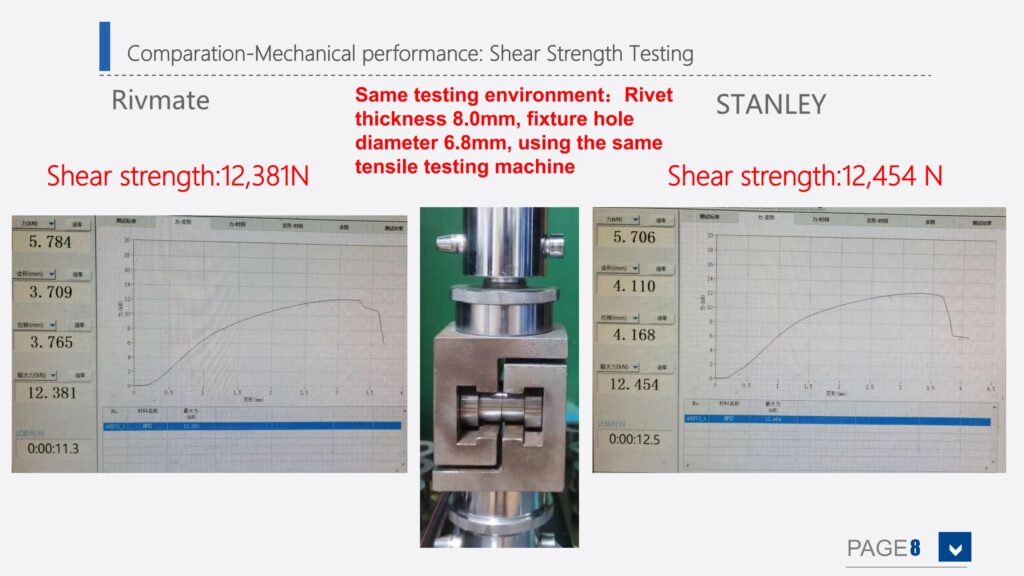
- Step 1: Install the Test Specimen
First, install the pop rivet you wish to test into the appropriate test fixture. Ensure that the rivet specifications, hole diameter, and riveting condition are all correct. - Step 2: Apply Shear Load
Once installed, place the specimen in a tensile testing machine or universal testing machine. The testing equipment will gradually increase the shear load until the rivet fails. Record the corresponding performance data. - Step 3: Record the Maximum Load Capacity
The testing equipment will display the “Maximum Load Before Failure.”
How to Calculate Blind Rivet Shear Strength
Blind Rivet Shear Strength Capacity is used to determine whether the load-bearing cross-section of a blind rivet can withstand the load when the rivet is subjected to a lateral shear force.
The basic formula for Blind Rivet Shear Strength is:Fs=τ×A
The equation F = τ × A is useful only as a preliminary material-level estimate. It does not by itself establish the rated shear load of a finished blind rivet. The effective area, hollow body, retained-mandrel position, grip, hole clearance, fixture, and single- or double-shear configuration can change the result. Select a candidate from verified minimum product data, apply the required design factor, check the sheet for bearing, net-section and edge failure, and validate the installed joint under representative conditions.
| Symbol | Meaning |
|---|---|
| Fs | Blind rivet shear load capacity (N) |
| τ | Shear strength of rivet material (MPa) |
| A | Effective shear area (mm²) |
Blind Rivet Shear Strength Chart
The shear strength of pop rivets is primarily used as a reference for model selection and performance comparisons. Actual performance may be affected by factors such as the materials being joined, plate thickness, and installation quality. The data below represents the typical performance range for common Rivmate pop rivets and can serve as a preliminary reference for model selection.For more detailed data, please refer to the Rivmate product catalog.
| Rivmate Rivet Type | Typical Material | Diameter Example | Tensile Strength | Shear Strength |
|---|---|---|---|---|
| Open Type Blind Rivet | Aluminum Body + Carbon Steel Mandrel | 2.4 mm | 280 N | 180 N |
| Open Type Blind Rivet | Aluminum Body + Carbon Steel Mandrel | 3.2 mm | 500 N | 400 N |
| Open Type Blind Rivet | Aluminum Body + Carbon Steel Mandrel | 4.8 mm | 1300 N | 850 N |
| Sealed Type Blind Rivet | Aluminum Body + Steel Mandrel | 3.2 mm | 1350 N | 1100 N |
| Uni-Grip Blind Rivet | Carbon Steel Body + Carbon Steel Mandrel | 4.8 mm | — | — |
| All Aluminum Tri-Firm Rivet | Aluminum Body + Aluminum Mandrel | 4.8 mm | 1800 N | 2700 N |
| Bulbtight Tri-Firm Rivet | Aluminum Body + Aluminum Mandrel | 5.2 mm | 750 N | 550 N |
| Mono-Lock Structural Rivet | Stainless Steel Body + Stainless Steel Mandrel | 4.8 mm | 5100 N | 7000 N |
| Mono-Lock Structural Rivet | Stainless Steel Body + Stainless Steel Mandrel | 6.4 mm | 9000 N | 11000 N |
| High Strength Lockbolt System | Carbon Steel | 4.8 mm | 7500 N | 7800 N |
Do not use this table for engineering design until each row identifies the exact part number, Datasheet or report revision, test method, fixture and shear-plane configuration, sample size, and whether the value is a guaranteed minimum or a typical result. Lockbolts should be separated from blind rivets because their installation system and load path differ.
What Determines Blind Rivet Shear Strength?
There are numerous factors that influence the shear strength of blind rivets, including the material of the rivet body, the diameter and effective shear cross-section, the rivet design, the condition of the mandrel, and the quality of the installation. If you wish to evaluate the shear strength of a specific blind rivet, you should refer to the shear strength values determined by the manufacturer in accordance with prescribed test procedures.
| Factor | Effect on Shear Performance | What You Should Check |
|---|---|---|
| Rivet Body Material | Determines the basic mechanical strength of the rivet. | Aluminum / Steel / Stainless Steel |
| Rivet Diameter | Determines the effective load-bearing cross-sectional area. | 3.2 / 4.0 / 4.8 / 6.4 mm etc. |
| Rivet Structure | Changes the load transfer method after installation. | Open Type / Multi-Grip / Structural |
| Mandrel Retention | May affect structural rivet load stability and long-term reliability. | Check whether the mandrel is securely locked. |
| Grip Range | Affects whether the rivet can form correctly during installation. | Make sure the total material thickness matches the rivet specification. |
| Hole Size | Affects load transfer and joint connection stability. | Check the recommended drilling hole size. |
| Installation Quality | Determines whether the rivet performance can be fully achieved. | Tool condition, installation process, and riveting status. |
| Base Material | Determines whether the joint fails before the rivet. | Material, thickness, and bearing strength around the hole. |
The usable joint capacity is governed by the first verified failure mode, not by rivet shear alone.
How Rivet Diameter Affects Shear Strength
The diameter of a rivet is one of the key factors affecting the shear strength of a pop rivet. A larger diameter usually increases tested shear load capacity, but it does not increase the material shear strengthThis is because a larger rivet diameter increases the cross-sectional area available to resist shear forces.
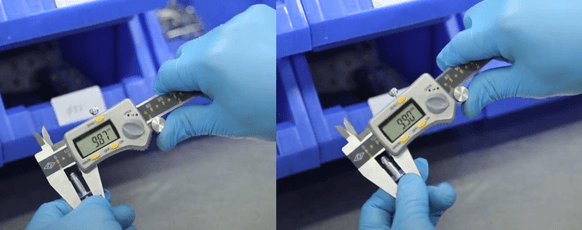
It is important to note that selecting a larger-diameter rivet does not necessarily improve the stability of the joint. This is because increasing the rivet diameter requires a larger installation hole. The installation process requires higher tensile force, which can more easily weaken thin sheet metal.
Therefore, when selecting the rivet diameter, you must consider the following factors simultaneously:
- Shear load
- Base material thickness
- Material strength
- Installation space
- Failure modes
How Rivet Material Affects Shear Strength
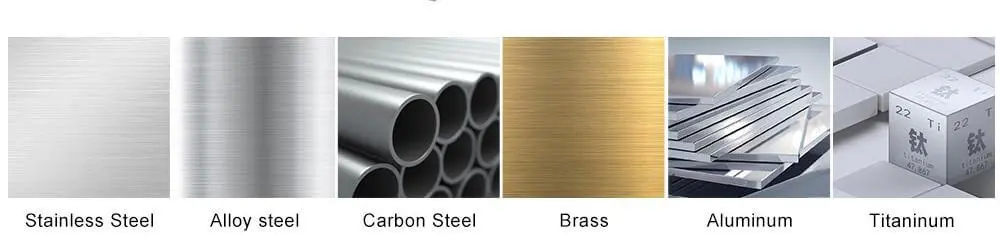
The material of a rivet affects its ability to resist shear deformation and fracture. Blind rivets of the same diameter and structure may exhibit significant differences in shear strength depending on the material used.
Common rivet materials:
- Aluminum: Lightweight and corrosion-resistant, suitable for general fastening applications
- Steel: High strength, suitable for applications with higher loads
- Stainless Steel: Combines strength and corrosion resistance, suitable for harsh environments.
Due to differences in strength, hardness, and ductility among these materials, their performance under shear loads varies.
| Rivet Material | Shear Strength Trend | Advantages | Typical Applications |
|---|---|---|---|
| Aluminum | Medium | Lightweight, corrosion resistant, and easy installation | Electrical enclosures, light sheet metal applications |
| Carbon Steel | High | Higher strength and rigidity | Machinery, automotive parts, steel structures |
| Stainless Steel | High + Corrosion Resistance | Durable in harsh environments | Outdoor equipment, marine, chemical applications |
Compare complete rivet assemblies of the same diameter, grip and design,material name alone is not
a rating.
Standard Blind Rivets Vs Structural Blind Rivets
| Comparison Item | Standard Blind Rivets | Structural Blind Rivets |
|---|---|---|
| Main Purpose | General fastening for standard applications. | High-strength fastening for structural applications. |
| Internal Structure | Standard mandrel design with basic mechanical locking. | Locked mandrel or structural locking design for improved stability. |
| Load Capacity | Provides standard shear and tensile performance. | Provides higher shear and tensile performance. |
| Mandrel Retention | Limited mandrel retention depending on rivet design. | Higher mandrel retention after installation. |
| Vibration Resistance | Suitable for normal vibration environments. | Better performance under high vibration and dynamic loads. |
| Installation | Easy installation with common riveting tools. | Requires proper installation control and suitable tools. |
| Cost | Lower cost and suitable for high-volume applications. | Higher cost due to advanced structure and higher performance. |
| Typical Applications | Electrical enclosures, panels, light sheet metal assemblies, and general industrial products. | Automotive components, heavy equipment, structural assemblies, and transportation applications. |
| Best Choice When | Load requirements are moderate and cost efficiency is important. | Joint reliability, higher load capacity, and long-term durability are required. |
| Key Selection Factors | Rivet diameter, material, grip range, and basic shear strength. | Shear strength, tensile strength, mandrel retention, fatigue resistance, and structural stability. |
Does the Mandrel Increase Blind Rivet Shear Strength?
The Role of the Mandrel in a Blind Rivet

Inspect the installed mandrel position and locking condition before crediting it in the load path.
During installation, the most important function of the mandrel is to help the rivet body deform correctly, thereby forming a reliable mechanical joint.
Verify formation, break location and retained-mandrel condition against the product specification.
Standard Blind Rivets: Does the Mandrel Increase Shear Strength?

For standard blind rivets, the mandrel has a limited effect on increasing shear strength. For example, after an open-type blind rivet is installed, the mandrel breaks at a predetermined position, leaving only a portion inside the rivet body. The rivet body continues to bear the majority of the load.Do not assign a mandrel contribution unless the product test data and installed section support it.
The primary functions of the mandrel in standard blind rivets are:
- To pull the rivet into place
- To assist in forming back-side deformation
- To complete the installation
Key factors affecting the shear strength of standard blind rivets:
- Rivet body material
- Rivet diameter
- Rivet design
- Base material strength
Structural Blind Rivets: How Does the Mandrel Increase Shear Strength?

For Structural Blind Rivets, the mandrel is mechanically locked in place after installation and remains inside the rivet body to contribute to the load-bearing capacity.
The primary functions of retaining the mandrel in Structural Blind Rivets are:
- To increase the effective load-bearing cross-section
- To enhance the strength of the shear zone
- To improve vibration resistance
For a named structural rivet, document the locking feature, retained position and applicable test evidence.
How Grip Range Affects Blind Rivet Shear Strength
The grip range itself does not directly alter the shear strength of the rivet material. The grip range determines whether the pop rivet can deform in the correct position. It affects whether the rivet is installed correctly, whether a complete locking structure is formed, and how much shear strength the final riveted joint can provide.
Describe the actual stack relative to the product minimum and maximum grip limits
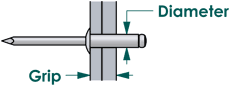
① Correct Grip Range Ensures Proper Rivet Formation
Selecting a Grip Range that matches the sheet metal allows the rivet to deform in the correct position, resulting in:
- A uniform blind-side head
- Stable clamping force
- Good load transfer path
② An insufficient grip range reduces shear strength
An insufficient grip range results in an inadequate rivet length. After installation, this may lead to:
- Insufficient expansion on the blind side
- Insufficient locking area
- Reduced contact area
Under these conditions, when subjected to shear loads, greater micro-movement may occur between the connected parts. Prolonged micro-movement can lead to the following issues:
- Hole wear
- Rivet loosening
- Fatigue failure
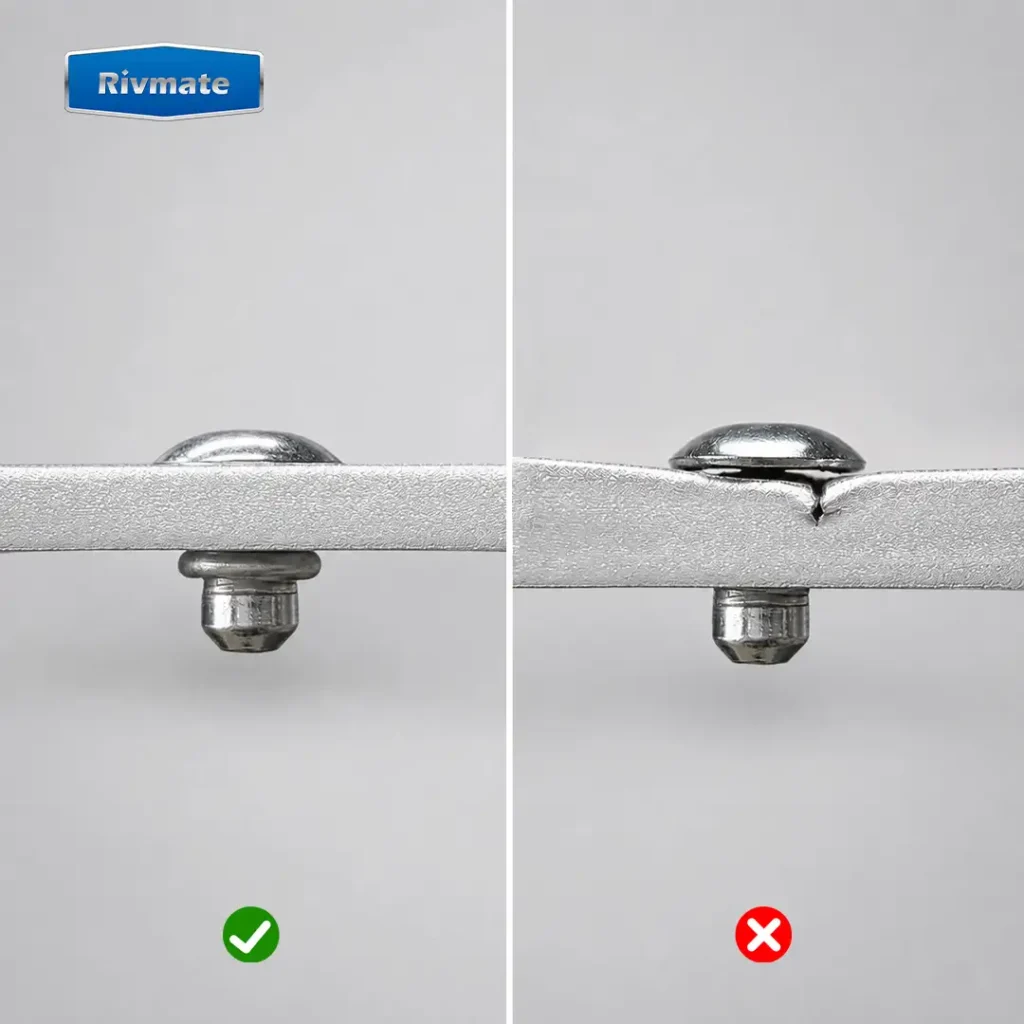
③ An excessively large clamping range can affect mechanical properties
If the minimum clamping range of the rivet exceeds the thickness of the sheet metal, it will cause abnormal deformation at the tail end of the rivet after riveting. The resulting joint structure becomes unstable, reducing the mechanical properties of the entire connection.
How Hole Diameter Affects Blind Rivet Shear Strength
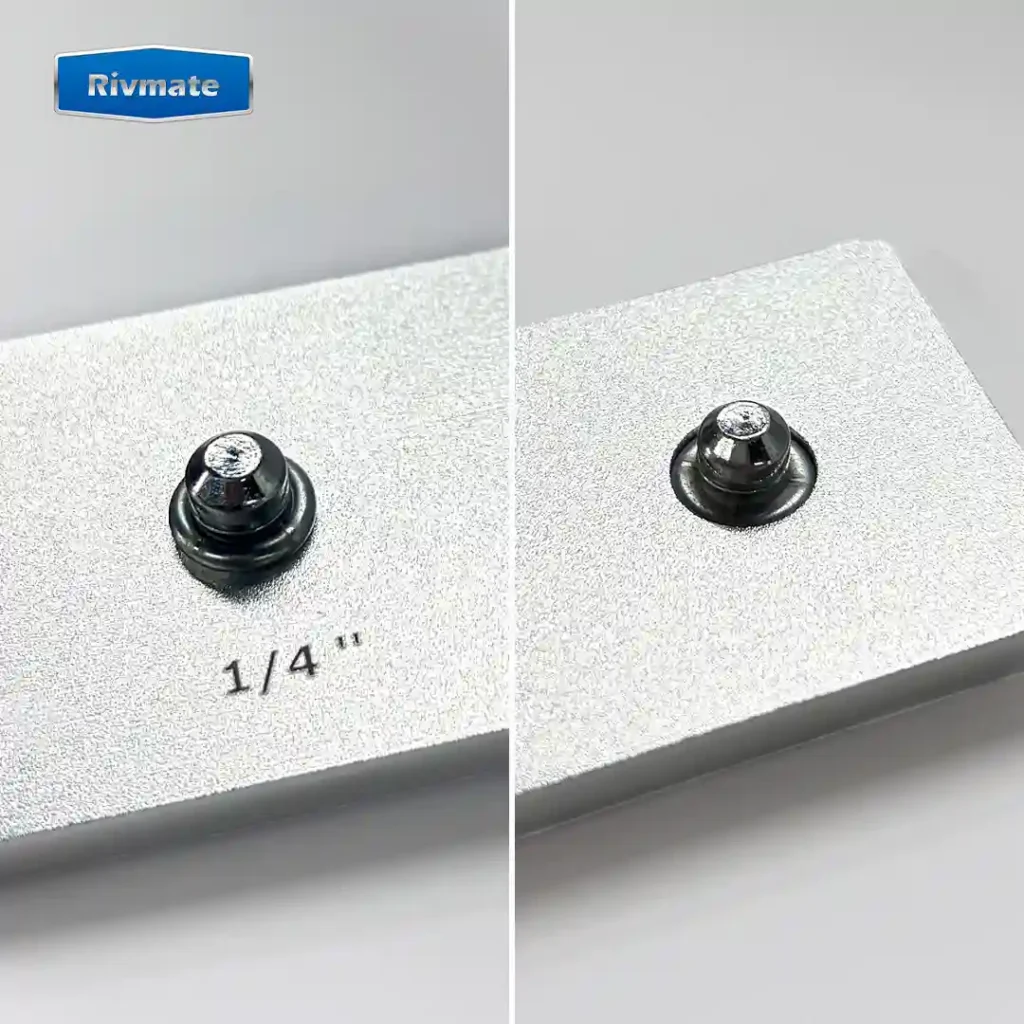
- When the hole diameter is too large → the gap between the sheet metal and the rivet increases, reducing load transfer efficiency. This increases the risk of hole deformation and connection loosening.
- When the hole diameter is too small → installation becomes difficult, and the rivet body is abnormally constrained, preventing proper forming. This results in insufficient forming on the back side and abnormal clamping force, affecting the reliability of the connection.
- Correct hole diameter → Ensures the rivet fully fills the hole, allowing for stable transfer of shear loads.
Blind Rivet Joint Failure Modes Under Shear Load
| Failure Mode | What Happens | Main Causes | How to Prevent |
|---|---|---|---|
| Rivet Shear Failure | Rivet body breaks under shear load. | Diameter too small, insufficient material strength. | Select proper rivet diameter, material, and suitable rivet type. |
| Hole Enlargement | Rivet enlarges the mounting hole under shear loading. | Soft base material, oversized hole, high bearing stress. | Control hole size and increase bearing area. |
| Edge Tear-Out | Sheet material tears from the rivet hole toward the edge. | Insufficient edge distance, thin sheet material. | Increase edge distance and optimize joint design. |
| Pull-Through Failure | Rivet head pulls through the connected material. | Soft material, insufficient flange contact area. | Use large flange rivets or specialized rivet designs. |
| Mandrel Failure | Mandrel loosens or loses retention after installation. | Incorrect rivet type selection, vibration environment. | Use structural blind rivets when higher retention is required. |
| Joint Loosening | Riveted connection loses stability over time. | Cyclic loading, vibration, poor installation quality. | Improve installation control and select suitable rivet structure. |
Edge Distance and Rivet Spacing for Shear Loads
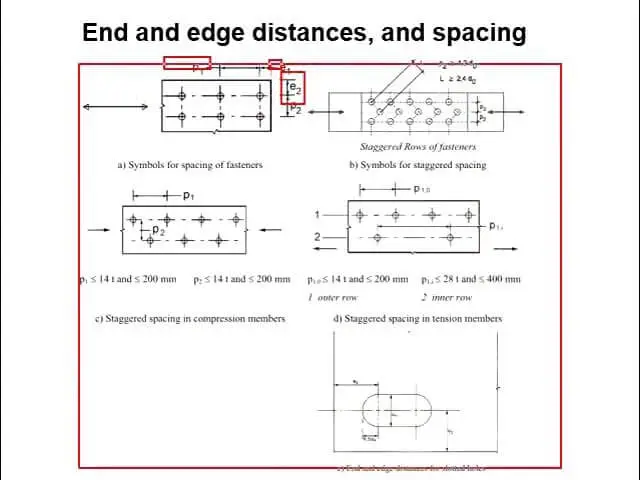
How Edge Distance Affects Shear Strength
- If the rivet is too close to the edge of the plate, shear forces will concentrate at the hole edge and the plate edge, which can easily lead to edge failure.
- If there is sufficient material to support the rivet, the shear load can be evenly distributed among the rivet, the hole wall, and the base material. A proper edge clearance helps improve load-transfer capacity.
How Rivet Spacing Affects Shear Strength
If two rivets are too close together, the remaining material between the two holes is reduced. This results in:
- Material tearing
- Stress concentration
- Fracture between the holes
If the distance between rivets is too large, it leads to:
- Sheet warping;
- Localized deformation;
- Insufficient load-bearing capacity in the area between the rivets.
How Temperature and Corrosion Affect Shear Strength
Both temperature and corrosion affect the shear strength of blind rivets. Temperature primarily affects the mechanical properties of the rivet and the base material, while corrosion primarily affects the material integrity and the reliability of the joint. Under certain conditions, both of these factors can reduce the long-term shear load-bearing capacity.
How Temperature Affects Blind Rivet Shear Strength
When temperatures rise, most metals exhibit the following characteristics:
- Decreased material strength
- Reduced hardness
- Increased ductility
- Reduced load-bearing capacity
Therefore, when blind rivets are subjected to shear loads in high-temperature environments, they are more prone to: - Rivet shank deformation
- Shear failure
- Deformation of the base material hole
Compared to high temperatures, the effects of low temperatures are not as significant as the softening caused by high temperatures. However, they must be considered in certain special environments:
- Polar equipment
- Refrigeration equipment
- Outdoor structures exposed to low temperatures
Low temperatures may cause certain materials to:
- Exhibit reduced ductility
- Become more brittle
Therefore, under specific low-temperature conditions, if a rivet is subjected to impact loads, the following are more likely to occur:
- Cracking
- Sudden fracture
How Corrosion Affects Blind Rivet Shear Strength
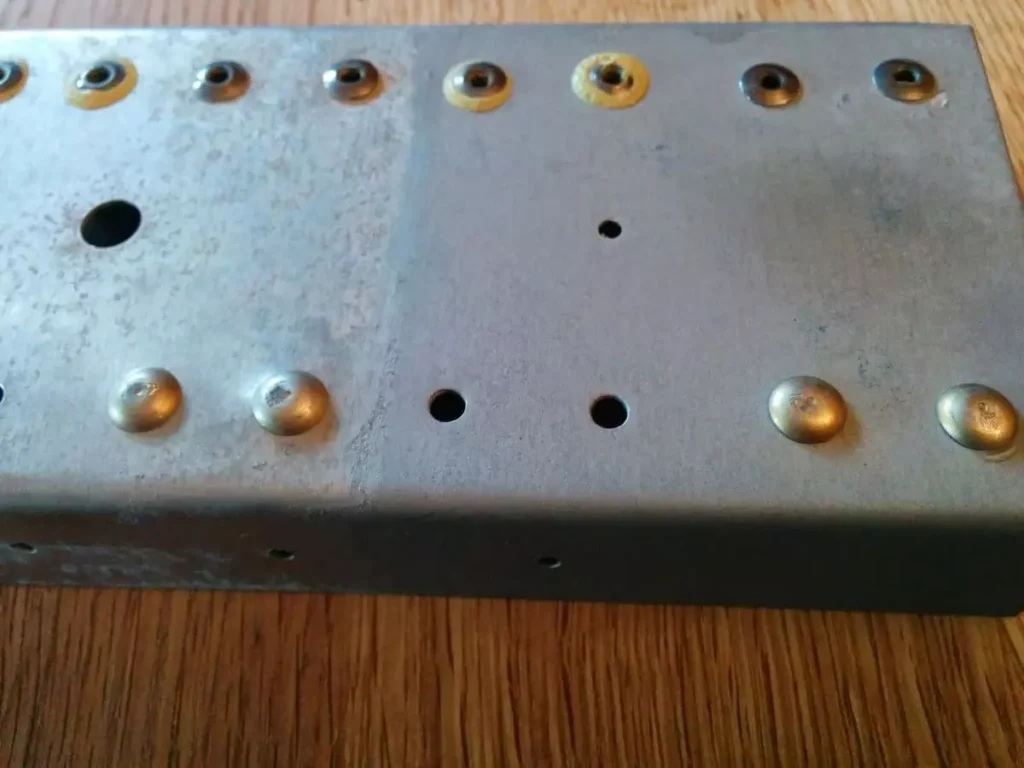
Corrosion of rivets includes corrosion of the rivet body itself, galvanic corrosion between dissimilar metals, and the effects of corrosion in outdoor environments. Corrosion does not necessarily lead to immediate rivet failure. However, long-term corrosion can result in:
- a reduction in the effective cross-sectional area of the material
- a decrease in material strength
- damage to the surface protective layer
- an increase in the joint gap
In such cases, rivet corrosion ultimately reduces the shear load-carrying capacity.
Common Mistakes When Selecting Rivets for Shear Loads
| Mistake | Why It Happens | Possible Result | Correct Approach |
|---|---|---|---|
| Only checking shear strength | Ignoring actual joint conditions and focusing only on catalog data. | Connection may fail before reaching the rated shear strength. | Evaluate the complete riveted joint design, including load, material, and installation conditions. |
| Choosing wrong diameter | Assuming a larger rivet diameter is always better. | Higher cost, larger installation hole, or weakened base material. | Match rivet diameter with actual load requirements and material thickness. |
| Ignoring base material | Focusing only on rivet strength. | Sheet deformation, hole enlargement, or material tearing. | Consider both rivet performance and base material strength. |
| Wrong grip range selection | Selecting rivets based only on length without checking material thickness. | Improper forming, insufficient clamping force, and reduced connection strength. | Match the rivet grip range with the total material thickness. |
| Wrong rivet type selection | Using standard blind rivets in applications requiring higher performance. | Insufficient vibration resistance or structural reliability. | Select structural blind rivets when higher load capacity or vibration resistance is required. |
| Ignoring hole size | Poor control of installation hole dimensions. | Reduced load transfer efficiency and unstable connection performance. | Follow recommended hole size requirements for the selected rivet. |
| Ignoring operating environment | Considering only room-temperature strength data. | Corrosion, strength reduction, or premature failure. | Select rivet material and structure according to temperature, corrosion, and service conditions. |
Use this sequence:
- Define service loads and load direction
- Include eccentricity, vibration and temperature
- Estimate the load assigned to each rivet
- Apply the governing design factor
- Select a specific rivet from documented minimum shear and tensile values
- Verify grip range, hole tolerance and tool capability
- Check sheet bearing, net-section and edge tear-out
- Test the installed joint under representative conditions.
How to Increase Blind Rivet Joint Shear Strength
- Select a suitable rivet diameter: Increase the diameter within the appropriate range to provide a larger shear load area.
- Select rivet materials with higher strength: The material’s strength must ensure the sheet metal can withstand the load and improve the rivet’s mechanical properties.
- Use structural blind rivets for high-load structures: Improve locking stability and vibration resistance.
- Optimize the clamping range: Ensure proper rivet forming and clamping.
- Improve hole quality: Enhance load transfer efficiency.
- Optimize edge distance and spacing: Prevent base material failure.
- Increase the number of rivets: Distribute the total shear load.
- Improve installation quality: Ensure that installation tools, tension, and the rivet gun nozzle are properly matched to achieve design performance.
- Consider environmental factors: Evaluate material selection based on the characteristics of the application environment to ensure long-term strength.
How to Choose a Blind Rivet Manufacturer for High-Strength Applications
When selecting a supplier for blind rivets used in high-strength applications, price and shear strength data are not the only factors to consider. It is also important to assess whether the rivets can maintain stable connection performance when subjected to long-term loads, vibrations, and environmental changes.
You can evaluate the reliability of a blind rivet manufacturer based on the following information:
- Experience with high-strength rivets
- Comprehensive product range
- Material control
- Testing capabilities
- Customization capabilities
- Production stability
- Engineering support
Information Required for a Blind Rivet Strength Recommendation
| Required Information | Why It Matters |
|---|---|
| Application | Determines the required performance level and suitable rivet type. |
| Load Type | Identifies whether the application requires shear, tensile, or dynamic load performance. |
| Load Value | Helps select the appropriate rivet strength level and size. |
| Base Material | Prevents failures caused by weak or unsuitable connected materials. |
| Material Thickness | Determines the correct grip range selection. |
| Hole Diameter | Ensures proper installation and effective load transfer. |
| Rivet Access Condition | Determines whether blind riveting is suitable and what installation method is required. |
| Tool Type | Confirms whether the available installation tool can properly install the selected rivet. |
| Environment | Determines suitable rivet material and corrosion resistance requirements. |
| Required Performance | Defines whether a standard blind rivet or structural blind rivet is needed. |
| Drawing / Photos | Helps confirm installation conditions, dimensions, and the most suitable rivet design. |
Rivmate High-Strength Blind Rivet Solutions
Rivmate maintains product inspection and mechanical-test records for specified blind-rivet products and production lots. Available verification may include dimensional inspection, riveting checks, tensile testing, shear testing, and mandrel-retention testing, depending on the product and project quality plan. Confirm the applicable test scope,sampling frequency, acceptance criteria, traceability documents, and PPAP deliverables before ordering.
If standard blind rivets cannot meet your product’s fastening requirements, RIVMATE can help you address needs for high-load, high-vibration, and long-term reliable connections. We are committed to providing high-strength blind rivet solutions for various industrial applications.
Frequently Asked Questions About Blind Rivet Shear Strength
Which Blind Rivet Material Has the Highest Shear Strength?
Under the same conditions regarding diameter, structure, and design, steel and stainless steel pop rivets have higher shear strength than aluminum pop rivets.
Does the Mandrel Contribute to Shear Strength?
For most standard blind rivets, the mandrel is not the structural component that primarily bears the shear load during installation. Once the rivet is installed, the formed rivet body is the primary component that bears the shear force.
For structural blind rivets, the mandrel remains inside the rivet body after installation is complete. The design of the mandrel significantly affects the final joint performance, as the locked mandrel enhances the overall structural stability of the rivet and improves its resistance to vibration and long-term loads.
Are Structural Rivets Stronger Than Standard Blind Rivets?
In environments subject to high shear loads, high vibration, and long-term cyclic loading, structural pop rivets offer higher load-bearing capacity and greater joint reliability than standard pop rivets.
Can Blind Rivets Handle Dynamic or Vibration Loads?
Pop rivets can withstand normal dynamic and low-vibration loads. For environments with prolonged high vibration, it is recommended to evaluate structural pop rivets.
Can Blind Rivets Replace Bolts in Shear Applications?
In many low- to medium-load shear applications, blind rivets can replace some bolted connections and provide reliable shear strength. However, for high-load, removable connections, or critical structural applications, bolts offer advantages over blind rivets.
Should I Use Minimum or Typical Shear Strength Data?
For engineering design and load-bearing calculations, the Minimum Shear Strength should be used. For preliminary product evaluation, performance reference, and comparison, the Typical Shear Strength is more appropriate.
Conclusion: How to Select the Correct Blind Rivet Shear Strength
To select the correct blind rivet shear strength, you must first determine the required load-bearing capacity based on the actual operating conditions. Then, select the appropriate rivet type, material, and specifications.
| Factor | Selection Principle |
|---|---|
| Load | Understand actual shear, tensile, and dynamic loads. |
| Rivet Type | Select standard or structural rivets according to application requirements. |
| Material | Match rivet material with base material and environment. |
| Strength Data | Use minimum shear strength for engineering design. |
| Installation | Ensure correct hole size, grip range, and tooling. |
| Environment | Consider corrosion, temperature, and vibration. |
Work with a IATF 16949 Certified Blind Rivet Manufacturer
Get High Quality Rivets Instead of Huck and Avdel Rivets

Rivmate Rivet
Rivmate is one of top 3 blind rivets manufacturers in china. The company is IATF 16949 certified and offers high-strength structural blind rivets that serve as alternatives to Huck and Avdel products.
Explore Rivmate Cases

Rivmate Rivet
Rivmate is one of top 3 blind rivets manufacturers in china. The company is IATF 16949 certified and offers high-strength structural blind rivets that serve as alternatives to Huck and Avdel products.

Hey There, I'm Allen!
I am the founder of Rivmate. For over two decades, we have specialized in the manufacture of blind rivets, providing our customers with reliable riveting solutions. Need riveting services? Feel free to contact us.