For most aluminum joints, the optimal choice of rivet is a standard blind rivet featuring an aluminum body and a steel mandrel. In practical applications, this material combination strikes a favorable balance among weight, formability, manufacturing costs, and final joint strength.
Table of Contents
Match the Rivet Body and Mandrel to Aluminum
The rivet body is the main component that remains inside the hole in the sheet metal after riveting and forms the connection. The mandrel primarily serves as a central rod that is pulled backward by the rivet gun during installation, causing the blind end of the rivet to expand and form a locking mechanism. After installation is complete, the mandrel typically breaks at the designed break point, though some mandrels may remain inside the rivet body.
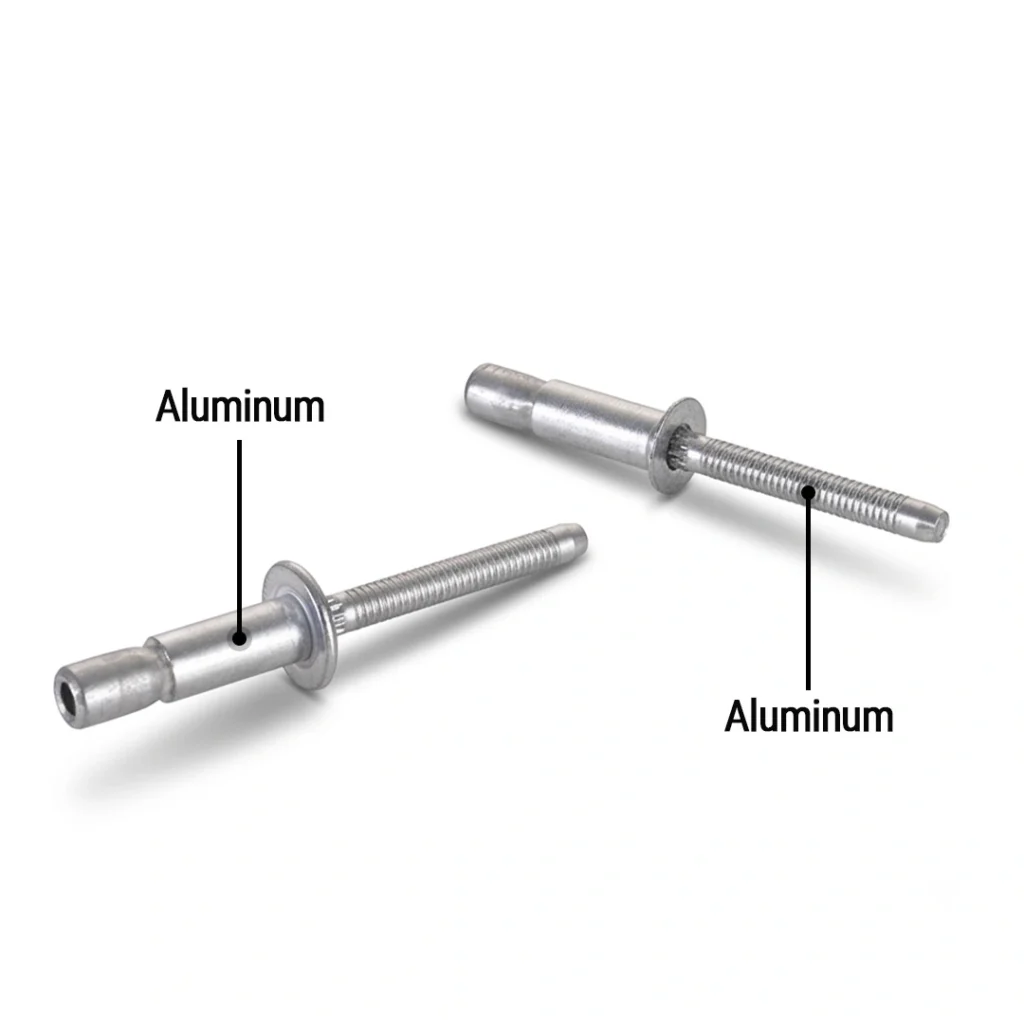
In aluminum joining applications, the rivet body primarily determines how the rivet deforms, bears loads, and interfaces with the aluminum sheet, whereas the mandrel mainly influences the installation pull force, tail formation, and final joint performance. Therefore, different combinations of mandrel and rivet body must be selected based on the specific characteristics of the aluminum material.
| Rivet Body + Mandrel | Best Suited For | Main Advantages | What to Consider |
|---|---|---|---|
| Aluminum Body + Aluminum Mandrel | Light-duty aluminum sheet joints where material compatibility and low weight are important. | Good compatibility between the rivet and the aluminum sheet, with low overall weight. | Mechanical strength is usually lower than steel-mandrel combinations, so it should not be chosen for high-load joints without proper validation. |
| Aluminum Body + Steel Mandrel | Common industrial aluminum sheet joints that require better installation strength than an all-aluminum rivet. | The aluminum body is friendly to aluminum sheet, while the steel mandrel provides higher strength. This is a very common combination. | In humid, outdoor, or corrosive environments, the corrosion risk between the retained steel mandrel and the aluminum should be evaluated. |
| Aluminum Body + Stainless Steel Mandrel | Applications that require better mandrel corrosion resistance or specific mechanical performance. | The mandrel itself offers better corrosion resistance. | Stainless steel does not automatically mean safer contact with aluminum. Galvanic corrosion still needs to be considered. |
| Steel Body + Steel Mandrel | Higher-strength joints where the design allows the use of a steel rivet body. | Mechanical strength is generally higher. | It should not automatically be used in bare aluminum sheet, especially in wet environments. Corrosion and the effect of the harder steel body on thin aluminum should be considered. |
| Stainless Steel Body + Stainless Steel Mandrel | High-strength, corrosion-resistant applications where material compatibility has already been evaluated in the design. | The rivet itself provides good corrosion resistance and relatively high strength. | It creates a clear dissimilar-metal combination with aluminum. The fact that stainless steel does not rust easily does not mean it is automatically suitable for every aluminum joint. |
How to prevent galvanic corrosion
Galvanic corrosion is not determined by material names alone.Three necessary conditions for galvanic corrosion to occur:
- Two metals with different electrochemical potentials
- Conductive contact between the metals
- The presence of water, saltwater, or another electrolyte
In an aluminum joint, the risk increases when moisture or salt can remain at the interface, when a relatively large area of a more noble metal is coupled to a small exposed aluminum area, or when coatings and sealants are damaged. Before selecting a stainless-steel mandrel or another dissimilar-metal combination, confirm the aluminum alloy, exposed metal area, surface treatment, drainage, sealing method, and service environment. Isolation washers, compatible coatings, joint sealants, and designs that prevent water retention can reduce risk, but the final system should be verified under the intended exposure conditions.
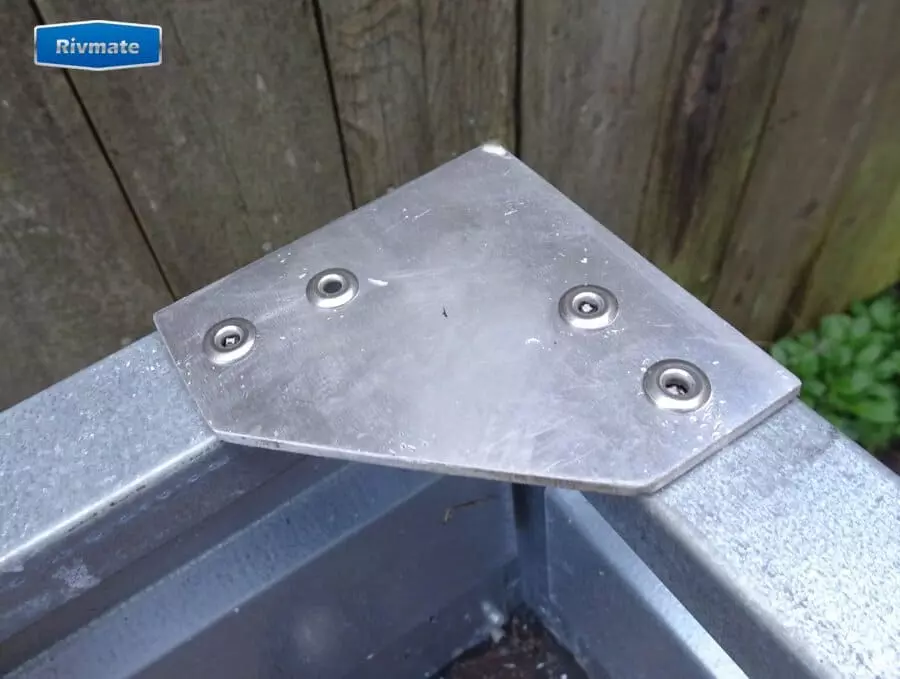
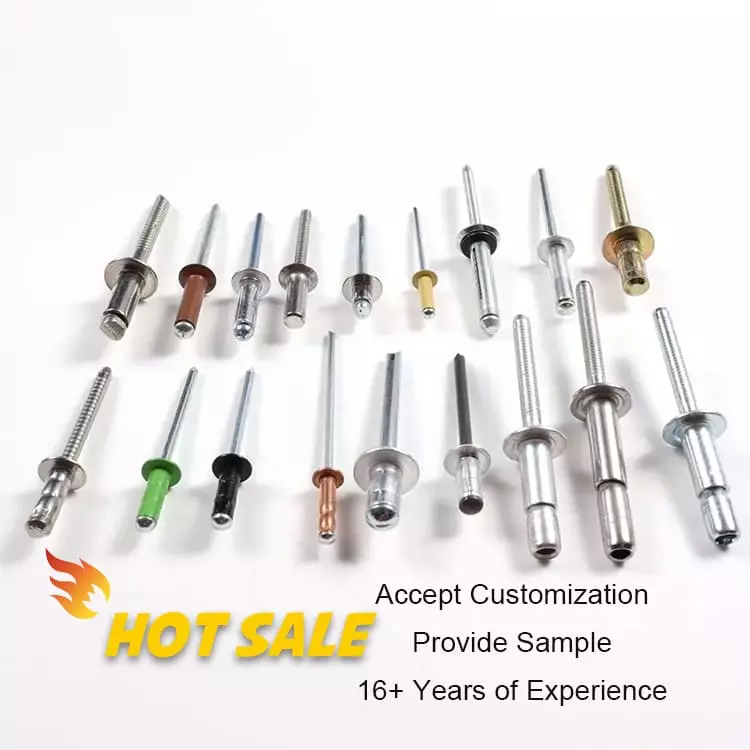
When selecting the correct pop rivets for aluminum joints, it is important to determine the functional requirements of the joint. The choice of rivet should ensure that the entire aluminum joint bears loads in the correct manner, while meeting practical application requirements. Examples include waterproof sealing, preventing tear-through of thin aluminum sheets, flush surfaces, significant variations in thickness, and high-load connections. Selecting blind rivets tailored to these specific requirements ensures a more reliable connection.
Quick Rivet Selection Guide for Aluminum Joints
| Joint Requirement | Recommended Rivet Type | Main Problem Solved |
|---|---|---|
| General Fastening | Open-End Blind Rivet | General-purpose aluminum assembly |
| Thin Aluminum Sheet | Large Flange Blind Rivet | Reduce head-side pull-through and sheet deformation |
| Variable Material Thickness | Multi-Grip Blind Rivet | Cover a wider grip range with fewer rivet sizes |
| Soft Aluminum Sheet | Peel-Type / Large Blind-Side Bearing Rivet | Increase the blind-side bearing area |
| Waterproof / Dustproof Joint | Closed-End / Sealed Blind Rivet | Reduce the risk of water or air leakage |
| High Load / High Vibration | Structural Blind Rivet | Improve structural strength and joint stability |
| Flush Surface Required | Countersunk Blind Rivet | Minimize rivet head protrusion |
Calculate the Correct Grip Range
When selecting aluminum blind rivets, the grip range must cover the total thickness of all materials to be joined when properly clamped.
Total Grip Thickness = Layer 1 + Layer 2 + Layer 3 + …
The calculation tool below can assist you:
Enter the thicknesses of the various aluminum sheets or material layers to automatically calculate the Total Grip Thickness.
Blind Rivet Grip Range Calculator
Enter the thickness of each material layer to calculate the total grip thickness. You can also enter the grip range of your selected blind rivet to check whether it is suitable.
Grip range is a product limit, not a target dimension. Measure the complete clamped stack after removing gaps
between the parts, and include any permanent washers, shims, or non-compressible layers. If sealant or a compressible layer is present, evaluate the installed stack rather than relying only on nominal thickness. A rivet selected outside its specified grip range may form an undersized blind-side head, fail to clamp the parts, or break
the mandrel abnormally. After choosing a candidate grip range, also confirm the manufacturer-specified hole
diameter, rivet diameter, rated shear and tensile strength, and tool requirements
Why Is It Important to Select the Correct “Grip Range”?
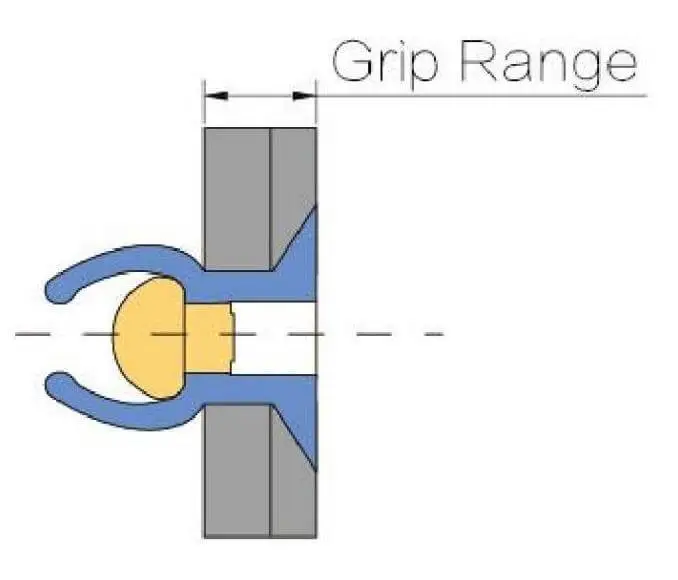
If the total thickness of the material does not match the grip range specified for the rivet, the blind-side formation will be abnormal.
If the grip range is too short—that is, if the actual total thickness of the material exceeds the maximum thickness the rivet can grip—the rivet may not have sufficient shank length to form the correct blind-side structure. This can cause the rivet to “snap” prematurely, even though the joint has not actually been securely clamped.
If the grip range is too long—that is, if the rivet’s minimum grip range exceeds the thickness of the aluminum sheet—the riveting deformation will be insufficient. This may result in a loose joint, abnormal rivet deformation, or a formed structure that does not meet design requirements.
Choose Diameter and Hole Size from Load Data
When selecting the size of a blind rivet, the first step is to determine the actual shear and tensile loads the joint will bear. Based on the calculated load requirements, compare the rated shear and tensile strengths of specific rivet models to select a rivet diameter that meets the connection needs.
In the Rivmate product catalog, tensile and shear strengths vary according to diameter size. Please refer to the catalog data for specific selection.
Once the rivet diameter is determined, select the appropriate installation hole size according to the corresponding specifications to ensure proper installation and a reliable connection.
Different diameters correspond to different drill hole sizes. Rivmate has prepared a detailed rivet hole size chart for your reference.
Choose the Head Style
In aluminum joining applications, the rivet head style affects the load-bearing area, the height of the head above the surface, and the overall appearance. Common head styles include:
Dome Head: The default choice for most aluminum fittings.
Dome-head blind rivets are the most common choice for industrial connections involving standard aluminum materials. They are the preferred option when there are no specific requirements for a flush surface finish on the aluminum sheets and no need to distribute the load.
Common Applications:
- Thin aluminum sheets
- Aluminum composite panels
- Aluminum-plastic composites
- Fiberglass-reinforced plastic (FRP) and aluminum joints
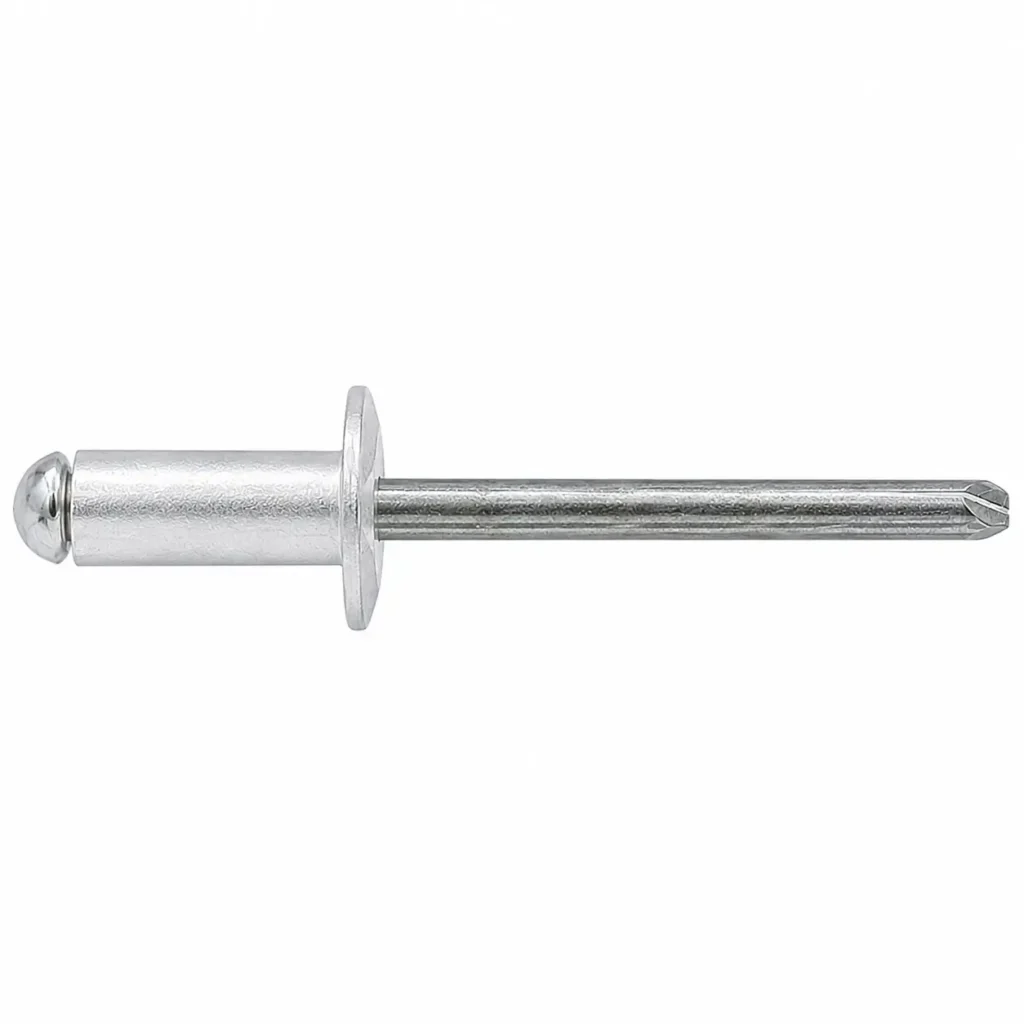
Large Flange Head: Better suited for soft, thin aluminum sheets.
When aluminum sheets are thin, standard-sized rivet heads can concentrate the load on a small area, causing the sheet to deform or even tear through. Large-flange blind rivets feature the largest head size, effectively distributing the load and helping you avoid issues with localized deformation.
Suitable Connection Points:
- Thin aluminum sheets
- Locations on the back of the aluminum sheet where additional support cannot be added
- Applications where the aluminum sheet is prone to pull-through
- Connections between aluminum sheets and plastics or composite materials
Note: The large flange addresses the bearing issue on the rivet head side. To address the bearing issue on the reverse side, the blind-side rivet head formed after installation must be inspected.
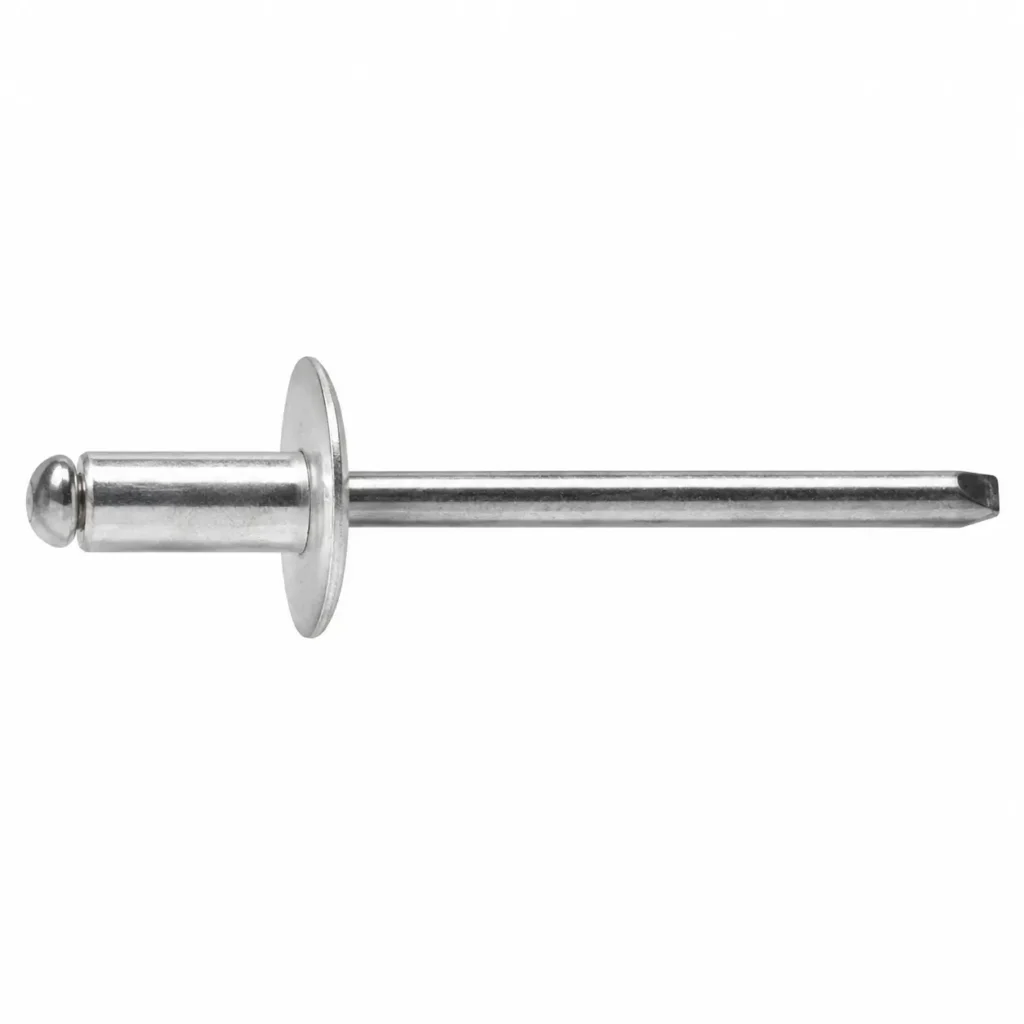
Countersunk Head: Use only when a flush surface is required.
The countersunk design of these blind rivets helps minimize surface protrusion, enhancing the overall appearance of the assembled product. They are ideal for use on visible surfaces, sliding surfaces, locations requiring subsequent installation of cover panels, and areas with limited assembly space. Note that a countersunk hole must be prepared prior to installation.
Common Applications:
- Outer surfaces of aluminum housings
- Equipment surfaces that must remain smooth
- Sliding or contact areas
- Products with high aesthetic requirements
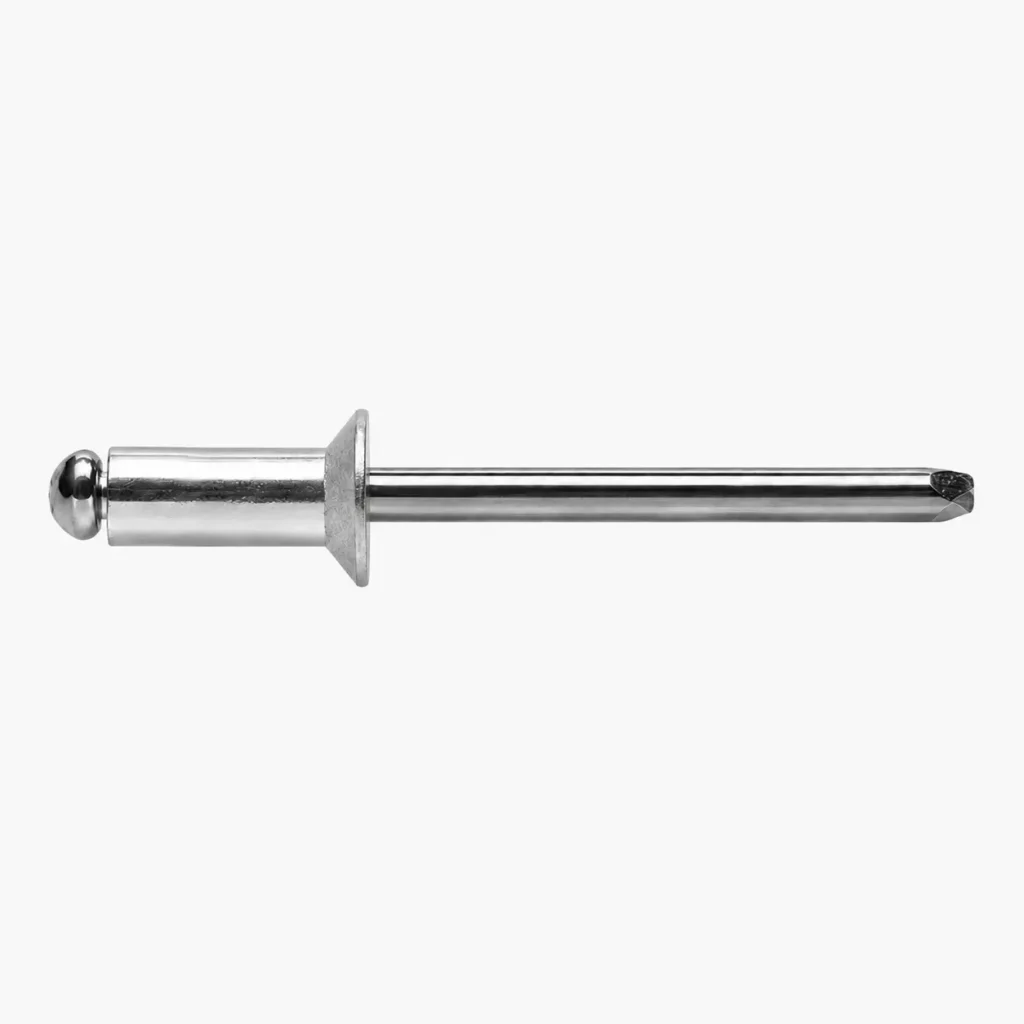
A countersunk head should be selected only after confirming that the sheet is thick enough to accept the countersink without leaving an inadequate bearing section. On thin aluminum, forming the countersink can reduce the remaining sheet thickness and increase the risk of distortion or pull-through. If a flush surface is required but the base sheet is too thin, evaluate a dimpled joint, a reinforced local section, or another head/joint design instead of assuming that a countersunk blind rivet is suitable.
Rivet for Aluminum Selection Table by Application
Rivet Selection for Aluminum by Application
| Application | Main Joint Requirement | Recommended Rivet Type | Why Choose It |
|---|---|---|---|
| Aluminum Enclosures & Equipment Housings | General fastening, cost efficiency, and easy installation | Open-End Blind Rivet | Simple construction and suitable for general aluminum sheet assembly |
| Thin Aluminum Sheets, Panels & Signs | Reduce head-side pull-through and sheet deformation | Large Flange Blind Rivet | Larger head bearing area helps distribute the load over the aluminum sheet |
| HVAC, Appliances & Variable-Thickness Assemblies | Accommodate different material stack thicknesses | Multi-Grip Blind Rivet | Wider grip range can cover multiple material thicknesses |
| Outdoor Aluminum Enclosures & Electrical Housings | Rain resistance, moisture protection, and reduced leakage | Closed-End / Sealed Blind Rivet | Helps reduce water and air leakage through the rivet body |
| Aluminum Roofing & Solar Structures | Outdoor exposure, water resistance, and long-term durability | Sealed / Application-Specific Blind Rivet | Better suited to outdoor joints requiring weather resistance and durability |
| Truck & Trailer Aluminum Components | High loads, vibration, and long-term joint stability | Structural Blind Rivet | Better suited to joints requiring higher structural performance and vibration resistance |
| Industrial Machinery & High-Vibration Equipment | Vibration resistance and higher shear and tensile loads | Structural Blind Rivet | Improves joint strength and mandrel retention under demanding loads |
| Visible Surfaces, Sliding Surfaces & Cover Panels | Minimal rivet head protrusion | Countersunk Blind Rivet | Reduces head projection and provides a flatter finished surface |
Installation Steps and Tool Requirements
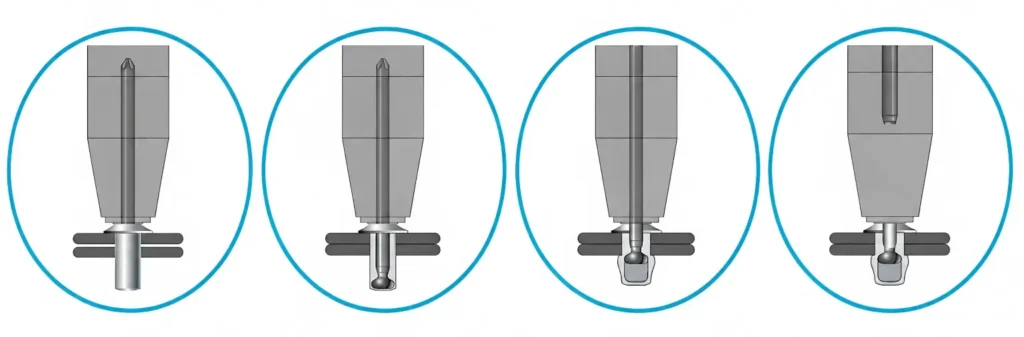
Even if you select the correct rivets for aluminum sheets, the joint will fail if the installation method is improper. For example, the joint may become loose, the mounting holes may become deformed, the rivet heads may protrude, or the blind side may not form properly. Therefore, during the riveting process, ensure that the hole diameter is correct, the holes are properly aligned, the rivet gun is aligned with the rivet’s axis, and the tool capacity matches the rivet specifications.
- Before setting: Verify the total grip thickness and the specified hole diameter for the selected rivet. Drill the hole perpendicular to the joint, remove burrs, clean chips from the interface, and clamp the sheets so that no gap remains between them.
- During setting: Fit the correct nosepiece, insert the rivet fully, keep the tool square to the workpiece, and ensure that the rivet head remains seated while the mandrel is pulled. The tool must provide sufficient stroke and pull force for the selected rivet without damaging the mandrel or workpiece.
- After setting: Confirm that the head is seated, the sheets are clamped, the mandrel breaks at the expected location, and the blind-side head forms symmetrically. Inspect for sheet indentation, cracks, an enlarged hole, rivet tilt, a loose joint, or an exposed mandrel condition that is not permitted by the product specification.
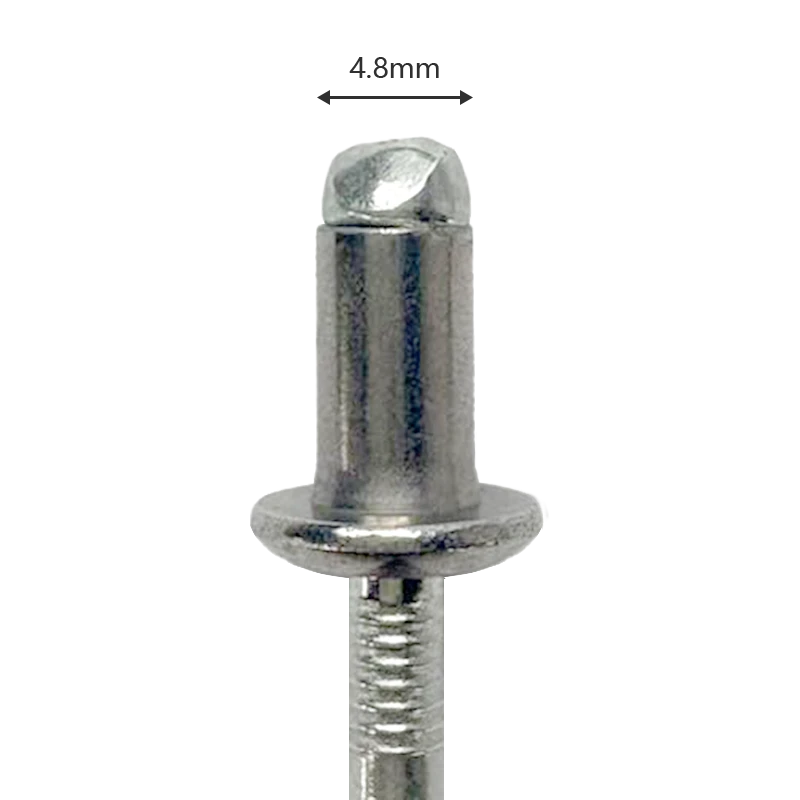
In our internal comparison of an aluminum-body/steel-mandrel open-end blind rivet, we inspected the alignment of the mandrel and rivet body before setting and the symmetry of the formed rivet after installation. The comparison shows why concentricity matters: when the mandrel is visibly offset, the rivet body can form toward one side, reduce clamping consistency, or crack during setting. For production inspection, do not judge only by the front-side head. Check mandrel alignment before installation and verify the blind-side formation after setting.
Tool Requirements
| Tool | Purpose |
|---|---|
| Drill / Drilling Machine | Drills the installation hole for the blind rivet |
| Correct-Size Drill Bit | Creates the hole according to the rivet manufacturer’s specified hole diameter |
| Deburring Tool | Removes burrs from the drilled hole before rivet installation |
| Blind Rivet Gun | Pulls the mandrel and sets the blind rivet |
| Correct Nosepiece | Matches the mandrel diameter and allows proper rivet setting |
| Caliper / Measuring Tool | Checks material thickness, hole diameter, and other relevant dimensions |
Common Rivet for Aluminum Failures
Common Rivets for Aluminum: Common problems are not necessarily due to the quality of the rivets themselves. They may also stem from issues with hole machining, installation, material mismatches, or insufficient load-bearing capacity of the joint itself.
If any of the above issues arise, they can be resolved by following the inspection methods listed in the table.
| Common Failure | Symptoms You Might Observe | Common Causes | What to Check First |
|---|---|---|---|
| Rivet Pull-Through | The rivet head or blind-side formed section pulls through the aluminum sheet. | The aluminum sheet is too thin, the bearing area is too small, the applied load is too high, or the installation hole is oversized. | Sheet thickness, rivet head style, blind-side bearing area, and hole diameter. |
| Hole Elongation | A round rivet hole gradually becomes oval or elongated. | Excessive shear load, oversized hole, or aluminum sheet that is too soft or too thin. | Rivet diameter, hole diameter, sheet thickness, and load direction. |
| Bearing Failure | The material around the rivet hole becomes compressed, distorted, or permanently deformed. | Excessive localized bearing pressure around the rivet. | Sheet material strength, rivet diameter, edge distance, and applied load. |
| Edge Tear-Out | A crack or tear develops from the rivet hole toward the edge of the sheet. | The rivet hole is too close to the sheet edge or the applied load is too high. | Edge distance, hole diameter, sheet thickness, and load level. |
| Loose or Spinning Rivet | The installed rivet can move, wobble, or rotate in the joint. | Incorrect grip range, oversized hole, or improper blind-side formation during installation. | Grip range, hole diameter, and installed rivet condition. |
| Sheet Dimpling | The aluminum sheet becomes indented around the rivet head. | The sheet is too thin, the rivet head bearing area is too small, or installation force is concentrated in a small area. | Sheet thickness, rivet head style, and support conditions during installation. |
| Mandrel Problems | The mandrel breaks incorrectly, remains protruding, or becomes loose after installation. | Incorrect tooling, misaligned installation, unsuitable rivet construction, or an incorrect rivet specification. | Rivet gun, nosepiece, tool pull force, and rivet model. |
| Galvanic Corrosion | White corrosion products, pitting, or material damage appear around the rivet or rivet hole. | Aluminum is in direct electrical contact with a dissimilar metal in the presence of moisture, salt, or another electrolyte. | Rivet body and mandrel materials, protective coatings, sealing method, and service environment. |
FAQs
Can stainless steel rivets be used with aluminum?
Yes. Stainless steel rivets offer good corrosion resistance and high strength. However, be aware of the potential for galvanic corrosion.
You can prevent galvanic corrosion by using a suitable insulating layer.
Do aluminum rivets cause galvanic corrosion?
Under normal circumstances, the use of aluminum rivets alone does not result in galvanic corrosion. However, if an aluminum rivet connects dissimilar metals—and given that the rivet body contains a steel mandrel—galvanic corrosion is highly likely to occur in coastal or salt-spray environments.
What rivet material is best for marine aluminum applications?
For most aluminum applications in marine environments, we recommend using aluminum rivets. Aluminum blind rivets offer superior material compatibility, thereby preventing galvanic corrosion.
Are all-aluminum rivets better than aluminum rivets with steel mandrels?
Not necessarily. For joining standard industrial aluminum sheets, a combination of an aluminum body and a steel mandrel is a very common and practical choice.
However, if the priority is to minimize dissimilar metals, join softer aluminum materials, or enhance material compatibility, an aluminum body with an aluminum mandrel would be the preferable option.
Get a Rivet Recommendation for Your Aluminum Joint
If, after reviewing the selection methods above, you are still unsure which blind rivet to choose for joining your aluminum sheets, please contact Rivmate and provide the following details:
- Materials to be joined
- Thickness of each material layer
- Existing hole diameter
- Primary load
- Operating environment
- Waterproofing requirements
- Surface finish requirements
- Drawings or photos
- Estimated purchase quantity
Based on the details you provide, we will tailor a suitable riveting solution for you and provide samples.
Work with a IATF 16949 Certified Blind Rivet Manufacturer
Get High Quality Rivets Instead of Huck and Avdel Rivets

Rivmate Rivet
Rivmate is blind rivets manufacturers in china. The company is IATF 16949 certified and offers high-strength structural blind rivets that serve as alternatives to Huck and Avdel products.
Explore Rivmate Cases
Rivmate Rivet
Rivmate is blind rivets manufacturers in china. The company is IATF 16949 certified and offers high-strength structural blind rivets that serve as alternatives to Huck and Avdel products.

Hey There, I'm Allen!
I am the boss of Rivmate. For over two decades, we have specialized in the manufacture of blind rivets, providing our customers with reliable riveting solutions. Need riveting services? Feel free to contact us.