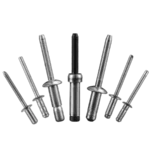


Cheap Pop Rivets - Why is Pop Rivet So Cheap?
Table of Contents
In the realm of metal fabrication and sheet metal assembly, pop rivets are arguably the most ubiquitous and extensively utilised fasteners. Many users notice a peculiar phenomenon when procuring them: cheap pop rivets are ubiquitous on the market, with boxes selling for as little as a few dollars. This prompts numerous engineers to question: do low-cost rivets equate to poor quality? Why are pop rivets so cheap? How can they be offered at such low prices?
This blog will dissect the cost composition, structural variations, and common quality misconceptions surrounding rivets from Rivmate’s professional perspective. It aims to assist you in discerning which economical rivets are reliable and which are unsuitable for critical structural applications, thereby enabling informed procurement decisions.
What Are Cheap Pop Rivets?

In many procurement scenarios, “cheap pop rivets” is mistakenly regarded as of poor quality. However, from an engineering and supply chain perspective, “cheap” actually falls into two categories: “high-quality low-price” and “low-quality low-price”.
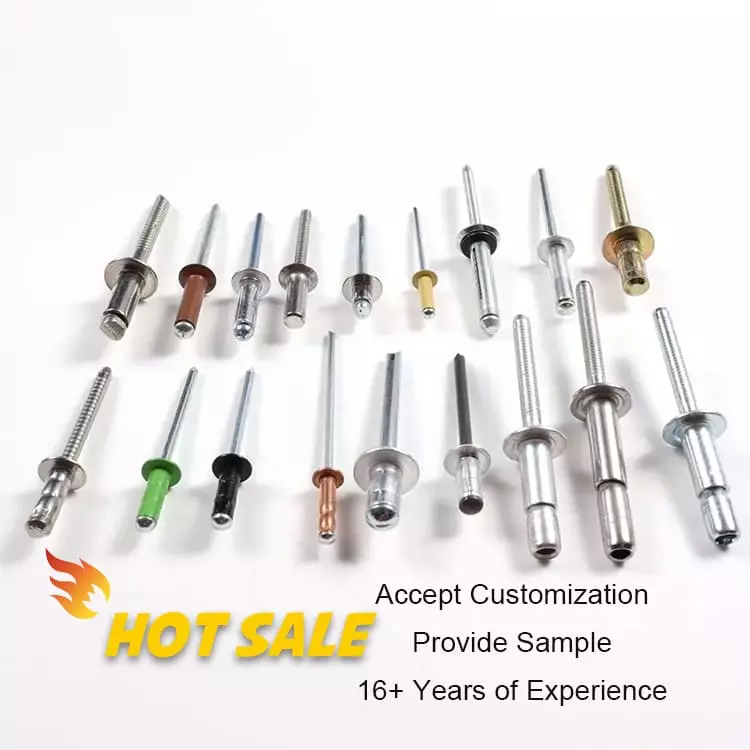
First of all, the Pop Rivets themselves have a simple structure, consisting of a cap body and a core shaft. Additionally, due to the high efficiency of cold heading manufacturing, they naturally achieve the status of low-cost rivets. For instance, using aluminum materials, small-sized, open-type rivets, their cost is much lower than that of stainless steel or structural rivets. This is a normal phenomenon of high quality but low cost.
However, there are also truly “inferior and cheap rivets” on the market. These products usually have obvious risks, including: unstable core shaft, insufficient thickness of the cap body, extremely thin coating leading to rapid rusting, and failing to meet the ISO requirements for tensile strength. These problems will be exposed during installation, such as the rivet not fully expanding, the core shaft breaking prematurely, and loose connections, which directly affect the structural safety.
Therefore, “cheap” does not mean “bad”. The key lies in distinguishing:
- High quality and low cost → Low-cost materials but using standard techniques (such as aluminum open type)
- Low quality and low cost → To reduce costs, less material is used, the strength is decreased, and some work is cut corners.
Rivmate’s suggestion is: When evaluating the price, one must pay attention to material, structure, strength test, coating, and standard certification simultaneously. This will be further elaborated in the subsequent sections.
Why Are Pop Rivets So Cheap?
The reason why the cost of Pop Rivets is low is not because of poor quality, but because of the inherent cost advantages of its structure and manufacturing method.
① The cold heading process is extremely efficient.
Pop Rivets are formed through the process of cold heading. This method generates very little waste and has a high material utilization rate.
No need for drilling or cutting; one cold heading machine can produce 300-600 rivets per minute; large-scale automation → significant reduction in average cost.
This is also the reason why most rivet factories around the world adopt the cold heading process.
② Simple structure, consisting of only two components
The blind rivet is composed of two parts: the cap body (Body) and the mandrel (Mandrel). It does not have any complex structures such as threads or lock plates.
Fewer parts → Simpler process → Longer mold life → Lower production cost.
③ The material cost is low and the supply volume is huge.
Common use of cheap rivets:
- Aluminum (the cheapest and lightest)
- Galvanized steel (low cost, easy to process)
These materials have a stable global supply chain and exhibit minimal price fluctuations, which keeps the overall cost of the rivets at a low level.
④ Automated production lines reduce labor and inspection costs
Modern riveting factories have basically achieved full automation:
- Automatic feeding
- Automatic cold heading
- Automatic core insertion
- Automatic break test
Manually, only the equipment needs to be monitored. The higher the level of automation, the lower the unit cost.
⑤ The standardized international dimensions lead to intense competition.
The size of blind rivets is globally standardized:
- 3.2 mm
- 4.0 mm
- 4.8 mm
- 6.4 mm
Standardization → No need for customization → Multiple suppliers can manufacture → Market competition leads to lower prices.
⑥ Small-sized packaging reduces transportation and storage costs.
Pop Rivets are usually:
- 250 pcs
- 500 pcs
- 1000 pcs
It is sold in a box. It is lightweight and small in size. The transportation cost can be almost negligible, further reducing the overall cost.
Industry Price Reference for Cheap Pop Rivets
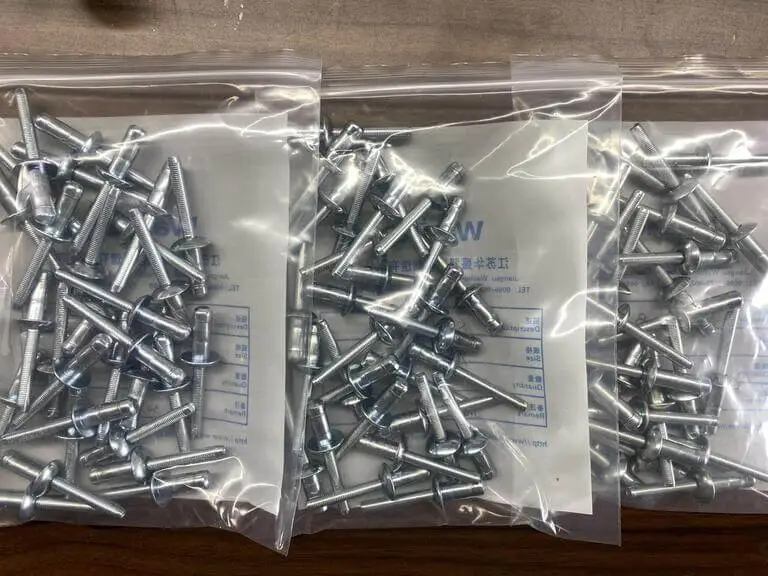
To assist procurement personnel in swiftly assessing whether quotations are reasonable, the following outlines reference price ranges (USD/box) for blind rivets across different materials, structures, and packaging specifications. These prices are compiled based on data from global OEM factories, hardware distribution channels, and Rivmate’s supply chain.
| Material | Rivet Type | Quantity (pcs/box) | Market Reference Price (USD/Box) |
|---|---|---|---|
| Aluminum | Open-End | 500–1000 pcs | $2 – $4 |
| Aluminum | Closed-End | 250–500 pcs | $4 – $8 |
| Steel (Zinc-Plated Carbon Steel) | Open-End | 500–1000 pcs | $3 – $6 |
| Steel (Zinc-Plated Carbon Steel) | Structural | 250–500 pcs | $6 – $12 |
| Stainless Steel | Open-End | 250–500 pcs | $10 – $18 |
| Stainless Steel | Closed-End / Structural | 100–250 pcs | $12 – $25 |
Are Cheap Rivets Low Quality?
Many users would naturally think that “cheap = bad”, but this is not entirely true in the field of rivets. Low price could be due to cheaper materials, simpler structure or large-scale production, but it could also be a real quality issue.
a. Inconsistent Mandrel Break-Off
A common problem with cheap rivets is that the core shaft’s fracture position is unstable.
Breaking too early → Insufficient expansion;
Breaking too late → Unable to fully lock, and even the riveting gun got stuck.
The main causes are usually poor control of the depth of the fracture groove or substandard hardness of the mandrel.
b. Weak Clamping Force
The uneven wall thickness of the cap body of low-quality rivets or the overly soft material can lead to incomplete expansion. Insufficient clamping force will cause the structure to loosen, especially more pronounced in a vibrating environment.
c. Poor Coating Quality
The most common problem with cheap steel rivets is that the coating is too thin. Rust spots will appear within a few weeks, especially when used outdoors or in humid environments. The standard galvanization thickness is usually ≥ 5–8 μm, while inferior products may only have 1–2 μm.
d. Inconsistent Dimensional Tolerance
The mold life of the low-cost rivets was not strictly monitored, resulting in significant diameter variations, unstable core engagement, and inconsistent Grip Range. These factors will directly affect the installation effect.
e. Post-Installation Loosening
Cheap rivets often loosen up after being used for a period of time due to asymmetry in the expansion area or uneven metal annealing. This problem is more likely to occur in mechanical equipment, vehicle bodies, or in vibration conditions.
How to Identify Good Cheap Rivets?
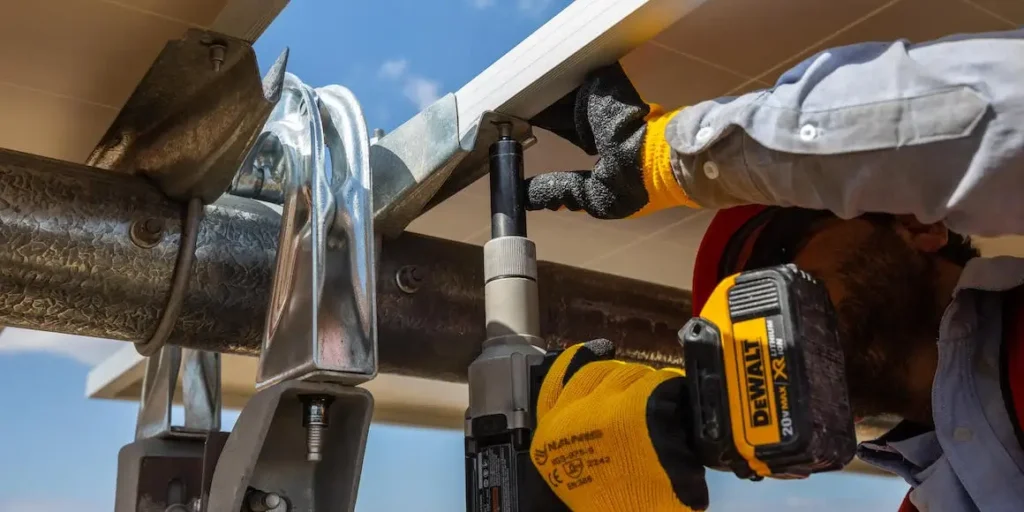
The criteria for judgment include dimensions such as strength, fracture consistency, and surface treatment, and each of these aspects directly affects the assembly safety and long-term stability:
- Check whether the tensile / shear strength meets the standards.
Qualified rivets should provide basic mechanical performance data, such as a 3.2mm aluminum rivet with a tensile strength of ≥ 400N and a 4.8mm steel rivet with a shear strength of ≥ 1000N. If the supplier is unable to provide such data, the risk is relatively high. - Check whether the fracture rate of the spindle is abnormal.
The mandrel should break stably under the specified pulling force. If 2-3 out of 20 breakages are poor, this is a typical sign of low quality. - Check whether the breaking forces are consistent.
High-quality rivets have consistent feel during the riveting process. Poor-quality products, on the other hand, will show “some being very soft and some being very hard”, indicating that the processing of the fracture groove is not uniform. - Confirm whether the grip range is truly valid and reliable.
The common problems with cheap rivets are “loosening when clamping thin plates, and not clamping thick plates tightly enough”. It is necessary to confirm whether the thickness of the cap body and the design can cover the actual thickness range of the plates you are using. - Check the thickness of the surface treatment.
If the galvanized coating is too thin, it will rust. And if the stainless steel does not have sufficient material grade, it will also corrode. Observing the consistency of the color and the feel can be used for the initial screening. - Confirm whether all the material certifications (such as ISO and RoHS) are complete.
The certification indicates that the raw materials and production processes are traceable, which also demonstrates a more stable quality management.
To quickly assess the quality, a simple but highly effective test can be conducted: simply use a riveting gun to rivet 10 rivets in succession. Observe the consistency of the broken cores, the expansion shape, and the grip force. If there are 1-2 abnormalities among the 10, it indicates that the quality of this batch of rivets has significant fluctuations and it is not recommended for use in structural applications.
Material Comparison for Cheap Pop Rivets
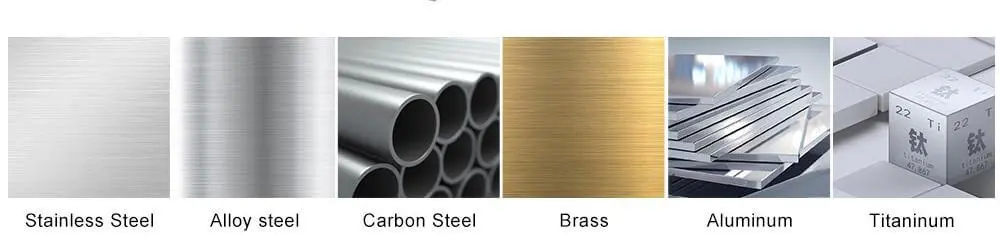
Why are aluminum rivets the cheapest?
The price of aluminum raw materials is low, and its processing performance is excellent. The cold heading forming speed is fast. Therefore, aluminum rivets have always been the type of blind rivets with the largest global production volume and the widest application. They have sufficient strength, good anti-corrosion performance, and are lightweight. They are a typical representative of “low cost but reliable”.
| Material | Price Level | Strength Performance | Corrosion Resistance | Typical Applications |
|---|---|---|---|---|
| Aluminum | ★ Lowest Cost | Medium (ideal for thin sheet metal) | Excellent, does not rust | Home appliances, light-duty sheet metal, decorative parts |
| Steel / Zinc-Plated Steel | ★★ Low | High | Moderate (zinc layer can rust if damaged) | Construction, machinery, general metal assembly |
| Stainless Steel | ★★★★★ Highest Cost | Very High | Outstanding; ideal for coastal and outdoor use | Marine equipment, roofing systems, high-corrosion environments, high-strength structures |
| Copper | ★★★ Medium–High | Medium | Good; develops natural oxide layer but does not rust | Decorative components, electrical applications, EMI protection scenarios |
Summary: Which Material Is Worth Buying?
- Budget is limited → Choose aluminum rivets
Lightweight, anti-corrosive, non-rusting, with the highest cost-effectiveness. - Requires higher strength → Choose galvanized steel rivets
The cost is not high, but its strength is more than twice that of aluminum. - Outdoor / Beach → Must use stainless steel rivets
Although it is expensive, its anti-corrosion lifespan is much longer than that of other materials. - Special decorative or electrical purposes → Consider using copper rivets
But it is usually not part of the “affordable” series.
Are Cheap Pop Rivets Suitable for Your Application?
Whether the inexpensive Pop Rivets can be used depends entirely on your specific application. In light-load, indoor, non-critical structures, inexpensive rivets are usually sufficient; but in high-corrosion, high-vibration, load-bearing structures, they pose risks.
For scenarios such as sheet metal assembly, household appliances, HVAC enclosures, vehicle interiors, and general DIY, inexpensive aluminum rivets or galvanized steel rivets perform stably.
They have low corrosion requirements, small load capacity, and the structures are mostly thin plates, making them highly suitable for using low-cost rivets.
However, in scenarios such as outdoor environments, humid conditions, high salt spray, mechanical vibrations, structural components, marine equipment, and exterior wall curtain systems, it is not advisable to use cheap rivets. This is because their coatings are thin, their strength is low, and the consistency of the core shafts is poor, which can lead to loosening, rusting, and even failure.
- Light load + indoor environment → Cheap rivets can be used
- Heavy load / outdoor / vibration / waterproof → Use high-performance or stainless steel rivets
How to Get Cheap but High-Quality Pop Rivets?
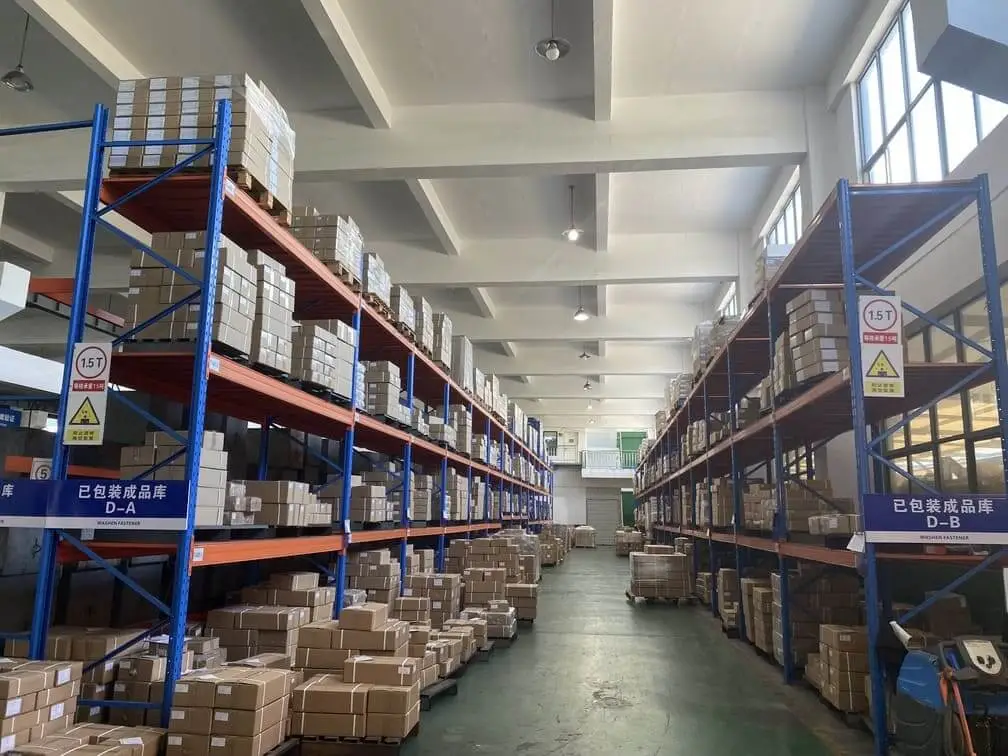
To purchase cheap pop rivets without getting scammed, the key is not to focus solely on the lowest price, but rather on finding the lowest reliable cost. The following procurement strategies are derived from the long-term supply chain experience of the Rivmate engineering team, which can both reduce prices and ensure stable performance.
Firstly, purchase from the factory rather than the distributor. Factories offer a more transparent cost structure, without multiple layers of markup, and have greater quality control. Secondly, try to use standard specifications (3.2 / 4.0 / 4.8 mm) to avoid MOQ and customization fees, which will significantly reduce the unit price. Thirdly, if there is a continuous demand, an annual purchase agreement (Annual Contract) can be adopted. This usually reduces the overall cost by 8–12%, while avoiding the risk of price fluctuations. Fourthly, choose OEM bulk packaging (Bulk / OEM Box), which can reduce printing and brand packaging-related costs, and the price per box decreases significantly. Finally, large-scale purchasing is always the most effective price leverage. Because rivets belong to high-automation production line products, the more stable the production capacity, the lower the production cost. Therefore, the larger the quantity, the better the price.
These methods do not require sacrificing quality, but can significantly reduce procurement costs.
Best Low-Cost Rivet Choices for Your Application

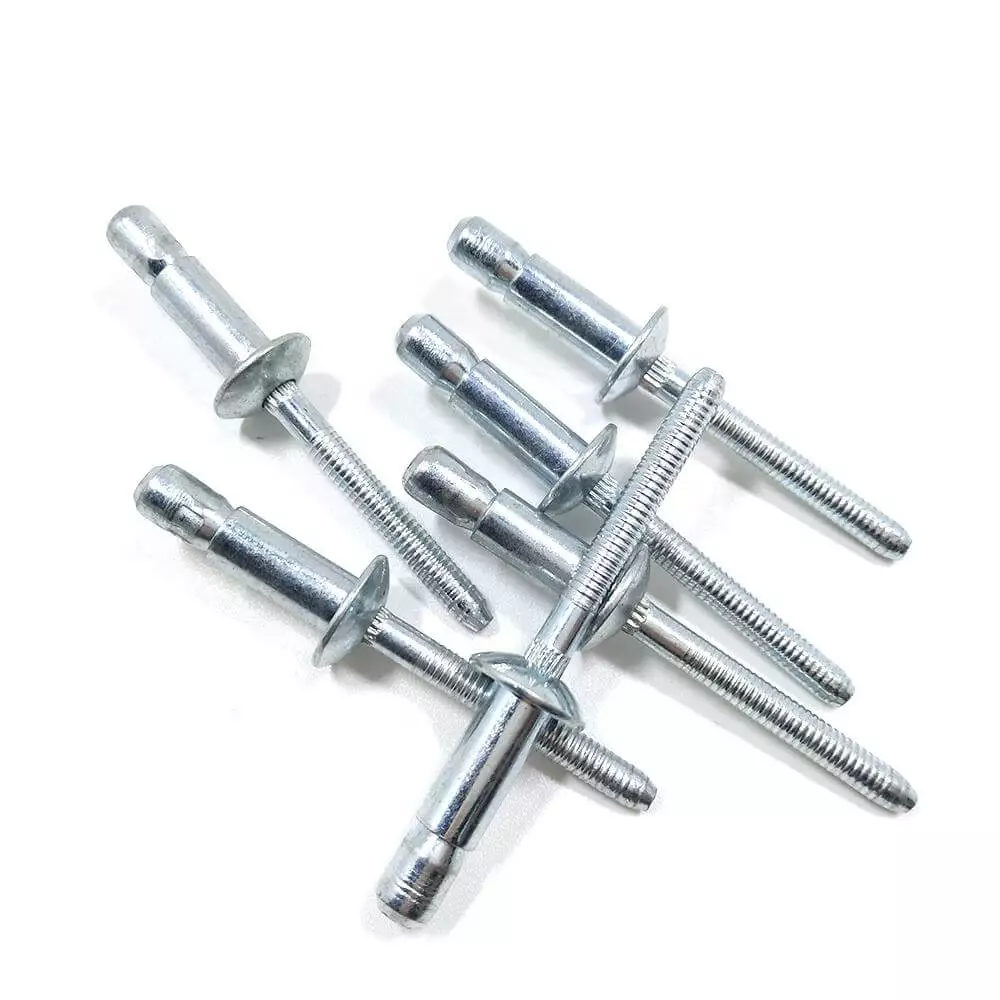
- General metal sheet metal → Aluminum Open-End Rivets
The most affordable, lightweight, and easy to install. Suitable for most light and medium load scenarios, it is the top value-for-money option. - Outdoor scene → Aluminum Body + Steel Mandrel
The cost remains low, but its corrosion resistance is much better than that of ordinary steel. It is suitable for outdoor equipment, metal enclosures, and other environments where it will be exposed for a long time. - Require waterproof sealing → Closed-End Rivets
The tail is completely sealed, providing waterproof and airtight protection. It is recommended for use in roofing, curtain walls, HVAC ducts, condensation equipment, and other structures that require IP-level sealing. - High-strength, shock-resistant structure → Structural Rivets
Although it is not the cheapest, it is the most reliable in high-load and vibration scenarios. It is suitable for indispensable connection points in mechanical equipment, automobiles, engineering structures, etc.
FAQ: Cheap Pop Rivets – Quick Answers to High-Volume Questions
Q1: Why are pop rivets so cheap?
Due to its simple structure, low material costs, rapid production speed, and globally standardised specifications.
Q2: Are cheap pop rivets any good?
If sourced from reputable manufacturers, they are perfectly adequate; however, substandard rivets may suffer from core breakage, instability, or poor corrosion resistance.
Q3: What are the cheapest types of rivets?
Aluminium open-ended blind rivets are typically the most economical option, suitable for most light-duty assemblies.
Q4: Are aluminum pop rivets strong?
Aluminium rivets offer moderate strength, yet are sufficient for most sheet metal assembly requirements. They are lightweight and rust-free.
Q5: How much does a box of rivets cost?
A box of aluminium blind rivets typically costs USD 2–4, steel rivets around USD 4–8, and stainless steel rivets can reach USD 12–25.
Get High-Quality Pop Rivets at the Best Price – Contact Rivmate Today
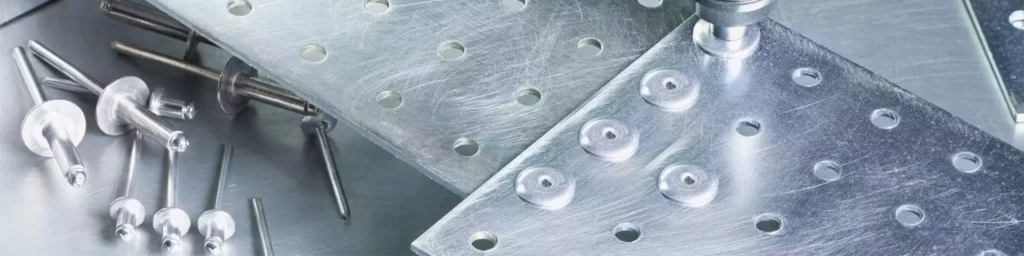
Choosing low-cost rivets does not mean sacrificing quality; instead, it means finding a reliable manufacturer. Rivmate has an automated cold heading production line, a complete ISO quality system, and stable large-scale supply capabilities, which can help you achieve the best balance between cost and performance.
Contact us now and you will receive:
- Free Samples —— Verify quality through actual riveting tests.
- Free Application Selection —— Engineers provide professional solutions based on plate thickness, load, and environment.
- Bulk Purchase Discounts —— Annual orders can save 8–12% in costs.
- OEM Packaging Service —— Suitable for distributors and brand owners.
- ISO Tensile and Salt Spray Test Reports —— Provide traceable quality assurance.
Whether you are looking for economical rivets or high-performance structural blind rivets, Rivmate can provide you with the most cost-effective solution for your project. Please get in touch to enjoy a more efficient and cost-effective riveting procurement experience.
📧 Product Inquiry: manufacture@world-rivet.com
🌐 Official Website: https://worldrivet.com/
reference

How to Rivet Metal to Wood?
How to Rivet Metal to Woo
What Is Riveting in Metal Work?
What Is Riveting in Metal
What Metal Are Rivets Made Of
What Metal Are Rivets Mad
How to Rivet Metal to Metal
How to Rivet Metal to Met