Whatsapp: +86 18962304392

Email: manufacture@world-rivet.com

Lockbolt vs Huck Bolt - The Ultimate Guide

Picture of Rivmate Fastener

Rivmate Fastener

Top Rivet and Rivet Nut Manufacturer in China

Table of Contents
Types of Lockbolts - How to Choose Lockbolts for Your Project?

Lockbolt vs huck bolt is an issue that engineers should know more about. Do you often hear the names lockbolt and huck bolt. Do you get confused? This blog will give you a comprehensive explanation of lockbolt vs huck bolt. so that you can have an in-depth understanding of them.

Table of Contents

What is a Lockbolt?

Lockbolt was invented to solve the following problems:

  1. loss of preload under use loads
  2. fixation and relaxation effects in threads
  3. self-relaxation effects under vibration loads
  4. Relative motion in the thread bearing region
Rivmate Lockbolt Rivet Fastener | Magna Grip Lockbolts

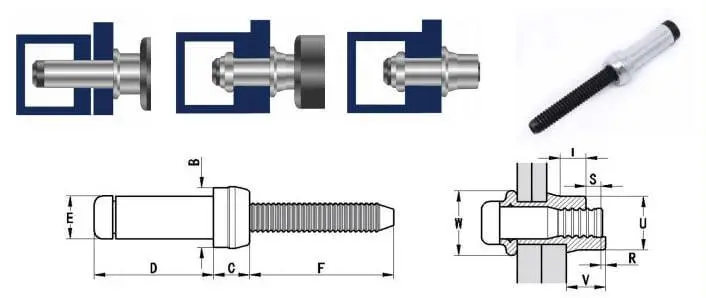
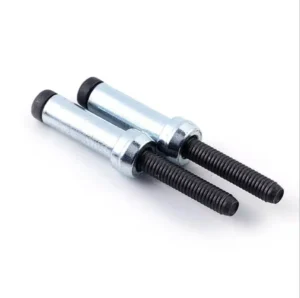
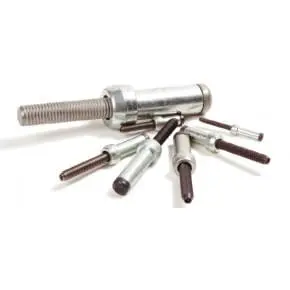
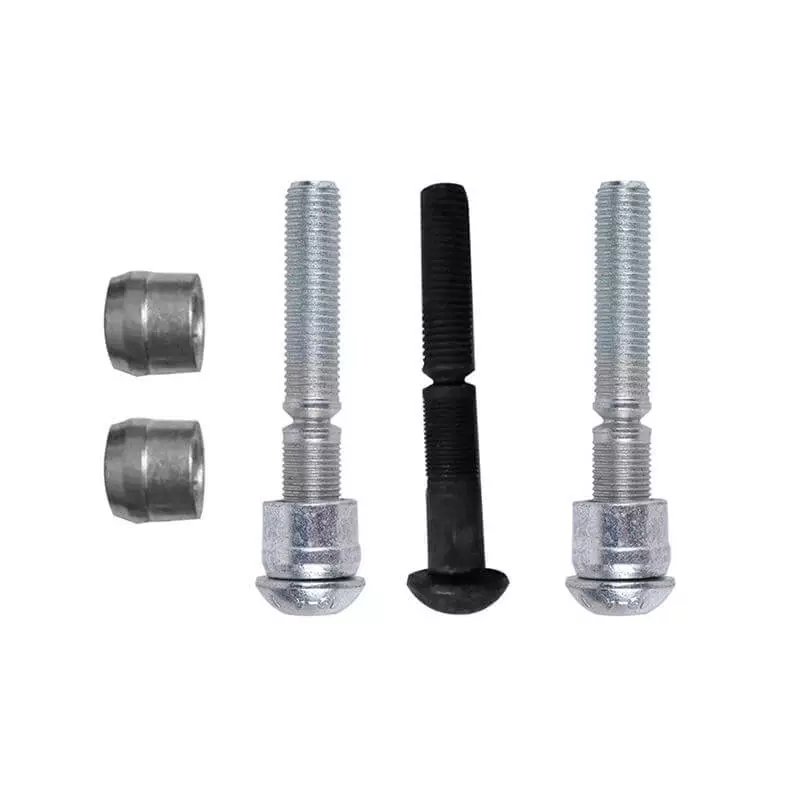
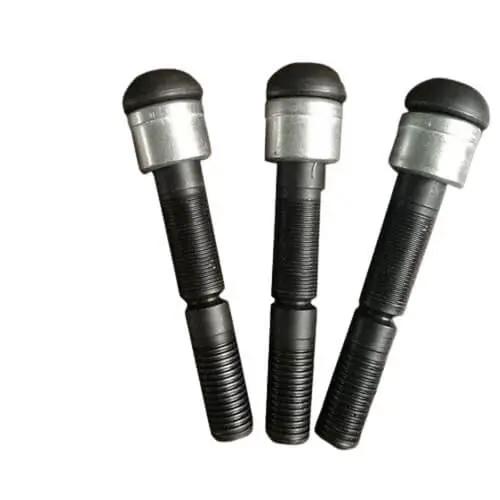
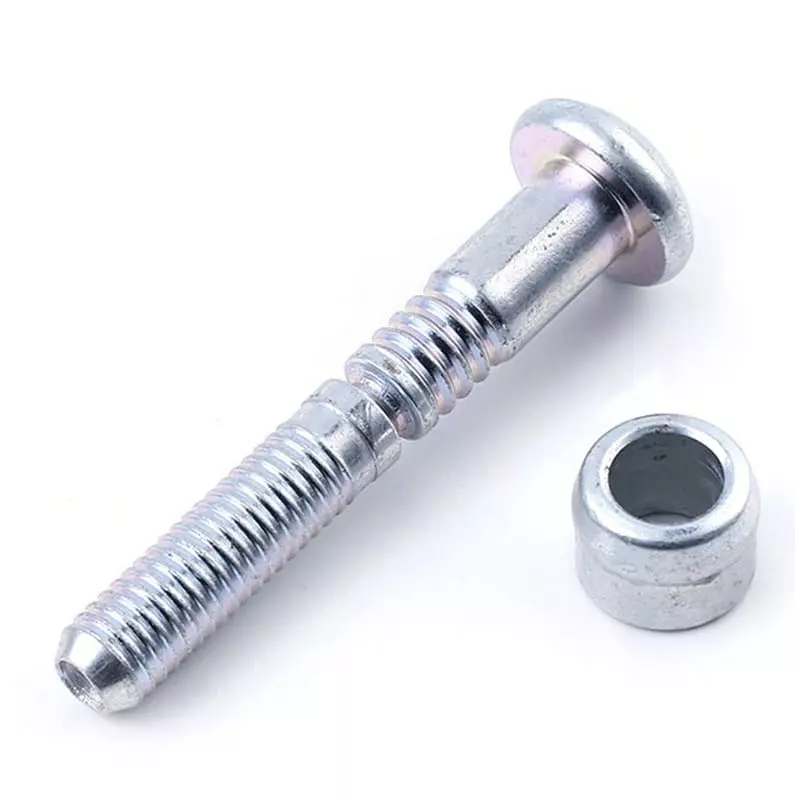
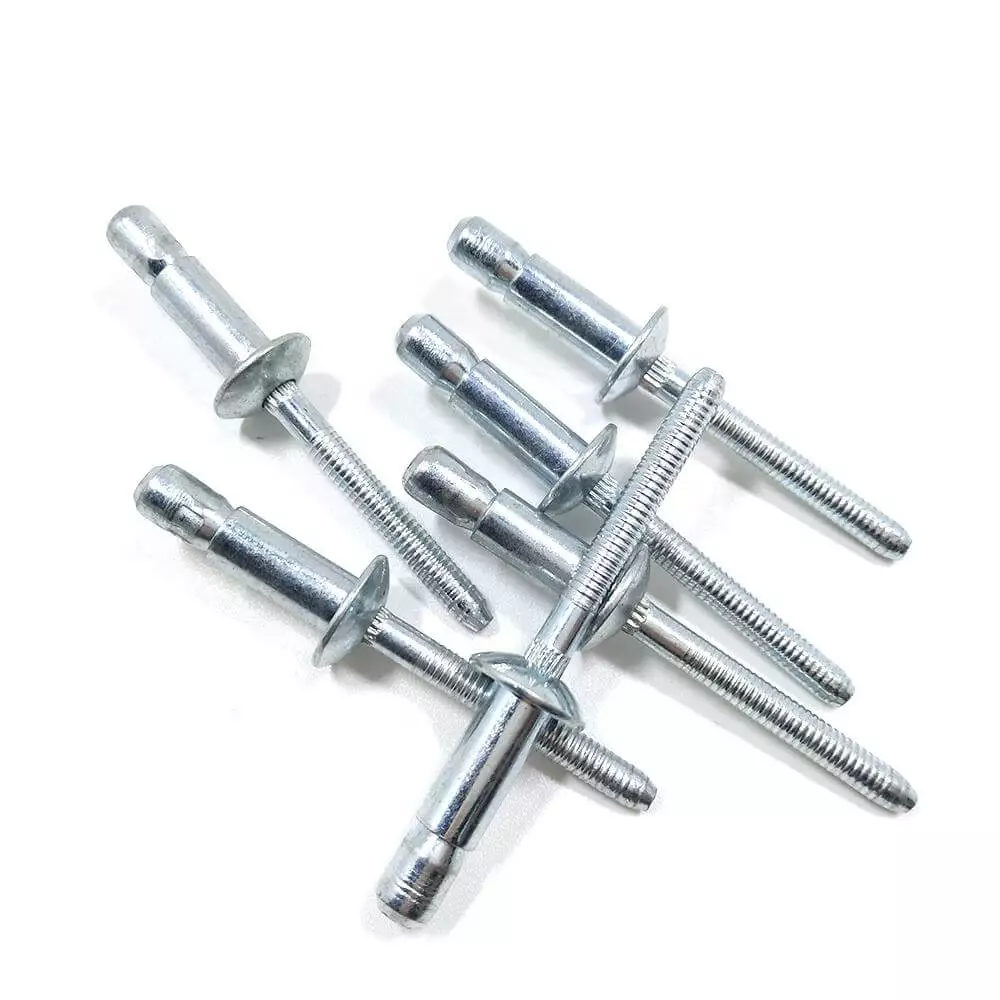
Lockbolt is a two-piece fastener consisting of a nail tip and a metal collar. This type of lockbolt provides extremely strong clamping force and can secure heavy equipment.

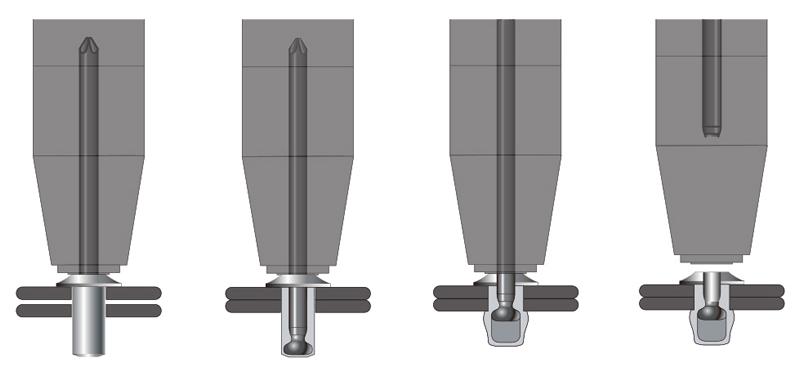
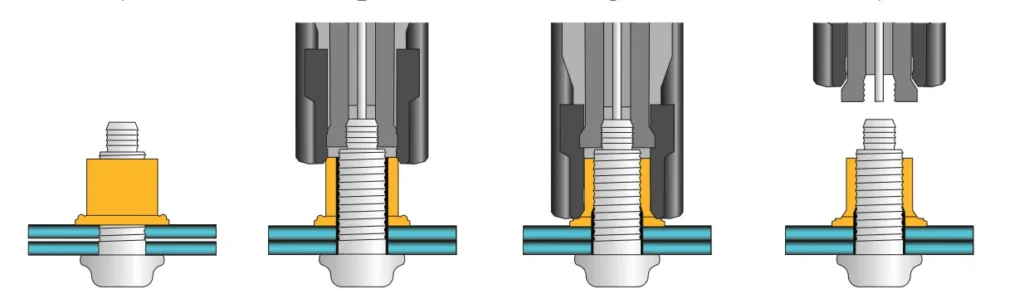
During installation, a special lockbolt tool is used to clamp the end of the lockbolt’s tip, and then the tool is activated so that the collar is pressed into the groove of the tip, and the installation is complete.

What is a Huck Bolt?

Actually, in the engineer’s opinion, lockbolt and huck bolt are the same type of fastener. This is because huck bolt refers to all bolt type fasteners produced by huck, while lockbolt refers to a special type of bolt produced by huck.

Over time, however, both names now refer to the lockbolt rivet.

Types of Lockbolt/Huckbolts

Lockbolt/Huckbolts is just an umbrella name for one type of fastener. there are still many types of lockbolt/huckbolt under Lockbolt/Huckbolt. Let’s take a brief look at them together.

Lockbolt with Breakpoints
Rivmate Lockbolt Rivet Fastener | Magna Grip Lockbolts

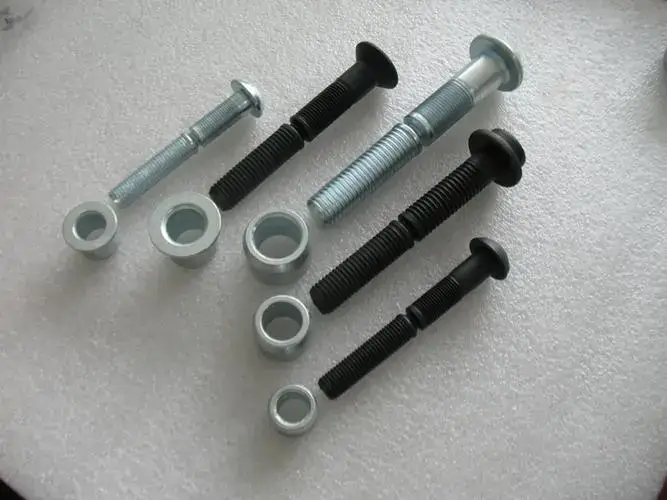
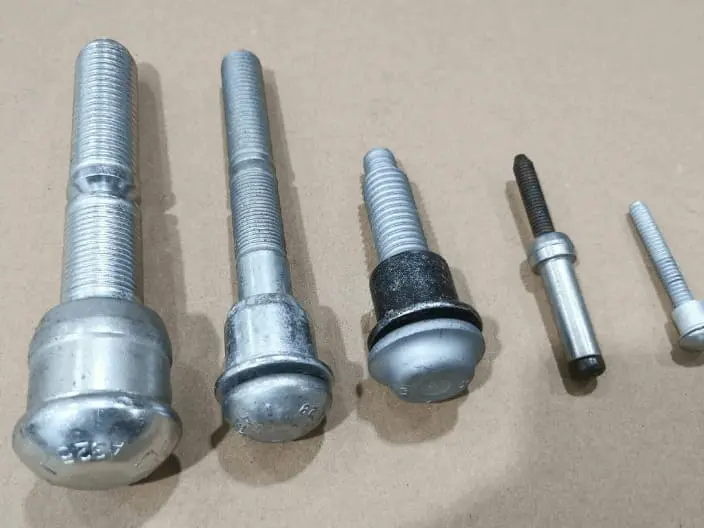
Lockbolt with breakpoints is the most commonly used hucklock. this type of lockbolt/huckbolt will disconnect from the breakpoints when the installation is complete.

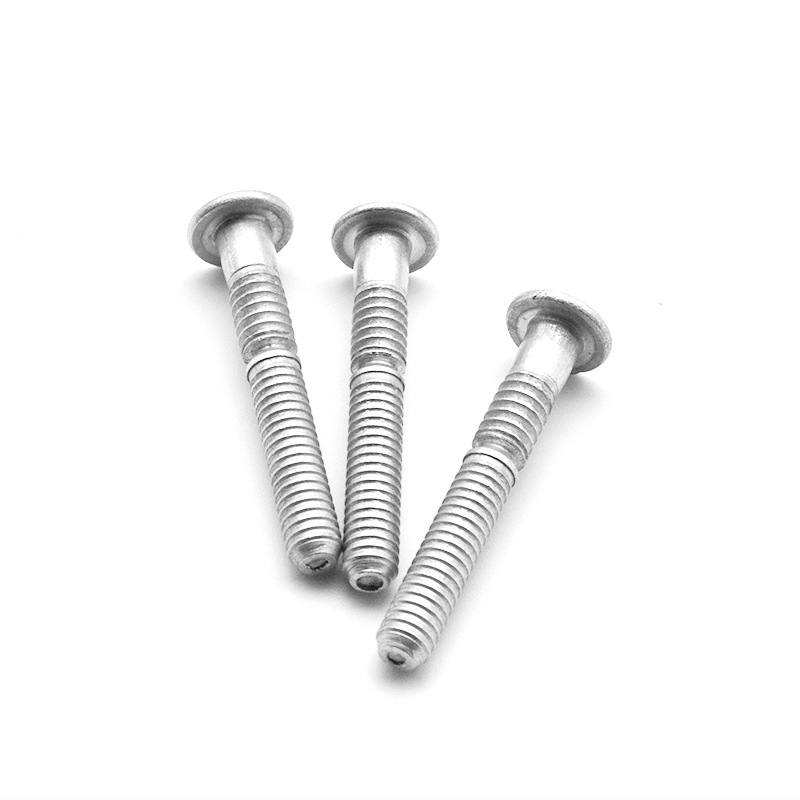
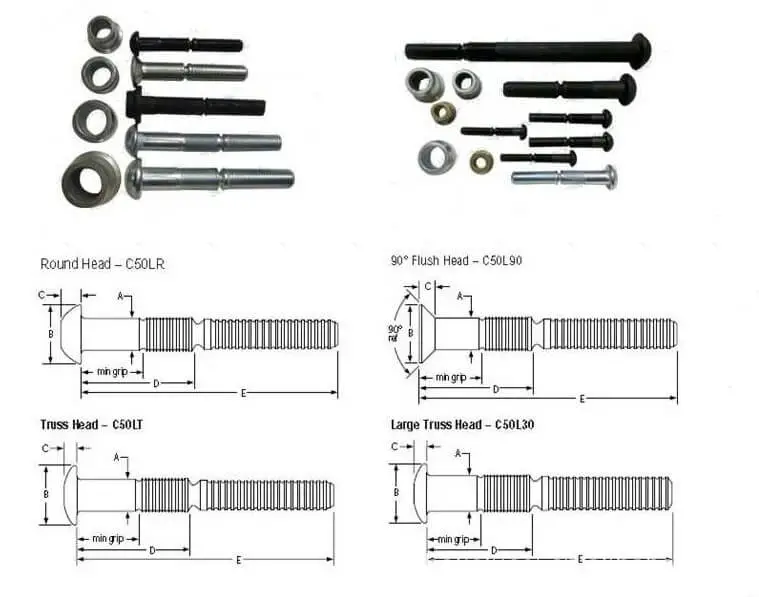
Common types are Huck C6L Lockbolt, Magna-Grip, C50L Lockbolt.Lockbolt has many lengths to choose from.Lockbolt also has many types of head styles, such as round head, countersunk head.

Lockbolt without Breakpoints
Magna Grip Lockbolt
What is a lockbolt

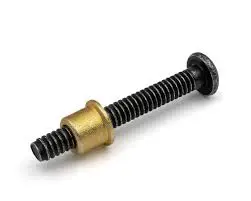
The lockbolt without breakpoint is designed with a solid tip that will not leave any metal residue. This type of lockbolt/huckbolt will have less installer fatigue as there will be no shock from removing the pin end during installation. In addition, because lockbolt without breakpoints does not remove the pin end to expose the metal, future corrosion is avoided.

If you want to know a little bit more about the types of Lockbolts. You can read this article of ours which details the differences and application scenarios of the different types of lockbolts.

Advantages of Lockbolt/HuckBolts

Though in the field of fasteners, threaded fasteners are still very much in use. But it has a major problem, threaded fasteners such as nuts and bolts can loosen over time, especially in high stress applications or where constant vibration is an issue.Lockbolt/Huck Bolts were invented to solve this problem.Lockbolt/Huck Bolts offer benefits that traditional threaded fasteners do not.

  1. They are corrosion resistant and can be installed with light tools. And they are available in steel, stainless steel and aluminum.
  2. Designed for heavy-duty applications, they exceed ASTM A-325 standards for shear and tensile strength.
  3. Has a wide grip range that allows different connection lengths to be addressed at once.
  4. Some special lockbolt can be installed with constant pressure to handle softer materials without crushing them.

Why Use Lockbolt/Huckbolt Instead of Welding?

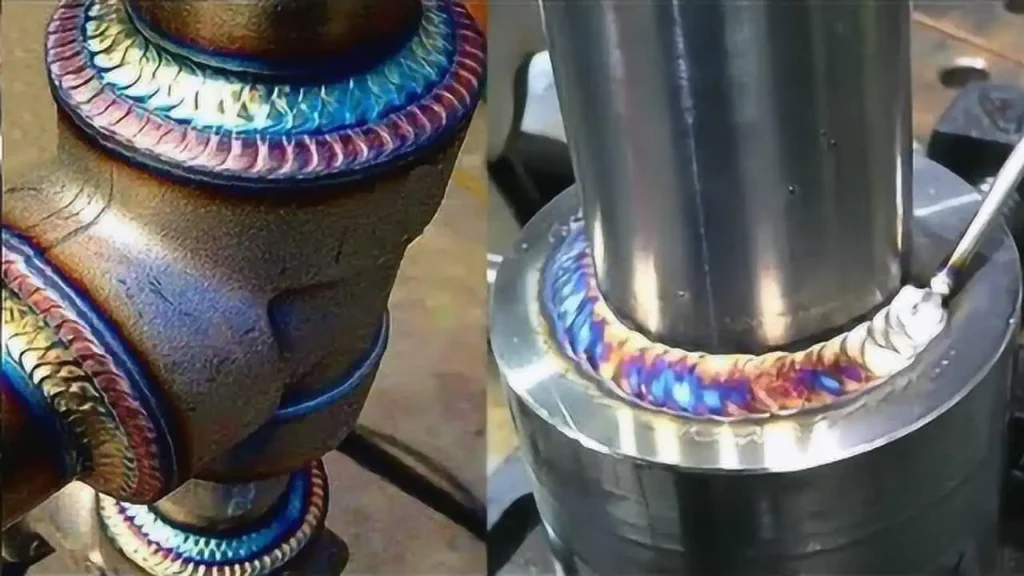
In the past, welding was the optimal solution for joining joints subject to high vibration. However, in most of today’s industrial applications, welding has been replaced by other joining methods. Welding is now considered impractical and unsafe. Below I have listed some of the main reasons for using lockbolt instead of welding.

1.Sufficient Security
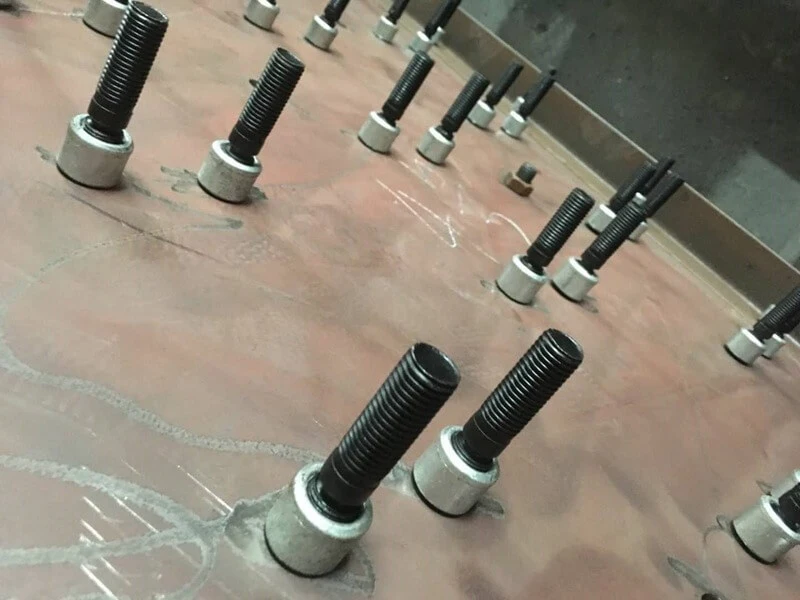
What is Lockbolt Used for

The welding process generates a lot of sparks, which can easily cause a fire. Moreover, welding a joint may result in a large amount of spent welding rod, which may become a safety hazard in the production plant. The welding process will produce some harmful gases, which may cause the operator to suffer from lung cancer, asthma and other diseases. So, after the invention of lockbolt, welding was gradually replaced by Huckbolt which does not produce any of the above mentioned problems.

2.Fast Installation

Welding (especially complex welding) takes time, which can affect production time, and HuckBolts provides fast, reliable installation. With welding, your material must be spotless before joining, but with HuckBolts, this is not necessary. They are very easy to install.

3.They are not Affected By the Heat Affected Zone
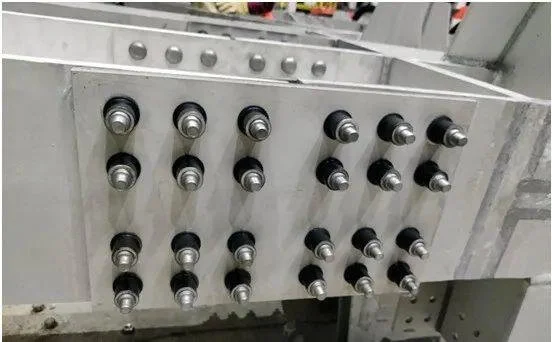
Applications of Lockbolt

With Lockbolt, you don’t have to worry about the effects of high temperatures due to the Welding may damage the surface of the material being joined or even melt the surface material of the material. But Lockbolt does not generate any heat during installation and does not damage the material in any way. The structural integrity of the workpiece is guaranteed.

Frequently Asked Questions About Lockbolt vs Huckbolt

To save you time, we have listed some frequently asked questions about lockbolt/huckbolt for you.

1.Can Lockbolt/Huck Bolts Replace Nuts and Bolts?

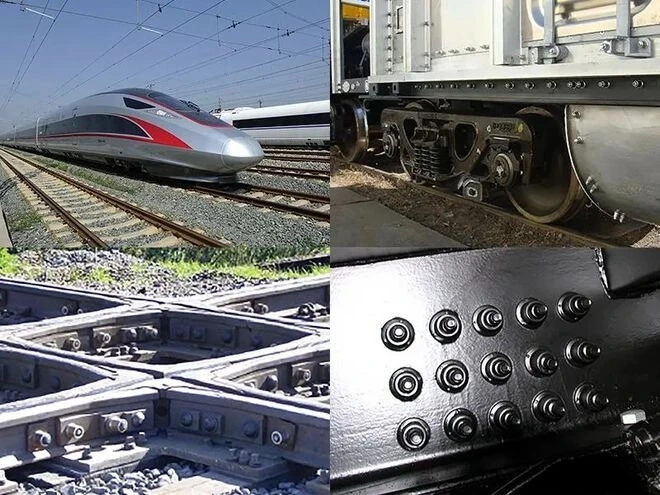
The Lockbolt was designed to replace nuts and bolts when it was first engineered. To address their shortcomings, the Lockbolt/Huckbolt is ideally suited for joining applications that require high clamping forces and need to be vibration resistant. For example, railroad track connections, connections to critical parts of automobiles, and connections to components such as airplane wings.

2.Can Lockbolt's Vibration Resistance Avoid Vibration Altogether?

Sure. The original Lockbolt was designed to solve this problem. And it has resisted rail and train car insurance track vibration in practice. Conventional nut and bolt combinations need to be re-tightened periodically, a maintenance process that can be a major headache. It can even be dangerous.

Lockbolt/Huckbolt is designed so that it does not vibrate. There is no relative movement between its collar and the tipped pegs. And installation is very easy. It requires basically no human maintenance.

3.Are Lockbolt/Huckbolt Permanent?

Lockbolt is a permanent, high-strength connector compared to traditional nut-and-bolt fasteners. Once an engineer has completed the installation, it can be difficult to remove lockbolt. So in some applications where lockbolt rivet is installed, there is no need for human supervision. It will not be lost.

Buy Lockbolt or Huckbolt from China Manufacturer

Are you looking for reliable lockbolt supplier for your project?Rivmate is a good choice for you.Rivmate is the top pop rivet manfuacturer in China.We can provide you with various types of rivets and high strength lockbolt,bom rivet.

Whether you want to buy the appropriate lockbot accessories for your industrial equipment or a large number of lockbolts for your project, you can get higher quality lockbolts from Rivamte at a lower price.

Contact us now!
Contact Person Search

Submit Your Sourcing Request

Metal Rivets for Steel - How to Choose Rivets for Steel

Picture of Rivmate Fastener

Rivmate Fastener

Top Rivet and Rivet Nut Manufacturer in China

Table of Contents

How Do I Choose The Right Size Pop Rivet? - Select the Length of the Pop Rivets

How to choose metal rivets for steel project? Do you know what type of metal rivets are appropriate for different Steel materials? This article will tell you the answer.

Table of Contents

Why Do You Need Metal Rivets for Steel?

In practice, there are many ways to connect STEEL materials. So why do we use metal rivets?

There are many reasons, but the main reason is to ensure the strength, durability and reliability of the connection of STEEL materials. Here are a few of the main reasons for using metal rivets to join steel:

  1. Metal rivets can provide enough tensile and shear strength
  2. Good durability. Ability to maintain performance under harsh environmental conditions.
  3. Matching coefficient of thermal expansion. Can reduce the risk of stress concentration and deformation at the joint due to inconsistent thermal expansion.
  4. Metal rivets have sufficient toughness and impact resistance.
  5. It can provide high reliability and ensure the integrity and safety of the STEEL structure.
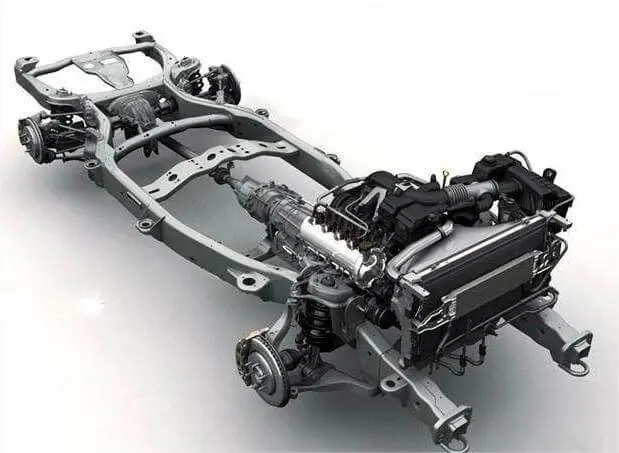
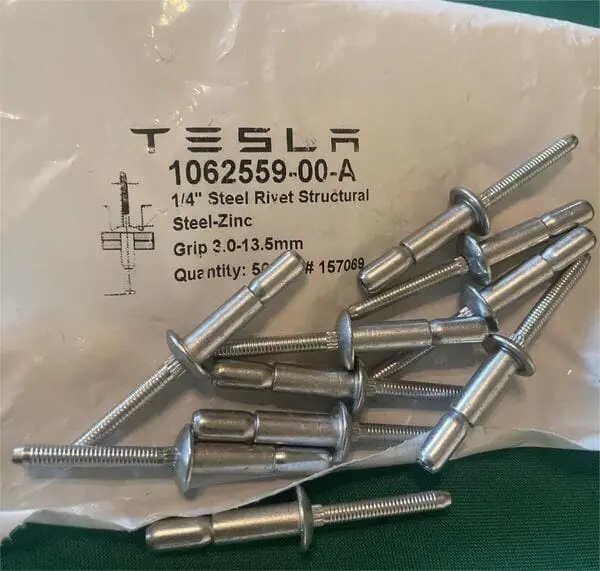
Tesla Rivets - Tesla Chassis Structural Connections

Metal rivets, especially steel rivets. When it is used for the connection of steel materials, it ensures the stability and reliability of steel structures in various application scenarios.

Types of Steel

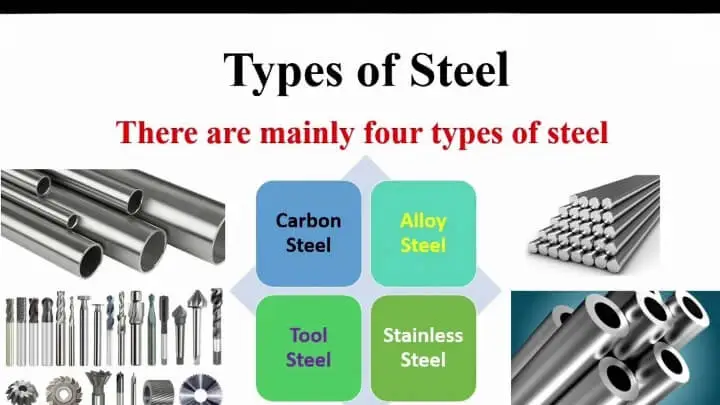
Steel is an alloy material composed primarily of iron and carbon, with other elements often added to enhance its properties. There are very many types of steel, which can be categorized according to their composition, production process, heat treatment and applications. The following are the main classifications of steel:

Classification by Chemical Composition

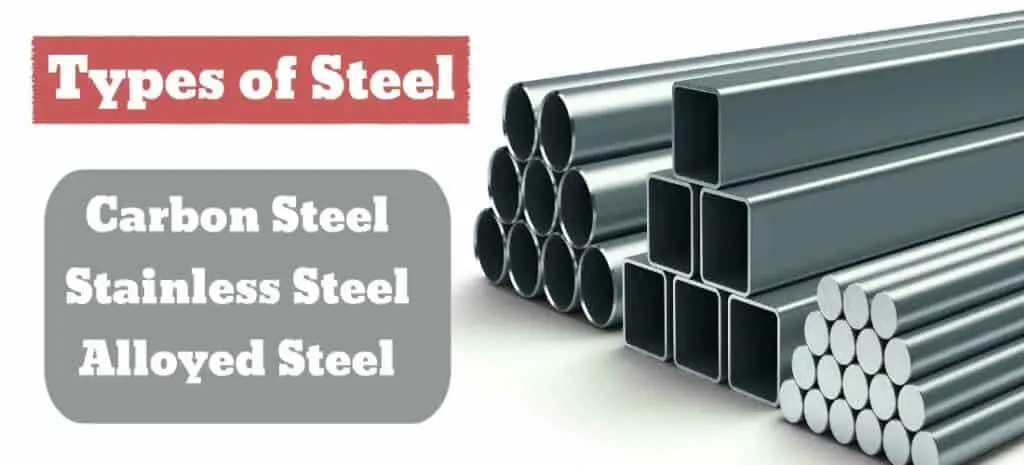
Based on the chemical composition of STEEL, it can be categorized into the following three types:

  • Carbon Steel
  • Alloy Steel
  • Stainless Steel
Types of Steel

Based on the carbon content, Carbon Steel can be categorized into Low Carbon Steel (carbon content <0.25%), Medium Carbon Steel (0.25% < carbon content < 0.6%), and High Carbon Steel (carbon content > 0.6%). Carbon Steels with different contents are suitable for different applications and their strengths are listed in descending order: Low Carbon Steel, Medium Carbon Steel, High Carbon Steel. The higher the carbon content, the greater the strength and hardness.

The distinction between alloy steel and stainless steel is also a criterion. Alloy steel is differentiated according to the content of alloying elements: low alloy steel(Alloying element content <5%), medium alloy steel(5%<Alloying element content<10%), high alloy steel(Alloying element content>10%). Stainless steel can be divided into 304, 316, 430, 410, 420, 2205 stainless steel.

Classification by Production Process

Rolled Steel

  1. Hot Rolled Steel: Produced by rolling at high temperatures, e.g. hot rolled plates and sections. Good workability and weldability.
  2. Cold Rolled Steel: Produced by rolling at room temperature, such as cold rolled sheet and cold rolled strip. High surface quality and precision.

Forged Steel

  1. Free Forged Steel: Produced by the free forging process and used to manufacture large and complex shaped parts.
  2. Die forging steel: produced through the die forging process, used to manufacture parts for mass production.

Cast Steel

Produced by the casting process for the manufacture of complex shaped parts.

How to Choose Metal Rivets for Steel

Classification by Application

According to the different scenarios and uses of steel, it can be divided into the following categories:

  • Structural Steel
  • Tool Steel
  • Spring Steel
  • Bearing Steel
  • Alloy Structural Steel
  • Heat-Resistant Steel

Classification By Special Properties

  • Corrosion-Resistant Steel
  • Wear-Resistant Steel
  • Low-Temperature Resistant Steel
  • Electrical Steel

What is The Best Rivet for Thin Metal?

Which type of rivet is best for joining thin sheets of metal? I think you are interested in this question.

Rivets are designed to join thin sheet metal. So there are many types of rivets that can join thin sheet metal.For exampleFor example, open endFor example, open end rivetsOpen end rivets, for example.For example, open end rivets, peel For example, open end rivets, peel rivets, closed end rivets, and blind rivets.

So how do I choose a rivet? It’s simple, you just need to think about it from two aspects. They are 1. material match 2. rivet size

You need to select a rivet material that is compatible with the metal material being joined. For example, for aluminum plates, to prevent galvanic corrosion, you need to use aluminum or coated steel rivets. Apart from this, you need to make sure that the size and clamping range of the rivet can fit your thin sheet material.

How to Install Metal Rivets?

How to Install Pop Rivets? - Pull the Mandrel Until it Breaks

Why Use Rivets Instead of Welding?

Why do engineers use rivets instead of welding? Because rivets have many unique advantages that welding does not.

1.Material and Thickness Adaptability

  • Joining dissimilar materials: rivets can join different types of materials, such as metals to plastics, composites, etc., whereas welding is usually limited to joining similar metals.
  • Thin Plate Materials: Rivets are particularly suitable for joining thin plate materials, as welding thin plates tends to cause deformation, burn-through or structural weakness, whereas rivets do not create these problems.

2.Resistance to Vibration and Dynamic Loads

  • Resistance to vibration and shock: Rivets perform well in high vibration and dynamic load environments and are less prone to loosening or failure, whereas welded joints may suffer fatigue cracking under these conditions.
  • Long-term stability: riveted joints provide excellent fatigue resistance, especially for applications that require long-term exposure to vibration and shock.

3.Ease of Installation and Operating Conditions

  • One-sided operation: Some rivets (e.g., blind rivets) can be operated from one side, which is useful when space is limited or when it is not possible to operate from both sides.
  • Simplicity and safety: Riveting does not require high temperatures, which makes it easier and safer than welding, especially in field installations and repairs.

4.Construction and Connection Quality

  • Uniform Quality: Riveted joints provide consistent quality that is not greatly affected by the skill level of the operator, whereas weld quality is highly dependent on the skill level of the welder and the control of the welding process.
  • Thermal deformation control: The riveting process does not generate excessive heat, avoiding thermal deformation of the material and structural stress concentrations, which is particularly important in precision manufacturing and thin material connections.

5. Repair and Maintenance

  • Easy to remove and replace: rivets can be removed by drilling out or cutting, making them easy to repair and replace, whereas welding usually requires cutting and re-welding, a complex and time-consuming process.
  • On-site repair: Riveting is suitable for on-site repair and is especially convenient when quick replacement or repair is required.

6.Environment and Safety

  • No fumes or harmful gases: riveting does not involve high temperature operation, no fumes or harmful gases are generated, reducing the impact on the environment and operator health.
  • Safe operation: The riveting process does not involve electric arcs or flames, making it safer to operate, especially in explosion-proof areas or environments with flammable substances.

Frequently Asked Questions About Metal Rivets for Steel

As we all know, time is of the essence. I have listed a few frequently asked questions to save you time.

Can I Use Aluminum Rivets on Steel?

It is possible to use aluminum rivets on steel materials. But it needs to be well guarded. This is because there are several potential problems and hazards associated with using aluminum rivets on steel materials:

  1. Galvanic Corrosion: Galvanic corrosion can occur between steel and aluminum, which can weaken the strength of the rivet and the reliability of the connection, ultimately leading to connection failure.
  2. Strength Differences: Aluminum rivets are typically lower in strength and hardness than steel materials. The connection may not be able to withstand the design loads, resulting in deformation of the rivet, breakage or loosening of the connection.
  3. Different coefficients of thermal expansion: Steel and aluminum have different coefficients of thermal expansion. In temperature changing environments, the two materials expand and contract at different rates. Concentrations of stress in the joint may result in loosening of the rivet or fatigue damage to the steel material.
  4. Durability and longevity: Aluminum rivets typically have lower durability and longevity than steel rivets, increasing the frequency and cost of maintenance and replacement.
What Are Pop Rivets Used For? - Pop Rivets for Electronic Devices

Of course, you can solve these problems by using insulating shims or coatings between the rivet and the steel to prevent direct contact.

Can You Use Copper Rivets on Steel?

Using copper rivets on STEEL has similar problems as aluminum rivets. There is a risk of galvanic corrosion between copper and steel. And there is a difference in their strength and hardness, with copper being much less hard. So there is no way for copper to provide the strength that steel needs.

Copper rivets are generally used for conductive applications or for decorative purposes. So it is not suitable to use copper rivets to provide the high strength connection that steel needs.

Why Buy Metal Rivets from China Manufacturer?

When a company owner opens a new project that requires materials, they are often the first to consider importing from China. This is because importing metal rivets from China can be very helpful for your business.

Save Your Money

labor and manufacturing costs are lower in China, so you can get the metal rivets you need at a lower price.

Complete Industry Chain

China has a complete industry chain, you can solve all your sourcing problems at once.

Strong Production Capacity

Whether for large or small orders, Chinese manufacturers can flexibly cope with them.

Order Metal Rivet. Rivmate Can HelP You Project

Rivmate is a leader and innovator in metal riveting. Our decades of experience and dedication have allowed us to develop durable, efficient and extremely reliable blind rivet and metal rivets.

If your project requires the use of high quality metal rivets, then your business should consider our value-added services such as PPAP documentation and customized rivet solutions.

Work with Rivmate to get an edge on the competition. Contact us today!

Contact Person Search

Submit Your Sourcing Request

What is Riveting?The Comprehensive Guide to Riveting

Picture of Rivmate Fastener

Rivmate Fastener

Top Rivet and Rivet Nut Manufacturer in China

Table of Contents

What is RivetingThe Comprehensive Guide to Riveting

What is Riveting? Do you know how riveting works? What is the difference between riveting and welding in practice? This article will explain what is riveting from the definition of riveting, application, purpose, operation method, and the comparison of welding to you in detail.

Table of Contents

What is Riveting?

Riveting is a commonly used metal joining process, and this thin sheet joining method is very efficient and reliable. Riveting is the permanent joining of two or more pieces of material together through the use of rivets. Its high strength, durability, and ease of operation make it widely used in construction, aerospace, automotive manufacturing, shipbuilding, and other areas where strong connections are required.

How to Install Pop Rivets ? - The Most Complete Guide

Welding and riveting are two commonly used metal joining processes. However, in contrast to welding, where two or more materials are fused together, riveting simply creates a hole in the joint.

What is the Riveting Process?

A riveted joint is formed by impacting or squeezing the end to create a deformation that expands the rivet body to form a stable connection. Below is the full process of riveting.

How to Install Pop Rivets? - Pull the Mandrel Until it Breaks
  1. Inspection Before Riveting: Prior to riveting, the joining section needs to be carefully designed and the surfaces of the parts must be clean to ensure a good connection. Then mark the locations to be riveted and make sure the parts are properly aligned.
  2. Drilling and Installing the Rivet: Drill holes in the marked locations. The diameter of the hole should be appropriate for the size of the rivet selected. Ensure that the location and depth of the holes are accurate. Insert the rivets into the pre-drilled holes to ensure they form a connection between the parts.
  3. Riveting Tivets with Tools: Use a rivet gun or other special tool to complete the rivet installation process. Place the nail part of the rivet onto the nozzle of the tool and start the riveting tool.
  4. Inspection and Testing: After the riveting is complete, inspections are made to ensure that the connection is secure. This includes checking the shape of the rivet head to make sure there is no misalignment or damage.

What is The Purpose of Riveting?

Engineers use riveting for three purposes really:

1. Cost-effective

2. Save installation time

3. Stability and vibration resistance

Speed Rivets for Lightweight Construction

As we all know, the best feature of riveting is that it is very quick to install. This is especially important during mass production in factories, which can save a lot of labor costs. You will earn more!

Next to the automotive, rail and aerospace industries, where riveting is particularly used, Rivet provides excellent vibration resistance and stability to every part of the system.

In actual field use, rivetting is cheaper than other joining methods of the same quality!

The Examples of Riveting

There are many examples of riveting in actual production processes. Basically every industrial product has rivetting on it. This includes automobile manufacturing, aircraft manufacturing, joining of building structures, ship building, joining of components for electronic devices and household appliances.

Blind Rivet vs Solid Rivet - Solid Rivets in Aircraft Applications
Applications of Lockbolt
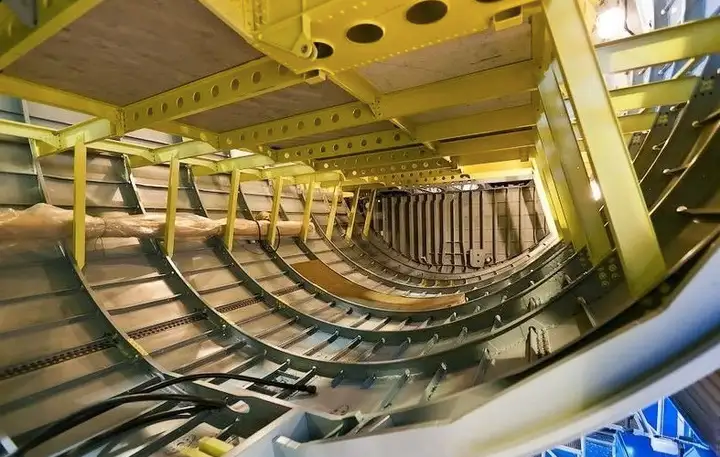
  • Aircraft fuselage and wing attachment
  • Body panel connections
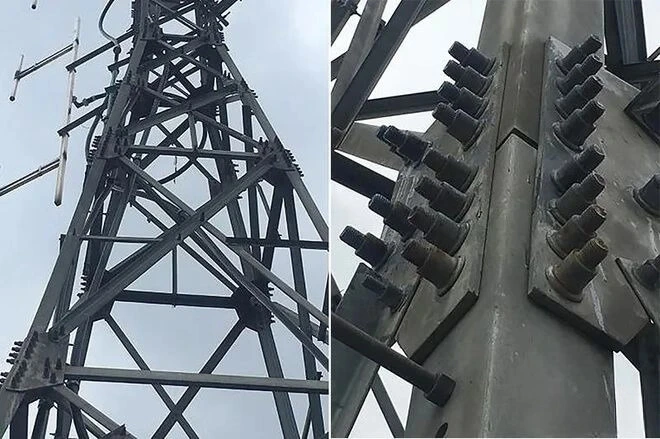
  • Bridge construction steel connections
  • Ship hull and deck connections
  • Connection of components and housings inside electronic equipment
  • Connections of panels and frames of household appliances such as washing machines, refrigerators and ovens
  • Connections of train bodies and chassis for rail transportation
Self Piercing Rivets for Car Roof and Body Cap Connection
applications of self clinching fastener

What are The Disadvantages of Riveting?

Although Riveting has significant advantages in many applications, it is not perfect and still has some drawbacks and limitations. Here are some of the major advantages of Riveting:

  1. Permanent connection, difficult to disassemble and unfavorable for maintenance.
  2. Material limitations, too thin or too thick may not be suitable for riveting.
  3. Deformed heads or tails may affect the flatness of the joined surfaces.
  4. Inadequate sealing of rivets other than specially designed rivets may result in gas or liquid leakage.

Is Riveting as Strong as Welding?

Riveting and Welding are two different joining techniques, each with unique benefits and application scenarios.

Riveting is superior to welding in terms of strength to shear, dynamic loads and vibration. However, in terms of tensile strength, under extreme high load conditions, welding is stronger.

So in conditions where high vibration and dynamic load resistance is required, riveting may be more suitable, while in static load conditions where high tensile and shear strength is required, welding usually performs better.

Why are Aircraft Riveted and not Welded? Riveting vs Welding
Comparison ItemRivetingWelding
Connection TypeMechanical connection using rivetsFusion connection by heating and melting materials
Connection StrengthHigh strength, suitable for high tensile and shear strength applicationsVery high strength, often matching or exceeding base material strength
Vibration and Impact ResistanceExcellent, especially suitable for high vibration and impact conditionsGood, but may develop fatigue cracks under long-term vibration
RemovabilityRemovable, but requires destroying the rivetGenerally not removable unless cutting the welded part
Ease of OperationRelatively simple, especially for single-sided operationsRequires high skill and precise control
Applicable MaterialsVarious materials including metals and non-metalsMainly used for metal materials
Corrosion ResistanceDepends on rivet material and surface treatmentCan achieve excellent corrosion resistance with proper welding techniques and post-treatment
Suitable EnvironmentsSuitable for various environments, including high vibration and impactSuitable for structures needing high strength and continuity
Equipment and ToolsManual, pneumatic, or electric riveting toolsWelding machines (including arc welding, gas welding, laser welding, etc.)
Installation SpeedQuick installation, ideal for mass production and assembly tasksRelatively slow, especially for complex or large-scale welding
Connection ContinuityGaps between rivetsForms a continuous joint with good sealing properties
Application AreasAerospace, automotive, construction and bridges, shipbuilding, electronics, etc.Aerospace, automotive, construction and bridges, pipelines and pressure vessels, shipbuilding, etc.
Cost EfficiencyLower initial cost, but requires periodic inspection and maintenanceHigher initial cost, but may have lower maintenance costs in the long run
DurabilityLong-term stability, especially in dynamic load and vibration conditionsLong-term durability, but requires special design and control in high vibration conditions

Frequently Asked Questions About Riveting

To save you time, we’ve listed a few frequently asked questions about riveting.

Is Riveting Durable?

Durability is one of the characteristics of rivets. As mechanical connectors, rivets are widely used in various industrial and engineering applications due to their high strength and durability.

The materials used to make rivets are usually high-strength materials such as steel, aluminum and stainless steel. Rivets are also available in a variety of finishes such as galvanized, nickel plated and anodized.

In addition, rivets are mechanically locked to hold materials together. Its unique locking method provides a stable connection over time.

Applications of Bom Rivet

Is Riveting Permanent Or Semi Permanent?

Permanent connections generally have the following two characteristics:

  1. Firm fixing
  2. Not easy to dismantle

Obviously, Riveting is normally regarded as a permanent connection.Rivets provide high strength and durability, ensuring the long-term stability of the connection. However, riveted connections can also be removed under special circumstances. However, this can damage the rivet fixing structure, making it impossible to continue using it.

Conclusion

Regardless of the connection method, the choice is based on the actual application.Riveting can be used for the vast majority of connection applications. Riveting can be used for a wide range of applications, from non-strength connections such as furniture to strength-demanding connections such as automotive bridges.

Of course, this may reduce your business costs, or it may increase your business costs. The difference in price between different types of rivets is significant. If you want to know whether riveting is suitable for your project, you can contact our engineers. Rivmate not only provide rivets, but also rivets.

Custom Riveting Solution. Rivmate can Help You!

Rivmate is one of the top rivet manufacturers and suppliers in China, and has provided rivets and rivet solutions to more than three hundred companies around the world. We have a professional team of engineers and rich types of rivets. You can solve all riveting problems at once.

Whether your project is a regular project or a demanding project such as automobile, we can meet your needs. Contact us for professional riveting solutions today!

Contact Person Search

Submit Your Sourcing Request

What is a Bom Rivet?

Table of Contents

What is a Bom Rivet? During industrial procurement and fastener selection, many engineers or procurement personnel may encounter the term “Bom Rivet” in BOMs (Bill of Materials), RFQs, or technical documents.

Is it a specific type of rivet, or a non-standard, misused term? Misunderstanding this term can easily introduce risks during quoting, selection, or ordering. This article systematically explains the true meaning of Bom Rivet based on real industrial procurement scenarios, and how to correctly understand and handle this term in fastener procurement.

What is a Bom Rivet?

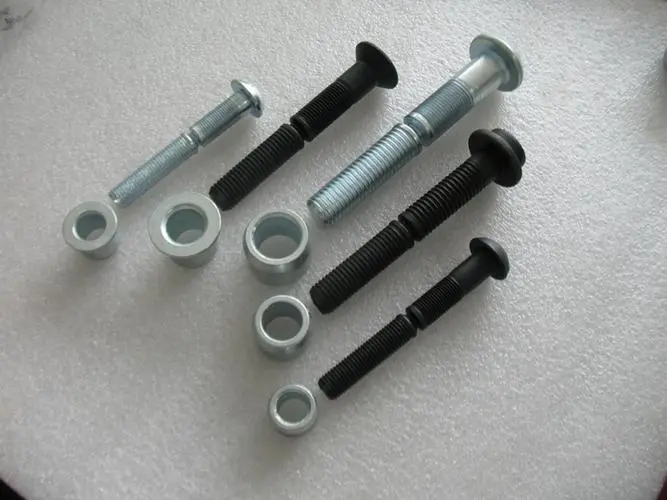
BOM Rivet is specifically designed for connections in applications requiring extreme strength and durability. It can be used to repair damaged rivet holes or in situations where higher strength and greater clamping force is required. These are the hallmarks of the Bom rivet. To be clear, bom rivets are a type of high strength structural rivet.

BOM Rivet is a type of high strength structural rivet with a large clamping range and repair capabilities. Capable of providing reliable fixing under high load and vibration conditions. Its strength is far beyond that of traditional blind rivets and ordinary structural rivets.

Bom rivets are widely used in the automotive industry, aerospace, construction and heavy equipment, rail transportation and other fields.

Applications of Bom Rivets

Bom rivets have a lot of features that other blind rivets don’t have. These excellent characteristics make them popular in the heavy equipment or industrial industries.

With traditional rivet usage, rivet holes may wear out or enlarge due to repeated use or stress.Bom rivets can copper over fill damaged holes, extending the life of the component and reducing the cost of replacement or repair.

Automobile Industry

What is a Bom Rivet

In the automotive industry, high-strength and durable connections are often required, especially in critical areas of the body and chassis.Bom rivet is particularly suitable for use in dynamically loaded areas of the vehicle due to its vibration and shock resistance.Bom rivet is often used for fixing automotive bodywork, chassis, suspension systems and other components.

Aerospace Industry

Bom Rivets Application

Like the automotive industry, aerospace has high vibration resistance requirements for fasteners.

Bom rivets maintain consistent and reliable performance in extreme environments. That’s why it’s widely used for connecting fuselages, wings and other critical structures of airplanes.

Heavy Machinery and Equipment

Applications of Bom Rivet

Excavators, cranes and other heavy machinery have key components that require reliable rivets to connect them. Heavy machinery and equipment are subjected to tremendous stress and vibration during operation, and the high strength and impact resistance of Bom rivets ensures the performance of such equipment.

How Does Bom Rivet Work?

Although Bom rivets are one of the commonly used riveted fasteners in industry. But many engineers may be curious about how it forms a stable connection. Here is a brief description of how the bom rivet connection works. For ease of understanding, we have divided the installation process into three steps.

How Does Bom Rivet Work?

Insert Bom Rivet and Start the Tool

The BOM rivet is inserted into the pre-drilled hole so that the head of the rivet is pressed against the surface of the material. At this point, the rivet body penetrates the material being joined.

A specialized riveting tool is then used to apply a tensile force to pull on the mandrel inside the rivet. This tool is usually manual, pneumatic, or electric and can provide enough force to pull the mandrel.

Deformation Fixation

After starting the rivet pulling tool, the nozzle pulls on the mandrel so that the mandrel begins to move outward.

Immediately thereafter the end of the rivet body begins to deform on the backside of the material. This deformation usually extends outward, creating a mechanically locked structure.

The deformation of the tail allows the rivet to form a stable attachment surface on the backside of the material, thereby securely locking the material. This mechanically locked structure provides extremely high tensile and shear strength.

Mandrel Breaks and Completes Fixation

When the applied tension reaches a certain level, the mandrel breaks at a predetermined position. A portion of the mandrel remains within the rivet body, ensuring the integrity of the joint.

Ultimately, the head and deformed tail of the rivet securely clamp the material being joined, creating a strong, durable mechanical joint.

2 Common Types of Bom Rivets

There are many suppliers of Bom rivets, but overall there are just two types: 1. Avdel Avbolt 2. Huck Bom. Rivmate can provide you with all types of Bom rivets, solving all your purchasing needs at once.

① Avdel Avbolt

The Avdel Avbolt is designed for heavy duty fastening applications. Applications such as construction, train cars, containers, mining equipment and bridges can all be connected using Avdel Avbolt.

In addition to extremely high tensile and shear strengths, the Avbolt offers the benefits of blind fitting, including in restricted access areas. Like all blind bolts, Avbolt is easy to install and requires minimal operator training.

Avbolt is also available in a variety of sizes from 3/16 inch to 5/8 inch (4.8 mm to 16 mm). Rods are made of alloy steel and black oxide, while sleeves and collars are made of carbon steel, zinc plated and have a clear passivated coating. Flange rings are also available with three-piece bolts in 3/8-inch, 1/2-inch, and 5/8-inch diameters.

Rivmate Bom Rivet

② Huck Bom

RIVMATE Bom Rivets - Custom Blind Rivet Manufacturer in China

Huck BOM rivets are commonly used in military equipment, automotive suspensions, amusement park rides, and other applications where a strong, lasting connection is required. These blind rivets are ideal for high-strength applications and can be easily installed using any standard riveting tool.

BOM fasteners are available in sizes ranging from 3/16-inch to 3/4-inch and are constructed of mild steel sleeves, medium carbon steel pins, and a zinc-plated clear chromate coating.

Huck BOM fasteners also feature a mechanical lock that creates a vibration-resistant connection and eliminates rod loosening. When properly installed, the pin will separate flush from the sleeve, so no additional grinding is required.

The Main Advantages of Using Bom Rivets

Bom rivets are the premier choice for ultra-high strength blind hole fasteners. Below are the main advantages of bom rivets over traditional blind rivets.

High Strength Connections

BOM rivets are made from high-strength materials (such as high-strength steel or aluminum alloys) that provide excellent tensile and shear strength for high load and stress applications.

Conventional blind rivets, on the other hand, are typically suitable for medium strength applications, and while they can also provide a reliable connection, they may not be as good as BOM rivets under very high loads and stresses.

Repair Damaged Holes

BOM rivets are designed with a larger diameter to repair rivet holes that have become larger due to wear or damage, restoring structural strength and extending the life of the component.

Conventional blind rivets require replacement with larger rivets or other repair treatments when the hole diameter becomes too large.

Mechanical Lock

Compared to traditional blind rivets, BOM rivets provide extremely high tensile and shear strength through a mechanical locking structure where the rivet forms a solid lock on the backside of the material. Traditional blind rivets may not provide as much strength as BOM rivets.

Bom Rivet vs Blind Rivet

FeatureBOM RivetTraditional Blind Rivet
High-Strength ConnectionProvides exceptional tensile and shear strength, suitable for high-load and high-stress applicationsProvides moderate strength connection, suitable for medium-strength applications
Repair Damaged HolesCan repair worn or damaged rivet holes, restoring structural strengthDoes not have repair capability, requires replacement or other repair methods
Vibration and Impact ResistanceMaintains stability and firmness under high vibration and impact conditionsCan withstand some vibration and impact, but less stable under high-strength conditions
Mechanical LockingProvides high connection strength through mechanical lockingRelies mainly on rivet body deformation, less effective than mechanical locking
Corrosion ResistanceTreated for corrosion resistance, suitable for harsh environmentsCan also be treated for corrosion resistance, but its importance might be lower
Wide Grip RangeAdapts to different material thicknesses, reducing inventory varietyFixed grip range, requires selection based on material thickness

FAQs - What is a Bom Rivet?

Q1. What is a BOM Rivet?

BOM Rivet (also commonly referred to as BOM-type structural rivet) is a high-strength structural rivet designed to withstand significant tensile and shear forces.

It is typically used in industrial applications demanding high joint strength, vibration resistance, and long-term reliability, such as steel structures, heavy equipment, and solar mounting systems.

Q2. How does a BOM Rivet work?

BOM Rivets create a reliable mechanical locking structure by breaking the mandrel.

During installation, the mandrel is pulled by the rivet gun, causing the rivet body to fully expand and lock on the backside. The mandrel ultimately breaks at a predetermined tensile force, forming a high-strength, irreversible connection.

Q3. What are the main advantages of BOM Rivets?

Core advantages of BOM Rivets include: high tensile strength, high shear resistance, excellent vibration resistance, and high installation efficiency.

Compared to standard blind rivets, they are better suited for load-bearing structural connections, maintaining stable performance under harsh environments or prolonged vibration conditions.

Q4. Where are BOM Rivets commonly used?

BOM Rivets are widely applied in photovoltaic mounting systems, steel structural frameworks, construction machinery, rail transit, and heavy equipment manufacturing.

They are particularly suited for single-side installation scenarios where access from the reverse side is impossible but bolt-level strength is required.

Q5. Can BOM Rivets replace bolts or welding?

In many applications, BOM Rivets can serve as alternatives to bolts or welding, though specific project conditions must be evaluated.

When projects prioritize faster installation efficiency, consistent connection quality, and avoidance of welding heat-affected zones, BOM Rivets often represent a more cost-effective solution.

Realize the Success of Your Business at Rivmate

Rivmate Rivet Factory in Jiangsu, China

Bom rivets have been the ideal solution for heavy equipment since they were invented. Currently bom rivets are gradually replacing traditional bolts. Our guide is a stepping stone before you buy bom rivets, outlining their definition and showing you the benefits and applications of bom rivets.

If you are looking for bom rivets that are trusted by customers across the globe, then you have come to the right place.Rivmate has been providing quality bom rivets to customers across the globe for a moderate number of years. Our state-of-the-art rivet manufacturing facility produces the world’s best bom rivets, blind rivet and rivet nut.

We customize bom rivets according to your project requirements and offer competitive after sales service. Still hesitate? Why not experience our free sample evaluation? Request a quote now!

Reference

Share:

More Posts

Get Rivets Quotes Now

Wholesale Blind Rivets from Rivet Manufacturer

Types of Lockbolts - How to Choose Lockbolts for Your Project?

Table of Contents

In industrial fastening applications, Lockbolts are widely adopted for their high strength, excellent vibration resistance, and consistent installation performance. However, during the actual selection process, many engineers and procurement personnel encounter a core question: What are the Types of Lockbolts? What are the differences between them, and how should one choose the appropriate solution?

To accommodate varying load conditions, installation methods, and application scenarios, the market has developed multiple Lockbolt types. This article will briefly outline the primary classification logic and typical applications of Types of Lockbolts, helping you quickly determine which category best suits your project requirements.

What Is a Lockbolt and How Does It Work?

When selecting structural fasteners, you often turn to lockbolts because standard bolts carry a risk of loosening, while welding may be constrained by efficiency, consistency, or site conditions. In this context, lockbolts become the preferred choice for many engineering projects.

What Is a Lockbolt?

A lockbolt is a high-strength, permanent mechanical fastener typically composed of two parts:

  • Pin
  • Collar

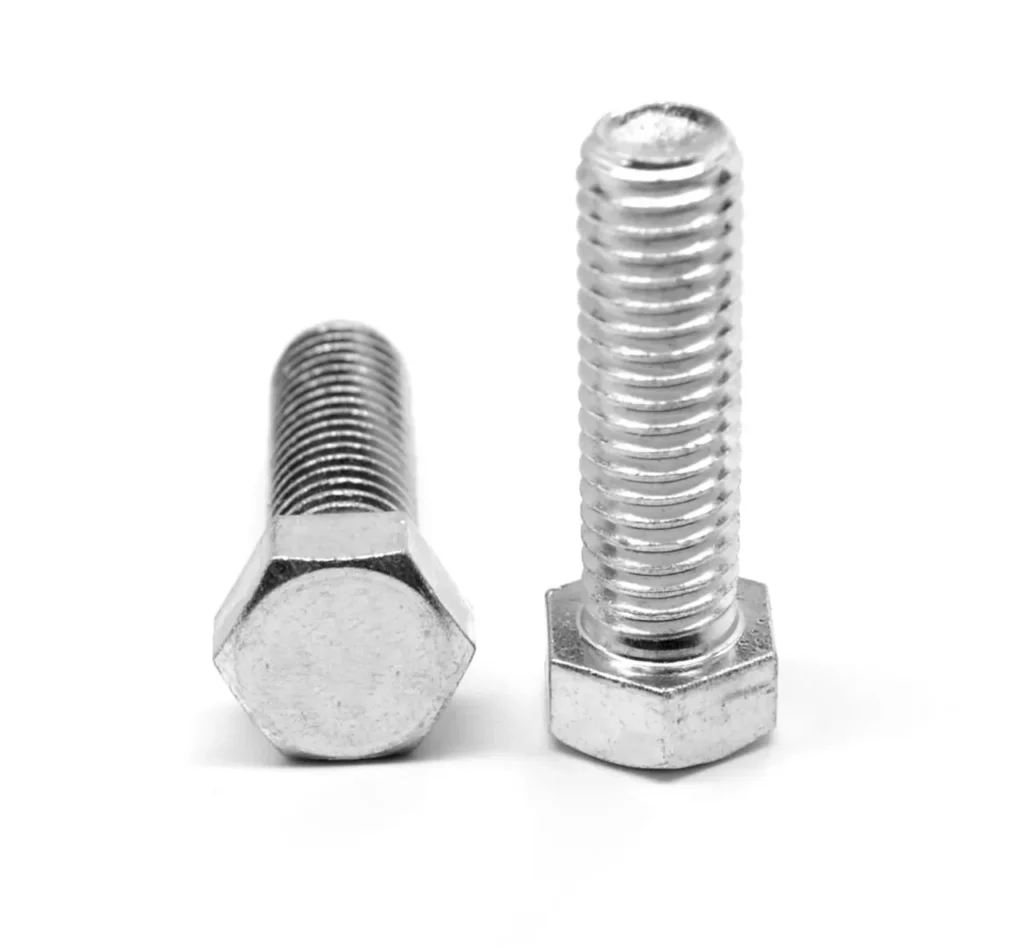
Unlike the hex bolts you’re familiar with, Lockbolt does not rely on thread preload to maintain the connection. Instead, it permanently locks the collar onto the pin body through mechanical forming, creating a stable, irreversible structural bond. For you, this means more controllable connection strength that doesn’t depend on manual tightening experience. Under long-term vibration or dynamic loads, the connection performance remains more stable.

Lockbolt Rivets Types

How Does a Lockbolt Work?

The Lockbolt’s operating principle can be summarized as “Tension + Cold Forming + Mechanical Locking”, with the entire process highly standardized.

Key Steps in the Installation Process

Lockbolt vs Bolt vs Structural Rivet
  • Step 1: Insert the Pin Body

    Insert the Lockbolt’s pin into the aligned connection hole.

  • Step 2: Collar Positioning

    Place the collar over the rear end of the pin.

  • Step 3: Tool-Assisted Core Rod Pulling

    Apply axial tension to the pin using the installation tool while radially compressing the collar.

  • Step 4: Collar Cold-Formed Locking

    The collar is pressed into the pin’s groove (or tightly wrapped around the bare shaft), forming a permanent mechanical lock.

  • Step 5: Core Rod Fracture

    Upon reaching the preset tension value, the core rod automatically fractures, completing the installation.

The direct benefit of this process for you is that every Lockbolt installation delivers highly consistent results, virtually independent of operator skill.

Key Characteristics of Lockbolts

Lockbolts are widely adopted in demanding structural connections for good reason. These three core properties are paramount for your engineering selection:

a. High Strength

  • Lockbolts achieve tensile and shear strengths approaching or matching high-strength structural bolts
  • Primarily used for load-bearing structures, not merely positioning connections
  • Demonstrate stable performance in steel structures, bridges, and heavy equipment

b. Excellent Vibration Resistance

  • Threadless design → Eliminates vibration-induced backlash or loosening
  • Sleeve and stud form an integral mechanical lock
  • Ideal for dynamic loads and prolonged vibration environments

Typical applications include: PV tracking systems; rail and transit infrastructure; truck chassis and construction machinery

c. Installation Consistency

  • Installation process controlled by tool-applied tension and forming results
  • Independent of manual torque judgment
  • Simplified quality inspection (verifies breakage and proper forming)

Main Types of Lockbolts

Lockbolts fastener has many types, but there are two main types: 1.Lockbolt with Separating Pintails 2.Lockbolt without Separating Pintails.Next let’s take a look at these two types of lockbolts in detail.

① Lockbolt with Separating Pintails

Lockbolt with Separating Pintails also comes in two types. As we know, there is a difference in the products strength is also different. It is worth noting that the strength of C6L lockbolt is a bit lower than that of C50L lockbolt.

C50L Lockbolt

C50L Lockbolt - High Strength Lockbolt Fastener

The C50L lockbolt is specifically designed for heavy-duty applications requiring ultra-high strength. It is the best solution for heavy duty industrial connections.Rivmate’s C50L lockbolt ranges in diameter from 12.7mm (1/2 inch) – 28.6mm (1-1/8 inch).

In real-world applications, the torque and shear strength of the C50L lockbolt exceeds that of conventional bolts. So lockbolt can replace traditional bolts in all applications.C50L lockbolt has many types to choose from, including dome head, carbon steel, and stainless steel.

C6L Lockbolt

The C6L lockbolt has been around for over sixty years. This lockbolt provides high shear strength and long lasting performance. It reduces rework and warranty costs and requires little or no training to complete the installation process quickly.The C6L lockbolt is available in aluminum, steel and stainless steel in diameters from 12.7mm (1/2 inch) – 28.6mm (1-1/8 inch).

C6L Lockbolt Rivet

② Lockbolt without Separating Pintails

Magna Grip Lockbolt
Magna Grip Lockbolt

The main feature of Lockbolt without Separating Pintails is the ability to connect multiple grip ranges. This reduces the pressure on inventory. This type of lockbolt has a precisely controlled grip range and clamping force, making it ideal for metal-to-metal fastening.

It has a variable length of broken tail after riveting. This will vary depending on the actual thickness of the riveted material. This unique property allows it to easily accommodate changes in material thickness.

Differences Between Different Types of Lockbolts

FeatureC50L LockboltC6L LockboltMagna-Grip Lockbolt
MaterialHigh-strength steel, stainless steelAlloy steel, aluminum alloyHigh-strength steel, aluminum alloy
Application StrengthSuitable for heavy load and high-stress applicationsSuitable for medium to high-stress applicationsSuitable for high-load applications
Mechanical LockingYes, mechanical locking with specialized toolsYes, mechanical locking with specialized toolsYes, mechanical locking with specialized tools
Vibration and Impact ResistanceYes, designed for severe vibration and impact conditionsYes, designed for severe vibration and impact conditionsYes, designed for severe vibration and impact conditions
Corrosion ResistanceYes, typically treated for corrosion resistance (e.g., galvanized, nickel-plated)Yes, typically treated for corrosion resistance (e.g., galvanized)Yes, typically treated for corrosion resistance (e.g., galvanized, nickel-plated)
Ease of InstallationQuick installation, suitable for mass productionQuick installation, suitable for mass productionQuick installation, suitable for mass production

How to Choose Lockbolts for Your Project?

The scenarios in which different lockbolt is used are also different. So how should you choose the best lockbolt rivets for your project? You need to decide based on factors such as specific application requirements, material thickness, load requirements and environmental conditions. Below is a detailed guide to help you choose between these lockbolts:

a. Application Strength and Load Requirements

What is a Lockbolt Used for?

The C50L Lockbolt is suitable for applications requiring extreme strength and heavy loads. For example, heavy machinery, railroad vehicles, bridge design, etc. C50L Lockbolt provides extremely high tensile and shear strengths to withstand heavy loads and high stresses.

C6L Lockbolt provides excellent tensile and shear strength for medium to high strength applications. For example, in the automotive industry, construction, and general industrial manufacturing.

Magna Grip Lockbolt can accommodate a wide range of material thicknesses in addition to providing high strength connections. You can choose this type of lockbolt if you want to reduce the variety of stock.

What is a lockbolt

b. Material Thickness and Adaptability

Both the C50L Lockbolt and the C6L Lockbolt are suitable for joining high-strength applications in a fixed thickness range. Unlike the Magna grip lockbolt, which has a large clamping range that allows joining materials of different thicknesses.

So if you want to reduce your inventory, then go for the Magna grip lockbolt, but it is more expensive.

c. Vibration and Shock Resistance

Both the C50L Lockbolt and the C6L Lockbolt will hold strong under vibration and shock conditions and will not easily loosen or fall off.

The Magna grip lockbolt also has the characteristics of other types of lockbolt and is more versatile.

d. Environmental Conditions and Corrosion Resistance

Applications of Lockbolt

Lockbolt, regardless of type, is usually treated to prevent corrosion. For example, galvanized or nickel plated, as the practical environment for lockbolt rivet is generally harsh.

Choose The Right Lockbolts for Your Project

Choose C50L Lockbolt if your application requires extremely high strength and heavy-duty capabilities, such as heavy machinery, railroad vehicles and bridge construction.

Choose C6L Lockbolt if your application requires medium to high strength connections, such as in the automotive industry, building construction and general industrial manufacturing.

Choose Magna-Grip Lockbolt if your application needs to accommodate materials of varying thicknesses while requiring high load capacity, such as the automotive industry, aerospace, construction and heavy equipment, and railroad transportation.The Magna-Grip Lockbolt’s large clamping range gives it an advantage in inventory management and material adaptability.

The existence of different Types of Lockbolts is not intended to increase complexity, but rather to address fundamental differences across industries in load patterns, vibration levels, construction conditions, and safety requirements.

Heavy Duty Lockbolts Fastener Rivets Application

Steel Structures

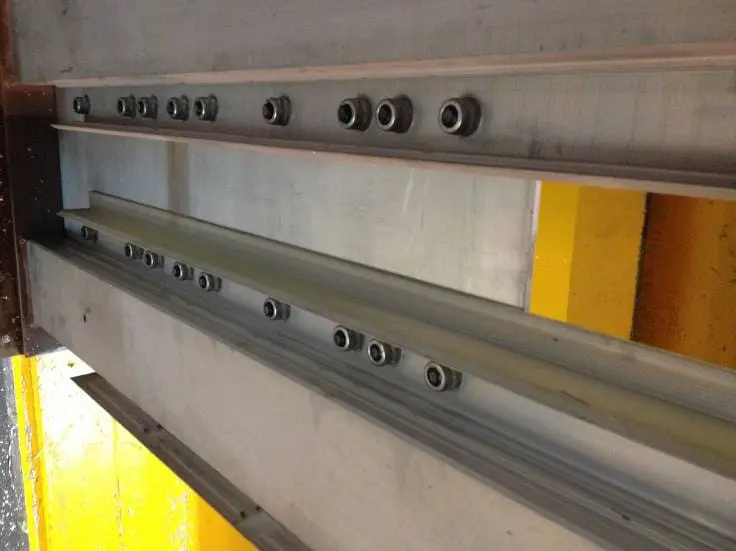
Steel beams, support members, and node connections often endure both tensile and shear forces simultaneously. Connection failure in these areas directly compromises overall structural safety. In such scenarios, lockbolts are widely adopted primarily because they achieve stable connections through mechanical locking, independent of manual torque for preload assurance. In practical engineering, steel structures typically prioritize collar-type and grooved structural lockbolts for enhanced vibration resistance and long-term reliability.

Bridges

Bridge connections endure long-term alternating stresses from vehicular loads while exposed to outdoor environments, where vibration, temperature fluctuations, and corrosion simultaneously occur. Under these conditions, traditional threaded connections often become weak points, whereas Lockbolts’ threadless mechanical locking structure significantly reduces loosening risks.

Therefore, high-strength, grooved Lockbolts are commonly used in bridge engineering. During on-site construction, the pintail design is incorporated, where breaking the tail confirms each connection point meets design requirements.

Solar Mounting Systems

Photovoltaic systems endure prolonged outdoor exposure, continuously subjected to wind loads, temperature fluctuations, and periodic vibrations. Connection loosening often triggers widespread structural risks rather than isolated failures. Additionally, PV projects typically involve large scales and numerous installation points, demanding high construction efficiency and consistency. Against this backdrop, pintail lockbolts paired with grooved structures emerge as a common solution.

Railways

Rail transit systems impose extremely stringent safety requirements on fasteners. You must contend with high-frequency vibration, impact loads, and explicit industry regulatory constraints. Consequently, the application of Lockbolts in rail transit represents a manifestation of “safety design logic.” Engineers typically select structural or grooved Lockbolts specifically engineered for vibration resistance and fatigue endurance to ensure stable connections under prolonged high-frequency operational conditions.

Heavy Equipment

In heavy machinery and construction equipment, components endure continuous vibration and impact loads during operation. Frequent inspection or retightening of connections significantly increases maintenance costs and downtime risks. For this reason, Lockbolts are frequently employed in critical load-bearing and high-vibration areas.

In practical applications, grooved Lockbolts are commonly used in high-vibration zones, while pintail designs are better suited for field installation or maintenance scenarios.

Lockbolts vs Bolts vs Structural Blind Rivets

Rivmate Lockbolt Rivet Fastener | Magna Grip Lockbolts
Lockbolt
Threaded Bolts
Bolts
Interlock Structural Rivet

Comparison Table

Comparison AspectLockboltsHigh-Strength BoltsStructural Blind Rivets
Connection MethodMechanical locking (collar swaging)Threaded preloadMechanical locking (single-side installation)
Vibration ResistanceVery highModerate (depends on anti-loosening measures)High
Installation ConsistencyVery high (tool-controlled)Highly dependent on installation torqueHigh
Single-Side InstallationNoNoYes
Installation EfficiencyHighLowVery high
RemovableNoYesNo
Typical ApplicationsHigh-load, high-vibration structuresServiceable structural connectionsOne-side access, high-efficiency installation

When Lockbolts Are Essential

High Loads Combined with Severe Vibration

When your connection endures significant tensile/shear forces while subjected to prolonged vibration or alternating loads, threaded connections become potential failure points. Lockbolts eliminate loosening pathways through mechanical locking—not relying on thread preload—making them ideal for such conditions.

Demanding Installation Consistency

In bulk projects or critical structural components, you cannot tolerate quality fluctuations caused by manual torque variations. Lockbolt’s installation outcomes are determined by tools and the mechanism itself, making the performance of every connection point more predictable.

Long-Term Operation, Low Maintenance Requirements

For projects with extremely high post-commissioning maintenance costs (e.g., bridges, rail transit, large steel structures), Lockbolt’s permanent connection characteristics significantly reduce the risk of repeated inspections and rework.

When Structural Blind Rivets Are More Efficient

Not all high-demand projects require Lockbolt. In many practical scenarios, Structural Blind Rivets are actually the superior solution.

Single-Side Installation Only

If your connection point is inaccessible from the rear, traditional bolts and Lockbolt become structurally impractical. Structural Blind Rivets enable installation from a single side while delivering near-structural-grade strength performance.

Emphasizing Installation Efficiency and Construction Costs

In projects with high installation density and tight cycle time requirements, Structural Blind Rivets significantly reduce installation time and decrease reliance on operator experience. This advantage is particularly evident in photovoltaic mounting systems, thin-walled steel structures, and modular assembly.

Sufficient Strength, Not Extreme Strength

If your structure isn’t subjected to extreme load conditions, blindly using Lockbolts may result in unnecessary cost increases. While meeting safety factors, Structural Blind Rivets often achieve a better balance between strength, efficiency, and cost.

FAQs About Types of Lockbolts

1. How many types of lockbolts are there?

From an engineering selection perspective, there is no fixed number of lockbolt types. They are typically categorized based on structural design, locking mechanism, pin configuration (grooved or smooth shaft), and installation method. Understanding these classification principles is more valuable than memorizing specific models, enabling you to make informed choices quickly across different projects.

2. What are the main differences between collar-type and pintail lockbolts?

The core distinction lies in whether installation quality is verified by breaking the tail. Collar-type lockbolts achieve mechanical locking through cold-forming of the collar ring. Pintail lockbolts add a break-off core pin design, allowing you to visually confirm whether the designed locking force has been achieved by observing the broken tail. This makes them particularly suitable for field construction and large-scale installation projects.

3. Which type of lockbolt is best for high-vibration applications?

In conditions involving continuous vibration or alternating loads, grooved lockbolts are typically the superior choice. The grooved structure provides the collar with distinct mechanical engagement points, effectively suppressing micro-motion and fatigue loosening. They are commonly used in applications such as photovoltaic mounting systems, rail transit, and heavy equipment.

4. Can lockbolts replace high-strength bolts in structural applications?

In many structural applications, lockbolts can substitute high-strength bolts, particularly in projects demanding superior vibration resistance and installation consistency. However, replacement decisions require evaluation based on load conditions, disassembly requirements, and industry standards—not a simple one-to-one substitution.

5. When are structural blind rivets a better option than lockbolts?

Structural blind rivets often prove a more efficient choice when your project requires single-side access or prioritizes installation efficiency and construction costs, provided structural loads do not reach ultimate conditions. While meeting safety factors, they offer a better balance between strength, speed, and cost.

Get the Most Secure Connection with Rivmate Lockbolt Solutions

What is Lockbolt Used for

At Rivmate, we are committed to providing our customers with the best lockbolt rivets solutions and products. We offer quality lockbolt and customization services that exceed your expectations, such as header customization, material customization, and customization according to drawings. Contact us today for a consultation!

Reference

Share:

More Posts

Get Rivets Quotes Now

Wholesale Blind Rivets from Rivet Manufacturer

Wholesale Blind Rivets from Rivet Manufacturer

What is A Speed Rivet? - Speed Rivet Technology

Table of Contents

What is a Speed Rivet? Do you want to know about speed rivets in detail before you buy it?This blog will provide you with the most comprehensive explanation. Let’s read it together.

What is A Speed Rivet?

Speed Fastening Rivets

Speed Rivet is a rivet type designed with rapid installation as its core objective, enabling significantly reduced riveting time and simplified processes while ensuring reliable connections. It typically achieves a less-step, less-operator-dependent installation through optimized structural design and forming methods.

Fundamentally, the distinction between Speed Rivet and traditional solid rivets or blind rivets lies not in material composition but in installation logic. Traditional solid rivets typically require dual-side operation and high operator skill. While blind rivets allow single-side installation, they often involve multi-step breaking or deformation processes. Speed Rivets, however, achieve stable connections faster through more direct forming mechanisms, reducing reliance on operator experience.

The term “Speed” does not imply a mere pursuit of velocity, but rather signifies overall installation efficiency gains. This encompasses fewer process steps, reduced single-point installation time, and enhanced consistency. This efficiency advantage is particularly pronounced in high-volume production or cycle-time-sensitive assembly environments, representing the core engineering value of Speed Rivets.

How Does a Speed Rivet Work?

  • Structural design prioritizes simplified forming

    Speed Rivets typically consist of an optimized rivet body engineered to achieve rapid, stable plastic deformation under load. Compared to traditional rivets, they reduce reliance on complex deformation paths, streamlining the forming process.

  • Forming Principle Emphasizes “Single-Step Forming” Over Multi-Step Accumulation

    Engineering-wise, Speed Rivets achieve clamping and locking through controlled deformation, eliminating the need for repeated hammering or staged breaking. Load is rapidly converted into stable clamping force during forming, establishing and securing the connection within a short timeframe.

  • Reduced installation time stems from streamlined process paths

    The “speed” of Speed Rivet does not result from softer materials or lower strength, but from minimized operational steps and adjustment time. Eliminating repetitive positioning, correction, or confirmation of forming status significantly reduces total operation time per connection point—particularly evident in batch assembly.

  • Lower operator dependency through structural adaptability

    Traditional riveting often relies on operator experience to judge adequate forming. Speed Rivet’s structural design makes the forming process insensitive to operator variation. Consistent connection results are achieved as long as basic process conditions are met, reducing human influence on quality.

  • Consistency takes precedence over ultimate strength

    From an engineering perspective, Speed Rivet prioritizes connection consistency and predictability over pursuing maximum load-bearing capacity. This focus makes it highly suitable for production environments where cycle time sensitivity and stringent quality consistency are paramount.

Types of Speed Rivets

Speed rivets come in several different types, depending on the actual requirements of your project. The following are common types of speed rivets:

a. BRV Speed Rivets

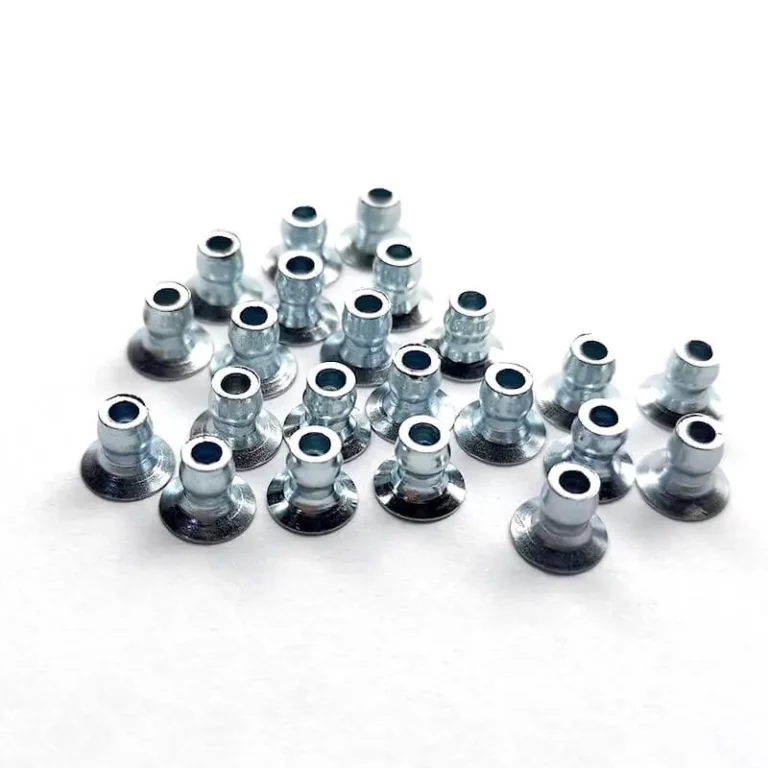
BRV Speed rivets have a unique bulbous rear end. The shortening of the ball end during installation ensures the strength of the connection. And its large head-shaped tail provides a large carrying area for soft materials.

BRV Speed rivets are also characterized by their ability to fill irregular holes. Most importantly, of course, speed rivets cost less than welding or other rivets when working in the field!

Order Speed Rivets from China

b. CBT Speed Rivets

CBT Speed rivets date back to the 1930s. It is available in a variety of finishes including galvanized, brass and other options.

CBT Speed rivets have a consistent clamping force that reduces damage to soft or brittle materials. For this reason, it is often used in household appliances and lightweight manufacturing.

Avdel Speed Rivets

c. NeoSpeed Speed Rivets

Neospeed speed rivets are the strongest and most versatile fastening system on the market, according to data presented by Avdel Neospeed.Neospeed speed rivets provide enough strength and installation speed that it can be installed up to four times faster than traditional threads or rivets!

Neospeed speed rivets have a unique rivet design. This design allows for increased clamping force and a wide riveting range. It provides multi-grip capability and can accommodate materials of varying thicknesses.

This type of speed rivets is half the weight of traditional rivets, effectively reducing the overall weight of the equipment. Reduces energy consumption during operation.

NeoSpeed Speed Rivets

Advantages of Speed Rivets?

Why was the speed rivet invented? Because it has many advantages that other riveted fasteners do not have. Let’s read on.

① No Need to Reload Rivets

When engineers install speed rivets, they preload the speed rivet gun with a large number of speed rivets, thus eliminating the need to repeatedly load rivets when installing industrial equipment. Using speed rivets for the same project can save a great deal of time, especially if the manufacturer is doing mass production.

No Need to Reload Speed Rivets

② Very Fast Installation

The best thing about Speed rivets is that it installs very quickly. And it’s perfect for high volume installations.

Speed rivets can be installed on factory automated assembly lines using automatic riveting machines. Trust me, you can save up to two-thirds of the time!

Let’s enjoy a quick install of the speed rivet! Let’s appreciate how time-saving the following speed rivet installations are.

③ Cost-effective

In actual production, speed rivets cost less than welded or blind rivets. Both the cost of time and the economic cost of the rivets themselves. This can be a huge saving to your budget!

④ Smooth Exterior

BRV Speed Fastening Rivet Wholesale

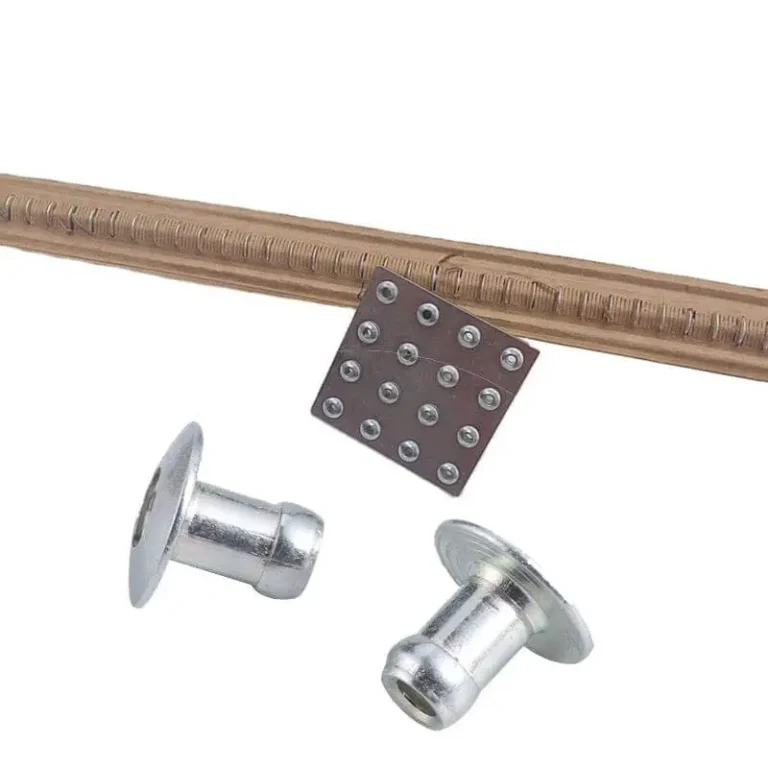
Speed rivets have a very flat surface with no bumps after the installation is complete. This provides a very aesthetic appearance. Especially suitable for applications where a smooth surface is required!

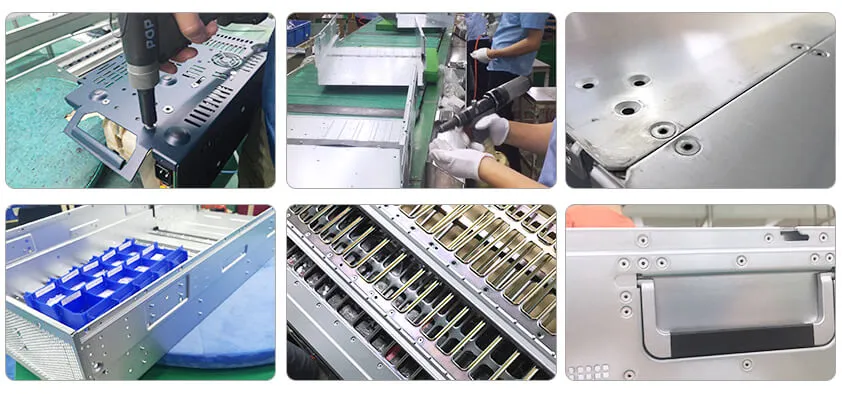
For example, speed rivet is used extensively in the plastic housings and heat sinks of electronic devices and in the metal housings and internal frames of household appliances.

Speed Rivet vs Traditional Rivets

Speed Rivet vs Traditional Rivets: Engineering Comparison Table

Comparison CriteriaSpeed RivetTraditional Rivets
Installation SpeedFast. Fewer steps, short installation time per pointSlower. Typically requires multiple forming steps
Operational ComplexityLow. More straightforward installation processHigher. Relies more on operator timing and judgment
Dependence on Tools & LaborLower. Less dependent on operator experienceHigher. Requires proper tooling and skilled operators
Joint ConsistencyHigh. Stable and predictable forming resultsMedium–High. More influenced by human factors
Applicable Material ThicknessDefined range, optimized for standardized thicknessMore flexible, suitable for a wider thickness range
Maintenance & Rework RiskLow. High consistency reduces rework ratesLow, but improper installation may require rework

Differences in Installation Speed

The primary advantage of Speed Rivets lies in the manufacturing process. By reducing forming steps and setup time, it significantly shortens the installation time per rivet. While traditional rivets are mature and reliable, they typically require more operational steps during forming, resulting in a slower overall cycle time.

Operational Complexity and Personnel Dependency

The quality of traditional rivets relies to some extent on the operator’s judgment of the forming state. Speed Rivet’s structural design makes the forming process more “adaptive.” This reduces dependence on operator experience, making it better suited for production environments with high personnel turnover or limited training cycles.

Connection Consistency

In high-volume assembly, consistency often outweighs single-point strength. Speed Rivet’s standardized forming logic facilitates consistent connection quality across shifts and operators. While traditional rivets remain reliable with sufficient experience, they exhibit higher variability.

Differences in Applicable Material Thickness

Traditional rivets offer greater flexibility in material thickness adaptation, making them suitable for complex structures or applications with significant thickness variations. Speed Rivets are typically optimized for specific thickness ranges, making them better suited for standardized designs and repetitive assembly.

Maintenance and Rework Risk

Both are permanent fasteners requiring minimal maintenance under normal design conditions. Speed Rivets carry lower rework risk due to their high installation consistency; traditional rivets may require rework or re-riveting when installation deviations are significant.

Where Are Speed Rivets Commonly Used?

Speed Rivets are used in a variety of industrial environments due to their unique benefits. A look at some of the applications for speed rivets:

1.Speed Rivets for Domestic Electric Appliance

The use of household appliances is very high. It is believed that there are a lot of appliances in everyone’s home, so keeping each appliance fully assembled requires a lasting solution.Speed rivets are widely used in household appliances to connect a variety of different housings for assembly. Although traditional blind rives can also complete the process, speed rivets are faster.

In addition, speed rivets weigh half or less than blind rivets. This reduces the overall weight of the appliance. It helps the customer to make different visits to the appliance and enhances the happiness of the customer.

Application of Speed Rivets

2.Speed Rivets for Lightweight Construction

Speed Rivets for Lightweight Construction

In the industrial sector, in addition to heavy equipment, there are also lightweight structures. Lightweight construction needs to ensure that the overall weight of the equipment does not feel heavy.

Speed rivets manufacturers can provide lightweight designs. Maintaining reliable strength while still making your equipment lighter. This technology improves structural integrity by not damaging materials.

3.Speed Rivets for Electronic Equipment

Electronic devices often have high weight requirements. So it is not possible to use fasteners that are inherently heavy, and Speed rivet brings the solution.

Speed rivets reduce the cost of electronic equipment while reducing its weight. This is very helpful in selling electronic equipment.

FAQs About Speed Rivets

Q1. What is a speed rivet used for?

Speed Rivets are primarily used in high-volume, cycle-time-sensitive assembly scenarios. Commonly found in sheet metal structures, industrial equipment, and production lines requiring high consistency, their core value lies in reducing installation time and minimizing human operational variation.

Q2. Are speed rivets stronger than standard rivets?

Not necessarily. Speed Rivets’ advantage lies not in ultimate strength, but in installation consistency and efficiency. Under identical design conditions, traditional rivets can achieve comparable or even higher load-bearing capacity. However, Speed Rivets more reliably deliver consistent performance.

Q3. Are Speed Rivets permanent?

Yes. Speed Rivets are permanent fasteners. Once installed, they cannot be removed without destruction. This makes them suitable for structures where loosening is unacceptable.

Q4. Do Speed Rivets require special tools?

Typically, installation tools matching the rivet’s structure are needed, though tool operation is relatively straightforward. Compared to traditional riveting, Speed Rivets rely less on operator skill and experience, making them better suited for standardized production.

Q5. Speed Rivet vs Blind Rivet

Blind rivets offer the advantage of single-side installation, making them suitable for structures where the back side is inaccessible. Speed Rivets excel in installation cycle time and consistency, making them more suitable for repetitive, high-efficiency assembly. They serve different application scenarios and are not mutually substitutable.

Increase Production Efficiency with Rivmate Speed Rivets

Rivmate Rivet Factory in Jiangsu, China

Want to improve the efficiency of production? Rivmate Speed Rivets is one of the best speed rivets solution providers. Purchase speed rivets and apply them to your project for the fastest productivity.

Contact us today for high quality speed rivets solutions for your assembly needs. Our engineers will provide the best solution for your project.

reference

Share:

More Posts

Get Rivets Quotes Now

Wholesale Blind Rivets from Rivet Manufacturer

Tools for Rivet Nuts - How to Choose the Right Tools for Rivet Nuts?

Picture of Rivmate Fastener

Rivmate Fastener

Top Rivet and Rivet Nut Manufacturer in China

Table of Contents

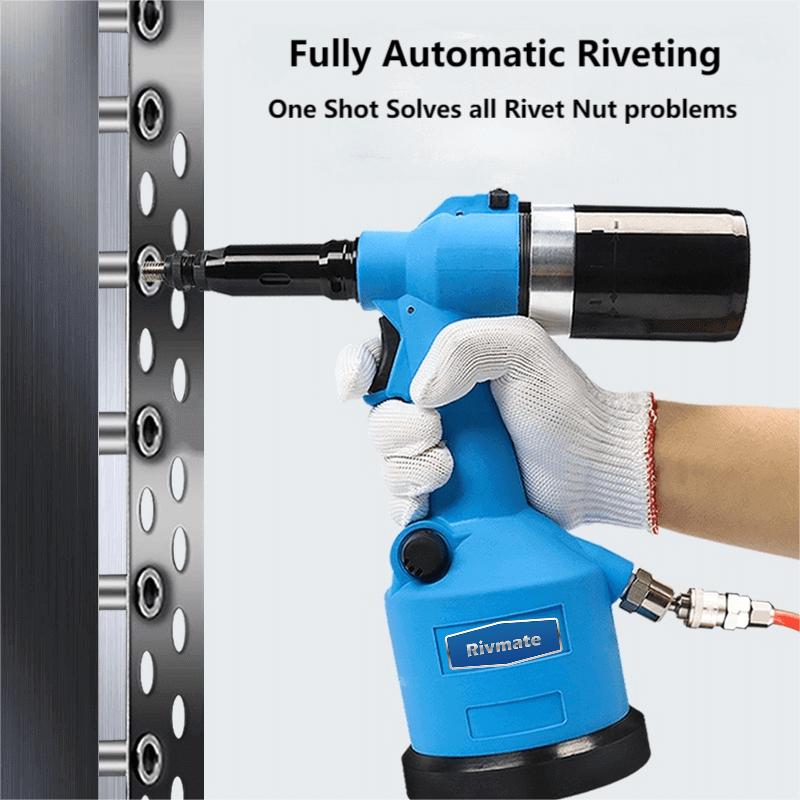
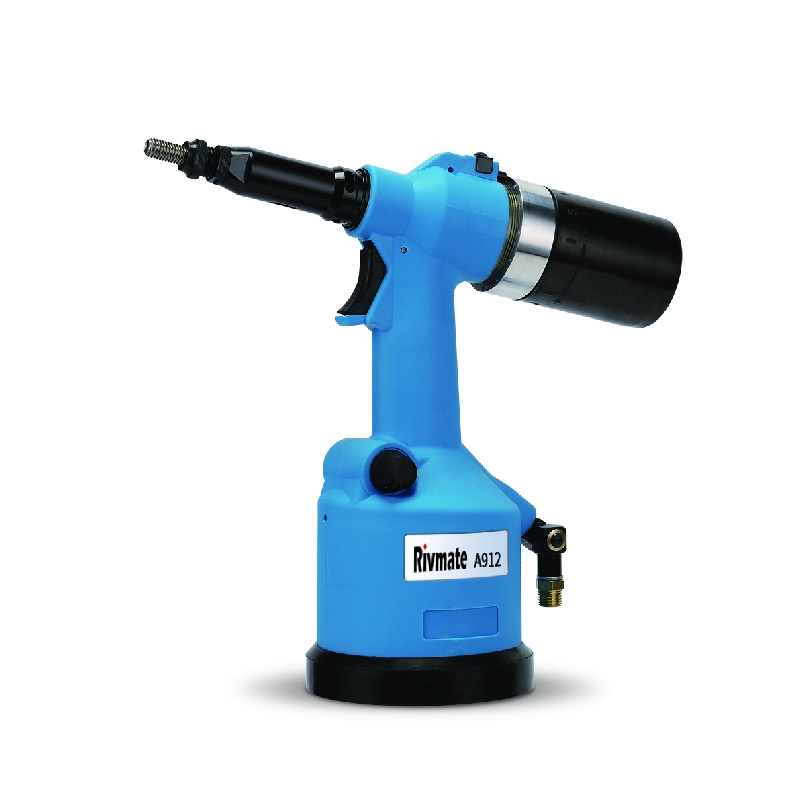
A912 Rivmate Pneumatic Rivnut Tool

Tools for Rivet Nuts.How to choose the best rivet nut tool for your project? Through this article, I think you won’t have any doubts about this issue!

Table of Contents

What is a Rivet Nut Tool?

Rivet nuts are a very common fastener for thin plate connections in industry and manufacturing. In order to improve the efficiency of production and installation. Often choose the right rivet nut tool to complete the rivet nut installation process. So what is a rivet nut tool?

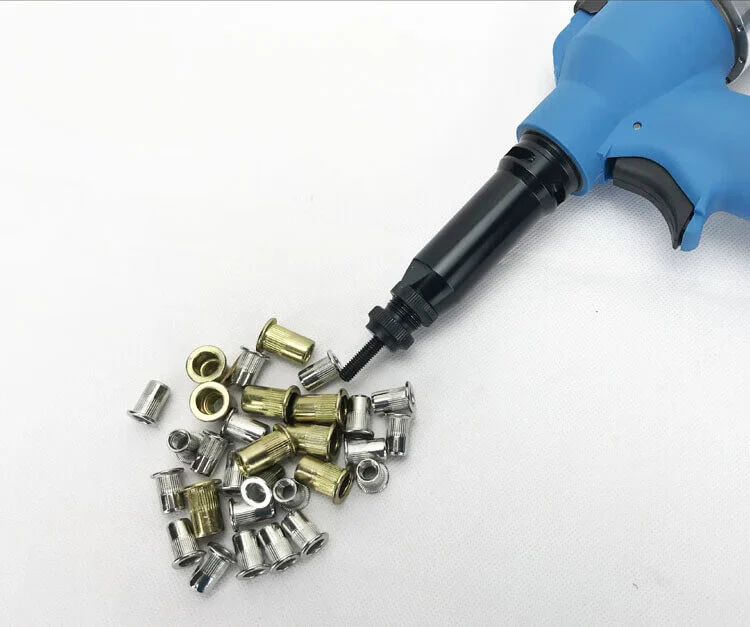
A rivet nut tool, which is also often referred to as a rivet nut gun or cap puller, is a quick tool designed to install rivet nuts. The rivet nut tool secures the rivet nut to the material through mechanical force, providing a strong threaded joint.

Proper use of a rivet nut tool can greatly improve your efficiency and the quality of your connection. That’s why rivet nut tools are widely used in automotive manufacturing, aerospace, electronic equipment and furniture assembly.

Types of Rivet Nut Tool

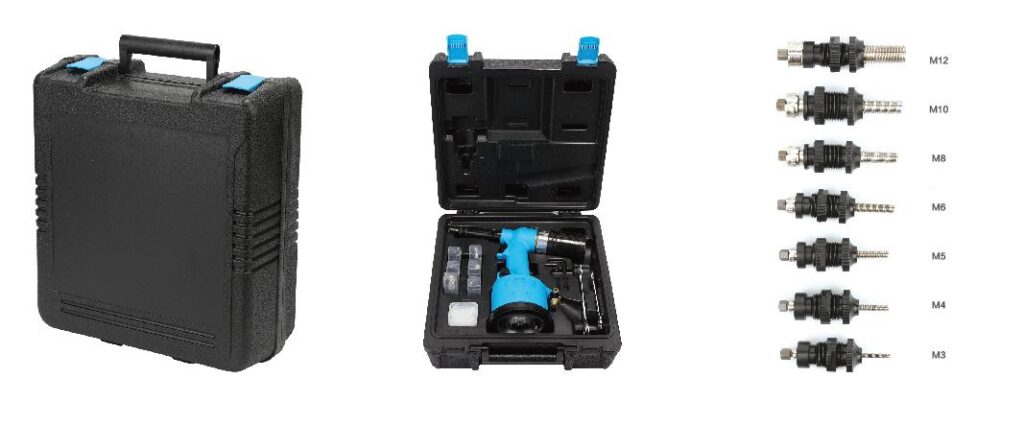
A912 RIVMATE PNEUMATIC RIVNUT TOOL SET

There are various types of rivet nut tools. However, they can be categorised into the following three types based on their power source and mode of operation:

Each type of tool has its own unique benefits and usage scenarios. Let’s explore them together in detail below!

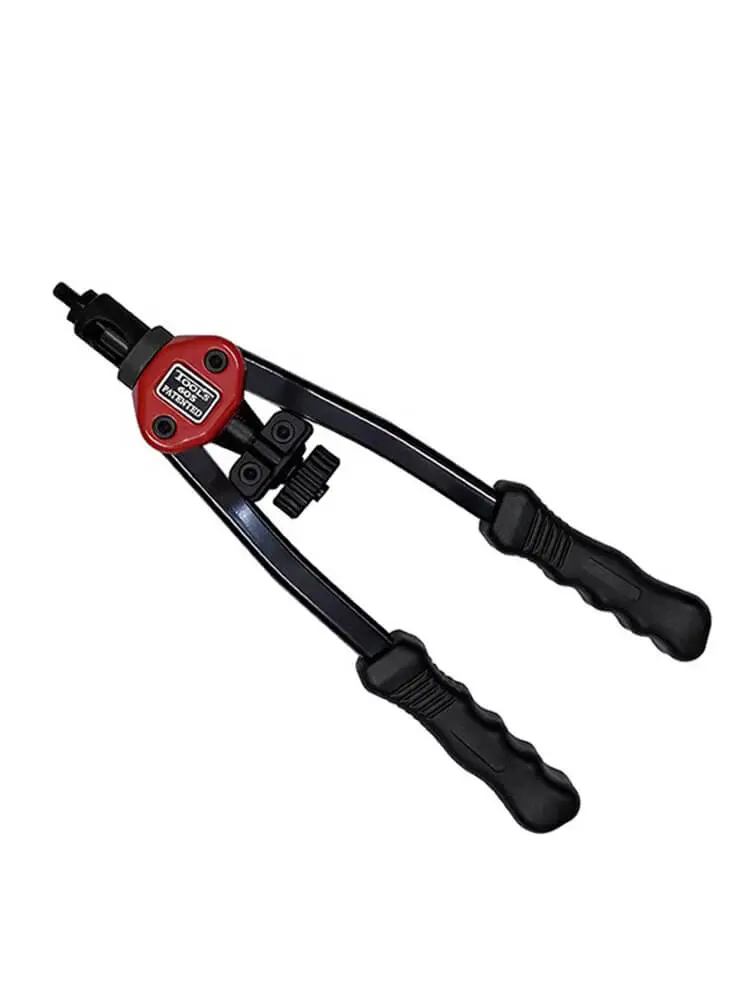
Manual Rivet Nut Tools

Hand Threaded Rivet Insert Tool

A manual rivet nut tool is a tool that operates by applying force manually and is used to install rivet nuts on thin plates or other materials. This tool is widely used in small production runs, repairs and DIY projects.

The operation of a manual rivet nut tool is very simple, it does not require an air or power source and can be used in any work environment. And the manual rivet nut tool is very lightweight and small in size, making it easy to carry around. Most importantly, it is very cheap!

But then again, it has its drawbacks. It is more laborious to operate and requires manual pressure to complete the installation process. It is also very inefficient to install and is not suitable for mass production and high intensity work.

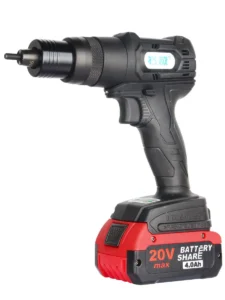
Electric Rivet Nut Tools

Tools For Rivet Nuts

The Electric Rivet Nut Tool is a tool that utilises an electric motor to provide power. This tool is widely used in high-volume industrial production and assembly tasks such as appliance manufacturing, electronic equipment assembly and automotive production.

The operation of the Electric Rivet Nut Tool is effortless and the installation efficiency is good. But then, it is very dependent on power and needs to be equipped with a battery or power adapter.

Pneumatic Rivet Nut Tools

Rivmate A912 Rivet nut tool

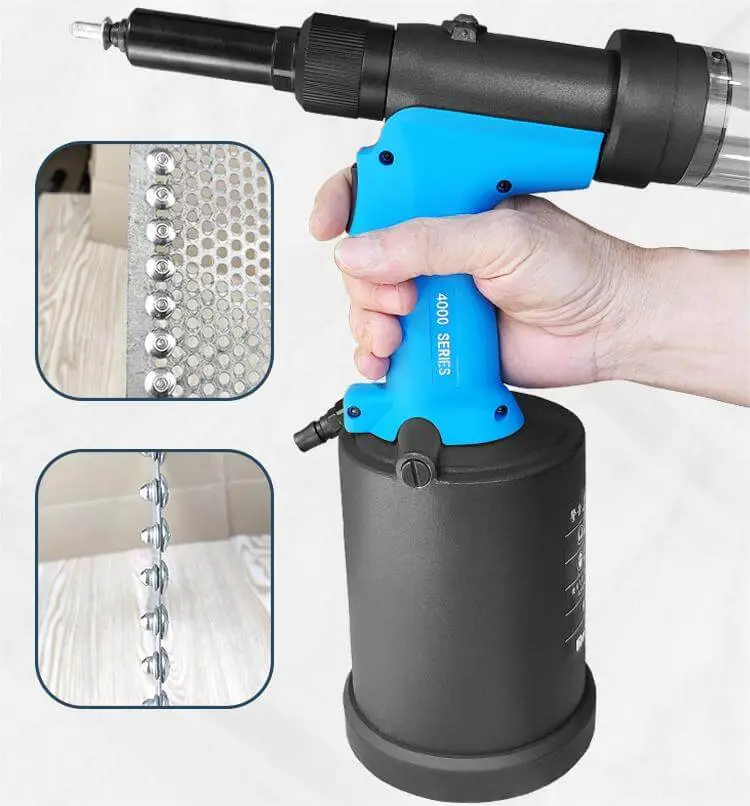
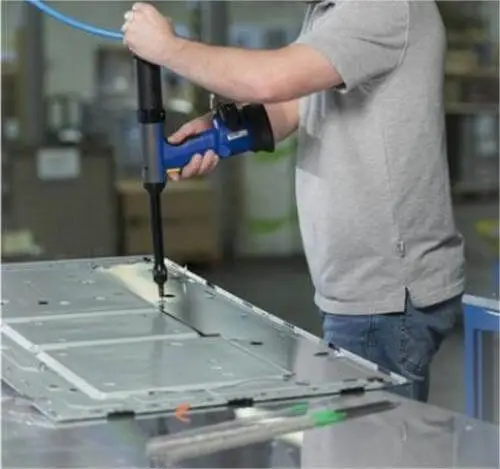
The last type of rivet nut tool is the pneumatic rivnut tool. It is a tool that uses compressed air to provide power. It is widely used in volume industrial production such as automotive manufacturing, aerospace and mechanical equipment assembly.

Why do engineers choose to use pneumatic rivnut tool during mass production? Instead of electric rivet nut guns. The main reason is that the force output of the pneumatic rivnut tool is very stable, which can be very effective in reducing human error. It can ensure that the installation quality of each rivet nut is consistent, which is very important for industrial installation.

How to Choose the Right Tool for Your Rivet Nut Project?

Identify Project Needs

The first step in choosing the right rivet nut tool for your business is to identify your business needs. You can take a comprehensive look at your project requirements and select the most appropriate rivet nut tool for the job. The aim of this process is to ensure that the tool selected will meet the project requirements and will increase efficiency, reduce costs and ensure the quality and reliability of the connection.

We can categorise the size of the project into three simple categories:

  1. Small scale projects
  2. Medium sized projects
  3. Large scale projects
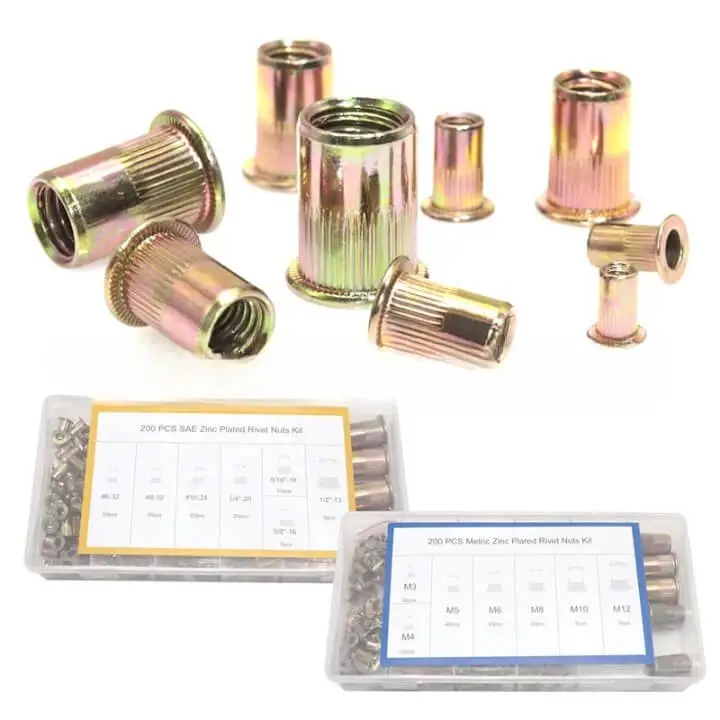
Rivet nut kits - Rivmate Rivnut kits - Rivet nut for supermarkets

So what are considered small-scale projects? For example, home repairs, DIY projects, small workshops or small batch production can all be considered small-scale projects. Small-scale projects are characterised by the fact that they are not used very often, perhaps only once in a while or only need to connect a dozen rivet nuts.

Medium sized projects are characterised by regular use, for example, every week the tool is needed to make the rivet nut connections. Regular production tasks like SMEs, specialised repairs and medium volume production are all considered medium-sized items.

Large-scale projects are easy. Like assembly line operations in large factories, mass serial production or industrial projects that run continuously. Rivet nuts are used frequently on these projects and engineers are required to connect rivet nuts on a daily basis.

Compare Different Rivet Nut Tools

Above we briefly explained the different types of rivet nut tools. Next we need to understand which size project the different types of rivet nut tools are suitable for.

Manual Rivet Nut Tool

  • Scope of application: small batch, light assembly tasks, home repairs and DIY projects.
  • Pros: easy to operate, no power or air source required, high portability, low cost.
  • Disadvantages: labour-intensive operation, low efficiency, not suitable for high-intensity work.

Pneumatic Rivet Nut Tool

  • Scope of application: medium batch, industrial production tasks, automotive manufacturing and repair.
  • Advantages: fast operation, even force, suitable for frequent use, high efficiency.
  • Disadvantages: requires compressed air source, noisy operation, high initial investment.

Electric Rivet Nut Tool

  • Scope of application: high-volume, assembly-line production tasks, home appliance manufacturing and electronic equipment assembly.
  • Advantages: labour-saving operation, high efficiency, adjustable output force, suitable for continuous work.
  • Cons: Requires power supply or batteries, noisy operation, heavy weight.
Tools for Rivet Nuts - How to Choose Rivet Nuts Tools for Your Project

Without considering your budget, I would suggest that you can choose either an electric rivet nut gun or a pneumatic rivet nut gun. The electric rivet nut gun is definitely enough for daily use. If you are in industrial production, then pneumatic rivet nut gun is preferred. It provides consistent installation quality.

With these two points, I think you can roughly determine which type of rivet nut tool you should use for your business! If you want to buy a pneumatic rivnut tool, you can contact us!

Consider the Budget

Budget is the most important factor when choosing rivet nut tools. Initial investment, operating costs, maintenance costs and project needs need to be considered comprehensively. Reasonable selection of manual, pneumatic, and electric rivet nut tools ensures that while meeting project needs, budget and resource utilization are optimized, and work efficiency and assembly quality are improved.

In terms of equipment cost, the equipment cost of pneumatic rivet nut tools is generally the highest, and the manual rivet nut tools are the lowest. However, manual rivet nut tools are not suitable for large-scale industrial production environments.

Conclusion

After reading this far, I believe you have a clear idea of ​​how to choose the best rivet nut tool for your project.

We just need to choose the most suitable type from manual, electric and pneumatic rivet nut tools based on the specific circumstances of your business.

Order Rivet Nuts and Rivet Nuts Tool? Rivmate can Help You!

Do you want to buy rivet nuts or rivet nut tools in bulk? Rivmate can provide many types of rivet nuts and rivet nut tools. Including manual rivet nut tools, electric rivet nut tools and pneumatic rivet nut tools.

Rivmate is the top rivet nut manufacturer and supplier in China. You can solve all your rivet nut needs in one place. Of course, Rivmate also has rivet nut tools suitable for various scenarios, and you can get various types of rivet nut tools.

For your business success! Contact us today!Let us help you succeed!

Contact Person Search

Submit Your Sourcing Request

Are Rivets Stronger Than Screws?

Table of Contents

Are Rivets Stronger Than Screws? Do you know which is stronger, rivet or screw? Do you know what applications they are used in respectively? With this blog, you will learn all about it.

Are Rivets Stronger Than Screws?

Rivet vs Screw. Which Fastener are Stronger?

It depends on how strength is defined.

When comparing shear strength, rivets typically hold the advantage. Rivets feature a smooth shaft structure where shear loads are directly borne by the shaft body, ensuring uniform stress distribution without the issue of threaded sections weakening the cross-section. Under high shear conditions, rivets often exhibit more stable actual load-bearing capacity.

When comparing tensile strength, screws generally prove stronger. Screws can withstand axial tensile forces through preload, and high-strength bolts offer clear advantages under pure tensile conditions. However, this advantage relies on proper installation and sustained preload.

When comparing vibration resistance, rivets are generally more reliable. Rivets provide a permanent connection independent of thread friction, preventing gradual loosening due to vibration. Under sustained vibration or cyclic loading, screw preload can decay by over 30%, whereas rivets carry virtually no risk of self-loosening.

In high-shear and high-vibration applications, rivets are generally more reliable than screws; in primarily tensile scenarios requiring disassembly, screws are more suitable.

Strength of Rivets and Screws

The strength of rivets and screws is mainly composed of the following strength types:

  • Shear strength
  • Tensile strength
  • Fatigue strength

So what do these three types of strength mean?

Shear Strength

Strength of Rivets and Screws - Shear Strength

Shear strength refers to a fastener’s ability to resist lateral loads. In this regard, rivets typically exhibit more consistent performance. Rivets feature a smooth shaft structure where shear forces act directly across the entire cross-section. Stress distribution remains uniform, eliminating the issue of threading reducing the effective cross-sectional area. In contrast, screws under shear loads often rely on the root of the threads for support—precisely where stress concentration is most pronounced. In high-shear applications, rivets exhibit more predictable failure modes, which is why they are widely adopted in structural connections.

Tensile Strength

Tensile strength measures a fastener’s ability to resist axial pulling forces. Screws typically excel in this dimension because they can convert external tensile loads into frictional loads through preload. High-strength bolts exhibit outstanding tensile performance under ideal installation conditions. However, it is important to note that this advantage is highly dependent on proper torque control and long-term preload retention. Once preload diminishes, the tensile performance of screws degrades significantly, a scenario not uncommon in vibrating environments.

Strength of Rivets and Screws - Tensile Strength

Vibration & Fatigue Life

Strength of Rivets and Screws - Fatigue Strength

In real-world applications, vibration and cyclic loads often prove more destructive than static loads. Screw connections rely on thread friction to maintain preload. Under prolonged vibration, preload may gradually decrease, potentially triggering fretting and fatigue cracks. Rivets, being permanent fasteners, do not depend on preload and are immune to thread loosening. In high-vibration environments, rivets typically exhibit more stable fatigue life—a key reason why riveted structures are widely adopted in aerospace, rail transportation, and heavy equipment applications.

Rivets vs Screws: Engineering Comparison

How Do I Choose The Right Size Pop Rivet? - Select the Length of the Pop Rivets
Rivet vs Bolt vs Screw.

Differences in Shear Load-Bearing Mechanisms

Rivets primarily bear shear loads directly through the smooth shaft body. This simple force path ensures uniform shear distribution across the entire cross-section, resulting in stable behavior. Screws, however, often rely on their threaded regions to bear shear forces. The thread root—the narrowest section—becomes the highest stress point. Under high shear loads or cyclic shear conditions, rivets’ load-bearing mechanism more closely aligns with ideal structural models, resulting in more predictable engineering performance.

Stress Concentration in Threaded vs. Smooth Shank Structures

Threaded structures inherently exhibit stress concentration issues. Even in high-strength screws, the thread root remains the most susceptible location for fatigue cracking. Rivets feature a smooth cylindrical structure with continuous stress distribution and no geometric discontinuities. Under cyclic loading conditions, this structural difference directly impacts fatigue life, making rivets a long-standing choice in aerospace and rail transportation.

Dependence on Preload

The engineering performance of screw connections heavily relies on preload. Theoretical strength assumptions hold only when preload is correctly applied and maintained long-term. However, in actual operating conditions, variations in friction coefficients, installation deviations, and vibration all cause preload decay. Rivets do not depend on preload to maintain connection strength; instead, they achieve load-bearing through geometric locking formed during installation. This characteristic makes rivets insensitive to human factors and environmental changes after installation.

Risk of Loosening Under Long-Term Loading

Under prolonged vibration or cyclic loading, screw connections may experience micro-motion, leading to reduced preload and gradual loosening. This process is typically gradual and difficult to detect in its early stages. As a permanent fastener, rivets do not suffer from thread rotation or preload decay issues. Their failure usually manifests as material failure rather than connection loosening. From an engineering safety perspective, this failure mode is more direct and easier to control during the design phase.

Why Are Rivets Used in Aircraft, Rail, and Heavy Equipment?

In high-reliability industries, the choice of fastening methods is not determined by “ease of disassembly,” but rather by long-term safety, predictability of failure, and system reliability. The long-term, widespread use of rivets in aerospace, rail, and heavy equipment sectors is not a matter of tradition or inertia, but an industry consensus formed through decades of engineering validation.

Why Rivets Remain Pervasive in Aerospace

In aerospace structures, loads primarily involve shear and cyclic fatigue rather than single static tension. The smooth shaft design of rivets evenly distributes shear forces, eliminating stress concentration issues associated with threads. In fuselages and wings, connection points endure millions of load cycles where even minor loosening rapidly propagates into fatigue cracks. Rivets provide permanent, preload-independent fastening without vibration-induced loosening risks—exactly meeting aerospace structures’ demands for long-term stability and predictable failure modes.

Why are Aircraft Riveted and not Welded? Riveting vs Welding

Why Railways and Heavy Equipment Avoid Threaded Connections

Rail vehicles and heavy equipment operate continuously under high vibration, high impact, and complex loading conditions. While threaded connections exhibit high strength under static conditions, their engineering performance heavily relies on maintaining preload. Under continuous vibration, preload decay is nearly inevitable, necessitating frequent inspections and retightening. Rivets, however, do not rely on friction or torque. Once installed, the connection remains stable and does not gradually loosen due to vibration. This is a key reason why the railway industry prefers riveting or similar permanent mechanical locking methods.

Why “Non-Removable” is an Advantage

In high-reliability systems, disassembly capability isn’t necessarily an advantage. Conversely, non-disassembly ensures the connection state remains consistent throughout the entire service life, unaffected by human error or maintenance mistakes. Permanent riveted connections reduce points of human intervention, lowering the risk of maintenance errors. From a systems engineering perspective, this design enhances overall safety levels and simplifies long-term maintenance strategies.

Common Misconceptions About Screws vs Rivets

In fastener selection, many decisions stem not from engineering calculations but from experiential intuition. The following common misconceptions about screws and rivets are widespread in real-world projects and frequently lead to incorrect choices.

Misconception 1: “Tighter Means Stronger”

Many assume that tightening a screw sufficiently will inevitably strengthen the joint. This assumption is theoretically flawed. A screw’s strength depends on effective preload, not the tightening action itself. Over-tightening can cause thread yielding, screw elongation, or even premature fatigue. Additionally, in vibrating environments, preload may degrade over time despite high initial torque. In contrast, rivets do not rely on torque and eliminate the “over-tightening or under-tightening” dilemma, maintaining a stable connection state after installation.

Misconception 2: “High-Strength Screws Are Always More Reliable”

High-strength screws indeed possess greater material strength, but material strength does not equate to system reliability. In practical engineering, the reliability of bolted connections heavily depends on installation quality, friction coefficients, and long-term preload retention. Once preload diminishes, high-strength screws can also suffer from micro-movement, loosening, and fatigue issues. While rivets may not necessarily offer higher material strength, their load-bearing mechanism is simpler, failure modes are predictable, and they often demonstrate higher overall reliability in conditions dominated by shear and vibration.

When Should You Use Rivets Instead of Screws?

Rivets vs Screws: Fastener Selection Quick Guide

Engineering ConditionPreferred ChoiceKey Reason
High shear loadsRivetsLoad carried by full shank, uniform stress distribution
Continuous vibration / impactRivetsNo reliance on preload, no self-loosening
No loosening allowedRivetsPermanent joint, long-term stability
Maintenance cost sensitiveRivetsMinimal inspection or re-tightening required
High consistency in mass productionRivetsStandardized installation, repeatable results
Frequent disassembly requiredScrewsReusable and removable fastener

a. High Shear Load Scenarios

When connections primarily endure lateral shear forces, rivets typically offer greater reliability. Rivets directly bear shear loads through their solid shank, featuring a clear stress path without the cross-sectional weakening issues inherent at thread roots. In heavy-duty structures and shear-dominant connections, this load-bearing mechanism more closely aligns with ideal engineering models.

b. Continuous Vibration or Impact Environments

Under prolonged vibration, screw performance heavily relies on maintaining preload, which inevitably degrades over time. Rivets do not depend on friction or torque, preventing gradual loosening due to vibration after installation. This makes them more stable in applications like rail transportation and construction machinery.

c. Structures where loosening is design-prohibited

In safety-critical structures, “loosening” itself constitutes failure. Rivets provide a permanent connection whose integrity remains consistent throughout the entire service life, unaffected by maintenance, environmental factors, or human intervention. This certainty is the fundamental reason riveting is prioritized in many high-reliability industries.

d. Sensitivity to Maintenance Costs and Downtime Risks

Screws typically require periodic inspection and retightening, entailing long-term labor costs and potential downtime risks. Rivets, when properly designed and installed, require virtually no subsequent maintenance. For structures that are difficult to access or have high maintenance costs, riveting offers greater advantages in total lifecycle cost.

e. High Consistency Requirements in Mass Production

In high-volume assembly, the actual performance of screw connections is susceptible to torque deviations and operator variations. The riveting process is standardized, with visually verifiable results, making it easier to achieve stable, consistent connection quality on production lines.

FAQs About Rivets vs Screws

Q1. Are rivets stronger than screws in shear?

Generally yes. In applications where shear loads dominate, rivets offer greater reliability. Rivets bear shear forces through their entire shank, distributing stress uniformly. In contrast, screws often experience shear failure at the root of the threads, where stress concentration is more pronounced.

Q2. Are screws better for tensile loads?

Yes. Screws are generally more suitable for applications where tensile forces are predominant. Screws can effectively withstand axial tensile forces through preload, provided they are installed correctly and the preload is maintained over time.

Q3. Are rivets permanent?

Yes. Rivets are permanent fasteners that cannot be disassembled normally after installation; they can only be removed by cutting or destructive means. This characteristic makes them highly suitable for structures where loosening is unacceptable.

Q4. Can rivets replace screws?

In many cases, yes—especially in applications involving high shear, high vibration, and low maintenance requirements. However, if the structure requires frequent disassembly or adjustment, screws remain the more suitable choice.

Q5. Why not just use welding?

Welding introduces a heat-affected zone, alters material properties, and demands high standards for construction quality and operating conditions. In contrast, rivets are cold-formed fasteners that offer greater consistency in quality and easier risk control in both field applications and mass production.

Engineering Insight from Rivmate

Rivmate.png

Rivmate specializes in riveting solutions not because rivets are “superior,” but because we consistently encounter engineering scenarios demanding high shear resistance, high vibration tolerance, and high reliability. In these applications, the stability, predictability, and full-lifecycle performance of the connection far outweigh any single strength metric.

If you’re evaluating whether rivets suit a project or seeking a more rational balance between safety, maintenance costs, and production consistency, the right decision often stems from engineering logic, not gut instinct. Understanding the fundamental differences between connection methods is itself the first step in mitigating risk.

At Rivmate, our goal isn’t to promote a specific fastener, but to help you choose the right connection method. Contact us now:

📧 Product Inquiry: manufacture@world-rivet.com

🌐 Official Website: https://worldrivet.com/

reference

Share:

More Posts

Get Rivets Quotes Now

Wholesale Blind Rivets from Rivet Manufacturer

Tesla Rivets - Blind Rivets in Tesla Cars

Picture of Rivmate Fastener

Rivmate Fastener

Top Rivet and Rivet Nut Manufacturer in China

Table of Contents

Tesla Rivets - Blind Rivets in Tesla Cars

Tesla Rivets are an important part of Tesla. So do you know what are the specific scenarios where Tesla rivets are used on a Tesla? Let’s come together to understand it!

Table of Contents

What are Tesla Rivets?

Tesla rivets are a type of fastener. It used in the manufacturing process of Tesla vehicles to connect several key parts such as the body, chassis, powertrain and interior components. These rivets include a variety of types, such as Blind Rivets, Structural Rivets, Self-Piercing Rivets (SPR), and Lockbolts. Each type of rivet plays a specific role in different application scenarios. It can ensure the overall strength, durability and safety of the vehicle.

Types of Tesla Rivets

A safe automobile uses a large number of fastener products in its production. Rivets are one of those very important components. However, there are many types of rivets that correspond to different conditions and scenarios of use, and not all of them are used on the Tesla. Below are some examples of the types of rivets commonly used in Tesla.

Blind Rivets

Rivmate Open End Blind Rivet
Open Type Blind Rivet
Rivmate Aluminum Sealed Type Blind Pop Rivet
Closed End Type Blind Rivets

Blind rivets are able to be installed from one side, making them ideal for use in interior bodywork and hard-to-reach areas. Blind rivets are often used to attach Tesla’s exterior body panels such as doors, roof and side panels. It provides panel strength while maintaining panel aesthetics.

Self Piercing Rivets(SPR Rivets)

Rivmate SPR Blind Rivet(Self piercing rivet)
Rivmate SPR Rivet(Self piercing rivet)
Self Piercing Rivets(SPR Rivet)

Self piercing rivets (SPR Rivets) are a new type of joint fastener. Aluminum alloys are widely used on Tesla for lightweighting purposes, and SPR Rivet is used to connect aluminum body panels to the frame. It does not require pre-drilling and provides a strong bond.

Spr rivets can join aluminum and steel materials and ensure a strong connection between them. spr rivet is very suitable for mass production activities, it can be fully automated and mechanized, which saves a lot of labor and time costs while achieving lightweight body structure!

Structural Blind Rivets

1 4 Monobolt Rivet 6.4mm Steel Dome Head Monbolt Rivet
Monobolt Rivet
Rivmate Multi Grip Blind Pop Rivet From China
Multi Grip Blind Rivet

A competent Tesla car has more than just regular connections, but also connections that need to withstand high stress areas. Structural blind rivets are used to accomplish this. It is used to connect load-bearing components such as the suspension and critical nodes of the drivetrain.

A competent automobile manufacturer will invest more cost in the protection of the vehicle. Tesla is no exception, and it uses high-strength structural core-pull rivets for the installation of its safety devices and protective components to ensure that people can be minimally injured in the event of a crash.

High-strength rivets provide extremely high shear and tensile strengths and can withstand high-frequency mechanical stresses to prevent failure due to fatigue.

Rivet Nuts

Stainless Steel Rivet Nuts Wholesaler in China
Rivet Nut

Rivet nuts are mechanical fasteners that connect thin sheet structures and provide threaded attachment points. It is commonly used for threaded connections in thin-walled structures such as Tesla’s interior body mounts and panel mounts. rivet nuts provide an excellent means of repair and provide a reliable threaded connection point in areas that require frequent disassembly.

Rivet nuts are flexible enough to be applied to a wide range of materials and thicknesses, and are widely used in the fixing of bodywork and interior components!

Lockbolts

What is a Lockbolt Used For? The Most Complete Guide
Lockbolt Rivet

Lockbolt Rivet is a type of rivet that can provide extra strength. It tends to be used in connecting Tesla’s critical structural components such as the body frame and chassis in high stress areas. Or it is used to secure key components of the powertrain, such as battery packs and motor mounts, and it ensures the safety and stability of the powertrain.

The extremely high strength of the Lockbolt rivet ensures that critical components are securely attached and remain stable under conditions of high vibration and dynamic loads without loosening.

Applications of Tesla Rives

Tesla Body Connections

Tesla Rivets - Blind Rivets in Tesla Cars

In the case of the Model 3, for example, its body structure uses blind rivet and spr rivet for attachment and assembly.

Tesla’s door panels can’t be connected from both sides in order to maintain structural integrity and aesthetics. And Blind rivet solves this problem perfectly. the biggest advantage of Blind rivet is that it can be connected on one side without accessing the back side of the material. the head of Blind rivet is flat after installation, which won’t affect the appearance of the door, and ensures that the panel will not come loose while the vehicle is in motion.

Tesla Rivets - SPR Rivets in Tesla Cars

Tesla uses spr rivet for all of its body-face-to-steel-frame connections. To avoid galvanic corrosion and to simplify the installation process. Spr rivets are used, which do not require pre-drilling. They penetrate and connect aluminum and steel, providing a strong and reliable connection. It avoids corrosion problems caused by the contact of different metals and realizes the light weight involved.

Tesla Interior Fixed

Tesla Rivets - Tesla Interior Fixed

As an example, the model s of the Tesla Motors lineup uses a lot of blind rivets for its interior assembly.

Tesla’s interior components need to be mounted quickly, securely and aesthetically, and the Blind Rivet fulfills this requirement. The engineers only need to use a special blind rivet gun to quickly install the blind rivets. And the blind rivet ensures that the connection between the Tesla’s dashboard and center console is very strong.

Tesla Chassis Structural Connections

Tesla Rivets - Tesla Chassis Structural Connections

The car chassis supports the weight of the entire car, so it is very important that it is stable.

Take Tesla’s Model X for example, it uses a large number of high-strength structural rivets and blind  rivets for its chassis and battery pack.

Tesla’s chassis and battery pack require high strength because they have to withstand the shock and vibration of the vehicle in motion. That’s why engineers use high-strength structural rivets for this installation process. High-strength structural rivets can provide extremely high shear and pulling forces, which can ensure the solidity and durability of the chassis structure and battery pack mounts.

In order to protect the battery pack and floor pan components, chassis guards are used to secure them. This component does not need to be subjected to high levels of strength, so a large number of blind rivets are used to secure it. Blind rivets provide a strong connection and are very easy to install, ensuring that the shield will not loosen or fall off while driving.

Tesla Powertrain Connection

Tesla Rivets - Lockbolt for Tesla Powertrain Connection

The powertrain is the heart of the car! If you want a car to be like a beast, then the powertrain must not be bad!

Take the Model Y for example. Tesla’s powertrain has high load and vibration requirements, the powertrain generates high loads and high vibrations. Engineers generally use lockbolt rivet to connect the motor mounts to the driveshaft. Which provides extremely high shear and pulling forces to ensure that the motor mounts and driveshafts are very strong under all kinds of working conditions. It prevents them from loosening or shifting!

Pros and Cons of Using Rivets in Tesla

Tesla’s use of rivets in the manufacturing process offers many benefits. Including high strength, light weight, multi-material connections, quick installation, aesthetics and high reliability. These advantages help increase productivity, optimize body structure, and enhance vehicle performance and appearance. However, rivets also have some drawbacks.Such as difficulties in repair and maintenance, high equipment and tooling costs, lower flexibility, and high hole size requirements. Let’s take a closer look at the pros and cons of Tesla rivets.

Pros of Blind Rivets in Tesla:

  • High Strength and Stability: The high shear and pull-out forces provided by rivets are critical to the overall safety and durability of the vehicle, especially in high stress and high vibration environments.
  • Lightweight design: Aluminum and titanium alloy rivets, with their light weight, help to achieve a lightweight design for the vehicle, improving energy efficiency and range.
  • Multi-material connection: Self-pierce rivets (SPR) are particularly suitable for connecting different materials, allowing flexibility in the use of a variety of materials to optimize the body structure and improve performance and durability.
  • Fast and Efficient Installation: Rivet installation is often faster and more efficient than other methods such as welding, which improves the efficiency of production lines, shortens manufacturing time and reduces production costs.
  • Aesthetics and Neatness: Rivet installation results in a flat head and neat appearance without affecting the aesthetics of the body and interior. Enhances the overall appearance quality of the vehicle and user experience.
  • Reliability and durability: Rivet connection has high reliability and durability, which can ensure the stable performance of the vehicle during the whole service life and reduce the maintenance frequency and cost.

Cons of Blind Rivets in Tesla:

  • Difficulty of repair and maintenance: Rivets are permanent connections that require destructive methods (e.g. drilling or cutting) for removal and cannot be reused. This increases the difficulty and cost of repairing and replacing rivets. Especially in the event of an accident or when parts need to be replaced.
  • Less flexible: Compared to bolted connections, riveted connections are less flexible when adjustments or repositioning is required. It requires higher precision and planning during design and assembly and lacks the flexibility to be adjusted at a later stage.
  • Higher requirements for hole size: rivet connections require higher hole sizes for pre-drilled holes. Too large or too small a hole size will affect the quality of the connection.

Order Tesla Rivets for Yout Tesla Project. Rivmate can Help You!

Tesla rivet is not just used only on tesla’s cars, but also on various brands of cars all over the world. So no matter what type of car, there are tons of rivets present on it.

Do you want to order tesla rivets for your automotive project? Contact Rivmate! Rivmate has been vetted by Tesla and has become one of Tesla’s rivet suppliers! So you can have complete confidence in the quality of the rivets! Our rivets can meet the requirements of any automobile manufacturer in the world.

Whether you are looking for standard blind rivets, high strength structural rivets, or specialty rivets. You can buy them all from Rivmate! Rivmate is the top pop rivet manufacturer in China, if you want to buy blind rivets, contact us now!
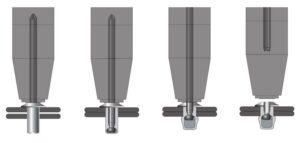
Contact Person Search

Submit Your Sourcing Request

What is a Lockbolt Used For?

Table of Contents

What is a Lockbolt used for? Lockbolts are not fasteners designed for “ordinary connections.” Their core value lies in addressing structural connection challenges that demand high strength, high reliability, and low maintenance requirements. Understanding the true purpose of Lockbolts not only helps you avoid over-engineering or incorrect selection but also enhances installation efficiency and reduces long-term operational risks while ensuring structural safety. This article will explore typical application areas where Lockbolts are widely used, based on real-world engineering scenarios.

What is the Lockbolt?

Lockbolt rivet is specifically designed to provide a very strong and durable connection. They are often used in industrial and structural applications where high strength and durability are required. Examples include bridges, construction, heavy equipment and transportation vehicles etc. The unique design of Lockbolt rivets allows them to remain stable in high stress and high vibration environments without loosening.

Lockbolt rivet is made up of a spike bar and collar. During installation, a pneumatic rivet gun is used to pull the spike bar, deforming the collar or mechanically locking it to tighten the material.

Lockbolt rivet provides very high shear and pull strength and is very easy to install for high volume use.

Rivmate Lockbolt Rivet Fastener | Magna Grip Lockbolts

Lockbolt rivet is made up of a spike bar and collar. During installation, a pneumatic rivet gun is used to pull the spike bar, deforming the collar or mechanically locking it to tighten the material.

Lockbolt rivet provides very high shear and pull strength and is very easy to install for high volume use.

What is a Lockbolt Used For?

Lockbolt rivet acts as a high-strength mechanical fastener that provides a very strong and solid connection. They are often used in structural areas where ultra-high strength is required. Let’s take a look at the “what is a lockbolt used for”.

Applications of Lockbolt Rivets

Lockbolt rivets are suitable for heavy duty and high stress applications due to their extremely high shear and pullout forces. And lockbolt rivet has very high stability, even in high vibration environments. lockbolt rivet makes an indispensable fastener solution in modern engineering and manufacturing. Let’s take a look at some of the specific application scenarios for lockbolt.

Lockbolt for Bridge Construction

Lockbolts Fastener Rivets in Pylons

Any bridge needs to be safe and secure. lockbolt rivet can provide the tremendous loads and dynamic stresses that bridges require. That’s why a large number of lockbolt rivet are used in bridge connections, here are some common scenarios:

  • Major structural connections
  • Bridge deck fixing
  • Bridge parapets and guards
  • Bridge maintenance and rehabilitation
  • Bridge extensions and modifications

Lockbolt rivet provides a high-strength, vibration-resistant, corrosion-resistant and long-lasting connection, benefits that make it a critical fastener for ensuring the safety and stability of bridge structures. By using the specialized lockbolt rivet tool, lockbolt rivet can perform a variety of connection tasks quickly and reliably, improving the efficiency and quality of bridge construction and maintenance.

Lockbolt for Building Structure

Heavy Duty Lockbolts Fastener Rivets in swimming pools

A secure building is connected by a variety of strong fasteners, and the Lockbolt rivet is one of those important fasteners. Below are the applications of lockbolt rivet in building structures:

  • Steel frame connections
  • Connection of roof and wall structures
  • Connection of floor slabs and stair structures
  • Installation of protection and safety devices

Lockbolt for Heavy Equipment and Machinery

Lockbolt Fastener Rivets in Railway Applications

Lockbolt rivet ensures the safe operation of heavy equipment and machinery in harsh conditions due to its excellent characteristics. Below are some specific applications of lockbolt rivet on heavy equipment and machinery:

  • Connection of critical structures such as booms, buckets and undercarriages of excavators
  • Connection of bulldozers’ fuselage and blade holders
  • Connection of boom and base of cranes
  • Connection of rollers and frames in road rollers
  • Connection of mining truck body and chassis
  • Connection of key parts of a crusher, such as jaws and frame
  • Connection of combine harvester and tractor frames, frames and working parts
  • Connections of frames and chassis of heavy trucks and transportation equipment
  • Fixing of railroad carriages and rails

Lockbolt for Transportation Vehicles

Heavy Duty Lockbolts Fastener Rivets Application

Lockbolt is used in a wide range of transportation vehicle applications, including frame and chassis connections, trailer and semi-trailer connections, door and window frames, interiors and bulkheads, guards and safety devices, as well as compartment and cargo hold fastening. They provide high-strength, vibration-resistant, fatigue-resistant and long-lasting connections that ensure the safety and stability of vehicles when transporting heavy loads. With the use of specialized installation tools, lockbolt rivet can perform a wide range of joining tasks quickly and reliably, increasing vehicle productivity and maintenance efficiency.

Lockbolt for Aerospace

Aircraft Blind Rivets - How to Choose Blind Rivets for Aircraft?

Aerospace is a very safety-conscious industry, and engineers use a number of high-strength fasteners, including lockbolt.

Used primarily in aircraft fuselage structures, wings and tails, engines and drivelines, hatches and covers, interiors and finishes, as well as maintenance and restoration work, Lockbolt provides aircraft with the high-strength, vibration-resistant, fatigue-resistant and long-lasting connections it needs. It ensures the safe operation of aircraft under high loads and stresses.

Why Use Lockbolts Instead of Bolts or Welding?

In engineering structural design, connection methods directly impact safety, reliability, and long-term costs. Lockbolt is not a simple replacement for ordinary bolts, but a mechanical locking system engineered for high vibration, high fatigue, and high consistency demands.

a. Vibration Resistance

Lockbolt employs a permanent mechanical locking structure rather than relying on thread friction for anti-loosening. During installation, the lock ring is pressed into the pin groove, creating an irreversible metal-to-metal interlock. This structure prevents self-loosening under sustained vibration and impact loads. In contrast, standard bolts primarily maintain preload through friction. In high-vibration environments, contact surfaces gradually undergo micro-slip, causing continuous preload decay. Industry testing consistently shows that traditional bolts experience clamping force decay of up to 30% or more under vibration conditions, whereas Lockbolt exhibits virtually no such degradation.

b. Clamp Force Retention

Conventional bolts derive clamping force from installation torque, but torque does not equate to actual clamping force. Variations in friction coefficients, lubrication conditions, and operational practices can cause significant fluctuations in clamping force. Lockbolt employs a break-off installation principle where the installation tool directly controls the tensile force. Clamping force is determined by the structure and equipment itself, not by human experience. Consequently, each installation achieves highly consistent clamping force. In engineering practice, Lockbolt typically delivers more stable and long-term clamping force retention, which is critical for structural rigidity and connection reliability.

c. Fatigue Life

Structural fatigue failure often originates at connection points rather than the base material itself. Cyclic stress accumulates rapidly when micro-movement or reduced clamping force exists at joints. Lockbolt eliminates stress concentration at thread roots while effectively preventing relative slippage between joints, resulting in more uniform stress distribution. Multiple fatigue comparison tests demonstrate that under identical load conditions, the fatigue life of Lockbolt connections is typically 2 to 5 times longer than that of standard bolted connections. This superior fatigue performance is a key reason for its widespread adoption in bridges, railway vehicles, and heavy equipment.

d. On-site Efficiency

From an on-site construction perspective, welding often entails higher time costs and safety risks, requiring power sources, gases, protective measures, and additional quality inspections. Conventional bolts typically necessitate double-sided operations and repeated torque verification. Lockbolt can usually be installed from a single side, with each installation point taking only 2 to 4 seconds and exhibiting an extremely low rework rate. In large-scale projects, this efficiency advantage significantly shortens construction cycles while reducing on-site management and labor costs.

e. Total Life Cycle Cost

Although Lockbolt’s per-unit procurement cost is typically higher than standard bolts, engineering decisions should focus not solely on initial price but on total life cycle cost. Lockbolt requires virtually no retightening during service, carries minimal risk of loosening, and substantially reduces maintenance and inspection costs. In high-vibration or high-safety-level applications, when considering installation efficiency, maintenance costs, and failure risks collectively, Lockbolt often proves the lower-overall-cost solution. This fundamental advantage is driving its gradual replacement of welded and traditional high-strength bolts.

Lockbolt vs Bolt vs Structural Rivet

Lockbolt vs Bolt vs Structural Rivet
Comparison CriteriaLockboltStandard BoltStructural Rivet
Shear / Tensile StrengthHigh. All-metal mechanical lock with stable clamp force. Predictable shear and tensile performanceMedium–High. Performance depends on preload and installation qualityMedium. Load mainly carried by the shank. Limited clamp force
Vibration ResistanceExcellent. Mechanical locking. No reliance on friction. Virtually no looseningPoor. Preload loss common under high vibrationGood. No threads. Low risk of self-loosening
RemovabilityNo. Permanent fastenerYes. Can be repeatedly assembled and disassembledNo. Permanent fastener
Installation ConsistencyVery high. Pin-tail break confirms correct installationLow. Torque does not equal preload. Strongly affected by human factorsModerate. Depends on process stability
Maintenance RequirementVery low. No re-torque requiredHigh. Periodic inspection and re-tightening neededLow. Generally maintenance-free
Long-Term Cost (TCO)Low. Higher initial cost, but minimal maintenance and reworkMedium–High. Low initial cost, but high maintenance over timeMedium. Low maintenance, but limited application range

Lockbolt significantly outperforms standard bolts in vibration resistance, preload retention, and fatigue life, making it particularly suitable for high-vibration and safety-critical structures. Although the unit price is higher, maintenance and failure risks are substantially reduced during long-term operation, resulting in lower total lifecycle costs.

Standard bolts offer advantages in disassembly and lower initial costs, but suffer from pronounced preload decay in vibrating environments. Numerous engineering failures stem not from material degradation, but from bolt loosening.

Structural rivets occupy an intermediate position. They do not rely on threads, offering superior vibration resistance compared to standard bolts, but their clamping force and structural rigidity are limited. They are typically used in medium-load or thin-plate connection scenarios.

  • Prioritize Lockbolt: High-vibration, high-fatigue, high-safety-grade structures
  • Select Standard Bolts: Applications requiring frequent disassembly or low-vibration environments
  • Choose Structural Rivets: Medium-load, simple structures requiring permanent, maintenance-free connections

Are Lockbolts Permanent?

Yes. Lockbolt rivet is considered a permanent connection. They are uniquely designed to provide a long-term, stable and strong mechanical connection that is not easily loosened or removed.

Lockbolt rivets are considered permanent connections for the following reasons:

  1. Non-removability: Once a lockbolt rivet has been successfully installed, removing it requires the use of destructive tools and methods such as drilling or cutting.
  2. Extremely high connection strength: lockbolt can provide extremely high shear and pull-out forces, which can ensure the stability and solidity of the connected parts in long-term use.
  3. Resistance to vibration and fatigue: Lockbolt can maintain its performance in high vibration and high stress environments and will not loosen or fail due to long-term use.
  4. Durability: Lockbolt has excellent corrosion and fatigue resistance, and can be used for a long time in harsh environments!
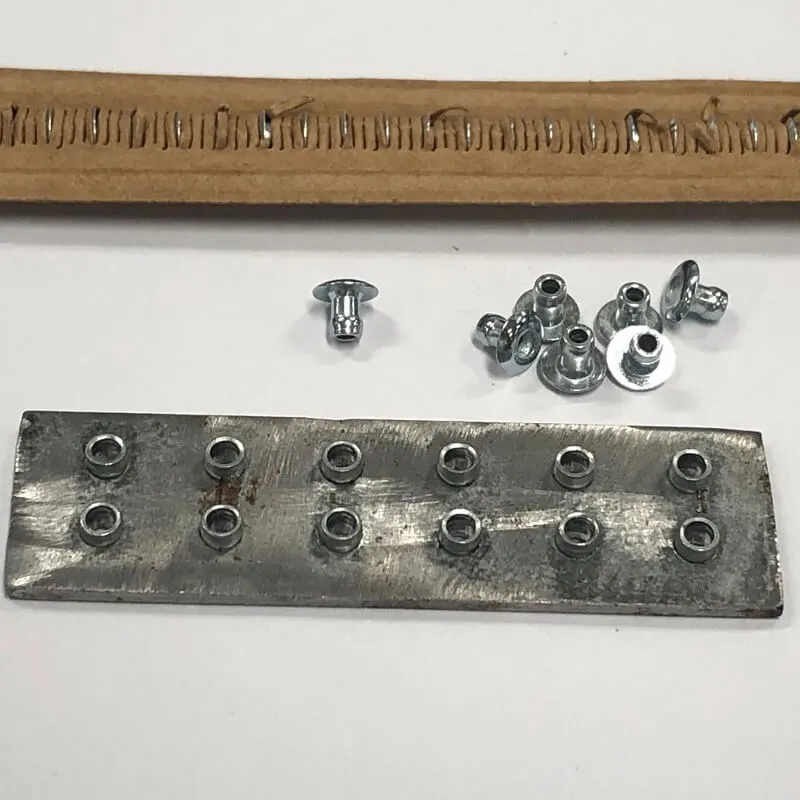
How to Choose the Right Lockbolt for Your Project?

In practical engineering applications, the correct selection of Lockbolt directly determines the reliability of the connection. Many failure cases stem not from product quality issues, but from unclear judgments during the selection phase.

What is a Lockbolt Used For? The Most Complete Guide

① Total Material Thickness

The first step is not selecting the diameter, but confirming the total thickness of the components being joined. This includes all steel plates, shims, and structural layers. Lockbolts secure components by locking them in place via the retaining ring. Incorrect thickness assessment directly leads to failure to lock or insufficient clamping force. It is recommended to measure the actual thickness first, then work backward to determine the Grip Range, rather than selecting the model first.

② Diameter Selection

The Lockbolt diameter primarily determines shear and tensile resistance. Larger diameters offer higher load-bearing capacity but also increase costs and hole machining requirements. Common engineering guidelines include:

  • Shear-dominant structures: Prioritize calculations based on shear loads
  • Tensile or composite loads: Verify minimum tensile strength
  • Avoid blindly increasing diameter when hole tolerances are insufficient

③ Grip Range

Grip Range is the most overlooked yet critical parameter in lockbolt selection. It denotes the material thickness range where the lockbolt can reliably secure. If thickness falls below the lower grip limit: clamping force is insufficient, leading to loose connections. If thickness exceeds the upper grip limit: the lock ring cannot fully form, posing a failure risk.

Actual thickness should fall within the middle of the Grip Range, not at the boundaries.

④ Material Selection (Carbon Steel / Alloy Steel / Stainless Steel)

Material determines strength, durability, and cost.

  • Carbon Steel: Cost-effective, suitable for most structural components
  • Alloy Steel: Higher strength, suitable for high-load and safety-critical applications
  • Stainless Steel: Corrosion resistance prioritized, typically lower strength than alloy steel

The advantage of stainless steel Lockbolts lies in corrosion resistance, not ultimate strength. In high-load environments, stainless steel cannot simply replace alloy steel.

⑤ Tool Compatibility

Lockbolts are not “universal” fasteners. They must be used with specified tools. Verify the following:

  • Does the tool support the required diameter?
  • Does the pulling force meet material grade requirements?
  • Is the pneumatic or hydraulic system stable?

Insufficient tool pulling force will result in inadequate clamping force even with the correct model, creating potential hazards.

FAQs-What is a Lockbolt Used For?

Q1. What is a lockbolt used for?

Lockbolts are used in high-vibration, high-fatigue, and safety-critical structures such as bridges, rail vehicles, heavy trucks, and construction machinery. Their primary function is to provide long-term stable clamping force, preventing connection loosening due to vibration. They are often used as an alternative to welding or traditional high-strength bolts.

Q2. Are lockbolts stronger than bolts?

In terms of material strength alone, both may be rated at the same level. However, in practical engineering applications, lockbolts are generally more reliable. This is because their clamping force remains stable and does not rely on thread friction, whereas conventional bolts may experience over 30% decay in preload under vibrating conditions.

Q3. Are lockbolts permanent?

Yes, lockbolts are permanent fasteners. Once installed, they cannot be disassembled without cutting and are therefore ideal for structures where loosening or maintenance is unacceptable.

Q4. Lockbolt vs Bolt vs Rivet (What are the differences?)

Lockbolts offer the strongest vibration resistance, stable clamping force, and lowest maintenance requirements. Standard bolts are removable with low initial cost but prone to loosening. Structural rivets lack threads, provide decent vibration resistance, but have limited clamping force and load capacity.

Q5. When should I use a lockbolt?

Lockbolts should be prioritized when structures endure prolonged vibration or impact loads, demand high fatigue life and safety standards, and require no subsequent retightening or maintenance. Their advantages lie in long-term reliability and total lifecycle cost, not individual unit price.

Order High Strength Lockbolt Rivet

Rivmate Rivet Factory in Jiangsu, China

Looking for a professional lockbolt supplier for your project? Contact Rivmate!

Rivmate can provide you with high-strength, corrosion-resistant and long-lasting lockbolts, and you can choose from a wide range of materials and specifications from Rivmate to meet the needs of your different projects.Rivmate has an experienced team of technicians who can provide professional selection advice and technical support!

The lockbolt rivet supplied by Rivmate meets the international quality standard, you can rest assured to use it!

Rivmate can provide you with a full range of solutions, understand contact Rivmate, order lockbolt rivet!

Reference

Share:

More Posts

Get Rivets Quotes Now

Wholesale Blind Rivets from Rivet Manufacturer

Submit Your Rivet Request

First order over $5,000 free riveting tools