Whatsapp: +86 18962304392

Email: manufacture@world-rivet.com

Structural Rivet vs Blind Rivet: What is the Difference?

Picture of Rivmate Fastener

Rivmate Fastener

Top Rivet and Rivet Nut Manufacturer in China

Table of Contents

Rivmate Hemlock Blind Rivets

Before starting a new project, you should learn about structural rivets and blind rivets. understand the differences between structural rivets and blind rivets and provide unique value to your customers.

Table of Contents

In the industrial field, a variety of products and projects use structural rivets or blind rivets to provide a safe and stable connection.Structural rivets can provide high strength to condense, which can make your heavy-duty projects safer.Blind rivets can help you with many general projects. You can use them to join a variety of materials, including metal and wood.

In this blog post, we will demonstrate the difference between structrural rivets and blind rivets. You will also learn about their advantages and disadvantages. So, let’s get started.

What are Structural Rivets?

Structural rivets are blind rivets designed for heavy equipment and applications. In everyday use, structural rivets are often found in critical areas. It makes joining and assembling heavy equipment a quick and easy process.
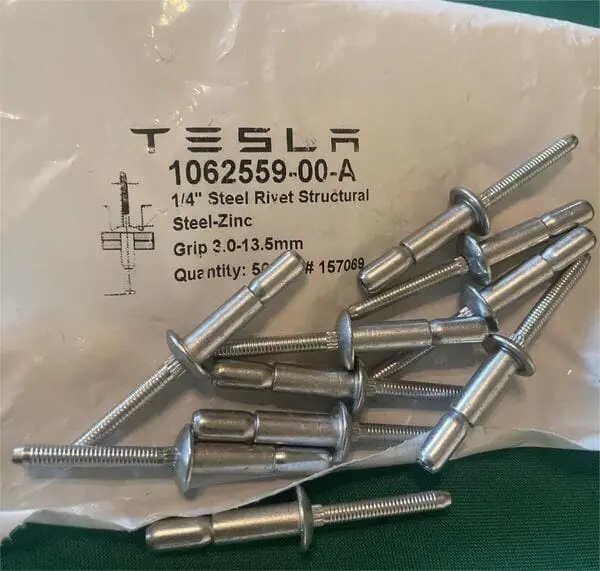
Tesla Rivets - Blind Rivets in Tesla Cars

Structural rivets provide ultra-high shear and pullout strengths. In addition, they can be joined with consistent quality. You can use structural rives to create reassuring connections in thin sheets on any heavy-duty project.Structural rivets can also provide your project with special properties such as waterproofing and dustproofing by adding gaskets.

Prons and Cons of Structural Rivets

Now let’s look at the pros and cons of structural rivets.

Prons of Structural Rivets

Structural rivets are a very effective riveted fastener with a variety of advantages. Here are some of the advantages of structural rivets:

  • Structural rivets can withstand extremely high shear and pulling forces and are stronger than ordinary rivets. The raw materials used in the manufacture of structural rivets are generally higher strength materials.This characteristic makes them suitable for connections under high loads and dynamic conditions, facilitating their use in automobiles, aircraft and construction.
  • Structural rivets have a unique locking design. During the riveting process, its mandrel is securely locked into the rivet body and will not loosen or fall out. This is critical for high vibration environments. This locking mechanism increases the overall strength of the rivet and prevents vibration induced loosening, ensuring long term stability.
  • During installation, structural blind rivets provide consistent tightening force and locking depth. This consistency ensures uniform strength at each joint, minimizing installation errors and improving overall structural safety and reliability.
  • Structural rivets have a locked mandrel. Structural blind rivets excel in vibration environments, resisting fatigue and loosening caused by vibration. Structural rivets have become indispensable fasteners in the railroad, aerospace and heavy machinery sectors.
  • Unlike blind rivets, many structural rivets are designed to be sealed, preventing the ingress of water, air or other substances through the joint. It minimizes the effects of water, gas and dust and is ideally suited to handle automotive bodywork and marine fabrication.

Cons of Structural Rivets

Structural rivets have a number of disadvantages in addition to a variety of advantages. The following are some of the disadvantages of structural rivets:

  • Structural rivets are typically made from high strength and corrosion resistant materials such as stainless steel or high strength alloys at a higher cost. While these materials offer superior performance, they also increase the overall cost of the rivet, especially when used in large quantities.
  • Structural rivets are typically heavier than regular rivets due to the use of high strength materials. This can become an issue in applications where weight reduction is required, such as aerospace or automotive manufacturing, where a balance between strength and weight is required.
  • Structural rivets are primarily used in applications where high strength and reliability are required, and may be too expensive or complex in light duty or general applications. In these cases, the use of structural rivets may not be cost effective and standard rivets or other fasteners may be a better choice.

What are Blind Rivets?

Blind Rivets are the best joining solution for general applications. Blind core rivets do not provide as much strength as structural rivets. Typically, the strength of a blind rivet is half or even one-third that of a structural rivet. You can choose the rivets according to the requirements of the project or the needs of the customer. However, blind rivets can still provide a stable and reliable connection.
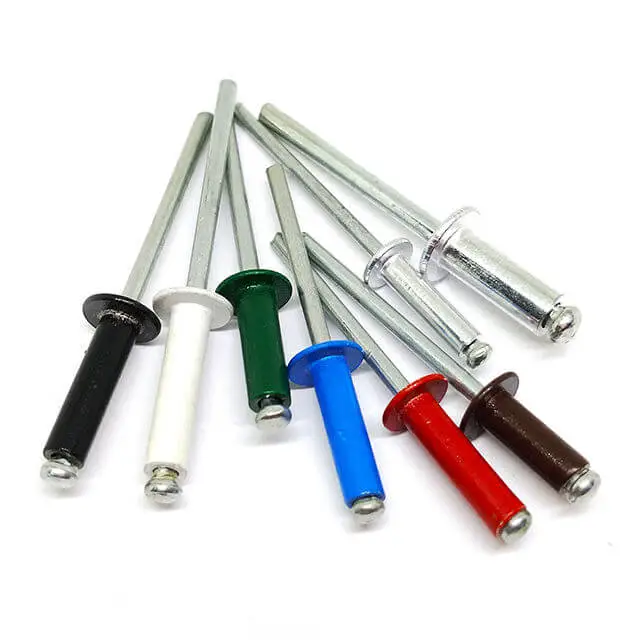
Cost of Rivets

Prons and Cons of Blind Rivets

Although we have learned what a blind rivet is, it is still necessary to recognize its advantages and disadvantages.

Prons of Blind Rivets

Blind rivets are an excellent joining solution. Allowing you to complete many general projects, here are some of the benefits of the blind rivet:

  • Blind rivets allow you to install from one side very quickly. The biggest advantage of blind rivets is that they can be installed from one side without having to touch the other side of the joint. This feature makes it particularly suitable for enclosed structures, pipes or hard-to-reach areas.
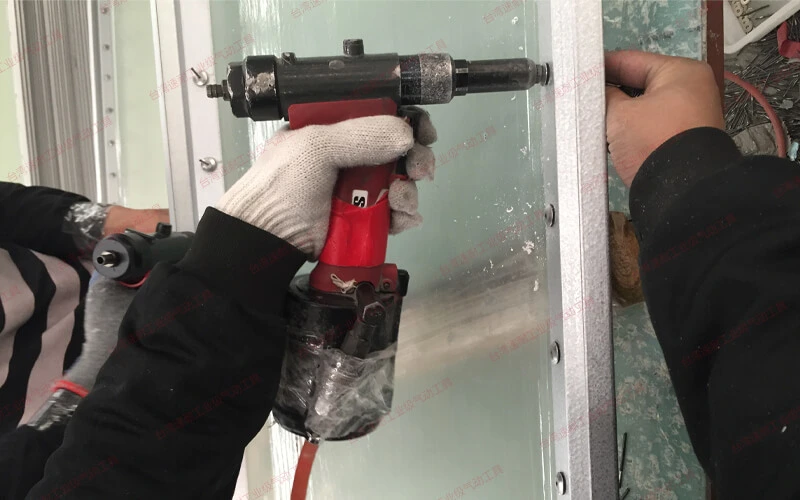
  • The installation process for blind rivets is very simple. It can be accomplished using a rivet gun. This makes blind rivets ideal for mass production and rapid installation. It can increase productivity and reducing installation time and labor costs.
  • Blind rivets can be used to join a wide range of materials, including metals, plastics, composites and more.
  • Blind rivets are typically made of aluminum, stainless steel or other lightweight materials. These materials provide sufficient strength while remaining lightweight. The lightweight nature of blind rivets is especially important in aerospace, automotive manufacturing, and other applications that require weight reduction.
  • Blind rivets are designed to prevent the connection from loosening during use and perform particularly well in vibrating environments.
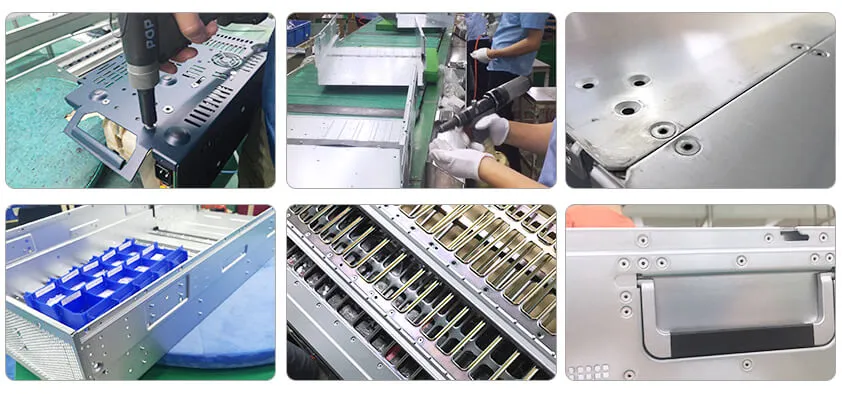
What Are Pop Rivets Used For? - Pop Rivets for Electronic Devices

Cons of Blind Rivets

  • Compared to structural rivets or bolts, blind rivets have lower shear and pullout resistance. Blind rivets are not suitable for extremely high load applications. Where large mechanical stresses are required, blind rivets may not provide sufficient strength and are prone to failure.
  • The head of the blind rivet is often exposed and may detract from the appearance or design requirements of the product. In applications where smooth surfaces or hidden connections are required, blind rivets may not be suitable. The designers need to consider the impact of this exposed portion.
  • Blind rivets require a matching hole size. If the hole size is too large or too small, the rivet may not fit correctly or provide adequate tightening force. Drilling accuracy is required during the manufacturing process and any errors may affect the quality of the final connection.
  • Although blind rivets are suitable for a wide range of materials, they are not suitable for all materials. For example, in very hard materials, stronger fasteners such as structural rivets may be required.
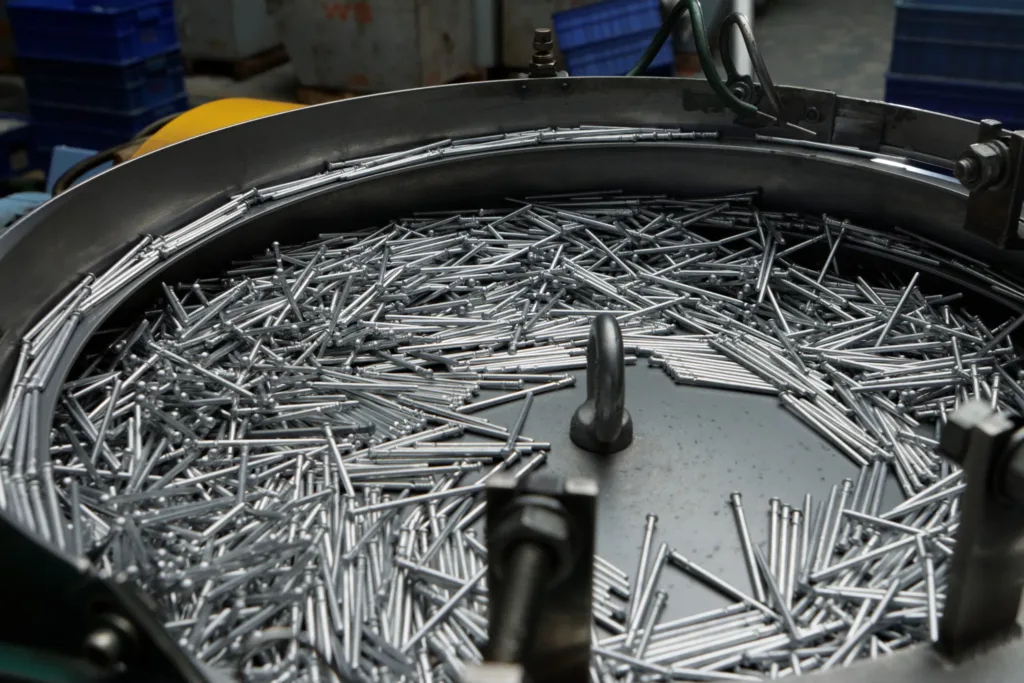
A large quantity of rivets

Contact Our Engineers Today

We provide you with high quality rivets, including customized services.

Structural Rivet vs Blind Rivet: What is the Difference?

Structural rivets are a type of blind rivet. They have many similarities, but they also have significant differences. Here are the main differences between structural rivets and blind rivets.

 Structural RivetBlind Rivet
Design PurposeDesigned for high-strength applications, they are capable of withstanding extremely high shear and pull-out forces.Suitable for general load applications, providing basic stationary functionality.
ApplicationsUsed for critical structural connections such as aerospace, automotive chassis, and architectural steelwork.Used for general industrial and everyday applications such as electronic equipment, home appliances, furniture, etc.
Vibration ResistanceExtremely vibration resistant, suitable for long term stable connections in high vibration environments.Weak vibration resistance and may come loose in high vibration environments.
CostRelatively high for application scenarios with high performance requirements.Lower for high-volume, cost-sensitive projects.

1. Desigh Purpose

Blind rivets were originally invented to solve the problem of not being able to touch both sides of a material at the same time. It is suitable for general load applications and can provide a basic holding function. For connections subjected to high loads, blind rivets are not suitable.

Structural rivets are designed to solve the problem of ordinary blind rivets not being able to withstand high loads. Structural rivets are designed for high-strength applications and can withstand extremely high shear and pull-out forces. Structural rivets are used to complete the joining process, such as steel connections in construction and assembly of critical parts of automobiles.
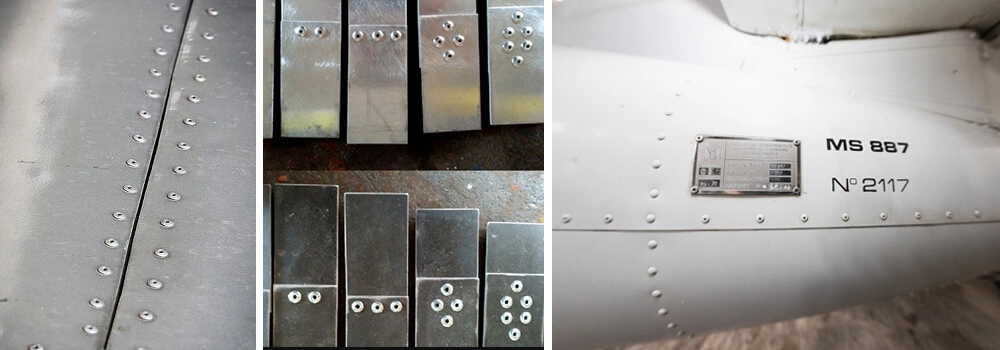
Why do Airplanes Use Rivets Instead of Welds?

2.Vibration Resistance

Like in airplanes, automobiles, you’ll find that structural rivets are used a lot more than blind rivets. This is because structural rivets are much more vibration resistant. It can establish a long-term stable connection without loosening under high vibration environment.

3.Cost

Structural rivets have higher strength and better vibration resistance than blind rivets. However, structural rivets are more expensive. This means that you need to pay more financial cost.

Factors to Consider When Choosing Rivets

A variety of factors influence the rivet selection for each project. Here are some of the factors that go into choosing the right type of rivet:

  • The application scenario of the rivet will affect the rivet selection. Different application scenarios use different rivets. Structural rivets are not suitable for all scenarios. Therefore, you should consider the load requirements of the application and select the corresponding rivet type.
  • Of course, the budget of the project will also affect your choice. If your budget is not sufficient, you need to choose the most cost-effective rivets under the premise of meeting the needs of the application.

Would you like to learn how to choose the right rivets for your project? Please read the hyperlinked article

Which One Should I Choose?

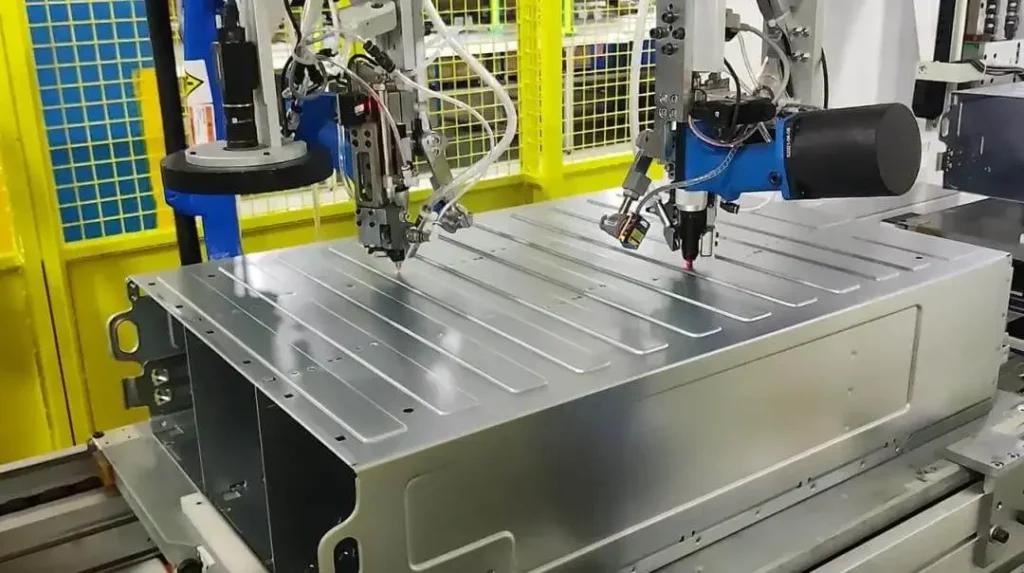
Rivet selection depends on your project requirements. Determine the rivet material you want and the rivet size that corresponds to the hole diameter. Rivets allow you to quickly join materials or components. You can use them in fully automated industrial production plants.
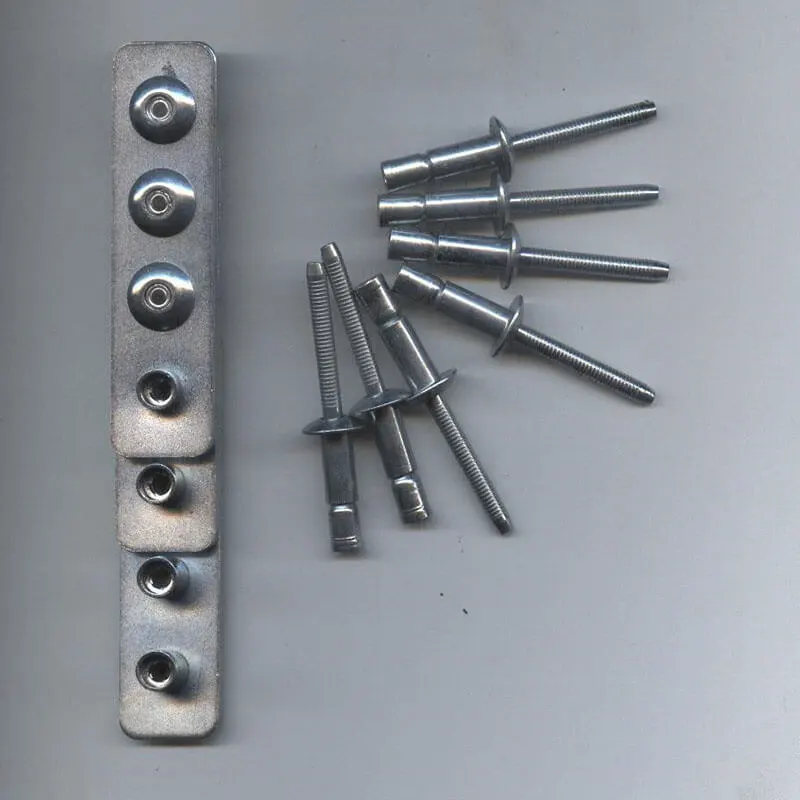
Riveting Effect of Stainless Steel Blind Rivets

Structural rivets can make your project more secure. Higher strength makes them available for a wider range of applications, including automotive production and repair. It can also help provide your project with special features such as waterproofing.

Therefore, if your project has a high level of strength, structural rivets are for you. However, if it is just to hold the sheets together, you should choose the blind rivets.

A large quantity of rivets

Contact Our Engineers Today

We provide you with high quality rivets, including customized services.

Conclusion

Structural rivets and blind rivets are very effective connecting fasteners. It allows you to finish your project quickly. These riveting fasteners also provide a reliable support for your business.

However, you need to make sure that you are using the right rivets for your project. Consider the actual needs of your project to choose the best rivets for your specific requirements. Use pop rivet manufacturer‘s structural rivets to create a perfect project through unique value.

Buy the Right Rivets for Your Project from Rivmate!

Blind rivets and structural rivets are both effective fasteners for joining thin sheet materials.Rivmate offers high quality blind rivets and structural rivets to meet your needs. You can explore several other thin sheet solutions at Rivmate. Request a quote to get the best riveting solution for your project.
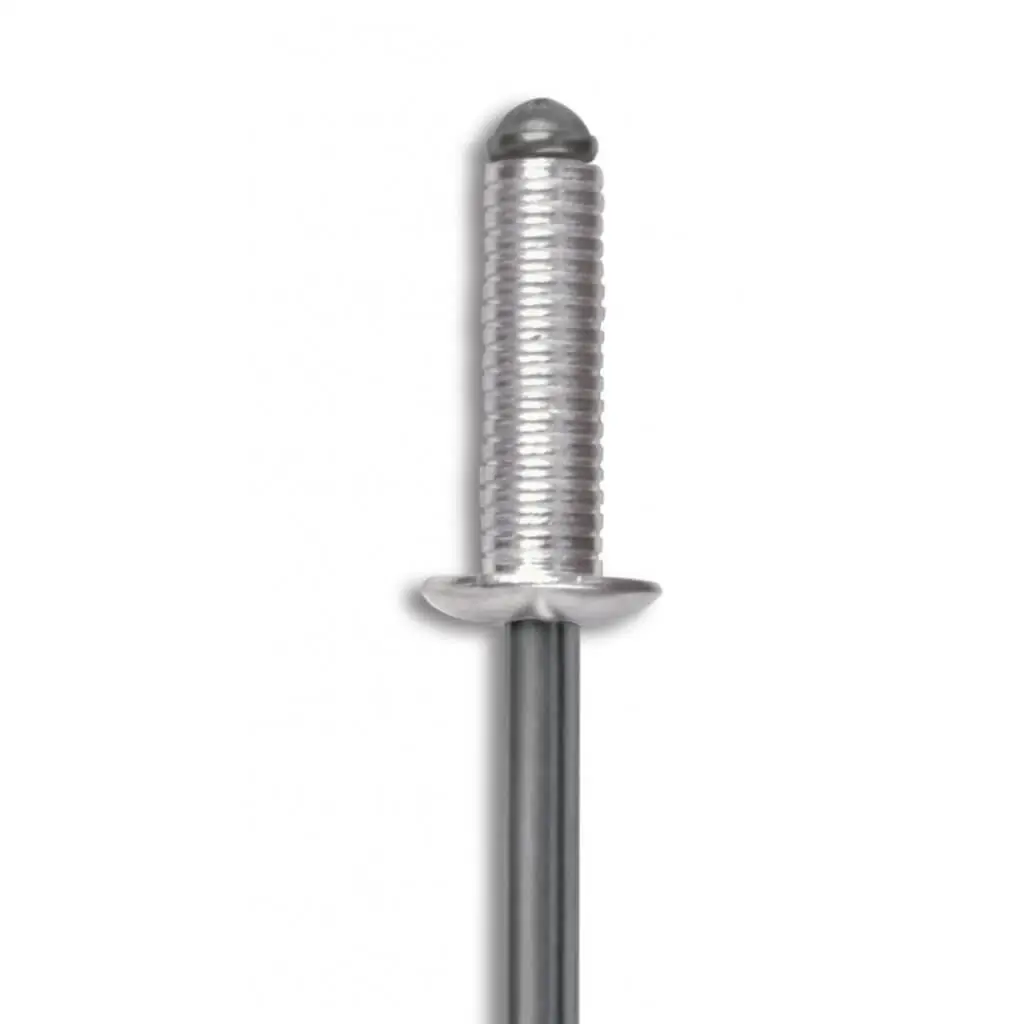
Get Rivets Quote

Submit Your Sourcing Request

8 Benefits of High Strength Structural Blind Rivets

Picture of Rivmate Fastener

Rivmate Fastener

Top Rivet and Rivet Nut Manufacturer in China

Table of Contents

Grooved Pop Rivets

Learn 8 benefits of high strength structural blind rivets to shorten the process of ordering your structural blind rivets. Learn more now!

Table of Contents

Blind rivets have become the premier joining fastener for joining thin sheet materials for major manufacturers around the world. Few other fasteners can match the simplicity, speed and consistency of the connection. High-strength structural blind rivets have proven their superiority in a variety of industrial applications due to their consistent shear and pull-out strengths.

Read on to learn more about the many benefits of structural blind rivets.

What Are Structural Blind Rivets?

Structural Blind Rivets are blind rivets designed to withstand high strength and severe conditions. Unlike conventional blind rivets, structural blind rivets provide higher shear and pull-out forces and the mandrel is securely locked into the body of the rivet during the riveting process to form a monolithic structure.

Magna Lok Rivets for Sale - Bulk Huck Magna Lok Blind Rivets Wholesale

Heavy equipment requires strong connections until the equipment stops due to failure. Therefore, high strength structural rivets are the preferred choice for connecting heavy duty applications.

Riveting is the formation of a stable mechanical connection by squeezing the rivet body. Riveted sheets are generally not very thick, from 3mm to 50mm can be connected using structural blind rivets. Therefore, for sheet metal blind fasteners, blind rivets can outperform almost any other joining method.

A large quantity of rivets

Contact Our Engineers Today

We provide you with high quality rivets, including customized services.

8 Benefits of High Strength Structural Blind Rivets

Why do many projects choose to use the more expensive structural rivets? Because structural rivets have many advantages that blind rivets do not have.

1. Extremely High Strength and Reliability

High Strength Structural Rivets are capable of providing extremely high shear and pull-out forces. Structural Rivets maintain excellent stability and security in applications where high loads need to be applied. This is especially true in aerospace, automotive manufacturing and construction where high strength connections are required. High strength structural blind rivets are used very frequently.

2. Blind End Installation

Automatic Riveting Stainless Steel Products

The great advantage of Blind Rivets is that they can be installed from one side without the need to access the other side of the joint. Structural rivets also offer this advantage.

In many structures, access to the other side of the joint may be difficult or impossible. Blind rivets offer an easy installation solution, making them particularly suitable for use in confined spaces or complex structures. This is one of the reasons why blind rivets are becoming increasingly popular.

3. Anti-Vibration and Anti-Loosening

Unlike ordinary blind rivets, structural blind rivets have a mandrel that is locked into the rivet body. This special locking mechanism effectively prevents the mandrel from loosening or falling out, providing superior vibration resistance.

The vibration resistance of structural blind rivets is particularly important in high vibration or dynamic load environments such as aircraft, automotive and machinery. Excellent vibration resistance ensures that the connection remains strong over long periods of time without loosening or failing.

4. Quick and Easy Installation

Compared to other connecting fasteners, Blind Rivets and Structural Rivets require only a specialised rivet gun for quick installation. The entire process of installing structural blind rivets is very simple and fast.

Projects using structural rivets can reduce installation time and labour requirements by a significant amount. For manufacturers, this increases productivity and is ideal for engineers working on mass production and on-site construction. If your project has a very short production time, structural rivets are perfect for you.

When Should you Use Rivets,Rather than Screws?

5. Long Lasting Durability

Structural rivets are known to be strong. Due to their strength and corrosion resistance, structural rivets maintain a stable connection even under extreme conditions. For a qualified project, this feature reduces damage caused by environmental factors.

With proper installation, high strength structural rivets are virtually immune to damage or connection failure. You can reduce maintenance frequency and costs and extend the life of your structure, making it a cost-effective fastening solution.

6. Fatigue Resistance

Because of the unique structural design of the Blind Rivet, it effectively disperses stresses and reduces stress concentrations. If your project is in an environment that is subjected to dynamic loads for a long period of time, such as bridges and railways. High-strength structural rivets provide excellent fatigue resistance, the perfect solution to this problem.

7. Consistent Installation Quality

Structural Rivets are installed with excellent consistency. Structural Rivets provide a consistent tightening force and locking mechanism during installation. This ensures consistent quality at each joint, reducing the failure rate of joints and improving the safety of the entire structure.

8. Various Types Available

There are many different types of structural pop rivets in order to apply to different scenarios. These include the high-strength lockbolt rivets and bomb rivets, the waterproof bulb tite rivets, and the most popular monobolt rivets, and they are available in a wide range of materials including aluminum, steel, and stainless steel. these structural pop rivets are used for most applications.

If you would like to learn more about the types of structural pop rivets, check out this article.

A large quantity of rivets

Contact Our Engineers Today

We provide you with high quality rivets, including customized services.

Applications of Structural Blind Rivets

High-strength structural pop rivets can be applied to all forms of sheet metal products. Therefore, any task that could theoretically be accomplished with welds and bolts can be accomplished more quickly with structural pop rivets.

Below is a brief list of the most popular applications for structural pop rivets.

1. Aircraft Equipment and Structural Connections

Airplanes generate a lot of vibration due to being in motion for a long period of time. Therefore, fasteners used in airplanes need to have good vibration resistance. Structural blind rivets are well suited to this condition.

Why do Airplanes Use Rivets Instead of Welds?

Almost every aerospace manufacturer purchases large quantities of high-strength structural rivets, which speeds up the process of building airplanes. Most structural blind rivets are used to attach critical structural components such as fuselages, wings and tails. In addition to this, structural rivets are used for equipment and panels inside the airplane, such as making an addition, instrument panels and baggage compartments. The core-pulling woolen empire ensures that these devices do not come loose during flight.

2. Installation of Automotive Components

The birth of a competent automobile is filled with a large number of connecting fasteners that work together to make a car. Structural blind rivets are one of these important components.

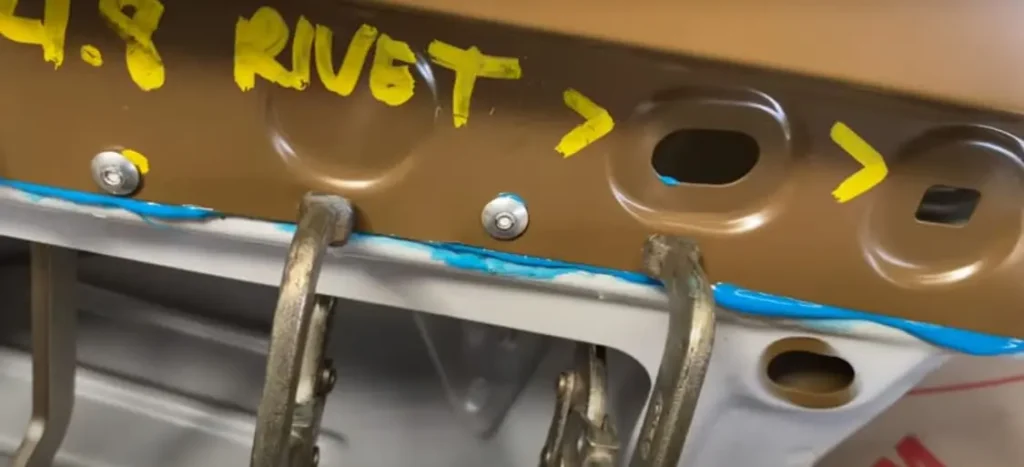
High strength blind rivets connect body panels, doors, hoods and chassis.

Tesla Rivets - Blind Rivets in Tesla Cars

3. Building Facade and Structural Steel Connections

A lot of structural pop rivets are used in the construction field. Structural blind rivets can be used to connect steel beams, braces and other structural components during construction.

Structural blind rivets can also be used to secure curtain wall systems, metal panels and glass facades of buildings.

4. Shipbuilding

Ships will use a large number of solid rivets in addition to structural rivets to complete the deck connections.

There will also be a lot of equipment on the ship. These rivets would also have been used for ancient imperial radar mounts, life-saving equipment, and other vital components.

5. Railroad Tracks and Heavy Equipment

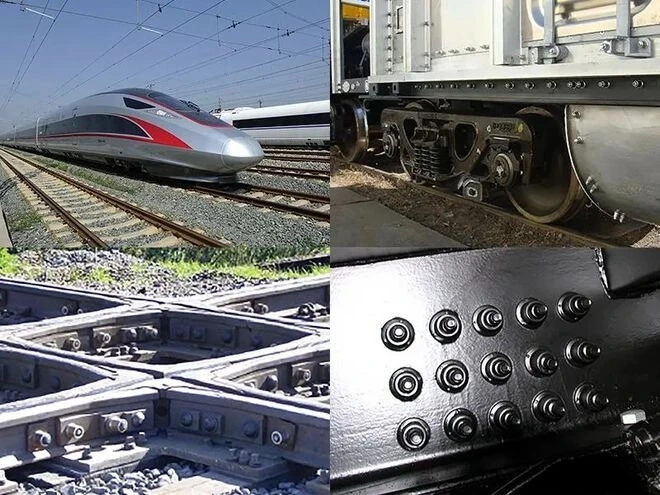
On a railroad, the track will use structural rivets for track fastening and attachment. Railroad vehicles also use a large number of high-strength structural rivets for the connection of the body structure, chassis and other load-bearing components.

Heavy Duty Lockbolts Fastener Rivets Application

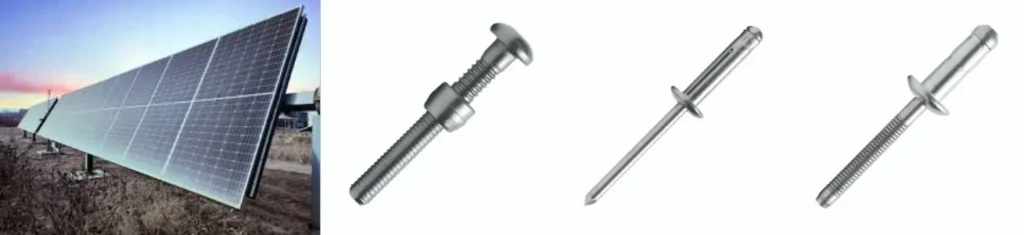
6. Solar Energy System

With the popularity of the new energy concept, structural rivets are being used more and more. Many solar providers use structural rivets to secure solar panels to keep them working stably in long-term outdoor environmental exposure.

Blind Rivets for Solar Panel

When Jean, in some large solar projects, the tracking brackets for solar panels are held in place using a large number of structural rivets.

A large quantity of rivets

Contact Our Engineers Today

We provide you with high quality rivets, including customized services.

Conclusion

High strength structural rivets can be used in a variety of application scenarios. Increased use of structural blind rivets can provide overall productivity and reduce production time. Structural Rivets can join a wide range of materials. Blind rivets do not require repetitive inspections and repairs, which saves on labor costs and risk.

Buy Structural Blind Rivets from Rivmate!

Rivmate is the top pop rivet manufacturer. with years of expertise and a commitment to providing quality service to our customers, we have served over one hundred countries and territories for over a decade.

We are confident that our wide range types of structural pop rivets will fulfill your riveting needs. Get a quote today!

Get Structural Blind Rivets Quote

Submit Your Sourcing Request

Types of Structural Pop Rivets

Picture of Rivmate Fastener

Rivmate Fastener

Top Rivet and Rivet Nut Manufacturer in China

Table of Contents

Riveted Connections in Steel Structures - How to Choose Pop Rivets for Steel Structures?

Many types of blind rivets have emerged to suit the requirements of different projects. So do you know the types of structural pop rivets? Do you know their characteristics and application scenarios? This blog will give you the answer.

Table of Contents

What Are Structural Pop Rivets?

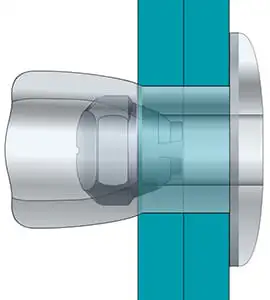
Structural pop rivets are specialised blind rivets designed to withstand high loads and severe conditions. In contrast to conventional blind rivets, structural pop rivets typically have a portion of the mandrel locked into the body of the rivet after riveting is complete, creating a monolithic structure. This design enhances the strength and durability of pop rivets, allowing them to withstand greater shear and pull-out forces.

If you are looking for an ultra-high vibration resistant solution, structural pop rivets would be ideal for you. They are widely used in heavy duty applications such as trucks, tractors, trains, trailers, steel structures and many other applications.

Types of pop rivets - Rivmate Blind Rivet Supplier

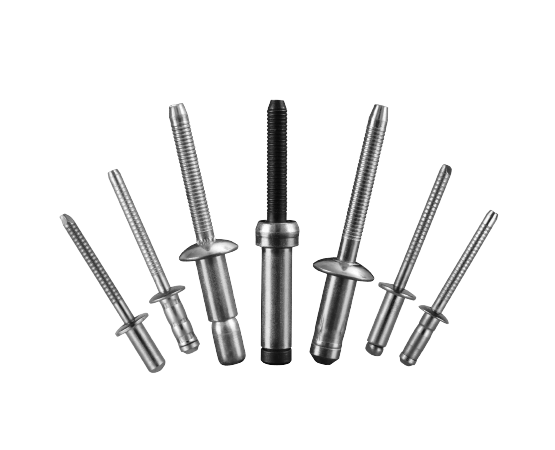
Types of Structural Pop Rivets

There are many different types of structural pop rivets to suit different intensities and conditions. Here are some common types of structural pop rivets.

now-lock blind rivet

1.Interlock Rivets (Now-Lock Blind Rivets)

Interlock Rivets are installed in such a way that the end of the mandrel combines with the locking mechanism inside the rivet body to form a solid locking structure. The mandrel of this type of rivet will not fall off or loosen, and can effectively increase the shear and pull-out strength of the blind rivet.

1 4 Monobolt Rivet 6.4mm Steel Dome Head Monbolt Rivet

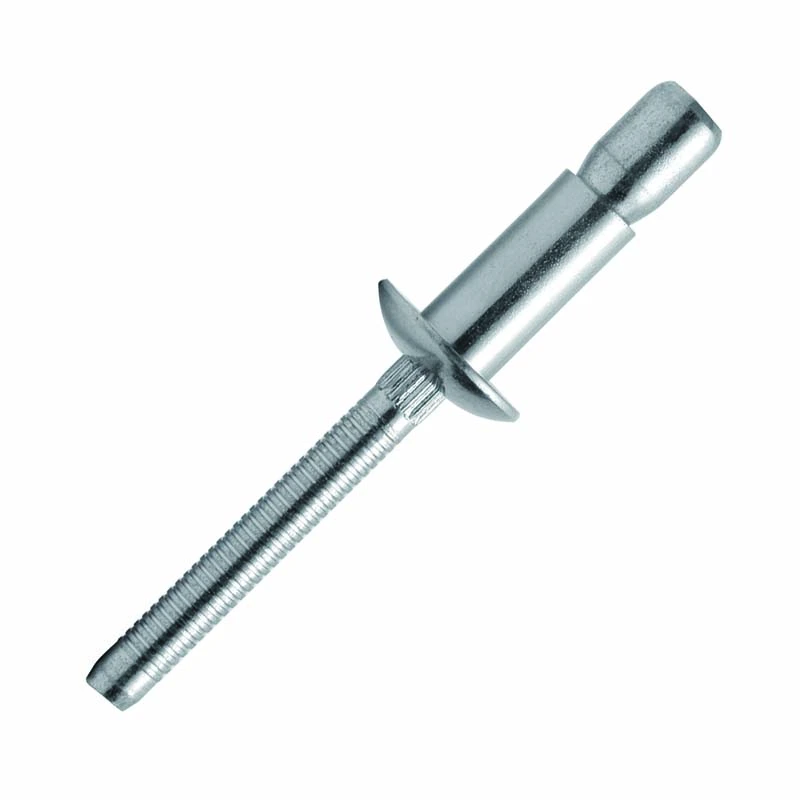
2.Monobolt Rivets (Mono-Lock Blind Rivets)

This structural rivet is designed to be an all-metal construction where the mandrel will be completely locked into the rivet body. It has very high tensile and shear resistance and usually has excellent watertight sealing properties. If your project is for shipbuilding, heavy equipment and structural steel construction etc., then monobolt rivets are the best choice for you!

Rivmate Waterproof Bulb Tite Rivets

3.Bulb Tite Rivets (Bulbtight Trifirm Rivet)

Bulb tite rivets. also known as tri bulb rivets, are a specially designed type of blind rivet. This type of blind rivet expands into a bulb shaped head at the end of the rivet after installation.Bulb tite rivets in combination with a washer provide excellent waterproofing properties. Ideal for auto body construction, solar panel attachment and refrigerated truck installation.

Rivmate Hemlock Rivets

4.Hemlok Rivets (Hem-Firm Blind Rivets)

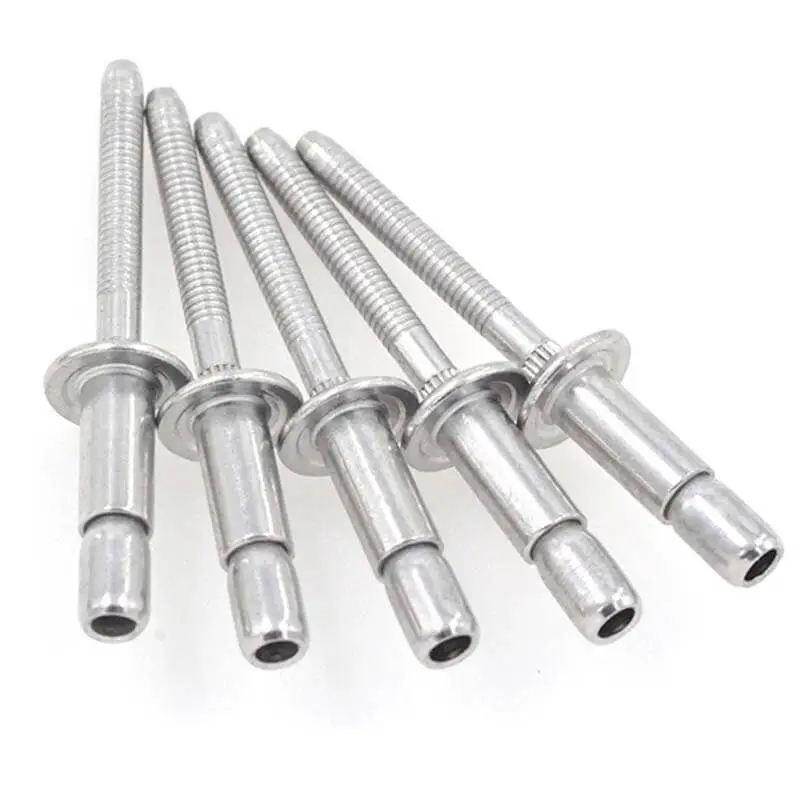
Hemlok rivets, like other standard structural rivets, have a mandrel that is securely locked into the rivet body during the riveting process and will not loosen or fall out.

Hemlok rivets have extremely high overall strength and stability and can withstand high shear and pull-out forces. The joint remains secure under dynamic loads or vibration.

Lockbolt Fastening System

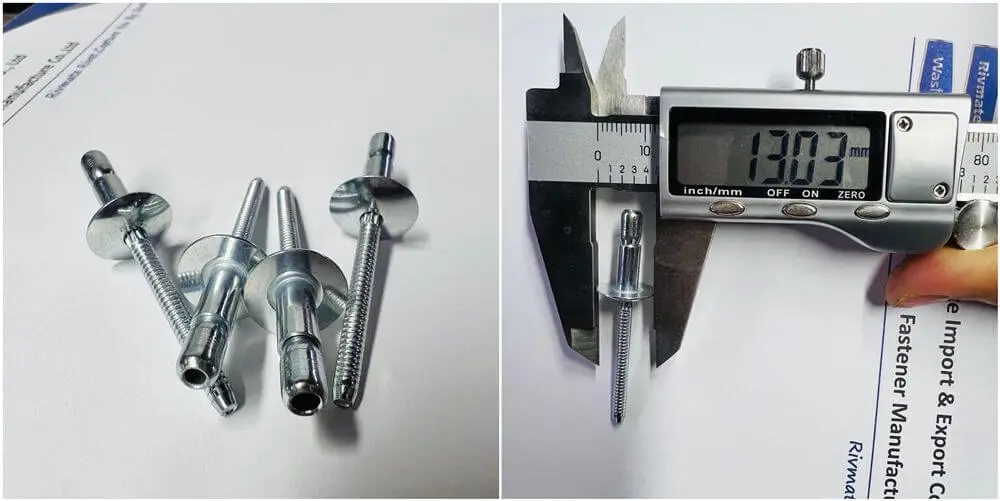
5.Lockbolt Rivets

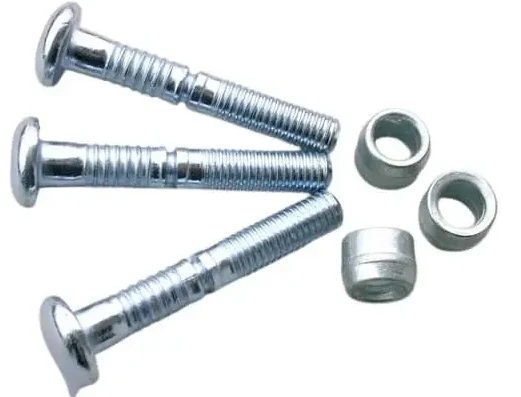
Lockbolt rivet is an ultra-high strength mechanical fastener typically used in applications requiring extremely high shear and pullout strength. It consists of two main parts: a bolt and a locking ring (or collar).Lockbolt is often used as an alternative to traditional bolt and nut combinations, and excels especially in vibrating environments.

HuckLok Rivets - Mangnabulb Rivets - Rivmate

6.Hucklok Rivets (Rivlok & Rivbulb Double-locking System)

HuckLok Rivet is a riveted fastener designed to provide a reliable mechanical connection under extreme conditions.The HuckLok Rivet is installed with its mandrel securely locked into the rivet body to form a monolithic structure. This rivet is particularly suited for applications that require strong resistance to shear and pullout forces, such as aerospace, automotive manufacturing and heavy equipment.

RIVMATE Bom Rivets - Custom Blind Rivet Manufacturer in China

7.Bom Rivets (Boom-Lock Blind Rivets)

BOM Rivet, is a fastener designed to repair and reinforce joints where standard rivets cannot be used due to wear or oversized holes.Known for their strong mechanical properties and ease of installation, BOM rivets are used in heavy equipment, railroads, construction, and other industrial applications where reliable connections are required.

How Do Structural Rivets Work?

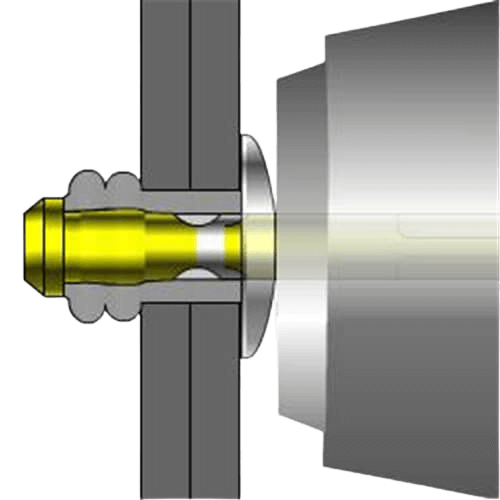
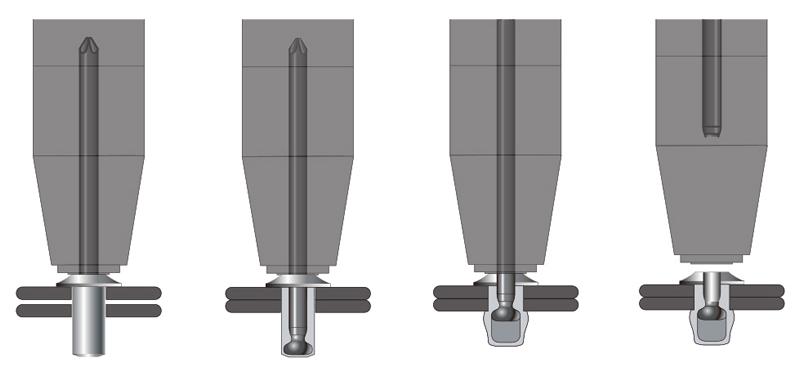
Structural rivets are the high-strength type of blind rivets. So they work roughly the same way. In addition to mechanical expansion. Structural rivets have a locking mandrel as an internal mechanism that ensures that the rivet forms a strong link in the hole. These two key mechanisms give structural rivets extremely high shear and pull-out strength.

How Do Blind Bolts Fasteners Work?

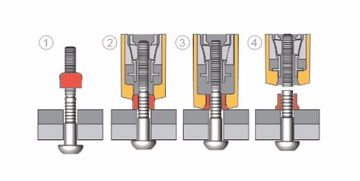
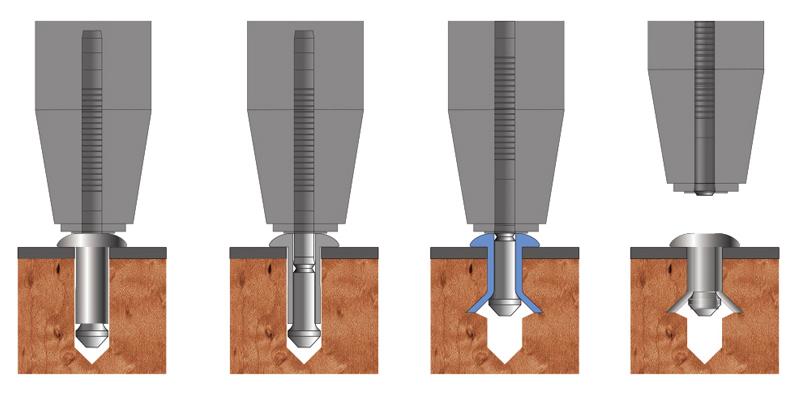
The working principle of structural rivets is basically similar to that of blind rivets. The difference is that the structural rivets in the riveting process. In addition to the tail of the rivet body expansion and deformation, its mandrel will be locked or broken in the rivet body to form a whole structure.

This special locking process increases the overall strength of the rivet. and it ensures that the mandrel will not loosen or fall off.

A large quantity of rivets

Contact Our Engineers Today

We provide you with high quality rivets, including customized services.

Prons of High Strength Structural Pop Rivets

1. Extremely High Strength

Designed to withstand high loads, High Strength Structural Rivets provide extremely high shear and pull-out forces. They are designed to ensure joint reliability under high loads and dynamic conditions in aerospace, automotive manufacturing, bridge construction and other areas where high strength connections are required.

2. Locking Arbor

Rivmate Multi Grip Blind Pop Rivet From China

Structural pop rivets have the mandrel securely locked into the rivet body after installation, which can effectively prevent the mandrel from loosening or falling out. This unique locking mechanism enhances the overall strength and vibration resistance of the rivet and ensures that the connection remains stable over the long term.

3. Vibration Resistance and Durability

High-strength structural rivets excel in vibration and dynamic loading environments due to the locking design of the mandrel, reducing the risk of connection failure due to loosening. This feature makes them ideal for use in heavy machinery, railroads, aerospace and other applications that are subjected to high levels of vibration, extending the life of the structure.

4. Consistency and Precision

High-strength structural rivets provide consistent tightening force and locking depth during installation, ensuring uniform strength and performance at each connection point. This consistency makes them suitable for high-precision and demanding industrial applications, such as high-pressure pipeline connections, aerospace component assembly, etc., ensuring the security of each connection point.

Cons of High Strength Structural Pop Rivets

  • Installation of high strength structural pop rivets requires specialized tools (e.g., rivet guns) and a high level of force to be applied during installation to ensure that the mandrel is locked.
  • Not once installed, the High Strength Structural Pop Rivet connection is essentially permanent and difficult to remove or adjust.
  • High-strength structural pop rivets are typically more expensive than standard rivets, especially in terms of materials, manufacturing processes and installation tools. While they offer extremely high performance, the overall cost of high-strength structural rivets is higher and may not be appropriate for projects with limited budgets.

Applications of Structural Rivets

Structural pop rivets are ideally suited for applications where strength is required. Its excellent strength and reliability make it ideal for use in a wide variety of industrial and structural applications where a strong, durable connection is required. Below are some typical specific application scenarios:

Aerospace

  • Aircraft Structural Connections: In aerospace, structural blind rivets are used to connect aircraft shells, wings and internal structural components. These rivets are able to withstand high vibration and extreme temperature changes in flight, ensuring the long-term stability and safety of aircraft structures.
  • Cabin Interior Installation: Structural rivets are used to fasten decorative panels, seat supports and other components in the cabin interior, providing a strong connection and withstanding various stresses in flight.

Automotive Industry

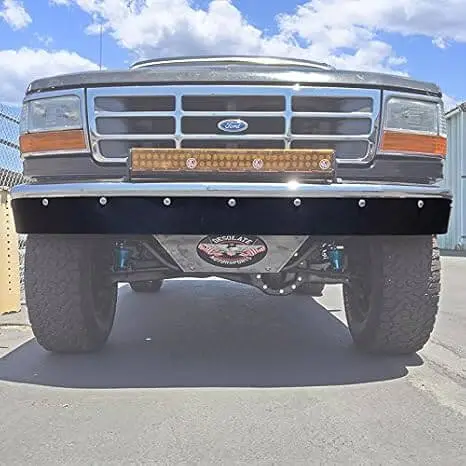
Car Bumper Rivets
  • Body Assembly: In automotive manufacturing, structural blind rivets are used for body and chassis connections such as doors, roofs, trunk lids and fenders. They provide reliable shear and pull-out strength to ensure the structural stability of the vehicle in operation.
  • Chassis and Suspension: Structural rivets are also used to connect key components of the chassis and suspension system to withstand the significant loads and vibrations generated during vehicle operation.

Construction

  • Structural Steel Connections: In the construction industry, structural blind rivets are used to connect support beams, steel columns and other critical components in steel structures to ensure the overall strength and durability of the building structure.
  • Curtain Wall and Facade Installation: Structural rivets are commonly used to fasten curtain walls, metal panels and glazed facade systems in buildings, providing a high-strength fixing and ensuring security in all weather conditions.

Railroad and Heavy Equipment

Heavy Duty Lockbolts Fastener Rivets Application
  • Railroad Vehicles: Structural rivets are used in the manufacture and maintenance of railroad vehicles. It can connect components such as the body structure, chassis and axles. Their high vibration resistance ensures the stability and safety of trains in motion.
  • Heavy Machinery and Equipment: In the assembly of heavy equipment such as excavators and cranes. Structural rivets are used to connect the main load-bearing structures and mechanical arms. Stuctural pop rivets provide the necessary strength and stability.

Wind Turbine and Energy Equipment

High Strength Solar Blind Rivet Application
  • Wind Turbines: Structural rivets are widely used in the manufacture of wind turbines. And it can connect turbine blades, towers and generator supports. Structural pop rivets can provide the necessary strength to resist wind and vibration during operation.
  • Energy Equipment: In other energy equipment such as solar racks, oil rigs and power transmission towers. Structural rivets are used to connect critical components to ensure reliable operation under extreme conditions.

Tools for Installing Structural Pop Rivets

H6065 Lockbolt tool
H6065 Lockbolt tool
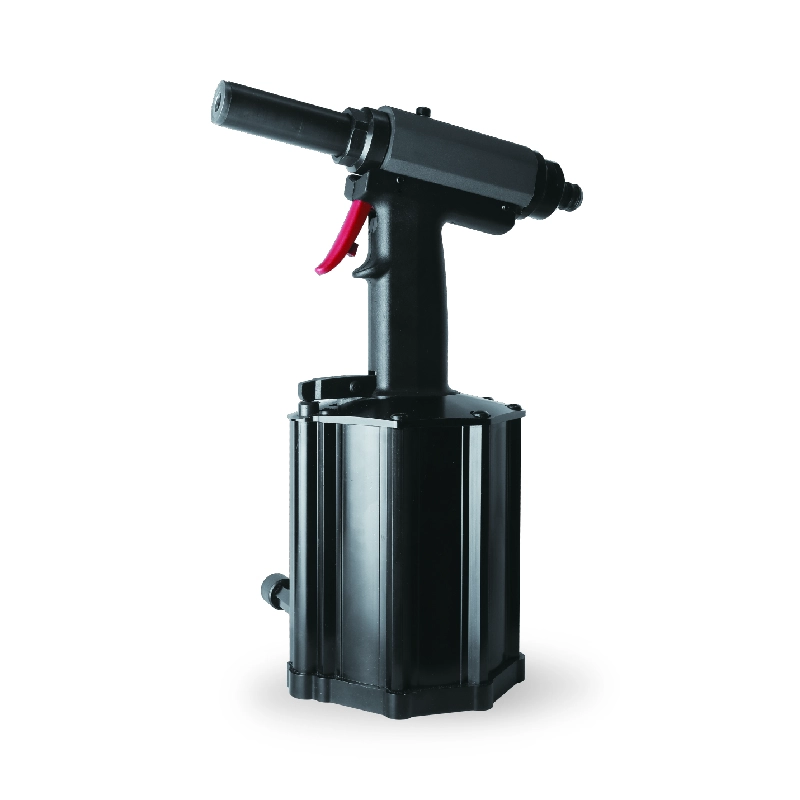
pneumatic pop rivet gun
P Series Blind Rivet Tool
Rivmate C Series blind rivet tool
C Series Blind Rivet Tool

H6065 Lockbolt Tool :This pneumatic rivet gun is capable of riveting lockbolt rivets and hemlok rivets in all materials.The H6065 weighs only 2.9kg but has a working tension of up to 39,200 N. It can rivet 5.0mm (3/16) and 6.4mm (1/4).

P Series Blind Rivet Tool: There are three models of this rivet gun, P840,P848,P866.The working pull force of different models of rivet gun is different. And it can rivet 2.4mm(3/32″) to 6.4mm(1/4″) rivets.

C Series Blind Rivet Tool: This rivet gun is also available in three models, C848,C864,C866.It can riveting monobolt rivet, hemlock rivet and other types of pop rivet.Rivet size can be 2.4mm (3/32″) to 6.4mm (1/4″). ).

Conclusion

Structural pop rivets are an important type of blind rivets.Structural pop rivets can provide high shear strength and pullout strength. If you have projects that require strength. then structural pop rivets are the best choice for you.

However there are many types of structural pop rivets. You need to choose the right type of structural rivets according to the specific requirements of your project. Of course, you can demand the help of pop rivet manufacturer. Please contact our engineers.

Order High Quality Structural Rivets from Rivmate

Rivmate is the top pop rivet manufacturer and supplier in China.If you want to use high quality structural pop rivets to enhance the quality of your project or your customer’s satisfaction. Please contact us.

Whether it’s a bulb tite rivet with a waterproof effect. Or a high-strength lockbolt rivet, bom rivets, you can get it all from Rivmate.

If you want to buy high quality structural rivets, please contact us!

Get Structural Rivets Quote

Submit Your Sourcing Request

How Much Do Rivets Expand?

Picture of Rivmate Fastener

Rivmate Fastener

Top Rivet and Rivet Nut Manufacturer in China

Table of Contents

How Much Do Rivets Expand

Expansion is an important indicator of the quality of the connection of a blind rivet. So How Much Do Rivets Expand? Let’s find out together!

Table of Contents

What is the Rivets Expand?

The expansion rate of a blind rivet, also known as the expansion rate or expansion ratio, is the degree to which the tail of the rivet expands and deforms in the hole due to the pull of the mandrel during installation. This parameter expresses the percentage increase in the diameter of the rivet from its initial state after insertion into the hole to when it is fully installed. A satisfactory rate of expansion ensures that the rivet will fill the hole securely and provide a stable mechanical connection.

What is the Rivets Expand?

Expansion Ratio is the ratio of the diameter of the expanded portion of the rivet after installation to its original diameter. It can be expressed as:

Expansion Rate = Diameter After Expansion / Original Diameter

Illustrative Example

Suppose a rivet has an initial diameter of 4.0 mm and after installation it expands to a diameter of 6.0 mm:

Expansion Rate = 6.0mm / 4.0mm = 1.5

The expansion rate of a blind rivet is a key parameter that measures the degree of deformation and expansion of the rivet during installation. The correct rate of expansion provides a strong mechanical connection, prevents loosening, distributes stresses and enhances strength. Therefore, selecting and controlling the proper expansion rate is critical to ensuring the quality and reliability of the connection.

Why is the Expansion Rate of Blind Rivets so Important?

The expansion rate of a blind rivet plays a critical role in the joining process. Correct selection and control of the rivet’s expansion rate ensures that the rivet deforms and expands correctly during installation, thus providing a reliable mechanical connection, preventing loosening and material damage, and improving the quality and durability of the overall connection.

Below are a few areas detailing their primary role:

1. Ensure Tight Fixing

The proper expansion rate allows the rivet to expand sufficiently in the hole to tightly secure the joining material. The expanded rivet completely fills the hole, providing a strong mechanical connection. And it effectively prevents the connection from loosening under vibration or dynamic loading

2. Dispersion of Stresses

Expanded rivets increase the contact area with the hole wall, thereby spreading the stresses applied to the joint. This reduces stress concentration and prevents material rupture or damage.

If you your project materials are softer or more brittle, the proper rate of expansion can effectively disperse the stresses and prevent rupture of these materials due to excessive stress concentrations.

3. Enhanced Shear and Pull-out Strengths

Rivets Sheer Strength

A rivet with a moderate expansion rate provides a larger shear area, which enhances the ability of the joint to resist lateral loads.

The higher the expansion rate, the greater the contact area between the rivet and the hole wall. The pull-out strength of the rivet increases accordingly. The proper expansion ratio can effectively prevent the rivet from coming out under axial load.

4. Adaptation to a Wide Range of Materials

Appropriate expansion ratio enables rivets to adapt to a variety of types of materials, such as metals, plastics, composites, etc., to ensure a good connection on a variety of materials.

5. Reduced Rework and Maintenance

The correct expansion rate ensures that rivets are installed successfully in a single pass. It can help reduce rework and maintenance costs due to connection failure.

A large quantity of rivets

Contact Our Engineers Today

We provide you with high quality rivets, including customized services.

Prons and Cons of High Expansion Rate of Blind Rivets

The expansion ratio of blind rivets plays a key role in the connection process, affecting the strength and stability of the connection. Different expansion rates have their advantages and disadvantages, the following are the advantages and disadvantages of high expansion rate and low expansion rate:

Prons

  • Larger contact area: High expansion rate increases the contact area between the rivet and the hole wall, enhancing friction and fixing force.
  • Stress Dispersion: High expansion rates provide better dispersion of stresses and reduce stress concentrations. It can effectively reduce the risk of material rupture or damage, especially for softer or more brittle materials.
  • Higher Tensile and Shear Strength: Expanded rivets provide higher tensile and shear strength. Ideal for applications where higher or dynamic loads need to be applied.
  • Suitable for thinner or softer materials: High expansion rivets form strong joints in thin or soft materials.
Cost of Rivets

Cons

  • Risk of material damage: In harder or thicker materials, excessive expansion rates may result in material damage.
  • Difficulty of installation: Higher installation forces and precision are required to achieve proper expansion. Adds complexity and time to the installation process.

Prons and Cons of Low Expansion Rate of Blind Rivets

Prons

  • For thicker or harder materials: the lower expansion creates sufficient holding power in thicker or harder materials. This ensures that these materials are not damaged by over-expansion.
  • Ease of installation: Lower expansion rates usually require less installation force and less precision. The installation process is easier and faster.

Cons

  • Lower contact area: Lower expansion reduces the contact area between the rivet and the hole wall. May result in loose connections, especially in high vibration or dynamic load environments.
  • Concentration of stress: Rivets with low expansion ratios may not be able to effectively distribute stress.
    Stress is concentrated at the edge of the hole, increasing the risk of material rupture or damage, especially in more brittle materials.
  • Lower Tensile and Shear Strengths: Low expansion rivets provide lower tensile and shear strengths due to the smaller contact area.

How to Choose The Right Expand of Rivets

Ⅰ. Understanding Expansion Rates

Before making a choice on the expansion rate of a rivet, you need to understand what expansion rate is. You can get the answer by contacting us or checking the web.

Ⅱ . Consideration of Material Properties

After understanding the basic definition of expansion rate, you need to have your own judgement on what kind of expansion rate corresponds to different materials.

Softer or more brittle materials (such as plastics or thin metal sheets) usually require a higher expansion rate to increase the contact area to spread the stresses and prevent the material from rupturing.

Ⅲ . Load Requirements

The final point to consider is the load requirement. You need to choose the appropriate rivet expansion rate based on the load the connection needs to withstand. Higher expansion rates usually provide higher pullout and shear forces.

And in vibrating environments, a higher expansion rate helps increase stability.

Conclusion

There isn’t really a universal standard value for rivet expansion. This value will vary depending on the specific application scenario, the characteristics of the joining material and the loads to be carried. However, in general, an expansion rate of between 1.5x and 2x is considered to be an appropriate range for rivets. Expansion rates in this range provide adequate holding power and reliability in most applications.

Get Blind Rivets from China Rivets Factory

Rivmate is one of the top China Blind Rivet manufacturers and suppliers, if you need to buy Blind Rivet, you can contact us!

We can customise the blind rivets and expansion rate according to your project needs. If you need to order blind rivets, get a quote now.

Contact Person Search

Submit Your Sourcing Request

Everything You Need to Know About Blind Rivet Sizes

Picture of Rivmate Fastener

Rivmate Fastener

Top Rivet and Rivet Nut Manufacturer in China

Table of Contents

How Do I Choose The Right Size Pop Rivet? - Select the Length of the Pop Rivets

Blind Rivet Sizes are something that must be considered before purchasing a Blind Rivet. So what are the parts of blind rivet sizes? How do I confirm the size of these parts? And how to measure blind rivets? Through this article, you will understand all of this!

Table of Contents

Why is Blind Rivet Sizes Important?

You need to have a deep understanding of the dimensions of the blind rivets before proceeding with a project. So why is it so important to have a deep understanding of the blind rivet sizes? To put in the first step of starting a project. There are several main reasons:

  1. Correctly sized rivets provide enough tightening force to ensure that the connected parts are held together securely. Under-sizing may result in insufficient tightening force and a loose connection; over-sizing may result in difficult installation or material damage.
  2. The right rivet size and hole match can simplify the installation process, reduce installation time and increase productivity.
  3. Correctly sized rivets are more reliable after installation, reducing the need for rework and maintenance due to connection failure.
  4. In critical structural components, selecting the correct size rivets prevents structural failure and ensures overall structural safety, especially in applications subjected to high loads or critical locations.
  5. matching the rivet diameter to the hole diameter ensures that the rivet expands and deforms correctly in the hole, providing a strong mechanical fixing. If the hole diameter does not match the rivet diameter, the reliability and strength of the connection will be compromised.
Types of Heads

The diameter of a blind rivet is the outside diameter of the rivet stem, which is an important dimension in determining the size of the hole between the rivet and the material being joined. Selecting the proper rivet diameter is critical to ensuring the strength and stability of the connection.

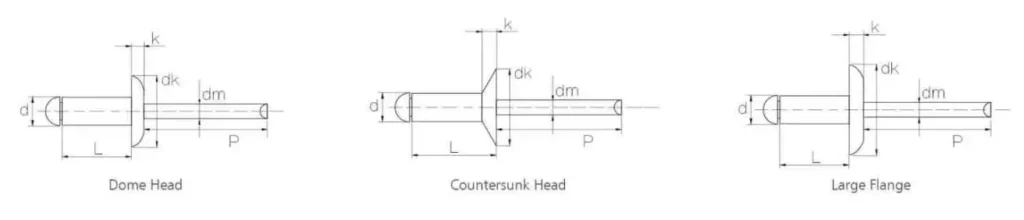
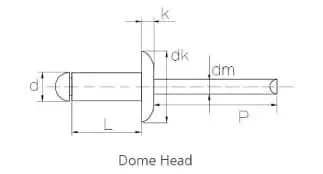
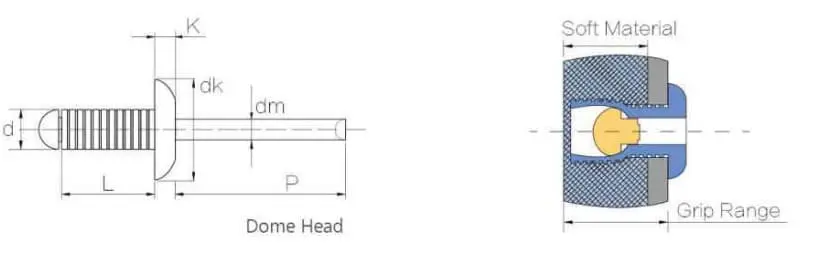
The diagram above illustrates the structure of a blind rivet. The letter “d” represents the diameter of the rivet.

The diameter of a blind rivet is usually expressed in metric (millimeters, mm) or imperial (inches, inch). The following are common specifications:

 Rievt Diameter
MetricInch
2.4mm3/32″
3.2mm1/8″
4.0mm5/32“
4.8mm3/16”
5.0mm6/31″
6.0mm15/64″
6.4mm1/4″

Selecting the proper Blind Rivet diameter is an important step in ensuring a strong and secure connection. Considering factors such as material thickness, hole size, load requirements and material properties can help you determine the most appropriate rivet diameter specification. In practice, following these principles will not only help to achieve a reliable connection, but also avoid installation and use problems associated with poor selection.

How to Choose The Right Rivet Diameter?

When you have this problem, the first thing you need to consider is the load requirements that the connection needs to withstand. Larger diameters provide higher pullout and shear forces.

Of course, if you have holes already drilled in the top of your product, you’ll want to choose a rivet diameter that matches the hole diameter. This will allow the rivet to be inserted and deformed smoothly.

The hole diameter of a blind rivet is the diameter of the hole that needs to be drilled in the material being joined when the rivet is installed. This hole diameter must be slightly larger than the diameter of the rivet itself in order for the rivet to be inserted smoothly and secured properly. Below are some common blind rivet sizes and their corresponding recommended hole diameters:

Rivet Diameter(mm/inchHole Diameter(mm/inch
2.4 mm2.5 – 2.7 mm
3.2 mm3.3 – 3.5 mm
4.0 mm4.1 – 4.3 mm
4.8 mm4.9 – 5.1 mm
5.0 mm5.1 – 5.3 mm
6.0 m6.1 – 6.4 mm
6.4 mm6.5 – 6.8 mm
3/32″ (0.0938 inch)0.098 – 0.102 inch
1/8″ (0.1250 inch)0.129 – 0.133 inch
5/32″ (0.1563 inch)0.161 – 0.165 inch
3/16″ (0.1875 inch)0.192 – 0.196 inch
1/4″ (0.2500 inch)0.255 – 0.261 inch


Why is it Important to Match the Rivet Diameter to the Hole Diameter?

Matching rivet diameter to hole diameter is critical to the quality of the riveted joint, affecting the stability, strength and durability of the connection. Both too large and too small hole diameters can have an impact.

Hole Diameter > Rivet Diameter

  1. Rivets do not properly deform and expand to fill the entire hole
  2. The force area of the rivet is reduced and the shear strength decreases
  3. Loose connections may allow moisture and gas to enter the gap between the rivet and the hole wall, resulting in seal failure.
  4. Because the hole is too large, the rivet moves through the hole and can generate unwanted noise, especially in noise-sensitive applications such as mechanical equipment or automotive interiors.

Hole Diameter < Rivet Diameter

  1. Difficult to insert rivets
  2. If the rivet is difficult to insert fully into the hole, the expanding portion of the rivet may not be able to expand and deform sufficiently in the hole, resulting in a failure to form a strong fixing.
  3. When working with brittle materials (e.g., certain plastics, fiberglass), forcing a rivet into a hole that is too small may cause the material to break or crack.

Drill of Blind Rivets

Drilling holes with a drill is the first step in the procedure for installing blind rivets. The size of the drill bit is usually the same as the diameter of the hole. So the degree of match between the drill bit and the rivet diameter can be referred to the degree of match between the rivet diameter and the hole diameter.

Rivet Body Length

The blind rivet Body Length is the total length of the rivet before installation, excluding the head and core section. This length is an important parameter in selecting the right rivet, as it must be long enough to pass through all the layers of material to be joined, while still forming a reliable fixing on the backside of the material.

The body length of the rivet must be long enough to ensure that it will pass through the material to be joined and leave enough to deform and fix. A short body length may result in the rivet not being able to fully penetrate the material to form a reliable connection. The body length of the rivet shall be at least equal to or slightly greater than the cumulative thickness of all layers to be joined.

Assuming that the total thickness of the material to be joined is 5 mm, the body length of the rivet selected should be at least 5 mm to ensure that the rivet can fully penetrate the material and create sufficient holding force on the backside. Typically, a suitable rivet body length may be slightly longer than the total thickness to ensure that there is sufficient room for deformation.

Grip Range

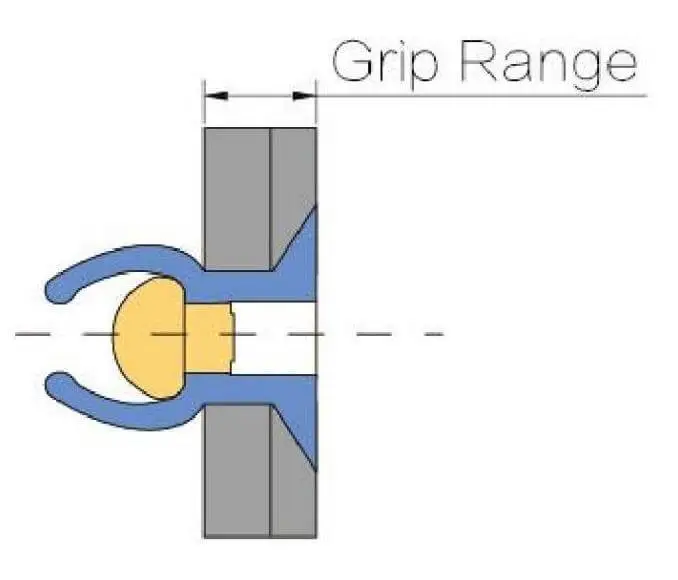
the grip range of blind rivet

The riveting range of a blind rivet, often referred to as the Rivet Grip Range, is the range of thicknesses over which the rivet can effectively grip and hold material. This parameter determines the thickness of the material that the rivet can securely hold during installation and is a key indicator of the type of rivet that is appropriate for the application.

Riveting range refers to the total material thickness that can be reliably clamped by a blind rivet, including the cumulative thickness of all materials clamped. It is usually expressed as a range, e.g. 1.6 – 3.2 mm, indicating that the rivet is suitable for material combinations with thicknesses between 1.6 mm and 3.2 mm.

Do Pop Rivets Leak? - The Comprehensive Guide-Rivmate Aluminum Closed Blind Pop Rivet

Correct selection of the riveting range is important.

  • Ensuring Reliable Connections: Selecting the correct rivet range ensures that the rivet creates the proper deformation zone on the backside of the material, providing a reliable mechanical fixing. A rivet with too little or too much reach may result in an unstable connection or failure to install correctly.
  • Accommodate varying material thicknesses: In practical applications, material thicknesses may vary due to manufacturing tolerances, coatings or other factors. Choosing the right rivet range can effectively address these variations and ensure a strong and stable connection.

Examples of common riveting ranges:

  • 1.6 – 3.2 mm: For materials with a total thickness between 1.6 mm and 3.2 mm.
  • 3.2 – 4.8 mm: for materials with a total thickness between 3.2 mm and 4.8 mm.
  • 4.8 – 6.4 mm: for materials with a total thickness between 4.8 mm and 6.4 mm.

Head Diameter and Width

Types of Rivet Heads

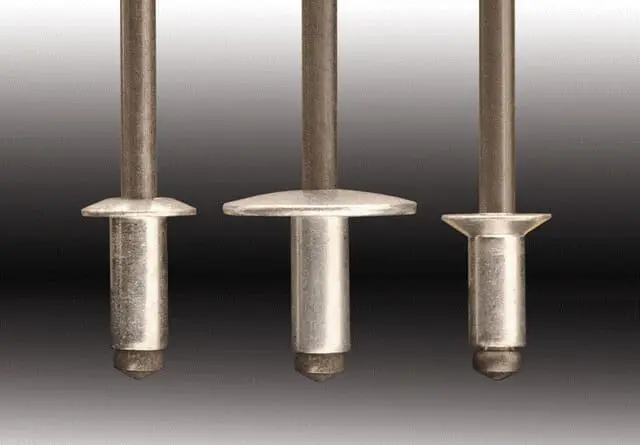
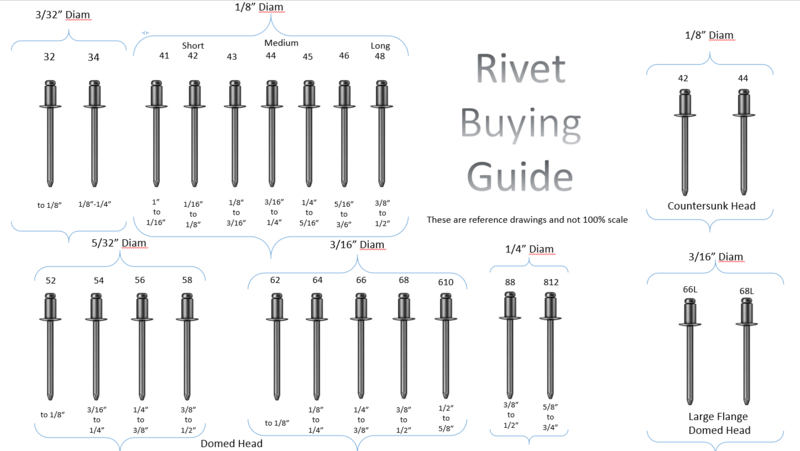
Before we go into detail about the diameter and thickness of rivet head types, we need to know that there are several head types of rivets. The main head types of rivets are categorized as follows:

  1. Dome Head
  2. Large Flange Head
  3. Countersunk Head
How Do I Choose The Right Size Pop Rivet? - Dome Head Pop Rivets

The “dk” and “k” in the chart above represent the head diameter and head thickness of the blind rivet, respectively.

dk – head diameter

k – head thickness

Dome Head

The Dome Head Blind Rivet is one of the most common head types with a semi-circular head. This design provides good tensile and shear strength.

Head Diameter: typically 1.5 to 2 times the rivet diameter. For example, a 3.2 mm diameter rivet will typically have a head diameter between 6 mm and 6.4 mm.

Head Height: The height of a round head is generally relatively small, providing a moderate level of head projection.

Large Flange Head

Large Flange Head Blind Rivets have a larger head diameter than standard round heads and are often used to increase the contact area and thus spread the pressure. This design is particularly suited to softer materials such as plastics or thin sheet metal.

Head Diameter: Typically 2 to 3 times the diameter of the rivet. For example, a 3.2 mm diameter rivet may have a head diameter between 8 mm and 9.6 mm.

Head Height: The height of a large flange head is generally similar to that of a round head, but its larger head diameter provides a larger support surface.

Countersunk Head

Countersunk head blind rivets have a head designed to be fully embedded in the joining material, with the head being flush with the surface of the material. This design is used where a smooth appearance is desired or to avoid interference from a protruding head.

Head Diameter: Countersunk heads are typically slightly larger than the rivet diameter, depending on the rivet standard. For example, a 3.2 mm diameter rivet will typically have a head diameter between 6.5 mm and 7 mm.

Head Width: The angle of the countersunk head is typically 90 or 120 degrees, depending on the design requirements. The embedment depth and width of the head needs to take into account the thickness of the material being joined.

A large quantity of rivets

Contact Our Engineers Today

We provide you with high quality rivets, including customized services.

Blind rivet size comparison table

Rivet DiameterGrip RangeRecommended Hole SizeDrill Bit #
1/8″ (3.2 mm)0.063″ – 0.125″ (1.6–3.2 mm)0.1285″ (3.26 mm)#30
5/32″ (4.0 mm)0.125″ – 0.250″ (3.2–6.4 mm)0.1360″ (3.45 mm)#29
3/16″ (4.8 mm)0.188″ – 0.375″ (4.8–9.5 mm)0.1920″ (4.88 mm)#11
1/4″ (6.4 mm)0.250″ – 0.500″ (6.4–12.7 mm)0.2570″ (6.53 mm)F drill

A proper understanding of the dimensional relationships and standard classifications of blind rivets is the foundation for achieving high-strength, high-consistency connection quality.

Professional advice:

  • When selecting a blind rivet, the clamping range should be the primary reference criterion, rather than the total length. The total length may be misleading under different head types.
  • For environments with vibration or high fatigue, prioritize blind rivets with larger shank diameters and structural designs, and ensure hole diameter fitting accuracy.
  • It is recommended to reserve a ±0.1 mm holding margin in engineering design to account for sheet metal tolerances and installation process variations.

Although blind rivets have a simple structure, their size selection involves multiple factors. When choosing the right blind rivet sizes, it is necessary to comprehensively evaluate factors such as sheet thickness, connection strength requirements, installation process, and hole diameter accuracy.

Step 1: Determine the total thickness of the sheet metal → Match the appropriate rivet grip range

The grip range of a blind rivet refers to the total thickness range of sheet metal that can be reliably clamped after riveting. This is the most critical parameter in selecting the size of a blind rivet.

Example: If the total sheet thickness is 3.0 mm, it is recommended to select specifications with a grip range of 2.5–4.0 mm or 2.0–4.5 mm to ensure adequate clamping and reasonable installation clearance.

  • If the grip is too small, it may result in the rivet core not fully expanding, leading to insufficient clamping force.
  • If the grip is too large, the expansion may be insufficient, causing the rivet core to slip out or the connection to be loose.

✅ It is recommended to prioritize determining the grip range rather than the total length.

Riveted Connections in Steel Structures - How to Choose Pop Rivets for Steel Structures?

Step 2: Confirm material type and connection strength requirements

Different material combinations have different requirements for rivet size and expansion structure:

  • Lightweight structures (such as aluminum + plastic): Choose softer aluminum rivets and control the shaft diameter to prevent material bulging and cracking;
  • Steel + steel structures: Use steel or stainless steel rivets with a shaft diameter of at least 4.0 mm to ensure shear strength;
  • High-strength/high-vibration areas: Prioritize structural rivets and increase the diameter to prevent loosening or fatigue cracks.

Step 3: Select the appropriate shank diameter and head style.

The larger the shank diameter, the greater the load-bearing capacity. Common sizes include:

  • 1/8″ (3.2 mm): Light-duty structures, recommended for single-layer aluminum plates, electronic enclosures, etc.;
  • 5/32″ (4.0 mm): Medium-load connections;
  • 3/16″ (4.8 mm) and above: Heavy-duty structures or multi-layer plate riveting.

Head style selection depends on load requirements and aesthetic needs:

  • Dome Head: General-purpose, suitable for most applications;
  • Countersunk: Suitable for applications requiring a flat surface, such as door panels or panels;
  • Large Flange: Used for soft materials or structures requiring an expanded clamping area, such as plastic or composite panels.

Step 4: Beware of selection pitfalls: Never judge rivet specifications based on “total length”

Many users only refer to the “total length” of rivets when selecting them, while ignoring the most critical “grip range.” This is a common pitfall that leads to riveting failure.

  • Rivets with the same total length may be suitable for completely different grip ranges due to differences in head shape and shaft diameter.
  • The correct approach is: first confirm the structural thickness → match the appropriate grip range → then select the shaft diameter and head shape based on material and process requirements.
Everything You Need to Know About Blind Rivet Sizes

Key factors affecting the selection of blind rivet size

When selecting blind rivet sizes, considering only the thickness of the sheet material is insufficient. The following factors have a decisive influence on selection:

  1. Sheet material type and thickness tolerance: Soft materials (such as plastic or aluminum) require larger rivet head surfaces and clamping allowances. Structures with significant thickness deviations should prioritize rivet specifications with a wide clamping range (Grip).
  2. Load type and strength requirements: If the connection point must withstand high shear or tensile loads, it is recommended to use rivets with larger shank diameters or structural designs, and to match them with appropriate hole diameters and installation forces.
  3. Installation process constraints: Factors such as whether manual assembly or automated equipment is used, and whether there are single-sided accessibility restrictions, will all influence the appropriate configuration of size and head type.
  4. Hole spacing, edge distance, and space constraints: In compact structural areas, consider whether the head type (e.g., countersunk or small cap) interferes with adjacent components, and assess the impact of hole diameter and edge distance on strength.
  5. Rivet material and thermal expansion differences: In structures subject to temperature changes, avoid stress concentration caused by inconsistent material expansion.

Common selection recommendations for different structural applications

Application ScenarioRecommended Rivet DiameterRecommended Grip RangeSuggested Head StyleRivet Material
Sheet Metal Assembly1/8″ (3.2 mm)1.5–3.5 mmDome HeadAluminum
Plastic Components1/8″ or 5/32″ (3.2–4.0 mm)2.0–4.5 mmLarge FlangeAluminum or Copper
Stainless Steel Panels3/16″ (4.8 mm)3.0–6.5 mmDome or CountersunkStainless Steel
Waterproof/Sealed Enclosure1/8″ or 5/32″1.5–4.0 mmDome + EPDM Sealing WasherSealed or Closed-End Type
Industrial Machine Frames3/16″ or 1/4″4.5–9.5 mmDome or Structural HeadSteel or Stainless Steel
Automotive Trim/Interior1/8″2.0–4.0 mmCountersunk or Dome HeadAluminum + Steel Mandrel
Electronic Housings3.2 mm1.5–3.0 mmDome HeadAluminum

This table can be used as a quick reference for initial selection decisions. However, the final decision should be based on structural drawings, mechanical requirements, and the rivet manufacturer’s technical data sheet (TDS) to ensure that the rivets meet the actual application requirements.

Conclusion

By reading the above information, I’m sure you’ve gained a deep understanding of Blind Rivet Sizes. The dimensions of Blind Rivet include rivet diameter, rivet length, riveting range, hole diameter, rivet head type diameter and thickness.

With the above dimensional information, you will have a figurative impression of the Blind Rivet. We believe that this information can be a great help before you formally place an order.

Order Blind Rivets from Rivmate

Rivmate is a top manufacturer of Blind Rivets in China. We can offer you full size blind rivets, including 2.4mm(3/32″),3.2mm(1/8″),4.0mm(5/32″),4.8mm(3/16″),5.0mm(6/31″),6.0mm(15/64″),6.4mm(1/4″).

Of course, if your project has special requirements for the  Blind Rivet Sizes. We also provide customized service, please understand to contact our engineers.

Custom Blind Rivet Sizes for You

Submit Your Sourcing Request

Can You Use Grooved Blind Rivets for Plastic?

Picture of Rivmate Fastener

Rivmate Fastener

Top Rivet and Rivet Nut Manufacturer in China

Table of Contents

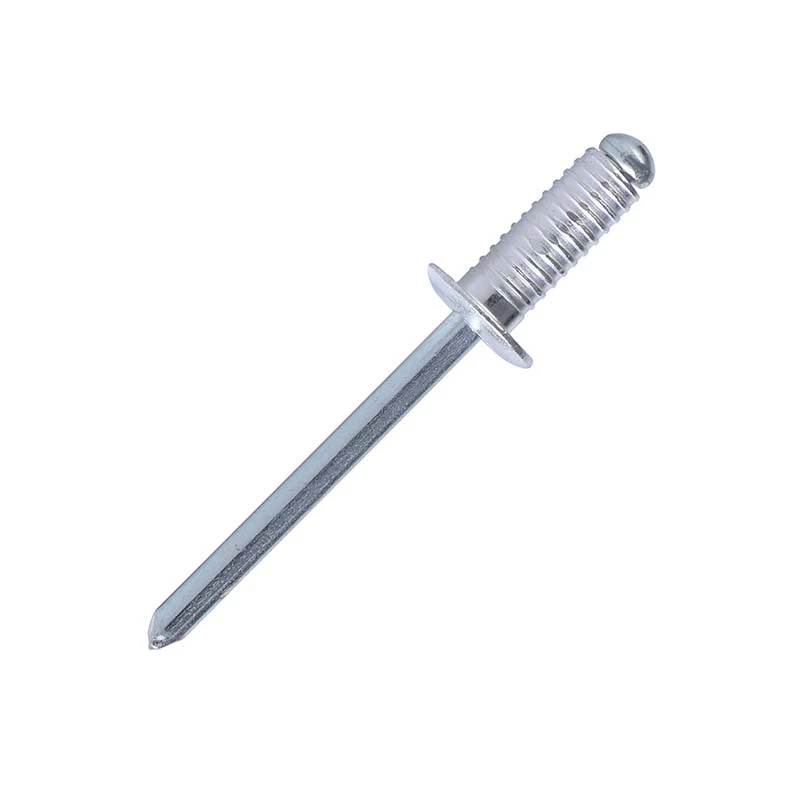
grooved rivet

As plastics become more and more popular, rivets are increasingly used in plastics. The use of pop rivets on plastic requires special consideration for optimum performance. You must choose the right type of rivet and material to achieve a long-lasting connection.

Plastic can be softer or more brittle than other materials. Therefore, it is important to choose a blind rivet that will provide a strong connection without damaging the plastic material. To solve this problem, grooved blind rivets are an excellent choice.

Table of Contents

What is a Grooved Blind Rivets?

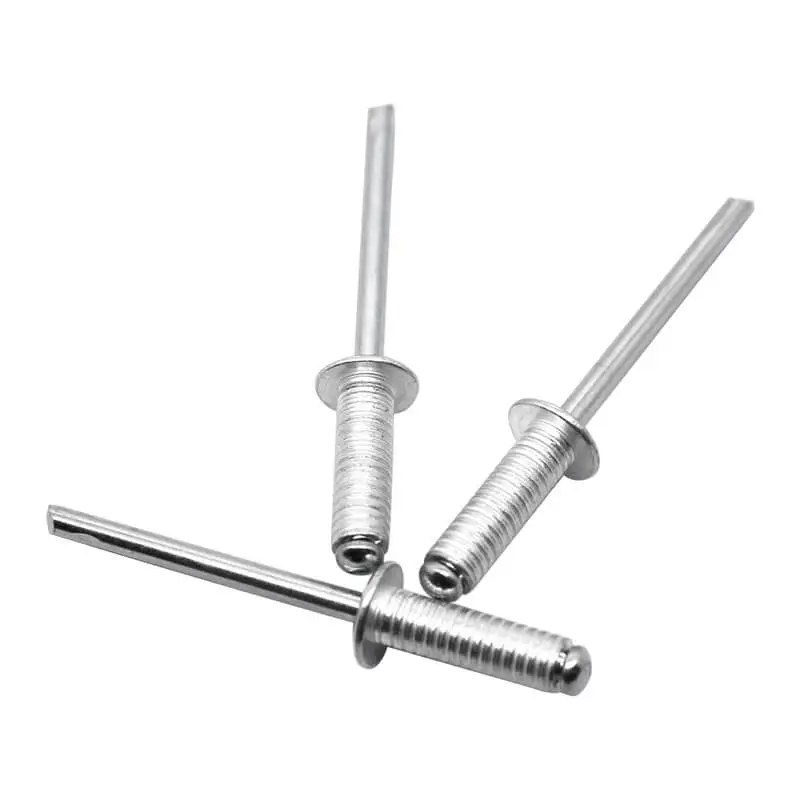
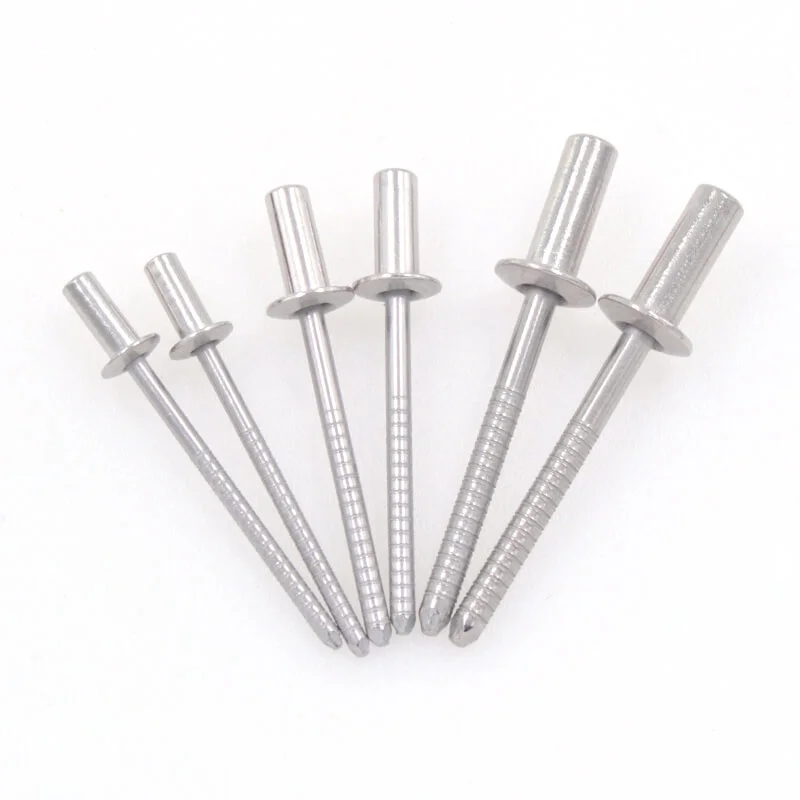
Grooved pop rivets are a type of blind rivet. Its basic design and working principle is the same as other types of pop rivets.The difference between Grooved pop rivets is that the joints are fixed in a different way.

grooved rivets

Although the installation is the same, grooved blind rivets come with grooves in the rivet body. This groove can be embedded in the connecting plastic during installation to provide additional mechanical grip and retention.

The unique grooved rivet design makes it an excellent choice for joining plastic materials. As long as the size of the rivet you use matches the diameter of the hole, it will create a strong fastening in the plastic.

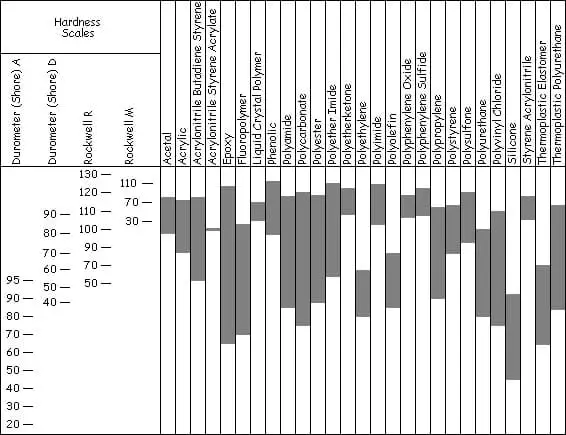
Strength of Plastics

Strength of Plastic

Plastic, one of the most commonly used materials, is very hard. It is nowhere near as hard as other commonly used materials. The image above demonstrates the strength index of plastic.

Since the strength of plastic is so low and it is used so often, it becomes a problem to connect the plastic components.Grooved pop rivets were created to solve this problem.

Why Use Grooved Blind Rivets to Join Plastics?

The low strength of plastic makes joining it a problem, and Grooved pop rivets offer an excellent solution.Grooved pop rivets offer a number of advantages not found in other blind rivets, making them ideal for joining plastic products. Here are some of the main reasons why grooved pop rivets are great for joining plastic products:

1. Enhanced Grip

Grip of Grooved Pop Rivets

The unique design of the Grooved Blind Rivet features a series of grooves on the surface of the rivet body. These grooves are able to embed themselves in the plastic material during installation, increasing friction and therefore grip. This feature is especially important in softer or more brittle plastics as it prevents the rivet from slipping or loosening under stress.

2. Even Stress Distribution

The groove design helps to spread the stress over a larger area, thus reducing the stress concentration and lowering the risk of material rupture. Plastic materials are relatively fragile and susceptible to damage due to stress concentrations, so grooved blind rivets can better protect the material.

3. Aesthetic Effects

Not only do grooved blind rivets provide a strong mechanical connection, they can also be used to achieve a good integration with the product design by choosing different head styles and colors. Special designs such as large flange heads can provide better decorative effects while increasing the contact area to further enhance the stability of the connection.

4. Efficient Cost Control

Due to the low material cost of grooved blind rivets, simple manufacturing process, and fast installation, the use of them can effectively control production costs, especially in high-volume production. Compared with other fastening methods, the economy and efficiency of grooved blind rivets is more prominent.

A large quantity of rivets

Contact Our Engineers Today

We provide you with high quality rivets, including customized services.

How to Choose the Right Grooved Blind Rivets for Plastic?

When choosing the right rivet for riveting plastic materials, you need to find a blind rivet that improves the tight connection without damaging the material.

Here are some things to consider when choosing the right grooved blind rivets for plastic or any soft material:

Geooved Rivets Diameter

When you use grooved pop rivets to join plastic items, the first step should be to determine the diameter of the rivets.

So how do you confirm the diameter of grooved pop rivets? You need to determine the total thickness of the plastic material being joined and the length of the rivets should accommodate the total thickness of the material. The diameter of the rivet needs to match the diameter of the hole. You need to make sure that the connection is stable and that the plastic does not break back.

Grooved Rivets Material

Once the rivet diameter has been determined, you need to consider which material to use for the rivets. The minimum requirement is that the rivet be made of a material that is harder than plastic. Most grooved pop rivets have a body made of aluminum or steel that is a lot harder than plastic. In addition, you need to consider the environment in which it will be used. For example, if you are using it in a marine application, do you need to choose a material that is resistant to corrosion.

Grip Range of Grooved Rivets

Grip range is the thickness of the material to which grooved pop rivets can be riveted.Grip range should match the thickness of the plastic material being joined.

If the grip range is too long, the rivets will be too long to get a neat finish. If the grip range is too short, there is no way to make a good connection. For example, if the total thickness of the plastic is 3.5mm, the grip range of grooved pop rives should be between 3-5mm.

In Addition to Plastic,What are Grooved Rivets Used for?

Grooved pop rivets are good for joining plastic materials in addition to a wide range of other soft or brittle materials. These include the following common materials:

  • lumber
  • Composites
  • Rubber & Elastomers
  • Textiles & Composite Structures
  • Foam
  • Soft metal alloys
Applications Grooved Pop Rivets

Grooved pop rivets are installed in the same steps on these materials as they are on plastic. It is worth noting that when you use grooved pop rivets in your building, make sure they are made of corrosion-resistant materials.

Conclusion

Grooved pop rivets unique groove design works well for joining soft or brittle materials. Plastic materials are no exception. If your project requires joining materials that are not metal or are very thin, grooved pop rivets are an excellent choice.

Whether it’s plastics, composites, wood and fiber materials, grooved pop rivets do a great job of joining!

Order a Variety of Grooved Blind Rivets from Rivmate

If you want to order a large quantity of grooved pop rivets, Rivmate has the solution for you. We can offer grooved blind rivets in 1/8″, 5/32″ and 3/16″ sizes.

Contact us today for a quote on grooved pop rivets!

Contact Person Search

Submit Your Sourcing Request

Why Choose Peel Type Blind Rivets?

Picture of Rivmate Fastener

Rivmate Fastener

Top Rivet and Rivet Nut Manufacturer in China

Table of Contents

Peel Blind Rivets Supplier in China - Rivmate Color Rivets

Why choose peel type blind rivets?If the materials you are joining are soft or brittle, common blind rivets may damage them.Peel type blind rivets are uniquely designed to provide a large contact area and spread the load. Let’s find out more!

Table of Contents

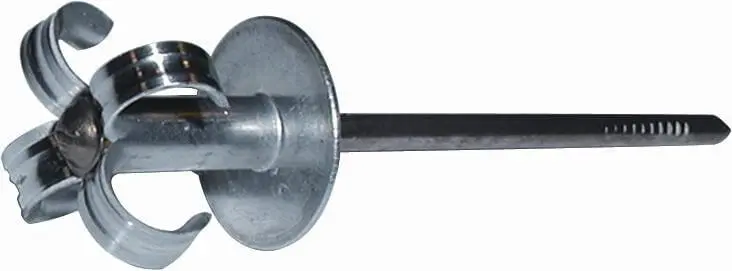
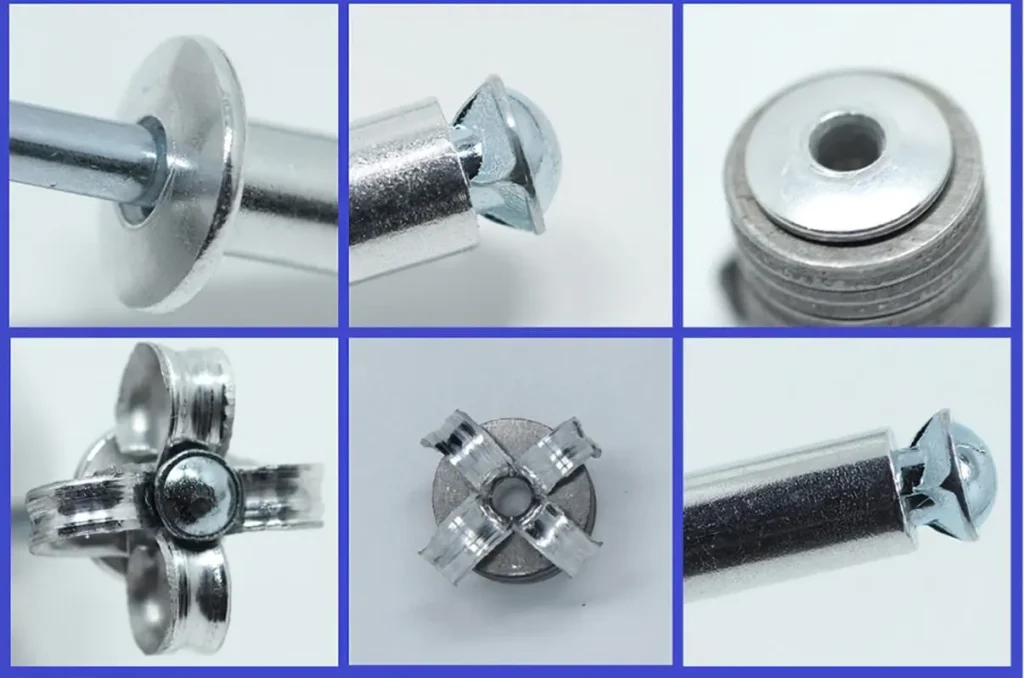
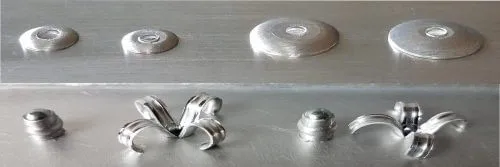
Peel Type Blind Rivets are specially designed blind rivets for joining soft or brittle materials. Its unique structure allows the rivet to form a “Peel” structure during installation, providing a larger contact area and more uniform force distribution for the connected materials. When installing peel rivets, the body of the rivet separates like a banana.

Peel Type Blind Rivets in China

Like other blind rivets, peel blind rivets are structurally different but work on the same principle. Both insert the rivet into a pre-drilled hole, but when the mandrel is pulled, the blind side splits into petals, thus spreading the load on the joint.

Peel type blind rivets are ideal for joining soft and brittle materials. It allows for connections with or higher tensile and shear strengths that will not pull out. In addition to this, it is also possible to join different types of materials. For example fiberglass and wood or metal and plastic.

Types of Peel Type Blind Rivets

In practice, there are several types of peel type blnd rivets depending on the standard. These include dome head peel blind rivets and large flange peel blind rivets.

Dome Head Peel Type Blind Rivets

peel rivets

Dome Head Peel Type Blind Rivets have a round head design for a smooth and decorative appearance. The stripped construction makes this rivet particularly suitable for joining thin plates, brittle materials or applications where uniform stress distribution is required.

Large Flange Head Peel Type Blind Rivets

Why Choose Peel Type Blind Rivets

Compared to Dome Head Peel Type Blind Rivets, large flange head peel rivets provide greater contact area and support. The head has a larger flange, which means the head diameter is larger than the standard rivet head diameter. This design provides a larger surface contact area, which helps to distribute loading stresses and reduce the risk of material damage.

Colored Peel Type Blind Rivets

Peel Rivets Supplier in China - Rivmate Color Rivets

Colored Peel Type Blind Rivets are rivets that are based on the standard Peel Type Blind Rivet and have their head or the entire body of the rivet treated with a special treatment, such as painting or plating, to provide a specific colo. These rivets not only provide a mechanical connection, but also have a decorative or marking function.

This type of peel rivets has a very good decorative effect. The colored coating not only enhances the aesthetic appearance of the rivet, but also matches the surrounding materials or overall design. And of course by using different colors, you can mark specific parts or mounting locations during the assembly process for easy identification and sorting.

A large quantity of rivets

Contact Our Engineers Today

We provide you with high quality rivets, including customized services.

Applications of Peel Type Blind Rivets

Peel type blind rivets are used in a wide range of industries, especially those involving thin, brittle materials and multi-material combinations. Their peel design provides a large support area and uniform stress distribution, which can effectively avoid material damage and improve connection strength.

1. Household Appliances

If you have paid attention, you will find that peel rivets are used a lot in the shell assembly of washing machines, refrigerators, air conditioners and other home appliances.

This is because peel blinds can effectively connect different materials such as metal and plastic, providing a firm fixing to avoid loosening, while their smooth appearance suits the aesthetic requirements of home appliances.

2. Automotive Interior

In the automotive production process, peel blind rivets are also used in the assembly of automotive instrument panels, door panels, seats and other interior components.

Peel blind rivets create uniform support on flexible and brittle materials such as plastics and composites, effectively preventing material breakage due to stress concentrations.

3. Furniture Manufacturing

If you are your project is for joining furniture pieces made of wood, plastic or composite materials. Then peel rivets will be perfect for you.

The support and solidity provided by its peel rivets design makes it ideal for assembling furniture pieces while also providing a great look.

4.Architectural Decoration

During building construction, peel rivets can be used to secure decorative building materials such as metal panels, partitions, parapets, etc.

Peel type blind rivets are uniquely designed to handle thin panels and brittle materials, providing a strong hold and an attractive appearance, while their corrosion resistance makes them suitable for outdoor applications.

Importance of Using Peel Type Blind Rivets

Peel type blind rivets are widely used in many applications and their importance is reflected in the multiple benefits that come with their unique design and features. The following are the importance of using Peel type blind rivets:

1. Protection of Brittle Materials

peel type blind rivets installing

Peel blind rivets split into multiple “petal” shapes during installation, creating a large back support area. This structure can effectively spread the stress, to avoid the concentrated force caused by the material breakage or cracking, especially for brittle materials such as plastics, fiberglass and composite materials. This characteristic makes Peel Blind Rivets ideal for fixing brittle materials, providing a reliable connection without damaging the material.

2. Suitable for Thin Sheet and Multi-layer Materials

The design of the Peel Blind Rivet allows it to form strong connections in thin plates and multi-layer materials. The peeled petal can provide enough clamping force on the backside to prevent deformation or tearing of the thin material. This is particularly important in areas where thin materials are required, such as electronic equipment, automotive interiors and household appliances.

3. Uniform Stress Distribution

Peel construction provides uniform stress distribution, avoiding the stress concentration problems that can result from traditional rivets or screws. Uniform stress distribution not only improves the strength and stability of the connection, but also extends the service life of the connection part and reduces the risk of fatigue damage.

Types of Peel Type Blind Rivets

4. Anti-vibration Performance

The shape of the peeled petal provides a degree of vibration resistance that helps to absorb and disperse vibration. This makes Peeled Blind Rivets a reliable choice in applications where anti-vibration properties are required, such as automotive and appliance equipment.

5. Versatility and Flexibility

Large Flange Head Peel Pop Rivets

Peel type blind rivets can accommodate a wide range of materials and applications. These include metal, plastic, wood, etc. In addition, Peel Blind Rivets can be coated or color coded as needed to provide additional decoration or functionality.

How Do You Choose the Right Peel Type Blind Rivets?

Like all blind rivets, peel type blind rivets are available in different materials and head styles. To ensure that peel rivets will meet the needs of your project, you need to consider several factors:

  • Material properties
  • Rivet size
  • Head shape
  • Special needs

Material Properties

The most common material combination for peel rivets is aluminum/steel, which meets the strength requirements for the deformation of peel blind rivets while providing a stable and strong connection.

Rivet Size

The dimensions of peel rivets include diameter and length.

You will need to select the appropriate rivet diameter to ensure that it will fit into the pre-drilled hole. The hole diameter is usually 0.1-0.2 mm larger than the rivet diameter to allow for smooth installation.

The next thing to consider is the length. Choose the length of the rivet based on the total thickness of the material to be joined. Generally, the rivet length should be at least 1.5 times longer than the total thickness of the material to ensure adequate stripping and a strong connection.

Head Shape

Dome Head Peel Type Blind Rivets and Large Flange Head Peel Rivets

The peel blind rivets are available in two head styles. (dome head and large flange head)You can make your purchase depending on the needs of your project!

Special Needs

If your project has specific needs for peel rivets, such as color and appearance requirements for the rivets.

If a specific color is required to meet the appearance requirements or to identify the application, you can choose the stripped blind rivets with color coating. You can ask our engineers about your needs and we can provide you with a corresponding solution.

A large quantity of rivets

Contact Our Engineers Today

We provide you with high quality rivets, including customized services.

Conclusion

Explore the endless possibilities of Rivmate’s peel rivets.Peel type blind rivets reduce material damage and make it possible for you to join on brittle materials. It is very effective in minimizing losses due to failed rivets or material damage.

That’s why Rivmate recommends our peel type blind rivets for your plastics projects. So when you need to buy peel rivets, please do not hesitate to contact us!

Discover Perfect Solution for your Business with Rivmate!

Start the riveting journey with high quality and precise connections with the help of premium peel rivets from Rivmate Rivet. Let us be your trusted partner to ensure that your business realizes the highest cost-effectiveness. Get a quote or contact our customer service center to get started.

Get Peel Type Blind Rivets Quote

Submit Your Sourcing Request

The Ultimate Guide to Sealed Rivets

Picture of Rivmate Fastener

Rivmate Fastener

Top Rivet and Rivet Nut Manufacturer in China

Table of Contents

Rivmate Sealed Blind Pop Rivets

Before buying Sealed Rivets, you must need to know about Sealed Rivets. This blog tells you everything you need to know about sealed rivets and can help you to be well prepared before you officially buy sealed rivets.

Table of Contents

What is a Sealed Rivet?

Sealed Rivets, also known as Closed End Rivets, are mechanical fasteners. Unlike traditional blind rivets, it is designed to provide a high-strength connection while ensuring a tight seal at the joint. Closed end rivets have a completely closed end, a design that effectively prevents the ingress or leakage of liquids, gases or other substances through the rivet body.

Rivmate Aluminum Sealed Type Blind Pop Rivet

While the history of rivets goes back thousands of years, closed rivets were developed in the mid-20th century. Because of the unique design of the closed rivet, it was first used in applications that required high sealing performance, such as aerospace and automotive manufacturing.

How do Sealed Rivets Work?

Sealed Rivets work similarly to other types of blind rivets, but are unique in that they have a closed tail design that provides sealing performance.

How to Install Pop Rivets? - Pull the Mandrel Until it Breaks

Like open end blind rivets, sealed rivets form a stable connection by extruding and deforming the rivet body. The difference is that with a closed rivet, the tail of the rivet body expands outward under the action of the mandrel head, creating a blind head which holds the material securely between the rivet head and the blind head.

And the closed design of the Sealed Rivet ensures that the tail is completely enclosed, preventing liquids or gases from entering or escaping through the rivet.

How Do You Install Closed End Rivets?

How to Install Pop Rivets ? - The Most Complete Guide

1. Preparatory work

  • Drilling: Drill holes matching the rivet diameter in the material to be joined. The size and location of the holes must be accurate to ensure proper insertion of the rivets.
  • Insert the rivet: Insert the rivet body of the sealing rivet into the pre-drilled hole with the head of the rivet against the surface of the material and the mandrel protruding from the opposite side of the material.

2. Pull the mandrel

  • Start the rivet gun and pull the mandrel. The head of the mandrel pulls the bottom of the rivet body outward and expands during the pulling process, thus securing the material.

3. Forming the hold and seal

  • Rivet Body Expansion: Under the action of the mandrel head, the end of the rivet body expands outward to form a “blind head”. The blind head holds the material securely between the rivet head and the blind head.
  • Mandrel Break: Once the rivet body is fully expanded and the material is secured, continue to pull on the mandrel until it breaks at the preset break point. After the mandrel breaks, the remaining portion remains in the rivet body, completing the seal and securing.

4. Inspection and acceptance

  • Ensure that the rivets are securely installed and not loose. Check that the rivet head and blind head fit tightly to the surface of the material to ensure the sealing of the joint.
A large quantity of rivets

Contact Our Engineers Today

We provide you with high quality rivets, including customized services.

What Are Sealed Pop Rivets Used For?

Sealed rivets, one of the most commonly used blind rivets, provide excellent sealing performance in addition to strong joint strength. They can effectively prevent the penetration or leakage of liquids and gases, and provide corrosion protection in harsh environments.

Aerospace

Sealed rivets will be used in the connection of structural components such as aircraft fuselage and wings. It is mainly used to seal joints to prevent air and liquid infiltration, ensuring airtightness and structural integrity in the cabin.

Automotive Manufacturing

Closed rivets are used in the attachment of components such as automobile bodies, chassis and fuel tanks. This includes use in areas such as fuel tanks that need to be sealed to prevent fuel leakage.

Construction and Infrastructure

Metal panels on roofs, facades and building exteriors need to be waterproof. Therefore, sealed rivets are used to connect and seal the metal panels on the exterior of the building to prevent rain and moisture from entering the interior of the building to improve the durability and waterproofness of the structure.

Piping Systems

Closed end pop rivets are used extensively in piping connections. It provides a tight seal to prevent leakage of liquids and gases, especially when handling hazardous chemicals or high-pressure fluids.

Public Infrastructure

Traffic signs, guardrails and signals that are exposed to the outdoors for long periods of time, sealed rivets provide reliable fastening and waterproofing, extending the life of the equipment.

Pros and Cons of Sealed Rivets

Even though closed end pop rivets are very popular, they still have their own advantages and disadvantages. Of course, if you want to learn about the advantages and disadvantages of pop rivets, you can read the hyperlinked

Pros of Sealed Pop Rivets

  • The closed tail design of the sealing rivet effectively prevents liquids, gases and other substances from penetrating through the rivet hole, providing an excellent seal.
  • Due to its closed design, the internal and external structure of sealed rivets can effectively resist corrosion, especially in wet or corrosive environments.
  • Sealed rivets can provide strong tensile and shear strength to ensure the stability and safety of the connection.
  • After the sealed rivets are installed, the closed end does not leave exposed mandrel remnants for a neat appearance.
  • The closed design avoids exposed mandrel remnants and reduces the risk of potential injury to other equipment or personnel.
Rivmate Sealed Type Blind Rivet

Cons of Sealed Pop Rivets

  • Sealed rivets typically cost more than open end rivets due to their complex manufacturing process and the high performance materials used.
  • Once installed, sealed rivets form a permanent joint that is difficult to remove, often requiring destructive means such as drilling or cutting.
  • Sealed rivets are primarily suited for metal-to-metal connections and are not well suited for soft materials such as wood or plastic.

What Are the Rivets that Don't Leak?

Rivets that do not leak are generally defined as rivets that are designed to provide an effective seal that prevents liquids from leaking through the joint. Such rivets are typically used in applications that require a watertight, airtight seal. Below are a few common types of watertight rivets:

Rivmate Aluminum Sealed Type Blind Pop Rivet
Waterproof Closed End Blind Rivets
Rivmate Waterproof Bulb Tite Rivets
Waterproof Bulb Tite Blind Rivet

Before choosing the rivets that will not leak, you should consider the following points clearly:

  • Application environment: choose the right type of waterproof rivets according to the application environment, for example, you need to consider whether it is exposed to water, chemicals or other corrosive media.
  • Material compatibility: Ensure that the rivet material is compatible with the material being joined to avoid galvanic corrosion or material degradation.
  • Sealing Requirements: Select rivets based on the sealing requirements of the application scenario, such as whether they need to be completely waterproof, airtight etc.

In short, rivets that do not leak, such as closed rivets and waterproof bulb tite rivets, are designed to prevent the penetration of liquids or gases. Choosing the right type of rivet can effectively ensure the sealing and safety of the connection and meet the waterproof and gasproof needs in different environments.

A large quantity of rivets

Contact Our Engineers Today

We provide you with high quality rivets, including customized services.

How Do You Stop Rivets from Leaking?

Want to be your project to achieve good waterproofing. There are several measures that generally need to be taken:

  1. Selection of rivets with sealing structure
  2. Use of sealant
  3. With rubber gasket

Frequently Asked Questions About Sealed Rivets

In order to solve your questions about closed rivets more quickly, I have listed a few common questions for your reference.

Are Sealed Rivets Permanent?

Do Pop Rivets Leak? - The Comprehensive Guide-Rivmate Aluminum Closed Blind Pop Rivet

Closed End Rivets are often designed as permanent connections, which means they are not easily removed or readjusted once installation is complete.

Closed end rivets have a completely enclosed tail. This design not only provides a watertight and airtight seal, but also makes the rivet difficult to remove from the joint after installation. During installation, the mandrel of the rivet expands the rivet body by tension, creating a tight locking structure.

The installation process of a closed rivet consists of inserting the rivet into a pre-drilled hole and then pulling the mandrel through the rivet gun to deform the rivet body and secure it to the material. This process causes the tail of the rivet to expand and press against the inside of the material, creating a strong mechanical joint. Because this deformation is irreversible, the rivet is essentially impossible to remove after installation without damaging the joining material or the rivet itself.

Once installed, the removal of a closed rivet usually requires the use of specialized tools, such as a drilling machine to drill out or cut off the rivet. This operation usually damages the rivet and the surrounding material, so closed rivets are not suitable for connections that require frequent disassembly or adjustment.

Why Use a Rivet Over a Screw?

The choice to use rivets rather than screws depends on a variety of factors, including the strength requirements of the connection, the installation environment, the type of material, and the cost. Here are some of the main reasons for using rivets rather than screws:

  1. Rivets typically provide a permanent mechanical connection that, once installed, is difficult to remove.
  2. When joining materials, rivets are able to distribute stresses evenly across the joint, reducing stress concentrations.
  3. Rivets will not loosen due to vibration or stress.
  4. Compared to screws, blind rivets (e.g., open end blind rivets and closed end rivets) allow for unilateral operation, making it easy to install from only one side.
  5. Installation with rivets is often more efficient in mass production, especially in automated production lines. The cost of rivets is generally lower than screws, especially when speed of installation and tooling costs are considered.

If you’re interested in the difference between rivets and screws, you can read this post of mine.

Order High Quality Sealed Rivets from Rivmate

Rivmate as a top manufacturer and supplier of rivets in China. We can provide you with various types and materials of closed rivets. Including the following head types:

  1. Dome Head
  2. Countersunk Head
  3. Large Flange Head

Different Material Combinations:

  1. Aluminum Rivet/Steel Mandrel
  2. Aluminum Rivet/Aluminum Mandrel
  3. Aluminum Rivet/Stainless Steel Mandrel
  4. Steel Rivet/Steel Mandrel
  5. Stainless Steel 304 Rivet/Stainless Steel 420 Mandrel
  6. Stainless Steel 304 Rivet/Stainless Steel 316 Mandrel
  7. Copper Rivet/Steel Mandrel

If you have any purchasing needs and questions about Closed Rivet, please contact our engineers. He will give you a perfect solution for Closed Rivet.

Get Sealed Rivets Quote

Submit Your Sourcing Request

The Comprehensive Guide to Open End Blind Rivets

Picture of Rivmate Fastener

Rivmate Fastener

Top Rivet and Rivet Nut Manufacturer in China

Table of Contents

1/4″ Inch Aluminum Open End Blind Rivets

Open end blind rivets are one of the most commonly used types of rivets. Business owners need to know the basic information about open end blind rivets before making a purchase. This comprehensive guide will give you a good help.

Table of Contents

What Are Open End Blind Rivets?

Open End Blind Rivets consist of two parts, a hollow cylindrical head and a high strength nail. It was originally designed to accomplish quick installations without the need for closure. Because open end blind rivets are so widely applicable, they are now one of the most commonly used blind rivets. They are used in a wide variety of industrial applications such as aerospace, automotive manufacturing, construction and electronic equipment manufacturing.

How Do I Choose The Right Size Pop Rivet? - Select the Length of the Pop Rivets

There are many different types of open end blind rivets to suit a variety of different applications. These include differences in head: dome head, countersunk head and large flange head. differences in material: aluminum, carbon steel and stainless steel.

History of Open End Blind Rivets

To solve the problem of difficulty in making quick dark turns in certain areas of an airplane, the pultruded rivet was invented in the 1950s. Most early blind rivets were designed with closed ends to prevent water and air infiltration. However, over time, open end blind rivets were designed to fulfill applications that did not require a complete seal. And open end blind rivets are cheaper to manufacture and have a wider range of applications.

With the development of material science, the material of open end blind rivets also expanded from the initial steel and aluminum to stainless steel, copper and other materials.

How do Open End Blind Rivets Work?

How do Open End Blind Rivets Work

The principle of open end blind rivets is to form a stable connection through the extrusion and deformation of the rivet head.

When installing open end blind rivets using a specialized rivet gun, the rivet gun locks the open end blind rivet’s rivet nail and then applies a set amount of pressure. This pulls on the rivet body and deforms it so that the rivet head and rivet body can form a stable connection on both sides of the material.

A large quantity of rivets

Contact Our Engineers Today

We provide you with high quality rivets, including customized services.

How to Install Open End Blind Rivets?

Advantages of Open End Blind Rivets

  • Open end blind rivet is simpler in construction and do not require additional manufacturing processes. So open end blind rivets are typically less expensive to manufacture than other types of blind rivets. This gives them a significant advantage in cost-sensitive applications.
  • Because the open end blind rivet has a simple design and no additional closure components, it is typically lighter than closed end rivets. Ideal for applications that require weight savings, such as certain automotive and electronic equipment.
  • Open end blind rivet allows the open portion of the rivet to be exposed after installation, making it easy to visually check for proper installation. This is especially important in applications where quality and safety need to be assured.
  • In some applications, the open design can allow air or liquids to pass through, preventing problems with water buildup or poor ventilation.
A large quantity of rivets

Contact Our Engineers Today

We provide you with high quality rivets, including customized services.

Disadvantages of Open End Blind Rivets

  • Due to the open-end design, blind rivets with openings do not provide a complete seal.
  • Open end blind rivet has lower tensile and shear strengths than closed end rivets. They are not suitable for connections with extremely high strength requirements.
  • The open-end construction exposes the interior portion, making it more susceptible to corrosion, especially in wet or corrosive environments.
  • In some cases, the open-end design may result in the exposure of mandrel remnants, increasing the potential risk of dislodgement, which could lead to safety issues or damage to surrounding equipment

Types of Open End Blind Rivets

The type of open end blind rivet is determined by its head type and material. So how many types and material combinations of open end blind rivets are there? Let’s look at them together below.

Types of Head

Types of Heads

In order to accommodate a variety of different application scenarios, open end blind rivets have a total of three different types of heads.

  • Dome Head
  • Countersunk Head
  • Large Flange Head

Types of Rivet & Mandrel Materials

  • Aluminum Rivet/Carbon Steel Mandrel
  • Aluminum Rivet/Aluminum Mandrel
  • Aluminum Rivet/Stainless Steel Mandrel
  • Carbon Steel Rivet/Carbon Steel Mandrel
  • Stainless Steel Rivet/Stainless Steel Mandrel
A large quantity of rivets

Contact Our Engineers Today

We provide you with high quality rivets, including customized services.

What is the Difference Between Open End and Closed End Blind Rivets?

AspectOpen End Blind RivetsClosed End Blind Rivets
Design StructureRivet body with an open end, visible mandrelRivet body with a closed end, fully enclosed mandrel
Sealing PerformanceDoes not provide sealing, cannot prevent liquid or gas leakageProvides sealing, effectively prevents liquid and gas penetration
StrengthGenerally lower, especially in tensile strengthTypically higher, offering greater tensile and shear strength
Corrosion ResistanceMore exposure to elements, potentially more prone to corrosionClosed design offers better corrosion protection
Suitable EnvironmentSuitable for non-sealed applications, such as standard metal and plastic fasteningSuitable for environments requiring water or gas sealing, such as potential liquid exposure scenarios
Mandrel RetentionMandrel may be exposed, potential retention issuesFully enclosed mandrel, eliminating retention issues and enhancing safety
Aesthetic AppearanceOpen end may be less aesthetically pleasingClosed design provides a clean appearance, suitable for high-finish applications
CostGenerally lower, suitable for cost-sensitive applicationsTypically higher, suitable for applications with sealing and strength requirements
WeightLighter, suitable for weight-sensitive applicationsHeavier, but provides better strength and sealing

If you want to know more about open end blind rivets and closed end blind rivets and the differences between them, read this article “Closed End vs Open End Rivet“.

Frequently Asked Questions

Are Pop Rivets Stronger Than Screws?

Do you know who is stronger, rivets or screws? 

Pop Rivets are often superior to Screws in terms of strength and stability, especially in applications where permanent, vibration-resistant and high-strength connections are required. Examples include aerospace, automotive and construction. However, once installed, Pop Rivets are often difficult to dismantle and are therefore not suitable for applications where frequent maintenance or dismantling is required.

Screws are superior in terms of flexibility and maintainability. They are easy to install and dismantle and are suitable for applications where components need to be regularly inspected, repaired or replaced, such as furniture assembly and electronic equipment.

What is the Reason for Using Open End Blind Rivets?

Although open end blind rivets came after closed end blind rivets, open end blind rivets continue to be an ideal choice for many industrial and commercial applications. In applications where sealing of the structure is not required, open end blind rivets are widely used due to their ease of one-side operation, quick installation efficiency, strength and reliability, cost-effectiveness, suitability for a wide range of materials, lack of need for special post-treatment, venting and draining capabilities, and ease of visual inspection.

Do Open Rivets Leak?

Of course, as you can tell from the name open end blind rivets, they are not waterproof.Open end blind rivets have an open bottom of the rivet body, which does not create a complete seal on the bottom after installation. Gases, liquids can penetrate through the opening.

So if your project requires sealing, then we don’t recommend you to use open end blind rivets, you should use closed end blind rivets with better sealing performance.So do you want to know which rivets are sealed? Read my article “Do Pop Rivets Leak“.

How Should I Buy Open End Blind Rivets?

When you want to buy open end blind rivets in large quantities, there may be a lot to consider. However, from my experience, you only need to consider three things:

  1. budget
  2. quality
  3. reliability of the manufacturer

Of course, it’s not that the other factors aren’t important, it’s just that these three are the ones that really make or break a deal.

First, let’s talk about budget. Budget can directly determine the quality of open end blind rivets. As we all know, the price of good quality rivets is relatively high, and the price of poor quality rivets is very low. You should be clear about the requirements of your project, is it a requirement for quality, or just cheap price will do.

The next thing is the quality. Every business owner wants to buy the best quality rivets at the lowest price. But this is obviously not possible. When there is no way for the rivet supplier to fulfill your requirements and you want to facilitate that order, then you either have to increase your budget or lower your requirements for quality. Projects are different, and so are the requirements for quality. This needs to be your own

Rivmate 1 4 Inch Steel Pop Rivets open type blind pop rivet

The last thing is that you need to find a reliable rivet manufacturer. Of course, it is not easy to find a reliable rivet manufacturer the first time. You may talk to more than one rivet manufacturer or supplier. If you want to buy open end blind rivets from a reliable rivet manufacturer, please contact us.

Conclusion

Through this post, I believe you have gained an in-depth understanding of open end blind rivets. Including its definition, structural composition, working principle, installation steps and advantages and disadvantages. This information is very important to you if you want to buy Open End Blind Rivet. This article will give you a better understanding of the type of open end blind rivets and information you want to buy.

Use high quality open end blind rivets to complete your project! The initial investment may be a little more, but the benefits will far outweigh the investment! An unrivaled secure connection is not to be

Order High Quality Open End Blind Rivets from Rivmate

Are you looking for reliable Open End Blind Rivet manufacturers?Rivmate is one of the top Blind Rivet manufacturers and suppliers in China. If you want to buy a large quantity of open end blind rivets, you can place your order with us!

Whether you want to buy 50,000pcs or 5,000,000pcs, we can well provide them for you! You can also provide drawing information to us, our engineers will provide solutions according to your drawings.

Contact us now!

Get Open End Blind Rivets Quote

Submit Your Sourcing Request

Rivet vs Nail - Difference of Rivets and Nails

Picture of Rivmate Fastener

Rivmate Fastener

Top Rivet and Rivet Nut Manufacturer in China

Table of Contents

Types of pop rivets - Rivmate Blind Rivet Supplier

Rivet vs nail is something that many business owners need to know before buying a rivet or nail. This article gives you a detailed overview of the differences between a rivet and a nail.

Table of Contents

What is a Rivet?

A rivet is a mechanical fastener used to permanently join two or more workpieces. A rivet is usually made of metal, including aluminum, steel, stainless steel, and other materials. It consists of a bar with a head and an end that is firmly secured to the workpiece by inserting it into a pre-drilled hole and then deforming or expanding the end. Rivets are widely used in manufacturing, construction, and aerospace industries, and are especially suited for applications where high strength and durable connections are required.

How Much Do Rivets Cost A Complete Guide

There are many types of rivets, including solid rivets, hollow rivets, semi-hollow rivets, blind rivets and structural rivets. Rivets can provide your project with high strength, good durability, excellent vibration resistance and consistent reliability.

A large quantity of rivets

Contact Our Engineers Today

We provide you with high quality rivets, including customized services.

What is a Nail?

A nail is the most commonly used mechanical fastener for holding two or more objects (usually wood) together. It is usually made of metal in the shape of an elongated rod with a sharp end and a flat or slightly curved head at the other end. The sharp end of the nail is inserted into the material by hammering or other tools to hold it in place.

What is a Nail

There are many different types of nails including Common Nail, Box Nail, Finishing Nail, Flooring Nail, Ring Shank Nail and Screw Nail.

Difference of Rivet and Nail

Plus down let’s look at rivet vs nail in detail. fully understand the difference between rivet and nail.

1. Rivets vs Nails:Design and Structure

A rivet consists of a rivet head and a rivet stem. It has a broad head at one end to provide holding power and support. The other end, is deformed or expanded to hold the rivet during installation.

Holes need to be drilled in the connecting material for insertion of rivets prior to installation. The end of the rivet is then deformed by a tool such as a rivet gun to expand and secure it in the hole, forming a tight connection. The rivets form a permanent connection after installation and are not easily removed.

How Do I Choose The Right Size Pop Rivet? - Dome Head Pop Rivets

The construction of a nail is as simple as it gets. It has a flat or slightly curved head at one end for hammering. The main part is usually a slender rod. The other end of the nail is very sharp and is used for insertion into the material.

When using nails, there is no need to pre-drill holes and they can be hammered directly into the material. Nails can be used for temporary or permanent connections and are relatively easy to pull out with tools.

Rivet vs Nail - Difference between rivets and nails

2. Rivet vs Nail: Installation Method

There is a significant difference between Rivet and nail in terms of installation methods.

Prior to installing rivets, holes matching the rivet diameter need to be drilled in the material to be joined, and then a specialized riveting tool is used to complete the rivet installation process. Nails, on the other hand, only require the use of a hammer or nail gun to directly strike the head of the nail to complete the installation.

If you want to know more about installing rivet, you can read this article “How to Install Pop Rivet“.

3. Rivet vs Nail: Application

There is also a big difference between rivet and nail in terms of usage scenarios.

Rivets provide a strong and permanent connection. Ideal for connections that require high strength, durability and reliability, such as in aerospace, automotive manufacturing, construction and bridges, metal fabrication and more.

Nails, on the other hand, are quicker and more flexible to install. It is suitable for applications that require quick and easy installation and removable connections, such as construction and carpentry, furniture manufacturing, decoration, packaging and transportation, DIY and handicrafts.

This article describes the application of rivets.”Applications of Blind Rivets“.

4. Rivet vs Nail:Strength and Durability

Strength of Rivets and Screws - Tensile Strength

Normally, nails are not as strong as rivets.

Rivets are fastened by deformation or expansion during connection, which improves high tensile and shear strength. And the head of the rivet can uniformly disperse the stress, reducing the stress of the material several kinds, and enhancing the stability of the overall structure. And the strength of the nail depends on the type of nail, usually possesses lower tensile and shear strength.

In addition to this, the rivets will form a permanent connection after installation, not easy to loosen. The nails are then easily removable.

Rivet vs Nail:Working Principle

How to Install Pop Rivets? - Pull the Mandrel Until it Breaks

Rivets are used to form a tight connection by applying pressure to the end of the rivet, causing the end to deform or expand. The tail of the rivet deforms under pressure to form a new head that holds the material securely between the two ends of the rivet.

Rivet vs Nial

Instead, the nails are held in the material by friction on the surface of the material and by the shape of the nail. The head of the nail will provide additional support to prevent the nail from pulling out of the material.

Rivet vs Nail: Material suitability

In industry, a lot of pop rivet is used because rivet can be adapted to various materials. Whether metals, plastics, composites or sheet materials, rivet can be used to connect materials. Unlike nails, which have a relatively low strength, there is no way to connect metal materials. In everyday applications, nails are widely used in wood, plasterboard, fiberboard, plywood and lightweight materials.

All in all, rivets not only provide a stable connection for metal materials, but also provide a strong connection for lightweight materials. However, nails are only suitable for joining wood or lightweight materials.

Rivet vs Nail: Permanent Connection

Best Ways to Remove Rivets

Typically, rivets are considered by engineers to be permanent connections. If you want to remove a rivet, you have to destroy the structure of the rivet, and there is no way to reuse it. But nails are different, they are designed to be very flexible. And it’s very easy to remove, requiring only a pry bar or other tool to pull it out without damaging the material.

If your interested in whether rivets are a permanent connection, read this article.”Are Rivets Permanent“.

Rivet vs Nail:Cost

The cost difference between Rivet and nail is mainly in the cost of materials, installation tools and equipment.

In terms of material cost, rivets are usually made of high-strength metals such as aluminum, steel, and stainless steel, which cost more. While nails are usually made of steel, iron and other metals, the cost is lower.

From the point of view of the tools used, the installation of rivets requires the use of specialized tools, such as manual rivet guns, pneumatic rivet guns or electric rivet guns. These tools are more costly, especially the high-end pneumatic or electric equipment. Whereas, installing nails only requires a hammer, which is quite inexpensive.

Rivets cost a lot more than nails, but they will be stronger. So you have to give to choose the right connecting fasteners according to the requirements of your project.


How Much Do Rivets Cost?

A large quantity of rivets

Contact Our Engineers Today

We provide you with high quality rivets, including customized services.

Rivet vs Nail : Difference Between Rivets and Nails

There are still a lot of differences between rivets and nails, and I’ve included a detailed comparison of their differences in the table below.

AspectRivetNail
Design StructureComposed of a head and a deformable tail; fixed by deforming or expanding the tailComposed of a long, slender shaft with a pointed end and a flat or slightly curved head; fixed by driving into material
Installation MethodRequires pre-drilled holes; fixed using a rivet gun to deform the tailDriven directly into material with a hammer or nail gun; no pre-drilling needed
Application ScenariosAerospace, automotive manufacturing, construction and bridges, metalworking, electronics and appliance manufacturingConstruction and carpentry, furniture manufacturing, interior decoration, packaging and shipping, DIY and crafts
StrengthHigh tensile and shear strength; suitable for high-stress and vibration environmentsLower tensile and shear strength; suitable for lighter loads and softer materials
Working PrincipleFixed by deforming or expanding the tail, creating a permanent connectionFixed by friction; head provides additional support; can be temporary or permanent
Suitable MaterialsMetals (steel, aluminum, stainless steel), plastics, composites, thin sheet materialsWood, drywall, fiberboard, plywood, lightweight materials
Permanence of ConnectionForms a permanent connection; difficult to remove, requires drilling out or destructionCan be temporary or permanent; easy to remove and adjust, suitable for applications needing flexibility
CostHigher material cost, specialized tool cost, longer installation time, requires skilled laborLower material cost, simple tool cost, quick and easy installation, no special skills required

Clonclusion

We covered the vast majority of the differences between rivet and nail. Including their structure, how they work and usage scenarios. In addition, we have listed and organized the differences between rivet and nail into a table. Be sure to check out the differences so you can choose the right fastener for your project.

Explore Rivmate's High Quality Blind Rivets

Rivmate is a pioneer in the manufacture of blind rivets. From the manufacture of standard blind rivets to the design and customization of high-strength structural rivets, our line of rivets is one of diversity and excellence. Inspected under a 13-step inspection process, our rivets redefine quality and value for money. We can offer you the most affordable rivet solutions.

Our premium customers are located all over the world. As a result, you will always get the product and price that best fits your market.
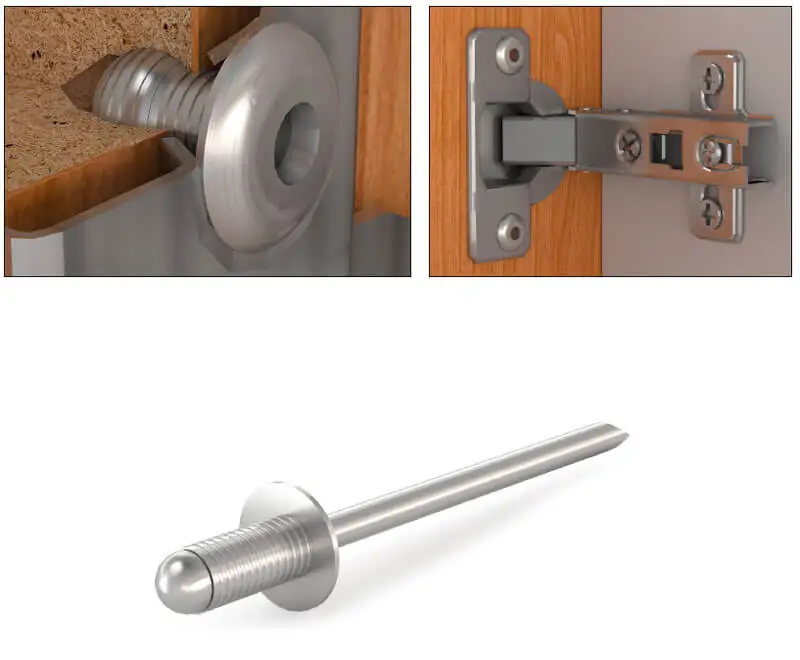
Get rivets quote today! Contact us today.
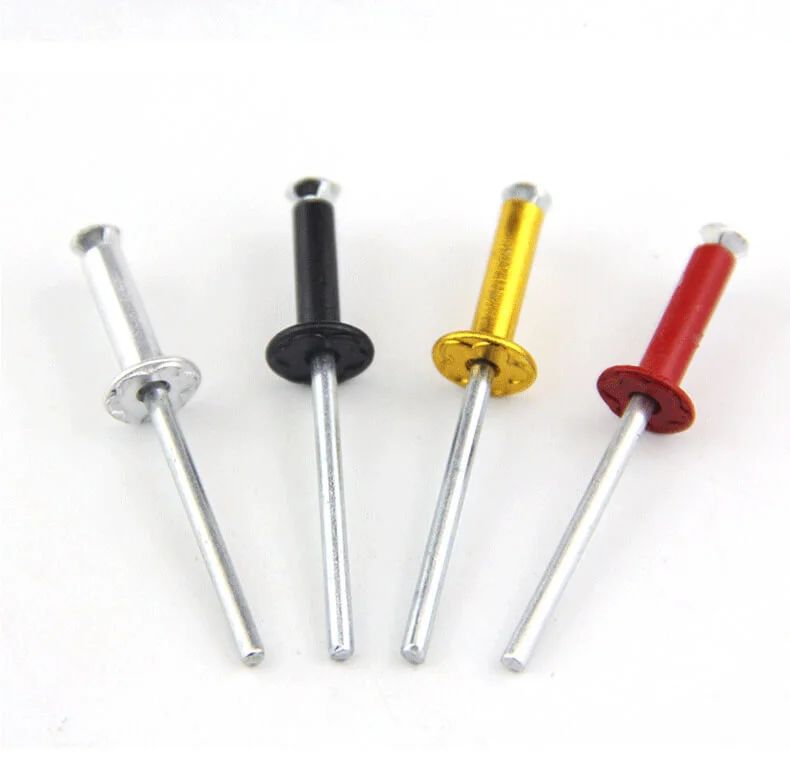
Get Rivets Quote for Your Project

Submit Your Sourcing Request

Submit Your Rivet Request

First order over $5,000 free riveting tools