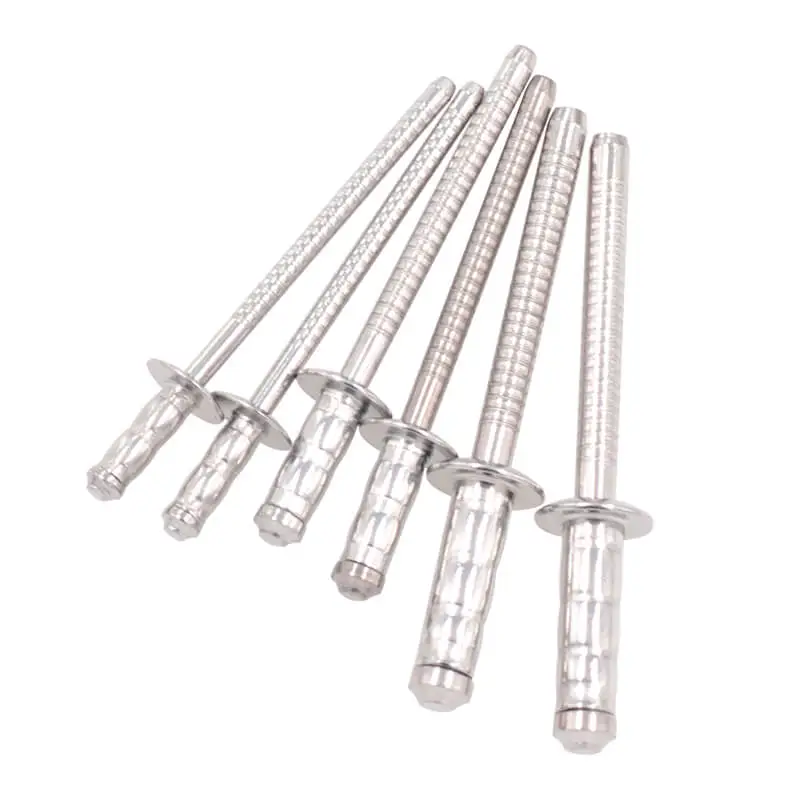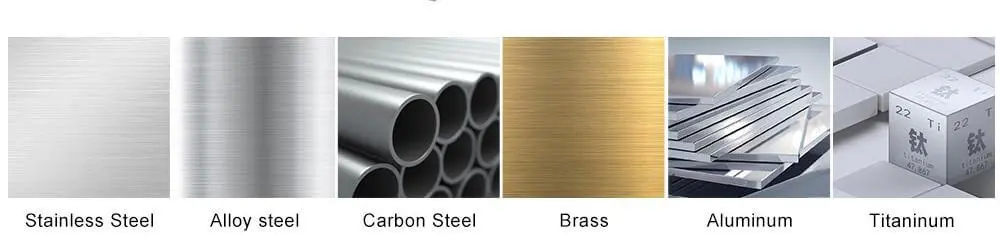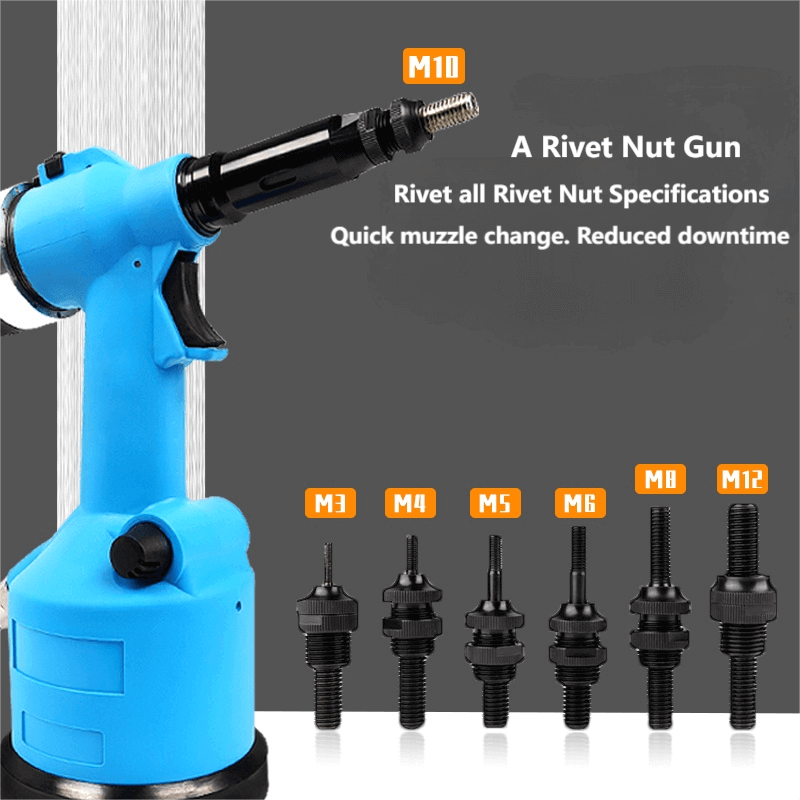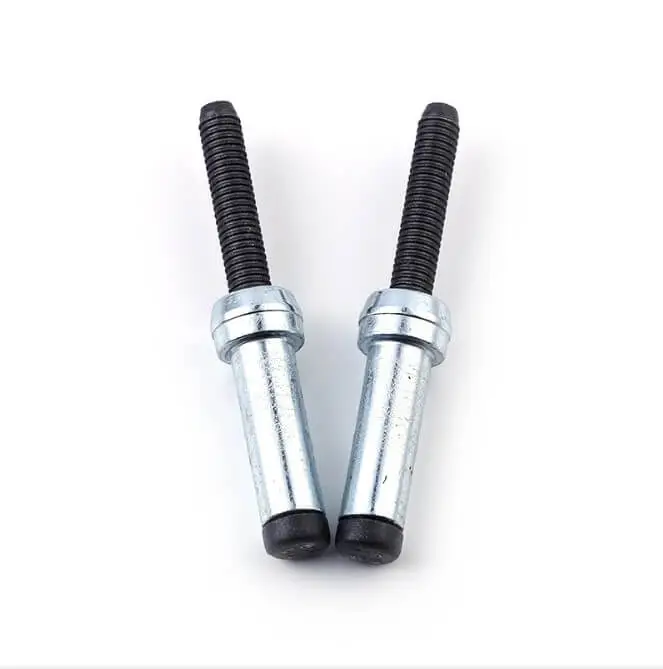
Whatsapp: +86 18962304392

Email: manufacture@world-rivet.com

What is a Lockbolt Rivet?

Table of Contents

In modern manufacturing and structural engineering, Lockbolt Rivet is gradually becoming a high-strength fastening solution to replace traditional bolts and rivets. This article will comprehensively analyze the definition, structural principle, installation method, performance advantages and typical applications of Lockbolt Rivet from a professional perspective. At the same time, we will also conduct an in-depth comparison of the differences between Lockbolt and Rivet to help you select the appropriate fastening solution for a specific engineering project.

Definition and Structure of a Lockbolt Rivet

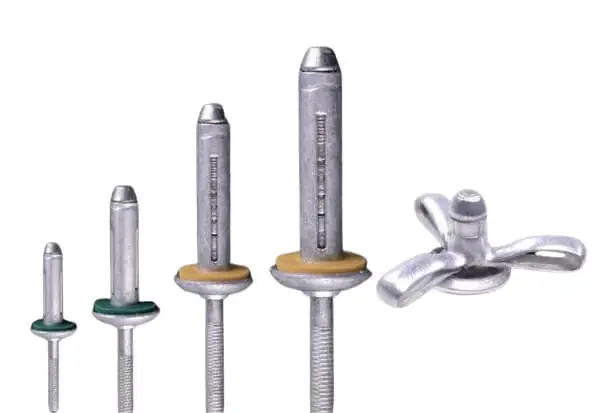
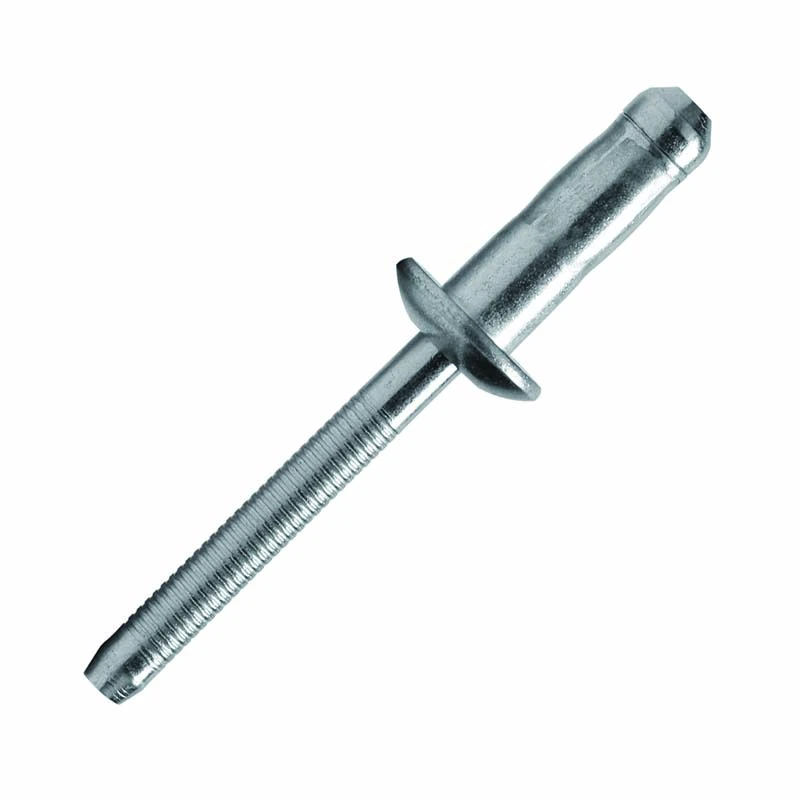
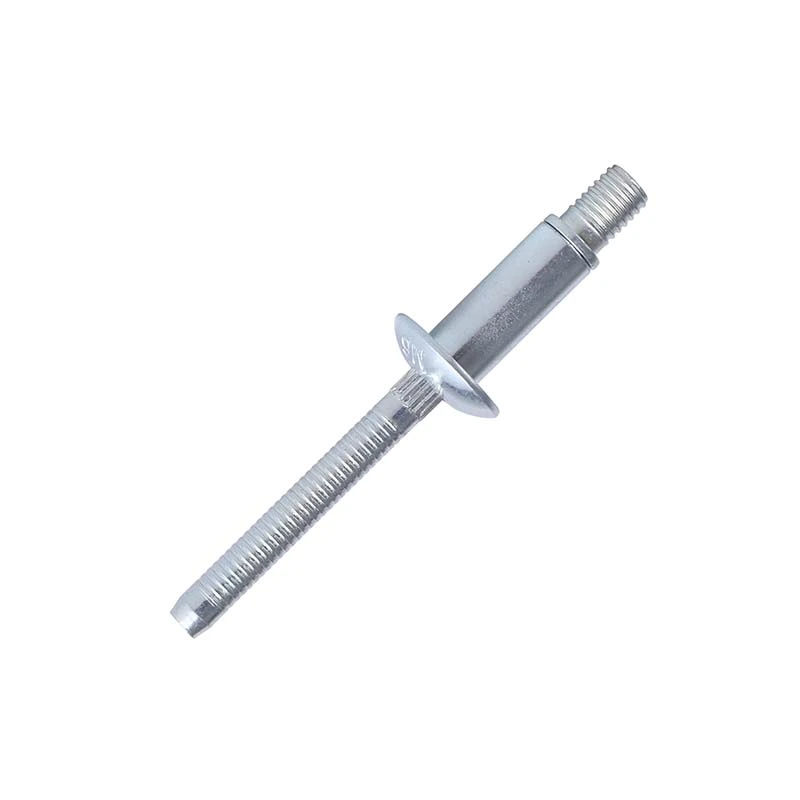
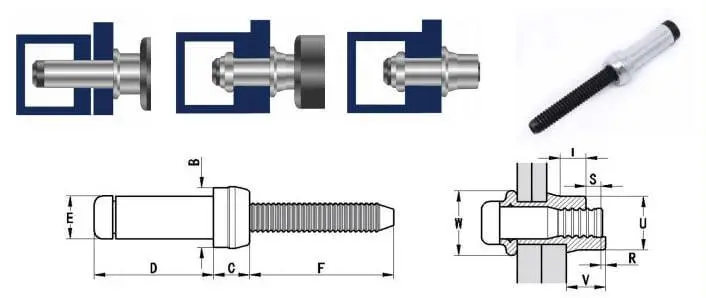
Lockbolt Rivet consists of two main parts: Pin and Collar. Unlike traditional rivets, Lockbolt does not rely on the breaking of the mandrel or welding to form a fixed structure. Instead, it achieves stable and long-lasting structural locking through the mechanical interlocking of the lock ring and the stud. This design ensures that the connection points can remain reliable even under high vibration, high load or harsh environments.

Structurally speaking, the Lockbolt rivet structure mainly consists of the following parts:

  • Pin : The main body is usually made of high-strength steel or stainless steel, featuring a smooth rod body and a tail with multiple grooves.
  • Collar: A ring-shaped metal kit that is pressed into the nail bar slot by hydraulic or pneumatic tools during installation and achieves a 360° mechanical locking through plastic deformation.
  • Installation Tool : A dedicated hydraulic or pneumatic fixture used to control the press-in force and stretching stroke to ensure consistent locking.
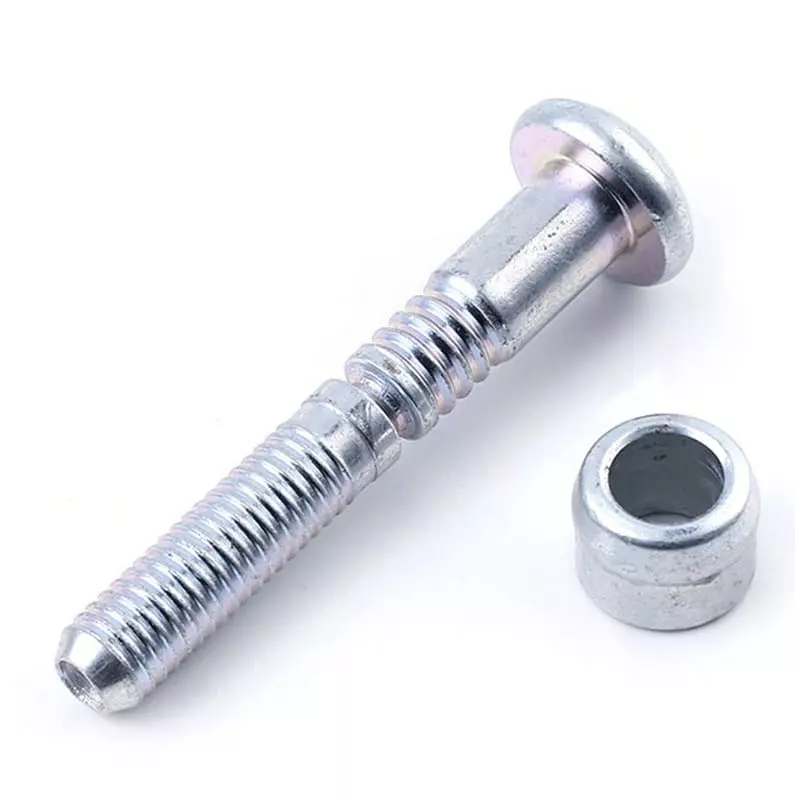
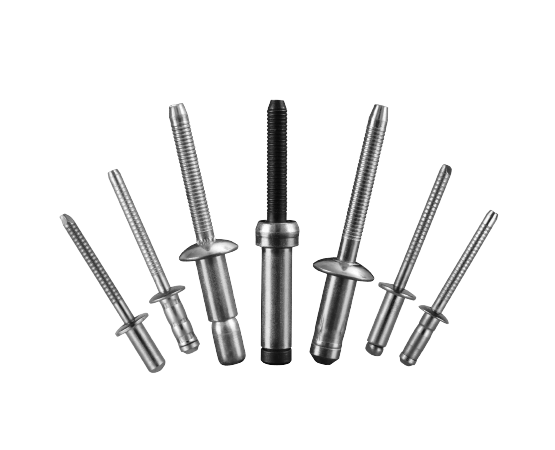
C6L Lockbolt Rivet

According to international industrial standards, the manufacturing and testing of Lockbolt Rivet usually follow the following specifications:

  • ISO 16120: Standard for mechanical properties of metal fasteners
  • NAS1919 : Specification for Riveting Lock Bolts for Aviation Use
  • ASTM F2281 : Technical Standard for Structural Lock Bolt Fasteners

In terms of the fastening principle, Lockbolt Rivet is a pure mechanical locking structure, with no risk of thread loosening and no heat-affected zone of welding. This design makes it the preferred choice for industrial connections with extremely high requirements for safety and durability.

How Does a Lockbolt Rivet Work?

To understand the source of the strength of Lockbolt Rivet, it is necessary to first understand its installation and locking principles. Unlike ordinary rivets that break through a mandrel, Lockbolt achieves permanent connection through the mechanical interlocking of the stud and the lock ring. This structure ensures uniform force distribution, strong vibration resistance, and stability under extreme working conditions.
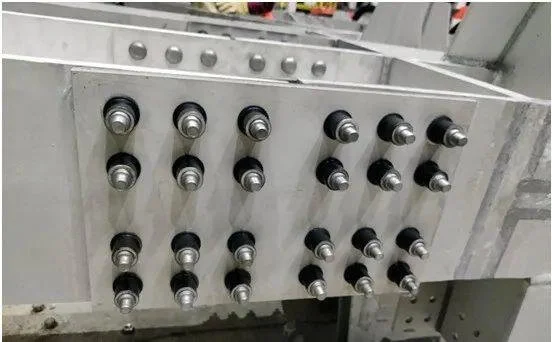
Applications of Lockbolt
  • During the pressing process, the lock ring will undergo plastic flow, achieving a high contact area locking.
  • Measured data shows that the shear strength of Lockbolt is usually 30% to 50% higher than that of structural blind rivets.
  • Due to the absence of thread loosening risk, its vibration resistance and fatigue life are significantly better than those of bolt connections.

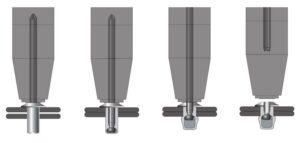
The following are the standard installation steps:

Step1: Insert the Pin

Insert the Lockbolt Pin into the pre-drilled hole, ensuring that the hole diameter matches the pin and the gap does not exceed 0.2mm. Nail rods are usually made of high-strength alloy steel or stainless steel and can withstand considerable tensile and shear forces.

Step2: Fit the Collar

Insert the Collar into the groove area at the tail of the nail bar. The inner diameter of the lock ring is slightly smaller than that of the nail bar slot, providing plastic deformation space for subsequent press-in. This step determines the tightness of the lock. It is essential to ensure alignment and no skew.

Step3: Pull and Swage the Collar

Use a dedicated Lockbolt installation tool (hydraulic or pneumatic type) to hold the tail of the nail bar and stretch it backward, while pressing the lock ring into the slot under high pressure. This process will cause plastic deformation of the lock ring material, forming a 360° circular lock, thereby achieving a firm mechanical fit.

Step4: Break the Pintail

When the lock ring is fully pressed in and the locking is completed, the tool will automatically disconnect the tail of the pin rod at the preset cutting point. At this point, the connection has been permanently fixed and cannot be loosened, nor does it require later maintenance.
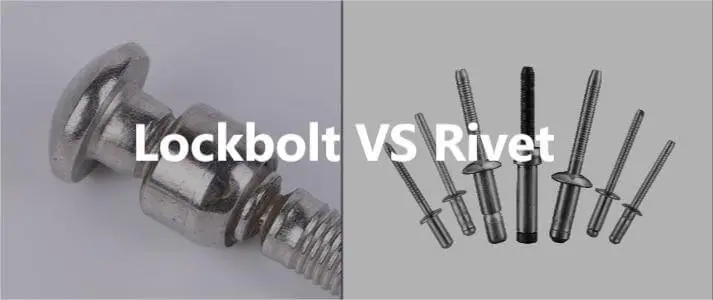
lockbolt vs rivet
lockbolt vs rivet

In the field of industrial fastening, both Lockbolt Rivet and Pop Rivet (blind rivets) are widely used permanent fasteners. However, there are essential differences between the two in terms of structural design, installation methods and performance.

Comparison CriteriaLockbolt RivetPop Rivet (Blind Rivet)
Installation MethodRequires access from both sides; collar is swaged onto the pin using a hydraulic or pneumatic tool for mechanical lockingInstalled from one side only; mandrel is pulled and snapped to form the joint
Strength LevelHigh-strength structural connection suitable for long-term load-bearing and heavy-duty applicationsMedium strength; ideal for thin sheets and light-duty assemblies
Vibration ResistanceExcellent — the locking collar design prevents loosening under vibrationModerate — may experience slight loosening under continuous vibration
RemovabilityPermanently locked and non-reusableNon-removable but can be drilled out for disassembly
Typical ApplicationsRailway vehicles, bridge structures, wind power equipment, heavy machineryAutomotive panels, household appliancesindustrial assembly
CostHigher initial cost but minimal maintenance over timeLow cost, suitable for large-volume production

From the perspective of structural safety and service life, Lockbolt Rivet is more suitable for engineering applications that withstand long-term loads and frequent vibrations, especially for the main load-bearing structures of railways, buildings and heavy equipment.

And Pop Rivet is more suitable for medium and light assembly and daily industrial manufacturing due to its characteristics of lightness, low cost and easy installation.

Key Advantages of Lockbolt Rivets

Heavy Duty Lockbolts Fastener Rivets in swimming pools

In structural fastening systems, Lockbolt Rivet is renowned for its outstanding mechanical properties and long-term stability. Compared with traditional rivets or bolts, Lockbolt not only offers higher strength but also maintains reliable locking in extreme environments. The following are its core advantages:

Superior Shear and Tensile Strength

The design of Lockbolt can withstand high-load impacts and continuous stress. The mechanical interlocking of its nail rods and lock rings can maintain high-strength stability in structural connections, making it suitable for heavy-duty structures such as Bridges, rail vehicles, and engineering equipment.

Outstanding Vibration Resistance

The lock ring system of Lockbolt achieves 360° circular locking through plastic deformation, effectively preventing connection loosening in high-frequency vibration or shock environments. It is an ideal choice for frequently vibrating equipment such as railway vehicles and wind power towers.

High consistency and Precise Installation

Installation using hydraulic or pneumatic tools can ensure that the clamping force and deformation at each connection point are consistent, avoiding the errors caused by traditional bolt tightening. This is particularly important for large-scale industrial assembly.

Maintenance-Free Design

Once installed, Lockbolt does not require secondary tightening or regular maintenance. Its stable mechanical locking structure ensures almost zero loosening during long-term operation, making it an ideal solution for reducing maintenance costs.

No Threads, No Welding

Lockbolt does not require threaded connections and does not produce a heat-affected zone (HAZ) during welding. This not only avoids metal fatigue but also maintains the strength of the base material unchanged.

Applications of Lockbolt Rivets

Lockbolt Rivet, as a structure-grade high-strength fastener, has been widely applied in multiple key industries due to its outstanding vibration resistance and long-term stability. It can maintain reliable locking under high loads, high-frequency vibrations and extreme environments.
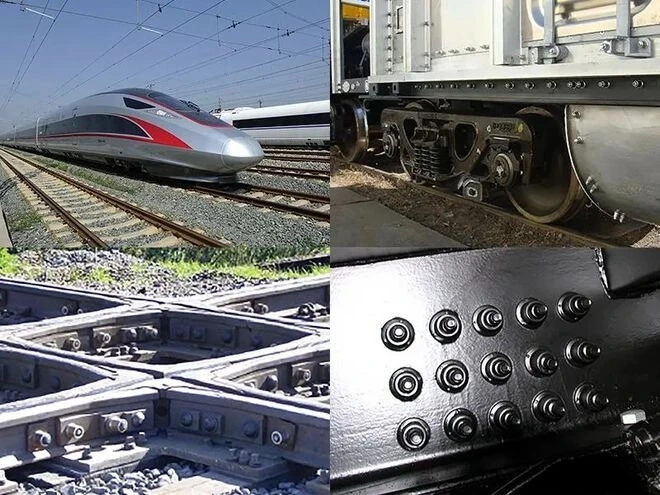
Heavy Duty Lockbolts Fastener Rivets Application
  • Railway Rolling Stock
    Lockbolt is one of the core fastening solutions in railway vehicle manufacturing. Whether it is the connection of the carriage frame, bogie, or the assembly of the chassis frame, Lockbolt can provide long-lasting connection performance that is resistant to loosening and fatigue. Compared with traditional welding, it avoids thermal deformation problems and ensures the long-term stability of the structure.
  • Heavy Machinery
    In high-vibration equipment such as excavators, cranes and mining machinery, Lockbolt can withstand continuous impact and shear force. Its high-strength locking ring system ensures a zero-loosening state even under heavy-load cycle conditions, significantly enhancing the reliability and service life of the equipment.
  • Bridge and Steel Structure
    For large steel structures such as Bridges and towers, connection strength and durability are of vital importance. The Lockbolt system can maintain structural rigidity under high wind and dynamic loads, and is easy to install, making it suitable for on-site construction and high-altitude assembly.
  • Wind Power Towers
    Wind power equipment is constantly exposed to strong winds, high humidity and heat, and salt spray environments. The corrosion resistance and vibration resistance performance of Lockbolt Rivet make it the first choice for tower assembly and generator base fixation.

Rivmate Expert Recommendations

In different industrial assembly scenarios, the selection of fastening schemes directly affects structural strength, production efficiency and later maintenance costs. Based on long-term industry experience, the Rivmate engineering team has summarized the following three key suggestions to help users make a more precise choice between Lockbolt and Rivet systems.
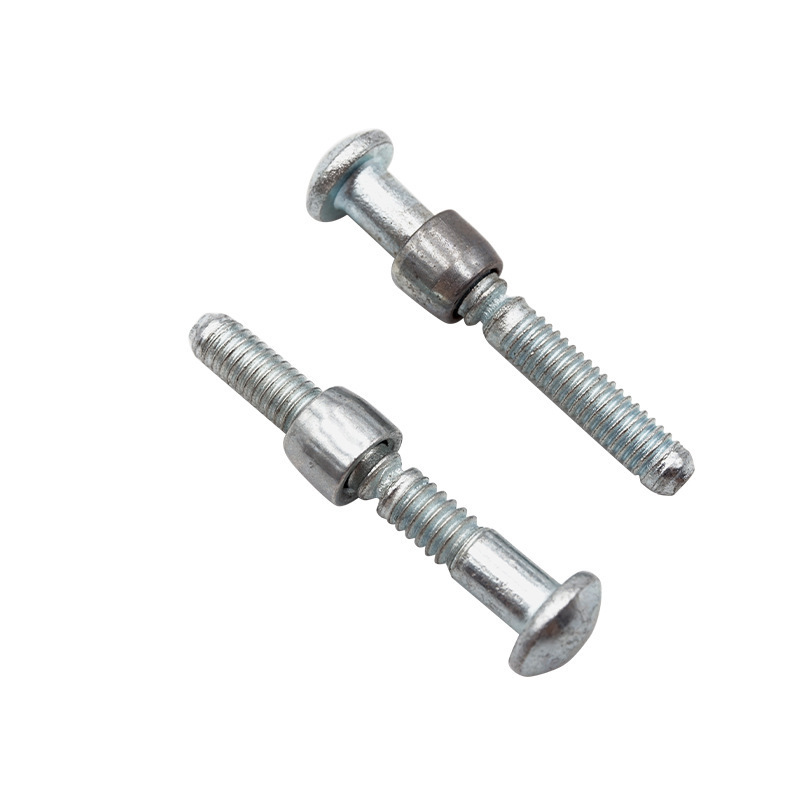
Rivmate Lockbolt Rivet Fastener | Magna Grip Lockbolts

If lightweight and medium-strength connection are pursued → Choose Structural Blind Rivet

This type of rivet is easy to install and can be operated on one side, making it suitable for medium-strength structures and light equipment. It can reduce weight while maintaining sufficient shear resistance and assembly efficiency, making it highly suitable for automotive, home appliance and general sheet metal assembly.

If high load and seismic stability are required → The Rivmate Lockbolt System is the first choice

Lockbolt features a higher mechanical locking force and fatigue resistance, ensuring zero loosening in environments with strong vibration and heavy loads. The Rivmate Lockbolt system is particularly suitable for projects that require long-term structural stability, such as railway vehicles, bridge structures, and wind power equipment.

For batch production lines → Use the Rivmate hydraulic installation tool series

Hydraulic assembly tools can ensure that the clamping force at each connection point is consistent, reduce human errors and increase the production rhythm. The Rivmate tool system is compatible with a variety of nail diameters and materials, significantly enhancing assembly consistency and production line efficiency.

In the field of industrial fastening, there is no “one-size-fits-all solution”. The selection should be made comprehensively based on the structural strength requirements, assembly methods, usage environment and production scale. Rivmate, through its Lockbolt System, Structural Rivets and dedicated installation equipment, can provide reliable and efficient overall solutions for different working conditions.

FAQ

Lockbolt Rivet is mainly used for structural connections that require high strength, vibration resistance and long-term stability. Typical applications include railway vehicles, bridge structures, wind power towers, heavy machinery and building steel structures. It is a permanent locking fastener, especially suitable for long-term loads and strong vibration environments.

Q2. Is a Lockbolt stronger than a rivet?

Yes. Lockbolt is typically 30% to 50% stronger than structural rivets of the same specification. The mechanical locking structure between its nail bar and lock ring can provide higher shear and tensile performance, and at the same time, it has excellent fatigue life resistance, making it very suitable for heavy-load or high-frequency vibration applications.

Q3. How is a Lockbolt installed?

The installation process is divided into four steps:

① Insert the nail rod into the hole;

② Put on the lock ring;

③ Use hydraulic or pneumatic tools to press the lock ring into the nail bar slot;

④ When the locking is completed, the tail of the nail bar automatically breaks to form a permanent lock.

The entire process is fast, safe and has a high degree of assembly consistency.

Q4. Can Lockbolts replace welding?

In most structural assemblies, Lockbolt can indeed partially replace welding. It does not require high-temperature heating and will not produce a heat-affected zone (HAZ), thus avoiding metal fatigue and deformation. More importantly, it requires no later maintenance and can immediately bear structural stress, thus being widely used in the connection of steel structures and aluminum alloys where welding is inconvenient.

Q5. Are Lockbolts reusable?

No. Lockbolt is a type of permanent fastener. After installation, it forms a fixed structure through the plastic deformation of the lock ring. If disassembly is required, the lock ring must be drilled out or the nail bar cut off. However, this design ensures that it remains in a zero-loosening state throughout its service life, which is a key guarantee for structural safety.

Pop Rivet Distributor in China - Rivmate Rivet
Rivmate Rivet Factory in Jiangsu, China

As an important technological innovation in the field of structural fastening, Lockbolt Rivet represents the best balance of high strength, zero loosening and long-term reliability. It achieves permanent fastening through the Mechanical Collar Locking structure and can still maintain a stable connection in environments such as strong vibration, high load, and extreme weather.

Professional advice from Rivmate:

If your project has strict requirements for structural safety, vibration resistance performance or corrosion resistance, Rivmate Lockbolt System is the most reliable solution. Rivmate has many years of industrial application experience. Its products comply with ISO/ASTM international standards and can provide you with all-round technical support from selection, installation to long-term maintenance.

👉 Visit Rivmate Engineering Fastening Center immediately for professional selection guidance and engineering application consultation.

Reference
Share:

More Posts

Get Rivets Quotes Now

Wholesale Blind Rivets from Rivet Manufacturer

What are Pop Rivets?

Table of Contents

Pop rivet is now another generic term for a blind rivet. But actually pop rivet is a brand of blind rivets, it’s just that users often refer to blind rivets as pop rivets.

Types of pop rivets - Rivmate Blind Rivet Supplier

The history of pop rivet dates back to the early 20th century.

Riveting as a method of operation has been around for a long time. Early riveting techniques generally involved the use of a heavy object (such as a hammer) to strike the end of a rivet, causing the rivet to expand to form a joint. This method of operation is more time-consuming and the operator’s strength, and also requires specialized training to be able to complete the riveting connection well.

Invention of the pop rivet

With the development of the times, people have higher requirements for the quality of products. Pop Rivet is used especially in industries such as automotive manufacturing, aerospace, construction and home improvement.

But it also creates problems. The rivets were too difficult to install and no longer fit the times. So in 1916. Inventor Carl Cherry invented and patented the pop rivet.He designed a blind rivet that could be installed quickly with only manual operation. This invention greatly improved the speed of rivet installation and ease of use.

Current status of pop rivets and technological improvements

Nowadays, pop rivet has become a common connection solution. It is a quick solution for connecting different materials and is suitable for a variety of different application scenarios.

The technology of pop rivet has been improved and innovated over the course of the pop rivet’s use. In industrial production, automated riveting equipment has become the main mode of operation for large-scale pop rivet installation.

In modern manufacturing, pop rivet is widely used. They are often used to connect automobile body parts, aircraft shell connections, metal structures, pipes, furniture and electronic equipment.

The great thing about Pop rivet is that it is quick and easy to install and provides a very reliable connection. Therefore, in many industries, when it comes to solving the problem of connecting materials, the first choice is the pop rivet!

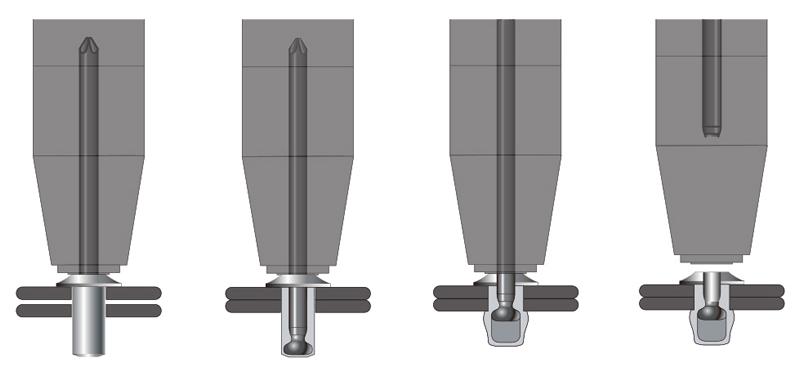
How to Install Pop Rivets? - Pull the Mandrel Until it Breaks

The installation process of Pop Rivet is based on mechanical stretching and plastic deformation. The core principle is as follows:

  1. Drilling
    Drill holes on the two materials to be connected that match the diameter of the rivets. The aperture should be approximately 0.1–0.2 mm larger than the diameter of the rivet body to ensure smooth insertion and to guarantee the locking accuracy.
  2. Inserting the Rivet
    Insert the rivet body into the hole, ensuring that the cap part closely adheres to the material surface. At this point, the mandrel still passes through the rivet body.
  3. Pulling the Mandrel
    Use the rivet gun to pull the head of the core shaft. When the mandrel is pulled, it will cause the tail of the rivet body to undergo plastic expansion, forming a “bulb-shaped lock head” on the back of the material. This process firmly held the two pieces of material together.
  4. Mandrel Break-Off
    When the pulling force reaches the set value, the core shaft breaks at the designed fracture groove, and the remaining part stays inside the rivet. At this point, Pop Rivet has been successfully installed, forming a stable and highly shear-resistant permanent connection point.

Key Benefits of Using Pop Rivets

Compared to threaded connections or welding, the structural advantages of Pop Rivets are not only reflected in the ease of installation, but also in their overall reliability and economy. The following is an analysis of the core structural advantages of Pop Rivets.

①. One-Side Installation

The main feature of Pop Rivet is that it can be installed in structures that can only be accessed on one side. This “blind access” characteristic makes it highly suitable for use in sealed structures, inside pipes, interior panels of vehicles, and other working conditions where it cannot be operated from the back. The installation tool is simple and the fixation can be completed with just one pull.

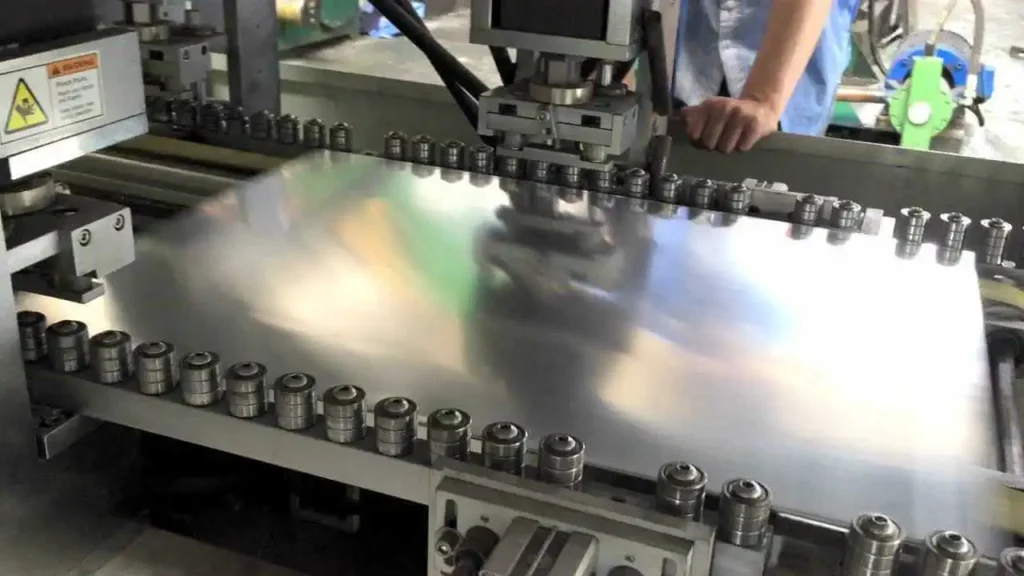
Fully Automatic Installation of Blind Rivets

②. Fast Assembly Process

Compared with bolts or welding, the installation of Pop Rivets is faster and does not require high temperatures or thread processing. Just drill a hole, insert the rivet and pull out the core shaft. The entire process is usually completed within 3–5 seconds. On mass production lines, using pneumatic or electric riveting guns can further enhance efficiency and achieve standardized assembly.

③. Lightweight Strength

Pop Rivet is mostly made of aluminum, galvanized steel or stainless steel, balancing strength and weight. Particularly, the aluminum rivets have a density only one-third that of steel, allowing for significant weight reduction without compromising structural stability. This is especially crucial in scenarios with lightweight requirements such as in automobiles, aviation, and rail transportation.

④. Excellent vibration resistance performance

After installation, the Pop Rivet forms a tight mechanical locking structure, effectively preventing loosening. Compared with traditional threaded connections, it performs better in high-frequency vibration environments and does not fail due to small displacements. Therefore, it is widely used in parts with frequent vibrations such as vehicle body structures, mechanical frames, and equipment shells.

⑤. Maintenance-Free Design

Once installed, Pop Rivet does not require any further tightening or lubrication. It is a truly “permanent connection component”.

In long-term operating environments (such as in household appliances, equipment casings or building facades), Pop Rivet can maintain a stable clamping force and does not require additional maintenance costs.

⑥. Corrosion and Sealing Options

For outdoor or humid environments, you can choose closed-end rivets or stainless steel materials to achieve waterproof, anti-corrosion and dust-proof effects. This structure is particularly practical in scenarios such as aluminum ships, air conditioning shells, and building facades.

Applications and Types of Pop Rivets

The pop rivet is one of the most commonly used rivets. Whether it’s steel, plastic, aluminium, carbon and stainless steel or other materials of different strengths and thicknesses, you can find different types of pop rivet for your project at Rivmate.You can choose from different types of nail cores, nail heads and nail bodies.

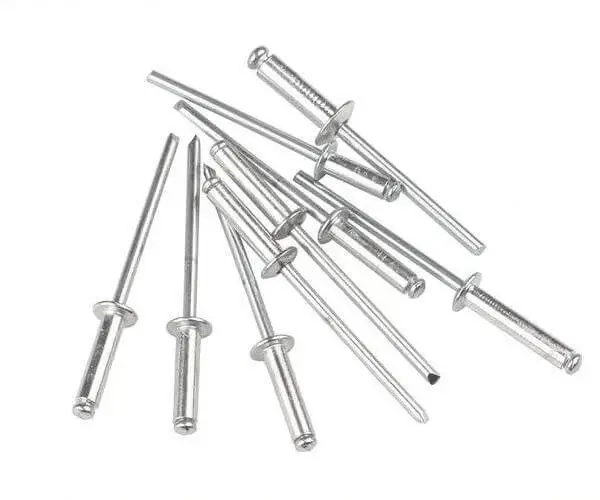
1/4″ Inch Aluminum Open End Blind Rivets
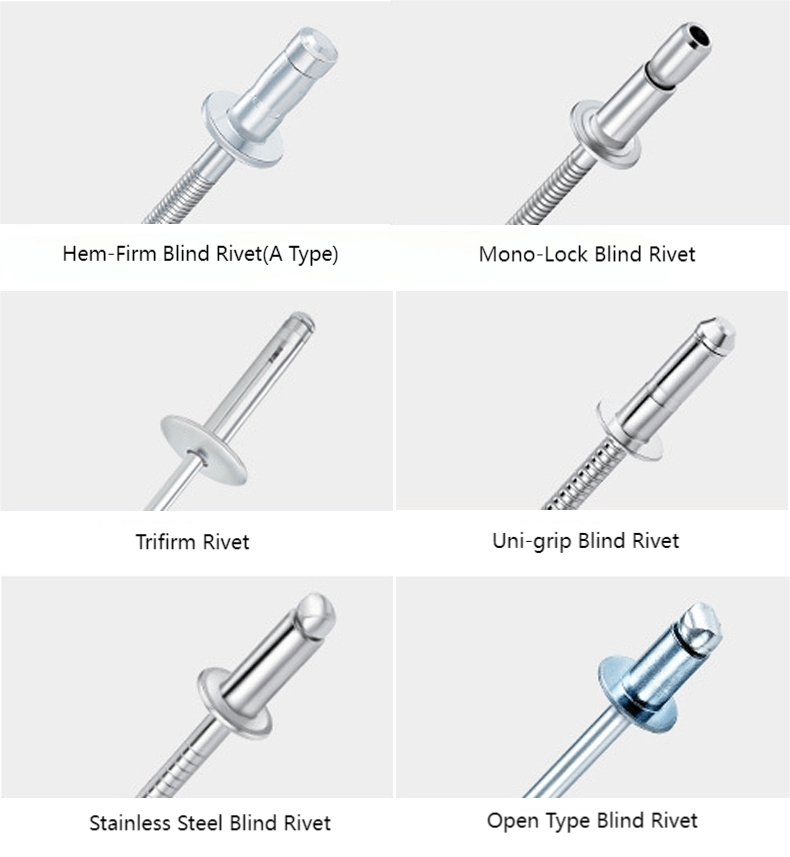
Open Type Blind Rivet

This is the most basic and common type of Pop Rivet. The tail end of the mandrel breaks after installation, leaving a part inside the rivet body. The tail end of the rivet body forms a flange, completing the clamping function.

  • Low cost, suitable for mass production.
  • Quick installation, can be completed on one side.
  • Lightweight structure, compatible with various materials (aluminum, steel, stainless steel).

It is applied to the exteriors of household appliances, the splicing of metal plates, sheet metal assembly, and general industrial structures. For standard metal connections with non-sealing requirements, the open type is the most economical and efficient solution.

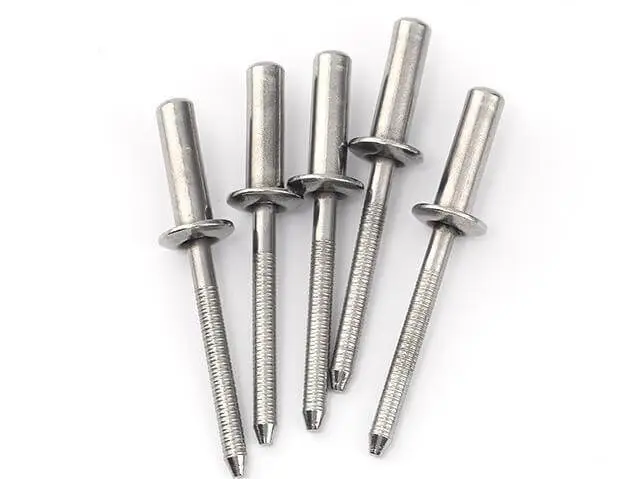
The tail end is completely sealed, and after the core shaft breaks, it remains inside the housing. This forms a sealed cavity structure to prevent the penetration of liquids or gases.

  • It has waterproof, dustproof and anti-corrosion functions.
  • It can prevent electrolytic corrosion from occurring.
  • After riveting, the surface is smooth and the sealing performance is excellent.

It is applied in shipbuilding, car exteriors, air conditioning units, aluminum doors and windows, and outdoor equipment. The closed-type rivets passed the ASTM B117 salt spray test for 1000 hours, and the retention rate of sealing performance exceeded 95%.

Rivmate Aluminum Sealed Type Blind Pop Rivet
Closed Type Blind Rivet
peel rivets
Peel Type Blind Rivet

During the installation process, the tail end of the rivet body will split longitudinally into four parts, resembling petals. Each part spreads outward and closely adheres to the surface of the material, forming a flexible clamping force.

  • Distribute stress to prevent brittle materials from cracking.
  • It is particularly suitable for non-metallic substrates such as wood, plastic, and composite materials.
  • After riveting, the structure is stable and not prone to detachment.

It is applied to wooden furniture, plastic shells, composite board assembly, and light industrial products. In non-metallic connections, split-type rivets are safer than traditional metal rivets as they do not cause material cracking due to local stress concentration.

It has a special rivet body structure that can adapt to various thickness combinations. One model can cover multiple traditional rivet specifications.

  • Reduce inventory and simplify selection.
  • Enhance assembly flexibility and tolerate hole diameter errors.
  • The locking core shaft is firmly fixed after riveting and is not prone to loosening.

It is applied in automotive assembly lines, equipment maintenance sites, and the assembly of steel plates and plastic components. The use of multiple clamping rivets can reduce the number of inventory models by approximately 35%, significantly lowering storage costs.

Rivmate Multi Grip Blind Pop Rivet From China
Multi-Grip Blind Rivet

Choosing The Right Type Of Pop Rivet

a. Based on Material Compatibility

Custom Raw Material

The material of the rivets should match that of the connected components to prevent galvanic corrosion.

Rivet MaterialRecommended Base MaterialKey Characteristics
AluminumAluminum sheets, plastics, thin steel platesLightweight, corrosion-resistant, cost-effective
Stainless SteelStainless steel, steel platesHigh strength, excellent corrosion resistance
SteelCarbon steel structures, mechanical componentsStrong shear resistance, suitable for heavy-duty joints
Copper / BrassElectrical components, decorative partsGood conductivity, strong anti-rust performance

b. Based on Grip Range

Grip Range determines whether the rivet can fully secure the two layers of material. A rivet that is too short will result in insufficient clamping, while a rivet that is too long may deform or become loose.

The selected Grip Range should be slightly larger than the total thickness of the connected material (TMT), and a safety margin of approximately 1–1.5mm should be left. When the clamping range is well-matched, the structural strength is typically enhanced by 15%–20%.

c. Based on Environmental Conditions

  • Indoor dry environment: Use open type blind rivets. Low cost, quick installation, suitable for appliance shells and sheet metal assembly.
  • Wet or outdoor environment: Choose closed type blind rivets. Sealed tail, waterproof and dustproof, strong corrosion resistance, suitable for ships or building curtain walls.
  • High vibration conditions: Recommend structural rivets. Core shaft locking design, anti-loosening, high shear strength, suitable for vehicles and heavy machinery.
  • Multiple thickness combinations: Use multi-grip rivets. One rivet for multiple uses, adaptable, reduces inventory and selection complexity.
  • Wood or plastic substrates: Select peel type rivets. Tail opens to distribute force, prevents material rupture, suitable for furniture or plastic component assembly.

A912 Rivmate Pneumatic Rivnut Tool

The type of installation tools directly affects the construction efficiency and the consistency of locking.

  • Manual Rivet Gun: Suitable for small-scale repairs and DIY projects.
  • Pneumatic/Hydraulic Rivet Gun: Suitable for factory batch assembly.
  • Cordless Rivet Tool: Combines flexibility and portability with high efficiency.

For frequent assembly or structural-type rivets, it is recommended to use Rivmate electric or hydraulic tools, which can ensure uniform tension and high consistency.

e. Based on Strength Requirements

When the project has specific requirements regarding the strength of connection, shear resistance or vibration stability, different types of Pop Rivets should be selected based on the structural load characteristics.

For assembly scenarios with moderate strength requirements, such as appliance housings, lightweight sheet metal parts, or non-load-bearing structures, it is recommended to use open type rivets. This type of rivet is easy to install and has a low cost, making it the most economical solution.

If the project involves medium to high-strength connections, the Multi-Grip Rivet can be chosen. This design can maintain a stable locking force in different thicknesses or material combinations, effectively preventing loosening or deformation. It is highly suitable for automotive components, equipment housings, and industrial assembly lines.

For high-load, highly-vibratory or critical structural parts, the structural rivets (Hemlock / Structural Rivet) should be given priority. These rivets feature a core shaft mechanical locking structure, offering high shear resistance, high tensile strength and anti-loosening performance. They can maintain stability over a long period in heavy-load or dynamic stress environments.

FAQs

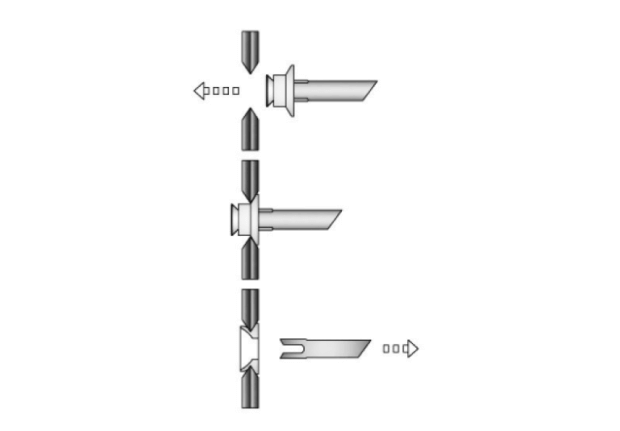
A Pop rivet is a type of one-sided installation permanent fastener, suitable for use in structures where operation from the back is not possible. It is widely applied in fields such as automobile manufacturing, building curtain walls, electronic equipment, home appliance shells, and aviation maintenance. The core advantages of Pop rivets lie in their fast installation, stable connection, and low maintenance cost. Under the trend of lightweight and modular assembly, Pop rivets are gradually replacing traditional bolts and welding processes.

Q2. What materials are Pop Rivets made from?

  • Aluminum : Lightweight, corrosion-resistant, suitable for aluminum plates or plastic parts;
  • Stainless Steel: High strength, corrosion-resistant, suitable for outdoor or high-load environments;
  • Steel : Strong shear resistance, commonly used for mechanical and structural connections;
  • Copper / Brass: Good electrical conductivity, suitable for electrical assembly and decorative applications.

Standard open-type rivets do not have waterproof performance. If the project has requirements for waterproofing, dustproofing or anti-corrosion, Closed-End Blind Rivet should be selected. This type of rivet has a closed tail, which can prevent liquids and air from seeping in. It is very suitable for use in hot and humid environments such as ships, outdoor equipment, and solar brackets.

Q4. Are Pop Rivets strong enough for structural use?

Regular rivets are suitable for light to medium strength connections. If the project requires high shear or vibration resistance, structural rivets should be used. These rivets feature a core shaft mechanical locking design, which significantly enhances the tensile and shear strength, being 40%–60% stronger than standard blind rivets.

Build Smarter Connections with Rivmate Pop Rivets

Compared to traditional bolts or welding methods, Pop Rivet not only installs faster but also reduces production costs and maintenance risks. For high-demand application scenarios, Rivmate Closed-Type and Structural-Type Rivets Series can maintain safety and durability in extreme environments.

Choosing the appropriate type and material of rivets is crucial for ensuring the structural strength and lifespan. Rivmate boasts extensive industry experience and international standards certifications (ISO/ASTM), providing professional riveting solutions for users worldwide.

Rivmate Rivet Factory in Jiangsu, China

Contact our technicians immediately to obtain:

  • Selection Guide for Bolts for Different Application Scenarios
  • Data Sheet for High-Strength Structural Bolts and Closed-Type Series Products
  • Recommendations for Matching Bolting Equipment and Technical Support

Reference

Share:

More Posts

Get Rivets Quotes Now

Wholesale Blind Rivets from Rivet Manufacturer

Rivamte Bom Rivets
Carbon Steel Boom-Lock Blind Rivet

Structural Rivets

Structural rivets are fasteners designed to create high-strength connections.

blind rivet

In modern manufacturing, high-strength connection solutions are important to ensure product quality and performance. Structural rivets are widely used in various industries as a fastener with high strength joining capabilities.

Structural rivets are capable of creating high strength connections. Made from strong and durable materials, they are able to withstand critical stresses and vibrations. RIVMATE is a leading service provider of customized structural rivets solutions in the manufacturing and construction industries worldwide.

In this article, we will introduce the characteristics of structural rivets, how to use them and how to choose the right structural woolen empire. Helping you to understand how to use structural rivets to create high strength joining solutions.

What Are Rivets? Rivmate Rivets Supply

What are the types of structural rivets

bom rivet
Boom-Lock Blind Rivet

Rivmate Boom-Lock Blind Rivets

Boom-Lock Blind Rivet is a high strength structural blind rivet, also known as Bom rivet.

Boom-Lock Blind Rivet is an ideal choice for high load requirements and single-sided installations.
During installation the tool stretches the top bar and the coworker squeezes the brim to create plastic deformation, resulting in the characteristic ring-groove locking effect. The deformed area is tightened to achieve a reliable and tight connection.
Boom-Lock Blind Rivet solves the problem of common blind rivets loosening under vibration. Meanwhile, it has higher precision, higher productivity and excellent anti-vibration performance.

Rivmate exploding Watertight Bulb Tite Rivet
Bulbtight Trifirm Rivet

Bulbtight Trifirm Rivet

Bulbtight Trifirm Rivet is a special structural blind rivet. It is uniquely designed to be waterproof and corrosion resistant. Rubber gaskets are added to prevent water ingress during use. The all-aluminum construction of the rivet provides corrosion resistance.

Riveted to form a lantern shape during installation and use, creating three large folding feet for additional riveting area.

mono lock blind rivet
Mono-Lock/Now-Lock Blind Rivet

Now-Lock/Mono-Lock Blind Rivet

Now-Lock/Mono-Lock Blind Rivets are one of the very important products in structural blind rivets. It has double locking function and closure. After riveting the nail core is locked in the rivet body to form a high tensile and shear strength.

Draw rivets are metal connectors with a unique structure and high riveting strength. Belong to is a new type of fastener. Draw core rivets rivet core is pulled into the rivet body, under the action of a special rivet gun, the core of the nail broken nail will be flanged into the groove of the rivet body, the formation of a “mechanical external lock”, locking the nail core.

Hemlok Rivet
Hem-Firm Blind Rivet

Hem-Firm Blind Rivet

Hem-Firm Blind rivets are structural rivets with superior shear and tensile strengths, high vibration resistance and large blind end bearing areas that are not prone to deformation. It is suitable for riveting areas with high riveting strength requirements and requirements for sealing performance.

The spline locking core structure of Hem-Firm Blind Rivets is designed to provide a strong vibration-resistant connection that prevents rattling in time.

Hucklok Rivets - Rivmate Rivets Supply
Rivlok & Rivbulb Double-locking System

Rivlok & Rivbulb Double-locking System

Double-locking blind rivets are compact, high-strength connectors. It is used to create stable connections between materials. They are corrosion resistant and durable.

The principle of type riveting is used for installation. They are unfolded by applying pressure to form a secure connection. This unique design provides reliable tensile and shear strength. And it is able to remain stable under conditions of vibration and load.

How do structural rivets work?

There are some differences between structural rivets and standard blind rivets when it comes to work. This is because when riveting a structural rivet, the inside of the structural rivet locks a portion of the mandrel inside the rivet body, which creates another type of lock. This special structural design helps to increase the joint strength of the rivet.


Based on the principle of force transmission and expansion. Structural rivets use this principle to clamp materials to be joined together to form a strong connection. This type of connection provides high strength and stability and is used in a variety of applications.

  • Increased shear strength
  • High strength connections
  • Good resistance to earthquakes
  • It’s hard to get loose.
  • Waterproof and dustproof

Advantages of Structural Rivets

Compared to ordinary blind rivets. Structural rivets can provide super high strength. Structural rivets have many advantages.

  • Unilateral mounting. More usage scenarios
  • Creates reliable, high-strength connections. Stable under vibration, shock and load conditions.
  • The structural design is flexible. A variety of customized structures can be paired to suit most applications.
  • Structural rivets can be used in harsh environments for long periods of time. Good durability and corrosion resistance.
  • Quick installation. Faster than traditional bolts and nuts. Can complete the riveting process in a very short time.
  • Easy to inspect and maintain
  • The structural rivets are very small. It can save a lot of space for connections and can be advantageous in limited space applications.
  • Structural rivet connections are generally tight. It can provide a good sealing performance. Can have waterproof performance to a certain extent.

How to install Structural Rivets?

The installation of blind rivets is all relatively similar. All require specialized riveting tools. For example, some structural rivets require the Hemlock Rivet Tool, Monolock Rivet Tool, Lockbolt Tool for successful installation.Ordinary rivet guns do not have the ability to install these special rivets.

Except the riveting tool is slightly different. The process of riveting structural rivets is not much different from regular rivets.

  • Need to pre-drill an appropriately sized hole
  • Load the end of the rivet into the rivet gun
  • Activate the riveting tool to install the rivets to the surface of the material.
  • As soon as the rivet breaks. This means the end of the riveting process.
How Does Bom Rivet Work?
install trifirm aluminum pop rivet

How to Remove Structural Rivets?

Removal of structural rivets is essentially the same as standard blind rivets.

You can use everything from drills, screwdrivers, and other hard accessories.

  • Punch a hole in the center of the rivet
  • Choose a suitable drill bit and apply some lubricant to the bit.
  • Use a drill bit to drill through the rivet until it is completely through the hole.

Which is the best tool for structural rivets?

There is a saying that rings true. There is no such thing as the best tool, only the most appropriate tool.Therefore, there is no best riveting tool, only the most suitable riveting tool.

So how do you choose the right rivet gun? It all depends on your project and your requirements for efficiency.I’ll tell you about the main types of rivet guns available in the world today and their advantages and disadvantages.At Rivmate.We offer what we believe to be the best rivet guns available. The vast majority of personal and industrial requirements can be met. Our website provides detailed information for you to view. For further discussion, please contact us.

There are three main types of structural riveting tools:

  • Electric Rivet Gun
  • Pneumatic Rivet Gun
  • Hand Rivet Gun

The Rivmate tool is suitable for installing all types of structural rivets.

Electric Rivet Gun

The power source of electric rivet gun is lithium battery, the power source is more convenient than gas source, but less suitable for industrial mass production. Electric rivet gun is more suitable for home or small batch production of outdoor work, easy to use and labor-saving.

Pneumatic Rivet Gun

The power source of pneumatic rivet gun is air pressure, so the use of pneumatic rivet gun is required to be equipped with an air source. Pneumatic rivet guns are very efficient and the tool can provide a high pulling force. It is easy to maintain and is suitable for industrial batch work.

Hand Rivet Gun

The power source of the hand rivet gun is the operator’s two hands, so the operator’s strength will be directly related to receive the efficiency of the work of the rivet gun. But in the case of heavy workload operators will feel very tired.

The advantage of manual rivet guns is that there are basically no requirements on the application scenarios, and they are more suitable for use in small batch production operations.

Rivmate Pneumatci Riveting Tool
A912 Rivmate Pneumatic Rivnut Tool

How to Choose The Right Structural Rivets?

There are many factors to consider when trying to choose the right structural rivets for your project. For example, material, size, riveting range, head style and riveting strength. Here you will learn how to pick the right structural rivet for your project from a number of factors.

Structural Rivet Manufacturing Materials

Structural rivets can be made from a variety of materials. But different application scenarios require different materials. So it is important to choose the right manufacturing material according to the actual application of your project.

When choosing materials for manufacturing, you need to make sure that the rivets are compatible with the materials to be joined to avoid galvanic corrosion. Typically, we do not choose both aluminum and stainless steel.

Common material pairings include the following:

  • All Carbon Steel
  • All 304 Series Stainless Steel
  • Carbon Steel/Aluminum
  • 304 Stainless Steel/Aluminum
  • All Aluminum
  • Carbon Steel SWCH45K/Carbon Steel 10B21
  • 304/302 Stainless Steel
  • All Steel

Rivet Size

The size of the rivets is very important. If the rivet size is not chosen correctly, then the installation will fail as a direct result. You should refer to the rivet size before drilling the holes. It is important to match the size of the hole with the size of the rivet in order to avoid the problem of installation failure.

Riveting range

Rivet range represents the width that a structural rivet can connect. For example, if you need to rivet two materials that are 3mm wide, you need to purchase a structural rivet with a rivet range greater than 3mm. However, the smallest rivet range should not be selected. Best practice suggests that the middle grip range of the rivet should be selected. This helps in achieving the correct shear and tensile strength. It is important to note here that the riveting range does not represent the length of the structural rivet.

Rivet head shape

Rivet head types are used to help achieve a reliable appearance on a material. the Dome Head is firmly secured to the top of the material. the Large Flange is a shallower, wider head profile that is suitable for thin or soft materials such as thin steel sheets. the Countersunk Head allows the head of the rivet to be buried directly into the material, resulting in a flat surface. the Rivet Head can also be used as a base for the rivet.

multigrip rivet structure
Types of Rivet Head

Customized Structural Rivets for Your Project

Not sure how to choose the right structural rivets? Don’t worry, contact us. Tell us your needs, we will give you the most professional structural rivets solution. Perfectly solve all your questions about structural rivets.

Frequently Asked Questions about Structural Rivets

Can I get colored structural rivets?

Sure. We offer you a wide range of technologies for the treatment of various surfaces. Different colors can be customized for your rivets.

Are structural rivets superior to Huck bolts?

Both connectors provide high connection strength. Both ensure the stability of the connection.When installing Huck bolts, you need to be able to access both sides of the connected product. Structural rivets require access to only one side for direct installation.

Do you sell rivets worldwide?

Yes. We sell worldwide. We have exported our structural rivets to more than fifty countries in the world and have established long-term and stable cooperation with our customers. The quality of our rivets has received favorable comments from our customers.

We’ll provide you with one-on-one service. All countries of the world are our partners.

Please contact us!

What are the main application scenarios for structural rivets?

There are many types of structural rivets, so there are many application scenarios for them.

  • automobile manufacturing
  • rail link
  • Solar panel bracket connection
  • aerospace
  • Subway car manufacturing connections
  • High-speed train carriages

Carbon Steel Rivet Nuts

Carbon Steel Flat Head Round Body RIvet Nut
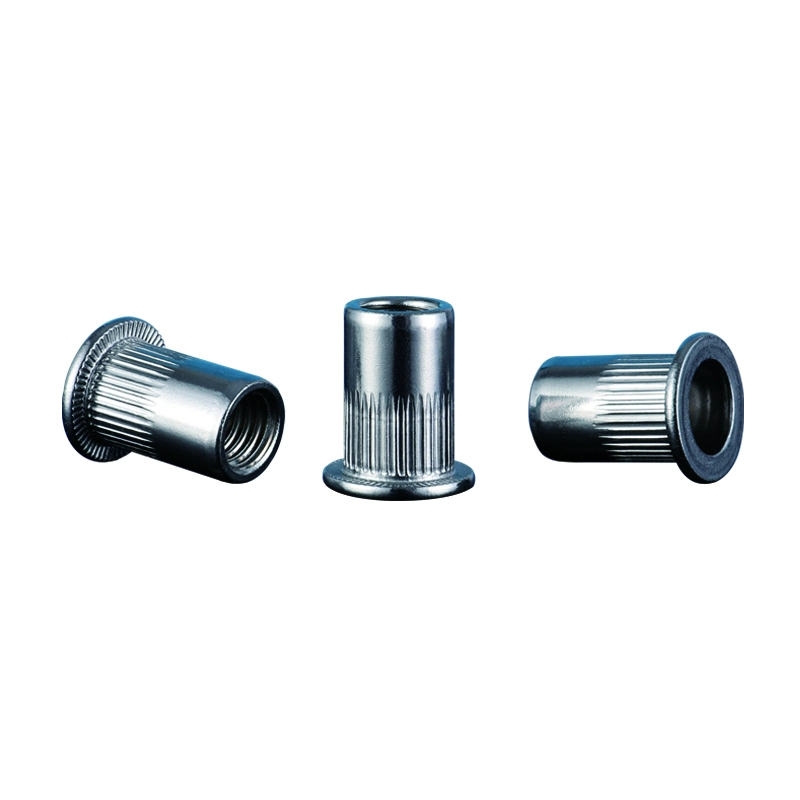
Carbon Steel Flat Head Knurled Body Rivet Nut
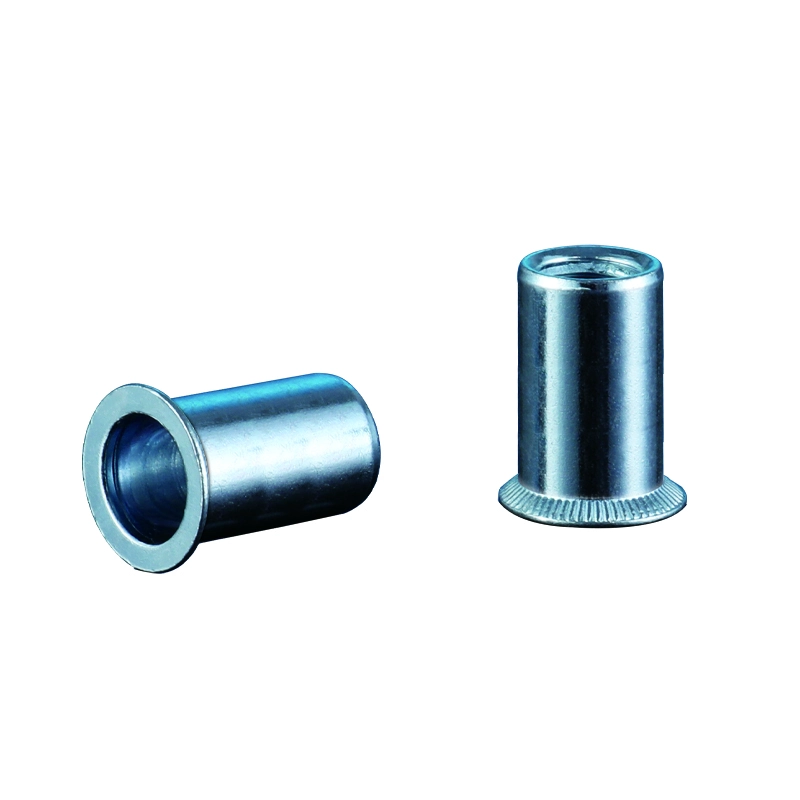
Carbon Steel Reduced Head Round Body Rivet Nut
Carbon Steel Reduced Head Knurled Body Rivet Nut
Carbon Steel Countersunk Head Round Body Rivet Nut
Carbon Steel Countersunk Head Knurled Body Rivet Nut
Carbon Steel Flat Head Full Hex Body Rivet Nut
Carbon Steel Reduced Head Full Hex Body Rivet Nut
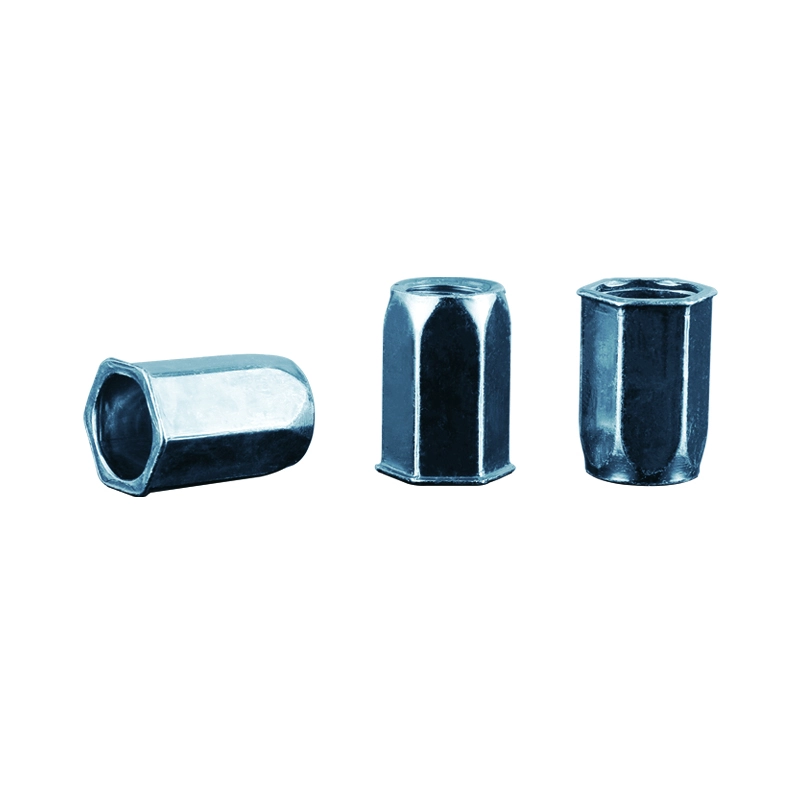
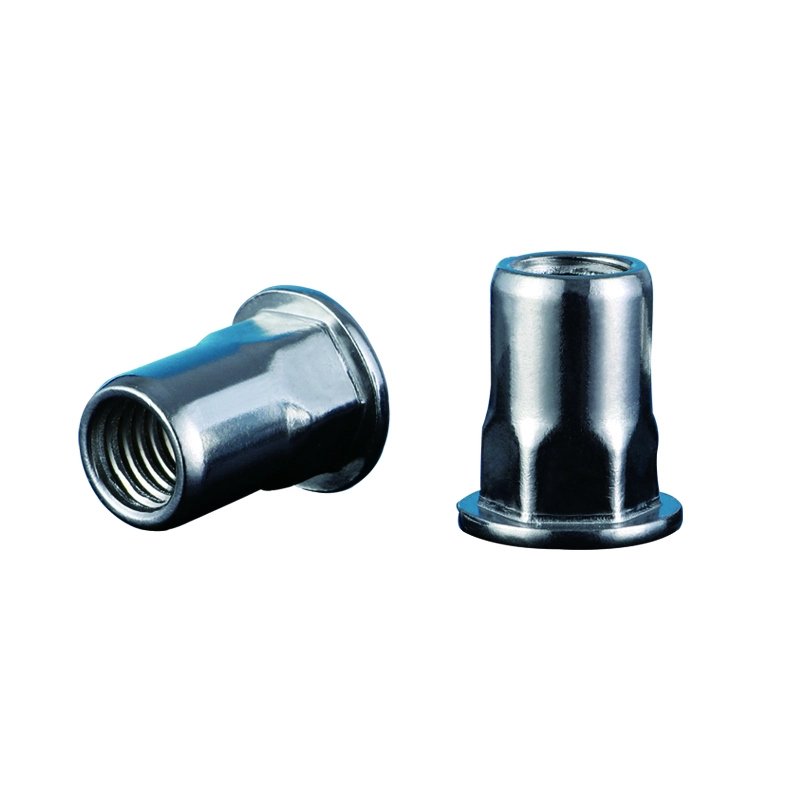
Carbon Steel Flat Head Half Hex Body Rivet Nut
Carbon Steel Reduced Head Half Hex Body Rivet Nut

Rivmate Aluminum Rivet Nut

aluminum rivet nut
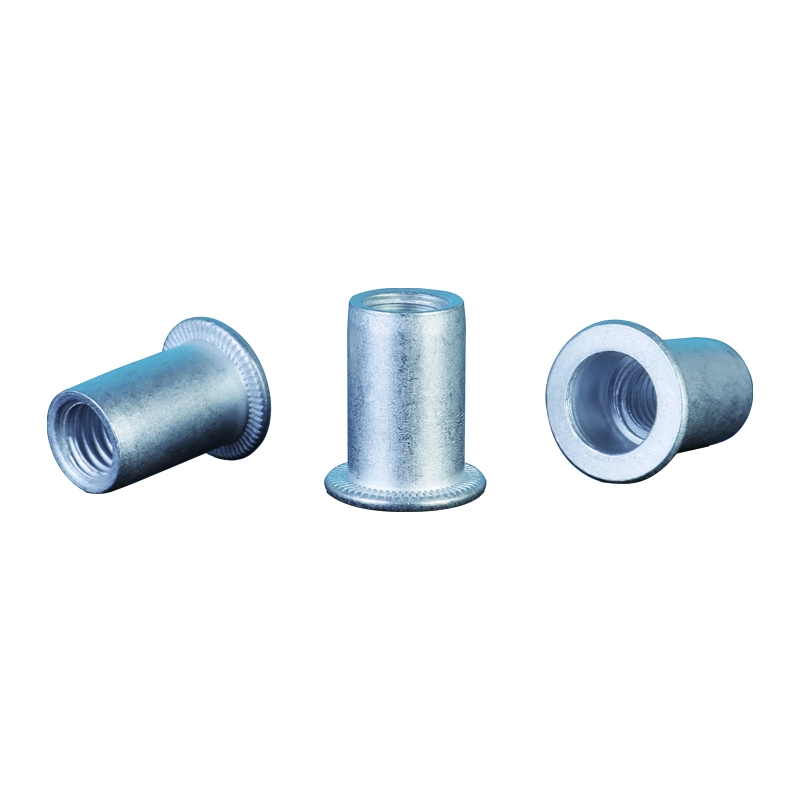
Aluminum Flat Head Round Body Rivet Nut
Aluminum reduced head round body rivet nut
Aluminum Reduced Head Round Body Rivet Nut
Aluminum Flat Head Knurled Body Rivet Nut
Aluminum Reduced Head Knurled Body Rivet Nut

Stainless Steel Rivet Nuts Supply

Stainless Steel Flat Head Knurled Body Rivet Nut
Carbon Steel Flat Head Round Body RIvet Nut
Stainless Steel Flat Head Round Body Rivet Nut
Rivmate Stainless Steel Reduced Head Round Body Rivet Nut
Stainless Steel Reduced Head Round Body Rivet Nut
Stainless Steel Reduced Head Knurled Body Rivet Nut
Stainless Steel Flat Head Half Hex Body Rivet Nut
Rivmate Stainless Steel Flat Head Full Hex body Rivet Nut
Stainless Steel Flat Head Full Hex Body Rivet Nut
Rivmate Stainless Steel Reduced Head Half Hex Body Rivet Nut
Stainless Steel Reduced Head Half Hex Body Rivet Nut
Rivmate Stainless Steel Reduced Head Full Hex Body Rivet Nut
Stainless Steel Reduced Head Full Hex Body Rivet Nut
Rivmate Stainless Steel Countersunk Head Round Body Rivet Nut
Stainless Steel Countersunk Head Round Body Rivet Nut
Rivmate Stainless Steel Countersunk Head Knurled Body Rivet Nut
Stainless Steel Countersunk Head Knurled Body Rivet Nut
Flat Head Knurled Body Rivet Nut(US Type)
Reduced Head Knurled Body Rivet Nut(US Type)
Flat Head Half Hex Body Rivet Nut(US Type)
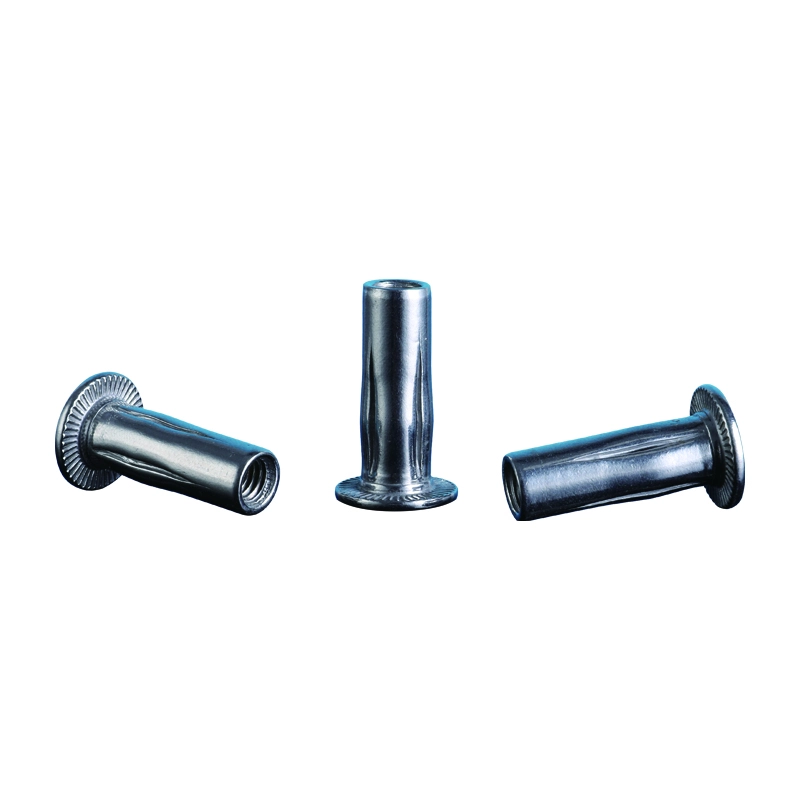
Stainless Steel Slotted Rivet nut
pull through rivet
Pull Through Rivets

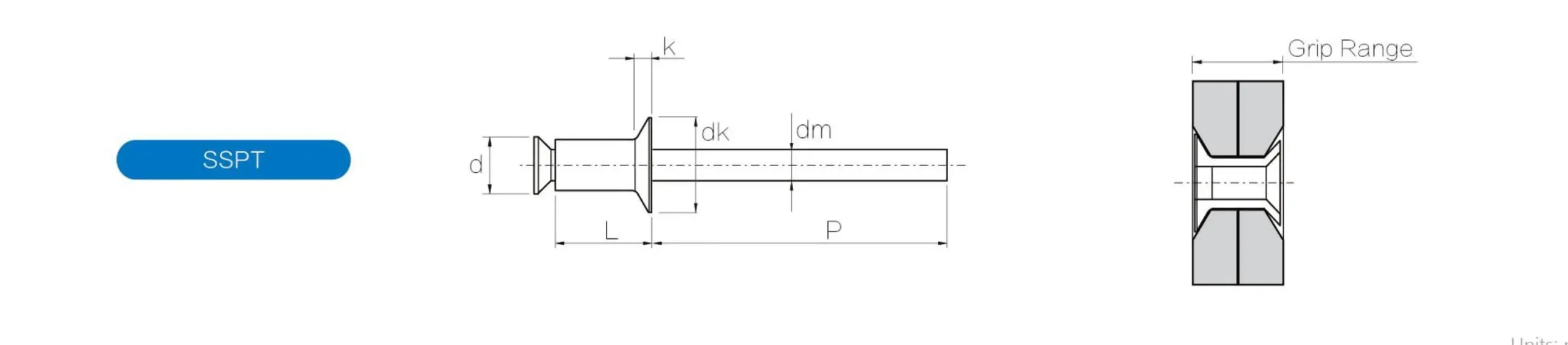
Double Countersunk Head Pull Through Rivets

Head Type

  • Double Countersunk Head

Material

  • Carbon Steel

Surface

  • Zinc Plated

Custom Pull Rivets for your Project

Technical Parameters of Pulled Rivets

Diameter[d] Size Body Length [L] Grip Range Drill dk k Tensile Shear
2.4(3/32") 2.4×2.1 1.9-2.3 1.3-1.8 2.5-2.6 3.8±0.2 0.7±0.1 500N 600N
2.4×2.4 2.2-2.6 1.6-2.0
2.4×2.8 2.6-3.0 2.0-2.5
2.4×3.3 2.1-3.5 2.5-3.0
2.4×3.8 3.6-4.0 3.0-3.5
2.4×4.3 4.1-4.5 3.5-4.0
2.4×4.8 4.6-5.0 4.0-4.5
2.4×5.3 5.1-5.5 4.5-5.0
2.4×5.8 5.6-6.0 5.0-5.5
2.4×6.3 6.1-6.5 5.5-6.0
3.0(7/61") 3.0×2.3 2.0-2.6 1.5-2.0 3.1-3.2 4.9-5.4 0.7-0.98 700N 800N
3.0×2.8 2.5-3.1 2.0-2.5
3.0×3.3 3.0-3.6 2.5-3.0
3.0×3.8 3.5-4.1 3.0-3.5
3.0×4.3 4.0-4.6 3.5-4.0
3.0×4.8 4.5-5.1 4.0-4.5
3.0×5.3 5.0-5.6 4.5-5.0
3.0×5.8 5.5-6.1 5.0-5.5
3.0×6.3 6.0-6.6 5.5-6.0
3.2(1/8") 3.2×2.1 1.8-2.4 1.3-1.8 3.3-3.4 4.9-5.4 0.7-0.95 800N 900N
3.2×2.4 2.1-2.7 1.6-2.0
3.2×2.8 2.5-3.1 2.0-2.5
3.2×3.3 3.0-3.6 2.5-3.0
3.2×3.8 3.5-4.1 3.0-3.5
3.2×4.3 4.0-4.6 3.5-4.0
3.2×4.8 4.5-5.1 4.0-4.5
3.2×5.3 5.0-5.6 4.5-5.0
3.2×5.8 5.5-6.1 5.0-5.5
3.2×6.3 6.0-6.6 5.5-6.0

Reply within 12 Hours

Send us a message if you have any questions or request a quote. We will be back to you ASAP!

Location
Room 9016 of 2# Building, No. 436 Changjiang Road, Suzhou City, Jiangsu Province, China 215011
 
Whatsapp

+86 189 6230 4392

or write

manufacture@world-rivet.com

CONTACT PERSON SEARCH

How to Install Pulled Rivets?

One of the best features of blind rivets is that they are quick and easy to install.

Installing pull rivets also requires no specialized skills.

Just need to prepare a professional riveting tool.

The riveting process can be completed with a simple operation.

Advantages of Rivmate Pull Rivets

  • Double Countersunk Head Design
  • Can be used for insertion on both sides of the workpiece
  • Draw mandrel coreless nail head design
  • No nail heads to fall off
  • Flat surface on both sides of the workpiece after riveting is completed
  • Good rust and corrosion resistance
  • Not easily deformed, easy to use

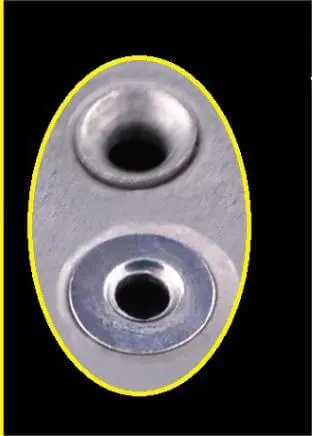
Double Countersunk Head Pull Through Rivets are designed for products that require flatness on both sides after riveting. Therefore, the rivets have countersunk holes on both sides of the workpiece.

double countersunk head pull rivets

Double Countersunk Head Design

Ensure the integrity and smoothness of both sides of the workpiece after riveting.

pull through blind rivet

Rivet Mandrel Design

Unique nailhead design. Ensure that the bottom of the rivet body riveted fully flanged, fully play a tightening effect.

pull blind rivet

Center hole Is Empty Design

No nail head falling off after riveting. Avoid bad cleanup when working in tight spaces

Applications of Double Countersunk Head Pull Through Rivets
  • Highspeed Rail
  • Shelf for Goods
  • Cabinet
  • Container (for shipping)
  • Ocean Liner
  • Facade
  • Motor Vehicles
  • Car Seat
  • Railroad Track
  • Towed Vehicle

Frequently Asked Questions About Pull Rivets

The exact production cycle is less easy to determine. This needs to be based on the quantity and specifications of your order.

When you find us to give you our professional services, it will go through several stages:

  1. Confirm the order and determine the specification quantity.
  2. Processing production. After ten production processes to ensure the high quality of the product.
  3. Quality check and packaging. We have thirteen inspection processes to ensure that our products meet specifications and quality requirements.
  4. Delivery. Choose the delivery method according to your requirements and have the product delivered to you.


The cost of rivets is determined by a number of factors. For example, specifications, material, finish, quantity, etc.

Advantages :

  • Quick installation. Reduced riveting time. Saves riveting labor costs.
  • Pull rivets are less expensive than bolts and welds.
  • Suitable for thin sheet materials.

Rivmate is ITAF 16949:2016 fastener manufacturer in china.

And it is ISO certified.We have a professional technical team for quality testing. Make sure our products meet the requirements of the application.

Pulled Rivets are widely used in the process of automobile manufacturing because of their light weight.

  • Body assembly.Attaches to doors, engine hey, roof, etc.
  • Interior assembly.Such as connecting parts such as seats, dashboards, center consoles, etc.
  • Chassis and suspension.
  • Engine and drivetrain.
  • Shields and exterior parts.

We have a professional technical team to provide you with technical support. From order generation, we will provide one-on-one service to secure your order throughout the process.

We also offer customization of our products. We believe you can find all the products you need at Rivmate.

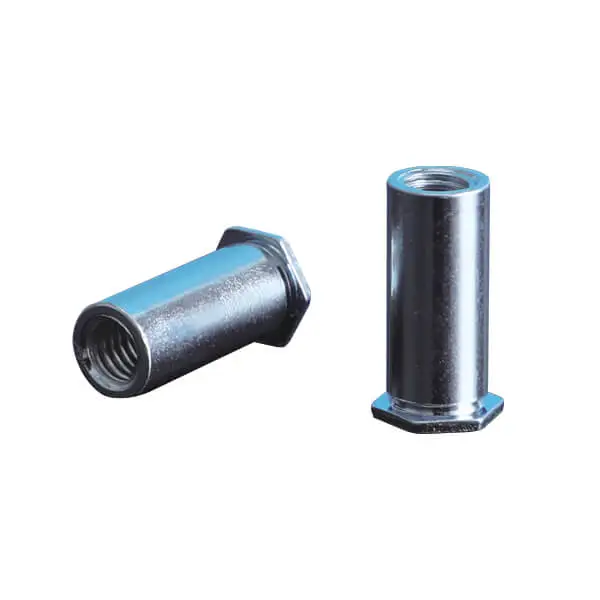
Blind Threaded Standoffs

Self Clinching Standoffs Material

  • Carbon Steel
  • Stainless Steel
  • Aluminum
  • Hardened Stainless Steel

Size:

  • M3 – M6
  • .112-40(#4-40) – .190-32(#10-32)


Custom Blind Threaded Standoffs for your project


Technical Parameters of Blind Standoffs

Thread Size Thread Code Min Sheet Thickness Hole Size In Sheet +0.08 C -0.13 H Nom. Min Dist Hole To Edge
M3×0.5 M3 1 4.22 4.2 4.8 6
3.5M3 1 5.41 5.39 6.4 6.8
M3.5×0.6 M3.5 1 5.41 5.38 6.4 6.8
M4×0.7 6.0M4 1.2 6 5.98 7 7.5
M4 1.27 7.14 7.12 7.9 8
M5×0.8 M5 1.27 7.14 7.12 7.9 8
M6×1.0 M6 1.3 8.75 8.72 10 8
Thread Size Thread Code Min Sheat Thickness Hole Size In Sheet +0.08 C -0.13 H Nom. Min Dist Hole To Edge
.112-40(#4-40) 440 0.04 0.166 0.165 0.187 0.23
6440 0.04 0.213 0.212 0.25 0.27
.138-32(#6-32) 632 0.04 0.213 0.212 0.25 0.27
8632 0.05 0.281 0.28 0.312 0.31
.164-32(#8-32) 832 0.05 0.281 0.28 0.312 0.31
.190-32(#10-32) 032 0.05 0.281 0.28 0.312 0.31

Reply within 12 Hours

Send us a message if you have any questions or request a quote. We will be back to you ASAP!

Location
Room 9016 of 2# Building, No. 436 Changjiang Road, Suzhou City, Jiangsu Province, China 215011
 
Whatsapp

+86 189 6230 4392

or write

manufacture@world-rivet.com

CONTACT PERSON SEARCH

Why Choose Rivmate

International Quality Certification

We select high quality suppliers as our partners, and strictly monitor and document from material selection, manufacturing to shipment in accordance with IATF 16949 management system. We follow ISO, DIN7337, IFI114, Huck and Avdel standards, and we can also design and manufacture according to customers’ requirements.

Competitive Pricing

As top clinch standoff supplier in China.We offer a full range of self clinching fastener. Provide lower transportation cost.

At Rivmate.You get a one-stop service.Whenever you have a need for self clinching fastener, you can find a solution at Rivmate.

Contact us for Competitve pricing.

Safe and Fast Delivery

We have stable raw material suppliers in China. We can meet the continuous demand of the enterprise.

Commonly used fasteners, we will do some inventory to meet the customer’s emergency

We’ve been working on secure connections for over a decade.

Blind Threaded Standoffs Frequently Asked Questions

Installation of self clinching standoffs requires the use of specialized riveting tools, riveting presses.

  1. Select the hole size appropriate for the desired standoff size.
  2. Using a punch, sufficient pressure is applied to press the riveted part into the sheet.

We can offer a wide range of quantities. Tens of thousands to millions, we can provide them all at once. We’ll make sure your product reaches you in a timely manner.

As long as it’s about rivets or fasteners, we can customize it for you.Whether it’s material, length, size, head shape, we can produce it all.

After confirming your needs, we will provide you with samples for testing if you require them. All these happen before confirming the order to make sure our products meet your requirements.

As a top fastener manufacturer in China.We do offer discounts for large orders.The more you buy, the bigger the discount.Our most regular discount is a free pneumatic riveting gun worth $500 with your first order of $5,000 or more.

Submit Your Rivet Request

First order over $5,000 free riveting tools