A rivet nut is a fastener with an internal thread. It is commonly used for threaded connections in thin sheets, tubes, or situations where the back of the structure is inaccessible. It allows for installation from one side only, without requiring access to the back of the workpiece.
This article will explain how rivet nuts work, their applications, and help you select the appropriate type of rivet nut based on your specific needs.
Table of Contents
What Is a Rivet Nut and What Problem Does It Solve?

A rivet nut is a threaded fastener installed in sheet metal or hollow structures. Once installed, it forms a reliable threaded connection. Unlike conventional rivet nuts, there is no need to place a nut on the back side of the material; it can be installed from just one side of the workpiece to create a fixed threaded hole for installing and removing bolts.
What practical problems do rivet nuts primarily solve?
1. Solving the problem of being unable to cut threads in thin sheet metal
In many industrial products—such as sheet metal enclosures, electrical cabinets, and HVAC equipment—the materials are relatively thin. If you machine threads directly into the sheet metal, it reduces the bolt’s clamping force and makes the sheet metal prone to damage after prolonged vibration.
The installation method of a rivet nut is equivalent to adding an independent threaded sleeve within the thin material. This facilitates reliable bolted connections in thin sheet metal.
2. Solves the problem of being unable to install nuts from the back side
In contrast, conventional bolted connections require contact with both sides of the material. However, many product designs have structural limitations that prevent access to both sides, including the interiors of square tubes, enclosed enclosures, and vehicle structural components.
Rivet nuts support single-side installation and can be installed solely from the outside. Therefore, they are particularly suitable for applications where the back side is inaccessible.
3. Solving the Problem of Frequent Disassembly
Conventional pop rivets form a permanent connection once installed; disassembly destroys the rivet, making it unusable. In contrast, after a rivet nut is installed, bolts can be removed, components can be replaced, and equipment can be maintained.
The Parts and Working Principle of a Rivet Nut
A standard rivet nut typically consists of several parts: the threaded section, the body, the deformation zone, and the flange.
Threaded Section:
The threaded area inside the rivet nut, used to connect bolts or screws after installation.
Main functions:
- Provides a threaded connection
- Secures external components
- Enables subsequent disassembly and reinstallation
Body
The main load-bearing part of the rivet nut, typically cylindrical or hexagonal in shape.
Depending on application requirements, rivet nut bodies can be classified as follows:
- Round Body: Suitable for general connections where anti-rotation is not required.
- Knurled Body: The knurled surface increases friction with the base material, offering better anti-rotation performance than the Round Body.
- Hex Body: Offers the best anti-rotation performance and is suitable for product connections requiring higher torque.
Deformation Zone
The most critical part of the rivet nut. During installation, the rivet nut tool applies tensile force to the internal threads, causing plastic deformation in the Deformation Zone. This causes the tail of the rivet nut to expand outward, forming a locking area on the back of the sheet metal.
Head
Located on the outer side of the rivet nut, this is the part that contacts the material surface after installation.
Common types include:
- Flat Head: The most common type. Suitable for general sheet metal fastening.
- Countersunk Head: Sits nearly flush with the material surface after installation. Suitable for products with high aesthetic requirements.
How Does a Rivet Nut Work?
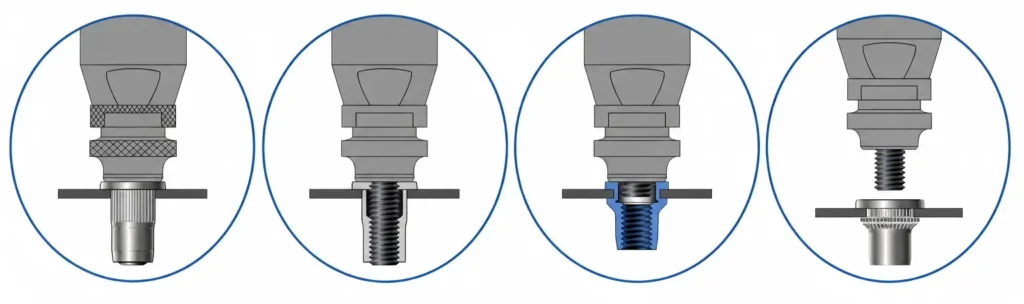
Rivet nuts work by applying axial tensile force to the rivet nut using specialized riveting tools, causing plastic deformation at its tail end. This creates a locking zone on the back side of the material, thereby securing the rivet nut in the thin sheet. This forms a fixed threaded connection point for subsequent bolting.
How a Rivet Nut Is Installed from One Side
The greatest advantage of the rivet nut is its single-sided installation. The tensile force generated by the installation tool causes the tail of the rivet nut to deform, forming a locking structure on the back of the material. This secures it within the thin sheet.
- Step 1: Drill mounting holes on one side of the sheet metal; the hole size must match the outer diameter of the rivet nut.
- Step 2: Attach the rivet nut to the tool and insert it into the mounting hole from one side of the sheet metal.
- Step 3: Apply tension using a specialized tool.
- Step 4: The tail end of the rivet nut expands on the back of the sheet metal, forming a locking structure on the reverse side.
- Step 5: Remove the tool and use the internal threads.
Round, Hex, Open-End, and Closed-End Rivet Nut Types
Rivet nuts can be classified by their base and body structure into Round, Hex, Open-End, and Closed-End types. Different types are used to address different assembly challenges.
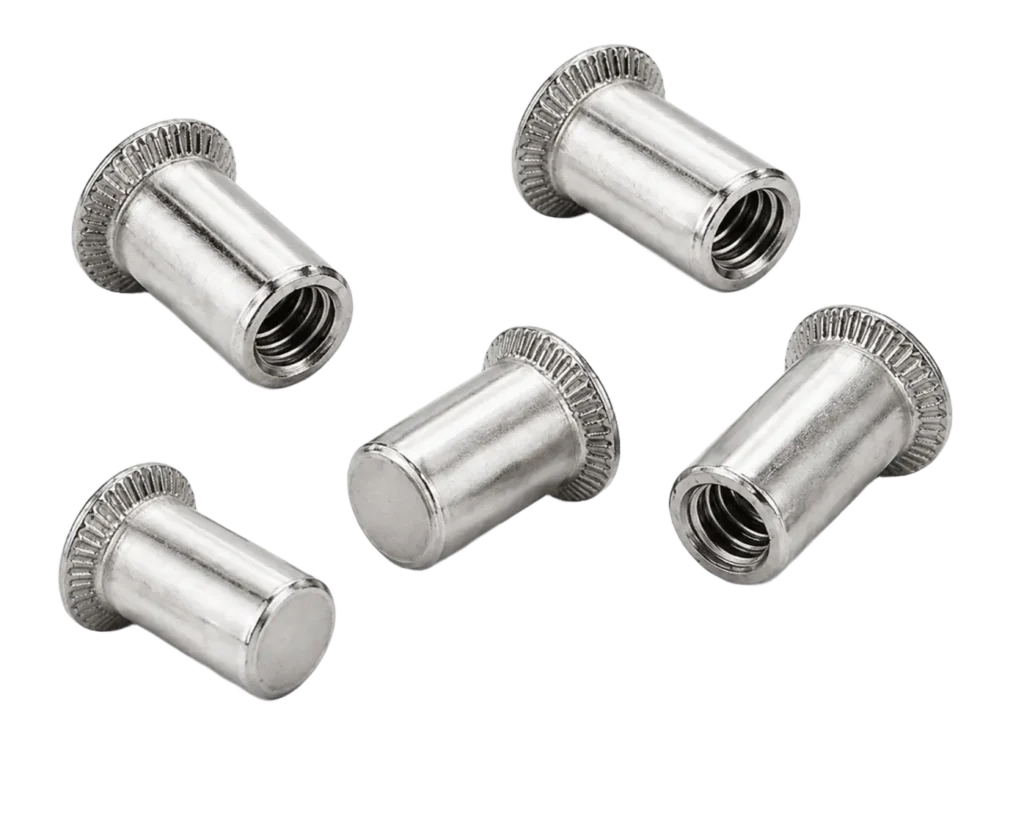
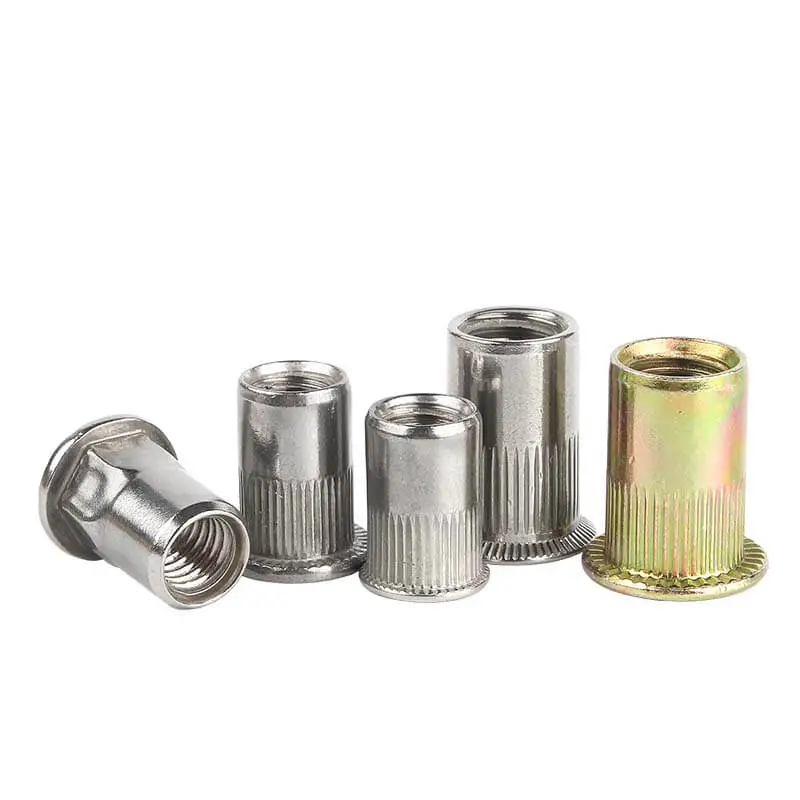
The body is cylindrical, and installing it in a round hole is straightforward. It is suitable for connecting products that do not require high torque. It is particularly well-suited for general sheet metal, equipment enclosures, electrical cabinets, and general mechanical assemblies.
Hex Rivet Nut
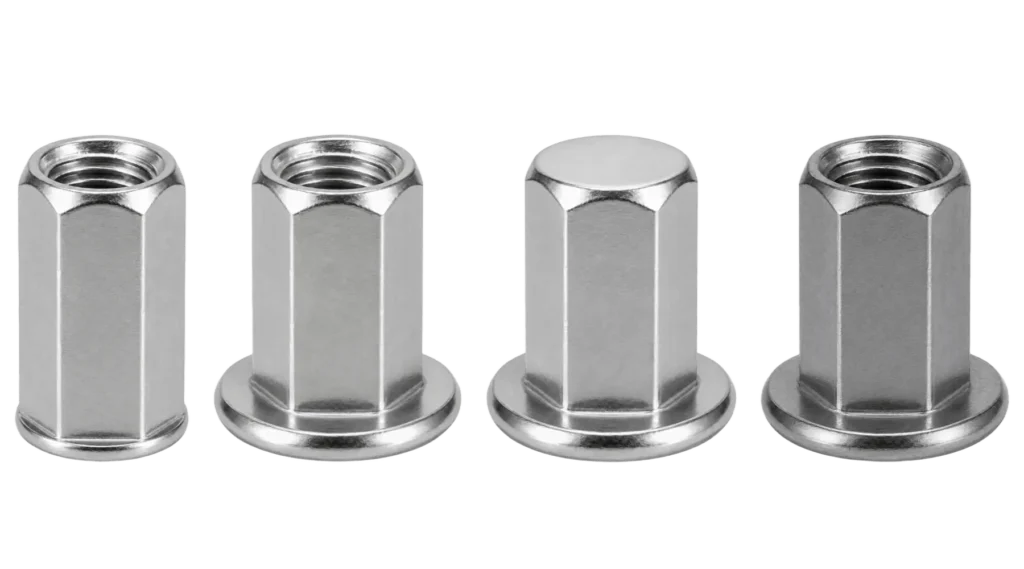
The body has a hexagonal cross-section and must be installed in a corresponding hexagonal hole. Its greatest advantage is its superior resistance to rotation, which is achieved through the geometric interlock formed between the hexagonal body and the hexagonal hole. When tightening or removing bolts, the rivet nut prevents rotation not only through surface friction but also by the shape of the hole itself, which directly restricts rotation. It is particularly suitable for mechanical equipment, vehicle components, or certain industrial applications subject to vibration.
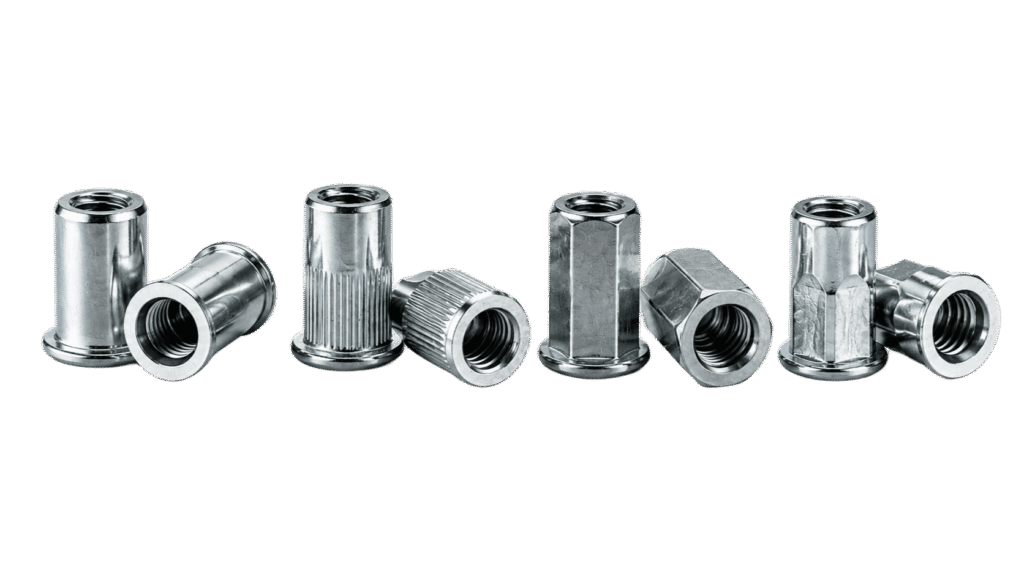
The bottom of the rivet nut is not completely sealed; the threaded hole is open-ended, allowing the bolt to extend beyond the nut. Its greatest advantage is that it imposes fewer restrictions on bolt length. It is suitable for applications where there is ample space behind the joint, where waterproofing and dustproofing requirements are low, and where flexible bolt lengths are desired.
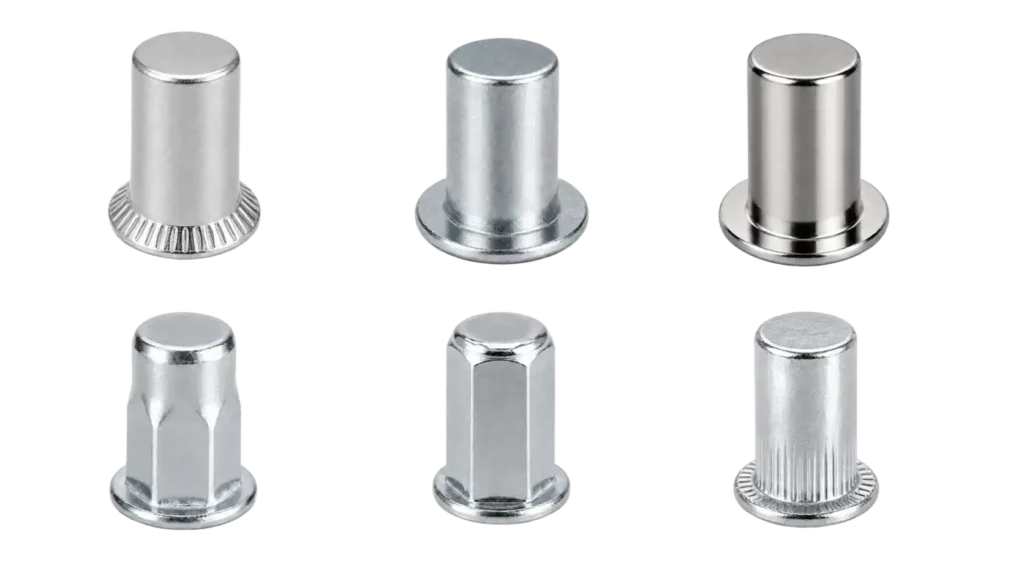
The bottom of the rivet nut is sealed, and the threaded hole does not extend through the rear end of the rivet nut. The primary advantage is that it minimizes the entry of external media into the structure through the central channel of the rivet nut. This effectively protects the internal threads from direct intrusion by dust, moisture, or other contaminants.
Materials, Thread Sizes, and Grip Ranges
When selecting a rivet nut, the three most important parameters are material, thread size, and clamping range. The material determines the environments in which the rivet nut is suitable and its approximate load-bearing capacity. The thread size determines which bolt size it is compatible with. The clamping range determines whether the rivet nut can be properly riveted to your sheet metal. Only when all three of these parameters match will you achieve a reliable connection.
What are the common materials used for rivet nuts?
The most common materials for rivet nuts on the market are steel, stainless steel, and aluminum. The choice of material depends on the strength of the sheet metal, the load, and the connection environment.
- Steel rivet nuts: The optimal choice balancing cost and performance. Not suitable for outdoor or highly corrosive environments.
- Stainless steel rivet nuts: Offer high corrosion resistance.
- Aluminum rivet nuts: Lighter in weight, suitable for some lightweight structures and softer materials.
What Is Thread Size?
Thread size indicates the specifications of bolts that can be inserted into the rivet nut. Rievmate’s standard metric threads range from M3 to M12.
What Is Thread Size?
The range of sheet metal thicknesses that a rivet nut can properly clamp. If the selected sheet thickness falls outside the correct grip range, the rivet nut will not achieve a stable, locked configuration after installation.
Where Rivet Nuts Are Commonly Used
1. Automotive and Vehicle Components
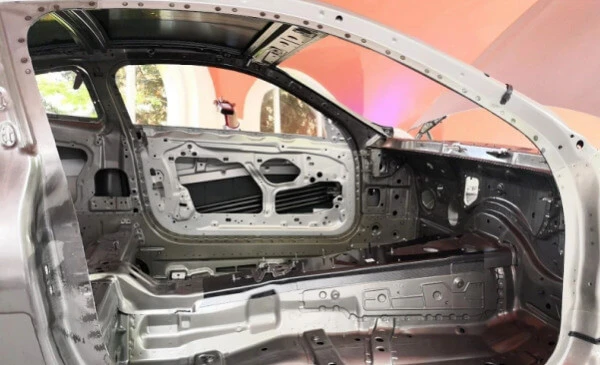
Automobile bodies, doors, seat structures, interior trim brackets, and mounting points for certain accessories typically use thin steel sheets, aluminum sheets, or hollow structures, which are not suitable for installing standard nuts from the back. Therefore, rivet nuts are widely used in the automotive industry. They allow for easy disassembly during subsequent maintenance without damaging the sheet metal.
2. Sheet Metal Fabrication and Equipment Enclosures
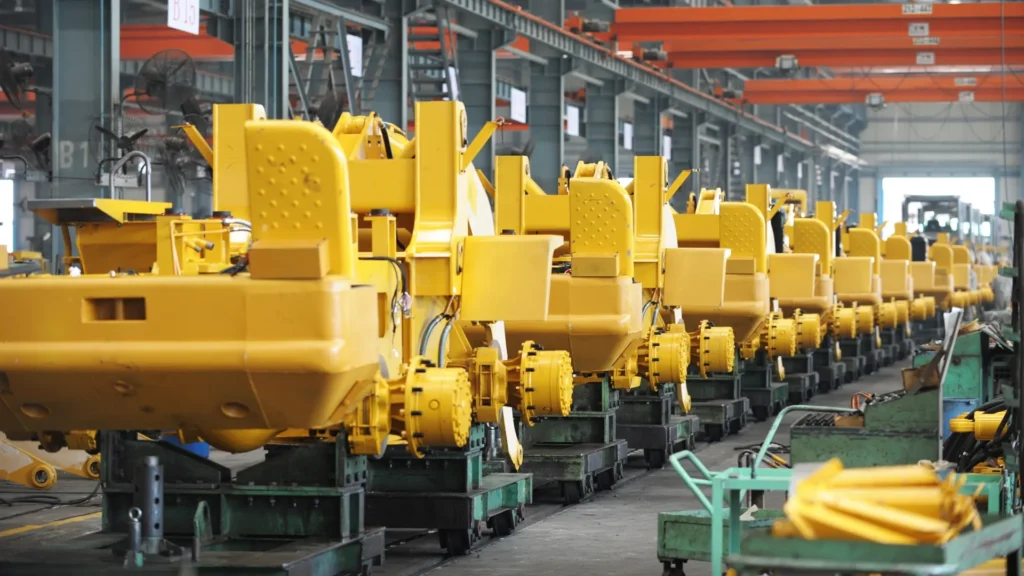
Electrical control cabinets, server racks, mechanical equipment enclosures, and metal chassis often use relatively thin sheet metal components. If threads are tapped directly into thin sheet metal, the usable thread length is limited. This fails to meet the requirements for installing door panels, brackets, guide rails, or internal components. However, rivet nuts can create a separate threaded structure within the thin sheet metal.
3. HVAC and Ventilation Equipment
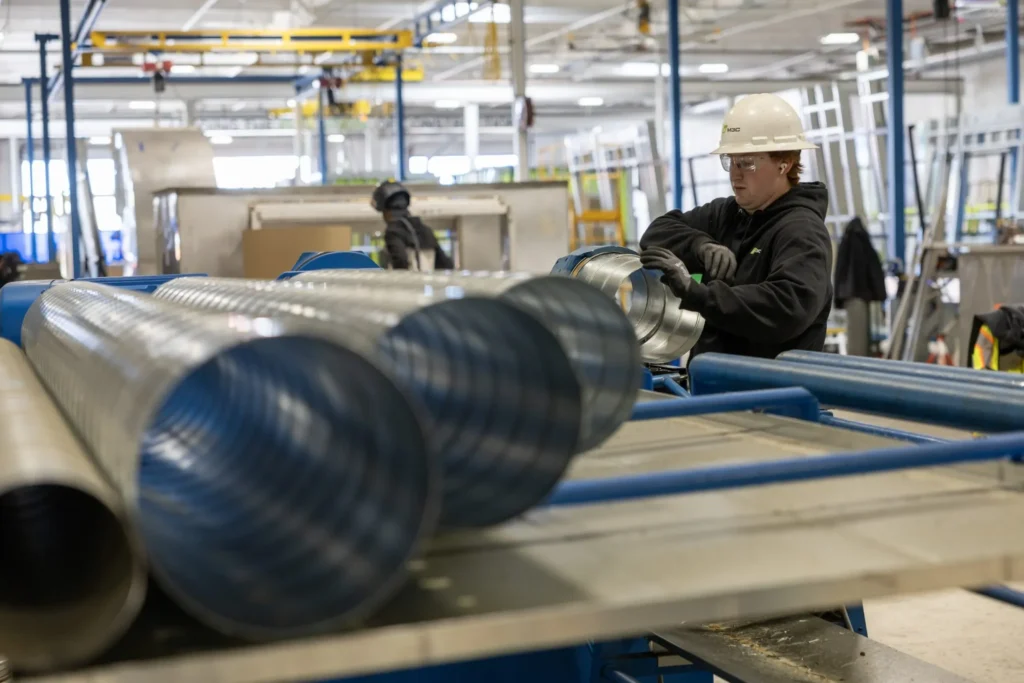
HVAC equipment uses thin steel sheets or thin-walled metal structures to manufacture enclosures, air ducts, equipment panels, and internal brackets. These systems must meet requirements for rapid assembly and future maintenance. Therefore, permanent welding is not suitable. Rivet nut installation allows for the pre-formation of threaded mounting points in thin sheets, enabling access panels, motor brackets, or other components to be removed via bolts.
4. Solar Mounting Systems and Outdoor Structures

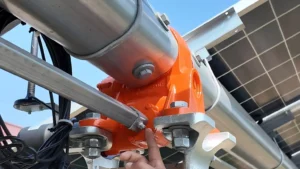
Riveted nuts can be used for connections in certain thin-walled profiles, equipment enclosures, and accessories within solar systems. They are particularly suitable for locations requiring removable installation or where standard nuts cannot be placed from the back of the profile.
For solar mounting systems, you must consider corrosive environments. For example, humidity, rain, salt, and contact between dissimilar metals can all affect long-term reliability. Ensure that the rivet nut material, base material, and surface treatment are compatible.
5. Trucks, Trailers, and Commercial Vehicles

Thin plates or hollow structures are found in truck bodies, trailer bodies, toolboxes, internal brackets, and some accessory mounting locations. Installing rivet nuts facilitates single-sided installation and provides the ability for later disassembly.
Key Benefits and Practical Limitations
| Key Point | Main Benefit | Practical Limitation |
|---|---|---|
| One-Side Installation | Can be installed from only one side, making it suitable for tubes, closed sections, and areas where the back side cannot be accessed. | If both sides are easily accessible, a standard bolt and nut may be simpler. |
| Suitable for Thin Materials | Creates a reusable internal thread in thin sheet materials that may not be suitable for direct thread tapping. | Very thin, soft, or brittle materials may deform, crush, or crack during installation. |
| Reusable Threaded Connection | Bolts can be installed and removed repeatedly, making rivet nuts useful for parts that require maintenance or replacement. | Poor anti-rotation performance may cause the rivet nut to spin during bolt installation or removal. |
| No Welding Required | Provides a threaded connection without welding, reducing heat distortion and potential coating damage. | Rivet nuts may not directly replace weld nuts in high-load or structural applications. |
| Efficient Installation | Can be installed quickly with suitable manual, electric, pneumatic, or hydraulic tools. | Incorrect hole size, grip range, or tool setting can reduce connection reliability. |
| Wide Material Compatibility | Available for steel, aluminum, stainless steel, and some plastic or composite applications. | Material type, sheet thickness, load, and corrosion environment must be evaluated before selection. |
How to Choose the Right Rivet Nut
Step 1. Determine the base material on which the rivet nut will be installed.
You need to consider whether the base material’s strength and deformation capacity can withstand the clamping force generated during the rivet nut installation process.
Step 2. Measure the actual plate thickness and select the appropriate Grip Range
The Grip Range refers to the thickness range of the materials to be joined that the rivet nut can properly clamp. If the selected Grip Range is too small, there may not be enough space for the rivet nut’s deformation zone to expand. If the selected Grip Range is too large, the rivet nut will not be able to clamp the plate sufficiently.
Step 3. Select the Thread Size Based on Connection Requirements
After confirming the plate thickness, select the appropriate thread size. Common metric sizes include M4–M10.
Step 4. Select the Body Shape Based on Anti-Rotation Requirements
After the rivet nut is installed, subsequent tightening and removal of the bolt will generate torque. The shape of the body structure affects its anti-rotation capability. If your connection requirements are not stringent, consider a round-body rivet nut. If you wish to enhance anti-rotation capability, consider knurled round-body, semi-hexagonal, or hexagonal body designs.
Step 5. Select the Head Type Based on the Mounting Surface
Common head types include flat head and countersunk. Countersunk heads are better suited for applications with high aesthetic requirements, as the surface remains flush with the sheet metal after installation. This is contingent on the base material thickness and the machining method for the countersunk head.
Step 6. Select the Rivet Nut Material Based on the Application Environment
For general indoor industrial environments, consider steel rivet nuts. For humid, outdoor, or corrosive environments, further evaluate stainless steel options. For applications prioritizing lightweight design, or when the base material is aluminum, aluminum rivet nuts may also be suitable.
When two different metals come into contact in a humid environment, consider the risk of galvanic corrosion. This can accelerate the corrosion rate of one of the materials.
Step 7. Determine Whether an Open or Closed Type Is Required
The open type is suitable for product connections that do not require waterproofing or dustproofing. The closed type is more suitable when you want to minimize the entry of moisture, dust, and other contaminants into the structure from inside the rivet nut.
Step 8. Confirm That the Installation Tool Is Compatible
Rivet nuts of different specifications and materials require different installation forces and strokes. Therefore, a suitable installation tool must be selected.
Common Installation Problems and How to Prevent Them
The most common installation issues reported by customers are often not due to product quality defects, but rather result from improper hole diameter, incorrect clamping range, incorrect tool settings, or mismatched base materials. If conditions such as hole diameter, clamping range, tools, tension, and installation methods are not properly controlled, the Technical Second Nut itself is not at fault. After installation, issues suc
| Common Problem | Likely Cause | How to Identify It | How to Prevent It |
|---|---|---|---|
| Rivet Nut Spins in the Hole | Oversized hole, insufficient setting, soft base material, or poor anti-rotation design. | The rivet nut rotates together with the bolt during tightening or removal. | Check the hole size and installation setting. For higher torque requirements, consider knurled or hex-body rivet nuts. |
| Rivet Nut Feels Loose | Incorrect grip range or insufficient installation stroke. | The rivet nut moves after installation or the flange does not sit firmly against the material. | Measure the actual material thickness and select a rivet nut with the correct grip range. |
| Under-Setting | Installation force or tool stroke is too low. | The rear deformation is incomplete and the rivet nut may loosen or spin. | Adjust the tool according to the rivet nut size, material, and application thickness. |
| Over-Setting | Excessive installation force or stroke. | The rivet nut is excessively deformed, the threads are damaged, or the base material becomes distorted. | Avoid excessive setting force and verify the tool setting with sample installations before production. |
| Incorrect Hole Size | The installation hole is too large or too small. | An oversized hole may cause spinning, while an undersized hole may prevent proper insertion. | Follow the recommended installation hole size for the specific rivet nut model. |
| Damaged Internal Threads | Incorrect mandrel size, misalignment, or excessive installation force. | The bolt is difficult to install, binds, or cannot be tightened correctly. | Make sure the mandrel thread matches the rivet nut and keep the tool aligned during installation. |
| Base Material Cracks or Deforms | The material is too thin, soft, or brittle, or the installation force is too high. | Cracks, dents, distortion, or delamination appear around the installation hole. | Consider a larger flange or a rivet nut designed for soft materials, and test the installation before production. |
FAQ
Is a rivet nut the same as a Rivnut or Nutsert?
They can be considered the same type of product. “Rivet Nut” is a relatively general product name. ‘Rivnut’ and “Nutsert” are terms frequently used in the industry to refer to similar blind-riveted threaded fasteners.
Can rivet nuts be installed in plastic or fiberglass?
Yes. Rivet nuts can be installed in certain plastic and fiberglass materials. You need to pay close attention to the base material’s strength, thickness, and installation method. Before assembly, you should perform a test riveting on a sample to verify that the base material can withstand the clamping force and remain stable over the long term after installation.
Do rivet nuts require access to both sides of the workpiece?
No, it isn’t necessary. The rivet nut can be installed on one side only.
Are rivet nuts stronger than self-tapping screws?|
Not necessarily. When joining thin sheets, rivet nuts provide a more stable and reusable threaded connection than self-tapping screws. However, if you’re installing components that carry light loads and the connection will rarely need to be disassembled after installation, self-tapping screws are suitable.
Can a rivet nut be removed and replaced?
It can be removed. Once installed, a rivet nut forms a permanent connection. Removing it will damage it, making it unusable.
Can rivet nuts be used in thick material?
Yes. When selecting a rivet nut, the thickness of the sheet metal must match the rivet nut’s grip range.
How much load can a rivet nut hold?
There is no fixed value. The load-bearing capacity of a rivet nut is not a single parameter. It depends on the rivet nut itself, the base material, the plate thickness, the quality of installation, and the actual load application.
Are rivet nuts watertight?
Standard rivet nuts are not waterproof. The sealed design of the bottom of a closed-type rivet nut can reduce moisture penetration into the internal structure, but it does not provide a completely airtight seal. For applications requiring a high level of sealing, additional sealing measures can be incorporated.
Work with a IATF 16949 Certified Blind Rivet Manufacturer
Get High Quality Rivets Instead of Huck and Avdel Rivets

Rivmate Rivet
Rivmate is blind rivets manufacturers in china. The company is IATF 16949 certified and offers high-strength structural blind rivets that serve as alternatives to Huck and Avdel products.
Explore Rivmate Cases
Rivmate Rivet
Rivmate is blind rivets manufacturers in china. The company is IATF 16949 certified and offers high-strength structural blind rivets that serve as alternatives to Huck and Avdel products.

Hey There, I'm Allen!
I am the boss of Rivmate. For over two decades, we have specialized in the manufacture of blind rivets, providing our customers with reliable riveting solutions. Need riveting services? Feel free to contact us.