
Case Study: Custom BB-S 5×30 High-Strength Blind Rivet
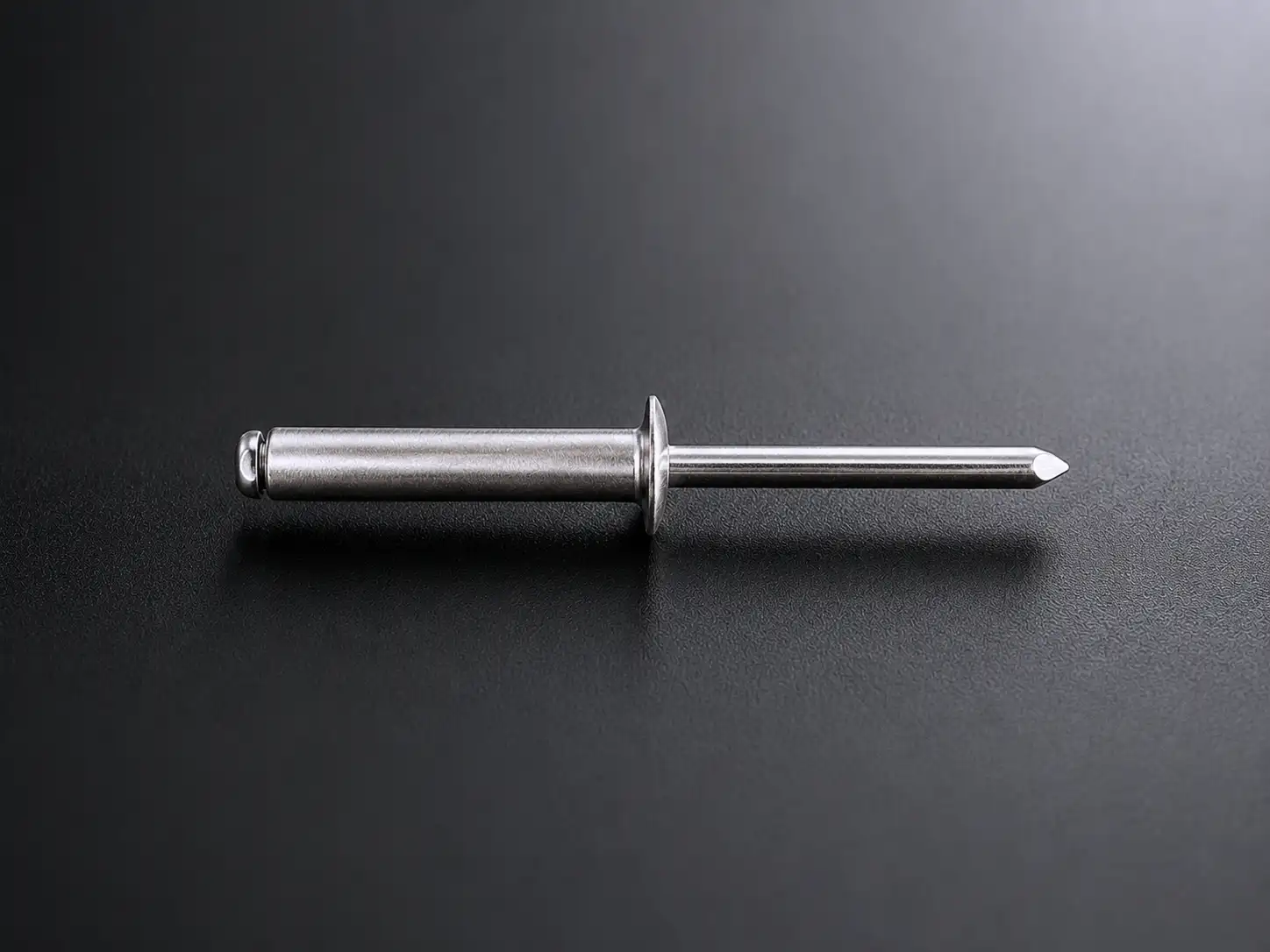
According to Rivmate’s current corporate technical standards, the company can supply BB-S 5×30 pop rivets with a tensile strength of 6,500 N and a shear strength of 5,000 N. Since the customer was unable to achieve the desired riveting results with the BB-S 5×30 pop rivets, they are now seeking a custom solution from Rivmate to improve the connection strength and ensure the stability of the rivet mandrel.
Customer Requirements and Project Expectations
Building on the standard BB-S 5×30 pop-core rivet, the customer requires Rivmate to design a pop-core rivet capable of withstanding higher tensile and shear loads based on specific requirements. Additionally, the customer places particular emphasis on the stability of the bond between the rivet core and the rivet body. After riveting, the rivet core must not loosen easily or detach from the rivet body.
Based on the performance objectives provided by the customer, Rivmate performed targeted optimizations on the BB-S 5×30 pop rivet, specifically regarding the expansion point and break point of the rivet mandrel, the neck root length, and the wall thickness of the rivet body.
Client Detail Requirements
To improve structural performance compared to the BB-S 5×30 pop-core rivets the customer was previously using:
- Increase the bond strength between the rivet core and the rivet shell
Even after the rivet core breaks during riveting, it must retain sufficient length and structural stability to remain securely within the rivet body. Insufficient bond strength can lead to core loosening, abnormal noise, and long-term instability at the joint. - Increase tensile strength
Rivmate’s original corporate standard provided a tensile strength of 6,500 N. Initially, the customer hoped to achieve a tensile strength of 7,200 N. Following a technical evaluation by Rivmate’s laboratory, it was determined that the existing 5 mm specification and structural conditions could not meet the 7,200 N tensile strength requirement. Therefore, after mutual discussion, both parties agreed to adjust the final tensile strength target to 6,600 N. - Improving Shear Strength
Rivmate’s original corporate standard for shear strength was 5,000 N. The customer requested an increase to 5,900 N. Improving structural strength also necessitated optimizing the length and position of the rivet shank remaining inside the rivet body after riveting.
Rivmate Optimized Rivet Solution
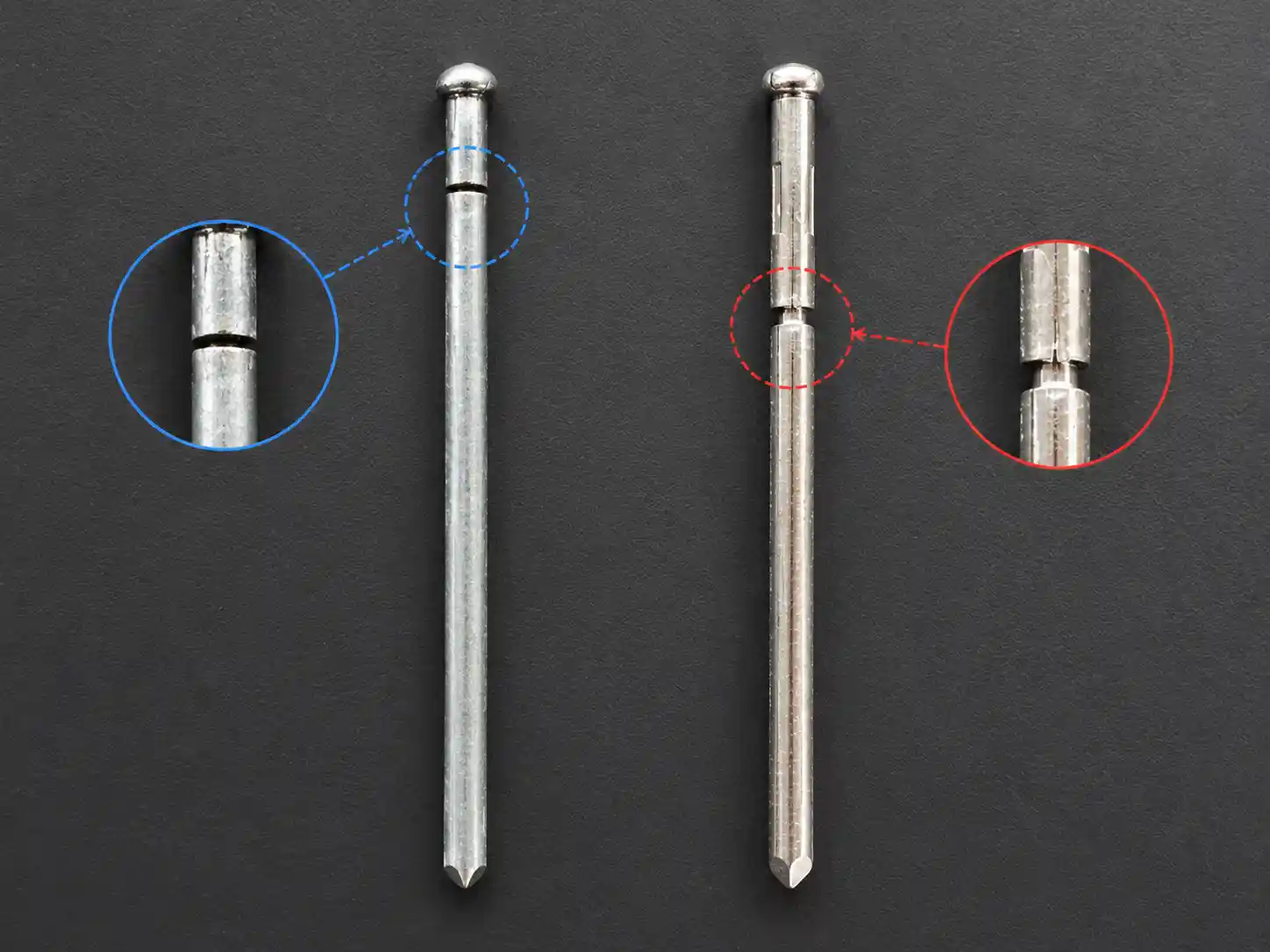
Based on the customer’s specific requirements, Rivmate analyzes the locations within the rivet mandrel and rivet shell that affect the mandrel’s holding force, tensile strength, and shear strength, thereby further optimizing the key structural features of the pop-out rivet.
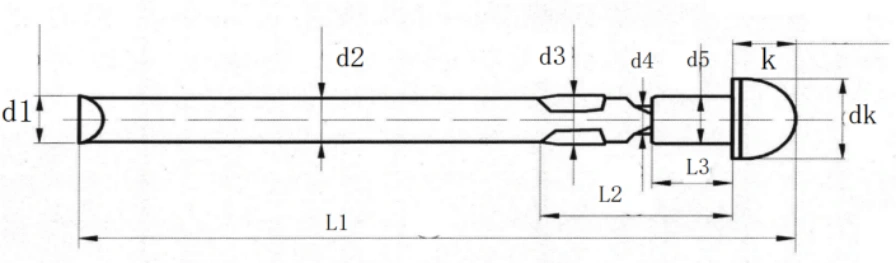
The optimized locations include:
- The d3 expansion point of the rivet mandrel
- The d4 break point of the rivet mandrel
- The L3 neck root length of the rivet mandrel
- The wall thickness at section B of the rivet shell
| Item | Optimized Solution |
|---|---|
| Rivet Type | Customized High-Strength Blind Rivet |
| Rivet Specification | BB-S 5 × 30 |
| Original Tensile Load Standard | 6,500 N |
| Original Shear Load Standard | 5,000 N |
| Optimized Tensile Load Target | 6,600 N |
| Optimized Shear Load Target | 5,900 N |
| Mandrel Retention Requirement | Improve the engagement stability between the mandrel and rivet body to reduce the risk of mandrel loosening or detachment |
| d3 Expansion Point | Extend the expansion point to increase the effective engagement length between the mandrel and rivet body |
| d4 Break Point Position | Move the break point downward so that a longer section of the mandrel remains inside the rivet body after installation |
| L3 Neck Length | Extend the neck length to improve the combined shear load capacity of the mandrel and rivet body |
| Rivet Body Wall Thickness | Appropriately increase the wall thickness at position B to improve tensile and shear load capacity |
| Main Optimization Objective | Improve mandrel retention, tensile load capacity, and shear load capacity while maintaining the basic BB-S 5 × 30 specification and normal riveting performance |
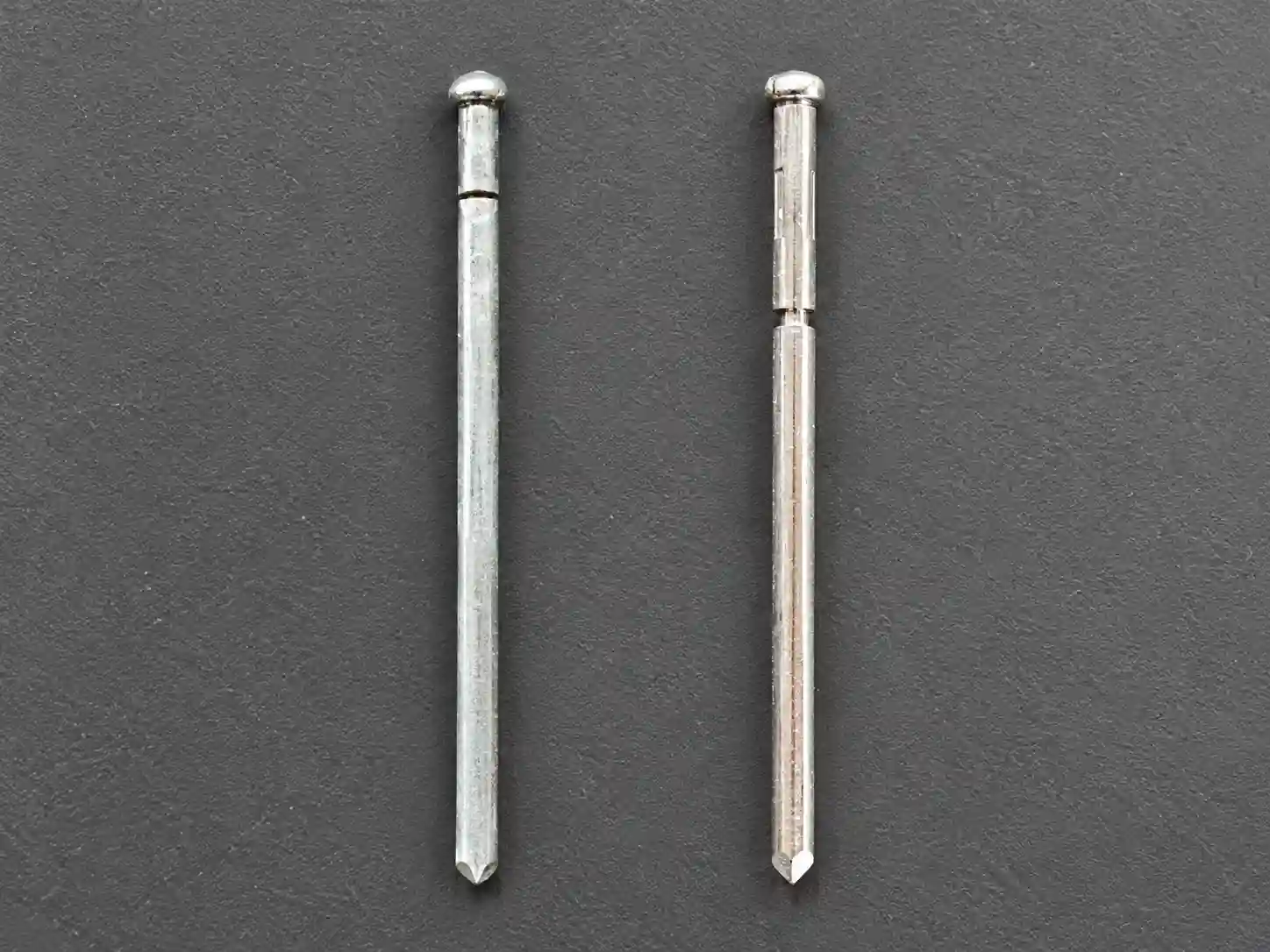
Why can’t we simply use a thicker rivet shell to improve joint strength and stability?
The primary advantage of increasing the wall thickness of a pop rivet shell is to enhance the load-bearing capacity of the rivet body itself; it does not resolve the issues of insufficient bond strength between the rivet shell and the rivet mandrel or the mandrel’s retention length.
The tensile, shear, and bond strength properties of a pop rivet are determined by multiple structural factors, including:
- Rivet shell material
- Rivet shell wall thickness
- Rivet core material
- Rivet core head structure
- d3 expansion point length
- d4 fracture location
- L3 neck root length
- Dimensional fit between the pin core and the rivet shell
- Post-installation back-side forming condition
Based on a comprehensive structural analysis, Rivmate did not rely on increasing the rivet shell wall thickness to improve performance. Instead, it enhanced mechanical performance by simultaneously adjusting the design of the pin core’s expansion point, fracture point, neck root length, and rivet shell structure. This approach not only maintains the normal riveting process and pin fracture state but also improves the stability of the joint.
Rivmate’s Customization Capabilities
As a professional manufacturer and supplier, Rivmate possesses extensive experience and advanced technical expertise. We offer both standard specifications and customization capabilities. If your project cannot achieve the desired riveting results using standard pop rivets, Rivmate can evaluate and customize solutions based on your product’s specific requirements. Rivmate not only manufactures pop rivets according to customer-specified dimensions but can also optimize the rivet mandrel and shell based on the customer’s connection load, sheet metal structure, and installation conditions. This enhances riveting performance and long-term stability.
Standard pop rivets may not be suitable for all structural connections. If you also need custom high-strength pop rivets, please provide:
- Rivet specifications
- Workpiece material
- Total workpiece thickness
- Installation hole diameter
- Tensile strength requirements
- Shear strength requirements
- Installation tool
- Operating environment
- Existing samples or product drawings
- Estimated purchase quantity