
Case Study: BOOM Rivet Solution For Solar Tracker Shaft Connection
A Spanish photovoltaic equipment customer purchased 10.0mm-diameter BOOM structural pop rivets from our company, Rivmate, to rivet the square tubing of the main shafts on photovoltaic tracking mounts.
After the customer installed the rivets on-site using a riveting gun with a nozzle size of approximately 12.75, issues arose. Following the riveting process, the flange area of some BOOM rivets did not deform properly, resulting in riveting results that fell short of expectations. Consequently, the Spanish customer suspected issues with the rivet hardness and the breaking force of the rivet core. Rivmate will conduct comprehensive testing to resolve the riveting failure for the customer.
Customer Requirements and Project Expectations
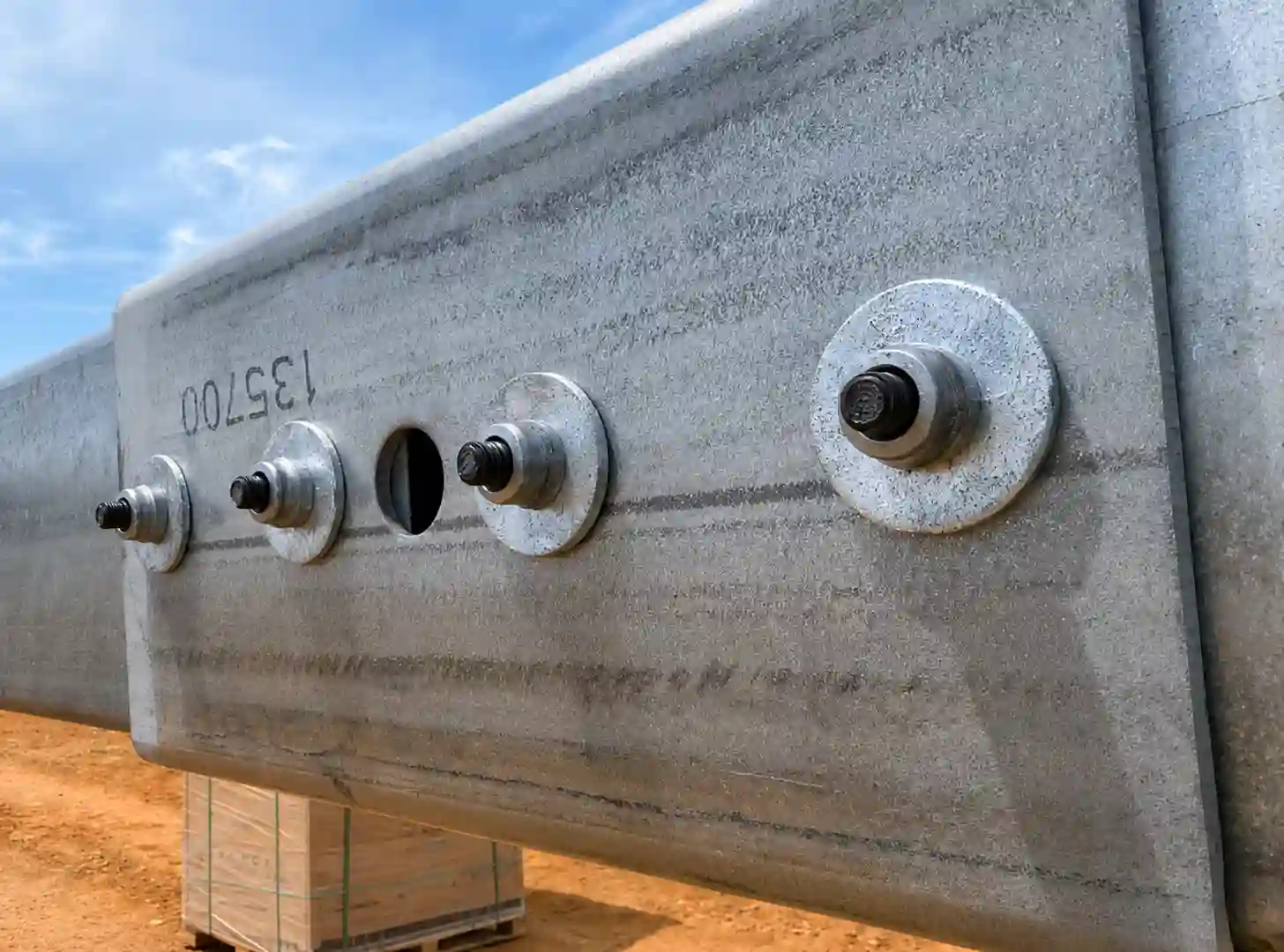
The main shaft of the photovoltaic tracking mount uses galvanized square tubing with a wall thickness of approximately 2.5–3.5 mm, while the outer sleeve has a wall thickness of approximately 4 mm. When these two components of different sizes are assembled, there is a gap of about 3–5 mm between the tube walls. Additionally, the upper sleeve has a waist-shaped opening, while the lower square tube has a standard 10.5 mm round opening. Consequently, when using BOOM pop-out rivets for the connection, additional washers are required to complete the riveting process. This results in complex riveting conditions and insufficient expansion and deformation.
The customer not only wants to use pop-out rivets that do not alter the spindle or boom structure, but is also concerned about whether the connection solution can address the issue of insufficient forming at the flange of the boom rivet body during actual assembly.
Customer Pain Points
1.Connection of Square Tubes for the Main Shaft of Photovoltaic Tracking Mounts
The customer’s requirement is to securely and stably connect the square tubes of the main shaft of the photovoltaic tracking mount to the external connecting sleeve, ensuring that the main shaft connection point maintains stable structural strength.
2.Capable of accommodating variations in galvanized square tube wall thickness
The main shaft connection point consists of a combination of a square tube and a connecting sleeve. The square tube has a wall thickness of approximately 2.5–3.5 mm, while the external connecting sleeve has a wall thickness of approximately 4 mm. The rivets must accommodate these variations in wall thickness during actual assembly, with a clamping range of 7.9–11.1 mm.
3. Riveting Capable of Accommodating 3–5 mm Structural Gaps
Since there is a 10 mm difference in diameter between the sleeve and the square tube, a 3–5 mm gap will exist between their tube walls after assembly. The riveting process must accommodate the use of shims.
4.Ensure Full Forming of the Rivet Body Flange Area
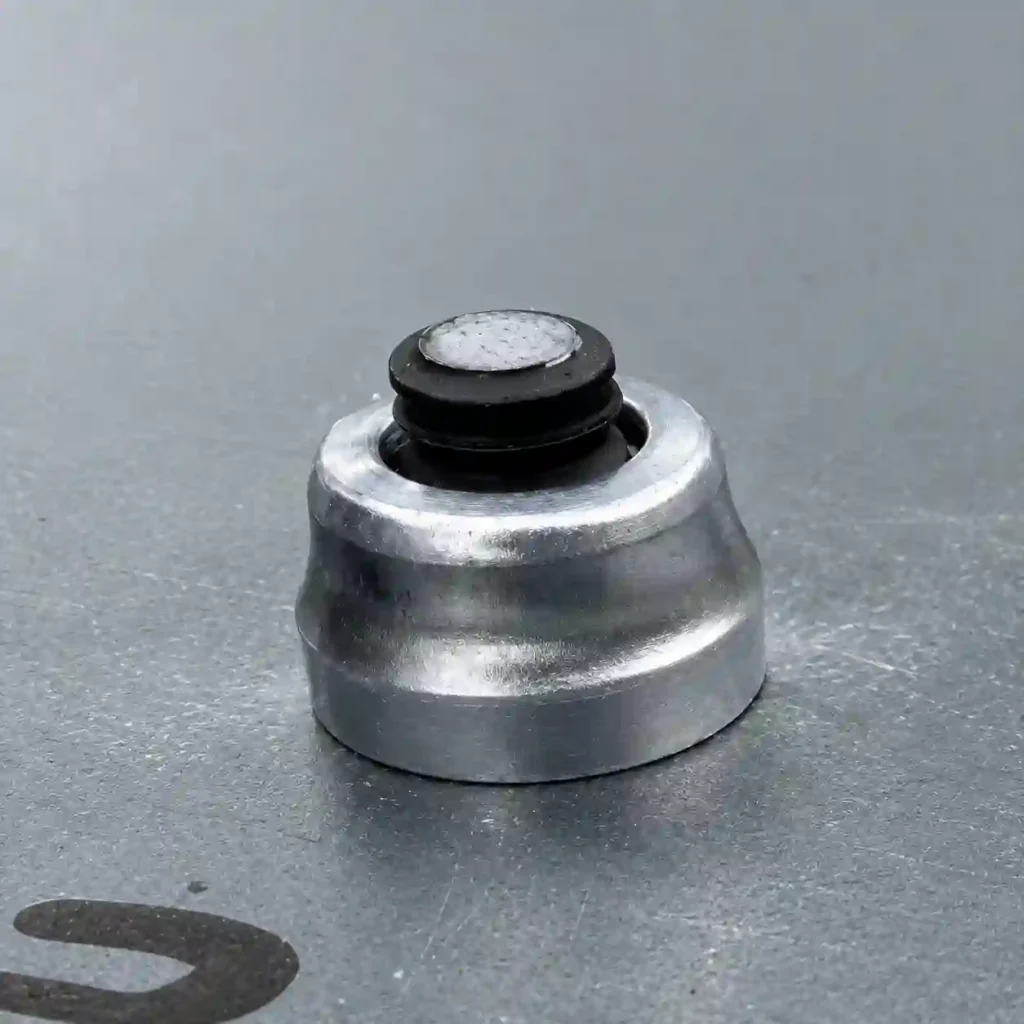
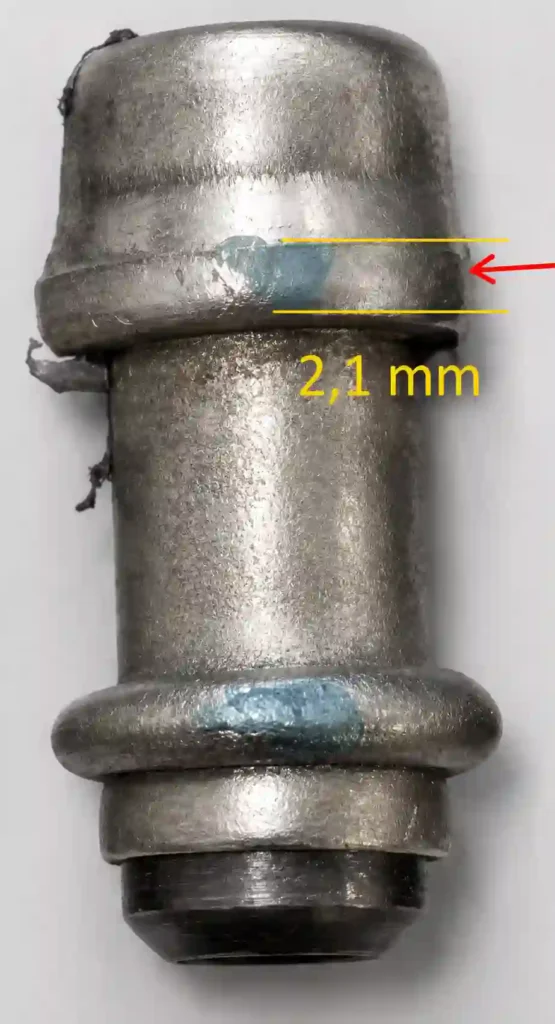
After riveting with a rivet gun, the flange area of the rivet body must be fully extruded and deformed; no unformed sections may remain. Therefore, it is recommended that the dimension at critical locations beneath the flange be controlled within 1.6 mm.
Rivmate Testing and Root Cause Analysis
As a professional manufacturer and supplier, Rivmate did not rely solely on past experience to conclude that the rivets had quality issues. Instead, the company conducted separate laboratory tests on the rivet body, rivet core, gun head, and actual installation conditions to identify the specific source of the problem based on empirical data.
- Rivet Body Hardness Test
Test results showed a hardness range of HV150–220, which meets process requirements. - Rivet Shank Hardness and Break Force Test
Test results showed that the rivet shank hardness met the requirement of HV465–495, and the break force was approximately 43,000 N, which meets process requirements. - Rivet Flange Dimension Inspection
The diameter of the BOOM rivet flange area is approximately 14.5 mm. - Customer Rivet Gun Nozzle Dimension Inspection
The customer provided a KD-0250B riveting gun with a designed inner bore diameter of 12.70–12.80 mm. The actual measurement was approximately 12.75 mm. The measured inner bore diameter of the Rivmate rivet gun nozzle was 12.86 mm.
A comparison reveals that there is only a difference of approximately 0.1 mm between the customer’s gun head bore diameter and that of the Rivmate gun head. If the gun head bore diameter is too small, excessive resistance will occur during the riveting process when the gun head compresses the rivet flange, preventing it from being fully compressed and deformed.
Rivmate Riveting Solutinos
Rivmate conducted comparative riveting tests using tool heads of different sizes. The tests confirmed that the inner bore of the KD-0250B tool head is too small, which limits the normal deformation of the BOOM rivet’s flange area. We recommend that the customer adjust the inner bore diameter of the tool head from 12.70–12.80 mm to 12.90–12.95 mm.
Riveting with a properly sized tool head allows for more complete deformation of the rivet body’s flange area, improving the product’s appearance and ensuring high strength and stability of the joint.
| Item | Rivmate Optimized Solution |
|---|---|
| Rivet Type | BOOM Structural Blind Rivet |
| Application Position | Main Shaft Square Tube Connection for Solar Tracker Systems |
| Recommended Specification | SSBOOM100226, Diameter 10.0 mm |
| Grip Range | 7.9–11.1 mm |
| Installation Tool | KD-0250B Riveting Tool |
| Original Nosepiece Inner Diameter | 12.70–12.80 mm; actual measured diameter approximately 12.75 mm |
| Optimized Nosepiece Inner Diameter | 12.90–12.95 mm |
| Rivet Body Hardness | HV150–220, meeting the process requirements |
| Mandrel Hardness | HV465–495, meeting the process requirements |
| Mandrel Break Load | Approximately 43,000 N |
| Installation Acceptance Requirement | The unformed area below the rivet flange should be controlled within 1.6 mm. |
| Core Optimization Measure | Increase the nosepiece inner diameter to reduce interference with the rivet flange and minimize deformation resistance. |
| Optimization Objective | Ensure complete rivet flange deformation and stable clamping of the square tube, outer sleeve, and washer. |

Why can a dimensional difference of about 0.1 mm cause rivet failure?
In standard fastener connections, a dimensional variation of approximately 0.1 mm may not be noticeable. However, as verified through riveting tests, when installing large-diameter 10 mm BOOM structural pop rivets, the dimensional fit between the inner bore of the rivet gun and the rivet body flange directly affects material flow and flange forming results.
If the inner bore of the riveting gun is too small, the following problems may occur:
- Premature compression of the rivet body by the gun head
- Restricted deformation of the flange area
- Increased installation resistance
- Fracture of the rivet core before the body is fully formed
- Inconsistent installation appearance among rivets from the same batch
Rivmate’s Structural Rivet Selection Capabilities
As a supplier, Rivmate not only provides standard-spec rivet products but can also design suitable fastening solutions based on customers’ actual workpieces and application environments. If you need assistance with rivet selection, please provide the following information:
- Workpiece material
- Single-layer and total clamping thickness
- Hole diameter and type
- Whether there is a gap between workpieces
- Whether washers are used
- Shear and tensile loads
- Vibration and outdoor corrosion environments
- Installation tool and nozzle model