Case Study:S350 Steel Window Frame SPR Riveting
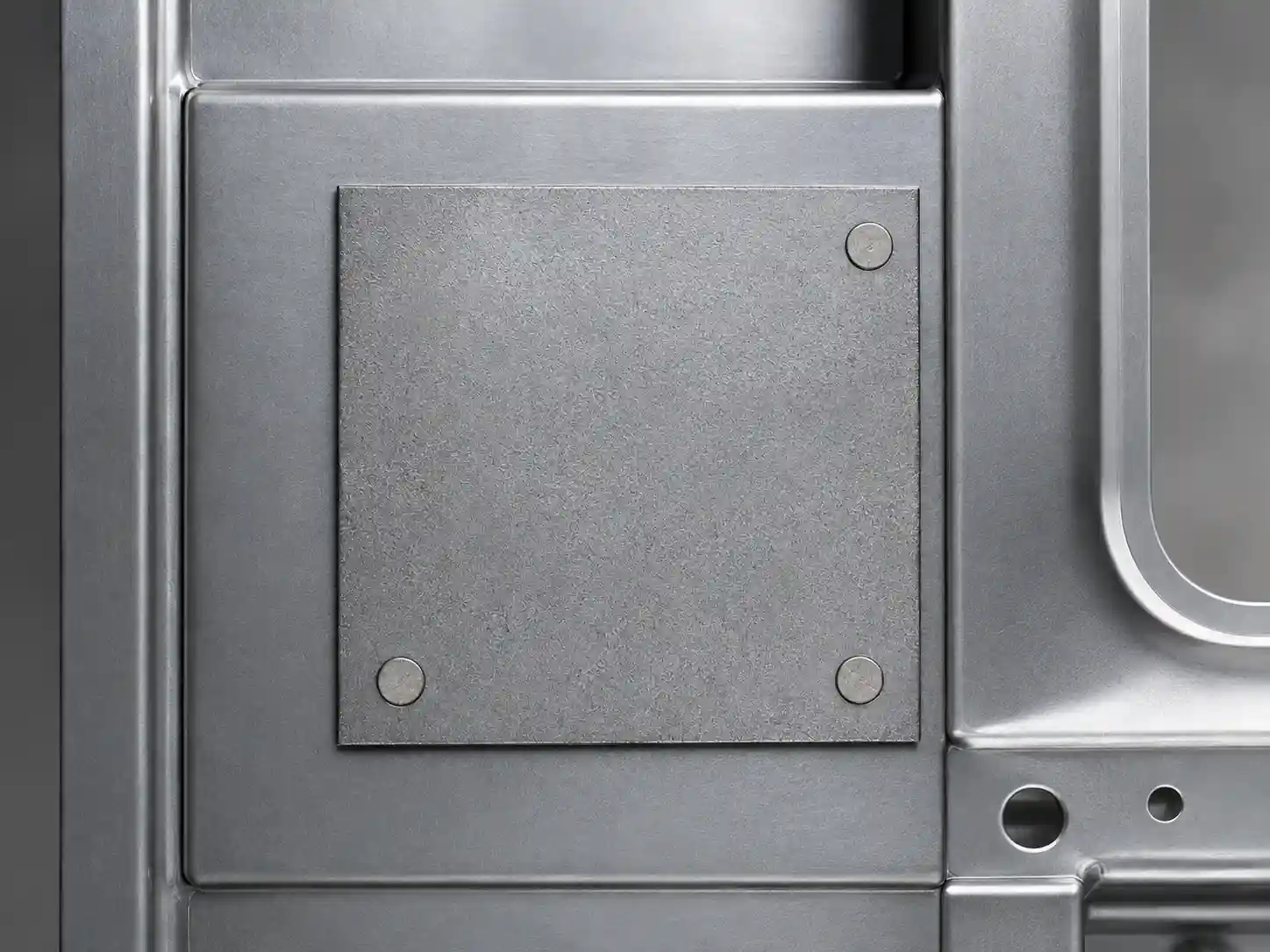
The product the customer needs to join consists of a window frame structure made of two S350 high-strength steel plates. At the beginning of the project, the customer selected C50DA44H-type SPR rivets for testing.
After actual riveting, it was found that the rivets did not penetrate the steel plates effectively. Therefore, they are seeking an SPR riveting solution that is better suited for reliably joining high-strength steel plates.
Customer Requirements and Project Expectations
The customer wishes to replace the C50DA44H model with another suitable SPR rivet. The riveting solution must address the issues of insufficient penetration and inconsistent forming that occur during installation.
The customer is not only concerned with the penetration performance of a single rivet through S350 high-strength steel plate, but also places great importance on whether the joint solution forms a reliable mechanical interlock structure.
Client Detail Requirements
The client’s key requirements include:
SPR rivets better suited for S350 high-strength steel plates are required
The original C50DA44H-type SPR rivets did not achieve satisfactory penetration results. Therefore, SPR rivets with a design better suited to the steel plates must be selected.
The rivets must ensure stable penetration of the steel plates
The customer requires that the expected penetration performance be achieved after SPR riveting to ensure a stable joint.
The SPR rivet legs must fully expand after penetration
SPR joints primarily rely on the expansion of the rivet legs within the lower sheet metal to form a mechanical interlock. Therefore, the rivet legs must fully expand to form the correct structural configuration.
SPR rivets must be properly matched with the riveting lower die
An improper match between the SPR lower die and the rivet will affect the final forming result. Therefore, it is necessary to confirm that the new SPR rivets are properly aligned with the lower die to prevent riveting failure.
- Verify Riveting Results Using Actual Sheet Metal
The customer wishes to conduct actual riveting tests using S350 steel sheet. The purpose is to verify whether the rivet penetration, leg expansion, and mechanical interlocking meet the project requirements.
Customer Pain Points
- The original C50DA44H SPR rivet did not penetrate effectively
The customer initially used the C50DA44H SPR rivet, which was unable to effectively penetrate two pieces of S350 high-strength steel plate. This reduced the stability of the joint. - Inability to Form Effective Interlocking Even After Replacing the Rivets
After switching to the P50DC44H model, the penetration was achieved. However, during the customer’s own testing, the rivet legs did not fully spread, preventing the formation of a reliable mechanical interlock. - Difficulty Determining Whether the Riveting Issue Stems from the Rivet Itself or the Tool
The customer encountered insufficient rivet formation when using the replacement SPR rivet model, making it impossible to determine whether the issue stemmed from the rivet, the sheet metal, or the riveting lower die. - Process parameter mismatch
Analysis by the Rivmate technical team revealed that the customer was using the lower die designed for the original C-type rivets, which prevented the P-type rivets from forming properly. This resulted in riveting failure.
Rivmate Riveting Solutinos
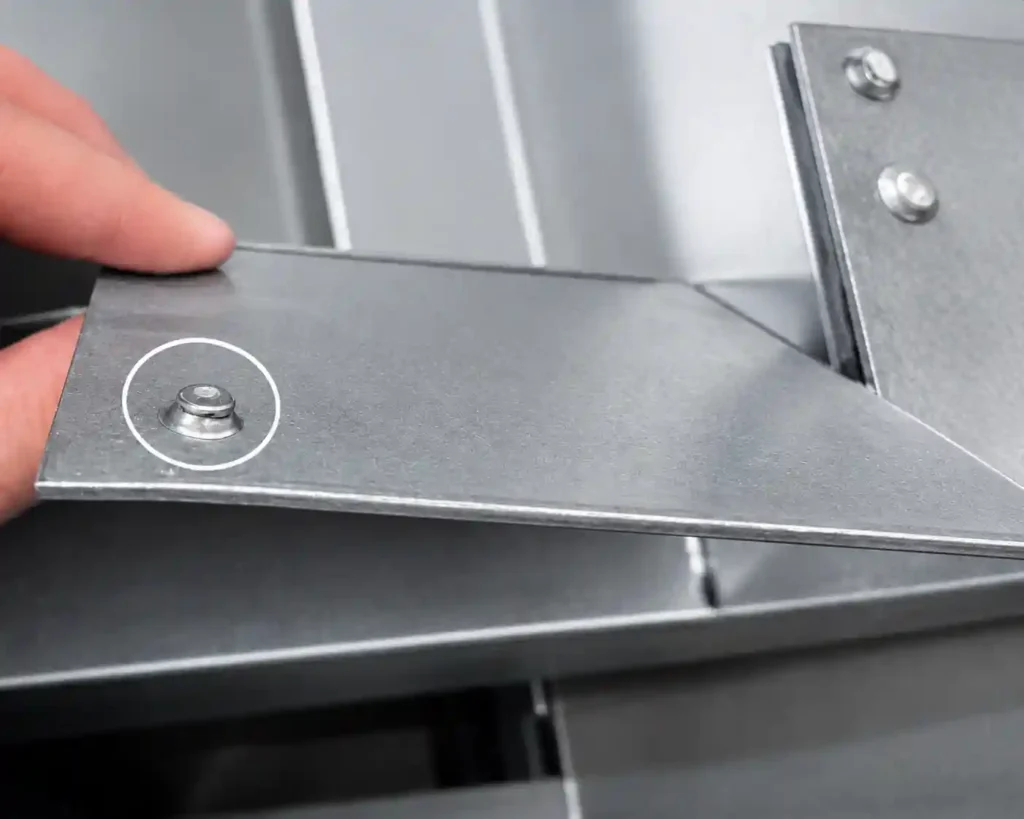
Based on an analysis of two layers of S350 high-strength steel plates, we recommend using the P50DC44H SPR and replacing the lower riveting die with the P-type SPR rivet solution.
Compared to the C50DA44H SPR, the P50DC44H SPR delivers superior actual riveting performance on high-strength steel plates. After riveting, the SPR rivets expand fully and form a reliable mechanical interlock.
| Item | Details |
|---|---|
| Application Industry | Window Frame Manufacturing |
| Joining Method | Self-Piercing Riveting (SPR) |
| Joining Material | S350 High-Strength Steel |
| Initial Solution | C50DA44H SPR Rivet |
| Optimized Solution | P50DC44H SPR Rivet |
| Core Problem | Insufficient piercing and failure to form a proper interlock |
| Solution | Rivet model optimization + installation tooling adjustment |
| Final Result | Achieved a stable and reliable joint |
Why SPR Rivets Are Recommended
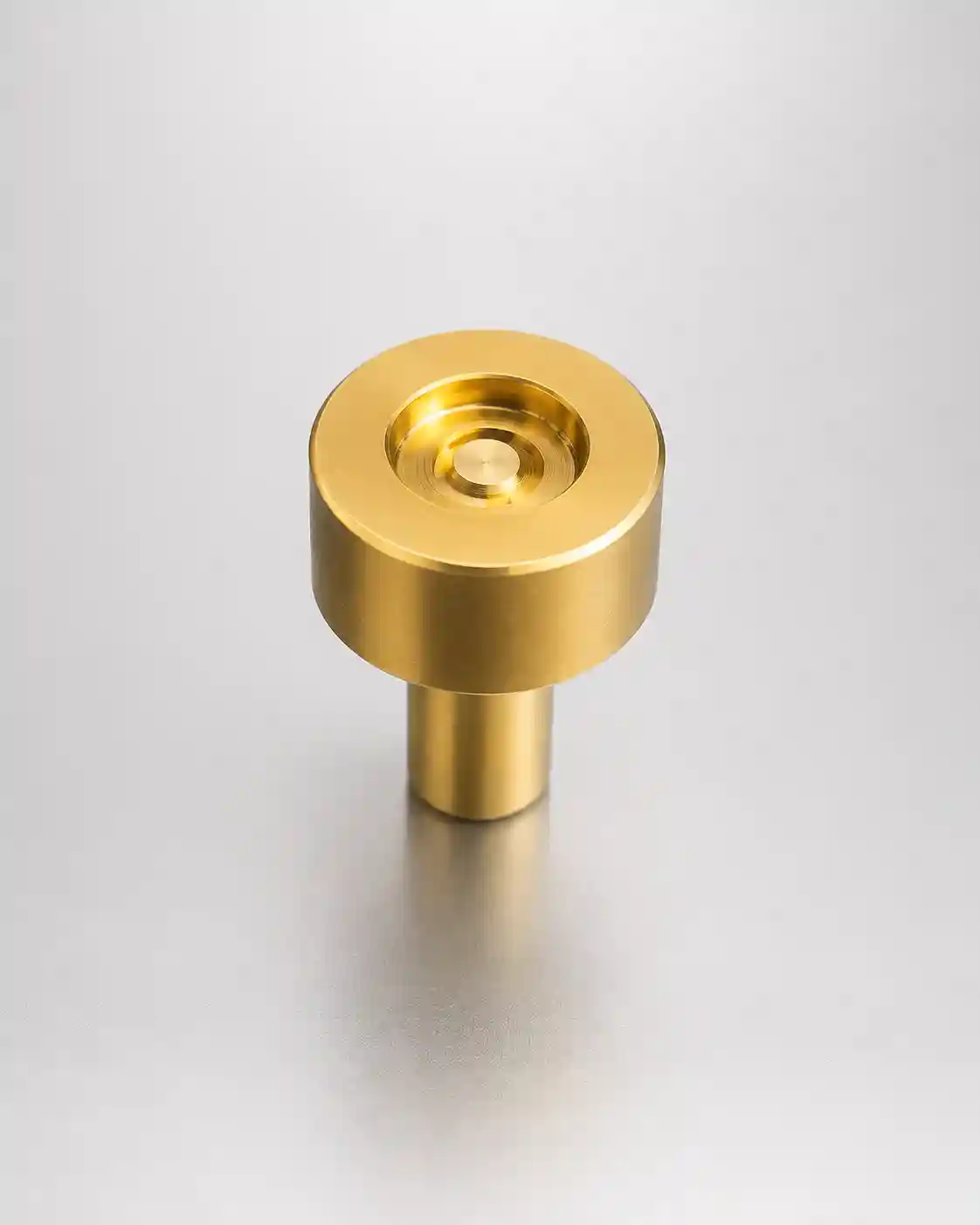
No pre-drilled holes are required. During installation, the SPR rivet is inserted directly into the upper sheet metal and formed within the lower sheet metal.This simplifies the installation process.
In SPR riveting, the rivet shank expands outward under the action of the lower die, creating a mechanical interlock with the lower sheet metal. This enhances the joint’s resistance to vibration and shear, as well as its overall reliability.
The SPR riveting process does not generate high temperatures, thereby preventing damage to the surface coatings of the sheet metal.
SPR can be applied to the joining of various types of sheet metal. For different strength levels and material combinations, the forming results can be optimized by adjusting the rivet structure, dimensions, and lower die.
Rivmate Capabilities on SPR Riveting
Rivmate not only supplies SPR rivets but also provides technical support tailored to your specific joining projects.
If you have already selected the sheet metal but are unsure which SPR rivet to choose, please provide us with the following information:
- Material of the top sheet
- Material of the bottom sheet
- Sheet metal assembly details
- Current SPR model in use
- Photos of the current riveting results
- Information on the lower die used
- Actual sheet metal samples
Our team can provide professional selection recommendations based on your specific project. In addition, Rivmate can provide samples for actual riveting tests.

Hey There, I'm Allen!
I am the founder of Rivmate. For over two decades, we have specialized in the manufacture of blind rivets, providing our customers with reliable riveting solutions.Need riveting services? Feel free to contact us.