Case Study: A912 Rivet Nut Tool Dust-Proof Upgrade
While using Rivamte’s A912 rivet nut tool for bulk installation of rivet nuts, the customer encountered a clogged directional control valve after a period of use due to high dust levels in the work environment. The need for frequent cleaning and maintenance of the rivet nut tool reduced continuous assembly efficiency. Therefore, in actual assembly operations, the customer sought a solution to improve the efficiency and reliability of the rivet nut installation tool.
Customer Requirements and Project Expectations
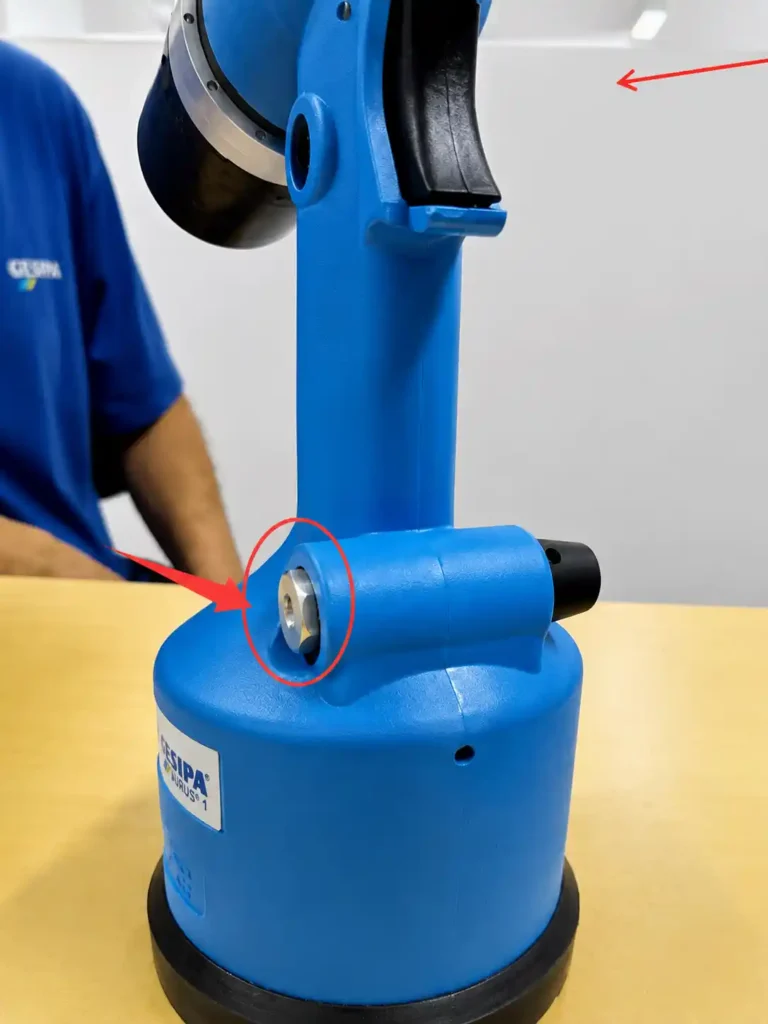
The customer wishes to resolve the issue of dust entering the directional control valve ports and causing blockages when the A912 rivet nut tool is used for riveting in dusty environments. The solution must be dust-proof, securely mounted, and not compromise installation efficiency. It must also allow for future disassembly and maintenance.
Client Detail Requirements
The client’s key requirements include:
- Prevents Dust from Entering Through the Directional Control Valve Ports
Adds effective protection to exposed directional control valve ports to prevent dust from entering the tool. - Reduces the Likelihood of Directional Control Valve Clogging
Prevents dust from accumulating in the directional control valve, reducing the risk of abnormalities, instability, and malfunctions in the rivet nut tool. - Ensures Stable and Reliable Protection
The protective device is designed to withstand vibrations, handling, and frequent operation during use. This enhances stability and prevents the device from falling off. - Does not interfere with normal tool operation
The protective device is designed so that it does not interfere with gripping the tool, riveting, directional switching, retraction, or air line connections during the riveting process. - Maintains ease of subsequent maintenance
acilitates subsequent inspection and repair of internal components by maintenance personnel.
Customer Pain Points
1. The directional control valve port on the rivet nut tool is exposed, making it susceptible to dust ingress
The directional control valve port on the A912 rivet nut tool is directly exposed to a high-dust work environment, creating a risk that dust will enter the tool through the valve port.
2. The directional control valve of the A912 rivet nut tool is prone to clogging
Once dust enters through the directional control valve and accumulates inside the tool over time, it obstructs the internal airflow passages and impedes the movement of moving parts, thereby reducing assembly efficiency.
3. The A912 rivet nut tool requires frequent cleaning and maintenance
Because dust easily enters the directional control valve, the tool must be disassembled and cleaned regularly, resulting in interruptions to the riveting process.
4. Reduced Continuous Assembly Efficiency
During batch production of rivet nuts, downtime is required for inspection and cleaning, which increases assembly time.
5. Standard Temporary Sealing Methods Are Unreliable
If riveting is performed with temporary protective covers, these covers are prone to falling off due to prolonged vibration, frequent operation, or handling.
Rivmate Riveting Solutinos
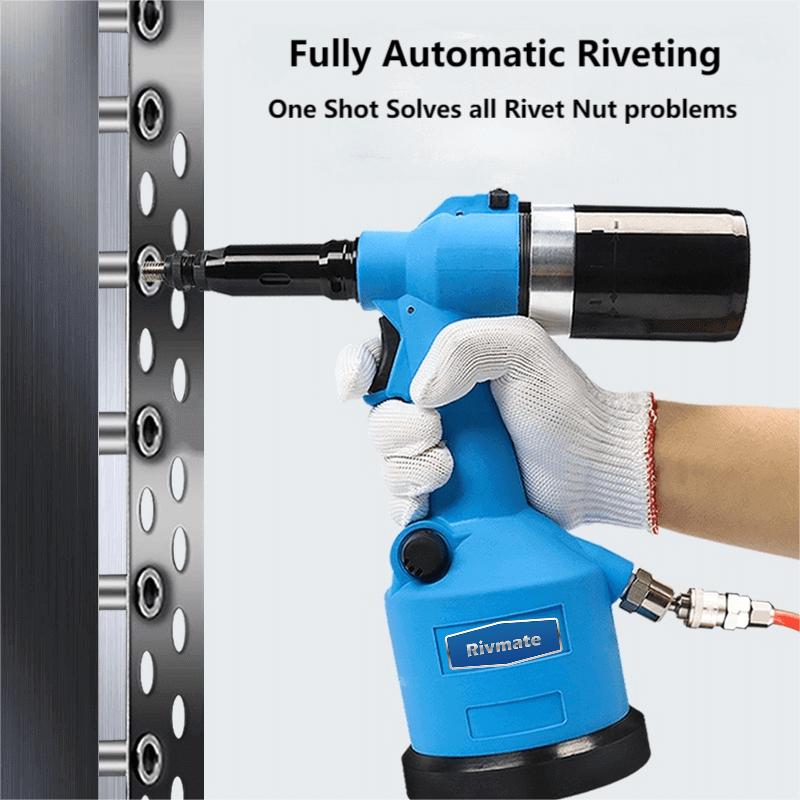
To address issues encountered by customers during on-site use, Rivmate has installed a specialized dust cover on the directional control valve port of the A912 rivet nut tool. Tightening screws have been added to the dust cover’s structure to secure it in place.
Compared to the original A912 rivet nut tool, this solution physically isolates the tool from dust at the source, effectively reducing the risk of directional control valve clogging. It also improves the reliability of the dust cover’s mounting.
| Item | Recommended Solution |
|---|---|
| Tool Type | Pneumatic-Hydraulic Rivet Nut Tool |
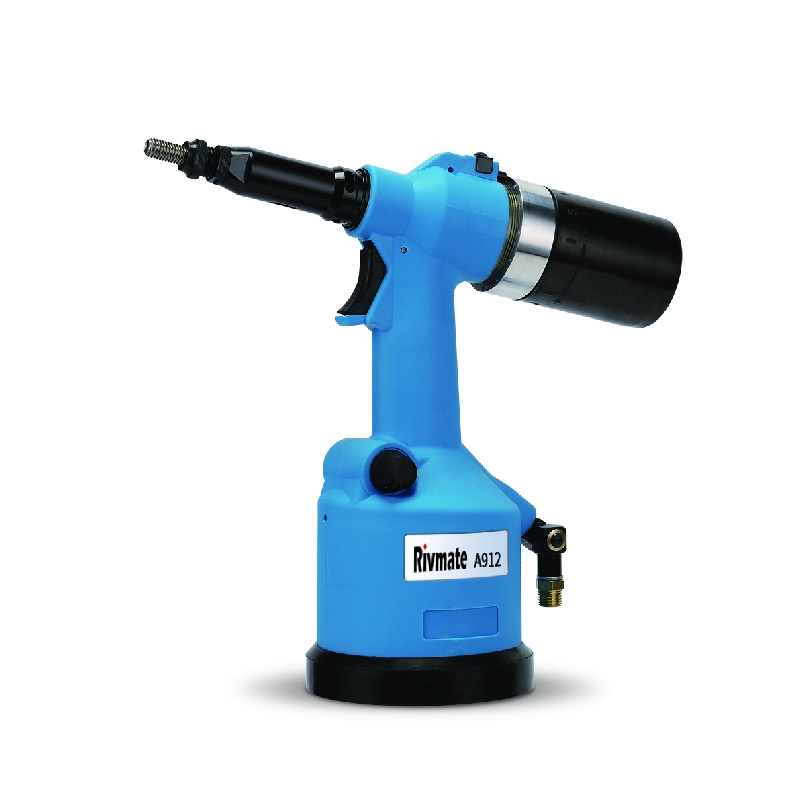
| Tool Model | Rivmate A912 Rivet Nut Tool |
| Reference Model | AVDEL 74200-Type Tool |
| Operating Environment | Industrial Assembly Environment with Heavy Dust |
| Main Problem | Dust Enters the Reversing Valve Port and Causes Valve Blockage |
| Optimization Position | Reversing Valve Port |
| Recommended Solution | Install a Customized Dust Cover on the Reversing Valve Port |
| Fixing Method | Secure the Dust Cover with a Tightening Screw |
| Protection Function | Reduce Dust and Particle Entry into the Reversing Valve |
| Structural Requirements | Compact and Secure Structure Resistant to Vibration and Accidental Detachment |
| Maintenance Design | Removable Structure for Easy Inspection and Cleaning |
| Tool Compatibility | Does Not Affect Riveting, Return Stroke, or Normal Tool Operation |
| Expected Result | Reduce Reversing Valve Blockage and Frequent Maintenance Downtime |
| Project Objective | Improve the Operating Stability of the A912 Tool in High-Dust Environments |
Why This Solution Works
- By providing targeted protection for dust entry points in real-world environments, this solution eliminates the need for complex tool housings.
- The addition of a physically isolating dust cover enhances stability. It effectively prevents dust from entering the interior through the directional control valve and reduces the likelihood of particulate matter entering the ports directly.
- The reliable mechanical fastening structure, featuring tightening screws, effectively reduces the risk of the dust cover coming loose due to prolonged vibration, impact, or handling. It is particularly suitable for industrial applications.
- By focusing solely on improving the directional control valve assembly, there is no need to alter the main tool structure. This effectively avoids the need to redesign the tool’s primary pneumatic and hydraulic systems, thereby improving work efficiency.
- The dust cover’s tightening screw fastening provides a removable design, ensuring that normal maintenance access points remain unobstructed.
Rivmate’s Comprehensive Capability in Rivet Nut Selection and Riveting Problem Solving
As a manufacturer and supplier that meets industrial standards, Rivmate not only offers a wide range of pop rivets, rivet nuts, and installation tools in various specifications, but also focuses on the issues customers encounter during the actual riveting process. Rivmate can conduct a comprehensive analysis of the causes of riveting failures based on failure photos provided by customers. We provide complete solutions ranging from product selection and structural optimization to installation verification.
To significantly reduce failure issues during actual riveting operations, Rivmate offers a rivet nut selection service designed to accurately recommend the appropriate rivet nut model. Please provide the following information:
- Thread specifications
- Sheet metal thickness
- Mounting hole diameter
- Sheet metal material
- Rivet nut design
- Surface treatment
- Application environment
- Purchase quantity