Whatsapp: +86 18962304392

Email: manufacture@world-rivet.com

Top 10 Clinch Nut Manufacturers and Suppliers in China (2025)

Not sure where to source high quality and affordable clinch nuts? Don’t worry, this post will solve this problem for you.

China Clinch Nut manufacturers and suppliers are known for their high quality products and affordable product prices.In this article, we will introduce you the top 10 Clinch Nut manufacturers in china (2025).

Table of Contents

In order to solve your sourcing problems at once, we have compiled a list of the top 10 clinch nut manufacturers and suppliers in China. Read on to get more information.

What is Clinch Nuts?

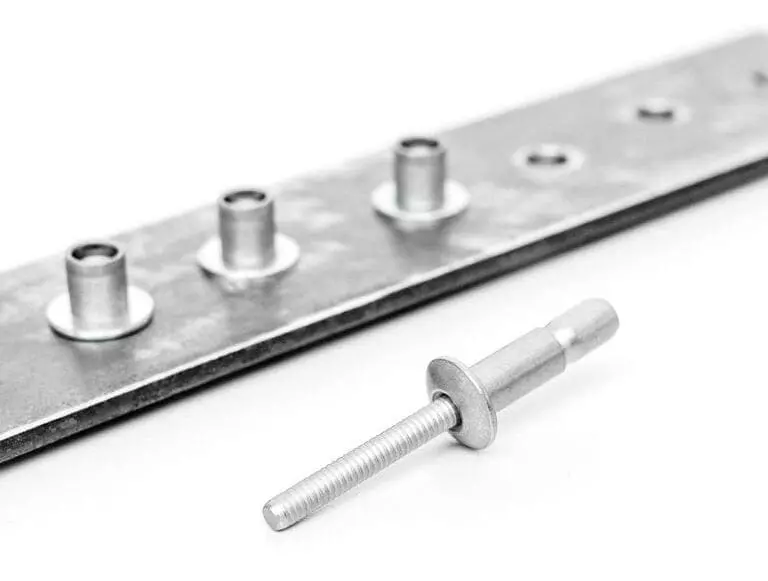
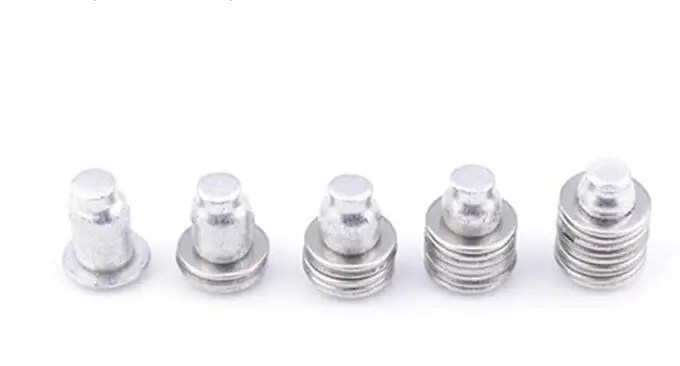
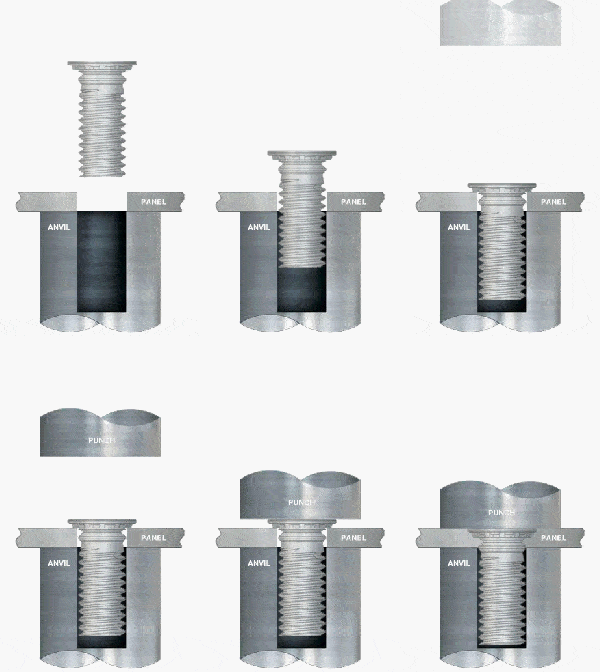
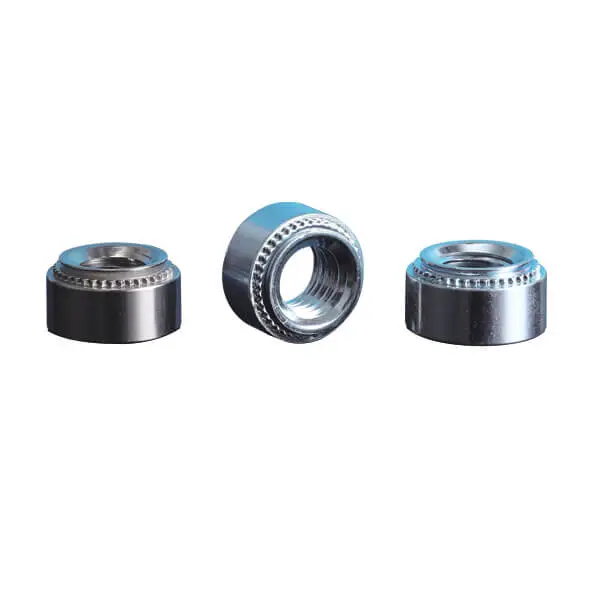
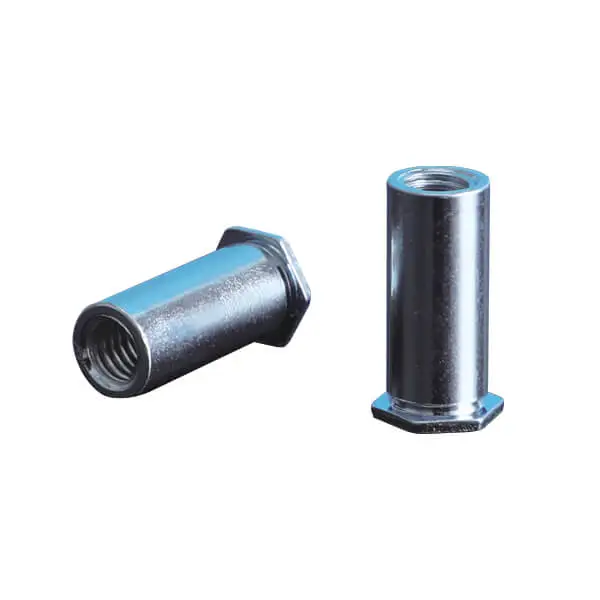
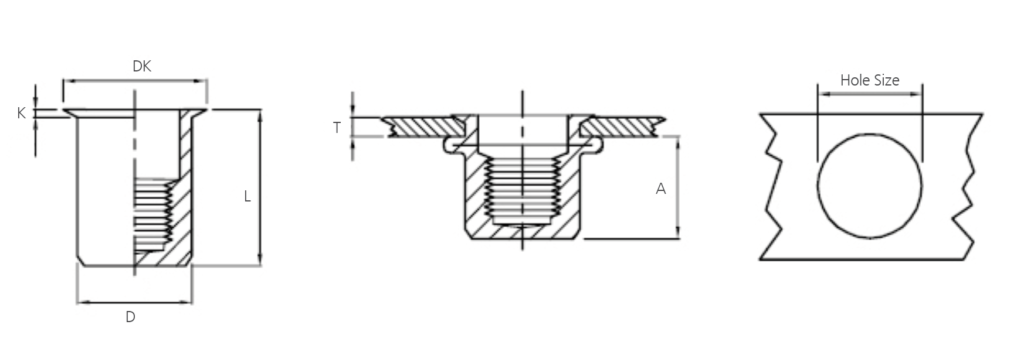
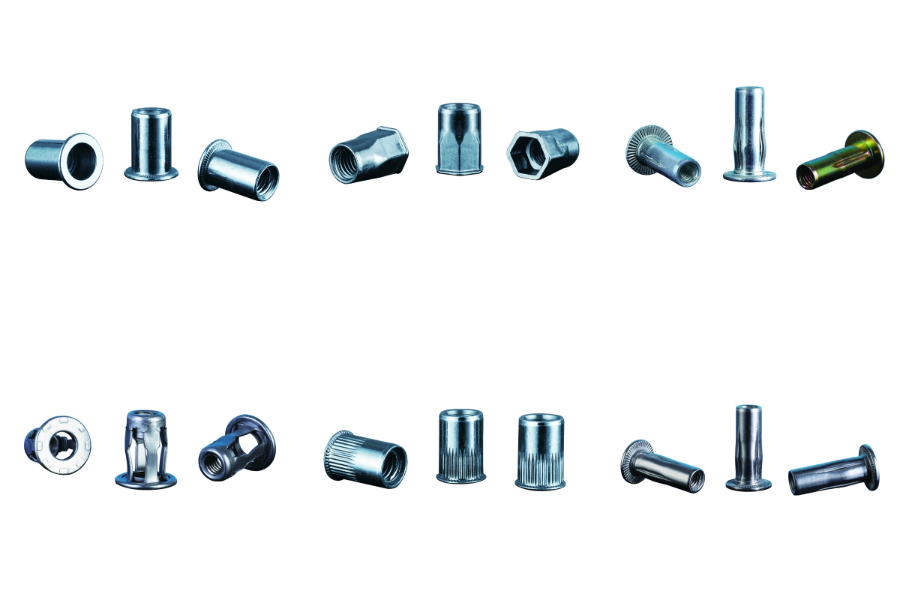
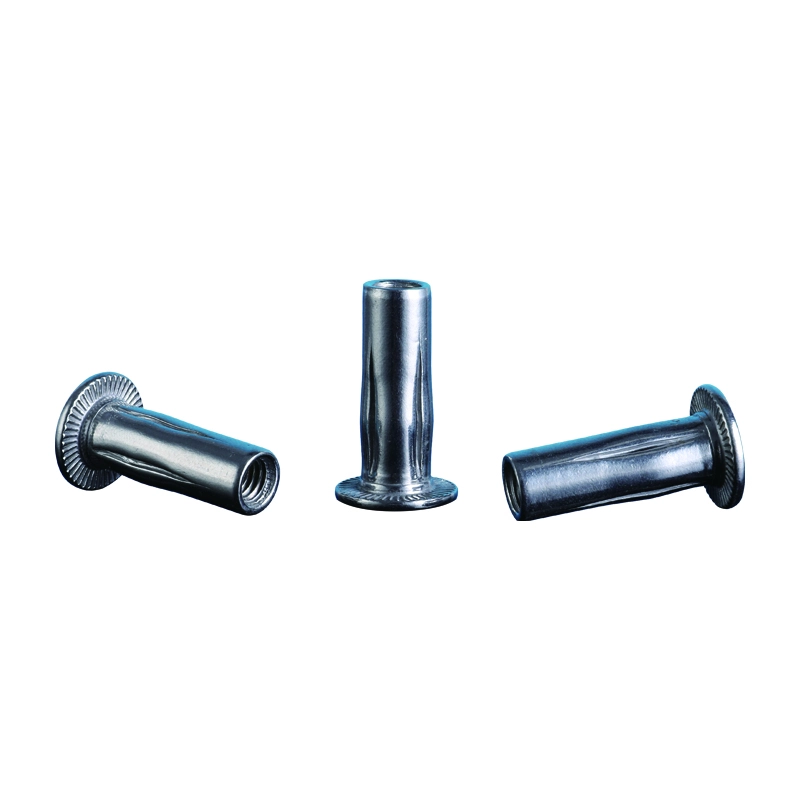
Clinch nuts are rivet nuts with embossed teeth. The body material is plastically deformed by extrusion to achieve the reliability of connecting two parts.

It also provides high-strength connection points and low-cost installation. This fastener is most commonly used for thin plate connections.

What is a Self Clinching nut? Rivmate self clinching nuts

Clinch nuts are very easy to use. You can apply them to the surface of any thin plate. Clinch nuts are also available in a range of sizes. This provides different design requirements for different scenarios.

Top Clinch Nut Manufacturers and Suppliers in China

We list the top 10 clinch nut manufacturers in China in the table below. Each company has been thoroughly researched and studied by us. You can find brief introduction about the top clinch nuts manufacturers in China.

Position Company Year Established Location Employee
1 Rivmate Fastener 2012 Suzhou 150-200
2 Washen Fastener 2010 Jingjiang 150
3 GUWANJI 2014 Shenzhen 20-50
4 Flybear 2010 Nanjing 20-50
5 AOZHAN 2005 Hangzhou 300
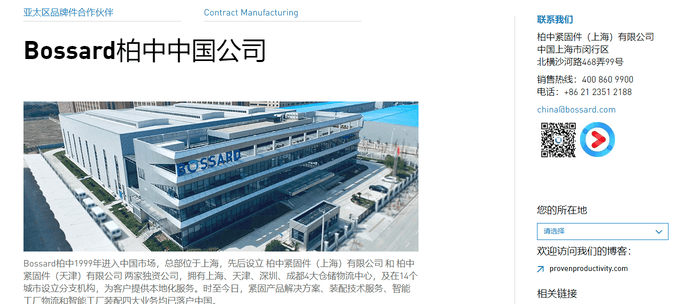
6 BOSSARD 1999 ShangHai 200
7 BLD 2023 Shenzhen 20-50
8 HongRui 2012 Dongguan 50-100
9 Jingyu 1996 Jiaxing 50-100
10 Luosiz 2008 Guangzhou 100-200

Clinch Nut Manufacturer Company Profile

Now that you have a general idea of the top 10 clinch nut manufacturers in China, let’s dive into how each of the following companies operates. Below is a summary of each company and their key strengths and product list.

Suzhou Rivmate Import and Export Co., LTD

With rich production experience, Suzhou Rivmate Import and Export Co.,LTD has become a top Clinch nuts manufacturer and supplier in China.The company’s business revolves around sustainability, quality and flawless customer service.

We provide riveted fastener solutions. These include blind rivet solutions, rivet nut solutions and self-clinching nut solutions. Clinch nut is one of our specialized products. We also have ISO 9001,ISO 14001, IATF 16949 certificates which proves the quality of our products.

We have very rich export experience and our products have been exported to more than eighty countries all over the world and have been widely recognized by our customers.

For us, the customer comes first, so we can provide you with the best products and customer service possible. If you want security for your project, you will benefit from our innovative and advanced clinch nut solutions.

Advantages of Company :

  • Low MOQ
  • Fast delivery
  • Fully customizable(Logo and Packing)
  • Competitive pricing
  • ISO,IATF Certification
  • Production of 2 billion units per year

Main Products :

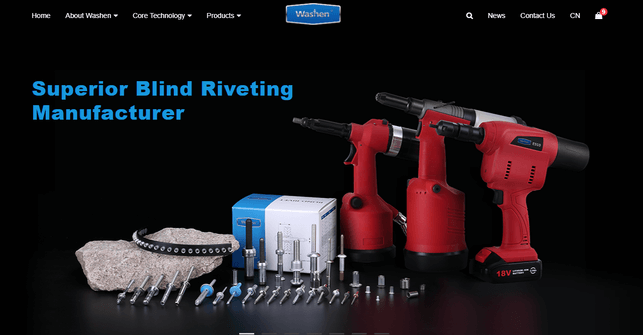
Jiangsu Washen Fastener Co., LTD

washen-rivet

Jiangsu Washen Fastener Manufacturing Co., Ltd. is a high-tech fastener manufacturer specializing in providing a complete set of riveting solutions for the automotive industry, industrial applications, and has always had more than two hundred well-known customers around the world by virtue of the leading technology, diversified product resources and quality service!

Jiangsu Washen is a professional manufacturer of high-strength and high-quality riveting parts and riveting tools, which can provide customers with customized products, product application design, assembly training, tool maintenance and other services.

The high quality and reliability of Huasheng is the ideal partner for global commerce, automotive industry and industrial application industry.

Advantages of Company :

  • Huge production
  • Professional testing equipment
  • Customized fastener solutions

Main Products :

  • Standard Rivet
  • Structural Rivet
  • Rivet Nut
  • SPR Rivet
  • Self Clinching Nuts
  • Riveting Tool

GUWANJI

GUWANJI has over 13 years of experience in export and domestic sales, specializing in the production of special clinch nuts according to customer specifications.
The company attaches great importance to innovation and keeping abreast of the times. In the past ten years, we have been innovating and investing a lot of resources in the research and development department in order to grasp every opportunity in this ever-changing market. Dedication to quality, customer orientation and the pursuit of continuous improvement have made Gurvangi a reputable fastener manufacturer.
With the competitive advantage of products, rich professional knowledge and experience as well as high quality after-sales service, the company provides professional matching and related technical support for new and old customers.

Advantages of Compnay :

  • Wide range of products
  • Highly skilled team
  • Online Consultation

Main Products :

  • Fastener
  • Screws
  • Clinch Nuts
  • Bolts

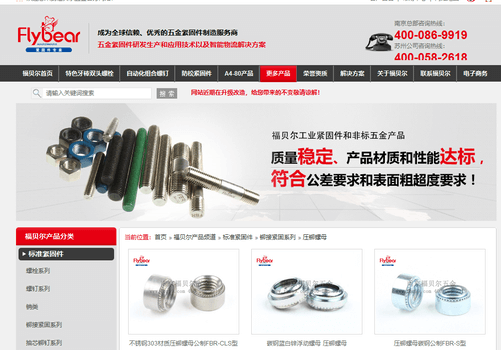
Flybear

Flybear

Nanjing Flybear Hardware Products Co., Ltd. is a fastener manufacturer and producer integrating design, production, inspection and sales. The company has many commercial, technical, production, management and service personnel. Since its establishment, the company has been supported by customers at home and abroad, and has developed rapidly, established its own testing laboratory, and successfully passed the ISO9001 and IATF16949-2016 quality system certification. They not only provide customers with good products, but also provide you with good service.

Advantages of Company :

  • ISO 9001 and IATF 16949:2016
  • One-Stop Service Solutions
  • Good success stories in smart logistics

Main Products :

  • Blind Rivet
  • Clinch Fastener
  • Washer
  • Nuts

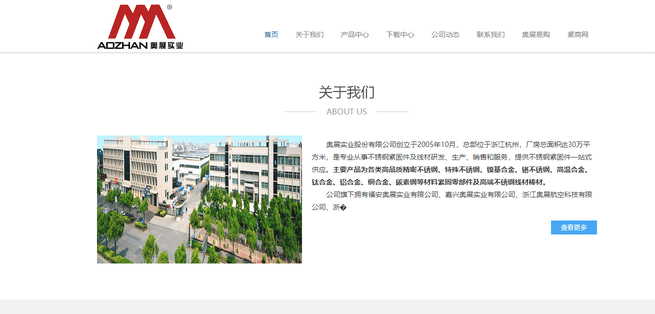
Aozhan

AoZhan

With a total plant area of 300,000 square meters, Aozhan Industrial Co., Ltd. is specialized in the research, development, production, sales and service of stainless steel fasteners and wires, providing one-stop supply of stainless steel fasteners.
Based on application scenarios, Aozhan Industry assists customers in developing new products as well as personalized customization of non-standard stainless steel fasteners, creating a one-stop whole industry chain service platform, standardizing non-standard fasteners, and providing high-quality, high-performance, and short-delivery fastener products and solutions for global customers.
The company’s products implement GB, DIN, ISO, JIS, ANSI/ASME and other standards, through the German PED, ROHS, SVHC certification, Ao Zhan brand fastening parts are widely used in high-end equipment manufacturing, marine engineering, rail transportation, medical equipment, electronic communications, military, aviation, nuclear power, electric power, petrochemical, construction and other industries.

Advantages of Company :

  • Complete system from design to production
  • Extensive export experience
  • Strict testing process

Main Products and Services :

  • screw 
  • clinch nuts
  • nuts

Bossard

Bossard

Because of the rapid development of China’s fastener market, Bossard entered the Chinese market in 1999, headquartered in Shanghai. Today, the four businesses of fastening product solutions, assembly technology services, smart factory logistics and smart factory assembly have all been established in China.

Bossard is a global provider of fastening and assembly technology solutions. With more than 190 years of experience in fastening technology, we not only help our customers to improve their core competitiveness through fastening solutions, but also to achieve sustainable productivity through the optimization of assembly processes and smart factory logistics, which is our commitment to “proven productivity”.

Advantages of Company:

  • Fasteners needed for proper assembly
  • Professional product design
  • A wealth of success stories

Main Products and Services :

  • Self Clinching Studs
  • Self Clinching Nuts
  • Blind Standoffs

BLD

BLD

Paradigm Precision is able to provide application solutions for high-quality fastener assembly processes. The company has an efficient team in charge of all aspects of fastener development, design, prototyping, production, testing, inventory setup, etc., so that your fastener procurement work is worry-free.
Their main products are centered around stainless steel and high-strength two major product lines, there are two manufacturing plants in Zhejiang and Guangdong, the entire process chain of the product is completed independently, the quality of self-control.

Advantages of Company:

  • With 35 quality suppliers
  • 5000 tons of inventory
  • Competitive pricing

Main Products :

  • Stainless Steel Rivet Nut
  • clinch nuts
  • screws
  • long nuts

HongRui

HongRui

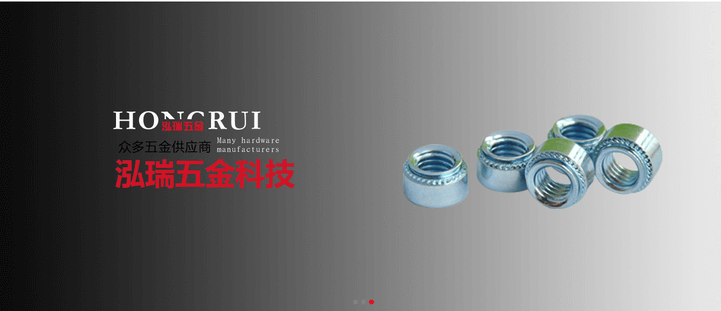
Dongguan Hongrui Hardware Technology Co., Ltd. is a company specializing in the research and development and production of hardware products. The main products of our company are various kinds of nuts made of various materials of national standard (GB), American standard (SNSI), German standard (DIN) and non-standard. They are widely used in medical equipments, railroads, automobiles, ships, communication equipments, construction projects, etc. They have been recognized by domestic and foreign customers.

  The company has introduced advanced equipment and technology from Taiwan, and has a professional team with advanced technology and rich manufacturing experience, the products are of high quality, superior performance, timely delivery, suitable for all kinds of high-quality requirements of the customer selection, and according to the customer’s needs to produce a variety of special specifications and performance of the products.

Advantages of Company :

  • Complete range of self clinch fastener
  • Strict quality standards
  • Rapid delivery of samples

Main Products and Services:

  • Self Clinching Nuts
  • Self Clinching Studs
  • Waterproof Self Clinching Nuts

Jingyu

Jingyu

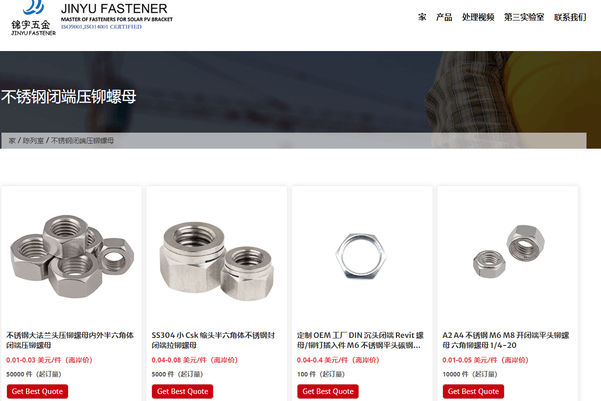
Jiaxing Jinyu Fastener Factory Co., Ltd. is a professional manufacturer of all kinds of solar photovoltaic system fasteners and stainless steel fasteners, founded in 1996, located in Jiaxing, the hometown of fasteners in China. With more than 20 years of experience in fastener manufacturing, we have now cooperated with more than 50 overseas customers from 35 countries. The total sales in 2022 will exceed 8 million dollars.

With years of fastener manufacturing experience and excellent management and performance, we have earned a good reputation at home and abroad. Has obtained ISO9001:2022.

The product range covers DIN, ASME/AISI, NF, JIS, AS, BS standards. Their products sell well in the US, European and Pacific markets and are widely used in construction, mechanical instrumentation, bridge building and house decoration.

Company Advantage :

  • Low MOQ requirement
  • Competitive pricing
  • Fully customizable
  • ISO certification

Main products and services :

  • Self Clinching Nuts
  • Stainless steel dome nuts
  • Rivet Nut

Luosiz

Luosiz

Luosiz is a manufacturer and consultant specializing in fastening solutions. It has the largest production and R&D base in South China.
The company is a research, development, production, OEM/ODM and service enterprise. Over the years, they have trained a large number of technicians and production backbones with professional knowledge and innovation. With advanced management style and strong technical force, they continuously provide customers with high quality and standard pressure rivet nut fastener products.

Company Advantage :

  • fast delivery
  • Competitive pricing
  • Timely delivery of customized services

Main products and services :

  • Self Clinching Nuts
  • Self Clinching Studs
  • Waterproof Clinch nuts

5 Benefits of Importing Clinch Nuts from China

Not sure about the advantages of importing clinch nuts from China? Here are five benefits of importing clinch nuts from China:

Industry-leading technology

Chinese manufacturers are constantly updating their production technology to pursue higher efficiency. Using the latest production equipment, testing methods, they can provide high quality Clinch Nut solutions to customers worldwide.

Cost-Effective

An important advantage of importing clinch nuts from China is the low price. This is especially true for bulk orders of clinch nuts. You will be hard pressed to find lower prices and the same level of quality elsewhere.

Strong production capacity

As the world’s factory, China has a huge supply chain and strong production capacity. Importing clinch nuts from China can be guaranteed with stable supply and customized options according to customers’ needs.

Diverse Product Selection

Clinch Nuts manufacturers in China can provide Clinch Nuts in different sizes, materials and specifications. You can solve your different sourcing needs at once in China and save your time and cost.

Strict Quality Control and Technical Support

China tends to have good quality control and technical service capabilities in order to serve its global customers. They usually comply with international standards and norms and provide high quality products that serve customer requirements. And during the service process, they can provide professional technical support to solve the problems encountered by customers in the process of use.

Looking for Clinch Nuts, Rivmate Fastener can help!

Do you want to improve the safety of your project? Or do you want to give your customers peace of mind with your clinch nuts? As one of the leading clinch nut manufacturers in China, Rivmate offers clinch nut products of consistent quality. If you have drawings or a description of the product, that would be great. If you are confused about the clinch nut service, please contact one of our engineers immediately. We help and consult our customers by providing Clinch Nut solutions. Contact us immediately today!

Request Quote for Your Clinch Nut Project!

Submit Your Sourcing Request

Please complete the form below and our customer support team will be in touch with you shortly. Inquiries submitted through this form will receive priority processing over emails.

Top 10 Blind Rivet Manufacturers and Suppliers in China (2025)

In this article, we will list the top 10 Blind Rivet manufacturers and suppliers in china. If you want to import Blind Rivet Fasteners products from China, this article can definitely help you. Let’s find out together.

Table of Contents

Why Import Blind Rivet from China ?

China has many advantages in the production of blind rivets. These include low-cost labor, large-scale production capacity and flexible supply chain management and delivery time control.

In addition to this, China’s Blind Rivet manufacturers are usually able to produce high quality Blind Rivets in a less cost effective manner. This enables them to stay ahead of the curve in terms of product quality and innovation.

As a result, Blind Rivet products made in China are often considered by users to be superior to products from other countries.

Blind Rivets Manufacturer in China

Top 10 Blind Rivet Manufacturers and Suppliers in China

Are you looking for reliable Top Blind Rivet suppliers in china for your project? Don’t worry! We have handpicked 10 companies that can provide you with quality products. Explore our listings ranked by sales volume, number of employees, reputation and product quality to find your ideal supplier today!

Suzhou Rivmate Import and Export Co., Ltd

Location : Suzhou, Jiangsu

Company type: Manufacturing, Wholesale

Year founded: 2012

The number of employees: >150

Rivmate Rivet Nut
Suzhou Rivmate Import and Export Co., Ltd

Main Products: Open Type Blind Rivet, Peel Type Blind Rivet, Sealed Type Blind Rivet, Multi-grip Blind Rivet, Monobolt Rivet, Tri-Firm Blind Rivet, Hem-Firm Blind Rivet, Bom Rivet, etc.

Choose the best Blind Rivet Manufacturer. A good project starts with the best choice, Rivmate Rivet has been in the Blind Rivet Manufacturing industry for over a decade. They have a total of over 100 employees, 40% of whom are technical experts with over a decade of manufacturing experience. The company is ISO 9001, IATF 16949:2016 certified and has factories and workshops that produce high volume, high quality blind rivets.

Rivmate’s Blind Rivets provide perfect after-sales service, as long as the Blind Rivets purchased from Rivmate found a problem, you can contact them and they solve the problem for you perfectly. (Whether it is three years, five years)。You can contact Rivmate to discuss your breakout rivet needs and offer custom logo and packaging services for your project.

Jiangsu Washen Fastener Manufacture Co., Ltd.

Location : Jingjiang, Jiangsu

Company type: Manufacturing

Year founded: 2012

The number of employees: >100

washen-rivet

Washen Fastener is a top fastener manufacturer with decades of experience in the fastener industry, hundreds of production machines and hundreds of employees. Its excellent product quality and close inspection workshops further contribute to the popularity of Washen Fastener’s products.

The comprehensive range of Blind Rivet solutions also includes excellent service and technical support to our customers. As a result, Washen is the reliable choice to fulfill your needs.

Fast Fix

Location : Shanghai

Company type: Manufacturing, Wholesale

Year founded: 2012

The number of employees: >150

Fast Fix is headquartered in Shanghai and it can provide rivets in a variety of materials, including aluminum, steel, stainless steel and more. His product line includes standard rivets, structural rivets, and specialty rivets.

The company is internationally certified for quality, which ensures that the quality of its products is exceptional, and there are rigorous testing procedures in place to tightly control quality at every stage.

By choosing to work with Fast FIx, you can experience the company’s guarantee of quality.

Wodecy

Location : Handan, Hebei

Company type: Manufacturing, Wholesale

Year founded: 1992

The number of employees: >150

Types of pop rivets - Rivmate Blind Rivet Supplier

Wodecy is a leading supplier of blind rivets in the North. The company exports blind rivets to over 20 countries worldwide.

Wodecy values customer and supplier relationships, and the company aims to foster growth and collaboration. Whether the order is large or small, they listen carefully to customer feedback and provide tailored solutions.

Wodecy’s reputation for superior customer service and unmatched reliability has earned the trust of customers worldwide.

Int Metal Products Co., Ltd

Location : Dongguan,Guangdong

Company type: Manufacturing, Wholesale

Year founded: 2011

The number of employees: >60

The company is located in the famous manufacturing city–Guangzhou Dongguan. The company has 12 years of manufacturing experience. The main products are all kinds of hardware fasteners and accessories, and their products are widely used in switches, relays, connectors, protectors, power plugs and other kinds of electrical devices as well as automotive, aerospace, molds, communications and many other fields.

With professional technology, excellent quality, affordable price and fast delivery, they have been supplying quality products to more than one hundred famous companies all over the world. The company’s production process strictly complies with RoHS and REACH regulations, and product quality is guaranteed.

Shanghai Huijian Hardware Co., Ltd.

Location : Shanghai

Company type: Manufacturing

Year founded: 2005

The number of employees: >100

The company is located in the south of Shanghai. For more than ten years, it has been emphasizing on the quality of blind rivets, and through the efforts of all the staff, the company has become a leading blind rivet manufacturer in China.

The factory has a complete set of production facilities, including production, testing and packaging. The company constantly introduces new technology and advanced production equipment, and follows the standards of GB,DIN,IFI,ISO,ANSI and so on.

Wuxi Yuke Environmental Science & Technology Co. Ltd

Location : Wuxi, Jiangsu

Company type: Manufacturing

Year founded: 2007

The number of employees: >100

The company has been producing blind rivets, pull rivet nuts and fasteners for many years. They are constantly updating their management, facilities and technology, insisting on providing high quality, better service and better solutions.

They attend fastener shows and visit their customers every year. Their products are widely used in automotive, furniture, containers, elevators, construction, decoration and industry.

They can offer free samples and competitive prices.

GUWANJI

Location : Shenzhen, GuangDong

Company type: Manufacturing, Wholesale

Year founded: 2016

The number of employees: >80

Solid Wanji Hardware Technology Co., Ltd. is a company specializing in the production and sales of industrial fasteners. With rich product knowledge and experience, they have attracted a large number of customers. They can provide one-stop supply service for customers.

They rely on excellent product quality, rich production experience and perfect after-sales service to provide customers with satisfactory rivet products. They keep innovating to provide competitive fastener solutions.

Jingjiang Hengfeng Rivet Manufacturing

Location : Jingjiang, Jiangsu

Company type: Manufacturing, Wholesale

Year founded: 1994

The number of employees: 132

The company is a manufacturer and exporter specializing in all kinds of Blind Rivets. They strictly follow the ISO/TS16949:2009 automotive quality management system standards to meet the needs of different customers.

They especially focus on the research, development and large-scale production of stainless steel series rivets. The products are widely used in container, high-speed train, automobile, communication electronics, home appliances and other industries.

The company continuously increases investment in product research and development, continuously optimizes product structure, promotes industrial systematization and product diversification, and provides better services for customers.

SGERR

Location : Suzhou, Jiangsu

Company type: Manufacturing

Year founded: 2015

The number of employees: >80

The company is a company specializing in metal fasteners: design, production, testing and sales. The company is ISO 9001 and IATF 16949 certified.

The company sells stainless steel and high strength blind rivets. They are widely used in automobile manufacturing industry, railroad manufacturing industry, shipbuilding manufacturing industry, elevator manufacturing industry, container manufacturing industry, household electrical appliances manufacturing industry, new energy manufacturing industry and so on. We have been providing customers with high quality blind rivets products.

The company has a wide range of standard Blind Rivets, which strictly comply with the international standards such as DIN, IFI, etc.

How to Choose the Right Blind Rivet Manufacturers and Supplier ?

Finding and choosing the right Blind Rivet Manufacturer is an important part of any company’s project. In the global Blind Rivet market, there are a very large number of suppliers, and it can be very difficult to determine which one will be able to provide satisfactory products and excellent service for your project.

Fortunately, there are a number of aspects and criteria that can help you more easily identify the right Blind Rivet manufacturers and suppliers.

The most important factor you need to consider is choosing a Chinese manufacturer with extensive experience in manufacturing blind rivets. Get to know their expertise and experience in the field of Blind Rivets, as well as impeccable customer support and after-sales service. A reputable supplier is the best choice.

Apart from that, you need to consider the cost and whether their prices are reasonable. Quality and qualifications are also very important to ensure that the manufacturer of blind rivets has high quality products and reliable manufacturing processes. One of the most effective ways to find a quality blind rivet manufacturer for your next project is to conduct extensive research before making a final decision.

Conclusion

As the factory of the world, China is a world leader in the manufacture of blind rivets. If you are looking for high quality, affordable blind rivets for your project, there is no better place than Rivmate’s factory.

If you need a manufacturer to provide quality products and professional technical support for your project, please feel free to contact Rivmate Rivet.Our technical team has years of experience in manufacturing Blind Rivet.

What are you hesitating for? Contact us now! Let us provide a customized blind rivet solution for your project.

Send Blind Rivet Purchase Request

Submit Your Sourcing Request

Please complete the form below and our customer support team will be in touch with you shortly. Inquiries submitted through this form will receive priority processing over emails.
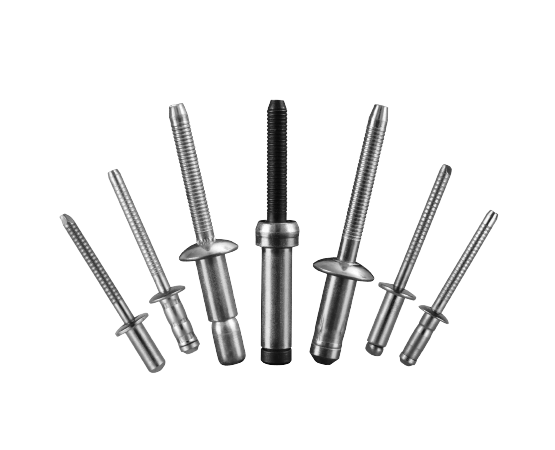
Top 10 Blind Rivet Nut Manufacturers and Suppliers in World (2025)

If you are looking for the top blind rivet nut manufacturers in the world, this article will help you choose the right blind rivet nut company. This article will provide a background on the top blind rivet nut manufacturer companies and their products. Please read through the information in the following article to help you make the right decision.

Table of Contents

According to the report, the global Blind Rivet Nuts market experienced rapid growth in 2023. It was valued at USD 200 billion and is expected to grow steadily over the next seven years at an impressive CAGR of 10.0%.

Rivmate Countersunk Rivet Nut Wholesale

Types of Blind Rivet Nuts

There are many types of Blind Rivet Nuts available from Rivmate. It is depend on your current needs. There are hex rivet nuts, countersunk rivet nuts, reduced rivet nuts, round rivet nuts, flat head rivet nuts, jack nuts and slotted rivet nuts. According to the material classification, blind rivet nuts can be roughly divided into the following four categories : Carbon Steel Rivet Nut, Stainless Steel Rivet Nut, Aluminum Rivet Nut, Copper Rivet Nut. After categorizing the rivet nuts one by one, these types of rivet nuts can be further divided according to their use.

  • Connection Between Conventional Workpieces —— Connection of metal plates, connection of plastic plates, connection of mixed materials, connection of mechanical equipment. Rivet nuts are widely used in various industries for fastening connections.
  • Connection Between Tracks —— Rivet nuts provide a reliable threaded connection between the rail’s connecting plate and the rail’s seat plate. They are widely used not only in railroad tracks, but also in subway and light rail systems, high-speed rail systems, etc.
  • Connection of Marine Interior Parts —— Marine interiors require rivet nuts that are corrosion resistant. Rivet nuts provide resistance to vibration and shock and are widely used in the attachment of cabin wall panels, ceilings, porthole frames, interior trim pieces, sinks and toilet fixtures.
  • Connection of Automotive Parts —— Automotive rivet nuts are very important for the lightweight design of automobiles. Various countries around the world have developed a variety of materials that can reduce the weight of the body, but how to connect them is a problem. Rivet nuts can well meet this requirement and solve the problem of bolting for non-structural bearing. Lighter weight can be provided.
  • Connections for Aircraft Lightweighting —— Airplanes need to reduce their overall weight in order to achieve faster and safer operations. Rivets nuts are commonly used in airplanes to tighten connections and reduce overall weight.

Next let’s take a look at some of the common rivet nuts you may need for your project or business.

Hex Head Blind Rivet Nuts

Hex blind rivet nuts are used when your application requires high torque strength. Hex rivet nuts are often used in mechanical equipment or automotive manufacturing as well as automotive repair and maintenance. The hexagonal head design makes the rivet nut easier to handle and can accommodate high-strength connections and easy disassembly.

Flat Head Blind Rivet Nuts

Flat head rivet nuts are used in applications where flat surfaces are important. Flat Head Rivet Nuts can be joined in compact spaces because of their short head design. The design features of the Flat Head Rivet Nut provide a flat, compact and neat connection to meet your project’s specific application needs.

Round Head Blind Rivet Nuts

Round head rivet nuts are often used for thin plate connections, plastic plate connections, and soft material connections. The design features of round head rivet nuts provide a more stable connection and reduce damage and deformation to the workpiece.

Carbon Steel Blind Rivet Nuts

Carbon Steel Rivet Nuts provide high strength and rigidity, capable of providing a stable and reliable connection for a variety of loads and vibration environments. Carbon steel rivet nuts are suitable for connections between metal structures and are widely used in automotive manufacturing, mechanical engineering and construction.

Stainless Steel Blind Rivet Nuts

Stainless steel rivet nuts are more common in corrosive environments, high temperature environments. Stainless steel material has the advantages of corrosion resistance and high temperature resistance. In the field of marine, chemical processing, food processing, engines, heat treatment equipment, medical equipment, stainless steel rivet nuts are often used.

Aluminum Blind Rivet Nuts

Automotive, aerospace and shipbuilding pursue lightweighting. That’s why aluminum rivet nuts are often used in weight-conscious scenarios. Aluminum has good thermal conductivity and is able to conduct heat quickly. Aluminum rivet nuts also have good corrosion and oxidation resistance, and can play a good role in environments where corrosion and oxidation need to be resisted.

Copper Blind Rivet Nuts

You’ll typically see copper rivet nuts in applications that require reliable electrical connections such as power equipment,  circuit boards, and more. It is a fastener product that provides good electrical conductivity, thermal conductivity, and is resistant to corrosion and oxidation. You can use Copper Rivet Nuts to decorate your projects in a good way.

Benefits of Blind Rivet Nuts

Some of the most common benefits of rivet nuts are stable connections, wide range of use, ease of installation, reverse disassembly capability, excellent internal and external compatibility. The unique benefit of the rivet nut is that it is adjustable. This allows the operator to make adjustments depending on the degree of fastening required. By rotating the rivet nut, the gap or degree of tightness between the connecting parts can be changed to accommodate different stress requirements or installation conditions. Let’s take a closer look at the benefits that pull rivet nuts offer.

Improve The Security of Your Connection

Properly is the use of rivet nuts can provide a secure and stable connection to your project. The use of rivet nuts is the most convenient and fastest compared to other connection methods. It provides a secure and stable connection in the shortest possible time.

Reduce Fastener Inventory

Generally speaking, working with a rivet nut manufacturer that can be stable for a long time can reduce the pressure on your inventory. When there is a demand for rivet nuts for your project, you can confirm your order with your longtime partner rivet nut manufacturer, which can meet your needs quickly.

Enhance The Efficiency of Your Work

Compared to other connections. Rivet nuts can greatly improve your work efficiency. Installing rivet nuts is an extremely fast process and you can have your project installed in a fraction of the time.

Add Value to Your Products

Rivet nuts provide greater structural strength and reliability. Rivet nuts have adjustable rows, which can be adjusted according to the need for tightness, improving the adaptability and performance of the product.

Top 10 Blind Rivet Nut Manufacturers and Suppliers in World

You’ve learned about the functions and classification of rivet nuts, now let’s start delving into the top 10 blind rivet nut manufacturers in the world.

Position Company Name Year Started Location
1 Washen Fastener 2010 China
2 Stanley 1920 USA
3 Bollhoff 1877 Germany
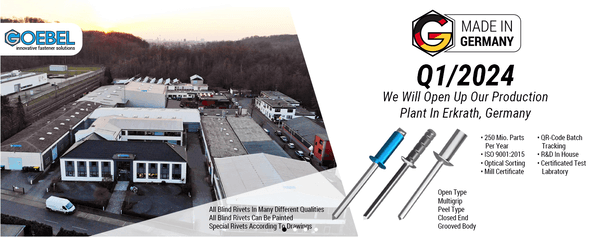
4 Goebel 1979 Germany
5 Howmet 1948 USA
6 Gesipa 1965 Austrian
7 Sherex 1978 USA
8 Rivet Nut USA 1983 USA
9 Honsel 1930 Germany
10 Rivmate Rivet Nuts 2012 China

This list provides you with a brief summary of each company. It can help you quickly understand the rivet nut industry and decide which is the best.

WASHEN RIVET NUT

Washen Fastener is a specialized manufacturer of fasteners. With more than 150 employees, 40% of them have more than 10 years of experience in fasteners. With hundreds of advanced manufacturing equipments and our own testing center, we can quickly provide testing data for customers’ reference.

Advantages of Washen :

  • Hundreds of advanced production equipment
  • Professional testing equipment and testing center
  • Powerful customization capabilities

Products :

  • Standard Rivets
  • Structural Rivets
  • SPR Rivets

STANLEY

The company mainly produces all kinds of fasteners. Including bolts, rivet nuts, plastic fasteners and so on. They are the owners of world renowned brands such as Avdel, Pop and other fastener brands. They provide fastener services to a variety of sectors around the world, and they not only want to help make their customers’ projects securely connected, but they also want to help their customers quickly gain access to the tools, information, and engineering expertise they need to be successful. They are also known for their commitment to revolutionizing fastening and assembly technology.

Advantages of the company :

  • Technological Innovation
  • Largest Fastener System
  • Professional Fastener Technical Support

Main Products and Services :

  • Rivet Nut
  • Plastic Fastener
  • Screws & Bolts

BOLLHOFF

Bollhoff is one of the top rivet nut manufacturers in the world. Give the company produces all types of rivet nuts. With their know-how, they can customize the production of special fasteners.

Company Advantage :

  • Has a large number of rivet nut distributors
  • Utilization of know-how in product development
  • Extensive experience in fastener distribution

Main Products and Services :

  • Rivet Nut
  • Custom Fastener

GOEBEL

What makes Goebel one of the top rivet nut manufacturers in the world is their strong focus on producing riveted fasteners. This enables them to produce top-notch, efficient rivet nut products. This can be obtained at a lower cost than Avdel. Their specialization in their products can increase the efficiency of production.

Advantages of the Company :

  • Creating a riveted fastening system
  • Developing products for specific applications
  • Product training for users/engineers

Products and Services :

  • screws
  • Rivet Nut
  • Blind Rivet
  • Tool

HOWMET

Boll is one of the world’s top manufacturers of rivet nuts. Give the company produces all types of rivet nuts. With their know-how, they can customize the production of special fasteners.Boll is one of the world’s top manufacturers of rivet nuts. Give the company produces all types of rivet nuts. With their know-how, they can customize the production of special fasteners.

Company Advantage :

  • Owns a number of well-known brands
  • complete product line

Main Products and Service :

  • HuckBolts
  • Wire Thread Inserts
  • Rivet Nuts

GESIPA

As part of the international agency SFS Group, GESIPA can offer system solutions for blind rivets and rivet nuts. They provide consulting and services to many business markets around the world. They are perfectly placed to act as a reliable and strong fastener partner.

Company Advantage :

  • Global Services
  • Complete fastener solutions

Main Products and Services

  • Blind Rivet
  • Rivet Nut
  • Electric Tool


SHEREX

Sherex serves the automotive, aerospace and defense, agricultural and construction equipment, general industrial and heavy duty truck markets. Economical fastening solutions are available.

Advantages of Company :

  • Providing the lowest cost fastening solution in the United States
  • Solving customer needs through innovation
  • Deal with honesty, respect and equality

Produces and Services :

  • Rivet  Nuts
  • Clinch Nuts
  • Nut and Stud Plates

RIVET NUT USA

Rivet nut usa is a division of Cardinal Components, Inc. They can provide you with certified rivet nuts and related installation tools. They can provide you with competitively priced rivet nuts in a short period of time. They can complete every step of the process of ordering rivet nuts, design, prototype, installation, etc.

Advantages of Rivet Nut Usa :

  • Professional customer service
  • Technical expertise
  • One-Stop Service

Products :

  • Rivet Nut
  • Standard Blind Rivet
  • Solid Rivets

HONSEL

HONSEL has the world’s most advanced machinery and the ability to continually expand production. It can guarantee reliable individualized customized parts and automation solutions for large industrial and automotive customers. Their state-of-the-art logistics concepts and fully automated warehouses ensure fast, reliable availability.

Advantages of Company :

  • There can be honest dealings
  • client service
  • There is a team of technical professionals

Products :

  • Blind Rivets
  • Blind Rivet Studs
  • Blind Rivet Nuts

RIVMATE Blind Rivet Nuts Manufacturer and Supplier

Rivmate is one of the most competitive fastener manufacturers in China, specializing in the production of blind rivets, rivet nuts and clinch fasteners. We offer a wide range of fastening solutions and premium services, providing both standard and customized products to meet our customers’ specific requirements with a professional and reliable attitude.

Company Advantage :

  • ISO Certificate / IATF 16949:2016 Certificate
  • Advanced production equipment
  • 13-step inspection process
  • Powerful customization capabilities

Main Products and Services :

The Future of Rivet Nuts

Blind rivet nuts are now a common fastener solution. It will continue to develop and evolve in the future to meet changing needs and technological advances. Currently, rivet nuts are widely used in automotive, aerospace, instrumentation, furniture, decorative and other electromechanical and light industrial assemblies.

  1. Material and coating innovations —— In search of higher strength and different properties. Different new materials may be used for rivet nuts. Meanwhile, the application of new coating technology can enhance the surface hardness, wear resistance and corrosion resistance of the rivet nut.
  2. Intelligence and automation —— With the development of industrial automation, the process of producing rivet nuts may be more intelligent and automated in the future. For example, equipped with sensors and control systems for automatic regulation and feedback control.
  3. Efficient installation technology —— Current rivet nut installation techniques are already very efficient, but even faster installation techniques may be available in the future. Reduce installation time and cost.
  4. Connection Performance Optimization —— Specific optimizations for different scenarios. For example, improvement of resistance to loosening in vibration environments and durability in high-temperature environments.

Conclusions

It goes without saying that Rivamte is at the top of the list of blind rivet nut manufacturers in China. Rivmate can provide you with professional technical service and high quality rivet nut products. They have become the leader of rivet nuts in the Chinese market and are now developing their business to the global market. This bodes well for the future of the rivet nut industry as they remain the leader in rivet nut manufacturing.

Looking for Blind Rivet Nut Manufacturer for Your Project?

If you are looking for a blind rivet nut manufacturer for your project that can solve your needs, you can quickly contact Rivmate. Working with one of the world’s top blind rivet nut manufacturers can make your project safer because you’re working with one of the best companies in the industry.

CONTACT PERSON SEARCH

Submit Your Sourcing Request

Please complete the form below and our customer support team will be in touch with you shortly. Inquiries submitted through this form will receive priority processing over emails.

Monobolt Rivet - High Strength Structural Rivet System

Table of Contents

In the field of high-strength assembly and structural connection, Monobolt Rivet is gradually becoming the core solution to replace welding and traditional riveting. Compared with traditional rivets, Monobolt Rivet can maintain a long-term stable connection under conditions of vibration, shock and corrosion. This article will comprehensively analyze this high-strength structural rivet system, helping you understand why it is an indispensable fastening technology in modern manufacturing.

What is a Monobolt Rivet?

Rivmate Monobolt Rivet - Mono-Lock Blind Rivet

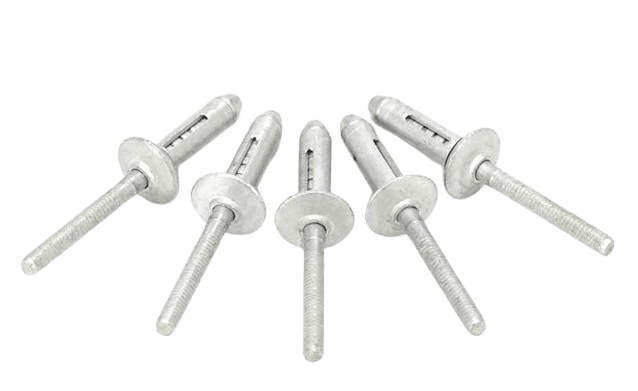
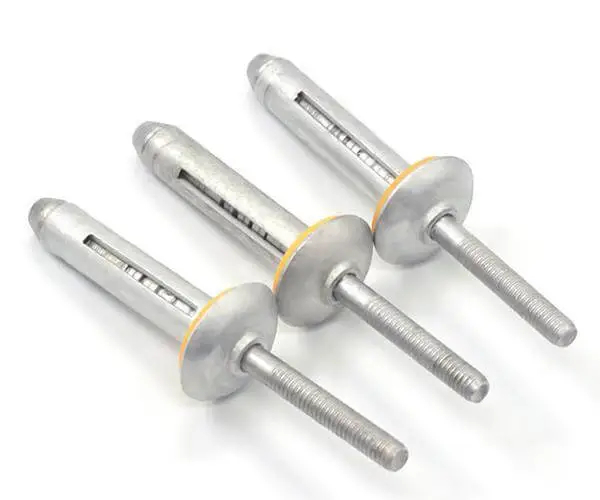
The Monobolt Rivet is a high-strength structural blind rivet specifically designed for high-load and structural-level connections. It achieves permanent mechanical locking through mandrel locking and body expansion, ensuring stable connections in high-vibration and high-stress environments.

This type of rivet consists of four key parts:

① Rivet Body – Provides the main load-bearing structure;

② Mandrel – It is pulled into the rivet body during installation, generating a locking force.

③ Expansion Slot – Controls the forming shape of the rivet body, creating a multi-petal locking structure;

④ Sealed Tail – Ensures water and dust resistance.

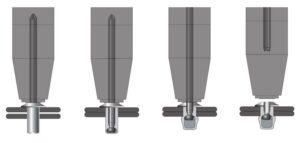
During installation, the mandrel is pulled into the rivet body, causing the tail end of the rivet body to expand outward to form a three- or four-petal structure that tightly engages with the connected materials. Subsequently, the head of the mandrel is mechanically locked and will not fall off, thus creating a fully locked, anti-loosening, and anti-vibration permanent connection.

Unlike common blind rivets, the Monobolt Rivet achieves high-strength connections not merely by friction but through the mechanical interlocking of the mandrel and the rivet body. This design makes it the preferred fastening method for high-safety-demand scenarios such as automotive structures, bridge steel structures, and wind energy equipment.

Monobolt Rivet Performance Benefits

The greatest advantage of the Monobolt Rivet lies in its combination of structural strength, seismic performance and long-term reliability. Compared with ordinary blind rivets, its performance is closer to that of bolted connections or even welded structures, making it particularly outstanding in high-load and dynamic stress environments.

Monobolt Structural Rivets Supply
  • Structural Load Bearing
    Monobolt adopts a thickened rivet body and lock core structure design, capable of withstanding higher shear and tensile loads. Compared with traditional blind rivets, its load-bearing capacity is increased by approximately 40–60%, ensuring the stability of structural connections under high-stress conditions.
  • Locked Mandrel System
    After riveting is completed, the mandrel is permanently locked in the rivet body to prevent loosening caused by vibration. This design significantly enhances the anti-seismic and anti-fatigue performance, which is a key advantage in mechanical equipment and automotive structures.
  • Sealed Design
    The sealed tail and precise forming process endow Monobolt with excellent waterproof, dustproof and anti-corrosion performance, making it highly suitable for use in automotive chassis, ship structures and outdoor equipment.
  • Consistent and Maintenance-Free
    Monobolt can achieve high consistency in batch assembly through hydraulic or pneumatic installation tools. Its structure does not require secondary tightening or maintenance, making it suitable for automated production lines and long-term use environments.

Monobolt Rivet vs Standard Blind Rivet

Comparison ItemMonobolt RivetStandard Blind Rivet
Strength LevelHigh structural-grade strength (designed for heavy-duty applications)Medium strength (used for light-duty assemblies)
Mandrel StructureMandrel fully locked inside the rivet body, prevents looseningMandrel breaks off after installation, limited vibration resistance
Vibration ResistanceExcellent, suitable for vibration and impact environmentsModerate, may loosen under prolonged vibration
Waterproof SealingSuperior, features a sealed tail designAverage, not designed for waterproof applications
Typical ApplicationsIndustrial structures, high-load joints, outdoor equipmentSheet metal, home appliances, electronic assemblies
CostSlightly higher (due to complex structure)Lower, ideal for high-volume production

If your project requires a connection that is long-lasting, stable, shock-resistant, anti-loosening, and corrosion-proof – such as for automotive chassis, steel structures, or wind energy equipment – Monobolt Rivet is the better choice. For the assembly of lightweight sheet metal or decorative parts, standard blind rivets remain the cost-effective solution.

Industrial Applications of Monobolt Rivets

Automotive & Trucks

Monobolt Rivet is widely used in high-stress areas such as car frames, chassis and cargo boxes. Compared with traditional welding, it can provide higher shear strength and vibration stability.

Meanwhile, structural bolting does not require a heat-affected zone, which can avoid metal deformation and fatigue cracks. In new energy vehicles and lightweight body-in-white designs, Monobolt has gradually replaced some welding points.

Applications of Monobolt Blind Rivets for automotive

Railway Vehicles

In the manufacturing of rail vehicles, Monobolt rivets are used to connect the vehicle body frame, floor frame and door structure. They can withstand long-term vibrations and cyclic loads, and meet the structural strength standards of EN 15085 and VDA 239-100.

Construction & Infrastructure

The structural requirements of buildings and bridges demand that the connecting components possess high shear strength and weather resistance. The lock core design of Monobolt Rivet can maintain the stability of the connection in high-load environments. Meanwhile, the stainless steel or coated versions can prevent corrosion from wind and rain, with a service life exceeding 25 years. In the assembly of steel structures and the support of curtain walls, Monobolt nails can achieve a faster installation efficiency compared to bolts.

Wind & Energy Systems

Wind turbine towers, support arms and motor housings are often exposed to strong vibrations and high humidity environments. Monobolt Rivet has excellent vibration resistance and waterproofing properties, making it an ideal alternative to bolt connections. Its stable mechanical locking structure can maintain zero loosening under high wind loads, ensuring the long-term safe operation of the equipment.

Marine & Offshore

The marine environment has extremely high requirements for the anti-corrosion performance of fasteners. It is widely used in aluminum ships, offshore platforms and coastal facilities, providing long-term waterproof, salt-proof and shock-proof fixation effects.

Choosing the Right Material for Monobolt Rivets

MaterialKey FeaturesTypical Applications
Aluminum AlloyLightweight, anti-oxidation, and corrosion-resistant; ideal for lightweight assembly requirements.Light structural components, aluminum vehicle bodies, and household appliance enclosures.
Steel (Zinc-Plated)High tensile and shear strength with excellent cost performance.Machinery equipment, steel structure assembly, and construction supports.
Stainless Steel (304/316)Superior corrosion and fatigue resistance; suitable for high-humidity and salt-spray environments.Marine vessels, railway vehicles, outdoor facilities, and energy systems.
Monel / Nickel AlloyExcellent high-temperature and corrosion resistance; ideal for marine and aerospace applications.Offshore platforms, aerospace structures, and chemical processing equipment.
  1. When choosing Monobolt Rivet, the electrochemical compatibility of the substrate should be given priority consideration to avoid intermetallic corrosion.
  2. For outdoor or salt spray environments, it is recommended to use the 316 stainless steel or nickel alloy version to ensure that the connection lasts for more than 20 years.
  3. For lightweight or aluminum structures, the aluminum alloy rivets can be selected in combination with anti-corrosion sealing washers to achieve a balance between structural strength and protection.

How to Install a Monobolt Rivet?

Special Tail Structure of Monobolt Rivets

① Drilling the Hole

Before installation, it is necessary to ensure that the surface of the workpiece is clean, free of oil and oxide layer. Use high-precision drill bits to drill holes on two or more layers of connecting pieces. The hole diameter should be approximately 0.1–0.2 mm larger than the diameter of the rivet body. For example, when installing a 6.4 mm diameter Monobolt, the hole should be drilled at 6.5–6.6 mm. This small gap ensures that the rivet can smoothly insert into the hole and also prevents the material in the clamping area from being deformed.

② Inserting the Rivet

Insert the Monobolt Rivet into the pre-drilled hole, ensuring that the cap part is perfectly flush and perpendicular to the surface of the workpiece. The cap part should make a smooth contact with the material without any inclination or uplift. Inclined installation will result in uneven expansion of the tail end, reducing the shear strength and possibly damaging the sealing effect.

③ Setting the Rivet

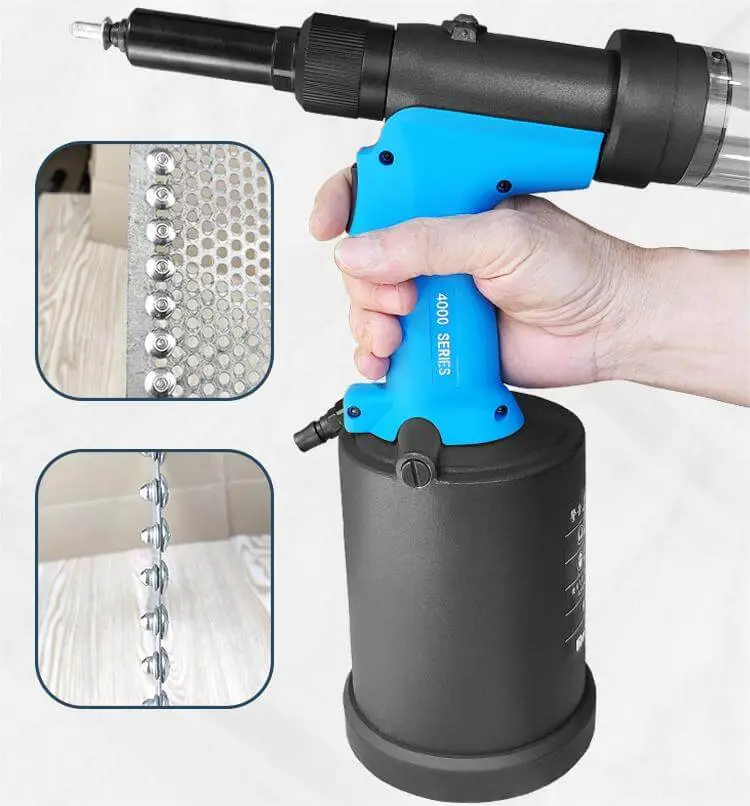
To install Monobolt Rivet, a structural riveting gun such as the Rivmate HydroLock series hydraulic pull riveting gun must be used. This tool pulls the core shaft outward through hydraulic or pneumatic force, while forcing the rivet body tail to expand radially within the hole.

When the mandrel breaks automatically under the set pulling force (usually 8–12 kN), it indicates that the rivet has been correctly installed.

④ Inspecting the Joint

After the installation is completed, an inspection of the appearance and structure should be carried out to ensure that each rivet meets the standard requirements.

The key points for inspection are:

  • The hat cap is firmly attached to the surface, without any frayed edges, tilting or gaps;
  • The tail has a full and symmetrical bulging shape;
  • The core shaft is broken smoothly, without exposed sharp corners;
  • If it is a waterproof structure, it must pass air-tight or water pressure tests.

⑤ Post-Installation Maintenance

Although Monobolt Rivet is a type of maintenance-free structural fastener, it is still recommended to conduct regular inspections of key connection points in long-term outdoor or high-vibration environments.

  • Conduct an appearance inspection on high-load areas every 12 months;
  • If any looseness, corrosion or deformation is found, replacement should be carried out immediately;
  • Use the original Rivmate Monobolt to maintain consistent connection and lifespan.

FAQ

What is a Monobolt Rivet used for?

The Monobolt Rivet is a type of high-strength structural blind rivet, commonly used in engineering applications that require permanent and high-load connections. Typical applications include: automobile chassis, rail vehicles, building steel structures, wind power equipment, and mechanical frames. It can withstand both high shear and high tensile forces simultaneously, making it particularly suitable for replacing welding or bolt connections, thereby enhancing assembly efficiency and vibration resistance stability.

Are Monobolt Rivets Waterproof?

Yes. The Monobolt Rivet is designed as a sealed structure. The core shaft is completely locked inside the rivet body, forming a sealed cavity. This feature enables it to effectively prevent liquid, gas or dust from entering the connection point. Therefore, it exhibits excellent waterproof performance in exposed environments such as ships, vehicle chassis, and outdoor equipment.

Can Monobolt Rivets replace welding?

In most structural applications, Monobolt Rivet is an ideal alternative to welding. Its installation process requires no heat input, does not cause thermal deformation or affect the performance of the substrate, and is particularly suitable for connecting dissimilar metals (such as aluminium + steel).

In addition, the structural strength of Monobolt can reach 12kN (for the 6.4mm specification), which is comparable to or even higher than that of spot welding. It also supports an automated assembly system, significantly reducing the need for manpower and the complexity of the process.

What Tools are Used for Monobolt Rivets?

Installing Monobolt requires a dedicated structural hydraulic or pneumatic riveting gun. Rivmate recommends using the C Series Pneumatic Rivet Gun.

For automated production lines, a robot feeding and positioning system can also be configured to achieve high-speed and high-precision assembly.

Are Monobolt Rivets Reusable?

No. Monobolt Rivet is a type of permanent fastener, and once installed, it cannot be removed or reused. If removal is necessary, drilling must be used. This irreversibility is precisely what guarantees its high strength and anti-loosening performance, ensuring that the connection point remains stable and reliable under long-term loads and vibrations.

Strengthen Every Structure with Rivmate Monobolt Rivets

Rivmate Rivet Factory in Jiangsu, China

The Monobolt Rivet is a proven high-strength structural fastening system that can provide stable and long-lasting connection performance in high-load, vibration, humid or corrosive environments. It combines the strength of welding with the efficiency of riveting, without the need for heat treatment or complex processes, and is highly suitable for applications in automobile manufacturing, railway structures, building steel structures, wind power equipment and marine engineering.

Monobolt series of Rivmate has undergone multiple international standard validations (such as ISO 15973 / ASTM F2281). It not only ensures that the tensile and shear strengths reach the industry-leading level, but also possesses excellent anti-loosening and waterproof capabilities. It is an ideal choice for modern industrial assembly.

Visit the Rivmate website to obtain the Monobolt Rivet series product catalog, installation guide and material data sheet.

You can also contact the Rivmate technical and sales advisory team to obtain customized fastening solutions and sample support for automotive, rail, construction or energy applications.

Reference

Share:

More Posts

Get Rivets Quotes Now

Wholesale Blind Rivets from Rivet Manufacturer

Waterproof Rivet - Are Rivets Waterproof ?

Table of Contents

Are Rivets Waterproof? Although rivets are renowned for their high strength and stability, in practical applications, long-term erosion by moisture, dampness or salt spray often leads to structural loosening or corrosion leakage. Especially in scenarios such as ships, car chassis, and photovoltaic brackets that are exposed outdoors for a long time, waterproof performance becomes the decisive factor for the reliability of the fastening system.

This article will analyze for you: Which rivets have a waterproof structure? Why do ordinary rivets leak water? And how to choose the true Waterproof Rivet .

Are rivets naturally waterproof?

Rivet connections are essentially mechanical clamping structures. This structure creates a fixing force by expanding and deforming the rivet body between the plates. Common blind rivets rely on breaking the rivet mandrel to lock the tail end, while solid rivets are connected by forging the end. However, neither is designed as a closed system.

Due to drilling, tolerance fits, and the structural characteristics of the rivet mandrel channel itself, ordinary rivet connection points often have small gaps or thermal expansion and contraction gaps, making them highly susceptible to water ingress under conditions of rain, high humidity, or wind pressure.

Rivmate Watertight Bulb Tite Rivet

As a result, most rivets do not inherently possess watertight properties and require additional sealing with gaskets or structural adhesives. When selecting rivets, if waterproofing is required, you should choose rivets that are specifically designed for waterproofing. There should be no default that all rivets are waterproof.

What are Waterproof Rivets?

Waterproof rivets are a type of fastener designed with structural optimization or integrated sealing materials to enhance the water resistance of connection joints. They do not refer to “absolute sealing” that completely prevents water ingress. Instead, they are functional rivets that effectively prevent rainwater, splashing water, or condensation from entering connection gaps under normal application loads and typical environmental conditions.

Traditional rivets (such as open type blind rivets or solid rivets) are essentially structural connection elements that do not consider waterproofing requirements. In contrast, waterproof rivets incorporate the concept of “sealing pathways” from the design stage, addressing issues such as gaps, vapor pathways, and installation errors through technical solutions.

Rivmate Aluminum Sealed Type Blind Pop Rivet
Sealed Type Blind Rivet
Rivmate Waterproof Bulb Tite Rivets
Waterproof Bulb Tite Rivet

Types of Waterproof Blind Rivets

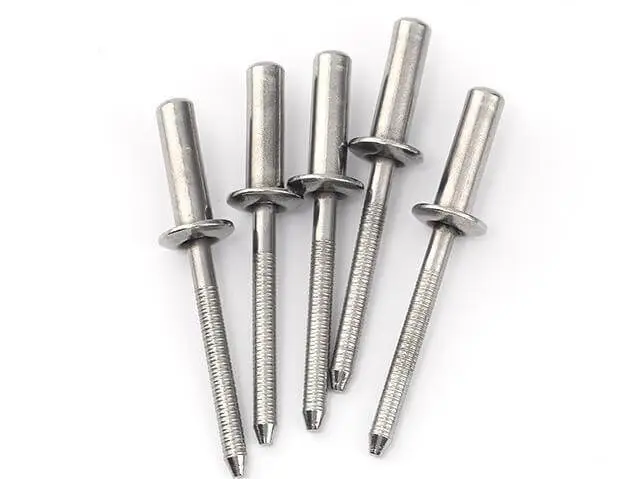
The structural feature of closed-end blind rivets is that the rivet tail end is closed, preventing the rivet core from breaking through the hole. Compared to standard pop rivets, when the rivet mandrel breaks, it is sealed at the blind hole end and no longer serves as a channel for moisture penetration.

The waterproofing principle of this rivet is as follows:

  • The closed tail effectively prevents water from seeping into the nail core channel.
  • When installed, the tight hole diameter fits snugly against the board surface, achieving a medium level of splash resistance or low-pressure waterproofing.

Applicable scenarios:

  • Refrigerator cabinets, air conditioning equipment, outdoor equipment brackets.
  • Situations where screws or sealants are not convenient to use.
  • Single-sided operation (blind access) structure is particularly suitable.

Limitations:

  • Unable to actively seal the contact area of the board surface.
  • Sealing performance decreases when installation tolerances are large or the hole edges are deformed.
  • Not recommended for underwater or high-pressure waterproof scenarios.

Waterproof Bulb Tite Blind Rivets feature a pre-installed rubber gasket (made of EPDM, silicone, NBR, etc.) beneath the rivet head. During installation, compressing the gasket creates a malleable sealing area on the surface of the sheet material.

Waterproofing principle:

  • Prevents moisture from entering through the interface between the rivet head and the panel surface.
  • High adaptability, capable of accommodating minor installation errors and thermal expansion/contraction changes.
  • The gasket material exhibits UV resistance, hydrolysis resistance, and salt spray resistance.

Applicable scenarios:

  • Communication equipment housings, outdoor lighting fixtures, street lights, billboards.
  • Suitable for low-frequency maintenance environments or structures where sealants are not suitable.

Limitations:

  • Gaskets are prone to deformation due to high temperatures or aging, and their waterproof performance declines over time.
  • Insufficient compression or overpressure of gaskets may affect sealing reliability.
  • The cost is slightly higher than that of ordinary rivets, and there are requirements for assembly consistency.
Rivmate Watertight Bulb Tite Rivets

c. Structural Sealed Rivet

There are two main types of rivets: Monobolt and Interlock. They feature a lock core locking mechanism and mechanical locking function to form a seal.

Waterproofing principle:

  • High clamping force is formed during installation to fill gaps.
  • The specially designed lock core head/cap seals the nail core channel.
  • Some products integrate composite washers or double-layer head structures.
What are monobolt rivets

Applicable scenarios:

  • Car body structure, ship body repair, highly corrosive environments.
  • Electrical enclosed shells, anti-vibration/anti-impact environments that require both strength and waterproofing.

Limitations:

  • High cost, installation requires special tools.
  • Strict control of hole diameter tolerance and clamping thickness is required.
  • Not recommended for use in thin-plate light-load structures, as it may cause material rupture or bulging.

Standard Rivets Vs. Waterproof Rivets: Performance Comparison

FeatureStandard Blind RivetClosed-End RivetSealed Rivet with WasherStructural Sealed Rivet
Waterproof Capability✘ (Not waterproof)● Partial (sealed stem)✔ Yes (surface sealing)✔ High (multi-point sealing)
Head-to-Material Seal✘ None✘ None✔ EPDM/Silicone washer✔ Locked core + pressure seal
Core Channel Sealing✘ Open channel✔ Closed tip design✘ Open channel✔ Locked or blocked stem
Tensile / Shear StrengthMediumMediumMediumHigh
Corrosion ResistanceDepends on materialModerateGood (if washer is UV stable)Excellent (sealed + metal options)
Tooling RequirementStandard rivet gunStandard rivet gunStandard rivet gunMay require heavy-duty tools
Cost LevelLowMediumMedium to HighHigh
Typical ApplicationsGeneral assembly, enclosuresRefrigeration, HVAC panelsOutdoor housings, electrical boxesAutomotive, marine, industrial

4 decisive factors for the waterproof performance of rivets

Whether rivets have stable watertight connection performance in actual assembly structures does not depend entirely on whether they are called “waterproof rivets.” Rather, it is determined by a series of structural and process factors.

Is the rivet structure designed to close the rivet core channel?

Do Pop Rivets Leak? - The Comprehensive Guide-Rivmate Aluminum Closed Blind Pop Rivet

The core weakness of pop rivets lies in the rivet core channel. After the rivet core breaks, a continuous hollow path remains, allowing moisture to enter the connection area through the rivet core hole. Closed-end pop rivets structurally seal the tail channel, effectively blocking moisture pathways and significantly enhancing the rivet body’s waterproofing capability. Without a closed design, even with proper surface treatment, achieving a watertight connection remains challenging.

Whether to use sealing gaskets or structural adhesives for auxiliary sealing

There is a tolerance gap between the rivet head and the sheet metal. Even if the rivet body is sealed, water may still enter if the contact surface is not sealed. Common solutions include:

  • Pre-installing EPDM rubber gaskets or silicone gaskets below the rivet head, which are compressed during the riveting process to form a flexible seal.
  • Using specialized structural sealant or PU waterproof adhesive to seal the joint area before and after riveting, thereby enhancing overall waterproofing performance.

The performance characteristics of these auxiliary materials (temperature resistance, UV resistance, hydrolytic stability) directly impact the stability and durability of the structural waterproofing capability.

Installation torque and plate hole precision control

Even when using high-performance waterproof rivets, poor installation precision may lead to the risk of leakage. Typical risks include:

  • Over-drilled holes or burrs at the hole edges, resulting in uneven rivet clamping.
  • Deformed, warped, or improperly aligned plates, causing the sealing gasket to not be fully compressed.
  • Insufficient installation force (due to manual rivet gun fatigue or inadequate pneumatic equipment settings), resulting in incomplete expansion of the rivet shank and disruption of the sealing path.

Therefore, it is recommended that waterproof connection structures prioritize automated or high-consistency clamping force assembly tools and implement a process review mechanism to confirm clamping quality.

How to Install Pop Rivets ? - The Most Complete Guide

How to determine whether a rivet is truly “waterproof”?

To determine whether a rivet truly possesses “waterproof” performance, a comprehensive assessment must be conducted based on its structural characteristics, sealing design, and manufacturing certification. It should not be judged solely based on the product name or appearance. The following are several key criteria for evaluation:

observe whether the rear end of the rivet is a closed structure—closed-type pop rivets can block the rivet core channel, preventing moisture from penetrating through.

② check if it has a rubber seal ring, such as EPDM or silicone material, to seal the gap between the rivet head and the contact surface of the sheet material.

③ confirm if the product has passed third-party waterproof testing certification (such as IP67 rating) or if the manufacturer provides a waterproof performance report.

④ the waterproof effectiveness must be verified in conjunction with installation quality and matching operating conditions. It is recommended to conduct sample testing or on-site sealing tests in critical structures.

FAQs about Waterproof Rivets

Q1: Are all closed rivets waterproof?

A: Closed rivets have a structural advantage in that they seal the rivet core channel, which significantly improves waterproofing. However, if the installation hole is too large, the clamping force is insufficient, or the plate is deformed, there may still be a risk of leakage. It is recommended to use sealing gaskets or sealants to ensure complete sealing of the joint area.

Q2: Can pop rivets be made waterproof by applying adhesive afterward?

A: It can improve the seal to a certain extent, especially between the rivet head and the sheet metal. However, it is important to ensure the integrity, durability, and consistency of the adhesive layer, and it cannot seal the rivet core channel. It is recommended as an auxiliary measure only, not as the primary waterproofing method.

Q3: Can waterproof rivets be used long-term in coastal areas and high-salt environments?

A: They can be used, but stainless steel or aluminum corrosion-resistant rivets must be selected, and they must be paired with salt spray-resistant sealing gaskets (such as EPDM or fluorine rubber). In addition, the sealing condition should be checked regularly for signs of aging. For highly corrosive areas, it is recommended to use structurally sealed rivets or additional waterproof protective layers.

Q4: Are waterproof rivets suitable for use in high-pressure water environments (such as water tanks)?

A: Not recommended. Most waterproof rivets are suitable for use in medium- to low-pressure environments, such as splash-proof, rainwater, and humid conditions. In high-pressure underwater environments, even the smallest gaps can become leakage pathways. If water pressure resistance is required, it is recommended to use welding, flange sealing, or threaded sealing structures instead.

Seal Every Connection with Rivmate Waterproof Rivets

Not all rivets are waterproof. Standard Open-End Rivet rivets are prone to micro-leakage in long-term damp and hot environments. The Waterproof Rivet/Sealed Rivet achieves true airtight and water-tight connection through a closed tail design and a mandle-locking structure. Only by choosing the appropriate material (such as stainless steel or anodized aluminum) and the correct installation method can the long-term stability of the structure be ensured in environments with rain, salt spray and vibration.

Rivmate.png

Rivmate offers a full range of waterproof sealing rivet solutions, including stainless steel, anodized aluminum and coated steel materials, which have passed the ASTM B117 salt spray test and the IPX7 waterproof rating certification.

Contact us immediately to learn how to select the most reliable Rivet Fastening System for your project and ensure that every connection point can stand the test of time and environment.

Reference

Share:

More Posts

Get Rivets Quotes Now

Wholesale Blind Rivets from Rivet Manufacturer

What is Self Piercing Rivet ?

Table of Contents

Self Piercing Rivet can complete high-strength mechanical locking in one stamping without pre-drilling, achieving efficient connection between various materials such as aluminum, steel, and stainless steel. This paper will comprehensively analyze the working mechanism and engineering value of Self Piercing Rivet. Help you understand this key fastening technology that is reshaping modern manufacturing processes.

What is Self Piercing Rivet ?

Self piercing rivet (SPR rivet) is a cold joining process. Which two or even more layers of sheets of different materials are joined by penetrating them with rivets. The technology’s maximum capacity to date allows for the joining of aluminum plates with a cumulative thickness of 12 mm or steel plates with a thickness of 6 mm.

As one of the alternatives to spot welding, the biggest difference with SPR rivet is that it does not transfer heat to the material. As a result, there is no unnecessary damage to the finished product. the fastening point is more fatigue resistant and stronger. and it is kinder to the intermediate layer of material without causing excessive deformation.

Self Piercing Rivets for Automotive

Self-piercing rivets join a wide range of materials including high strength steel, galvanized steel, aluminum, plastics and composites. It is capable of joining different materials together and can also join materials that have been coated with various surface coatings without affecting the joining effect. For example, materials that have been lubricated, painted, coated or plated. SPR rivet can also be used to join materials that contain sealants, adhesives or insulating materials.

Rivmate SPR Rivet(Self piercing rivet)

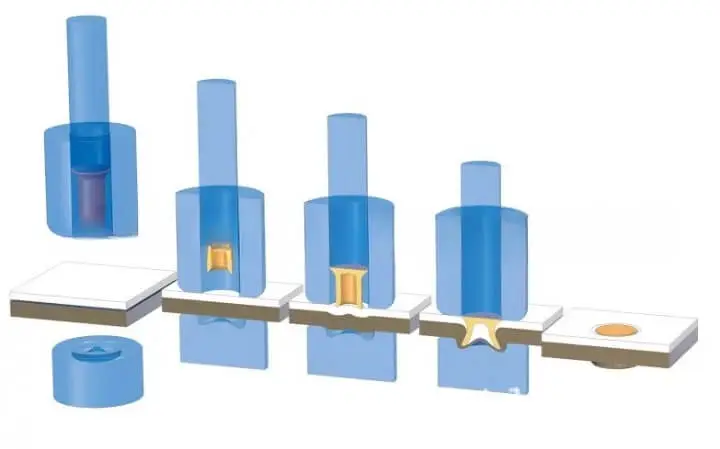
SPR Rivet works by applying the required pressure and force to penetrate and deform the material. The steps of SPR Rivet to produce a tightening effect are in order:

  1. By applying a certain amount of pressure, the rivet head begins to penetrate the first layer of material.
  2. As the rivet head continues to penetrate, it enters the second layer of material. During this process, the raised head of the rivet creates pressure that clamps the first and second layers of material together.
  3. When the head of the rivet completely penetrates and enters the second layer of material. the rod portion inside the body of the rivet is extruded and deformed. This process creates a diffuse shape that fills the gaps between the materials and creates a strong joint.
  4. Once the rod portion of the SPR rivet is fully extruded and deformed, it locks into the connected material. This type of connection provides a high level of strength and stability, allowing the connected materials to stay together.

How to Install Self Piercing Rivet?

How to Install Rivmate Blind Rivet(Self piercing rivet)

The SPR Rivet Riveting can be divided into four stages of the riveting process:

Clamping phase

The crimper presses down the sheet to be riveted. At the same time, the self piercing rivets are also pre-pressing the sheet vertically downwards under the drive of the punch.

Punching stage

The punch moves downward and pushes the self piercing rivet to force it to pierce the upper sheet. And at the same time, the self-piercing rivets also drive the lower sheet to deform plastically into the mold.

Expansion stage

As the riveting process proceeds, the self-piercing rivets legs gradually open and the lower sheet undergoes plastic deformation, gradually filling into the mold. Under the joint action of the convex mold and the cam, the self piercing rivet leg expands to the periphery and is embedded in the lower sheet, forming a mechanical interlocking structure between the self piercing rivets and the sheet.

Punch riveting completion

When the punch will self-piercing rivets downward pressure, until the spr rivet head and the upper surface of the upper piece of close contact and flush, can be considered riveting completed. At this time, the pressure edge will release the pressure edge force, the punch to restore the initial work, the end of the stamping riveting.

What is the History of Self Piercing Rivets?
MaterialFeaturesRecommended Applications
Carbon SteelHigh shear and tensile strength, cost-effective, suitable for mass production.Ideal for steel frames, chassis, and structural beams requiring high strength.
Aluminum AlloyLightweight, corrosion-resistant, compatible with aluminum substrates to prevent galvanic corrosion.Used in aluminum structures, automotive body panels, and appliance housings.
Stainless Steel (304/316)Excellent corrosion and fatigue resistance; performs well in high-humidity or salt-spray environments.Marine engineering, railway vehicles, coastal equipment, and new energy battery structures.
Coated Steel (Zn/Ni)Zinc or nickel coating enhances corrosion resistance and provides versatility.Automotive body assemblies, machinery housings, and general industrial equipment.

a. Automotive Industry

application of self piercing rivet for automotive industry

In automotive manufacturing, lightweighting and structural safety are two key goals. Traditional spot welding cannot effectively combine aluminum alloy and high-strength steel, while SPR technology can achieve such connection of different materials without a heat source and without changing the metal structure.

  • Typical parts: Side panels of the vehicle body, inner door panels, battery pack casings, and chassis connection components.
  • Technical advantages: No pre-drilling is required. Clamping and locking are completed in a single punching and riveting operation. It does not cause welding thermal deformation and can be used on coated or anodized surfaces. 30% longer fatigue life than spot welding.

Railway Systems

Self-piercing rivets (SPR) can effectively connect aluminum profiles with stainless steel components, avoiding the problem of heat-affected zones caused by welding. SPR can withstand continuous vibration and periodic loads, making it suitable for high-speed train and metro car body structures. The Rivmate SPR system complies with EN 15085-3 and VDA 239-100 standards and has been successfully applied in various railway frame and door structures.

Aerospace Manufacturing

In aviation manufacturing, SPR technology is widely used for the mixed bonding of composite materials and aluminum/titanium alloys. Typical applications include fuselage skins, seat frames and cargo door support structures. Rivmate test data shows that the tensile strength of 6.3mm SPR can reach 10-12kN, which is 40% higher than that of traditional rivets.

Building & Facades

The requirements for the connecting components of the building curtain wall system are extremely high. They not only need to be waterproof and resistant to wind pressure, but also have a smooth and beautiful appearance. SPR can complete the connection of high-strength aluminum plates without weld seams or exposed nuts, ensuring the long-term stability of the curtain wall system.

Appliances & Electronics

In the assembly of household appliances and electronic equipment, SPR technology is widely used in the connection of sheet metal casings and frame structures due to its advantages of high efficiency, low noise and no sparks. It does not require pre-drilling or thread processing and is suitable for automated production lines.

Comparison ItemSelf Piercing Rivet (SPR)Spot WeldingBlind Rivet
Need for Pre-drillingNo, pierces and fastens in one stepNo, joins materials through heat fusionYes, requires pre-drilled holes for rivet insertion
Heat EffectCold process, no heat input or material distortionHigh heat input, potential for deformationNo heat input
Material CompatibilityCan join dissimilar materials (Aluminum + Steel, Aluminum + Composites)Limited to similar metals (usually steel)Possible, but limited strength
Shear StrengthHigh (up to 8–12 kN)Moderate (depends on thickness and material)Moderate (around 4–6 kN)
CostMedium to high (higher equipment cost, moderate per joint)Medium (requires welding equipment and power)Low (ideal for light-duty assemblies)
Automation CompatibilityExcellent, easily integrated into robotic systemsGoodLimited, typically manual positioning required

Different process methods

SPR achieves high-strength locking through mechanical punching and riveting, without the need for heat sources or pre-drilling. Welding, on the other hand, relies on melting metals at high temperatures, which can easily lead to material deformation and a decline in fatigue performance. Blind rivets are more suitable for single-sided operable and non-structural connections.

Obvious advantages in material compatibility

SPR is currently the only cold working technology that can directly connect aluminum alloy and high-strength steel. When traditional welding is used to combine aluminum and steel, electrochemical corrosion and changes in metal structure may occur, while SPR can perfectly avoid this problem.

Better structural strength and fatigue life

According to the internal test data of Rivmate, the shear strength of 6.3mm SPR is approximately 35% higher than that of spot welding of the same size, and its fatigue life is extended by more than 50%. This makes it an irreplaceable connection solution in the battery pack and Body-in-White structure of new energy vehicles.

Higher level of manufacturing automation

The SPR system can be integrated with robots to achieve high-rhythm production (capable of completing 15 to 20 riveting operations per minute). Compared with welding, the workstation noise is lower and the maintenance cycle is shorter, which is in line with the trend of intelligent manufacturing.

FAQs

What is a self piercing rivet and how does it work?

Self Piercing Rivet is a cold connection fastener that does not require pre-drilling. It completes the process of penetrating the upper layer material and locking the lower layer material in a single punching and riveting operation through a hydraulic or servo press, forming a high-strength mechanical interlocking. Unlike traditional riveting or welding, SPR does not produce heat-affected zones, and thus is particularly suitable for the connection of high-strength steel, aluminum alloys and composite materials.

Can self piercing rivets join aluminum to steel?

Yes. One of the greatest advantages of SPR technology is its ability to reliably connect dissimilar materials (such as aluminum + steel). Its unique punching and riveting principle enables it to form a locking cavity in the soft-layer aluminum plate through plastic forming after penetrating the hard-layer steel plate, thus achieving a firm bond. The Rivmate SPR system has been widely used in aluminum-steel hybrid structures in the assembly of automotive lightweight Body-in-White.

How strong are self piercing rivets?

The shear strength of SPR is usually between 8 and 12 kN, depending on the thickness and hardness of the material. Compared with spot welding, the fatigue life of SPR connections can be increased by 40-60%, and they still maintain excellent strength in multi-layer structures. This makes it an ideal choice to replace welding and enhance the durability of lightweight structures.

What tools are needed for self piercing rivets?

The installation of SPR requires a dedicated hydraulic riveting gun or servo press system, including the upper Die (Punch) and the lower die (Die). Rivmate offers fully automatic and semi-automatic SPR tool solutions, supporting robot integration to achieve continuous and high-rhythm production. For laboratory or small-batch applications, manual hydraulic punching and riveting equipment can also be used.

Are self piercing rivets reusable?

No. SPR belongs to permanent structural connectors. Once riveting is completed, it will form an undetachable mechanical locking structure. If demolition is required, it can be carried out by drilling or cutting. Compared with threaded connections, the design goal of SPR is to achieve highly reliable assembly with zero loosening and zero maintenance.

Build the Future with Rivmate Self Piercing Rivet Systems

Rivmate Rivet Factory in Jiangsu, China

Self Piercing Rivet is one of the core technologies of modern high-strength lightweight manufacturing. With the characteristics of no thermal effect, the ability to connect different materials and high fatigue life, it is gradually replacing traditional welding and riveting methods in the automotive, energy and aviation fields.

Visit Rivmate SPR Fastening Center to obtain: Technical parameters and samples of SPR rivets.

Reference

Share:

More Posts

Get Rivets Quotes Now

Wholesale Blind Rivets from Rivet Manufacturer

What Are Sealed Rivet ?

Table of Contents

Although common blind rivets are easy to install, they often fail structurally due to water seepage, corrosion or loosening in damp, outdoor or salt spray environments. At this point, sealed rivets become the most ideal alternative. It achieves a completely waterproof, dustproof and gas-permeable connection effect by forming a closed structure at the tail. Suitable for application scenarios that require long-term sealing and stability. This article will provide you with a comprehensive analysis of the true value of sealed blind rivet.

In the field of industrial fastening, Sealed Rivet is a high-performance Blind Rivet specifically designed for water resistance, dust resistance and gas leakage prevention. Unlike ordinary open rivets, the tail of Sealed Rivet is a closed-end Design. During the riveting process, the mandrel is permanently locked inside the rivet, forming a Closed cavity. This design effectively prevents liquids, air or grease from seeping through the connection holes, ensuring the sealing and protective performance of the assembly structure.

Rivmate Aluminum Sealed Type Blind Pop Rivet

Its structure is usually composed of three parts:

  • Body – The tail end is closed, providing a sealing barrier;
  • Mandrel – It generates radial expansion during riveting, forming a clamping force;
  • Break Point – After riveting is completed, the mandrel breaks and remains inside the body, enhancing the protective effect.

According to the international standards ASTM F1470 and ISO 15983, qualified Sealed Rivet must pass strict tests in terms of sealing performance, corrosion resistance and shear strength. This type of rivet is widely used in ships, automobiles, photovoltaic, electronic enclosures and outdoor equipment, etc., where high sealing performance is required.

Sealed Rivet vs Open-End Rivet: What’s the Real Difference?

In industrial fastening applications, Sealed Rivet and Open-End Rivet are the two most often confused types. They are structurally similar, but there are significant differences in performance, protection capabilities and application scenarios.

Comparison ItemSealed Rivet (Closed-End Rivet)Open-End Rivet
StructureThe tail end is completely closed, and the mandrel is locked inside forming an airtight cavity.The tail end is open, and part of the mandrel remains exposed after being pulled.
Sealing PerformanceExcellent watertight, dustproof, and airtight sealing capability.No sealing; prone to leakage or corrosion points.
Corrosion ResistanceExcellent — available in stainless steel, anodized aluminum, or coated versions.Moderate — suitable only for dry, indoor environments.
CostSlightly higher than standard rivets, but offers longer service life.Low cost, ideal for non-critical connections.
Typical ApplicationsMarine structures, automotive chassis, solar brackets, outdoor equipment.Sheet metal, appliances, and general machinery assembly.

Sealed Rivet is an upgraded blind rivet designed for the requirements of protection and sealing. Compared with open rivets, it performs better in terms of water resistance, corrosion resistance and structural stability, and is an indispensable fastener in applications with high sealing requirements such as Marine environments, automotive manufacturing and electronic equipment casings.

Key Advantages of Sealed Rivets

Unlike traditional open rivets, Sealed Rivet not only offers mechanical connections but also maintains airtightness and water resistance in extreme environments. The following are the core advantages that have been widely adopted in practical applications:

Rivmate Sealed Type Blind Rivet
  • Watertight and Airtight
    The Sealed Rivet has a completely sealed tail end, which can effectively prevent moisture, dust and gas from seeping in. It is suitable for occasions exposed to rain, dampness, immersion and high sealing requirements, such as ship hulls, vehicle chassis and electrical enclosures.
  • Corrosion Resistance
    The rivets and mandrels are made of stainless steel or anodized aluminum alloy, featuring excellent oxidation resistance and salt spray resistance. It can remain stable and rust-free for a long time even in the ocean or high-humidity environments.
  • Consistent Performance
    The mandrel is permanently retained in the rivet after riveting, creating a structural reinforcement effect. It has enhanced the overall shear and tensile strength, ensuring the stability of long-term connections.
  • Maintenance-Free
    After riveting is completed, there is no need to tighten or seal again, making it suitable for long-term unattended equipment. It has a long service life and low maintenance costs in the later stage.
  • Ease of Installation
    No special equipment is required. Just a standard blind riveting gun is needed for quick installation. Suitable for mass production, on-site construction and maintenance operations.

Applications of Sealed Rivets

Sealed Rivet not only offer strength and stability, but also ensure the structure’s waterproof, dustproof and anti-corrosion performance. It is especially suitable for application scenarios under long-term outdoor or humid conditions.

The following are the four typical application areas of Sealed Rivet:

Marine & Boats

Closed End Blind Rivets for Aluminum Boats

Closed rivets can prevent seawater and moisture from penetrating into the interior of the aluminum alloy hull, effectively avoiding electrochemical corrosion and structural fatigue problems. It is widely used in parts such as bulkheads, deck joints, and side guard plates.

Automotive & Truck Body Assembly

Sealed Rivet is an ideal choice for sealing the car chassis, doors and waterproofing the tailgate. It can prevent dust and moisture from entering and enhance the overall protection level of the vehicle (commonly used in IP grade design).

Outdoor Equipment/Solar Brackets

Long-term exposure to high temperatures, humidity, ultraviolet rays and sandstorms can maintain the waterproof and anti-corrosion properties of closed rivets, making them the preferred fasteners for solar installation structures.

Enclosures & Panels

For control boxes, antenna covers or electrical enclosures that require air tightness and weather resistance, Sealed Rivet can ensure that the seams are sealed, preventing electrical short circuits and moisture intrusion.

Material and Specification Guide for Sealed Rivets

Custom Raw Material

Different metal materials not only affect the mechanical strength of rivets, but also determine their anti-corrosion performance, service life and compatibility with the base material. Correct material matching can effectively prevent electrochemical corrosion, enhance sealing reliability, and extend the overall structural lifespan. The following are common materials for closed rivets and their application suggestions:

MaterialFeaturesRecommended Applications
AluminumLightweight, corrosion-resistant, easy to install; no galvanic reaction with aluminum substrates.General sheet metal, outdoor equipment, solar mounting systems.
Stainless Steel (304 / 316)Excellent corrosion resistance and mechanical strength; withstands high humidity and salt spray.Marine structures, automotive chassis, coastal constructions, food processing equipment.
Steel with Zinc CoatingLow cost and high strength, but limited corrosion resistance.Indoor machinery, non-humid or non-salt environments.
Copper / BrassExcellent conductivity and decorative finish; ideal for electrical or precision components.Electrical grounding, instrument housings, electronic device assemblies.

When choosing Sealed Rivet, please be sure to evaluate:

  • Base Material Compatibility : Avoid electrochemical reactions between different metals (for example, aluminum + stainless steel may cause pitting corrosion).
  • Environmental Condition : If exposed to high humidity, salt spray or outdoors for a long time, 316 stainless steel closed rivets should be preferred.

How to Install Sealed Rivets?

peel type blind rivets installing

The correct installation method is the key to ensuring that the Sealed Rivet achieves the ideal waterproof and anti-corrosion performance. Even if high-quality rivets are selected, improper installation techniques may still lead to seal failure or structural loosening. The following is the standardized installation process summarized by the Rivmate engineering and technical team:

Step1: Pre-Drilling

Pre-drill installation holes on the workpiece using drill bits of appropriate specifications. The hole diameter should be 0.1 to 0.2 mm larger than the rivet diameter to ensure that the rivets can be inserted smoothly without loosening. Meanwhile, the hole wall must be clean and free of burrs to prevent affecting the bonding of the sealing surface.

Step2: Insert the Rivet

Insert the Sealed Rivet into the hole and ensure that the Flange Head is closely attached to the surface of the workpiece. This step determines the integrity of the seal. If there is any tilt or foreign matter on the surface, it should be repositioned.

Step3: Set with a Rivet Gun

Use a standard blind riveting gun (manual, pneumatic or electric) to pull the mandrel until it breaks and forms a complete lock. At the moment of fracture, the tail cavity is completely sealed, forming an airtight and waterproof structure.

Step4: Inspect the Joint

Observe whether the cap part is flat and there is no leakage gap at the tail end. When necessary, air tightness or water tightness tests (such as bubble or spray methods) can be conducted to ensure there is no leakage at the connection points.

FAQ

1. What are sealed rivets used for?

Sealed Rivets are mainly used in structures that require water resistance, dust resistance or air tightness. Typical applications include: ships, automotive chassis, outdoor equipment, photovoltaic brackets and electronic enclosures, etc. It can effectively prevent liquids or gases from seeping into the connection points, ensuring the sealing integrity of the system.

2. Are sealed rivets waterproof?

Yes. The tail end of Sealed Rivet is of a closed structure. After installation, it can form a 100% waterproof seal, which can maintain long-term stability in rainy, humid or underwater environments without the need for additional sealant.

Absolutely fine. Closed aluminum rivets or stainless steel rivets are highly suitable for aluminum ship applications. It is recommended to choose Rivmate Marine Series Sealed Rivet, combined with 316 stainless steel core shaft and anodized aluminum body, which can effectively prevent electrochemical corrosion and salt spray erosion.

Closed-End rivets have a completely sealed tail, which can prevent the penetration of liquids or gases. The open-end rivets have an Open tail, and the mandrel is exposed when broken, thus lacking sealing capability. The strengths of the two are similar, but the Sealed Rivet is more suitable for protective applications.

5. How strong are sealed rivets compared to standard rivets?

The strength of Sealed Rivet is comparable to that of standard rivets, but because the mandrel remains in the rivet, it usually offers higher shear and tensile strength (about 10-15% higher). Meanwhile, its internal locking structure enhances vibration resistance and sealing stability.

Protect Every Connection with Rivmate Sealed Rivets

Rivmate Aluminum Sealed Type Blind Pop Rivet

Unlike traditional open rivets, the tail closure design of Sealed Rivet makes it significantly superior in terms of water resistance, dust resistance and corrosion resistance. Verified by ASTM B117 salt spray test and ISO 15983 sealing standard, the Rivmate closed series rivets can maintain no corrosion performance for more than 500 hours in extreme hot and humid or high-salt environments.

If your project has strict requirements for sealing, anti-corrosion or structural durability, choosing Rivmate Sealed Rivet means choosing a connection solution with longer lifespan and higher reliability.

👉 Protect Every Connection with Rivmate Sealed Rivets

Contact us immediately to obtain Marine and industrial-grade waterproof rivet solutions.

Reference

Share:

More Posts

Get Rivets Quotes Now

Wholesale Blind Rivets from Rivet Manufacturer

What is A Self Clinching Nut?

What is a Self Clinching nut? Rivmate self clinching nuts

A self clinching nut is a nut fastener applied to sheet or sheet metal. It has a round shape with embossed teeth and a guide groove at one end. The principle of self clinching nut is through the embossed teeth pressed into the sheet metal pre-set holes, generally speaking, the diameter of the pre-set holes is slightly smaller than the self clinching nut’s embossed teeth, through the pressure to make the self clinching nut’s flower teeth squeezed into the plate, resulting in the periphery of the hole undergoes plastic deformation, deformation of the material is squeezed into the guiding groove, and ultimately the nut and the base material locking connection.

Table of Contents

Advantages of Self Clinching Nuts

Self clinching nuts through the pressure rivet nut and thin plate riveted in this way, widely used in chassis cabinets, sheet metal, and other stamping parts.Its industry throughout the communications, automotive, network equipment and so on. Self clinching nut can be installed in all kinds of aluminium alloy profiles and plates. But the strength of the connection is greatly affected by the strength of the parent material. And the installation of self clinching nuts in the inner cavity of the profile need to open the process hole to ensure that riveting moulds can be contacted with the nut.

Advantages of Self Clinching Nut:

  • The back of the board remains completely flat
  • Good fastening effect. The objects connected by the use of self clinching nuts are tight and not easy to loosen the situation
  • Easy to install. Self clinching nuts can be fixed quickly with special tools, fast and easy to install.
  • Wide range of applications. Self clinching nuts can be used to connect objects of different thicknesses or materials and are suitable for use in a wide range of mechanical equipment and automotive manufacturing.
  • High vibration resistance. Due to its fastening effect, the self clinching nut can be used in high-frequency vibration and shock environments.
self clinching nuts

How to Self Clinching Nuts Work ?

Self clinching nut by extrusion, the embossed teeth will be pressed into the pre-set holes in the sheet metal. The periphery of the hole produces plastic deformation. The deformed material is squeezed into the guide groove, thus producing the effect of locking.

self clinching nuts

How to Install Self Clinching Nuts?

Self clinching nut is a common structural component. Which is widely used in mechanical equipment, machine manufacturing, engineering construction and other industries. Self clinching nut can fix two parts together to meet the installation requirements of the equipment.

Steps for installing self clinching nuts:

  1. Firstly check that the self clinching nut is of the required size. The size of the self clinching nut should not be too large, otherwise it will not be able to be effectively attached to the machine components.
  2. Ensure that the internal area of the self clinching nut is larger than the external area for an effective seal.
  3. Before installing the self clinching nut, place the self clinching nut into the hole and make sure the self clinch nut is fully inserted into the hole.
  4. The riveting process is carried out using specialised riveting machines.
  5. After completing the installation of the self clinch nut, check the degree of installation of the self clinch nut and observe if it is installed flat.
clinch nut installation

What is The Difference Between A Weld Nut And A Clinch Nut ?

Weld Nut: Welding a nut requires several pre-machined bumps and another workpiece surface to be contacted. Electrically heated and then collapsed to connect the nut to the workpiece. It is a method of joining by forming a welded joint at the point of contact with the workpiece.

Self Clinching Nut: Self clinching nuts can be divided into Carbon steel S self clinch nut, stainless steel CLS self clinch nut, hardened stainlee steel SP self clinch nut and copper,aluminum CLA self clinch nut in terms of material.

How do you choose between a weld nut or a self clinch nut?

  • Weld nuts are hot connections and self clinch nuts are cold connections.
  • Self clinch nut is the deformation of the plate, weld nut is the nut and plate together deformation to achieve the connection.
  • Weld nuts are the strongest on the same material, self clinching nuts must be used on thin plates, you can’t use self clinch nuts on finished products.

These two have their own advantages and disadvantages. Such as welded nuts, the strength is relatively large, and the use of a wide range of thin and thick can be. But due to high temperature will lead to deformation of the connected parts. And not removable, and some active metals can not be welded with the usual methods. Such as aluminium, magnesium, etc., need to protect the gas or argon arc welding, the requirements of the processing technology and precision. And self clinching nut installation is simple, can be disassembled, easy to install and transport and so on. It is suitable for almost any metal that can be punched, but the scope of use is narrow, and can only be used for thin-walled plate or sheet metal connection.

Materials and Specifications of Self Clinching Nut

Self clinching nuts are classified into S type, CLS type, SP type and CLA type in terms of material, which are used in different applications. The sizes are usually from M2 to M12.

S, CLS, SP, CLA are all types of self clinching nuts, these types of description specification from the early PEM’s internal standards, has now become the industry standard for riveting industry, and PEM in the industry equivalent to IBM’s early position in the micro-computer industry.

To date, the industry standard definition is:

S: on behalf of the material for carbon steel self clinch nuts

CLS: represents the material for the stainless steel self clinch nut

SP: represents the material for the stainless steel self clinching nuts

CLA: represents the material of aluminium self clinching nut.

S,CLS,SP,CLA are all self clinch nuts, they are just different materials. S,CLS are used in more applications in the market, SP is relatively less, and CLA is very rare.

Points to note for different materials of self clinching nuts.

Regarding the specific grades of these three materials. The S class carbon steel is made of 10B21, the CLS class stainless steel is made of SUS304, while the SP class stainless steel is made of SUS400 series such as (SUS416), the SUS400 series martensitic stainless steel (commonly known as stainless steel) has a certain degree of corrosion resistance, and the hardness can reach a maximum of HRC42~55 after vacuum quenching. Apply to stainless steel plate and harder thin plate or torsion requirements of the higher working environment.

Note, stainless steel self clinch nut corresponding to the sheet material is 304 stainless steel plate. That is: 304 plate can not be used CLS self clinch nut (CLS refers to 304 or 303 material self clinch nut), but should be used SP type self clinching nut (i.e. stainless steel material self clinching nut).

If you force the use of CLS type stainless steel self clinch nut pressed into the 304 series of stainless steel sheet, will be able to serious consequences, namely: the nut is easy to fall off.

Wholesale High Strength Self Clinching Nuts from China

SP class of stainless steel self clinch nut with high hardness characteristics, rust resistance is lower than the SUS304 CLS-type nut. In addition, it has a distinctive property: SP nut is magnetic, it can be easily sucked up by ordinary magnets, this point and SUS304’s weak magnetism has a very obvious difference.

If you are new to this type of self clinch fastener. And the technical department hands you a piece of 304 or 316 or 201 stainless steel plate with a stainless steel nut riveted on it.Then you have to be careful, this self clinch nut is most likely not of the CLS type (SUS304) but of the SP type (SUS416).

In principle, the hardness of the nut should be higher than the plate. 304 thin plate is recommended to use stainless steel material SP self clinch nut .(S-type carbon steel rivet nut can also be pressed but the rust resistance of the view and the appearance does not match the Therefore, it is not recommended).

Types Material Cold Rolled Galvanised Sheet Stainless steel Sheet Copper Sheet Aluminium Sheet
S 10B21
CLS SUS304 - ×
SP SUS410

Applications of Self Clinching Nuts

Self clinching nut is usually used for 0.8MM ~ 3.2MM plate.

The following are not suitable for the use of self clinching nuts in several cases
1. the plate is very thin, such as only 0.5MM; or very thick, such as 4MM or more.
2. two plates together.
3. the installation space does not allow the use of pressure riveting machine, for example, the board is curved or the shape of the board is very complex bad positioning, etc. …… Note that this is the key point: when the plate can not be riveted in the place of the removal of the bend, it is recommended to use the self clinch nut.

Self Clinch Nuts are especially useful in stressful situations due to their very strong tightness. Self clinching nuts are commonly used to secure plates to metal brackets and can also be used in automobiles, aeroplanes, toys and electronic devices. Specifically, they can be used in the following areas:

  1. Electrical assemblies: DC motors, AC motors, engine components, generators, dual mass radiation steam heads, fans, gears, parallel grinding heads, cranes, mixers, etc.
  2. Electronic equipment, power components, pressure concentrators, CCTV and ore sorting machines with high reliability requirements.
  3. Bolted connections in aerospace, ship and weapon industries.
  4. Oil pipeline engineering, bridge construction.

applications of self clinching fastener

Get High Quality Self Clinching Nuts From Top Self Clinching Manufacturer in China

Rivmate is top self clinching nuts manufacturer in china. Rivmate has been specialising in fasteners for over a decade. We can fulfil high volume fastener orders.If you are in need of high quality self clinching nuts, you can choose rivmate to be your long-term supplier!

Reply within 12 Hours

Send us a message if you have any questions or request a quote. We will be back to you ASAP!

Location
Room 9016 of 2# Building, No. 436 Changjiang Road, Suzhou City, Jiangsu Province, China 215011
 
Whatsapp

+86 189 6230 4392

or write

manufacture@world-rivet.com

CONTACT PERSON SEARCH

Submit Your Sourcing Request

Please complete the form below and our customer support team will be in touch with you shortly. Inquiries submitted through this form will receive priority processing over emails.

What is a Clinch Stud?

Rivmate - TOP Seld Clinch Stud Manufacturer in China

A self clinch stud is a fastener used to press fastener. Self clinch stud generally has an external thread, according to its different thread specifications, can be installed in different materials, different thickness of the workpiece.

The smaller the thread diameter, the thinner the plate thickness it mounts. Due to its simplicity and convenience, it is widely used in furniture, wood, electronic appliances and metal structures (sheet metal).

During installation, it is necessary to get the threaded side of the self clinch stud into the interior of the material by extrusion such as stamping.

What Material Is Used For Self Clinch Stud?

Self Clinch Studs are available in carbon steel, stainless steel and aluminum. Of course, this is commonly used in daily life, there are other materials such as copper and other materials are not commonly used.
Common self clinch stud from the material is divided into carbon steel self clinching stud, stainless steel self clinching stud, aluminum self clinching stud three categories. Different materials are also different processes, treatment is not the same.
About the self clinch stud material, surface treatment, etc. to collate a simple small table, as follows

Types Material Code Hot Treatment Surface Plating
Carbon Steel Self Clinching Studs FH Hardening and Tempering blue-white zinc
Stainless Steel Self Clinching Studs FHS / natural qualities
FHP / natural qualities
Aluminum Self Clinching Studs FHA / natural qualities
Hardened Stainless Steel Self Clinching Studs FH4 Vacuum quenching natural qualities

Note: Carbon steel self clinching stud need to be heat treated and plated after production. Plating colours are: environmentally friendly coloured zinc, white zinc, blue zinc, black zinc, nickel on copper background and ordinary coloured zinc, etc., which can be selected according to different needs.

The common surface treatment methods are shown below:

Surface Treatment Finish Code
Galvanised ZINC CLEAR ZI
ZINC BLUE ZU
ZINC YELLOW ZC
ZINC BLACK ZB
nickel-plated NICKEL FLASH NI
chrome-plated CHROME FLASH CR
tinned TIN FLASH ET
natural qualities NATURAL NL

What Are The Different Types of Self Clinch Stud?

Types Material Differences
FH Carbon Steel High torsional and push-out forces for thin plates from 0.02" / 0.76mm.
FHS Stainless Steel Strong corrosion resistance,High torsional and push-out forces for thin plates from 0.02" / 0.76mm.
FHA Aluminum The material is lighter and can effectively reduce the overall weight.
FH4 Hardened Stainless Steel Special selc clinching stud for 0.04" / 1mm thick stainless steel plate.
FHP Stainless Steel High torque screws, high tensile properties, high strength, high corrosion resistance

Self Clinch Stud Installation

What is the specific riveting operation of the self clinching stud? Now let’s talk about its installation method and some matters needing attention.

The following is the installation method of dynamic diagram

install self clinching studs

Installation Steps:

  1. It is necessary to first cut a suitable hole in the workpiece to be riveted, the diameter of which is larger than the outer diameter of the self clinching stud fixing thread.
  2. Place the self clinching stud into the hole
  3. Adjust the pressure parameters of the riveting machine.
  4. Squeeze evenly against the head of the self clinching stud
  5. Complete the installation. Check that it is mounted flat.


Point of Attention:

  1. Installation of self clinching stud must be done with a professional installation machine.Installation of rivets must be done with a professional installation machine.
  2. The openings must be processed in strict accordance with a tolerance of 0-0.08 mm, generally using punching technology.
  3. Pressure riveting to choose the appropriate pressure, otherwise it will not riveted firmly or cause damage to the fastener.

Advantages and Applications of Self Clinching Studs

The self clinching studs are not connected in the same way as traditional screws, not only is there no damage to the original properties of the material, but the riveting effect is also guaranteed.

Advantages of Self Clinching Stud:

  • Easy and quick to assemble. Improve the riveting efficiency, and can meet a variety of design requirements.
  • Non-hazardous surface processing, suitable for plated materials
  • High rotational and torsional power, high riveting strength.
  • Wide range of use, plastic deformable sheet metal parts can be used.


Self clinching studs are specialised hardware for products in the telecoms industry, sheet metal industry, electronics and electrical appliances. Self clinching studs application is very wide, various fields can see the active figure of clinch stud.


applications of self clinching fastener

Wholesale Self Clinch Stud From Top Self Clinching Studs Mnaufacturer in China

through hole threaded standoffs
Through-Hole Threaded Standoffs
self clinching nuts
Self Clinching Nuts
self waterproof nuts
Self-Waterproof Nuts
blind threaded standoffs
Blind Threaded Standoffs

Rivmate is top self fastener manufacturer in china. Rivmate can provide high quality self clinching fasteners. A professional customised service is available. Welcome to establish long-term self clinching fastener project cooperation with Rivmate.

Submit Your Sourcing Request

Please complete the form below and our customer support team will be in touch with you shortly. Inquiries submitted through this form will receive priority processing over emails.

Reply within 12 Hours Contact Clinch Stud Mnaufacturers

Send us a message if you have any questions or request a quote. We will be back to you ASAP!

Location
Room 9016 of 2# Building, No. 436 Changjiang Road, Suzhou City, Jiangsu Province, China 215011
 
Whatsapp

+86 189 6230 4392

or write

manufacture@world-rivet.com

CONTACT PERSON SEARCH

What is A Rivet Nut?

Rivmate Countersunk Rivet Nut Wholesale

How Do Rivet Nut Work?

Rivet nuts are a combination of a blind rivet and a welded nut.When the material is too thin to hold bolts or screws, the use of rivet nuts can be attached to the surface of the steel plate for bolting.Rivet nuts can be applied to the single side of the part to use, rivet nuts attached to the thin metal pre-positioning device, through the cold extrusion deformation to achieve excellent thin-wall riveting, sealing riveting and single-sided riveting, and so on.

Rivet nuts mainly through the rivet nut gun to rivet, more suitable for square tube round tube and other places where it is not easy to pressure rivet operation. Rivet nuts can be very good to make up for the shortcomings of electric welding welding.It will also be a good improvement in terms of aesthetics in places that are not easy to weld, such as thin plates.

blind rivet nut structure

How Do You Install A Rivet Nut ?

In the past, it was a hassle to install a pull rivet nuts. But with the development of technology, there are special tools for installing rivet nuts.The Rivet Nuts Tool makes the process of installing rivet nuts simple and wonderful.

Here’s a simple step-by-step procedure for installing rivet nuts:

  1. Place the rivet nuts onto the mandrel of the rivet nut gun.
  2. Place the rivet nuts into the place where it is to be installed (drill the holes in advance). Start the rivet nuts tool to pull the rivet nut.
  3. At this point the rivet nut has deformed. And a tight joint has been formed on the blind side of the material.
  4. Take the rivet nuts tool out of the rivet nuts. (Some rivet nuts tools can automatically reverse out of the rivet nuts)

Rivnuts VS Nutserts VS Rivet Nuts

These names are really just different names for rivet nuts.Essentially both are referring to rivet nuts.In different companies, in different countries, in different regions, people may call it differently. Over time, these names have become the default product names.

What Are The Benefits Of A Rivet Nut?

Rivet nuts replace the traditional weld nuts, making up for the shortcomings of thin metal plates, thin tubes that are easy to melt and weld nuts that are not smooth. Rivet nuts provide an economical, fast and reliable riveting system and have many advantages over other fasteners (nuts or bolts).

  • Can be mounted unilaterally without access to the rear.
  • Rivet nuts can be installed quickly without training.
  • A permanent strong thread can be formed for attaching bolts/screws.
  • Provides a fast and cost effective connection with high load carrying capacity.
  • Installation of rivet nuts will not damage the surface of the workpiece, plating, not easy to deform.
  • It has strong corrosion resistance, strong torsion resistance and good tensile strength.
  • Rivet nuts mounting is safer. No harmful gases, heat or dust are generated.
  • Light weight, good strength, series of specifications (can be customised)

What Are The Different Types Of Rivet Nuts?

There are different types of rivet nuts for different applications. There are three main body types and special rivet nuts.

blind rivet nut

Flat Head Rivet Nut

Flat head rivet nuts are the most common and strongest type of rivet nuts. The shape of the head is flat. Depending on the cylindrical texture of the rivet nuts, it can be classified as glossy or vertical. Among them, the vertical thread type rivet nuts are more common in use, because the vertical thread can play a non-slip role in the riveting process. Installation can be directly open round hole.

Countersunk Head Rivet Nut

Countersunk head rivet nuts have a 90° or 120° angle on the profile and are classified into two types: smooth surface and vertical stripe. Most countersunk head rivet nuts are riveted into thin plates with chamfers. In addition to the hole, a small chamfer is required in the head area during installation, and the head is parallel to the sheet after installation.There are also small countersunk head rivet nuts, which you can tell from the name is that the outer diameter and thickness of the head is smaller than the countersunk head rivet nut. If the sheet metal itself is thin and the chamfer is small or no chamfer is made, only the small countersunk head rivet nuts are applicable.

Hex Head Rivet Nut

Hexagonal rivet nuts are divided into flat head hexagonal rivet nuts and small head hexagonal rivet nuts.In terms of material, it can be classified as zinc-plated iron, 304 stainless steel, 316 stainless steel, etc. Rivmate can supply sizes from M3-M12.Installation of hexagonal rivet nuts requires a hexagonal hole because the hexagonal rivet nuts have a hexagonal shape. Hexagonal rivet nuts are very effective in preventing slippage and can withstand greater torque.

Special Rivet Nut

To cope with the specific needs of different applications. There are many other special types of rivet nuts that have been invented. For example, Jack nuts, slotted rivet nuts and so on.

jack nut - Rivmate Jack Nut Supply
Jack Nut
Stainless Steel Slotted Rivet nut
Slotted Rivet Nuts

According to different criteria, rivet nuts can be divided into many types.

Classification of rivet nuts:

By material: Carbon steel, stainless steel, aluminium, copper

By Head Shape: Flat head rivet nuts, small head rivet nuts, countersunk head rivet nuts, hexagon head rivet nuts.

By rod shape: Round body rivet nuts, Full hexagonal rivet nuts, half hexagonal rivet nuts, 

By thread: Metric Thread Rivet Nuts, UK Thread Rivet Nuts, US Thread Rivet Nuts

By closure or not: Closed end rivet nuts, Open end rivet nuts

Choosing the Right Installation Tool For Rivet Nuts

There are a total of three mainstream rivet nut tools on the market today, namely pneumatic rivet nut guns, electric rivet nut guns and manual rivet nut tools. The specific choice of which rivet nut tool to use depends on the size of your project, and the specific application.

Pneumatic rivet nuts tool: Pneumatic rivet nuts tools are one of the most convenient and fastest methods for industrial production.In industrial grade manufacturing processes, pneumatic rivet nut tools allow for fast and stable installations with consistent results. Advantages of pneumatic rivet nuts installation tools include:1. The tool can be rotated automatically during insertion of the rivet nut and pulling out of the rivet nut without the need for physical effort.2. The tool can be set to a fixed pressure and stroke to ensure consistency of installation.Disadvantages : Pneumatic rivet nut tools require an air source, which can restrict movement and make remote use less practical.

Electric Rivet Nuts Tool: The convenience of an electric rivet nut gun works well for everyday use. If the amount to be riveted is small, an electric gun is an ideal choice. The advantage of the electric rivet nuts gun is that it can be easily carried. The disadvantage is that it is not suitable for industrial use and the battery limits the number of times it can be used.

Manual rivet nuts tool: Hand tools are the least expensive type of tool. Advantages include being inexpensive and ideal for people who like to get their hands dirty. Disadvantages: require the operator to use physical strength to use them. Not suitable for bulk use.

Rivmate A912 Rivet nut tool
Pneumatic Rivet Nut Tool

Applications of Rivet Nut

In fact, there is no fixed place for the application of rivet nuts, basically every field will use rivet nuts.Rivet nuts can be used whenever the workpiece resembles a thin plate or sheet metal.Currently rivet nuts are widely used in chassis cabinets, automotive, aviation, railway, refrigeration, lifts, instruments and other types of light industrial assembly.Can solve the metal, thin tube easy to melt, tapping internal threads easy to slip teeth and other issues, riveting nuts do not need to tap the internal threads, do not need to weld the nut, riveting solid high efficiency, easy to use.


Submit Your Sourcing Request

Please complete the form below and our customer support team will be in touch with you shortly. Inquiries submitted through this form will receive priority processing over emails.

Submit Your Rivet Request

First order over $5,000 free riveting tools