
Case Study: Blind Rivet Solution for Solar Carport Steel Structure
In solar carport projects, the connection points of steel structures must be able to withstand long-term exposure to vibration, structural stress, outdoor corrosion, and shear and tensile loads. Based on the customer’s inquiry regarding 6.4 mm stainless steel monobolt structural blind rivet, we are seeking a high-strength outdoor fastening solution that is better suited for blind-side installation.
Customer Requirements and Project Expectations
The customer initially considered using 6.4 mm stainless steel external-lock structural blind rivets to connect the steel structure of the solar carport. The total clamped thickness of the panels at these joints is approximately 10 mm. The riveting solution must withstand corrosion in outdoor environments, ensure sufficient structural strength for the steel connections, and maintain long-term connection stability.
The customer is not only concerned with the clamping range of individual rivets but also with whether the entire connection solution can maintain high structural strength over the long term in outdoor environments.
Client Detail Requirements
The client’s key requirements include:
Must meet the high-strength requirements for steel structure connections
The steel structure of a solar carport must withstand tensile loads between the brackets and the RHS, as well as outdoor wind loads, over the long term. Therefore, customers typically choose structural blind rivets with high mechanical properties.A clamping range that accommodates all actual connection thicknesses
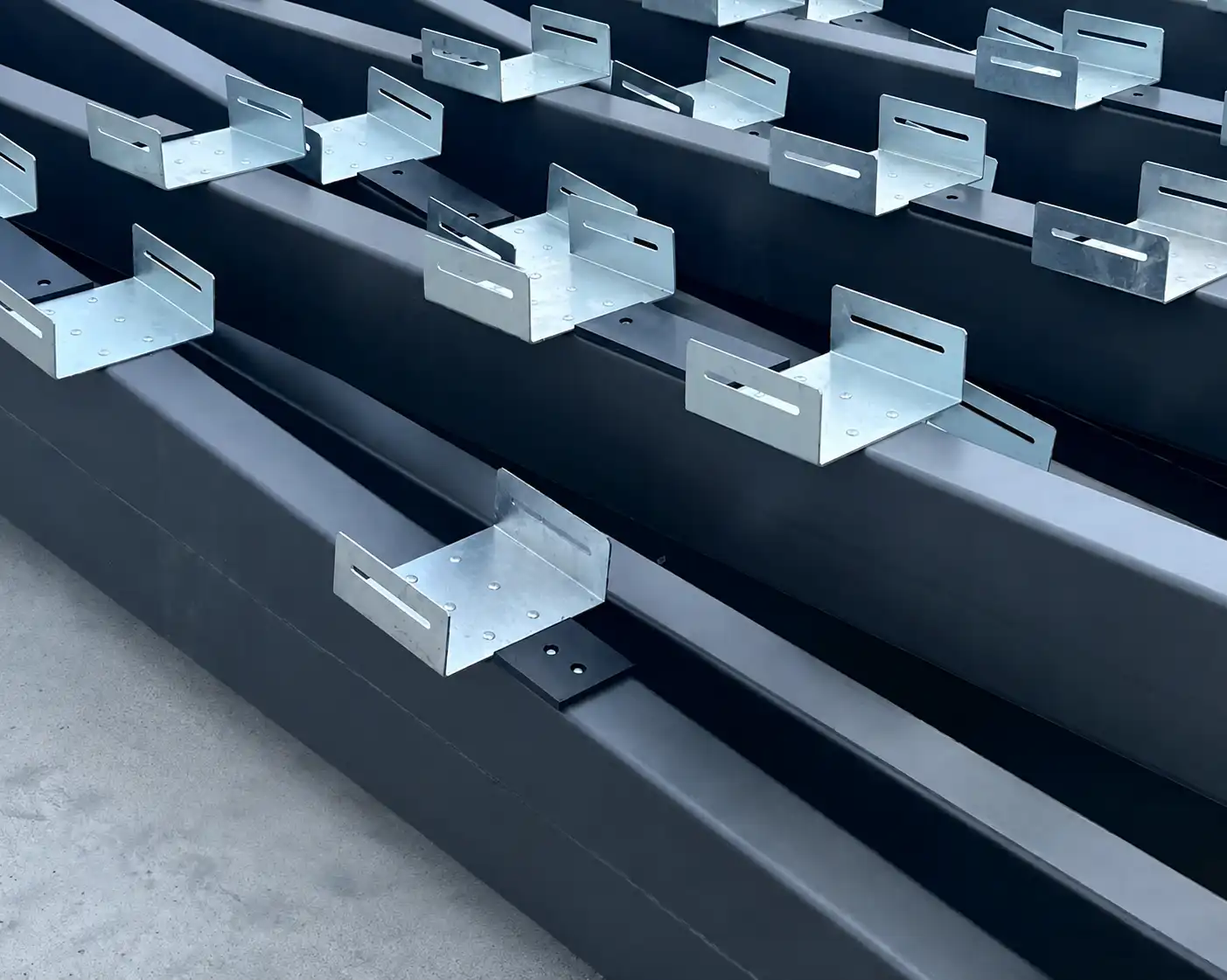
The connection points provided by the customer consist of a 4 mm-thick steel mounting bracket and a 6 mm-thick RHS (rectangular hollow section). The total thickness is 10 mm. Therefore, the rivets must be capable of covering the actual clamping thickness of 10 mm.Meet corrosion resistance requirements for long-term outdoor exposure
Since the solar carport is installed outdoors, the joints will be exposed to rain, moisture, and temperature fluctuations. Therefore, the customer explicitly requested the use of stainless steel structural blind rivets.Compliance with single-side installation requirements for RHS closed profiles
Compared to ordinary steel plates, RHS rectangular hollow sections are characterized by the fact that they can be worked on from the outside, but the internal space is inaccessible. Traditional bolt-and-nut installation methods are impractical. Therefore, the customer requires blind rivets that can be installed from a single side.Requirement for Stable Clamping and Long-Term Connection Performance
The solar carport project involves structural connections, which ordinary pop rivets cannot meet. You place a high priority on the rivet’s clamping force, core locking, hole filling, and long-term connection stability. Therefore, Rivmate recommends the structural Monobolt.
Customer Pain Points
- Standard Rivets Lack Sufficient Strength
Standard rivets often suffer from insufficient shear resistance and clamping force, posing a risk of loosening after prolonged vibration. - RHS Structures Prevent Access to the Back Side
In the RHS structures of solar carports, limited internal space makes it impossible to access the back side. - Difficulty in Selecting Rivet Specifications
It is not sufficient to consider only the 6.4-millimeter diameter; the rivet must also match the total clamping thickness. - Outdoor Environment Poses Corrosion Risk
The joints of solar carports are continuously exposed to the elements, and standard materials cannot meet the long-term durability requirements of the structure - Insufficient Efficiency and Consistency in Mass Installation
Solar carports feature a large number of repetitive connection points, so the rivets must be suitable for mass installation while ensuring consistent quality.
Rivmate Riveting Solutinos
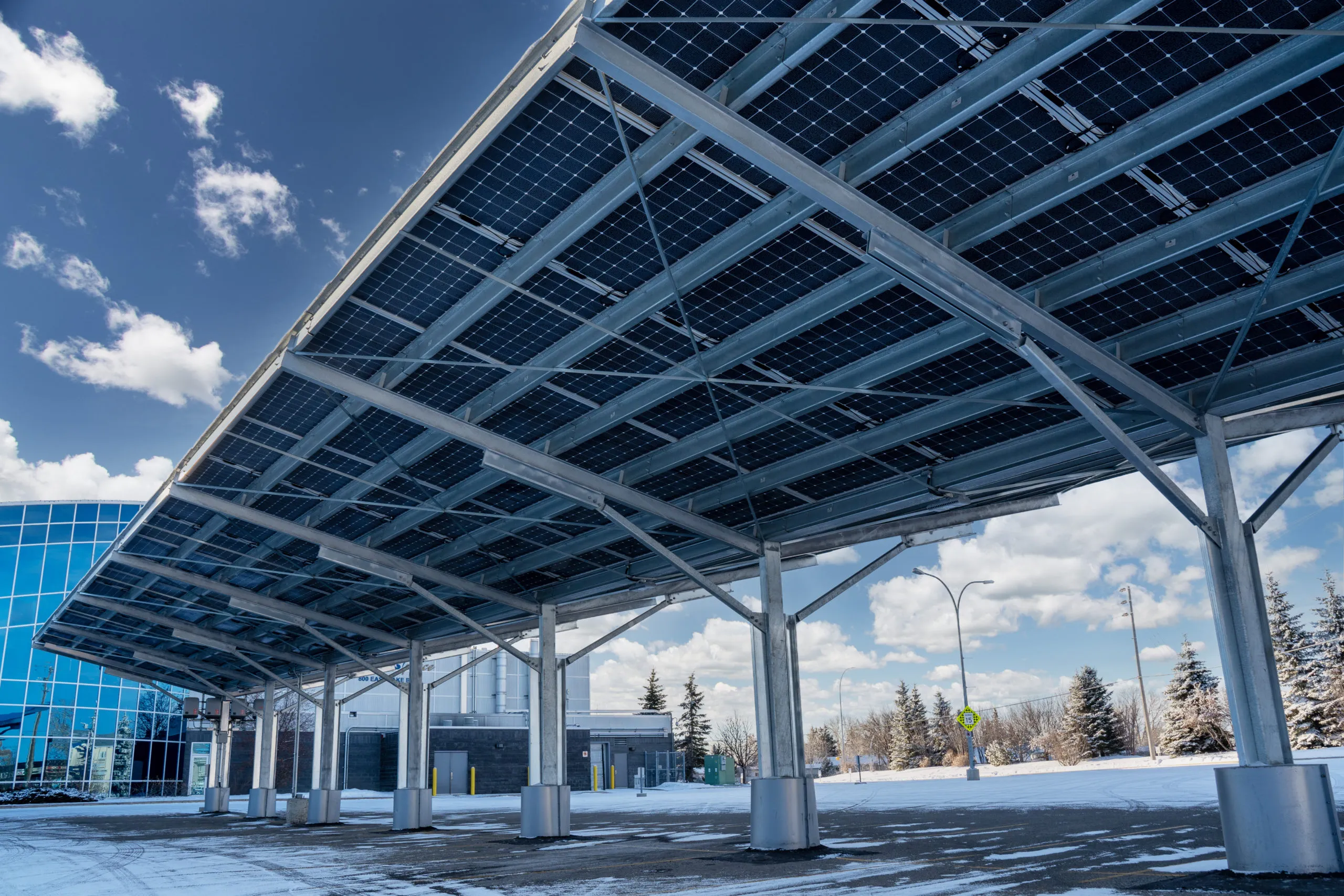
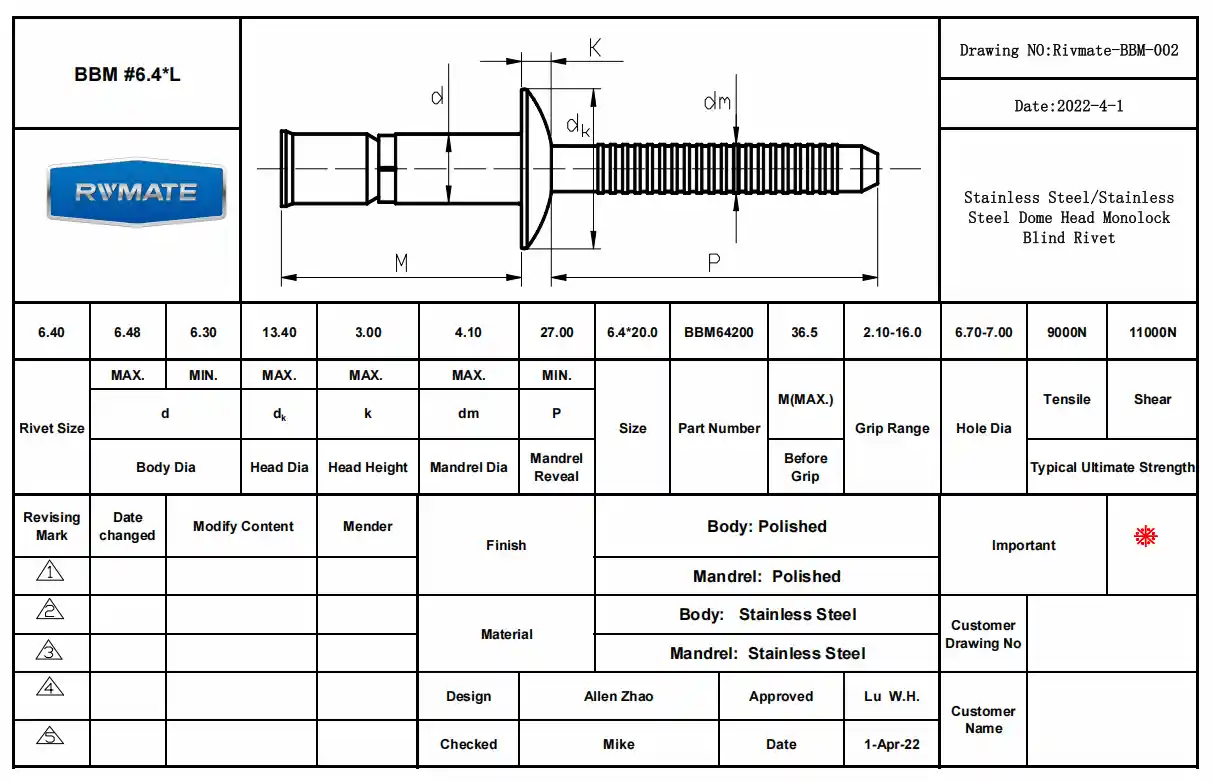
After evaluating the connection thickness and application conditions of the steel structure for the solar carport, Rivmate recommends the BBM64190 Stainless Steel Monobolt Rivet as the solution for this connection point.
Compared to standard blind rivet, stainless steel monnolt structural blind rivets are better suited for high-strength structural connections in outdoor environments. Once installed, an external locking ring secures the rivet core and provides stable mechanical locking. As a result, they are better suited for outdoor structural applications subject to high tensile, shear, and vibration loads.
| Item | Recommended Solution |
|---|---|
| Rivet Type | Stainless Steel Monobolt Structural Blind Rivets |
| Application Position | Connection between solar carport steel brackets and RHS (Rectangular Hollow Section) steel structures |
| Recommended Specification | BBM64190 6.4 × 19 mm |
| Grip Range | 2.1–16.0 mm |
| Material | 304 Stainless Steel |
| Mandrel Material | 304 Stainless Steel |
| Head Style | Dome Head |
| Recommended Hole Size | 6.7–7.0 mm |
| Main Purpose | To solve the challenge of rear-side access limitations in RHS hollow sections while providing a high-strength and corrosion-resistant fastening solution for solar carport structures. |
| Application Advantage | One-side installation, high structural strength, and reliable long-term performance for outdoor applications. |
Why Monobolt Structural Blind Rivet Are Recommended
Ideal for applications with limited installation space, such as RHS steel in solar carports, where single-sided installation can improve efficiency.
Once installed, the Monobolt Structural Blind Rivet secures the rivet mandrel via a mechanical locking mechanism, providing reliable locking performance. This enables a high-strength, vibration-resistant single-sided connection.
The Monobolt Structural Blind Rivet is made of 304 stainless steel, which enhances corrosion resistance and extends service life.
Rivmate's Connection Design Capabilities for Solar Applications
Drawing on Rivmate’s more than 15 years of experience in solar applications, we not only provide recommendations based on rivet size but, more importantly, conduct a comprehensive analysis of the joint structure, materials, thickness, load conditions, installation requirements, and environmental factors to design the most suitable riveting solution for our customers. This includes:
- The appropriate type of structural blind rivet
- Rivet diameter
- Grip range
- Material selection
- Installation method
- Sample validation plan

Hey There, I'm Allen!
I am the founder of Rivmate. For over two decades, we have specialized in the manufacture of blind rivets, providing our customers with reliable riveting solutions.Need riveting services? Feel free to contact us.