
Case Study: Improving Welding Strength of Copper-Plated Welding Screws
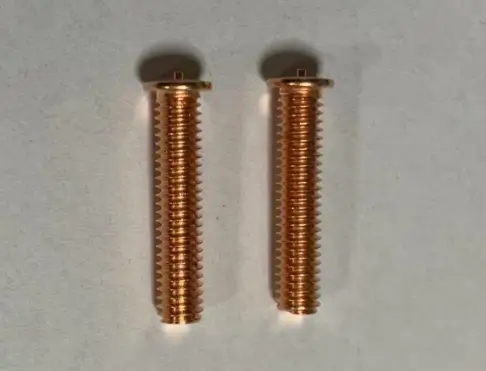
The customer uses copper-plated welding screws to join workpieces. However, in actual application, the customer has reported insufficient weld strength and inadequate bonding between the stud and the workpiece, leading to a tendency for the screws to detach.
Customer Requirements and Project Expectations
The client has long used copper-plated welding screws to join metal components. They aim to optimize the surface condition of the product to ensure a more robust bond between the welding screw and the workpiece, thereby achieving more stable and reliable welding results.
The customer is concerned not only with the dimensional compatibility of individual rivets but also with whether the entire connection solution can reliably replace the original bolted connection in a real-world assembly environment.
Client Detail Requirements
The client’s key requirements include:
- Improve Welding Connection Strength
The customer requires the welded screw to form a stable connection with the workpiece after installation.
- Ensure Stable Welding Performance
The customer wishes to reduce performance variations between product batches. Welding screws from different production batches all meet the usage requirements.
- Optimize Surface Treatment Process
The customer needs to address the impact of surface treatment variations on welding performance and ensure that the copper plating layer does not interfere with effective bonding during the welding process.
- Reduce Quality Risks During Production
Reduce product rework and assembly issues caused by welding failures by improving fastener performance.
Customer Pain Points
1. Insufficient Welding Strength
Some welded screws fail to achieve the expected welding strength.
2. Poor Welding Contact Between Fastener and Workpiece
Insufficient welding contact area was formed between the screw and the workpiece, resulting in a suboptimal welding bond.
3. Surface Treatment Affecting Welding Performance
An increase in the thickness of the copper plating layer prevents the weld screw from properly bonding with the workpiece, thereby reducing welding performance.
Rivmate Riveting Solutinos
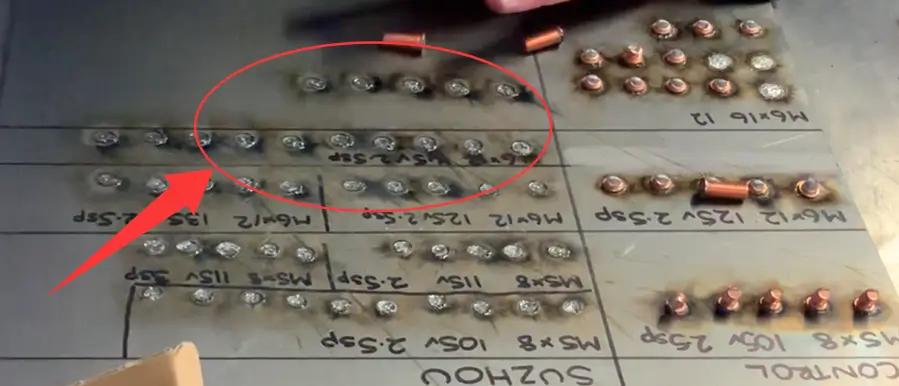
In response to customer feedback regarding insufficient weld strength in the welding screws, the Rivmate engineering team analyzed the causes of product failure. Improvements were implemented across three key areas: surface treatment processes, enhanced product performance control, and production consistency, thereby providing the customer with a stable and reliable fastening solution.
| Item | Recommended Solution |
|---|---|
| Product Type | Copper-Plated Welding Screws |
| Application Position | Metal Workpiece Welding Connection Area |
| Problem Description | Insufficient bonding strength between the welding screw and workpiece after welding, causing easy detachment. |
| Failure Cause | Changes in the surface treatment process caused excessive copper plating thickness, affecting effective welding contact. |
| Root Cause Analysis | Insufficient welding contact area between the welding screw and workpiece resulted in inadequate welding strength. |
| Optimization Solution | Adjusted the copper plating process and controlled the plating thickness to meet welding performance requirements. |
| Process Improvement | Optimized surface treatment supplier management and strengthened copper plating thickness control. |
| Quality Target | Improve welding bonding strength and ensure stable performance during mass production. |
| Improvement Result | Enhanced welding reliability and reduced connection failure and detachment risks. |
| Main Purpose | Solve insufficient welding strength issues and provide customers with a stable and reliable fastening connection solution. |
Why Copper-plated welding screws Are Recommended
- Strong Welding Connection
By properly controlling the coating thickness, the weld screw can achieve full contact with the workpiece, thereby enhancing the weld bond strength and reducing the risk of loosening or detachment during use.
- Suitable for Metal Assembly Applications
The welding method is suitable for joining metal sheets, meeting various requirements regarding space, strength, and connection stability.
- Reliable Surface Treatment Control
Surface treatment processes directly affect welding performance. Strict control of the copper plating thickness ensures stable product performance.
Rivmate Capabilities on Copper-plated welding screws
As a professional fasteners manufacturer and supplier , Rivmate implements standardized management across all production stages—from raw materials to the finished copper-plated welding screws. We maintain a comprehensive quality management system and have established a standardized testing laboratory in accordance with IATF 16949 standards, providing reliable testing and calibration data to customers and industry peers while ensuring all product quality requirements are met.
Rivmate also offers specialized customization services. We accommodate specific application environments by providing custom options for screw dimensions, materials, colors, and surface finishes, ensuring our products meet the customer’s actual operational needs.

Hey There, I'm Allen!
I am the founder of Rivmate. For over two decades, we have specialized in the manufacture of blind rivets, providing our customers with reliable riveting solutions.Need riveting services? Feel free to contact us.