


Home » 归档于 1 6 月 2026
What Is The Difference Between Sealed And Unsealed Rivets?
This guide provides a comprehensive overview of the differences between sealed and unsealed rivets, focusing on their structural design, sealing performance, strength, cost, and typical applications to help you select the most suitable rivet for your needs.
What Are Sealed Rivets?
If this is your first time learning about sealed rivets, just remember this simple fact: A sealed rivet is a type of blind rivet that not only secures materials but also helps prevent water, dust, and leaks.
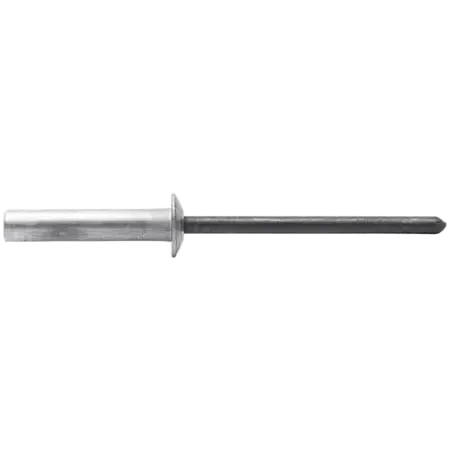
The primary purpose of a standard blind rivet is to join two pieces of material together, but a sealed rivet adds an important additional function to this:
A sealed rivet prevents water, air, dust, or liquids from the outside environment from entering the interior of the rivet through the riveted hole as much as possible.This is why it is called a sealed rivet.
What Are Unsealed Rivets?
Simply put, unsealed rivets are primarily designed for fastening; they securely hold materials together but do not feature a specific sealing design. For example, the open-end blind rivet—the most common type you encounter—is a typical unsealed rivet.

In 2020, an Italian client was unsure which product to choose for their equipment, but we at Ruimete promptly selected unsealed rivets based on their needs and concerns. The client has since reported that the joints remain very secure to this day.This also highlights the difference between unsealed rivets and sealed rivets: unsealed rivets have an open end, which ensures a secure connection once installed.
How to identify sealed vs unsealed rivets by appearance?
When people first encounter rivets, many wonder, “How can I tell if a rivet is a sealed rivet or an unsealed rivet?” Today, I’ll show you the simplest way: just check whether the tail end of the rivet is closed.

Sealed rivets are often referred to as closed-end blind rivets. If you take a close look, you’ll notice that their most distinctive feature is that the mandrel is not visible, as it is enclosed within the rivet body.
Appearance Characteristics of Sealed Rivets:
✔ Closed tail
✔ No visible through-hole
✔ More complete rivet body
✔ Typically slightly heavier than standard open-end rivets
✔ Provides better sealing performance after installation
Unsealed Rivets: These are the most common blind rivets on the market. They feature an open-end design, and after installation, a channel remains where the mandrel breaks off. As a result, they do not provide a seal.
Unsealed Rivets: These are the most common blind rivets on the market. They feature an open-end design, and after installation, a channel remains where the mandrel breaks off. As a result, they do not provide a seal.
Appearance Characteristics of Unsealed Rivets
✔ Open end
✔ Visible hollow interior
✔ Simple construction
✔ Low cost
✔ The most common type of blind rivet
Mandrel retention: how sealed rivets differ from open end blind rivets?
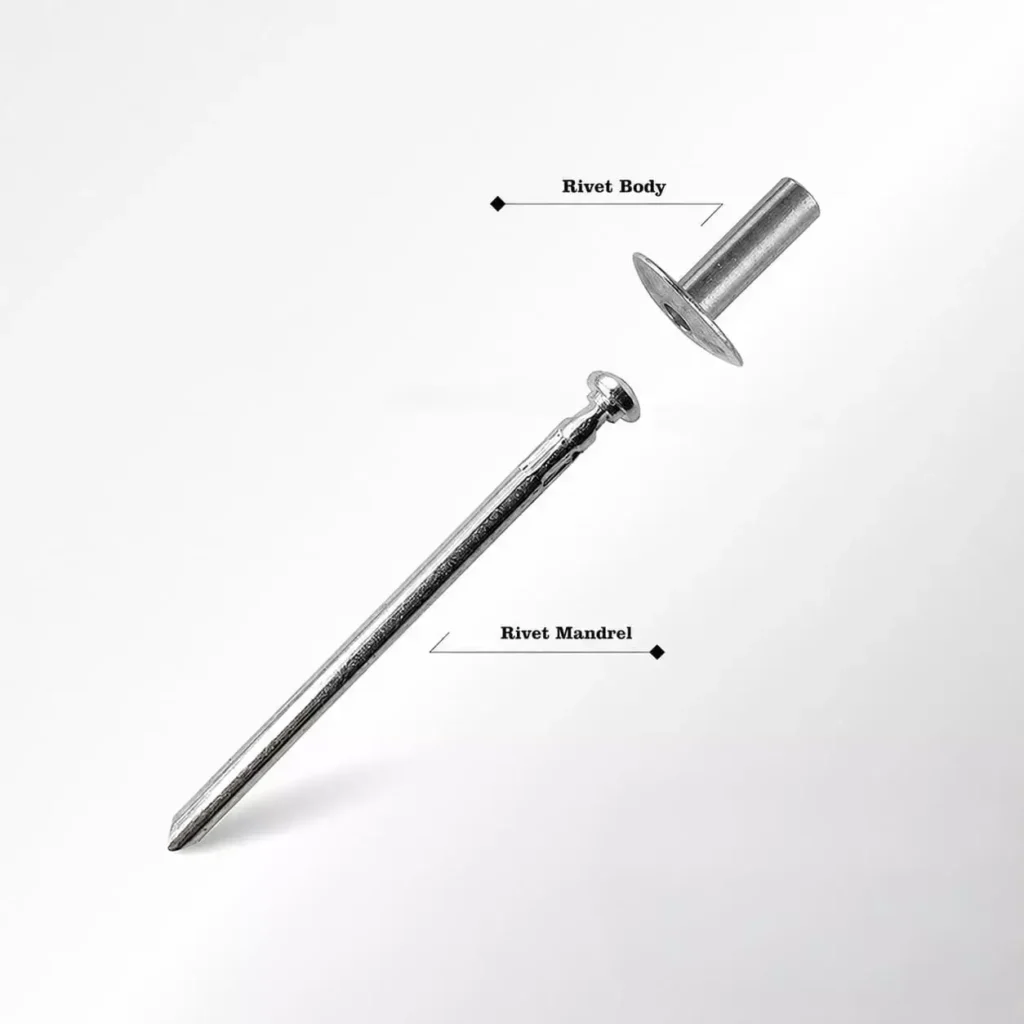
Mandrel retention: how sealed rivets differ from open end blind rivets?
When comparing the performance of sealed rivets and open-end blind rivets, most people tend to focus on water resistance.
However, there is another important factor that engineers often consider: mandrel retention. Mandrel retention refers to whether the broken mandrel remains securely inside the rivet after installation is complete.
When comparing the performance of sealed rivets and open-end blind rivets, most people tend to focus on water resistance.However, there is another important factor that engineers often consider: mandrel retention.

Mandrel retention refers to whether the broken mandrel remains securely inside the rivet after installation is complete.
- Good Mandrel Retention
✔ The mandrel is securely retained inside the rivet body
✔ Not prone to loosening
✔ Not prone to falling out
✔ More stable under long-term vibration
- Poor Mandrel Retention
✘ The mandrel may become loose
✘ May fall out after prolonged vibration
✘ Reduced sealing performance
✘ Reduced connection reliability
Why is the mandrel retention system used in sealed rivets superior?
| Open End vs Sealed Rivet: Mandrel Retention Comparison | ||
| Category | Open End Rivet | Sealed Rivet |
| Tail-End Structure | Open | Closed |
| Mandrel Retention | Standard | Typically Better |
| Mandrel Loosening Risk | Higher | Lower |
| Sealing Performance | Low | High |
| Typical Application | General Indoor Applications | Outdoor & Sealed Applications |
Because Sealed Rivets feature a closed-end design, the mandrel is enclosed within the rivet body after installation. Protected from external environmental factors, this creates a more secure locking mechanism at the tail end, and the mandrel is less likely to shift. As a result, Sealed Rivets offer superior mandrel retention.
Key Differences Between Sealed and Unsealed Rivets?
1. Structural Differences Between Sealed and Unsealed Rivets
The main difference between these two types of rivets lies in their structural design.
Features of Sealed Rivets:
- The tail end of the rivet body is sealed.
- No through-hole is formed after installation.
- The mandrel is more completely enclosed within the rivet body.
Features of Unsealed Rivets:
- The tail end of the rivet body is open.
- A passage may form in the center after installation.
- The structure is relatively simple.
2. Comparison of Waterproofing and Windproofing Performance
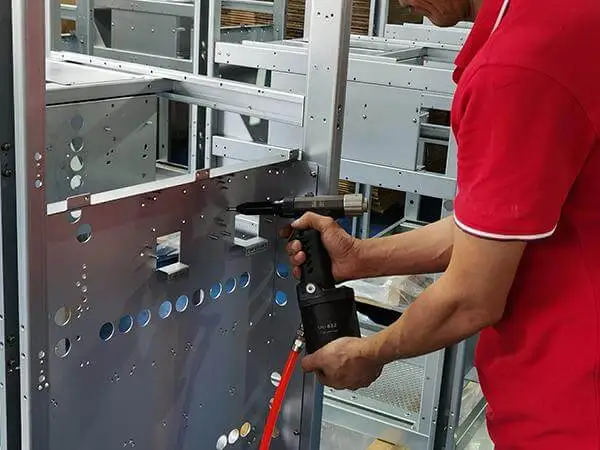
Waterproofing and wind resistance are the primary reasons why many of our Rivmate customers choose Sealed Rivets.
Because Sealed Rivets have a closed tail, once installed, they are more resistant to rainwater entering the connection holes, dust entering the interior, and air leakage. Therefore, they are particularly suitable for outdoor equipment, photovoltaic systems, sealed HVAC ducts, electrical cabinets, automotive exterior components, and similar applications.

Although Unsealed Rivets can form a connection, their open-ended design allows moisture to penetrate the interior, dust to enter the structure, and minor air leaks to occur in ductwork systems. Consequently, Unsealed Rivets are better suited for general indoor environments.
3. Comparison of Strength and Durability
①Comparison of Strength and Durability
If you believe that “sealed rivets are always stronger than open-end rivets,” that statement is not entirely accurate. We cannot simply judge strength based on whether a rivet is sealed or not. Therefore, it is only accurate to say that, under the same specifications, the difference in basic joint strength between open-end rivets and sealed rivets is generally not particularly significant.
Factors affecting strength:
- Material (aluminum, steel, stainless steel)
- Diameter
- Rivet design
- Whether it is a structural rivet
Rather than simply focusing on whether the rivet is sealed, as we have done here. Therefore, it can only be said that, under the same specifications, the difference in basic joint strength between open-end rivets and sealed rivets is generally not particularly significant.
②So why do many engineers prefer sealed rivets?
The primary reason lies in the long-term durability of sealed rivets. Sealed rivets significantly reduce the ingress of moisture from the air at the source, preventing internal corrosion and minimizing mandrel loosening. As a result, they generally maintain more stable performance in humid, outdoor, and highly corrosive environments.
In indoor environments, the difference in service life between the two may not be noticeable. However, in outdoor environments,
sealed rivets are often more durable.
4. Cost Comparison Between Sealed Blind Rivets and Unsealed Rivets
Unsealed Rivets Advantages:
✔ Simple construction
✔ Low production costs
✔ Abundant market supply
✔ More competitive purchase prices
Sealed rivets are generally more expensive than unsealed rivets due to:
- their sealed-end design
- more complex manufacturing processes
- stricter dimensional control requirements
Sealed vs unsealed blind rivets: pros and cons for different applications
As you already know, sealed rivets are waterproof and dustproof, while unsealed rivets are generally more economical and more commonly used. However, the question that many buyers and engineers we at Rivmate encounter are truly concerned about is: Should I choose sealed rivets or unsealed rivets for my project?
There is no definitive answer as to which is “better”; it all comes down to which is “more suitable.” You can make your choice based on your specific application.
| Recommended Rivet Type | Why It’s Recommended | Selection Notes |
| Open End Rivet | Low cost, fast installation, ideal for indoor fastening | Not recommended for high water-resistance requirements |
| Open End Rivet | Efficient for thin-sheet assembly and mass production | Consider sealed solutions if air leakage is critical |
| Sealed Rivet | Reduces air leakage and improves sealing performance | Higher cost than open end rivets |
| Sealed Rivet | Better resistance to rain, dust, and moisture | Consider corrosion-resistant materials |
| Stainless Steel Sealed Rivet | Excellent sealing and corrosion resistance | Choose material grade based on project requirements |
| Open End Rivet | Cost-effective for general fastening | Not suitable for exterior sealing applications |
| Sealed Rivet | Protection against water, dust, and vibration | Structural rivets may be needed for higher loads |
| Stainless Steel Sealed Rivet | Ideal for salt spray and corrosive environments | Verify corrosion-resistance specifications |
| Open End Rivet | Economical and suitable for indoor use | Not recommended for long-term outdoor exposure |
FAQs
Are sealed rivets always stronger than open-end rivets?
Not necessarily. The strength of a rivet depends primarily on its material, diameter, wall thickness, and structural design; it cannot be determined solely by whether it is sealed. Differences in strength often have a greater impact than whether or not it is sealed.
Do open-end rivets always leak?
Not necessarily. This is where many people tend to get it wrong at first. Unsealed rivets do not necessarily mean leaks. In practice, many indoor products have used unsealed rivets for years without any issues. However, if they are exposed to rain, high humidity, or outdoor conditions over a long period, the risk of moisture entering the joint area is higher due to the open-ended design. So, a more accurate statement would be: Open-end rivets have weaker water resistance, rather than that they will definitely leak.
Are sealed rivets worth the extra cost?
Whether it’s worth it depends on the rivet’s intended application. If your product is intended for indoor use—such as in filing cabinets, metal shelving, or other indoor equipment—then an open-end rivet is sufficient. There’s no need to incur extra costs for features you won’t use. However, if your product is intended for long-term outdoor use, requires waterproofing and dustproofing, and demands a long service life, then the additional cost of a sealed rivet is often well worth it. This is because the cost of future maintenance is typically far higher than the cost of the rivet itself.
How can you quickly tell if a rivet is sealed or unsealed?
The easiest way to tell them apart is to look at the end. If the end is closed, it is usually a sealed rivet. If the end is open and you can see the internal cavity, it is usually an open-end rivet.
Why is mandrel retention important?
Once installation is complete, the mandrel will break off at the break point. If the mandrel retention is insufficient, it can lead to loosening of the mandrel, abnormal noise, and reduced sealing performance; however, closed-end rivets typically offer better mandrel retention. As a result, they are often more reliable in vibrating environments.
In what situations are non-sealed rivets both fully suitable and more cost-effective?
When the application environment is indoors and there is no need for waterproofing or dustproofing, nor any airtightness requirements, non-sealed (open-end) rivets can typically fully meet the fastening needs while offering lower procurement costs and better value for money.
Are sealed rivets stronger than unsealed rivets because they retain the mandrel
Sealed rivets offer better mandrel retention, which helps improve long-term stability, vibration resistance, and sealing performance; however, this does not necessarily mean they are stronger than unsealed rivets. The key factors that truly determine a rivet’s strength remain the material, diameter, design, and grip range—not simply whether the design is sealed or unsealed.
How do I choose between sealed and unsealed rivets?
Here’s the simplest rule of thumb for choosing the right type: If you need to use them in environments that require waterproofing, dustproofing, or airtightness, choose sealed rivets. If you just need to securely fasten joints in indoor environments, choose open-end rivets.
Work with a IATF 16949 Certified Blind Rivet Manufacturer
Get High Quality Rivets Instead of Huck and Avdel Rivets

Rivmate Rivet
Rivmate is one of China’s top three manufacturers of pop rivets. The company is IATF 16949 certified and offers high-strength structural pop rivets that serve as alternatives to Huck and Avdel products.
Rivmate Rivet
Rivmate is one of China’s top three manufacturers of pop rivets. The company is IATF 16949 certified and offers high-strength structural pop rivets that serve as alternatives to Huck and Avdel products.