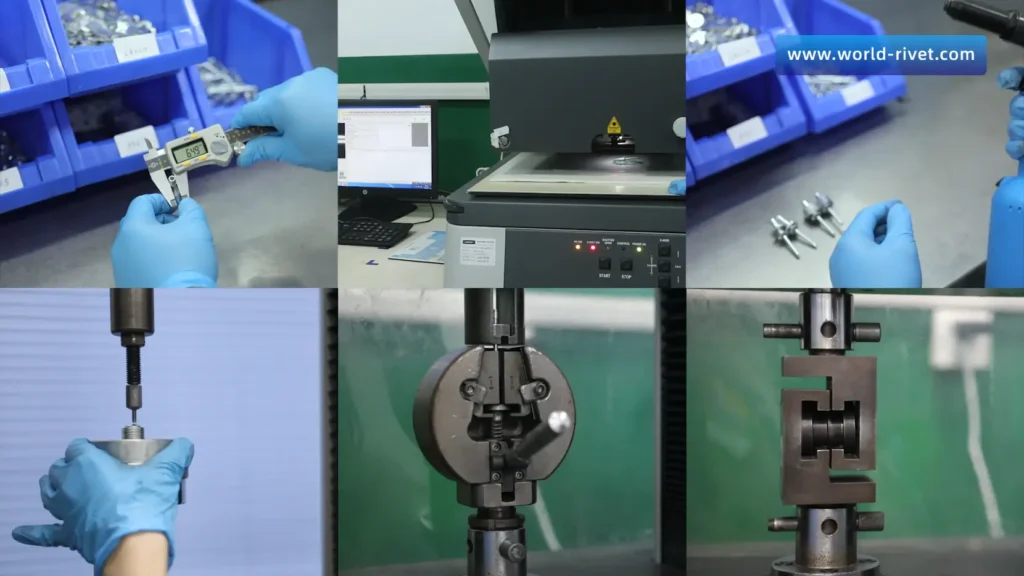
Rivet Tensile Strength Testing for Blind Rivets
Rivmate uses universal testing machines, specialized tensile test fixtures, and standard test plates to help you verify the tensile load-bearing capacity of rivets before placing a bulk order.
Why Tensile Strength Testing Matters for Blind Rivets
The tensile strength of hollow rivets directly affects the reliability of the joint under axial loads.
If the rivet’s tensile strength is insufficient, it may lead to rivet pull-out, separation of the sheet metal, deformation of the riveted joint, loosening of the connection, or failure during mass assembly.
For customers requiring large quantities of rivets, tensile testing can help them verify whether the rivets meet actual application requirements before making bulk purchases.
Equipment Used for Rivet Tensile Strength Testing
Rivmate follows a structured heat treatment control mindset based on CQI-9 heat treatment system assessment principles. The process focuses on management responsibility, quality planning, process control, equipment calibration, job audit, product testing, and corrective action tracking.
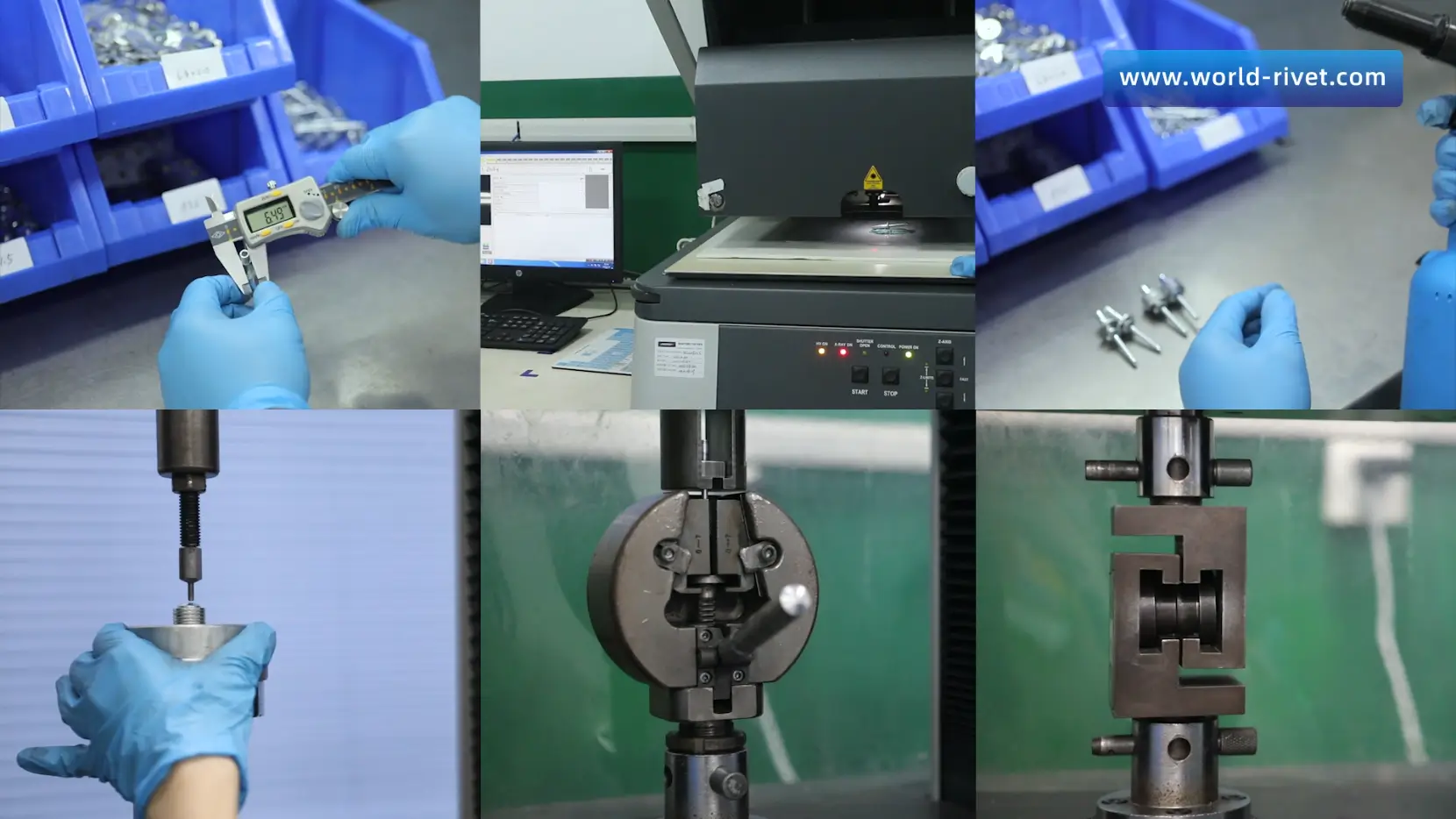
Universal Testing Machine
Apply a constant axial tensile force to the riveted specimen. Measure the maximum tensile load of the rivet.
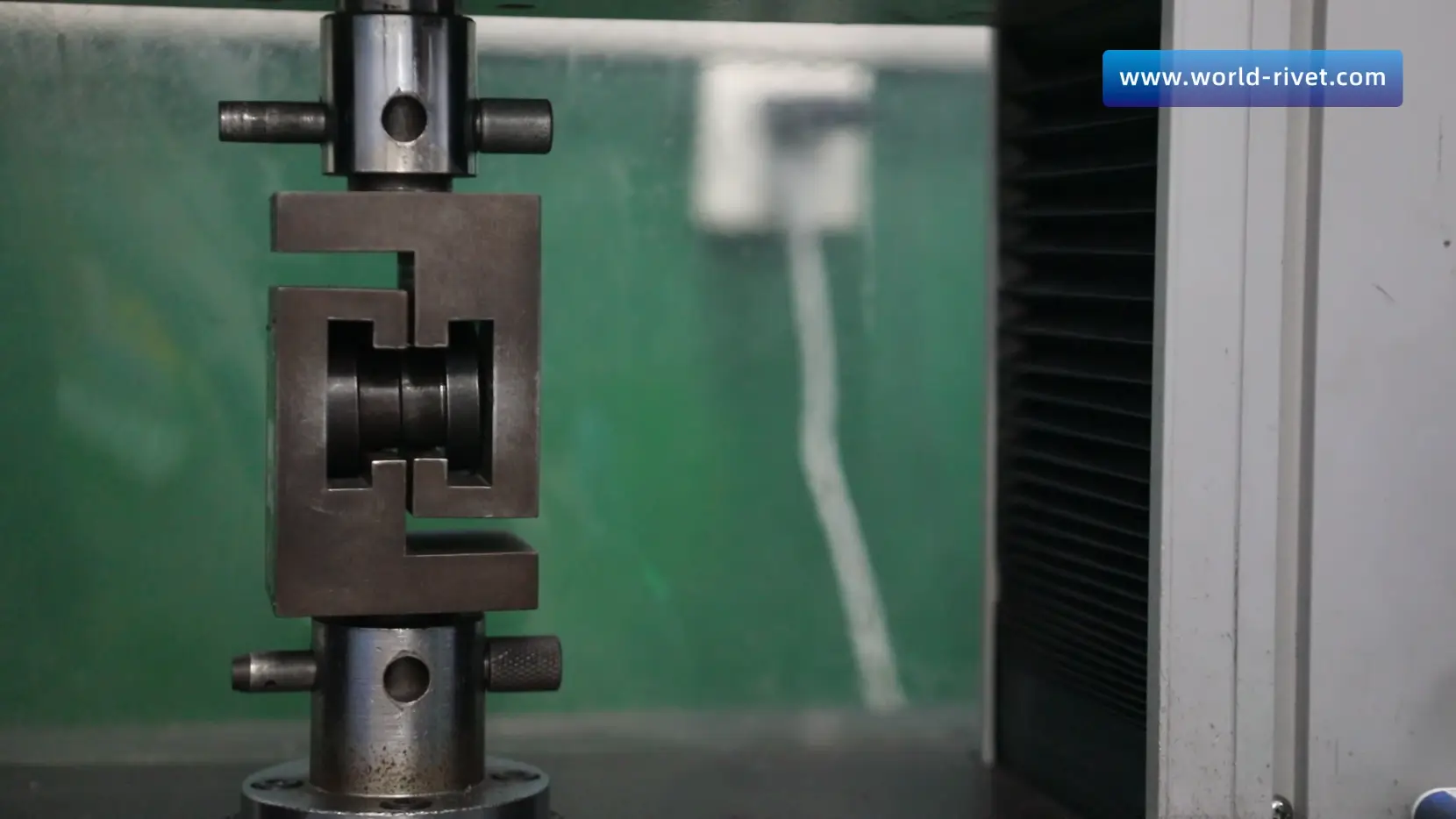
Specialized Tensile Test Fixtures
Reduce off-center loading and testing errors, and improve the reliability of test results
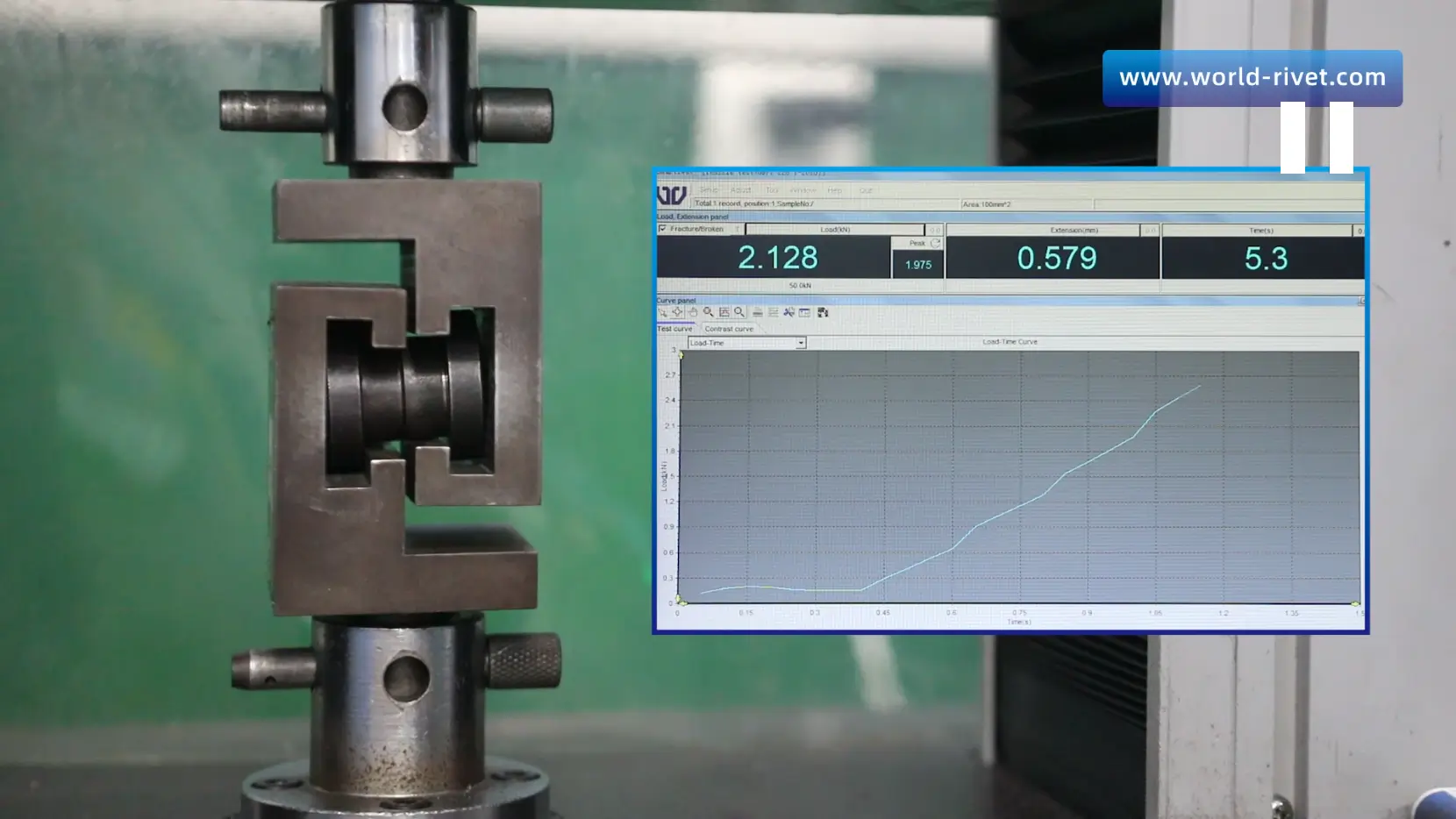
Standard Data Acquisition System
Records maximum tensile force, displacement, and curves. Provides test data for analysis.
Rivet Tensile Strength vs Shear Strength
Tensile strength testing and shear strength testing focus on different directions of force. Tensile strength testing primarily verifies whether a rivet will pull out under axial tensile force. Shear strength testing primarily verifies whether a rivet will shear off under lateral loading.
| Comparison Item | Tensile Strength | Shear Strength |
|---|---|---|
| Force Direction | Axial pulling force along the rivet body | Lateral cutting force across the rivet body |
| What It Measures | The rivet’s ability to resist pull-out or joint separation | The rivet’s ability to resist side load or being cut across the joint |
| Main Testing Purpose | To verify whether the rivet can keep joined materials firmly clamped under pulling force | To verify whether the rivet can withstand transverse load between joined materials |
| Typical Failure Mode | Rivet pull-out, head deformation, mandrel movement, or sheet hole tearing | Rivet body shear-off, sheet tearing, or joint displacement |
| Common Application Focus | Panels, covers, housings, brackets, and parts exposed to pull-out force | Structural joints, supports, frames, brackets, and load-bearing sheet metal assemblies |
| Customer Concern | Will the rivet be pulled out? | Will the rivet be cut or broken under side load? |
| Important Factors | Rivet diameter, head type, grip range, hole size, material strength, and installation quality | Rivet diameter, body material, mandrel material, joint thickness, sheet strength, and hole accuracy |
| Suitable Test Equipment | Universal testing machine with tensile test fixture | Universal testing machine with rivet shear test fixture |
| Why It Matters | Helps prevent loose panels, pull-out failure, and poor clamping performance | Helps prevent joint failure under vibration, transverse load, and structural stress |
How We Perform Rivet Tensile Strength Testing
Rivmate uses a standardized testing process to verify the tensile strength of pop rivets.
- Confirm the rivet specifications and test requirements
- Prepare the test panel and mounting holes
- orrectly install the pop rivets
- Secure the test specimen in a specialized tensile testing fixture
- Apply axial tensile force using a universal testing machine
- Analyze the fracture pattern and failure mode
- Record test data and batch information
- Provide engineering recommendations based on the test results