


Discover the History Of Rivets, from ancient metal fasteners to modern blind rivets used in aerospace, automotive, construction, and industrial manufacturing today.
History of rivets: from ancient Egypt to modern engineering
The evolution of the rivet is, in essence, the history of humanity’s quest to “securely join materials together.”
From the earliest days when the ancient Egyptians used metal rivets to fasten ornaments and tools, to the large-scale steel structures of the Industrial Revolution, and on to today’s widespread use in aerospace, automotive, HVAC, and blind rivets, the rivet has continued to evolve.From the earliest days when the ancient Egyptians used metal rivets to fasten ornaments and tools, to the large-scale steel structures of the Industrial Revolution, and on to today’s widespread use in aerospace, automotive, HVAC, and blind rivets, the rivet has continued to evolve.

A.Early Rivets: From Ancient Egypt to Handcrafted Metalwork
Early humans did not have modern screws, bolts, or welding technology. If they wanted to fasten two pieces of metal together, the most straightforward method was to drive a metal pin through the material and then hammer the end into a deformed shape so that it would lock into place.
In ancient Egypt, ancient Rome, and the Middle Ages, rivet-like fasteners were used in products such as jewelry, tools, weapons, armor, carriages, and ships. Rivets from this period were primarily made by hand and had simple structures, but their core principle has not changed significantly from today’s: permanently joining two or more components together through metal deformation.
B.Modern Rivets: From Industrial Structures to Blind Rivets
What truly spurred the widespread adoption of rivets was the construction boom following the Industrial Revolution. With the emergence of railroads, bridges, ships, boilers, and large-scale steel structures, industry required a reliable method of metal fastening, leading to the widespread use of hot riveting.
Later, with the rapid development of the aviation, automotive, and sheet metal manufacturing industries, traditional riveting continued to evolve. In particular, the advent of blind rivets allowed for installation from one side, eliminating the need to access the back of the workpiece.
Rivets are not a modern invention; they are one of the earliest mechanical fastening methods used by humans.
A brief history of rivets in construction and manufacturing
Rivets played an important role in both construction and manufacturing history. During the Industrial Revolution, hot riveting was widely used in bridges, railways, ships, boilers, and steel structures because welding technology was still limited. Steel rivets were heated, inserted into holes, and hammered into shape to create strong permanent joints.
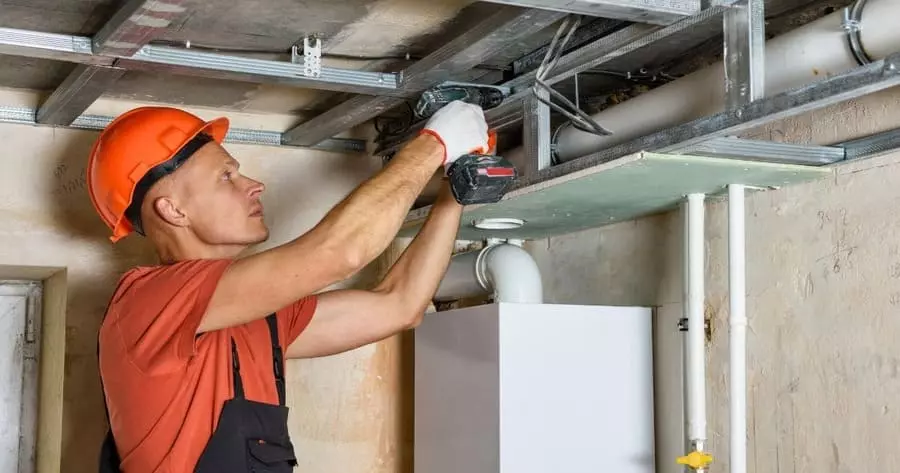
As manufacturing evolved, blind rivets became popular in automotive, aerospace, HVAC, and sheet metal assembly because they allowed fast one-side installation and efficient assembly of thin materials. Today, rivets remain an important fastening solution in many industrial applications.
Rivets in the Industrial Revolution: The Rise of Steel Structures
During the Industrial Revolution, the rivet truly evolved from a “small, handcrafted fastener” into a “core fastening method for large-scale industrial structures.”
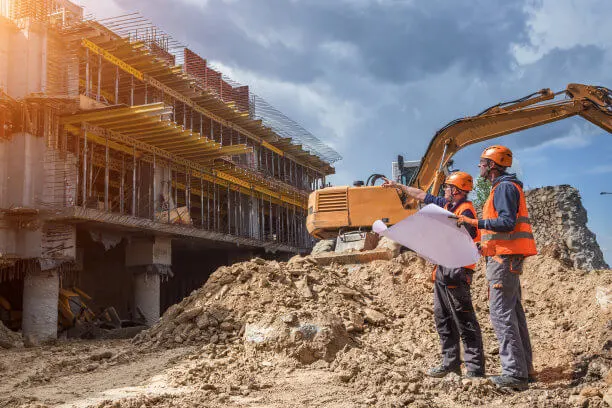
This was particularly evident following the rapid development of the steel industry in the 19th century, when a large number of steel structures began to emerge, such as:
- Railway bridges
- Steam boilers
- Shipbuilding
- Railcar bodies
- Factory steel frames
- And later, high-rise buildings
These large-scale structures required a joining method that was “strong, reliable, and suitable for mass production.” Since modern welding technology did not yet exist at the time, hot riveting became one of the most important metal joining processes of the industrial age.
How does hot riveting work?

Step 1: Heat the Rivet
Heat the steel rivet until it is red-hot.
Step 2: Insert into the Hole in the Steel Plate
Insert the red-hot rivet through the two steel plates.
Step 3: Hammer the Tail
On the other side, a worker uses a sledgehammer or pneumatic hammer to shape the tail into a “mushroom head.”
Step 4: Cooling and Shrinkage
The rivet shrinks as it cools.This creates a very strong clamping force.
The evolution of rivets: how riveting technology developed over time
① Early Rivets: Hand-Hammered Metal Pins
If you want to fasten two pieces of metal together, the simplest way is to thread a metal rod through them and then flatten the end.
② Industrial Riveting: The Steel Structure Era
After the Industrial Revolution, railroads, bridges, factories, trains, and large steel ships began to appear in large numbers. At that time, engineers faced a very practical problem: how could such heavy steel plates and beams be securely joined together?
In those days, welding technology was still in its infancy, and high-strength bolts were not yet widely used, so hot riveting became a very important method of joining.
③ Aircraft Riveting: Lightweight Engineering
With the development of the aircraft industry, rivets underwent further improvements. At that time, aircraft extensively utilized thin aluminum sheets and lightweight structures. Welding would have caused the aluminum sheets to warp due to the excessive heat generated. As a result, aircraft rivets began to be widely adopted.
④ Blind Rivets: One-Side Installation Revolution
In today’s world, many products have surfaces that are simply inaccessible from the back, which has led to the development of blind rivets that can be installed from one side. Blind rivets make riveting faster and easier, and are also better suited for mass production in modern factories.
⑤ Modern Riveting Technology
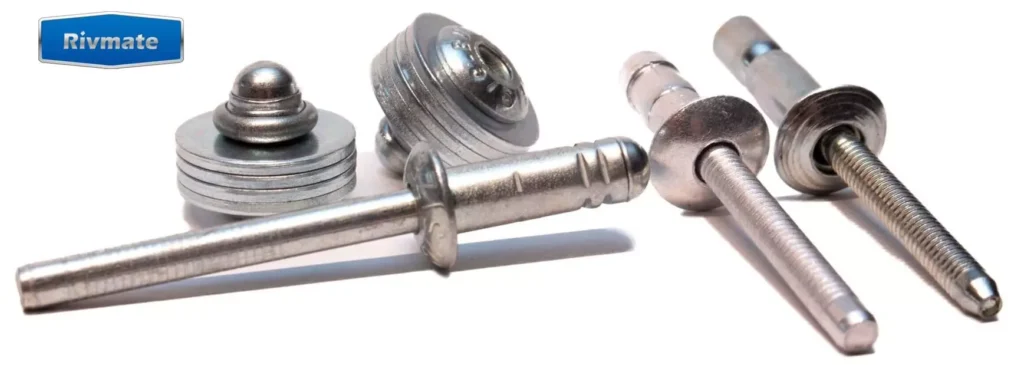
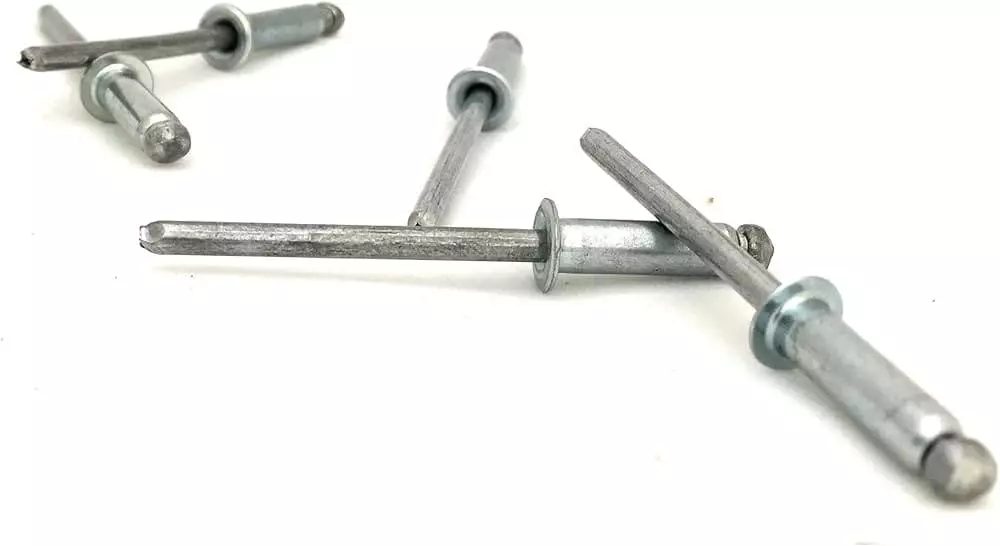
Rivets today come in a wide variety of types. Different types are used in different applications. See the image below:
Open End Blind Rivet
Structural Rivet
⑥ Riveting Tools Also Evolved
In the early days, rivets were installed entirely by hand.
Over time, this evolved into:
- Pneumatic tools
- Hydraulic tools
- Electric riveting guns
- Automated riveting equipment
Today, many factories use Automatic Riveting Systems.
- Automotive manufacturing
- Aerospace manufacturing
- Electronic equipment
- High-volume sheet metal production
The Invention of Blind Rivets and Why It Changed Everything
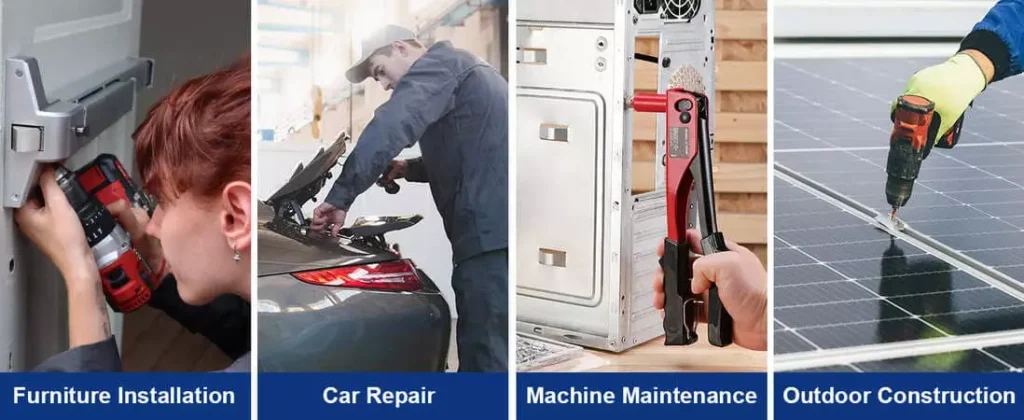
The introduction of blind rivets allowed workers to complete the riveting process “from one side only.” While this may sound simple, it actually revolutionized assembly methods in industries such as aviation, automotive, construction, HVAC, and truck trailers.
Before blind rivets were available, installing traditional solid rivets required two people working together:
- One person hammered from the front
- while another held the rivet in place from the back.
A.How do blind rivets solve the problems associated with solid rivets?
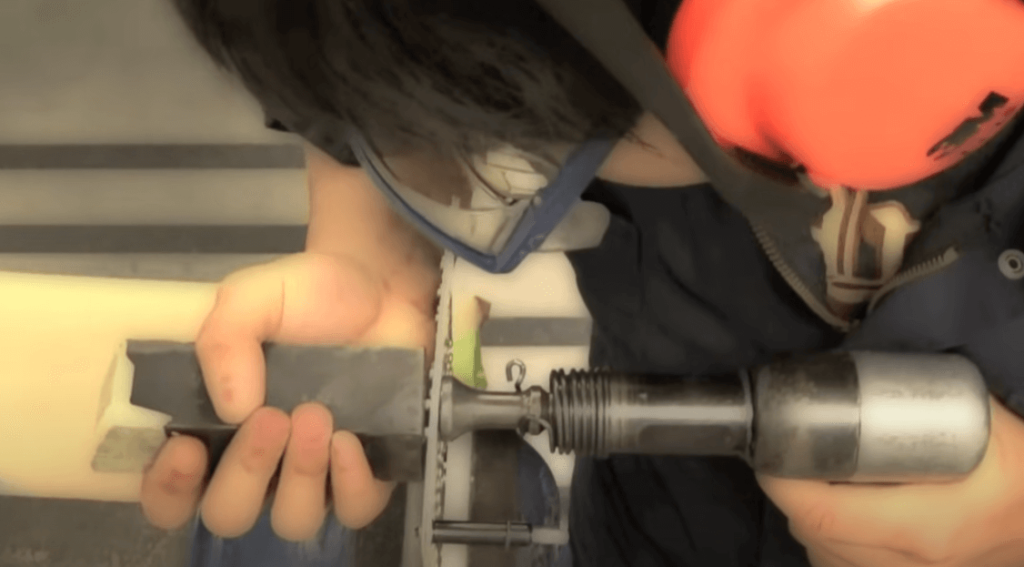
The core concept behind the blind rivet is particularly ingenious: it features an additional mandrel inside.
During installation:
During installation:
The rivet gun pulls the mandrel.
The mandrel deforms the tail end of the rivet body.
A “bulge” automatically forms on the back side.
This achieves a clamping effect.
- Finally, the mandrel breaks off.
The entire process for blind rivets requires operation from only one side.
B.Why It Changed Everything ?
① Transition from “two-person operation” to “one-person operation”
② Driven the development of the aerospace industry
③ Made joining thin sheets easier
④ Promoted automated assembly
Modern Rivet Materials
After many years in this industry, Rivmate’s key insight is this: today’s customers are no longer just buying “a single rivet”; they are purchasing a fastening solution tailored to their specific operating conditions.
While many customers initially focus on price, it is often the material that truly determines a rivet’s long-term reliability. This is because there are significant differences between various materials.
The most common rivet materials currently available include:

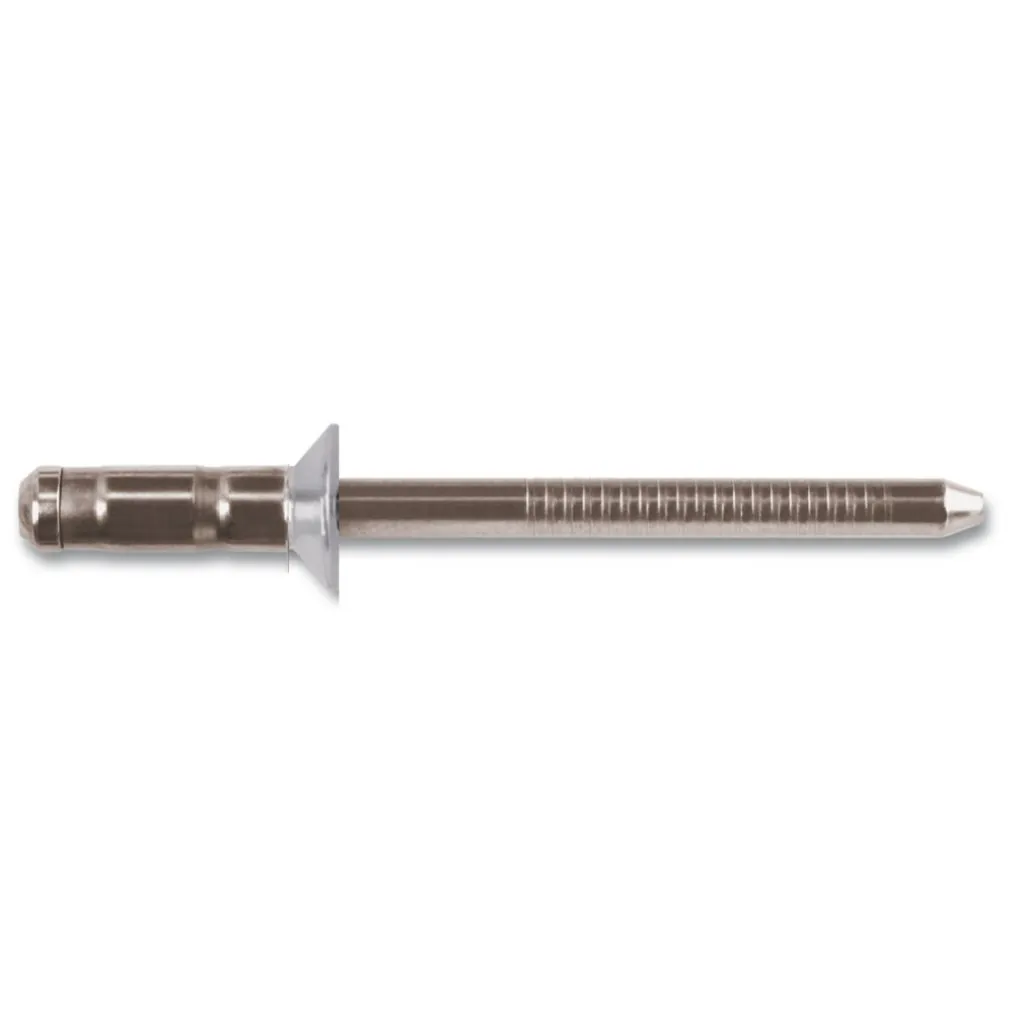
Aluminum
Key features include light weight, corrosion resistance, and ease of forming, making it suitable for thin-sheet fastening applications in HVAC, doors and windows, home appliances, and photovoltaics.
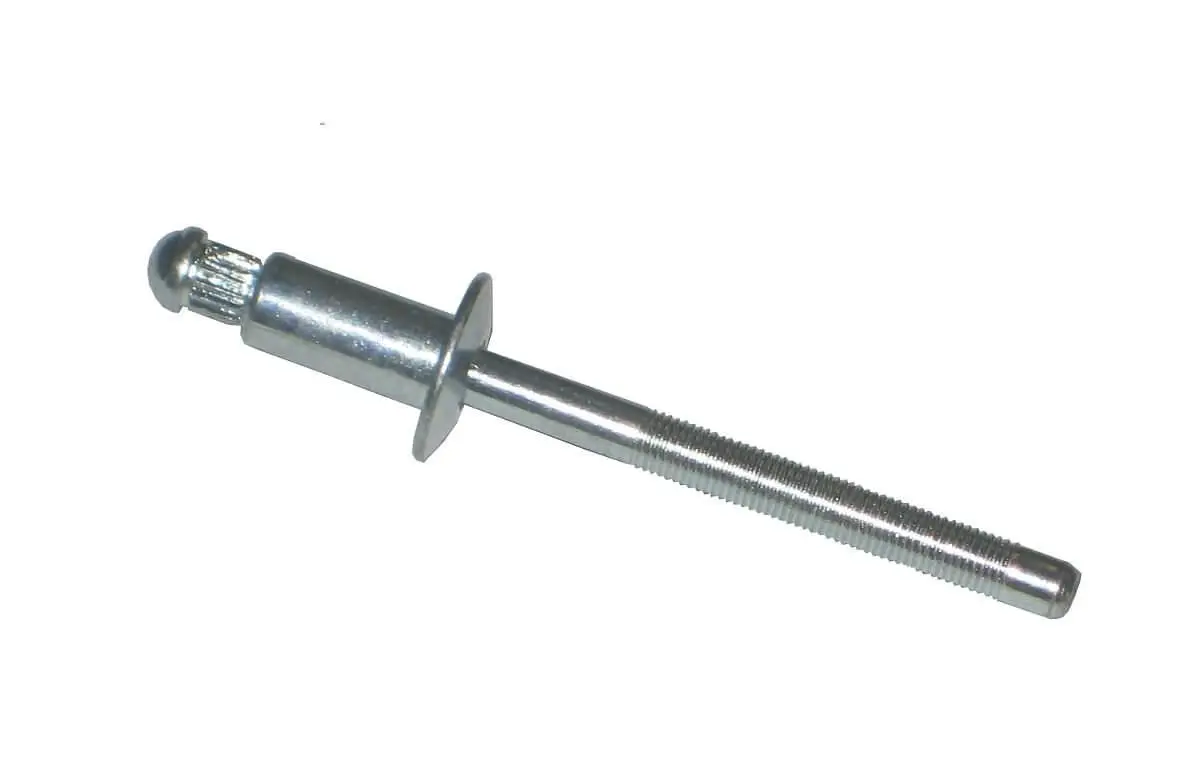
Steel
Key features include high strength and cost-effectiveness, making it suitable for heavy-duty connections in trucks, trailers, and construction machinery; however, galvanization is typically required for rust prevention.
Stainless Steel
Key features include excellent corrosion resistance, making it suitable for outdoor, humid, coastal, and photovoltaic environments; however, it is relatively more expensive and has higher installation torque requirements.
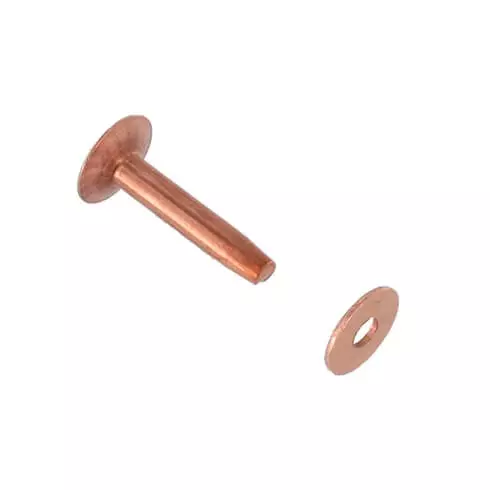
Copper
Key features include excellent electrical conductivity and high ductility. It is commonly used for electrical connections or decorative applications but is not suitable for high-strength structural connections.
Monel
Key features include resistance to seawater, salt spray, and high temperatures. It is suitable for harsh environments such as marine vessels, offshore engineering, and aviation, though it comes at a higher cost.
Typical rivet applications across industries: aerospace,automotive, electronics, and construction
I believe one of the key reasons for the rapid development of modern rivets is that they are no longer fasteners specific to a single industry, but have found their way into virtually every modern industrial sector.
Blind rivets, in particular, are widely used across many industries due to their quick installation, single-side operation, and suitability for joining thin sheets.
① Construction
The key requirements are quick installation, corrosion resistance, and waterproof sealing. Rivets are used in building roofs, HVAC ductwork, curtain walls, steel structures, and solar panel mounts. Common options include closed-end rivets, sealed rivets, and stainless steel rivets.
②Automotive
The focus is on weight reduction, automation, and the joining of mixed materials. The automotive industry commonly uses structural blind rivets and SPRs in applications such as doors, chassis, battery trays, and body frames; these are particularly well-suited for aluminum and steel-aluminum hybrid structures.
③ Electronics
The focus is on small dimensions, high precision, and protecting thin panels. Electronic enclosures are thin and have limited space, so small blind rivets, micro rivets, and aluminum rivets are commonly used. These must not cause deformation or damage the appearance after installation.
④Aerospace
The focus is on lightweight design, fatigue resistance, and vibration resistance. Aircraft make extensive use of aluminum sheets and thin-walled structures, and in many locations, double-sided installation is not feasible; therefore, the advantage of single-sided installation using blind rivets is clear. Common applications include aircraft skin, internal structures, and maintenance fastenings.
FAQS About Rivet History and Applications
Where were rivets first used?
Rivets can be traced back to ancient Egypt and ancient Rome, when people used metal rods that were hammered into shape to fasten materials together. Although the structures were very simple at the time, they already embodied the basic principle of modern rivets: “achieving a permanent connection through metal deformation.”
When were rivets invented?
There is no specific “year of invention” for rivets; they can only be traced back to ancient Egypt and ancient Rome, where they have been in use for thousands of years. From the earliest hand-forged metal pins, through hot riveting during the Industrial Revolution, to the blind rivets widely used today, riveting technology has been constantly developing and evolving.
How were rivets used in bridge construction?
If you visit some of the old steel bridges built in the 19th or early 20th century today, you can still see rows of round metal heads. These are the marks left by rivets.
Before the widespread use of welding and high-strength bolts, rivets were one of the most important fastening methods in bridge construction.
Which industries use rivets?
If you think rivets are only used in sheet metal shops or the hardware industry, you’re actually underestimating their scope of application.
In fact, rivets are widely used across a variety of industries, from heavy industry to precision manufacturing. Even today, when welding and bolts are so common, rivets still play a vital role in many applications.
When did welding begin to replace rivets?
Welding began to gradually replace rivets starting around the first half of the 20th century. Particularly after the 1930s–1950s, as welding equipment, techniques, and quality control became increasingly sophisticated, many sectors—including bridge construction, shipbuilding, steel structures, and manufacturing—began to rely more heavily on welding rather than traditional hot riveting.
How are rivets used in automotive manufacturing?
If you take a car apart, you’ll find that it actually contains a lot of rivets. In the past, many parts of a car relied on welding, but now, with the increasing prevalence of aluminum alloys, new energy batteries, and lightweight designs, rivets have become one of the most important fastening methods in automotive manufacturing.
What types of rivets are commonly used in aerospace?
Rivets used in the aerospace industry serve a purpose that goes beyond simply “holding things together”; they must also balance weight, strength, fatigue resistance, and aerodynamic performance. As a result, solid rivets and countersunk rivets remain among the most critical fasteners in aircraft manufacturing to this day.
Why are stainless steel rivets used?
If your product is intended for long-term outdoor use, is likely to be exposed to rain, or requires greater strength and a longer service life, then stainless steel rivets—which are resistant to moisture and corrosion—are generally a more reliable choice than aluminum rivets.
Work with a IATF 16949 Certified Blind Rivet Manufacturer
Get High Quality Rivets Instead of Huck and Avdel Rivets

Rivmate Rivet
Rivmate is one of China’s top three manufacturers of pop rivets. The company is IATF 16949 certified and offers high-strength structural pop rivets that serve as alternatives to Huck and Avdel products.
Rivmate Rivet
Rivmate is one of China’s top three manufacturers of pop rivets. The company is IATF 16949 certified and offers high-strength structural pop rivets that serve as alternatives to Huck and Avdel products.