


Home » 归档于 16 7 月 2026
Riveting vs Welding: Difference Between Riveting and Welding
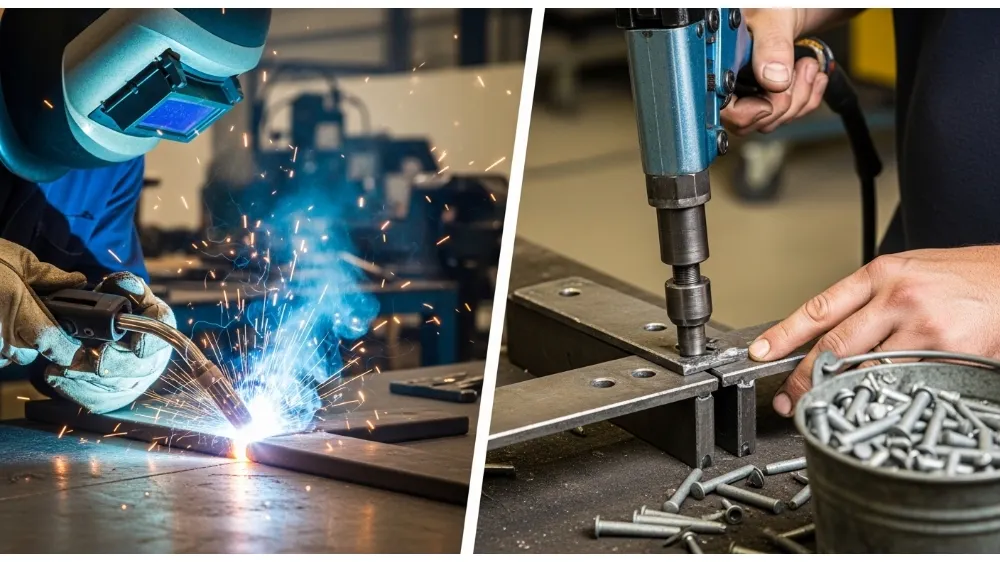
In metal processing and assembly, both riveting and welding can create reliable connections, yet they differ in their operating principles and suitable applications.
Should you choose riveting or welding for your project? This article provides a detailed comparison of the two methods to help you select the metal joining process best suited to your project’s requirements.
What Is Riveting?
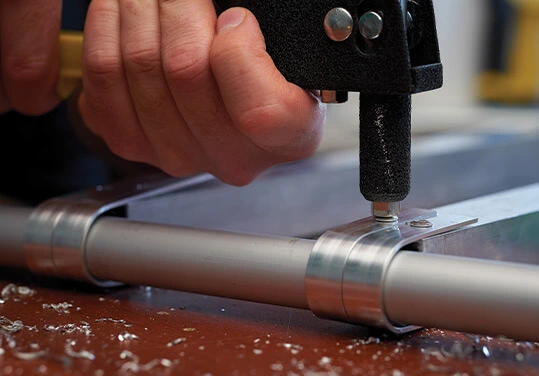
Riveting is a joining method that connects two or more parts through the mechanical deformation of rivets.
What Is Welding?
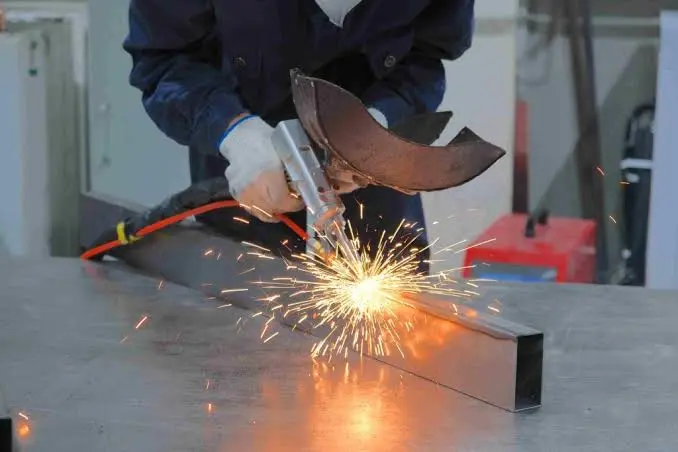
Welding is a joining method in which two or more workpieces form a material bond at the contact area through the application of heat, pressure, or a combination of both.
Riveting vs Welding: What Is the Main Difference?
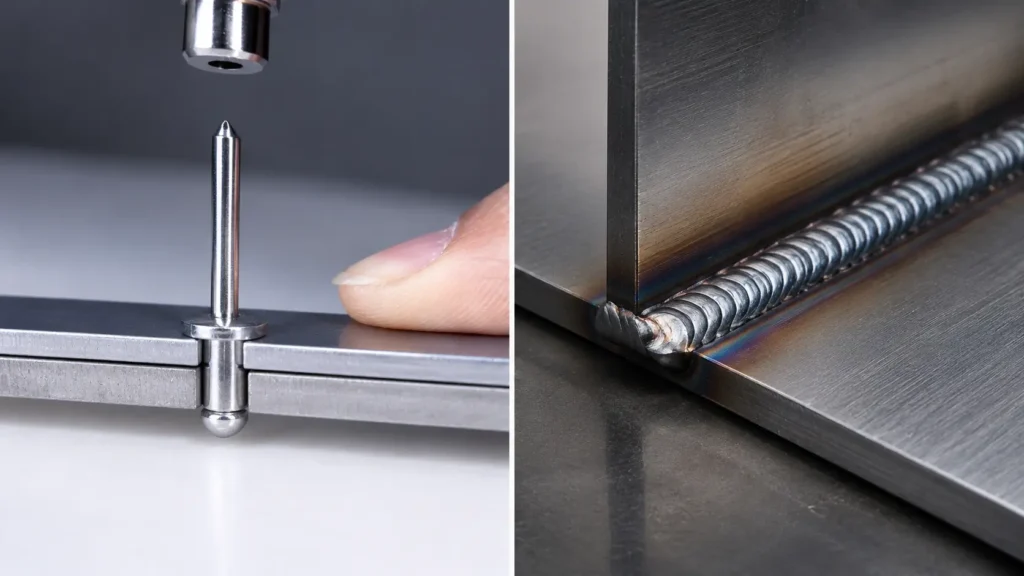
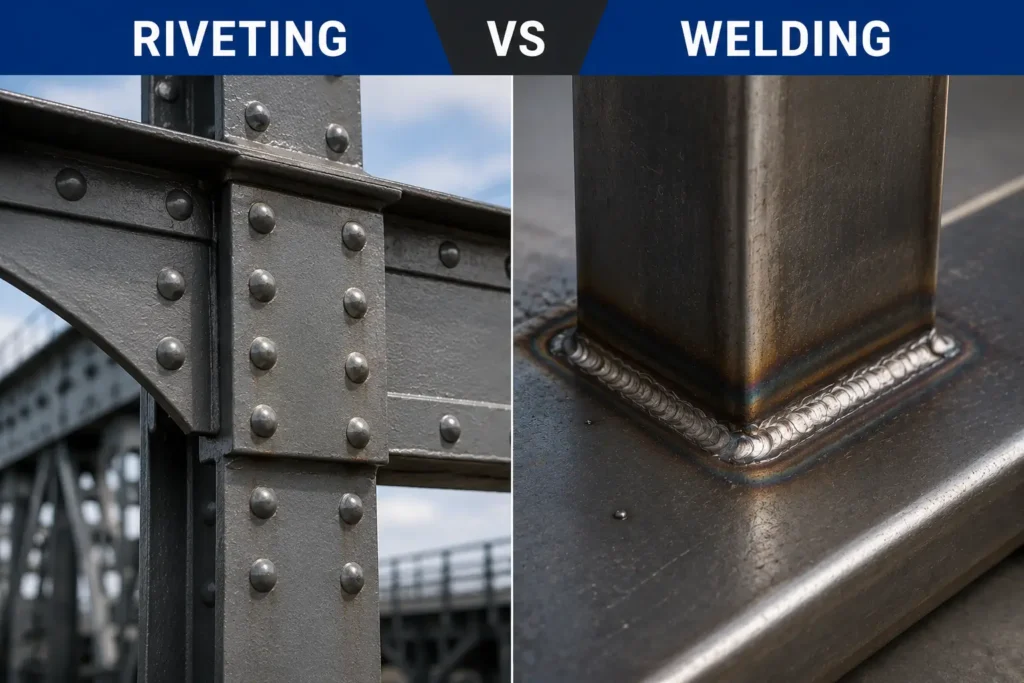
1. Riveting relies on mechanical connection.
During the riveting process, the workpieces do not fuse at the material level. They remain distinct, independent parts, simply held together by the rivet.
2. Welding relies on material bonding.
During welding, localized areas of the base materials are heated and melted. The resulting weld seam or joint becomes an integral part of the structure, creating an effective material bond between the two workpieces at the interface.
3. The load transfer paths differ between the two.
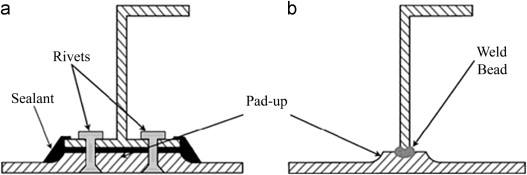
In a riveted joint, the load is transferred through the rivets.
In a welded joint, the load is transferred through weld seams, spot welds, or the weld interface.
4. The two methods affect the workpiece material differently.
Riveting does not alter the microstructure of the base material over a large area.
Welding involves heating, melting, solidification, and cooling, directly affecting the joining area of the workpiece.
Riveting vs Welding: Key Differences at a Glance
| Comparison Factor | Riveting | Welding |
|---|---|---|
| Joining Principle | Uses the plastic deformation of a rivet to clamp the parts and restrict relative movement. | Creates a material bond at the joint through heat, pressure, or a combination of both. |
| Fastener Requirement | Requires a rivet as an independent mechanical fastener. | Does not require a mechanical fastener, although filler metal may be added in some welding processes. |
| Pre-Drilled Holes | Requires aligned installation holes for the rivet. | Does not require rivet installation holes. |
| Effect on Base Material | Does not melt the base material. Most deformation occurs in the rivet. | Acts directly on the joint area and may change the local structure and properties of the base material. |
| Heat Input | Introduces low heat. Cold riveting produces no significant thermal input. | Fusion welding introduces substantial heat, while solid-state welding can form a joint without melting the base material. |
| Joint Form | Forms one or more separate mechanical fastening points. | Can form weld spots, intermittent welds, or continuous weld seams. |
| Load Transfer | Transfers loads through the rivet, hole walls, and contact surfaces between the joined parts. | Transfers loads through the weld metal, weld spots, or bonded joint interface. |
| Thin-Sheet Distortion Risk | Has a lower distortion risk, but incorrect rivet selection or installation settings can still deform thin sheets. | Heat input can cause warping, shrinkage, residual stress, or localized deformation. |
| Dissimilar Material Joining | Can join many dissimilar metals and combinations of metal, plastic, or composite materials. | Is limited by material weldability, melting-point differences, thermal properties, and metallurgical compatibility. |
| Surface Finish Impact | May cause localized damage around the installation hole and rivet head. | Can damage paint, plating, or protective coatings near the welding area and may require surface restoration. |
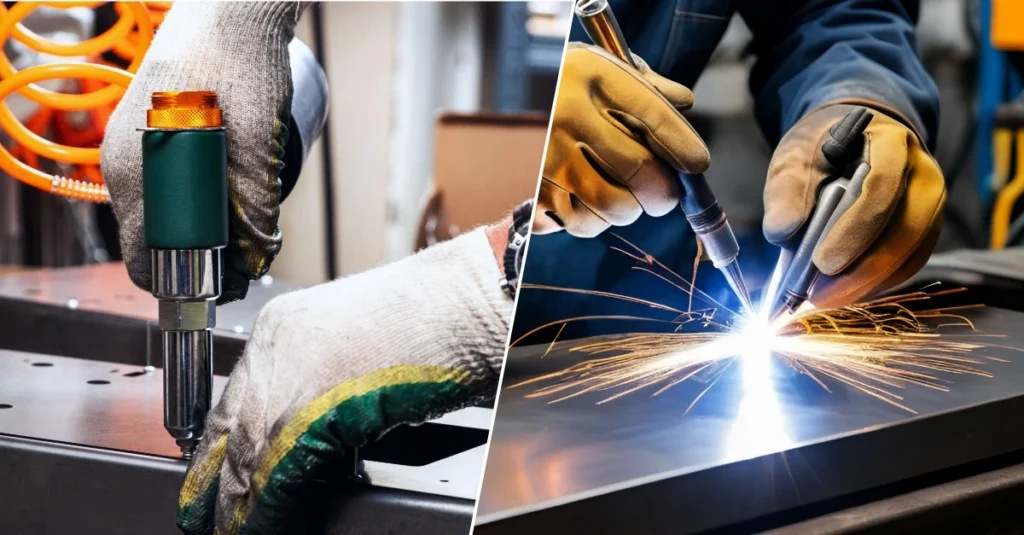
How Does a Riveted Joint Work?
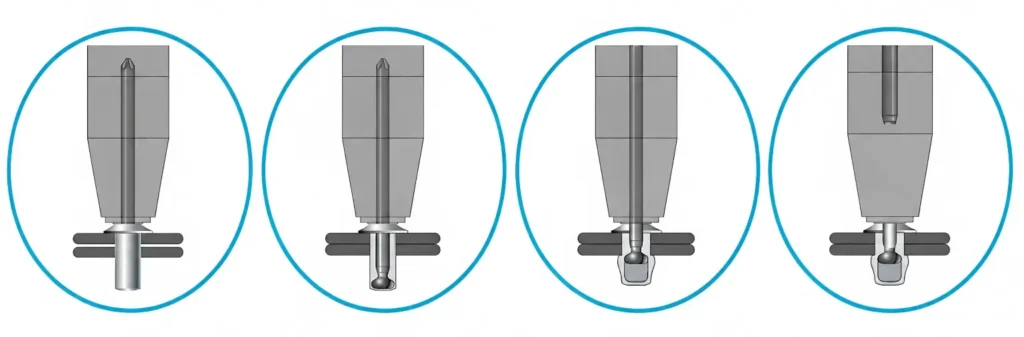
- Insert the rivet into the pre-drilled hole, ensuring that the rivet head sits flush against the workpiece.
- Place the rivet gun’s nozzle over the rivet mandrel and hold the tool vertically.
- Activate the rivet gun and pull the rivet mandrel to expand the rivet body and secure the workpiece.
- Once the rivet mandrel breaks off, the riveting is complete. Check that the rivet is secure and flush.
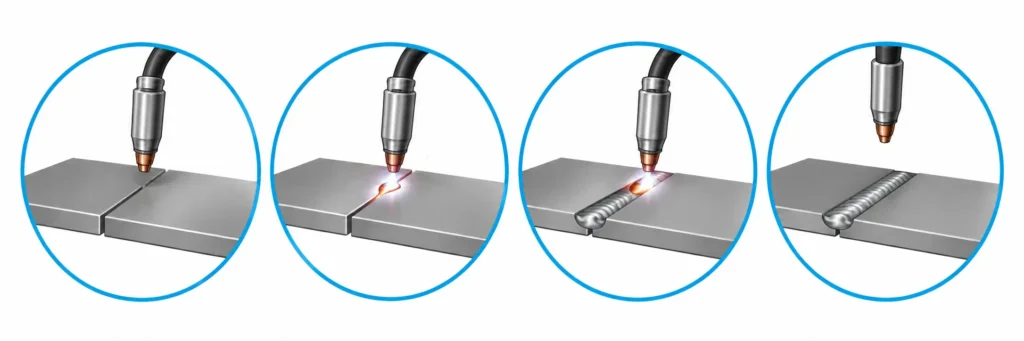
How Does a Welded Joint Work?
- Align and secure the two metal workpieces. Position the welding torch over the joint.
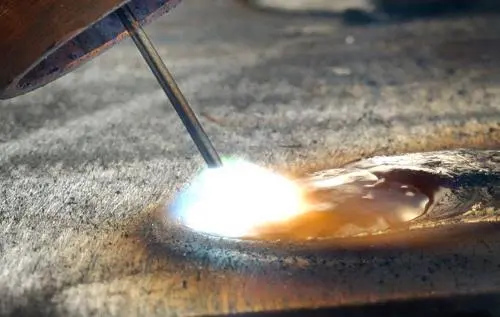
- Upon activating the torch, the electric arc generates high heat, locally melting the base material at the joint and creating a molten pool.
- Move the torch steadily along the joint. The molten pool advances with the torch, while the molten metal behind it begins to cool.
- Stop welding and remove the torch. The molten metal cools to form a solid weld seam, completing the process.
Is Riveting Stronger Than Welding?
Riveting is not necessarily stronger than welding, nor is welding superior to riveting in every situation.
It is important to understand that strength encompasses several different metrics:
- Shear strength: resistance to the workpieces sliding against each other along the joint interface;
- Tensile strength: resistance to the workpieces being pulled apart;
- Fatigue strength: resistance to long-term vibration and cyclic loading;
- Peel strength: resistance to the edges of the sheets being progressively pried apart;
- Load-bearing capacity: the maximum load the joint as a whole can withstand before failure.
Which type of connection is stronger depends on the design of the joint and how the load is applied.
Riveting vs Welding in Tensile and Shear Strength
There is no fixed, absolute rule regarding the relative tensile and shear strengths of riveting versus welding.
Factors affecting the tensile and shear strength of riveted joints:
- Rivet material and diameter
- Bearing area of the rivet head
- Formation of the blind-side head
- Grip range versus actual plate thickness
- Plate thickness and strength
- Installation hole dimensions and quality
- Joint clamping force and surface friction
- Rivet type and structure
Installation quality
Factors affecting the tensile and shear strength of welded joints:
- Effective load-bearing cross-section of the weld
- Strength of base metal and filler material
- Penetration and fusion quality
- Welding defects
- Properties of the heat-affected zone (HAZ)
- Joint configuration and load direction
- Welding heat input and deformation
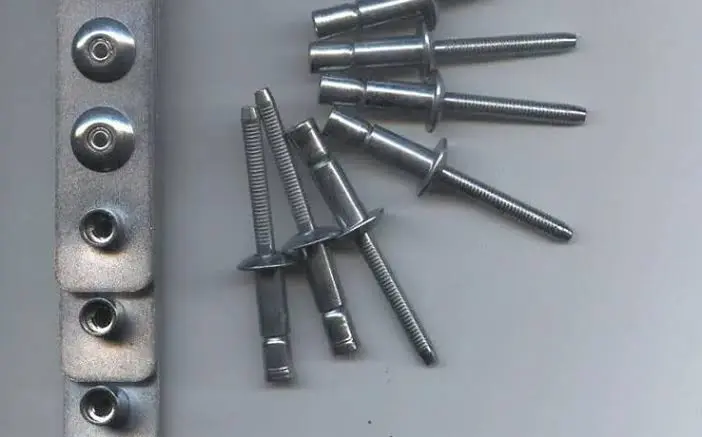
Under tensile loading, high-quality continuous welds can form a large effective load-bearing cross-section, thereby offering high load-carrying capacity; in contrast, the ultimate performance of riveted joints is influenced by factors such as the risk of rivet head pull-through, the quality of blind-side deformation, and the strength of the joined sheets.
When subjected to shear loads, both welding and riveting can achieve stable and reliable connections. Welding relies primarily on the strength of the weld cross-section to withstand shear forces, whereas riveting relies on the interaction between the rivet and the sheets, as well as the distribution of the load across multiple connection points.
Therefore, when assessing the performance differences between the two, the comparison should be based on fully designed and validated joints.
Riveting vs Welding Under Vibration and Dynamic Loads
Both riveting and welding offer distinct advantages when subjected to vibration and dynamic loads; neither is inherently superior to the other.
Riveted joints secure workpieces through the permanent deformation of the rivet. Lacking rotatable threads, they are not susceptible to the gradual loosening caused by rotation—a common issue with standard bolts or screws. However, this does not mean riveted joints are immune to the effects of vibration.
Key factors influencing the dynamic performance of riveted joints include:
- Susceptibility to corrosion or fretting wear in the joint area
- Completeness of the rivet’s formation
- Reliability of workpiece clamping
- Presence of gaps between plates
- Corrosion or fretting wear at the hole edges
- Suitability of the rivet’s structural design for dynamic loads.
Provided the weld is sound and the structural design is rational, welding offers high joint stiffness and enables continuous load transfer between workpieces. However, under dynamic loads, fatigue cracking is a primary concern for welded joints.
Key factors contributing to fatigue cracking include:
- Stress concentration at the weld toe and root
- Welding defects acting as crack initiation sites
- Influence of residual stresses on fatigue behavior
- The fact that high stiffness does not equate to long fatigue life
In summary, to ensure a stable connection under vibration and dynamic loads, it is essential to adopt a comprehensive approach to preventing potential issues.
Riveting vs Welding for Thin Sheet Metal
Key advantages of sheet metal riveting
1. Does not cause thermal deformation from welding
As a method of mechanical fastening, riveting does not generate significant heat, thereby preventing plate warping, shrinkage, or even localized burn-through.
2. Better suited for panels that have already undergone surface treatment
When panels have undergone surface treatments such as painting or galvanizing, riveting does not affect the coating.
3. Capable of joining dissimilar sheet materials
Riveting enables the joining of two sheets made of different materials that cannot be welded together.
What Are the Risks of Riveting Thin Sheet Metal?
1. Rivet head pulls through the thin sheet
If the sheet material is too thin and the rivet head is small, the rivet head may pull through the sheet.
2. Blind-side deformation may damage thin sheets
During riveting, the blind end expands and presses against the rear sheet. If excessive installation force is applied, the thin sheet at the blind side may suffer localized indentation, pressure marks, or deformation around the hole.
Key advantages of sheet metal welding
1. No rivet mounting holes required
Welding eliminates the need to machine mounting holes, thereby avoiding riveting-related issues such as hole misalignment, burrs at the hole edges, and deformation of the hole walls due to compression.
2. Continuous connections can be formed.
After welding, a continuous weld seam can transmit loads uninterruptedly, whereas gaps remain between conventional rivet points.
3. Joint surfaces can be further processed.
The weld seam can undergo additional processing after welding is completed.
What Are the Risks of Welding Thin Sheet Metal?
1. Burn-through of thin sheets
The thinner the sheet, the greater the risk of localized burn-through.
2. Warpage and Shrinkage Deformation
Weld seams shrink during the cooling process. Due to differences in temperature and the degree of shrinkage between the weld zone and the surrounding plate, localized depressions or edge warping may occur in thin sheets.
3. Changes in properties of the heat-affected zone
The area adjacent to the weld undergoes high-temperature thermal cycling, which may alter its hardness, strength, toughness, or corrosion resistance.
4. Damage to coatings and platings
Paint, galvanizing, or other protective layers may burn, vaporize, or decompose under the high temperatures of welding.
Riveting vs Welding for Dissimilar Materials
What Are Dissimilar Materials?
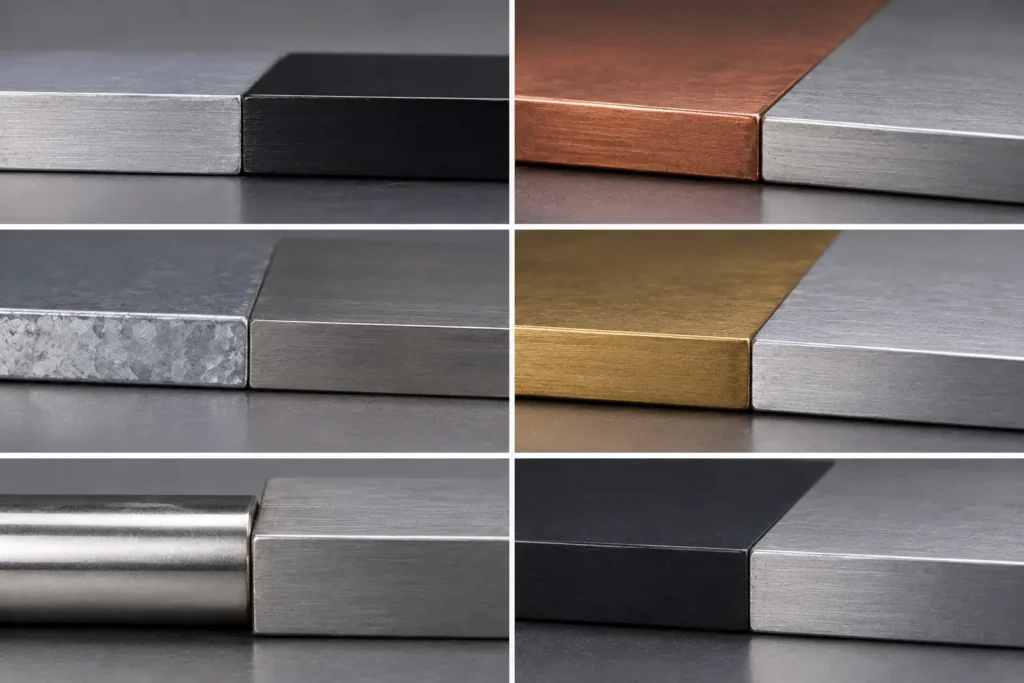
“Dissimilar materials” refers to two workpieces that differ in their composition, physical properties, or mechanical properties.
Advantages of Riveting Dissimilar Materials
1. Does not require welding compatibility of materials
Riveting can join material combinations that are difficult to weld or cannot be joined using conventional fusion welding.
2. No heat-affected zone is created.
Riveting does not introduce significant heat into the base material, thereby avoiding issues such as softening, embrittlement, or warping of the sheets.
3. Capable of joining metal and non-metal materials
Riveting allows for the joining of material combinations such as metal with plastic, or metal with fiberglass composites.
What Are the Risks of Riveting Dissimilar Materials?
1.Galvanic corrosion
Galvanic corrosion occurs when two metals with different electrochemical properties are in direct contact in the presence of a conductive medium.
2. Differences in material hardness and strength
When a high-strength rivet is used on a softer sheet, the rivet itself may remain intact; however, issues such as the rivet head pressing into the sheet or the blind end pulling through the material may occur.
Advantages of Welding Dissimilar Materials
1. Capable of forming a continuous joining interface
Continuous weld seams allow for the sustained transfer of loads along the direction of the joint, rather than relying on discrete connection points.
2. No need for additional independent fasteners
Welding dissimilar materials may still require filler metal, but it does not necessitate the inclusion of mechanical fasteners—such as rivets, bolts, or nuts—in the joint.
3. It reduces the reduction of the base material’s cross-sectional area caused by drilling.
Welding does not require machining mounting holes into the workpiece, allowing the base material’s cross-section to remain largely intact.
What Are the Risks of Welding Dissimilar Materials?
1. Differences in Melting Points
Different sheet materials have different melting points. This can lead to issues where low-melting-point materials may burn or melt excessively, while high-melting-point materials fail to achieve sufficient fusion.
2. Differences in thermal conductivity
Different materials absorb and transfer heat at different rates. This increases the risk of uneven fusion and deformation.
3. Inconsistent thermal expansion and contraction
Different materials have different coefficients of thermal expansion, which can cause joint warping.
Riveting vs Welding for Aluminum, Steel, and Stainless Steel
Material-Specific Comparison
| Material | Key Advantages of Riveting | Key Risks of Riveting | Key Advantages of Welding | Key Risks of Welding |
|---|---|---|---|---|
| Aluminum | Low heat input; suitable for thin sheets, prefinished surfaces, and dissimilar-material joints. | Soft sheets may suffer rivet pull-through, hole deformation, or galvanic corrosion. | Can create continuous, high-rigidity, and sealed joints. | Burn-through, distortion, porosity, and softening of the heat-affected zone. |
| Carbon Steel | Suitable for thin sheets, coated steel, one-sided installation, and on-site assembly. | Hole-wall bearing failure, edge tear-out, and corrosion around damaged coatings. | Mature processes for continuous load transfer and automated production. | Thermal distortion, residual stress, welding defects, and coating damage. |
| Stainless Steel | Avoids welding heat discoloration and suits prefinished surfaces and dissimilar materials. | Incorrect material combinations may cause galvanic corrosion. | Can produce smooth, continuous, rigid, and sealed joints. | Damage to the passive layer, heat tint, distortion, and reduced local corrosion resistance. |
Advantages of Riveting Over Welding
1. No Heat-Affected Zone
The riveting process does not require melting the sheet material; only the rivet body undergoes deformation. Consequently, no weld pool or heat-affected zone—typical of welding—is formed.
Lower Risk of Thin-Sheet Distortion
When joining thin sheets, their low heat capacity makes them prone to rapid temperature rise during welding; as the weld cools and contracts, the sheets may warp, deform, or even suffer from dimensional inaccuracies. Riveting, however, effectively avoids these issues.
Better for Dissimilar Materials
When two materials differ, their melting points and coefficients of thermal expansion also differ, which increases the difficulty of welding.
Less Damage to Coated or Prefinished Surfaces
When the sheet metal has already undergone surface treatments such as painting or galvanizing, riveting has a minimal impact on the appearance; however, welding damages the finish due to the high temperatures involved.
Simpler Equipment and Easier On-Site Installation
Blind riveting can be performed using manual, pneumatic, electric, or automatic riveting equipment. This allows for better maintenance of process consistency.
Easier Repair and Component Replacement
During riveting repairs, the joint can be disassembled by drilling or cutting off the rivets, allowing you to remove only the rivets from the damaged area. After replacing the parts, new rivets can be installed.
Rivets vs Bolts vs Welding: Which Joining Method Is Better?
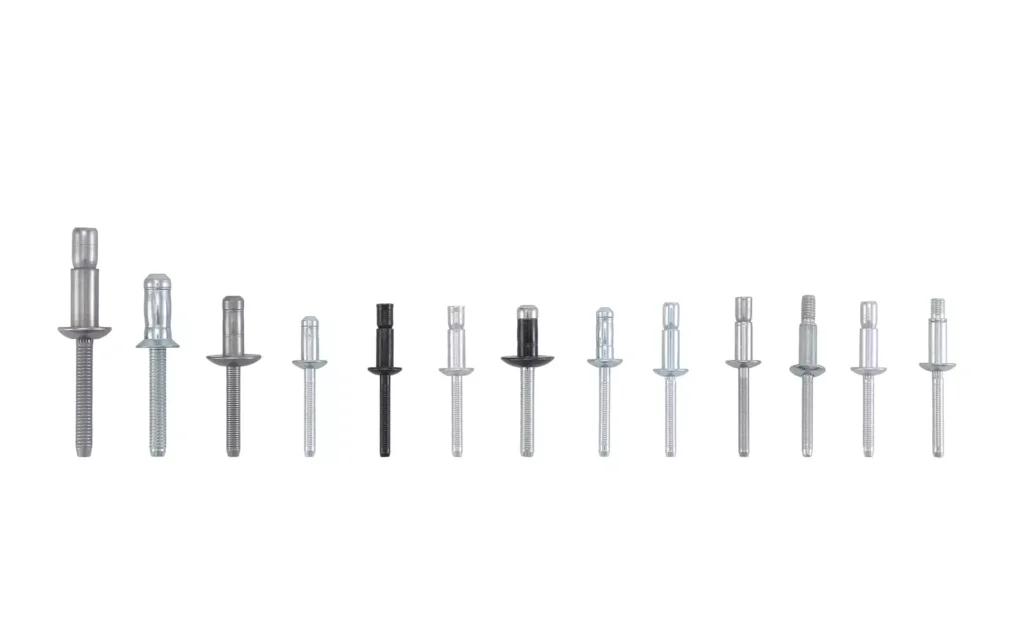
Rivets rely on the permanent deformation of the rivet body to form a mechanical connection; bolts rely on threaded fit and preload to clamp the workpiece; welding uses heat, pressure, or both to bond the materials together at the joint area.
Let’s take a comprehensive look at the comparison of these three through a table.
Rivets vs Bolts vs Welding: Key Differences
| Comparison Factor | Rivets | Bolts | Welding |
|---|---|---|---|
| Joining Principle | Permanent rivet deformation creates a mechanical joint. | Threads generate preload and clamp the parts together. | The joint interface forms a material bond. |
| Installation Holes | Required | Required | No fastener holes required |
| Additional Parts | Requires rivets | Requires bolts and often nuts or washers | No mechanical fasteners; filler metal may be used |
| Removability | Removed by drilling or cutting | Easy to disassemble and reassemble | Removed by cutting or grinding |
| Heat Effect | No welding heat-affected zone | No welding heat-affected zone | May cause distortion, residual stress, and a heat-affected zone |
| One-Sided Installation | Possible with blind rivets | Requires a threaded hole, rivet nut, or rear access | Depends on the welding process and joint access |
| Vibration Performance | No thread loosening, but hole wear or fatigue may occur | May loosen if preload is lost | No fastener loosening, but fatigue cracks may develop |
| Dissimilar Materials | Suitable for many material combinations | Suitable for many material combinations | Limited by material weldability |
| Thin Sheet Metal | Well suited, but pull-through and tear-out must be prevented | May require washers, inserts, or reinforcement | Requires careful control of burn-through and distortion |
| Sealing Capability | Requires sealed rivets or sealant | Requires gaskets, sealing washers, or sealant | A sound continuous weld can create a sealed joint |
| Surface Finish | Localized damage around the hole and rivet head | Localized damage around the hole and bearing surface | Heat may damage coatings around the weld |
| Maintenance | Replaceable after drilling, but the hole may enlarge | Best option for repeated maintenance | Removal may damage the base material |
In the truck projects Rivmate has supported, riveting is frequently employed as an alternative to bolting and welding. However, achieving a reliable connection depends on more than just the joining method; it requires the proper matching of rivet design, mandrel break load, grip range, and material strength.
In one specific truck project, the excessive installation load of Hemlock rivets caused localized deformation in hollow galvanized steel tubing. By optimizing the rivet design and reducing the mandrel break load from 14,000 N to approximately 10,000 N, Rivmate minimized tube deformation while maintaining structural integrity and clamping performance.
This case demonstrates that there is no single “best” solution among riveting, bolting, and welding. A reliable connection can only be achieved by selecting the appropriate joining method and parameters based on specific material, structural, load, and assembly requirements.
Read the Full Case Study: B-Type Hemlock Blind Rivets for Truck Body Steel Tube Structures
Riveting vs Welding: Installation Speed and Production Efficiency
The basic riveting process is as follows:
- Align the workpiece;
- Machine or use pre-drilled mounting holes;
- Insert the rivet into the hole;
- Use tools to shape the rivet;
- Check the fit between the rivet head, blind end, and workpiece.
The basic welding process is as follows:
- Clean the joining surfaces;
- Align and clamp the workpieces;
- Set welding parameters;
- Form weld points or welds;
- Allow the joint to cool properly;
- Clean spatter, slag, or oxide layer;
- Inspect the weld;
- Grind and repair the surface as required.
When Is Riveting More Efficient?
- Thin sheets are prone to welding deformation
- Installation is possible from only one side of the workpiece
- Parts have already undergone surface treatment
- Wide variety of product models and fragmented batch sizes
- On-site installation or maintenance is required
When Is Welding More Efficient?
- Requires continuous long joints
- High-volume production with fixed product structure
- Utilizes high-speed spot welding or laser welding
- Minimal post-weld processing required
- Materials and welding parameters are well-established
Riveting vs Welding: Equipment and Labor Requirements
Equipment Required for Riveting
- Hole-making equipment
- Blind riveting tools
- Nosepieces and jaws
- Mandrel collection system
- Riveting quality inspection equipment
Equipment Required for Welding
- Welding power source
- Welding gun, electrode, or torch
- Wire feeding equipment and welding consumables
- Shielding gas system
- Fixtures and jigs
- Fume extraction and protective equipment
- Post-weld processing equipment
- Welding quality inspection equipment
Labor Requirements for Riveting
- Do not install the wrong rivet;
- Do not use the incorrect nosepiece;
- Do not miss any connection points;
- Do not force installation when holes are misaligned;
- Do not use rivets outside the specified grip range;
- Be able to detect incomplete setting and abnormal mandrel breakage.
Labor Requirements for Welding
- Welding engineers establish parameters and processes;
- Fixture specialists handle positioning and deformation prevention;
- Welders perform the welding;
- Grinders treat the weld surfaces;
- Inspectors examine the welds;
- Anti-corrosion personnel repair the coating;
- Maintenance personnel service the power sources and robots.
Riveting vs Welding: Heat Distortion and Material Damage
Riveting vs Welding: Damage Comparison
| Comparison Factor | Riveting | Welding |
|---|---|---|
| Main Source of Damage | Hole preparation, localized clamping force, and hole-wall loading. | High temperatures, melting, cooling shrinkage, and thermal cycling. |
| Heat-Affected Zone | Does not create a welding heat-affected zone. | Fusion welding creates a heat-affected zone around the weld. |
| Large-Scale Distortion | Lower risk of large-area distortion. | Thin sheets may warp, shrink, or develop wave distortion. |
| Thin-Sheet Burn-Through | Does not occur. | May occur when heat input is excessive. |
| Local Surface Deformation | May cause indentation, rivet pull-through, or hole deformation. | May cause weld shrinkage, surface depressions, or joint misalignment. |
| Material Property Changes | Limited overall change, but local cold working and stress concentration may occur around the hole. | Hardness, strength, and toughness may change in the weld and heat-affected zone. |
| Coating Damage | Concentrated around the hole, tool nosepiece, and rivet head. | Coatings across a wider area around the weld may be damaged by heat. |
| Main Crack Locations | Hole edges, sheet edges, and locally compressed areas. | Weld toes, weld roots, welding defects, and the heat-affected zone. |
| Residual Stress | Mainly localized mechanical installation stress. | May create significant welding residual stress. |
| Dissimilar-Material Risks | Galvanic corrosion, localized crushing, and thermal expansion mismatch. | Lack of fusion, brittle intermetallic compounds, cracking, and thermal expansion mismatch. |
Riveting vs Welding: Corrosion Resistance and Surface Protection
Corrosion Resistance of Riveted Joints
- Galvanic Corrosion
- Coating Damage Around the Hole
- Crevice Corrosion
- Corrosion of the Rivet and Retained Mandrel
Corrosion Resistance of Welded Joints
- Coating Burn-Off
- Heat Tint on Stainless Steel
- Changes in the Heat-Affected Zone
- Weld Defects and Corrosion
- Continuous vs Intermittent Welds
Surface Protection for Riveted Joints
- Rivet Protection
- Hole Protection
- Joint Isolation and Sealing
Surface Protection for Welded Joints
- Remove welding slag and spatter;
- Grind down sharp edges and irregular welds;
- Remove oil, oxides, and contaminants;
- Perform surface treatment on welds and heat-affected zones;
Riveting vs Welding: Inspection, Repair, and Maintenance
Riveting vs Welding: Inspection, Repair, and Maintenance Comparison
| Comparison Factor | Riveting | Welding |
|---|---|---|
| Main Inspection Areas | Rivet heads, retained mandrels, installation holes, hole edges, and overlapping surfaces. | Weld faces, weld toes, weld roots, heat-affected zones, and surrounding base material. |
| Common Visible Problems | Loose, tilted, cracked, or missing rivets; enlarged holes; pull-through; and corrosion. | Cracks, porosity, undercut, incomplete fill, spatter, and welding distortion. |
| Hidden Defects | Incomplete blind-side formation, internal hole wear, and corrosion beneath the joint. | Lack of fusion, incomplete penetration, internal porosity, and internal cracks. |
| Basic Inspection Methods | Visual inspection, dimensional checks, joint-fit inspection, and looseness checks. | Visual inspection and weld-dimension measurement. |
| Advanced Inspection | Critical joints may require sectioning, load testing, or installation-process monitoring. | May require liquid penetrant, magnetic particle, ultrasonic, or radiographic testing. |
| Local Repair | A damaged rivet can be drilled out and replaced individually. | The defective weld area must be removed and welded again. |
| Effect on Surrounding Material | Incorrect drilling may enlarge the hole or damage the surrounding sheet. | Repair welding introduces additional heat effects and residual stress. |
| Post-Repair Inspection | Check the hole size, new rivet formation, and joint fit. | Reinspect the repaired weld and perform additional nondestructive testing when required. |
| Surface Protection Restoration | Restore protection around the hole, rivet head, and overlapping surfaces. | Restore coatings across the weld and the surrounding heat-affected area. |
| Maintenance Convenience | Individual fastening points are relatively easy to replace. | Continuous weld repairs are more complex and may require shutdowns and specialized equipment. |
Riveting vs Welding: Cost Comparison
Riveting vs Welding: Cost Comparison
| Cost Factor | Riveting | Welding |
|---|---|---|
| Initial Equipment Cost | Manual and electric riveting tools require lower investment, while automated systems increase equipment costs. | Welding machines and auxiliary systems require higher investment. Robotic and laser equipment cost even more. |
| Joining Materials | Each fastening point requires an individual rivet. | Consumes welding wire, electrodes, shielding gas, or other filler materials. |
| Joint Preparation | Requires hole preparation, deburring, and accurate hole positioning. | Requires surface cleaning, clamping, gap control, and sometimes edge preparation. |
| Labor Requirements | Installation is easier to standardize, but many fastening points increase labor time. | Manual welding requires greater skill, while continuous welds can reduce repetitive point-by-point work. |
| Energy Consumption | Mainly includes hole preparation, riveting tools, and compressed air. | Includes welding power, shielding gas, ventilation, cooling, and post-weld processing. |
| Fixtures and Tooling | Fixtures mainly maintain hole alignment and close contact between the parts. | Fixtures must also control thermal distortion, weld shrinkage, and torch movement. |
| Post-Processing | Requires localized cleaning, sealing, and coating repair. | May require grinding, straightening, cleaning, and extensive coating restoration. |
| Inspection | Mainly involves visual, dimensional, and rivet-formation checks. | Critical welds may require professional nondestructive testing. |
| Rework | A defective rivet can be drilled out, but removal may enlarge the installation hole. | The defective weld must be removed, rewelded, and inspected again. |
| Maintenance | Individual fastening points are relatively easy to replace. | Continuous weld repairs are more complex and may affect the surrounding base material. |
When Should You Use Riveting Instead of Welding?
1. When Joining Thin Sheet Metal
Thin sheets have low rigidity. When welding is used, they are prone to surface warping, local buckling, and burn-through; using rivets with large flange heads can effectively prevent these issues.
2. When the Material Must Not Be Heated
Some materials, such as plastics and composite panels, are unsuitable for welding, as the heat can damage them; riveting is a more suitable method for these materials.
3. When Joining Dissimilar Materials
Dissimilar materials exhibit significant differences in melting points, thermal conductivity, and coefficients of thermal expansion, making it difficult to fuse them together through welding. Riveting, however, allows for the direct joining of dissimilar materials.
4. When the Parts Are Already Coated or Finished
When sheet metal has already undergone surface treatments such as painting or galvanizing, welding would damage the surface coating, whereas riveting does not cause extensive damage to the surface.
Common Mistakes When Replacing Welding with Riveting
Error 1: Directly comparing the strength of a single rivet with that of a continuous weld seam.
A riveted joint bears loads through the combined action of multiple rivets, installation holes, and the base plates. The design load-bearing capacity of the complete riveted joint should be compared with that of the original welded joint.
Error 2: Using standard blind rivets instead of structural welds
Standard open-end blind rivets are primarily used for general sheet metal assembly; they cannot replace load-bearing welds. Structural blind rivets should be used to ensure superior tensile and shear strength.
Error 3: Considering only shear loads while ignoring tensile and peel loads.
Riveted joints may be subjected to shear, tension, and peel loads simultaneously. Peel loads can cause the sheets to progressively pry apart starting from the joint edge; therefore, the actual direction of the load must be clearly identified.
Error 4: Incorrect selection of rivet diameter, material, or head type
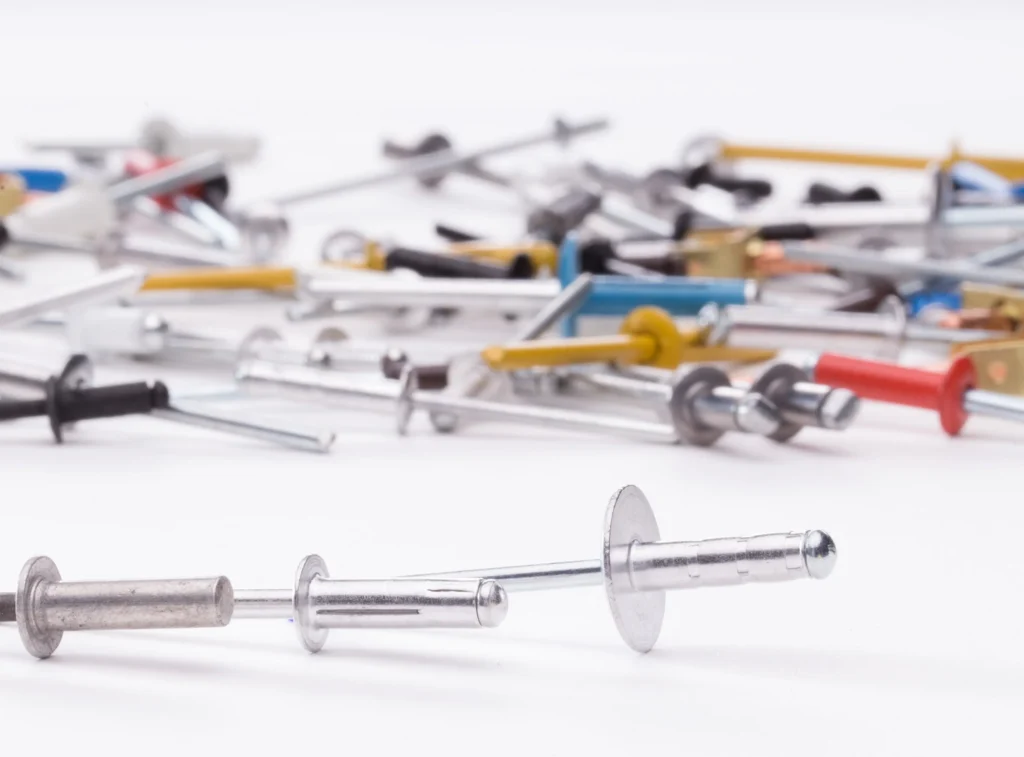
Selecting a rivet involves more than just considering its size. Factors such as material, diameter, head type, strength, and grip range must also be taken into account. Relying on a single factor is insufficient for choosing the right rivet.
Error 5: Ignoring the grip range versus the actual clamping thickness
If the grip range does not match, the rivet clamping force may be insufficient, or thin sheets may be crushed or damaged by excessive pressure. You must calculate the total thickness of all sheets, rather than the thickness of a single sheet.
Error 6: Substandard control of mounting hole dimensions and locations
If the hole diameter is too large, the rivet fails to fill the hole adequately, making the joint prone to initial slip; if the diameter is too small, the rivet is difficult to insert, and the surface coating may be scratched.
Error 7: Blind riveting without ensuring the workpieces are fully flush against each other.
If there is a gap between the sheets, issues such as hole misalignment and incorrect rivet grip range can occur, leading to riveting failure.
Error 8: Ignoring sealing requirements for joints
When an airtight or watertight connection is required, using standard rivets fails to meet sealing specifications. Instead, closed-end blind rivets should be used in conjunction with sealing washers and sealant.
Riveting vs Welding: Final Recommendation
Riveting vs Welding: Final Selection Guide
| Project Condition | Consider Riveting First | Consider Welding First |
|---|---|---|
| Thin sheets are sensitive to heat distortion | Yes. Riveting avoids welding heat input. | Possible, but heat input must be carefully controlled. |
| Joining dissimilar materials | Yes. The materials do not need to form a metallurgical bond. | Material weldability and metallurgical compatibility must be confirmed. |
| Only one side of the joint is accessible | Blind rivets provide a clear advantage. | Suitability depends on the welding process and joint accessibility. |
| Parts are already coated or surface-finished | Yes. Most of the existing finish can be preserved. | Post-weld coating and surface restoration may be required. |
| A continuous sealed joint is required | Additional sealant and joint-sealing design are required. | A sound continuous weld offers a clear advantage. |
| High joint rigidity is required | Requires dedicated joint design and validation. | A continuous weld generally provides greater joint rigidity. |
| Installation holes are not permitted | Not suitable because riveting requires holes. | More suitable because no fastener holes are required. |
| Visible fastener heads are not permitted | Not suitable unless a countersunk design is acceptable. | More suitable for a smooth, fastener-free surface. |
| Local repair or panel replacement is required | More convenient because individual rivets can be replaced. | Repair is more complex and may affect the surrounding material. |
| Multiple models or low-volume production | Tooling and process changes are relatively flexible. | Product changes may require new fixtures and welding parameters. |
| Fixed product with high-volume automation | Automated riveting can be used. | Automated welding may provide a higher production rate. |
| High vibration or fatigue loading | Requires structural rivets and complete fatigue validation. | Requires fatigue-resistant weld design and strict quality control. |
FAQs
What are the main differences between riveting and welding for metal fabrication?
Riveting creates a mechanical locking structure between workpieces by utilizing the expansion and deformation of rivets;
Welding, on the other hand, fuses workpieces at the joint area through the application of heat, pressure, or a combination of both, forming a strong bond.
How does the environmental impact of riveting compare to welding?
Riveting consumes less energy during the assembly stage and does not generate welding fumes or require shielding gas.
Welding requires more electricity, exhaust systems, and post-weld processing, and generates welding arcs, metal spatter, and welding fumes.
Can riveting be a better choice than welding for automotive repairs?
Yes, for automotive repairs, a combination of riveting and structural adhesive is more suitable.
This is because welding can cause deformation of the body panels and even alter the material properties in localized areas, whereas riveting does not require melting the vehicle body, effectively avoiding the issues associated with welding.
Which joining method is more cost-effective for high-volume manufacturing?
Riveting is more economical for dissimilar materials, thin sheets, and surface-treated sheets.
Automated welding offers a cost advantage for continuous production involving a high density of joining points.
What types of materials are best suited for riveting versus welding?
Materials better suited for riveting include:
- Thin aluminum, steel, and stainless steel sheets;
- Galvanized, coated, and anodized aluminum sheets;
- Dissimilar metal combinations (e.g., aluminum with steel or stainless steel);
- Combinations of metal with plastics, composite materials, or sandwich panels;
- Materials prone to softening, deformation, or coating damage during welding.
Materials better suited for welding include:
- Carbon steel (with established welding processes);
- Weldable stainless steel;
- Aluminum alloys suitable for specific welding processes;
- Medium-to-thick metal plates requiring continuous load-bearing capacity;
- Metal structures requiring airtightness, liquid-tightness, or an absence of exposed fasteners.
Work with a IATF 16949 Certified Blind Rivet Manufacturer
Get High Quality Rivets Instead of Huck and Avdel Rivets
Rivmate Rivet
Rivmate is China’s manufacturers of pop rivets. The company is IATF 16949 certified and offers high-strength structural pop rivets that serve as alternatives to Huck and Avdel products.
Explore Rivmate Cases
Rivmate Rivet
Rivmate is China’s manufacturers of pop rivets. The company is IATF 16949 certified and offers high-strength structural pop rivets that serve as alternatives to Huck and Avdel products.

Hey There, I'm Allen!
I am the boss of Rivmate. For over two decades, we have specialized in the manufacture of blind rivets, providing our customers with reliable riveting solutions. Need riveting services? Feel free to contact us.