The choice of blind rivet for thick materials depends on whether the blind rivet’s grip range covers the total thickness of the material.
If the thickness is uniform, we recommend using a Long-Grip Blind Rivet. If the total material thickness varies significantly across different locations, we recommend selecting a Multi-Grip Blind Rivet. This reduces the need to change rivets.
Table of Contents
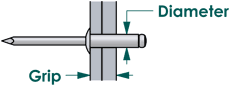
Before selecting a blind rivet suitable for thick materials, the most important thing is to determine the actual Total Material Thickness of all the materials you need to join.This is because, after installation, whether the blind rivet can be properly set depends on whether its Grip Range covers this total thickness.
How to Calculate Material Stack Thickness?
Material stack thickness is the sum of the thicknesses of all materials that need to be clamped by the blind rivet after riveting. If the joint includes washers, gussets, or other parts that need to be clamped by the rivet, these should all be included in the calculation.
Grip Range vs. Rivet Length
Many customers confuse these two parameters, but Rivet Length is not the same as Grip Range. The Grip Range determines how thick a material can be gripped, while Rivet Length determines the length of the blind rivet body itself.
- Grip Range: Represents the total thickness range of materials that a blind rivet can properly grip.
- Rivet Length: The actual length of the blind rivet body, including the ferrule, but excluding the mandrel length.
What happens if the Grip Range is too short or too long?
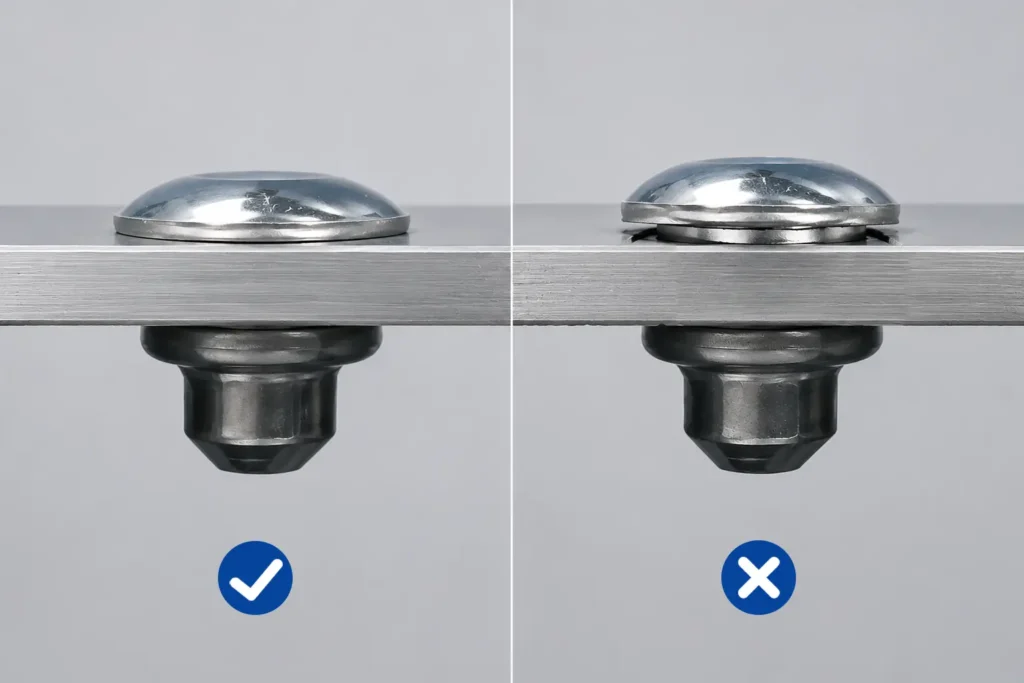
If the total thickness of the materials to be joined exceeds the blind rivet’s Grip Range, the blind rivet will not deform properly, resulting in the following issues:
- The blind end of the rivet body cannot deform completely
- The rivet head cannot fully seat against the material
- Abnormal breakage of the mandrel
- Loose joint with insufficient clamping force
- Reduced tensile or shear strength
- Loosening after riveting
If the total thickness of the materials to be joined is less than the grip range, the blind rivet will be unable to secure these layers of material, resulting in the following issues:
- Abnormal formation of the blind end
- Insufficient clamping
- Loosening after installation
- Abnormal mandrel breakage location
- Unstable joint performance
Therefore, when selecting a blind rivet, you must ensure that the material thickness falls within the manufacturer’s specified grip range.
Thick-Material Blind Rivet Selection Table
| Application Condition | Recommended Blind Rivet | Key Parameters to Check | Why It Is Suitable |
|---|---|---|---|
| Total material thickness is fixed, such as 8 mm or 10 mm at each joint | Long-Grip Blind Rivet | Grip Range | Allows the grip range to be closely matched to a consistent material thickness. |
| Total material thickness varies significantly between different joint locations | Multi-Grip Blind Rivet | Min. / Max. Grip Range | One rivet size can cover a wider range of material thicknesses, reducing the need for multiple rivet lengths. |
| Thick materials must withstand relatively high shear or tensile loads | Structural Blind Rivet | Shear / Tensile Strength | Typically provides higher joint strength and more reliable mandrel locking performance. |
| Thick-material joints are exposed to continuous vibration or impact loads | Structural / Locked-Mandrel Rivet | Mandrel Retention, Strength | Better suited for dynamic-load applications such as automotive, trucks, trailers, and industrial machinery. |
| A thick plate is joined to a thinner sheet, especially when the blind-side material is thin | Large Flange / Bulbing-Type Rivet | Blind-Side Bearing Area | Distributes the load over a larger area and helps reduce the risk of pulling through or damaging thin sheet material. |
| Thick metal is joined to plastic or composite materials | Bulbing / Large Bearing Area Rivet | Material Compatibility, Blind-Side Formation | Helps reduce localized stress and excessive deformation in softer materials. |
| Thick-material joints are used outdoors or in humid environments | Corrosion-Resistant Blind Rivet | Rivet Material, Coating | In addition to material thickness, long-term corrosion resistance must also be considered. |
| The joint requires improved water or dust resistance | Sealed Blind Rivet | Grip Range, Seal Design | The sealed design helps reduce the risk of water or dust entering through the riveted joint. |
| General thick sheet-metal assembly with relatively low loads | Standard Blind Rivet with Extended Grip | Grip Range, Diameter | If the required joint strength is achieved, a structural blind rivet is not always necessary. |
Step 1: Choose the Blind Rivet Type
After confirming the total grip thickness of the material, you need to select the appropriate type of blind rivet.
When joining thick materials, you should select the rivet type based on variations in thickness, load size, the presence of vibration, and whether the material on the reverse side is prone to deformation.
Scenario 1: Fixed sheet thickness: Prioritize Long-Grip Blind Rivets
When the total thickness at the riveting location remains essentially constant, you can use Long-Grip Blind Rivets, which are designed to accommodate thicker material combinations.
Common applications:
- Thick steel plate joints
- Thick aluminum plate joints
- Bracket-to-sheet metal joints
- Machinery enclosures
- Standard thick sheet metal structures
Scenario 2: Significant Thickness Variations in Thick Sheets: Select Multi-Grip Blind Rivets
If the riveting thickness varies across different locations on the same product, you should consider Multi-Grip Blind Rivets. The key advantage of Multi-Grip Blind Rivets is that a single rivet size can cover a wider grip range than standard blind rivets. This helps reduce inventory and minimizes the risk of selecting the wrong rivet.
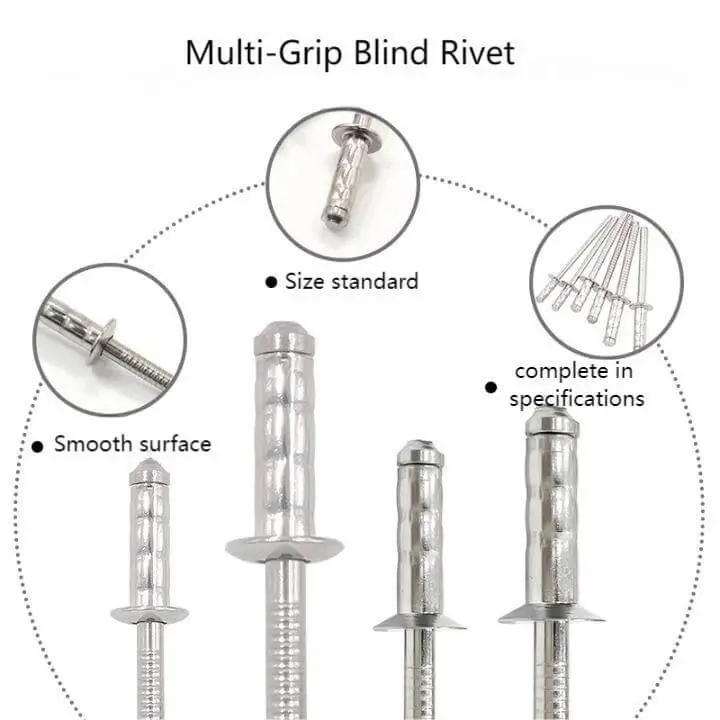
TIPS: It is important to note that while the Multi-Grip Blind Rivet has a wider grip range, you must ensure that both the thinnest and thickest points of the sheet metal fall within the rivet’s grip range.
Scenario 3. Thick sheet metal must withstand high loads: Choose a Structural Blind Rivet
If the thick material you are joining requires not only a stable connection but also the ability to withstand high levels of vibration, impact, and load, Standard open-end blind rivets cannot meet the mechanical performance requirements for such joints. Therefore, we recommend considering structural blind rivets. This is because structural blind rivets form a reliable mechanical interlock after riveting, enhancing both shear and tensile strength.
Common Applications:
- Trucks & Trailers
- Automotive Components
- Industrial Machinery
- Heavy Equipment
- Structural Sheet Metal
Based on our past experience, not all thick materials require the use of structural blind rivets. You need to assess whether the loads at the joint location and the joint requirements can be met by the strength of a structural blind rivet.
Scenario 4: Thick plate joined to a thin plate or soft material: Consider a large-flange or bulb Tite blind rivet
When the material combination you are joining is thick steel sheet + thin aluminum sheet, or thick metal + plastic/composite material, the small head of a blind rivet can concentrate the load, causing deformation or tearing on the thinner, softer side of the sheet.
In such cases,when riveting from the side of the thick plate, you can choose a standard rivet head. However, when riveting from the side of the thin plate or soft material, we recommend using a large-flange blind rivet or a Bulb Tite blind rivet. These help provide a larger load-bearing area, distributing the load over a larger portion of the sheet.
Scenario 5. Thick materials require waterproofing or dustproofing: Consider Sealed Blind Rivets
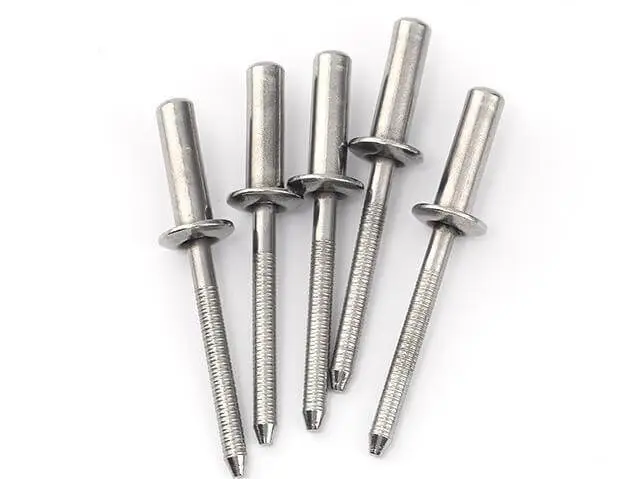
To prevent water and dust from entering through the rivet location, sealed blind rivets are your ideal choice.
Common Applications:
- Outdoor equipment
- Electrical enclosures
- HVAC housings
- Truck bodies
- Roof structures
- Humid environments
The choice of rivet diameter depends on the load the joint must withstand. You should focus on the following factors when making your decision:
- Shear Load
- Tensile Load
- Number of Rivets
- Sheet Metal Strength
- Hole Diameter
- Joint Configuration
- Presence of vibration or impact
· Rivet material and type
How to Select the Appropriate Rivet Diameter?
- Determine the total grip thickness
Find the rivet diameter that can cover the combined thickness of all the sheets you intend to join. - Determine the loads the joint must withstand
Confirm whether the connection point is primarily subjected to shear, tensile, vibration, or impact loads. - Compare the actual strength of different diameters
Select a specification from the manufacturer’s technical data sheet that meets the design load and provides a reasonable safety margin.To learn more about rivet technical specifications, click on the Rivmate catalog.
Why isn’t a larger rivet diameter necessarily better?
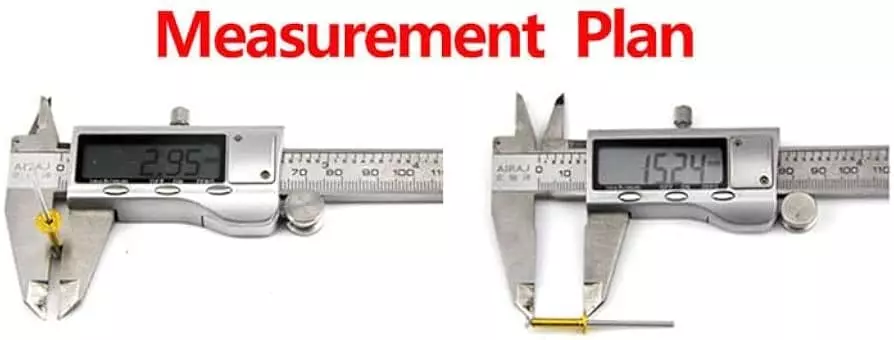
- The larger the rivet diameter, the larger the hole diameter required in the sheet metal
If the installation hole is too large—especially near the edge of the sheet—there will be less effective material remaining around the hole. Therefore, you need to check the hole diameter and edge distance. - The joint location may fail due to sheet metal weakness
The larger the rivet diameter, the greater the load generated by the rivet during the riveting process. If you do not consider the load-bearing capacity of the sheet metal, increasing the rivet diameter can lead to deformation around the hole, the sheet metal being torn through, and joint cracking. - Larger-diameter rivets require more powerful installation tools
As the rivet diameter increases, so does the structural strength of the rivet. Consequently, the required installation force also increases. Therefore, you need to verify that the rivet gun is capable of installing larger-diameter rivets.
Step 3: Match Rivet and Mandrel Material to the Application
- Aluminum Rivet
Lightweight and corrosion-resistant, but with relatively low strength. Suitable for joining aluminum sheets, aluminum profiles, or thick materials that do not require high structural loads. - Steel Rivet
Compared to aluminum rivets, steel rivets have higher tensile and shear strength. They are widely used in industrial equipment, sheet metal structures, and general high-load connections. - Stainless Steel Rivet
Compared to aluminum and carbon steel, it offers the highest corrosion resistance and long-term stability. It is particularly suitable for use in damp, outdoor, or corrosive environments.
| Rivet Body + Mandrel | Key Characteristics | Typical Applications |
|---|---|---|
| Aluminum + Steel | Lightweight and cost-effective, while offering better setting capability and strength than an all-aluminum combination. One of the most common general-purpose blind rivet combinations. | Aluminum sheet, general sheet metal, enclosures, appliances, HVAC systems |
| Aluminum + Aluminum | Very lightweight and non-ferrous, but generally provides lower mechanical strength than aluminum rivets with steel mandrels. | Aluminum products, lightweight assemblies, low-load applications |
| Aluminum + Stainless Steel | Combines a lightweight aluminum rivet body with a corrosion-resistant stainless steel mandrel. Suitable where better corrosion performance is required. | Outdoor aluminum assemblies, humid environments, equipment housings |
| Steel + Steel | Provides relatively high mechanical strength at a competitive cost. A common choice for thick steel and general industrial assemblies. | Machinery, steel brackets, thick sheet metal, industrial structures |
| Stainless Steel + Stainless Steel | Offers high strength and excellent corrosion resistance, but normally requires higher installation force and has a higher material cost. | Outdoor equipment, food equipment, stainless steel assemblies, corrosive environments |
| Copper + Steel | Combines the electrical conductivity and appearance of a copper rivet body with the stronger setting performance of a steel mandrel. | Electrical equipment, copper components, decorative assemblies |
| Copper + Stainless Steel | Combines the characteristics of a copper rivet body with improved mandrel corrosion resistance for more demanding environments. | Electrical applications, outdoor copper components, specialized industrial assemblies |
Step 4: Choose the Head Style
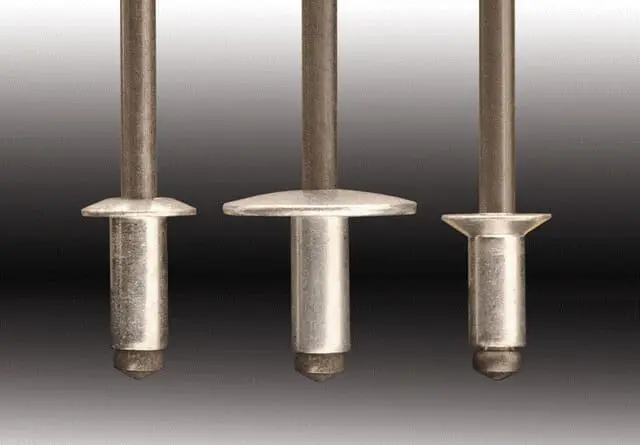
For thick materials, selecting different head styles affects various installation factors. These include the contact area between the rivet head and the material surface, the load-bearing capacity of the joint surface, the appearance of the workpiece surface, and whether thinner or softer materials experience localized deformation.
Dome Head
This is the most commonly used head style for connecting thick materials. For applications with no special surface requirements, the Dome Head Blind Rivet is the preferred choice.
Best suited for:
- Thick steel plates
- Thick aluminum plates
- Steel brackets
- Machinery and equipment
- Metal enclosures
- General industrial sheet metal connections
Large Flange Head
Features a larger head diameter, effectively distributing concentrated loads. If the material on the side where the rivet head is located is relatively thin, you should consider increasing the load-bearing area of the rivet head to prevent tearing through the sheet metal.
Best suited for:
- Thin sheet metal + thick sheet metal
- Aluminum sheet + thick steel brackets
- Plastic + metal
- Composite materials + metal
- Joints where the load-bearing capacity around the material hole is weak
Countersunk Head
If your product requires that the rivet not protrude from the workpiece surface, then the Countersunk Head Blind Rivet is your ideal choice.
Best suited for:
- Metal panels with high aesthetic requirements
- Equipment requiring a flush surface
- Applications where the rivet head must not interfere with the structure of other parts
- Slide rails or sliding surfaces
- Locations that will be covered by other components later
TIPS: When using countersunk head blind rivets, you must verify that the material can be machined to produce the correct countersunk hole. Ensure that the angle, depth, and diameter of the countersunk hole match the rivet head.
TIPS: When using countersunk head blind rivets, you must verify that the material can be machined to produce the correct countersunk hole. Ensure that the angle, depth, and diameter of the countersunk hole match the rivet head.
Step 5: Verify Hole Size, Joint Design, and Installation Tool
Many riveting failures are not caused by the quality of the rivets themselves, but rather by mismatches in hole size, joint design, and installation tools.
- Verify the Hole Size
Blind rivets must be installed using the recommended hole size specified by the manufacturer for that model. - Verify the Joint Design
You need to check whether the distance from the center of the hole to the edge of the sheet metal is appropriate. Avoid placing the hole too close to the edge, as this can cause the sheet metal to crack, deform, or tear under load during riveting. - Verify the Installation Tool
Before using a riveting tool, you need to check whether the tool is suitable for installing this specific rivet. Ensure that the tool’s nozzle, pulling force, and stroke are compatible with the rivet.
Quick Checklist Before Installing Thick Materials
| Check Item | What You Need to Verify |
|---|---|
| Hole Size | Confirm that the hole diameter is within the recommended hole size range for the selected blind rivet. |
| Hole Quality | Check that the holes are round, properly aligned, and free from excessive burrs or deformation. |
| Edge Distance | Make sure the rivet hole is not positioned too close to the edge of the material. |
| Joint Strength | Verify that both the blind rivet and the joined materials can withstand the required design load. |
| Load Direction | Determine whether the joint is mainly subjected to shear load, tensile load, or a combination of both. |
| Blind-Side Clearance | Confirm that there is enough space behind the material for the rivet body to form correctly during installation. |
| Nosepiece | Make sure the installation tool nosepiece matches the rivet and mandrel diameter. |
| Pulling Force | Confirm that the riveting tool provides sufficient pulling force for the selected rivet type and size. |
| Tool Stroke | Check that the tool stroke is sufficient to complete the full rivet setting process. |
| Tool Access | Make sure the riveting tool can approach the joint straight and remain stable during installation. |
Real Rivmate Application Case: Selecting Blind Rivets for Thick Material
Rivmate Application Case 1
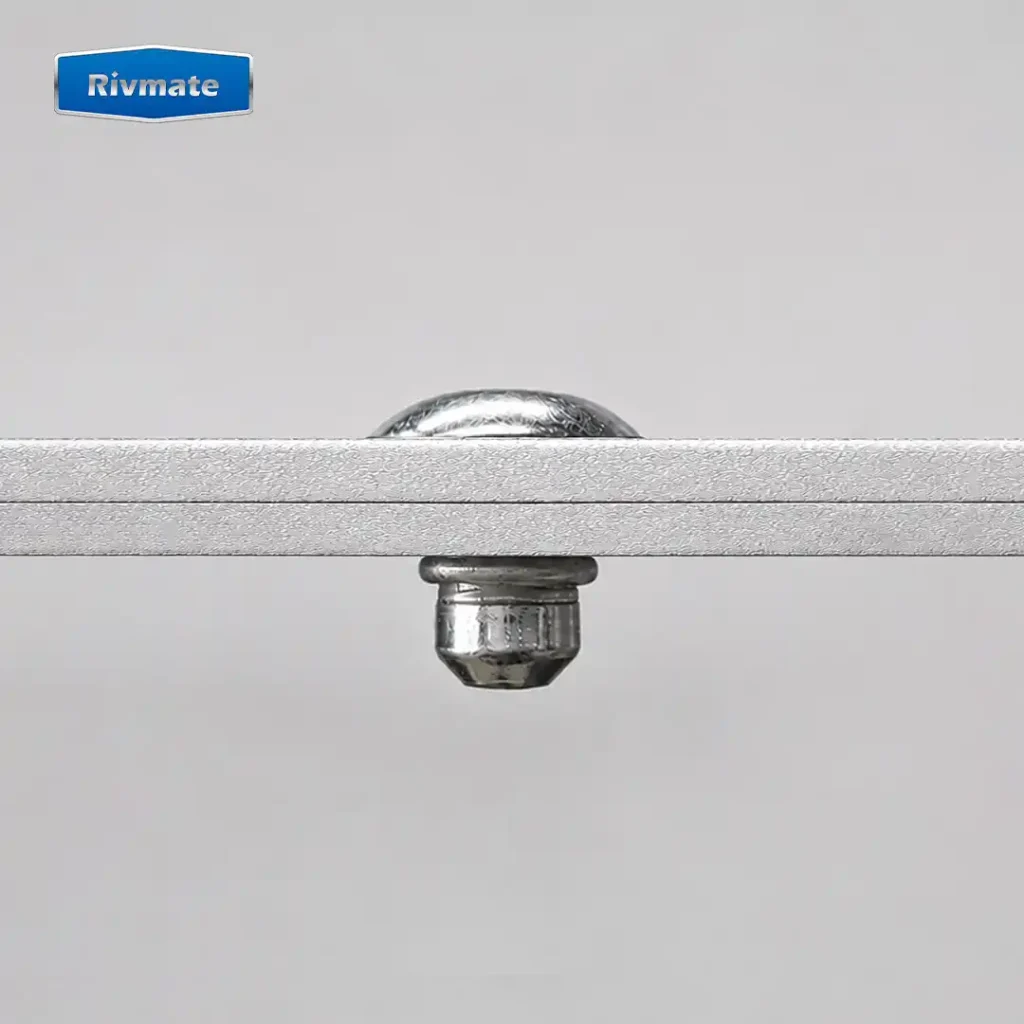
You want to join two thick aluminum plates: the first plate is 5 mm thick, and the second is 4 mm thick, for a total riveted thickness of 9 mm.
- First, ensure that the maximum grip range of the rivet you select is greater than 9 mm. (For example, the Rivmate BBN model has a grip range of 8–11 mm, which meets the requirement.)
- Next, select the rivet material. Since both materials being joined are aluminum, prioritize an “Aluminum Body + Steel Mandrel” configuration, which provides adequate joint strength. If high corrosion resistance is required, consider an “Aluminum Body + Stainless Steel Mandrel” configuration.
- Finally, select the rivet head type. For applications without specific aesthetic requirements, use a dome head. Since the 4mm aluminum sheet is relatively thin, consider that the riveting pressure may cause localized deformation. In this case, select a large flange head to increase the aluminum sheet’s pressure-bearing area.
Rivmate Application Case 2
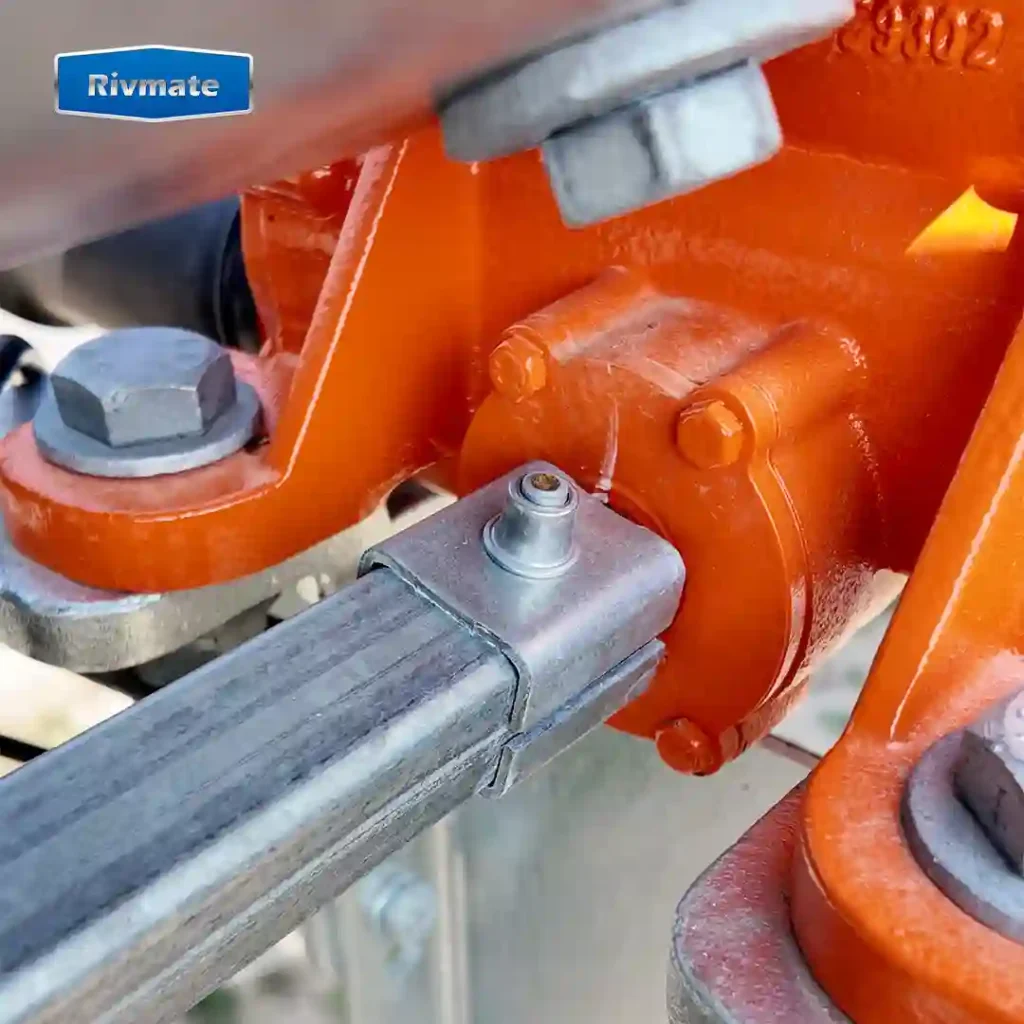
You need to join thick steel brackets exposed to the outdoors, where the steel plate is 6 mm thick and the steel bracket is 8 mm thick, for a total clamping thickness of 14 mm.
- First, select a rivet with a grip range of 13.7–14.3 mm. Take the actual tolerances of the plates into account. For example, the Rivmate Open Type 1AS48200 series has a grip range of 12–16 mm.
- Next, select the rivet type. If the thick steel bracket is used in a high-load environment subject to continuous vibration, we recommend considering a structural rivet.
- Finally, select the rivet material. Since the connection point is exposed to the outdoors and will be subject to rain erosion, choose a stainless steel blind rivet or a steel blind rivet with a corrosion-resistant coating.
Rivmate Application Case 3
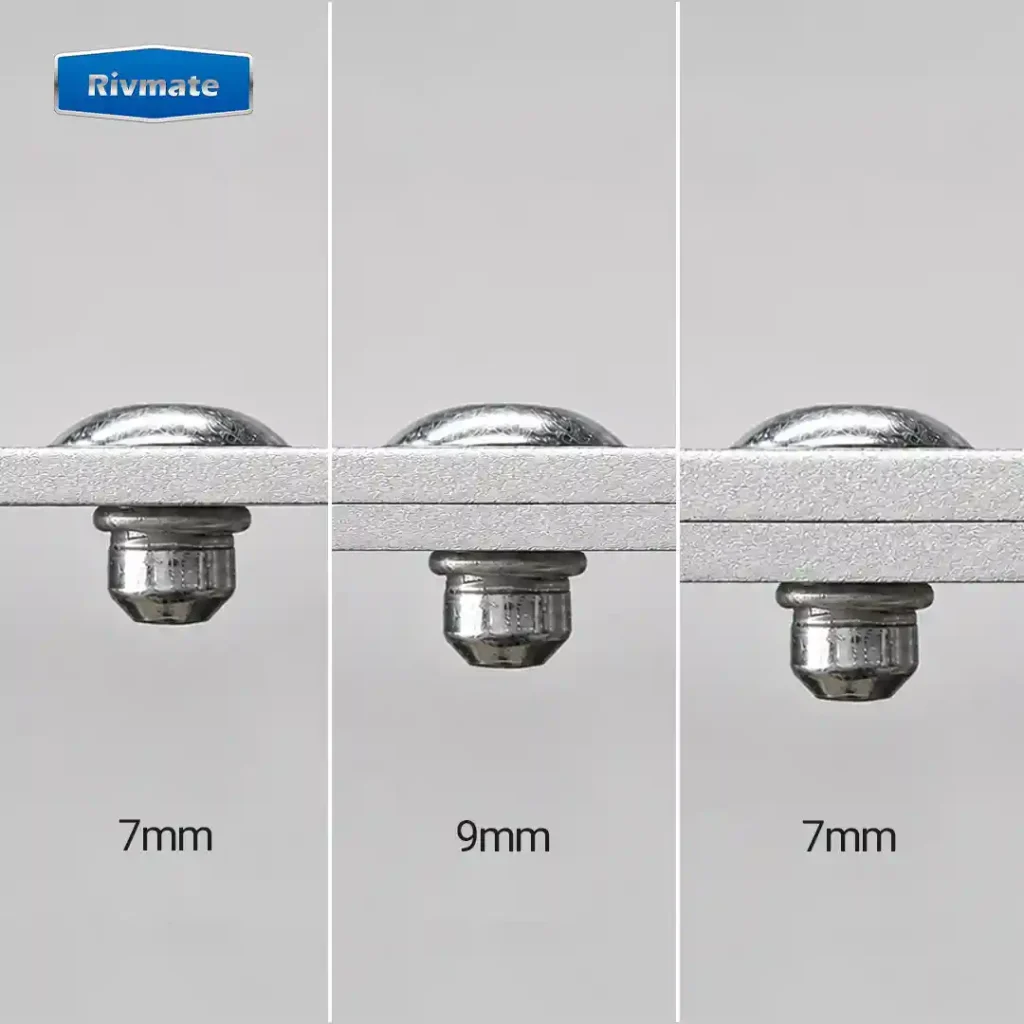
You want to stack production assemblies of varying thicknesses. There are three riveting positions on the same assembly line: Position A: 7 mm, Position B: 9 mm, Position C: 11 mm.
- You need to ensure that the rivet’s grip range covers 7–11 mm. For example, the Rivmate ASMG40160 model has a grip range of 6.0–12.5 mm, which meets the assembly requirements.
Common Selection Mistakes and Why Thick-Material Joints Fail
Rivet failure in thick materials does not depend solely on the quality of the blind rivet itself, but is also influenced by a variety of factors. These include blind rivet selection, hole diameter, material compatibility, installation tools, and installation methods.
| Common Selection Mistake | Possible Result | Recommended Solution |
|---|---|---|
| Choosing by Rivet Length Only | Incorrect grip, insufficient clamping, or a loose joint. | Measure the Total Grip Thickness first and select a rivet with the correct Grip Range. |
| Using a Grip Range at Its Maximum Limit | Normal material tolerances may push the actual stack thickness outside the allowable grip range. | Select a Grip Range that covers the full actual thickness variation, not only the nominal thickness. |
| Increasing Rivet Diameter Just Because the Material Is Thick | Oversized holes, higher cost, and possible failure of the joined material before the rivet fails. | Select Rivet Diameter according to the required shear and tensile loads, not material thickness alone. |
| Checking Rivet Strength Only | Thin sheet may pull through, tear, deform, or fail around the rivet hole. | Verify both Rivet Strength and the strength of the joined materials and the complete joint. |
| Using a Narrow Grip Range for Variable Material Thickness | Inconsistent rivet formation and clamping performance at different assembly positions. | Consider a Multi-Grip Blind Rivet when the Total Grip Thickness varies significantly. |
| Ignoring Mandrel Material | Installation performance, corrosion resistance, or joint performance may not meet the application requirements. | Specify and verify both Rivet Body Material and Mandrel Material. |
| Ignoring Galvanic Corrosion | Dissimilar metals may suffer accelerated corrosion in wet or conductive environments. | Check material compatibility and use suitable coatings, sealants, or isolation methods where necessary. |
| Incorrect Hole Size | The rivet may be difficult to insert, become loose in the hole, or install inconsistently. | Machine the hole according to the Recommended Hole Size for the specific rivet model. |
| Misaligned Holes in Multiple Layers | Rivet body distortion, uneven blind-side formation, or abnormal mandrel break. | Improve Hole Alignment and maintain consistent hole quality through all material layers. |
| Insufficient Blind-Side Clearance | The rivet body cannot form the blind-side head correctly. | Verify that enough Blind-Side Clearance is available before installation. |
| Insufficient Tool Pulling Force or Stroke | The rivet may not fully set, and the mandrel may fail to break correctly. | Use an installation tool with sufficient Pulling Force and Tool Stroke for the selected rivet. |
| Installing the Rivet at an Excessive Angle | Uneven loading, poor head seating, and asymmetric blind-side formation. | Keep the riveting tool and rivet as closely aligned on the same axis as possible during installation. |
Blind Rivet Specification Checklist for Thick Material
| Rivet Type | Diameter | Grip Range* | Hole Size | Tensile Strength | Shear Strength |
|---|---|---|---|---|---|
| Open Type Blind Rivet | 4.0 mm | 1.0–26.0 mm | 4.1–4.2 mm | 1000 N | 800 N |
| Open Type Blind Rivet | 4.8 mm | 1.0–35.0 mm | 4.9–5.0 mm | 1500 N | 1300 N |
| Open Type Blind Rivet | 5.0 mm | 1.0–35.0 mm | 5.1–5.2 mm | 1700 N | 1500 N |
| Open Type Blind Rivet | 6.0 mm | 1.5–34.0 mm | 6.1–6.2 mm | 2500 N | 2000 N |
| Open Type Blind Rivet | 6.4 mm | 1.5–33.0 mm | 6.5–6.6 mm | 3000 N | 2200 N |
| Multi-Grip Blind Rivet | 4.0 mm | 1.0–16.5 mm | 4.1–4.2 mm | 1500 N | 950 N |
| Multi-Grip Blind Rivet | 4.8 mm | 1.5–25.0 mm | 4.9–5.0 mm | 2000 N | 1320 N |
| Multi-Grip Blind Rivet | 6.4 mm | 1.0–17.5 mm | 6.5–6.6 mm | 4000 N | 3800 N |
| Trifirm Rivet | 4.0 mm | 1.0–7.0 mm | 4.2–4.4 mm | 750 N | 550 N |
| Trifirm Rivet | 4.8 mm | 1.0–12.0 mm | 5.0–5.2 mm | 950 N | 750 N |
| Bulbtight Trifirm Rivet | 5.2 mm | 1.3–19.1 mm | 5.3–5.5 mm | 1800 N | 2700 N |
| Bulbtight Trifirm Rivet | 6.4 mm | 1.6–15.9 mm | 6.4–6.6 mm | 2500 N | 3780 N |
| Now-Lock Structural Blind Rivet | 4.8 mm | 1.6–16.9 mm | 4.9–5.1 mm | 4440 N | 5780 N |
| Now-Lock Structural Blind Rivet | 6.4 mm | 2.1–15.8 mm | 6.7–6.9 mm | 8220 N | 11120 N |
| Mono-Lock Structural Blind Rivet | 4.8 mm | 1.6–11.0 mm | 4.9–5.1 mm | 5110 N | 6440 N |
| Mono-Lock Structural Blind Rivet | 6.4 mm | 2.1–15.8 mm | 6.7–7.0 mm | 10450 N | 11780 N |
*Note: The grip ranges shown represent the overall coverage available across multiple rivet lengths within each diameter series. A single rivet size does not cover the entire range. Always select the specific rivet length whose rated grip range covers the actual total material thickness.
The RIVMATE Bulbtight Trifirm series is available in 5.2 mm rather than exactly 5.0 mm. Strength values may vary depending on rivet body and mandrel material.
The blind rivet data in the table above is provided by Rivmate. For more details, please refer to the catalog.
Get a Blind Rivet Recommendation for Your Thick-Material Joint
When selecting rivets for thick materials, you need to consider several factors. These include grip range, diameter, rivet type, material, hole size, and joint load.
The type of rivet you choose depends on the specific conditions of the thick material. If your material has a fixed total thickness and is subjected to normal loads, we recommend considering a blind rivet with an appropriate grip range. For joints where material thickness varies significantly across different areas, a multi-grip blind rivet is your ideal choice. If your product is subject to high vibration or requires a structural connection, prioritize evaluating a structural blind rivet.
If you’re still having trouble selecting the right rivet for a specific thick-material joint, please provide Rivmate with your application details in the order listed above. Our technical team will help you select the appropriate blind rivet. We’ll provide sample rivets for testing to confirm the final specifications.
Frequently Asked Questions
How much longer should a blind rivet be than the material thickness?
There is no rule specifying how much longer a blind rivet should be than the material thickness, as there is for pop rivets. When selecting a blind rivet, you need to check whether the grip range covers the total thickness of all the materials to be joined.
Can pop rivets be used in thick material?
Pop rivets can be used with thick materials. To join thick materials, you need to select the appropriate pop rivets. The selected grip range must cover the total stacked thickness of the materials, and the rivet’s strength, hole diameter, and installation tool must all be properly matched.
What rivet diameter is best for thick steel?
For thick steel plates, you can start by evaluating the common thicknesses of 4.8 mm and 6.4 mm. If the product requires higher load-bearing capacity, consider using structural blind rivets. Ultimately, the appropriate rivet diameter must be determined based on the shear load, tensile load, steel plate strength, hole diameter, number of rivets, and joint configuration.
Work with a IATF 16949 Certified Blind Rivet Manufacturer
Get High Quality Rivets Instead of Huck and Avdel Rivets

Rivmate Rivet
Rivmate is blind rivets manufacturers in china. The company is IATF 16949 certified and offers high-strength structural blind rivets that serve as alternatives to Huck and Avdel products.
Explore Rivmate Cases
Rivmate Rivet
Rivmate is blind rivets manufacturers in china. The company is IATF 16949 certified and offers high-strength structural blind rivets that serve as alternatives to Huck and Avdel products.

Hey There, I'm Allen!
I am the boss of Rivmate. For over two decades, we have specialized in the manufacture of blind rivets, providing our customers with reliable riveting solutions. Need riveting services? Feel free to contact us.