Blind Rivet for Elevator Systems
Upgrade your elevator manufacturing with RIVMATE — engineered blind rivet solutions for safety, stability, and efficiency.
Elevator Rivet Solution
Use Blind Rivets for Elevator Applications
Blind rivets for elevators are primarily used in elevator manufacturing for door panels, door slide rail assemblies, control cabinet enclosures, and structural brackets to enable quick single-sided installation and secure connections. Compared to traditional fastening methods, such as bolts or welding, blind rivets effectively prevent loosening due to vibration while improving assembly efficiency. They are suitable for applications where space is limited or two-sided access is not possible.
2×
3×
Faster Installation
Stronger Vibration Resistance
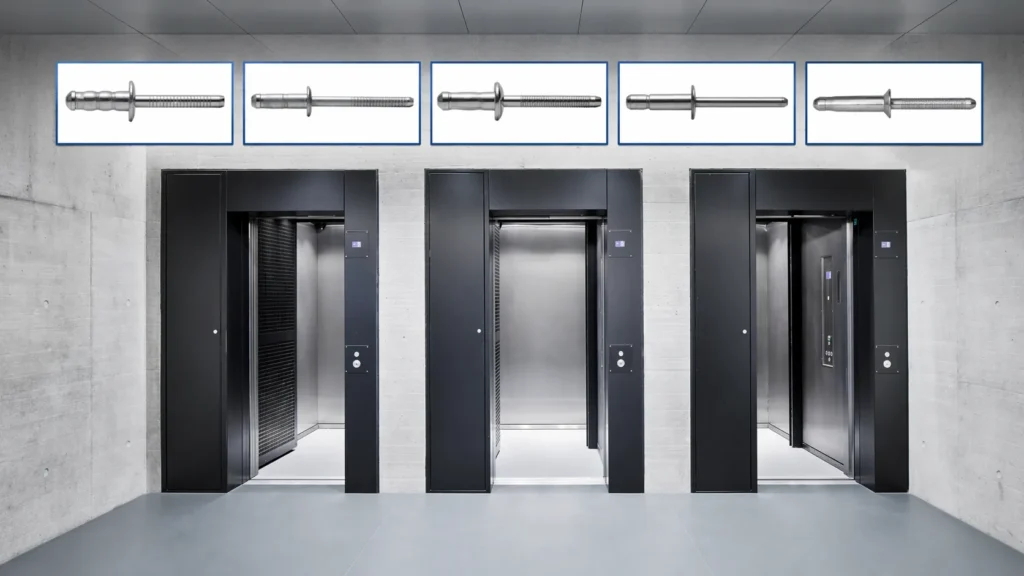
Common Elevator Fastening Problems and Riveted Solutions
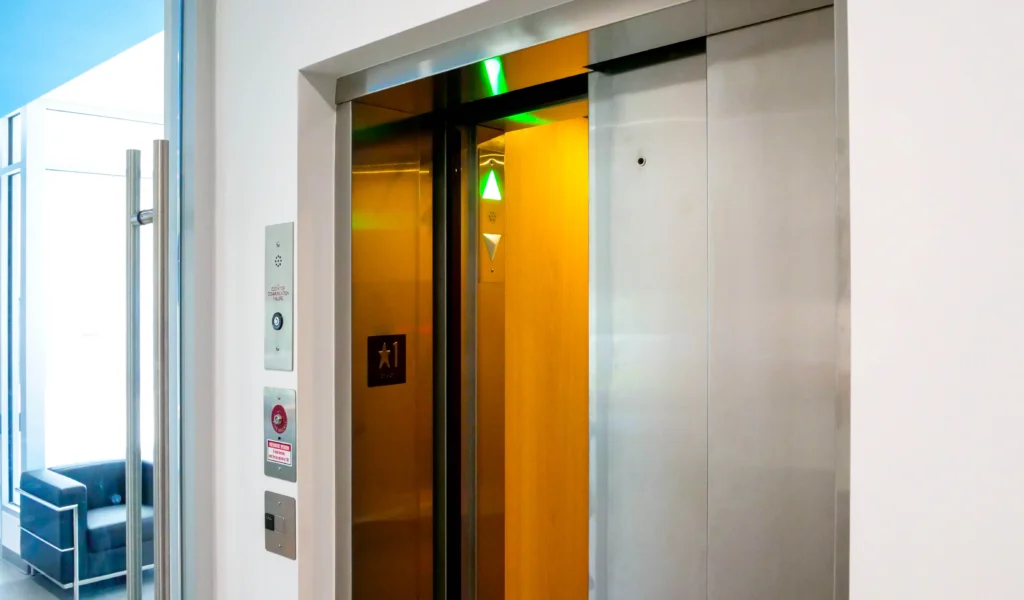
Vibration-Induced Loosening → Permanently Riveted Structure
Elevators are subject to continuous vibration during operation, which can cause connections to loosen. Rivmate’s Monobolt / Interlock structural rivets create a mechanical locking mechanism, providing a truly anti-loosening connection that ensures long-term stability.
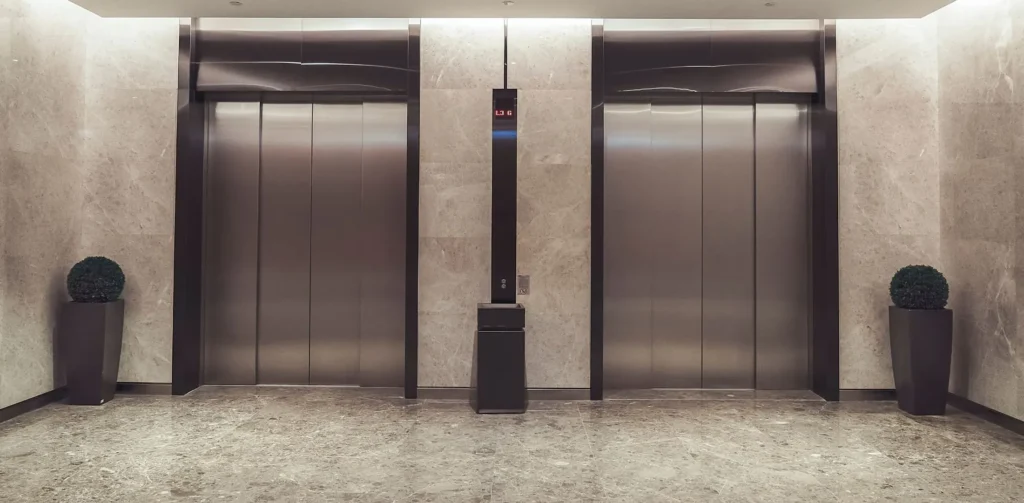
Thin Sheet Deformation → Controlled Clamping Force
Thin sheet applications are prone to deformation and surface irregularities. Rivmate’s Multi-Grip blind rivets provide uniform clamping force, preventing localized stress concentration and maintaining consistency in both appearance and structure.
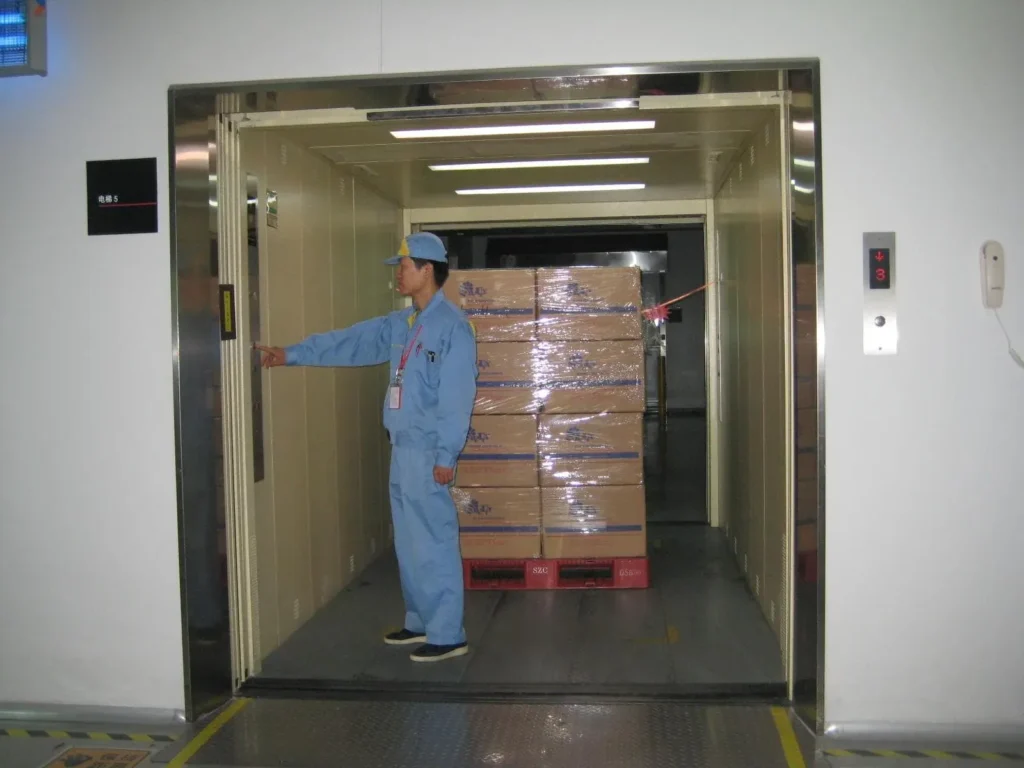
High Load Requirements → Structural Strength Assurance
Load-bearing components must ensure structural safety. Rivmate’s Hem-Lock / Structural rivets offer high tensile and shear strength, meeting the strength requirements of critical elevator structures.
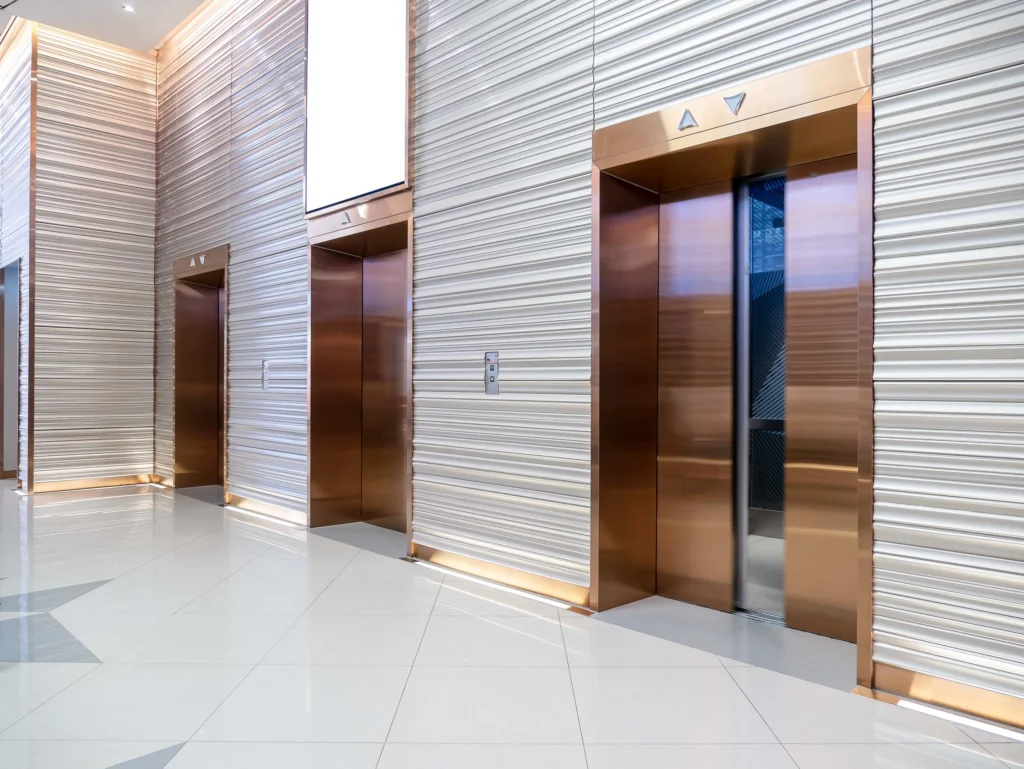
Limited Access Installation → One-Side Fastening Efficiency
For applications where limited space prevents double-sided installation, Rivmate’s blind rivet solution enables quick single-side installation, significantly improving assembly efficiency and reducing labor costs.
Application Scenarios
Blind Rivets for Elevator
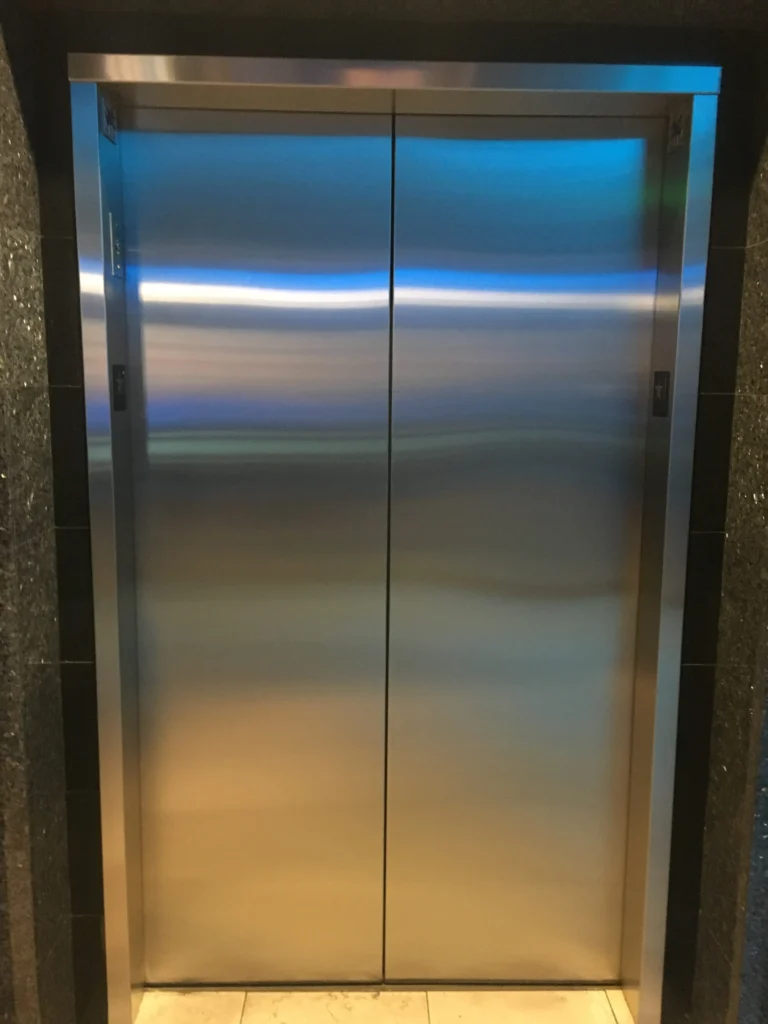
Rivets for Elevator Door Panel
To prevent sheet metal deformation and cosmetic defects on elevator door panels, Rivmate’s Multi-Grip / Uni-Grip blind rivets provide uniform clamping force for a stable bond with the sheet metal. They minimize rippling and bulging, ensuring consistent appearance and assembly efficiency.
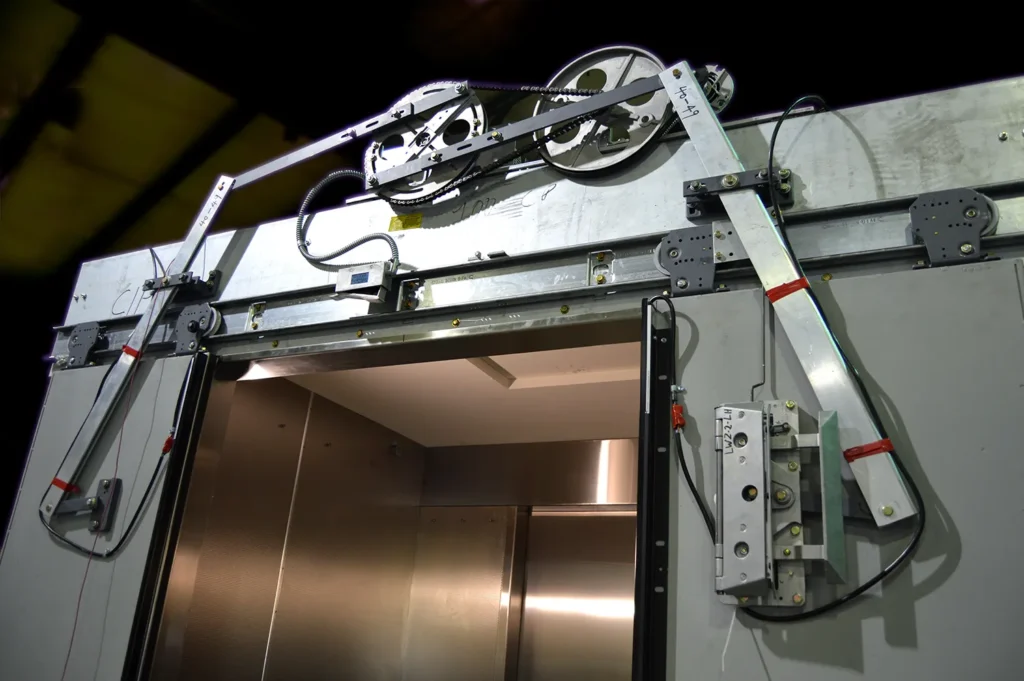
Elevator Door Track Fastening
In door track assemblies subjected to continuous vibration and dynamic loads, Rivmate’s Monobolt / Interlock structural rivets create a high-strength locking structure that effectively prevents loosening and ensures the long-term stable operation of the door system.
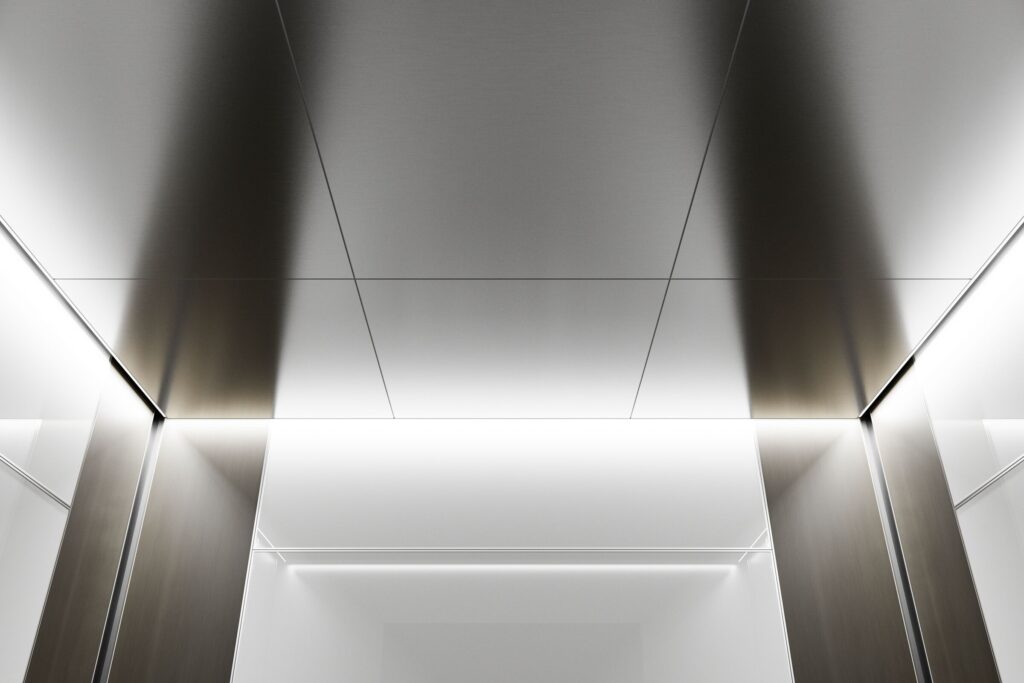
Elevator Ceiling Fastening
Elevator ceiling structures require a balance between lightweight design and safety. Rivmate’s Multi-Grip blind rivets accommodate various panel thicknesses, covering multiple operating conditions with a single selection, thereby reducing specification complexity and improving assembly efficiency.
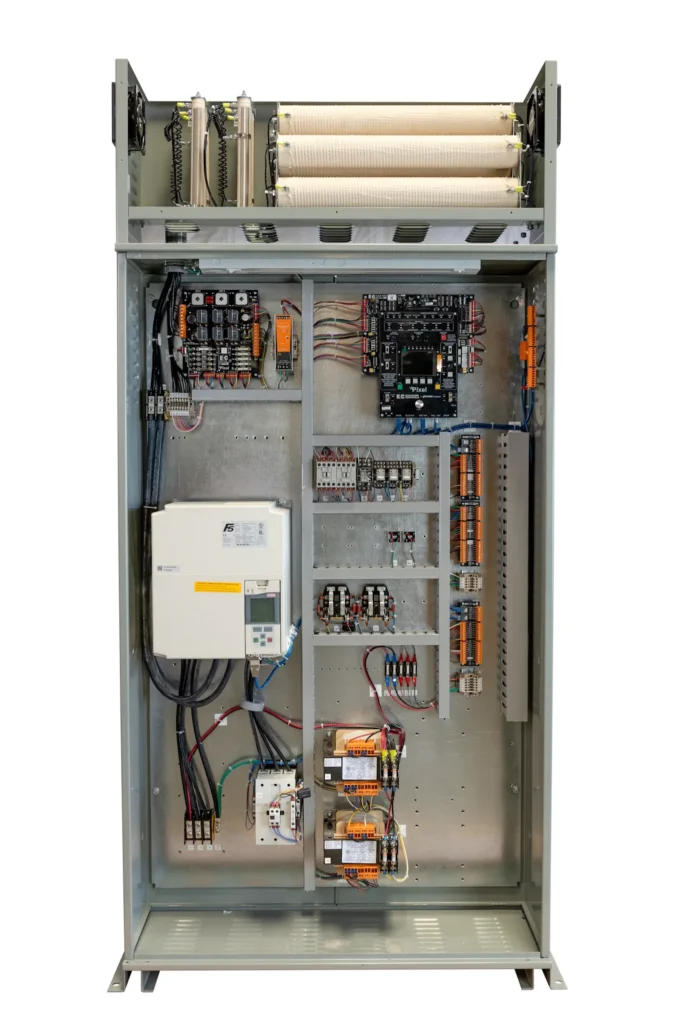
Rivets for Control Panel Enclosure
Control panel enclosures require structural stability and reliable protection. Rivmate’s Uni-Grip rivets provide stable connections and consistent clamping, ensuring a robust enclosure structure and making them ideal for mass-production applications.
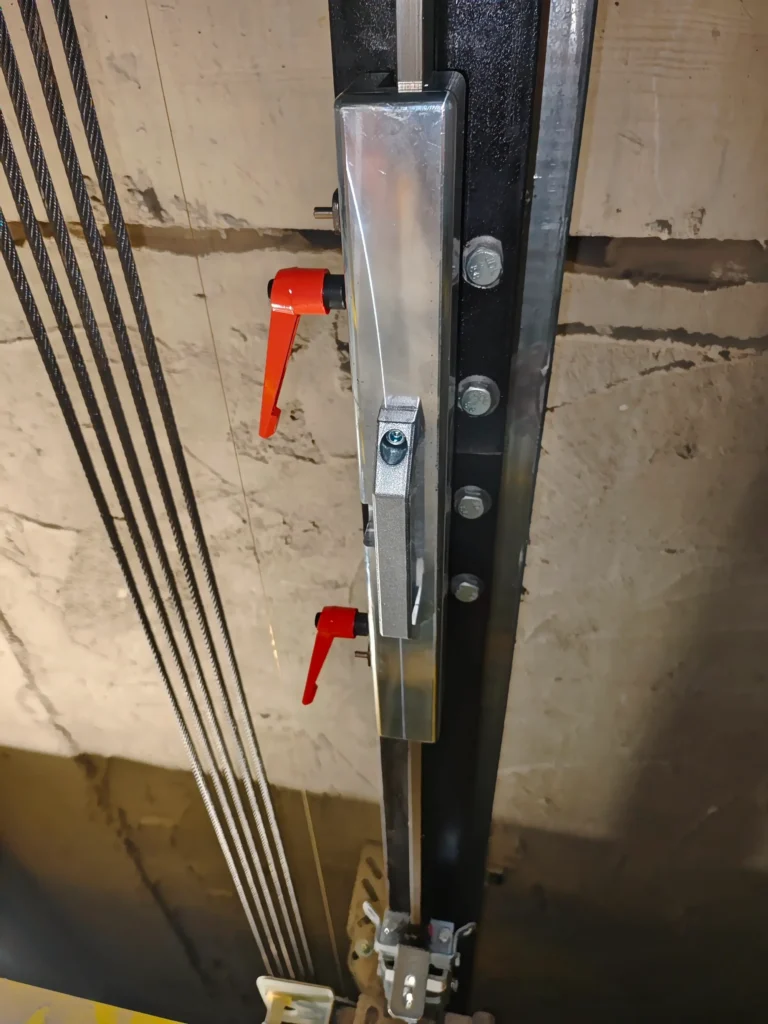
Structural Rivets for Elevator Brackets
Load-bearing components such as guide rail brackets require high-strength connections. Rivmate’s Monobolt / Interlock rivets offer high shear and tensile strength, ensuring structural safety and reliability under long-term loads and vibrations.
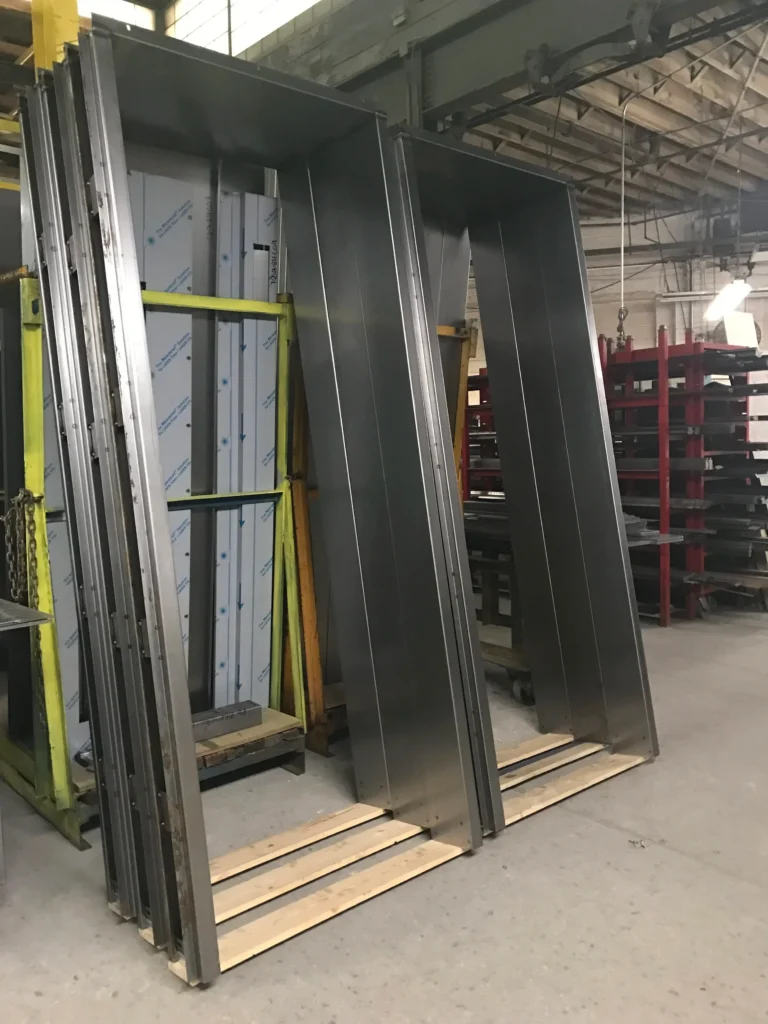
Rivets for Elevator Door Frame
In door frame assembly, we prioritize structural strength and assembly efficiency. Rivmate’s Hem-Lock rivets provide superior clamping force, enhancing overall structural stability while accelerating the assembly process.
Not All Fastening Solutions Perform Under Elevator Conditions
Rivmate offers engineering-proven blind rivet solutions for elevator, ensuring stable and reliable performance even under dynamic loads and in long-term operating conditions.
Recommended Rivets
Rivmate Blind Rivet Types for Elevator Applications
In elevator systems, performance requirements for fasteners vary significantly across different components. From thin-gauge exterior panels to load-bearing structural parts, different types of rivet solutions are required. Rivmate offers a comprehensive range of Blind Rivets for Elevators, enabling precise selection and reliable connections that account for key factors such as vibration, load, variations in sheet thickness, and assembly efficiency.
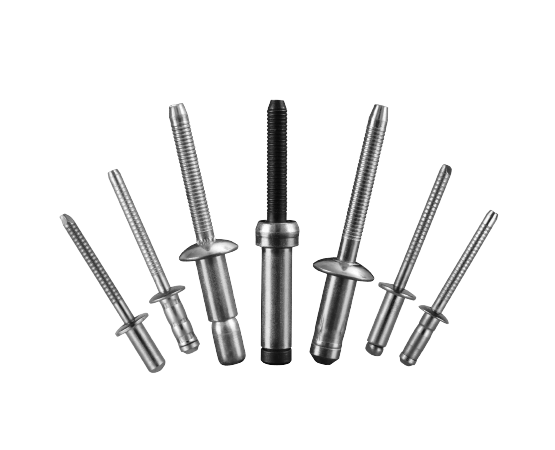
Choose the Right Blind Rivet for Elevator Applications
| Condition | Recommended Rivet |
|---|---|
| vibration environment | Monobolt / Interlock |
| thin sheet | Multi-Grip |
| structural load | Hem-Lock |
| general application | Uni-Grip |
Not sure which solution is best for you? Rivmate can provide tailored selection recommendations and engineering support based on your specific application.

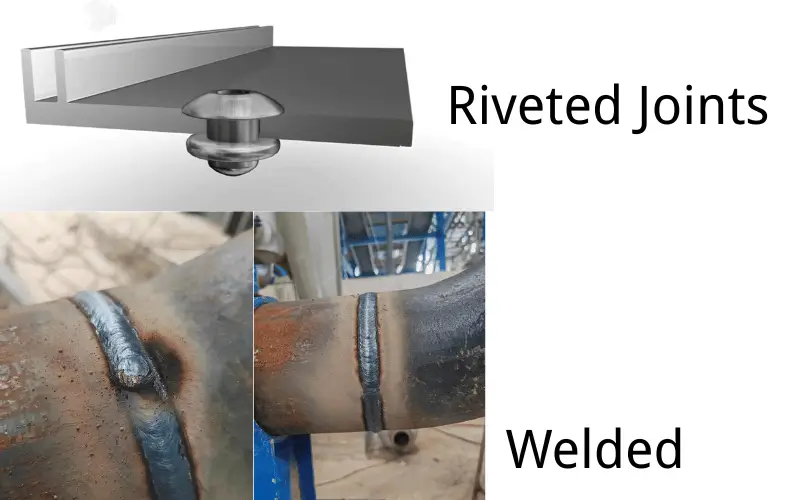
Rivet vs Bolt vs Welding in Elevator Applications
For elevator systems with limited space and high-frequency operation, blind rivets offer significant advantages over bolts, welding, and screws in terms of vibration resistance, deformation prevention, and installation efficiency.
| Method | Weakness | Rivmate Rivet Advantage |
|---|---|---|
| bolt | loosening | permanent fastening |
| welding | heat distortion | no thermal impact |
| screw | low efficiency | fast installation |
manufacturer
Rivmate:Rivet Manufacturer for Elevator Industry
Cold Heading
Utilizes cold heading forming to ensure high dimensional accuracy, a dense material structure, and enhanced overall strength
Automated Coating Line
Equipped with a fully automated coating line to ensure uniform coating and consistent appearance
IATF 16949
Implements IATF 16949 and ISO quality management systems, covering quality control throughout the entire production process
OEM
Custom Rivet Solutions
Custom
Flange Diameter
You can request a larger or special flange size to better distribute load on elevator panels.
02
Special
Surface Coatings
You can choose coatings for corrosion resistance, durability, or specific environmental conditions.
03
OEM &
Private Label Packaging
You can customize packaging with your brand, labels, and carton specifications for your market.
Need Help With Your Project?
Rivmate FAQ: Blind Rivet for Elevator Applications
Q1: What rivets are used in elevators?
The primary fasteners used in elevators include Multi-Grip Blind Rivets, Hem-Lock Rivets, Uni-Grip Rivets, Monobolt (external locking type), and Interlock (internal locking type). These are widely used in door panels, door systems, control cabinets, and structural components to achieve efficient and stable connections.
Q2: Are blind rivets strong enough for elevator systems?
Yes, structural rivets such as Monobolt and Interlock offer high tensile and shear strength, meeting the strength requirements of critical elevator structures.
Q3: Can blind rivets withstand vibration in elevators?
Yes, structural blind rivets feature a mechanical locking design that effectively prevents loosening in vibrating environments, ensuring long-term stability.
Q4: What is the advantage of blind rivets over bolts in elevators?
Blind rivets provide a permanent connection that does not loosen under vibration like bolts do, while also offering higher installation efficiency.
Q5: How to choose the right blind rivet for elevator applications?
Select the appropriate type based on vibration intensity, plate thickness, and load requirements. For example, choose Monobolt for high-vibration applications, Multi-Grip for thin plates, and Hem-Lock for structural components.
Q6: What is the MOQ for elevator blind rivets?
The MOQ is typically 50,000. Rivmate supports sample testing and customization for engineering projects.