Which type of rivet nut is less prone to rust depends on the material and surface treatment of the rivet nut. For example, stainless steel rivet nut is more corrosion-resistant than aluminum and carbon steel rivet nut and is therefore less likely to rust. This has nothing to do with the structural design of the rivet nut itself.
Table of Contents
Which Rivet Nut Material Resists Rust Best?
In terms of rust resistance, 316 stainless steel rivet nuts offer the best overall performance, followed by 304 stainless steel rivet nuts. Unlike corrosion, rust refers to the formation of reddish-brown rust on steel.
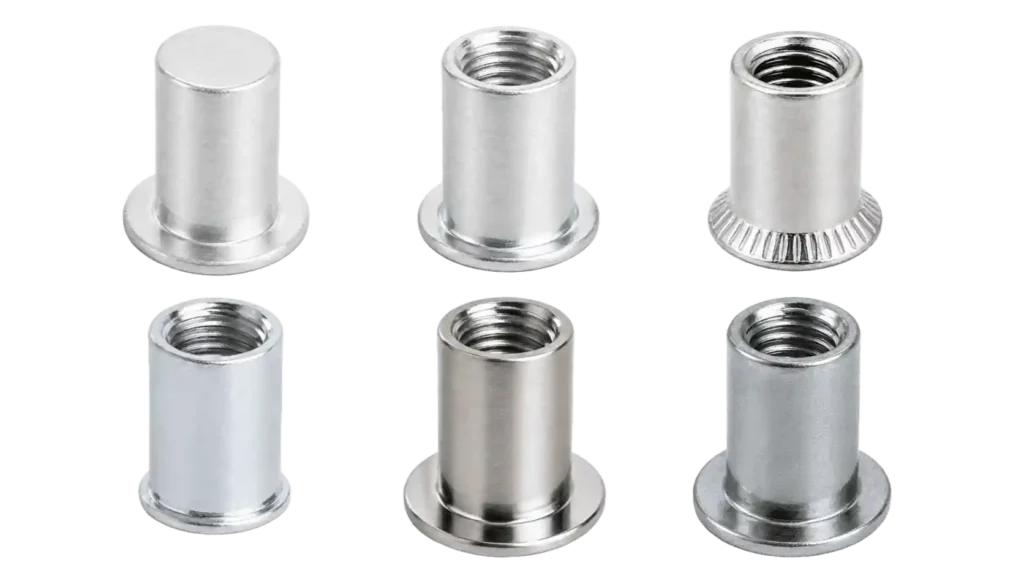
- 316 Stainless Steel Rivet Nuts: Because molybdenum is added to 316 stainless steel, it offers better resistance to chloride-induced pitting and crevice corrosion. It is widely used in coastal areas, water treatment, and certain chemical processing equipment.
- 304 Stainless Steel Rivet Nuts: Compared to 316 stainless steel rivet nuts, these are relatively lower in cost. They provide good rust resistance and are suitable for indoor use, general outdoor environments, or generally humid conditions.
- Aluminum Rivet Nuts: Aluminum does not rust, but it is susceptible to white oxidation, pitting corrosion, and galvanic corrosion. This is particularly common between dissimilar metals in environments with high water or salt content.
- Galvanized Steel Rivet Nuts: The zinc coating on the surface protects the underlying steel. The zinc layer corrodes first, thereby delaying the appearance of red rust on the base steel.
| Rivet Nut Material | Rust Resistance | Overall Corrosion Resistance | Best-Suited Applications |
|---|---|---|---|
| 316 Stainless Steel | Very Strong | Generally the best among common rivet nut materials | Coastal environments, high humidity, salt spray, food equipment, water treatment, and some chemical environments |
| 304 Stainless Steel | Strong | Good | Indoor applications, general outdoor use, kitchen equipment, machinery, and moderately humid environments |
| Aluminum Alloy | Does Not Form Red Rust | Moderate, depending on the environment and material combination | Aluminum panels, lightweight structures, automotive trim, and general outdoor equipment |
| Zinc-Plated Carbon Steel | Depends on the Coating | Moderate | Dry indoor environments, general machinery, and cost-sensitive applications |
| Untreated Carbon Steel | Weak | Poor | Dry environments with no significant corrosion requirement, temporary assemblies, or low-cost applications |
Rivet Nut Material Comparison by Environment
The service life of rivet nuts is affected by the operating environment. Moisture, salt, chemical agents, temperature, and contact with dissimilar metals in the environment can all accelerate the rate of corrosion.
| Service Environment | Preferred Material | Alternative Options to Evaluate | Key Considerations |
|---|---|---|---|
| Dry Indoor Environment | Zinc-Plated Steel | 304 Stainless Steel | If moisture and corrosive media are essentially absent, zinc-plated steel usually provides good cost-effectiveness. |
| Humid Indoor Environment or Occasional Condensation | 304 Stainless Steel | Zinc-Nickel-Coated Steel Meeting the Required Specification | Once a conventional thin zinc coating is damaged, the base steel may gradually develop red rust. |
| General Outdoor Environment | 304 Stainless Steel | 316 Stainless Steel | Avoid long-term accumulation of rainwater, dust and contaminants in connection gaps and crevices. |
| Coastal or High Salt-Spray Environment | 316 Stainless Steel | Validated High-Corrosion-Resistance Coated Steel | 316 stainless steel generally offers better salt resistance than 304, but pitting and crevice corrosion can still occur. |
| Automotive Chassis or Areas Exposed to De-Icing Salt | 316 Stainless Steel or Zinc-Nickel-Coated Steel Meeting OEM Requirements | Other System-Validated Corrosion-Resistant Coatings | Check coating thickness, coating damage after installation, and corrosion test results for the complete joint assembly. |
| Long-Term Seawater Immersion or Seawater Splash | Material Selection Based on Specific Service Conditions | 316 Stainless Steel, Duplex Stainless Steel or Higher Alloys | 316 stainless steel should not be considered absolutely corrosion-proof in long-term seawater exposure. |
| Food Equipment or Frequent Washdown Environments | 304 or 316 Stainless Steel | Higher-Grade Materials Based on the Cleaning Chemicals Used | Chlorine-containing cleaners, temperature and cleaning frequency can significantly affect material selection. |
| Acid, Alkali or Chemical Environments | Material Selected Specifically for the Chemical Medium | 316 Stainless Steel or Special Alloys | No single rivet nut material can resist every chemical. Confirm concentration, temperature and exposure duration. |
| Aluminum Panels and Lightweight Structures | Aluminum Rivet Nut | Electrically Isolated Stainless Steel Rivet Nut | Check load requirements, thread strength and the risk of galvanic corrosion. |
| General Industrial Machinery | Zinc-Plated Steel or 304 Stainless Steel | 316 Stainless Steel | Select according to the indoor or outdoor environment, maintenance interval and required service life. |
Among common materials, galvanized steel rivet nuts are suitable for general indoor environments. 304 stainless steel is suitable for humid environments, general outdoor use, and environments with higher rust-proofing requirements. 316 stainless steel is better suited for coastal, salt fog, and chlorine-containing environments. Aluminum rivet nuts are better suited for lightweight structures and certain aluminum sheet connections. Additionally, galvanic corrosion between dissimilar metals must be taken into account.
304 vs 316 Stainless Steel Rivet Nuts
Both 304 and 316 stainless steel rivet nuts offer excellent resistance to red rust. The main difference between the two lies in their resistance to chloride corrosion. 316 stainless steel contains added molybdenum, which provides better resistance to pitting and crevice corrosion caused by chloride ions.
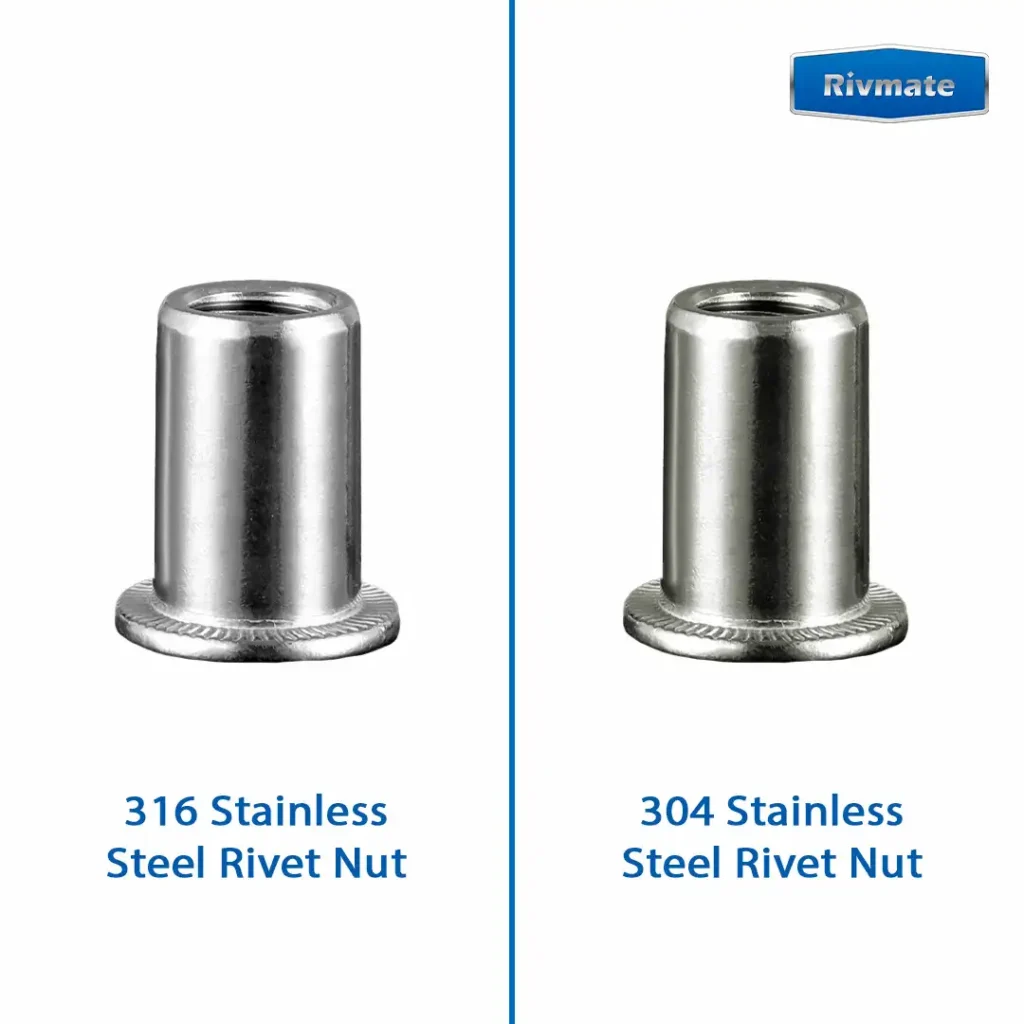
| Comparison Item | 304 Stainless Steel Rivet Nut | 316 Stainless Steel Rivet Nut |
|---|---|---|
| Basic Characteristics | General-purpose austenitic stainless steel | Austenitic stainless steel with better resistance to chlorides |
| Molybdenum Content | Typically does not contain intentionally added molybdenum | Typically contains molybdenum, improving resistance to pitting corrosion |
| General Corrosion Resistance | Good | Very Good |
| Salt Spray and Coastal Environments | Long-term exposure may result in rust staining or pitting corrosion | Generally more reliable than 304, but not completely immune to corrosion |
| Typical Environments | Indoor use, general outdoor applications, and moderately humid environments | Coastal areas, high-humidity environments, de-icing salt exposure, water treatment, and some chemical environments |
| Cost | Relatively Lower | Relatively Higher |
| Is It Always Stronger? | Not Necessarily | Not Necessarily — strength depends on the specific product design and manufacturing condition |
| Key Selection Focus | Balance between cost and general corrosion resistance requirements | Higher corrosion risk and longer maintenance intervals |
When should 304 stainless steel rivet nuts be used?
304 stainless steel offers a certain degree of corrosion resistance. However, it is not suitable for all environments. When the operating environment, expected service life, and testing requirements fall within a general or low corrosion category, the use of 304 stainless steel rivet nuts is recommended. In the presence of salt spray, chlorides, prolonged water accumulation, or frequent cleaning, you should further evaluate 316 or other proven corrosion-resistant solutions.
To determine whether 304 stainless steel rivet nuts can be used, you can conduct a preliminary assessment based on the following conditions:
- If the equipment is used indoors in a dry location and does not come into contact with salt or chlorine-based cleaning agents, 304 should be considered as the first option.
- If the equipment’s operating environment is subject to condensation or occasional rain exposure, you need to check whether water accumulates at the joints, whether drainage is possible, and whether the sheet metal coating is intact.
- If the equipment is exposed long-term to coastal environments, de-icing salt, or frequent rinsing, 304 stainless steel rivet nuts are not suitable. Prioritize comparing 316 stainless steel or proven, highly corrosion-resistant surface treatments.
- If the customer requires salt spray testing, cyclic corrosion testing, or OEM corrosion protection standards, you should select materials and conduct testing in accordance with the customer’s specifications.
When Are Aluminum Rivet Nuts the Better Choice?
Aluminum rivet nuts are not the most corrosion-resistant option available. However, for applications involving the joining of aluminum sheets, lightweight structures, and medium- to low-load conditions—as well as those where red rust is not permitted—aluminum rivet nuts are more suitable than stainless steel or galvanized steel rivet nuts.
Tips: Aluminum does not develop the reddish-brown rust that appears on steel. However, aluminum is still susceptible to oxidation, pitting, and galvanic corrosion.
1. When Your Mounting Material Is Aluminum
Aluminum rivet nuts are the optimal choice for creating reusable internal threads in aluminum sheets, aluminum profiles, or aluminum enclosures. Using the same metal effectively reduces the risk of galvanic corrosion that can occur when stainless steel comes into contact with aluminum. They are particularly suitable for automotive components, electronic equipment enclosures, aluminum cabinets, and light industrial structures.
According to customer feedback: After drilling holes in surface-treated panels, the hole walls expose unprotected aluminum, which can lead to corrosion issues. You need to seal or apply a corrosion-resistant treatment to the walls and the areas where the rivet nuts make contact.
2. When you need to reduce product weight
Aluminum rivet nuts are lightweight and can effectively reduce the weight of fasteners. The weight advantage becomes even more pronounced when a large number of aluminum rivet nuts are used in a device. They are particularly suitable for automotive, rail transit, drones, electronic equipment, or movable structures.
Based on our team’s practical testing, we have concluded that you should not replace steel or stainless steel rivet nuts with aluminum ones solely for weight considerations. Aluminum rivet nuts have poor load-bearing capacity, tensile strength, and torsional resistance. Forcing such a replacement may result in immediate failure or cracking at the connection point.
3. When your connection load is not high
Aluminum rivet nuts are suitable for medium-to-low-load connections. They are suitable for securing trim panels or removable panels. They cannot withstand significant structural loads. They are more suitable for panels, housings, trim pieces, access covers, lightweight brackets, and electronic devices.
Based on Rivmate’s many years of experience in the rivet nut industry, aluminum internal threads are relatively soft, and excessive torque may cause thread stripping. Frequent disassembly can also accelerate thread wear. Therefore, you should select rivet nuts based on the manufacturer’s technical specifications, which include pull-out force, torsional resistance, and recommended bolt torque.
4. When you want to use a lower installation force
For the same specifications and structure, aluminum rivet nuts require less installation force than steel or stainless steel products and are more prone to riveting deformation.
Our technical team has conducted riveting tests on the same type of rivet nuts. If the pulling force or stroke is too small, the rivet nut does not deform sufficiently, making it prone to loosening or rotating after installation. If the pulling force or stroke is too large, it can dent the sheet metal, damage the threads, or tear the rivet nut.
How Long Can Zinc-Plated Steel Rivet Nuts Resist Corrosion?
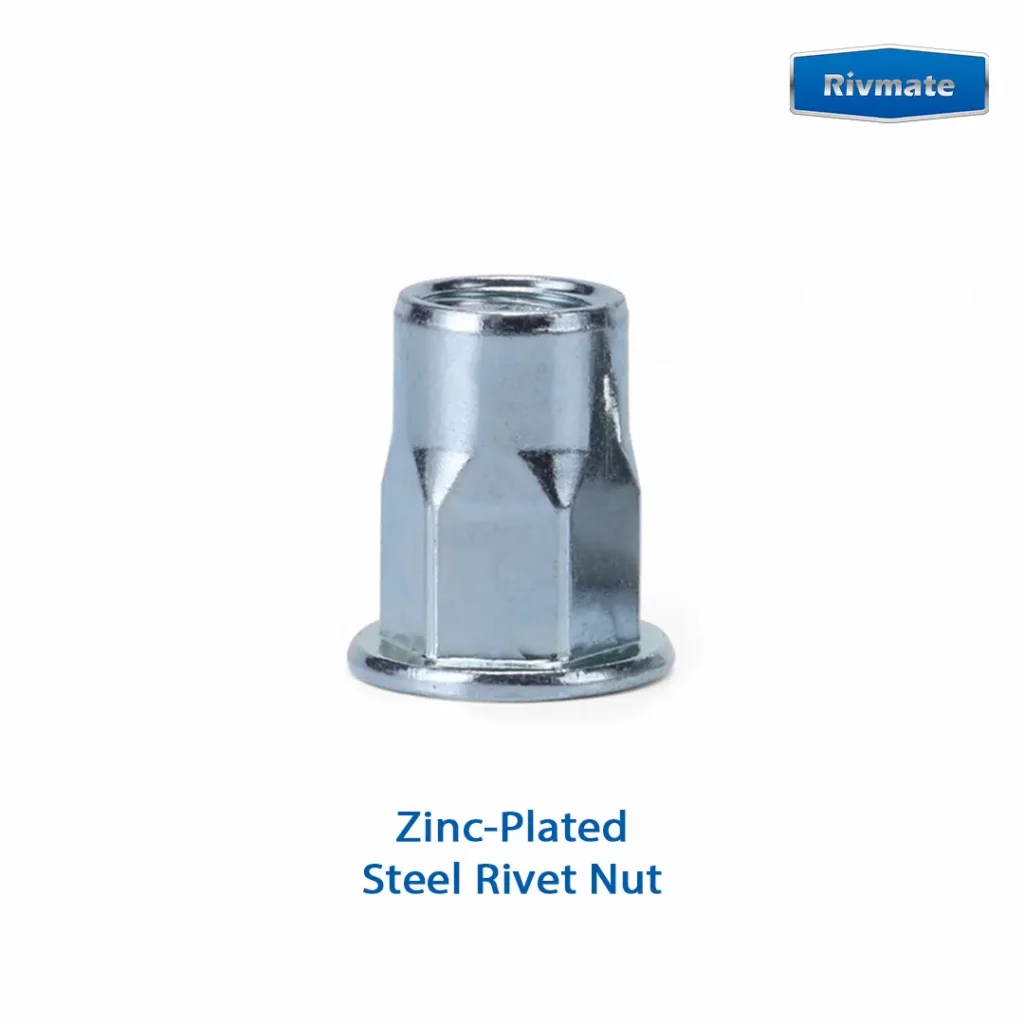
The corrosion resistance of galvanized steel rivet nuts depends on the thickness of the zinc coating, the type of coating, passivation and sealing treatments, installation damage, and the operating environment. In a dry indoor environment, galvanized steel rivet nuts can maintain their corrosion resistance for a long time. However, when exposed to coastal salt fog or de-icing salt for extended periods, galvanized steel rivet nuts corrode rapidly and develop red rust.
Based on our experience, determining how long galvanized steel rivet nuts will resist corrosion requires more than just relying on the number of salt spray hours provided by the supplier. You also need to verify the specific coating, the surface condition after installation, and the actual operating environment.
What Causes Galvanic Corrosion Around a Rivet Nut?
The primary cause of galvanic corrosion around a rivet nut is the contact between two metals with different electrochemical activities when moisture or other conductive media are present at the joint. For example, if you install a stainless steel rivet nut in an aluminum plate, and rainwater, salt spray, or condensation enters the joint, the rivet nut, the aluminum plate, and the moisture may form a small electrochemical circuit. The relatively more active metal acts as the anode and accelerates corrosion, while the relatively more stable metal acts as the cathode and is protected.
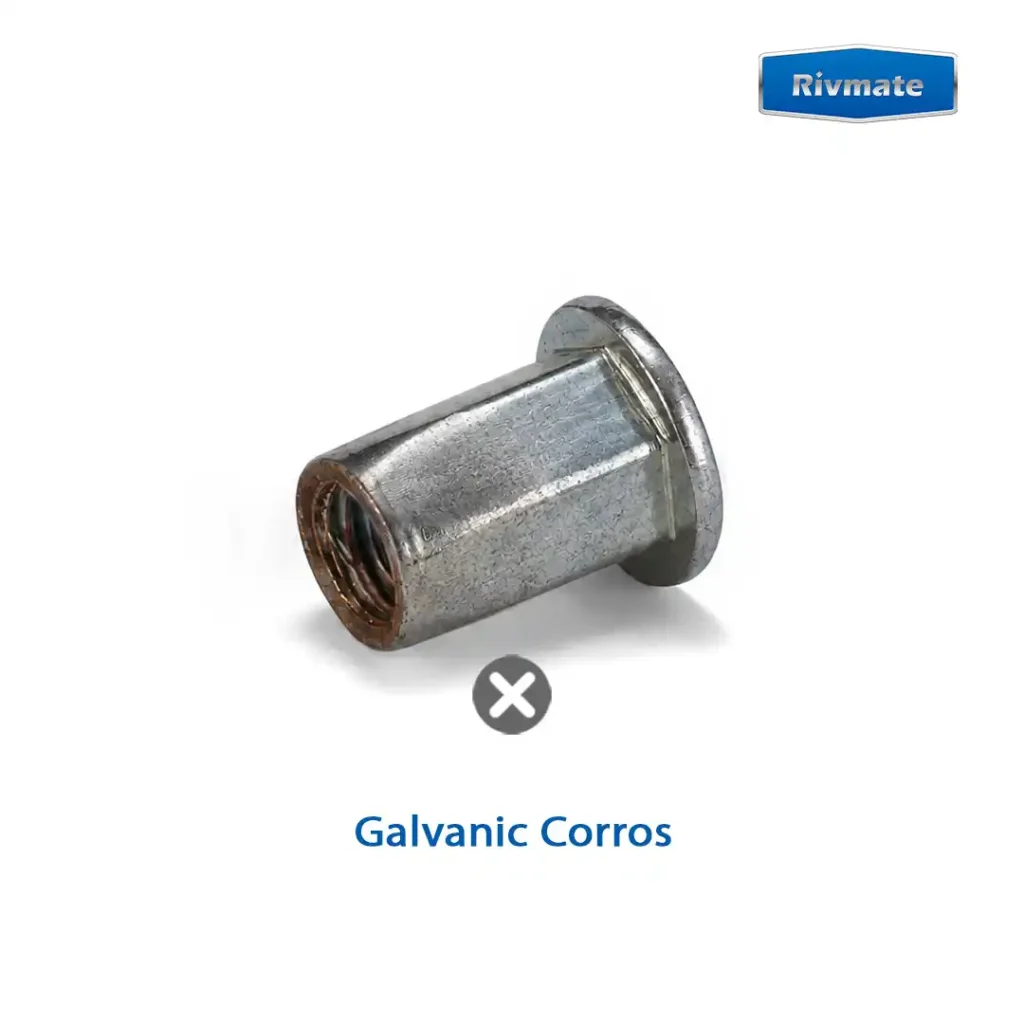
For galvanic corrosion to occur in a rivet nut, three conditions must be met simultaneously:
- Different metals are present among the rivet nut, bolt, and sheet metal
- Direct electrical conductivity exists between the different metals
- The connection point is exposed to water, saltwater, condensation, or other electrolytes
Galvanic corrosion occurs only when there is electrical contact or an electrolyte present at the connection point. Therefore, even if your metal materials are different, it does not necessarily mean severe corrosion will occur. The actual risk of corrosion also depends on humidity, salinity, temperature, structure, and surface treatment.
Do Closed-End or Watertight Rivet Nuts Prevent Rust?
Closed-end or waterproof rivet nuts reduce or delay corrosion by preventing moisture from entering the joint through their sealed or waterproof bottom design. However, there is no guarantee that closed-end or waterproof rivet nuts will not rust. Rusting of rivet nuts is not solely a matter of material; it is also influenced by surface treatment, sheet metal combinations, and the operating environment.
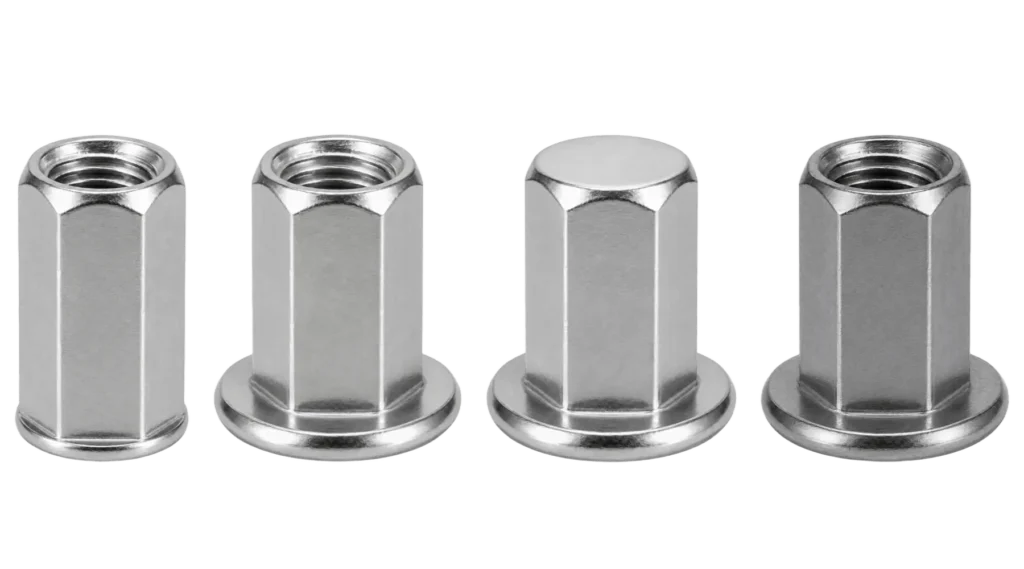
Closed-end and waterproof rivet nuts only address the issue of liquid entering the joint; they do not enhance the corrosion resistance of the material itself.
How Do Installation and Maintenance Affect Corrosion Life?
The corrosion resistance of a rivet nut depends not only on the material itself, but also on the mounting hole, the sheet metal, the bolt, the sealing structure, the installation method, and subsequent maintenance. Therefore, when selecting a corrosion-resistant rivet nut product, you should first consider the rivet nut material, surface treatment, and installation plan.
The Quality of the Mounting Hole Affects the Point of Corrosion Initiation
Before installing a rivet nut, you need to drill or punch a hole. You must remove burrs and metal debris from the hole edges. Otherwise, the galvanized layer or other surface coatings on the rivet nut may be scratched, exposing the underlying steel to moisture and oxygen prematurely and making it prone to corrosion.
When machining the hole, sheet metal that has undergone spray coating, electrophoretic coating, or galvanizing may expose the underlying metal. You must restore the protective layer around the hole edges. Otherwise, corrosion may begin at the edges of the mounting hole.
According to tests conducted by our technical team: The size of the mounting hole must be drilled in accordance with the requirements specified in the manufacturer’s technical specifications. Otherwise, an oversized hole may create gaps where moisture can accumulate, leading to corrosion. A hole that is too small may scratch the surface coating during the pressing process.
Mismatched Riveting Parameters Can Damage the Protective Coating
When installing rivet nuts, you must select the correct riveting stroke or force based on the rivet nut’s material, specifications, and sheet thickness.After installation, you must verify that the rivet nut head is flush with the sheet surface and that the rivet head has deformed sufficiently and normally. The rivet nut must not loosen or rotate.
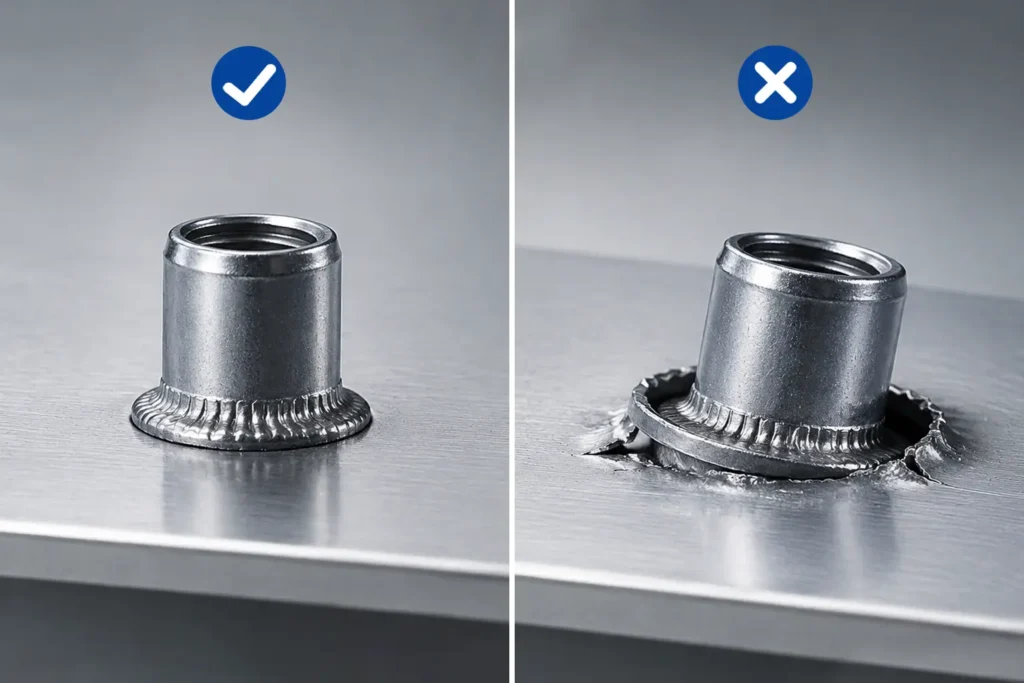
Problems caused by mismatched riveting parameters:
- Insufficient riveting force: The rivet nut does not fully clamp the sheet metal, potentially causing looseness and gaps at the joint where moisture can enter and remain trapped for extended periods.
- Excessive riveting force: The rivet nut deforms abnormally, and the surface coating is damaged. This creates a risk of cracking in the paint or protective coating around the hole edges of the sheet metal.
- Tilted installation tool: The head of the rivet nut cannot lie flat against the panel surface. This easily creates gaps that serve as pathways for water ingress.
Incorrect material combinations can cause galvanic corrosion
If the rivet nut, bolt, and panel are made of different metals, and the joint is exposed to rainwater, salt fog, or condensation over an extended period, galvanic corrosion is likely to occur.
How to reduce the risk of galvanic corrosion:
- Select materials with more similar electrochemical properties
- Add insulating washers, barrier coatings, or proven sealing materials
- Avoid scratching the original coating on the sheet metal during installation, and repair any scratches promptly
- Prevent moisture from entering the interface between the two metals to form chemical reactions
Rivmate has also received numerous customer inquiries regarding corrosion of rivet nuts. This is not due to substandard materials in our rivet nuts, but rather because customers have overlooked the issue of galvanic corrosion caused by combinations of different materials.
Sealing and Drainage Performance Affect Corrosion Resistance Lifespan
The sealed design of rivet nuts reduces moisture ingress from the nut’s tail end. However, water can still enter through the contact surface between the rivet nut head and the sheet metal.
Rivet nuts with sealing rings are suitable for outdoor equipment, automotive chassis, solar mounting brackets, or humid environments. Sealing solutions compatible with the sheet metal and operating environment may also be used. You should verify that no areas prone to water accumulation form at the connection points and ensure the product has an appropriate drainage and ventilation design.
Proper Maintenance Extends Corrosion Resistance
Stainless steel rivet nuts are low-maintenance products, but they still require timely inspection and cleaning. Rivet nuts located in coastal areas, high-humidity environments, or environments exposed to road de-icing salt or chemical contamination require more frequent inspection and cleaning than those in ordinary indoor environments. Promptly remove salt and dirt using clean water and a mild detergent. If you discover coating damage, loose connections, or obvious corrosion, repair or replace the product immediately.
During maintenance, you should focus on checking the following:
- Whether the surface shows red rust, rust spots, or abnormal discoloration
- Whether there is blistering, peeling paint, or white corrosion deposits around the mounting holes
- Whether the rivet nuts are loose, rotate, or have gaps between them and the sheet metal
- Whether the sealing rings are aged, cracked, or have lost their elasticity
- Whether there is standing water, salt, or chemical residue at the connection points
Frequently Asked Questions About Corrosion-Resistant Rivet Nuts
Do Stainless Steel Rivet Nuts Ever Rust?
Stainless steel rivet nuts can rust. Stainless steel rivet nuts offer good corrosion resistance because chromium forms a very thin passivation layer on the surface, which acts as a barrier against moisture and oxygen. However, if the environment’s corrosive conditions exceed the stainless steel’s tolerance over an extended period, rust spots will appear.
Is 316 Stainless Always Better Than 304?
Not necessarily. Generally speaking, 316 stainless steel rivet nuts offer better corrosion resistance than 304. 316 is suitable for environments with chlorides and salt spray. In ordinary environments, 304 is the best choice.
Can Stainless Rivet Nuts Be Used in Aluminum Panels?
Yes. Stainless steel and aluminum are two metals with different electrochemical properties. If the joint comes into contact with liquid, galvanic corrosion will occur. You need to implement reliable isolation, sealing, and drainage measures.
What Bolt Material Should Be Used With a Stainless Rivet Nut?
Stainless steel rivet nuts should be paired with stainless steel bolts that have similar corrosion resistance. Pair 304 rivet nuts with A2 stainless steel bolts, and 316 rivet nuts with A4 stainless steel bolts. Select the appropriate bolt strength grade based on the load.
Work with a IATF 16949 Certified Blind Rivet Manufacturer
Get High Quality Rivets Instead of Huck and Avdel Rivets
Rivmate Rivet
Rivmate is blind rivets manufacturers in china. The company is IATF 16949 certified and offers high-strength structural blind rivets that serve as alternatives to Huck and Avdel products.
Explore Rivmate Cases
Rivmate Rivet
Rivmate is blind rivets manufacturers in china. The company is IATF 16949 certified and offers high-strength structural blind rivets that serve as alternatives to Huck and Avdel products.

Hey There, I'm Allen!
I am the boss of Rivmate. For over two decades, we have specialized in the manufacture of blind rivets, providing our customers with reliable riveting solutions. Need riveting services? Feel free to contact us.