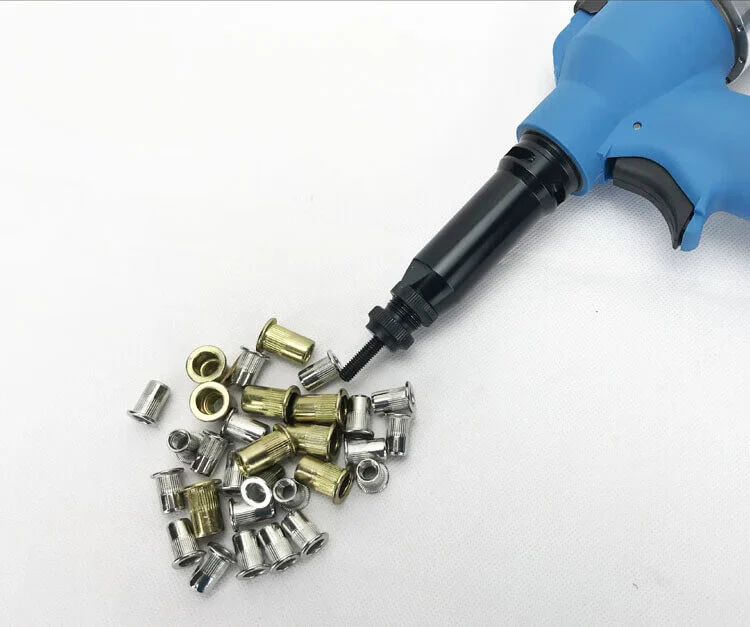
Rivet nuts are suitable for thin sheet metal or structures where access to the back side is not possible, enabling single-sided installation to form a reliable threaded connection. The advantages of rivet nuts include quick single-sided installation, the ability to repeatedly disassemble and reassemble for maintenance, and improved production efficiency.
Rivet nuts are widely used, but they do have certain limitations. You need to evaluate them based on material thickness, load requirements, vibration conditions, and installation circumstances. Only by correctly selecting the type, material, and installation method can the stability and service life of a rivet nut connection be guaranteed.
Table of Contents
What Are the Main Advantages of Rivet Nuts?
The greatest advantage of rivet nuts is their ability to quickly create a reliable internal threaded connection in thin sheets, enclosed structures, or components where the back side is inaccessible. Rivet nuts not only simplify the installation process but, more importantly, address issues that traditional fastening methods cannot resolve, such as the inability to tap threads in thin materials.
1.One-Side Installation for Blind and Enclosed Assemblies
You only need to work from one side of the workpiece; there is no need to access the back of the material to install the nut. This replaces the traditional rivet-nut connection method, which requires fastening from the back.
Common applications:
- Enclosed profiles
- Square tube structures
- Interior automotive body components
- Equipment enclosures
- Electrical cabinet panels
2.Strong, Reusable Threads in Thin Materials
Rivet nuts solve the problem of being unable to machine reliable threads in thin sheet metal. Installing rivet nuts adds an independent threaded fastener to the sheet metal, reducing damage caused by disassembly and maintenance of parts.
Common applications:
- Machinery equipment covers
- Automotive interior components
- HVAC panels
- Industrial enclosures
3.Fast Cold Installation Without Welding or Heat Distortion
Compared to welding, rivet nuts are installed mechanically, eliminating the need for welding. This helps reduce the heat-affected zone, preserve the appearance and surface coating of thin sheets, and simplify the manufacturing process.
4.Easier Assembly, Disassembly, and Field Service
In many industrial applications—such as the joints in equipment access doors, protective covers, and panels—regular inspection or disassembly is required. Removing standard rivets can damage the fasteners. Rivet nuts are easier to install and facilitate later disassembly and maintenance. For equipment distributors, rivet nut connections improve production efficiency.
5.Versatility Across Metals, Plastics, and Composites
Rivet nuts offer good material compatibility and can be used with various types of base materials.
6.Lower Total Installed Cost in Suitable Production Volumes
In mass production, the use of riveted nuts reduces machining costs, installation time, and future maintenance costs. These factors collectively lower overall assembly costs.
How Does a Rivet Nut Create a Strong Threaded Joint?

A rivet nut is installed by using a special tool to pull on its core, causing plastic deformation at the bottom of the rivet nut. This creates a bulge on the back of the sheet metal, thereby securely clamping the rivet nut into the material.
Blind-Side Bulge, Clamp Force, and Bearing Area
During the installation of a rivet nut, the tool applies axial tension to the rivet nut, causing its tail to contract inward and deform on the back side of the sheet metal, creating a blind-side bulge. The purpose of the blind-side bulge is to press against the sheet metal from the back, preventing the rivet nut from easily slipping out of the hole.
Clamping force refers to the force exerted on the sheet metal by the rivet nut after installation. An appropriate clamping force can:
- Reduce the gap between the rivet nut and the sheet metal;
- Improve connection stability;
- Reduce the risk of loosening during use.
Bearing Area refers to the region where the rivet nut contacts the surrounding material and transfers force. The Bearing Area also affects the rivet nut’s actual load-bearing capacity after installation.
An optimal contact area:
- Ensures more uniform force distribution;
- Reduces localized stress on the sheet metal;
- Typically results in better resistance to pull-out.
Radial Hole Fill, Pull-Out Resistance, and Torque-Out Resistance
Radial Hole Fill refers to the pressure or filling effect exerted by the outer wall of a rivet nut toward the hole wall after installation and deformation. A prerequisite for this is ensuring proper hole diameter control. If the hole diameter is too large or too small, Radial Hole Fill will not improve the fastening performance.
Advantages of Radial Hole Fill:
- Reduces the gap between the rivet nut and the hole
- Improves positioning stability
- Enhances force transmission
Pull-out resistance is the ability of a rivet nut to resist being pulled out axially. This resistance is achieved through a combination of the bulge structure on the back, flange support, and sheet metal strength.
The main factors affecting pull-out resistance include:
- Rivet nut size
- Material strength
- Sheet metal thickness
- Installation quality
- Direction of force
Torque-Out Resistance refers to a rivet nut’s ability to resist rotation. It means that when you tighten a bolt, the rivet nut does not rotate along with it. Anti-rotation performance can be enhanced through the knurled and hexagonal designs of the rivet nut.
Insufficient anti-rotation performance can result in:
- Inability to tighten the bolt
- The rivet nut spinning freely inside the hole
- Difficulty with future maintenance
Where Do Rivet Nuts Outperform Other Fasteners?
The primary advantage of rivet nuts is their ability to create a reusable threaded connection in thin sheets, enclosed structures, or components where the back side is inaccessible. However, not all applications are suitable for rivet nut connections. Next, I will compare welded nuts, tapped holes, self-tapping screws, through bolts, and press-fit rivet nuts to comprehensively evaluate their respective advantages.
Rivet Nuts vs Weld Nuts
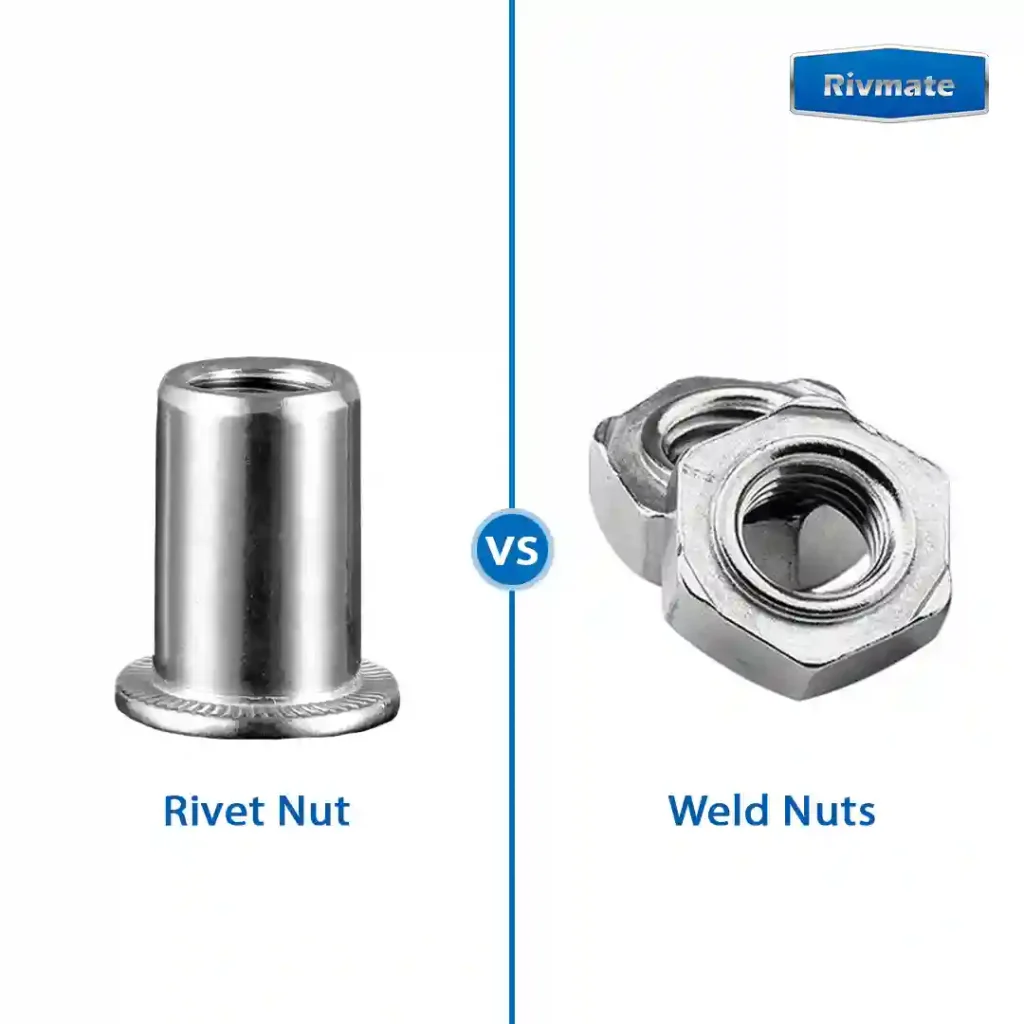
| Comparison | Rivet Nut | Weld Nut |
|---|---|---|
| Installation Method | Installed mechanically using a rivet nut tool without welding. | Fixed to the base material through a welding process. |
| Backside Access | Requires access from only one side of the workpiece. | Usually requires welding access and suitable production space. |
| Heat Generation | No welding heat, reducing the risk of thermal distortion. | Generates heat that may affect thin sheets or surface coatings. |
| Surface Finish Impact | Suitable for finished surfaces because no welding process is required. | May damage coatings and require additional surface treatment. |
| Suitable Applications | Thin sheets, enclosed structures, equipment panels, and field installation. | Metal structures with established welding production processes. |
| Maintenance | Allows repeated screw removal and replacement. | Creates a permanent threaded connection. |
Rivet Nuts vs Tapped Holes and Self-Tapping Screws
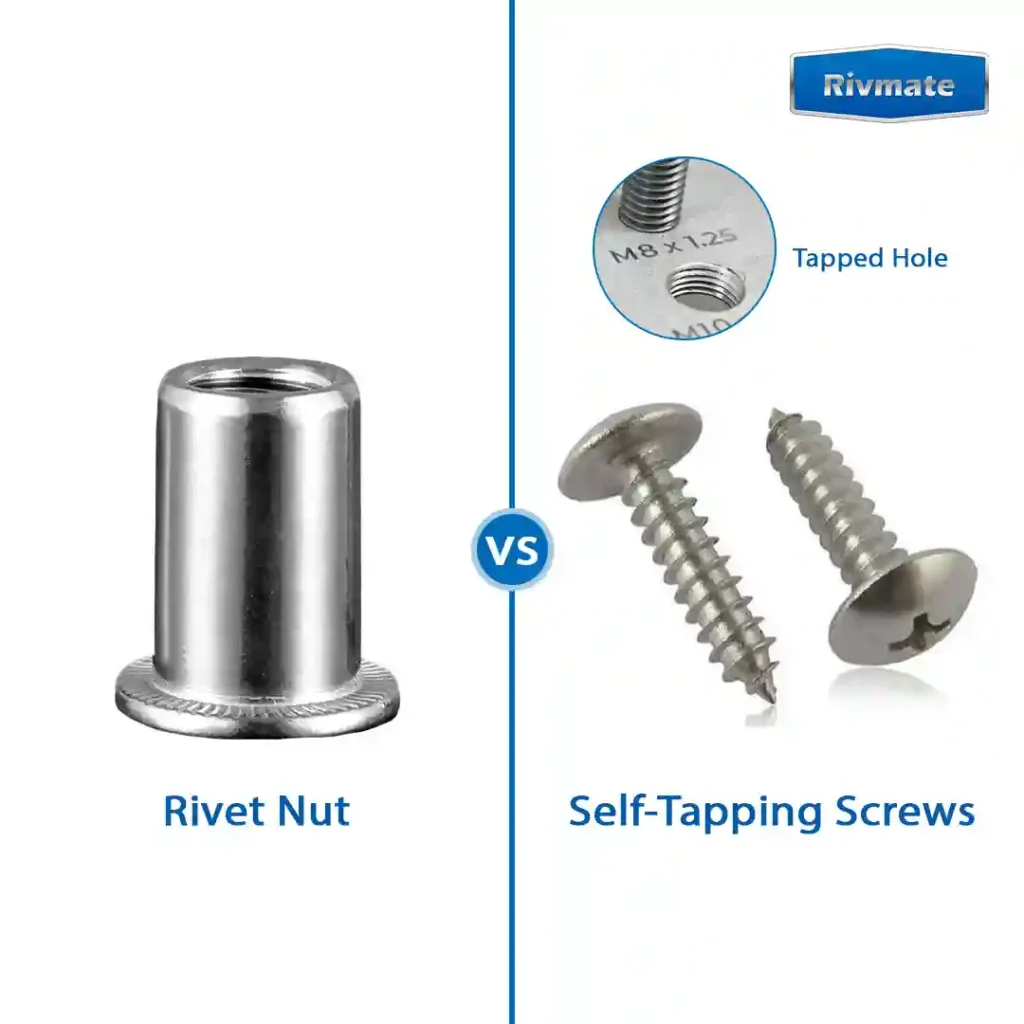
| Comparison | Rivet Nut | Tapped Hole / Self-Tapping Screw |
|---|---|---|
| Thread Source | Uses an independent threaded insert installed into the material. | Tapped holes create threads directly in the base material; self-tapping screws form threads by cutting into the material. |
| Thin Material Capability | Suitable for thin sheets where direct threading is difficult. | Limited by material thickness and available thread engagement length. |
| Repeated Assembly | Designed for repeated screw installation and removal. | Repeated removal may wear the material thread or reduce holding strength. |
| Material Requirements | Requires suitable hole size and material support. | Requires sufficient material thickness or strength for thread formation. |
| Installation Process | Requires a rivet nut installation tool. | Tapped holes require machining; self-tapping screws require simple fastening tools. |
| Typical Applications | Sheet metal enclosures, automotive parts, HVAC panels, industrial equipment. | Thicker metal components or simple low-cost fastening applications. |
Rivet Nuts vs Through-Bolts and Conventional Nuts
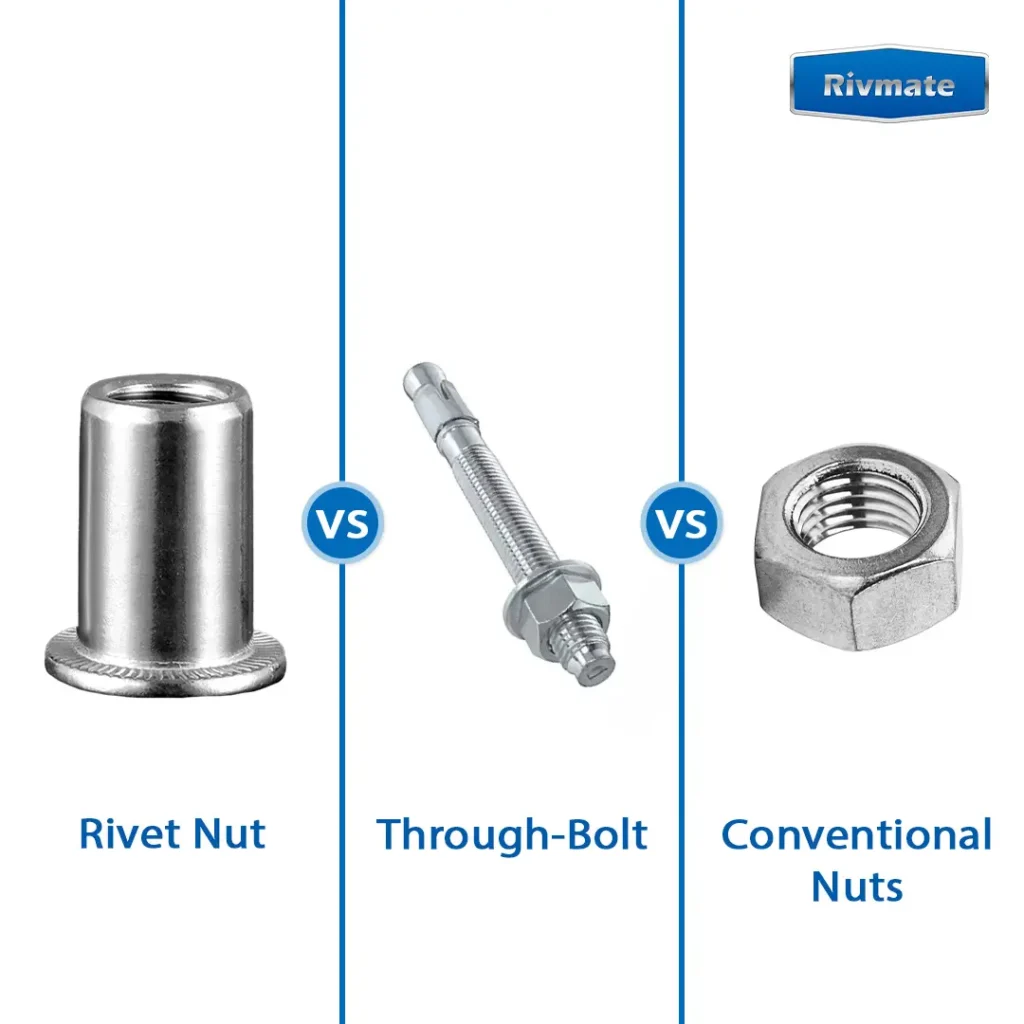
| Comparison | Rivet Nut | Through-Bolt + Conventional Nut |
|---|---|---|
| Installation Direction | Installed from one side only. | Normally requires access to both sides of the assembly. |
| Backside Space Requirement | No backside access is required. | Requires enough space to place and tighten the nut. |
| Component Quantity | Requires a rivet nut and a screw or bolt. | Requires bolt, nut, washers, and related components. |
| Disassembly Capability | Supports repeated maintenance and replacement. | Supports repeated removal when both sides remain accessible. |
| Installation Location | Suitable for enclosed structures and limited spaces. | Suitable for open structures with easy access. |
| Load Capability | Suitable for many industrial fastening applications when properly selected. | Often preferred for applications requiring very high structural loads. |
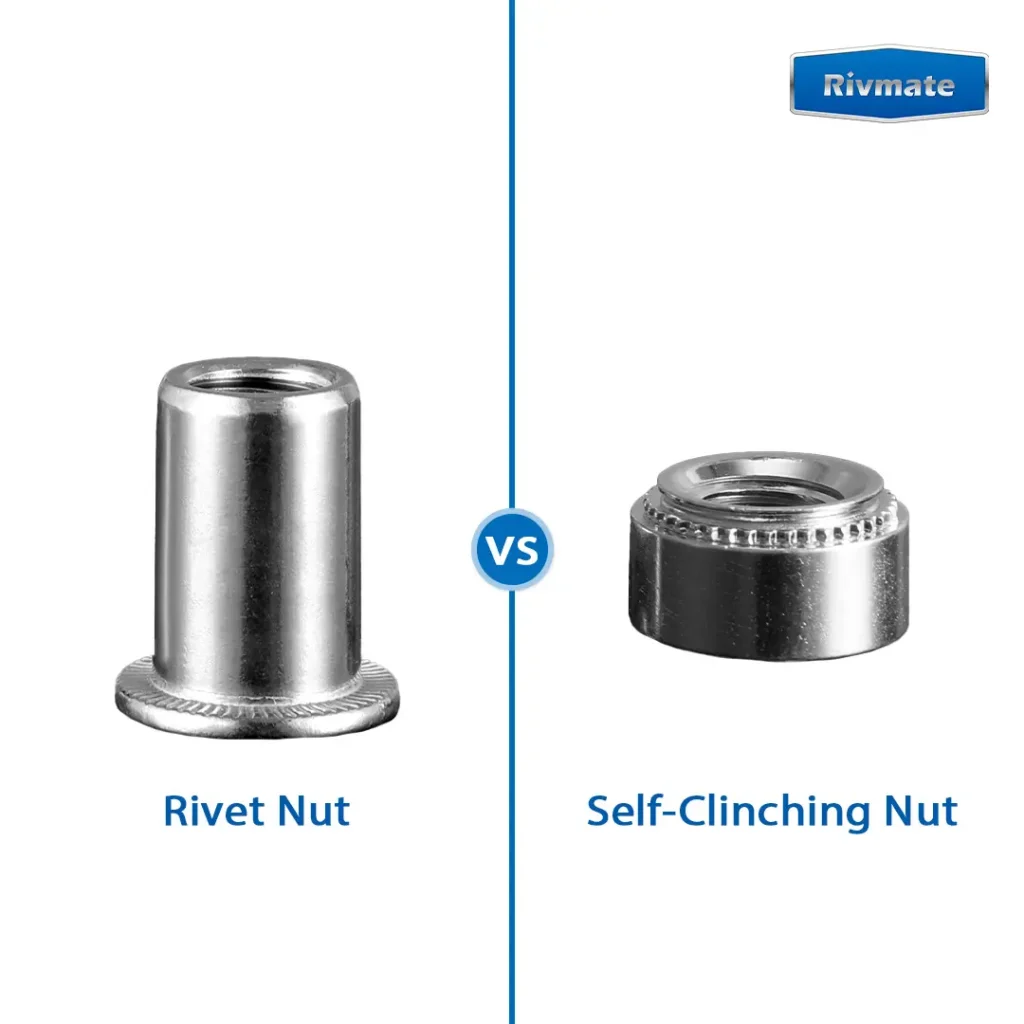
Rivet Nuts vs Self-Clinching Nuts
| Comparison | Rivet Nut | Self-Clinching Nut |
|---|---|---|
| Locking Method | Fixed by controlled deformation during installation. | Pressed into the sheet material to create mechanical locking. |
| Installation Equipment | Installed using manual, electric, or pneumatic rivet nut tools. | Usually requires a press machine or controlled pressing equipment. |
| Field Installation | Suitable for repair, modification, and onsite installation. | Mainly used during factory production. |
| Material Requirements | Works with a wider range of applications when properly selected. | Requires suitable sheet hardness and thickness for clinching. |
| Production Type | Flexible for low-volume, custom, and maintenance applications. | Efficient for high-volume standardized sheet metal production. |
| Post-Assembly Installation | Can be installed after the product structure is completed. | Usually installed during the manufacturing process. |
What Are the Limitations and Failure Risks of Rivet Nuts?
The failure of a rivet nut depends not only on the product itself, but also on the strength and thickness of the sheet metal, as well as installation parameters and the operating environment. Therefore, when selecting a rivet nut, you need to consider the compatibility of the entire fastening system.
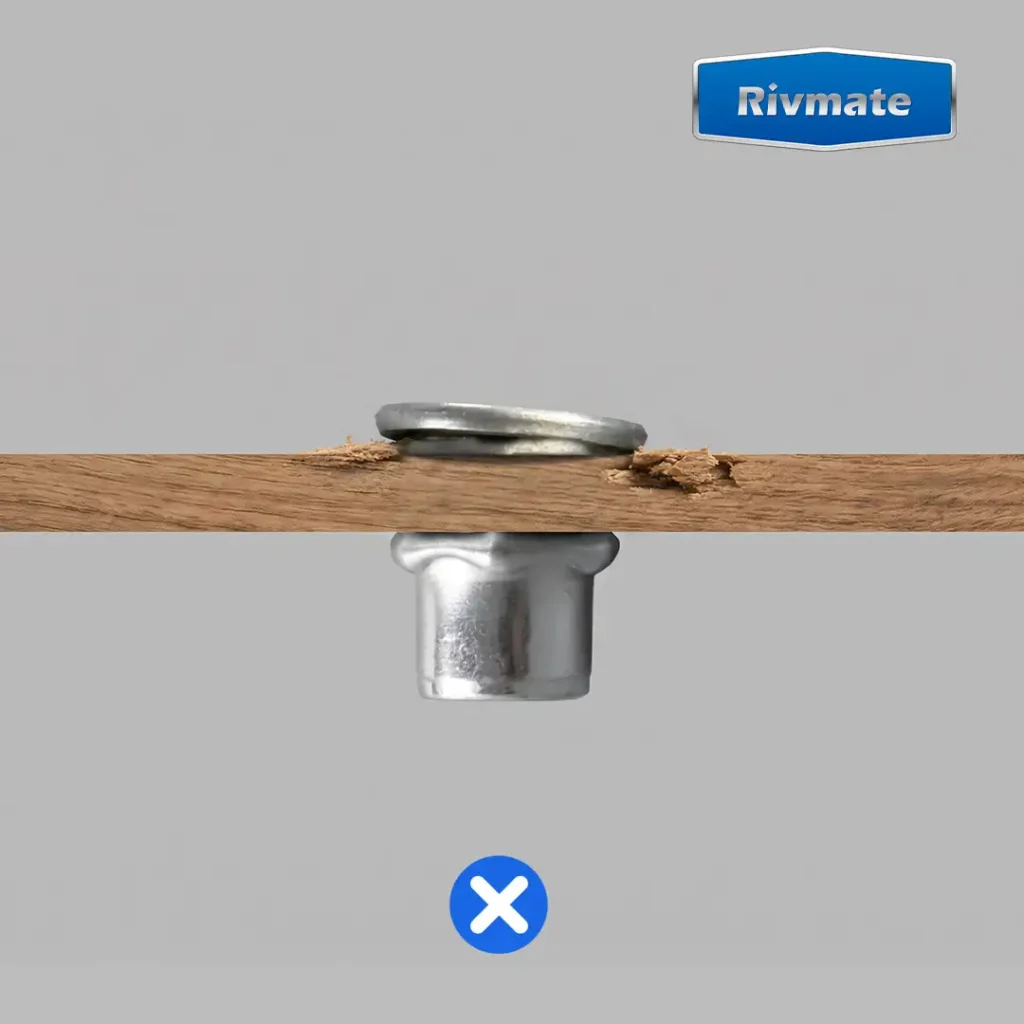
Limitation 1.Lower Load Capacity Than Some Welded or Structural Solutions
Rivet nuts offer flexible installation, but their load-bearing capacity is inferior to that of welded structures or high-strength through-bolt connections. Rivet nuts primarily bear the load of the entire connection through a combination of the locking mechanism formed by deformation on the back side, the clamping force between the plates, and the load-bearing capacity of the base material itself. Welded structures join two metal components together, while through-bolts form a strong structural connection by clamping from both sides.
Therefore, rivet nuts are not suitable for applications involving high impact loads or large load-bearing structures; you should carefully evaluate other connection methods.
Limitation 2.Spinning, Pull-Out, and Thread Damage
Spinning refers to a situation where, when tightening a bolt, the rivet nut does not remain stationary but rotates along with the bolt inside the mounting hole. The most common causes are: first, the mounting hole is too large, preventing the outer wall of the rivet nut from making a tight fit against the hole wall after installation; second, the wrong type of rivet nut was selected. For example, using a round rivet nut on softer materials fails to provide effective anti-rotation capability.
Pull-out refers to the phenomenon where a rivet nut is pulled out of a hole in a sheet when subjected to axial tensile force. The primary causes of this phenomenon are mismatched sheet thicknesses and insufficient sheet strength. This prevents the formation of a stable joint.
The main causes of thread damage are excessive tension during installation, incorrect tool settings, and misalignment of the bolt during installation.
Limitation 3. Incorrect Hole Size, Grip Range, or Setting Force
If the hole diameter is too small, it will damage the outer wall of the rivet nut during installation. If the hole diameter is too large, it will result in insufficient contact, rotation of the rivet nut, and reduced tensile strength. Therefore, you must strictly adhere to the hole diameter specifications provided by the rivet nut manufacturer when machining the hole.
If your sheet metal thickness exceeds the rivet nut’s maximum clamping range, the rear end of the rivet nut will be unable to deform properly and lock the structure. If your sheet metal thickness is less than the rivet nut’s minimum clamping range, the rivet nut will deform in the wrong location, resulting in insufficient clamping force.
Insufficient installation force results in inadequate deformation of the rivet nut, causing it to loosen. Excessive installation force causes thread deformation, panel indentations, and damage to the rivet nut.
Limitation 4.Corrosion, Galvanic Compatibility, and Sealing Limits
Different materials are suitable for different environments. When used in coastal or humid environments, materials with higher corrosion resistance are required, as ordinary materials are prone to corrosion.
In humid or saline environments, contact between two different metals can easily lead to galvanic corrosion.
Standard open-type rivet nuts are not sealed. If the product’s connections must be waterproof or dustproof, you should select sealed rivet nuts, a sealed design, or other sealing measures.
Which Applications Benefit Most from Rivet Nuts?
Application 1.Thin Sheet Metal, Tubes, Panels, and Enclosures
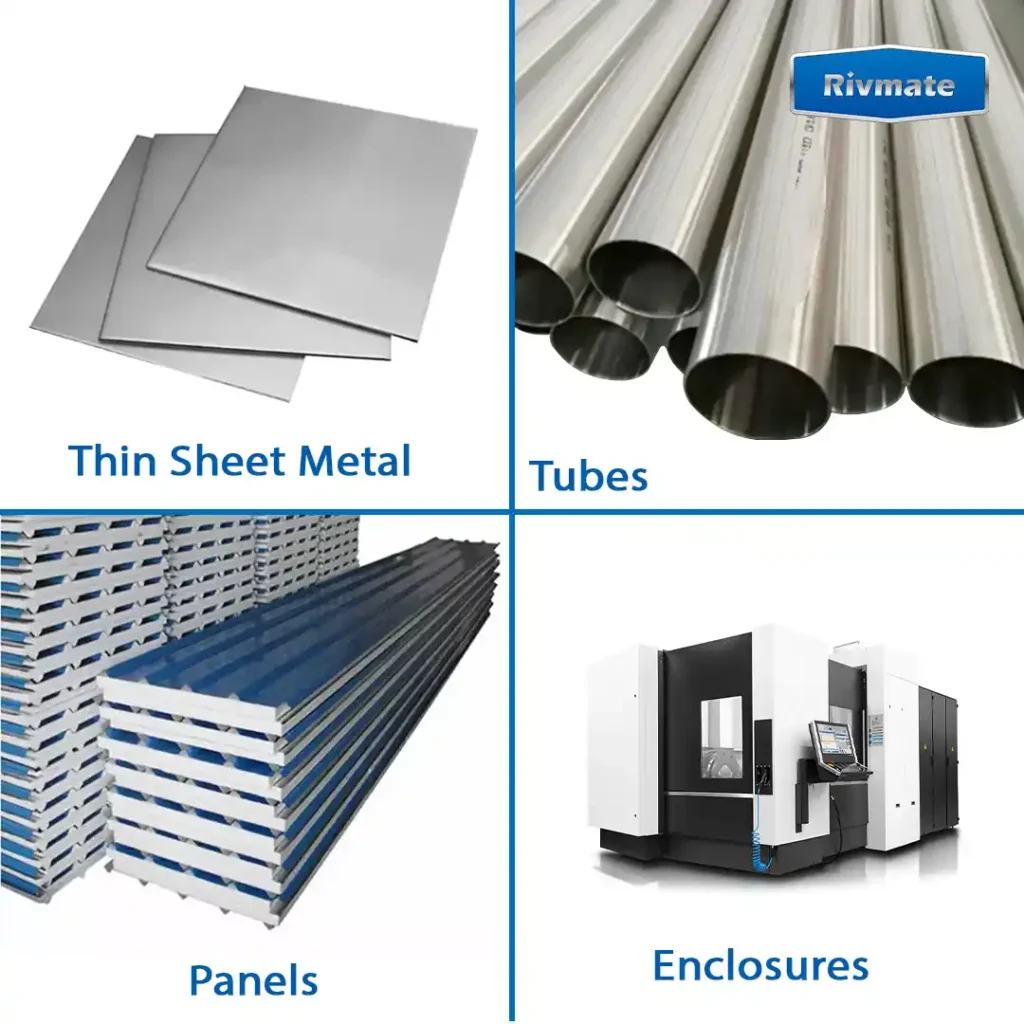
Thin sheet metal, tubes, panels, and enclosures are the most typical applications for rivet nuts. This is because these connections are suitable for thin-walled materials and structures where the back side is inaccessible.
Many industrial products on the market are manufactured using thin steel sheets, aluminum sheets, or tubing. These materials share a common issue: their thickness is insufficient to form reliable internal threads. If threads are cut directly, the reliability of the connection cannot be guaranteed.
In contrast, rivet nuts provide their own threaded structure after installation, allowing thin sheets to have threaded mounting points similar to those found in thicker materials.
Application 2.Painted, Coated, or Heat-Sensitive Assemblies
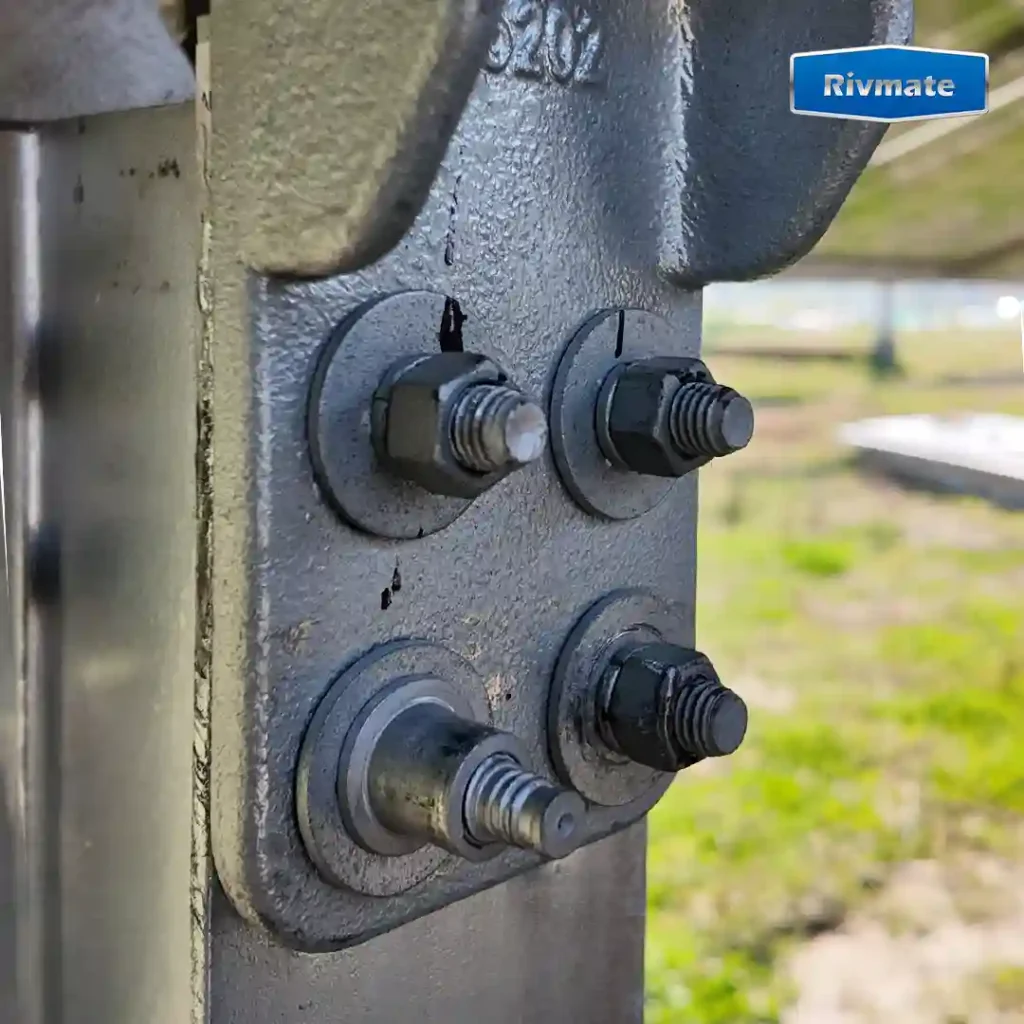
Painted, coated, or heat-sensitive assemblies—these products all have one thing in common: their surfaces must not be damaged by welding. The key advantage of rivet nuts is their cold installation method, which generates no welding heat during the installation process. This is particularly important for products that have already undergone surface treatment.
Application 3.Automotive, HVAC, Appliances, Solar, and Industrial Equipment
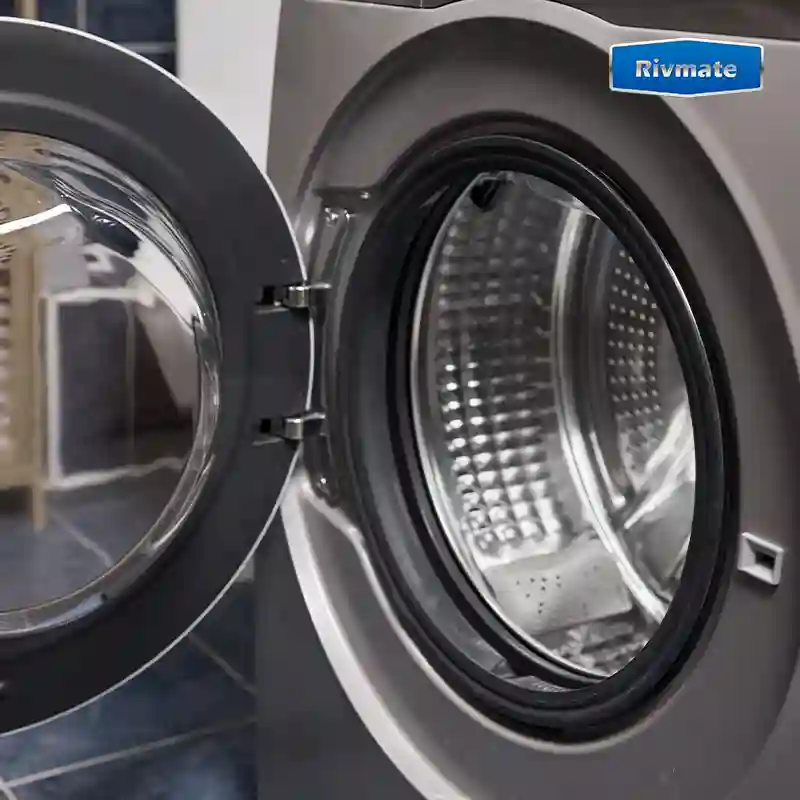
The advantages of rivet nuts include their suitability for thin materials and their ability to support single-sided installation. They solve fastening challenges in many industrial applications, such as when standard nuts cannot be installed on thin steel plates or aluminum alloy structures. Certain connection points on industrial equipment require frequent maintenance and repairs, and rivet nuts provide a reliable threaded connection. They also facilitate disassembly and maintenance.
How Do You Choose the Right Rivet Nut?
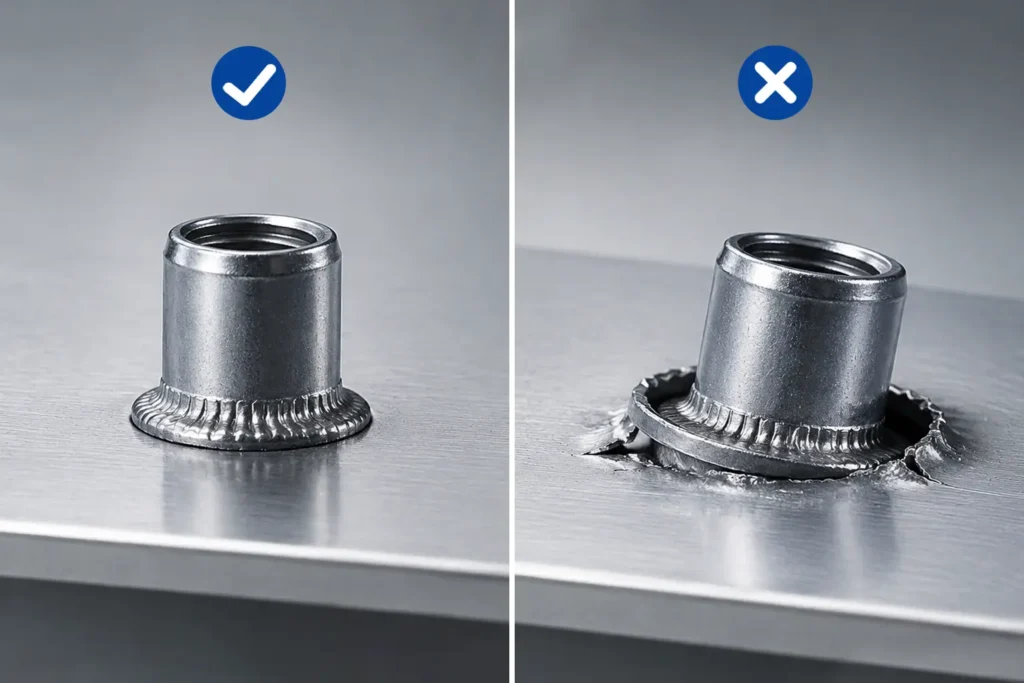
Step 1.Match Grip Range and Hole Size to the Parent Material
The clamping range and dimensions of the rivet nuts must match the sheet metal. You should refer to the technical specifications provided by the manufacturer to make your selection.
Step 2.Choose Round, Knurled, Half-Hex, or Full-Hex Bodies
The body style of a rivet nut affects the connection’s resistance to rotation. Different applications require different designs. For general-purpose connections, a round-body rivet nut is a suitable choice. Knurled-body, half-hex-body, and full-hex-body rivet nuts are suitable for applications requiring resistance to rotation.
Step 3.Select the Head Style for Load Distribution and Surface Fit
Common head types include:
- Flat Head
- Large Flange
- Countersunk Head
The head type of a rivet nut primarily affects load distribution, surface contact, and aesthetic requirements. You should make your decision based on the specific load and aesthetic requirements of the structure in which the rivet nut will be used.
| Head Style | Features | Advantages | Suitable Applications |
|---|---|---|---|
| Flat Head | Most common head design with a balanced structure. | Provides a good balance between performance and cost. | General industrial applications. |
| Large Flange | Larger contact area with the parent material. | Distributes load better and improves support on thin materials. | Thin sheets and softer materials. |
| Countersunk Head | Installed nearly flush with the surface. | Provides a smooth appearance and reduces surface protrusion. | Products requiring a clean and flat surface finish. |
Step 4.Match Material and Finish to Strength and Corrosion Exposure
Common materials for rivet nuts include aluminum, carbon steel, and stainless steel. The choice of material depends on the strength requirements of the joint, weight considerations, and the risk of environmental corrosion.
| Material | Advantages | Limitations | Common Applications |
|---|---|---|---|
| Aluminum | Lightweight and good corrosion resistance. | Lower strength compared with steel materials. | Lightweight structures and aluminum components. |
| Steel | High strength and cost-effective. | Requires corrosion protection or surface treatment. | Industrial equipment and general sheet metal applications. |
| Stainless Steel | Excellent corrosion resistance and suitable for harsh environments. | Higher material cost compared with standard steel. | Outdoor equipment and humid or corrosive environments. |
Step 5.Choose Open-End, Closed-End, or Sealed Designs
The end configurations of rivet nuts can be classified as open-end, closed-end, or sealed designs. These configurations determine whether a bolt can pass through the connection point and whether the connection requires protection against water, dust, or environmental contamination.
| Type | Features | Advantages | Suitable Applications |
|---|---|---|---|
| Open-End | Open through design with both ends connected. | Lower cost and widely used for general fastening applications. | Standard industrial connections. |
| Closed-End | Bottom end is fully enclosed to block internal access. | Helps prevent liquid and contaminants from entering through the insert. | Outdoor equipment, enclosures, and applications requiring better protection. |
| Sealed | Designed with sealing features for improved protection. | Provides enhanced waterproof and dust-resistant performance. | Waterproof, sealing, and environmental protection applications. |
Step 6.Match the Installation Tool and Control Method to Production Volume
The choice of installation tools can also affect your productivity, installation consistency, and product quality stability. Choosing the right tools not only improves efficiency but also enhances the reliability of the connections.
| Production Volume | Recommended Tool | Features |
|---|---|---|
| Prototype & Low Volume | Manual Rivet Nut Tools | Low cost and flexible for small-batch production or repair work. |
| Medium Volume Production | Pneumatic or Electric Tools | Improves installation efficiency and provides better process consistency. |
| High Volume Production | Automatic Installation Equipment | Suitable for stable, high-volume manufacturing with controlled processes. |
When Should You Use a Different Fastening Method?
Rivet nuts are suitable for applications involving thin sheets, single-sided installation, and situations requiring removable threaded connections. However, rivet nuts also have certain limitations. They are not the best choice for all applications.
When your application requirements change—including the following situations—you will need to switch to other fastening methods:
- The application must withstand higher structural loads
- There must be sufficient installation space on both sides
- Production volumes are very high, requiring automated assembly
- The base material is too soft or too thick, making it impossible to reliably install standard rivet nuts
Use a Weld Nut for Higher Structural Loads and Permanent Joints
Welded nuts work by being permanently attached to sheet metal through welding. They are commonly used in the fabrication of metal structures.
Compared to riveted nuts, the main advantages of welded nuts are:
- A more permanent connection
- A direct bond with the sheet metal
- Suitable for structural components subjected to long-term loads
Use a Through-Bolt When Both Sides Are Accessible
The through-bolt method is the most traditional form of mechanical fastening. It involves passing a bolt through two parts and securing it with a nut on the opposite side.
Advantages of the through-bolt method:
- Directly clamps the two parts using the bolt and nut
- Accessible from both sides of the parts
- Provides high clamping force
Use a Self-Clinching Nut for Press-Based High-Volume Assembly
A self-clinching nut is a fastener that is embedded into thin sheet metal through the application of pressure. It is suitable for standardized sheet metal production.
If your product meets the following conditions, a self-clinching nut is the right choice:
- Very large production volumes
- Fixed production line
- Parts can be processed via stamping
- High-speed, repetitive installation is required
Use a Specialized Insert for Very Soft or Thick Materials
Soft plastics, fiberglass composites, honeycomb materials, and thick-walled materials require specialized inserts. This is because threaded inserts can be secured in various ways, including:
- hot-melt installation
- ultrasonic installation
- adhesive bonding
- mechanical locking
Frequently Asked Questions About Rivet Nuts
How Many Times Can a Bolt Be Removed from a Rivet Nut?
The bolts in rivet nuts can be removed and reinstalled multiple times, so a specific number of cycles cannot be guaranteed. The actual service life depends on the material of the rivet nut, the quality of the threads, the installation conditions, the bolt torque, and the operating environment.
Can Rivet Nuts Be Installed After Painting or Coating?
Rivet nuts can be installed after painting or surface coating is complete. Because rivet nuts are installed using mechanical riveting, no heat is generated. Therefore, the surface coating will not be damaged.
Are Rivet Nuts Waterproof Without Sealant?
Open-end rivet nuts are not waterproof. Closed-end rivet nuts or rivet nuts with a sealing structure do offer some degree of water resistance. For products with high water resistance requirements, it is necessary to incorporate O-rings, sealant, or other waterproof design features.
Can a Damaged Rivet Nut Be Replaced in the Same Hole?
Damaged rivet nuts can be replaced in their original holes, provided that the mounting holes have not been significantly enlarged, deformed, or damaged. Verify that installing a new rivet nut in the original location will still provide a sufficiently secure lock.
Work with a IATF 16949 Certified Blind Rivet Manufacturer
Get High Quality Rivets Instead of Huck and Avdel Rivets

Rivmate Rivet
Rivmate is blind rivets manufacturers in china. The company is IATF 16949 certified and offers high-strength structural blind rivets that serve as alternatives to Huck and Avdel products.
Explore Rivmate Cases
Rivmate Rivet
Rivmate is blind rivets manufacturers in china. The company is IATF 16949 certified and offers high-strength structural blind rivets that serve as alternatives to Huck and Avdel products.

Hey There, I'm Allen!
I am the boss of Rivmate. For over two decades, we have specialized in the manufacture of blind rivets, providing our customers with reliable riveting solutions. Need riveting services? Feel free to contact us.