Once installed, rivet nuts provide a threaded connection point that allows bolts to be repeatedly installed and removed. Their greatest advantage is that they support single-sided installation.
Rivet nuts are widely used in automotive body panels, electrical control cabinets, mechanical equipment housings, HVAC equipment, and structures such as pipes and hollow profiles.
Table of Contents
The Main Purpose of Rivet Nuts
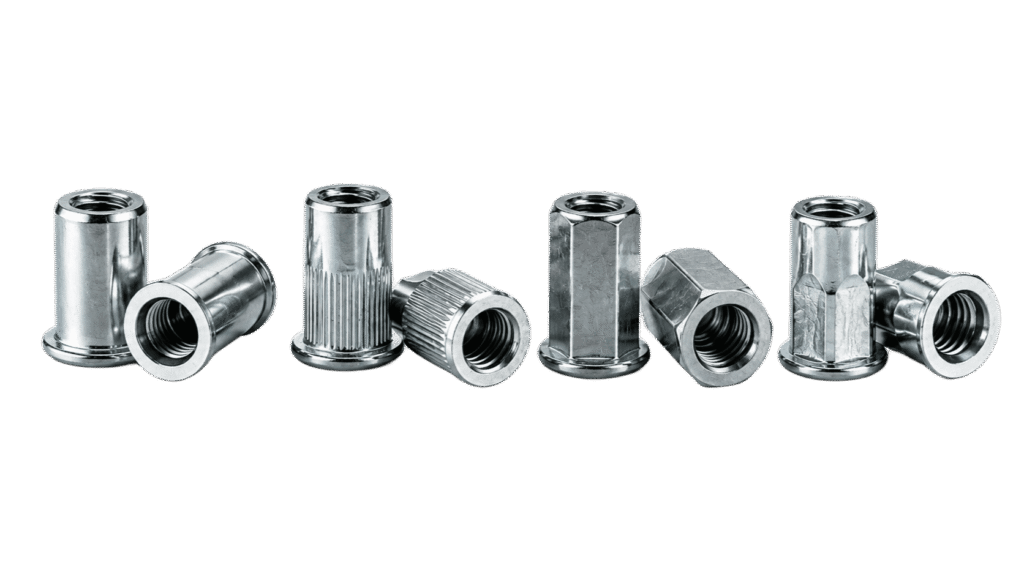
The primary function of rivet nuts is to create an internal threaded connection point on thin sheets or panels where access to the back side is limited. The advantage is that other parts can be secured with bolts without having to machine threads into the workpiece or install nuts.
Rivet nut connections are ideal for products with thin sheet metal, limited space on the reverse side, or those requiring future disassembly and maintenance. During maintenance, simply remove the bolts to detach the relevant components; there is no need to remove the rivet nuts themselves. Compared to welding, this method generates no heat and does not damage the appearance of the sheet metal.
How Rivet Nuts Create Threads with One-Sided Access

The greatest installation advantage of a rivet nut is that you only need to install it from one side to create an internal threaded connection on thin sheets or hollow profiles. Unlike traditional bolt connections, where the nut is placed from the back, a rivet nut is inserted into a pre-machined hole from the front and secured using a riveting tool.
The rivet nut does not create threads in the sheet material; instead, it secures itself to the workpiece through its own plastic deformation. First, the rivet nut is screwed onto the tool’s mandrel. When the tool is activated, it pulls the mandrel, causing controlled deformation of the nut’s tubular section and forming an expanded portion on the back of the workpiece. This deformed section, together with the flange on the front, clamps the workpiece in place.
Materials and Panel Types That Accept Rivet Nuts

Rivet nuts can be installed on a variety of materials and sheet metal structures, provided that the workpiece can withstand the clamping force generated during installation and that the selected rivet nut’s design, dimensions, and clamping range are suitable for the actual operating conditions.
Common suitable materials include carbon steel, aluminum alloy, and stainless steel sheets; rivet nuts can also be used with certain plastic sheets and composite materials, but this typically requires more careful selection of the product type and verification of the reliability of the connection after installation.
| Material or Panel Type | Suitability | Common Applications | Selection Considerations |
|---|---|---|---|
| Carbon Steel Panels | Commonly suitable | Machinery housings, electrical enclosures, and sheet metal structures | Check panel thickness, hole diameter, and grip range. |
| Aluminum and Aluminum Alloy Panels | Commonly suitable | Automotive panels, lightweight equipment housings, and aluminum frames | Consider local panel deformation, load capacity, and the risk of galvanic corrosion between dissimilar metals. |
| Stainless Steel Panels | Commonly suitable | Industrial equipment housings and structures requiring corrosion resistance | Consider material compatibility between the rivet nut and panel, as well as the service environment. |
| Thin Sheet Metal | Suitable with proper selection | Thin-walled sheet metal components and equipment covers | Verify the grip range and prevent panel deformation or joint failure. |
| Hollow Sections and Enclosed Structures | Suitable when installation clearance is sufficient | Square tubes, rectangular tubes, and equipment frames | Ensure sufficient internal clearance for the rivet nut’s deformation during installation. |
| Plastic Panels | Suitable for selected applications | Certain plastic housings and structural components | Evaluate the risks of cracking, deformation, and long-term material creep. |
| Fiber-Reinforced Composite Panels | Suitable for selected applications | Certain composite panels and structural components | Assess the risks of local crushing and delamination, and validate joint performance under actual service conditions. |
Automotive and Transportation Applications
Rivet nuts are widely used in sheet metal assembly for automobiles, commercial vehicles, trailers, and certain rail transit equipment. The primary reason is that rivet nuts enable the creation of an internal threaded connection point on thin metal sheets or in enclosed structures where access to the back side is not possible. In automobiles and transportation equipment, they provide a connection method that allows for easy disassembly and future maintenance. Examples include the fastening of interior panels, body panels, equipment mounting brackets, auxiliary light brackets, and certain maintenance access panels in automotive manufacturing.

Some connection points in automobiles are not suitable for standard rivet nuts. During vehicle operation, certain connection points must withstand significant tensile or shear forces. You should evaluate the feasibility of using rivet nuts based on their load-bearing capacity, resistance to rotation, and installation reliability. When the connection point is subject to high tightening torque or vibration risks, consider models with a hexagonal body that offers high torque resistance. When the connection point involves high safety requirements or heavy loads, you must comply with vehicle design requirements and undergo corresponding engineering validation.
Sheet Metal, Enclosure, and Fabrication Applications
1. Applications in Sheet Metal Fabrication
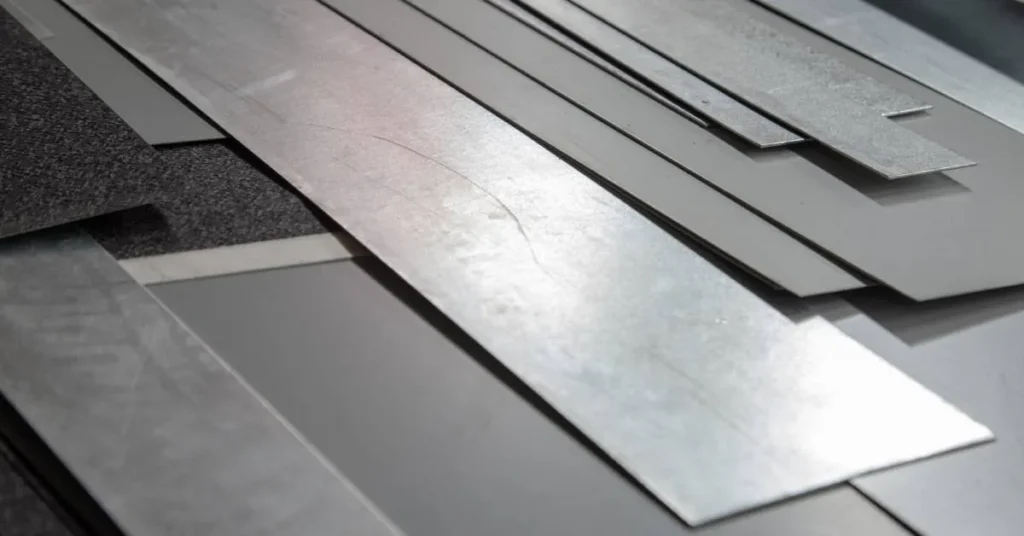
In sheet metal fabrication, rivet nuts are commonly used in equipment brackets, connecting plates, mounting bases, and removable panels. Installing rivet nuts provides threaded connection points for thin steel, aluminum, and stainless steel sheets.
Compared to direct tapping, blind rivet nuts provide independent internal threads. Once installed, you can secure components with bolts; during subsequent maintenance, the bolts can be easily removed, eliminating the need to re-tap threads.
2. Applications in Electrical Control Cabinets and Equipment Enclosures
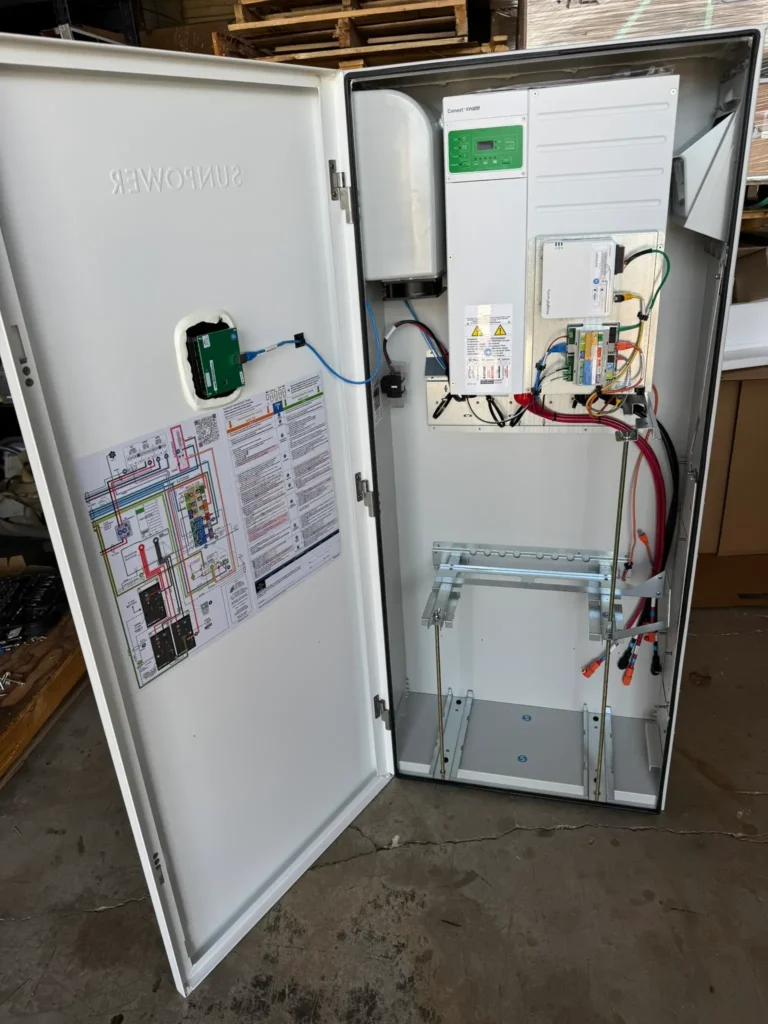
In electrical control cabinets, industrial equipment enclosures, and machine guards, blind rivet nuts are commonly used to secure internal mounting brackets, external accessories, hinges, and removable access panels. The limitation is that these devices are enclosed enclosures that can only be accessed from the outside. By using rivet nuts for connections, you can first machine the required mounting holes and then install the rivet nuts from the outside, eliminating the need to place standard nuts inside the enclosure.
Rivet nut connections are ideal for equipment that requires periodic maintenance or replacement of internal components. Not only can you disassemble the connected components by simply removing the bolts, but you also avoid damaging the existing threaded connection. It’s a win-win situation.
It is important to note that rivet nut installations do not provide a sealed connection. If your equipment enclosure requires waterproofing, dustproofing, or compliance with a specific IP protection rating, you must also consider sealing gaskets, the structural design around the mounting holes, and overall unit sealing verification.
Furniture, Appliances, Marine, and DIY Uses
1. Applications in Furniture
In metal furniture, rivet nuts can be used in steel or aluminum frames, table legs, brackets, and metal panels to provide threaded connection points. The installation method of rivet nuts is suitable for furniture structures that require a flush appearance and facilitate assembly or subsequent maintenance. When furniture joints need to withstand heavy loads, repeated shaking, or impact, you should further verify the load-bearing capacity of the rivet nuts.
2. Applications in Household Appliances

Rivet nut connections are also common in household appliances and commercial equipment. They are used to secure certain metal enclosures, mounting brackets, access panels, and accessories. Examples include the sheet metal structures found in everyday items such as washing machines, refrigeration equipment, and HVAC systems. Installing rivet nuts creates a threaded connection point, facilitating the installation or removal of related components.
3. Applications in Marine and Offshore Environments

In marine and offshore equipment, rivet nuts are also required for securing certain equipment brackets, metal panels, interior fittings, and non-critical structures. These components are primarily hollow structures or thin-plate assemblies where the rear is difficult to access.
Compared to typical indoor environments, connections in marine environments require greater attention to salt fog, humidity, vibration, and the risk of corrosion between dissimilar metals. Therefore, you must comprehensively consider the materials of the rivet nuts and base materials, surface treatments, isolation measures, and the actual environment. Avoid assuming that an assembly is reliable simply because stainless steel is corrosion-resistant.
4. Applications in DIY and Home Repair Projects
In DIY and home repair projects, most connections involving metal sheets or tubular frames require disassembly and maintenance. Therefore, installing rivet nuts to create a removable bolted connection is a practical option.
Benefits of Removable and Serviceable Threaded Joints

The most notable advantage of rivet nuts is their ability to create threaded connections on thin sheets or structures where access to the back side is difficult. They facilitate future maintenance, component replacement, and equipment adjustments, as these operations can be completed simply by removing the bolts—without damaging the original connection structure.
- Facilitates maintenance and replacement of components at connection points
Most industrial equipment enclosures, electrical control cabinets, automotive interior panels, and mechanical brackets require periodic removal of cover plates, brackets, or other components after prolonged use. The use of rivet nuts simplifies the procedures for maintenance and component replacement. - Reduced Risk of Thread Damage in Thin Sheets
Instead of tapping threads directly into thin metal sheets, pull-through rivet nuts create an independent metal body that provides the internal threads, effectively reducing reliance on and wear to the sheet metal’s own threads. - Simplified Assembly and Subsequent Maintenance
Pull-through rivet nuts can be installed from just one side of the workpiece. This is particularly suitable for enclosed profiles, enclosures, and equipment with limited internal space. Once installed, accessories can be secured from the outside using bolts, making subsequent disassembly more convenient. - Increased Flexibility in Component Replacement
Some products require the replacement of brackets, panels, or auxiliary equipment. Removable bolted connections allow you to remove relevant components without cutting or damaging the main structure. This helps simplify maintenance procedures and reduces the risk of damaging the workpiece during disassembly.
Load, Grip Range, and Design Limitations
Rivet nuts provide internal threaded connections on thin metal sheets, equipment housings, and hollow profiles. However, they are not suitable for all applications. The load-bearing capacity and scope of application of rivet nuts are limited by various factors, including load, grip range, mounting hole size, and structural design.
Load Limitations: What forces can a rivet nut withstand?
| Load or Performance Type | Definition | Key Considerations |
|---|---|---|
| Axial Tensile Load | Force acting along the bolt axis that tends to pull the joint apart. | Threads may fail, the panel may deform, or the rivet nut may pull out of the workpiece. |
| Shear Load | Force acting parallel to the joint interface that tends to cause relative movement between connected parts. | Consider bolt strength, hole-wall bearing capacity, and panel deformation under load. |
| Pull-Out Resistance | The ability of an installed rivet nut to resist being pulled out of its mounting hole. | Depends on panel strength, material thickness, hole diameter, and installation quality. |
| Torque-Out Resistance | The ability of an installed rivet nut to resist rotation within its mounting hole. | Oversized holes, insufficient setting, or incompatible body designs may cause the rivet nut to spin. |
| Cyclic Load | Repeated or periodically varying forces acting on the joint during service. | Evaluate the risks of bolt loosening, joint wear, and fatigue failure. |
The load-bearing capacity of a rivet nut depends not only on the fastener itself but is also influenced by bolt strength, mounting holes, sheet thickness, and material properties. For different directions of force, you need to consider various failure factors in advance.
Grip Range Limitations: Why Is Sheet Metal Thickness So Important?
| Panel Thickness Condition | Potential Problems | Recommended Action |
|---|---|---|
| Below the Minimum Grip Range | Excessive deformation, thread damage, or improper clamping may occur. | Select a rivet nut designed for thinner panels. |
| Within the Specified Grip Range | The panel thickness is suitable for proper setting, provided the hole dimensions and tool settings are correct. | Install according to the manufacturer’s instructions and inspect the completed installation. |
| Above the Maximum Grip Range | Insufficient deformation may result in inadequate clamping or an insecure installation. | Select a rivet nut with a suitable larger grip range. |
| Multiple Panel Layers | Incorrect calculation of the total grip thickness may cause improper installation. | Verify the actual combined grip thickness and confirm compatibility with the manufacturer’s specifications. |
The grip range represents the range of workpiece thicknesses within which the rivet nut can be properly installed. It consists of a minimum and maximum thickness. Only by selecting a range that matches the sheet metal thickness can you ensure that the rivet nut undergoes proper deformation and clamping on the back side of the sheet metal. If the sheet metal thickness exceeds the range specified for the product, it may affect the deformation effect and the reliability of the fastening.
Design Limitations of Mounting Holes and Body Structures

The installation quality of a rivet nut depends on the size and shape of the mounting hole, as well as the strength of the surrounding sheet metal. If the mounting hole is too large, the rivet nut may rotate inside the hole after installation. If the hole is too small, the rivet nut cannot be properly inserted or installed.
Different body structures also have different requirements for mounting holes. Round-body rivet nuts require round holes. However, semi-hexagonal or fully hexagonal body rivet nuts require corresponding hexagonal holes. The hexagonal hole structure enhances resistance to rotation. Additionally, it is important to ensure an appropriate safety distance between the mounting hole and the edge of the sheet metal.
When to Choose Rivet Nuts over Other Fasteners
Rivet nuts are not suitable for all applications and have certain limitations. Especially for high-load or safety-critical connections, you should consider other fasteners. You need to evaluate the feasibility of using rivet nuts by taking into account sheet metal thickness, installation space, load requirements, and manufacturing processes.
| Application Condition | Why Choose Rivet Nuts | Common Applications | Selection Considerations |
|---|---|---|---|
| Thin Panels Where Direct Tapping Is Unsuitable | Provides internal threads through the insert body, reducing dependence on the panel’s thickness. | Thin sheet metal components and equipment enclosures | Verify thread load capacity and panel strength. |
| Limited Access to the Back of the Workpiece | Can be installed from one side without placing a conventional nut on the back. | Hollow sections, electrical cabinets, and enclosures | Ensure sufficient clearance for the insert’s deformation during installation. |
| Components Requiring Repeated Removal | The bolt can be removed while the rivet nut normally remains installed in the workpiece. | Access covers, mounting brackets, and equipment accessories | Inspect threads for wear and apply the specified tightening torque. |
| Applications Where Welding Is Unsuitable | Requires no welding and avoids welding-related heat input. | Aluminum panels and prefinished sheet metal components | Confirm material compatibility and joint reliability. |
| Adding Threaded Mounting Points to Metal Structures | Creates a separate threaded connection at a properly prepared hole. | Automotive sheet metal, industrial machinery, and HVAC equipment | Verify hole dimensions, grip range, and expected loads. |
How to Match Rivet Nut Type to the Application
Different application scenarios have varying requirements for the specifications, materials, dimensions, and surface treatments of rivet nuts. Each type of rivet nut differs in terms of fastening method, anti-rotation capability, surface contact method, and sealing design; therefore, you need to select the appropriate type based on your specific application requirements.
| Application Requirement | Recommended Rivet Nut Type | Why It Is Suitable | Selection Considerations |
|---|---|---|---|
| General sheet metal fastening and equipment enclosures | Round Body Rivet Nut | Suitable for many standard applications using round mounting holes. | Verify hole diameter, panel thickness, and grip range. |
| Connections requiring higher resistance to rotation | Half-Hex or Full-Hex Rivet Nut | Can improve resistance to rotation when installed in a matching hexagonal hole. | Ensure the hole geometry matches the product and assess panel strength. |
| Round-hole installation with improved anti-rotation performance | Knurled Body Rivet Nut | External knurling helps increase mechanical engagement with the hole wall. | Performance depends on hole size, substrate material, and installation quality. |
| Applications requiring a flatter finished surface | Countersunk Rivet Nut | Can reduce head protrusion when used with a properly designed countersunk hole. | Check the countersink angle, depth, and remaining panel thickness. |
| Applications with limited head clearance | Reduced-Head or Low-Profile Rivet Nut | Suitable for assemblies with limited clearance or specific appearance requirements. | Check the head’s bearing area and the manufacturer’s installation requirements. |
| Applications requiring reduced passage through the insert | Closed-End Rivet Nut | The closed end blocks direct passage through the insert body. | A closed end alone does not guarantee that the complete joint is waterproof or airtight. |
| Applications involving certain soft or brittle substrates | Rivet Nut Designed for the Specific Substrate | Specialized insert designs may be suitable for selected plastics and composite materials. | Evaluate the risks of local crushing, cracking, and long-term deformation. |
| Unusual panel thicknesses or multilayer assemblies | Rivet Nut with the Appropriate Grip Range | Helps achieve the intended deformation and clamping when the workpiece thickness is within the specified range. | Calculate the actual total grip thickness and stay within the manufacturer’s specified range. |
FAQs
What is the difference between a rivet and a rivet nut?
The main difference between rivets and rivet nuts lies in their intended applications. Rivets are used to permanently fasten two or more components together. Rivet nuts, on the other hand, are used to create internal threads in sheet metal or other suitable workpieces, allowing components to be installed and removed using bolts. Both support single-sided installation, but they differ in their structure, post-installation functionality, and applications.
Are rivet nuts suitable for structural connections?
Rivet nuts can be used for certain structural connections. Whether they can be used depends on the load the connection must bear, the material of the workpiece, the sheet thickness, and the specific performance characteristics of the product.
How much weight can a rivet nut hold?
There is no fixed value for how much weight a rivet nut can bear. The load-bearing capacity of a rivet nut depends on its size, material, structure, workpiece thickness, mounting hole size, installation quality, and the direction of the actual load. You can make an assessment based on the performance data provided in the manufacturer’s technical specifications.
Can rivet nuts be used outdoors?
Rivet nuts can be used outdoors. You need to select the appropriate material and surface treatment based on outdoor humidity, salt fog, temperature, and corrosion risk.
Do rivet nuts require access to both sides?
Not necessary.
Can rivet nuts be removed after installation?
Riveted nuts can be removed after installation. Removing them will damage the riveted nut itself, making it impossible to reuse.
What fastener can be used instead of a rivet nut?
These include welded nuts, riveted nuts, standard bolts and nuts, threads formed by direct tapping, and threaded inserts designed for specific base materials.
Do all rivet nuts require a special installation tool?
Not all rivet nuts require specialized electric or pneumatic installation tools. However, most rivet nuts specified in the drawings require the use of the appropriate installation tool to be properly secured to the sheet metal.
Work with a IATF 16949 Certified Blind Rivet Manufacturer
Get High Quality Rivets Instead of Huck and Avdel Rivets
Rivmate Rivet
Rivmate is blind rivets manufacturers in china. The company is IATF 16949 certified and offers high-strength structural blind rivets that serve as alternatives to Huck and Avdel products.
Explore Rivmate Cases
Rivmate Rivet
Rivmate is blind rivets manufacturers in china. The company is IATF 16949 certified and offers high-strength structural blind rivets that serve as alternatives to Huck and Avdel products.

Hey There, I'm Allen!
I am the boss of Rivmate. For over two decades, we have specialized in the manufacture of blind rivets, providing our customers with reliable riveting solutions. Need riveting services? Feel free to contact us.