Rivet nuts for aluminum are suitable for single-sided installation on aluminum sheets, aluminum profiles, and aluminum alloy structures. They are particularly useful when aluminum workpieces do not meet the requirements for direct threading or when space constraints on the reverse side prevent the installation of standard rivet nuts. Rivet nuts for aluminum are a practical choice that creates a reliable internal threaded connection within the material.
When selecting rivet nuts for aluminum, you should evaluate the choice based on the rivet nut material, the thickness and strength of the aluminum sheet, the connection load, and the actual installation conditions.
Table of Contents
Choosing Rivet Nuts for Aluminum Sheet and Extrusions
Aluminum sheets and aluminum extrusions have different internal structures, so it is important to distinguish between them when selecting rivet nuts for aluminum. Although both are made of aluminum, they differ in structure, local wall thickness, back clearance, and load conditions; therefore, when selecting a model, it is essential to evaluate the load-bearing capacity of both the rivet nut and the aluminum material itself.
Selecting Rivet Nuts for Aluminum Sheet Metal
You need to confirm the actual thickness and material strength of the aluminum sheet to select a preliminary type of rivet nut. If the application involves thinner or relatively soft aluminum sheets, we recommend considering Large Flange Rivet Nuts. These are designed to increase the contact area between the flange and the sheet surface, thereby reducing localized load concentration.
Second, you should select the body design based on the shape of the mounting hole and the required anti-rotation performance of the joint. The advantage of Round Body Knurled Rivet Nuts is that the external knurling provides a certain degree of anti-rotation resistance by engaging with the hole walls. They are suitable for standard round holes. If higher anti-rotation resistance is required, you may consider Hex Body Rivet Nuts or Half Hex Body Rivet Nuts.
Selecting Rivet Nuts for Aluminum Extrusions
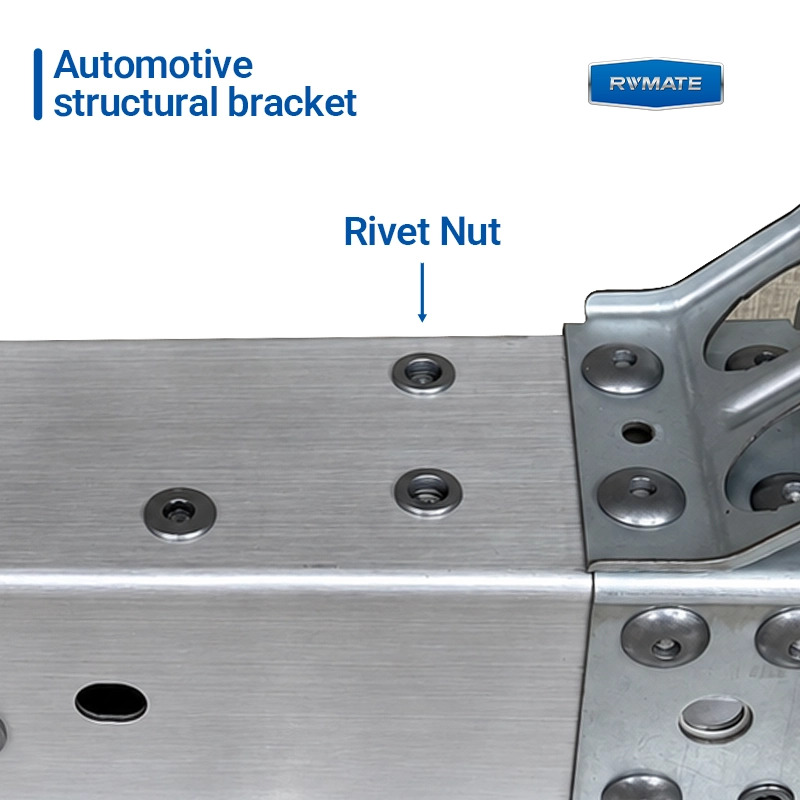
The key difference between aluminum profiles and standard aluminum sheets lies in their cross-sectional structure. Because aluminum profiles are formed through extrusion, some of their internal structures are hollow or multi-chambered. Others feature internal reinforcing ribs, mounting grooves, and walls of varying thicknesses. Therefore, when selecting rivet nuts for aluminum profiles, it is essential to carefully measure the local wall thickness at the actual installation location of the rivet nut.
Guide to Selecting Rivet Nuts for Different Aluminum Applications
| Application Conditions | Recommended Rivet Nut Designs | Key Selection Considerations |
|---|---|---|
| Thin Aluminum Sheets | Large-flange or pre-bulbed rivet nuts | Panel deformation risk and backside bearing area |
| Standard Aluminum Sheet Drilling Applications | Round-body knurled rivet nuts | Hole diameter tolerance and spin-out resistance |
| Aluminum Sheets Requiring Higher Spin-Out Resistance | Hex-body rivet nuts with matching hexagonal holes | Hole machining accuracy and surrounding panel strength |
| Hollow Aluminum Extrusions | Round-body or specially designed extended-length rivet nuts | Internal clearance and backside deformation space |
| Applications Requiring Higher Thread Load Capacity | High-strength aluminum or steel rivet nuts | Thread strength, panel pull-out resistance, and corrosion risk |
| Outdoor Aluminum Structures | Rivet nuts with suitable materials and protective finishes | Galvanic corrosion and environmental corrosion resistance |
Aluminum, Steel, or Stainless Steel Inserts: Material Tradeoffs
Aluminum Rivet Nuts: Weight, Strength, and Material Compatibility
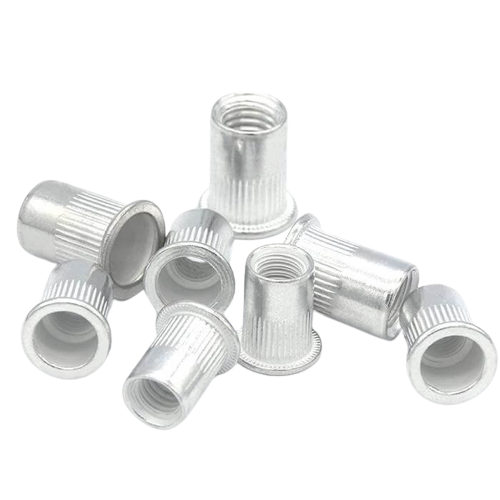
Aluminum rivet nuts offer the advantage of being lightweight, making them suitable for aluminum alloy structures. If you wish to reduce the additional weight added by fasteners, aluminum rivet nuts are worth considering as a priority.
Aluminum rivet nuts are materially compatible with aluminum workpieces. Because they have similar electrochemical properties, they make it easier to control the risk of galvanic corrosion in environments where they come into contact with water compared to directly combining different metals. The limitation of aluminum rivet nuts lies in their mechanical properties. Their thread load-bearing capacity is lower than that of similarly designed steel or stainless steel rivet nuts.
Applications:
- Lightweight aluminum equipment
- Aluminum alloy housings
- Aluminum extrusion structures
- Applications where contact between dissimilar metals is a concern.
Steel Rivet Nuts: Strength, Cost, and Corrosion Protection
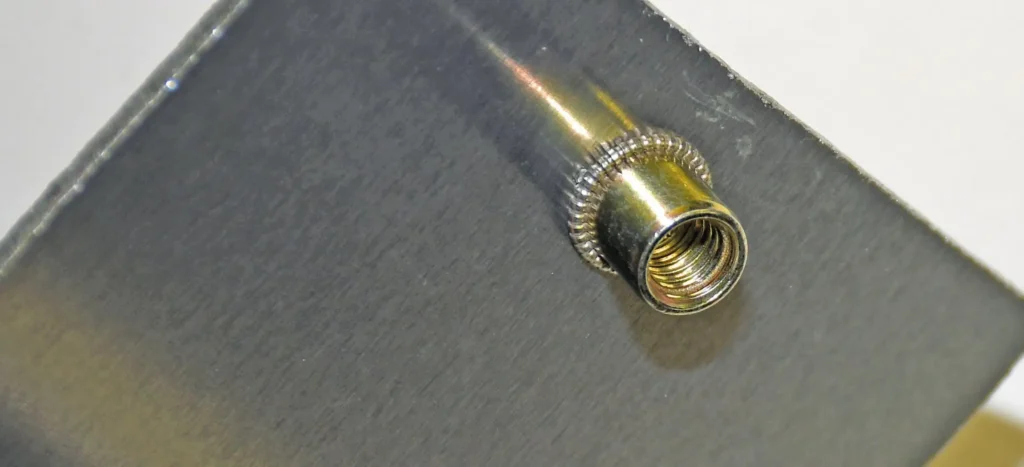
Steel rivet nuts are a common choice in industrial fasteners because they strike a balance between cost-effectiveness and practicality. Compared to aluminum rivet nuts, steel rivet nuts offer higher mechanical strength and thread load-bearing capacity.
If your aluminum structure needs to withstand high bolt clamping loads, you may want to consider using steel rivet nuts. Steel rivet nuts are also worth considering when the connection requires high thread durability. A drawback of steel rivet nuts is that carbon steel is prone to rust. Therefore, surface treatments such as zinc plating or zinc-nickel plating are required to enhance corrosion resistance.
Applications:
- General industrial equipment
- Indoor aluminum frames
- Machinery enclosures
- Applications with requirements for both mechanical performance and procurement costs
Stainless Steel Rivet Nuts: Corrosion Resistance and Aluminum Compatibility
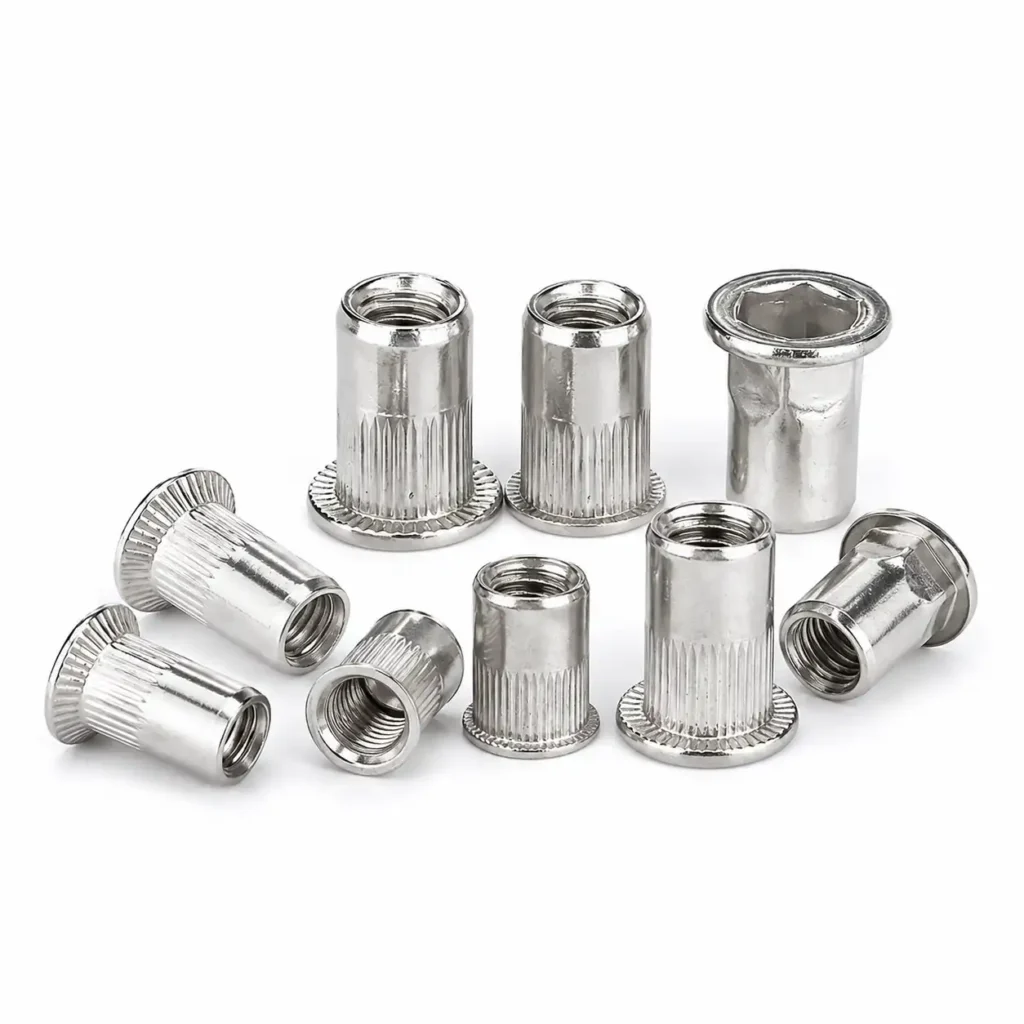
The main advantages of stainless steel rivet nuts are their high corrosion resistance and mechanical strength. They are particularly suitable for applications that demand high environmental adaptability and connection durability.
When using stainless steel rivet nuts on aluminum workpieces, it is important to be aware of the risk of galvanic corrosion. Aluminum is more electrochemically active than stainless steel. When the two metals come into direct contact in the presence of moisture, the aluminum corrodes preferentially.
Applications:
- Coastal equipment
- Marine components
- Industrial equipment in humid environments
- Connections requiring high corrosion resistance
Managing Galvanic Corrosion at the Joint
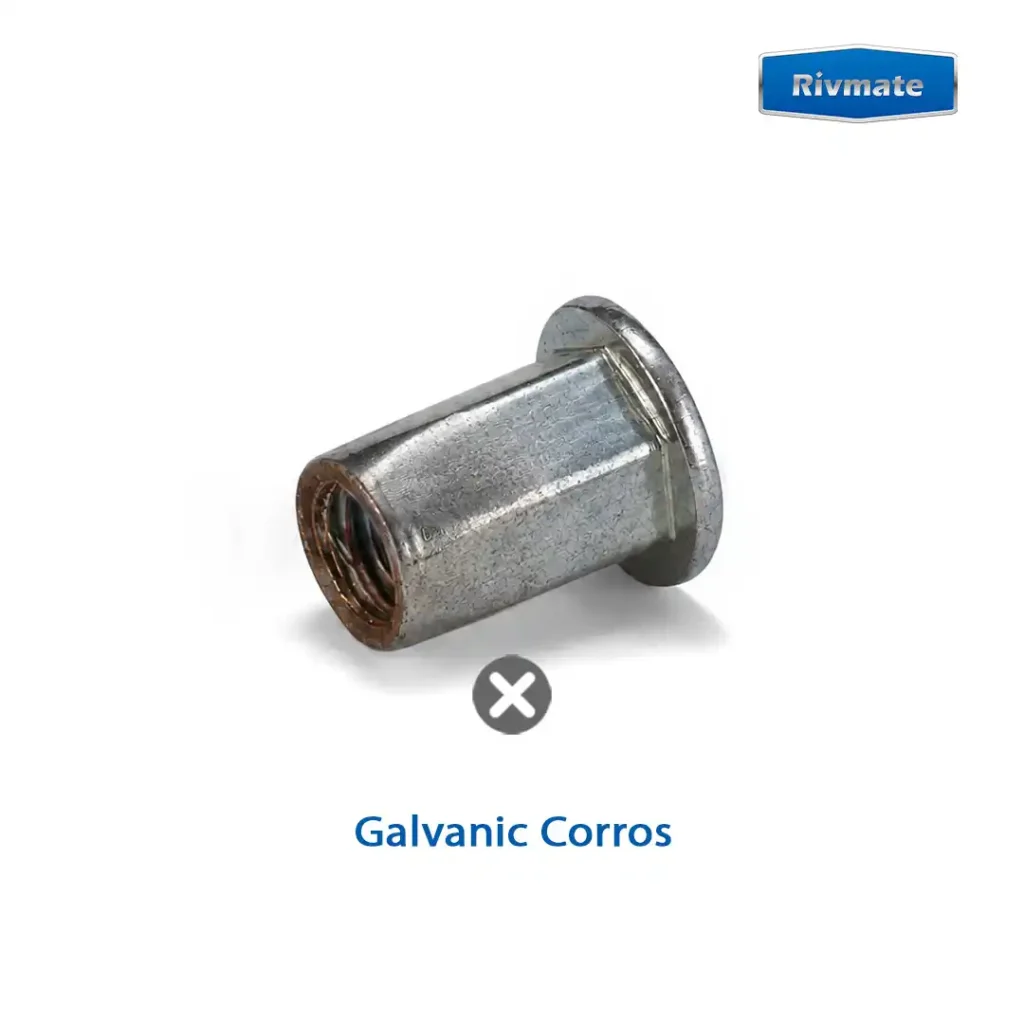
For galvanic corrosion to occur, three conditions must be met simultaneously:
- The two metals must have different electrochemical potentials.
- There must be an electrically conductive contact between the two metals.
- An electrolyte must be present at the junction.
How can the risk of galvanic corrosion at connection points be reduced?
- Select rivet nuts with better material compatibility
If aluminum rivet nuts meet the actual load and strength requirements, aluminum alloy products are recommended as the first choice to fundamentally reduce the risk of dissimilar metal contact. If steel or stainless steel rivet nuts must be used for the connection, it is recommended to evaluate the corrosion compatibility between the surface treatment and the aluminum material. - Isolate metal contact by adding insulating material
Insulating materials work by using non-conductive materials to break the electrical connection between the two metals. You need to design appropriate insulating sleeves or isolation structures. - Select appropriate surface protection and sealing measures
Use protective coatings suitable for both the aluminum and the rivet nuts to reduce moisture ingress into the metal contact area. Optimize drainage and moisture-proofing in the joint structure
You should prevent water from accumulating at the joint and optimize the drainage design system.
Matching Grip Range to Aluminum Wall Thickness
When installing rivet nuts on aluminum sheets and aluminum profiles, the grip range determines whether the rivet nut can be installed correctly. You must accurately measure the actual wall thickness of the aluminum material to select the appropriate grip range model from the technical specifications table.
Understanding Grip Range and Aluminum Wall Thickness
For single-layer aluminum sheets, the grip thickness is the actual sheet thickness at the rivet nut installation location. However, the grip thickness for aluminum profiles differs from that of aluminum sheets. You need to measure the local wall thickness at the actual installation location of the rivet nut, rather than the profile’s overall dimensions or external height.
How to Match Grip Range to Aluminum Thickness
- Step 1: Measure the thickness of the aluminum at the actual installation location using calipers or a micrometer.
- Step 2: Locate the corresponding rivet nut product in the technical specifications table based on the aluminum thickness.
- Step 3: Allow for manufacturing tolerances. The Grip Range accommodates variations in actual thickness.
Selecting Body Shape, Head Style, and Hole Dimensions
Rivet nuts for aluminum—body shape, head style, and hole dimensions—are also important parameters for selection. These factors directly affect the connection’s resistance to rotation, surface fit, and installation stability.
Choosing Body Shape Based on Spin-out Resistance
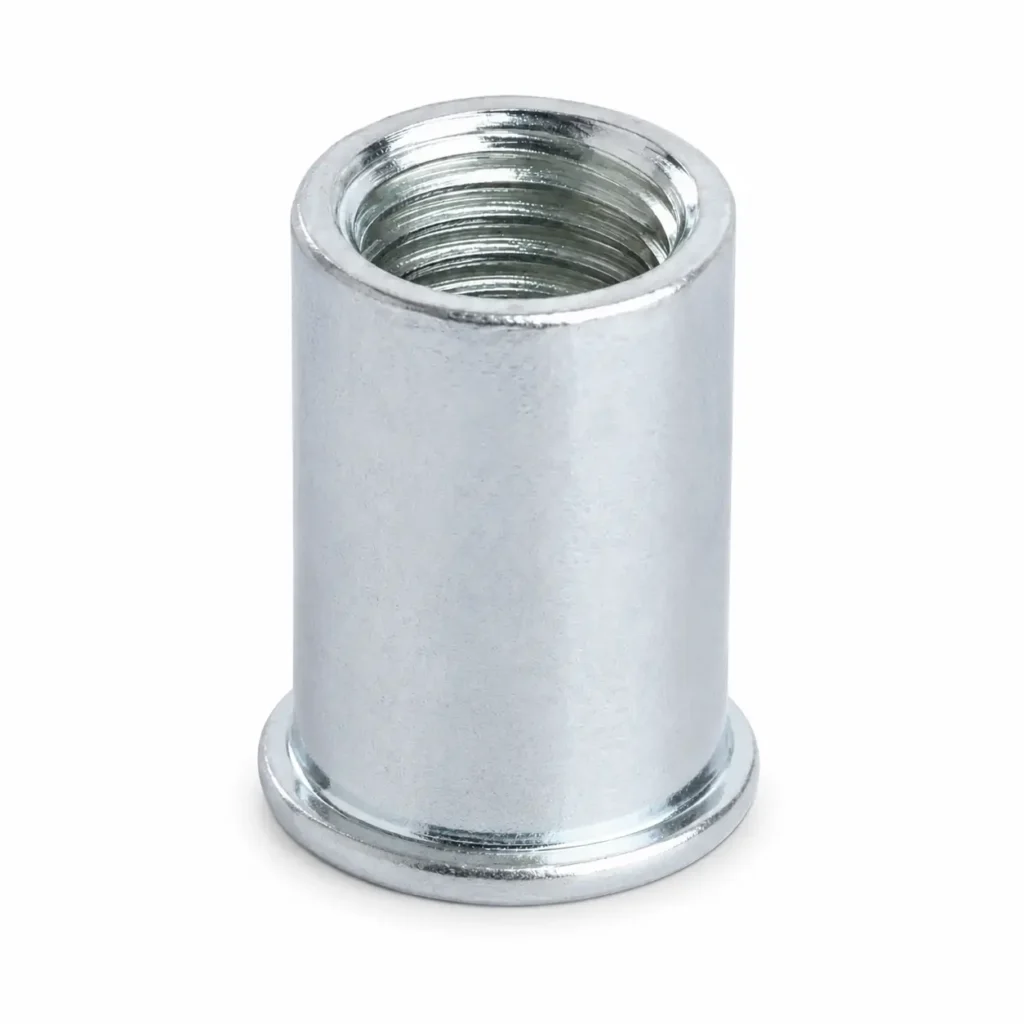
Smooth Round Body
The mounting holes are machined as round holes, featuring a simple structure and convenient production and processing. Resistance to rotation is achieved through the clamping action and contact friction after installation. Suitable for applications with low requirements for load capacity and tightening torque.
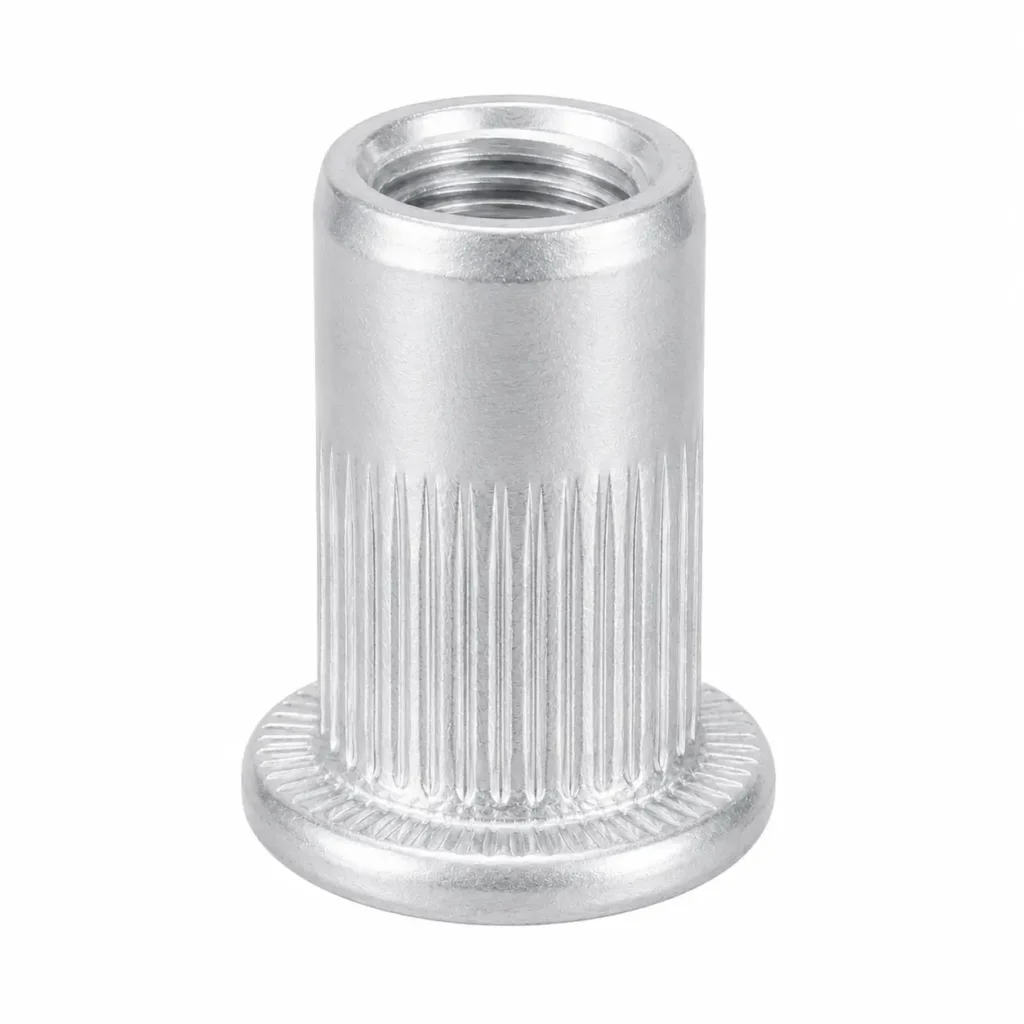
Knurled Round Body
The mounting hole is a round hole, and the outer surface of the body features a knurled pattern. It primarily relies on the mechanical interlock formed between the knurled pattern and the hole wall to enhance resistance to rotation. Suitable for connecting general aluminum sheets and aluminum profiles.
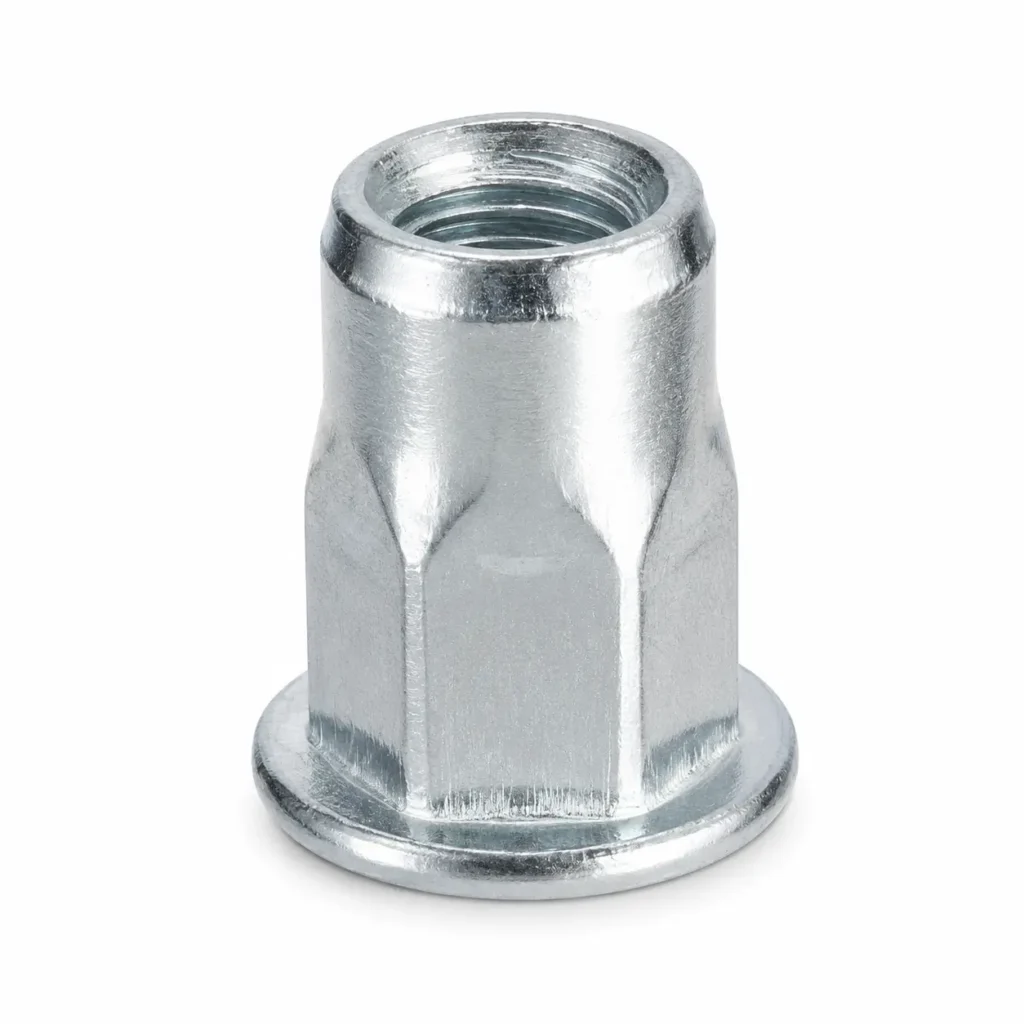
Half Hex Body
The partial hexagonal geometry mates with a matching mounting hole to restrict the body’s rotation. Suitable for connections requiring a certain level of mechanical anti-rotation capability.
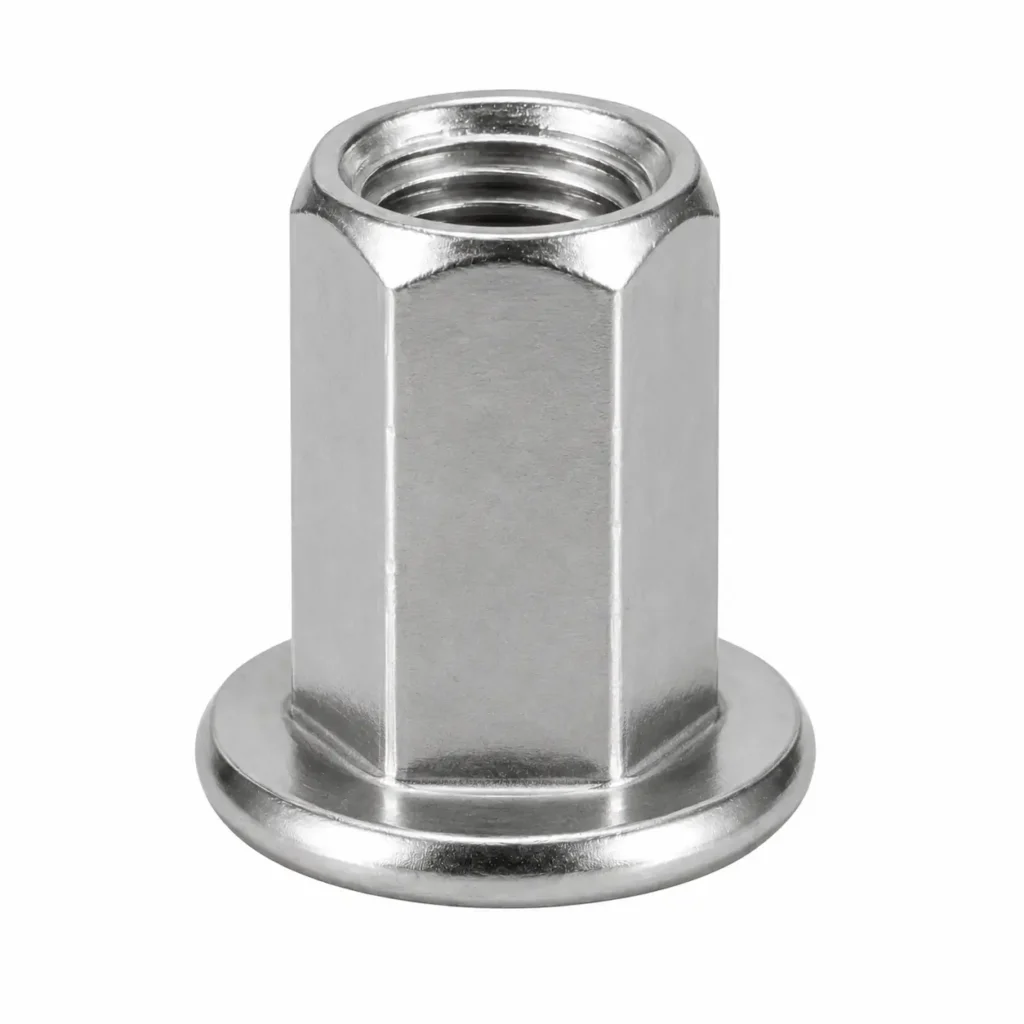
Full Hex Body
Requires a hexagonal mounting hole, which is complex to machine. The hexagonal body forms a geometric lock with the matching hexagonal hole, reducing reliance on friction to prevent rotation. It is particularly suitable for projects requiring high anti-rotation capability or frequent disassembly and reassembly.
Selecting Head Style Based on Aluminum Panel Conditions
Selecting Head Style Based on Aluminum Panel Conditions
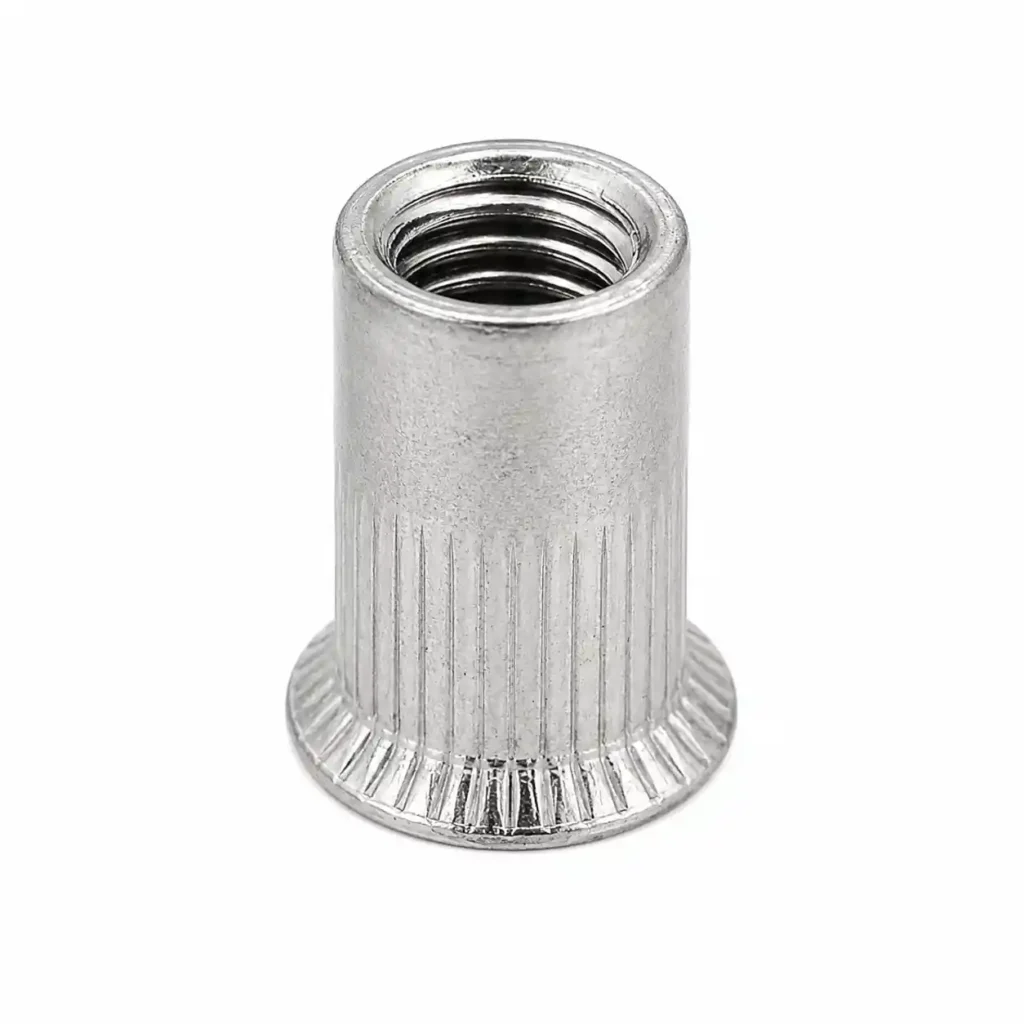
- Flat Head is suitable for general aluminum panel connections.
- Reduced Head is suitable for aluminum enclosures, equipment panels, or adjacent parts where there are restrictions on installation height.
- Countersunk Head is suitable for aluminum panels with requirements for surface flatness and assembly space. It is necessary to check in advance how countersinking will affect the remaining thickness of the aluminum panel.
Determining Hole Geometry and Dimensions for Aluminum Parts
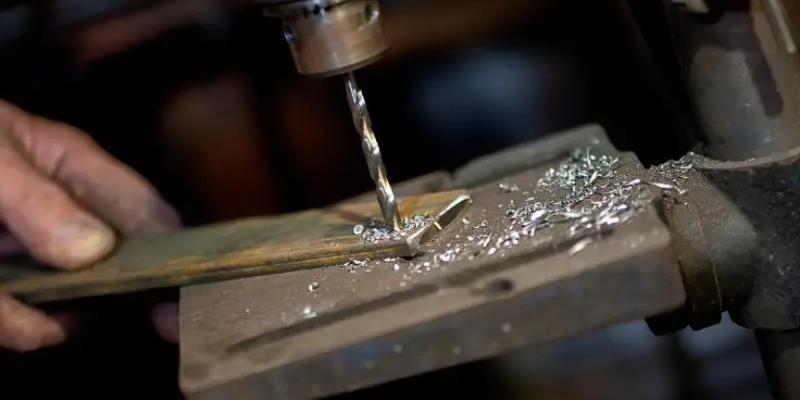
Only after you have finalized the structure of the rivet nut can you determine the corresponding mounting hole specifications. You should pay close attention to the following:
- Whether the hole diameter meets the minimum and maximum values specified in the rivet nut’s grip range.
- Whether the hole exhibits any noticeable ovality.
- Whether there are any burrs or machining damage at the hole opening.
Setting the Insert Without Distorting the Aluminum
Why Does Aluminum Tend to Deform When Installing Rivet Nuts?
- Excessive tool force
- Inappropriate tool stroke
- Mismatched installation hole size
- Incorrect installation procedure
How to Prevent Aluminum from Deforming When Installing Rivet Nuts
- Before installation, carefully inspect the quality of the aluminum supports and mounting holes.
Mounting holes must be machined in accordance with the technical specifications provided by the rivet nut manufacturer. Clean the installation area and surrounding structures thoroughly. - Ensure that the installation tool and rivet nut are properly matched to the thickness of the aluminum.
Properly control the installation force or stroke. Determine the setup method based on the requirements of the rivet nut and tool manufacturers. - During installation, properly control the tool position and the installation process.
Ensure the mandrel length matches the tool head. The tool must be positioned perpendicular to the aluminum profile during riveting.
Checking Spin Resistance and Joint Load Capacity
| Test Item | Plain-English Meaning | Test Purpose | Typical Failure Mode | Relevant Applications |
|---|---|---|---|---|
| Spin-out Resistance | Resistance to Rotation | Measures the insert’s ability to resist rotation within the aluminum mounting hole. | The rivet nut rotates inside the mounting hole. | Bolt tightening, removal, and repeated assembly. |
| Pull-out Resistance | Resistance to Axial Pull-out | Measures the insert’s ability to resist being pulled out of the workpiece under axial tension. | The rivet nut pulls out, or the aluminum panel deforms or tears around the hole. | Bracket mounting, equipment connections, and joints under tensile loads. |
| Push-out Resistance | Resistance to Reverse Axial Loading | Measures the force required to push the installed insert out of the mounting hole in the opposite axial direction. | The rivet nut is pushed out through the mounting hole. | Connections exposed to reverse pressure or push-out loads. |
| Torque-out Resistance | Resistance to Thread Torsional Failure | Measures the internal thread’s ability to withstand applied tightening torque without stripping or failing. | Internal threads strip, slip, or become damaged. | Connections requiring higher bolt tightening torque. |
| Shear Load Capacity | Resistance to Lateral Loading | Evaluates the joint’s ability to withstand loads acting parallel to the aluminum panel surface. | Bolt shear, hole-wall deformation, or joint slippage. | Brackets, equipment frames, and structures subject to lateral loads. |
When a Rivet Nut Is Unsuitable for the Aluminum Part
| Aluminum Part Condition | Why a Rivet Nut May Be Unsuitable | What You Should Check | Recommended Solution |
|---|---|---|---|
| Insufficient Backside Clearance | The insert needs enough space behind the aluminum panel to form its blind-side upset. Internal ribs, adjacent components, or restricted cavities may obstruct proper installation. | Check the required backside clearance against the rivet nut dimensions and the actual internal structure. | Reposition the fastening point, select an insert designed for the available space, or consider another fastening method. |
| Aluminum Thickness Outside the Grip Range | If the material thickness falls outside the specified grip range, the insert may not form correctly or provide sufficient clamping force. | Measure the actual clamped material thickness and compare it with the manufacturer’s grip range. Check the aluminum alloy and material condition. | Select a rivet nut with a suitable grip range or reinforce the aluminum panel if its local strength is insufficient. |
| Insufficient Edge Distance | A hole too close to the panel edge may leave insufficient material to support the insert, increasing the risk of edge deformation or tear-out. | Check the hole center-to-edge distance, hole spacing, panel thickness, and surrounding material condition. | Relocate the hole, increase the edge distance, or redesign the local panel structure. |
| Oversized, Damaged, or Irregular Installation Holes | An oversized or non-round hole can reduce insert retention and increase the risk of spin-out. Burrs and damaged hole edges may also affect flange seating. | Measure the actual hole diameter and inspect its roundness, edge condition, and dimensional tolerance. | Restore the hole condition where possible and select an insert matching the specified hole dimensions. |
| High Bolt Tightening Torque | If the required assembly torque exceeds the joint’s verified spin-out resistance, the rivet nut may rotate inside the aluminum panel during tightening or removal. | Compare the required bolt tightening torque with the measured spin-out torque under representative installation conditions. | Evaluate knurled or hex-body inserts, or redesign the joint to provide greater resistance to rotation. |
| Axial or Shear Loads Exceed Joint Capacity | Excessive tensile or shear loads may cause thread failure, insert pull-out, aluminum hole deformation, or local material tearing. | Evaluate pull-out and shear performance using the actual aluminum alloy, wall thickness, hole dimensions, and installation conditions. | Reinforce the panel, redistribute the load, or consider a through-bolt or other suitably engineered connection. |
| Severe Vibration or Frequent Disassembly | Repeated loading and bolt removal may contribute to loosening, thread wear, or fatigue-related damage. A standard rivet nut may not meet the required service life. | Check vibration levels, load cycles, expected assembly cycles, bolt retention requirements, and thread durability. | Evaluate suitable locking methods, more durable insert materials, or an alternative fastening design. Validate the complete joint under representative service conditions. |
| Cracked, Corroded, or Weakened Aluminum | A rivet nut cannot restore the strength of damaged base material. Existing cracks, corrosion, or severe local deformation may lead to premature joint failure. | Inspect the installation area for cracks, corrosion, material loss, and existing hole damage. | Repair or replace the damaged aluminum component before selecting a new fastening solution. |
FAQs
Can rivet nuts be installed in anodized aluminum?
Rivet nuts can be installed on anodized aluminum. Before installation, check the integrity of the anodized coating and the dimensions of the mounting holes. After installation, be sure to prioritize corrosion protection.
Can rivet nuts be installed in aluminum tubing from one side?
Yes.
Can a rivet nut replace a stripped tapped hole in aluminum?
Yes. First, inspect and repair any existing holes, then machine the mounting holes to meet the requirements for rivet nuts so they can be riveted in place.
Should aluminum rivet nuts be lubricated before setting?
No lubrication is required before installation. The main area of concern is the lubrication and maintenance of the tool’s threaded mandrel.
Can rivet nuts be fitted after powder coating aluminum?
Sure.
Can an aluminum rivet nut be welded in place?
Aluminum rivet nuts can technically be secured by welding. However, after careful consideration, it is not recommended to weld aluminum rivet nuts to aluminum sheets or aluminum profiles. Rivet nuts work by achieving a secure fastening through mechanical deformation.
Can rivet nuts be removed from aluminum without damaging it?
Removing rivet nuts from aluminum without damaging the aluminum can only be controlled within reasonable limits. Make every effort to preserve the original mounting holes and surrounding structure.
Are aluminum rivet nuts magnetic?
None.
Work with a IATF 16949 Certified Blind Rivet Manufacturer
Get High Quality Rivets Instead of Huck and Avdel Rivets

Rivmate Rivet
Rivmate is blind rivets manufacturers in china. The company is IATF 16949 certified and offers high-strength structural blind rivets that serve as alternatives to Huck and Avdel products.
Explore Rivmate Cases
Rivmate Rivet
Rivmate is blind rivets manufacturers in china. The company is IATF 16949 certified and offers high-strength structural blind rivets that serve as alternatives to Huck and Avdel products.

Hey There, I'm Allen!
I am the boss of Rivmate. For over two decades, we have specialized in the manufacture of blind rivets, providing our customers with reliable riveting solutions. Need riveting services? Feel free to contact us.