When selecting stainless steel rivet nuts, should you choose 304 or 316? Both materials share excellent corrosion resistance. The differences lie in their chemical composition, resistance to chloride ion corrosion, installation, engagement, and cost.
304 stainless steel rivet nuts are an economical choice for indoor use, general industrial environments, and mildly humid conditions. 316 stainless steel rivet nuts are better suited for long-term exposure to coastal environments, salty, humid conditions, or highly corrosive environments.
Table of Contents
304 vs 316: Composition and Molybdenum Content
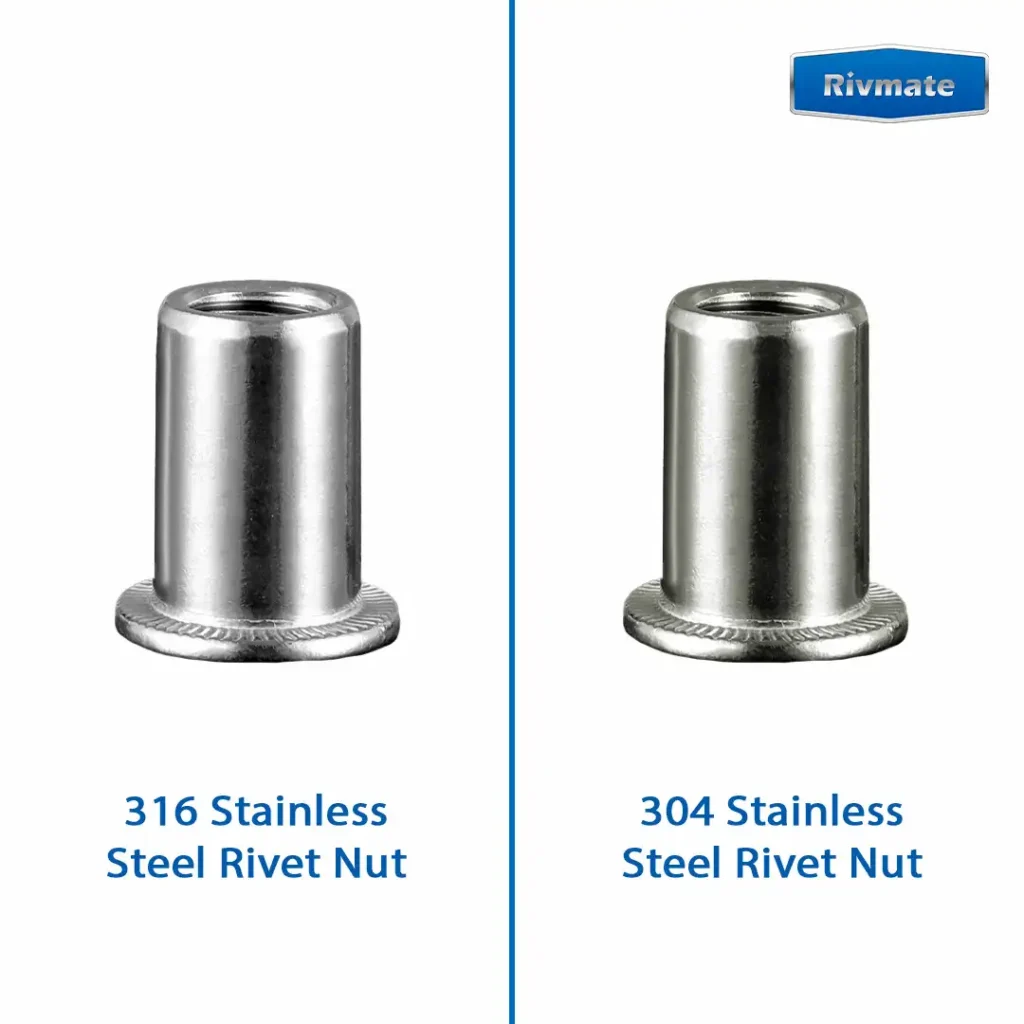
The main components of both 304 and 316 stainless steel are iron, chromium, and nickel. The key difference lies in the molybdenum (Mo) content. The composition of 304 stainless steel does not require the addition of molybdenum, whereas 316 stainless steel typically contains approximately 2%–3% molybdenum. Compared to 304 stainless steel, 316 stainless steel has a higher typical nickel content. Overall, these two types of stainless steel are similar in appearance but differ in their corrosion resistance.
| Main Element | 304 Stainless Steel | 316 Stainless Steel | Significance for Rivet Nuts |
|---|---|---|---|
| Chromium (Cr) | Approx. 17.5%–19.5% | Approx. 16%–18% | Helps form the passive protective film that provides stainless steel with corrosion resistance. |
| Nickel (Ni) | Approx. 8%–10.5% | Approx. 10%–14% | Stabilizes the austenitic structure and contributes to toughness and forming performance. |
| Molybdenum (Mo) | No specified addition | Approx. 2%–3% | Improves resistance to localized corrosion, particularly pitting and crevice corrosion. |
Comparing Corrosion Resistance in Chloride Exposure
When selecting stainless steel rivet nuts for use in chlorine-containing environments, the most important difference between 304 and 316 is their resistance to localized corrosion. This is because chloride ions can damage the extremely thin oxide film on the surface of stainless steel, leading to localized corrosion.
Why 316 Stainless Steel Offers Better Chloride Corrosion Resistance Than 304
Both 304 and 316 resist corrosion by forming a stable passivation film through chromium. However, 316 offers better resistance to chloride ion corrosion than 304. The main reason is that 316 contains molybdenum (Mo), which reduces the impact of chloride ions on localized damage to the passivation film. Therefore, 316 stainless steel enhances the material’s resistance to pitting and crevice corrosion.
316 stainless steel is not completely immune to corrosion. It is simply less prone to localized corrosion than 304 stainless steel under the same chloride ion conditions. Therefore, 304 is more suitable for general indoor equipment, standard sheet metal structures, or environments with low chloride ion exposure. 316 stainless steel is more suitable for coastal equipment, salt fog environments, areas affected by road de-icing salt, or other environments where chloride ions are significantly present.
Choosing for Indoor, Outdoor, Coastal, and Washdown Service
Indoor Environments: 304 Is Typically the More Cost-Effective Choice

Indoor environments are generally dry and free of significant salt, chloride ions, or corrosive chemicals. 304 stainless steel is sufficient to meet these requirements. This is because 304 is more cost-effective than 316.
Avoid indoor environments where equipment is installed in swimming pools, food processing facilities, chemical production areas, or environments with prolonged humidity. In cases of continuous exposure to chlorine-based cleaners, disinfectants, or corrosive media, you should reevaluate the material, as 304 stainless steel may not provide sufficient corrosion resistance for such scenarios.
General Outdoor Environments: Select Based on Chloride Salt Exposure
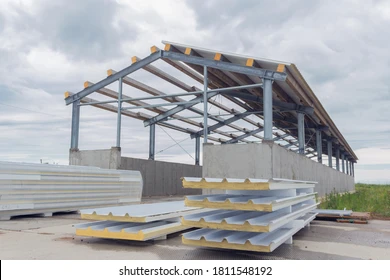
For installations in general inland areas, far from the ocean and severe industrial pollution, where the structure has good drainage, prioritize 304 stainless steel.
For environments with prolonged exposure to high humidity, industrial pollution, or road de-icing salts, 316 is recommended.
316 Stainless Steel for Coastal Corrosion Resistance

In coastal-like environments, sea winds and seawater spray carry chlorides to metal surfaces. As moisture evaporates, salts remain and become concentrated on the sheet metal, increasing the risk of pitting and crevice corrosion in stainless steel. 316 is a better choice than 304. The primary reason is that 316 contains molybdenum, making it superior to 304 in resisting this type of localized corrosion.
Washdown Environments: Water Quality and Cleaning Chemicals
Rinsing environments refer to operating conditions where equipment is regularly or frequently rinsed with water, cleaning agents, or disinfectants. You need to make a distinction based on the specific rinsing method:
- General Water Rinsing: This involves the use of low-chloride-ion water and mild cleaning agents, with prompt drainage after rinsing. 304 can meet the requirements of many routine applications.
- Rinsing Environments Containing Salt or Chloride Ions: If the equipment is frequently exposed to saltwater, salt residues, or other chloride-containing media, it is recommended to consider 316 stainless steel.
- Frequent Chemical Cleaning: If acidic or chlorine-based disinfectants are used during the cleaning process, you must verify the specific chemical composition, concentration, temperature, and contact time. You cannot rely solely on the material grades of 304 or 316 to make a determination.
Why Grade Alone Does Not Establish Rivet Nut Strength
How to Match the Setting Tool to 304 and 316 Rivet Nuts
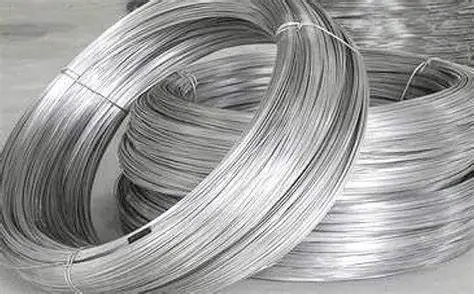
The material grade does not indicate the actual joint strength of the rivet nut. The designations 304 and 316 are primarily used to distinguish the chemical composition and related material properties of stainless steel. The actual joint strength of a rivet nut depends on the product’s structure, material, manufacturing process, installation conditions, and the properties of the sheets being joined. When purchasing rivet nuts for specific joint applications, you should not only consider the mechanical properties of the specific product model but also pay close attention to the test results after installation.
Why Material Grade Doesn't Determine Rivet Nut Strength
The basic mechanical properties of 304 and 316 are similar. The main difference is that 316 contains molybdenum, which improves resistance to chloride ion corrosion. However, it does not enhance the rivet nut’s tensile, shear, or rotational resistance.
Key Mechanical Strength Metrics for Rivet Nuts
When purchasing rivet nuts, you need to determine whether the product meets your application requirements. You can distinguish between them by referring to the following mechanical properties provided by the supplier.
| Performance Metric | English Term | What It Measures |
|---|---|---|
| Pull-Out Strength | Pull-Out Strength | The load-bearing capacity of the rivet nut or its threads under axial tensile force. |
| Shear Strength | Shear Strength | The load-bearing capacity of the rivet nut joint under transverse shear loading. |
| Spin-Out Resistance | Spin-Out Resistance | The ability of an installed rivet nut to resist rotation within the parent sheet. |
| Thread Torque Strength | Thread Torque Strength | The ability of internal threads to resist damage under tightening torque. |
Product Structure and Dimensions Can Affect Actual Load-Bearing Capacity
Even when using the same 304 or 316 stainless steel, rivet nuts with different structures may exhibit varying mechanical properties.
- Wall Thickness: Directly affects the load-bearing capacity of the rivet nut body and its stress behavior during the riveting deformation process.
- Thread Engagement Length: The effective engagement length between the bolt and the interior of the rivet nut also affects the thread’s load-bearing capacity. In particular, insufficient effective engagement length can lead to premature thread failure.
- Flange Dimensions: The diameter and thickness of the flange affect the contact between the rivet nut and the base material, as well as load transfer.
- Body Design: Round, semi-hexagonal, and full-hexagonal designs differ in their resistance to rotation; you should select the appropriate design based on the hole configuration in the sheet metal and the installation conditions.
- Blind-Side Deformation: The deformation zone formed on the back side after riveting determines how the rivet nut clamps the base material and also affects the stability of the joint.
Matching Stainless Inserts to the Substrate and Bolt
When selecting 304 or 316 stainless steel rivet nuts, you must not only consider the material grade of the rivet nut itself, but also pay close attention to the substrate and the bolt that will be used. The stainless steel rivet nut, substrate, and bolt together form a complete fastening system.
When the corrosion resistance of the materials does not match, galvanic corrosion can occur. For example, when installing stainless steel rivet nuts in aluminum, it is important to manage galvanic corrosion.If the thread specifications, bolt length, or substrate thickness are inappropriate, this can lead to thread damage, rotation of the rivet nut, or connection failure. Therefore, when selecting the appropriate product, you need to consider three key factors: the corrosion compatibility of the materials, the compatibility of thread and mechanical properties, and whether the installation dimensions meet the requirements.
1.Match the Rivet Nut Material to the Substrate
Determine the type of substrate on which the rivet nut will be installed. Common substrates include aluminum sheet, carbon steel sheet, stainless steel sheet, or plastic. When joining different materials, you must address the risk of galvanic corrosion.
Common solutions include using insulating washers, insulating sleeves, corrosion-resistant surface treatments, or appropriate sealing measures.
2. Match the Bolt Material to the Rivet Nut
Once the material of the rivet nut has been selected, the compatibility of the bolt must also be considered. The bolt must not only meet the thread size requirements but also possess corrosion resistance suitable for the operating environment.
| Rivet Nut Material | Recommended Bolt Material | Typical Application |
|---|---|---|
| 304 Stainless Steel | 304 Stainless Steel (A2) | General industrial and indoor applications |
| 316 Stainless Steel | 316 Stainless Steel (A4) | Coastal, marine and corrosive environments |
| 304 Stainless Steel | 316 Stainless Steel (A4) | Possible, but the 304 component remains the corrosion-resistance limitation. |
| 316 Stainless Steel | 304 Stainless Steel (A2) | Not preferred for corrosive environments because the bolt has lower corrosion resistance. |
Setting Force, Tool Compatibility, and Galling Prevention
In addition to considering the corrosion resistance of 304 or 316 rivet nuts, you also need to pay attention to the stress conditions during installation, tool compatibility, and the condition of the threaded engagement.
The proper installation of 304 and 316 stainless steel rivet nuts depends not only on the material grade but also on the installation force, tool capability, the compatibility of the mandrel and the tool head, and stroke control.
How to Match the Setting Tool to 304 and 316 Rivet Nuts
Selecting the right tool is crucial for the proper installation of 304 and 316 rivet nuts. Compared to aluminum or carbon steel rivet nuts, stainless steel rivet nuts require higher installation forces. Therefore, there are specific requirements for the tool’s capabilities.
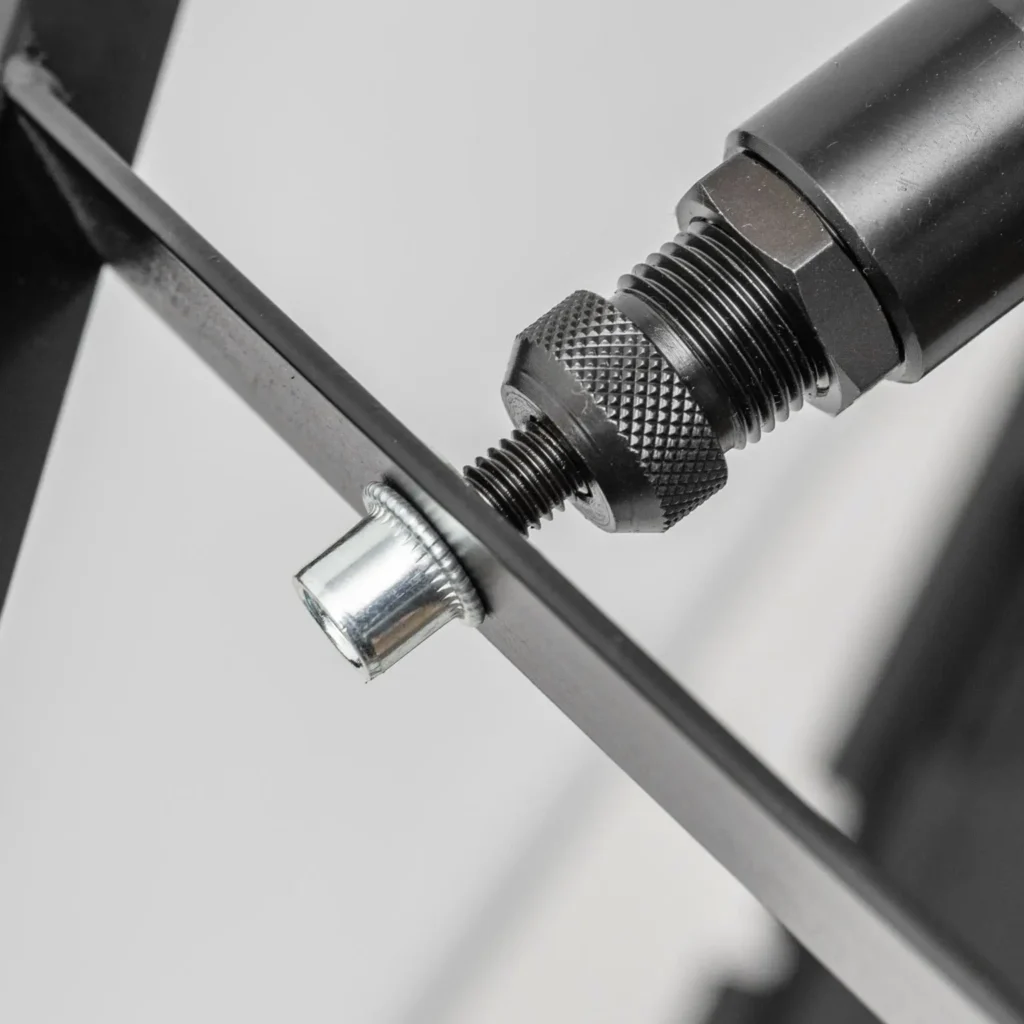
① Setting Force Capacity
Check the maximum setting force the tool can provide. Verify that it meets the setting force range recommended by the rivet nut manufacturer.
② Threaded Mandrel Compatibility
The mandrel of the setting tool must match the internal thread specifications of the rivet nut. Also, ensure that the mandrel length is suitable for the rivet nut body.
③ Nosepiece Compatibility
The size and design of the nosepiece must match the rivet nut to ensure that the flange of the stainless steel rivet nut seats correctly against the support surface.
④ Setting Stroke
The setting stroke of the installation tool can be adjusted based on the rivet nut’s design and the thickness of the base material.
How to Prevent Galling in Stainless Steel Threaded Connections
To reduce the risk of thread galling in 304 and 316 stainless steel rivet nuts during subsequent bolt assembly, you can implement the following four control measures.
- Use the anti-galling lubricant recommended by the manufacturer
- Control the tightening speed appropriately
- Adjust the tightening torque appropriately
- Keep the threads clean and properly aligned
Verifying Material Certificates and Supplier Grade Claims
When purchasing 304 or 316 stainless steel rivet nuts, the most common mistake is relying solely on product labels, quotations, or verbal assurances to confirm the material grade. Because 304 and 316 stainless steel rivet nuts look very similar, it is difficult to distinguish them by sight alone. The correct way to differentiate them is to verify them through three methods: material certificates, batch traceability, and material composition testing. You can use the checklist below to review the material certificates provided by your supplier.
| Verification Item | What to Check |
|---|---|
| Material Grade | Clearly identify 304, 304L, 316, or 316L. |
| Material Standard | Specify the applicable ASTM, EN, or other recognized material standard. |
| Chemical Composition | Verify the actual chromium, nickel, molybdenum, and other required element contents. |
| Molybdenum Content | Confirm that the molybdenum content of 316 stainless steel meets the specified standard. |
| Carbon Content | Verify low-carbon requirements when purchasing 304L or 316L. |
| Certificate Type | Confirm whether the agreed EN 10204 Type 2.2, 3.1, or 3.2 certificate is provided. |
| Heat Number | Ensure consistency between the raw material identification and the material certificate. |
| Production Traceability | Verify the link between raw material batches and finished product batches. |
| PMI Testing | Use an appropriate testing method to verify material identity when necessary. |
| Finished Product Inspection | Verify dimensions, threads, and required mechanical properties. |
When the Added Cost of 316 Is Justified
Compared to 304 stainless steel, 316 is more expensive. Therefore, 316 should not be selected automatically for every application. For example, in dry indoor environments, the corrosion resistance of 304 is sufficient to meet the requirements. There is no need to increase procurement costs simply to use a higher-grade material. You should evaluate the material costs of 316 based on the project’s environmental conditions and connection requirements, as well as whether it will provide better corrosion resistance and lower long-term maintenance and replacement costs.
In different application environments, when is it worth choosing 316?
| Application Environment | Recommended Material | Is the Extra Cost of 316 Justified? | Main Reason |
|---|---|---|---|
| Dry Indoor Equipment | 304 | Usually Not | Corrosion risk is low, and 304 generally meets the application requirements. |
| General Industrial Equipment | 304 | Usually Not | Without significant chloride exposure, the additional corrosion resistance of 316 may not provide enough practical benefit. |
| Ordinary Inland Outdoor Equipment | 304 or 316 | Depends on Conditions | Humidity, industrial pollution, water accumulation, and maintenance conditions must be considered. |
| Coastal Outdoor Equipment | 316 | Usually Yes | Chlorides from sea spray and salt deposits increase the risk of localized corrosion. |
| Outdoor Solar Mounting Systems | Based on exposure; prioritize 316 in coastal areas | Usually Yes for Coastal Projects | Long-term outdoor exposure and difficult-to-access connections can increase inspection and replacement costs. |
| Ships and Marine Equipment | 316 or a Higher-Alloy Grade | Requires Further Evaluation | Saltwater exposure can accelerate localized corrosion. However, 316 is not completely resistant to seawater corrosion. |
| Road and Trailer Equipment | Based on De-Icing Salt Exposure | Usually Yes with Frequent Salt Exposure | Chloride deposits from de-icing salts can increase the risk of pitting and crevice corrosion. |
| General Washdown Equipment | 304 or 316 | Usually No Automatic Upgrade Needed | Selection depends on water quality, cleaning agent composition, and whether the equipment drains properly after washing. |
| Equipment Using Chlorine-Based Cleaning Agents | Prioritize Evaluation of 316 | Usually Worth Considering | 316 offers better resistance to chloride-induced localized corrosion, but cleaner concentration and temperature must still be evaluated. |
| High-Concentration Chloride or Long-Term Seawater Immersion | Evaluate Higher-Alloy Grades | Cannot Assume 316 Is Sufficient | Both 304 and 316 may be inadequate for severe corrosion conditions. |
FAQs
Can a magnet reliably distinguish 304 from 316 rivet nuts?
A magnet cannot distinguish between 304 and 316 stainless steel rivet nuts. Essentially, both are austenitic stainless steels. Neither is noticeably attracted to a magnet.
Are A2 and A4 labels identical to exact 304 and 316 grades?
A2 and A4 are not equivalent to the specific 304 and 316 stainless steel grades. A2 generally corresponds to the 304 series of stainless steel, while A4 corresponds to the 316 series of stainless steel. A2 and A4 belong to different material identification systems. 304 and 316 represent specific stainless steel grades.
For example, if a supplier labels a product as an “A4 Stainless Steel Rivet Nut,” this indicates that it is made of an A4-class molybdenum-containing austenitic stainless steel. However, you cannot confirm based solely on the “A4” label that the specific material is definitely AISI 316 or 316L.
Can 316 stainless rivet nuts still rust?
316 stainless steel rivet nuts can still rust or suffer from localized corrosion. Because 316 stainless steel rivet nuts contain molybdenum,they offer better resistance to chloride corrosion. However, they cannot completely prevent rusting.
Is 316L always preferable to 316 for rivet nuts?
316L stainless steel rivet nuts are not necessarily better than 316. The difference between these two materials lies in their carbon content. 316L has a lower carbon content, which reduces the risk of intergranular corrosion after welding or exposure to specific high temperatures. Conversely, for rivet nuts manufactured using cold-forming processes, the low-carbon advantage of 316L is not as significant. Which is better depends on the welding conditions, the corrosive environment, and the performance requirements of the finished rivet nut.
Can surface passivation change 304 into 316?
Surface passivation cannot transform 304 stainless steel into 316 stainless steel. The primary purpose of surface passivation is to remove free iron and other contaminants from the surface of the stainless steel and form a stable, chromium-rich protective film. It does not alter the chemical composition of the material itself.
Are 304 and 316 rivet nuts available in closed-end designs?
Both 304 and 316 rivet nuts can be manufactured as closed-end rivet nuts. The closed-end design is simply a structural feature of the rivet nut product and is not limited by the material. You can first select the stainless steel grade, then choose between an open-end or closed-end design based on your installation requirements.
Can stainless rivet nuts be painted or powder coated?
Both 304 and 316 stainless steel rivet nuts can be painted or powder-coated, provided that a surface treatment process suitable for stainless steel is selected. After coating, care must be taken to inspect the threads, flange contact surfaces, and areas subject to installation deformation. Avoid applying coatings that are too thick, as this can affect thread fit, mounting hole dimensions, and flange contact.
Does a 316 grade guarantee food-contact suitability?
The 316 stainless steel grade does not guarantee compliance with food contact requirements. 316 stainless steel contains chromium, nickel, and molybdenum, and offers good corrosion resistance. Suitability for food contact depends on factors such as chemical composition, surface treatment, manufacturing quality, cleanability, and the product’s operating environment. Therefore, the 316 stainless steel grade cannot guarantee compliance with food contact regulations.
Work with a IATF 16949 Certified Blind Rivet Manufacturer
Get High Quality Rivets Instead of Huck and Avdel Rivets
Rivmate Rivet
Rivmate is blind rivets manufacturers in china. The company is IATF 16949 certified and offers high-strength structural blind rivets that serve as alternatives to Huck and Avdel products.
Explore Rivmate Cases
Rivmate Rivet
Rivmate is blind rivets manufacturers in china. The company is IATF 16949 certified and offers high-strength structural blind rivets that serve as alternatives to Huck and Avdel products.

Hey There, I'm Allen!
I am the boss of Rivmate. For over two decades, we have specialized in the manufacture of blind rivets, providing our customers with reliable riveting solutions. Need riveting services? Feel free to contact us.