The strength of a rivet nut depends on its design, material, thread specifications, installation quality, and the conditions of the base material.
To ensure that the rivet nut provides a reliable fastening in connection applications, you need to verify its mechanical properties, including tensile strength, pull-out strength, rotational strength, and shear strength.
Table of Contents
What Determines the Strength of a Rivet Nut?
The factors affecting the strength of rivet nuts can be summarized into four main categories: the rivet nut itself, the base material and joint conditions, the installation process, and the actual installation conditions. Below, I will explain in detail how these four factors affect the strength of rivet nuts. The aim is to help you avoid mistakes when selecting the appropriate type of rivet nut.
1.Material and Rivet Nut Design
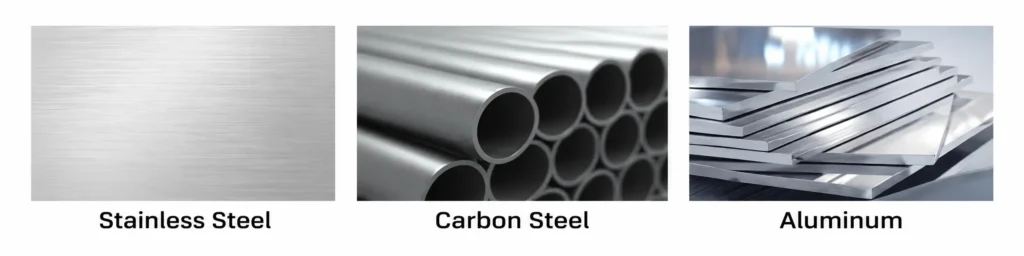
Undoubtedly, the material is the fundamental factor determining the strength of a rivet nut. The three most common materials are:
- Aluminum: Its main advantages are light weight and ease of forming. It is particularly suitable for weight-sensitive applications. Close attention should be paid to specific aluminum alloy grades and their mechanical properties.
- Carbon Steel: Widely used in general industrial fastenings. It comes in various strength grades and processing conditions; load-bearing capacity must be assessed based on specific material properties.
- Stainless Steel: Its main advantage is good corrosion resistance. It is suitable for applications in humid environments and outdoors.

Thread Size and Engagement Length
The thread size and engagement length of a rivet nut indirectly affect the thread’s load-carrying capacity.
- Thread Size: Thread sizes such as M4, M5, M6, and M8 affect the effective load-bearing cross-section of the thread.
- Thread Engagement Length: The actual length of the thread engaged between the bolt and the interior of the rivet nut affects the load distribution along the thread and the risk of thread stripping.

Body Design
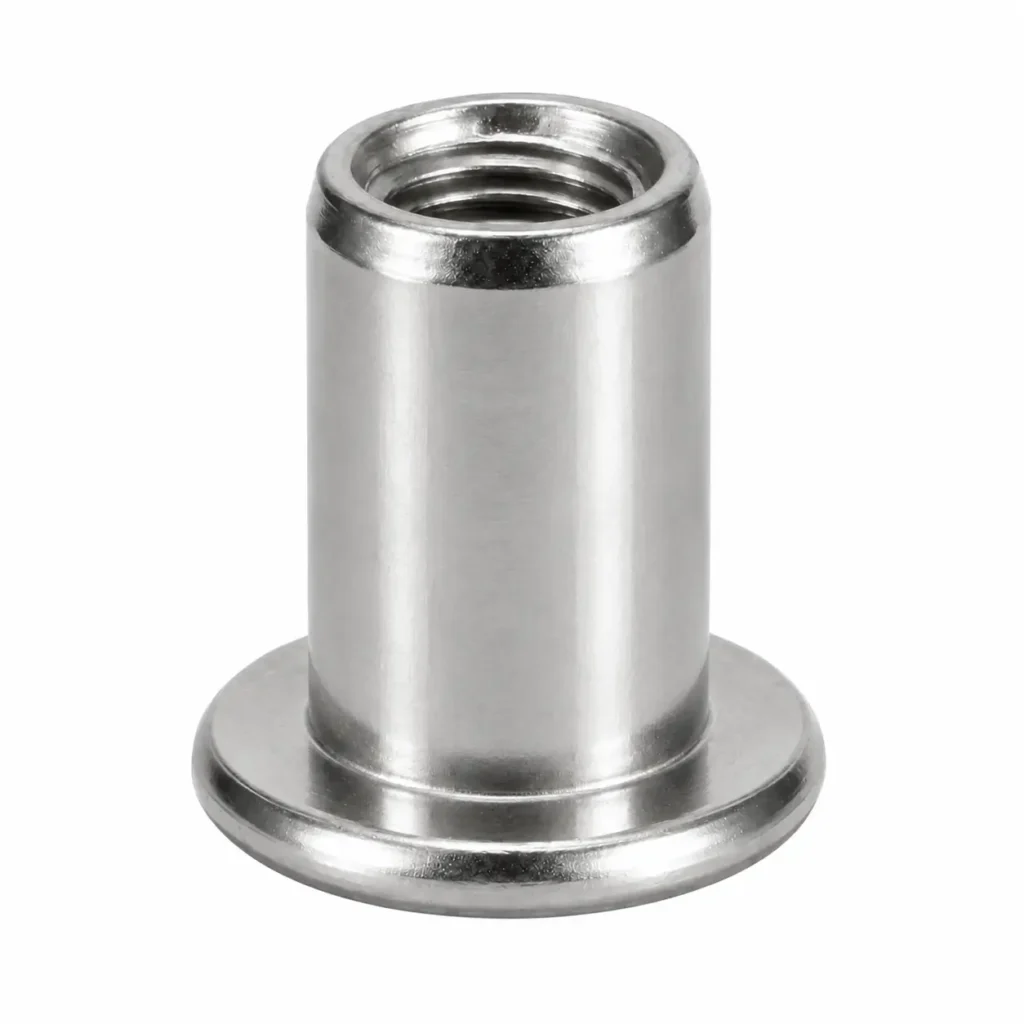
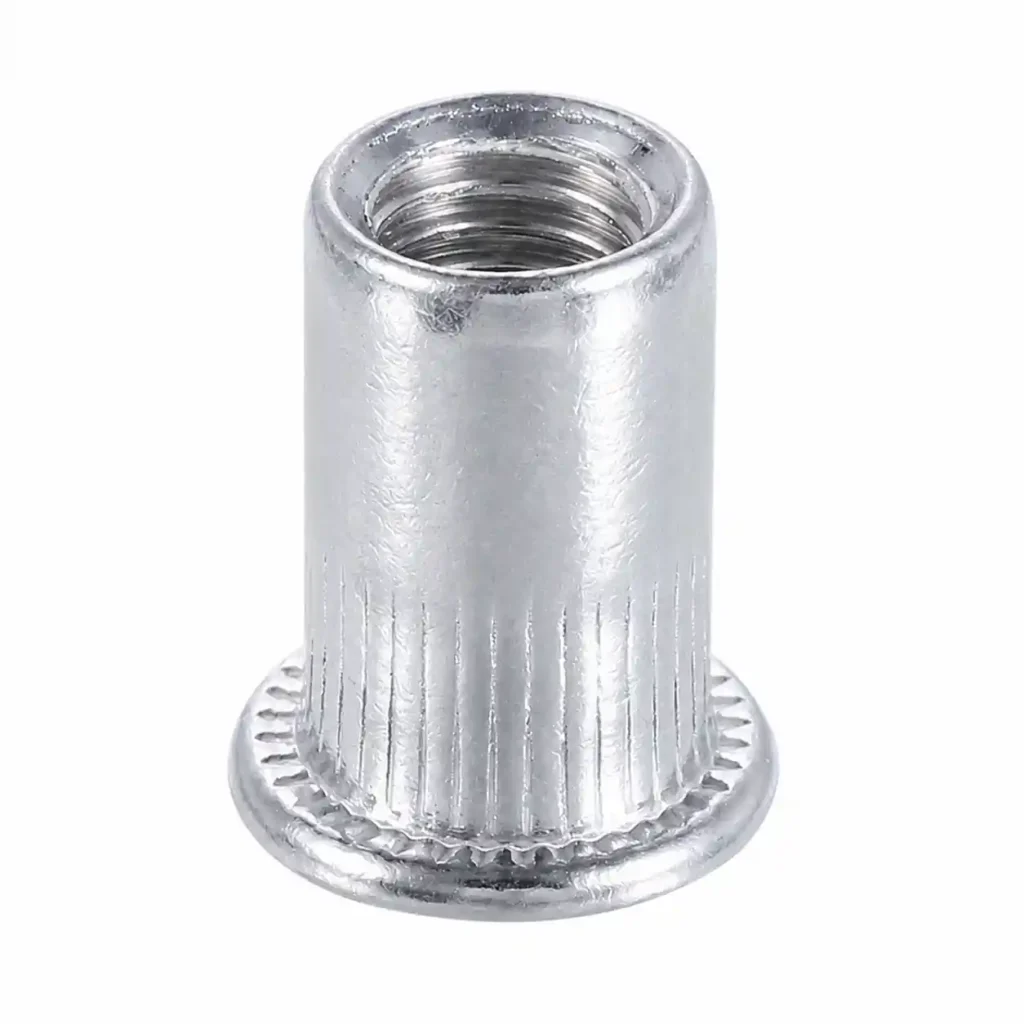
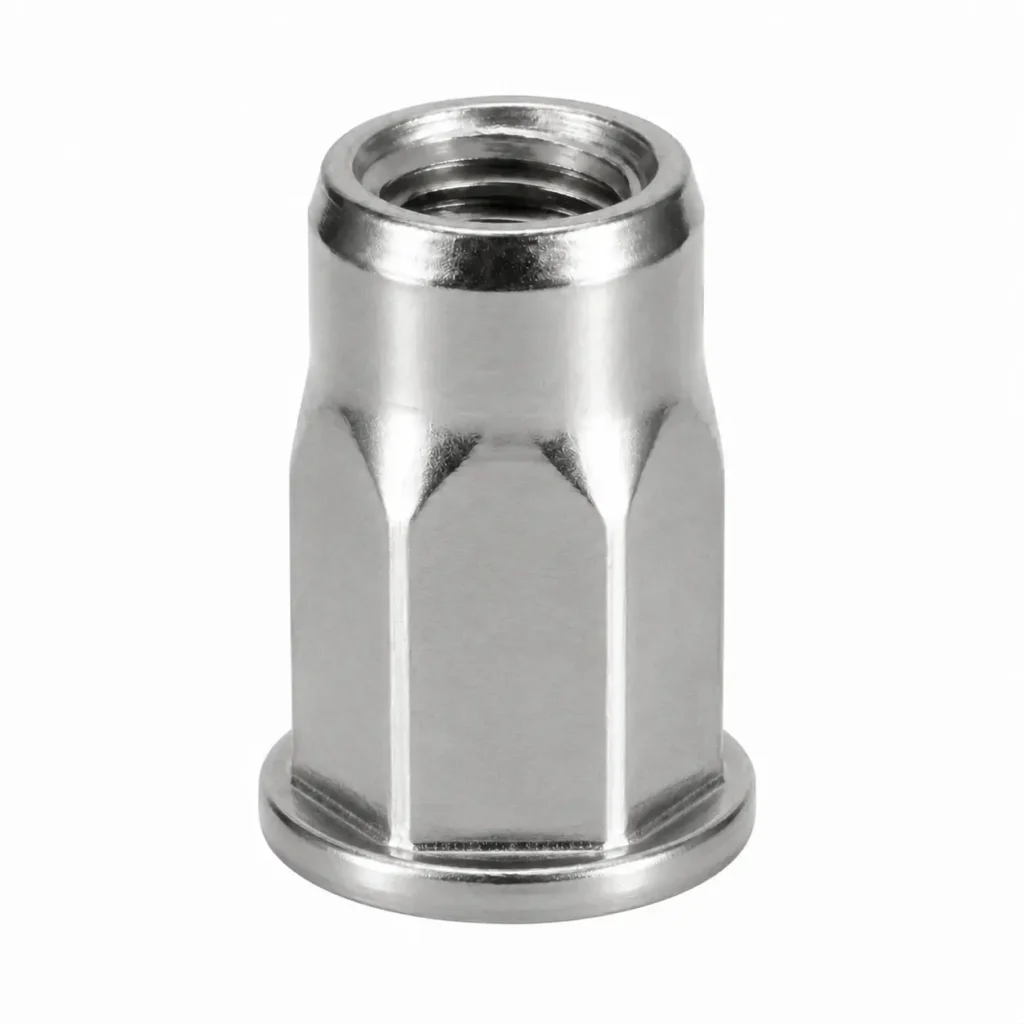
The body design of a rivet nut also affects its overall strength. Body designs include Round Body, Knurled Body, Half Hex, and Full Hex.
| Body Design | Effect on Connection Performance |
|---|---|
| Round Body | Designed for round holes. Anti-rotation performance depends on the body features and hole fit. |
| Knurled Body | External knurls increase mechanical engagement with the hole wall, helping resist rotation. |
| Half Hex | The hexagonal section engages with a matching hole shape to help prevent rotation. |
| Full Hex | Fits a matching hexagonal hole to provide geometric resistance to rotation. |
2.Base Material and Joint Conditions
- Base Material Type
Different sheet materials have varying tensile strengths, hardness, and ductility, which indirectly affect the strength of the rivet nut. For example, if the same rivet nut is installed on both an aluminum sheet and a steel sheet—even when subjected to tensile force in the same direction—the aluminum sheet is more likely to tear through first. - Sheet Thickness
Sheet thickness is a key factor affecting the performance of a rivet nut connection. When the sheet is too thin, the force applied during rivet nut installation can cause the sheet to fail. Although the rivet nut itself remains intact, the entire connection fails.
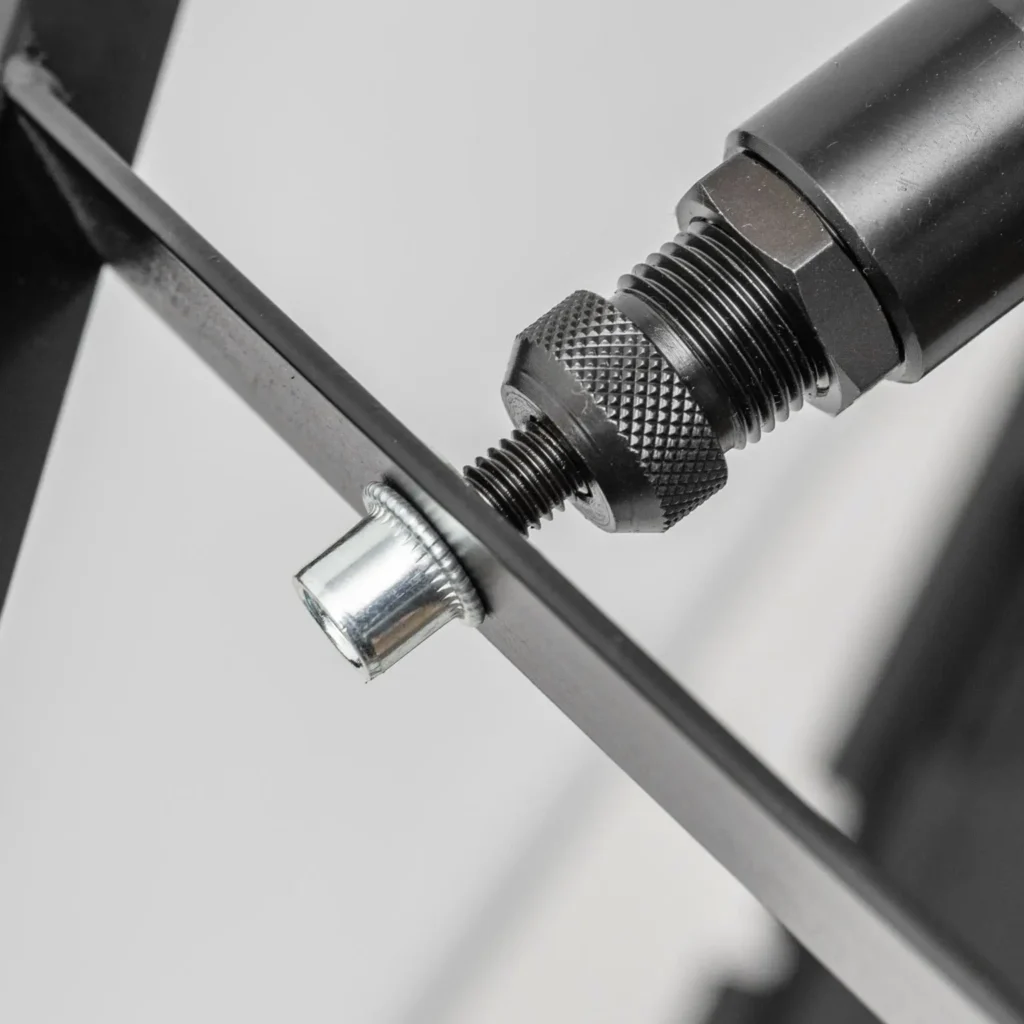
3.Installation Quality and Setting Parameters
- Grip Range
Selecting the correct grip range for the rivet nut is essential for proper installation. If the total clamping thickness at the actual installation location falls outside the range specified for that model, the sheet metal will not be securely joined. - Hole Size and Quality
The quality and size of the installation hole directly affect the fit between the rivet nut and the base material. If the hole is too large or too small, there is a risk of failure after the rivet nut is installed. - Installation Tool Compatibility
The compatibility of the installation tool also affects the strength of the entire joint. Pay close attention to the following aspects:
Whether the tool is compatible with the corresponding thread specifications.
Whether the mandrel and nosepiece are a proper match.
Whether the tool’s pulling force and stroke meet product requirements.
Whether the tool maintains consistent installation performance.
4.Applied Loads and Working Environment

The actual loads and environmental conditions to which a rivet nut is subjected after installation also affect its strength. Because the direction of the applied force varies, this must be specified using tensile strength values.
Key Factors Affecting Rivet Nut Strength
| Key Factor | How It Affects Rivet Nut Strength | What You Should Check |
|---|---|---|
| Rivet Nut Material and Design | Determines the insert’s mechanical strength, thread load capacity, and resistance to rotation. | Material Grade, Mechanical Properties, Thread Size, Thread Engagement Length, and Body Design |
| Base Material and Joint Design | Affects load distribution and the connection’s resistance to deformation, pull-out, and material failure. | Base Material, Sheet Thickness, Material Strength, Hardness, and Ductility |
| Installation Conditions | Determines the quality of the installed connection and its resistance to pull-out and spin-out. | Grip Range, Hole Diameter and Tolerance, Hole Quality, Setting Force, and Setting Stroke |
| Applied Loads and Service Environment | Determines how the connection performs under different loads and environmental conditions. | Tensile Loads, Shear Loads, Tightening Torque, Vibration, Temperature, and Corrosion Exposure |
What Is Rivet Nut Holding Strength?
Rivet Nut Holding Strength refers to the ability of a rivet nut, once installed, to maintain its connection position and secure state under external loads.
Holding Strength is a comprehensive evaluation of a rivet nut’s ability to maintain the connection. Specific assessments must take into account different force directions, failure locations, and test methods. Holding Strength is used to clearly determine whether the rivet nut remains in the base material, whether the internal threads remain intact, and whether the connection can resist rotation.
What are the main performance characteristics of holding strength?
- Pull-Out Resistance
- Spin-Out Resistance
- Torque-Out Resistance
- Shear Strength
What Is Rivet Nut Pull-Out Strength?
Rivet Nut Pull-Out Strength refers to the maximum load that a rivet nut can withstand after it has been installed in the base material when subjected to an axial tensile force, prior to the connection failing due to pull-out.
How Is Rivet Nut Pull-Out Strength Tested?
The pull-out strength of rivet nuts can be tested and verified using a tensile testing machine or appropriate specialized testing equipment.
The testing procedure is as follows:
- First, install the rivet nut on the specified test material.
- Then, apply an axial tensile force using the matching bolt and test fixture.
- Gradually increase the load until the joint fails.
- Record the maximum load and the final failure mode.
What Is Rivet Nut Tensile Strength?
Rivet Nut Tensile Strength refers to the ability of a rivet nut or its joint to resist failure when subjected to an axial tensile load. For example, when you screw a bolt into a rivet nut and apply a tensile force outward along the bolt’s axis, this value indicates the maximum tensile force that the rivet nut and its associated joint can withstand without breaking or failing.
How Is Rivet Nut Tensile Strength Tested?
The axial tensile strength of finished rivet nuts can be verified using a universal testing machine (UTM).
Testing procedure:
- Select a rivet nut of the specified size and inspect the product’s dimensions and thread condition.
- Rivet the rivet nut onto a specified steel washer, which is placed on the test support sleeve.
- Screw a matching bolt into the internal threads of the rivet nut to form a complete connection in the test assembly.
- Use the testing equipment to gradually increase the tensile force in the specified direction.
- Record the load at which failure occurs and inspect the final point of failure.
Pull-Out Strength vs. Tensile Strength: Key Differences
| Comparison Criteria | Pull-Out Strength | Tensile Strength |
|---|---|---|
| Core Definition | The ability of an installed rivet nut connection to resist axial pull-out failure. | The ability of a material or fastener to resist tensile failure under an applied load. |
| Primary Evaluation Target | The installed rivet nut and its connection to the base material. | The material itself, or a rivet nut and its assembled joint. |
| Testing Objective | To determine the load at which the installed connection fails under axial tension. | To determine the maximum tensile stress or load a material or component can withstand. |
| Testing Method | Install the rivet nut in a specified base material, apply an axial tensile load, and record the failure load. | Apply an increasing tensile load to a material specimen or component and record the maximum stress or load. |
| Typical Failure Modes | Thread stripping, rivet nut pull-through, base material deformation, or tearing. | Material fracture, component failure, or assembled joint failure, depending on the test setup. |
| Common Units | N, kN, lbf. | MPa (material tensile strength); N, kN, lbf (component load capacity). |
| Main Influencing Factors | Base material, sheet thickness, hole diameter, grip range, installation quality, and thread performance. | Material grade, material condition, product design, effective cross-sectional area, and test conditions. |
| Primary Application | Evaluating whether an installed rivet nut can remain securely anchored in the base material. | Evaluating the tensile performance of a material, fastener, or assembled component. |
| Selection Considerations | Pull-out performance under actual installation conditions and the final failure location. | Material mechanical properties or the axial load capacity of the tested component. |
What Factors Affect Rivet Nut Strength?
- Load Direction and Load Distribution at the Joint
The actual direction of the applied load directly affects the stress state of a rivet nut connection. When subjected to simultaneous shear, torsion, or multiple loads, the behavior of the rivet nut differs from that observed in individual tests. When the load is unevenly distributed, bending or prying forces may also occur. - Structure of Connection Holes in Sheet Metal and Hole Spacing
Mismatched hole shapes or insufficient installation clearances between holes directly affect how loads are transferred from the bolt to the rivet nut and the surrounding sheet metal. In severe cases, this can lead to localized deformation or tearing of the sheet metal. - Specifications of the Matching Bolt and Thread Engagement Condition
The bolt specifications and thread engagement length also determine the quality of the rivet nut assembly after installation.
How to Test Rivet Nut Strength?
When testing the strength of a rivet nut, it is not sufficient to simply apply a load using a tensile testing machine and determine whether the product meets specifications based on the maximum load. The main reason is that, during actual assembly and use, rivet nuts are subjected to various forces, including axial tensile force, lateral shear force, and rotational torque. The test methods and failure criteria for these different forces vary.
Therefore, the correct testing procedure is as follows: First, determine which mechanical property needs to be verified. Then, install the specimen and apply the load according to the corresponding test method. Finally, record the failure data and analyze the final failure location.
- Step 1: Prepare samples and test panels with the specific dimensions required for the test.
- Step 2: Select the appropriate rivet nut installation tool and attach the sample to the test panel.
- Step 3: Select the appropriate testing equipment and fixtures. Different strength tests require different equipment.
What are the main components of a rivet nut strength test?
| Test Type | Main Purpose | What to Record |
|---|---|---|
| Pull-Out Test | Evaluates the installed rivet nut connection’s resistance to axial pull-out failure. | Maximum failure load (N/kN) |
| Axial Tensile Test | Evaluates the axial load capacity of the rivet nut or threaded connection. | Maximum axial load (N/kN) |
| Proof Load Test | Verifies whether the product can withstand a specified load without unacceptable damage. | Whether it passes the specified load and acceptance requirements |
| Maximum Torque Test | Evaluates the threaded connection’s resistance to torque-related failure. | Maximum applied torque (Nm) |
| Torque-to-Turn Test | Measures the torque at which the rivet nut begins to rotate in the installation hole. | Torque at initial rotation (Nm) |
| Shear Test | Evaluates the installed connection’s resistance to transverse shear failure. | Maximum shear load (N/kN) |
| Push-Out Test | Evaluates the load required to push the rivet nut out of the installed panel in the reverse direction. | Maximum push-out load (N/kN) |
Axial Tensile Test
Axial tensile testing is used to evaluate the load-bearing capacity of a rivet nut or its threaded connection under axial tensile stress.
The video below shows our staff testing the axial tensile strength of a rivet nut. You can observe on the computer screen as the load gradually increases until the rivet nut fails.
Torque-to-Turn Test
The principle behind the anti-rotation test is to observe the torque corresponding to the moment when the rivet nut begins to rotate within the mounting hole after installation.
Shear Test
Shear testing differs from axial tensile testing. In shear testing, the load direction is perpendicular to the bolt axis. During the test, the installed rivet nut is secured in a specified fixture, and a transverse load is gradually applied until the joint fails.
How to Choose a Rivet Nut Based on Strength Requirements?
When purchasing rivet nuts, the biggest misconception is assuming that the higher the strength rating, the better. The correct approach to selection is to choose a rivet nut that meets the project’s requirements based on the load the joint will bear, the base material conditions, the installation space, and the operating environment.
Step 1: Determine the most critical strength requirement for the joint
You need to identify the primary failure mode at the joint. Then, select the corresponding mechanical properties.
Step 2: Determine the required thread specifications based on the actual load
Ensure that the bolt specifications and strength match those of the rivet nut. Also, verify that the thread engagement length is correct.
Step 3: Select the body design based on the joint’s anti-rotation and pull-out resistance requirements
Round-body rivet nuts are suitable for general sheet metal joints that do not require anti-rotation or pull-out resistance. Knurled round-body rivet nuts provide some additional anti-rotation capability. For projects with high anti-rotation and pull-out resistance requirements, consider semi-hex or full-hex rivet nuts.
Step 4: Select the head and body design based on the base material’s load-bearing capacity
When the sheet metal is too thin, consider a large flange head or a multi-fold design suitable for soft materials. This reduces the risk of the sheet metal being pulled through.
Step 5: Select the Correct Grip Range Based on the Actual Total Sheet Thickness
It is essential to verify the grip range. First, measure the actual total thickness of the two layers of sheet metal and any other materials to be clamped, then select a product with a grip range that covers that thickness.
Step 6: Select Materials and Surface Treatments Based on the Connection’s Operating Environment
| Material | Key Selection Considerations | Typical Applications |
|---|---|---|
| Aluminum | Lightweight, but the mechanical properties of the specific alloy should be verified. | Lightweight equipment, aluminum structures |
| Carbon Steel | Evaluate strength based on the specific material grade and heat treatment condition. Select appropriate corrosion protection. | General industrial equipment, sheet metal structures |
| Stainless Steel 304 | Consider corrosion resistance requirements in general humid and outdoor environments. | Industrial equipment, general outdoor applications |
| Stainless Steel 316 | Consider applications involving chlorides and more aggressive corrosive environments. | Coastal environments, selected chemical processing and outdoor equipment |
Step 7: Conduct a Sample Test Fit to Verify the Selection
FAQs
Can Rivet Nuts Be Used for Load-Bearing Applications?
Rivet nuts can be used in load-bearing structures, provided that the mechanical properties, installation method, and overall connection design of the rivet nut model you select meet the actual load-bearing requirements.
How Much Tightening Torque Should Be Applied to a Rivet Nut?
The tightening torque required for a rivet nut depends on the thread size, material, body design, effective thread engagement length, the mating bolt, and the strength of the connection after installation. There is no fixed value for this torque.
Why Does a Rivet Nut Spin When Tightening a Bolt?
The main reasons why a rivet nut rotates when a bolt is tightened are that the applied torque exceeds its resistance to rotation or that it was installed incorrectly. Specific causes include an oversized installation hole, insufficient riveting deformation, a mismatch in hole geometry, and incompatibility between the rivet nut’s structure and the base material.
What Is the Difference Between Rivet Nut Spin-Out and Torque-Out?
Rotational failure and torque failure are different types of failure. Rotational failure occurs when the rivet nut rotates inside the hole as the bolt is tightened. Torque failure refers to the peeling or damage of the internal threads of the rivet nut caused by excessive torque.
Can an Installed Rivet Nut Be Reused After Removing the Bolt?
Riveted nuts can be reused after the bolts are removed. The riveted nut body remains securely attached, and the internal threads are intact. In such cases, the bolts can be removed and reused.
Can Rivet Nuts Be Installed in Plastic or Fiberglass?
Rivet nuts can be installed on plastic or fiberglass materials. There are restrictions on the choice of rivet nut material. You must select a rivet nut design suitable for non-metallic base materials. Before purchasing, you must conduct installation and mechanical performance tests using the actual base material.
Can Self-Locking Bolts Be Used with Rivet Nuts?
Self-locking bolts can be used in conjunction with rivet nuts. However, it is essential to ensure that the self-locking mechanism is compatible with the rivet nut’s anti-rotation capability.
How Can You Tell If a Rivet Nut Is Properly Installed?
A properly installed rivet nut should have a well-fitting flange, a properly formed back deformation structure, and internal threads that function correctly. Additionally, the stability of the rivet nut must be verified through mechanical property testing.
Work with a IATF 16949 Certified Blind Rivet Manufacturer
Get High Quality Rivets Instead of Huck and Avdel Rivets

Rivmate Rivet
Rivmate is blind rivets manufacturers in china. The company is IATF 16949 certified and offers high-strength structural blind rivets that serve as alternatives to Huck and Avdel products.
Explore Rivmate Cases
Rivmate Rivet
Rivmate is blind rivets manufacturers in china. The company is IATF 16949 certified and offers high-strength structural blind rivets that serve as alternatives to Huck and Avdel products.

Hey There, I'm Allen!
I am the boss of Rivmate. For over two decades, we have specialized in the manufacture of blind rivets, providing our customers with reliable riveting solutions. Need riveting services? Feel free to contact us.