Heavy-duty rivet nuts are a common fastening solution for reliable metal-to-metal connections. They are widely used in applications requiring removable threaded connections, such as thin-gauge sheet metal, equipment enclosures, brackets, and industrial structural components.
Therefore, when selecting a rivet nut for metal-to-metal mounting, you should not only consider thread size or product strength but also take into account the base material thickness, grip range, pull-out strength, and torque-out resistance.
Table of Contents
How will the two metal parts carry the load?
Before selecting a rivet nut for metal-to-metal mounting, it is most important to clearly understand how the two metal plates will bear and transfer loads during actual operation. This is primarily because different directions of force will directly affect the performance requirements of the rivet nut.
In applications involving rivet nuts for metal-to-metal mounting, one metal plate typically serves as the base plate, while the other is secured to it with bolts. The rivet nut provides an internal thread on the base plate. Loads are transmitted sequentially through the bolts, the rivet nut, and the metal plates.
Therefore, you must not only consider the force the bolts can withstand but also ensure that the connection between the rivet nut and the base plate is sufficiently reliable.
Axial Tensile Force
When two metal plates are subjected to tensile forces in opposite directions, the connection point is subjected to an axial tensile load. This can be understood as the force pulling the two plates apart. For example, a bracket mounted on an equipment enclosure is subjected to an outward tensile force, or a metal structural component needs to support other parts.
When subjected to axial tensile force: Bolts must withstand tensile stress, while rivet nuts must resist the risk of being pulled out of the base plate. You should pay close attention to the “Pull-Out Strength” specified in the technical data sheet.
Lateral Shear Force
When an external force acts parallel to the surface of a metal plate, the joint is subjected to a shear load. For example, while a vehicle is in motion, the mounting bracket is subjected to continuous lateral vibration.
When subjected to lateral shear forces, if the bolt preload is sufficient and there is no slippage at the contact surface, the two metal plates can transfer part of the shear load through the friction between their contact surfaces.
Bending Loads
When one metal plate is mounted onto another via a bracket, connecting arm, or other protruding structure, the load does not act directly on the bolt connection surface but instead generates a bending moment, causing the connection point to experience both tensile and compressive forces simultaneously.
For example, when an equipment bracket extends outward a certain distance to support a heavy component, the greater the distance, the larger the bending moment generated at the connection point. Under this load, the sheet metal near the rivet nut may experience localized bending, and the bolt may also be subjected to additional tensile and bending loads.
Vibration and Repeated Loads
In applications such as automobiles, trucks, industrial equipment, and metal enclosures, two metal plates are subjected to long-term vibration or cyclic loads. Two aspects require special attention: first, the rivet nut’s torque-out resistance—that is, its ability to resist rotation when the bolt is tightened; and second, the connection system’s ability to maintain clamping force.
Which sheet thickness belongs in the grip range?
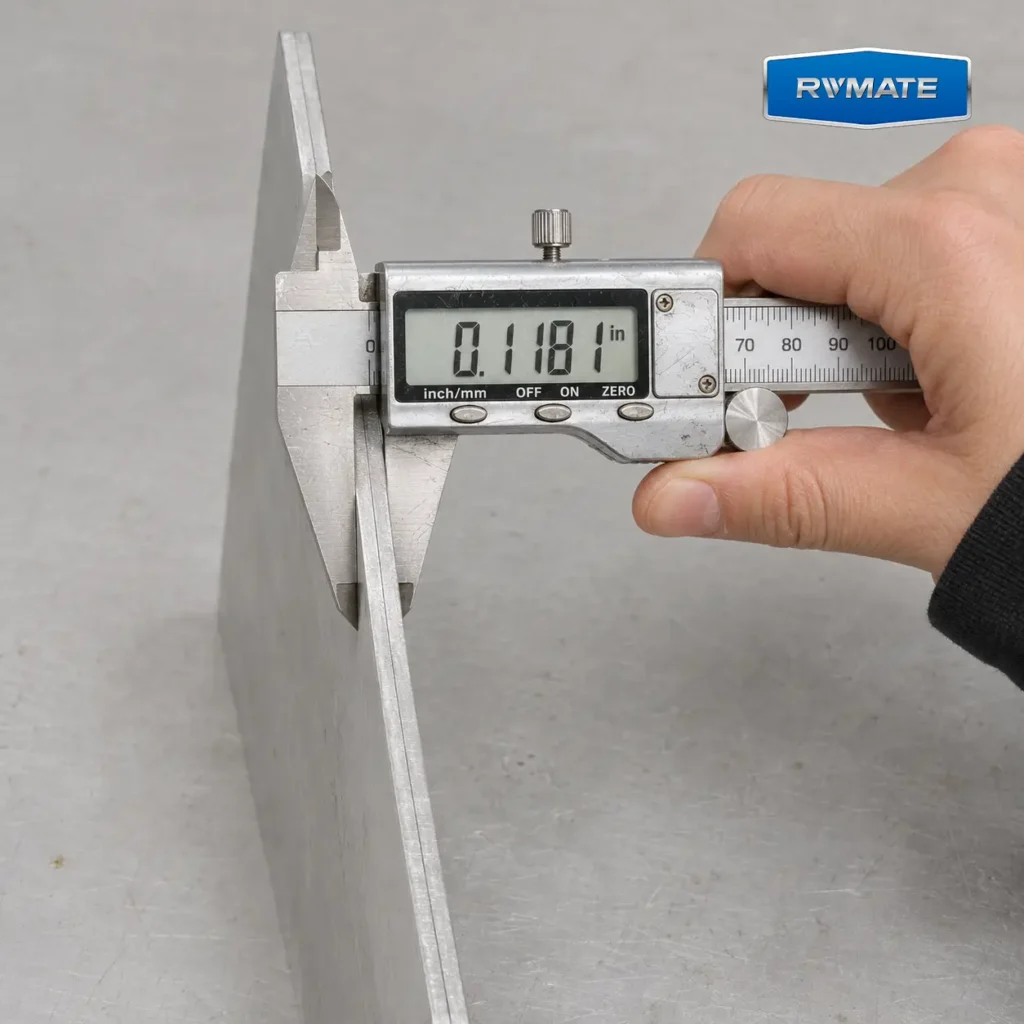
You must select the appropriate grip range to ensure proper installation and create a reliable mechanical locking structure. Therefore, before selecting a rivet nut, you must first determine the actual sheet thickness at the installation location. Then, select the appropriate grip range based on this thickness.
When using rivet nuts for metal-to-metal mounting, you must distinguish whether you are measuring the thickness of the base plate or the total thickness of a multi-layer metal plate assembly. The measurement method varies depending on the specific situation.
When installing a rivet nut on a metal plate
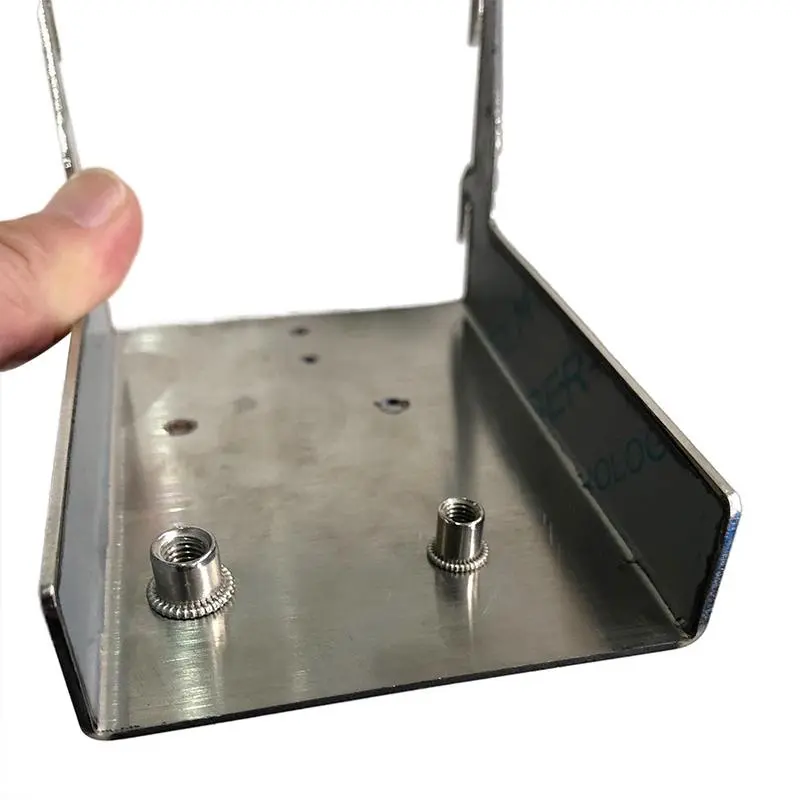
If your project’s connection involves one metal plate serving as the base plate and another metal plate bolted to the rivet nut, you only need to measure the thickness of the base plate where the rivet nut will be installed.
When rivet nuts need to pass through multiple layers of metal plates
If your project requires rivet nuts to be installed directly through two or more layers of metal plates, you need to calculate the total thickness of all materials that the rivet nuts actually pass through and clamp at the installation location. When calculating the theoretical thickness, take into account the interlayer gaps caused by sealing gaskets, shims, and burrs.
When does a different body or head shape help?
When standard rivet nuts do not meet the connection requirements, it is necessary to consider different body shapes and head styles. The design of the body shape and head style can affect the rivet nut’s resistance to rotation, its back-support performance, and the surface finish after installation.
When Should You Choose a Different Rivet Nut Body Style?
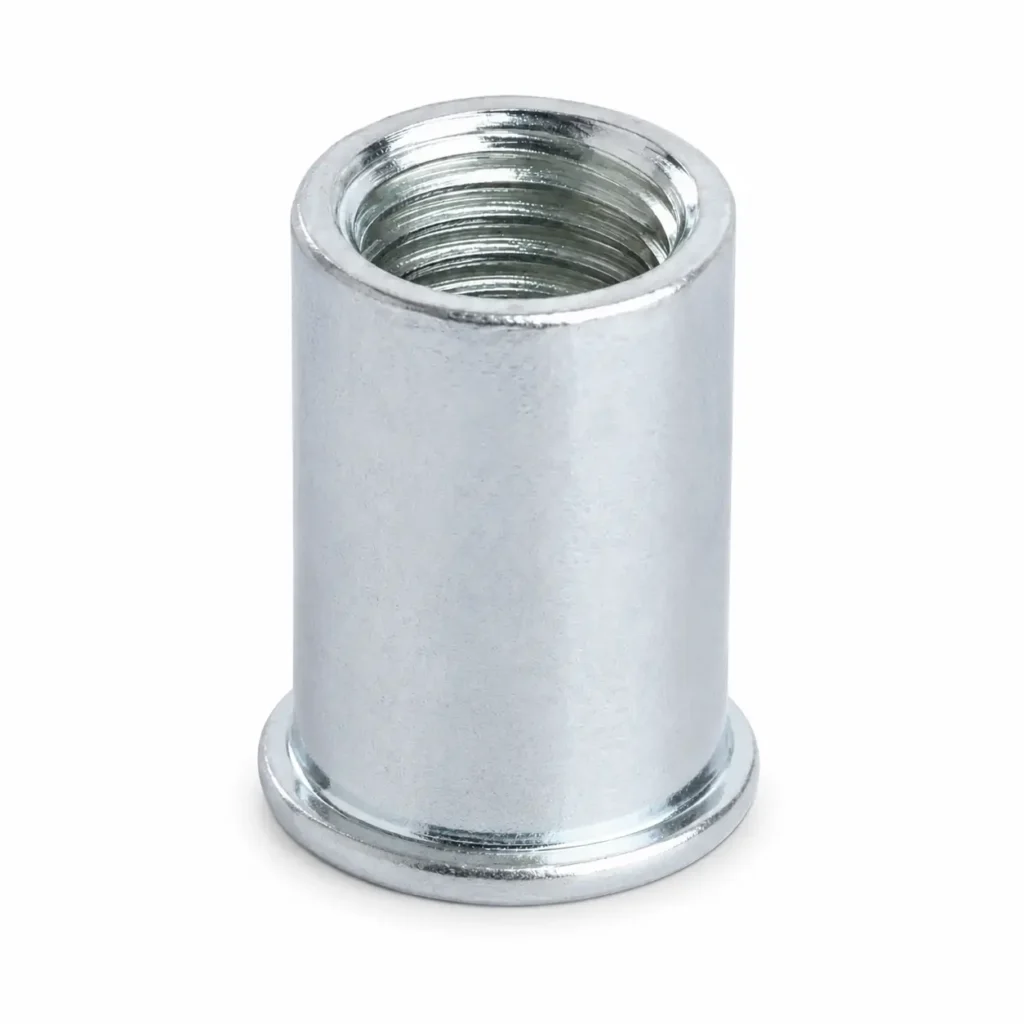
Round Body
Suitable for standard round holes and conventional metal plate fastenings. The mounting holes are round, making machining simple.
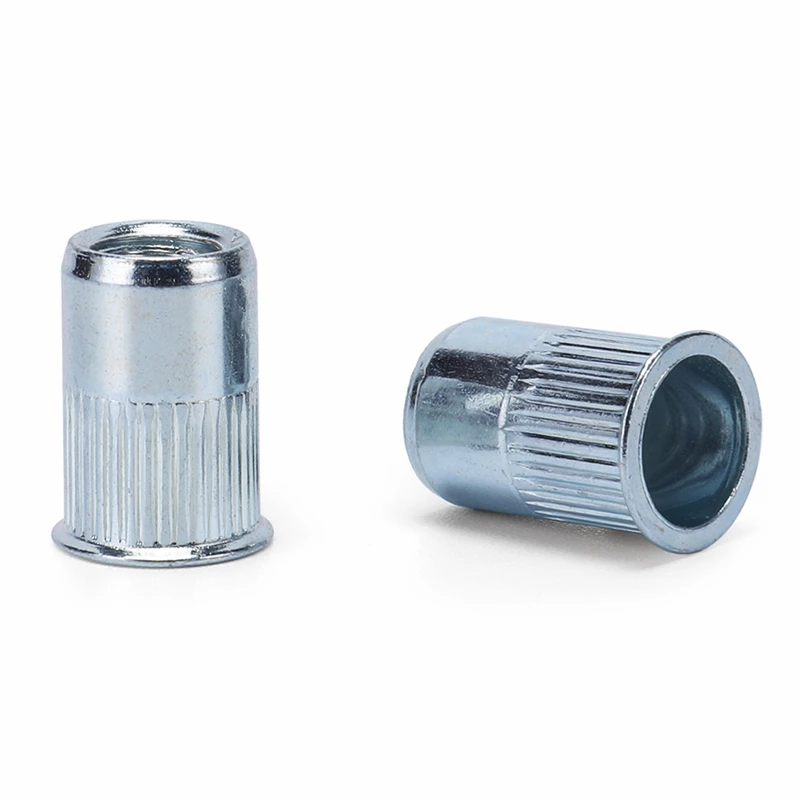
Knurled Body
The external knurling on the body enhances mechanical interlock with the hole walls. More suitable for fastenings requiring improved resistance to rotation.
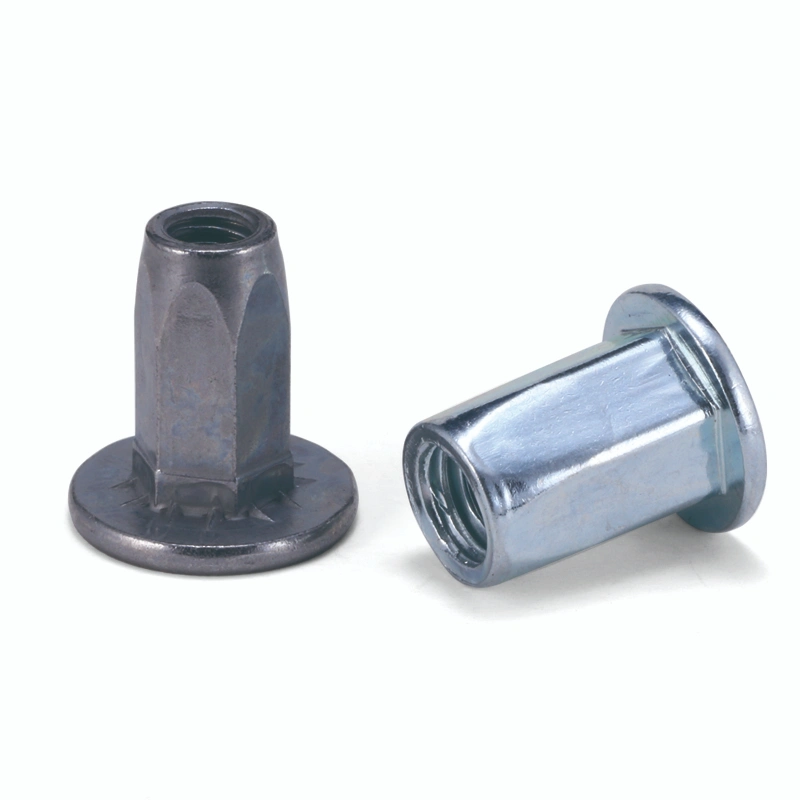
Hex Body
Requires a matching hexagonal mounting hole. It enhances anti-rotation capability through geometric locking and is suitable for applications requiring higher tightening torque.
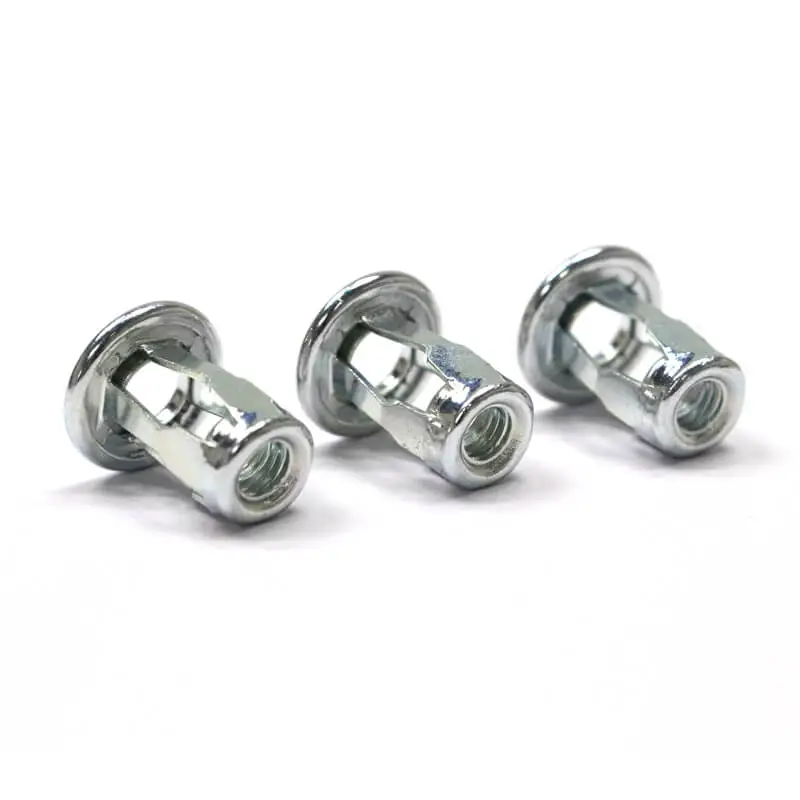
Slotted Body
After installation, the four support legs spread outward toward the back, expanding the support area. Suitable for certain thin metal sheets, plastics, and fiberglass applications.
How Does the Rivet Nut Head Style Affect Installation?
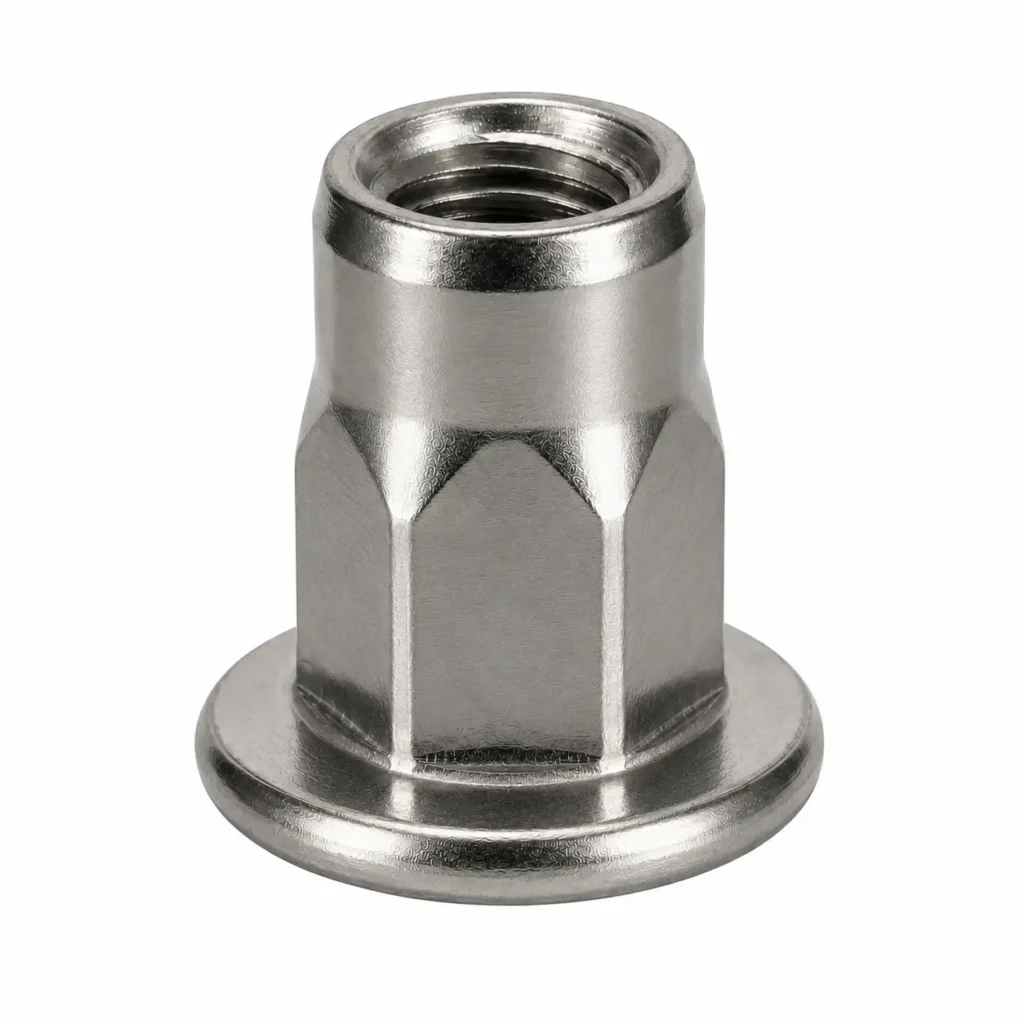
Flat-head rivet nuts
A common head type. Suitable for standard metal plate connections, especially in applications without specific flush-mounting requirements.
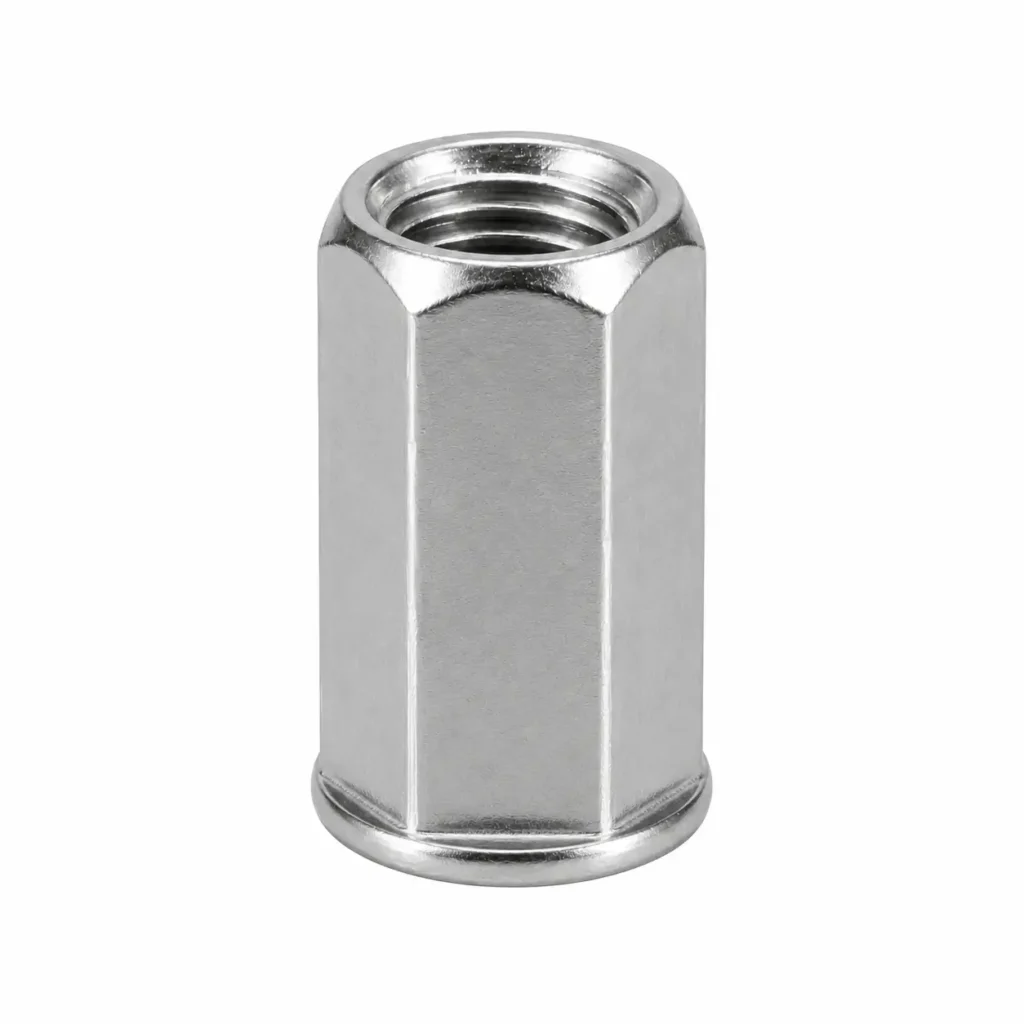
Reduced Head
Features a smaller head size, minimizing the space occupied by the head. Suitable for scenarios with limited installation space. Note that the bearing area may be reduced.
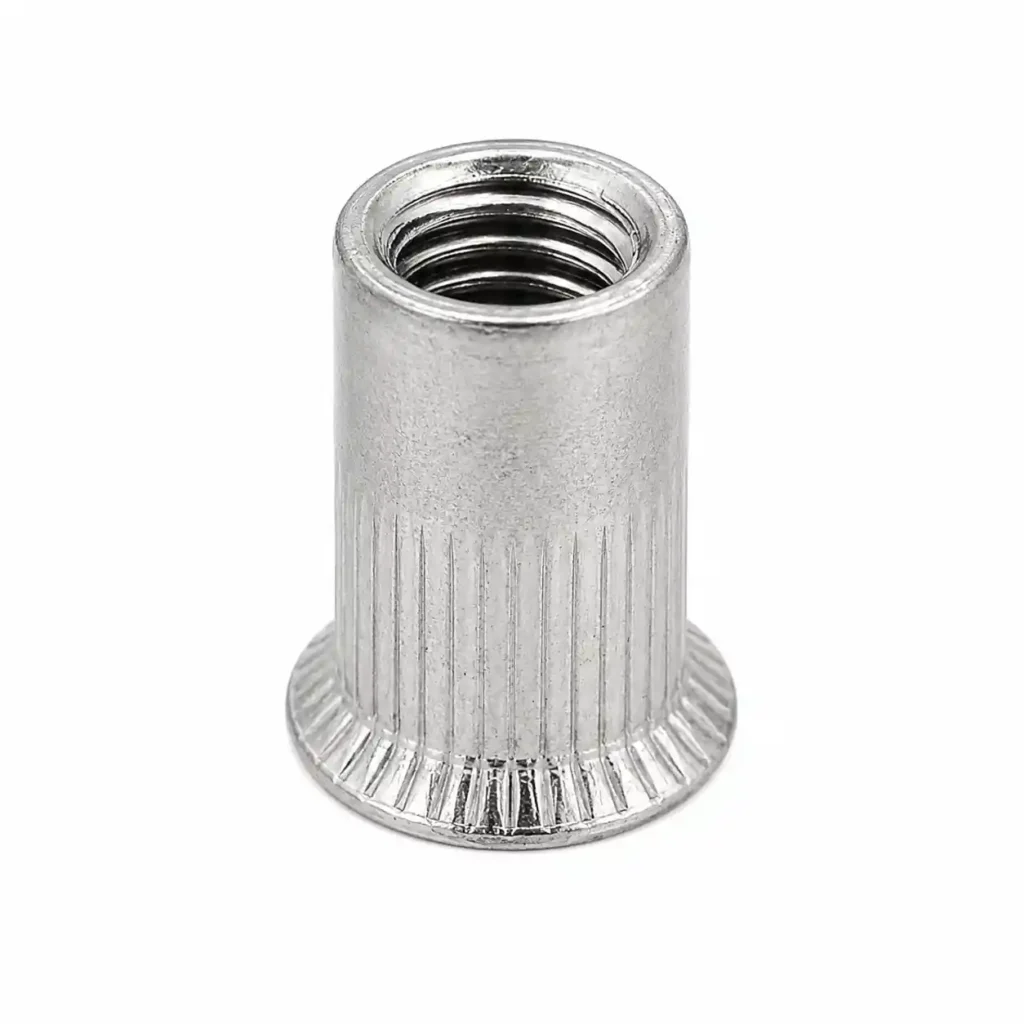
Countersunk Head
Features a tapered head design. Once installed, it sits flush with the sheet surface, making it suitable for connections requiring surface flatness. Consider in advance the reduction in effective thickness of thin sheets caused by the countersink.
How should you compare candidate materials and ratings?
Compare the Base Materials
Common materials include carbon steel, stainless steel, and aluminum. Rivet nuts made from different materials vary in mechanical strength, weight, and corrosion resistance.
- Carbon Steel: Offers a balance of mechanical strength and cost-effectiveness. Suitable for standard sheet metal fastening. Requires galvanized or zinc-nickel surface treatment to enhance corrosion resistance; suitable for general industrial and some outdoor applications.
- Stainless Steel: Offers enhanced corrosion resistance. 304 stainless steel is suitable for general humid environments, while 316 stainless steel is better suited for marine, salt spray, and chemically corrosive environments. Suitable for applications requiring high joint durability.
- Aluminum: Lightweight with good corrosion resistance; however, its mechanical strength and thread load-bearing capacity are lower than those of steel products. Suitable for weight-sensitive connections with moderate load requirements.
Which Mechanical Ratings Should You Compare?
| Performance Rating | Definition | Primary Evaluation Purpose |
|---|---|---|
| Pull-Out Strength | The resistance of a rivet nut to being pulled out of the base material under axial tensile load. | Determine whether the base sheet can securely retain the rivet nut. |
| Push-Out Strength | The resistance of a rivet nut to being pushed through the mounting sheet. | Evaluate the reliability of the supporting contact area and resistance to push-through failure. |
| Shear Strength | The ability to resist loads acting parallel to the sheet surface. | Determine whether the connection can withstand transverse loading. |
| Torque-Out Resistance | The resistance of a rivet nut to rotating within the installation hole. | Evaluate the risk of rivet nut rotation during bolt tightening. |
| Tensile Strength | The ability of the fastener or threaded joint to withstand tensile loading. | Evaluate the tensile load-bearing capability of the fastener or threaded connection. |
How do you qualify a heavy-duty mounting point?
To determine whether a rivet nut installation point is truly suitable for heavy-duty connections, one must verify whether, once installed on the actual sheet metal, the rivet nut can withstand the expected loads over the long term without pulling out, rotating, deforming, or loosening.
- Step 1: Determine the load requirements and variations at heavy-duty assembly joints.
- Step 2: Inspect the base material and actual installation conditions.
- Step 3: Perform a test assembly using a rivet nut installation tool to inspect the condition of the rivet nut after deformation.
- Step 4: Conduct mechanical performance tests using the actual combination of sheet metal, mounting holes, and bolts.
- Step 5: Evaluate long-term reliability by considering the joint’s exposure to long-term vibration, temperature fluctuations, and corrosive environments.
Will the bracket sit flat over the insert flange?
When selecting a rivet nut to connect a metal bracket to a metal motherboard, you need to confirm whether the flange will interfere with the bracket’s fit after installation. This is primarily because the flange is the protruding portion that remains on the front of the motherboard after the rivet nut is installed. Both its diameter and height directly affect the bracket’s mounting position. You should focus on checking the following three aspects:
1. Check whether the flange dimensions match the bracket’s mounting holes
When the bracket needs to sit directly against the surface of the main board, the clearance opening on the bracket must be large enough to accommodate the flange of the rivet nut. You need to measure the outer diameter of the flange and check the dimensions of the bracket’s opening as well as its manufacturing tolerances.
2. Confirm whether the bracket can be pressed against the flange
When the bracket needs to be pressed directly against the flange, you must consider the flange’s load-bearing capacity. You must also ensure that the bracket’s base makes stable contact with the flange. Avoid having the flange protrude above the panel surface, as this will create a gap between the bracket and the base plate.
3. Select the appropriate head type based on available assembly space
For situations with limited installation space, consider the following head types:
- Flat Head: After installation, the flange will protrude above the base plate surface, so you must reserve clearance space for the bracket in advance.
- Reduced Head: The head protrudes less, making it suitable for connections with limited space. However, you must still check for interference with the bracket.
- Countersunk Head: By machining a matching countersunk hole in the base plate, the head can be installed close to or flush with the surface. However, you must confirm that the base plate is thick enough to prevent the countersunk hole from weakening local strength.
How long should the mounting bolt be?
When selecting the length of a mounting bolt, you must take into account the thickness of the metal bracket, the thickness of the washer, and the effective thread engagement length of the bolt inside the rivet nut. If the selected bolt is too short, it will result in insufficient thread engagement. If the bolt is too long, it will hit the bottom of the closed-end rivet nut prematurely, affecting the clamping of the bracket or damaging the connection.
Therefore, when selecting a rivet nut for metal-to-metal mounting, the correct approach is to not only ensure that the bolt has sufficient effective threaded engagement length but also to ensure that it does not exceed the actual available internal thread depth of the rivet nut.
How Do You Calculate the Required Bolt Length?
| Symbol | Definition |
|---|---|
| L | Bolt Length |
| Tb | Bracket Thickness |
| Tw | Total Washer or Spacer Thickness |
| Le | Effective Thread Engagement Length Inside the Rivet Nut |
How should you set the assembly torque?
When securing a metal bracket to a metal base plate using a rivet nut, you must apply the appropriate tightening torque. This ensures a secure connection between the metal bracket and the metal base plate, while also preserving the integrity of the internal threads or the rivet nut itself.
For rivet nuts used in metal-to-metal mounting, several factors must be considered to determine the correct tightening torque for proper installation. These include bolt size, bolt strength grade, base material, effective threaded engagement length, base plate thickness, and friction conditions at the contact surface. Since rivet nuts come in a wide variety of specifications and designs, a single standard value cannot be applied to all products.
Why Should You Not Over-Tighten?
Excessive tightening torque does not result in a more stable connection; instead, it can cause the following problems:
- Stripped threads: The internal threads of the rivet nut are damaged due to excessive load, preventing the bolt from securing properly.
- Rivet nut rotation: The rivet nut rotates along with the bolt inside the mounting hole, causing the connection to become unstable.
- Sheet metal deformation: Thin metal sheets subjected to excessive clamping force may develop localized dents or deformations.
- Bolt damage: The bolt may be overstretched and, in severe cases, may even break.
How do you determine the appropriate tightening torque?
Refer to the technical specifications provided by the rivet nut manufacturer. Check the recommended tightening torque for the corresponding model, thread size, and matching bolt grade.
If the manufacturer does not provide applicable recommended values, you must determine the torque through connection design calculations and actual assembly testing. The assembly torque must be set in consideration of the entire connection system and must not exceed the allowable torque of the component that reaches its failure limit first within the entire connection system.
How should you assess a multi-insert bracket?
| Assessment Item | What to Check | Why It Matters |
|---|---|---|
| Load Distribution | Tensile loads, shear loads, bending moments, and load application points. | Determine how loads are distributed across inserts and prevent localized overloading. |
| Insert Spacing | Center-to-center distance between installation holes. | Prevent excessive concentration of mounting points and potential weakening of the parent material. |
| Edge Distance | Distance from the center of each installation hole to the panel edge. | Reduce the risk of edge tearing and localized deformation. |
| Bracket Stiffness | Bracket thickness, structural design, and deformation under load. | Prevent bracket bending from placing excessive loads on individual mounting points. |
| Fastener Strength | Bolt grade, rivet nut specifications, and effective thread engagement length. | Ensure the bolts and rivet nuts have sufficient load-bearing capacity. |
| Parent Panel Strength | Panel material, thickness, hole diameter, and local bearing capacity. | Prevent panel tearing, deformation, or rivet nut pull-out. |
| Installation Consistency | Hole alignment, grip range, installation setting, and insert retention. | Minimize installation variations between individual mounting points. |
| Assembly Testing | Tensile, shear, bending, or vibration testing of the complete bracket assembly. | Verify that the entire connection meets actual operating requirements. |
FAQs
Can I install the insert from one side?
Rivet nuts can be installed from one side. However, make sure there is sufficient working space for the installation tool. Ensure there is enough space on the back of the sheet metal for forming.
Does the bracket thickness count toward grip?
Whether the bracket thickness is included in the clamping thickness depends on how the rivet nut is installed. When the rivet nut is installed directly onto a metal sheet and the bracket is secured with bolts, the bracket thickness is not included in the grip range. When the rivet nut passes through both the bracket and the base plate, the grip range must account for all the material clamped by the rivet nut.
Can a larger thread solve a weak panel?
Using larger-sized threads does not solve the problem of insufficient panel strength. Increasing the thread size only improves the load-bearing capacity of the threaded connection. It does not increase the strength of the metal base plate itself.
Does a hex body need a matching hole?
The hexagonal body requires matching hexagonal mounting holes.
Will stainless steel suit every metal panel?
Stainless steel rivet nuts may not be suitable for all metal panels. Stainless steel offers a certain degree of corrosion resistance. However, different materials can cause galvanic corrosion in humid environments. You need to consider the panel material, ambient humidity, salt spray exposure, surface coatings, and the risk of thread galling.
Is spin-out torque a tightening specification?
“Spin-out torque” is not a parameter included in fastening specifications. Spin-out torque is used to determine the maximum torque a rivet nut can withstand while resisting rotation after installation. Tightening torque is the torque applied to a bolt when assembling a bracket.
Can I multiply a single insert rating by four?
You cannot simply multiply the rated load capacity of a single rivet nut by four to calculate the total load capacity. The actual load capacity depends on the stiffness of the bracket, the spacing between the rivet nuts, the installation location, the bolt preload, and the point of application of the load. When the bracket is subjected to eccentric loads or bending moments, some rivet nuts will experience greater tensile forces.
What should I include with a sample request?
You will need to provide information such as drawings, sheet materials, actual thickness, installation space, and target operating conditions. The more complete the information you provide, the more accurate the sample will be.
Work with a IATF 16949 Certified Blind Rivet Manufacturer
Get High Quality Rivets Instead of Huck and Avdel Rivets

Rivmate Rivet
Rivmate is blind rivets manufacturers in china. The company is IATF 16949 certified and offers high-strength structural blind rivets that serve as alternatives to Huck and Avdel products.
Explore Rivmate Cases

Rivmate Rivet
Rivmate is blind rivets manufacturers in china. The company is IATF 16949 certified and offers high-strength structural blind rivets that serve as alternatives to Huck and Avdel products.

Hey There, I'm Allen!
I am the boss of Rivmate. For over two decades, we have specialized in the manufacture of blind rivets, providing our customers with reliable riveting solutions. Need riveting services? Feel free to contact us.