Pop rivets are permanent fasteners designed for single-sided installation. Once installed, they cannot be repeatedly removed like bolts. They are not suitable for all projects. You need to select the correct type based on specific requirements.
However, pop rivets also offer many advantages. Not only are they quick to install, but they also enhance the stability of the connection. They are widely used in sheet metal fabrication, automotive and truck bodies, HVAC equipment, solar mounting systems, home appliances, and industrial enclosures.
Advantages and Disadvantages of Pop Rivets at a Glance
| Advantages of Pop Rivets | Disadvantages of Pop Rivets |
|---|---|
| Can be installed from one side | Usually cannot be removed and reused |
| Fast installation | Requires an accurately sized installation hole |
| Suitable for thin-sheet connections | The correct grip range must be selected |
| No welding heat is required | Standard types have limited load capacity |
| Requires little installation space | Standard types provide limited sealing performance |
| Relatively simple installation tools | Soft materials may deform during installation |
| Suitable for automated assembly | Difficult to adjust after installation |
| Available in many materials and designs | Incorrect material combinations may cause galvanic corrosion |
| Does not easily loosen after installation | High-vibration applications require specialized rivets |
| Generally low cost per fastener | Requires a pre-drilled installation hole |
Table of Contents
What Is a Pop Rivet and How Does It Work?
What is a Pop Rivet?
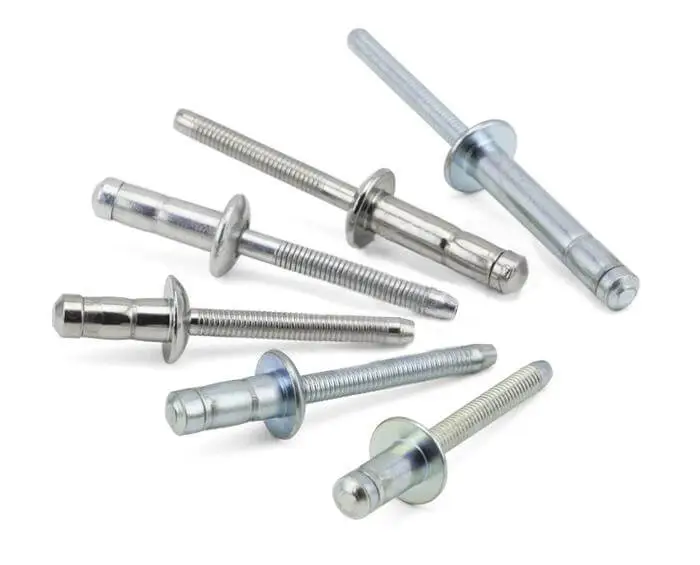
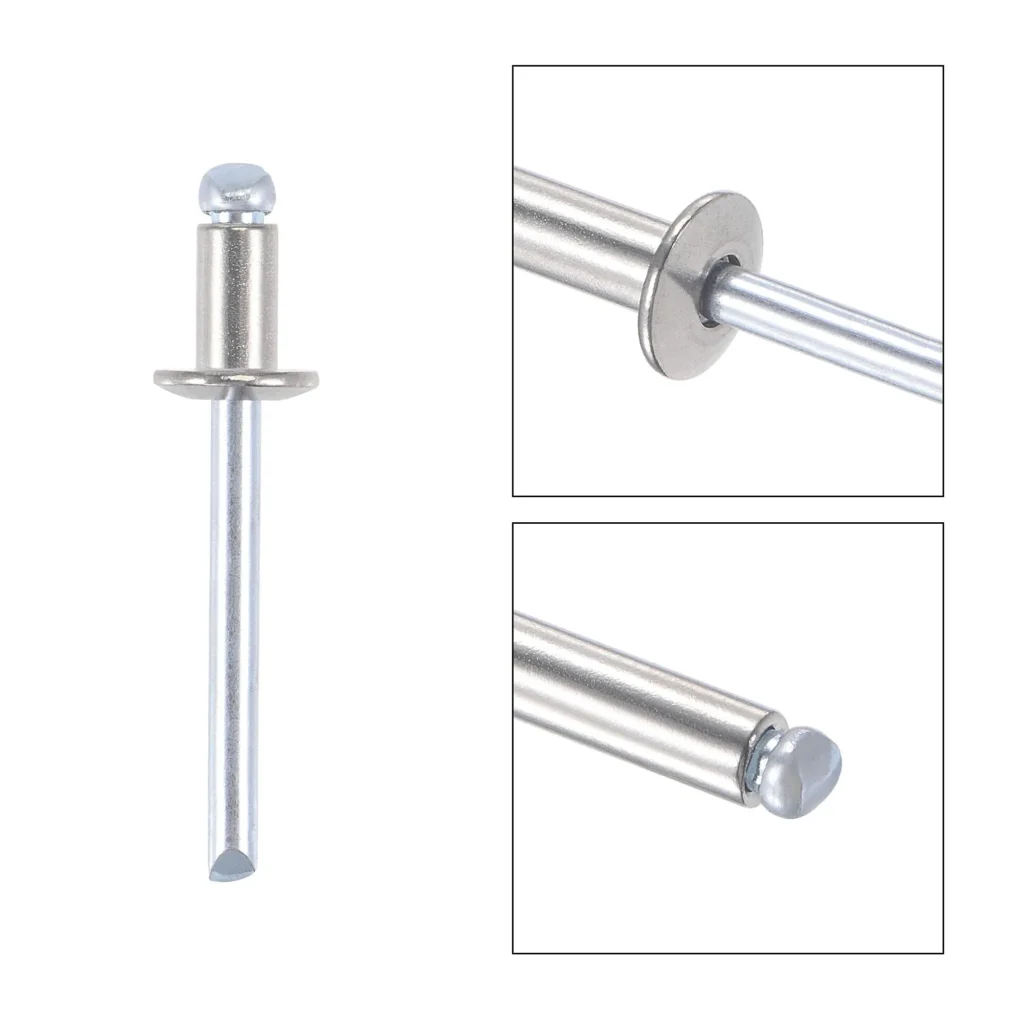
Pop rivets are a type of permanent mechanical fastener that can be installed from a single side of the workpiece. Their primary function is to join two or more layers of sheet metal. Pop rivets clamp the sheet metal by using a riveting tool to pull the mandrel, causing the tail end of the rivet body to expand and deform.
Unlike conventional bolt connections, which require access to both sides of the workpiece, pop rivets are suitable for products where the back of the workpiece is inaccessible. Pop rivets can be installed simply by using a rivet gun from the front. They are the optimal choice for joining enclosed profiles, tubing, enclosures, equipment housings, and other structures where rear access is limited.
Main Components of Pop Rivets:
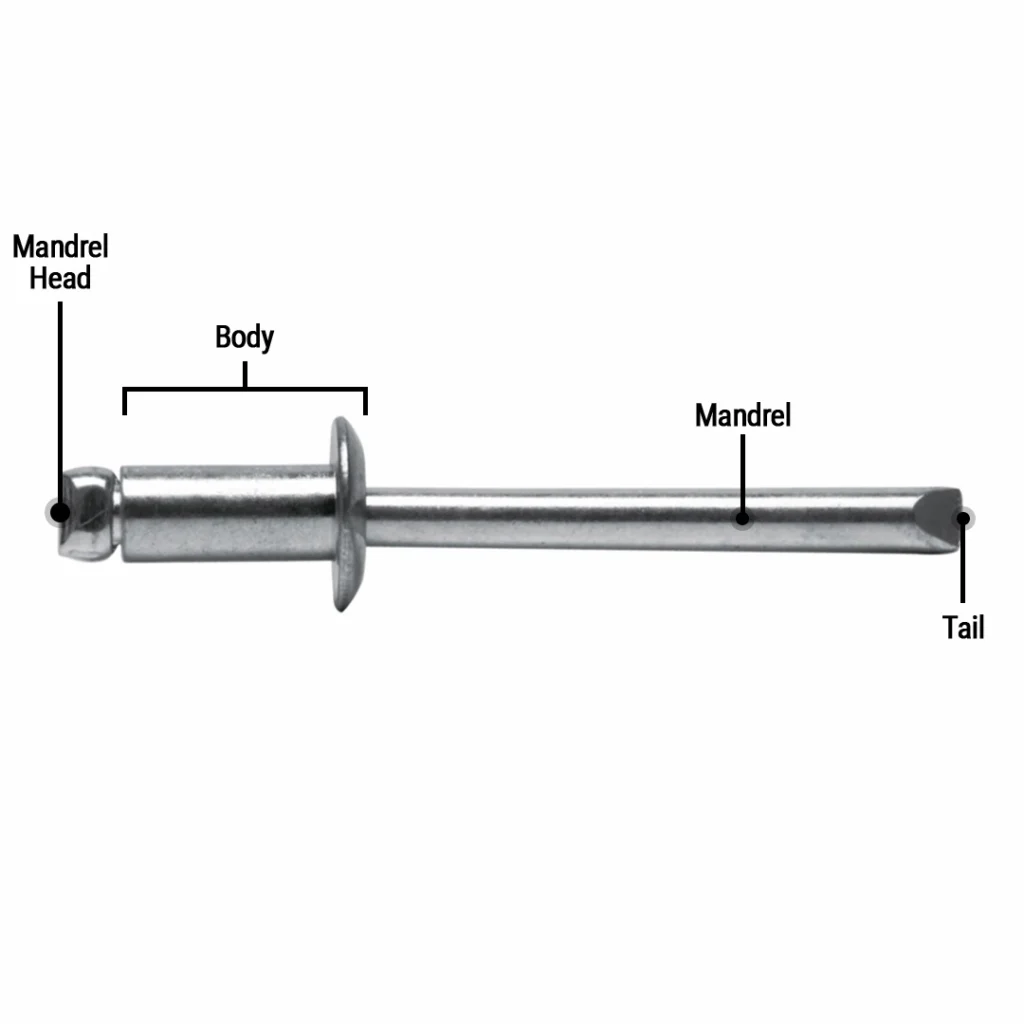
- Rivet Body: Used to penetrate multiple layers of sheet metal. During the riveting process, the rivet body deforms and ultimately clamps the sheet metal in place.
- Mandrel: A metal rod that passes through the interior of the rivet body; its primary function is to drive the deformation of the rivet body.
Pop rivets are installed by pulling the mandrel with a riveting tool, causing the rivet body to undergo plastic deformation. The tail end of the rivet body expands and bulges out, pressing against the back of the workpiece. The sheet metal is thus secured between the rivet head on the front and the deformed rivet body on the back.
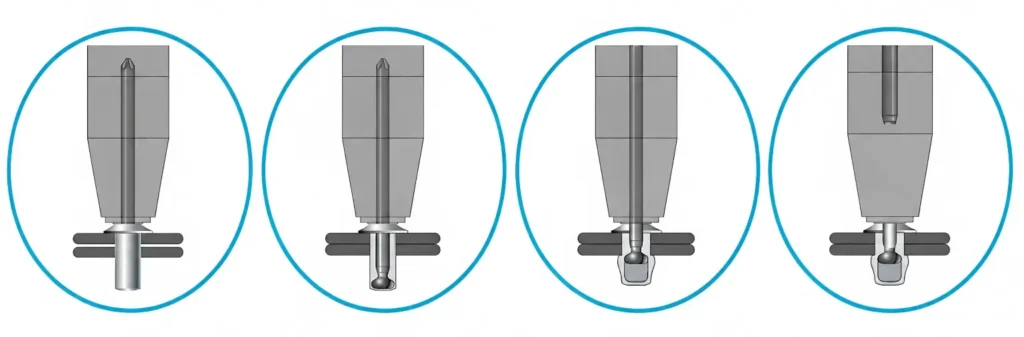
The entire process can be divided into the following four steps.
- Step 1. Align the sheets to be joined with the workpiece and machine the mounting holes
- Step 2. Insert the pop rivets into the holes in all connected materials, ensuring the rivet heads lie flush against the workpiece surface.
- Step 3. Insert the exposed mandrel into the matching nozzle of the pop rivet gun. Activate the tool; the internal jaws of the pop rivet gun will clamp the mandrel and pull it outward.
- Step 4. When the pulling force reaches the preset value, the mandrel breaks, completing the installation
What Are the Main Advantages of Pop Rivets?
1. Supports installation from a single side of the workpiece
When installing with bolts, you need to insert the bolt from one side of the workpiece and install the nut on the other side. If you use pop rivets, you only need to operate the pop rivet gun from the front of the workpiece, without having to access the back. In actual assembly, pop rivets fundamentally solve many connection issues where access to the back is impossible.
2. Fast Installation
Pop rivets are installed by snapping the mandrel with a rivet gun, making the overall process relatively simple. Compared to fastening methods that require placing nuts, tightening threads, and controlling torque, pop rivets involve fewer assembly steps. In mass production, you can also use automated riveting equipment to improve assembly efficiency.
3. Suitable for Thin Sheet Metal and Sheet Metal Joining
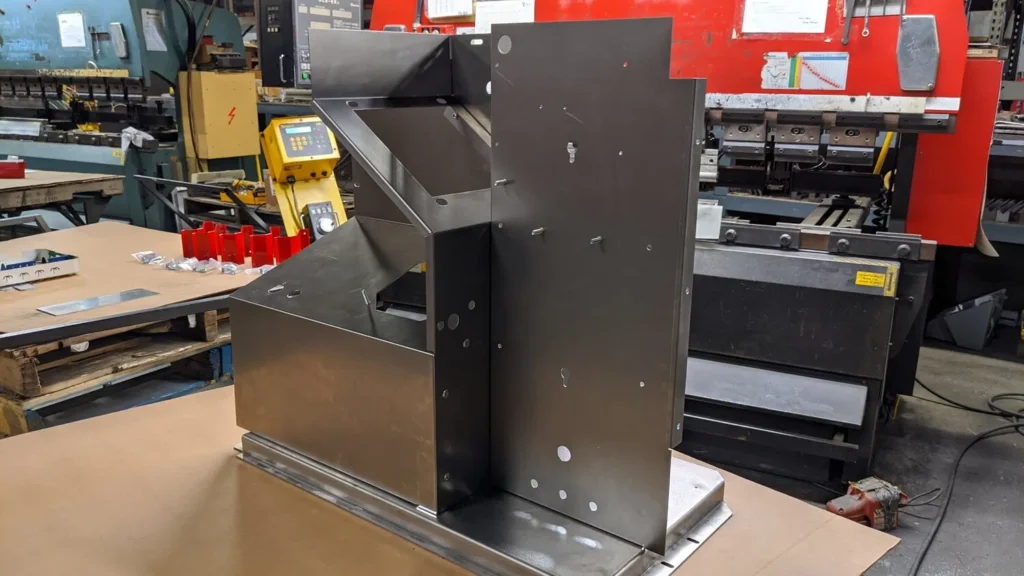
Pop rivets are widely used to join thin metal sheets. During installation, the tail of the rivet expands or flanges out on the back of the workpiece, working in conjunction with the rivet head on the front to clamp the sheet material.
It is important to note that pop rivets can easily cause deformation when riveting thinner or softer materials. Prioritize the use of large-flange rivets or peel-type rivets, as they increase the local bearing area and reduce the risk of tearing through thin sheets.
4. No Welding Required,No Significant Heat-Affected Zone
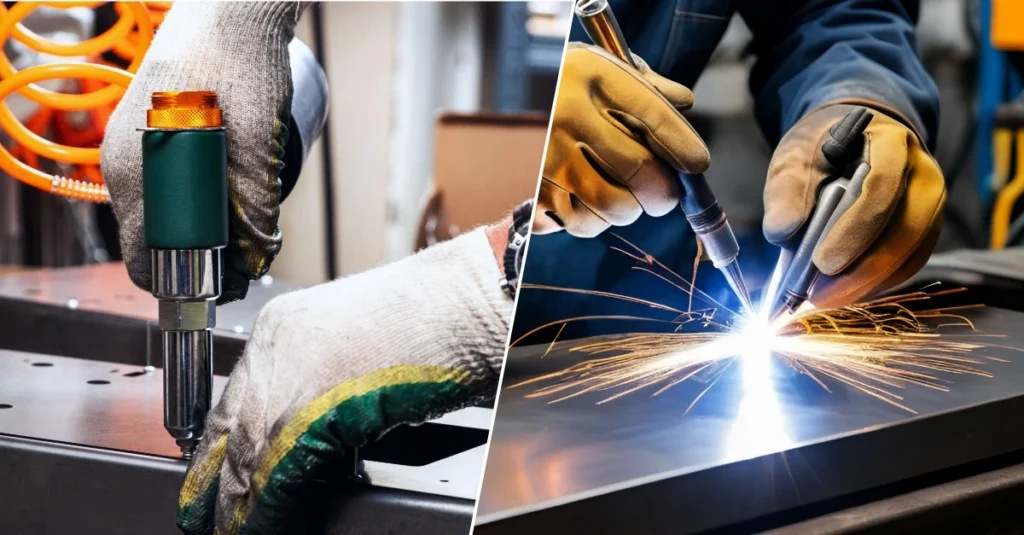
Pop rivets function as a mechanical fastening method. Unlike welding, they do not require high-temperature heating of the workpiece, allowing for better control over the workpiece’s surface finish.
Our technical team discovered through trial assembly that the riveting process may still scratch the hole edges or the surface around the rivet. Therefore, you must still control hole burrs, tool positioning, and the contact condition of the rivet head.
5. Minimal installation space required
Pop rivets do not require access to the back side for any operations, so they have minimal space requirements on the back side. The connection can be completed simply by positioning the rivet on the front side and operating the riveting gun.
6. Relatively Simple Installation Tools
When installing pop rivets, ensure that the gun nozzle, jaws, and tool pulling force match the rivet specifications. A variety of tools can be used for installation, including:
- Manual riveting guns
- Electric riveting guns
- Pneumatic riveting guns
- Hydropneumatic riveting equipment
- Automatic feeding and automatic riveting systems.
7. Easy to Standardize and Automate Assembly
The operating principle of pop rivets is well-suited for highly repetitive production processes. You can improve consistency in batch assembly by matching the correct rivet specifications with the appropriate tools. When used on automated production lines, pop rivets can be integrated with automatic feeders, robotic arms, and automated riveting equipment.
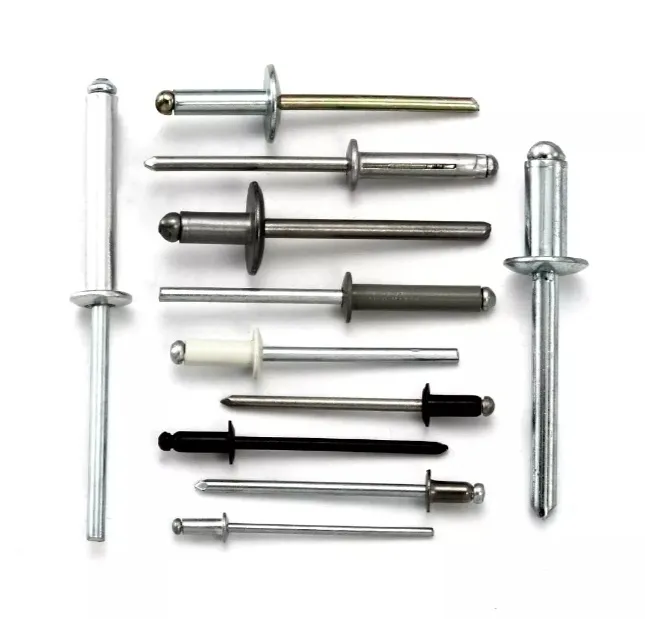
Pop rivets are not a one-size-fits-all product. You can select different materials, head types, and structures based on load-bearing capacity and the application environment.
9. No Risk of Thread Loosening
Unlike bolts or screws, pop rivets form a permanent connection through the permanent deformation of the rivet body. They do not rely on threaded fastening. Therefore, they will not loosen over time due to thread wear.
What Are the Main Disadvantages of Pop Rivets?
Disadvantage 1. Cannot be repeatedly installed and removed after installation
Pop rivets are a mechanical fastening method that relies on the permanent deformation of the rivet body. Once installed, they cannot be unscrewed like bolts. To remove pop rivets, the plastic deformation that has already occurred must be destroyed, making them non-reusable.
Disadvantage 2. Removal may damage the mounting holes and the workpiece surface
Removing pop rivets requires the use of a drill bit. During drilling, the original mounting hole may be enlarged, or the workpiece surface may even be scratched.
Disadvantage 3. Holes must be pre-drilled to match the rivets before installation
Unlike self-tapping screws, which can be screwed in directly, pop rivets require the correct holes to be pre-drilled in all workpieces to be joined.
Disadvantage 4. Sensitive to mounting hole diameter
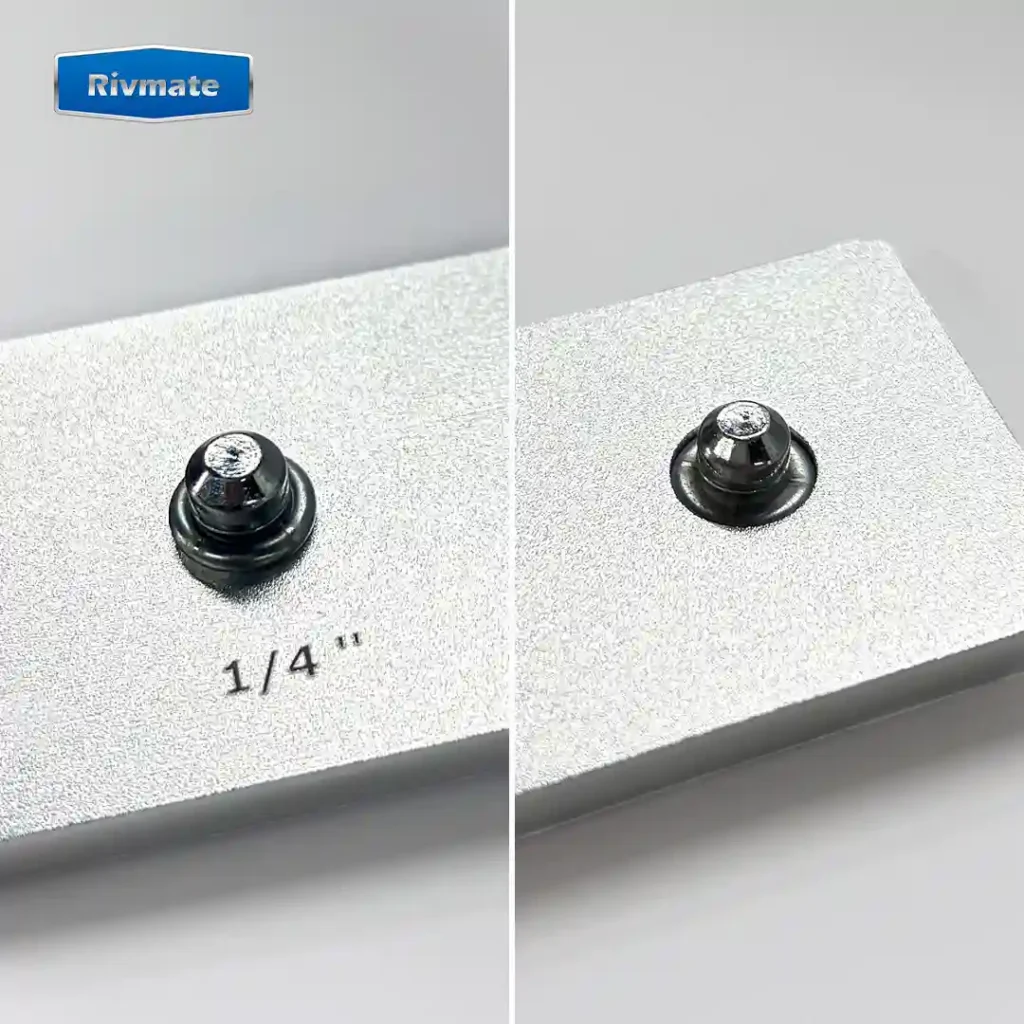
The diameter of the pop rivet must match the mounting hole; otherwise, it will lead to riveting failure.
Based on our more than 15 years of experience in the production and application of pop rivets, we have found that:
The diameter of the mounting holes drilled on the workpiece surface cannot be chosen arbitrarily. If the hole is too small, the rivet surface will be scratched and it will not insert smoothly; if the hole is too large, it may reduce positioning accuracy and connection stability.
Disadvantage 5. The Clamping Range Must Be Selected Correctly
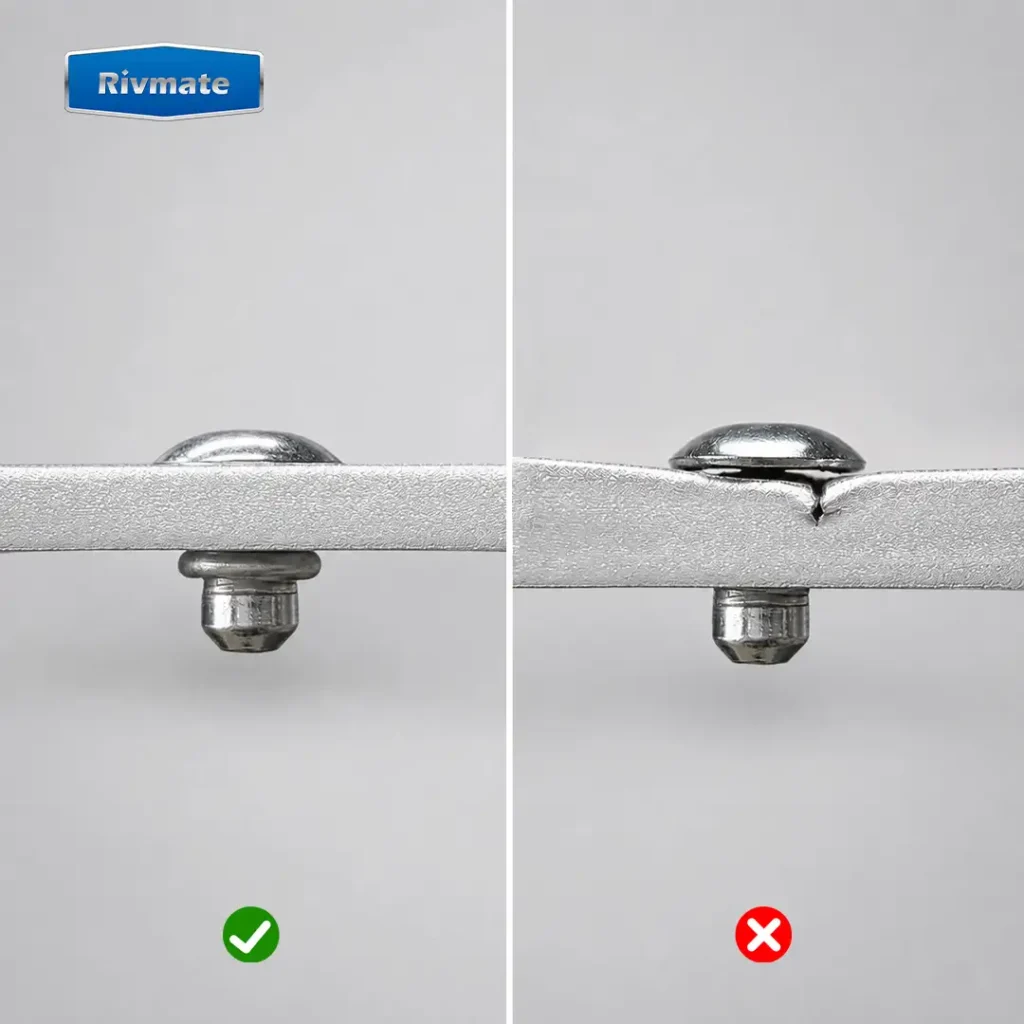
You need to calculate the total thickness of all workpieces and then select the grip range based on the product specification sheet. If the grip range of the pop rivet size does not match the total thickness of all the sheets being joined, the rivet will fail. The sheets will not be properly secured.
Tips: I would like to specifically remind you that when selecting pop rivet sizes, if the rivet is too short, the rivet body cannot deform sufficiently, and the mandrel will break prematurely. If the rivet is too long, the sheet metal will become loose after riveting and will not fit together properly.
For example, standard open-end pop rivets are primarily suitable for general thin-sheet assembly and cannot withstand high-load connections. When applying them, refer to the technical data provided by the manufacturer and verify performance based on the actual workpiece.
Disadvantage 7. High-vibration environments may require structural pop rivets
In high-vibration environments, standard pop rivet connections may exhibit issues such as noise, loosening, or displacement. For high-vibration projects, rigorous selection and testing are required. Consider using structural pop rivets.
Disadvantage 8. Connecting different metals may cause galvanic corrosion
If the rivet and the workpiece are made of different metals, and the connection is exposed to a humid or conductive environment for an extended period, galvanic corrosion may occur. If necessary, direct contact between different metals can be reduced through coatings, sealants, insulating washers, or other isolation measures.
Pop Rivet Disadvantages and How to Reduce Them
You can mitigate some of the drawbacks of pop rivets by selecting the correct type, specifying the proper hole diameter, and ensuring proper installation. For example, if standard pop rivets do not provide sufficient load-bearing capacity, you can opt for structural pop rivets.
However, not all of the drawbacks of pop rivets can be completely eliminated. For instance, once pop rivets are installed, they form a permanent connection and are difficult to remove. If your product will require frequent maintenance and disassembly later on, it may be more appropriate to consider bolts, screws, or rivet nuts.
- Select the Correct Rivet Type Based on the Product’s Actual Operating Conditions:
Different pop rivets address different issues. You should select the appropriate pop rivet type based on the workpiece material, sheet thickness, mounting hole diameter, load, vibration, and corrosion requirements. - Correctly Select the Matching Grip Range for Pop Rivets
Selecting the wrong grip range can easily lead to incomplete deformation of the rivet head or insufficient clamping force. You must match the grip range specified by the manufacturer. - Strictly Control the Installation Hole Diameter and Position
Pop rivets are quite sensitive to the dimensions of the installation holes. Even if a rivet can be inserted, it does not necessarily mean the hole diameter is correct. - Select the Appropriate Rivet Diameter and Design Based on Load Requirements
Standard pop rivets are generally suitable for general-purpose thin-sheet assemblies but may not be suitable for high-load connections. You should refer to the manufacturer’s data on shear, tensile, and grip range specifications and verify them through actual assembly testing. - Use special designs to minimize deformation of thin sheets and soft materials
Plastics, thin aluminum sheets, and thin-walled tubes have relatively low local load-bearing capacity. Mitigate this risk by increasing the load-bearing area or using shims. - For projects requiring sealing performance, use closed or sealed designs to improve water resistance
- For applications subject to prolonged high vibration, select a reliable mandrel locking mechanism
- Properly Match Rivets with Workpiece Materials
Electrochemical corrosion may occur when different metals come into direct contact in humid or saline environments. Appropriate surface treatments or other physical isolation methods should be used to reduce corrosion. - Use Compatible Riveting Tools and Perform Regular Maintenance
- Conduct Trial Assembly and Validation Before Full-Scale Production
- Reduce Batch Quality Risks Through Installation Inspections
- Consider Future Disassembly and Maintenance During the Design Phase
When Should You Use Pop Rivets?
Pop rivets are suitable for single-sided installations, quick assembly, and applications where frequent disassembly is not required after the connection is made. In addition, you need to assess the sheet metal thickness, workpiece material, load, vibration, and corrosion requirements to determine whether they are appropriate for the connection points in your product.

- When installation is possible only from one side of the workpiece
- The workpieces being joined are primarily thin plates or sheet metal parts
- To increase assembly speed
- The joint does not need to be frequently disassembled
- Precise mounting holes can be pre-machined
- The total thickness of the workpiece falls within the rivet’s grip range
- The load on the joint does not exceed the load-bearing capacity of the selected rivet
- Materials and surface treatments suitable for the environment can be selected
- When general vibration is present at the joint location
- You are able to use a compatible riveting tool
When Should You Avoid Pop Rivets?
- The connection requires frequent disassembly and maintenance
- The connection is a safety-critical load-bearing point
- The workpiece is subjected to intense impact loads over extended periods
- Precise and adjustable preload is required
- Strict sealing is required
- The material is extremely brittle or prone to delamination
- The dimensions and positioning of mounting holes cannot be consistently controlled
- Insufficient clearance between the hole positions and the edge of the sheet metal
- The assembly environment is subject to severe corrosion or extreme temperatures
- The riveting tool lacks sufficient operating space
- Workpiece thickness exceeds the rivet grip range
- The risk of mandrels or other components becoming loose is unacceptable
How to Choose the Right Pop Rivet for Your Application
In the projects we’ve worked on over the past decade or so, many riveting issues have not been caused by poor rivet quality, but rather by a mismatch between the rivets and the workpieces being joined or the installation conditions. You can follow the steps below to select the appropriate rivets.
- Step 1. Determine whether pop rivets are suitable for your joint—one that does not require repeated disassembly.
- Step 2. Identify the materials of the workpieces to be joined and consider the pressure they can withstand.
- Step 3. Measure the total thickness of all materials to be joined.
- Step 4. Select the grip range based on the total thickness.
- Step 5. Determine the loads the joint will be subjected to.
- Step 6. Select the appropriate pop rivet type and head configuration.
- Step 7. Select the appropriate rivet material.
- Step 8. Check for galvanic corrosion between the rivet and the workpiece material.
- Step 9. Determine the hole diameter for installation in the workpiece by referring to the manufacturer’s recommendations.
- Step 10. Select a riveting tool with the appropriate nozzle size, pulling force, and stroke.
- Step 11. Select a sample and perform a riveting test on an actual workpiece.
Common Pop Rivet Failures and How to Prevent Them
The installation quality of pop rivets depends not only on the quality of the rivets themselves but is also influenced by a variety of factors. These include rivet specifications, installation holes, workpiece thickness, and mismatched riveting tools.
Common failures of pop rivets during actual assembly include loosening, premature mandrel breakage, failure to break the mandrel, incomplete back-side forming, thin-sheet deformation, hole-edge wear, mandrel loss, leakage, and corrosion. Upon discovering these issues, you should first determine whether the problem lies with the rivet, the workpiece, the installation hole, the tool, or the joint design, and then take corresponding corrective measures.
| Common Failure | Common Cause | Main Prevention Method |
|---|---|---|
| Rivet Is Loose After Installation | Oversized hole or incorrect grip range | Control the hole diameter and select the correct grip range |
| Mandrel Breaks Too Early | Workpieces are not clamped, or the rivet or tool is unsuitable | Clamp the workpieces first and check the hole size, tool, and grip range |
| Mandrel Does Not Break | Insufficient tool pulling force or slipping jaws | Use a suitable tool and maintain the nosepiece and jaws |
| Abnormal Mandrel Break Position | The rivet has not been fully set | Complete the full riveting stroke and conduct a trial installation |
| Rivet Is Installed at an Angle | Misaligned holes or an incorrectly angled installation tool | Use a fixture for positioning and keep the tool correctly aligned |
| Incomplete Blind-Side Formation | Incorrect rivet length or incorrect grip range | Select the grip range according to the total workpiece thickness |
| Thin Sheet Dents or Material Cracks | Excessive setting load or insufficient bearing area | Use a large-flange rivet, a specialized rivet, or a washer |
| Rivet Head Pulls Through the Sheet | Soft material, oversized hole, or high peel load | Increase the bearing area and optimize the joint design |
| Hole Enlarges Under Vibration | Insufficient hole filling or inadequate clamping force | Use a structural blind rivet and optimize the hole size and rivet layout |
| Mandrel Becomes Loose or Falls Out | The mandrel is not securely locked | Select a rivet with a reliable mandrel-locking structure |
| Joint Leaks Water or Air | Open-end rivet or incomplete sealing | Use a sealed rivet and test the complete joint for leakage |
| Rivet or Workpiece Corrodes | Incompatible materials or a corrosive environment | Optimize the material combination, coating, and isolation measures |
| Joint Fractures | The load exceeds the capacity of the rivet or workpiece | Recalculate the joint and complete the required performance validation |
Conclusion: Are Pop Rivets the Right Choice for Your Project?
Are pop rivets suitable for your project? You must not only consider whether the joint will need to be disassembled and whether the workpiece can withstand the installation loads, but you must also evaluate whether pop rivets meet the requirements for strength, vibration resistance, sealing, and corrosion resistance.
For projects involving single-sided installation, rapid assembly, and permanent sheet metal joints, pop rivets are the optimal choice. Conversely, pop rivets are not suitable for projects requiring frequent disassembly, high load-bearing capacity, strict sealing, or adjustable preload. In such cases, you should evaluate other fastening methods or structural pop rivets.
If you are still unsure whether pop rivets are suitable for your project, please send us your specific project requirements or drawings. Our team of experts can evaluate your needs and assist with product selection.
Frequently Asked Questions About Pop Rivet Advantages and Disadvantages
Are Pop Rivets Waterproof?
Most pop rivets are not waterproof. Water can enter the interior of the pop rivet head, the mandrel, and the installation hole. Closed-end pop rivets offer some degree of water resistance.
Can Pop Rivets Loosen Under Vibration?
Yes. Under prolonged vibration, pop rivets can cause the rivet head to shift within the hole, wear on the edges of the hole in the sheet metal, a decrease in clamping force, or loosening of the mandrel.
Can Pop Rivets Be Reused?
Generally, this is not possible. Once installed, pop rivets cannot be reused. This is because, after riveting, the tail end of the rivet body undergoes plastic deformation, and the mandrel breaks at the fracture point. It is impossible to restore the rivet to its pre-installation structural state.
Do Pop Rivets Require Pre-Drilled Holes?
Yes. Before installation, drill through holes matching the size of the pop rivets in all parts to be joined.
Work with a IATF 16949 Certified Blind Rivet Manufacturer
Get High Quality Rivets Instead of Huck and Avdel Rivets

Rivmate Rivet
Rivmate is blind rivets manufacturers in china. The company is IATF 16949 certified and offers high-strength structural blind rivets that serve as alternatives to Huck and Avdel products.
Explore Rivmate Cases
Rivmate Rivet
Rivmate is blind rivets manufacturers in china. The company is IATF 16949 certified and offers high-strength structural blind rivets that serve as alternatives to Huck and Avdel products.

Hey There, I'm Allen!
I am the boss of Rivmate. For over two decades, we have specialized in the manufacture of blind rivets, providing our customers with reliable riveting solutions. Need riveting services? Feel free to contact us.