The choice between aluminum and steel rivet nuts depends on the actual mechanical load of the joint, the thickness of the base material, the operating environment, and the installation conditions. The differences between aluminum and steel rivet nuts lie in their strength, weight, corrosion resistance, and thread durability.
Next, based on material properties and practical applications, we will explain in detail the key differences between aluminum and steel rivet nuts to help you select the most suitable product for your project.
Table of Contents
Aluminum vs Steel Rivet Nuts: Key Differences at a Glance
The main difference between aluminum rivet nuts and steel rivet nuts lies in the strength and mechanical properties of the materials themselves. Aluminum rivet nuts offer the advantages of being lightweight and naturally corrosion-resistant. Steel rivet nuts, on the other hand, offer higher mechanical strength, hardness, and thread wear resistance. Therefore, these material differences affect the load-bearing capacity, service life, and overall integrity of the joint.
| Comparison | Aluminum Rivet Nuts | Steel Rivet Nuts |
|---|---|---|
| Density & Weight | Lower density and lighter weight, making them suitable for lightweight assemblies. | Higher density and generally heavier than aluminum rivet nuts of comparable size and design. |
| Mechanical Strength | Generally lower strength, suitable for applications with moderate load requirements. | Generally higher strength, making them suitable for applications with greater mechanical load requirements. |
| Material Hardness | Softer material, with threads more susceptible to damage from excessive tightening torque. | Generally harder, offering better resistance to thread wear. |
| Corrosion Resistance | Forms a natural oxide layer that provides a degree of corrosion protection. | Carbon steel is susceptible to rust and typically requires zinc plating or other protective coatings. |
| Thread Durability | More sensitive to repeated assembly, disassembly, and excessive tightening. | Generally offers better thread wear resistance for applications involving frequent fastening. |
| Installation Characteristics | Relatively soft material. Installation deformation depends on product design and setting parameters. | Higher material strength and hardness. Installation requirements depend on product design and tool settings. |
| Cost | Material and manufacturing costs vary depending on alloy, size, and production process. | Material and surface treatment costs vary depending on steel grade, size, and finishing process. |
| Typical Applications | Aluminum structures, transportation equipment, lightweight enclosures, and general outdoor equipment. | Automotive components, industrial machinery, equipment cabinets, and sheet metal assemblies with higher load requirements. |
Strength, Pull-Out, Spin-Out, and Shear Performance
When comparing aluminum rivet nuts and steel rivet nuts, you should not only consider mechanical strength but also pay attention to pull-out resistance, spin-out resistance, and shear resistance. These properties describe how rivet nuts perform under different load conditions.
| Performance | Aluminum Rivet Nuts | Steel Rivet Nuts |
|---|---|---|
| Mechanical Strength | Generally lower strength, suitable for applications with moderate load requirements. | Generally higher strength, making them more suitable for applications with greater load requirements. |
| Pull-Out Resistance | Generally lower thread load capacity. Thread pull-out should be carefully evaluated. | Generally offers higher thread load capacity, although the base material may still fail first. |
| Spin-Out Resistance | Depends on material strength, body design, and installation conditions. Material alone does not determine performance. | Generally offers higher material strength, but proper anti-rotation design and installation are still essential. |
| Shear Strength | Generally lower than comparable steel products. Base material and body deformation should be considered. | Generally offers higher material shear strength, although overall joint performance still depends on the base material. |
Weight and Its Impact on Assembly Design
The weight of aluminum rivet nuts and steel rivet nuts has a practical impact on overall product design. This is particularly true in the automotive, aerospace, transportation equipment, electronic device enclosures, and lightweight industrial product sectors. The cumulative weight difference warrants attention in assembly design.
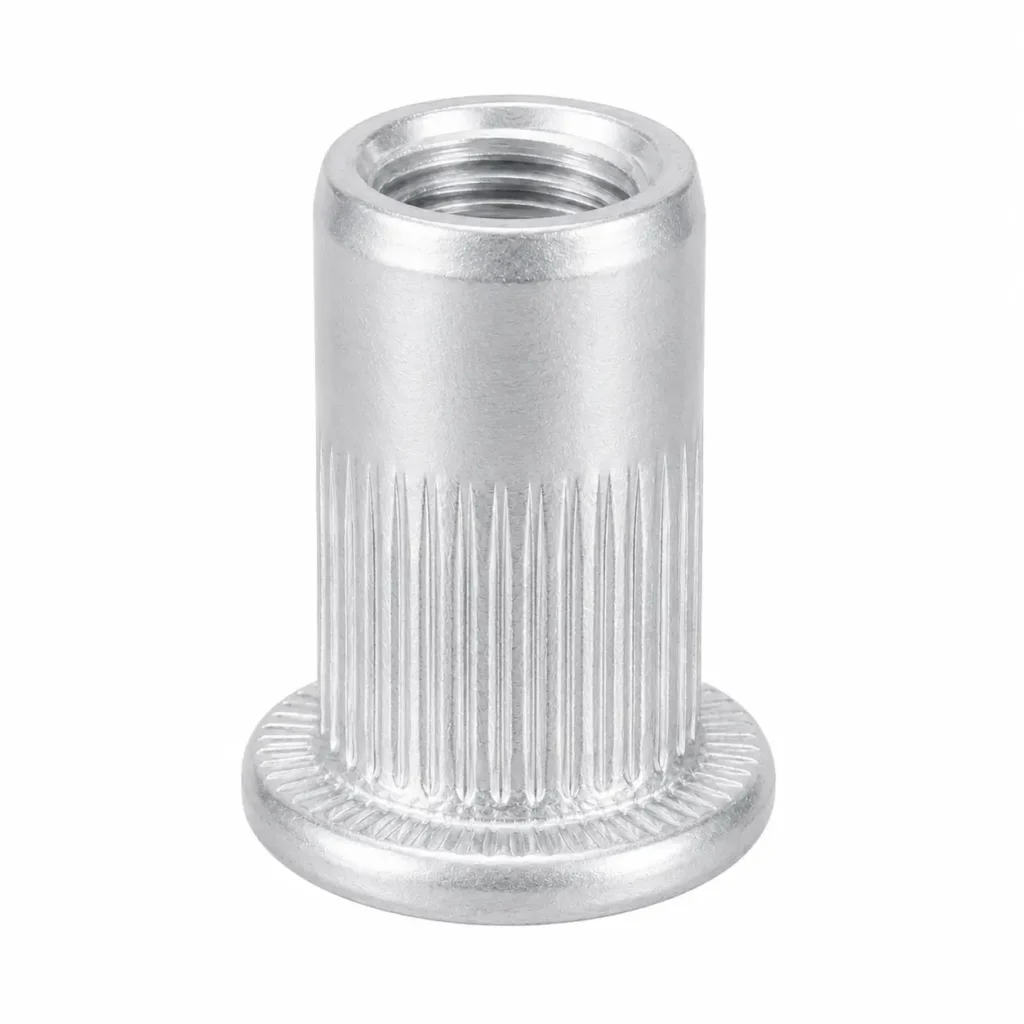
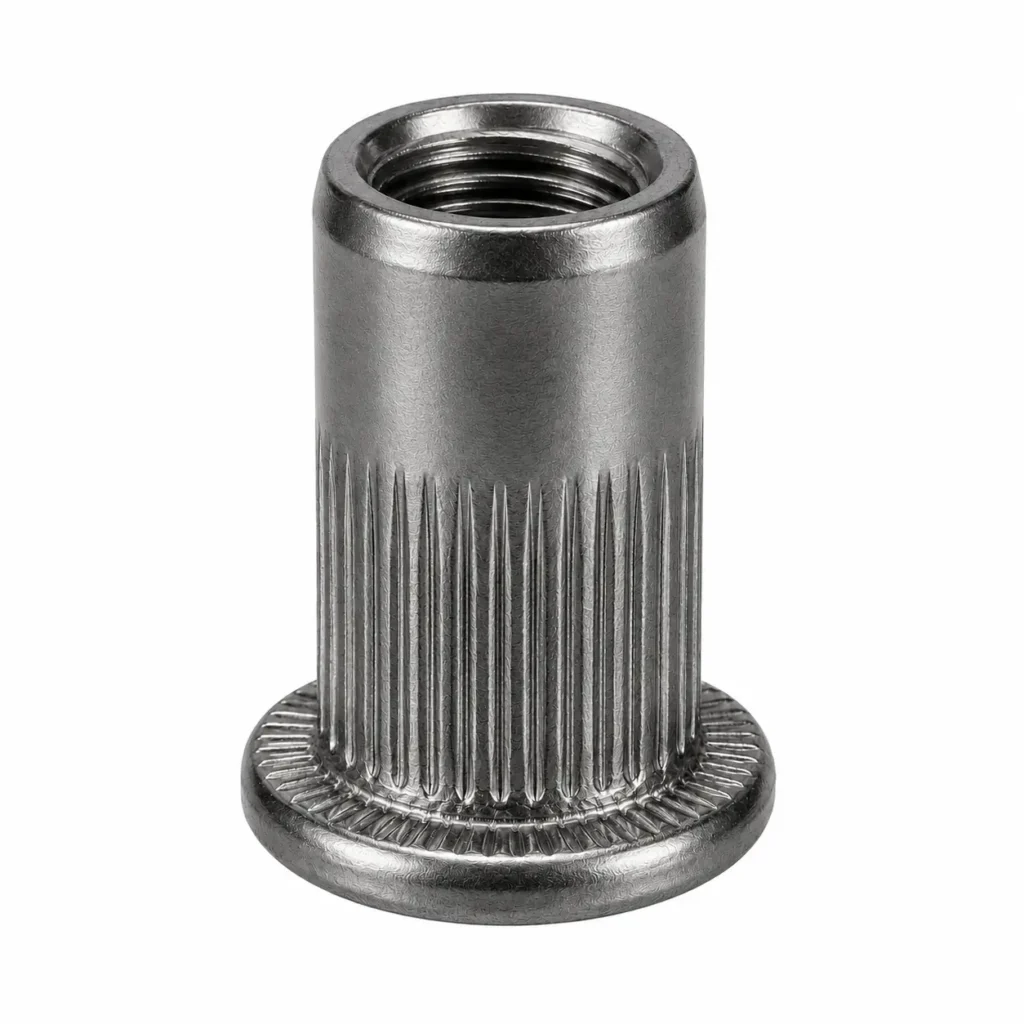
1. How significant is the weight difference between aluminum and steel rivet nuts?
One of the biggest differences between aluminum and steel is material density—the mass of a material per unit volume. The density of common aluminum alloys is significantly lower than that of ordinary carbon steel. Therefore, even when product volume and structure are similar, aluminum rivet nuts weigh approximately one-third as much as steel rivet nuts.
2. How does this weight difference affect the overall assembly design?
- Reducing the product’s overall weight and expanding the scope for lightweight design
When rivet nuts are used in automotive components, aerospace equipment, transportation equipment, or portable industrial equipment, the product’s weight can directly impact payload capacity, energy consumption, transportation efficiency, or ease of operation. Only when a large number of parts are used do the differences in individual parts accumulate to affect the overall assembly weight. - Impact on Product Center of Gravity and Weight Distribution
In most mobile devices, vehicles, and certain mechanical structures with moving parts, it is necessary to consider both the total product weight and its weight distribution. This is because the weight of components and their mounting locations can affect the overall center of gravity and dynamic characteristics. - Impact on the Dimension and Weight Design of Connection Structures
Aluminum rivet nuts are lighter, but the mechanical strength and thread load-bearing capacity of aluminum alloys are generally lower than those of steel products with similar structures. If your connection needs to withstand higher loads, you must reassess the thread specifications, rivet nut structure, number of rivet nuts installed, and base material thickness.
Corrosion Resistance and Galvanic Compatibility
Corrosion resistance not only determines the service life of the rivet nut itself but also affects the long-term reliability of the connection between the rivet nut and the base material. This is particularly important in applications such as automotive, solar equipment, outdoor enclosures, marine vessels, coastal facilities, and humid industrial environments. You must not only consider whether the rivet nut will rust but also whether the material will cause galvanic corrosion when it comes into contact with the metal being joined.
Good corrosion resistance does not mean compatibility with all metals. For example, consider an aluminum rivet nut installed on a stainless steel plate. If the connection is exposed to rainwater, saltwater, or other conductive liquids over an extended period, there is a high probability of galvanic corrosion.
Corrosion Resistance of Aluminum and Steel Rivet Nuts
- Aluminum rivet nuts have a natural oxide film and offer only basic corrosion protection.
The greatest advantage of aluminum rivet nuts is their ability to naturally form a dense layer of aluminum oxide in the air. This oxide film provides some protection in the atmosphere, slowing the rate at which oxygen and moisture continue to corrode the underlying metal. The drawback is that they are not suitable for all corrosive environments, such as coastal areas or environments where they come into contact with saltwater. They are more suitable for general indoor equipment, aluminum alloy enclosures, or standard outdoor structures. - Standard Steel Rivet Nuts: Surface Treatment Is Required to Enhance Corrosion Resistance
The advantage of standard carbon steel is its good mechanical strength. The drawback is that it is prone to oxidation and rusting under the combined effects of moisture and oxygen. If your steel rivet nuts lack surface protection, prolonged exposure to a humid environment may cause red rust to form, which will gradually affect the product’s appearance and performance. You need to apply zinc plating, other metal coatings, or protective coatings to reduce the risk of corrosion.
Why is material compatibility an important consideration for aluminum and steel rivet nuts?
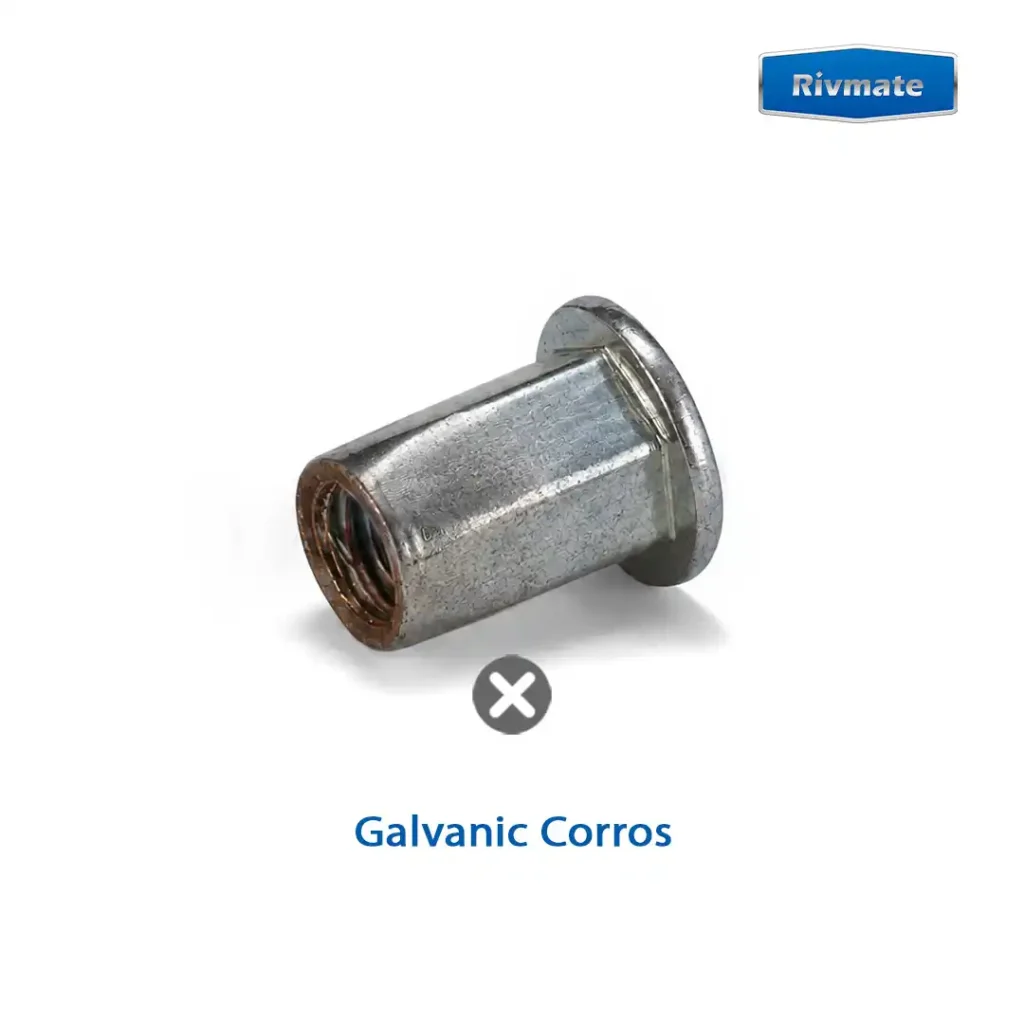
Galvanic corrosion refers to a phenomenon in which two metals with different electrochemical properties come into electrical contact and are simultaneously exposed to a conductive liquid, causing one of the metals to corrode more rapidly.
Galvanic corrosion typically requires the simultaneous presence of three conditions:
- Two metals with different electrochemical properties
- Electrical contact between the metals
- The presence of an electrolyte
If one of these conditions can be effectively eliminated, galvanic corrosion can be reduced or prevented.
Temperature, Fatigue, and Vibration Performance
Temperature Adaptability
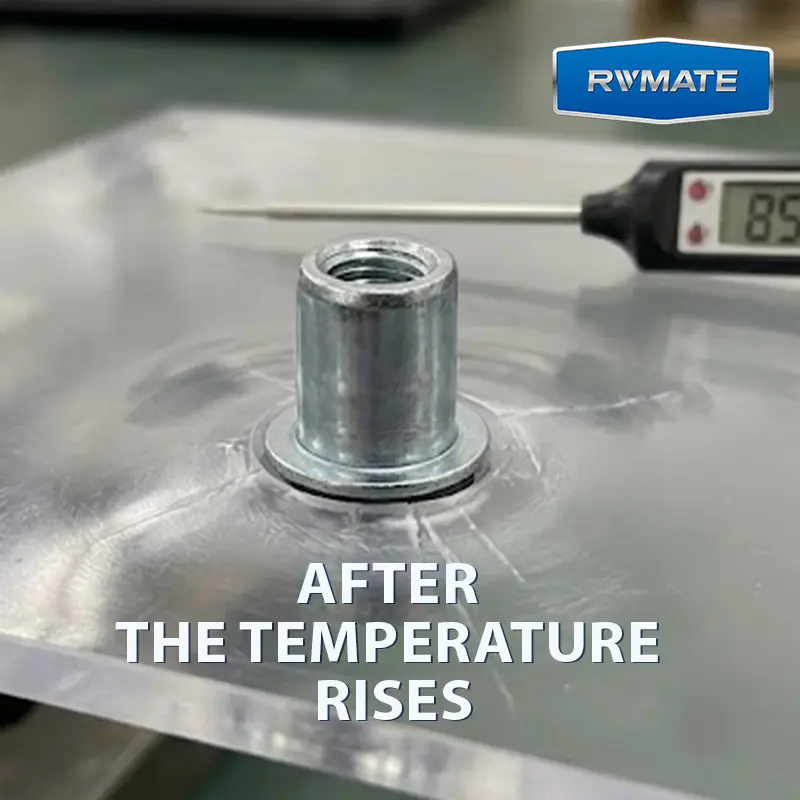
Temperature affects the strength, hardness, dimensions, and stability of metal materials in joint structures. When your product is exposed to high temperatures for extended periods or must undergo repeated cycles of heating and cooling, you cannot select rivet nuts based solely on their mechanical properties at room temperature.
- Steel rivet nuts are generally the preferred choice in high-temperature environments
Aluminum alloys offer better thermal conductivity and weight advantages compared to steel. However, their mechanical properties are susceptible to both high and low temperatures. Prolonged exposure to high temperatures may alter the original strengthened state of aluminum, reducing its load-bearing capacity. In contrast, steel maintains its strength better at high temperatures and is more commonly used in many high-temperature industrial applications. Evaluation and testing are required before assembly.
If your connection will be exposed to high temperatures over an extended period, it is recommended to prioritize steel rivet nuts or stainless steel rivet nuts suitable for that temperature range. More importantly, confirm the specific material, surface treatment, and continuous operating temperature of the product with the supplier. Do not simply apply the standard temperature ranges of ordinary aluminum alloys or steel as the allowable operating temperature for rivet nuts.
- Temperature Cycling: Repeated thermal expansion and contraction may affect connection stability
Temperature cycling refers to the repeated heating and cooling that a product undergoes during use. For example, solar equipment installed outdoors is exposed to sunlight during the day, causing temperatures to rise, and cools down at night. When temperatures rise, aluminum plates expand more than steel rivet nuts. When temperatures drop, aluminum plates may also contract more significantly. The dimensional changes caused by expansion and contraction can alter the contact between the rivet nut and the mounting hole, as well as the preload of the bolted joint.
Fatigue Performance
Fatigue refers to the ability of a rivet nut to withstand a certain amount of tensile or shear force during normal operation. However, when subjected to repeated, fluctuating loads over an extended period, fatigue damage may occur in the material and the joint structure as a result of cumulative stress.
Under identical specifications and similar structural conditions, steel rivet nuts possess higher mechanical strength than aluminum rivet nuts. Therefore, when subjected to repeated mechanical loads, steel rivet nuts offer greater design flexibility in terms of material strength. Aluminum rivet nuts have lower strength. If the joint is subjected to significant alternating loads over an extended period, the fatigue risk of the base material must be given even greater consideration.
Vibration Performance
Rivet nuts used in vibrating environments can present two distinct issues. The first is loosening of the mating bolt, and the second is rotation of the rivet nut itself within the mounting hole.
If the rivet nut itself rotates, this can be addressed through an anti-rotation design in the body. Common anti-rotation designs include the Knurled Round Body, Half Hex Body, and Hex Body. If the mating bolt loosens, you need to increase the preload and implement locking measures.
Installation Force and Risk of Panel Damage
What effects can excessive or insufficient setting force have on the base material?
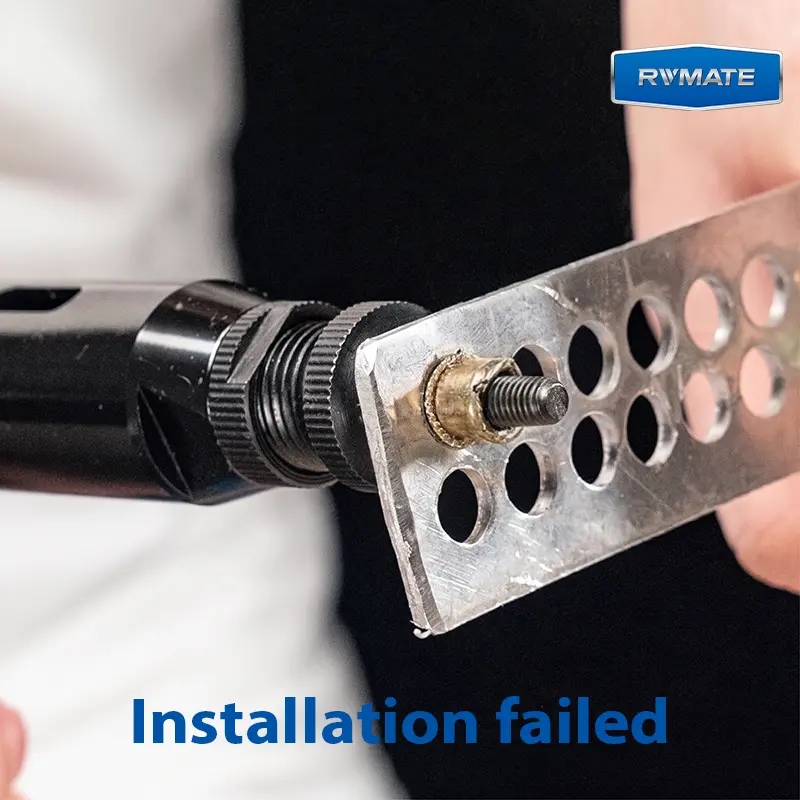
The quality of a rivet nut installation is closely related to the applied setting force, the setting stroke, and the final deformation state of the sleeve. You need to avoid two opposing issues: under-setting and over-setting.
- Insufficient installation force: The rivet nut cannot be securely fastened
If the installation force is insufficient, the body of the rivet nut may not expand fully, preventing the formation of a complete closed head on the back of the sheet metal.
Common issues include the rivet nut flange not fitting snugly against the sheet metal surface, an incomplete deformation area on the back, and a tendency for rotation or axial movement after installation. - Excessive installation force or stroke: Damage to the base material and the rivet nut itself
If the installation tool applies excessive force, the rivet nut may not be able to withstand it. This can result in excessive clamping or deformation.
Problems that may arise include panel indentations, panel deformation, damage to the hole opening, indentations that affect appearance, and thread damage.
Panel Damage Risk
When choosing between aluminum rivet nuts and steel rivet nuts, improper installation parameters or product design during the installation process can cause damage to the base material. Common types of base material damage include:
- Denting of the panel
- Enlargement or deformation of the installation hole
- Cracking or tearing of the panel
- Surface indentations and coating damage
Aluminum vs. Steel Rivet Nuts: Panel Damage Risk Comparison
| Comparison | Aluminum Rivet Nuts | Steel Rivet Nuts |
|---|---|---|
| Typical Setting Force | Generally lower under comparable product designs and installation conditions. | Generally higher under comparable product designs and installation conditions. |
| Thin Panel Installation | Lower setting force may be beneficial, but deformation must still be properly controlled. | Setting force requires careful control to avoid excessive loading on the base material. |
| Panel Dishing Risk | Depends on installation parameters, flange size, and base material strength. | Also depends on installation parameters, flange size, and base material strength. |
| Hole Deformation Risk | May occur if the hole size is incorrect or the rivet nut is over-set. | May also occur if the hole size is incorrect or the rivet nut is over-set. |
| Surface Damage Risk | Depends on flange contact surfaces and proper installation tool alignment. | Depends on flange contact surfaces and proper installation tool alignment. |
| Selection Considerations | Verify load capacity and control the setting stroke to prevent excessive deformation. | Verify base material strength and match the setting force and installation tool to the application. |
Thread Durability, Reuse, and Service Life
Thread Durability: Aluminum vs. Steel Rivet Nuts
Thread durability refers to the ability of the internal threads of a rivet nut to resist wear, deformation, and damage during long-term use, while continuing to maintain the normal function of the bolted connection.
- Aluminum Rivet Nuts: Lightweight, but threads are more prone to damage
The internal threads of aluminum alloy rivet nuts are relatively soft. When subjected to high tightening torques or repeated assembly and disassembly, thread wear and damage are more likely to occur. - Steel Rivet Nuts: Greater thread strength and wear resistance
Steel rivet nuts have higher material strength and hardness. Therefore, with the same thread specifications, similar structures, and effective thread engagement length, they can withstand higher thread loads than aluminum rivet nuts.
Repeated Assembly and Disassembly: Aluminum vs. Steel Rivet Nuts
When all other conditions are similar except for material, steel rivet nuts are more suitable for connections requiring frequent bolt disassembly and reassembly. The primary reason is that their internal threads possess greater resistance to deformation. Conversely, aluminum rivet nuts are better suited for lightweight applications, particularly those with moderate mechanical loads and low disassembly and reassembly frequencies.
It is important to note that the number of times a rivet nut can be repeatedly disassembled and reassembled is determined not only by the material of the rivet nut itself but also by factors such as the bolt material and hardness, thread surface treatment, fit accuracy, and lubrication method.
Repeated Assembly and Disassembly: Aluminum vs. Steel Rivet Nuts
| Comparison | Aluminum Rivet Nuts | Steel Rivet Nuts |
|---|---|---|
| Thread Strength | Generally lower for standard products. | Generally higher under comparable product conditions. |
| Thread Hardness | Typically softer and more sensitive to thread damage. | Typically harder and more resistant to deformation. |
| Thread Wear | Requires more attention under repeated assembly and disassembly. | Generally offers better resistance to repeated thread contact. |
| Repeated Assembly | Suitable for limited maintenance cycles when loads and torque are properly controlled. | Generally more suitable for frequent maintenance and repeated fastening. |
| Thread Stripping Risk | Requires careful control of tightening torque. | Generally lower under comparable conditions, but over-tightening can still cause damage. |
| Service Life | Depends on thread strength, installation quality, load, and environment. | Often offers a longer thread service life in demanding applications, subject to proper selection and maintenance. |
| Main Selection Priority | Weight reduction and moderate thread load requirements. | Higher thread strength and repeated service requirements. |
Cost, Coatings, and Supply Considerations
When selecting aluminum rivet nuts and steel rivet nuts, you should not only consider mechanical properties, corrosion resistance, and service life, but also pay attention to procurement costs, surface treatments, and supply stability. These factors all directly impact the final purchase price, production lead time, and long-term operating costs of the product.
| Comparison | Aluminum Rivet Nuts | Steel Rivet Nuts |
|---|---|---|
| Material Cost | Varies by aluminum alloy grade, raw material prices, and order volume. | Carbon steel is often a cost-effective choice for standard industrial applications. |
| Manufacturing Cost | Depends on alloy properties, forming processes, product design, and production volume. | Standard designs benefit from established manufacturing processes and efficient batch production. |
| Surface Treatment Options | Natural oxide finish or optional anodizing, depending on corrosion protection and appearance requirements. | Common options include zinc plating, zinc-nickel plating, and other protective coatings. |
| Corrosion Protection | Natural oxide provides basic protection, but additional treatment may be needed in aggressive environments. | Carbon steel generally requires suitable protective coatings to resist rust in corrosive environments. |
| Custom Finishes | Custom finishes depend on alloy compatibility and available processes, including anodizing and color options. | Custom finishes may include specified zinc coatings, zinc-nickel plating, and other protective treatments. |
| Standard Availability | Common sizes are available, but stock levels and alloy options vary by supplier. | Standard sizes, materials, and common surface finishes are widely used in industrial supply chains. |
| Custom Order Lead Time | Depends on alloy availability, product specifications, finishing requirements, and production scheduling. | Depends on material availability, coating requirements, order quantity, and production scheduling. |
| Minimum Order Quantity (MOQ) | Depends on standard stock availability, customization requirements, and production batch size. | Depends on standard stock availability, coating specifications, and production batch size. |
| Quality Documentation | Material certificates, dimensional inspection reports, and applicable surface treatment records. | Material certificates, thread inspection reports, coating specifications, and applicable corrosion test reports. |
| Total Cost of Ownership | Consider purchase price, weight reduction, mechanical requirements, corrosion protection, and maintenance costs. | Consider purchase price, coating costs, mechanical performance, corrosion protection, and long-term maintenance. |
| Main Purchasing Priority | Lightweight design, material compatibility, and application-specific performance. | Cost efficiency, mechanical strength, and established supply availability. |
Best Applications for Aluminum Rivet Nuts
Compared to steel rivet nuts, the main advantages of aluminum rivet nuts are their light weight and good natural corrosion resistance. Their disadvantages are that their mechanical strength and thread load-bearing capacity are lower than those of steel products with similar designs. They are not suitable for all types of light-duty equipment. Therefore, you must determine the tensile load, tightening torque, or long-term dynamic load at the connection point.
| Application | Typical Components | Why Choose Aluminum Rivet Nuts? | Key Selection Considerations |
|---|---|---|---|
| Lightweight Structures | Equipment panels, lightweight brackets, non-structural frames | Reduces fastener weight and supports lightweight assembly design | Verify thread strength and joint load requirements |
| Aluminum Sheet Assemblies | Aluminum panels, enclosures, sheet metal housings | Provides threaded fastening points with compatible base material | Check grip range, hole size, and galvanic compatibility |
| Aluminum Extrusions | Aluminum profile frames, modular equipment structures | Enables threaded connections in hollow or enclosed profiles | Select suitable body shape and anti-rotation design |
| Automotive Components | Interior panels, trim components, lightweight brackets | Helps reduce assembly weight | Confirm load capacity and automotive application requirements |
| Electronics and Electrical Equipment | Control cabinets, electronic enclosures, communication housings | Lightweight and non-magnetic material properties | Check thread durability, installation space, and magnetic requirements |
| E-Mobility Equipment | Auxiliary housings, lightweight mounting panels, accessory brackets | Supports lightweight equipment design | Verify vibration resistance and mechanical loads |
| Lightweight Machinery | Machine covers, equipment housings, access panels | Provides reusable threaded connections with reduced fastener weight | Check installation parameters and maintenance frequency |
Best Applications for Steel Rivet Nuts
Compared to aluminum rivet nuts, steel rivet nuts offer superior material strength, hardness, and thread load-bearing capacity. Under identical or similar product structures and dimensions, steel rivet nuts are better suited for withstanding heavier loads.
| Application | Typical Components | Why Choose Steel Rivet Nuts? | Key Selection Considerations |
|---|---|---|---|
| Heavy-Duty Industrial Equipment | Machine housings, mounting brackets, protective panels | Offers higher thread strength and good mechanical performance for demanding assemblies | Verify pull-out strength, torque-out resistance, and base material thickness |
| Sheet Metal Fabrication | Steel cabinets, electrical enclosures, metal panels | Provides internal threads in thin sheets without backside access | Check grip range, hole size, and body style |
| Automotive Components | Metal brackets, body panels, auxiliary mounting structures | Supports reliable threaded fastening in applications requiring mechanical strength | Confirm automotive requirements, corrosion protection, and load capacity |
| Trailers and Transportation Equipment | Equipment brackets, auxiliary housings, metal panels | Suitable for many mechanical fastening applications exposed to vibration | Evaluate vibration resistance, coating, and installation torque |
| Machinery Maintenance | Removable covers, access panels, protective guards | Offers good thread wear resistance for repeated assembly and disassembly | Check thread durability, bolt compatibility, and tightening torque |
| HVAC and Ventilation Equipment | Duct accessories, fan brackets, equipment housings | Provides practical threaded fastening for sheet metal assemblies | Consider condensation, corrosion protection, and panel thickness |
| Industrial Equipment Cabinets | Control cabinets, electrical boxes, equipment doors | Supports convenient installation and maintenance of threaded components | Confirm thread size, grip range, and surface finish |
How to Choose the Right Material for Your Joint
Whether you choose aluminum rivet nuts or steel rivet nuts, you should not base your decision solely on unit price or strength alone. The correct approach to selection is to consider your base material type, connection load, application environment, installation conditions, and long-term maintenance to determine which material is best suited for your connection structure.
- Step 1: Determine whether the materials to be joined are aluminum, carbon steel, stainless steel, or a combination of materials.
- Step 2: Evaluate the mechanical loads required for the joint.
- Step 3: Consider the environmental conditions of the application. Determine whether there is exposure to moisture, salt fog, chemical agents, or temperature fluctuations.
- Step 4: Balance material compatibility, mechanical properties, and weight requirements. Initially consider selecting aluminum or steel products.
- Step 5: Determine the thread specifications, clamping range, mounting hole diameter, body shape, and head configuration.
- Step 6: Review the installation conditions and select the appropriate installation tools and parameters.
- Step 7: Conduct sample testing to verify resistance to pull-out and rotation, as well as any other required performance characteristics.
FAQs
Are aluminum rivet nuts strong enough for automotive use?
Aluminum rivet nuts are commonly used in the automotive industry. For example, they are essential for connecting components such as certain automotive interior panels, trim pieces, lightweight mounting brackets, equipment housings, and auxiliary accessories. This is because the loads borne by these connections are relatively low, and they are classified as non-critical structural connections.
Do steel rivet nuts rust outdoors?
Steel rivet nuts rust when used outdoors. This is because ordinary steel rivet nuts have not undergone surface treatment and therefore have low corrosion resistance. When used outdoors, they are constantly exposed to rain and humid air. The steel reacts with moisture and oxygen, gradually forming rust.
Can aluminum rivet nuts be installed in steel panels?
Aluminum rivet nuts can be installed on steel plates, but they may not always be the best choice. It is essential to first assess whether they can provide a reliable connection. It is best to verify the suitability of aluminum rivet nuts through installation tests on actual steel plates and by evaluating their connection performance.
Which material is easier to install by hand?
Aluminum rivet nuts are easier to install with hand tools than steel rivet nuts. This is because aluminum alloys have lower hardness and lower resistance to deformation than steel rivet nuts. Therefore, less installation force is required to deform the body of an aluminum rivet nut.
Which rivet nut material handles repeated bolt removal better?
Steel rivet nuts are generally more suitable than aluminum rivet nuts for connections that require repeated removal and reinstallation of bolts.
Are zinc-plated steel rivet nuts corrosion resistant?
Galvanized steel rivet nuts undergo surface treatment to provide a certain degree of corrosion resistance; they are more resistant to corrosion than ordinary carbon steel rivet nuts that have not undergone surface treatment.
Should rivet nut material match the parent material?
It is best to use the same material for the rivet nut as for the base material. This is because using the same material reduces the risk of galvanic corrosion. However, there is no strict requirement to do so.
When is stainless steel better than aluminum or steel?
If your connection requires high corrosion resistance as well as high mechanical strength and stability, you should prioritize stainless steel rivet nuts.
Work with a IATF 16949 Certified Blind Rivet Manufacturer
Get High Quality Rivets Instead of Huck and Avdel Rivets
Rivmate Rivet
Rivmate is blind rivets manufacturers in china. The company is IATF 16949 certified and offers high-strength structural blind rivets that serve as alternatives to Huck and Avdel products.
Explore Rivmate Cases
Rivmate Rivet
Rivmate is blind rivets manufacturers in china. The company is IATF 16949 certified and offers high-strength structural blind rivets that serve as alternatives to Huck and Avdel products.

Hey There, I'm Allen!
I am the boss of Rivmate. For over two decades, we have specialized in the manufacture of blind rivets, providing our customers with reliable riveting solutions. Need riveting services? Feel free to contact us.