For most metal roofing panel overlaps, flashing panels, edge panels, ridge caps, and lightweight roofing accessories, prioritize the use of gaskets, Bulb Tite Blind Rivets, Multi-Grip Blind Rivets, and Closed-End Blind Rivets. You should also select specific specifications based on the roofing panel material, total thickness, corrosive environment, and loads.
| Your Roofing Application | Blind Rivet to Consider First |
|---|---|
| Metal Roofing Sheet Side Laps | Bulb-Tite Blind Rivet with Sealing Washer |
| Flashing, Trim, and Ridge Caps | Large Flange Folding Blind Rivet or Multi-Grip Blind Rivet |
| Higher Waterproofing Requirements | Closed-End Blind Rivet + Sealing Washer |
| Very Thin Roofing Sheets | Large Flange Blind Rivet with a Larger Blind-Side Bearing Area |
| Large Variations in Joint Thickness | Multi-Grip Blind Rivet |
| Coastal or High-Humidity Environments | Aluminum or Stainless Steel Rivet Compatible with the Roofing Material and Suitable for the Required Corrosion Resistance |
| Heavy Accessories or High Wind-Load Connections | Engineered Fastener with Clearly Defined Joint Performance Data |
Table of Contents
Why Are Blind Rivets Used for Roofing?
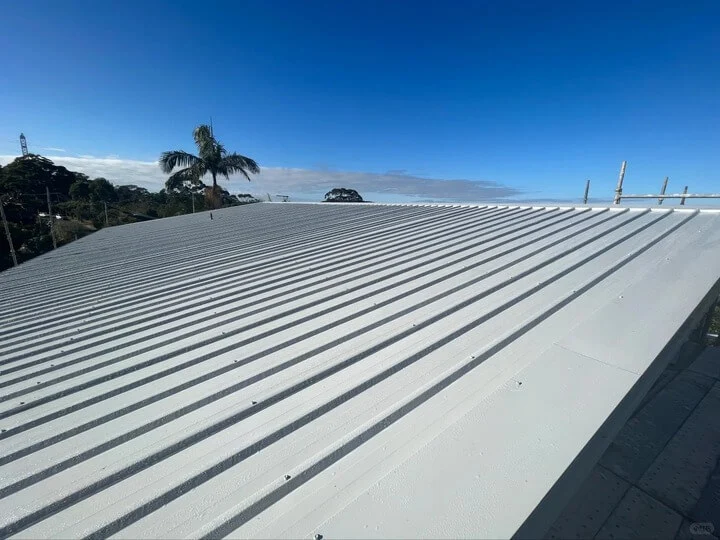
Blind rivets are widely used in roofing projects, primarily for joining metal roofing panels, flashing, edge trim, profiled panels, and roofing accessories. This blind rivet installation method is particularly practical for roof overlaps, enclosed profiles, and areas where the backside is inaccessible.
Tips: Please note that “roofing projects” primarily refer to metal roofs. Blind rivets are not typically used to directly fasten asphalt shingles, clay tiles, or concrete tiles.
Main reasons for using blind rivets in roofing projects:
- Installation can be completed from just one side of the roof panel
- Quickly connects relatively thin metal sheets
- Fast installation, suitable for high-volume connections
- Blind rivets form a permanent connection that is unlikely to loosen on its own
- Improves waterproofing around installation holes when used with sealing gaskets or sealing structures
- Does not generate high temperatures that could damage the roof panel or its surface coating
Can blind rivets be used in all locations on a roof?
Blind rivets cannot be used in all locations on a roof. For example, blind rivets cannot be used for primary fastenings between roof panels and purlins, the main structure, or the load-bearing substrate. Other structural fasteners must be evaluated based on wind suction, panel span, substrate thickness, and roof system certification.
Blind rivets are suitable for use in metal roofing systems for:
- Lateral overlaps of roof panels
- Flashing panels
- Edge panels
- Ridge caps
- Metal accessories
- Vent and duct flashings
- Light-gauge metal profiles
What Makes a Blind Rivet Suitable for Roofing?
Blind rivets used in roofing projects must not only secure the sheet metal but also meet other requirements. For example, they must seal the installation holes and withstand long-term exposure to wind, rain, corrosion, and temperature fluctuations while maintaining a stable connection.
| Inspection Item | Basic Requirements for Roofing Applications |
|---|---|
| Sealing Performance | A weather-resistant sealing washer is fitted under the rivet head. |
| Rivet Body Design | Consider a closed-end design when higher waterproofing performance is required. |
| Thin-Sheet Load Distribution | Use a large flange or a larger blind-side bearing area. |
| Grip Range | The grip range covers the total thickness of all joined materials. |
| Material Compatibility | The rivet is compatible with the roofing sheet material and its protective coating. |
| Corrosion Resistance | The rivet is suitable for local humidity, salt exposure, and pollution conditions. |
| Installation Hole Size | The pre-drilled hole diameter meets the product specifications. |
| Installation Tool | The tool, nosepiece, and pulling force match the rivet specification. |
| Load Capacity | The rivet meets the actual tensile, shear, and wind-load requirements. |
| Technical Data | Clear application scope, specifications, and performance data are available. |
Best Types of Blind Rivets for Roofing
When it comes to roofing projects, it is not possible to use a single type of blind rivet for all connection points. You need to select the appropriate type of blind rivet based on the sheet thickness, waterproofing requirements, connection load, and roofing material. Below, I will introduce the five most commonly used types of blind rivets for roofing and explain their respective performance characteristics and recommended applications.
1. Bulb Tite Blind Rivets
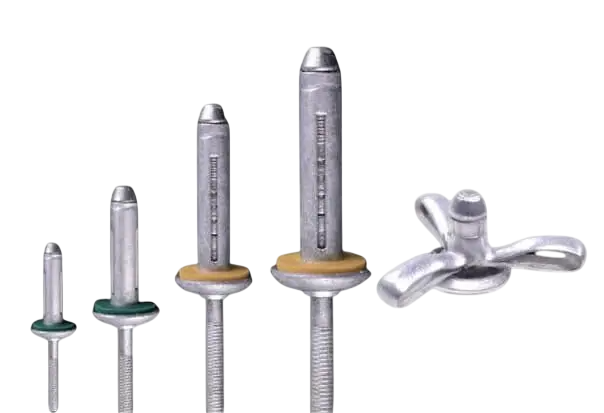
After installation, the deformed tail of the Bulb Tite Rivet expands to form multiple large support areas. This helps distribute the clamping force over a larger area, preventing sheet metal deformation or tearing.
Bulb Tite Rivets are suitable for the following applications:
- Lateral overlaps in metal roofing panels
- Connections between flashing and edge panels
- Installation of sandwich panel accessories
- Connections between metal profiles and profiled sheets
- Installation of pipe flashing and vent accessories
- Connections of thin sheets with low back-side load-bearing capacity
2. Closed-End Blind Rivets

The tail end of a Closed-End Blind Rivet is sealed. After installation, the rivet mandrel breaks off and remains inside the rivet body, leaving no through-hole. Compared to open-end blind rivets, this reduces the risk of liquids and dust entering the joint through the interior of the rivet body.
Applications suitable for Closed-End Blind Rivets:
- Areas prone to water accumulation;
- Areas where moisture ingress must be restricted;
- Roof vents or equipment fittings;
- Enclosed enclosures or equipment housings on roofs;
- Connections with specific requirements for retaining the mandrel.
In actual projects, many customers overlook the fact that Closed-End Blind Rivets provide waterproofing only at the closed tail end—not throughout the entire installation area. Rainwater can still enter through the gap between the rivet head and the roof panel. For roof connections with high waterproofing requirements, you must add sealing rings, ensure the hole diameter is correct, and follow proper installation procedures.
3. Multi-Grip Blind Rivets

Multi-Grip Blind Rivets can accommodate a relatively wide range of material thicknesses. During riveting, the rivet body expands radially, allowing it to compensate for certain hole diameter tolerances and concentricity deviations. This reduces the number of rivet length specifications you need to purchase.
Multi-Grip Blind Rivets are suitable for the following applications:
- Situations where the total thickness varies across different roof locations
- Connections between flashing panels and multi-layer panels
- Situations where on-site dimensional control is challenging
- Installation holes with dimensional deviations within a reasonable range
- Situations where you wish to reduce the number of rivet length specifications.
You must pay close attention to the total thickness of all materials being joined. If the size you select exceeds the specified clamping range, issues such as insufficient clamping, abnormal forming, or incorrect mandrel breakage locations may occur during actual assembly.
4. Blind Rivets with Large Flanges
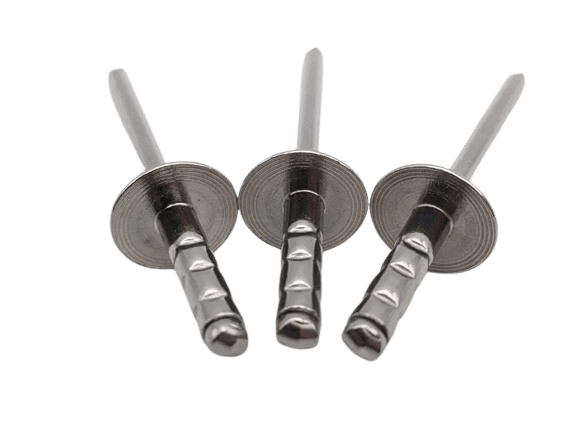
A large flange refers not to the rivet body structure, but to the shape of the rivet head. Closed-end, multi-clamping-range, or standard blind rivets may all be configured with large flanges. The large-flange design increases the bearing area between the rivet head and the roofing panel, reducing localized stress on the front surface of thin panels.
Applications Suitable for Large-Flange Blind Rivets:
- Thinner metal roofing panels
- Panels with limited load-bearing capacity around the hole edges
- Larger installation holes
- Flashing panels and edge trim panels
- Locations where the rivet head is prone to being pulled through
5. High-Load or Engineering-Verified Structural Blind Rivets
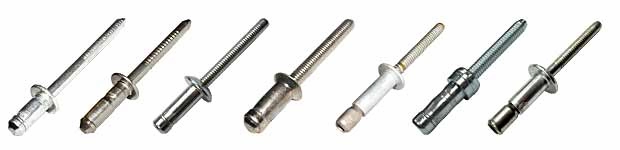
Structural rivets are high-strength, vibration-resistant permanent fasteners. After riveting, the rivet mandrel fractures and mechanically locks within the rivet head, thereby enhancing its shear strength and tensile strength. They are suitable for securing primary roof structures.
Suitable applications for structural blind rivets:
- Heavier roofing accessories
- Metal brackets
- Equipment bases
- Certain solar mounting accessories
- Connections in areas with high wind loads
Comparison of Blind Rivet Types for Roofing
| Blind Rivet Types | Main Features | Best Roofing Applications | Main Advantages | Main Limitations |
|---|---|---|---|---|
| Bulb-Tite Rivets | Form several large blind-side bearing areas after installation. | Metal roofing sheet overlaps, flashing, edge trim, and roofing accessories. | Large bearing area for thin sheets, stable connection, and compatibility with sealing washers. | Usually more expensive than standard open-end rivets and may require suitable tools and nosepieces. |
| Closed-End Sealed Blind Rivets | The closed tail of the rivet body restricts liquid or water vapor from passing through the rivet body. | Roofing accessories, equipment housings, and sealed joints with higher waterproofing requirements. | Better internal sealing performance than standard open-end blind rivets. | The joint between the rivet head and roofing sheet still requires proper sealing. |
| Multi-Grip Blind Rivets | One rivet size can cover a relatively wide range of material thicknesses. | Roofing sheet overlaps and flashing where the total material thickness varies between positions. | Reduces the number of rivet lengths required and simplifies on-site inventory management. | Multi-grip rivets do not necessarily have a closed-end or waterproof structure. |
| Large-Flange Blind Rivets | Feature a rivet head with a larger diameter. | Thin sheets, soft sheets, and applications with limited hole-edge bearing capacity. | Increase the front-side bearing area and reduce the risk of the rivet head pulling through the sheet. | Improve front-side load distribution only and do not automatically improve blind-side support or internal sealing. |
| Standard Open-End Blind Rivets | Simple construction and relatively low cost. | Non-exposed areas, low-waterproofing applications, or joints with independent sealing measures. | Easy to install, available in many sizes, and relatively inexpensive to purchase. | The rivet body is open, so standard models should not normally be treated as waterproof fasteners. |
| High-Load or Engineered Blind Rivets | Provide higher tensile or shear strength, or have been tested for specific joint conditions. | Heavy roofing accessories, high-wind-load applications, or engineered connection points. | Higher load capacity and the availability of clear, application- specific joint performance data. | May not be suitable for very thin sheets and do not necessarily provide waterproofing performance. |
Best Blind Rivets for Different Roofing Materials
Aluminum Alloy Roofing Panels
There is a risk of tear-through, indentation, or deformation around the holes when connecting aluminum panels. Give priority to aluminum Bulb Tite Rivets, which provide a large expanded area on the back side after riveting. Ensure they are equipped with gaskets suitable for long-term outdoor use.
Galvanized Steel and Color-Coated Steel Roofing
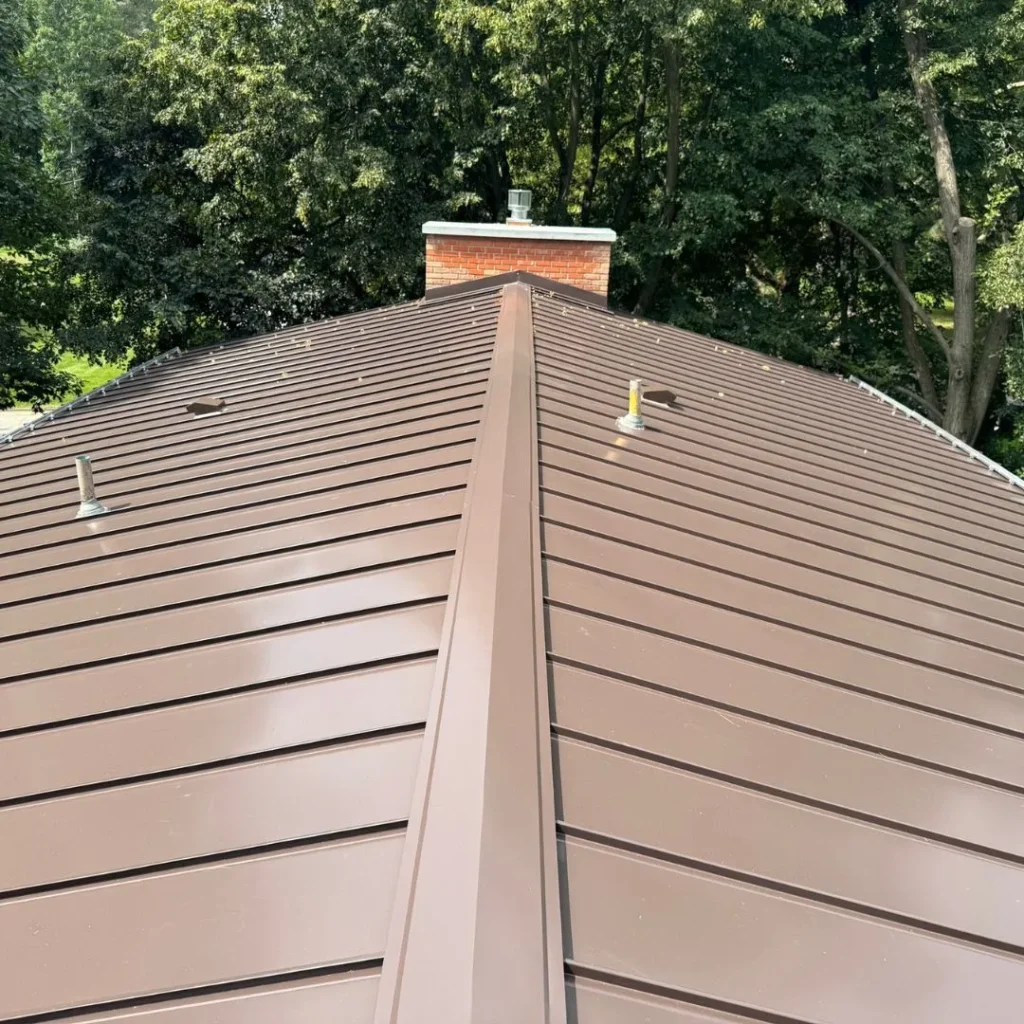
Steel sheets selected for their galvanized or color-coated finishes have high hardness. When selecting blind rivets, consider their inherent strength and ensure they do not compromise the corrosion protection. We recommend using Bulb Tite Rivets or Multi Grip Blind Rivets.
Stainless Steel Roofing Panels
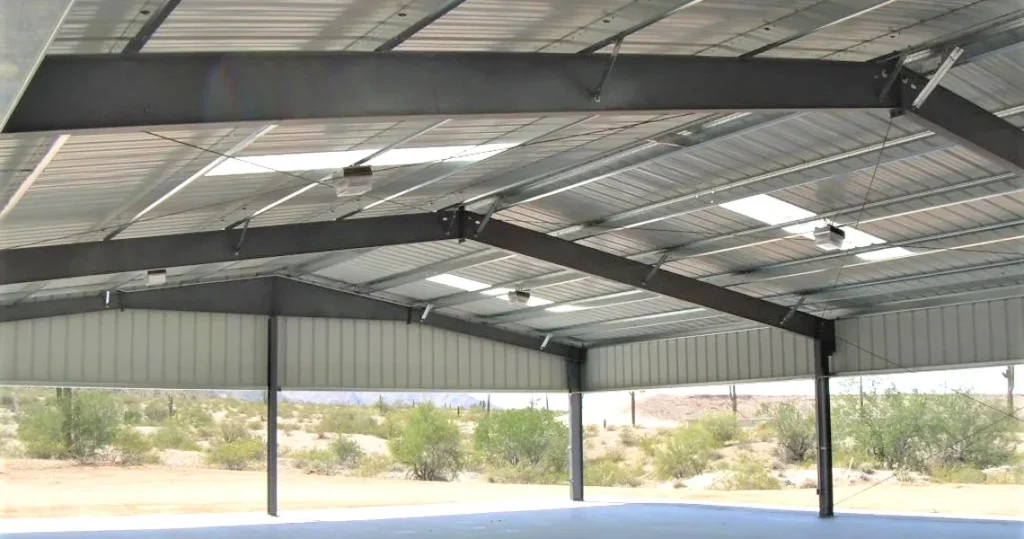
Stainless steel offers high strength and excellent corrosion resistance. We recommend selecting stainless steel blind rivets suitable for the specific corrosive environment.
If waterproofing is required at the roof connection points, consider the following options:
- Stainless steel closed-end blind rivets;
- Stainless steel multi-grip blind rivets equipped with sealing rings;
- Stainless steel structural rivets
Titanium-Zinc or Zinc Roofing Sheets
For titanium-zinc and zinc roofing, material compatibility is critical. You must use blind rivet materials and specifications explicitly approved by the zinc roofing system supplier.
Plastic Sheets and Fiber-Cement Sheets
These materials have lower compressive strength and hole-edge load-bearing capacity than steel sheets and are relatively brittle. The localized pressure created by installing standard blind rivets may cause the hole edges to crack, delaminate, or break. Bulb Tite Rivets, which provide a larger load-bearing area on the back side, are more suitable.
During actual installation, you must avoid the following situations:
- Excessively large rivet diameter
- Excessive riveting force
- Installation holes that are too small
- The rivet head pressing directly against protrusions or uneven areas on the panel;
- Using standard blind rivets without a large bearing surface
Sandwich Roof Panels
Sandwich roof panels generally consist of a thin metal face sheet and an intermediate core material. Consider using Bulb Tite Rivets or Multi Grip Blind Rivets.
The following two scenarios require distinct selection criteria:
- Connecting the thin metal facings, lap joints, or flashing components of sandwich panels: *Roof-specific blind rivets may be considered
- Securing sandwich panels to purlins or the main structure: Structural screws or other primary fasteners specified by the roofing system must be used.
Best Blind Rivets for Common Roofing Applications
| Quick Selection Table for Common Roofing Applications | ||
|---|---|---|
| Roofing Application | Recommended Blind Rivet | Main Selection Reason |
| Metal Roofing Sheet Side Lap | Bulb-Tite rivets with sealing washers or multi-grip blind rivets | Suitable for thin sheets and provides a larger blind-side bearing area |
| Flashing and Edge Trim | Large-flange Bulb-Tite rivets or multi-grip blind rivets | Increases the bearing area and accommodates variations in material thickness |
| Roof Ridge Caps | Bulb-Tite rivets with weather-resistant sealing washers | Combines thin-sheet support, vibration resistance, and hole sealing |
| Roof Vents and Pipe Flashings | Closed-end blind rivets with head sealing washers or sealed Bulb-Tite rivets | Restricts water from entering through the rivet body and installation hole |
| Sandwich Panel Overlaps | Multi-grip blind rivets or Bulb-Tite rivets | Accommodates thickness variations and reduces the risk of thin facing sheets pulling through |
| Thin Sheets and Soft Materials | Large-flange blind rivets with a large blind-side formed area | Distributes the clamping force across both the front and blind sides |
| Roofing Repair Holes | A matching new blind rivet selected after inspecting the hole diameter | Prevents looseness or water leakage caused by an enlarged installation hole |
| Heavy Accessories or High-Wind-Load Areas | Engineered fasteners with clearly documented joint test data | Requires verification of tensile, shear, and sheet pull-through performance |
How to Select Blind Rivets for Different Roofing Environments?
Different connection points on a roof present different challenges. For example, roof panel overlaps require greater attention to the load-bearing capacity of thin panels and waterproofing, while flashing panels focus more on sealing and appearance. Additionally, when connecting accessories, wind loads and panel puncture must be considered.
Therefore, you need to examine the connection points, panel thickness, waterproofing requirements, material compatibility, and actual loads in order to select the appropriate blind rivets for your roof.
| Roofing Environment | Recommended Blind Rivet | Key Selection Considerations |
|---|---|---|
| Standard Inland Environment | Aluminum folding blind rivets with sealing washers or suitable multi-grip blind rivets | Basic weather sealing, material compatibility, and correct grip range |
| Humid and Rainy Environment | Folding blind rivets with weather-resistant sealing washers or closed-end blind rivets | Prevent water from entering around the rivet head and through the rivet body |
| Coastal and High-Salt Environment | Aluminum or stainless steel blind rivets verified for coastal environments | Salt corrosion resistance and compatibility between dissimilar metals |
| Industrial Pollution Environment | Rivet materials and surface treatments with clearly documented corrosion-resistance data | Chemical pollution, acidic or alkaline deposits, and long-term corrosion |
| High-Temperature and High-UV Environment | Roofing blind rivets with high-temperature and UV-resistant sealing washers | Seal aging, coating weather resistance, and thermal expansion and contraction |
| Cold, Snow, and Ice Environment | Folding or multi-grip blind rivets with stable sealing and reliable clamping performance | Freeze-thaw cycles, standing water freezing, and temperature changes |
| High-Wind or Storm Environment | Engineered roofing fasteners with clearly documented joint test data | Tensile strength, shear strength, sheet pull-through resistance, and fastener spacing |
How to Make Blind Riveted Roofing Joints Watertight?
If you want to achieve a reliable, watertight roof connection using blind rivets, you cannot rely solely on the “waterproof blind rivets” themselves. This is because the waterproofing performance of a roof depends on the entire connection joint, not on the waterproofing characteristics of the rivets alone. The waterproofing of the connection is affected by other factors, including panel joints, hole size, clamping range, and installation quality.

Step 1. Select the correct blind rivets
We recommend using blind rivets equipped with sealing rings and a sealing structure, which provide a certain level of water resistance to reduce water ingress.
Step 2. Install a suitable sealing ring under the rivet head

When the rivet is compressed during the riveting process, the sealing ring is appropriately compressed, filling the tiny gaps between the rivet head and the roof panel. This effectively reduces the risk of rainwater entering around the installation hole.
Based on our more than 15 years of manufacturing experience, we have concluded that:
Waterproofing performance does not improve simply by compressing the sealing ring flatter. If the clamping force is insufficient, the sealing ring cannot fully adhere to the panel surface, leaving gaps. If it is over-compressed, the sealing ring may be damaged, and the rivet head may fail to maintain its correct position.
Step 3. Ensure that the installation holes in the roof are not too large
The overall waterproofing performance of the roof is also closely related to the size of the installation holes. If you drill a hole that is too large, the following issues may occur:
- The rivet becomes misaligned within the hole
- The rivet body deforms and fails to fully fill the hole
- The sealing ring cannot cover the hole or provide a stable seal
- The hole expands further due to long-term vibration
- Water enters through the edges of the hole
Therefore, the correct approach is to drill holes within the diameter range specified by the rivet manufacturer.
Step 4. After drilling, you must remove burrs and metal debris from around the hole
Burrs around the hole prevent the sealing ring from lying flat against the roof panel surface, creating tiny gaps. This leads to water leakage and corrosion around the joint.
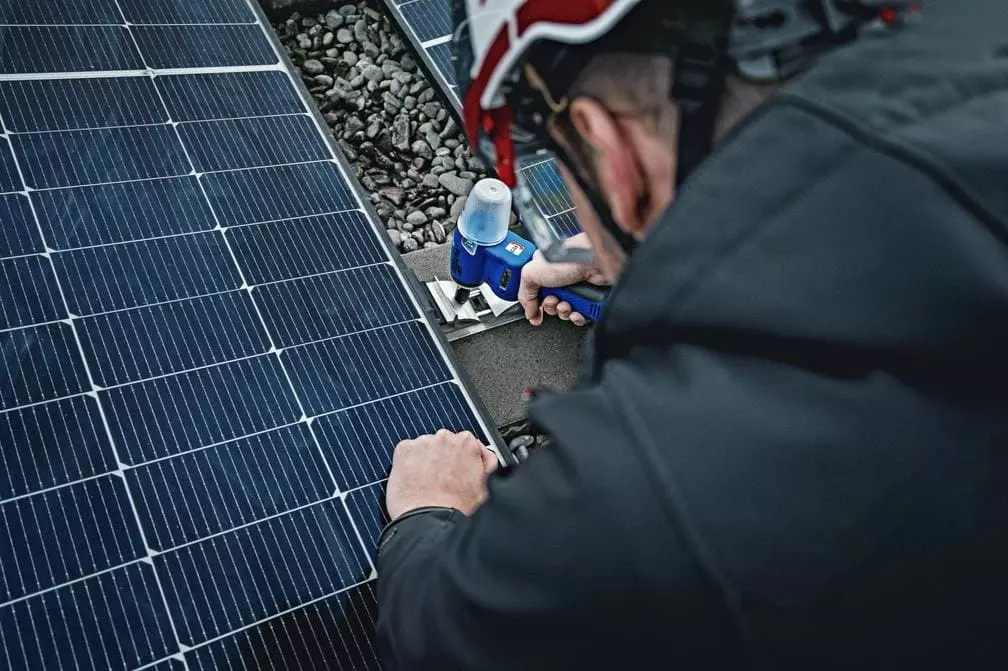
The axis of the rivet must remain perpendicular to the installation surface. If the tool is tilted during the riveting process, the following issues may occur:
- Excessive compression of the seal ring on one side
- Insufficient contact of the seal ring on the other side
- A skewed rivet head
- Asymmetrical forming on the back side
- Unstable sealing at the hole location
Step 6. Ensure the clamping range is correct
You must verify that the total thickness of all clamped materials falls within the specified range for the rivet size.
Based on our factory inspection experience, if the rivet is too short, sufficient deformation cannot be achieved on the back side. If the rivet is too long, the sheet metal cannot be clamped effectively.
Step 7. Consider the sealing structure for sheet metal lap joints
You need to select an appropriate sealing design based on the lap joint between the two roof panels to prevent rainwater from entering through the gaps between the panels.
What should you check after installing a waterproof joint to ensure it is watertight?
| Inspection Item | Normal Condition |
|---|---|
| Rivet Head | Sits flat against the roofing sheet with no obvious tilting. |
| Sealing Washer | Evenly compressed with no extrusion, cracking, or missing sections. |
| Rivet | No looseness or rotation. |
| Mandrel | Breaks and is retained correctly according to the product design. |
| Installation Hole | No obvious enlargement, tearing, or deformation. |
| Roofing Sheet | No obvious denting or pull-through. |
| Joint | Sealed according to the roofing system requirements. |
| Drilling Debris | Completely removed. |
| Surface | The corrosion-protective coating has no serious damage. |
Common Problems With Blind Rivets in Roofing
The installation of blind rivets on roofs is relatively simple, but the quality of the installation is affected by many factors. These include the types of rivet, grip range, hole diameter, material, and installation method.
The most common issues encountered during actual roof assembly can be categorized into four types: sealing issues, installation issues, load-bearing issues, and corrosion issues. Many of these problems arise from long-term exposure to rainwater and wind-induced vibrations.
The most effective way to minimize failures of roof blind rivets is to properly control the following factors prior to installation: rivet type, clamping range, installation hole diameter, material compatibility, load-bearing area of thin sheets, sealing design, and installation quality.
| Quick Troubleshooting Table for Common Roofing Blind Rivet Problems | ||
|---|---|---|
| Common Problem | Common Causes | What to Check |
| Water Leaking Around the Rivet | Missing sealing washer, oversized installation hole, or tilted installation | Sealing washer, hole diameter, and roofing joint |
| Loose or Rotating Rivet | Incorrect grip range or oversized installation hole | Grip range and installation hole |
| Rivet Head Pulling Through the Sheet | Rivet flange is too small or the thin sheet has insufficient bearing capacity | Flange size and blind-side bearing area |
| Incomplete Rivet Body Formation | Rivet is too short or the installation tool is unsuitable | Grip range, installation tool, and nosepiece |
| Abnormal Mandrel Break | Incorrect rivet specification or installation tool | Rivet specification and installation equipment |
| Enlarged Installation Hole | Long-term joint movement or incorrect initial hole diameter | Hole diameter, clamping condition, and wind load |
| Sheet Denting | Excessive localized pressure | Rivet design and installation force |
| Cracking Around the Hole | Sheet is too thin or edge distance is insufficient | Sheet thickness, edge distance, and applied load |
| Rivet Corrosion | Incorrect material selection or insufficient corrosion resistance for the environment | Rivet body, mandrel material, and service environment |
| Sealing Washer Aging | UV exposure, high or low temperatures, or incompatible sealing material | Sealing material and service environment |
Blind Rivets vs Other Roofing Fasteners
| Fastener | Best For | One-Side Installation | Waterproofing | Removable | Key Advantages & Limitations |
|---|---|---|---|---|---|
| Blind Rivets BEST FOR THIN-SHEET JOINTS | Metal sheet overlaps, flashing, edge trims, ridge caps and light roofing accessories. | Yes | Weather-resistant sealing washers and suitable sealed rivet designs can improve watertightness around the hole. | No |
Excellent when the backside of the roofing sheet cannot be accessed.
Well suited to permanent thin-sheet-to-thin-sheet connections.
Folding or Bulb-Tite designs can provide a large blind-side bearing area.
Limitation:
Rivets normally need to be drilled out for removal and cannot be reused.
Standard open-end rivets are not automatically watertight. |
| Self-Drilling Roofing Screws | Fixing metal roofing sheets directly to steel purlins, frames or other metal substrates. | Yes | Usually combined with an EPDM or similar sealing washer to seal the roof penetration. | Yes |
Excellent for direct sheet-to-structure fastening.
Drilling and fastening can often be completed in one operation.
Easy to remove and replace during maintenance.
Limitation:
Incorrect installation torque can under-compress or over-compress
the sealing washer. Performance also depends on sufficient
thread engagement in the substrate. |
| Stitch / Lap Screws | Side laps between thin metal roofing sheets, flashing and other sheet-to-sheet joints. | Yes | Often used with sealing washers or additional lap-sealing measures. | Yes |
Simple and fast installation for thin-sheet overlaps.
Easier to remove than a blind rivet.
Useful when future disassembly may be required.
Limitation:
Thread holding capacity is limited in very thin sheet.
Incorrect installation or damaged holes may result in loosening. |
| Bolts & Nuts | Heavy brackets, equipment bases, thicker sections and higher-load roofing accessories. | Usually No | Separate sealing washers, gaskets or other sealing systems are normally required. | Yes |
High clamping and load-carrying capability.
Suitable for thicker structural components.
Can be removed and reassembled for maintenance.
Limitation:
Usually requires access to both sides of the joint and more
installation space, making it less practical for inaccessible
thin-sheet roofing joints. |
| Standing Seam Clips | Main panel attachment in standing seam metal roofing systems. | System Dependent | The primary fasteners are normally concealed beneath the roofing panels and do not directly penetrate the exposed drainage surface. | System Dependent |
Minimizes exposed fastener penetrations.
Can accommodate designed thermal movement of long roof panels.
Provides a clean finished roof appearance.
Limitation:
Only suitable for compatible standing seam systems and does
not replace fasteners required for flashing, trims or
general roofing accessories. |
Conclusion: Which Blind Rivet Is Best for Your Roofing Project?
The choice of blind rivets for your roofing project depends on whether they are properly matched to your roofing material, panel thickness, connection location, waterproofing requirements, corrosive environment, and actual loads.
If preventing water from entering the rivet body is a priority for your roofing project, we recommend using Bulb Tite rivets equipped with EPDM gaskets. If the thickness of the panels being joined varies significantly, consider Multi-Grip Blind Rivets. If the roofing panels are relatively thin, we recommend using Blind Rivets with a wide flange and a larger bearing area on the back side.
If you’re still unsure which blind rivet to choose for your roofing project, Rivmate—as a trusted manufacturer—offers professional selection advice and customization services. We are committed to providing sealed and durable riveting solutions for your roofing project.
Frequently Asked Questions About Blind Rivets for Roofing
Are Blind Rivets Suitable for Roofing?
Blind rivets are suitable for roofing projects. They are particularly suitable for lap joints between roof panels and for connecting accessories. They are not suitable for securing roof panels to purlins, steel structures, or primary load-bearing substrates.
Are Large-Flange Rivets Better for Thin Roofing Sheets?
Yes. For thinner metal roofing panels, wide-brimmed caps offer greater advantages than standard-brimmed caps. The wider diameter of the wide-brimmed cap helps distribute localized concentrated pressure.
Can Blind Rivets Be Removed and Reused?
No. Once installed, blind rivets are considered permanent fasteners. They will be damaged upon removal and cannot be reused.
Work with a IATF 16949 Certified Blind Rivet Manufacturer
Get High Quality Rivets Instead of Huck and Avdel Rivets

Rivmate Rivet
Rivmate is blind rivets manufacturers in china. The company is IATF 16949 certified and offers high-strength structural blind rivets that serve as alternatives to Huck and Avdel products.
Explore Rivmate Cases
Rivmate Rivet
Rivmate is blind rivets manufacturers in china. The company is IATF 16949 certified and offers high-strength structural blind rivets that serve as alternatives to Huck and Avdel products.

Hey There, I'm Allen!
I am the boss of Rivmate. For over two decades, we have specialized in the manufacture of blind rivets, providing our customers with reliable riveting solutions. Need riveting services? Feel free to contact us.