Rivet nuts can be installed not only in metal but also in suitably selected plastics, fibreglass and composite materials. They create reliable, reusable internal threaded connections.
Plastics, fibreglass and carbon fibre composites differ from metals in terms of hardness, toughness and how they bear loads. When selecting a rivet nut, you need to consider the thickness of the base material, the hole diameter, the deformation forces during installation, and the pull-out and anti-rotation requirements once the connection is made.
Table of Contents
Can Rivet Nuts Be Used Safely in Plastic?
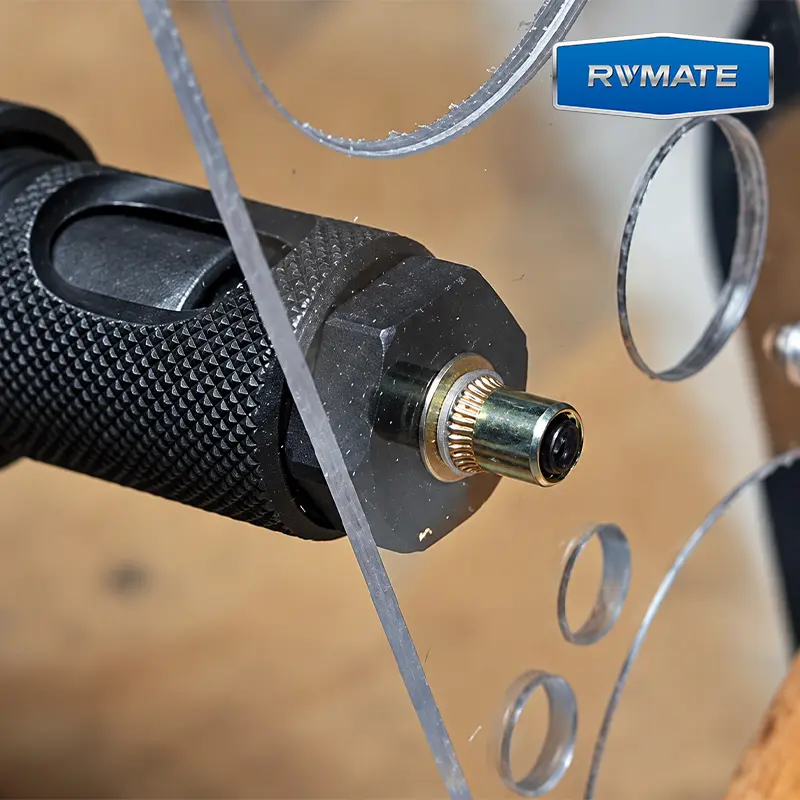
Rivet nuts can be used with plastics; however, to ensure safe use with plastics, the following conditions must be met:
- You must select a rivet nut model suitable for the plastic material.
Not all standard rivet nuts designed for metal sheet are suitable for plastic. Consider the material type, structural design and operating environment of the selected rivet nut. Ensure that the plastic can withstand the compressive, tensile and crack resistance forces during installation. - Verify the strength and long-term stability of the connection after installation.
They must be capable of forming reliable internal threads on plastic panels, equipment housings and certain plastic structural components. They must allow other components to be secured with bolts and enable disassembly when maintenance is required.
How Plastic Properties Change Fastener Performance
When installing rivet nuts in plastics, glass-fibre-reinforced plastics or composite materials, the performance of the fasteners is influenced by a variety of factors. These include the rivet nut itself, as well as the stiffness, resistance to deformation, temperature resistance and long-term load-bearing characteristics of the sheet material.
Therefore, when selecting rivet nuts for use with plastics, you must not only consider the thread specifications and the metal material, but also understand the actual performance and quality of the plastic following installation.
1. The stiffness of plastics affects installation deformation and joint stability
Material stiffness refers to a material’s ability to resist deformation. When installing rivet nuts on plastics in particular, you need to understand their stiffness through material parameters such as the modulus of elasticity.
Plastics with low stiffness are more prone to deformation under the localised pressure exerted during the installation of rivet nuts.
Although plastics with higher stiffness are less prone to bending, if they lack sufficient toughness, they may still crack at the hole opening or at points of stress concentration.
2. Plastic creep affects long-term clamping force and joint reliability
Creep refers to the phenomenon whereby a material gradually deforms over time under a sustained load.
The primary causes of creep in plastics are an increase in temperature or an increase in sustained load. Therefore, particular attention must be paid to the phenomenon of creep in rivet nut connections on plastics. Long-term deformation of plastics can lead to a reduction in bolt preload, thereby increasing the risk of the connection loosening.
3. Thermal expansion of plastics affects joint stability under temperature fluctuations
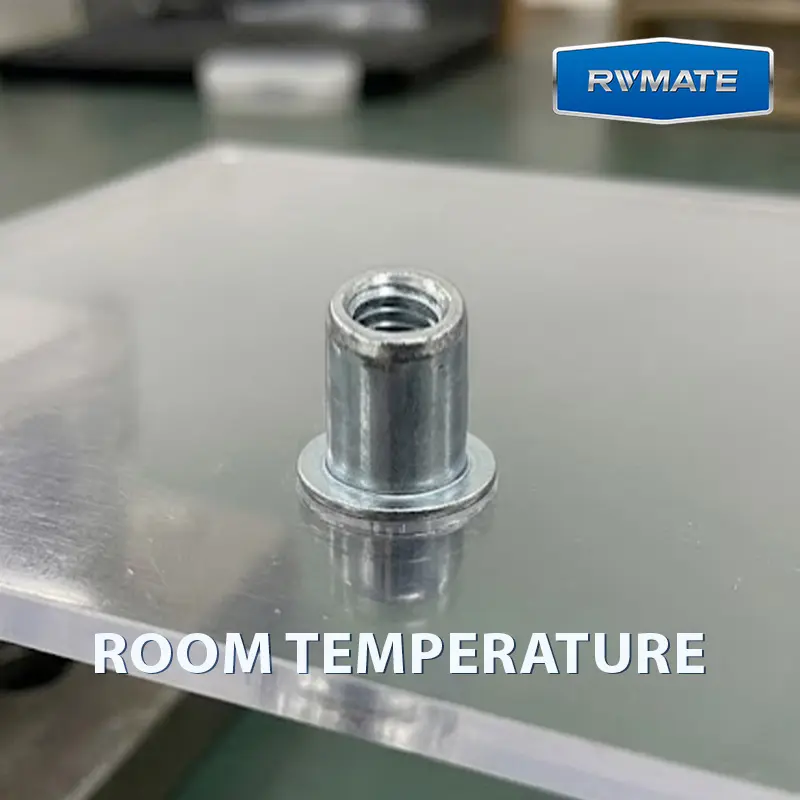
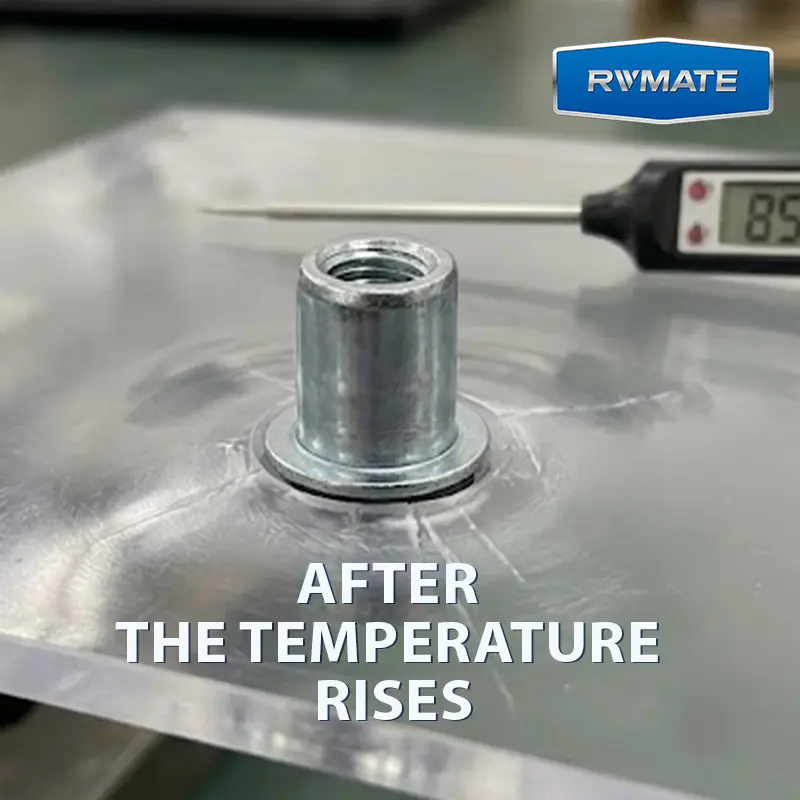
Thermal expansion is the phenomenon whereby a material’s dimensions increase or decrease as its temperature changes.
Most plastics exhibit a higher degree of thermal expansion than common metals. Consequently, when plastic workpieces are used in combination with steel rivet nuts or bolts, the two materials may undergo varying degrees of dimensional change during temperature fluctuations. These relative dimensional changes between the plastic and metal may affect the contact condition and clamping force.
4. Fillers and fibre reinforcement: effects on stiffness, toughness and orifice quality
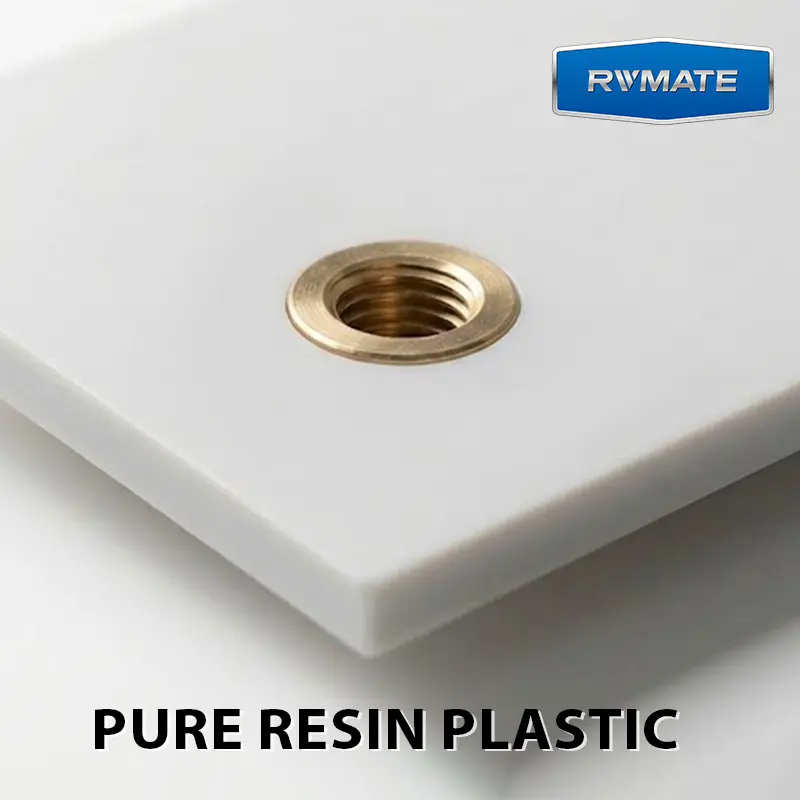
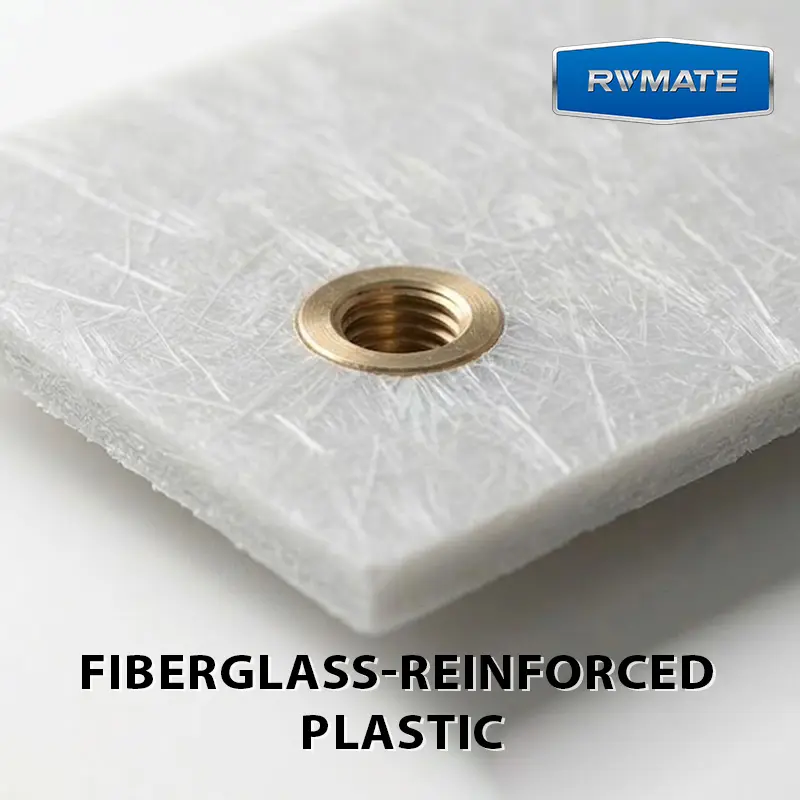
The properties of plastics depend not only on the base resin but are also influenced by fillers and reinforcing fibres. For example, glass-fibre-reinforced plastics exhibit altered stiffness, strength and deformation characteristics due to the fibre reinforcement. The specific behaviour depends on the type of resin in the plastic, the fibre content, the fibre orientation and the part’s structure.
5. Some plastics are hygroscopic, which can affect dimensions and assembly conditions
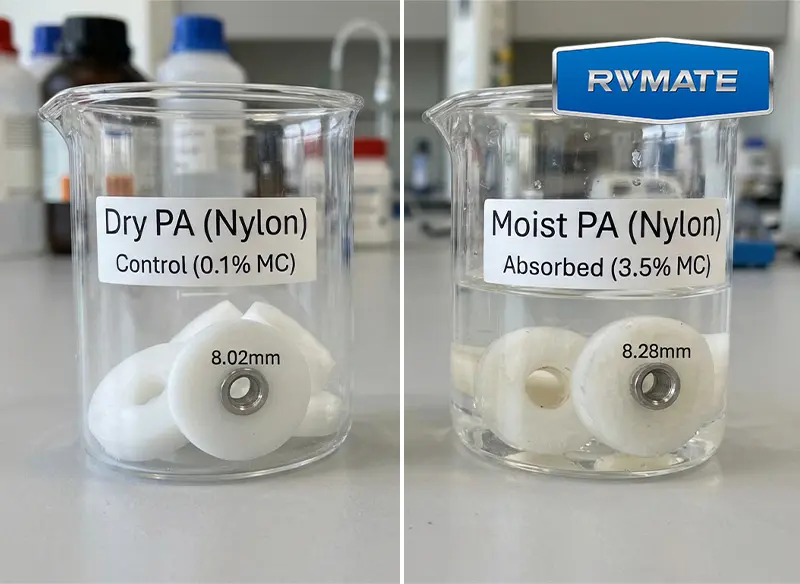
Some plastics are hygroscopic and can absorb moisture from the environment. Take nylon as an example: moisture absorption may cause dimensional changes and alter their mechanical properties.
Therefore, you need to consider the differences in dimensions and properties between the workpiece in a dry state and after moisture absorption. Dimensional changes may affect the fit between the mounting hole and the rivet nut, whilst changes in material properties may also affect the stability of the connection under different environmental conditions.
Best Rivet Nut, Plus Nut, Jack Nut, and Well Nut Designs
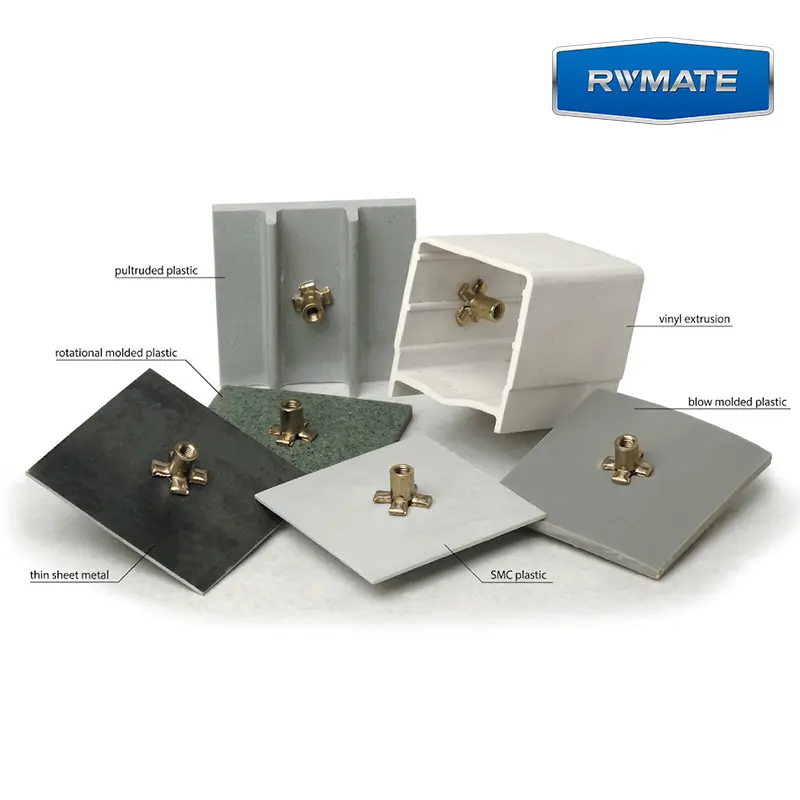
When selecting the appropriate rivet nut for plastic components, it is necessary to take into account the base material, sheet thickness, installation space, load requirements and environmental conditions. By comparing standard rivet nuts, Plus Nut fasteners, Jack Nuts and Well Nuts, you can determine the fastening solution best suited to your application.
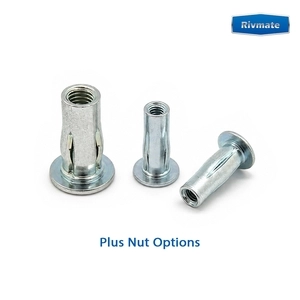
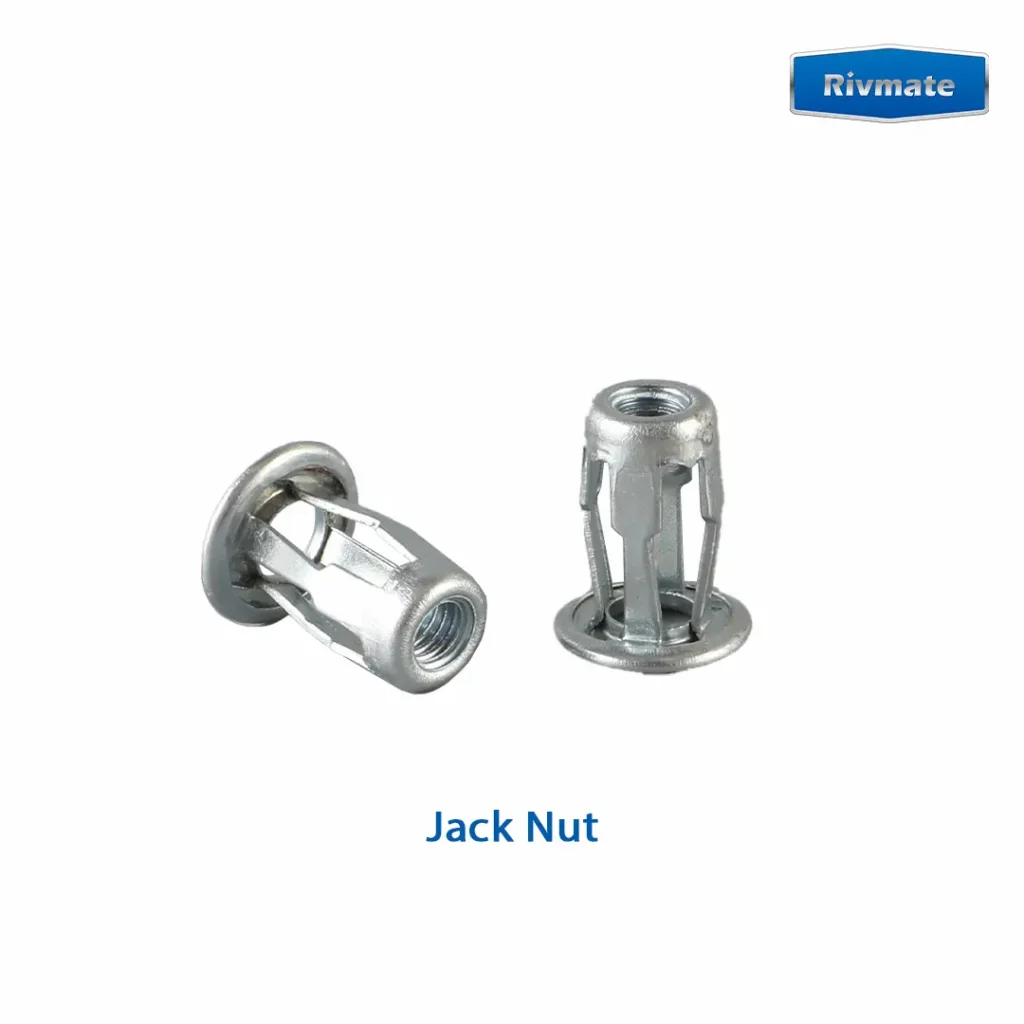
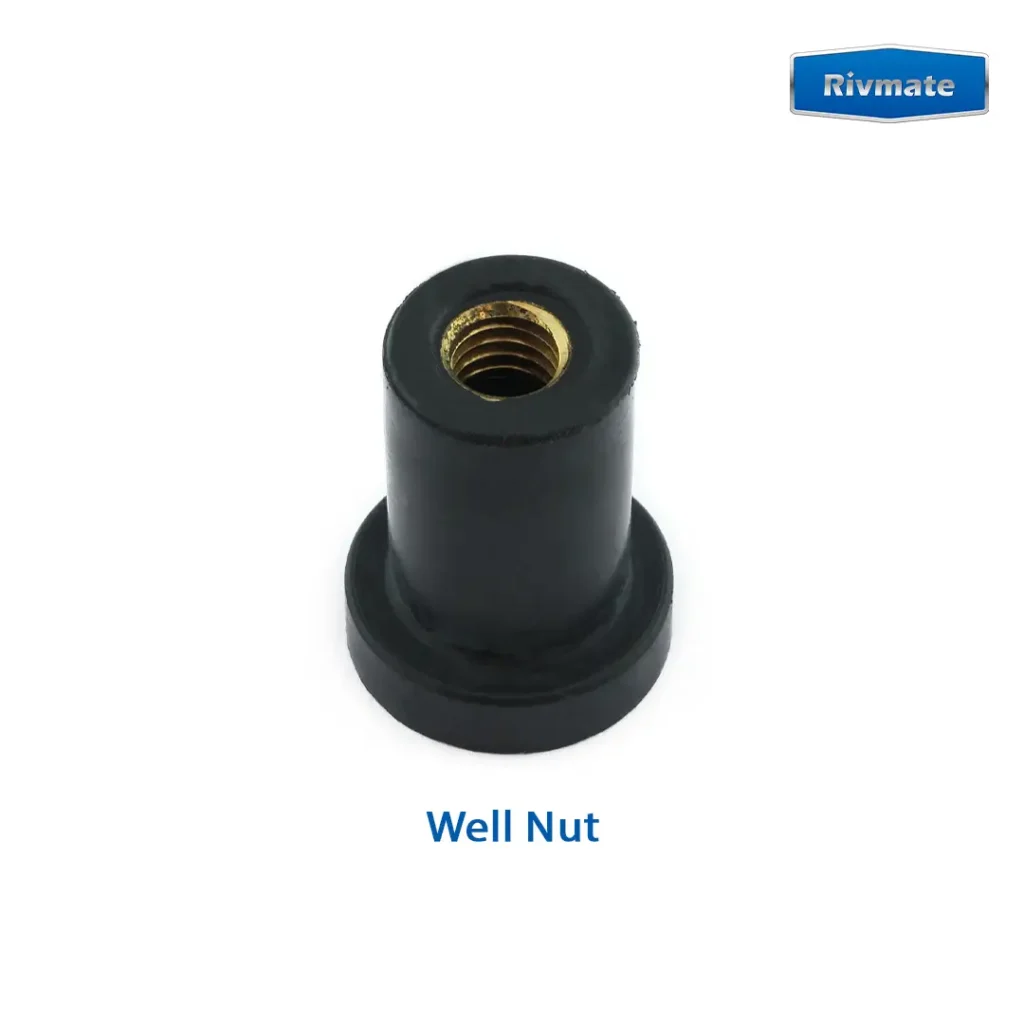
| Rivet Nut Design | Structural Features | Suitable Materials and Applications | Key Advantages | Limitations | Selection Considerations |
|---|---|---|---|---|---|
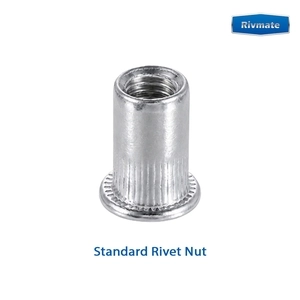
| Standard Rivet Nut | Deforms during installation to form a clamping section behind the workpiece, providing an internal metal thread. | Suitable for compatible plastic panels, fiberglass components, and composite materials when approved for the substrate and application. | Provides a reusable threaded connection and can be installed from one side of the workpiece. | May cause localized compression, cracking, or loosening in soft or brittle plastics if the design or installation parameters are unsuitable. | Check material thickness, hole diameter, grip range, installation force, and the substrate’s resistance to deformation. |
| Plus Nut-Style Slotted Fastener | A slotted shank expands or folds behind the workpiece during setting, creating multiple supporting sections. | Worth evaluating for compatible thin-wall panels, softer substrates, fiberglass, and selected composite applications requiring greater backside support. | The expanded sections can distribute clamping loads over a larger backside area and help reduce localized stress. | Requires sufficient backside clearance. Performance depends on the fastener design, substrate properties, and installation conditions. | Verify expansion space, material thickness, hole size, and resistance to pull-out and substrate damage. |
| Jack Nut | A deformable body forms multiple supporting legs behind the workpiece when the fastener is installed. | Suitable for selected thin-wall plastic panels, fiberglass panels, and other compatible soft or brittle substrates. | The supporting legs provide backside retention and can help distribute loads across the mounting area. | Requires adequate space for the legs to expand. The substrate may crack or deform if the fastener is unsuitable or incorrectly installed. | Check expansion space, panel thickness, hole condition, installation method, and required load capacity. |
| Well Nut (Rubber Nut) | Combines an elastomeric sleeve with a threaded metal insert. Tightening the bolt compresses the sleeve, causing it to expand behind the mounting surface. | Suitable for selected plastic enclosures, fiberglass panels, and applications requiring vibration isolation or supplementary sealing. | Provides cushioning, helps isolate vibration, and can help seal the mounting hole when properly selected and installed. | Load capacity and durability depend on the elastomer, temperature, chemical exposure, aging, and joint design. It is not automatically suitable for structural loads. | Evaluate vibration, sealing requirements, operating temperature, chemical compatibility, bolt load, and long-term durability. |
Choosing Flange Size, Body Style, and Material
How to select the correct flange size?
The flange area is the protruding section that rests against the workpiece surface once the rivet nut has been installed. It helps to position the rivet nut and effectively distributes the connection load across the workpiece surface. The selection of the flange size is particularly important when working with plastics and brittle composite materials.
Common flange types include Flat Head Rivet Nuts and Countersunk Head Rivet Nuts. Flat-head flanges are suitable for connections where a flush fit is not required. Countersunk-head flanges require the workpiece to be pre-machined with a correctly sized countersunk hole to ensure the fastener head sits as flush as possible with the workpiece surface. They are not suitable for situations where the plastic sheet is very thin. Low-profile or thin-head designs are suitable for applications with limited installation space, but you must also confirm that their contact area is sufficient to meet the connection requirements.
How should one select the appropriate shank design?
The shank is the main component of the rivet nut that is inserted into the mounting hole and forms a secure structure during installation. Common designs include cylindrical, knurled or anti-rotation grooved cylindrical, and hexagonal.
| Rivet Nut Body Style | Structural Features | Key Advantages | Applications in Plastic and Composite Materials | Selection Considerations |
|---|---|---|---|---|
| Round Body | A cylindrical body designed for installation in a round hole. | Simple hole preparation and broad availability across different rivet nut designs. | Suitable for compatible plastic panels, fiberglass components, and composite assemblies when the fastener design meets the application requirements. | Check hole diameter, grip range, and resistance to rotation. A smooth round body may require additional anti-rotation features. |
| Knurled Body | A round body with external knurling that increases mechanical engagement with the installation hole. | Helps resist rotation when the knurling and hole dimensions are properly matched. | Can be considered for plastic enclosures and composite components that require improved resistance to fastener rotation. | Knurling may concentrate stress around the hole. Verify compatibility with the substrate to reduce the risk of cracking or hole damage. |
| Half Hex Body | A body with a hexagonal section over part of its length and a round section over the remaining portion. | Combines geometric anti-rotation features with a partially round body, depending on the specific design. | Suitable for selected plastic and composite assemblies where the installation-hole design accommodates the half-hex profile. | Confirm the required hole geometry, material thickness, installation fit, and local stress around the hexagonal section. |
| Full Hex Body | A body with a hexagonal outer profile designed to engage with a matching hexagonal hole. | Provides geometric resistance to rotation when correctly fitted into a matching hole. | Can be evaluated for plastic and composite assemblies requiring additional resistance to rotation. | Requires a suitably formed hexagonal hole. Check edge distance, substrate strength, and the risk of cracking in brittle materials. |
How should one select the material for rivet nuts?
Common material combinations include aluminium alloy, carbon steel and stainless steel. The choice varies depending on the application in terms of strength, weight, corrosion resistance, base material type and operating environment.
| Rivet Nut Material | Key Properties | Suitable Applications | Selection Considerations |
|---|---|---|---|
| Aluminium | Lightweight, with corrosion resistance that depends on the alloy and service environment. | Weight-sensitive plastic enclosures, equipment panels, and compatible fiberglass or composite assemblies. | Check alloy strength, thread durability, and load requirements. Aluminium is not automatically suitable for high-load connections. |
| Carbon Steel | Offers good mechanical strength and cost efficiency. Corrosion resistance depends on the surface finish or protective coating. | General industrial assemblies and plastic components where the fastener’s strength and corrosion protection meet application requirements. | Select suitable surface protection for moisture and chemical exposure. Verify coating compatibility and expected service life. |
| Stainless Steel | Provides corrosion resistance that varies with the stainless steel grade and operating environment. | Outdoor equipment, humid environments, and plastic or fiberglass assemblies requiring enhanced corrosion resistance. | Confirm the grade, mechanical properties, and material compatibility. For carbon-fibre composites, assess galvanic corrosion risk and whether electrical isolation is needed. |
Grip Range, Hole Size, and Backside Support
When selecting rivet nuts for plastics, glass-fibre-reinforced plastics and composite materials, the key factors affecting installation quality and joint reliability are the clamping thickness range, the size of the installation hole and the space available for support from the rear. Even when the correct rivet nut model is selected, if the material thickness is incorrect, the installation hole is the wrong size, or there is insufficient space for deformation at the rear, problems such as plastic cracking, deformation of the hole opening or a loose joint may occur after the rivet nut has been installed.
Choosing the Correct Grip Range for Plastic Thickness
You must first measure the actual thickness of all workpieces, then select a model with a clamping range that covers that thickness. The total measured thickness includes multiple layers of material, shims or other components sandwiched between the flange and the deformable structure on the reverse side.
Ensuring Proper Hole Size and Quality for Secure Rivet Nut Installation
You should strictly adhere to the technical documentation for the specific product to determine the recommended hole diameter and permissible tolerances; do not derive drilling dimensions from thread specifications. The hole profile must also match the shank structure. Particular attention must be paid to the quality of the hole opening, especially when installing in plastics, glass-fibre-reinforced plastics and composite materials, to avoid compromising the fastener’s installation performance and local load-bearing capacity.
Providing Sufficient Backside Clearance for Rivet Nut Installation
There must be sufficient space on the rear side of the workpiece to allow the rivet nut to form the specified deformation structure during installation. The sheet material must be capable of withstanding the loads encountered during installation and in service. If there is insufficient space behind the rivet nut, the shank may not be able to deform adequately. If the local strength of the plastic or composite material is insufficient, crushing, cracking or pull-out may occur even if there is adequate installation space.
Controlling Setting Force to Prevent Crushing and Cracks
Install rivet nuts into plastic, glass-fibre-reinforced plastic and composite materials. The installation force must be set appropriately; otherwise, the base material may suffer crushing, cracking or permanent deformation due to excessive localised pressure.
The installation force refers to the axial tensile force applied by the installation tool during the riveting process. The installation force influences how the rivet nut shank deforms to form a clamping structure.
- Insufficient installation force will result in the rivet nut not being securely fastened.
- Excessive installation force may damage the plastic or composite material.
How to prevent plastic crushing and cracking by controlling the installation force?
You must set the installation parameters in accordance with the manufacturer’s specifications, taking into account the type and thickness of the plastic, as well as the specific model of the rivet nut. When working with softer plastics, particular attention should be paid to surface indentations and localised deformation. When installing in more brittle plastics and glass-fibre-reinforced materials, watch for cracks at the hole opening and material damage. It is important to remember that installation parameters for metal sheets must not be applied directly to plastics.
Using Backing Plates and Local Reinforcement
When plastic sheets are relatively thin and suffer from localised weakness, or where the joint is required to withstand significant loads, you should use a backing plate or local reinforcement. The primary functions of both are to expand the load-bearing area and reduce localised stress concentration. This fundamentally and effectively reduces the risk of plastic crushing, hole-mouth cracking or fasteners pulling through.
- A backing plate can be fitted directly to the rear of the workpiece or near the connection area to increase the support area for the rivet nut.
- Local reinforcement refers to increasing the material thickness, stiffness or load-bearing capacity in the area where the rivet nut is to be fitted. Common methods include designing ribs into the plastic part, thickening the mounting boss, or adding proven reinforcement plates to specific areas.
The use of backing plates and local reinforcement does not automatically guarantee a reliable connection. Following installation, verification is still required based on the actual materials and loads involved.
Managing Creep, Vibration, Temperature, and Moisture
When using rivet nuts for plastic, you must not only ensure that the joint is secure upon completion of installation, but also take into account the long-term operating environment. Factors such as creep, vibration, temperature fluctuations and moisture can all degrade the performance of the base material, which in turn affects the clamping force, anti-rotation capability and service life of the rivet nut joint.
| Environmental Factor | Rivet Nut Selection and Design Recommendations | What to Verify |
|---|---|---|
| Creep | Consider a larger flange, a backing plate, or local reinforcement to distribute loads and reduce localized stress. Control clamping loads according to the plastic material and application. | Long-term clamping stability, plastic deformation, and joint reliability. |
| Vibration | Evaluate round knurled, half-hex, or full-hex rivet nut bodies based on substrate properties and hole design. Consider suitable bolt-locking measures where required. | Resistance to rivet nut rotation, bolt loosening, and damage around the mounting hole. |
| Temperature Changes | Select materials compatible with the operating temperature and evaluate dimensional changes between the plastic substrate and metal fasteners. | Joint stability after temperature cycling, substrate properties, and clamping performance. |
| Moisture | Choose a suitable rivet nut material and protective finish for the environment. Where sealing is required, evaluate appropriate gaskets or additional sealing measures. | Corrosion resistance, sealing performance, and material compatibility. |
To minimise the impact of creep, vibration, temperature fluctuations and moisture on the joints in your project, you should first identify the base material and the operating environment. Secondly, select suitable fasteners and connection designs. Finally, verify long-term reliability based on actual operating conditions.
Installation and Inspection for Plastic and Composites
| Installation Stage | Inspection Point | Recommended Practice | Common Issues to Avoid |
|---|---|---|---|
| Pre-Installation | Rivet Nut Selection | Select rivet nuts for plastic, fiberglass, or composite materials based on the substrate type, panel thickness, load requirements, and manufacturer’s specifications. | Assuming that a standard metal-sheet rivet nut is suitable for every plastic or composite substrate. |
| Pre-Installation | Grip Range and Hole Size | Verify that the material thickness falls within the specified grip range and that the mounting hole matches the recommended diameter and shape. | Using an oversized or undersized hole, or selecting a rivet nut with an incompatible grip range. |
| Pre-Installation | Hole Quality and Edge Distance | Inspect the mounting hole for cracks, burrs, and machining defects. Ensure sufficient material remains around the hole to support the connection. | Installing a rivet nut in a damaged hole or too close to an edge without verifying substrate strength. |
| Pre-Installation | Backside Clearance | Confirm that the rivet nut’s deformation mechanism has sufficient clearance and will not interfere with internal ribs, adjacent components, or enclosure walls. | Ignoring backside interference that prevents the rivet nut from forming its intended retaining structure. |
| During Installation | Setting Tool and Parameters | Use a compatible rivet nut installation tool and follow the manufacturer’s specified setting force, stroke, or other applicable installation parameters. | Increasing the setting force or stroke without checking whether the fastener and substrate can tolerate the adjustment. |
| During Installation | Fastener Alignment and Flange Seating | Keep the rivet nut correctly aligned with the mounting hole and verify that the flange seats properly against the workpiece surface. | Allowing the fastener to tilt, sit unevenly, or cause visible indentation or crushing of the plastic. |
| Post-Installation | Substrate Integrity and Thread Condition | Inspect the surrounding material for cracks, crushing, permanent deformation, or visible fiber damage. Check that the internal thread remains usable. | Accepting an installation with visible substrate damage, damaged threads, or an improperly seated flange. |
| Post-Installation | Fastener Retention and Joint Performance | Check the installed rivet nut for abnormal rotation or looseness. Perform pull-out, anti-rotation, or other relevant tests when required by the application. | Assuming that a fastener is reliable simply because the bolt threads in correctly or the flange looks normal. |
| Production Validation | Installation Consistency | Conduct trial installations using the actual substrate, production hole dimensions, selected rivet nut, and intended installation tool before approving the process for batch production. | Applying unverified installation settings across different plastic grades, panel thicknesses, or composite materials. |
When to Use Molded-In or Heat-Set Inserts Instead
Moulded-in inserts and heat-set inserts are suitable for the manufacturing processes of certain plastic components. They are used where threaded inserts need to be integrated into injection-moulded parts, or where inserts need to be fitted onto plastic bosses after moulding. Which solution is suitable for your project depends on your plastic material, part geometry, production process and fastening requirements.
Moulded-in inserts are metal threaded inserts placed in the mould prior to the plastic moulding process; the plastic then encapsulates the external structure of the insert via injection moulding or other suitable moulding processes. You may wish to consider moulded-in inserts when developing plastic components for mass production, particularly where the location of the threaded connection has been determined from the product design stage.
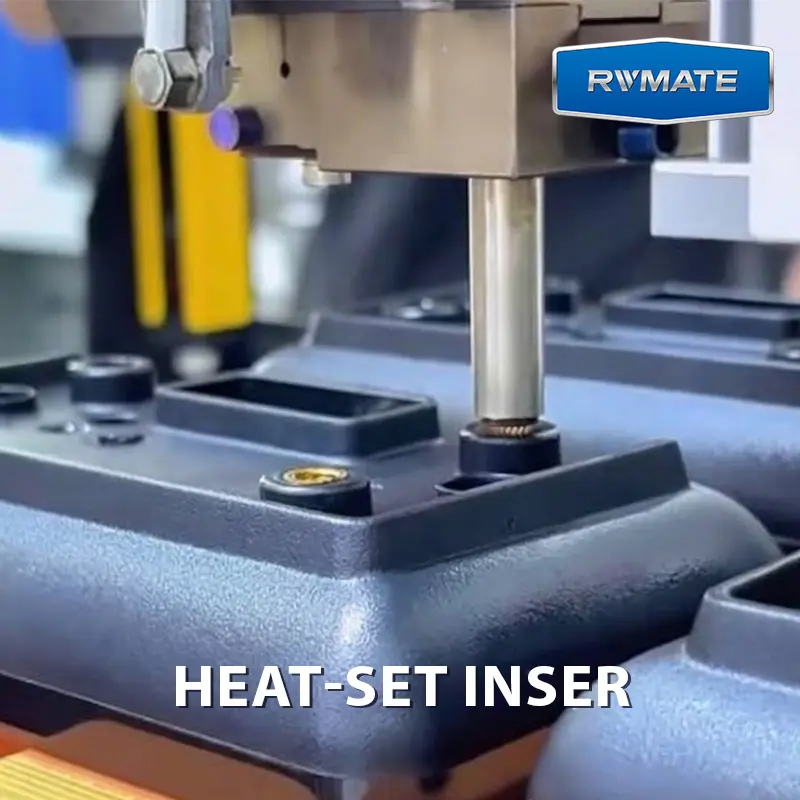
Heat-set inserts involve softening the thermoplastic material around the mounting hole using a heated tool after the plastic part has been moulded, and then pressing the metal insert into the designated position. As the plastic cools and solidifies again, it forms a mechanical bond with the knurling, grooves or other retaining features on the exterior of the insert, thereby providing an internal thread. Heat-set inserts are a suitable option when a metal thread that can be repeatedly assembled and disassembled needs to be added to a part that has already been moulded.
FAQs
Can standard steel rivet nuts be used in plastic?
Standard steel rivet nuts can be used with plastics, provided that the rivet nut’s design, method of installation and load-bearing capacity are suitable for the relevant plastic material.
What is the best threaded insert for thin plastic?
For thin plastic sheets, it is recommended to use threaded fasteners designed specifically for thin-walled or soft materials, which can increase the support area on the reverse side. The specific choice should be based on the type of plastic, its thickness and the load on the joint.
Can rivet nuts be installed in fiberglass?
Rivet nuts can be fitted to fibreglass. However, it is essential to select the correct rivet nut model to avoid damaging the hole edges or causing delamination.
How do I prevent plastic from cracking during installation?
To prevent plastic from cracking when fitting rivet nuts, you can reduce the risk of cracking by following the methods below. Firstly, select a suitable rivet nut design, then machine the correct mounting holes accurately. Secondly, control the fitting parameters, check the mounting position and support conditions, and finally carry out a trial fit to verify the installation.
Are well nuts stronger than rivet nuts in plastic?
Rubber nuts and rivet nuts serve different design purposes. It is not possible to determine which is stronger based on type alone.
Do plastic panels need a backing washer?
Plastic panels do not necessarily require the fitting of backing washers. However, for thinner, softer or more brittle plastic panels, suitable backing washers or reinforcement plates may be used. This helps to reduce the risk of localised tearing.
Can a loose rivet nut in plastic be repaired?
Loose rivet nuts on plastic can be repaired. The repair method depends on the cause of the looseness. If the mounting hole has expanded, causing the rivet nut to rotate, you can replace it with a rivet nut of a suitable size. If the plastic has cracked or been crushed, the damaged part must be replaced.
How does plastic creep affect rivet nut joints?
Plastic creep can affect the quality of the installation. This includes a gradual reduction in the clamping force of rivet-nut connections and deformation of the installation area, increasing the risk of the connection becoming loose or failing.
Work with a IATF 16949 Certified Blind Rivet Manufacturer
Get High Quality Rivets Instead of Huck and Avdel Rivets

Rivmate Rivet
Rivmate is blind rivets manufacturers in china. The company is IATF 16949 certified and offers high-strength structural blind rivets that serve as alternatives to Huck and Avdel products.
Explore Rivmate Cases
Rivmate Rivet
Rivmate is blind rivets manufacturers in china. The company is IATF 16949 certified and offers high-strength structural blind rivets that serve as alternatives to Huck and Avdel products.

Hey There, I'm Allen!
I am the boss of Rivmate. For over two decades, we have specialized in the manufacture of blind rivets, providing our customers with reliable riveting solutions. Need riveting services? Feel free to contact us.