The Jack Nut is a suitable choice for creating a nickel-threaded connection on thin metal sheets, fiberglass, or plastic sheets.
Once installed, the Jack Nut expands its support legs to create a mechanical lock on the back of the sheet. It is particularly suitable for materials that are thin-walled, flexible, or susceptible to damage from localized pressure.
Table of Contents
What does a jack nut need from the panel?
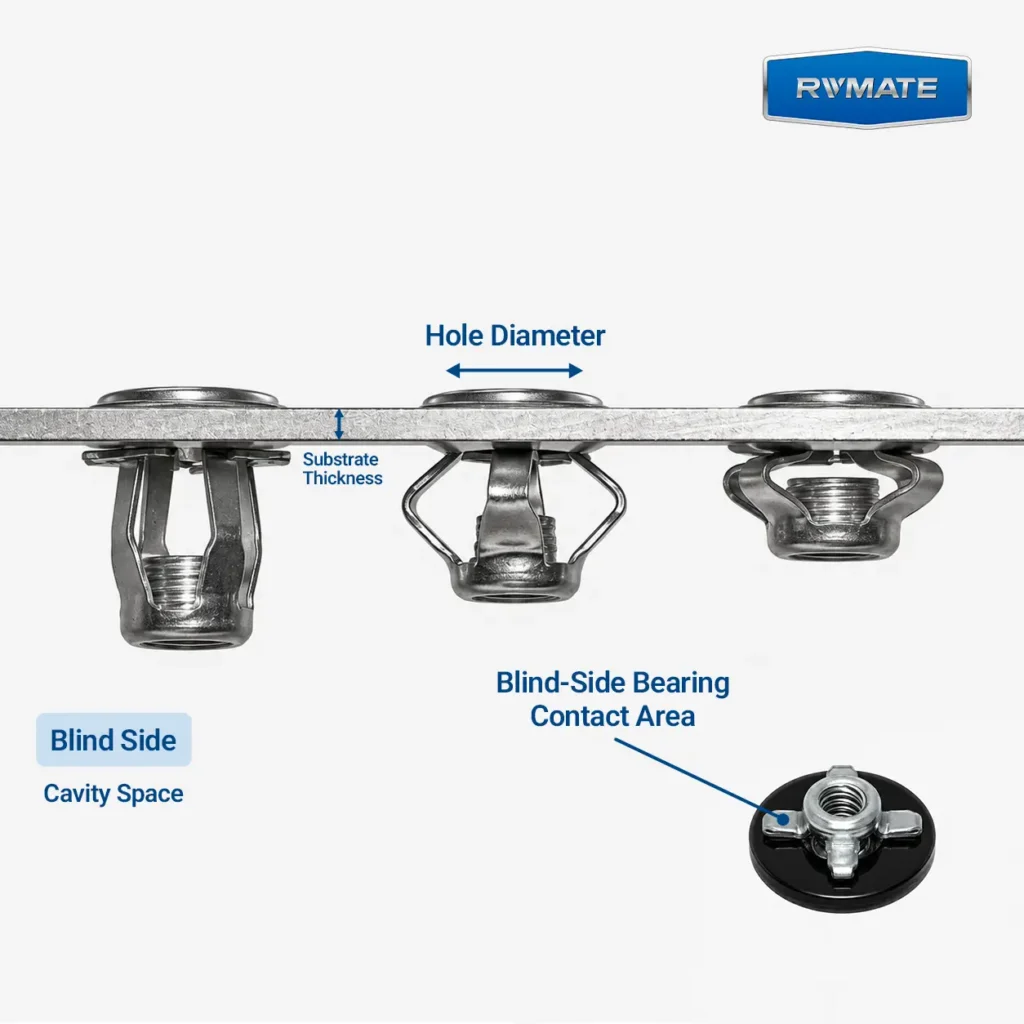
Proper installation of the Jack Nut depends not only on the Jack Nut itself, but also on the installation conditions of the panel. Whether installed on thin sheet metal, fiberglass, or plastic, certain basic requirements must be met. These include appropriate thickness, correct mounting hole diameters, sufficient clearance on the back side, and a substrate strong enough to withstand installation and operational loads.
Key Panel Requirements for Jack Nut Selection
| Inspection Item | What to Check | Potential Risks if Requirements Are Not Met |
|---|---|---|
| Panel Thickness | Check whether the actual panel thickness falls within the specified Grip Range of the jack nut. | The legs may not expand correctly, resulting in incomplete clamping or improper installation. |
| Hole Diameter | Verify that the installation hole diameter matches the manufacturer’s specifications for the specific jack nut model. | An oversized hole may cause poor retention or rotation, while an undersized hole may make installation difficult or damage the panel. |
| Hole Quality | Check whether the hole is round and free from burrs, cracks, edge damage, or other machining defects. | Poor hole quality may affect seating and clamping stability, increasing the risk of panel damage or insert rotation. |
| Rear Clearance | Ensure sufficient space behind the panel for the jack nut legs to expand without interfering with nearby structures or components. | Restricted clearance may prevent proper leg expansion, resulting in incomplete backside contact or installation failure. |
| Material Strength | Confirm that the substrate can withstand installation pressure and the tensile and torsional loads generated during service. | The panel may experience local crushing, deformation, cracking, delamination, or pull-through. |
| Edge Distance | Check whether there is sufficient distance between the hole center and the panel edge to accommodate the expansion area. | Insufficient edge distance may cause edge cracking, material tearing, or localized structural damage. |
Recommendations for Factory Testing: For panel materials such as fiberglass and plastic, it is not recommended to judge the stability of the connection based solely on the product’s appearance or whether the support legs are extended after installation. You must perform a pilot installation using actual panels. Focus on inspecting damage to the substrate, fastener rotation, axial pull-out, and the actual bolt assembly performance. Most importantly, this must be determined through specific test loads and in accordance with acceptance criteria.
For additional technical reference, the Titgemeyer Jack Nut® Blind Rivet Nuts Catalog (Pages 4–6) provides information about Jack Nut applications in thin, soft, and brittle materials.
When can you use a jack nut in fiberglass?
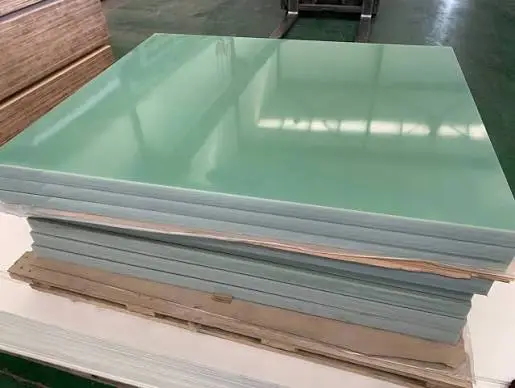
Jack Nuts are recommended only for certain types of fiberglass panels. In particular, thinner, softer composite panels are not suitable for direct tapping. Jack Nuts can form a secure threaded connection on these types of panels.
Jack Nuts are not suitable for all fiberglass panels. You need to determine whether the fiberglass panel can withstand the clamping force during installation, as well as the tensile and torsional loads that will occur during subsequent use. Ensure that the panel does not crack, crush, or delaminate after installation.
In which fiberglass applications are claw-type rivet nuts more suitable?
Jack Nuts are recommended only for certain types of fiberglass panels. When shopping for a jack nut for fiberglass, keep this key point in mind: thinner, softer composite panels are not suitable for direct tapping. Jack Nuts can form a secure threaded connection on these types of panels.
Jack Nuts are not suitable for all fiberglass panels. You need to determine whether the fiberglass panel can withstand the clamping force during installation, as well as the tensile and torsional loads that will occur during subsequent use. Ensure that the panel does not crack, crush, or delaminate after installation.
Common applications include:
- Fiberglass equipment enclosures.
- Composite equipment housings.
- Composite vehicle bodies and components.
- Non-load-bearing fiberglass panels.
- Thin-walled composite structures requiring single-sided installation.
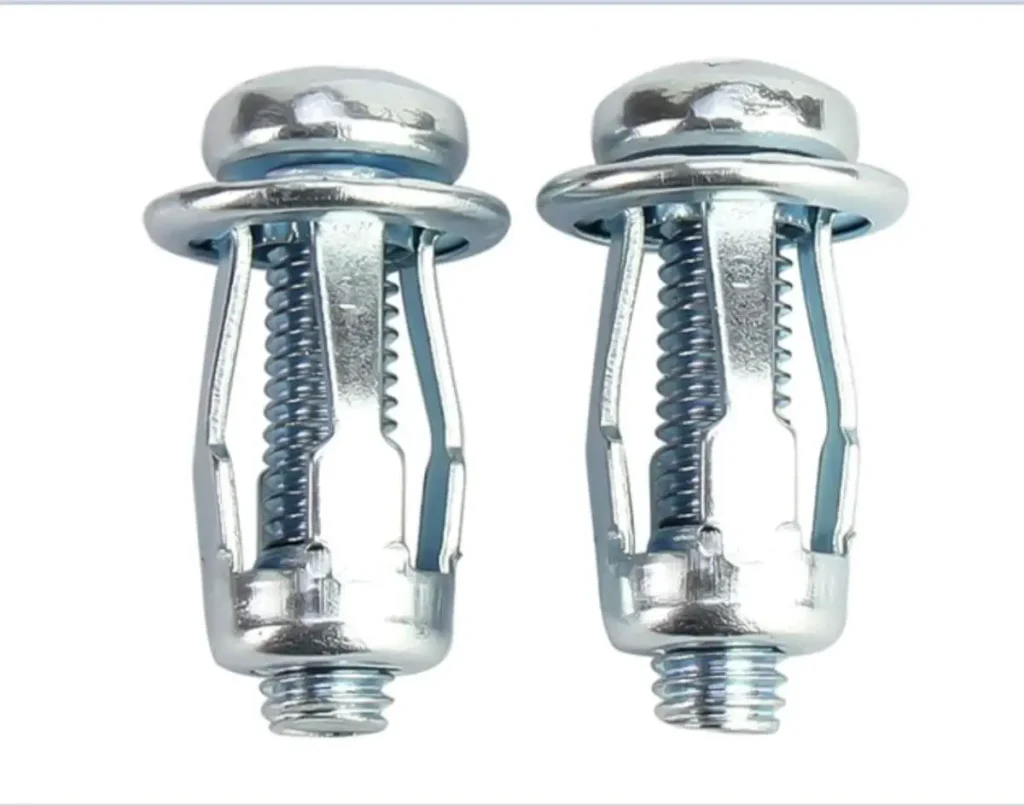
Jack Nuts can also be used for fastening applications involving a variety of panel materials. Imperial Rivet’s Jack Nut product line for thin materials is suitable for thin metal sheets, plastics, fiberglass, and composite materials. Information on thread sizes, clamping ranges, and mounting hole dimensions is also provided. Whether they are suitable for a specific assembly depends on the panel’s specific structure, material thickness, and installation conditions.
Under what circumstances is the use of claw-type rivet nuts not recommended?
- The laminated structure of the panel is weak or has been damaged.
- The mounting holes are too close to the edge, causing the support legs to exert additional pressure on the hole edges, which can lead to damage.
- In sandwich composite panels, the internal core material cannot withstand the mounting pressure.
- High-load applications
What changes when the panel is plastic?

When using jack nuts for plastic panels, the core concern is whether the fastener can clamp the panel securely. You also need to check if the plastic will deform under installation pressure and long-term loads.
Compared with metal panels, plastic has different rigidity, toughness and load-bearing properties. It tends to deform gradually under sustained stress. The support legs formed after Jack Nut installation help spread out localized clamping pressure. However, mechanical performance varies widely among different plastics. There is no single Jack Nut that works reliably for all plastic materials. You need to make your selection based on the specific plastic type, panel thickness, hole quality and actual load requirements.
Why do plastic panels have stricter installation requirements?
The key difference between plastic and metal is that plastic undergoes noticeable elastic deformation and permanent deformation when subjected to force. The hardness, stiffness, and impact resistance of different plastics also vary. For example, ABS, PC, PP, and PVC do not behave the same way under identical loads.
When installing jack nuts for plastic, the four support legs extend from the back of the plastic panel to form a clamp. If the installation pressure is too high or the plastic itself lacks sufficient rigidity to withstand the load, this can cause localized dents or indentations on the panel; in severe cases, it may even lead to cracking.
How does plastic creep affect joint stability under long-term loading?
When selecting plastic panels, you need to pay special attention to two phenomena: creep and stress relaxation. Creep causes plastic to gradually undergo compressive deformation. Both of these phenomena can affect the clamping force and long-term stability of the connection.
- Creep refers to the phenomenon in which a material gradually deforms over time when subjected to a sustained load.
- Stress relaxation refers to the gradual reduction of internal stress over time while the degree of deformation remains essentially constant.
How does thin sheet metal behave differently?
When installing jack nuts for sheet metal and fitting a Jack Nut on a thin metal plate, key considerations for jack nuts for sheet metal include local deformation of the plate, the load-bearing capacity around the mounting holes, and the fastener’s resistance to rotation and pull-out after installation.
Thin metal sheets exhibit different stress behaviors compared to plastics and fiberglass, and this is vital knowledge when specifying jack nuts for sheet metal. Compared to fiberglass, metal possesses a certain degree of ductility. Therefore, when subjected to external forces, it may first undergo a certain degree of bending or permanent deformation, rather than cracking or delaminating immediately like brittle composite materials. Compared to plastics, metal is less prone to similar long-term creep issues at room temperature. Conversely, thin metal sheets will deform under sustained loads, vibration, or installation torque — a critical point for anyone using jack nuts for sheet metal.
How do you compare alternatives on an actual sample?
When you’re unsure whether a Jack Nut fastening solution is suitable for a particular panel, the most reliable approach is to create a prototype using the actual material and compare different fastening solutions. Don’t base your decision solely on the product’s design or catalog specifications.
| Test Item | What to Check | Purpose |
|---|---|---|
| Substrate Condition | Use the actual sheet metal, fiberglass, or plastic panel. Record the material type, grade, and measured thickness. | Ensure the test represents the actual application conditions. |
| Installation Performance | Check whether the fastener seats correctly, the legs expand properly, and the installation process is smooth. | Determine whether the fastener is compatible with the panel. |
| Local Damage | Inspect both sides of the panel for dents, cracks, crushing, delamination, or hole deformation after installation. | Identify whether installation pressure damages the substrate. |
| Rotation Resistance | Apply the specified assembly torque to the mating bolt and check whether the installed fastener rotates. Record the torque at which rotation begins, if measured. | Evaluate the fastener’s resistance to rotation during assembly. |
| Pull-Out Resistance | Apply an axial tensile load and record the load at fastener pull-out or substrate failure, together with the failure mode. | Evaluate the fastener’s retention in the panel. |
| Long-Term Performance | For sustained-load applications, monitor panel deformation and changes in fastener retention over the specified test period. | Evaluate creep and long-term connection stability. |
| Final Evaluation | Compare installation damage, rotation resistance, pull-out performance, and actual application requirements. | Select a fastening solution that meets performance requirements without damaging the substrate. |
Which layer will actually carry the clamping load?
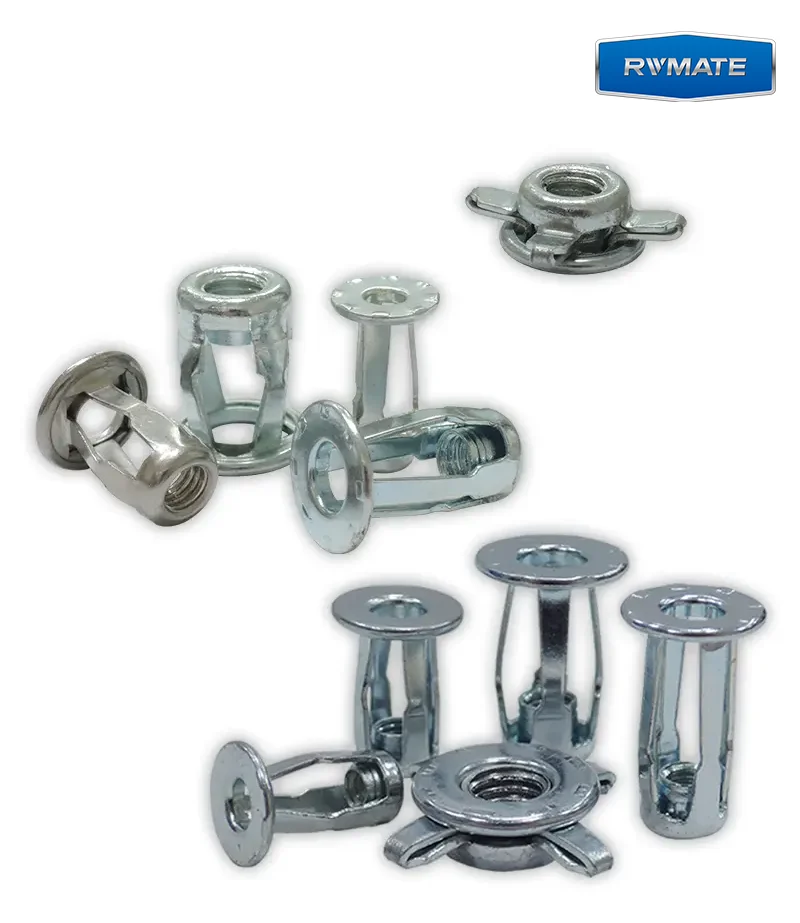
Understand which parts of the Jack Nut bear the clamping load
Determine which layer of material actually bears the clamping load. After the Jack Nut is installed, the structural material is clamped jointly by the front flange and the extended legs on the back. The panel material located between the flange and the legs is the one that must bear the corresponding compressive load.
Therefore, you need to confirm which materials the front flange and the rear legs are in contact with, respectively, and whether the material in between has sufficient compressive strength. What
Single-layer panels: The base material itself must bear the clamping load
If you are using a single-layer thin metal sheet, fiberglass laminate, or solid plastic sheet, the clamping pressure is primarily borne by the panel material itself.
- Thin metal sheets: Check the contact areas between the flange and the rear legs for dents, bending, or permanent deformation.
- Fiberglass panels: Check for fiber damage, cracking, or delamination caused by localized compressive stress.
- Plastic panels: Check for localized compressive deformation caused by installation pressure, as well as creep resulting from long-term stress.
Multi-layer panels: The actual load-bearing layer must be identified
When your panel consists of fiberglass outer layers, a resin layer, a foam core, or other reinforcing layers, the total panel thickness cannot be considered the effective load-bearing thickness.
The internal structure of these materials primarily consists of composite surface layers on both sides and a foam or honeycomb core in the middle. The core material cannot withstand the clamping pressure generated by the support legs on the back. In severe cases, localized crushing or delamination between the surface layers and the core material may occur.
Therefore, you should consider adding a backing plate, a reinforcement layer, or specialized load-bearing sleeves. This helps transfer the clamping load to structural layers with sufficient load-bearing capacity and reduces the pressure on the soft core material.
Can the legs open fully behind the mounting hole?
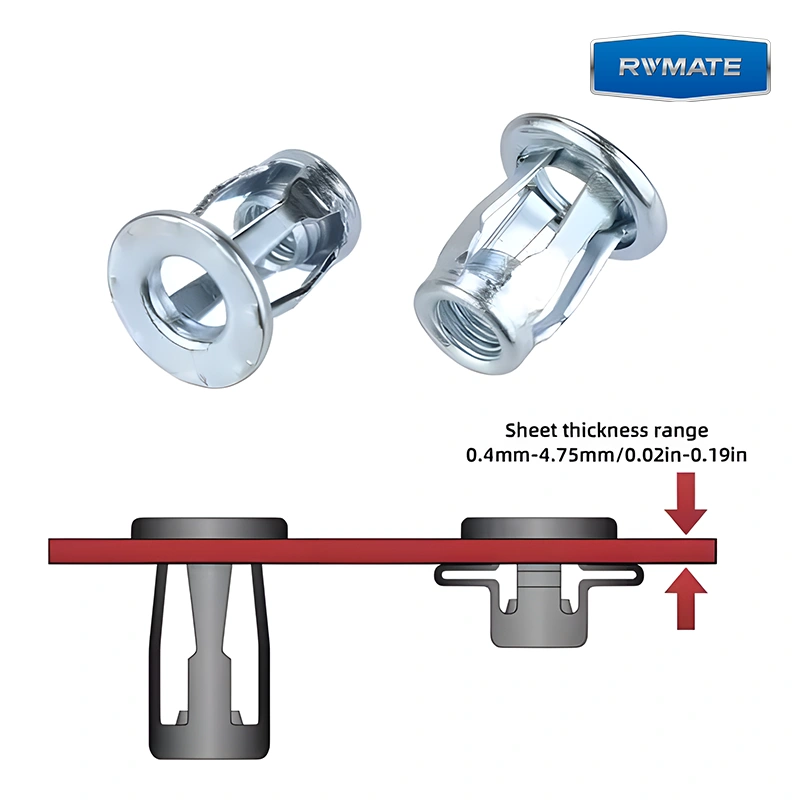
After installing the Jack Nut, it is essential to ensure that the legs can fully extend behind the mounting holes and make effective contact with the back of the panel. The Jack Nut can be installed from one side of the panel, but there must be sufficient space on the back of the panel. Not only must the leg extension area be free from obstruction by other structures, but the back of the panel must also have sufficient load-bearing capacity.
1. Check for Sufficient Expansion Space on the Back Side
After installation, the slotted cylinder of the Jack Nut deforms, causing the split legs to expand outward. If there are reinforcing ribs, piping, a second layer of panels, or other components behind the installation location, they will obstruct the normal expansion of the legs. Therefore, you must verify that there is sufficient space behind the mounting holes to allow the legs to expand properly.
2. Confirm that the legs can make effective contact with the back of the panel
While the legs are extending normally, they must also make contact with the back of the panel, which must have sufficient load-bearing capacity. For fiberglass and plastic panels, check whether the legs cause localized crushing, cracking, or deformation. In particular, for plastic jack bolts, you should also consider the issue of creep resulting from long-term compression of the material.
3. How to Determine If the Rear Clearance Meets Requirements?
This can be verified by installing an actual sample:
- Check whether there are any obstacles in the leg deployment area
- Verify that the panel thickness falls within the product’s specified grip range
- Confirm that the legs can make stable contact with the back of the panel.
How do you inspect damage after setting a jack nut?
| Inspection Area | What to Check | Potential Damage |
|---|---|---|
| Front Surface | Check whether the flange sits evenly against the panel surface and look for visible dents, lifting, or pressure marks. | Surface Denting, Panel Deformation |
| Mounting Hole | Check whether the hole is round and free from burrs, cracks, hole enlargement, or edge deformation. | Hole Deformation, Cracking, Burrs |
| Backside Contact | Check whether all four legs have expanded properly and make effective contact with the back of the panel. | Incomplete Expansion, Local Crushing |
| Substrate Condition | Inspect the leg contact area and surrounding material for crushing, cracking, or delamination. | Cracking, Crushing, Delamination |
| Thread Function | Use a matching bolt to check whether the threads engage and disengage smoothly without binding or damage. | Thread Damage, Cross-Threading |
| Fastener Stability | Apply the specified assembly torque and check whether the installed fastener rotates or becomes loose. | Rotation, Loss of Retention |
When does the joint need a backing plate or a through-bolt?
When Should a Back Plate Be Added?
A back plate may be considered when the sheet metal itself is relatively thin, lacks sufficient local rigidity, or when indentation, cracking, or tearing is likely to occur around fasteners. The back plate is added to the back of the panel or in the connection area. This helps expand the load-bearing area and reduce local stress concentration.
- Thin metal sheets: Prone to local bending or deformation around holes; the support area on the back must be expanded.
- Fiberglass panels: If the laminated panel’s local compressive strength is insufficient, consider adding a reinforcing backing plate.
- Plastic panels: Prone to compressive deformation or long-term creep; adding a backing plate can help distribute clamping pressure.
- Must withstand significant connection loads
When Should Through Bolts Be Considered?
Through bolts are recommended when a joint requires not only contact with both sides of the panel but also a more reliable mechanical clamping structure. This is primarily because the bolt passes through the panel and, when combined with a nut, washer, or backing plate on the reverse side, provides secure fastening.
- High tensile loads
- Continuous vibration or dynamic loads
- Composite sandwich structures: When the panel contains a foam or honeycomb core, solid load-bearing inserts or compression sleeves must be installed to prevent the core material from being crushed when the bolts are tightened.
- Larger support area required
FAQs
Can jack nuts be used in solid fiberglass?
Jack nuts can be used with solid fiberglass-reinforced plastic (FRP) materials. The specific application depends on the laminate structure, thickness, and actual load-bearing requirements of the fiberglass panel. The internal structure of solid fiberglass consists of glass fibers and resin. The rear support legs can come into direct contact with the composite layer. Finally, install a prototype to check for any damage to the opening and the contact area on the back.
Does a sandwich panel need a different check?
Sandwich panels require specific inspections. The internal structure of a sandwich panel consists of two stiff outer skins and a lighter foam or honeycomb core in the middle. You need to conduct additional inspections to verify the load-bearing capacity of the core and the outer skins.
What makes thin plastic crack at the hole?
Common causes of cracks in thin plastic at mounting holes include the quality of the mounting holes, the installation pressure, and the material’s inherent toughness. When selecting a part, you should check the specific type of plastic, the panel thickness, and the mounting hole specifications. Finally, check the hole openings for burrs or pre-existing damage.
Can a plastic panel loosen over time?
Plastic sheets can become loose over time. You should pay particular attention to creep and stress relaxation in plastics, especially in applications involving sustained loads or high temperatures.
How much space do expanded legs need?
To determine how much space the JACK NUT expansion legs require, refer to the dimensional drawings and installation instructions for the corresponding model. Confirm the space required once the legs are extended. Also consider whether there are any reinforcing ribs, pipes, a second panel, or other structural obstacles behind the panel.
How do I check a thin metal panel for spin-out?
Check whether the fasteners on thin metal sheets exhibit “slippage and free rotation.” First, record the actual sheet type, thickness, mounting hole diameter, and the condition of the hole edges. Then, after installation, perform a rotational resistance test using matching bolts and the specified assembly torque. Observe the bolt’s rotation and record the torque value at the onset of rotation.
When should I consider a backing plate?
The panel itself cannot withstand the localized pressure generated by the Jack Nut legs. A backing plate is recommended in both of these situations: when a larger load-distribution area is required at the connection point. Before selecting a backing plate, you must also confirm whether the installation location allows contact with the back of the panel, whether there is sufficient installation space for the backing plate, and whether it can transfer the load to a structural area with sufficient strength.
What should a material comparison test record?
Material comparison tests should document the panel construction, thickness, material grade, installation configuration, loads, and failure modes.
Work with a IATF 16949 Certified Blind Rivet Manufacturer
Get High Quality Rivets Instead of Huck and Avdel Rivets

Rivmate Rivet
Rivmate is blind rivets manufacturers in china. The company is IATF 16949 certified and offers high-strength structural blind rivets that serve as alternatives to Huck and Avdel products.
Explore Rivmate Cases
Rivmate Rivet
Rivmate is blind rivets manufacturers in china. The company is IATF 16949 certified and offers high-strength structural blind rivets that serve as alternatives to Huck and Avdel products.

Hey There, I'm Allen!
I am the boss of Rivmate. For over two decades, we have specialized in the manufacture of blind rivets, providing our customers with reliable riveting solutions. Need riveting services? Feel free to contact us.