BOM rivets are high-strength structural blind rivet fasteners designed for connecting heavy-duty structures. Compared to standard open-end pop rivets, BOM rivets are better suited for withstanding high tensile loads, shear loads, and continuous vibration.
BOM rivets are not suitable for general-purpose, lightweight sheet metal assemblies. They are primarily used for single-sided installations and connections requiring high joint strength or excellent vibration resistance, such as in vehicles, rail transit, and heavy equipment.
Table of Contents
What Does BOM Stand For?
The acronym BOM consists of three English words that represent the three core characteristics of BOM rivets: BOM rivets can be installed by contacting only one side of the workpiece, are suitable for heavy-duty structures, and form a reliable mechanical interlock connection once installed.
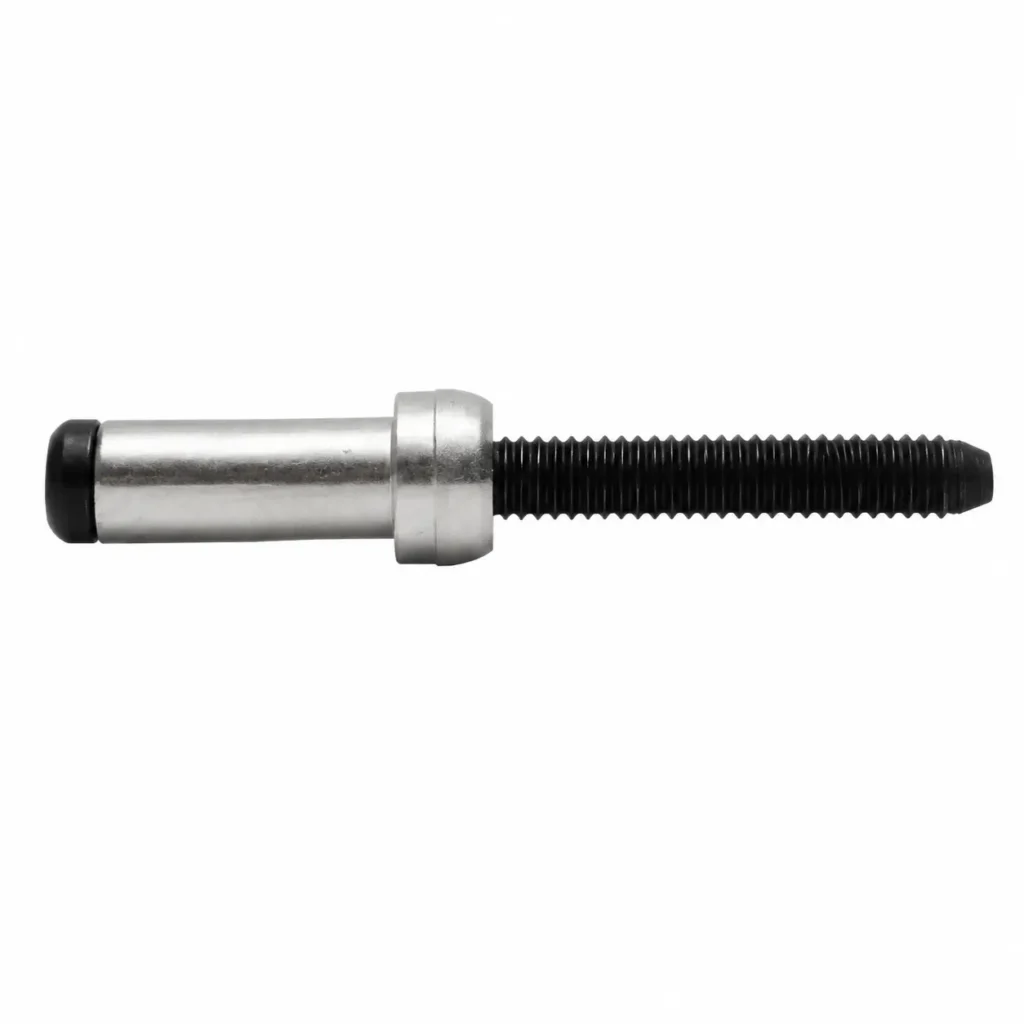
- B — Blind
BOM rivets solve the problem of having to complete the connection from only one side. They are particularly suitable for joining enclosed profiles, vehicle chassis, enclosures, or large equipment structures. - O — Oversize
The diameter of BOM rivets ranges from 4.8 to 12.7 millimeters. Larger rivet diameters and load-bearing structures provide a wider range of mounting hole compatibility, better hole filling, and higher shear and tensile load-bearing capacities. - M — Mechanically Locked
After riveting, the mandrel of a BOM rivet is securely locked in place by a specialized mechanical mechanism, creating a stable mechanical connection.
What Are the Main Parts of a BOM Rivet?
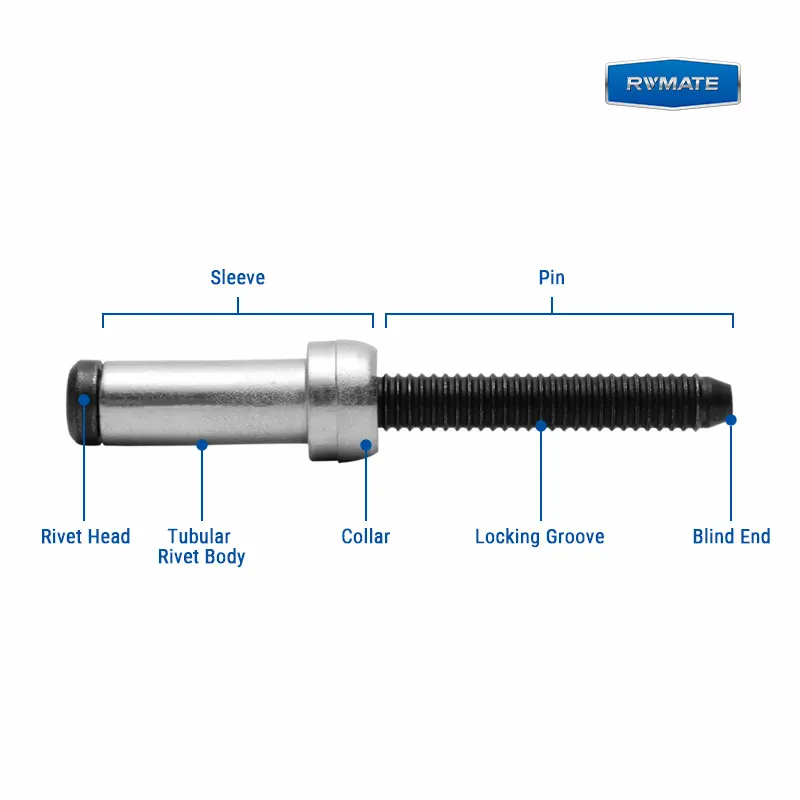
1. Sleeve
The sleeve is the hollow metal portion surrounding the BOM rivet. The sleeve must pass through the mounting hole in the component.
The rivet sleeve consists primarily of the following three sections:
- Rivet Head
Once installed, the rivet head presses against the workpiece surface, providing a large support area on the front face of the joint. Its function is to distribute the load and prevent the BOM rivet from being pulled back into the mounting hole. - Tubular Rivet Body
The tubular rivet body is the section that passes through the mounting holes of all workpieces to be joined. When the installation tool pulls the mandrel, the blind end of the body undergoes controlled deformation, forming a large bulge on the back of the workpiece. - Collar Area
Located near the front head of the rivet sleeve, this area—known as the collar—is designed for mechanical locking. After installation, the tool compresses this area, forcing the joined material into the locking grooves on the surface of the mandrel.
2. Pin
The pin is a solid metal component that passes through the center of the rivet sleeve. The pin is not only used to complete the installation, but part of it is also mechanically locked inside the rivet sleeve.
The pin primarily consists of the following functional areas:
- Blind End
Located on the back side of the workpiece, the pin pushes the rivet sleeve to deform, forming a bulge on the blind side. - Locking Groove
The grooved section on the surface of the pin. After press-fitting with the locking area, it creates a mechanical lock. - Pull-Through Tail
The portion that extends beyond the rivet sleeve and is gripped by the installation tool is called the pull-through tail. - Separation Zone
After mechanical locking is achieved, the excess pull-through tail is separated at a predetermined position.
How Does a BOM Rivet Work?
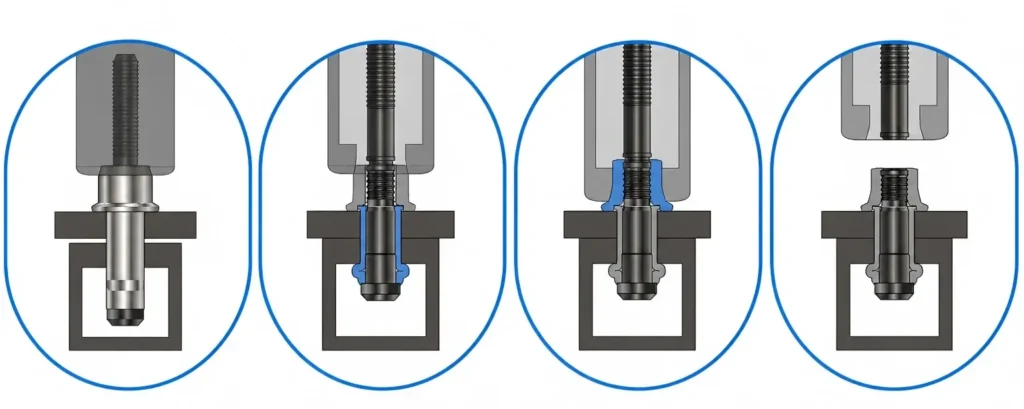
BOM rivets work by using a riveting tool to pull on the mandrel. The axial tensile force of the mandrel causes controlled plastic deformation of the rivet sleeve on the back side of the workpiece, forming a new load-bearing head on the back side. Subsequently, the locking ring is pressed into the groove of the mandrel, causing the mandrel, rivet sleeve, and workpiece to form a mechanically locked assembly.
What Are the Advantages of BOM Rivets?
1. Supports single-sided workpiece installation
BOM rivets can be used for connections where the back of the workpiece is inaccessible. They solve the problem of difficult bolt installation. They are particularly suitable for connecting enclosed profiles, hollow beams, enclosures, vehicle chassis, or internal equipment structures.
2. Provides high structural load-bearing capacity
BOM rivets can withstand significant shear and tensile loads. They are particularly suitable for structural connections with high performance requirements.
3. Excellent Vibration Resistance
After riveting, the locking ring is pressed into the locking groove on the surface of the mandrel, creating a mechanical interlock between the mandrel and the rivet sleeve. BOM’s mechanical locking structure is suitable for applications subject to vibration or impact, such as vehicles, rail equipment, and heavy machinery.
4. High Joint Clamping Force and Tightness
During the riveting process, the mandrel pulls the rivet sleeve, closing the gaps between multiple layers of sheet metal. Once the blind-end bulge forms on the back side, the rivet head on the front side and the blind-end bulge clamp the intermediate sheet metal from both sides. This effectively reduces relative movement, friction, and noise between the sheet metal layers.
5. Large Load-Bearing Area on the Back Side
When a BOM rivet deforms, the blind end of the rivet sleeve expands outward, forming a large bulge on the back of the workpiece. This effectively distributes concentrated loads.
6. Fast Installation and Good Assembly Consistency
BOM rivets use specialized riveting tools to complete the pulling, blind-end forming, clamping, and mechanical locking processes. The assembly process is simple and requires no additional secondary processing.
7. No need for periodic retightening
Unlike bolted connections, which require torque control and periodic inspection and retightening, BOM rivets form a permanent mechanical interlock. They do not require nuts and do not need to be retightened periodically.
8. Not Easily Disassembled
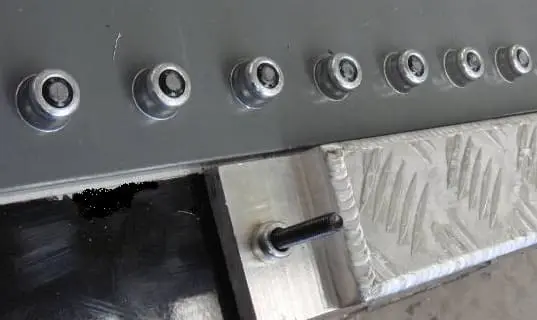
BOM rivets form a permanent connection. Once installed, they create a large blind-end bulge, and the mandrel is mechanically locked in place. Unlike bolts, they cannot be repeatedly disassembled.
What Are the Limitations of BOM Rivets?
Limitations 1. Not suitable for connections that require frequent disassembly
BOM rivets are permanent mechanical locking connections that can only be removed by drilling after installation—a destructive process. Removed rivets cannot be reused, and the installation holes may need to be inspected or repaired.
Limitations 2. Requires matching installation tools and tool tips
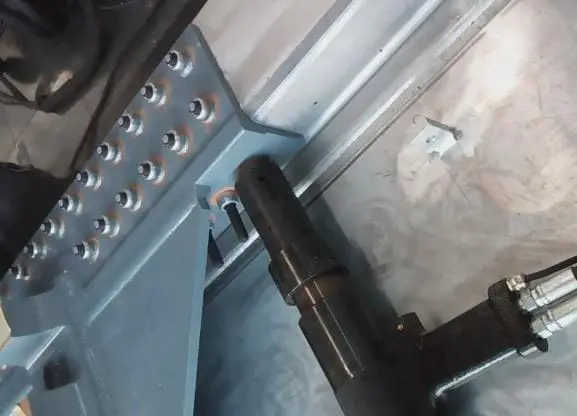
BOM rivets have a larger diameter and require higher pull force for forming and mechanical locking than standard pop rivets. The tool’s force, stroke, and head assembly must be matched to the corresponding diameter of the BOM rivet.
Notes: If the tool’s force is insufficient, the stroke is too short, or the head assembly is mismatched, riveting failures may occur, such as incomplete forming of the BOM rivet or the mandrel breaking off at an unintended position.
Limitations 3. Strict Requirements for Grip range
Each BOM rivet size has a corresponding grip range; a single size cannot cover all plate thicknesses. You must select the correct BOM rivet diameter based on the technical specifications provided by the supplier.
Based on our experience with actual projects: If the rivet is too long, the blind-end bulge may not lie flush against the workpiece, causing the joint to become loose. If the rivet is too short, the rivet sleeve may not be long enough to form a complete bulge, preventing mechanical locking.
Limitations 4. Requirements for Mounting Hole Dimensions and Quality
Before installing BOM rivets, holes must be machined to meet product requirements. Only after riveting can high load-bearing capacity be achieved. The rivet diameter specifies the corresponding hole diameter range.
From the perspective of long-term stability: if the hole diameter is too small, the rivet may not insert smoothly into the materials being joined; if the hole diameter is too large, the gap between the rivet and the hole wall will increase, reducing the stability and load-bearing capacity of the joint.
Limitations 5. Sufficient forming space must be available on the blind side
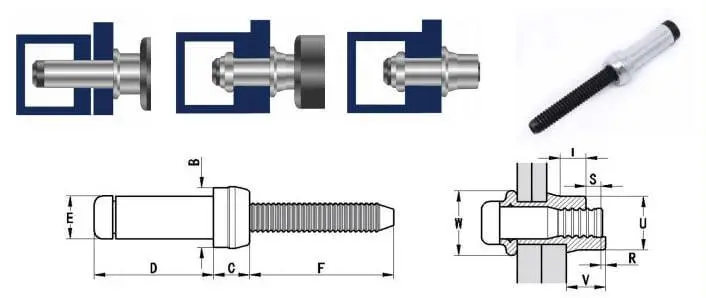
BOM rivets can be installed from one side. However, during the riveting process, the rivet sleeve requires sufficient axial and radial space to expand outward from the back of the workpiece, forming a large blind-end bulge. Therefore, single-sided installation does not mean that no space is required on the back side.
Note: Please be aware that if the back of the workpiece is in close contact with other parts, reinforcing ribs, tube walls, or electronic components, the bulge may not be able to fully expand. This can reduce clamping force and mechanical locking effectiveness, and may even damage nearby components.
Limitations 6. Not Suitable for Thin, Soft, or Fragile Materials
BOM rivets generate significant tensile and clamping forces during the forming process. For thin, soft, or brittle materials, this can damage the workpiece’s surface.
Limitations 7. Cannot Provide Water- or Air-Tight Connections
The primary functions of BOM rivets are high-strength load-bearing and mechanical locking; they lack sealing performance.
Limitations 8. Not suitable for projects requiring only lightweight connections
BOM rivets are primarily used for high-strength and heavy-duty structural connections. For decorative panels, lightweight enclosures, small brackets, or ordinary thin sheets, connections made with BOM rivets may damage the workpiece itself.
What Sizes and Materials Are Available for BOM Rivets?
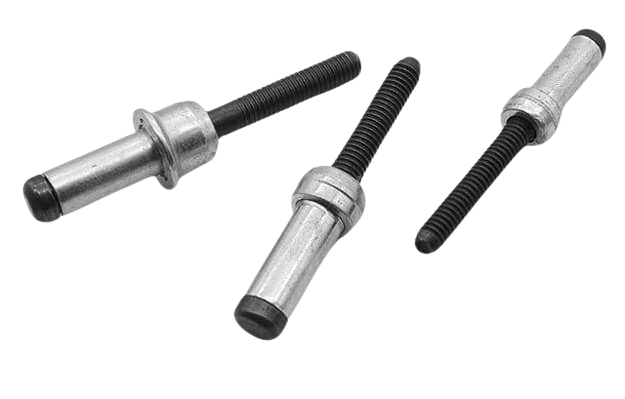
Due to their high-strength structural design, BOM rivets are typically made of carbon steel. This material helps provide high shear strength and tensile strength, making them particularly suitable for structural connections in vehicles, rail transit, solar mounting systems, and heavy-duty equipment. BOM rivets are available in a wide range of sizes, from 4.8 to 12.7 mm. Their overall clamping range covers diameters from 2.4 to 41.3 mm.
| Nominal Diameter | Imperial Size | Overall Grip Range | Recommended Hole Diameter | Sleeve Material and Surface Finish | Pin Material and Surface Finish | Typical Shear Strength | Typical Tensile Strength |
|---|---|---|---|---|---|---|---|
| 4.8 mm | 3/16″ | 2.4–19.9 mm | 5.30–5.65 mm | Carbon steel; environmentally friendly trivalent chromium blue-white zinc plating | Carbon steel; phosphate coating | 12,400 N | 8,000 N |
| 6.4 mm | 1/4″ | 2.8–19.9 mm | 7.10–7.40 mm | Carbon steel; environmentally friendly trivalent chromium blue-white zinc plating | Carbon steel; phosphate coating | 22,700 N | 14,500 N |
| 8.0 mm | 5/16″ | 4.8–27.0 mm | 8.85–9.35 mm | Carbon steel; environmentally friendly trivalent chromium blue-white zinc plating | Carbon steel; phosphate coating | 35,800 N | 23,100 N |
| 10.0 mm | 3/8″ | 4.8–33.3 mm | 10.50–11.05 mm | Carbon steel; environmentally friendly trivalent chromium blue-white zinc plating | Carbon steel; phosphate coating | 49,400 N | 32,300 N |
| 12.7 mm | 1/2″ | 6.4–41.3 mm | 13.90–14.75 mm | Carbon steel; environmentally friendly trivalent chromium blue-white zinc plating | Carbon steel; phosphate coating | 89,600 N | 57,800 N |
*The information in the table above is sourced from Rivmate. For more details, please refer to the catalog.
What Are BOM Rivets Used For?
BOM rivets are designed for heavy-duty structures that can only be assembled from one side but require high joint strength and vibration resistance. The following are common applications of BOM rivets.
Application 1. Photovoltaic Mounting Systems and Solar Structures

These locations are subjected to outdoor wind loads and vibrations over the long term and require stable, permanent connections. Therefore, the use of BOM rivets is essential.
Application 2. Rail Transit Structures

Trains and track equipment are subjected to vibration, impact, and cyclic loads during operation. The long-term stability of joints is critical. BOM rivets feature a mechanical locking mechanism that provides vibration resistance and high load-bearing capacity, making them well-suited for these applications.
Application 3. Enclosed Structures Where Access from the Rear Is Impossible
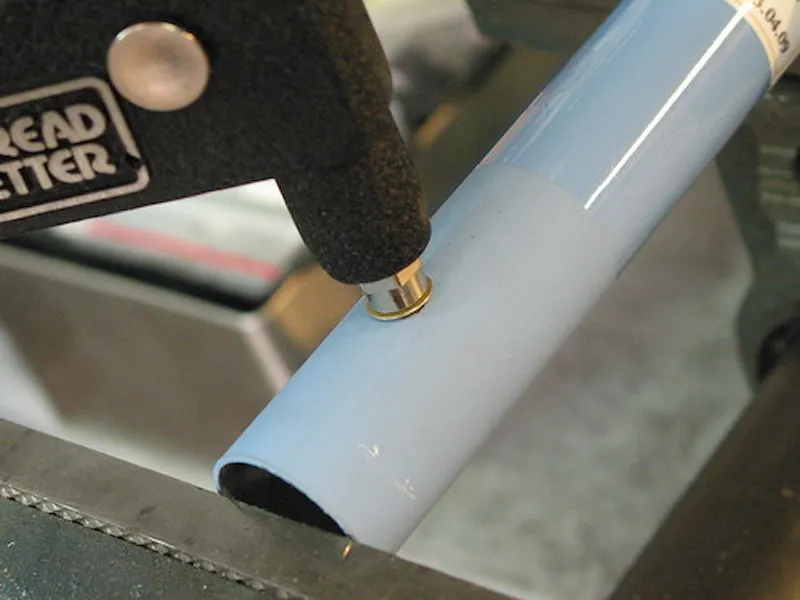
BOM rivets require connection from only one side. They are particularly suitable for joining enclosed profiles, enclosures, hollow beams, or structures with limited internal space.
Application 4. Connections Subject to High Shear Loads
The BOM rivet’s sleeve and mechanically locked mandrel work together to transfer loads. Therefore, BOM rivets are more suitable for high-shear connections than standard lightweight pop rivets.
The reference shear forces for different sizes are as follows:
BOM Rivet Diameter
4.8 mm
6.4 mm
8.0 mm
10.0 mm
12.7 mm
Reference Shear Force
12,400 N
22,700 N
35,800 N
49,400 N
89,600 N
Application 5. Joints Subject to Tensile or Separation Loads
Once installed, the BOM rivet’s head on the front side and the blind-end bulge on the back side clamp the workpiece from both sides. This larger, double-sided load-bearing structure helps the rivet resist the tendency to be pulled out of the installation hole.
Application 6. Environments Subject to Continuous Vibration and Impact
The shank of a BOM rivet forms a mechanical interlock with the rivet sleeve through a locking mechanism. This effectively reduces the risk of shank withdrawal and joint loosening. BOM rivets are suitable for use in locations subject to continuous vibration and shock.
Application 7. Permanent Connections That Do Not Require Frequent Disassembly
Once installed, BOM rivets cannot be unscrewed directly like bolts. The connection maintains long-term stability.
BOM Rivet vs Standard Blind Rivet
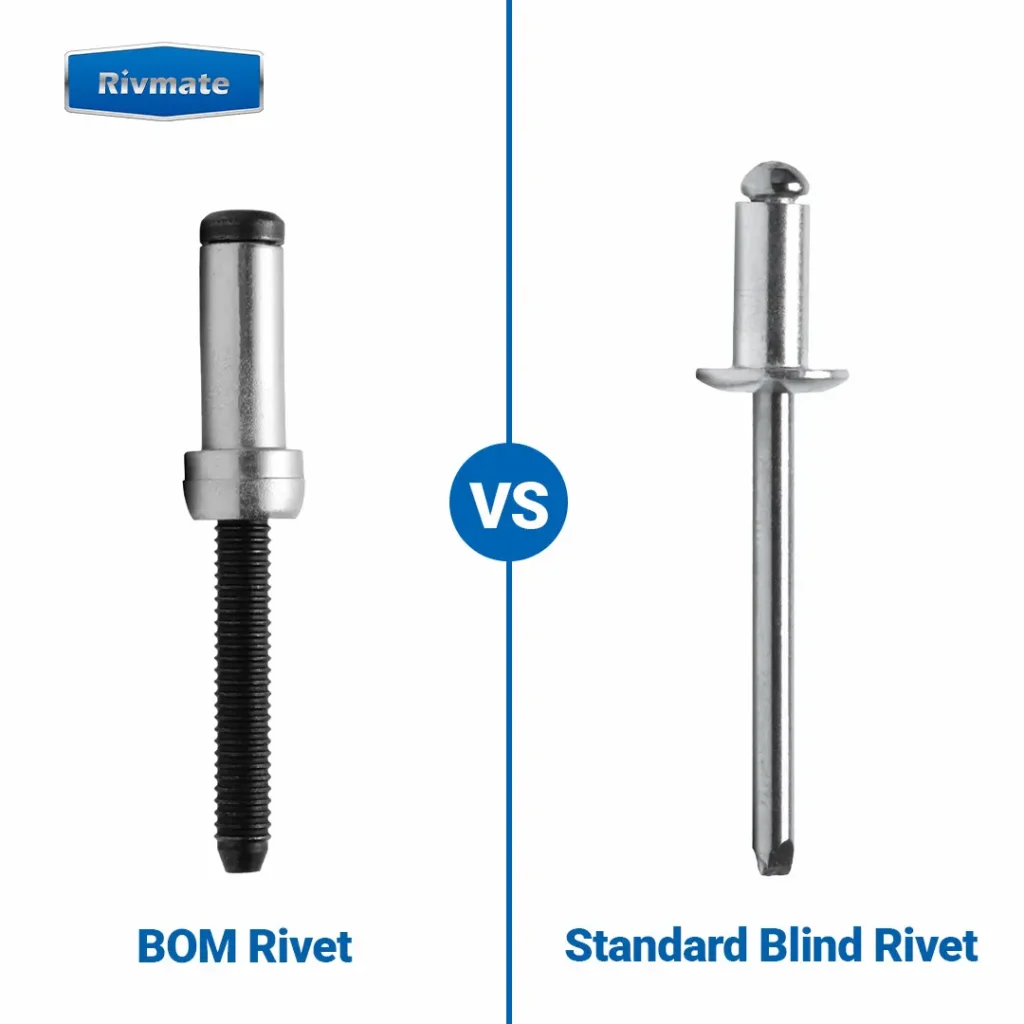
| Comparison Item | BOM Rivet | Standard Blind Rivet |
|---|---|---|
| Product Positioning | Heavy-duty structural blind fastener | General non-structural blind fastener |
| Installation Access | One-side installation | One-side installation |
| Main Applications | Load-bearing structures, vibrating structures, and permanent joints | Sheet metal, enclosures, panels, and general assembly |
| Load Capacity | Suitable for higher shear and tensile loads | Suitable for low to medium loads |
| Pin Retention | The pin is secured by a mechanical locking structure | Usually does not have the same mechanical locking structure as a BOM rivet |
| Vibration Conditions | Better suited for continuous vibration and impact loads | Better suited for general assemblies with limited vibration |
| Common Diameters | Mainly available in larger structural sizes | Usually available in smaller diameters |
| Typical Workpieces | Structural steel plates, thick plates, brackets, and load-bearing components | Thin metal sheets, enclosures, ductwork, and decorative components |
| Installation Tools | Usually requires a compatible high-pull-force installation tool | Can be installed using a wider range of manual, pneumatic, or cordless tools |
| Cost | Fastener and tooling costs are usually higher | Lower cost and suitable for general high-volume assembly |
| Removal Method | Usually requires destructive removal | Also requires drilling, but is generally easier to remove |
| Suitable for Light-Duty Joints | Usually unnecessary | More suitable |
How to Choose the Right BOM Rivet?
Step 1. Determine Whether BOM Rivets Are Suitable for Your Project’s Joints
Before selecting specific specifications, you should first determine whether your project actually requires BOM rivets. If you are simply fastening thin sheets, enclosures, or decorative panels, standard blind rivets are typically more cost-effective and easier to install.
Step 2. Measure the total clamped thickness of the workpiece
You need to select a BOM rivet size that matches your sheet thickness range based on the technical specifications provided by the supplier.
Step 3. Select the rivet diameter based on the load
After confirming the workpiece thickness, you need to select the BOM rivet diameter based on the load the joint will bear.
Step 4. Distinguish Between Shear and Tensile Loads
If the joint is subjected to both shear and tensile loads, you must perform calculations based on the project’s combined load requirements. Connection performance must be verified through prototype testing.
Step 5. Strictly Match the Mounting Hole Diameter
The pre-machined holes for BOM rivets must fall within the specified range.
Step 6. Check the Workpiece Material and Hole Edge Conditions
BOM rivets are inherently strong, but the workpiece may not be able to withstand the same load. You need to check whether the workpiece has sufficient clearance and strength to accommodate the BOM rivets.
Step 7. Verify Material and Corrosion Resistance
You need to determine whether the workpiece material has sufficient corrosion resistance based on the operating environment. In particular, when the workpiece is exposed to outdoor, coastal, or humid environments, you must evaluate the risk of galvanic corrosion between different metals and take appropriate measures.
Step 8. Check the Forming Clearance on the Blind Side
BOM rivets must deform on the back side of the workpiece to form a load-bearing structure at the blind end. You must ensure there is sufficient clearance on the back side to prevent the blind end from contacting other components during forming.
Step 9. Match the Installation Tool and Nozzle
BOM rivets are large-sized structural blind fasteners that require high installation tension. You must select an installation tool with a nozzle and tension capacity that matches these requirements.
Step 10. Perform Sample Installation and Joint Testing
For heavy-duty, vibration-prone, or safety-critical applications, you must conduct sample riveting tests in advance to verify performance.
How to Install a BOM Rivet Correctly
The key to properly installing BOM rivets is ensuring that the rivet sleeve deforms completely on the back of the workpiece and that the workpiece is fully clamped. After installation, the mandrel is securely mechanically locked in place.
Before installation, you must verify that the BOM rivet’s diameter, clamping range, and mounting hole dimensions all meet the requirements. The tool must match the rivet’s specifications. Below, our technical team has also filmed the process for correctly riveting BOM rivets.
How Do You Inspect a BOM Rivet?
During actual assembly, inspecting the BOM rivets is also very important. You need to use specialized equipment to verify whether the performance of the BOM rivets is suitable for connecting your product. This step is particularly indispensable in critical industrial structures.
Common BOM Rivet Installation Problems
The quality of BOM rivet installation depends not only on the rivets themselves but is also influenced by other factors. These include specification selection, installation holes, tools and tool tips, tool operation methods, workpiece clearance, and space on the blind side.
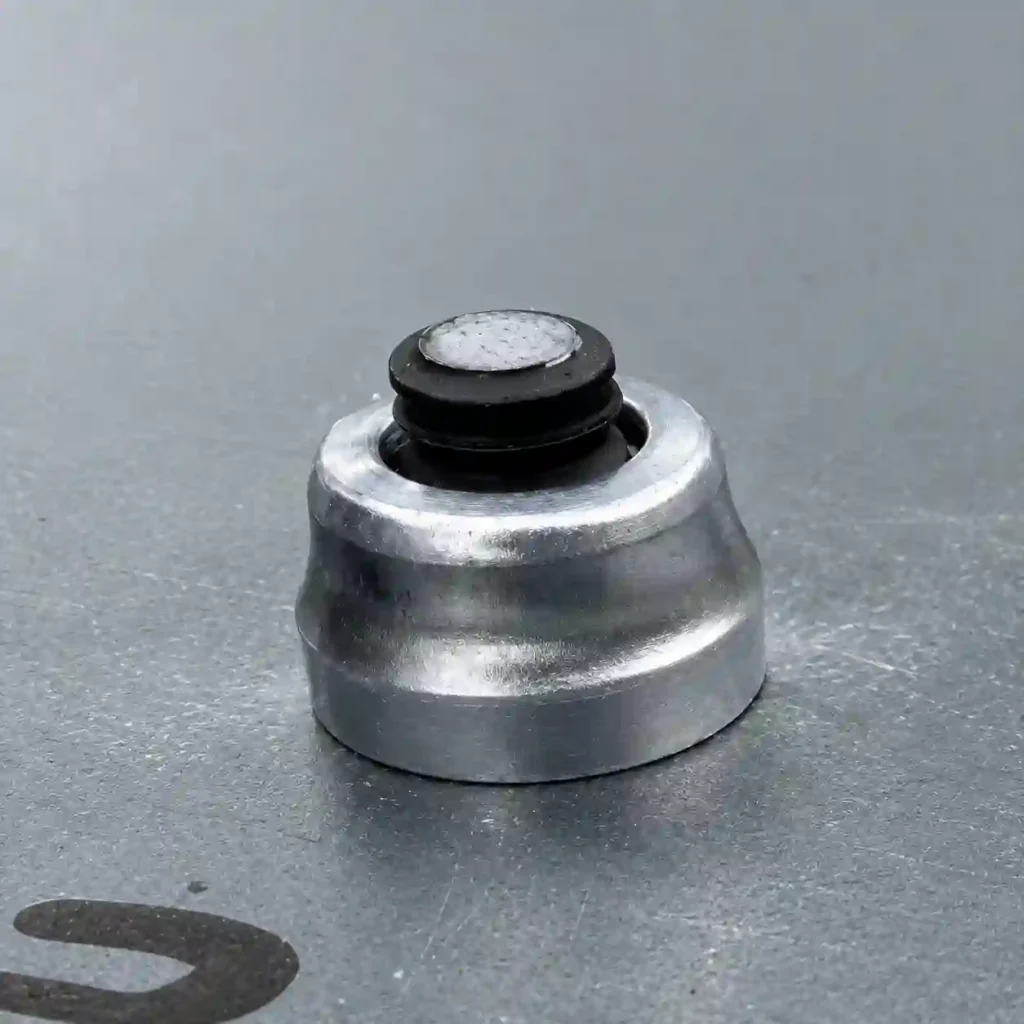
Based on actual feedback from a Spanish photovoltaic equipment customer, it was found that during the installation of 10mm BOM rivets, the flange area of the rivet body was not deforming properly. Upon inspection, it was determined that the cause was not insufficient strength of the rivet itself, but rather that the inner diameter of the customer’s riveting gun head was too small, which restricted the normal deformation of the BOM rivet’s flange area.
Other riveting issues may also arise during actual assembly. Common installation problems include protruding rivet heads, sunken rivet heads, abnormal breakage locations of the mandrel, loose joints, and incomplete forming. If you encounter these issues, you can inspect them in the following order:
Specifications and clamping range → Mounting holes → Workpiece clearance → Space on the blind side → Tool and nozzle → Blind-end forming → Mandrel locking and separation.
Quick Troubleshooting Table
| Installation Problem | What You May Observe | Check First |
|---|---|---|
| Rivet Head Not Fully Seated | The rivet head is raised or there is a visible gap | Hole alignment, burrs, and installation tool angle |
| Incomplete Blind-Side Formation | The blind-side bulge is too small or remains away from the workpiece | Grip range, tool stroke, and blind-side clearance |
| Pin Does Not Break | The tool stops, but the pintail remains excessively long | Tool pull force, nose assembly, and rivet specification |
| Abnormal Pin Protrusion | The pin remains noticeably above the rivet surface after separation | Swaging condition and tool stroke |
| Loose Joint | A visible gap remains between the workpieces | Rivet length and assembly gap |
| Incomplete Mechanical Lock | The pin is loose or the locking collar is uneven | Nose assembly, tool pull force, and tool alignment |
| Nose Assembly Jam | The tool cannot be removed or does not return properly | Dry firing, broken pin debris, and jaw condition |
| Jaw Slippage | The pin is scratched, but the installation is not completed | Jaw wear and effective gripping length |
When Should You Use a BOM Rivet?
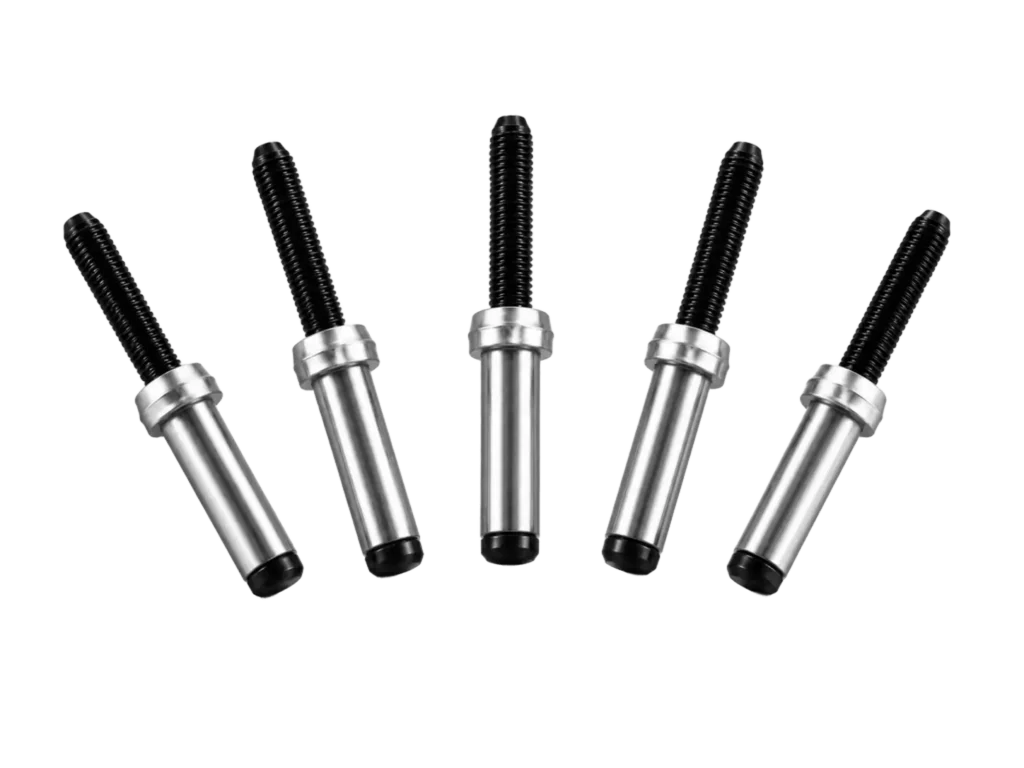
A BOM Rivet May Be Suitable When:
Consider BOM rivets when your project requires single-sided installation, high load-bearing capacity, vibration resistance, and a permanent connection:
- You have access to only one side of the workpiece
- The joint needs to withstand high shear or tensile loads
- The connection is subject to prolonged vibration or impact
- The connection needs to remain fixed over the long term
- You want to reduce welding and bolted assembly processes
- The workpiece material can withstand high forming and clamping forces
A BOM Rivet May Not Be Suitable When:
BOM rivets may not be the best choice for your project if it involves light-duty connections, frequent disassembly, strict sealing requirements, or the joining of very thin or soft materials:
- The product requires frequent disassembly and maintenance
- For general, lightweight assembly connections
- The workpiece material is very thin, soft, or prone to cracking
- There is no forming space on the back of the workpiece
- Tools that match the pull force and stroke of BOM rivets are unavailable
- The project requires frequent adjustments to the clamping thickness
Conclusion: Is a BOM Rivet Right for Your Application?
Whether BOM rivets are suitable for your project depends on whether the application requires single-sided installation, high load-bearing capacity, mechanical locking, and long-term vibration resistance.
If the back of the workpiece is inaccessible and the joint must withstand high shear loads, tensile loads, vibration, or impact, then BOM rivets are the right choice. BOM rivets form a large blind-end bearing head on the back of the workpiece and mechanically lock the mandrel within the rivet sleeve, creating a strong, stable, permanent joint.
Do you know which model of BOM rivet is right for your project? If you’re unsure, please send Rivmate the workpiece material, total clamping thickness, mounting hole diameter, operating environment, expected load, and purchase quantity. Our technical team will provide you with professional selection advice and sample support.
Frequently Asked Questions About BOM Rivets
Is a BOM rivet the same as a Huck bolt?
No. BOM rivets and HuckBolts are not the same type of fastener. A BOM is a single-sided, structural blind fastener. A HuckBolt consists of a pin with a locking groove and a separate locking ring.
Can a BOM rivet replace welding?
BOM rivets can replace some welded joints. They cannot replace all welds. Technical validation is required before they can be used as a replacement.
Can a BOM rivet be removed?
It can be removed. Removal will damage the rivets. Once removed, it cannot be reused.
Are BOM rivets suitable for thin sheet metal?
BOM rivets are not suitable for use with very thin, single-layer sheet metal. They may damage the thin sheet. You should only consider using BOM rivets when the total clamped thickness of the thin sheet material, the sheet strength, the hole edge conditions, and the actual load all meet the requirements.
Work with a IATF 16949 Certified Blind Rivet Manufacturer
Get High Quality Rivets Instead of Huck and Avdel Rivets

Rivmate Rivet
Rivmate is blind rivets manufacturers in china. The company is IATF 16949 certified and offers high-strength structural blind rivets that serve as alternatives to Huck and Avdel products.
Explore Rivmate Cases
Rivmate Rivet
Rivmate is blind rivets manufacturers in china. The company is IATF 16949 certified and offers high-strength structural blind rivets that serve as alternatives to Huck and Avdel products.

Hey There, I'm Allen!
I am the boss of Rivmate. For over two decades, we have specialized in the manufacture of blind rivets, providing our customers with reliable riveting solutions. Need riveting services? Feel free to contact us.