The choice between flat-head rivet nuts and countersunk rivet nuts depends on the project’s requirements for the mounting surface, sheet thickness, and load-bearing capacity of the joint. Both flat-head and countersunk rivet nuts create internal threaded connection points on the sheet for bolt fastening after single-sided installation.
The difference lies in the design of the head, which results in different application scenarios. If your project allows for protrusion from the sheet metal surface after installation, you can choose the Flat Head. If your project requires a flush surface, you should consider the Countersunk type.
Table of Contents
Flat Head vs Countersunk: Flange Geometry and Surface Profile
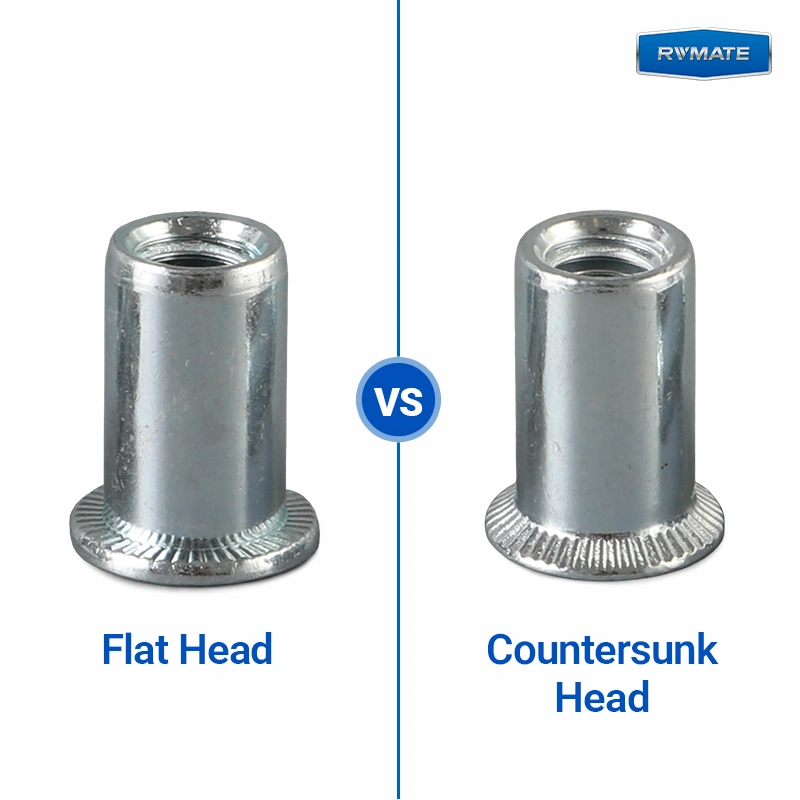
Flange Design: Flat Head vs Countersunk Rivet Nuts
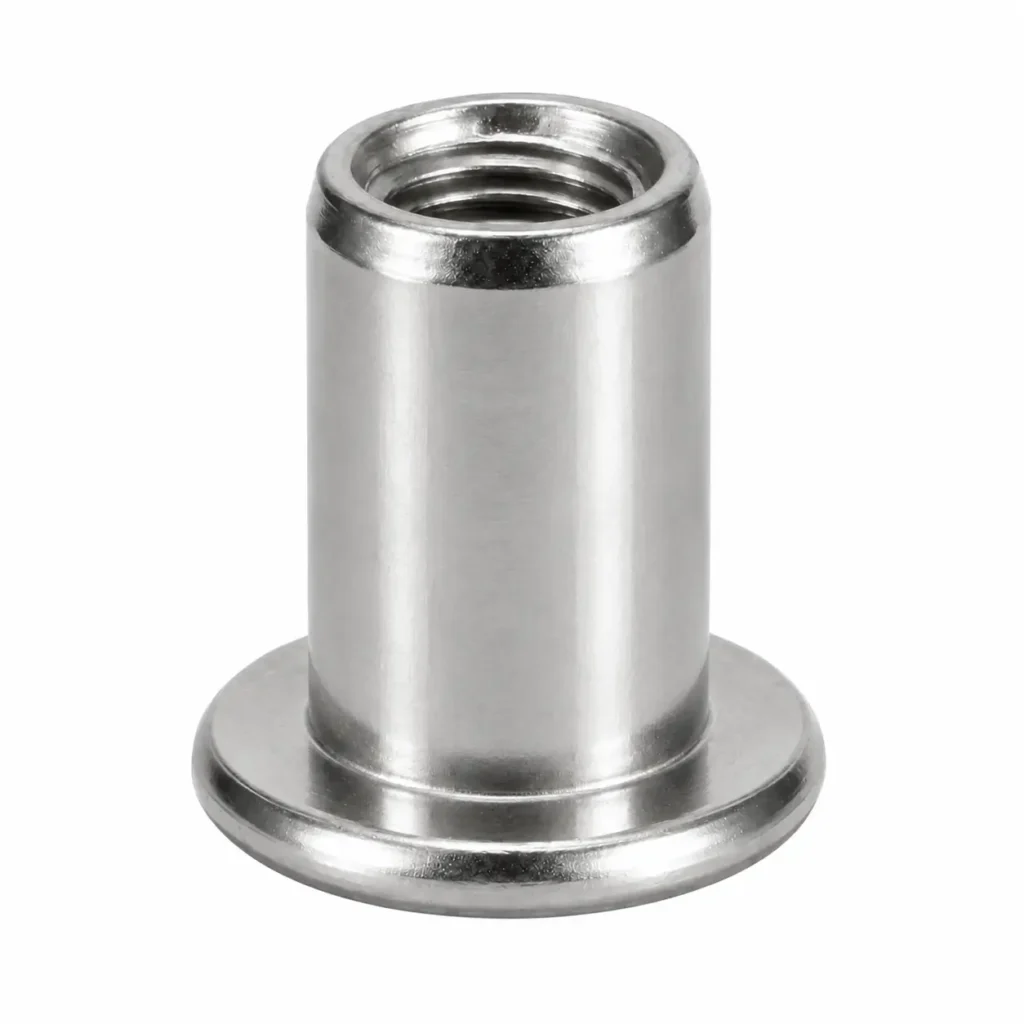
The flange of a Flat Head Rivet Nut is flat and disc-shaped. Once installed, the bottom surface of the flange lies flush against the sheet metal surface, while the head protrudes above the surface. The larger flange contact area helps distribute the pressure at the hole opening. It is suitable for general sheet metal structures and assembly locations where the head can protrude.
The flange of a Flat Head Rivet Nut is flat and disc-shaped. Once installed, the bottom surface of the flange lies flush against the sheet metal surface, while the head protrudes above the surface. The larger flange contact area helps distribute the pressure at the hole opening. It is suitable for general sheet metal structures and assembly locations where the head can protrude.
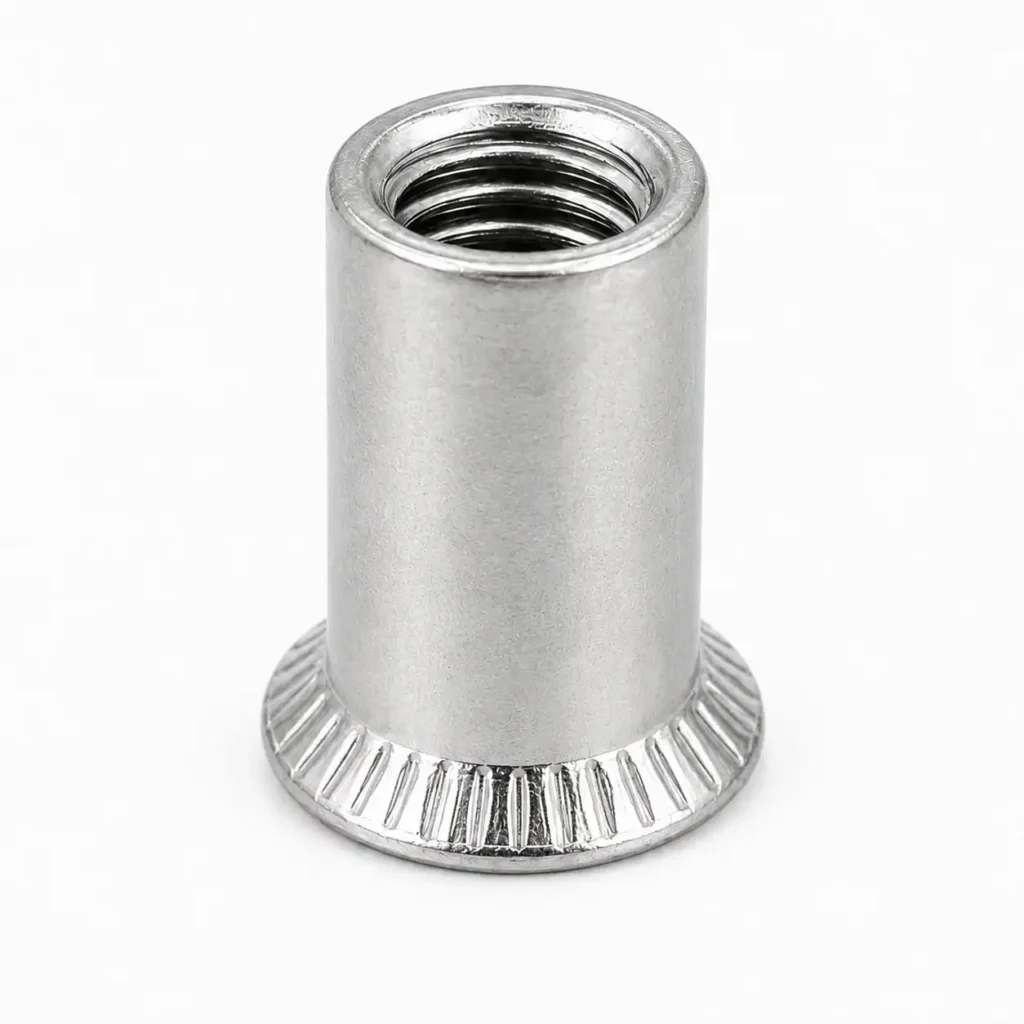
Countersunk rivet nuts have a conical flange. You must pre-drill an additional countersink hole that matches the size of the flange. After installation, the conical head is embedded in the countersink, creating a flush or nearly flush mounting surface. This improves the overall visual consistency of the product.
Installed Surface Profile: Protruding vs Flush-Mounted Heads

After installation, the flange of a flat-head rivet nut protrudes above the surface of the sheet metal. The height of this protrusion depends on the flange thickness of the product. Flat-head rivet nuts are not suitable for direct assembly with other parts, as the protruding flange creates a gap between the assembled components.
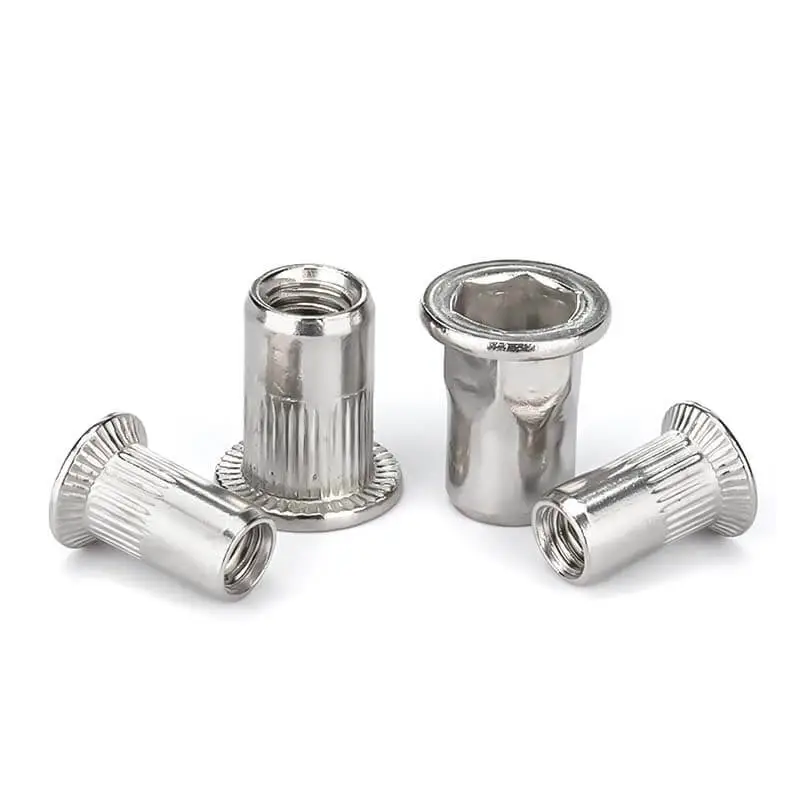
The key advantage of countersunk rivet nuts is that they minimize flange protrusion. This is contingent upon ensuring that the countersink angle and depth match the flange dimensions. Once installed, the head sits virtually flush with the sheet metal surface. They are particularly suitable for structures requiring a flat surface or tight-fitting components.
Choosing Between a Raised Flange and a Flush Surface
When choosing between flat-head and countersunk rivet nuts, the most important factor to consider is whether the mounting surface allows for a protruding head. A raised flange remains above the sheet metal surface, while a flush-surface installation requires the head to be essentially flush with the sheet metal surface. You should make your selection based on the actual assembly space, sheet metal thickness, and part fit requirements.
When to Choose Flat Head Rivet Nuts

If your assembly location allows for a protruding head, we recommend prioritizing flat-head rivet nuts. Flat-head rivet nuts are relatively simple to machine and do not require additional countersinking. The flange can rest directly on the sheet metal surface, making them suitable for general sheet metal connections such as equipment frames and metal enclosures. However, if other parts need to fit flush against the mounting surface, a protruding flange may cause gaps or assembly interference.
When to Choose Countersunk Rivet Nuts
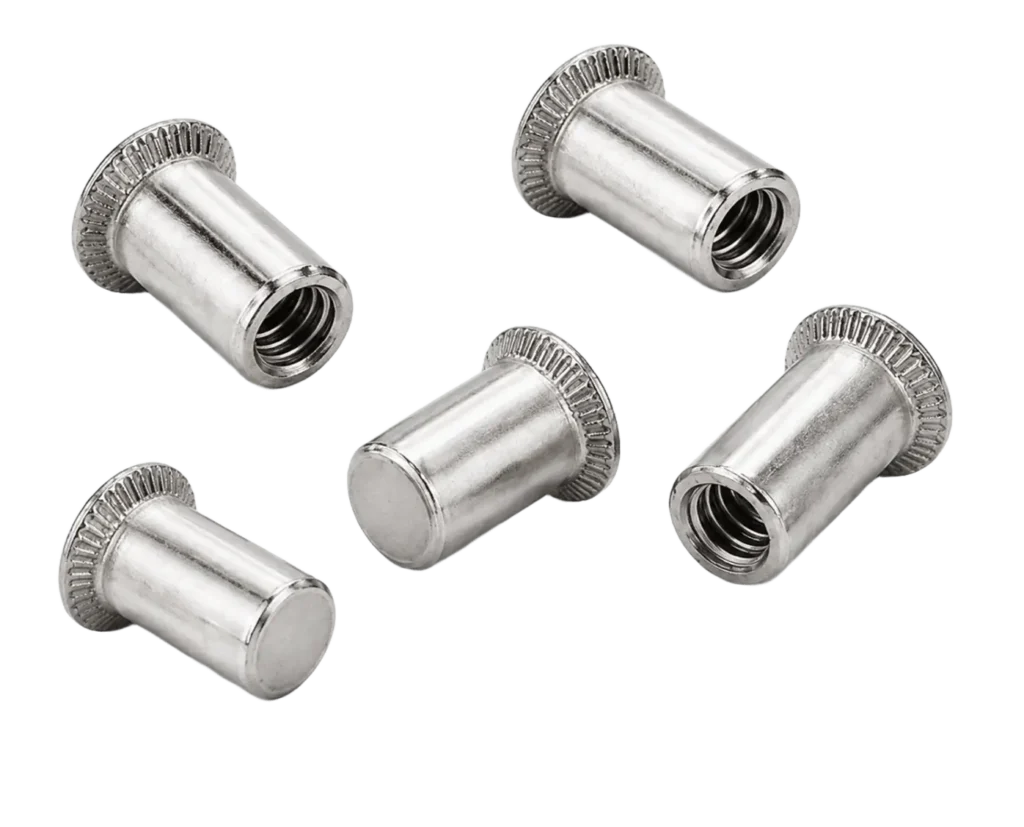
- The sheet metal must fit tightly against other parts
- The installation location does not allow for a protruding head
When the conical flange of a countersunk rivet nut is embedded in a matching countersink, it minimizes surface protrusion. A prerequisite is that you must confirm the sheet metal is thick enough so that the material is not thinned to an insufficient level due to the countersink machining. Then, determine the countersink dimensions based on the product drawings. For sheet metal that is too thin, removing material from the hole opening may compromise local structural support.
Sheet Thickness and Remaining Material Beneath the Countersink
1. How Sheet Metal Thickness Affects the Selection of Countersunk Rivet Nuts
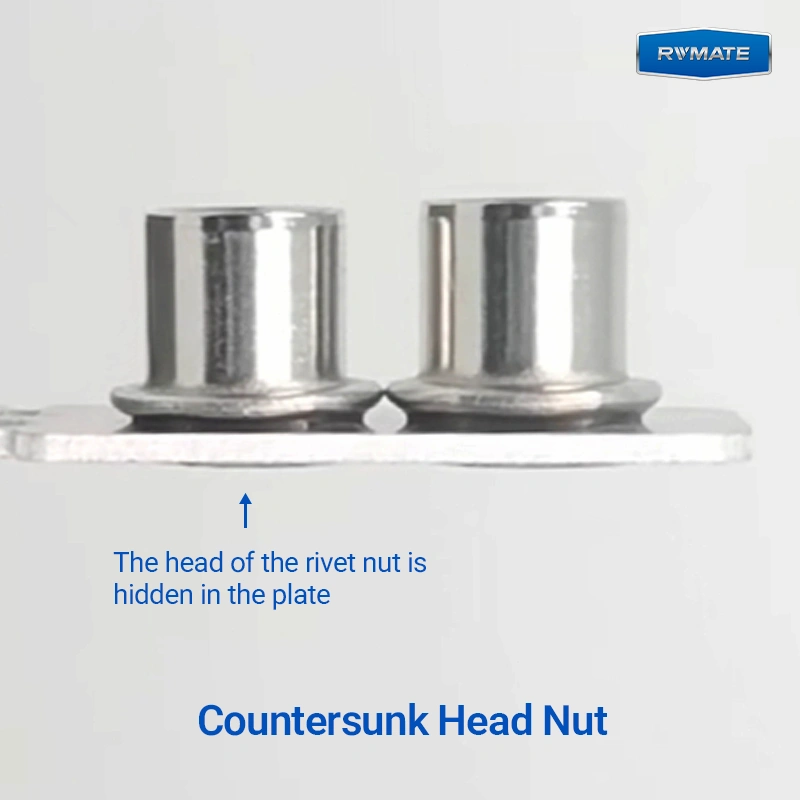
Sheet metal thickness is also one of the key factors in selecting countersunk rivet nuts. This is because countersunk rivet nuts require countersinking at the installation hole. You need to verify in advance that the sheet metal is thick enough to accommodate the flange. You must also ensure that the sheet metal, after the countersink has been machined, can withstand the installation pressure of the rivet nut.
Flat-head rivet nuts are simple to install and do not require additional countersinking. Therefore, they are suitable for thin sheets where excessive material cannot be removed from the hole opening. If your sheet metal is very thin, even if a countersink can be machined, the structure will still be unable to withstand the actual assembly loads.
2.Why Remaining Material Thickness Matters for Countersunk Rivet Nuts
Remaining material thickness refers to the thickness of the sheet metal retained at the corresponding location around the hole opening after the countersink is machined. The deeper the countersink, the less remaining material there will be in that area. This ultimately reduces the support provided by the hole opening.
If there is insufficient remaining material beneath the countersink, local deformation at the hole opening, head sinking, or connection loosening may occur during installation or under load. Therefore, you must not only check the original sheet thickness but also verify the countersink depth, flange dimensions, and the cross-section of the hole opening after machining.
Hole Diameter, Countersink Angle, and Depth Requirements
When installing flat-head rivet nuts and countersunk rivet nuts, there are many factors that can affect the quality of the installation. These include the diameter of the mounting hole, as well as the angle and depth of the countersink. Flat-head rivet nuts only require a mounting hole that meets the specifications, while countersunk rivet nuts also require a countersink that matches the tapered flange. If these dimensions are incorrect, even if the rivet nut can be installed, the head may not sit flush,
Hole Diameter Requirements
“Hole Diameter” refers to the diameter of the hole in the sheet metal designed to accommodate the body of the rivet nut, not the diameter of the internal thread. You must machine the mounting hole based on the outer diameter of the specific product’s body and the hole diameter tolerances specified by the manufacturer.
- If the hole is too small, the rivet nut may not insert properly. Forcing it in will damage the surface material of the rivet nut.
- If the hole is too large, it will reduce the anti-rotation strength after installation, resulting in an unstable connection.
Countersink Angle Requirements
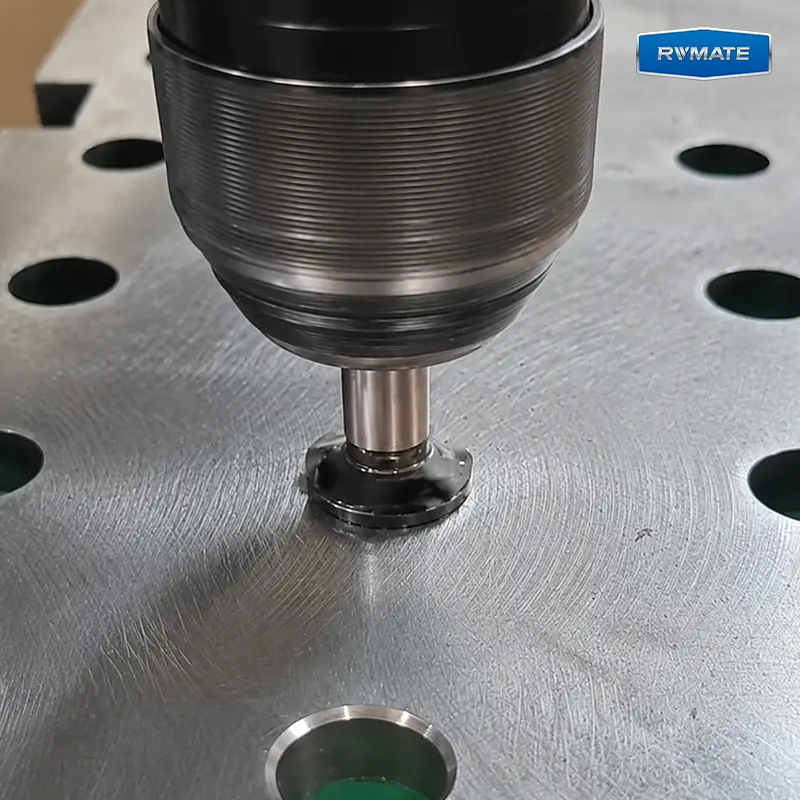
The countersink angle refers to the angle formed by the two conical surfaces on either side of the countersink. It must match the flange cone angle of the countersunk rivet nut. Only when the angles match will the conical flange seat properly, ensuring the support contact required by the design. The correct procedure is to first confirm the product model and then select a countersink tool with the corresponding angle based on the technical drawings.
Countersink Depth Requirements
Countersink depth can be understood as the vertical distance from the original surface of the sheet metal to the bottom of the countersink. It directly affects the head protrusion height of the countersunk rivet nut after installation and the amount of material remaining at the hole opening. Therefore, machining the correct countersink depth is crucial. You should determine the machining depth based on the head height, flange diameter, and countersink angle specified in the product drawings, while also considering actual assembly requirements.
- If the countersink is too shallow, the flange will protrude significantly above the sheet metal surface. This directly affects the fit with adjacent parts and may even cause assembly interference.
- If the countersink is too deep, the flange may sit below the sheet metal surface. This not only alters the intended contact conditions but also reduces the remaining supporting material at the hole opening.
- If the countersink depth is uneven, it will result in inconsistent head protrusion heights at different installation locations, affecting the stability of mass assembly.
Comparing Bearing Support and Pull-Through Resistance
When comparing flat-head rivet nuts and countersunk rivet nuts, the two most important performance characteristics are bearing support and pull-through resistance. You should make your decision based on actual product test data provided by the supplier.
| Comparison Factor | Flat Head Rivet Nuts | Countersunk Rivet Nuts |
|---|---|---|
| Flange Support | The flat flange rests directly on the sheet surface. | The tapered flange bears against the countersunk surface of the installation hole. |
| Contact Area | Standard flat heads typically provide a broad, flat bearing area that helps distribute pressure. | Effective contact depends on the tapered flange geometry, countersink angle, and seating accuracy. |
| Load Distribution | Transfers flange-side loads across the sheet surface around the installation hole. | Transfers flange-side loads through the tapered contact surface and requires accurate seating. |
| Hole Deformation Risk | A broad bearing area can help reduce localized sheet deformation under suitable loading. | Material removed during countersinking may increase local deformation risk in thin sheets. |
| Pull-Through Resistance | A larger flange may improve resistance to head-side pull-through under comparable conditions. | Depends on flange geometry, countersink support, remaining sheet thickness, and loading direction. |
| Thin-Sheet Suitability | Often a practical starting choice when flange protrusion is acceptable. | Requires careful evaluation of the remaining material beneath the countersink. |
| Main Limitations | The protruding flange may interfere with adjacent components or mating surfaces. | Countersink accuracy, sheet thickness, and local bearing support can limit suitability. |
| Selection Guidance | Prefer when broad flange support and simpler hole preparation are priorities. | Consider when flush mounting is necessary and the required load capacity has been verified. |
Matching Grip Range and Setting Tool Setup
Compare two types of rivet nuts: flat-head rivet nuts and countersunk rivet nuts. You must not only pay attention to the head design but also ensure that the clamping thickness range matches the installation tool settings correctly. Both types of rivet nuts operate on the same principle: an installation tool deforms the rivet body on the back of the sheet metal to form a secure fastening. If the clamping thickness of the product you select does not match the requirements, or if the tool’s pull force or stroke settings are incorrect, the installation may still be completed but could result in issues such as loosening, thread deformation, or an unstable fastening.
How to Match Rivet Nut Grip Range to Sheet Thickness
The Grip Range consists of maximum and minimum values and represents the range of sheet thicknesses for which a specific rivet nut model can be reliably installed. The Grip Range determines whether the rivet nut can form an appropriate back bulge during installation.
- Flat-head rivet nuts: Select the appropriate Grip Range based on the actual sheet thickness at the installation location. If the joint consists of multiple layers of sheet metal, you must measure the total thickness actually clamped by the rivet nut.
- Countersunk rivet nuts: Select a Grip Range that meets the product specifications. You must also consider the countersink configuration. For standard machined countersinks, the clamping thickness cannot simply be calculated by subtracting the countersink depth from the original sheet thickness. For countersunk holes formed by stamped flanges, measurements must be taken based on the actual post-forming structure. Specifically, follow the measurement definitions in the product drawings.
If the sheet thickness is below the Grip Range, the rivet body may deform excessively. If the sheet thickness exceeds the Grip Range, sufficient back support may not be provided. When selecting a specific product model, check the minimum and maximum Grip Ranges for that model.
How to Set Rivet Nut Tool Stroke and Pulling Force

- Select the appropriate installation tool based on the rivet nut specifications.The installation tool’s pull rod and support jaws must match the thread specifications. When installing countersunk rivet nuts in particular, carefully check that the support jaws make proper contact with the head to reduce the risk of incomplete riveting caused by the jaws straddling the edge of the countersink.
- Adjust the installation stroke or pull force according to the product specifications.
- Avoid under- or over-installation. The correct settings should ensure that the rivet nut provides the back support required by the design, while avoiding the pursuit of excessive pull force that could compromise the connection’s performance.
How to Verify Grip Range and Tool Settings Before Production
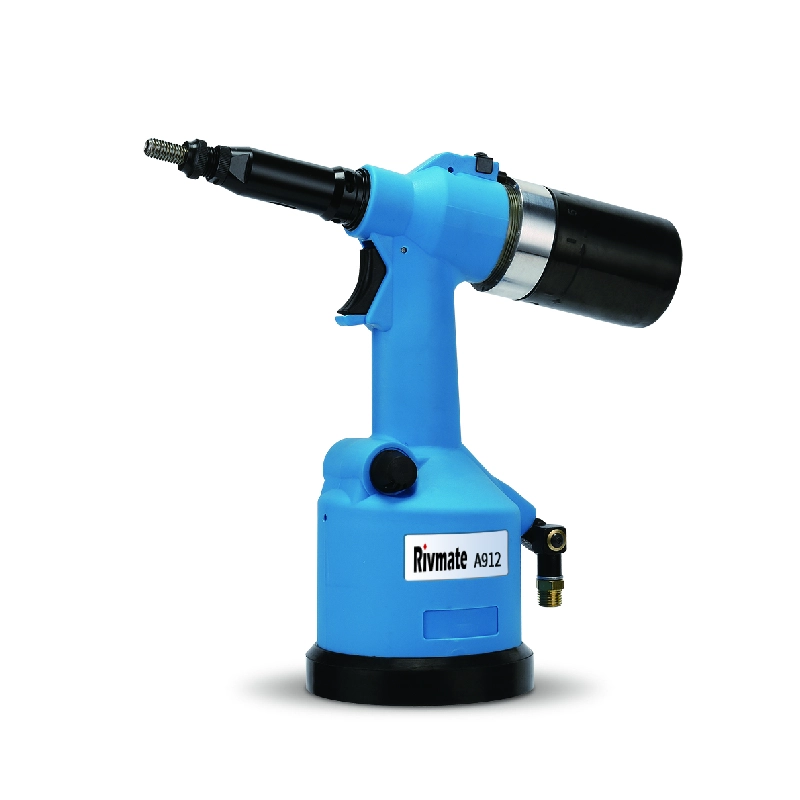
Before proceeding with mass installation, you must first conduct sample verification. Perform a test installation using sheet metal with the same material, thickness, and hole pattern as the actual product, focusing on the following three aspects:
- Flange seating: Flat-face flanges should rest properly on the surface of the sheet metal. Countersunk flanges should seat correctly in the countersunk holes, meeting the specified projection height.
- Back-side deformation: Check whether the rivet body has formed a uniform and sufficient bulge. Avoid under-installation or excessive compression.
- Thread and fastening condition: Confirm that the bolts can be screwed in smoothly and that the rivet nuts show no obvious looseness. For connections subject to load-bearing requirements, verify the resistance to rotation or pull-out according to actual operating conditions.
Inspecting Flange Seating and Avoiding Panel Distortion
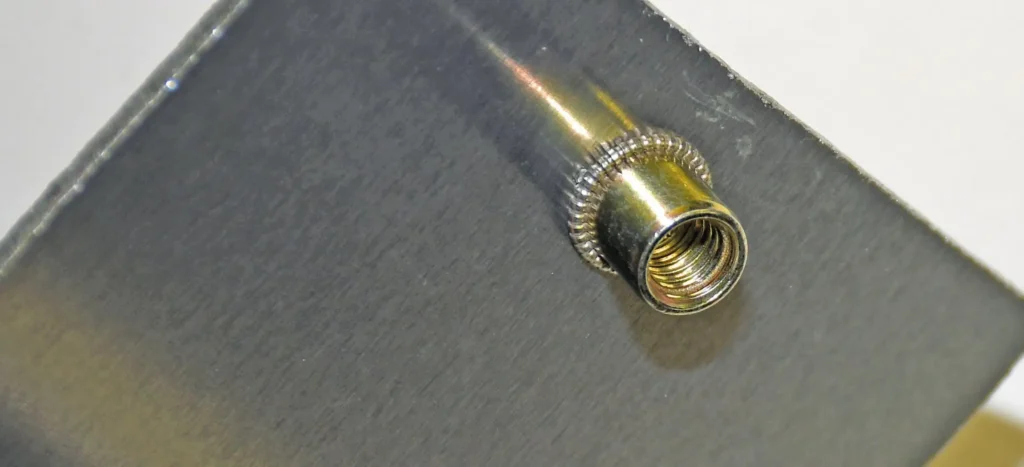
How to Inspect Flange Seating After Installation
Flat-head rivet nut:
- Check from the side to ensure the flange is level. The bottom surface of the flange must maintain stable and even contact with the sheet metal surface.
- Check the area around the hole for any localized warping. There should be no noticeable tilting or abnormal gaps.
Countersunk Rivet Nut
- Check whether the tapered flange is properly seated in the countersunk hole.
- Check whether the head height after installation meets the requirements specified in the drawings.
How to Prevent Panel Distortion and Verify Installation Quality
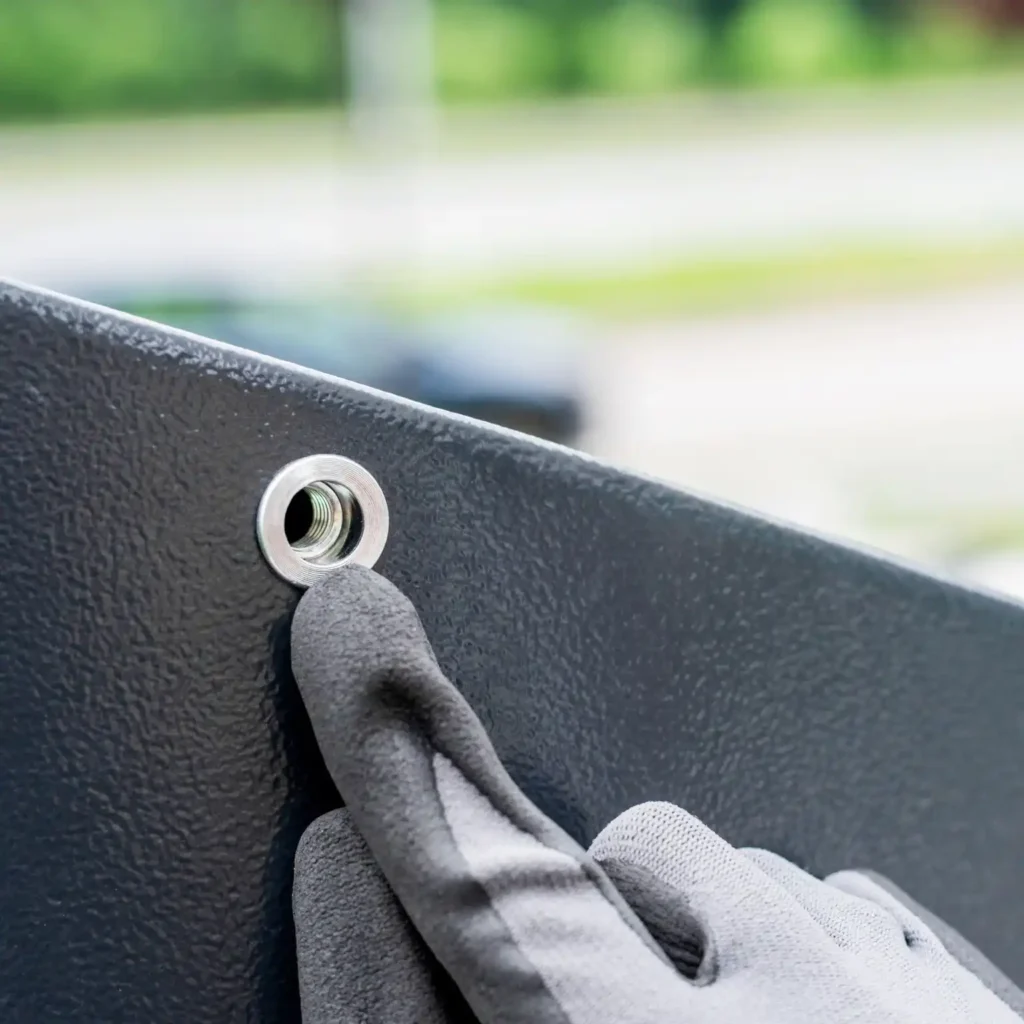
To prevent panel deformation, select the actual panels and corresponding rivet nuts in advance for a test fit. Pay close attention to the following aspects:
- Inspect the mounting holes and the flange contact surfaces. Pay particular attention to ensuring the hole diameters are correct and that there are no burrs at the hole edges that could interfere with proper fit. For countersunk rivet nuts, also verify that the countersink angle and depth match the tapered flange.
- Operate the installation tool perpendicular to the sheet surface. Also, ensure that the tool is set to the manufacturer’s recommended pull force or stroke.
- Inspect the condition of the sheet after installation. Check the area around the flange for dents, bulges, cracks, or noticeable warping, and use appropriate measuring tools to verify the head height and flatness.
Balancing Machining Cost with Assembly Requirements
| Cost Factor | Flat Head Rivet Nuts | Countersunk Rivet Nuts |
|---|---|---|
| Hole Preparation | Usually requires a specified round installation hole. | Requires a round hole and a matching countersink. |
| Machining Operations | Generally involves fewer machining steps. | Usually requires an additional countersinking operation. |
| Tooling Requirements | Standard drilling or punching tools, depending on the process. | Requires suitable countersinking tools or forming dies. |
| Processing Time | Generally shorter when no additional machining is needed. | May require additional processing and inspection time. |
| Material Removal | No additional countersink material removal is required. | Machining a countersink removes material around the hole. |
| Dimensional Inspection | Mainly involves checking hole diameter and position. | Also requires checking countersink angle, depth, and seating geometry. |
| Production Cost | Often lower when a protruding flange is acceptable. | May be higher due to additional hole preparation and inspection. |
FAQs
Is a reduced-head rivet nut the same as a countersunk rivet nut?
Reduced-head rivet nuts and countersunk rivet nuts are not the same product. However, there is a certain relationship between the two in terms of head structure and installation results. Reduced-head rivet nuts minimize post-installation protrusion by reducing the head size. No countersinking is required. Countersunk rivet nuts feature a tapered head that matches the countersink, resulting in a finish that is nearly flush with the edge of the sheet metal.
Can a countersunk rivet nut be installed in an uncountersunk hole?
Countersunk rivet nuts cannot be installed in standard round holes that have not been countersunk. Round holes cannot accommodate the groove in the conical flange of a countersunk rivet nut.
Can a flat-head insert replace an existing countersunk insert?
Flat-head rivet nuts cannot be used as direct replacements for existing countersunk rivet nuts.
Are countersunk rivet nuts available with hex bodies?
Countersunk rivet nuts are available in a hexagonal body style. There is no conflict between the head shape and the body design, so these two structures can be combined in a single product.
Can either head style be supplied with a closed end?
Both flat-head and countersunk rivet nuts are available in closed-end styles. The head shape and end configuration represent two distinct product designs. They can be selected based on application requirements.
Does a countersunk rivet nut require a countersunk screw?
Countersunk rivet nuts do not require countersunk screws. You can select screws with different head types based on the actual assembly configuration of your project. The head type of the screw depends on the aesthetic requirements of the parts to be joined.
Can paint affect the fit of a countersunk rivet nut?
Paint or coatings can affect the installation fit of countersunk rivet nuts. Coatings increase the actual thickness of the hole walls and the countersink taper. Especially when the countersink dimensions are close to the product’s tolerance limits, coatings or paint can alter the originally matched dimensions. This prevents the countersunk flange from seating properly in the mounting hole, causing the head to protrude after installation.
Can a countersunk rivet nut be removed by drilling?
Countersunk rivet nuts can be removed by drilling. When drilling, care must be taken to remove only the head and minimize damage to the mounting hole. Once removed, rivet nuts cannot be reused. New rivet nuts may only be installed if the sheet metal and countersink dimensions remain within specifications.
Work with a IATF 16949 Certified Blind Rivet Manufacturer
Get High Quality Rivets Instead of Huck and Avdel Rivets

Rivmate Rivet
Rivmate is blind rivets manufacturers in china. The company is IATF 16949 certified and offers high-strength structural blind rivets that serve as alternatives to Huck and Avdel products.
Explore Rivmate Cases
Rivmate Rivet
Rivmate is blind rivets manufacturers in china. The company is IATF 16949 certified and offers high-strength structural blind rivets that serve as alternatives to Huck and Avdel products.

Hey There, I'm Allen!
I am the boss of Rivmate. For over two decades, we have specialized in the manufacture of blind rivets, providing our customers with reliable riveting solutions. Need riveting services? Feel free to contact us.