Whatsapp: +86 18962304392

Email: manufacture@world-rivet.com

What is a Threaded Rivet Insert? A Ultimate Guide
By RIVMATE /2024.4.2                   Tite: What is a Threaded Rivet Insert

Threaded Rivet Insert - Rivet Nut - Rivmate Blind RIvet Nut Supply

This article is the most detailed guide to Threaded rivet insert. It will help you understand how to use threaded rivet inserts and how to choose the most appropriate threaded rivet insert for your project.

Table of Contents

As an important type of connecting element in the field of fasteners, the Threaded Rivet Insert plays an important role in modern engineering and manufacturing.

In this article, we will take an in-depth look at the definition, types, working principles, installation and usage of Threaded Rivet Inserts, as well as evaluating the elements that go into selecting the best Threaded Rivet Insert. Providing you with a comprehensive guide to your knowledge of this specialized fastener.

What is a Threaded Rivet Insert?

Threaded Rivet Insert

Threaded rivet inserts are fasteners that are used to form reliable threaded connections in thin sheet materials. The market for thin sheet applications is very high, so the number of threaded rivet inserts used is also very high.There are various types of threaded rivet inserts, including hex rivet nut, countersunk rivet nut.

In order to achieve a stable connection, threaded rivet inserts are usually made of high-strength metals. For example, stainless steel, aluminum alloy, etc. Threaded rivet inserts usually have internal threads that can be used to install threaded bolts, screws, nuts or other threaded connections.

Types of Threaded Rivet Insert

Threaded Rivet Inserts need to be mounted to different sheet metal to provide a stable threaded connection. By itself, it already has the capability of connecting to a thin plate. However, when connecting to other components that are not sheet metal, a bolt is required.

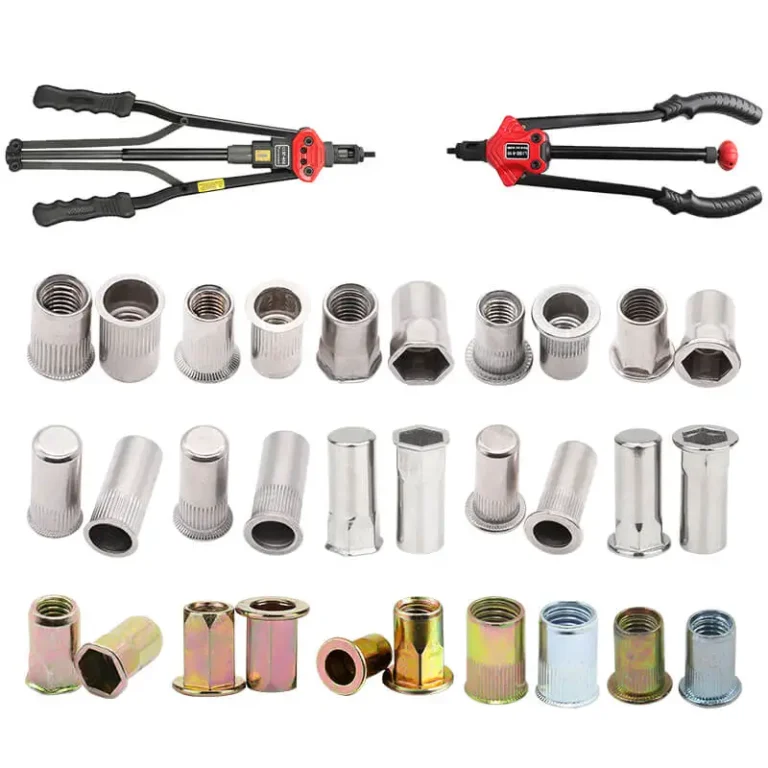
There are various types of threaded rivet inserts and the most commonly used threaded rivet inserts have been listed below.

1.Flat Head Rivet Nut
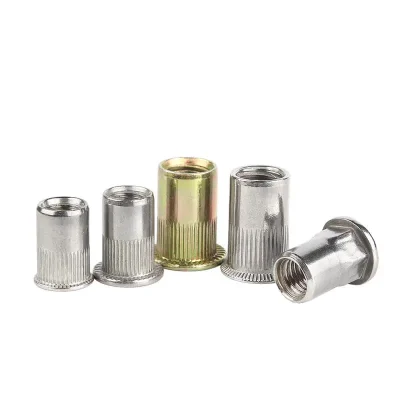
Flat Head Threaded Rivet Insert Rivet Nut Manufacturer and Supplier in China

Flat head rivet nut has a flat top and internal threaded structure. The flat top design saves space by allowing it to fit snugly into thin sheet material without protruding over the surface. This is beneficial for applications where space is limited or where a recessed design is required. It is also the most commonly used type of threaded rivet insert.

2.Countersunk Head Rivet Nut
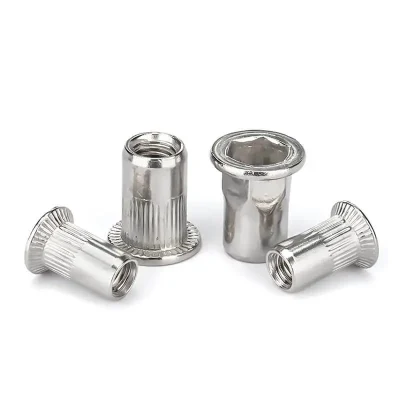
Countersunk Head Threaded Rivet Nut

Countersunk head rivet nut is a threaded rivet insert with an inserted head design. It has an embedded recess in the top that allows it to be embedded in thin sheet material, flush with the surface. This design keeps the top of the nut from protruding, thus not interfering with the flatness of the material surface and maintaining an aesthetic appearance.

3.Reduced Head Rivet Nut
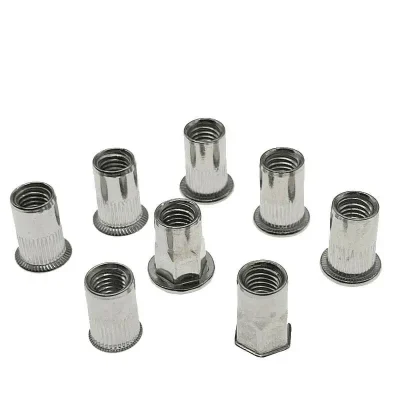
Reduced Head Threaded Rivet Insert Supplier

Reduced head rivet nut is a threaded rivet insert with a reduced head design. Reduced head rivet nuts have a relatively small top surface that is thinner than traditional flat or inserted head rivet nuts. This design reduces the projection of the nut on the surface of the material after installation, resulting in a more compact connection, especially for applications where space is limited or where the surface of the material needs to be kept flat.

4.Closed End Rivet Nut

Blind Threaded Rivet Nut Manufacturer in china

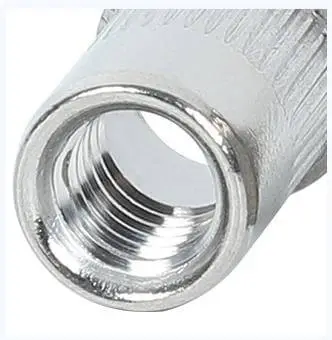
Closed end rivet nut is a threaded rivet insert with a closed end design. The bottom of the closed end rivet nut is closed with no openings. This design allows the nut to have a closed bottom after installation, preventing liquids, gases and other contaminants from entering the connection area. The closed end provides better sealing and protection, protecting the internal threaded connection from the outside environment.

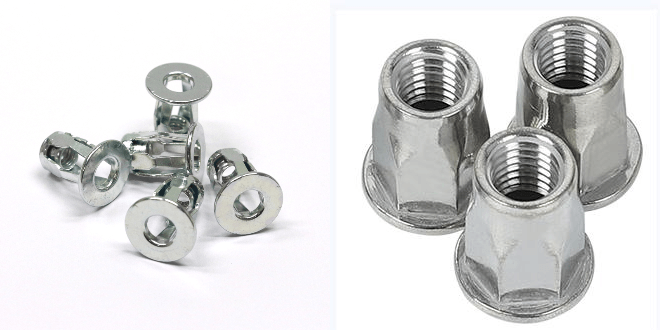
5.Jack Nut
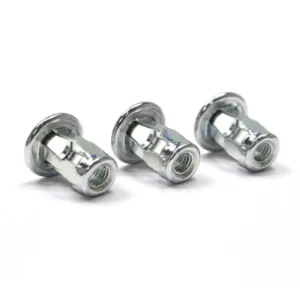
jack nut - Rivmate Jack Nut Supply

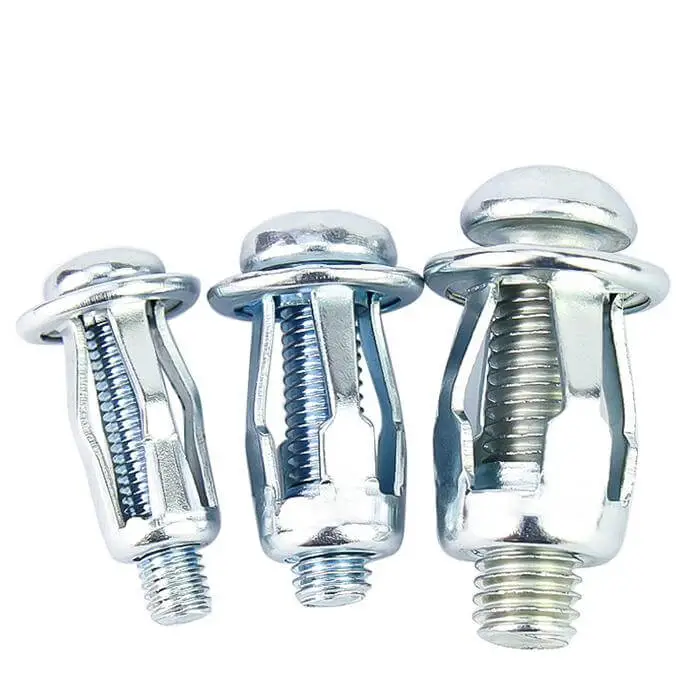
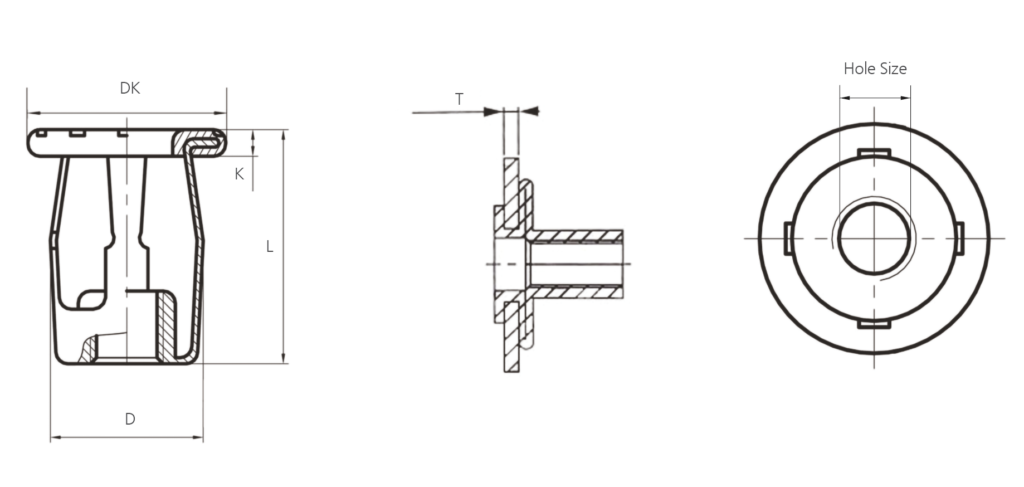
Jack Nut is a special type of nut, a fastener with an expansive design, also known as a prestressed nut. It consists of a housing and an internal thread. When the internal thread is subjected to the rotational force of a bolt or screw, the shell expands and clamps into the material in which it is installed.

How do Threaded Rivets Insert Work?

Rivet nut installation of standard parts consists of four main components: the rivet nut, the rivet nut tool, the attached sheet, the attachment assembly, and the bolt or screw. To properly install the rivet nut, a hole is drilled in the thin plate to match the size of the rivet nut.

The video above shows the actual installation process and results of the threaded rivet insert.

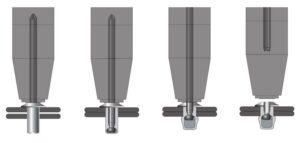
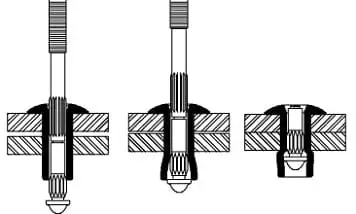
When you install a rivet nut using a rivet nut tool. The top of the rivet nut is pulled by pressure to deform for extrusion. This stabilizes the joining of many different sheet components together. The diagram below shows the complete installation of a rivet nut.
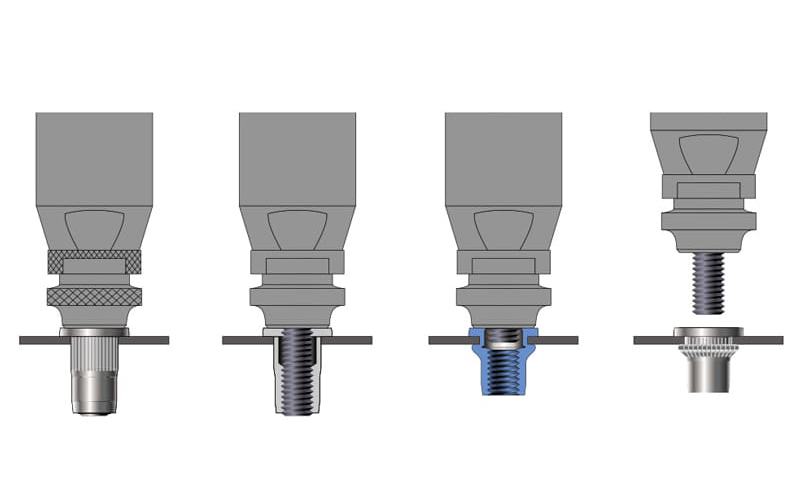
How Do Blind Rivet Nut Fasteners Work?

How to Install Threaded Rivets Insert?

The process of installing threaded rivet insert is very simple and quick. All you need to have is a matching tool and you will be well on your way to enjoying this installation process.

There are two commonly used tools on the market as follows:

  1. Air Rivet Nut Gun
  2. Hand Rivet Nut Tool

Rivet Tool and Rivets to Install Threaded Inserts

1.Air Rivet Nut Gun
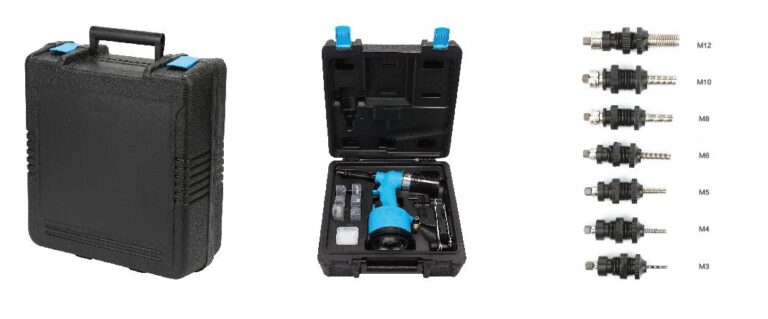
A912 RIVMATE PNEUMATIC RIVNUT TOOL SET

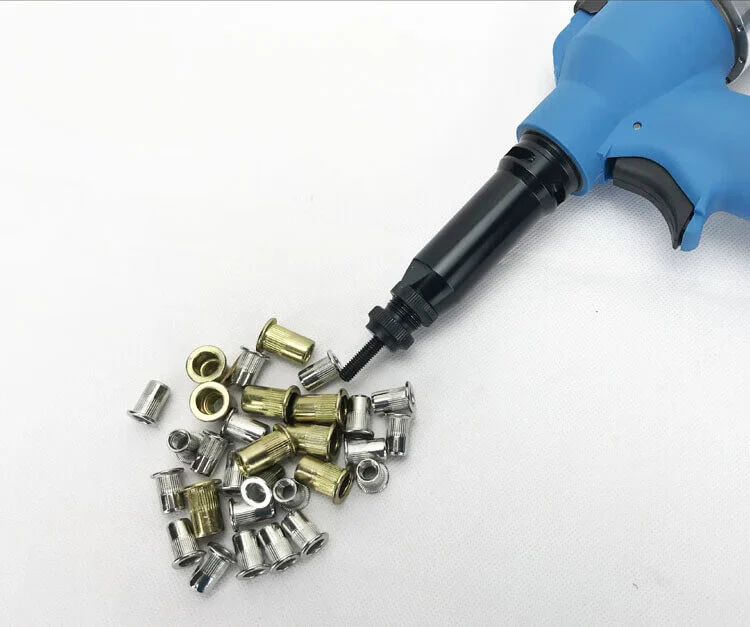
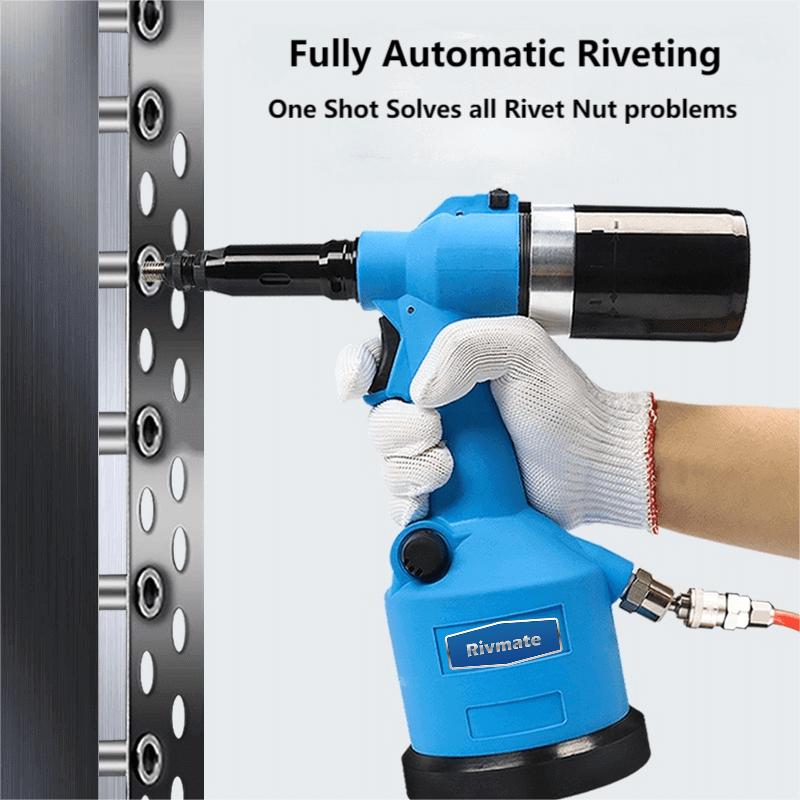
Pneumatic rivet nut guns are one of the easiest installation methods to use. A rivet nut gun can install all sizes of rivet nuts and they have different sizes of heads to change.

Pneumatic rivet nut guns are often used in mass use scenarios. For example, in industry, construction, manufacturing, and automotive. A qualified pneumatic rivet nut gun can save a lot of labor costs.

2.Hand Rivet Nut Tool
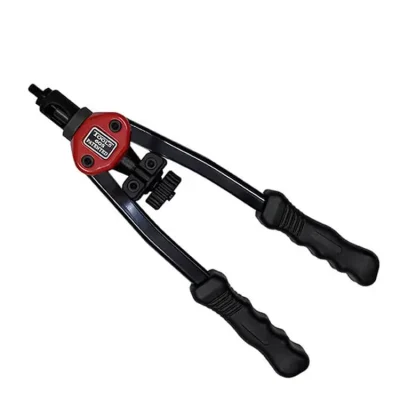
Hand Threaded Rivet Insert Tool

Manual rivet nut tool is suitable for home use. It is very inexpensive but requires the use of a lot of force to complete this installation process. So when your project doesn’t require a lot of rivet nuts to be installed, you can opt for this type of installation. Though it is cumbersome, it saves you a lot of financial cost.

How to Use a Threaded Rivet Insert Tool?

I found a tutorial on Youtube for installing the tool using a manual rivet nut tool. Many thanks to the youtube author for the great work. If you have questions about installing rivet nuts, check out this video tutorial. I believe this can be a good help for you.

How to Use Threaded Rivets Insert?

这是示例文本,单击 “编辑” 按钮更改此文本。

Pros and Cons of Threaded Rivet Inserts

Threaded rivet insert is a widely used fastener. It is used to join thin sheet materials and provide threaded attachment points. Understanding these pros and cons is critical in making informed fastener decisions for your business and projects.

1.Strength and Reliability

Threaded rivet inserts provide good tensile strength and reliability by forming a threaded connection in the material. They are able to withstand high tensile forces and ensure a solid connection.

2.Suitable for a Wide Range of Materials

Threaded rivet inserts are suitable for use with a wide range of sheet materials, including metals, plastics and composites. They are used in a wide range of applications in automotive manufacturing, aerospace, electronic equipment, machine building and furniture.
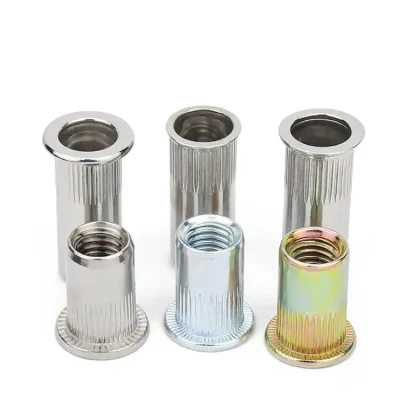
Threaded Rivet Nut Insert for Business

3.Easy Installation

Installation of the Threaded rivet insert is very simple. All you need to do is to purchase a special rivet nut tool and you can complete the installation process very quickly. This installation process is usually faster and easier than traditional welding or thread cutting.

4.Specialized Tools Required

The installation process of Threaded rivet insert is very simple. However, it often requires the use of specialized tools. Tools often add a certain amount of economic cost and complexity. But the savings in labor costs are also very high. For mass production scenarios, the economic benefits of specialized riveting tools are high.

5.Restricted to Thin Sheet Materials

Threaded rivet inserts are still very limited in their use. It is usually suitable for thin sheet materials and may not be suitable for thicker materials. So you need to understand the usage scenario of your project in detail before choosing a fastener for your project.
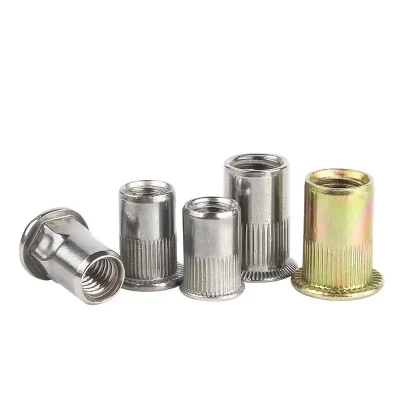
Threaded Blind Rivet Nut - High Quality Rivet Nut

6.Limited by Material Strength

The tensile strength and reliability of a threaded rivet insert is limited by the strength of the material itself. If the material is not strong enough, the threaded connection may not be strong enough.

Which Threaded Rivet Inserts Is Best for Your Business

Which type of threaded rivet insert to use depends on the requirements of your project. The application requirements for most projects can be categorized into the following categories based on material and application.

  • Hex Head Rivet Nut
  • Reduced Head Rivet Nut
  • Countersunk Head Rivet Nut
  • Jack Nut

If your application scenario requires a high level of mounting force and torque transfer. Then the hex rivet nut is an excellent choice.

If your project is interested in the surface flatness of the product, you need to keep the appearance aesthetically pleasing. Then countersunk rivet nut is a very suitable choice. It flattens the surface of the connectors and provides a more aesthetically pleasing appearance.

When you need to install components from limited space or narrow holes. then go for the reduced rivet nut. it has a smaller head size to fit in areas with restricted space.
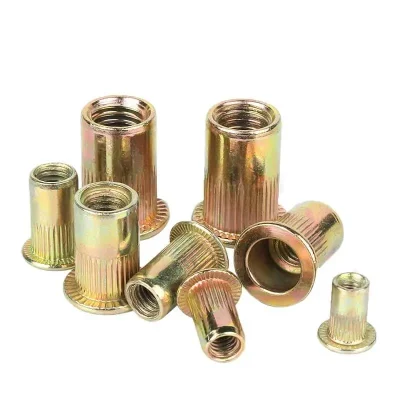
Copper Threaded Rivet Insert Manufacturer in China

Conclusion

Threaded rivet inserts are a very simple way to make connections. A reliable and consistent connection can be achieved by extruding a deformation, and the Threaded rivet insert provides a reliable connection point for different threaded fasteners.

This technology may seem overly complex and intimidating at first, but once you understand the basics, it can be your most economical and reliable option.

Get Best In Class Threaded Rivet Inserts from Rivmate

Rivmate is a China Threaded rivet insert and rivet nut supplier. Known for its superior quality fastener products and excellent customer service. We provide threaded rivet insert and rivet nut solutions to customers from different companies around the world.

Our threaded rivet insert and rivet nut are ISO and IATF certified and meet international product safety guidelines. Please take advantage of our large inventory and fast delivery time and professional OEM solutions. We are an excellent OME Rivet Nut manufacturer in China.

A successful business can’t exist without reliable fastener products from a trustworthy factory. We understand the market demand in Asia, Europe and America and have been producing high quality and sustainable rivet nut products for more than a decade. The perfect fastener product to make your business a success. Contact us today!
Submit Your Sourcing Request

Rivet Nut vs Pop Rivet: The Pros and Cons of Rivnut vs Blind Rivet

Table of Contents

When it comes to thin sheet joining, the choice between rivet nuts and pop rivets can significantly affect the final riveted joint. It is vital to understand the advantages and disadvantages of both options.

How Rivet Nuts and Pop Rivets Work

To understand the core differences between a Rivet Nut and a Pop Rivet, one must start with their structures and working principles. Both can achieve “blind installation”, but they are completely different in terms of force application, connection form, and structural purpose. The following content summarizes the key points that engineers pay the most attention to when selecting types, and explains them in combination with Rivmate’s testing experience.

The structure of a Pop Rivet consists of a body and a mandrel. It achieves connection through a simple and direct “stretching and expanding” method:

  • When the riveting gun pulls the mandrel, the tail of the cap body is forced to expand outward, forming a stable back support.
  • When the mandrel is pulled to the preset breaking position, it will break instantly and remain inside the cap body.
  • At this moment, the rivet is shaped and forms a permanent, non-detachable mechanical connection.

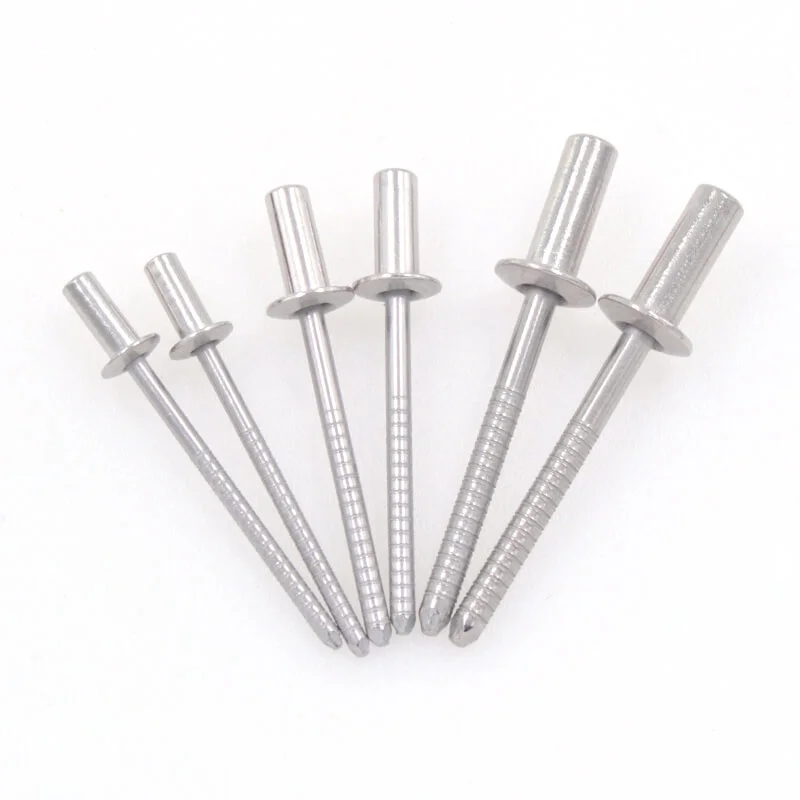
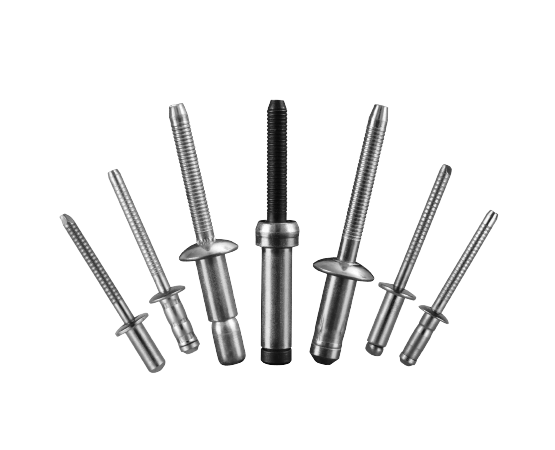
Types of pop rivets - Rivmate Blind Rivet Supplier

This structure is highly suitable for thin plates, sheet metal and light equipment assembly, featuring stable strength, low cost and high efficiency. However, it does not provide threads, and thus is not applicable to structural components that require frequent disassembly and reassembly.

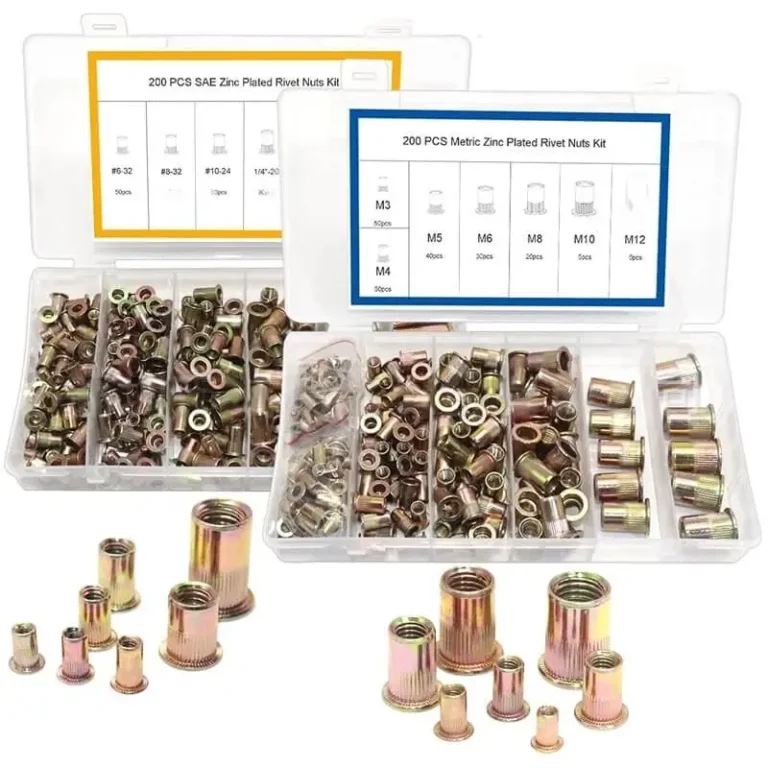
Rivet nut kits - Rivet Nut Solutions for Supermarket - DIY Rivet Nuts - Rivmate RIvet Nut Supply

The structure of a Rivet Nut consists of a metal nut sleeve with pre-machined internal threads (such as M4, M5, UNC, etc.).

Its working principle is different from that of blind rivets and belongs to a “flanging locking” structure:

  • The installation tool (Nutsert Gun) pulls the nut sleeve outward, forcing it to “flange” or “expand” at the back.
  • The flange will tightly adhere to the back of the material, forming a solid metal bearing surface.

Rivet Nut is suitable for scenarios where direct tapping is not possible or the material is too thin to form threads, such as aluminum profiles, pipes, car bodies and electronic chassis.

Rivet Nut vs Pop Rivet: Performance Comparison

Performance AspectRivet NutPop Rivet
Tensile / Shear StrengthHigh, but depends on material and wall thicknessVery high, structurally stronger
Threading Capability✔ Provides reusable internal threads✘ No threading
WaterproofingModerateHigh; closed-end types can be fully sealed
Vibration ResistanceGoodExcellent
Material CompatibilityMetals, plastics, tubingSheet metal, thin panels

① Tensile and Shear Strength

  • Rivet Nut
    Strength depends on two points: material (aluminum, steel, stainless steel); wall thickness and flanging structure. Its tensile and shear performance is stable, but it is mostly used for medium-strength assembly.
  • Pop Rivet
    The structure is more compact, and the force on the expansion area is more uniform. Especially for structural blind rivets (such as Monobolt), the tensile and shear strength is often 30–60% higher than that of Rivet Nut. Therefore, it is more suitable for permanent fixation and load connection.

② Threading Capability (Threading vs Non-Threading)

This is the most fundamental difference between the two.

  • Rivet Nut: Offers standard internal threads (such as M4–M12), and can be re-tightened, suitable for scenarios requiring disassembly and maintenance.
  • Pop Rivet: Does not provide threads, and is used for one-time, permanent structural connections. If the project requires threads, Pop Rivets are completely non-substitutable.

③ Waterproofing Performance

  • Rivet Nut

    It does not have a sealing function by itself. If waterproofing is required, an additional EPDM gasket or a waterproof Rivet Nut should be added. The waterproofing level is usually lower than that of blind rivets.

  • Pop Rivet

    Especially the closed-end type (Closed-End) and sealed type (Sealed) can achieve nearly 100% waterproofing, meeting the requirements for roofs, exterior walls, and outdoor equipment.

④ Vibration Resistance Performance

  • Rivet Nut

    Locking is achieved through flanging or tensioning, and it performs well in general vibration environments. However, if no anti-loosening measures are taken for threaded connections, long-term vibration may cause slight loosening.

  • Pop Rivet

    The mandrel expansion structure inherently endows it with stronger vibration resistance. The structural blind rivet has a mechanical lock inside, ensuring long-term stability under strong vibration conditions.

⑤ Material Compatibility

  • Rivet Nut: It can be used on various materials such as metal, plastic, composite materials, and thin-walled tubes. It is particularly suitable for structures where threading is impossible.
  • Pop Rivet: It is most suitable for sheet metal and thin plate structures, and works best when both materials are metal.

Pros and Cons: Rivet Nut vs Pop Rivet

In actual engineering selection, users usually focus on two points: Which one is more suitable for my material? and Is it convenient for future maintenance? Understanding the advantages and disadvantages of Rivet Nut and Pop Rivet is crucial for ensuring a reliable connection and reducing long-term costs.

Advantages & Disadvantages of Rivet Nuts

Rivmate Flat Head Full Hex Body Rivet Nut - how do rivet nut works

Advantages of Rivet Nut

  • Capable of creating internal thread structure: After riveting is completed, standardized threaded holes can be provided, which are detachable and can be repeatedly maintained. They are suitable for components that need to be repeatedly assembled.
  • Can be used for blind holes and closed profiles: In square tubes, round tubes, or closed profiles, the Rivet Nut can easily provide threads, which is a solution that cannot be achieved by welding nuts.
  • Suitable for thin materials (0.3–6 mm): When the material is too thin and cannot be tapped, the Rivet Nut can provide a stable and reliable threaded bearing surface.
  • Can replace welding nuts: No high-temperature operation is required, reducing the problem of heat affected zone, and also avoiding burning the coating or deformation.

Disadvantages of Rivet Nut

  • Higher cost: Especially in mass production, the overall cost is significantly higher than that of ordinary blind rivets.
  • Poor waterproofing ability: The structure itself is not sealed. If high waterproofing performance is required, additional gaskets or sealed products must be relied upon.
  • Higher requirements for hole quality: If the hole diameter is too large, the flange will not be adequately stressed; if it is too small, installation will be difficult, affecting the concentricity of the thread.

Purchasing cost of zinc plated blind rivets

Advantages of Pop Rivet

  • Low cost and high value for money: Particularly suitable for mass production. The overall assembly cost is much lower than that of riveted nuts.
  • Fast installation speed: No torque control required. Just break the core shaft to complete the connection. It is suitable for assembly lines and on-site construction.
  • Excellent vibration and waterproof performance: The structural blind rivets can provide high seismic resistance; the closed-end blind rivets can achieve a nearly 100% sealing and waterproof effect.
  • Suitable for extremely thin materials: It can still form a firm connection on metal sheets ranging from 0.2 to 0.5 mm. It is an advantage that cannot be replaced by threaded products.

Disadvantages of Pop Rivet

  • Non-detachable: It forms a permanent connection. Disassembly requires damaging the component and is not suitable for structures that need frequent maintenance.
  • No provision for threads: If threads are required, other fasteners or rivet nuts must be used instead.
  • Poor maintainability: Once damage or loosening occurs, only re-drilling or replacement with a larger specification is possible, which is not conducive to long-term maintenance.

Where Rivet Nuts and Pop Rivets Are Used

In actual engineering projects, the choice between Rivet Nut and Pop Rivet depends mainly on the requirements of the specific scenario. Does the structure need to be waterproof? Does it require threads? Can the material support the screws? All these factors will significantly influence the final decision.

Application ScenarioRecommended FastenerReason
Sheet metal permanent jointsPop RivetHigh strength, fast installation, good waterproof performance
Thin materials requiring threadsRivet NutAllows repeated assembly and maintenance
Plastic or hollow tubingRivet NutProvides threading where tapping or screws cannot be used
Roofing or exterior cladding systemsPop Rivet (Closed-End)Excellent sealing, corrosion resistance, suitable for outdoor environments
Automotive interiors / electronic housingsRivet NutSupports maintenance and prevents damage to housings

Cost & Lifecycle Analysis

a. Pop Rivet: A typical representative of low-cost and long-life products

Industry applications for zinc plated blind rivets

The advantages of Pop Rivet (blind rivets) are very clear:

  • Low unit price, making it highly suitable for medium and large-scale batch production scenarios.
  • Fast installation speed, saving labor costs.
  • Reliable structure, with a permanent connection, requiring almost no maintenance.
  • Can maintain long-term stability even in outdoor and vibrating environments, further extending service life.

Therefore, its cost advantage does not merely stem from “low unit price”, but also comes from the “structural benefits that do not require maintenance in the later stage”. The Rivmate test shows that standard blind rivets can achieve a maintenance-free period of 10 to 15 years in conventional mechanical structures.

b. Rivet Nut: Initial cost is high, but has excellent maintainability

The cost structure of Rivet Nut is different:

  • The product cost is higher than that of blind rivets (depending on the material, such as steel, stainless steel, and aluminum).
  • The cost of installation tools is slightly higher.
  • However, its feature of repeatability in disassembly and assembly makes it more suitable for equipment and electronic enclosures that require maintenance.

If the structure needs to be disassembled and reassembled multiple times during its lifespan, or if parts need to be replaced or repaired, the benefits brought by Rivet Nut will significantly outweigh the initial investment.

Suitable industries: Automotive interiors, computer chassis equipment, electronic modules, serviceable devices.

Tools and Installation Guide

In the selection between Rivet Nut and Pop Rivet, apart from structural performance and cost, installation tools and process requirements also affect the final assembly quality. The issues that users usually care about typically include: What tools are needed? How to control the hole diameter? Are there any restrictions on material thickness? The following is a professional explanation based on the engineering practice of Rivmate.

Installation Tools for Rivet Nuts

The installation of Rivet Nut requires specialized equipment. The core task is to stretch the nut sleeve outward, creating a flange structure on the back. Common tools include:

  • Manual Nutsert Tool (Manual Rivet Nut Tool) Suitable for maintenance, prototype production, and small-scale batch manufacturing, with simple control.
  • Pneumatic Nutsert Gun (Pneumatic Rivet Nut Gun) Suitable for medium to large-scale assembly, it can enhance efficiency and the consistency of flanging.
  • Hydraulic Nutsert Tool (Hydraulic Tool) Suitable for large-sized nuts or high-strength stainless steel rivet nuts, providing stable and high tensile strength.

Tools for Rivet Nuts - How to Choose Rivet Nuts Tools for Your Project

Important Points to Note: Ensure that the stretching stroke is set correctly to avoid insufficient flanging or excessive deformation. The tolerance for the hole diameter is generally controlled within ±0.1 mm, which ensures that the nut flanging is evenly and securely attached.

Installation Tools for Pop Rivets

rivet tool

The installation of Pop Rivet (blind rivets) is relatively simple:

  • Manual Riveting Gun (Hand Rivet Gun) Suitable for light industrial assembly and on-site construction.
  • Electric Riveting Gun (Battery Riveter) Convenient, stable, and suitable for medium-scale assembly.
  • Pneumatic Riveter (Air Riveting Gun) Suitable for structural blind rivets and large-diameter rivets, it has excellent tensile stability and higher strength.

Key Points to Note: The grip range must match the thickness of the material. The hole diameter usually needs to be 0.1–0.2 mm larger than the diameter of the rivet to ensure adequate expansion. In closed-type or waterproof rivets, keeping the hole clean and free of foreign objects can enhance the sealing performance.

Hole Size & Material Compatibility

Whether using Rivet Nut or Pop Rivet, the quality of the hole size and the matching of thickness are the key indicators that affect the reliability of the riveting.

Rivet Nut: Worth Noticing:

It is necessary to ensure that there are no burrs on the hole walls to guarantee the sealing fit of the flange.
For plastics or composite materials, it is recommended to add a backsheet or choose the Large Flange model.
Excessive hole diameter can lead to spin-out.

Pop Rivet Is Worth Noticing:

The holes need to be kept vertical and concentric to ensure uniform expansion.
In high-strength rivets, an incorrect hole diameter can cause the mandrel to break off incompletely.
The grip range must cover the actual thickness of the material; otherwise, it will not be able to lock properly.

Expert Recommendations from Rivmate

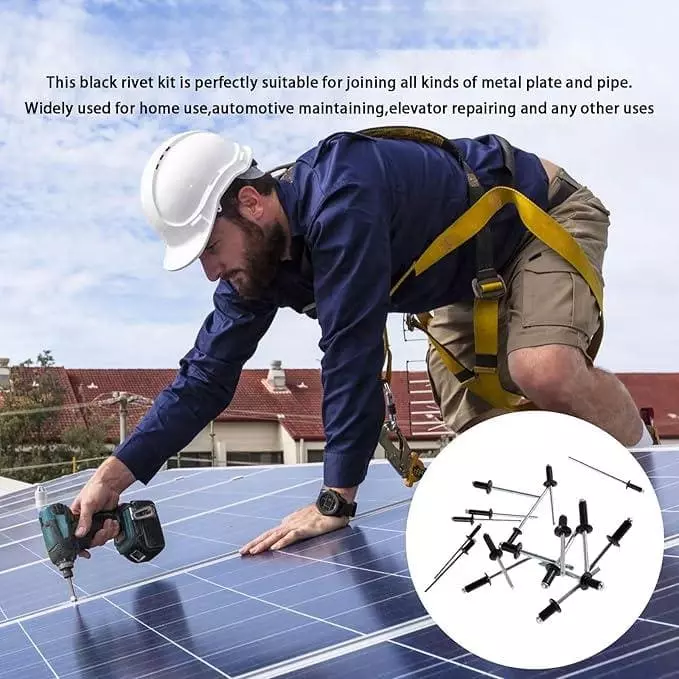
Common mistakes and ways to avoid them when using rivets on solar panels

During the selection process of Rivet Nut and Pop Rivet, there is no universally applicable solution. The optimal choice always depends on the structural requirements, maintenance methods, material properties and usage environment.

① If the structure requires threads and needs to be disassembled for maintenance → Choose Rivet Nut

If your design requires that the components can be disassembled, replaced, and the internal parts can be repaired in the future, then Rivet Nut is far more valuable than ordinary blind rivets.

  • It can provide stable internal threads.
  • It supports repeated disassembly without damaging the parent material.
  • It is suitable for thin metals, plastics, profiles and pipes.
  • It can replace welding nuts and does not require high-temperature operations.

Typical industries: Home appliances, automotive interiors, electronic equipment, industrial control boxes.

② If the structure requires sealing, waterproofing, and vibration resistance → Choose Pop Rivet (Closed-End)

For outdoor structures, roof systems and equipment subjected to vibration, Pop Rivet is particularly advantageous, especially in terms of its closed type.

  • Achieve nearly 100% sealing
  • Strong vibration resistance, does not loosen over a long period
  • Fast installation, high stability
  • Suitable for metal sheets and outdoor projects

Typical applications: roof panels, exterior wall panels, enclosures, HVAC (Heating, Ventilation, and Air Conditioning) equipment.

③ If the application involves high load, strong vibration, and is critical for structural safety → Choose Monobolt (structural blind rivets)

When there are specific requirements for connection strength, such as in vehicle chassis, rail equipment or heavy machinery, Monobolt is the optimal choice.

  • Built-in mechanical lock (Mandrel Lock)
  • The tensile and shear strength is much higher than that of ordinary blind rivets
  • It has stronger waterproof, vibration-proof and anti-corrosion capabilities
  • It can replace some welding or bolt connections

Typical industries: automobiles, rail transportation, construction steel structures and heavy equipment.

④ If the project is cost-sensitive and involves a large number of assemblies → Choose the Pop Rivet option

Standard Pop Rivet is the “value king” in large-scale industrial assembly.

  • Low unit price
  • Easy for workers to master
  • High assembly efficiency
  • Low cost of supporting tools

Applicable to: sheet metal production, furniture, light industrial products, and daily maintenance.

Get the Right Fastener for Your Project

Rivmate Rivet Factory in Jiangsu, China

When choosing between Rivet Nut and Pop Rivet, there is no single “universal answer”. Each type of riveting method has its own optimal application scenarios. The key lies in: Understanding the structure, environment and maintenance requirements, and making the correct choice based on engineering standards.

Rivmate, as a professional supplier of riveting solutions, has been providing reliable fasteners for the construction, automotive, home appliance, electronic equipment and mechanical manufacturing industries for a long time. Our engineering team can provide the most reasonable selection suggestions based on your application requirements.

Receive more precise selection suggestions for your project:

Please feel free to contact the Rivmate engineering team to obtain samples, technical solutions and quotations.

📧 Product Inquiry: manufacture@world-rivet.com

🌐 Official Website: https://worldrivet.com/

Reference

Share:

More Posts

Get Rivets Quotes Now

Wholesale Blind Rivets from Rivet Manufacturer

Monobolt vs Pop Rivet - The Most Complete Buyer's Guide

Table of Contents

In the manufacturing and assembly fields, blind rivets (Blind Rivet) are widely used due to their quick installation and reliable connection. However, when facing high-strength or waterproof requirements, traditional Pop Rivets have been unable to meet engineering needs. At this point, the Monobolt, which has a mechanical locking structure, becomes a more suitable choice for higher performance. What are the differences between Monobolt and Pop Rivet? In short, Monobolt has higher structural strength, vibration resistance performance and sealing ability, while Pop Rivet is known for its low cost and installation efficiency. This article will conduct an in-depth comparison of the two to help you select the most suitable rivet solution for different applications.

Understanding the Difference: What Are Pop Rivets and Monobolts?

Monobolt vs Pop Rivet - Rivmate Rivet Supply

In blind riveting fastening technology, Pop Rivet (standard blind rivets) and Monobolt (structural rivets) are two of the most common types, but with significant performance differences. There are obvious differences between the two in terms of structural design, load-bearing capacity and sealing performance. Therefore, when selecting a model, it is necessary to determine which one is more suitable based on the load requirements and usage environment.

TypeStructural FeaturesApplication ScopeKey Performance Points
Pop Rivet (Standard Blind Rivet)Single-layer structure; mandrel breaks and partially remains inside the rivet bodyLight sheet metal, electronic devices, furniture assemblyEasy installation, low cost, high assembly efficiency
Monobolt (Structural Rivet)Closed-end design with an internal mechanical locking mechanism (Locking Mechanism)High-load structures, vehicles, building steel frameworksHigh strength, vibration resistance, waterproof, and corrosion resistance
  • Pop Rivet is the most commonly used standard blind rivet form. During installation, the mandrel is broken and remains inside the cap, creating a basic mechanical clamping connection. It is easy to operate and inexpensive, making it an ideal choice for mass production assembly.
  • Monobolt belongs to Structural Blind Rivet. Its interior is equipped with a mechanical lock core, which can firmly lock it in the cap after the mandrel breaks, forming higher tensile and shear strength. At the same time, the closed bottom can prevent liquids and gases from penetrating, providing excellent sealing protection.

Structural Difference Between Monobolt and Pop Rivet

Although Monobolt and Pop Rivet belong to the same series of blind rivets, they have fundamental differences in their structural design and force application methods. Understanding this distinction is crucial for selecting the appropriate riveting solution, especially in applications where high requirements are placed on strength, water resistance, and vibration resistance.

① Pop Rivet: Standard structure, achieves locking through expansion

The standard Pop Rivet (open-ended blind rivet) follows the most basic riveting principle. During the riveting process, the mandrel is pulled, causing the tail of the cap body to expand, thereby achieving material clamping. When the mandrel breaks at the preset break point, only a part remains inside the cap body and does not have the locking function. Therefore, this structure is suitable for light-load or non-waterproof assembly scenarios, such as the connection of appliance sheet metal and thin plates. The Pop Rivet belongs to the “single-locking structure”, and under long-term vibration or temperature change, it may experience slight loosening or stress attenuation.

3 8″ Blind Pop Rivets Wholesale

② Monobolt: Mechanical Locking + Secondary Clamping Structure

Rivmate Monobolt Rivet - Mono-Lock Blind Rivet

The Monobolt belongs to the category of Structural Blind Rivet. Its core innovation lies in the Locking Mechanism of the locking core. When the core shaft is pulled out, the tail end of the cap body not only expands to clamp the material but also triggers the internal locking ring, firmly locking the core shaft within the cap body. This design forms a secondary locking structure, making the connection more secure, stable, and capable of effectively absorbing vibration loads.

Meanwhile, the bottom end of the cap of Monobolt is of a closed-end design, which can completely prevent liquids, gases and dust from penetrating. Therefore, it can maintain long-term sealing and anti-corrosion properties in high humidity, high salt spray or outdoor environments.

The mechanical locking function of Monobolt not only prevents the core shaft from loosening, but also evenly distributes the pulling force over the entire connection area, thereby enhancing the overall durability of the structure.

③ Rivmate Actual Measurement Data (in accordance with ISO 14589 standard)

Test ItemPop RivetMonoboltPerformance Improvement
Tensile Strength450 N780 N+73%
Shear Strength520 N950 N+82%
Sealing PerformanceNon-sealedIPX7 rated – completely waterproof✅ Fully waterproof and airtight
Vibration ResistanceAverage (loosens over time)Excellent (mechanical lock prevents loosening)Significantly improved stability

Monobolt vs Pop Rivet: Detailed Performance Comparison

Automotive Blind Rivets Application - Blind Rivets on Car

When choosing the appropriate type of rivets, engineers usually pay the most attention to structural strength, waterproof performance and cost-effectiveness. Although Monobolt (structural blind rivets) and Pop Rivet (standard blind rivets) have similar design principles, there are significant differences in their performance.

The following comparison table was compiled by the Rivmate Engineering Laboratory based on the ISO 14589 and ASTM B117 testing standards, to help users quickly determine which type of rivet better meets the project requirements.

Performance AspectMonobolt (Structural Rivet)Pop Rivet (Standard Blind Rivet)
Design StructureClosed-end design with internal mandrel locking system (Mandrel Lock System); prevents loosening and leakageOpen-end design; mandrel breaks and partially remains inside; simple structure
Tensile Strength★★★★★ Extremely high strength; suitable for structural load-bearing★★★☆☆ Suitable for light-duty connections
Shear Strength★★★★★ High rigidity and even load distribution★★★☆☆ Moderate shear resistance; prone to fatigue and loosening
Sealing Ability★★★★★ IPX7-rated sealing; waterproof and dustproof★☆☆☆☆ Non-sealed; prone to water ingress
Vibration Resistance★★★★☆ Mandrel locking design effectively prevents vibration loosening★★☆☆☆ May loosen slightly over long-term vibration
Installation Difficulty★★★☆☆ Requires specialized rivet gun and precise hole diameter★★☆☆☆ Can be installed with standard tools; easy operation
Cost Efficiency★★★☆☆ Higher unit cost but longer lifespan and greater reliability★★★★★ Low cost; ideal for mass production
Typical ApplicationHigh-load, vibration-prone, waterproof, and corrosion-resistant environments (e.g., automotive, rail, and construction structures)General sheet metal, home appliances, and light machinery non-sealed assemblies

Cost & Longevity Comparison: Why Monobolts Deliver Better Lifetime Value

When choosing rivets, many users often only focus on the difference in unit price, while ignoring the Lifecycle Cost.

From an engineering economics perspective, although Monobolt (structural blind rivets) have a higher initial cost, they can significantly reduce maintenance and rework expenses over the long term; while Pop Rivet (standard blind rivets) is cheaper, they are prone to loosening and corrosion under high-load or vibration conditions, resulting in higher long-term maintenance costs.

Pop Rivet: It has a low unit price, and the procurement cost is usually only 40-60% of that of Monobolt. It is highly suitable for large-scale assembly or connection of non-structural components.

Monobolt: The structure is complex and requires a mechanical lock and a closed design, resulting in a relatively high initial procurement cost. However, in most industrial projects, the total assembly cost only accounts for 10–15% of the total life cycle cost.

In environments where structural safety, sealing or long-term corrosion prevention are required, simply choosing low-cost rivets may not be a wise choice.

b. Service Life & Reliability

Pop Rivet: In environments with high vibration, high humidity or outdoors, the average service life is approximately 3–5 years. After that, it may become loose or corroded.

Monobolt: Equipped with mechanical locking and waterproof sealing structure, it can last for up to 10 years or more, and requires almost no maintenance.

c. Total Cost of Ownership, TCO

Rivmate’s lifecycle study based on the projects of building curtain walls and vehicle chassis shows:

Over a 10-year period, the overall cost of the Monobolt system has been reduced by approximately 18%. The main sources of savings include: reducing maintenance and rework costs; extending the structural lifespan; and minimizing downtime or accident losses due to failures.

How to Install Rivets Correctly: Tools and Best Practices

In the application of rivets, the correct installation method and the selection of appropriate tools directly affect the strength and lifespan of the connection. Whether it is the standard Pop Rivet or the structural Monobolt, certain installation accuracy and equipment matching principles must be followed. Rivmate suggests that users consider “hole diameter accuracy + pull riveting equipment performance” simultaneously during the design and construction phases to ensure that the riveting quality meets industrial standards.

rivet tool

Applicable Tools: Manual riveting guns, electric riveting guns or pneumatic riveting equipment can be used.

Installation Features: Simple operation, suitable for mass production and on-site maintenance.

Diameter Requirements: It is recommended that the diameter be larger than the diameter of the rivet by 0.1–0.2 mm to ensure that the core shaft can be smoothly inserted and to achieve uniform expansion.

Installation Points:

  • Ensure that the workpiece surface is flat and free of burrs;
  • Keep the riveting gun perpendicular to the workpiece and avoid pulling it at an angle;
  • After riveting, the cap body should be closely attached to the surface without any obvious gaps.

Installation Requirements for Monobolt (Structural Blind Rivet)

Applicable Tools: The structural riveting gun with lock core breaking function (Monobolt Rivet Gun) must be used. For example: Rivmate M-600 series structural riveting equipment.

Installation Accuracy Requirements:

  • The diameter tolerance should be controlled within ±0.1 mm;
  • The total thickness of the material must fall within the middle value of the Grip Range of the rivet;
  • The inner wall of the hole should be clean, free of oil stains and foreign substances, to ensure smooth mechanical locking of the mandrel.

Installation Process:

  1. Insert the rivet and align it with the hole opening;
  2. Start the riveting gun, the mandrel pulls out to cause the cap body tail to expand;
  3. The mechanical lock ring starts to operate, and the mandrel is locked;
  4. After confirming the broken core, check if the cap body is evenly attached.

Build It Stronger with Rivmate

Rivmate Hemlock Rivets
  • High-load or vibration environments (such as automobiles, rail transportation, and building structures) → Preferentially choose Monobolt Structural Rivet, ensuring long-term seismic resistance and structural safety.
  • Wet, outdoor or salt-spray areas → Use stainless steel or aluminum Monobolt, achieving better anti-corrosion and waterproof sealing performance.
  • Indoor, light-load or cost-sensitive assembly → Select standard Pop Rivet, enabling rapid assembly and cost-effective manufacturing.
  • If strength and lightweight need to be balanced → Use aluminum cap + stainless steel core Monobolt (Al Body + SS Mandrel), achieving a perfect balance between strength, anti-corrosion and weight.

In Rivmate’s long-term reliability test, the structural lifespan of Monobolt is 2.8 times that of Pop Rivet, and the maintenance rate has decreased by approximately 35%. These data prove that in structural connections, “stronger” often means “more economical”.

Want to know which type of rivet is more suitable for your project? 

Rivmate offers customers free product selection consultation and performance sample testing services, assisting you in verifying designs, optimizing costs, and enhancing reliability.

📧 Product Inquiry: manufacture@world-rivet.com

🌐 Official Website: https://worldrivet.com/

Reference

Share:

More Posts

Get Rivets Quotes Now

Wholesale Blind Rivets from Rivet Manufacturer

Closed End vs Open End Rivet - Which Pop Rivets Are Better ?

Table of Contents

For Pop Rivet, the performance differences between different structures of the same specification are extremely obvious. Closed-end vs open-end rivets – what’s the difference? Essentially, the main differences between closed-end (Closed-End) and open-end (Open-End) blind rivets lie in their sealing performance, mechanical strength, and cost efficiency. The former achieves waterproof and rust-proof effects by sealing the bottom, while the latter is known for its economy and versatility. This article provides an in-depth analysis of the structural principles, performance differences, and typical application scenarios of the two types, helping you quickly determine which rivet is the most suitable for your project.

Understanding the Structure of Pop Rivets

3 8″ Blind Pop Rivets Wholesale

Blind rivets are a type of single-sided fastener that can achieve a secure connection without needing to access the back side. They are widely used in automotive, construction, sheet metal, and electrical assembly applications.

a. Core Components of a Pop Rivet

A standard Pop Rivet consists of three parts:

  • Body: Also known as the shell or sleeve, it is the main load-bearing part of the rivet and is typically made of aluminum, steel or stainless steel.
  • Mandrel: Passes through the interior of the cap body and is used to generate tension during installation, causing the tail of the cap body to expand and lock the material in place.
  • Break Point: Designed to break at the specified tension level to ensure consistent riveting and structural integrity.

During the installation process, the riveting gun pulls the core shaft to cause the tail end of the cap body to expand and clamp the workpiece, thereby forming a stable mechanical connection. The core shaft then breaks at the break point, with some parts remaining inside the rivet.

b. Single-Side Installation Principle

The greatest advantage of blind rivets lies in their “single-side operability”. The operator only needs to drill a hole on one side, insert the rivet, and use a riveting gun to complete the assembly. This feature makes it the most practical fastening method for enclosed structures (such as metal boxes, door frames, and equipment shells).

Compared with bolts or welding, the blind riveting structure not only reduces the installation time by approximately 40% – 60%, but also avoids the problem of material deformation caused by heat processing.

How to Choose Rivet Fasteners for Solar Panels

c. Closed-End vs Open-End Design Difference

The key difference lies in whether the bottom of the cap is sealed or not.

  • Open-End Type: The bottom of the cap is open, and the broken core shaft remains inside; there are still tiny pores after installation.
  • Closed-End Type: The bottom of the cap is completely sealed, and the broken core shaft is locked inside, thus achieving waterproof, gas-proof and anti-corrosion sealing performance.

This structural difference determines their different performances in terms of waterproofness, corrosion resistance and application fields. In Rivmate’s structural tests, the sealing effect of the closed-end rivets in the same environment can be more than 300% better than that of the open-end ones.

Among all the types of blind rivets, the Open-End Rivet (open-ended blind rivet) is the most common and widely used one. It is renowned for its simple structure, low cost, and high assembly efficiency, and can be found in almost all types of lightweight manufacturing and sheet metal assembly scenarios.

① Definition & Design Features

1/4″ Inch Aluminum Open End Blind Rivets

An open-end rivet refers to a standard rivet whose bottom of the cap body has an open structure. During the installation process, the mandrel is pulled by the riveting gun, causing the tail of the cap body to expand and clamp the material. When the mandrel breaks at the preset core breakage position, the broken end partially remains inside the cap body, while the tail remains in an open state.

Open-End Rivet refers to Standard Pop Rivet. It does not have waterproof or sealed structures, but it can meet the needs of most basic assembly requirements. The open-end rivets comply with ISO 14589 and DIN 7337 standards and are the most widely used category among all types of blind rivets, accounting for approximately 70% of the global rivet usage.

② Advantages of Open-End Rivets

  • Significant cost advantage: The structure design is simple and the production efficiency is high. It is the most economical riveting solution.
  • Fast installation: Standard electric or manual pull riveting guns can be used, and the entire process can be completed with a single pull riveting.
  • Stable clamping force: After expansion, it forms a stable mechanical locking force, suitable for various materials.
  • High versatility: It can be used for connecting aluminum, steel, stainless steel and plastic parts.

In the 3 mm aluminum plate assembly, standard 4.8 mm open-type rivets can achieve an average shear strength of 820 N and tensile strength of 680 N, which meets the requirements of general assembly conditions.

③ Limitations & Considerations

Although open-type rivets are economical and practical, they have certain limitations in specific circumstances:

  • No waterproof or sealing performance: The core shaft hole is of a through structure, allowing rainwater or moisture to enter the interior through the gaps.
  • Susceptible to corrosion: If exposed to damp or salt spray for a long time, the residual area of the core shaft is prone to rust formation.
  • Low seismic resistance: The core shaft is not locked, and strong vibrations may cause loosening or noise.
  • Not recommended for use in waterproof or long-term outdoor applications.

To enhance the anti-corrosion performance, you can choose the galvanized steel cap body or the aluminum + stainless steel core combination models; if the sealing requirement is high, you should consider using the Closed-End alternative.

Among all types of blind rivets, the Closed-End Rivet is a structural type rivet specifically designed for sealing, corrosion prevention, and high-strength connections. Its key feature is that the bottom of the head is completely sealed (Closed End), and after the mandrel breaks during the riveting process, it is locked inside, thus forming a 100% sealed structure. This unique design makes the closed-end rivet one of the most reliable fastening solutions in environments that are waterproof, airtight, and resistant to corrosion.

① Definition & Structural Features

The main difference between the closed-type rivet and the ordinary open-type lies in that the bottom end of the cap body is closed. During installation, the mandrel is pulled, causing the tail of the cap body to expand on the back of the workpiece and form a clamping force. When the pulling force reaches the set value, the mandrel breaks at the break point, but it does not penetrate the bottom of the cap body; instead, it remains completely inside the cap. This means that the riveting point is completely sealed, preventing air, moisture, or oil from entering the connection area. The closed structure significantly improves the waterproof sealing grade (IPX7 and above) and reduces problems such as core shaft loosening due to corrosion or vibration.

Rivmate Sealed Blind Pop Rivets

② Advantages of Closed-End Rivets

The closed-end blind rivets are not merely a type of mechanical fastener, but also a “sealing engineering solution”. The actual test results from Rivmate show that, under the same specifications, the comprehensive durability of the closed-end type is enhanced by over 45% compared to the open-end type.

  • 100% Waterproof & Airtight The closed bottom effectively blocks liquids, gases and dust from entering the pores, making it an ideal solution for waterproofing, dustproofing and oilproofing connections.
  • Secure Mandrel Retention The core shaft is locked inside by the cap body to prevent loosening, detachment or noise problems caused by vibrations.
  • Enhanced Corrosion Resistance The closed structure prevents water vapor from entering, and is particularly suitable for coastal, high-humidity or chemically corrosive environments.
  • Improved Structural Strength The core shaft remains inside, enhancing the overall shear strength by approximately 10–20% and providing excellent seismic stability.

In the ASTM B117 salt spray test, the closed-type stainless steel rivets can remain free from corrosion for 1000 hours, while the ordinary open-type begins to show oxidation and rust after only 240 hours.

③ Limitations and Considerations

Although the closed type has excellent performance, certain factors still need to be taken into consideration when choosing it:

  • High cost: Due to its complex structure and high manufacturing precision, the unit price is usually about 15–25% higher than that of the open type.
  • Limited clamping range: The closed bottom restricts the expansion space, making it more demanding in terms of matching the thickness of the workpiece.
  • High installation accuracy requirements: It is necessary to control the drill hole size and tension to avoid deformation of the cap body or incomplete sealing.

It is recommended to measure the total thickness of the material before installation, ensuring that it falls within the middle value of the Grip Range of the specified type of rivets, in order to achieve the best sealing effect.

Closed-End vs Open-End Rivet: A Complete Performance Comparison

Closed End vs Open End Rivet

When choosing a blind rivet (Pop Rivet), the structural differences between the closed-end and open-end types directly determine its performance in practical applications. It not only affects waterproofing, corrosion prevention and mechanical strength, but also determines the assembly cost and service life.

Comparison ItemClosed-End RivetOpen-End Rivet
Waterproof & Airtight Seal★★★★★ Completely waterproof and airtight; ideal for high-sealing applications★☆☆☆☆ No sealing ability; water and air can penetrate easily
Corrosion Resistance★★★★☆ Mandrel fully enclosed for anti-rust protection; suitable for humid or salt-spray environments★★☆☆☆ Exposed mandrel prone to corrosion and water ingress
Mechanical Strength★★★★☆ Mandrel locked inside body; higher tensile and shear strength★★★☆☆ Standard strength; suitable for light-duty connections
Installation Difficulty★★★☆☆ Requires precise control of thickness and hole size to ensure sealing★★☆☆☆ Easy installation with wider tolerance range
Cost Efficiency★★★☆☆ Slightly higher cost; value depends on corrosion protection needs★★★★★ Lowest cost; ideal for mass production
Recommended EnvironmentHumid, outdoor, waterproof or anti-corrosive structures such as roofing, curtain walls, and HVAC systemsIndoor, lightweight, non-sealed assemblies such as appliances and interior fittings

Closed-End vs Open-End Rivet: Which Rivet Type Should You Choose?

Choosing the appropriate type of rivets depends on the usage environment, structural requirements and life cycle cost. Blind selection often leads to assembly failure or an increase in maintenance costs later on. Therefore, engineers should conduct scientific selection during the design stage based on environmental factors, protection requirements and material properties.

Application ScenarioRecommended Rivet TypeKey Reason
Roofing & Cladding SystemsClosed-End RivetProvides excellent waterproof sealing and corrosion resistance; prevents leakage and oxidation; ideal for long-term outdoor exposure.
Appliances & Decorative PanelsOpen-End RivetLow cost and fast installation; suitable for non-sealed assemblies in dry indoor environments.
Outdoor & Marine EquipmentClosed-End + Stainless SteelOffers superior salt-spray, rust, and corrosion resistance; maintains long-term structural stability in harsh environments.
Mass Production of Light Industrial GoodsOpen-End RivetMature technology with high installation efficiency; compatible with automated assembly systems.

Rivmate’s Final Recommendations

Rivmate.png

In the comparison of “Closed End vs Open End Rivet”, there is no such thing as the “best rivet”; there is only the “most suitable application scenario”. The existence of each structural design is to meet specific engineering requirements. Choosing the right rivet not only enhances the connection strength but also significantly extends the service life of the structure.

Rivmate Final Verdict

  • If your project is located in an outdoor, humid or salt-spray environment: Please choose the Closed-End Blind Rivets. They offer 100% waterproof, corrosion-resistant and gas-sealing protection, making them the preferred solution for building roofs, curtain wall systems and HVAC equipment.
  • If your project is in an indoor, lightweight assembly or non-waterproof environment: Please choose the open-end blind rivets. They have a simple structure, low cost and fast assembly speed, and are highly suitable for the home appliances, interior decoration and light industry sectors.
  • If you want to balance lightness and durability: It is recommended to use the aluminum cap + stainless steel core closed-type rivet (Al Body + SS Mandrel). This combination has demonstrated excellent strength, corrosion resistance and assembly efficiency balance performance in the Rivmate test.

Tested & Proven by Rivmate

Rivmate conducted long-term salt spray, shear and fatigue tests on different types of rivets:

  • Closed-End Rivet: Resistant to corrosion for 1000 hours in salt spray tests, with a 20% increase in shear strength.
  • Open-End Rivet: Cost-effective and suitable for mass production and non-sealed structures.

Rivmate Selection Criteria

  1. Clearly specify the usage environment (dry/damp/outdoor/marine).
  2. Determine the core requirements (waterproofing, strength, lightweight or cost priority).
  3. Select the appropriate materials and structural types.
  4. Refer to Rivmate performance data and standard test results to ensure long-term stability.

Technical Support

If you are still unsure which type of rivet is the best fit for your project, please feel free to contact the Rivmate engineering team.

We will provide you with a customized Rivet Selection Report and sample support based on your materials, working conditions and environmental requirements.

📧 Product Inquiry: manufacture@world-rivet.com

🌐 Official Website: https://worldrivet.com/

Reference

Share:

More Posts

Get Rivets Quotes Now

Wholesale Blind Rivets from Rivet Manufacturer

How Strong are Rivet Nuts

By RIVMATE /March 8,2024                     Tite: how strong are rivet nuts

Hex Rivet Nut - Rivmate Fastener

Rivet Nuts are a powerful solution for riveting fastening. Rivet nuts offer many features such as being suitable for single sided riveting, easy to insert, affordable and convenient. These benefits have made them widely popular in manufacturing processes around the world.

Rivet nuts are one of the most common fasteners used by engineers, but their benefits are usually significant in their application. In this piece of writing, we’ll take an in-depth look at how rivet nuts are constructed, how they work, how they differ from other connection methods, and the strength they can provide.

Table of Contents

What is a Rivet Nut?

In order to solve the thin metal plate, thin tube welding nut easy to melt, easy to weld the base material deformation, tapping internal threads easy to slip teeth and other issues, engineers invented the rivet nut this fastener products. The use of rivet nuts do not need to attack the internal threads, do not need to weld the nut, riveted firmly, high efficiency, the use is also very convenient.

How do Rivet Nuts Work?

The working principle of the rivet nut can be said to be a combination of core-pulling rivets and welded nuts, through the rivet gun above the screw to pull the rivet nut, the rivet nut will be compressed longitudinally, in the end of the surface caused by the raised deformation, so as to clamp the riveted object to achieve riveting effect.

How Do Blind Rivet Nut Fasteners Work?

Strength Assessment of Rivet Nuts

How can I tell if a Rivet nut is strong or weak? Professional rivet nut testing is usually performed through tensile and shear tests. The youbute video above shows the entire process of rivet nut strength testing in Rivmate’s testing lab. Below is a description of these two test methods and how to determine the strength of a rivet nut based on the test results:

  • Tensile Test: The tensile test is primarily used to evaluate the strength and load carrying capacity of a rivet nut under tensile loading. During the test, the rivet nut is usually secured in a fixture and then stretched by applying a tensile force to it until it reaches the breaking point. The test results will provide the tensile strength and maximum load carrying capacity of the rivet nut.
  • Shear Test: The shear test is used to evaluate the strength and load carrying capacity of the rivet nut under shear loading. During the test, the drivet nut is usually secured in a fixture and then sheared by applying a shear force until the point of destruction is reached. The test results will provide the shear strength and maximum load carrying capacity of the drivet nut.

How to Determine the Strength of Rivet Nuts?

If your company has a specialized laboratory for testing rivet nut, then you can easily obtain the tensile and shear strength of rivet nut. Based on the test results of the tensile and shear tests, you can well evaluate the strength and load bearing capacity of the rivet nut. Generally speaking, you need to pay attention to the following aspects to judge the strength of a rivet nut:

Damage Mode

The damage pattern of a rivet nut can provide information about its strength and load carrying capacity. For example, in a tensile test, if the tensile section of a drivet nut is the rod portion, the strength depends mainly on the material and size of the rod. In the shear test, if the damage of the rivet nut occurs at the contact between the thread and the rod, it means that the strength is mainly determined by the thread load carrying capacity.

Analysis of Test Results

Analysis of test results: Based on the test results of the tensile and shear tests, the destructive load and maximum load carrying capacity of the rivet nut can be obtained. These data can be compared with the load requirements of the application. The strength and compliance of the rivet nut can be evaluated.

Material Selection

It is well known that the difference in strength between different metal materials is significant. For example, steel is much stronger than aluminum. So the strength and load carrying capacity of a drivet nut is closely related to its material. But the material of the rivet nut is chosen according to its actual application. A suitable material is essential to ensure that the rivet nut meets the requirements of the application.

How Strong are Rivet Nuts?

There are many factors that affect the strength of a rivet nut. Even for the same type of rivet nut, the strength varies greatly depending on the material used. Below I will provide a comprehensive explanation of the factors that affect the strength of rivet nuts.

Difference in Strength of Materials

There are many metals that can be used as raw materials for the rivet nut. Common rivet nut materials include aluminum alloys, steel and stainless steel. Different materials have different strength and mechanical properties. Their strengths in descending order are: steel > stainless steel > aluminum.

Comparison of Rivet Nuts and Other Connection Methods

Rivet Nut vs Bolt

A bolt is a very strong joint fastener. In contrast to the bolt, the rivet nut can provide very reliable strength and load carrying capacity. As long as you purchase the correct specification and material for the drivet nut, you can get a reliable fastener that meets the strength requirements of your project. Compared to bolts, the rivet nut has a higher load carrying capacity under tension loads and is less likely to loosen.

The rivet nut can be installed on one side. So when you have limited space, the rivet nut is an excellent solution.

The rivet nut does not leave a raised head or weld marks like a bolt, and the rivet nut is much cleaner and more aesthetically pleasing to the eye.

Rivet Nut vs Weld

The installation of the rivet nut is very easy compared to conventional welded connections. Typically, engineers only need to use the appropriate tools to install the rivet nut to the material to be connected, without the need for complex equipment and specialized skills. So it is more convenient when you are on site for rivet nut installation, maintenance and dismantling.

Welded connections often damage the surface of the raw material when joining non-metallic materials, causing damage or deformation. This is not the case with rivet nut. It is suitable for different kinds of materials, both metallic and non-metallic, such as plastics and composites.

Rivmate can Provide you with High-Strength Rivet Nuts

Are you ready to secure your project with high strength rivet nuts? Based on the information in this guide, you are fully aware of how strong are rivet nut. but where can you buy the best rivet nut?

At Rivmate, we offer a wide range of high quality and high strength rivet nut solutions. Meet the needs of your project. From material, type of design, we have everything you need. Explore our OEM service options for customized rivet nut solutions, or contact us to learn more about rivet nuts.

Reply within 12 Hours

Send us a message if you have any questions or request a quote. We will be back to you ASAP!

Location
Room 9016 of 2# Building, No. 436 Changjiang Road, Suzhou City, Jiangsu Province, China 215011
 
Whatsapp

+86 189 6230 4392

or write

manufacture@world-rivet.com

CONTACT PERSON SEARCH

What Size Drill Bit for 1/8 Rivet

Table of Contents

What size drill bit is for 1/8 rivet? We will combine American and metric standards to provide authoritative drill bit recommendations, reasonable tolerance ranges, and hole diameter adjustment suggestions for different materials. This will help beginners and professional assembly engineers avoid riveting defects caused by improper selection.

What is the specification of a 1/8 rivet?

“1/8 rivet” refers to a shank diameter of 1/8 inch (approximately 3.175 mm). This size is one of the most common standard sizes in industrial and DIY applications. This specification is suitable for various types of blind rivets and solid rivets, and is widely used in sheet metal assembly, plastic connections, electronic enclosures, and lightweight structural components.

Common materials for 1/8-inch rivets include aluminum, stainless steel, carbon steel, and copper. Different materials have distinct characteristics in terms of strength, expansion properties, and corrosion resistance, necessitating minor adjustments to the installation holes. For example, stainless steel rivets, due to their high hardness, typically require a slightly larger hole diameter to reduce assembly resistance and prevent breakage. Accurately identifying the rivet specification is the first step in ensuring proper hole diameter matching and reliable connections.

What Size Drill Bit for 1/8 Rivet

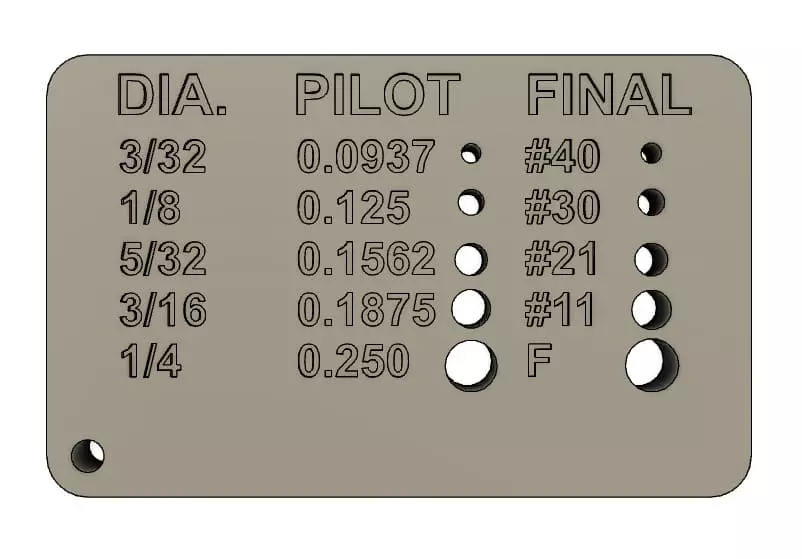
In riveting processes, to ensure that the rivet can be inserted smoothly and achieve sufficient expansion clamping effect, the hole diameter should be slightly larger than the rivet shank diameter. Taking a 1/8-inch (0.125“) rivet as an example, the most suitable drill hole size should be approximately 0.003” to 0.005″ larger than the shank diameter. This size avoids the issues of being too tight, which can cause insertion difficulties, while also preventing the hole from being too large, which can lead to loosening and seal failure.

If you want to know more about rivet sizes and how to measure them, you can refer to my article “how to measure blind rivet“.

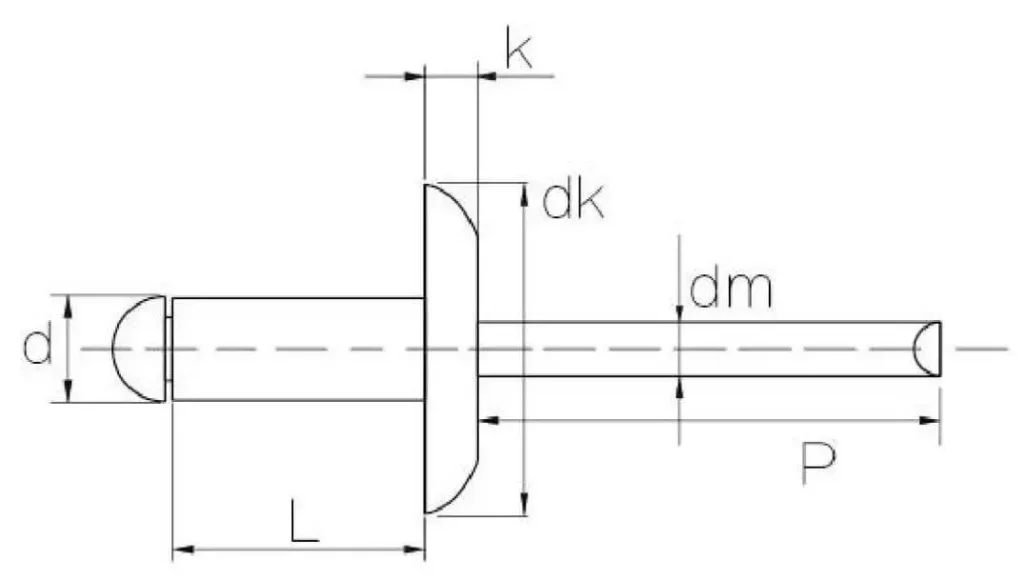
how to measure large flange blind pop rivets

The following is a table comparing the recommended standards:

Rivet Size (inches)Recommended Drill Bit #Hole Diameter (in)Metric Equivalent (mm)Fit Type
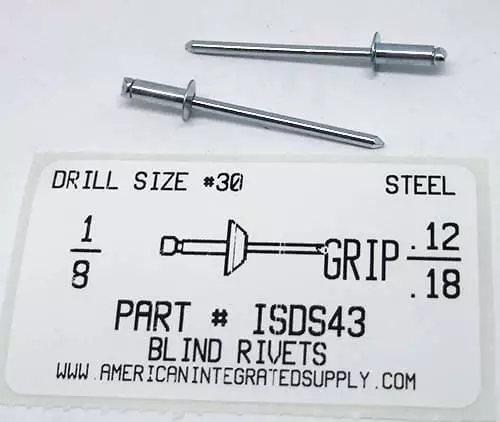
1/8″ (0.125″)#300.1285″3.26 mmStandard Fit (Typical)
 3.3 mm0.1299″3.30 mmMetric Alternative
 #290.1360″3.45 mmLoose Fit (Special Use)

Recommendation:

  • The #30 drill bit is the recommended industrial standard size. This size drill bit provides a stable and reliable mechanical fit for 1/8 rivets and is a common choice in North American and aerospace manufacturing.
  • If using a metric tool system, a 3.3 mm drill bit can be used. The error is within the allowable range and is suitable for general assembly scenarios.
  • If the structure is made of soft materials (such as plastic or thin aluminum) or requires manual installation, a slightly larger hole diameter facilitates insertion. A #29 drill bit or 3.4–3.5 mm drill bit can be used, but be mindful of the risk of reduced clamping force.

Processing Precautions:

  • Drill bit wear can cause fluctuations in hole diameter, so drill bits should be replaced or calibrated regularly.
  • Off-center drilling or burrs will directly affect the center positioning and expansion quality of the rivets.
  • It is recommended to use a limit drill sleeve or positioning guide hole fixture to improve drilling consistency.
  • When riveting multiple layers of material, it is recommended to pre-drill or expand the holes layer by layer to avoid misalignment between layers.

Different 1/8 Rivet Types Require Different Hole Sizes

What Size Drill Bit for 18 Rivet

Although “1/8-inch rivets” are uniformly designated as 0.125 inches (3.175 mm) in nominal size, there are significant differences between rivets made of different materials in terms of forming behavior, hardness, thermal expansion characteristics, and installation resistance. Therefore, during the hole design stage, the hole diameter must be adjusted appropriately according to the rivet material.

  • Features: Lightweight, good ductility, sufficient expansion, high tolerance for hole diameter.
  • Recommended hole diameter: A standard #30 drill bit (0.1285″) or 3.3 mm drill bit is sufficient.
  • Additional information: Suitable for most sheet metal connections. For manual installation or soft substrates, the hole diameter can be slightly widened to 3.4 mm to reduce insertion force.
What Size Drill Bit for 18 Rivet
  • Features: High hardness, high strength, strong expansion resistance, and more sensitive to hole diameter size.
  • Hole Size Recommendations: We recommend using a #29 drill bit (0.1360″) or a 3.4–3.5 mm drill bit to ensure smooth insertion and full expansion.
  • Risk Control: A hole size that is too small can cause excessive load on the rivet gun, leading to the rivet not being securely fastened or the core not being cleanly severed.
  • Features: High strength but slightly brittle, suitable for structural load-bearing connections. Requires slightly higher drilling accuracy.
  • Recommended hole diameter: A #30 drill bit can be used, but the hole walls must be clean and free of burrs. If necessary, use a 3.35–3.4 mm drill bit to improve insertion force stability.
  • Additional notes: Forced expansion may damage the base material. It is recommended to test before mass application.
  • Features: Soft, fully expandable and deformable, suitable for decorative parts, leather, and woodworking structures.
  • Recommended hole diameter: A standard #30 drill bit is sufficient. If used on soft substrates, the hole diameter can be appropriately widened to 3.4 mm to prevent skewing.
  • Risk control: Avoid excessive hole diameter, which may cause loose clamping or skewed installation.

Common Errors and Remedial Recommendations

Even if the correct rivet and drill bit models are selected, operational errors, equipment deviations, or misjudgments during the construction process can still cause connection defects, which in turn affect the overall strength, sealing, and service life of the structure. The following are common types of drilling and installation errors and their corresponding remedial measures.

Sheet Metal Blind Fasteners : A Complete Buying Guide

Error 1: Using a 1/8“ drill bit to directly drill a 1/8” rivet hole

  • Issue: A 1/8″ drill bit is equivalent to the diameter of the rivet shaft, resulting in an overly tight fit, making insertion difficult, and potentially causing material damage or rivet failure.
  • Remedy: Use a #30 drill bit (0.1285“) or 3.3 mm drill bit instead to ensure a 0.003–0.005” installation clearance. If the hole has already been drilled incorrectly, consider using a slight taper to enlarge the hole and correct the diameter.

Error 2: Off-center or skewed drilling

  • Issue: Rivets cannot expand vertically after installation, resulting in insufficient clamping on one side, which may cause loosening or tearing.
  • Remedy: Use a pilot hole fixture or drilling stop device. For off-center holes, replace with structural pop rivets or double-claw closed-type compensation structures.
Common Errors and Remedial Recommendations

Error 3: Failure to remove burrs or oxide layers after drilling

  • Issue: Residual burrs can obstruct rivet expansion, leading to uneven clamping force or stress concentration, which may result in fatigue cracking over time.
  • Remedial recommendation: After drilling, use deburring tools or pneumatic brushes to clean the hole walls, and perform corrosion-resistant pretreatment (e.g., zinc-chromium coating, rust-preventive agent cleaning, etc.).

Error 4: Excessively large hole diameter causes rivets to shake or fail to clamp properly

  • Issue: Loose fit prevents rivets from expanding properly or applying clamping force, resulting in “play” or structural loosening at the connection point.
  • Remedial recommendation: If the tolerance deviation does not exceed 0.1 mm, use an oversized rivet (e.g., 5/32″ specification as an alternative) or install a sealing washer to assist with clamping. For severe deviations, it is recommended to drill and re-drill.

Error 5: Improper alignment or uneven force during installation

  • Problem: Core displacement, incomplete expansion, or asymmetrical tail end formation can easily create potential sources of fatigue cracks.
  • Remedial recommendation: Use automatic riveting tools or set force limiters to avoid over-tightening or uneven tightening. It is recommended to rivet in stages along the diagonal in multi-point riveting structures to improve uniformity.

Preparation:
Prepare the required tools and materials in advance, including 1/8 rivets, drilling tools of the corresponding size and rivet installation tools.

Drill Hole Preparation:
Using an appropriately sized drill bit, drill a hole in the material to be joined. The diameter of the drill hole should match the diameter of the body of the 1/8 rivet to ensure that the rivet can be inserted smoothly.

Inserting the rivet:
Insert the body of the 1/8 rivet into the drilled hole, making sure that the head of the rivet is on the side of the material to be joined. Make sure the rivet is fully inserted into the drilled hole.

Installation Pressure:
Apply appropriate installation pressure using a rivet gun or similar tool. Ensure that the pressure applied is sufficient to fully extend the tail (cored portion) of the rivet and clamp the joining material securely.

Inspecting the Connection:
After installation, check the quality and strength of the connection. Ensure that the rivets are firmly seated in the joining material and that there is no visible looseness or deformation in the joint.

Precautions for Installing 1/8 Rivets

  1. The diameter of the drilled hole should match the diameter of the body of the 1/8 rivet to ensure proper insertion and joint strength.
  2. During installation, ensure that sufficient installation pressure is applied to the rivet, but avoid over-application of force resulting in material damage.
  3. Select the appropriate rivet head shape for the specific application to provide the desired appearance and connection strength.
  4. After checking the connection, ensure that the connection is strong and reliable with no visible looseness or deformation.

FAQs

Q1: Can I use a 1/8“ drill bit to drill holes for installing 1/8” rivets?

A: We do not recommend doing so. Since the 1/8“ drill bit (0.125”) has the same diameter as the rivet shaft, it will result in an overly tight fit, making insertion difficult and potentially preventing proper expansion clamping. We recommend using a #30 drill bit (0.1285″) or a 3.3 mm drill bit to ensure sufficient installation clearance.

Q2: Can a 3.2 mm drill bit be used instead of a 3.3 mm drill bit?

A: Avoid doing so if possible. The 3.2 mm hole diameter is only 0.025 mm larger than the rivet shaft diameter, which can easily cause interference fit, especially posing a significant risk for high-hardness materials such as stainless steel rivets. It is recommended to use standard 3.3 mm or 3.4 mm drill bits to ensure smooth assembly.

Q3: Can the rivet still be used if the hole diameter is too large?

A: If the deviation is minor (no more than 0.2 mm), consider using an oversize rivet or adding a washer to increase the clamping force. If the hole is too large and clamping fails, it is recommended to seal the hole, re-drill it, and use a larger rivet (such as 5/32″).

Q4: Is deburring necessary after drilling?

A: Yes. Residual burrs not only affect the expansion quality of rivets, but can also become stress concentration points, inducing cracks or premature structural fatigue failure. Be sure to use a deburring tool or special tool to clean the hole edges, which is especially important in multi-layer connection structures.

Buying 1/8 Rivet? Rivmate can Help you !

Are you struggling with the consistent quality but high price of 1/8 rivet? Are you looking for a 1/8 rivet with the right price and stable quality? It’s time to connect with a reliable 1/8 rivet supplier! Whether you are buying regular rivets or custom rivets, you can achieve your success with Rivmate!

The safety of a project is dependent on the composition of each component, and a good rivet can provide security and stability to the connection of components. Make sure every connection is secure!

Visit Rivmate Rivet to learn more about purchasing our 1/8 rivets and Contact Us Today!
Reference

Share:

More Posts

Get Rivets Quotes Now

Wholesale Blind Rivets from Rivet Manufacturer

Aluminum vs Steel Rivets: Which is the Best Marterial for Rivets?

Table of Contents

In the application of fasteners, the selection of the rivet material directly affects the structural strength, durability and cost. Among them, aluminum and steel are the two most common blind rivet materials, each with its own advantages and disadvantages. Aluminum vs Steel Rivets – Which is the Best Rivet Material? This blog will conduct a systematic comparison from the aspects of strength, corrosion resistance, weight and cost from the professional perspective of the Rivmate engineering team, to help you make a more scientific selection.

Overview of Aluminum and Steel Rivets

Rivmate Aluminum Sealed Type Blind Pop Rivet
Rivmate 1 4 Inch Steel Pop Rivets open type blind pop rivet
Comparison ItemAluminum RivetSteel Rivet
Density (g/cm³)2.7 (Lightweight)7.8 (Heavy)
Tensile Strength (MPa)180–220400–800
Corrosion ResistanceExcellent, with natural oxide film protectionRequires galvanizing or surface coating for protection
Electrical Conductivity & Thermal ExpansionGood conductivity, higher thermal expansion rateLow conductivity, better thermal stability
WorkabilityEasy to install, low pulling force requiredRequires high pulling force and heavy-duty tools
Typical Cost (Relative)LowerMedium to higher

Characteristics of Aluminum Rivets

Aluminum rivets are lightweight and highly processable, making them the preferred material for lightweight design. Their natural oxide film effectively resists corrosion from air and moisture, thus they are widely used in home appliances, car bodies and building curtain walls. They require low tension during installation and can be installed with ordinary electric or manual riveting guns. However, their strength is limited and they are not suitable for long-term load-bearing or high-impact conditions.

Under the condition of 3 mm plate thickness, the average tensile strength of aluminum rivets is approximately 450 N, and the shear strength is about 300 N, which meets the general assembly requirements.

Characteristics of Steel Rivets

Steel rivets have higher mechanical strength and impact resistance. They are suitable for structural connections, high-load areas, or environments with frequent vibrations, such as industrial equipment, steel structures, and vehicle chassis. However, steel is prone to rust and requires anti-corrosion treatment through galvanization, nickel plating, or the use of stainless steel materials. Their installation requires a relatively high tensile force, and pneumatic tools are generally needed.

The average tensile strength of steel rivets reaches 950 N, which is more than double that of aluminum. After 96 hours of salt spray testing, galvanized steel rivets still maintain over 90% of their anti-corrosion integrity.

Performance Comparison: Aluminum vs Steel

The requirements for strength, corrosion resistance, weight and cost vary greatly in different application scenarios. The following compares the performance of aluminum and steel rivets from four dimensions, combined with Rivmate engineering test data, to help users better understand the actual differences between the two.

a. Strength & Load Capacity

The structural strength of rivets is mainly reflected in two aspects: tensile resistance and shear resistance. The mechanical properties of steel rivets are significantly higher than those of aluminum, making them suitable for high-load and structural connections.

  • The tensile and shear strength of steel rivets is usually 2 to 3 times that of aluminum.It has high structural stability and can withstand significant mechanical stress and vibration.
  • Aluminum rivets, although having relatively low strength, can meet the connection requirements of thin plates and light loads. It is particularly suitable for non-load-bearing components or decorative structures.

The tensile strength of A2 stainless steel rivets is approximately 950 N; that of standard aluminum rivets is about 450 N. It is evident that if the connected parts are subjected to dynamic loads or external impacts, steel rivets will offer a greater safety margin.

Monel Blind Rivets - Prevention of Galvanic Corrosion

The anti-corrosion performance directly determines the service life of the riveting points, especially in outdoor or humid environments.

The surface of aluminum rivets naturally forms a dense oxidation protective film, which can effectively resist oxidation and acid-base corrosion. In neutral or weakly acidic environments, the anti-corrosion performance is stable and maintenance-free. Steel rivets are prone to rust without a protective layer; however, after being treated with galvanization, nickel plating or made of stainless steel, their durability can be significantly enhanced.

When aluminium and steel are used together, galvanic corrosion can occur due to the potential difference. Rivmate suggests adding insulating washers or anti-corrosion isolation coatings at the contact interface of the two metals to prevent accelerated corrosion.

Neutral and dry environment → Aluminum rivets are preferred.

Damp, salt spray or chemical environments → Stainless steel or coated steel rivets are recommended.

c. Weight and Workability

In modern manufacturing, lightweighting and high assembly efficiency are becoming increasingly important.

Aluminum rivets weigh only 1/3 that of steel, significantly reducing the overall structural weight. They are suitable for assembly in automobiles, aviation, home appliances, and electronic devices. Aluminum is soft, requiring less pulling force for installation, and can be installed using either manual or electric riveting guns.

Steel rivets have high strength and require greater tensile force during installation. It is recommended to use pneumatic or hydraulic riveting tools to prevent incomplete core breakage.

For mass production, aluminum rivets can significantly reduce operational load and equipment energy consumption. After replacing carbon steel models with aluminum rivets, the single-line assembly efficiency increased by 18%, and the operational fatigue was reduced by approximately 25%.

d. Cost and Durability

Material cost and service life are the core indicators for evaluating economic efficiency. Aluminum rivets have a low manufacturing cost and high installation efficiency, making them suitable for projects with limited budgets or for medium to short-term use. Steel rivets have a slightly higher initial cost, but their high strength and long service life result in lower maintenance costs.

For high-load or long-running equipment, the total cost of ownership (TCO) is more favorable. In corrosive environments, although stainless steel rivets are the most expensive, they can ensure structural stability for more than 10 years.

Which Material Fits Your Application?

In practical applications, the selection of rivets should always be based on the “usage environment, load requirements and anti-corrosion conditions”. Under different working conditions, there are significant differences in performance and maintenance cycles between aluminum and steel (including stainless steel) rivets.

Application EnvironmentRecommended Rivet MaterialMain Reason
Automotive & Rail TransitSteel / Stainless SteelWithstands strong vibration and impact; requires high strength and fatigue resistance. Steel rivets offer structural stability and excellent shear performance.
Building & Roofing SystemsAluminum Cap + Stainless Steel Mandrel (Al + SS Mandrel)Strong corrosion and rust resistance with lightweight properties; ideal for long-term sealed assemblies in metal roofing and façade systems.
Home Appliances & ElectronicsAll AluminumLightweight, quick installation, non-magnetic; provides a clean appearance and prevents galvanic corrosion, suitable for housings and thin-sheet connections.
Outdoor or Coastal AreasFull Stainless SteelExcellent salt-spray and moisture resistance; maintains long-term stability in high-humidity environments without rusting or failure.
Aerospace & Lightweight StructuresAluminumWeighs only one-third of steel, significantly reducing total weight; easy to process and form, ideal for lightweight aerospace and transportation applications.

Material Selection Essentials

  1. When structural strength is prioritized — Steel or stainless steel rivets are the preferred choice, especially suitable for supporting components, chassis and welding alternative scenarios.
  2. When environmental protection is the priority — Aluminum rivets or aluminum + stainless steel core combinations offer greater advantages, effectively resisting moisture, rain and chemical corrosion.
  3. When lightweight and appearance requirements are high — The all-aluminum series is the best option, with consistent color, aesthetic appeal and low installation load.
  4. For structures with high risk of electrochemical corrosion — Direct contact between aluminum and carbon steel should be avoided. Insulating gaskets or a mixed rivet structure can be used instead.

Proper Installation and Maintenance of Rivets

How to Install Q Rivets

The performance of the rivets is not only dependent on the material selection, but also closely related to the installation method and maintenance procedures. Even if the correct material is chosen, improper installation can still lead to loose connections, unbroken core shafts, or failure of anti-corrosion measures.

① Aluminum Rivets

Aluminum rivets are lightweight and have high ductility, making them suitable for installation using either a manual or electric riveting gun. During installation, it is crucial to carefully control the pulling force and stroke to avoid over-pulling or deformation of the cap body, ensuring that the riveted surfaces are flat and tightly adhered.

  • It is recommended to use an electric riveting gun that complies with ISO standards, with the pulling force set between 3–5 kN.
  • The diameter of the hole should be approximately 0.1–0.2 mm larger than the diameter of the rivet to ensure smooth insertion and prevent loosening.
  • If used on waterproof or coated surfaces, the oil stains at the hole opening should be cleaned before riveting, and sealing gaskets can be added to enhance the waterproofing effect.

For the assembly of aluminum alloy or plastic parts, the “low shear force” mode or segmented riveting technology should be used to avoid stress cracks on the material surface.

② Steel Rivets

Steel rivets have high strength, but they also require more stringent installation equipment. It is recommended to use a high-torque pneumatic or hydraulic riveting gun to ensure that the mandrel breaks completely and is locked in place under the specified pulling force.

  • Recommended tension setting value: 8–12 kN (adjustable according to the diameter of the rivet and the type of structure).
  • After the riveting is completed, check the fit of the cap and whether the back expansion is uniform.
  • If the tension is insufficient during installation, it may cause the core shaft not to break or the lock core not to be securely engaged, thereby affecting the structural safety.

During the assembly test, using uncalibrated riveting equipment resulted in an incomplete core breakage rate of up to 12% for the steel rivets. Regular equipment calibration can reduce the failure rate to below 1%.

③ Mixed-Material Assembly

When different materials such as aluminium, steel, and stainless steel are used together, the electrochemical corrosion risk must be taken into account. If the potential difference between two metals is significant (for example, between aluminium and steel), electrochemical corrosion is likely to occur in humid or salt spray environments.

Rivmate suggests adding insulating washers or corrosion barrier coatings between the contact surfaces. For areas with high corrosion (such as coastal projects), it is recommended to use composite rivets with aluminum caps and stainless steel cores, which can balance strength and corrosion resistance.

After installation, the joint area can be sealed with neutral preservative or silicone sealant to further extend its service life.

Choose Smart, Build Strong — Rivmate’s Recommendations

Applications of Monobolt Blind Rivets for automotive

In the design of riveting, there is no such thing as the “best” rivet. What really matters is to select the “most suitable material” based on the application environment, structural requirements and the lifespan of the product.

Aluminum and steel rivets each have their own unique advantages: one represents lightness and corrosion resistance, while the other represents strength and durability. Rivmate always advocates making decisions from an engineering perspective, rather than solely pursuing a single performance metric.

  • When aiming for lightweight and corrosion resistanceChoose aluminum rivets
    Suitable for roof systems, building facades, appliance and lightweight equipment assembly. The aluminum material has an inherent oxide protective layer, with excellent anti-corrosion performance, quick installation and high cost-effectiveness.
  • When focusing on structural strength and safe load-bearing → Choose steel or stainless steel rivets (Steel / Stainless Steel Rivets)
    Suitable for high-load structures, mechanical equipment and transportation fields. The tensile strength can reach more than twice that of aluminum, making it suitable for long-term stressed environments.
  • When you want to balance both corrosion resistance and strength → Choose the hybrid type rivet (Aluminum Body + Steel Mandrel)
    Combining the advantages of both, it is lightweight, has high tensile strength, and is corrosion-resistant. It is particularly suitable for composite structures, outdoor applications, and multi-material connections.

Rivmate's Professional Commitment to Engineering Quality

Rivmate - russia(Moscow) International Fastener exhibition 2025

Each rivet of Rivmate has undergone strict testing and has been certified to international standards, including:

  • ISO 14589 (Blind Rivet Mechanical Performance)
  • ASTM B117 (Salt Spray Corrosion Test)
  • DIN 7337 (Blind Rivet Manufacturing Standard)

In addition, Rivmate offers sample testing, material compatibility assessment and application verification services, ensuring that your project maintains the highest level of reliability throughout the design, production and maintenance stages.

📘 Want to obtain the most suitable rivet solution for your project? Contact the Rivmate engineering team immediately to obtain customized selection guidance and sample test report.

📧 Product Inquiry: manufacture@world-rivet.com

🌐 Official Website: https://worldrivet.com/

Reference

Share:

More Posts

Get Rivets Quotes Now

Wholesale Blind Rivets from Rivet Manufacturer

Jack Nut vs Rivet Nut : Which Rivet Nut Fastener is Better ?

By RIVMATE /Febravery27,2024                     Tite: Jack Nut vs Rivet Nut

Jack nut and rivet nut are both fasteners used to join materials. They play an important role in different application scenarios.Jack nut is often used in applications where a reliable threaded joint needs to be created in the material, especially if the material is thin or not suitable for locknuts.Rivet Nut is commonly used in applications where a threaded joint needs to be created on the surface of the material, especially if it is not possible to install a locknut from the backside of the material.Rivet Nut is also used in applications where it is not possible to install a locknut from the backside of the material.Rivet Nut is used in applications where a threaded joint needs to be created on the surface of the material.

So what is the difference between them, Jack nut vs rivet nut, which is better?

Table of Contents

What is a Jack Nut and What are Its Characteristics?

jack nut - Rivmate Jack Nut Supply

Jack nut is the best solution for installing threads into thin, soft or brittle materials (e.g. plastic, wood).Jack Nut consists of a hollow body with a set of gears or threads inside. It has an expansion area at the bottom. During installation, the Jack Nut is inserted into a hole in the material, and then by rotating the threaded portion at the top, the expanded area at the bottom expands to form a tight connection with the material.

Jack nut has the following features:

  1. Particularly suitable for thin-walled materials such as thin sheet metal and plastic sheets.
  2. The threaded portion of the Jack Nut can be rotated to adjust the level of tightening force.
  3. Jack Nut is reusable. When a connection needs to be replaced or adjusted, the Jack Nut can simply be tightened or loosened without replacing the entire fastener.
  4. Jack Nut can be used on a wide range of materials, including metals, plastics and composites. They are used in a wide range of applications such as automotive manufacturing, electronic equipment, mechanical equipment, construction and aerospace.

What is a Rivet Nut and What are Its Characteristics?

Rivmate Countersunk Rivet Nut - Rivnuts

The Rivet Nut is a hollow threaded nut. It provides a reliable threaded connection for a wide range of materials with different thicknesses.

Rivet nut has the following advantages:

  1. Rivet Nut creates a reliable threaded joint on the surface of the material that can withstand external stresses such as tension, shear and vibration.
  2. Rivet Nut is suitable for situations where it is not possible to install a locknut from the backside of the material. This makes the Rivet Nut ideal for joining threads, especially for materials that are accessible from one side.
  3. Rivet Nut can be applied to a wide range of materials, including metals, plastics and composites. It is also suitable for materials of different thicknesses, from thin sheets to thicker materials.
  4. The installation process for Rivet Nut is relatively simple and usually requires only the use of a specialized installation tool.

Jack Nut vs Rivet Nut: Which one is Better for Your Application

Sheet Material

For joining sheet materials, such as thin metal and plastic sheets, Jack Nut is a more suitable choice. Because the Jack Nut’s expansion area expands inside the material, it provides a reliable connection without placing undue stress on the thin-walled material.

Single-sided Accessible Applications

Ideal for connections that can only be installed from one side, both Jack Nut and Rivet nut are blind-faced fasteners that can be inserted into the material from one side, expanding and forming a tight connection with the material by rotating the top threaded portion.

Multiple Materials and Thicknesses

If your project requires connections in a variety of materials and thicknesses, and you need to provide a reliable threaded connection, the Rivet Nut is the better choice.The Rivet Nut can be applied to a wide range of materials, including metals, plastics, and composites, and is capable of providing a solid threaded joint.

Conclusion

Jack nut and rivet nut each have their own advantages and applications. The choice of Jack nut and Rivet nut should be based on the specific application environment and project requirements. You can consider the type and thickness of material, installation conditions and performance requirements. Through this article, you can clearly understand the difference between jack nut and rivet nut. By contacting the engineers at Rivmate, you can choose the most suitable fastener for a solid connection!

Looking for Jack Nuts or Rivet Nuts? Rivmate can Help you !

At Rivmate, you can get high quality but affordable jack nut and rivet nut.Rivmate is a top Jack nut and Rivet nut manufacturer and supplier in China.

Rivmate can provide you with the full range of jack nut and rivet nut sizes. you can customize the fastener material to fit your project. rivamte helps you achieve success with your projects!

More parameters and information about jack nut and rivet nut. Please contact our engineers or send an e-mail to manufacture@world-rivet.com.

Submit Your Sourcing Request

The Ultimate Guide to Jack Nuts

By RIVMATE /February 23,2024                     Tite: The Ultimate Guide to Jack Nuts

Jack nuts manufacturer in china

Jack nut is a blind rivet nut with a unique structural design.Jack nut is a cost-effective fastener that provides a bolted node for component attachment. So what type of fastener is jack nut? How to wholesale jack nuts? Via this article. You will get the answer you want.

Table of Contents

What is a Jack Nut ?

Jack nuts are designed to join thin, soft or brittle materials. During installation, the expanding area of the jack nuts creates a collapse on the backside of the material and acts as a fastener.

Jack nuts usually consist of two parts:

  1. hollow cylinder
  2. expansion area

The entire body of the jack nuts is a cylinder. It is open at the top and bottom. It has internal threads that provide a solid attachment point for bolts or screws.

When mounting pressure is applied to the jack nut, its expansion area expands to form a tight connection.

Applications of Jack Nuts

Jack nuts are typically used in applications where they are not subjected to large loading forces. Examples include panels holding electrical equipment, mechanical panels, shrouds, operating devices, etc. Jack nut has always performed well in thin material applications. Below are a few common application scenarios:

  • vehicles
  • aerospace
  • Electronic equipment industry
  • Furniture manufacturing industry
  • mechanical engineering
  • Power industry

Applicable materials:

  • Sheet metal
  • soft plastic
  • wood
  • Fine Glass

These are just some of the common industry applications. In fact Jack nuts are widely used in many industries and fields.

Specifications of Jack Nuts

carbon steel jack nut structure
Thread Grip Range(Min) Grip Range(Max) Hole Size D(Max) DK K L
10-24 0.79 4.75 9.7-10.16 9.69 13.6 2.0 18.0
10-24 4.75 9.53 9.7-10.16 9.69 13.6 2.0 22.2
1/4-20 0.50 4.70 11.13-11.43 11.1 16.3 2.0 18.3
1/4-20 0.50 4.70 11.13-11.43 11.1 16.3 2.0 18.3
M4 0.5 4.75 8.1-8.4 7.82 12.0 1.8 16.9
4.75 9.53 22.9
M5 0.5 4.75 9.7-10.2 9.6 13.5 1.85 17.9
4.75 9.53 22.9
M6 0.5 4.75 11.1-11.4 11.13 15.9 1.85 18.2
4.75 9.53 23.0

How to Choose the Right Jack Nuts ?

All fastener selection processes and points are similar. All have to be considered in terms of size, material.

Sizes

Before choosing the right jack nut. You need to determine the thickness of the material where the jack nuts are to be installed. Different sizes of jack nut have different thicknesses of joints. In addition to that, you have to determine the size of the holes in your material to determine the size of the jack nut. Common sizes are M4 – M6.

Thread Type

Jack nuts have an internally threaded design. It is also available in different thread sizes, either UNC or UNF, and it is necessary to check in advance that the Jack nut matches the specification and size of the bolts that need to be connected.

Material

The difference in properties between different metal materials is also significant. Common materials used in the fabrication of Jack Nut include stainless steel and carbon steel, and if you have special needs, you can contact Rivmate to customize your project.

How to Install Jack Nuts?

The above video shows a Jack nut installation tutorial posted on the RivetLab channel in youtube.

Steps to install Jack Nut:

  1. Preparation: pre-drilled holes, matching jack nut. installation tools.
  2. Inserting the Jack Nut into the hole: Insert the Jack Nut into the hole making sure the threaded portion is on one side of the hole.
  3. Activate the tool: Using the appropriate tool, apply the appropriate amount of force to expand the bottom expansion area of the Jack Nut.
  4. Check Installation: Verify that the Jack Nut is fully expanded and has a tight connection to the material. Gently twist the Jack Nut to make sure it has not loosened or rotated.

Buying Guide to Jack Nut

The process for purchasing a jack nut is the same as for any other fastener. I will list the correct wholesale steps for you. This includes finding a supplier, comparing prices and quality, payment, and points to watch out for.

Find a Reliable Jack nut Supplier

There are many suppliers in the market that are not able to Jack nut this product. So you have to go to the market to find manufacturers who are able to produce Jack nuts in large quantities. But at Rivmate, you can get high quality jack nuts and reliable services.

Compare prices, quality and service

After finding a reliable jack nut supplier, you need to compare the suppliers in terms of price, quality and service offered. Consider the price differences between different suppliers, but don’t base your decision solely on the lowest price. It is also important to check the quality certifications and manufacturing standards of the product to ensure that the Jack Nut purchased meets the requirements.

Wholesale Recommendations

  • View samples or technical specifications: If possible, request samples or detailed technical specifications from the supplier to assess quality and suitability.
  • Understand after-sales support: Learn about the supplier’s after-sales support policies and services, including return and exchange policies, warranty period and technical support. Ensure that the supplier is able to resolve any issues or concerns in a timely manner.

Looking for Jack Nut Supplier? Rivmate can Help you !

If you want to buy Jack nut. if you are looking for jack nut supplier, please contact Rivmate.

Rivmate is one of the top jack nut manufacturers in China, which can provide you with high quality and complete sizes of jack nut, you can solve all your jack nut purchasing needs from Rivmate at one time. To learn more about jack nut, contact one of our engineers!

Submit Your Sourcing Request

How to Install Rivet Nuts: The Complete Guide

By RIVMATE /February 20,2024                     Tite: How to Install Rivet Nut

How Do Blind Rivet Nut Fasteners Work?

Rivet nuts are an important part of riveted fasteners and are widely used in automotive manufacturing, aerospace, electrical appliances, machinery manufacturing and other industries. So how to install the rivet nut? By reading this article, you will learn all the steps to properly install a rivet nut.

Table of Contents

What are Rivet Nuts?

A rivet nut is a fastener used to join and secure materials. It consists of two parts:

  1. Internal thread
  2. Bottom disc

Rivet nuts can provide an attachment point for thin sheet materials and are used to provide a connection for bolts. Rivet nuts are commonly used in applications that require the creation of a strong threaded connection in thin plate or thin-walled materials, such as automobiles, airplanes, machinery and equipment, furniture, and more. They provide a convenient, reliable solution that makes it possible to make threaded connections where access from both sides is not possible.

Preparation Before Installing Rivet Nuts

  • Drill bits for drilling holes
  • Rivet nuts to be used
  • Rivet nut tools that can be matched to the size of the rivet nut
  • Materials to be riveted

How to Install Rivet Nuts?

1.Drilled Hole

Rivet nut gun accessories

Let’s demonstrate the installation process using a 1/8-inch rivet nut as an example. 

In order to be able to drill a smooth hole, you need to have your electric drill gun ready. Insert the drill bit into the electric drill and then pneumatically drill the hole.

  • Ensure that the drill is perpendicular to the material
  • Drilling with a drill bit matched to the rivet nut

Insert Rivet Nut

A912 Rivmate Pneumatic Rivnut Tool

In fact, installing a rivet nut is the same principle as installing a blind rivet. So now we just need to put the rivet nut prepared in advance onto the mandrel of the rivet nut tool. On the rivet nut tool, the mandrel is a rod, and you just need to put the internal threaded part of the rivet nut on the rod.

Then place the rivet nut into the hole drilled in advance in step one. (Note: the size of the pre-drilled hole should match the size of the rivet nut!)

Enable Rivet Nut Tool

Whether you are using a manual rivet nut tool or a pneumatic rivet nut tool for installation. You will need to start the tool to complete the process.
Here, I will describe the pneumatic rivet nut gun as an example.

Checking the Installation

It is important to ensure that the rivet nut is secure. Therefore, when performing any tests or adjustments, follow proper safety procedures and refer to the manufacturer’s recommendations and instructions. Consult a professional or engineer for more detailed guidance if required. Below are a few common ways to test the firmness of a rivet nut:

  • Visual Inspection: It is possible to check with the naked eye that the rivet nut is installed correctly. Check that the threaded portion is completely in the bolt or screw and that the bottom disk is in tight contact with the surface of the material.
  • Manual Test: Using an appropriate tool (e.g., wrench or torque wrench), attempt to gently rotate the rivet nut. If resistance is felt or the hold is tight, the nut is securely installed. Be sure not to over-turn as this may damage the threads or connection.
  • Tension Test: For particularly critical connections, a suitable test device can be used to apply tension and check that the connection is able to withstand the required tension without loosening or detaching.
  • Torque Test: Using a torque wrench or similar tool, apply the appropriate torque to the bolt or screw. Observe that the rivet nut resists the torque and remains secure.
  • Vibration Test: For connections subjected to vibration or shock, apply vibration or shock force to the connection and observe for loosening or deformation.

Tips for Installing Rivet Nuts

  1. Select a mandrel that matches the size of the rivet nut to install the rivet nut. Ensure that the tool matches the size of the nut to avoid damage to the threads or connection.
  2. Before installing the rivet nut, make sure the surface of the joining material is clean and flat. Remove any dirt, grease or other obstructions to ensure that the rivet nut will make tight contact with the material.
  3. When rotating the rivet nut, apply even force to ensure that the threads enter the bolt or screw properly. Avoid applying too much or too little force, which could damage the connection or result in a weak installation. (Using a rivet nut gun can be a good solution to this problem)

Common Problems and Solutions for Installing Rivet Nuts

Bolt or Screw does not Go Into the Rivet Nut Correctly

Check the threads of the bolt or screw for damage, clean the threads and make sure the rivet nut is properly aligned.

Loose or Insecure Rivet Nut

Check to make sure the rivet nut is installed correctly and that the proper tightening force is applied with the proper tools and torque.

Damaged Threads

void over-tightening the rivet nut to avoid damaging the threads. If the threads are damaged, it may be necessary to replace the rivet nut or repair the threads.

Bottom Disc not Making Tight Contact with Material Surface

Check that the material surface is flat and make sure there are no obstructions preventing the bottom disc from making contact with the material. Consider using shims or other supplemental materials to fill the gap if needed.

Looking for Rivet Nut or Rivet Nut Tool? Rivmate can Help You !

Seeing this, you must have a deep understanding of how to install rivet nuts!

If you want to buy rivet nuts or rivet nut tools in bulk, then contact us!

Rivmate has a huge range of different types of rivet nuts and you can get all the rivet nuts you want at once at Rivmate! Whether they are made of carbon steel, stainless steel, iron, aluminum alloy or copper, you can source them all from Rivmate!

Trust me! You get the same quality rivet nuts and rivet nut tools for less money than you would pay locally! To learn more click to contact our engineers!
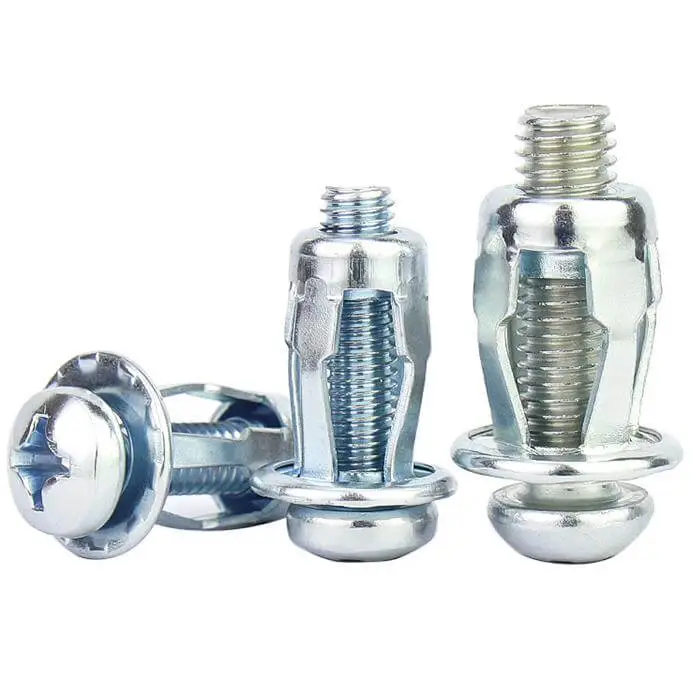
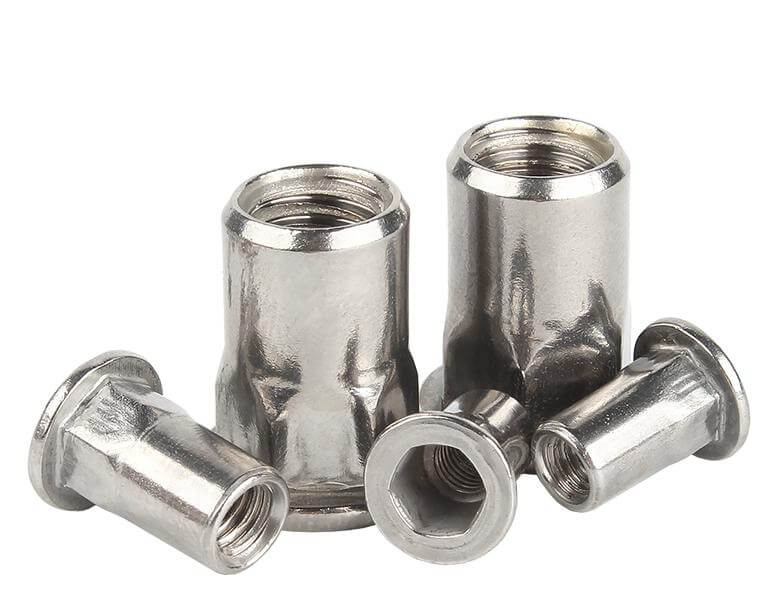
Submit Your Sourcing Request

Submit Your Rivet Request

First order over $5,000 free riveting tools