Whatsapp: +86 18962304392

Email: manufacture@world-rivet.com

Why is the Countersunk Rivet Head Angle Important?

Picture of Rivmate Fastener

Rivmate Fastener

Top Rivet and Rivet Nut Manufacturer in China

Table of Contents
Why is the Countersunk Rivet Head Angle Important

Why is the Countersunk Rivet Head Angle Important? If an inappropriate countersunk rivet head angle is used, it is likely to lead to serious consequences, even connection failure. So choosing the right countersunk rivet head angle is crucial for your business.

By reading this guide, you will learn the basic definition, importance, types and factors to consider for countersunk rivet head angle.

Table of Contents

What is the Countersunk Rivets Head Angle?

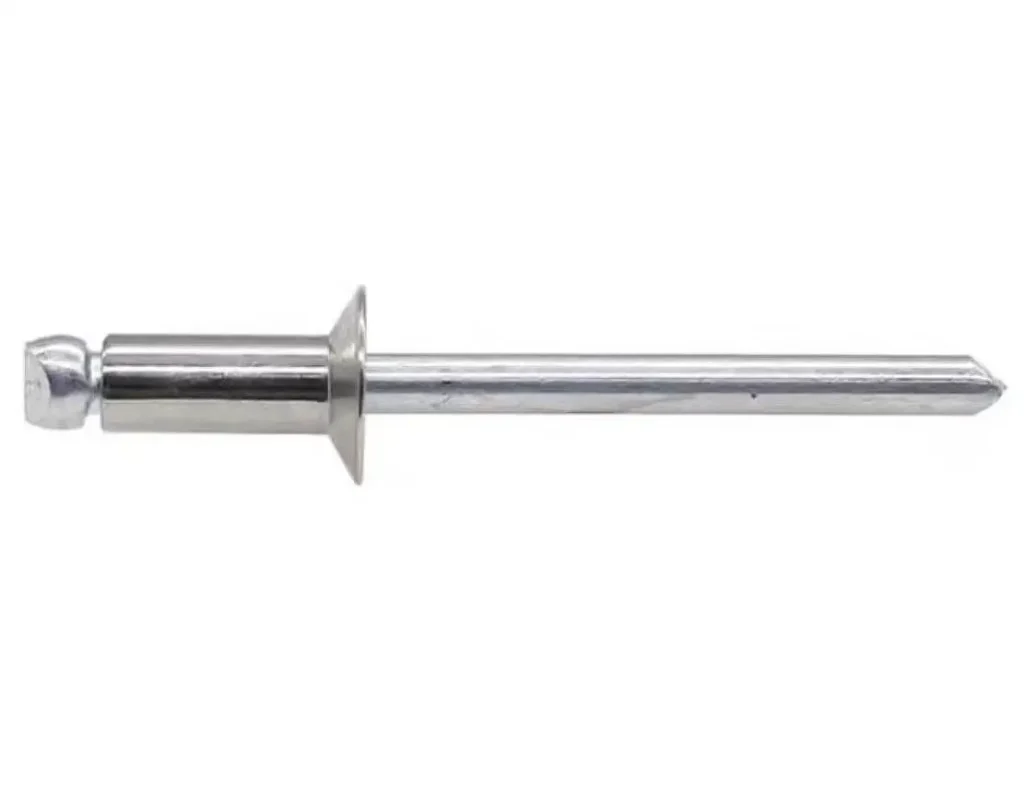
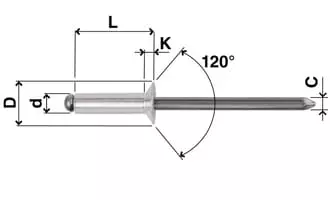
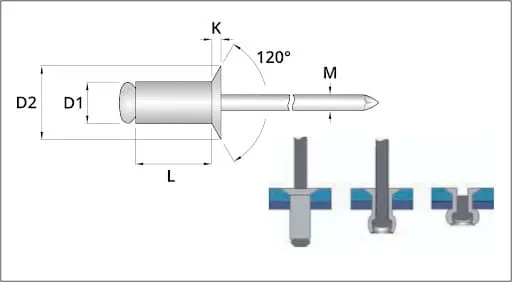
The countersunk head angle of a countersunk head rivet refers to the angle of the tapered portion of its head, usually with 100° as the most common standard. Depending on the application scenario and industry standards, there also exist 90°, 120° and other angle designs.
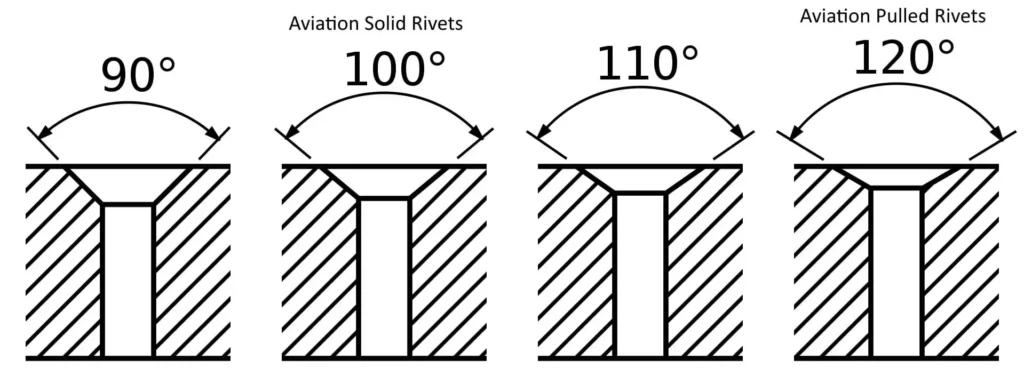
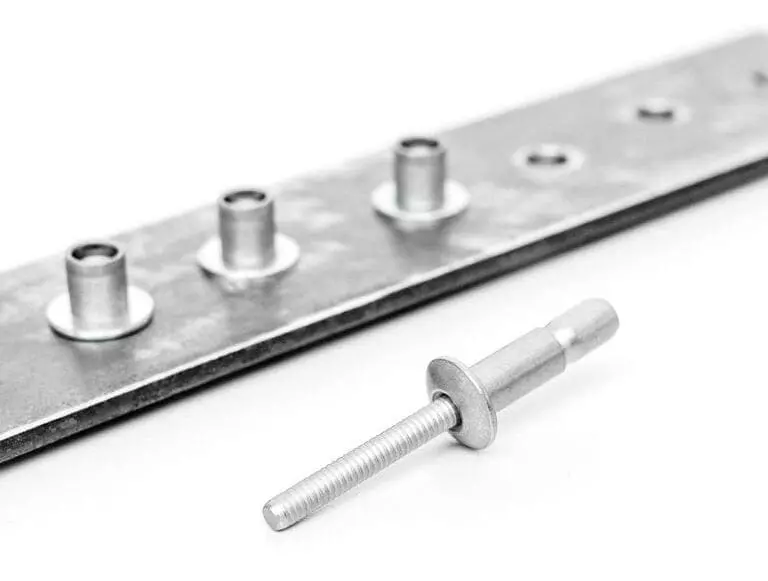
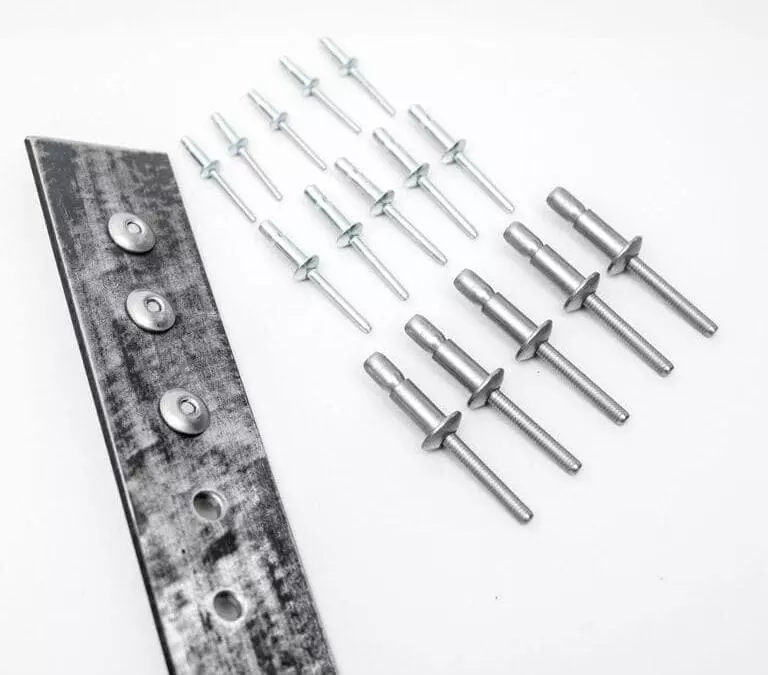
Countersunk Blind Rivets Angle

Aerospace uses 100° or 130° countersink angles more often, while 90° in sheet metal working is suitable for softer materials. The countersunk head angle determines how well the head of the rivet fits the surface of the material after riveting. The smaller the angle, the shakier the taper; the larger the angle, the flatter the taper.

The correct choice of countersink angle ensures:

  • The surface is flat and free of bulges after riveting.
  • Uniformity of force and avoidance of stress concentration.
  • Compliance with industry specifications.

Why Is the Countersunk Rivet Head Angle Important?

The countersunk head angle of countersunk head rivets is important because it directly affects the structural performance of the riveted joint, the installation effect and the suitability of the application scenario.

1. Ensuring structural strength and load distribution

The countersunk head angle determines how well the rivet head fits the material contact surface. Mismatched angles (e.g., countersunk hole angle greater than rivet angle) will result in only edge contact of the rivet head, resulting in localized stress concentrations and reduced joint strength.

The correct angle (e.g. 90°) allows the rivet head to fit perfectly into the countersunk hole, spreading the load over a larger area and avoiding localized overloads that could lead to deformation of the material or loosening of the rivet.

2. Ensuring surface flatness
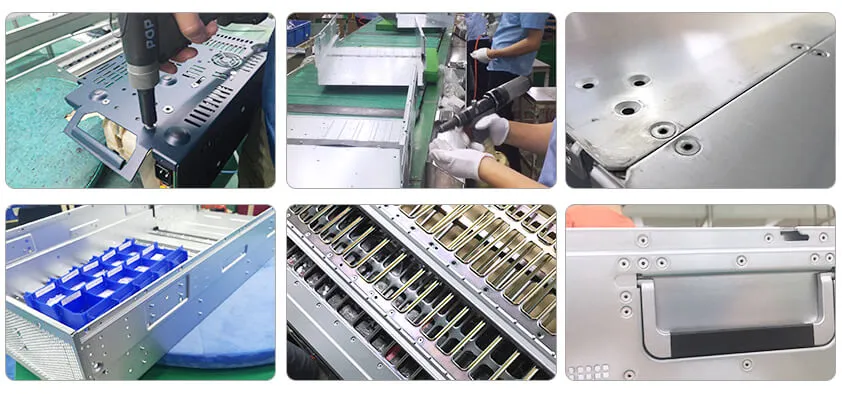
What Are Pop Rivets Used For? - Pop Rivets for Electronic Devices

When the countersunk head angle is the same as the countersunk hole angle, the head of the rivet can be fully embedded in the surface of the material for a smooth transition. If the angle deviates (e.g. 90° for rivet angle and 85° for countersunk hole), the head may protrude or sink, affecting appearance and function.

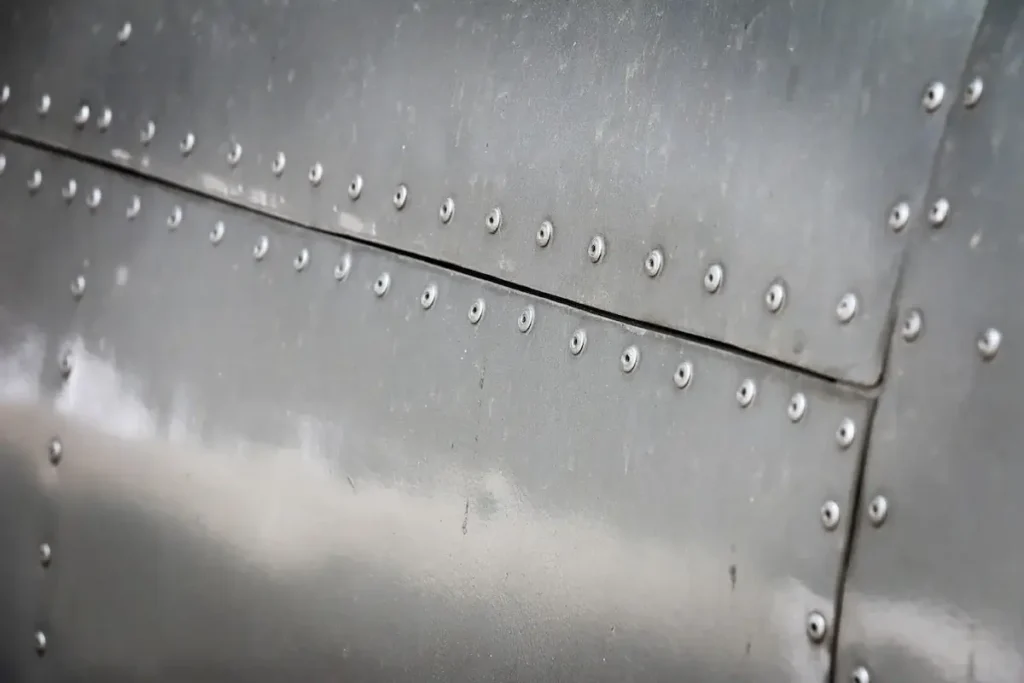
Special scenarios have very high requirements for surface flatness. For example, aircraft skins require rivet heads to be perfectly flush to minimize air drag; electronics housings need to avoid bulges that can affect tactility or assembly.

3. Optimization of the installation process

When the countersunk head angle is matched to the countersunk hole, the rivet is automatically centered during the press-in process, reducing the risk of installation deflection. Angular deviations can cause the rivet to tilt, reducing the reliability of the connection.

If the countersink angle is slightly less than the rivet angle (e.g. 89° vs. 90°), this compensates for machining errors and ensures a tight fit of the rivet head.

4. Adaptation to different material properties

  • Soft materials (e.g. aluminum, plastics): using a smaller angle (e.g. 82°) reduces the risk of crushing deformation or cracking of the material during riveting.
  • High strength materials (e.g. titanium alloys): a larger angle (e.g. 100°~130°) may be required to balance the material hardness and riveting force to avoid chipping of the countersunk edges.

Do You Have Any Questions?

Let Us Solve Your Problem

Types of Countersunk Rivet Head Angle

There are many types of countersunk rivet head angle to suit different application scenarios and materials.

90° Countersunk angle

90° Countersunk angle meets ISO 1051, GB/T 869 (China), DIN 6797 (Germany), JIS B 1211 (Japan) standards for design.90° Countersunk head rivets are commonly used in machinery, sheet metal fabrication, and building structures.

The characteristics of the 90° Countersunk angle are as follows:

  • The most widely used standard angle, easy countersunk hole processing, strong compatibility.
  • Flat surface after riveting, suitable for scenes with basic requirements for appearance.
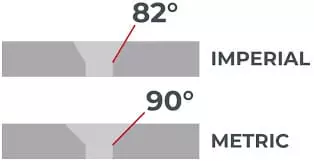
Types of Countersunk Rivet Head Angle

82° Countersunk angle

82° Countersunk head angle in accordance with ANSI/ASME B18.1.2 (U.S.), some aerospace standards. Mainly used on soft metals (e.g. aluminum sheet, copper) or plastic parts. You may see 82° countersunk head rivets in automotive interiors, electronic equipment housings and other scenarios where deformation of the material needs to be avoided.

The features of this countersunk head rivet are as follows:

  • Steeper taper reduces the risk of extrusion deformation on soft materials.
  • Requires matching 82° countersunk holes, commonly used in the American Standard system.

100° Countersunk angle
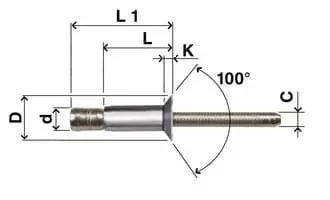
Types of Countersunk Rivet Head Angle - 100° Countersunk angle

The 100° countersink angle meets NASM/MS (aviation standards), some military specifications. Aircraft skins, spacecraft structures and high-strength alloys are joined using a large number of 100° countersunk head rivets.

These rivets are characterized by a smoother taper and greater load dispersion for high stress scenarios.

120° or 130° countersunk head angle
When Would You Use a Countersunk Head Rivet

The 120° or 130° countersink angle is customized for special industries (e.g. ships, heavy machinery).

If your project requires the joining of extra thick plates or composites, or if you need extremely low surface projection, then 120° or 130° countersunk head rivets are a good choice.

After installation, the head of the rivet is almost perfectly flush with the surface of the material.

Countersunk Rivet Head Angle Chart

ScenarioRecommended AngleRationale
General sheet metal fabrication (steel/aluminum)90°Low cost, easy processing, and strong compatibility.
Lightweight aluminum panel connections (automotive)82°Reduces deformation in aluminum, compliant with ANSI standards.
Aircraft skin riveting100°Distributes aerodynamic loads and meets high-strength aviation requirements.
Thick composite structures (e.g., marine)120°–130°Ensures flush surfaces to prevent corrosion or drag.

Do You Have Any Questions?

Let Us Solve Your Problem

Factors to Consider for Countersunk rivet Head Angle

When selecting the head angle of a countersunk head rivet, in order to ensure joint strength, functionality and economy. The following key factors need to be considered:
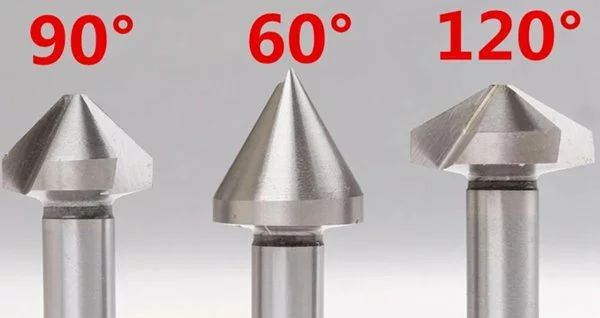
Factors to Consider for Countersunk rivet Head Angle
  • Material Characteristics: Prefer 82° countersunk head rivets when your project is a soft material. For hard materials, 90° countersunk head rivets or 100° countersunk head rivets are more appropriate.
  • Material thickness: Use countersunk head rivets with small angle (82°~90°) for thin plates (<3mm) to avoid penetration or deformation. Thick plates or composite materials use large angle (100°~130°) countersunk head rivets to enhance load carrying capacity.
  • Load type: Shear dominated selection of 90° countersunk head rivets. Tensile force dominant selection of 100 ° or greater angle countersunk head rivets.
  • Surface flatness requirements: high flatness requirements using 100 ° ~ 130 ° countersunk head rivets, general appearance of the choice of economical 90 ° countersunk head rivets.

Enhance your Business with Rivmate Riveting Solutions

The angle of countersunk head rivets used to join different materials is also different. By reading this guide, I’m sure you already know how to pick the best coutersunk rivet head angle for your project.If there are still questions about this, please contact our engineers.

Please obtain a sample rivet for testing before placing an official order.

Get Rivets Quote

You may also find these topics interesting

Custom Rivet Solutions for Your Project

The Ultimate Guide to Countersunk Head Rivets Uses

Picture of Rivmate Fastener

Rivmate Fastener

Top Rivet and Rivet Nut Manufacturer in China

Table of Contents

Countersunk Head Open Type Blind Rivet

Countersunk head rivets are one of the three types of rivets. So do you know countersunk head rivets uses?With this ultimate guide, you will learn the definition of countersunk head rivets, conditions of applicability, applications, and tips for use.

Table of Contents

Countersunk Head Rivets - Basic Concept

Countersunk head rivets are a type of fastener for concealed, single-sided installation. Once installed, countersunk head rivets are fully embedded in the material surface, creating a flat joint surface.

Most blind rivets can be made into countersunk head rivets, so countersunk head rivets can be used in a wide variety of applications. Common countersunk head rivets are available in 100° and 120° head angles.

Countersunk Blind Rivets Angle

Conditions Suitable for the Countersunk Head Rivets Uses

High concealment requirements

  • Scenario: need to have a flat surface and no bumps. For example, automotive interior panels, aircraft skins, high-end furniture or consumer electronics housings.
  • Advantages: Countersunk design avoids cosmetic disturbances and improves aesthetics or aerodynamics (e.g. drag reduction).

Installation environments where only one side can be operated

  • Scenarios: Enclosed structures (e.g., inside walls of pipes, inside electronic equipment) or spaces that are inaccessible from the back side (e.g., aeroplane wing gussets).
  • Advantage: Blind riveting feature enables one-sided installation, eliminating the need for back support.

Medium to thin material thickness

Aircraft Blind Rivets - How to Choose Blind Rivets for Aircraft? - Material Compatibility
  • Suitable materials: aluminium alloy, stainless steel and other lightweight or thin plates (recommended thickness <8mm).
  • Note: Deep chamfers are required for thicker materials, which may weaken the strength or make installation difficult.

Sealing Requirements

  • Scenario: Connections that need to be waterproof and gas permeable (e.g., outdoor signage, LED light boxes).
  • Scenario: Choose closed countersunk head blind rivets (closed-end) with sealing pressures up to 70-100 psi.

The need for lightweight and precise design

  • Fields: Aerospace, shipbuilding, need to comply with industry standards (e.g. BACR standards).
  • Material combinations: aluminium/aluminium, aluminium/stainless steel combinations for lightweight and corrosion resistant requirements.

Feasibility of chamfering

  • Prerequisites: Precise chamfering with matching rivet countersunk head angle (100° or 120°±2°).
  • Tooling support: Chamfering drills or automated chamfering equipment are available.

Conditions of Non-applicability (need to be circumvented)

1. High vibration or long-term load environments

The countersunk head design has a lower load capacity for shear and fatigue strength than dome head blind rivets, and prolonged vibration may cause loosening. Bolts or high strength round head rivets can be used instead.

2. Extra-thick materials or oversized apertures

When the material is too thick (e.g. more than 15mm) or the hole diameter is too large, the countersink height is difficult to meet, which will easily lead to uneven surface.

3. Budget constraints or quick bulk installations

Chamfer prepping and precise installation can add cost and time. Round head rivets are available for general industrial scenarios.

Do You Have Any Questions?

Let Us Solve Your Problem

Countersunk Head Rivets Uses

From the above information we understand the use conditions of countersunk head rivets, next I will introduce the countersunk head rivets uses.

1. Automobiles and transport

Countersunk head rivets can provide the following three features to the car:

  • Concealment and safety
  • Aerodynamic optimisation
  • Waterproof sealing
Tesla Rivets - SPR Rivets in Tesla Cars

To enhance passenger safety and comfort, automakers use countersunk head rivets to hold interior components in place and prevent metal bumps from scratching passengers. The use of countersunk head blind rivets on lights, bumpers and bumpers will result in flat surfaces, less wind resistance and improved vehicle energy efficiency.

2. aerospace industry

Airplanes also use a lot of countersunk head rivets. For example, aircraft skins can use countersunk head rivets to reduce flight resistance while lowering the overall weight. This can improve fuel efficiency, which can reduce fuel costs by millions of dollars.

3. Electronic and electrical equipment

Electrical equipment uses a large number of countersunk head rivets for mounting in order to improve the utilization of space within the equipment and to extend the life of the electronic components. Countersunk head rivets can bring the following effects:

  • Single side installation is suitable for narrow space.
  • Countersunk head rivets do not protrude, avoiding physical interference with heat sinks, capacitors and other precision components.
  • Can provide IP67 sealing to protect outdoor equipment.
What Are Pop Rivets Used For? - Pop Rivets for Electronic Devices

4. Architecture and Furniture

Many architectural and furniture manufacturers, in order to provide the visual quality of building facades and furniture, use countersunk head rivets.

In high end furniture (e.g. cabinets, desks), there is a need to hide the joints and keep the surface of the furniture tidy. In curtain wall installations, countersunk head rivets are required to avoid protrusions that could scratch operators and to withstand loads at the same time.

5. Industrial equipment and new energy

High Strength Solar Blind Rivet Application

With the development of new energy sources, the use of rivets is increasing. Solar panels and battery systems use a lot of rivets to improve reliability. And in these scenarios, the installation of rivets can effectively improve the installation efficiency, which can be increased by 30%.

Photovoltaic mounts are outdoors for a long time, and countersunk head rivets can reduce its stress concentration, more suitable for outdoor wind vibration environment.

Tips of Using Countersunk Head Rivets

In order to achieve the best possible connection with countersunk head rivets, special attention needs to be paid to the following key points when using countersunk head rivets.

  • Material and design suitability: Countersunk head rivets are recommended for joining thin to medium-thick plates of 0.5-8mm.
  • Installation process requirements: the hole angle must be consistent with the angle of the countersunk head rivets, the error control within ± 2 °. The hole diameter should be 0.1-0.3mm larger than the rivet diameter.
  • Performance and load limitations: countersunk head rivets have a lower shear strength than round head rivets by about 15-20%, avoid high shear scenarios.

Do You Have Any Questions?

Let Us Solve Your Problem

Custom Countersunk Head Rivets Solutions for Your Business

Are you looking for reliable countersunk head rivets manfuacturer for your business?Countersunk head rivets can provide your products with a flat surface and higher important product value.

If you want to buy countersunk head rivets, please buy directly from the manufacturer.Rivmate is the top rivets manufacturer in China.

Get samples for testing immediately before formal order.

Get Rivets Quote

You may also find these topics interesting

Custom Rivet Solutions for Your Project

What is a Countersunk Blind Rivet?

Picture of Rivmate Fastener

Rivmate Fastener

Top Rivet and Rivet Nut Manufacturer in China

Table of Contents

Countersunk Head Open Type Blind Rivet

Before buying countersunk head blind rivets, you need to have a brief understanding of ‘what is a countersunk blind rivet’.

By reading this guide, you will know the definition of countersunk head blind rivets, pros, cons, how to install, usage scenarios and the difference between countersunk head blind rivets and deme head blind rivets.

Let’s read it together!

Table of Contents

What is a Countersunk Blind Rivet?

Countersunk head blind rivets are fasteners that combine a countersunk head design with blind riveting technology. It is primarily used in scenarios where a concealed connection is required and one-sided operation is required.

Countersunk Head Monobolt Rivet

Countersunk head blind rivets are based on the same principle as other blind rivets. It is through the deformation of the rivet body to form a tight mechanical connection. The difference is that the rivet head of countersunk head blind rivets can be completely embedded in the surface of the material, thus forming a flat joint surface.

Pros and Cons of Countersunk Head Blind Rivets

Pros

  1. High concealment: countersunk head design allows the head of the rivet to be completely embedded in the surface of the material, forming a flat connection surface and avoiding bulges. Suitable for scenarios that require high aesthetics (e.g. furniture, building exteriors).
  2. One-side operation: Installation is required from one side only, suitable for narrow spaces where the backside is inaccessible (e.g. automotive interiors, electronics interiors).
  3. Wide range of applications: Both countersunk head and blind riveting characteristics, can meet the needs of automotive, aerospace and other high-precision field connection.

Cons

  1. Higher installation complexity: requires the use of a countersinking tool to pre-process the hole to ensure that the countersunk head rivet is flush with the surface of the material, increasing the number of processing steps.
  2. Stringent requirements for hole accuracy: mismatched hole sizes or chamfering angles may result in a bulging rivet head or a weak connection.

How to Install Countersunk Rivets?

Installing countersunk head blind rivets is no different than regular blind rivets. The only caveat is that the mounting holes for countersunk head blind rivets need to be pre-processed.

How to Install Pop Rivets ? - Drill and Check

1. Pre-processing holes

  • The holes are drilled precisely to the rivet diameter and chamfered using a countersinking tool. This step ensures that the head of the countersunk head rivet is fully embedded in the surface of the material to form a flat joint.
  • The chamfering angle must match the design of the rivet head (typically 100° or 120°) to avoid bulging or insufficient strength of the rivet due to angular deviation.

2. Installation of rivets

  • Insert the rivet into the pre-treated hole with the head facing outward and the tail facing to the inaccessible side.
  • Using a specialized riveting tool (e.g., blind rivet gun), the rivet mandrel is clamped and tensile force is applied to expand the tail to form a solid connection.

3. Inspection and adjustment

  • Verify that the head of the rivet is flush with the surface of the material with no bulges or depressions.
  • If looseness is found (e.g., cracked paint or stain buildup on the head), replace according to specifications.

Do You Have Any Questions?

Let Us Solve Your Problem

When Would You Use a Countersunk Head Rivet?

Countersunk head blind rivets is a good choice if your application scenario meets several requirements.

  • Hidden connections are required
  • Unilateral operation is limited
  • Higher aesthetic requirements for product appearance
When Would You Use a Countersunk Head Rivet

Countersunk head blind rivets keep a flat surface on the joint. However, it should be noted that the material to be joined needs to be pre-matched with a chamfered hole (e.g. 100° or 120°) to ensure that the head of the rivet is flush with the material.

Countersunk Blind Rivets Angle

The angles of countersunk head blind rivets are categorized as follows:

  • 100° countersunk head angle
  • 120° countersunk head angle
  • 90° countersunk head angle
  • 130° countersunk head angle
Countersunk Blind Rivets Angle

The prevailing countersink angles are 100° and 120°.

The 100° countersunk head angle has a larger head taper and a shallower embedment depth. It is more suitable for use in areas where surface smoothness is critical. Countersunk rivets are also a good choice if your project is on thin or medium-thick materials.

The 120° countersunk head angle has a more gentle head taper and deeper embedment depth. It is primarily used in automotive, construction, and thicker panels. 120° countersunk rivets provide a better seal.

The 90° and 130° countersunk corners are non-standard designs, often used for special industry requirements.

  • 90°: for thin plates or special constructions (rare).
  • 130°: partially sealed rivets (waterproof applications).

Tips of Choose Countersunk Head Blind Rivets Angle

Industry standards:

  • Aerospace mostly uses 100° (e.g., American Standard NASM/MS or BACR specifications).
  • Automotive and general manufacturing use 120° (ISO 1651).

Material Adaptation:

  • The greater the angle (e.g. 120°), the greater the riveting force support for thicker materials.
  • The smaller the angle (e.g. 100°), the better the surface flatness.

Performance Impact:

  • Installation Difficulty: 100° requires higher precision chamfering, otherwise it is easy to bulge; 120° better tolerance.
  • Strength and sealing: 120° is more stable in vibration environments and is suitable for scenarios that require sealant filling.

What is the Difference Between Dome and Countersunk Rivets?

FeatureDome Head Blind RivetsCountersunk Head Blind Rivets
Head ShapeDomed shape, slightly raised above the surface (cannot be fully recessed)Tapered head, fully recessed into the material for a flush finish
Installation PrepNo countersinking required; only standard drillingRequires countersinking (angle must match the rivet head, e.g., 100° or 120°)
Typical Applications– General industrial use (steel structures, pipelines) .
– Non-concealed connections
– Hidden joints (aircraft fuselage skins, automotive interiors) .
– High aesthetic & surface-flatness requirements (furniture, electronics)
Mechanical Performance– Higher tensile strength (dome head provides reinforcement) .
– Better vibration resistance
– Lower shear resistance (requires sealant for reinforcement) .
– Flush finish sacrifices some load capacity
Cost & Complexity– Simple installation, lower cost
– No special tools
– Requires countersinking tools and precision .
– Higher overall cost


Do You Have Any Questions?

Let Us Solve Your Problem

Wholesale Countersunk Blind Rivets from Rivmate

The Countersunk head is one of the three basic head types of blind rivets. It provides a concealed connection and ensures that the surface of the material to be joined is flat. Therefore, the countersunk head blind rivets are a good choice for products that require a high level of appearance.

Rivmate is leading rivet manfuacturer in china. If you are looking for a reliable countersunk head blind rivet manfuacturer for your project! You can contact us!

You can get samples of rivets for testing before formal order!

Get Rivets Quote

You may also find these topics interesting

Custom Rivet Solutions for Your Project

Where to Buy Closed End Rivets?

Picture of Rivmate Fastener

Rivmate Fastener

Top Rivet and Rivet Nut Manufacturer in China

Table of Contents

Rivmate Aluminum Sealed Type Blind Pop Rivet

While there are many places to buy closed end rivets, finding the right manufacturer and the ideal closed end rivets for your project and business specifications takes time and effort.

Therefore, consider several factors before buying closed end rivets to ensure that you buy the right and appropriate closed end rivets.

In this guide, you will learn about the types and specifications of closed end rivets, reliable closed end rivets manufacturers, and key features to consider when buying.

Table of Contents

Part 1. Understanding Closed End Rivets

Closed end rivets play a vital role in helping you form effective watertight connections. Therefore, to find the right closed end rivets, you need to determine the type of closed end rivets available, the material, the size, the head shape and the special finish.

Types of Closed End rivets

Closed end rivets are categorized into many types depending on the material. Here are the 8 main types of closed end rivets:

  • Aluminum Body / Steel Mandrel
  • Aluminum Body / Aluminum Mandrel
  • Aluminum Body / Stainless Steel Mandrel
  • Steel Body / Steel Mandrel
  • Stainless Steel 304 Body / Staniless Steel 420 Mandrel
  • Stainless Steel 304 Body / Stainless Steel 304 Mandrel
  • Stainless Steel 316 Body / Stainless Steel 316 Mandrel
  • Copper Body / Steel Mandrel

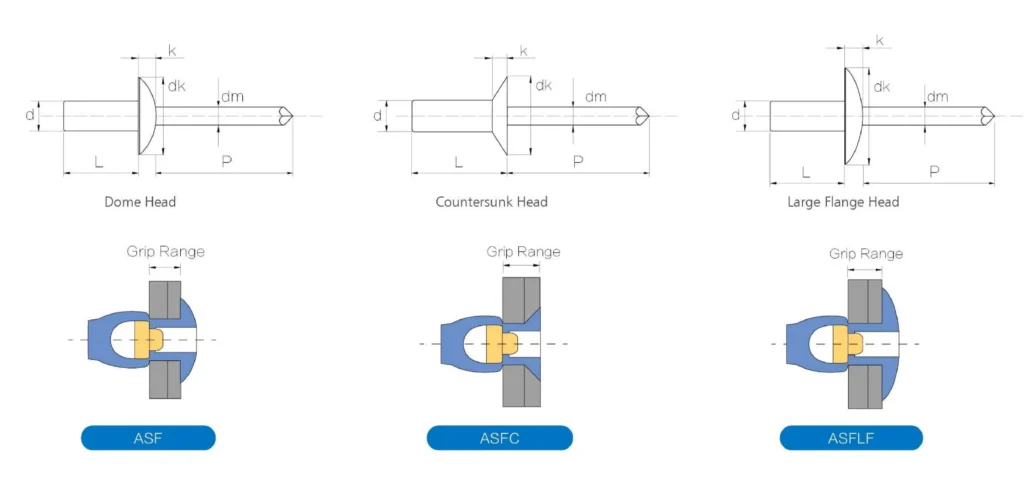
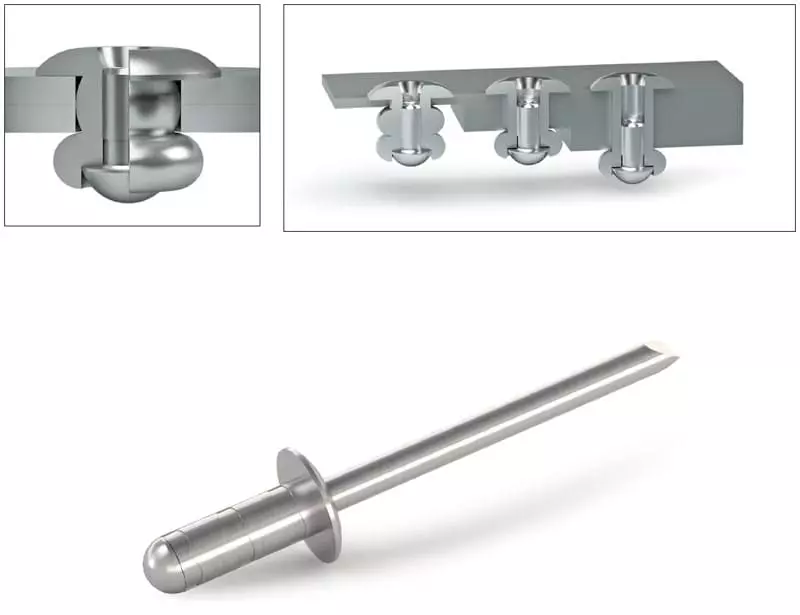
Based on the rivet head type, closed end rivets can be categorized into the following three types:

  • Dome Head Closed End Rivets
  • Countersunk Head Closed End Rivets
  • Large Flange Head Closed End Rivets
Stainless Steel Pop Rivet - Rivmate Sealed Type Blind Rivet

Dome Head Closed End Rivets

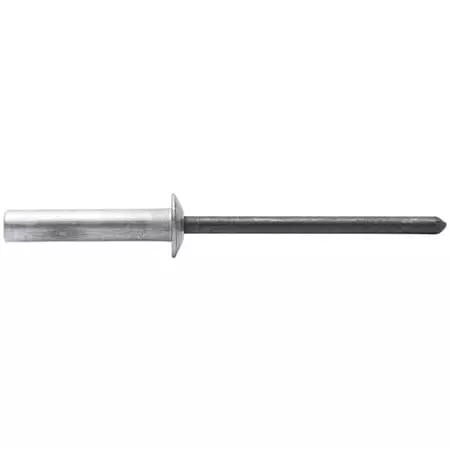
Dome head closed end rivets are the most commonly used type of closed end rivets. Therefore, its main characteristics are good water resistance and balanced performance. They also ensure long term robustness and stability of the product when connected.

Sealed Type Blind Rivets

Rivmate offers this quality closed end rivets product. You can fulfill all your rivets purchasing needs at once. Whether it’s a small order or a large order.
Countersunk Head Closed End Rivets

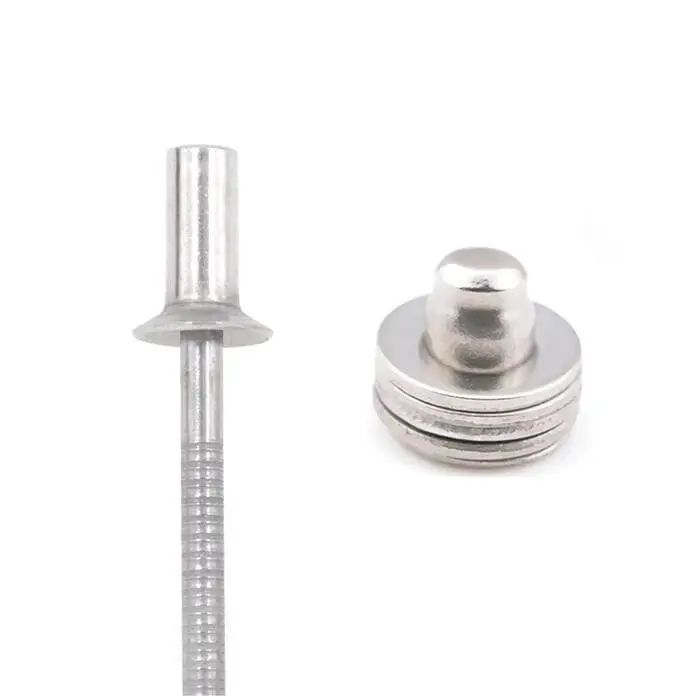
Countersunk head closed end rivets are known for excellent surface leveling and water resistance. As a result, countersunk head closed end rivets are an excellent choice for white goods projects where waterproofing is required, LED displays, outdoor signage and RV structure installations.

Rivmate Aluminum Sealed Type Blind Pop Rivet

Large Flange head Closed End Rivets

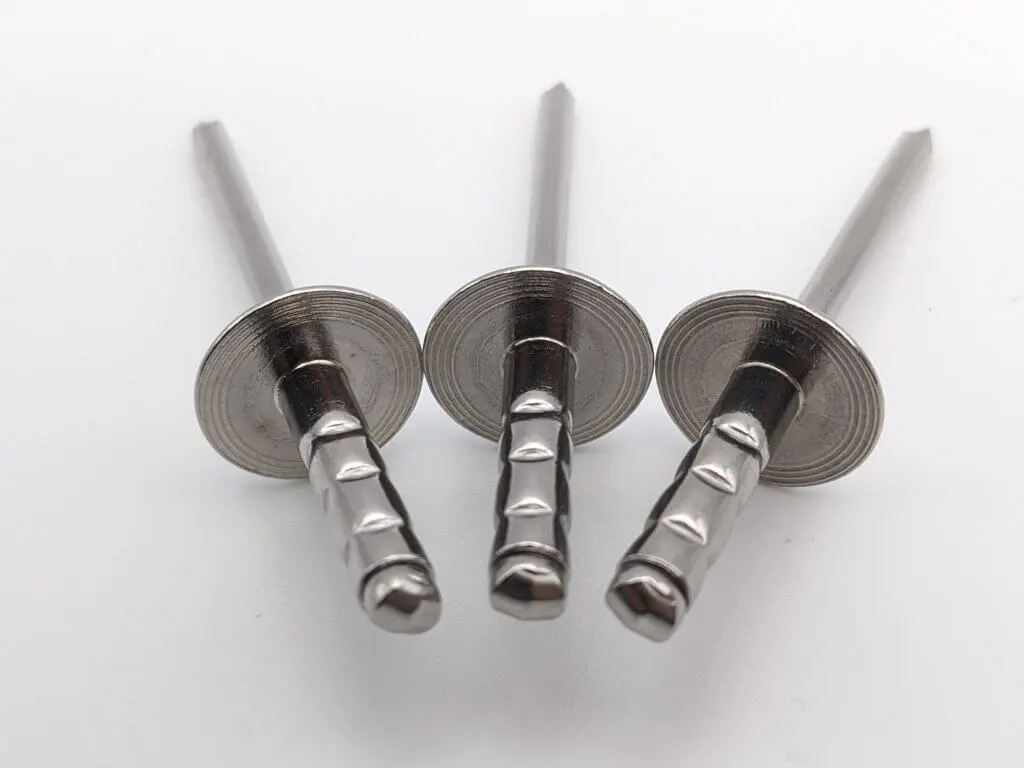
Large flange head closed end rivets will be less common in practice. This type of rivet is ideal for use on brittle or soft materials. In addition to providing excellent water resistance, it protects the material being joined from damage.

sealed type blind rivet

Large flange head closed end rivets are characterized as follows:

  • Significantly larger rivet head diameter, 50% more contact area than ordinary blind rivets.
  • Particularly suitable for plastic sheet, conforming materials.
  • Can realize IP68 grade waterproof and airproof

Do You Have Any Questions?

Let Us Solve Your Problem

Part 2. Reilable Closed End Rivets Manfuacturer

Rivmate Rivet ( Suzhou Rivmate Import & Export Co.,LTD )

Rivmate Rivet Logo

Key Features:

  • Highly customizable to meet specific requirements.
  • Responsive service to meet customer needs in a timely manner.
  • OEM and ODM services available.
  • Short time to meet high volume order requirements.
  • IATF 16949 quality certified manufacturer
  • Low MOQ (MOQ 50,000pcs).
  • Provide warehousing and substitute shipment service.

Stanley Rivets ( Stanley Engineered Fastening )

Stanley

Key Features:

  • Rich experience in industry applications.
  • Some products are imported from China.
  • Provide comprehensive riveting knowledge and technical support.
  • Do not accept small orders.
  • High brand awareness.

Goebel ( Goebel Fasteners )

Goebel (Goebel Fasteners Inc.)

Key Features:

  • Top 2 rivet manufacturer in Germany.
  • Partially imported from China.
  • Supply many types of rivets.
  • Power tools are of very good quality.

Rivit ( Rivit Fastener & Tools )

Rivit

Key Features:

  • Over 50 years of experience.
  • No.1 rivet brand in Italy.
  • Factory conforms to ISO 9001 standards.
  • Wide range of supply covering all rivet types and tools.

Part 3. Factors to Consider When you Buy Closed End Rivets

Suppose you are planning to buy closed end rivets. in this case, you have to know about closed end rivets, manufacturer and other factors. Here are some of the key factors to consider:

  • Rivet material: The material of the rivet needs to match the environment of the application. Common metal materials are aluminum, steel, stainless steel, copper or titanium alloys, which can be selected to match the material and strength.
  • Size: Ensure that the diameter and length of the rivet meets the total thickness of the connected sheet. This relates to the quality of the rivet connection, so pay special attention to this factor.
  • Supplier capability assessment: Before purchasing CLOSED END RIVETS from a rivet manufacturer, you need to confirm the qualification and capability of the manufacturer. For example, ISO and IATF certification, production capacity and technical support.
  • Sample test: you need to conduct sample test before formal purchase. Verify whether the rivets strength, sealing and corrosion resistance meet the requirements.

Do You Have Any Questions?

Let Us Solve Your Problem

Part 4. Conclusion

In conclusion, before buying CLOSED END RIVETS, please make sure that you have the specific needs for your project. This will help you to buy the perfect closed end rivets.

Also, keep an eye on the rivet manufacturers and conduct a thorough background check. Next, choose the right rivet size, type, and material and test samples. This will ensure that the closed end rivets perfectly match your project or business.

This guide can help you find the right closed end rivets for your requirements.

Part 5. Selected Frequently Asked Questions (FAQs)

What is a Closed End Rivet?

Closed end rivets are a type of standard blind rivet. But unlike other blind rivets, it has a completely closed end. Therefore, closed end rivets are very waterproof. If you want to know more about closed end rivets, read this blog “What is a Closed End Rivet”.

What is the difference between open end rivet and closed end rivet?

Open end rivets and closed end rivets are both types of standard rivets. Open end rivets are inexpensive and can be riveted in most non-load bearing applications. Closed end rivets are stronger than open end rivets and have excellent water and dust resistance. For more on open end rivets vs closed end rivets, read this guide “ Closed End vs Open End Rivet – Which Pop Rivets Are Better ? ”.

How closed end rivets are used on aluminum boats?

Closed end rivets provide excellent sealing and corrosion resistance for aluminum boats. This reduces the risk of water leakage on aluminum boats. If you want more details, read this side of the guide “ Closed End Rivets for Aluminum Boat: The Complete Guide ”.

Get Rivets Quote

You may also find these topics interesting

Custom Rivet Solutions for Your Project

The Ultimate Guide to Buying Pop Rivet Guns Online

Picture of Rivmate Fastener

Rivmate Fastener

Top Rivet and Rivet Nut Manufacturer in China

Table of Contents

Pneumatic Rivet Guns

Pop rivet guns are essential for any rivet installation project. Buying pop rivet guns will ensure a problem free riveting. Whether you’re an experienced operator or a 0-basic operator, you’ll be up and running with pop rivet guns in no time.Understanding how to buy the right pop rivet guns for your business is crucial. This guide will explore all aspects of pop rivet guns including types, pricing, usage scenarios and maintenance tips.

Table of Contents

Part 1 . What are Pop Rivet Guns?

A pop rivet gun is a manual, electric or pneumatic tool specifically designed to install blind rivets. This type of tool works by mechanically pulling off the mandrel of the rivet, causing the rivet body to expand and hold the material in place. If your project doesn’t lend itself to double-sided installation, then pop rivet guns are a great option.

With its irreplaceable advantages, the application of blind rivets in more and more scenarios. Including metal processing, automotive repair, aerospace, furniture manufacturing and other fields.

Best Pneumatic Rivet Gun

Part 2. Why is it Important to Choose the Right Pop Rivet?

The effectiveness of the installation of the pop rivets is often a matter of the overall safety of the structure. Choosing the right pop rivet guns for your project or business is critical. Here’s why:

  • Ensure installation quality and connection strength: Insufficient or excessive rivet gun tension can affect the installation quality of blind rivets. This can result in a loose connection or damage to the material.
  • Improve efficiency: Rivet guns can greatly improve the efficiency of installing pop rivets. Reduce installation time and labor costs.
  • Avoid incompatibility between tools and rivets: a qualified pop rivet gun can rivet many types and sizes of pop rivets.
  • Special feature requirements: Some rivet guns can offer broken core collection and silent operation.

Do You Have Any Questions?

Let Us Solve Your Problem

Part 3. What Types of Pop Rivet Guns are Available?

Understanding the different types of pop rivet guns is crucial to making an informed purchase. Below are the main types of pop rivet guns.

1. Hand Pop Rivet Gun

Manual rivet guns are perfect for home DIY, small repairs and low-frequency use scenarios. The cost of purchasing a manual rivet gun is low, typically only $30-$50, making it perfect for those on a budget. And a manual rivet gun can be used anywhere, anytime, which is perfect for newbies.

Hand Rivet Tool

While hand pop rivet guns are lightweight and handy. But it requires the use of human labor for rivet installation. And it can only install 5-10 rivets per minute, which is not suitable for batch work and is less efficient.

2. Electric Pop Rivet Gun

Electric pop rivet guns are suitable for use on medium-sized projects. For example, frequently used maintenance total or small factories, construction sites, temporary facilities set up and other outdoor work, these scenarios manual rivet gun is not suitable. However, compared to manual rivet guns, electric rivet guns are more expensive, averaging $100-500 a piece. And the batteries need to be replaced regularly and cannot work continuously for a long time.

Tools For Rivet Nuts

If you want to buy an electric rivet gun for your business, then it is necessary to understand the following benefits.

  • Battery operated for efficiency and labor saving.
  • Can rivet blind rivets other than structural rivets.
  • Suitable for outdoor work without fixed power supply.

3. Pneumatic Pop Rivet Gun

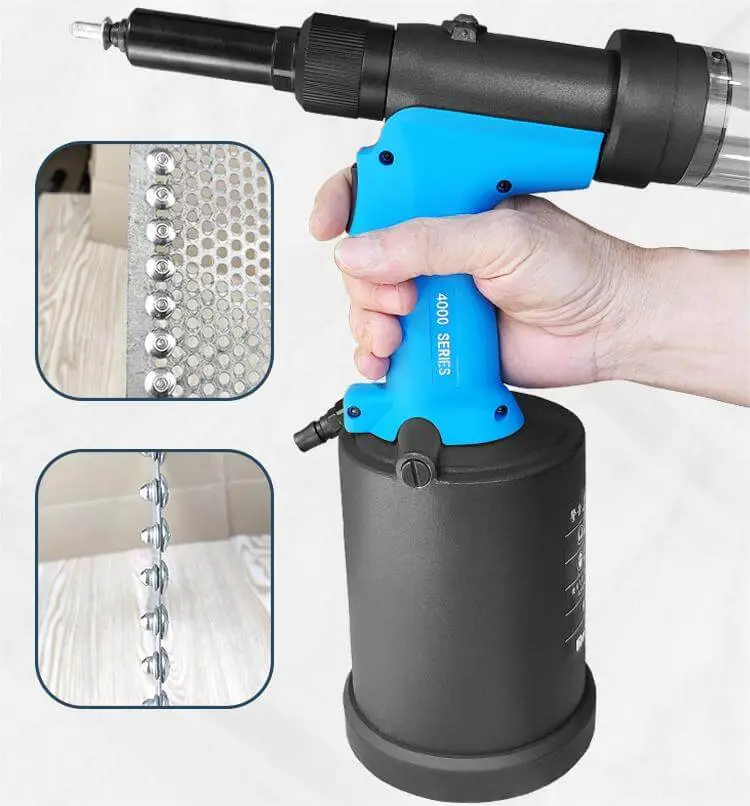
Pneumatic pop rivet guns are mainly used in industrial production lines. For example, automobile manufacturing, aircraft manufacturing and home appliance assembly. Pneumatic rivet gun can rivet any strength and material of blind rivets. And the installation efficiency of pneumatic rivet gun is very high, 30-50 rivets per minute.

Rivmate C Series blind rivet tool

A pneumatic rivet gun relies on an air source to provide power, so its use requires the connection of an air compressor, which costs an additional $200-$800. Operators typically need to wear ear protection to protect their ears when using a pneumatic rivet gun. If you want to buy a pneumatic rivet gun for your project, please read this page “Buy Pneumatic Pop Rivet Gun”.

Part 4. How do you Determine Compatibility with Your Rivets?

Before purchasing pop rivet guns, make sure the pop rivet guns are compatible with your rivet size and type. Here are some precautions to take:

  • Verify that the tension of the rivet gun is sufficient: rub the mold test rivet manufacturers to provide technical parameters (such as stainless steel 4mm rivets need to pull 3,500N).
  • Match the type of power with the type of rivet: manual rivet guns are suitable for aluminum and small diameter rivets. Electric rivet gun suitable for stainless steel and aluminum rivets. Pneumatic rivet guns are suitable for any size rivets and structural rivets.

Do You Have Any Questions?

Let Us Solve Your Problem

Part 5. How do you Choose Based on your Usage Applications?

When choosing to buy pop rivet guns, pay attention to their main application scenarios:

  • Manual: occasional use or DIY projects.
  • Electric: maintenance projects or frequent outdoor use.
  • Pneumatic: factory assembly line or mass installation jobs.

Part 6. What is the Difference Between the Different Types of Pop Rivet Guns?

Before buying the right pop rivet guns for your project, you need to understand the differences between the main types: manual rivet guns, electric rivet guns and pneumatic rivet guns. Each type has its pros and cons.

Hand Pop Rivet Gun

Manual rivet guns are cheap, but require purely human power. Installation efficiency is slower.

Electric Pop Rivet Gun

Electric rivet guns rely on rate batteries or plug-in power to provide pulling force through a motor. They are more portable than pneumatic rivet guns, but rely on battery life. It is suitable for frequent riveting for short periods of time.

Pneumatic Pop Rivet Gun

Pneumatic rivet guns are the most efficient to install. It relies on an air compressor, which creates tension through air pressure. However, portability is poor and it is suitable for stationary workshops or industrial environments.

Below is a comparison summary table of these features:

Comparison ItemManual Pop Rivet GunElectric Pop Rivet GunPneumatic Pop Rivet Gun
Power SourceHuman force (lever principle)Electricity (Li-ion battery/power cord)Compressed air (requires air compressor)
Pull Force Range500-2,000N2,000-5,000N5,000-10,000N
Installation Speed5-10 rivets/min15-30 rivets/min30-50 rivets/min
Compatible MaterialsAluminum, copper, mild steelAluminum, stainless steel, medium-carbon steelStainless steel, titanium alloy, high-strength steel
Rivet Diameter Range2-4mm3-6mm3-8mm
AdvantagesLow cost, lightweight, no energy requiredEffort-saving, moderate strength supportUltra-high pull force, industrial durability
DisadvantagesLabor-intensive, low efficiencyLimited battery life, higher costAir compressor dependency, loud noise (>85dB)
Cost$7-28 USD$70-420 USD$140-700 USD (tool) + compressor ($140-700 USD)
Weight0.5-1kg1.5-3kg2-5kg (tool body)
Noise LevelLow (<60dB)Moderate (70-75dB)High (≥85dB)
MaintenanceSimple cleaningBattery care, motor maintenanceAir line lubrication, regular drainage
Typical ApplicationsHome DIY, small repairsAutomotive modification, signage installationAutomotive manufacturing, aircraft assembly


How to Install Pop Rivets ? - The Most Complete Guide

Part 7. How to Take Care of Your Pop Rivet Gun?

Proper maintenance can significantly sing the life of a pop rivet gun. Here are some maintenance tips and cautions:

  • Cleaning Tools: Basic maintenance is required after each use. For example, removing metal shavings and lubricating critical areas.
  • Deep maintenance: Monthly deep maintenance is required. Remove the dust accumulated inside the manual rivet gun. Check the battery level and clean the clicker heat sink dust. Pneumatic riveting before more need to replace wear parts.
  • Long-term storage maintenance: to be rust-proof treatment and stored in a dry environment, avoid direct sunlight.
Pneumatic Blind Pop Rivet Gun set

Part 8.What are Some Common Pop Rivet Gun Brands to Consider?

When choosing to buy pop rivet guns, consider brands that are known for their quality and reliability:

  • Huck: HUCK is a well-known brand in the rivet industry, and the rivet gun is its supporting product.
  • Rivmate: Rivmate is a leading pop rivet guns manufacturer in China, which can be OEM/ODM customized according to your needs. You can get high quality pop rivet gun products with lower price.
  • Goebel:Goebel is the largest supplier of rivets in Germany. Their electric pop rivet gun is very reliable.

Part 9. How Much do you Expect to Spend?

Pop rivet guns prices vary greatly by type and brand:

  • Manual rivet guns: usually cost between $20 and $50.
  • Electric Rivet Guns: Typically priced between $200-$500.
  • Pneumatic Rivet Guns: Typically priced between $200-$1000.

It is important to note that there is a significant price difference between buying a well-known brand and buying from a rivet gun manufacturer. The difference is usually 2-5 times. If you want to buy pop rivet guns directly from pop rivet guns manufacturers, please contact us!

Part 10. Frequently Asked Questions (FAQs)

how to use a rivet gun?

The main types of rivet guns on the market are manual, electric and pneumatic. But their principle is the same, all through the pulling force to complete the installation of rivets.

The use of rivet guns is relatively simple, only need to start the switch.

Tips of Using Rivet Guns

There are many points to note when using a rivet gun. If you apply too much force, then it may cause the rivet to break prematurely or be damaged by the material being joined. And improper maintenance can reduce the life of the rivet gun.

The Difference of air hammer and rivet guns

The air hammer can be used to install solid rivets. the Rivet gun can install any rivet. There are differences between them in use, principle and price.

Get Rivets Quote

You may also find these topics interesting

Custom Rivet Solutions for Your Project

Where to Buy Pop Rivets in Bulk?

Picture of Rivmate Fastener

Rivmate Fastener

Top Rivet and Rivet Nut Manufacturer in China

Table of Contents

3 8″ Blind Pop Rivets Wholesale

Where to buy Pop Rivets in bulk? Whether you’re buying pop rivets in small quantities or large quantities, there are plenty of places to buy pop rivets. but finding the right manufacturer and the ideal pop rivets for your project takes time and effort.

Therefore, consider several factors before buying pop rivets to ensure that you buy the right and high quality pop rivets.

In this guide, you will learn about the types and specifications of pop rivets, reliable pop rivet manufacturers, and key features to consider when buying.

Table of Contents

Part 1 . Understanding Pop Rivets

Pop rivets play a vital role in helping you improve the efficiency of your installation. Therefore, to find the best pop rivets for your business, you need to determine the type of pop rivets you need to use as well as the conditions of use.

Types of Pop Rivets

Here are the 6 main types of pop rivets:

  • Open End Pop Rivet
  • Closed End Pop Rivet
  • Multi Grip Blind Rivet
  • Monobolt Rivet
  • Bulb Tite Blind Rivet
  • Hemlok Blind Rivet

Open End Pop Rivet

Open end blind rivets are the most common type of rivet. It is very cheap and can save you a lot of financial costs. If your business is on non-load bearing structures, then buying open end rivets is a good option.

It is important to note that you need to use a special riveting tool to install the rivets. For example, manual rivet tools and pneumatic rivet guns.

Colored Open Type Blind Rivets

Rivmate offers a full range of open end pop rivets including aluminum, stainless steel, carbon steel and monel. no matter which size rivet you need to buy, you can get a satisfactory solution. Buy open end pop rivets here.

Closed End Pop Rivet

Sealed Blind Rivets are also a type of Standard Blind Rivet. The difference is that it has a completely sealed construction at the end. Sealed Blind Rivets are designed for applications that require protection against leakage, dust or corrosion.

Rivmate Aluminum Sealed Type Blind Pop Rivet

Sealed rivets are typically made of aluminum and stainless steel, providing a great lightweight solution. If you would like to purchase rivets for your waterproofing project, please contact us! Buy Closed Rivets today.

Multi Grip Blind Rivet

Multi grip blind rivets are specially designed blind rivets. Unlike other rivets, multi grip blind rivets have a very wide riveting range. The body of the blind rivet forms two expanding segments (“multi grip”) during installation.

Types of multi grip pop rivets

The great thing about Multi grip blind rivets is that they are compatible with a wider range of total material thicknesses, eliminating the need to precisely match rivet lengths. Ideal for joining multiple layers of panels or for assembly scenarios where thickness is uncertain. If your project requires this rivet, purchase multi grip blind rivets.

Monobolt Rivet

Monobolt rivets are a type of structural rivet. It is a high-strength rivet designed for heavy-duty joining scenarios where ultra-high strength, vibration and fatigue resistance are required. It combines the strength of a conventional bolt with the installation advantages of a blind rivet.

What are monobolt rivets

Monobolt rivets are at the high end of the blind rivet system, so it will have a slightly higher unit price. Buy monobolt rivets now.

Bulb Tite Blind Rivet

Like closed end pop rivets, bulb tite blind rivets have excellent waterproofing. The structure of bulb tite blind rivets is designed not to damage brittle or soft materials.

Order Bulb Tite Rivets from China

Metal roofs and rooftop solar panel installations often use bulb tite rivets, order rivets now.

Do You Have Any Questions?

Let Us Solve Your Problem

Part 2. Pop Rivet Manufacturer

Rivmate Rivet  (Suzhou Rivmate Import & Export Co.,LTD)

Rivmate Rivet Logo

Key Features:

  • The origin is Jiangsu, China.
  • We offer a wide range of rivets, including standard blind rivets, structural rivets, waterproof rivets, solid rivets and rivet nuts.
  • Low MOQ.
  • Provide first class service and high quality products.
  • Provide PPAP documents.
  • IATF 16949 certified rivet factory.
Howmet Aerospace

Key Specifications:

  • Rich experience in industry solutions.
  • Some origin is USA, some imported from China.
  • Owners of rivet brand.

Nippon Rivet ( Nippon Pop Rivets and Fasteners Ltd)

Nippon Rivet ( Nippon Pop Rivets and Fasteners Ltd)

Key Specifications:

  • With over 30 years of experience .
  • With over 600 skilled employees.
  • Factory ISO9001:2015 approved for this product.
  • The largest rivet supplier in Japan.
  • Strict requirements for product quality.

Goebel (Goebel Fasteners Inc.)

Goebel (Goebel Fasteners Inc.)

Key Specifications:

  • Provide goods at factory price, no middleman.
  • Accept OEM, send customized request
  • Provide high quality products that are 100% tested and pass strict tests before shipment.
  • Safe packing and fast delivery.
  • Provide professional and high quality pre-sale and after-sale service

Part 3. Factors to Consider When you Purchase Pop Rivets

If you are planning to buy pop rivets. in this case, you must know enough about the rivets, manufacturer and other selection factors. Here are some of the key factors to consider:

  • Rivet types: there are many types of blind rivets, you need to specify the type of rivets you need for your project. Examples include open end rivets, closed end rivets, structural rivets and high strength blind rivets. You need to be clear about the application scenario, strength and weight of different types of blind rivets.
  • Rivet material: common rivet materials are carbon steel, stainless steel and aluminum.
  • Size specification: The rivet diameter needs to match the pre-drilled holes. The length of the rivet body should cover the total thickness of the material to be riveted, usually the total thickness of the material + 1.5 times the rivet diameter.
  • Strength Requirements: Ensure that the tensile strength and shear strength of the rivets are in full compliance with the needs of the project.
  • Environmental adaptability: If your project’s use of the scenario may have a risk of corrosion, the need to choose stainless steel or with plated rivets.

Do You Have Any Questions?

Let Us Solve Your Problem

Part 4. Conclusion

In conclusion, before buying pop rivets, make sure you your program specific requirements. This way you may purchase the best pop rivets for your business! This will help you earn the trust of your customers.

Also, keep an eye on the rivet manufacturer and conduct a thorough background check. Next, choose the right size, material, type and strength to match your business.

This guide can help you find the right pop rivets for your requirements.

Part 5. Selected Frequently Asked Questions

What materials can be connected using pop rivets?

POP rivets are widely used in metals, plastics, composites, etc. However, different materials have different joining requirements, so choosing the right rivets and tools is crucial.

What are the common failures and solutions for POP rivets?

These include problems such as rivets pulling out, rivets leaking, and poor riveting. Solutions usually include checking the rivet size, adjusting the tooling, or making sure the material is flat and free of defects. If you want to learn more, read this blog “ Types of Rivet Failure: Riveted Joints Failure and How to Avoid It ”.

What pop rivets should be used on plastic materials?

When using pop rivets on plastic, it is necessary to ensure that the connection is secure and will not damage the plastic parts. Several of the following can be used on plastic:

  • Nylon rivets
  • Aluminum rivets
  • Tri fold rivets
  • Multi grip blind rivets
  • Large flange head Rivet

Get Rivets Quote

You may also find these topics interesting

Custom Rivet Solutions for Your Project

How to Choose Rivets for Thick Material?

Picture of Rivmate Fastener

Rivmate Fastener

Top Rivet and Rivet Nut Manufacturer in China

Table of Contents

How to Choose Rivets for Thick Material

Rivets are generally used to join thin sheet products. So do you know HOW to choose rivets for thick material?

By reading this blog, you will get to know the points to look out for rivets for thick material.

Table of Contents

Why Use Rivets for Thick Material?

If you look closely, you’ll notice that there are more and more applications using rivets these days. Rivets connect thick materials are widely used in industry, construction, transportation and other fields. Its core advantages are reflected in strength, reliability, installation flexibility and adaptability.

  • High strength and fatigue resistance
  • Single-sided installation
  • Wide material compatibility
  • Low cost
  • Lightweight Advantage
Why Use Rivets for Thick Material

Typical applications of rivets in joining thick materials are as follows:

  1. Heavy machinery: excavator boom (thick steel plate) using structural rivets to resist shear.
  2. Aerospace: aircraft wing skin and skeleton with titanium alloy rivets to reduce weight and fatigue.
  3. Shipbuilding: thick steel plate riveted hull corrosion and seawater impact resistance.

Cautions

  • Thickness Limit: Ordinary blind rivets are suitable for ≤25mm, thicker materials need solid rivets or a combination of solutions.
  • Professional selection: according to the load, the environment to match the rivet material and type (refer to this article selection guide).

Types of Rivets for Thick Material

Not all rivets can be used to install thick materials. Below I will describe several rivets that are suitable for riveting thick materials.

Riveting thick materials generally requires rivets that can withstand high strength. Designed for high strength applications, structural rivets have excellent rivet shear strength and rivet tensile strength. However, the installation of structural rivets requires the use of a specialized pneumatic rivet gun.

Monobolt Structural Rivets Supply

Structural rivets are usually riveted to load-bearing areas. Applicable scenarios are as follows:

  • Materials with a total thickness of 6-25 mm (e.g. steel structures, heavy machinery).
  • Where dynamic loads are required (e.g. vehicle frames, bridges)

Multi grip blind rivets span a wide rivet grip range. This type of rivet can accommodate a wide range of material thicknesses (e.g. 3-13mm).Multi grip blind rivets can take the pressure off your inventory. Regardless of the thickness of the sheet material, the same size multi rivets can be used for riveting.

Applications of Multi grip Pop Rivets

The applicable scenarios for Multi grip blind rivets are as follows:

  • When you are not sure about the thickness of the material or when there are variations (e.g. sheet metal splicing, vehicle repairs).
  • No need to accurately predict quantities, suitable for DIY or on-site work.

Blind Rivet Reinforced

To hold thicker materials in place, blind rivets can be used in larger sizes or steel core designs. This design of blind rivet provides higher holding power and shear strength to the backing material.

Large Flange Head Blind Rivets

Applicable Scenarios:

  • Single-sided operation, total thickness 5-12 mm (e.g. steel containers, industrial equipment).
  • It is recommended to choose a steel core or stainless steel to increase the load capacity (e.g. Magna-Lok series).

Solid Rivets

Solid rivets are the most traditional rivets. Its installation requires a double-sided operation (knockout molding). Solid rivets are extremely reliable and are well suited for use on heavy-duty projects.

Solid Rivets Custom

Today, solid rivets are used exclusively for riveting thick materials. Here are some of its application scenarios.

  • Extremely thick materials (e.g. boilers, shipbuilding, aerospace).
  • Permanent non-removable connections for static load dominated applications.

Do You Have Any Questions?

Let Us Solve Your Problem

How Thick of Material Can you Rivet?

The thickness of material that can be riveted to a rivet varies depending on the type, material and design. The following are common types of rivets and the range of material thicknesses they are suitable for.

  • Standard blind rivets: aluminum blind rivets are suitable for riveting single-layer materials with a total thickness of 0.5-6mm. steel core/stainless steel blind rivets are suitable for riveting a total thickness of 1-12mm (higher strength, suitable for thicker materials).
  • Structural rivets: single-layer material thickness of 6-25mm (such as steel structure, heavy machinery).
  • Multi grip blind rivets: very wide range of coverage. 3-13mm (such as sheet metal splicing, vehicle frame).
  • Solid Rivets: Theoretically capable of riveting very thick materials (e.g. boilers, ships with steel plates over 20mm).
  • Monobolt rivets: thin to medium materials: 1-8mm (commonly used in electronic equipment, furniture).
How Thick of Material Can you Rivet

How to Choose Rivets for Thick Material?

When selecting blind rivets for thick materials, it is important to consider the thickness of the material, strength requirements, installation conditions and environmental factors. The following are specific steps.

1. Measure the total thickness → 2. Select the type (multi-clamping/structure) → 3. Determine the material → 4. Match the diameter and length.

I. Specify the total thickness of the material

  1. Measure the total thickness: the material to be connected to the multi-layer superposition, measure the total thickness (eg: two 8mm steel plate superposition for 16mm).
  2. Reserve margin: the rivet “clamping range” should cover the total thickness, and leave a margin of about 1-2mm (eg: the total thickness of 10mm, choose the rivet clamping range of 8-12mm).

Ⅱ. select the type of blind rivets

Select the following types based on thickness and strength requirements:

  • Multi grip blind rivets (Multi-Grip): for thicknesses from 3-13mm (e.g. metal frames, vehicle repairs).
  • Structural Blind Rivets (High Strength Blind Rivets): For thickness 6-25mm (e.g. steel structures, bridges).
  • Large Diameter Blind Rivets with Steel Core: For thickness 8-12mm (e.g. industrial equipment, cargo containers).
How to Choose Rivets for Thick Material

Ⅲ. determine the material

  • Aluminum rivets: lightweight, corrosion-resistant, but lower strength, suitable for thickness ≤ 6mm non-load-bearing scenes.
  • Steel core/stainless steel rivets: high strength and shear resistance, suitable for load-bearing structures with thickness ≥ 6mm.

Ⅳ. matching rivet diameter and length

1. Diameter Selection

The thicker the material to be riveted for your project, the larger the rivet diameter needs to be (common diameters: 3mm, 4mm, 5mm, 6mm). Specifically you can refer to the following rules:

  • Thickness ≤ 6mm: choose 3-4mm diameter.
  • Thickness 6-12mm: choose 4-5mm diameter.
  • Thickness>12mm: choose ≥5mm diameter, or switch to structural rivets.

2. Length calculation

Rivet length ≈ total material thickness + the length required to form the head of the rivet (usually 1.5 times the diameter). Let’s take for example a material with a total thickness of 10mm to be riveted. For a 5mm diameter rivet, the length of the rivet would be ≥ 10mm + (5 x 1.5) = 17.5mm.

Do You Have Any Questions?

Let Us Solve Your Problem

Wholesale Rivets for Thick Material Project

Read through this guide and if you’re still not sure how to choose the right rivets for your THICK MATERIAL project, contact us!

Rivmate is leading rivet manufacturer in china. you will get professional riveting solution.

Get samples for testing now.

Get Rivets Quote

You may also find these topics interesting

Custom Rivet Solutions for Your Project

The Ultimate Guide to Blind Pop Rivet Clamping Force

Picture of Rivmate Fastener

Rivmate Fastener

Top Rivet and Rivet Nut Manufacturer in China

Table of Contents

Install Multi Grip Blind Rivets

Blind rivet clamping force can directly affect the riveting effect of the blind rivets. So do you know what is the Blind Rivet Clamping Force? What factors affect it.

With this ultimate guide, you will learn everything essential about rivet clamping force.

Table of Contents

Blind Pop Rivet Clamping Force - Basic Definition

Blind Rivet Clamping Force is the constant pressure exerted on the joining material by the expanding deformation of the blind rivet’s tail after installation. This pressure ensures that the material is held tightly in place and is a central source of strength for riveted structures to resist external forces and maintain long-term stability.

Applications of Multi grip Pop Rivets

Importance of Blind Rivet Clamping Force

  • Ensures a solid connection: Eliminates gaps and prevents loosening due to vibration or load variations by compacting the material contact surfaces.
  • Resist separation and deformation: the clamping force acts perpendicularly to the material surface, directly opposing the tensile forces (e.g. stretching, bending) that try to separate the material.
  • Enhance sealing performance: In applications where leakage prevention is required (e.g. pipes, housings), sufficient clamping force reduces the gap between materials and enhances the sealing effect.
  • Adapt to dynamic environments: In scenarios with high vibration, shock or temperature fluctuations (e.g., automotive, aircraft structures), the clamping force maintains a durable and reliable connection.
  • Simplified assembly process: Unilateral mounting creates equalized pressure, making it suitable for tight spaces where double-sided operation is not possible, while ensuring consistent strength.

How to Measure Blind Rivet Clamping Force?

We all know that clamping force is a very important factor for blind rivets. So do you know how to measure the blind rivet clamping force?

Blind Rivet Tensile Strength Test

If you want to accurately test blind rivet clamping force, then you need to use a professional laboratory. In the lab, you need to use a tensile testing machine to record the maximum load by applying reverse pressure until the component separates.

  1. Fix the riveted specimen on the tension machine.
  2. Slowly apply a tensile force perpendicular to the connection surface and monitor the change in force value.
  3. The peak force when the rivet fails (pulls out or breaks) is the limit value of the clamping force.

The actual clamping force needs to be combined with the deformation characteristics of the material, usually taking 70-90% of the peak force as a reference value.

Do You Have Any Questions?

Let Us Solve Your Problem

How Does Clamping Force Affect the Blind Rivet Strength?

Blind rivet clamping force directly affects the overall strength and load capacity of the rivet. The following is a detailed analysis:

1. Ability to resist tensile loads

Clamping force through the expansion of the tail of the rivet deformation, the material to be connected to the rivet head and tail between the “blind end” to form a friction resistance to material separation. The greater the clamping force, the stronger the friction between the materials, the greater the tensile strength of the rivet.

2. Resistance to shear loads

High clamping force → material fit tightly → shear force distribution is more uniform, reducing local stress concentration.

3. Stability in dynamic loading and vibration environments

Qualified clamping force provides dynamic load capacity of the rivet.

  • Vibration Attenuation: The continuous pressure provided by the clamping force counteracts the relative material displacement caused by cyclic loading.
  • Self-locking effect: Similar to bolt preload, clamping force inhibits initial loosening induced by vibration (e.g., automotive chassis, aircraft skins).
  • Fatigue Life Improvement: Clamping forces reduce alternating stress amplitudes and delay fatigue crack initiation by eliminating gaps.

4. Synergies under multiple composite loads

In composite stress scenarios (e.g. tensile + shear, bending + torsion):

  • Clamping force maintains a rigid material fit and avoids localized stress superposition.
  • At frame joints, high clamping forces prevent the accumulation of structural deformation due to multi-directional loads.

How to Optimize Blind Rivet Clamping Force for Different Applications?

Clamping force requirements vary from application to application. For soft materials, if the clamping force is too high, it can easily lead to material damage. The rivet clamping force for structural rivets is much higher than that of standard rivets.

What are monobolt rivets

Clamping force optimized for the type of load

Load TypeOptimization FocusRecommended Rivet TypeParameter Adjustments
Static Tensile LoadMaximize clamping force to prevent separation; prioritize tensile strength.Structural blind rivets (e.g., Rivmate Monobolt Rivet)Increase diameter (≥5mm), stainless steel material.
Dynamic VibrationPrevent loosening; enhance fatigue resistance.Self-locking rivets (e.g., Avdel® LOK Series)Multi-lobe tail design; low-friction mandrel coating.
Shear LoadEnhance shank strength.Blind lockbolts (high-shear materials)Thicker shank; mandrel strength matching.
Composite LoadBalance tensile and shear performance.Closed-end stainless steel rivetsDouble-lock structure; uniform tail expansion.

Optimization of the clamping force according to the material to be joined

  • Soft Substrates (Plastics, Aluminum): When riveting soft materials, rivets tend to crush and lose clamping force. Therefore, you can choose aluminum or mild steel soft rivets to reduce the expansion pressure. Or increase the rivet gasket area to disperse the pressure (such as flat head rivets).
  • Hard substrates (steel, composite materials): riveting hard materials, it is easy to occur when the local stress concentration. So you can use high-strength rivets (stainless steel / titanium alloy) and pre-drilled holes to reduce resistance.
  • Multi-layer dissimilar materials: If inter-layer sliding occurs, pre-compact the inter-layer gap (pressure fixture-assisted installation).

Do You Have Any Questions?

Let Us Solve Your Problem

Can Excessive Clamping Force Cause Rivet Breakage or Material Deformation?

Yes, excessive blind rivet clamping force can lead to problems such as rivet breakage, material crushing and deformation, and even connection failure.The issues that may arise are listed below:

  • Premature breakage of the mandrel
  • Neck shear failure
  • Rivet head damage
  • Soft material dents
  • Stress concentration
Tri Fold Blind Rivets for Soft Materials

Causes of excessive clamping force

FactorImpact
Excessive Tool ForceHigh-pressure rivet guns or incorrect settings can over-expand the rivet, leading to deformation or fracturing.
Mismatched Rivet-Material HardnessHard rivets (e.g., stainless steel) on soft substrates (e.g., plastic) cause crushing.
Process ErrorsUncalibrated tools, repeated pulling, or improper installation speed.
Environmental FactorsHigh temperatures may unexpectedly increase clamping force post-installation.


Custom Riveting Solutions for Your Project

Are you wondering how to use give breakout rivets for your project? If this guide doesn’t solve your problem, contact one of our engineers.

Rivmate is a top rivet manufacturer in China. We will provide you with high quality rivet products and affordable price.

Get rivet samples now.

Get Rivets Quote

You may also find these topics interesting

Custom Rivet Solutions for Your Project

The Comprehensive Guide to Blind Rivets Strength

Picture of Rivmate Fastener

Rivmate Fastener

Top Rivet and Rivet Nut Manufacturer in China

Table of Contents

What Are Magnalok Rivets

Are you in the process of making a decision about purchasing rivets? You need to know about Blind Rivet Strength. What are the components of the strength of a blind rivet? With this guide, you will learn everything you need to know about the strength of a blind rivet.

Table of Contents

Blind Rivet Strength - Basic Overview

Blind rivet strength refers to its ability to withstand external forces under specific conditions without failure.Blind rivet strength mainly includes tensile strength, shear strength, fatigue strength and other key indicators.

Install Multi Grip Blind Rivets

Blind Rivet Strength consists of a number of different components. Included:

Components of Blind Rivet Strength

1. Tensile Strength

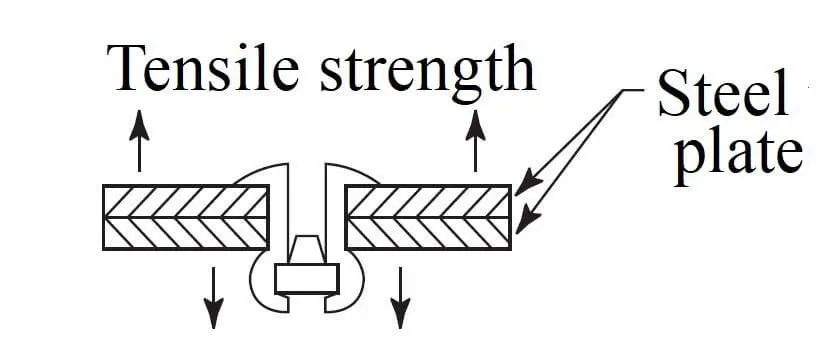
The tensile strength of a blind rivet is its maximum ability to resist fracture under axial tensile load. This index is the core index to measure the reliability of rivet connection. Tensile force represents the maximum force value (unit: kN or MPa) that a rivet can withstand before failure under axial tensile load, reflecting the comprehensive performance of rivet material strength and structural design.

Blind Rivet Tensile Strength

Factors affecting Blind Rivets Tensile Strength

The main factors affecting the tensile strength performance of the blind rivets are two: 1. rivet material 2. rivet head type.

Common metal materials used in the manufacture of blind rivets are aluminum, stainless steel, carbon steel and titanium alloy. By their made of blind rivets tensile strength from small to large arrangement for aluminum blind rivets, stainless steel blind rivets, carbon steel blind rivets, titanium alloy blind rivets.

Types of Blind Rivet Head

Rivet head types are generally dome head, countersunk head and large flange head. large flange head blind rivets have the highest tensile strength and countersunk head blind rivets have the lowest.

2. Shear Strength

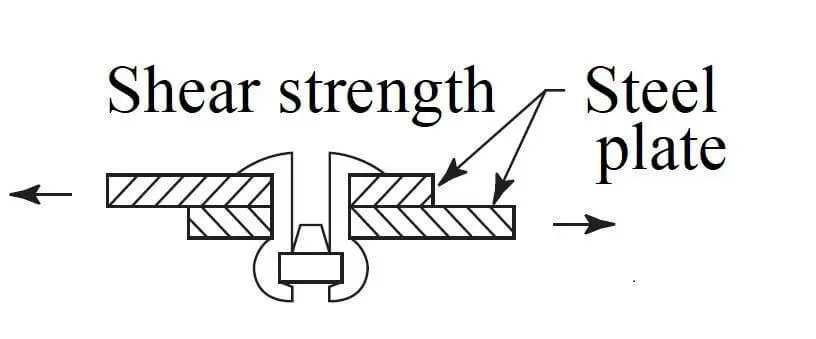
The shear resistance of a blind rivet is its ability to resist fracture or failure under lateral shear. The maximum force value (in kN or MPa) that the rivet can withstand before failure under transverse shear load, reflecting the ability of the rivet to resist material slippage or fracture

Blind Rivet Shear Strength

Factors affecting Blind Rivets Tensile Strength

Factors affecting the shear strength of blind rivets include: rivet material and rivet structure.

  • Rivet material: aluminum < stainless steel < carbon steel < titanium alloy.
  • Rivet construction design: common blind rivets < structural rivets.

3. Core Removal Force

The core ejection force of a blind rivet is the maximum force required when the core is pulled out or ejected during installation. Nail core ejection force is the installation of blind rivets, riveting gun exerted by the axial tension so that the nail core breakage or complete ejection of the force required (unit: kN).

How to Install Q Rivets

The Role of Nail Core Ejection Force

  • Ensure that the nail body expands sufficiently to form a tight joint.
  • Controlling material deformation during installation (e.g. avoiding sheet crushing).
  • Ensuring that the nail core breaks precisely at the preset break point (Notch Point), preventing excessive length of the residual mandrel.

4. Core Retention Force

The core retention force of a blind rivet refers to the bonding force between the portion of the core remaining in the rivet body and the rivet body after the breakage of the core after the rivet installation is completed. This characteristic ensures that the core of the nail will not be dislodged during vibration, shock or prolonged use. It directly affects the sealing, conductivity (e.g. electrical connection scenarios) and long-term reliability of the connection.

Avdel Q Rivet

The Role of Nail Core Retention Force

  • Maintain connection integrity (avoid loosening or leaking).
  • Ensure continuity of electrical connections (e.g. grounded rivets).
  • Preventing foreign objects from entering rivet holes (aerospace, outdoor equipment).

nail core retention vs nail core ejection force

ParametersNail Core RetentionNail Core Ejection Force
operative phasePost-installation use phaseInstallation process (moment of nail core breakage)
test objectiveAssessment of the resistance of the residual part of the nail core to dislodgementMeasurement of the force required to break the nail core
typical valueAluminum rivets: 0.5-2kN, steel rivets: 3-8kNAluminum rivets: 1.5-3kN, steel rivets: 5-10kN

5. Clamping Force

The clamping force of a blind rivet is the squeezing force exerted on 2 loose pieces, after the rivet has been installed. The higher the clamping force, the less likely to loosen the workpiece after riveting, but may cause damage to some soft or brittle workpiece. The role of clamping force is mainly to prevent sliding of the connecting surfaces, to reduce contact resistance (electrical connection), and to improve fatigue life.

Applications of Multi grip Pop Rivets

Difference with tensile/shear

ParametersClamping ForceTensile/Shear Strength
DefineMaintains static compression force of the connectionMaximum load capacity before failure
Test ConditionNon-destructive measurements (e.g. ultrasound)Destructive testing (tensile/shear to break)
Typical ValueAluminum rivets: 1-5 kN, steel rivets: 5-20 kNAluminum rivet shear resistance: 2-10 kN

Factors affecting Blind Rivets clamping force

The clamping force is not always constant. It will change depending on the following factors.

  • Rivet design and material
  • Correct installation
  • Characteristics of the material being joined

Rivet design and materials: Open end rivets do not have the same clamping force as closed end rivets and structural rivets. Titanium rivets have the highest clamping force and aluminum alloys are relatively low.

Correct installation: Incorrect installation may result in rivet failure.

Characteristics of the material to be joined: The softer the material to be joined, the higher the clamping force required to compensate for plastic deformation.

Do You Have Any Questions?

Let Us Solve Your Problem

Comparison of Blind Rivets Strength with Other Fasteners

ParameterBlind RivetBolt/NutSelf-Tapping ScrewWeldingStructural Adhesive
Tensile StrengthMedium-High (Al: 3-5kN, Steel: 8-15kN)High (Grade 8.8 Bolt: ≥800MPa)Low (M5 Screw: 2-4kN)Extreme (Matches Base Material)Medium (Epoxy: 10-30MPa)
Shear StrengthMedium-High (Al: 2-5kN, Steel: 6-12kN)High (Grade 8.8 Bolt: ≥640MPa)Low (M5 Screw: 1-3kN)Extreme (Matches Base Material)Low (Epoxy: 5-15MPa)
Fatigue StrengthMedium (Clamping-Dependent)High (Preload-Controlled)Low (Prone to Loosening)Medium (HAZ Weakness)Low (Aging/Cracking)
Dynamic Load AdaptabilityMedium (Requires Anti-Loose Design)High (Elastic Deformation)Low (Vibration Failure)Medium (Weld Toughness)Very Low (Brittle Failure)

Comprehensive Comparison Table

MetricBlind RivetBoltSelf-Tapping ScrewWeldingStructural Adhesive
Static Strength★★★☆★★★★★★★☆★★★★★★★☆
Dynamic Strength★★★☆★★★★☆★☆★★★☆★☆
Ease of Installation★★★★☆★★★☆★★★★★★★☆★★★☆
Reusability★☆★★★★★★★★☆
Corrosion Resistance★★★★ (Stainless/Al)★★☆ (Coating Required)★★☆★★★ (Weld Treatment)★★★☆
Cost★★★☆★★★☆★★☆★★☆★★★☆


Do You Have Any Questions?

Let Us Solve Your Problem

How to Choose the Right Blind Rivet to Meet the Strength Requirements?

1. Clarify intensity requirements

Before choosing the right Blind Rivet, you need to first figure out the type of load for your application scenario. The types of loads that may occur in common application scenarios are as follows:

  • Static loads: tensile/shear strength is of concern (e.g. steel connections).
  • Dynamic loads: fatigue strength needs to be evaluated (e.g. vehicle chassis, aircraft skins).
  • Composite loads: both tensile-shear combinations are considered (e.g. lifting brackets).

2. Key Selection Parameters

Rivet Material

Rivet MaterialShear Strength RangeApplication Notes
Aluminum (5056)2-5 kNLightweight structures (electronics)Avoid direct contact with steel (galvanic corrosion)
Stainless Steel (316)6-12 kNHigh-corrosion environments (ships, chemical plants)Must pair with stainless steel substrates
Titanium (Ti-6Al-4V)15-22 kNAerospace high-temperature partsHigh cost, requires specialized tools
Carbon Steel (Galvanized)8-15 kNIndustrial machinery, steel structuresCoating thickness affects corrosion resistance

Diameter Selection Guidelines

Total Thickness (mm)Recommended Diameter (mm)Typical Shear Strength (Stainless Steel)
1-33.24-6 kN
3-64.08-12 kN
6-104.812-18 kN


Rivet Type

  • Open type: low shear resistance (friction-dependent), suitable for non-load-bearing connections.
  • Closed type/multi grip type: 30%-50% higher shear resistance (mechanical interlocking structure).

Custom Blind Rivets for Your Project

There is no one rivet that is the best or the worst. There is only the right rivet for your project. If you don’t know how to go about choosing the right strength of blind rivets for your business, contact us!

Rivmate is leading rivet manufacturer and supplier in china. You can solve all your rivet sourcing problems at once. Get samples for testing immediately.

Get Rivets Quote

You may also find these topics interesting

Custom Rivet Solutions for Your Project

How to Remove Self Piercing Rivets?

Picture of Rivmate Fastener

Rivmate Fastener

Top Rivet and Rivet Nut Manufacturer in China

Table of Contents

How to Remove Self Piercing Rivets

Do you know how to remove self piercing rivets? Let us explore it.

Table of Contents

Why Remove Self Piercing Rivets?

You may have a need to remove self piercing rivets when your product has been manufactured incorrectly and parts need to be replaced; when the product needs to be repaired or upgraded after use; or when the material needs to be separated during the recycling process.

  • Industrial Defect Repair
  • Design Change Adaptation
  • Automotive Collision Repair
  • Functional Upgrades
  • Rivet Reuse
Why Remove Self Piercing Rivets

3 Ways to Remove Self Piercing Rivets

The method of removing self piercing rivets varies depending on the applicable scenario. Below is a brief comparison of the three main removal methods.

Assessment dimensionsdrilling methodAngle grinder cutting methodHydraulic shovel dismantling method
ApplicableGeneral maintenanceEmergency/no power environmentHigh Volume Professional Rework
Efficiency5-8 minutes/point10-15 minutes/point2-3 seconds/point
Risk of substrate damageLow (controlled drilling depth)Medium (thermal effects of cutting)Extremely low (precise mold matching)
equipment cost€200-500 (electric drill + drill)€150-300 (angle grinder)€8,000-15,000 (hydraulic systems)
Skill RequirementsMedium (drilling accuracy required)High (experience in cutting operations)Professional training (parameterization)


Method 1: Borehole method (recommended general program)

The drilling method is generally suitable for removing standard hardness spr rivets. if you are removing spr on aluminum, steel, composites (non-brittle substrates), such as automotive body repairs, aerospace structural rebuilds, then the drilling method is a very applicable and economical method.

3 Ways to Remove Self Piercing Rivets - Method-Borehole

advance preparation

Tools/ParametersSpecification Requirements
DrillBrushless motor with adjustable speed (1,500-3,000 RPM), e.g. Bosch GSR 18V-EC
DrillerHSS or carbide drill bit, diameter = rivet head diameter x 0.8 (Example: 4mm drill bit for 5mm rivet)
CoolantWater-based cutting fluid (aluminum) or oil-based coolant (steel), flow rate ≥50ml/min
Positioning ToolsCenter punch (hardness ≥ 60 HRC), punch point depth ≤ 0.5mm

Procedures

  1. Positioning and punching point: Use the center punch to make a concave point in the center of the rivet head to prevent the drill bit from slipping. Punch point offset ≤ 0.1mm to avoid drilling eccentricity.
  2. Drill penetration: Aluminum: 3,000 RPM, feed rate 0.1mm/rev. Steel 1,500 RPM, feed rate 0.05mm/rev. Back off every 2mm of drilling and blow off debris with compressed air.
  3. Removal of residues: drill until the head of the rivet is disengaged, tap the bottom with a flat head punch to eject the locking structure. Place a 0.5mm copper pad between the punch and the substrate to prevent surface scratches.

Method 2: Angle grinder cutting method (high strength rivets)

If you want to remove high-strength spr rivets made of boron steel, or if the removal environment doesn’t have a way to operate on the opposite side, then the angle grinder cutting method is the best removal solution. Operators choose this method when field equipment is being repaired or when there is no power.

3 Ways to Remove Self Piercing Rivets - Method-Angle grinder cutting

advance preparation

Tools/ParametersSpecification Requirements
Angle Grinding Machine10,000 RPM, 110mm cutting blade, e.g. Makita GA9020
Cutting BladeDiamond or Aluminum Oxide Cutting Blades 1mm Thick (Grit 80#)
CrowbarTitanium one screwdriver (hardness ≥45 HRC), blade thickness 0.8mm

Procedures

  1. Head cutting: Adjust the angle between the angle grinder and the workpiece to 15°, cut along the outer edge of the head of the rivet, depth to the surface of the substrate. Cutting speed 2-3mm/s, avoid overheating (aluminum temperature <150°C).
  2. Pry off the head: Insert a screwdriver into the cutting seam and slowly pry up the rivet head at an angle of 30°.
  3. Ejecting the stem: Eject the residual part by striking vertically with a punch (diameter = rivet stem x 0.9) from the reverse side of the base material. Spray WD-40 to reduce friction and lower ejection force (≥50%).

Method 3: Hydraulic shovel demolition (professional level)

Hydraulic shovel removal is a professional and efficient method of removing self piercing rivets. It is mainly used to remove a large number of self piercing rivets of the same size, such as automobile production line rework. Engineers choose to apply the Hydraulic Shovel Removal Method for rapid dismantling of body-in-white SPR stations and maintenance of aerospace structural components.

3 Ways to Remove Self Piercing Rivets - Method-Hydraulic shovel demolition

advance preparation

Tools/ParametersSpecification
Hydraulic ShovelBöllhoff RIVSET® dismantling module, pressure range 10-50kN
Mold AdaptationRemoval mold groove diameter = rivet head diameter + 0.1mm (example: 5.1mm mold for 5mm rivet)
Pressure SettingAluminum: 15-20kN, steel: 25-30kN (dynamically adjusted according to the thickness of the substrate)

Procedures

  1. Mold Installation: Select a removal mold that matches the rivet to ensure precise alignment of the recess with the rivet head. Verify the position of the mold using a laser alignment gauge (accuracy ±0.05mm).
  2. Reverse Punching: Start the hydraulic system, the punch impacts the rivet head with set pressure to destroy the locking structure.
  3. Residue cleaning: Use magnetic suction bar to collect the dislodged rivets and check the integrity of the substrate holes (hole enlargement ≤ 0.3mm).

Do You Have Any Questions?

Let Us Solve Your Problem

Wholesale Self Piercing Rivets from Manufacturer

By reading this guide, I’m sure you have a good idea of what tools should be used to remove self piercing rivets in different situations. You have become a qualified technician’s.

Of course, if you want to buy a large quantity of high quality self piercing rivets, please contact us!

Rivmate is the first self piercing rivet factory in china!

Get Rivets Quote

You may also find these topics interesting

Custom Rivet Solutions for Your Project

Submit Your Rivet Request

First order over $5,000 free riveting tools